Category: Complex Business Litigation

  • Toxic Train Wreck Sparks Litigation

    Toxic Train Wreck Sparks Litigation

    Legal News: Ohio AG Sues Norfolk Southern Over East Palestine Train Spill.
    legal news toxic train wreck

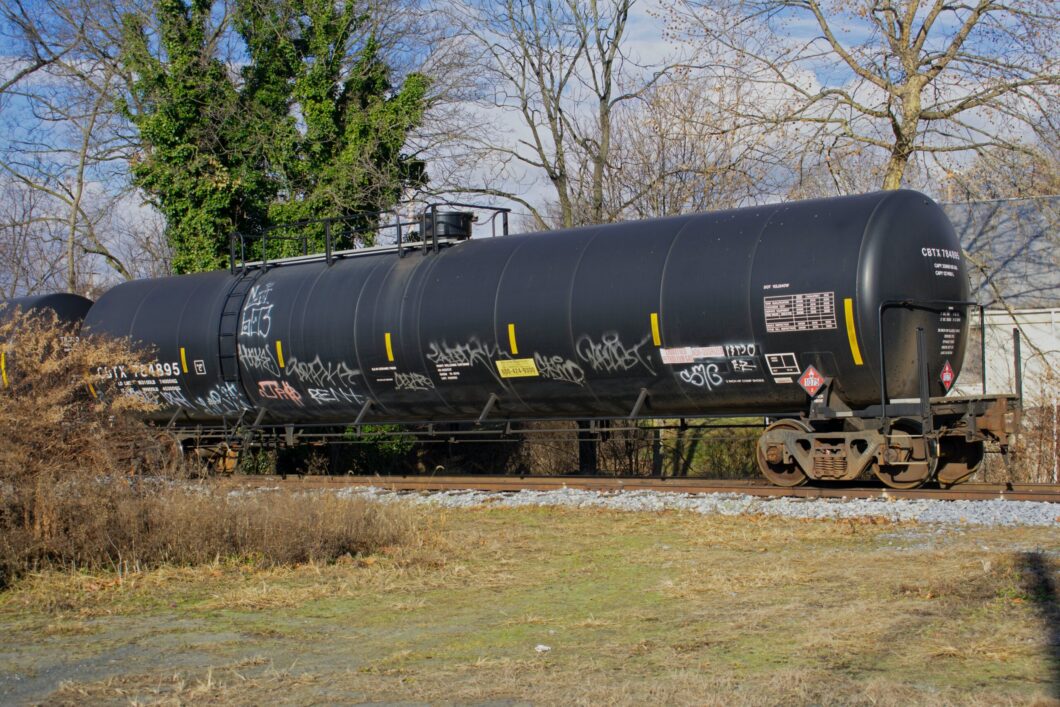
    Photo by Raymond Eichelberger on Unsplash

    Legal News

    On March 14, 2023, Ohio filed a lawsuit against Norfolk Southern Railway Company, a multi-billion dollar entity, in the U.S. District Court for the Northern District of Ohio. The lawsuit stems from the East Palestine train derailment (the “Derailment”), which took place on February 3, 2023. The lawsuit seeks to “recover response costs, redress damages to natural resources, and receive an order for injunctive relief, civil penalties, and damages.” 

    The Derailment 

    The Derailment of train 32N occurred at approximately 9 PM in East Palestine, Ohio—roughly fifty miles northwest of Pittsburgh, Pennsylvania. The accident is believed to have been caused by the overheating and failure of at least one wheel bearing. Twenty of the derailed cars contained hazardous materials, including vinyl chloride, butyl acrylate, ethylhexyl, acrylate, and ethylene glycol monobutyl ether. 

    Chief among the substance concerns was vinyl chloride, which emits toxic substances when it burns. The Environmental Protection Agency (EPA) states that it was notified of the Derailment about two hours after it occurred, and personnel were on site five hours after the accident. The surrounding downwind area was evacuated. Reports were made of health and safety hazards to people and animals in the affected region. Three days after the crash, emergency responders intitiated a controlled release and burn of the remaining vinyl chloride. All the while, the EPA was overseeing air monitoring, water sampling, and other safety controls.  

    On February 10, 2023, EPA Region Five sent a notice of potential liability to Norfolk Southern’s Deputy General Counsel, Matt Gernand. The letter conveyed that the company was a potentially responsible party that might be responsible for cleaning up the Derailment site, or reimbursing the EPA for the cleanup costs incurred by the Agency, under Sections 106(a) and 107 the Comprehensive Environmental Response, Compensation, and Liability Act (CERCLA), colloquially known as the “Superfund Act.”

    Ohio’s Lawsuit  

    About a month and a half after the Derailment, Dave Yost, the Attorney General (AG) of Ohio, filed a 106-paged complaint in federal court against Norfolk Southern. The complaint consists of 58 counts alleging violations of Ohio state laws, the federal CERCLA, and common law. In an announcement released the day of the filing, AG Yost stated, “Ohio shouldn’t have to bear the tremendous financial burden of Norfolk Southern’s glaring negligence.” 

    Ohio’s lawsuit points out that this Derailment is only the latest in a series of recent Norfolk Southern accidents. In fact, the company’s “accident rate has nearly doubled in the past 10 years, and at least 20 of those derailments since 2015 have involved chemical releases.” Ohio alleges that the entity’s increasingly common incidents are a result of putting its bottom line above health and safety. The instant filing details how this particular disaster was “foreseeable and preventable.” Prior to the Derailment, Norfolk Southern received real-time warnings and reports of malfunctions occurring with the train’s wheel bearings. 

    Ohio seeks to hold the transporter accountable for its “release of over one million gallons of hazardous materials, hazardous substances, hazardous wastes, and/or other harmful pollutants into Ohio’s air, streams, rivers, soil, and groundwater, killing tens of thousands of fish and other animals, and recklessly endangering the health of Ohioans throughout the region.” Sought-after compensatory and punitive relief for the harm caused by the Derailment includes the cost of emergency response and cleanup efforts, as well as compensation for the physical and economic harm suffered by local residents. The complaint also requests that the court issue a series of injunctions and declarations that would prohibit Norfolk Southern from further violating the law and negligently injuring. 

    What To Watch For

    Ohio’s lawsuit is just one of many that Norfolk Southern is facing in the aftermath of the Derailment. Norfolk Southern has yet to answer the Ohio complaint. However, the company has previously stated that it is committed to safety and has invested in new technologies and training programs to prevent incidents like the East Palestine train derailment from occurring. 

    The Derailment suits against Norfolk Southern are expected to be closely watched by other transportation companies and industry experts, as they could set a precedent for future cases involving train derailments and hazardous materials. The outcome of this particular lawsuit could have a significant impact on the federal and state safety standards and regulations governing the transportation of hazardous materials by rail in the United States.

    Victoria Kline

    Victoria KlineGuest Writer

    Victoria is a third-year student at the University of Miami School of Law, Juris Doctorate Candidate 2023, Law Review Staff Editor, and soon-to-be associate at Jones Day.
  • Greenhouse Gases Cited in Suit to Invalidate Drilling Leases

    Greenhouse Gases Cited in Suit to Invalidate Drilling Leases

    Environmentalists Argue Federal Government Failed to Analyze Social Costs of Fossil Fuel Emissions from Drilling Leases

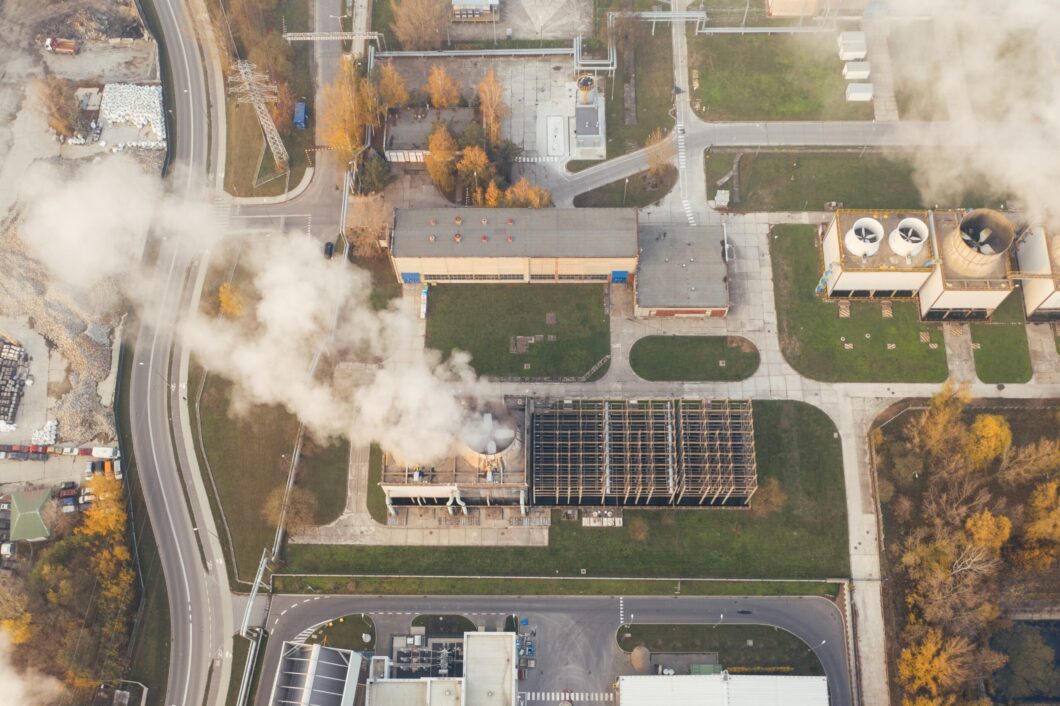
    Photo by Marcin Jozwiak on Unsplash

    “Federal public lands used for fossil fuel extraction contribute 24% of the United States’ Greenhouse Emissions,” according to 10 environmental groups in their ongoing lawsuit against the U.S. Department of the Interior, Secretary of the Interior Debra Haaland, the Bureau of Land Management (BoLM), and BoLM Director Tracy Stone-Manning (Dakota Resource or Council, et al, v. U.S. Department of the Interior, et al., D. D.C., No. 1:22-cv-1853 ).

    Their lawsuit seeks to invalidate 173 oil and gas leases approved in June 2022 across eight states:  Colorado, Montana, Nevada, New Mexico, North Dakota, Oklahoma, and Utah, and Wyoming. 

    Plaintiffs include: Dakota Resource Center, Center for Biological Diversity, Citizens for a Healthy Community, Living Rivers & Colorado Riverkeeper, Montana Environmental Information Center, Rio Grande Waterkeeper, Sierra Club, Waterkeeper Alliance, Western Waterheads Project, and WildEarth Guardians.

    The environmental groups argue the BoLM is in violation of the National Environmental Policy Act (NEPA) 42 U.S.C. § 4321, for failing to make efforts to prevent or eliminate damage to the environment and biosphere. The groups also argue that Secretary Haaland failed to follow the instructions of the Federal Land Policy and Management Act (FLPMA) 43 U.S.C. § 1701, which requires her office to “take any action necessary to prevent unnecessary or undue degradations of the land.”

    Five states have intervened for the defendants: Montana, North Dakota, Oklahoma, Utah, and Wyoming. Defendants, through Montana Attorney General Austin Knudsen, argued in their answer filed Oct. 21, 2022, the complaint failed to state a claim upon which relief could be granted, the plaintiffs lacked standing, that plaintiffs failed to exhaust their administrative remedies, and that the intervening states reserve the right to further amend pleadings throughout the course of litigation.

    In January 2021 the newly-transitioned Biden Administration issued Executive Order 14008 requiring the Interior Department to place a “pause” on all new oil and gas leases and required the BoLM produce a report containing a review and reconsiderations of Interior’s leasing program. Louisiana challenged the order’s “pause” in Louisiana v. Biden, 543 F. Suppl. 3d 388, 410 (W.D. La. 2021) and won, reversing the order’s policy on oil and gas leases but kept the order’s requirement for the Interior Department to produce its report on leasing practices.

    Interior published a 14-page report on Nov. 27, 2021, that highlighted recommendations for fiscal reforms but contained no analysis of the leasing program’s climate impacts. This report failed to acknowledge the BoLM’s recent acknowledgments of collaborative scientific research conducted by the federal multiagency Council of Environmental Quality in 2012, 2015, and in 2020, that revealed significant social costs incurred by greenhouse gas emissions. The BoLM acknowledged that lands under their management contained 96,100 actively producing oil or gas wells. This makes the BoLM responsible for managing lands producing as much as 7% of the country’s oil needs and 8% of its gas needs.

    The coalition filed a motion for summary judgment on March 9, 2023, asking the judge to conclude the matter before greenhouse gas emissions from these lease sites curtail efforts by the United States to reduce greenhouse gas emissions by 2030. The coalition also addressed the defendants’ affirmative defense that plaintiffs lacked standing to allege injury for damage to aesthetic and recreational values of the land. The groups argued that “actual environmental harm from complained-of activity need not be shown,” citing Friends of the Earth v. Laidlaw, 528 U.S. 167, 180-81 (2000).

    The environmental groups argued that the BoLM failed to follow NEPA by filing six separate Environmental Assessments that did not take into account the project’s at-large social costs. The BoLM failed to produce an impact report to the public about estimated greenhouse gas emissions generated throughout various stages of managing land containing active gas and oil production. Under Conner v. Burford, 848 F.2d 1441, 1451 (9th Cir. 1998), the groups argue the BoLM failed to comply with NEPA by streamlining the sale process and not properly conducting an environmental impact study for the 162 lease sites as an entire project rather than on a state-by-state basis. Under Conner, “[a] sale of an oil and gas lease represents an irreversible and irretrievable commitment of resources.” The environmental groups also point blame at Secretary Haaland for failing to follow instructions provided by the FLPMA regarding the management of federal lands.

    FLPMA instructs the Secretary of the Interior to consider multiple federal land management principles, including: the combination of balanced and diverse resources; needs of future generations for renewable and nonrenewable resources, recreation, range, timber, minerals, watershed, wildlife and fish; and the mutual, scientific, and historical value of the lands. The environmentalists insinuate that Haaland should have directed Interior to invalidate the lease sales and ordered the BoLM to restart the oil and gas lease assessment process in order to be NEPA compliant. The defendants’ answer to this motion is expected in the coming days.

    Hunter Schmitz

    Hunter SchmitzGuest Writer

    Hunter Schmitz is a freelance legal writer and paralegal with Focus on Property Law and Civil Litigation.

    The Texas Two-Step: Testing Bankruptcy Law and Jury Rights with Adam Silverstein

    September 7th, 2026|Comments Off on The Texas Two-Step: Testing Bankruptcy Law and Jury Rights with Adam Silverstein

    The Hidden Danger of Carbon Monoxide: Proving Exposure, Brain Injury & Liability with Sam Cannon

    August 30th, 2026|Comments Off on The Hidden Danger of Carbon Monoxide: Proving Exposure, Brain Injury & Liability with Sam Cannon

    War Risk Insurance and Exclusion | Webinar for CLE Credit

    August 2nd, 2026|Comments Off on War Risk Insurance and Exclusion | Webinar for CLE Credit

    AI and the Law: A Year-End Retrospective 2025 and Beyond | Webinar for CLE Credit

    July 26th, 2026|Comments Off on AI and the Law: A Year-End Retrospective 2025 and Beyond | Webinar for CLE Credit

    HIPAA Meets Social Media Marketing with Liz Heddleston and Leah Stiegler

    June 22nd, 2026|Comments Off on HIPAA Meets Social Media Marketing with Liz Heddleston and Leah Stiegler

  • Conservationists Try Again to Block Drilling in Alaska’s Western Arctic

    Conservationists Try Again to Block Drilling in Alaska’s Western Arctic

    Willow II:
    Conservation Groups Sue Again to Stop Oil Project in Alaska’s Western Arctic

    mountains clouds water

    Photo by Yuval Zukerman on Unsplash

    Several conservation groups filed a lawsuit in the U.S. District Court for the District of Alaska against the federal government in another effort to halt the Willow Master Development Plan (Willow Oil Project), a proposed oil and gas development in Alaska’s Western Arctic. Spearheading the development is ConocoPhillips Alaska Incorporated. The project was approved for a second time by the Biden Administration only a day before the filing of the plaintiffs’ complaint.

    The Willow Oil Project

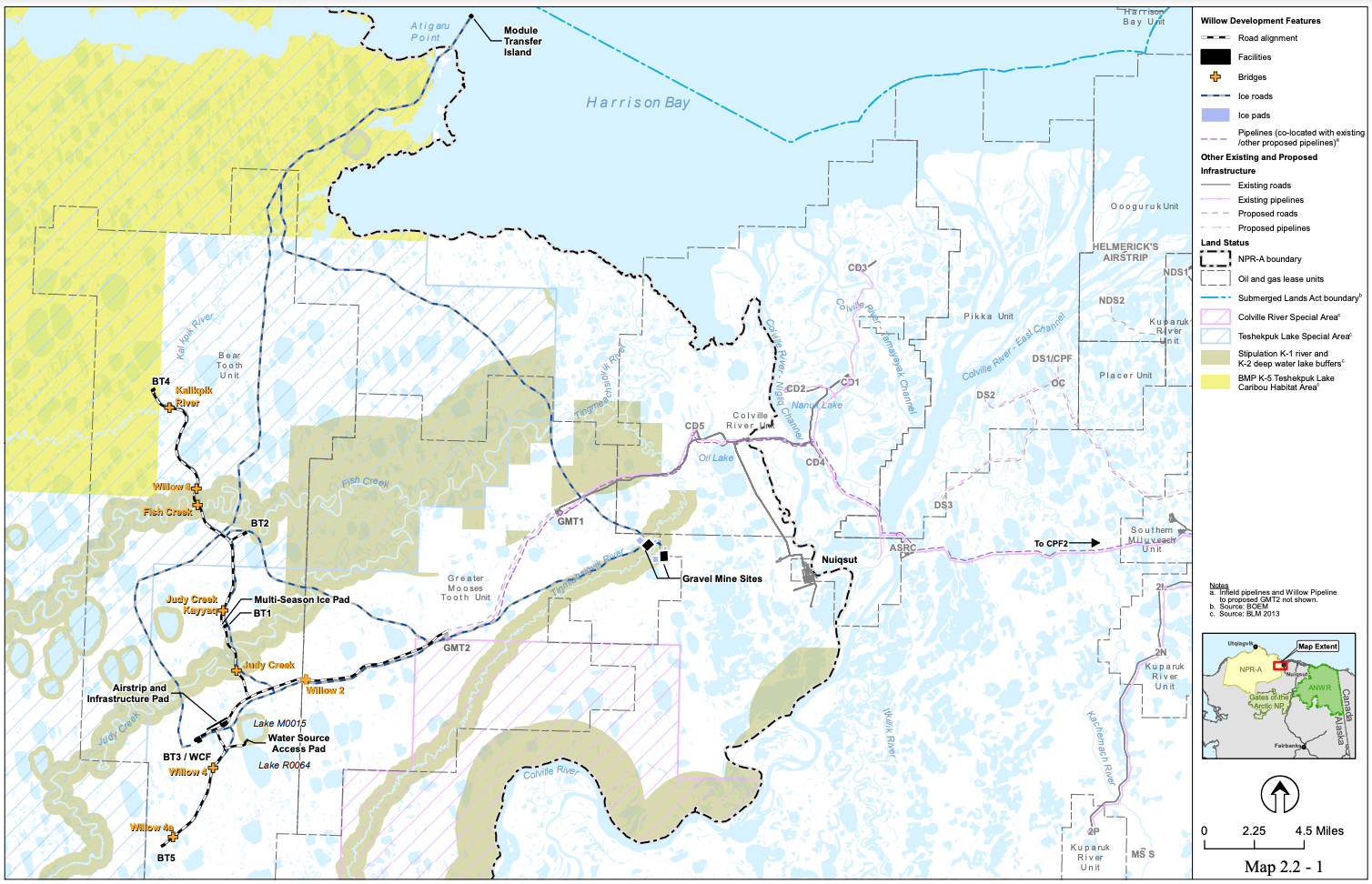
    The Willow Oil Project is a multi-billion dollar project that would involve the construction of drilling pads, pipelines, and other infrastructure in the National Petroleum Reserve-Alaska (Reserve). The project involves drilling up to 250 wells for the purpose of generating 586 million barrels of oil within its 30-year lifespan. As a direct result of the activity, roughly 258 million metric tons of greenhouse gas emissions would be released into the atmosphere. The project has been controversial due to concerns over its potential impacts on the environment and wildlife in the area.

    Willow II Case History

    ConocoPhillips first proposed the Willow Oil Project to the Bureau of Land Management (BoLM) in May of 2018. After determining that the project was a major federally-involved action that would significantly affect the quality of the human environment, the BoLM knew it had to prepare an Environmental Impact Statement (EIS) pursuant to the National Environmental Policy Act (NEPA).

    After studying the Willow Oil Project and comparing it to three action-alternatives and one no-action alternative, as well as seeking public comment, the BLM published a final EIS for the Willow Oil Project on Aug. 14, 2020. The BLM’s approval was immediately contested in the Alaskan District Court by conservation and Alaska-native groups.

    About a year later, on August 18, 2021, the plaintiffs were successful in obtaining a court order vacating the first project approval due to NEPA and Endangered Species Act (ESA) violations. Regarding the NEPA, the BLM “fail[ed] to adequately disclose and analyze the project’s downstream greenhouse gas emissions and by restricting the project alternatives it considered based on the mistaken view that ConocoPhillips had a right to extract all of the oil and gas on its leases.” And, the U.S. Fish and Wildlife Service (FWS) “violated the ESA by relying on unspecified Marine Mammal Protection Act . . . mitigation measures to support the no jeopardy and adverse modification determinations in its biological opinion for the polar bear, and by issuing an arbitrary and capricious incidental take statement for the bear.” The court then remanded to the BoLM for actions not inconsistent with its ruling.

    On remand, the BoLM prepared a draft Supplemental EIS (SEIS) in July of 2022. The draft SEIS contained the same three alternative actions and one non-action alternative from the initial EIS, plus a new action alternative. After receiving public comment, including from the instant plaintiffs, the BoLM published its final SEIS for the Willow Oil Project on Feb. 3, 2023. Subsequently, the BoLM published a record of decision approving the Willow Project on March 13, 2023.

    image1

    Plaintiffs’ Complaint

    On March 14, 2023, Earthjustice, a non-profit environmental law organization, filed a complaint on behalf of several plaintiffs. Included in the group of plaintiffs are the Natural Resources Defense Council, Center for Biological Diversity, Defenders of Wildlife, Friends of the Earth, and Greenpeace, Inc.

    In their complaint, the plaintiffs allege that the BoLM failed to adequately assess the Willow Oil Project’s impacts on the region’s wildlife and its contributions to climate change before issuing its ROD, allowing the project to move forward, thus violating the NEPA, ESA, and Administrative Procedure Act (APA). The complaint consists of five claims for relief.

    Count I: NEPA

    In the first count, plaintiffs assert that the BoLM’s final SEIS violated the NEPA by failing to consider any project-alternative “that would meaningfully reduce the climate impacts of the Willow Project by reducing total downstream greenhouse gas emissions, or any alternative that would prohibit infrastructure in the Teshekpuk Lake Special Area and the Colville River Special Area.” Plaintiffs take issue with the fact that although BLM considered action alternatives as required by NEPA, all of the alternatives were based on BoLM fully developing the entirety of its oil and gas leases. Plaintiffs disagree with the BLM’s assertion that this was proper and necessary to avoid “strand[ing] an economically viable quantity of recoverable oil.”

    Count II: NEPA

    Plaintiffs’ second count alleges that the BLM committed another violation of NEPA by failing to take a “hard look” at the reasonably foreseeable risk of oil spills and potential discoveries of oil production prospects resulting from the project. Thus, the agency fell short of its NEPA duties to disclose and analyze the indirect and cumulative impacts of the Willow Oil Project.

    Count III: Reserves Act (APA)

    The third count in the plaintiffs’ complaint alleges that the BoLM violated the APA’s arbitrary and capricious decision-making standard by failing to act in accordance with the Reserves Act. The Reserves Act requires that the Secretary of the Department of the Interior “protect[] the ‘environmental, fish and wildlife, and historical or scenic values’ within the Reserve.” Plaintiffs believe that the BoLM’s evaluation of only “full lease development” project alternatives contradicts its protection duties under the Reserves Act “to condition, restrict, or prohibit activity as it determines necessary to protect surface resources.”

    Count IV: ESA – Unlawful NMFS Letter of Concurrence

    Plaintiffs’ fourth claim is that the BoLM biological assessment to the National Marine Fisheries Service (NMFS) and the NMFS Willow Letter of Concurrence failed to analyze the possible taking of ringed and bearded seals, along with other listed species. Plaintiffs fear that the taking of these ESA-listed seals would occur as a result of the project’s greenhouse gas emissions affecting their critical habitats. The complaint is silent on the nexus between the emissions and the habitat effects. Still, it asserts that the NMFS conclusions failed to properly engage in ESA Section 7 formal consultation to determine the project’s effects on the listed seals and prepare the necessary incidental take statements. Thus, the letter’s analysis of the affected threatened species and their critical habitats was arbitrary and capricious.

    Count V: ESA – Unlawful FWS Biological Opinion

    The fifth and final claim in the complaint argues that the FWS’s biological opinion was arbitrary and capricious due to its failure to properly consider in view of the best available science the threats to polar bears brought on by climate change exacerbated by the Willow Oil Project’s greenhouse gas emissions. Polar bears, like the seals above, are a listed species under the ESA. Plaintiffs allege that the potential greenhouse gas emissions would increase sea ice melting, which will decrease the availability of ice seal prey in the polar bear’s critical hunting habitat. The agency did not prepare the necessary incidental take statement for polar bears either.

    Requested Remedy

    To remedy the violations asserted, plaintiffs request that the court vacate the BoLM’s project approval and supporting documents on the ground that the approval decision was arbitrary and capricious. Plaintiffs also seek a reward of costs and attorneys fees related to the action.

    Defendants have not yet responded to the federal complaint, filed March 14, 2023. 

    Victoria Kline

    Victoria KlineGuest Writer

    Victoria is a third-year student at the University of Miami School of Law, Juris Doctorate Candidate 2023, Law Review Staff Editor, and soon-to-be associate at Jones Day.

  • The New European Unified Patent Court with Marianne Schaffner and Thierry Lautier

    The New European Unified Patent Court with Marianne Schaffner and Thierry Lautier

    What’s the new European patent court mean to global innovators?

    The European Union’s new Unified Patent Court is an international body set up by participating EU Member States to deal with the infringement and validity of both Unitary Patents and European patents. The court’s objective is “putting an end to costly parallel litigation and enhancing legal certainty.”

    Unitary patents are intended to make it possible to get patent protection in up to 25 EU Member States by submitting a single request to the European Patent Office, making the procedure simpler and more cost effective for applicants. The new system goes live on June 1, 2023.

    What must U.S. and multi-national U.S.-based companies understand about the court?

    Why should inventors and their organizations factor it in to any existing or new patent strategy they may be developing?

    For answers to these questions and more listen to my interview with attorneys Marianne Schaffner and Thierry Lautier who practice out of the Paris office of Reed Smith. Marianne heads the intellectual Property team in Paris and the patent practice in Europe. She manages complex national and transnational patent, trade secrets and trademark disputes in the healthcare, chemistry, technology and telecommunications sectors. Thierry is part of the firm’s global Intellectual Property Group. With a dual legal and engineering/scientific background, Thierry uses his understanding, knowledge, and experience to provide clients with creative, technically robust, and business-oriented patent strategies.

    This podcast is the audio companion to the Journal on Emerging Issues in Litigation. The Journal is a collaborative project between HB Litigation Conferences and the Fastcase legal research family, which includes Full Court Press, Law Street Media, and Docket Alarm. The podcast itself is a joint effort between HB and our friends at Law Street Media. If you have comments or wish to participate in one our projects please drop me a note at Editor@LitigationConferences.com.

    Tom Hagy

    (actual size)

    Tom Hagy
    Litigation Enthusiast and
    Host of the Emerging Litigation Podcast
    Home Page
    LinkedIn

    Marianne Schaffner

    Marianne SchaffnerReed Smith

    Marianne Schaffner is a partner in our Paris office. She heads the Intellectual Property team in Paris and the Patent practice in Europe.

    Marianne is a well-known intellectual property litigation lawyer. She is recognized for coordinating and managing complex national and transnational patent, trade secrets and trademark disputes in the healthcare, chemistry, technology and telecommunications sectors.

    Having studied and worked in the UK, Germany, the Netherlands and the United States, she has extensive knowledge of both the European and American judicial systems.

    Marianne Schaffner is repeatedly ranked by Chambers Global and Chambers Europe and is regularly ranked in Legal 500 EMEA, Décideurs, Stratégie Finance Droit among the Top Leaders.

    Thierry Lautier

    Thierry LautierReed Smith

    Thierry Lautier is part of the firm’s global Intellectual Property Group.

    Thanks to his dual legal and engineering/scientific background, Thierry is unique in being one of very few French patent litigators, qualified as both an attorney-at-law and a European patent attorney. As an optics and electronics engineer by background, Thierry uses his understanding, knowledge, and experience to provide clients with creative, technically robust, and business-oriented patent strategies.

    In addition to patents, Thierry counsels his clients on trade secrets. Thierry’s practice includes the building up of corporate trade secrets programs (the so-called “reasonable steps” to protect trade secrets), as well as the protection of trade secrets during court litigation (regarding confidential evidence). Thierry is the author of many articles in France on trade secrets and on their interplay with intellectual property.

  • Supplier Beware: The DOJ & FTC Investigating Manufacturing & Supply Chains

    Supplier Beware: The DOJ & FTC Investigating Manufacturing & Supply Chains

    The Author

    Jennifer Driscoll

    Jennifer DriscollRobinson + Cole

    Jennifer M. Driscoll (jdriscoll@rc.com) is counsel with Robinson+Cole in New York where she focuses on investigations, litigation, arbitration, mergers, and counseling. She has extensive experience in the medical devices, pharmaceuticals, electronics, and automotive industries.

    The Journal on Emerging Issues in Litigation

    Emerging Litigation Podcast

    Emerging Litigation PodcastProduced by HB Litigation and Law Street Media

    Interviews with leading attorneys and other subject matter experts on new twists in the law and how the law is responding to new twists in the world.

    Supplier Beware:
    DOJ & FTC Investigating Manufacturing & Supply Chain Issues

    “Although competitors may attend trade association meetings, the company representative in attendance should be well versed on the line between lawful discussions and ruses to disguise unlawful collusion in violation of the Sherman Act.”

    Abstract: Challenged by the pandemic, the global supply chain has generated a heightened amount of scrutiny for its impact on the economy, the labor market, the delivery of goods and services, and national security. Attention from the Biden administration portends an era when the federal government will shine a spotlight on the supply chain to root out misconduct. In this article, the author reviews recent supply chain disruptions and reactions from the DOJ and FTC, as well as the government’s efforts to support competition in the labor markets by eliminating noncompete agreements in employment contracts. Finally, she discusses proactive steps companies can take to mitigate the risk that they will find themselves the subject of a government investigation.

    Download the article now!

  • Autonomous Vehicles: The New Technology Driving the Litigation Conversation

    Autonomous Vehicles: The New Technology Driving the Litigation Conversation

    The Authors

    Cort Malone

    Cort MaloneAnderson Kill

    Cort T. Malone (cmalone@andersonkill.com) is a shareholder in the New York and Stamford offices of Anderson Kill and practices in the Insurance Recovery and the Corporate and Commercial Litigation Departments. An experienced litigator, he focuses on insurance coverage litigation and dispute resolution, with an emphasis on commercial general liability insurance, directors and officers insurance, employment
    practices liability insurance, advertising injury insurance, and property insurance issues.

    John M. Leonard

    John M. LeonardAnderson Kill

    John M. Leonard (jleonard@andersonkill.com) is a shareholder in Anderson Kill’s New York, New York, office, where he handles a full spectrum of insurance coverage matters, such as business interruption losses, D&O and E&O, commercial general liability, environmental liability.

    Joshua A. Zelen

    Joshua A. ZelenAnderson Kill

    Joshua A. Zelen (jzelen@andersonkill.com) is a law clerk pending admission in Anderson Kill’s New York office. He focuses his practice on insurance recovery.

    The Journal on Emerging Issues in Litigation

    Emerging Litigation Podcast

    Emerging Litigation PodcastProduced by HB Litigation and Law Street Media

    Interviews with leading attorneys and other subject matter experts on new twists in the law and how the law is responding to new twists in the world.

    Autonomous Vehicles: The New Technology Driving the Litigation Conversation

    “The AEV Act requires a policyholder’s insurance company to cover third-party damage caused by a self-driving automated vehicle. A policy may not exclude such damages, except for damages suffered as a direct result of software alterations made without the policyholder’s knowledge, or failure to install safety-critical software updates.”

    Abstract: So far, Congress has not been able to pass regulations governing the emergence of self-driving or autonomous vehicles. Twenty-one states and the United Kingdom are leading the way. As more of these vehicles take to the highway implications will emerge for the insurance industry. Auto
    insurance policies will have to determine how to insure against losses caused by nonhuman operators, commercial general liability policies will be affected when technology developers and car makers are sued for bodily injury and property damage arising from malfunctioning technology, and cyber policies could be implicated in the event of hacks or data breaches. The authors review these subjects and share their insights into what autonomous vehicle producers should consider when it comes to mitigating their risk.

    Download the article now!

    Read, listen, explore more content on the subject!

    Podcast: Biometric Privacy Litigation and Coverage Disputes with John Leonard and Cort Malone

    JEIL: Litigation After Biometric Privacy Law Violations: Policyholder Victories and Their Implications. Co-authors Cort Malone and Abigal Damsky 

    JEIL: Biometric Privacy Laws: Companies Will Need Insurance as Protection From New and Expanding Liability. Co-authors Cort Malone and Jade Sobh

    Podcast: Autonomous Vehicles: The New Technology Driving the Litigation Conversation with John Leonard and Cort Malone

    Tags

    Emerging Litigation & Risk Compliance Litigation & appeals Cybersecurity Data Privacy Artificial Intelligence (AI) Insurance Companies Risk Management Corporate & Securities Insurance Claims Recovery Regulations Data Breach Toxic Torts Antitrust Legal Tech Product Liability Settlements Trial Personal Injury Privacy Healthcare Per- and Polyfluoroalkyl Substances (PFAS) Data Analytics Arbitration Constitutional Law Climate Change Cannabis Labor Law Insurance Fraud Liability Claims COVID Alternative Dispute Resolution (ADR) Mediation Diversity Equity Inclusion (DEI) Claims management Professional Liability Legal Research & Writing Business Interruption Law Practice Management Trial Skills Property and Casualty Drug Laws Copyright Law Catastrophic Loss

  • Labor Organizing in Retail: Conditions Remain for Continued Momentum

    Labor Organizing in Retail: Conditions Remain for Continued Momentum

    The Authors

    Amber Rogers

    Amber RogersHunton Andrews Kurth

    Amber is Board Certified in Labor & Employment Law by the Texas Board of Legal Specialization, and is a trial lawyer who has extensive experience representing and advising clients in traditional labor relations, such as collective bargaining, representation elections, decertification elections, unfair labor practice charges, arbitrating grievances, contract administration and interpretation, and union avoidance strategies.

    Amber’s litigation experience includes regularly representing clients in wage and hour collective and class actions, trade secrets and post-employment restrictive covenant disputes, and complex employment discrimination. As a part of Amber’s partnership with clients to avoid litigation, she frequently conducts and coordinates sensitive corporate investigations, and provides training presentations for clients on a multitude of topics.

    Kurt Larkin

    Kurt LarkinHunton Andrews Kurth

    Kurt helps businesses of all sizes solve their complex labor and employment challenges. He counsels clients on all aspects of labor-management relations, including representation elections, collective bargaining and strikes and lockouts, and also advises clients in strategic employment and human relations matters. Kurt litigates labor and employment cases in federal and state trial and appellate courts around the country and before the NLRB and EEOC.

    Kurt is a recognized thought leader in the area of traditional labor-management relations. He has been recognized as a leader in Labor and Employment by Chambers USA Virginia and as a 2022 Top 10 Labor Lawyer by Benchmark Litigation.

    The Journal on Emerging Issues in Litigation

    Emerging Litigation Podcast

    Emerging Litigation PodcastProduced by HB Litigation and Law Street Media

    Interviews with leading attorneys and other subject matter experts on new twists in the law and how the law is responding to new twists in the world.

    Labor Organizing in Retail: Conditions Remain for Continued Momentum

    “The political and social issues of the past few years, inflation, the looming recession, job security, wages, and pandemic-related frustration/unhappiness are just a few of the countless reasons cited for the boom in union support/approval.”

    Abstract: In 2022, labor organizing was in the spotlight with workers organizing at a rate not seen in years. The National Labor Relations Board saw an increase of union petitions during the last fiscal year, it was more than 50% higher than the previous year. Relatedly, more unions have won representation and American approval is at its highest in over 50 years. The rise of the “homegrown” union has directly impacted employers of all industries. The year 2022 can provide all industries and companies with lessons learned, particularly from those who faced threats for the first time. It is crucial to note too, however, that many of these companies and retailers have positive reputations. Labor and union laws continue to evolve as the Biden administration takes full control of the NLRB.

    Download the article now!

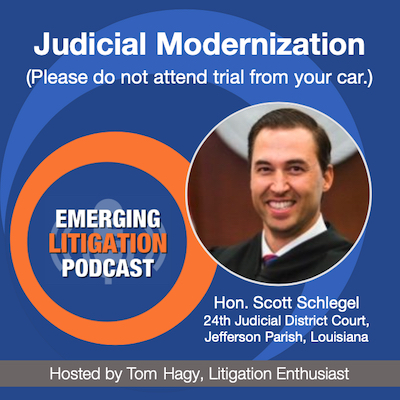
  • Modernizing Our Court System (but Don’t Attend Trial from Your Car) with Hon. Scott Schlegel

    Modernizing Our Court System (but Don’t Attend Trial from Your Car) with Hon. Scott Schlegel

    Modernizing Our Court System

    Photo by Ernest Ojeh via Unsplash

    The judicial system is overburdened for a number of reasons, and greater efficiency is a must if court systems are to achieve their important objectives.

    Technology and openness to all that it offers is a key solution, something that was tried, tested and proven during the Covid pandemic which closed courthouses and law offices around the nation. Along with technology, improvements can be made by reexamining their orthodoxies about how things should be done based on decades of “that’s how we’ve always done it.”

    This is a matter of importance to judges, lawyers, plaintiffs, defendants, and numerous others whose lives are impacted directly or indirectly when either the civil or criminal justice systems are inefficient, cumbersome, costly, confusing, slow, and even inaccessible. If only we had an example of at least one judge who is trying to do something about it. But wait …

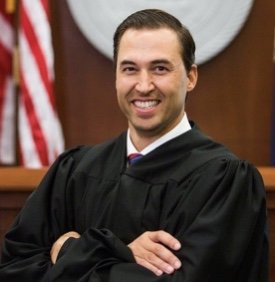
    Listen to my interview with the Hon. Scott Schlegelwho presides over criminal civil and domestic matters in Louisiana’s 24th Judicial District Court in Jefferson Parish. Judge Schlegel was elected to the bench in 2013, and quickly earned a reputation as a modern judge using technology to bring his court into the digital age, even before the pandemic forced the change on other jurists. He partnered with tech companies to develop efficiency tools like chat bots and online forms software. He launched courtonline.us and onlinejudge.us to consolidate his processes for the public. Judge Schlegel has received numerous awards and accolades, like the National Center for State Courts’ 26th Annual William H. Rehnquist Award for Judicial Excellence. He was the American Bar Association’s 2021 Legal Rebel. And he received the Fastcase 50 Award for his innovative approaches to the administration of justice. Prior to becoming a judge, he was a prosecutor and litigator. Judge Schlegel graduated with honors from Loyola University New Orleans College of Law.

    This podcast is the audio companion to the Journal on Emerging Issues in Litigation. The Journal is a collaborative project between HB Litigation Conferences and the Fastcase legal research family, which includes Full Court Press, Law Street Media, and Docket Alarm. The podcast itself is a joint effort between HB and our friends at Law Street Media. If you have comments or wish to participate in one our projects please drop me a note at Editor@LitigationConferences.com.

    Tom Hagy

    (actual size)

    Tom Hagy
    Litigation Enthusiast and
    Host of the Emerging Litigation Podcast
    Home Page
    LinkedIn

    Hon. Scott Schlegel

    Hon. Scott SchlegelLouisiana State Judge, Jefferson Parish

    Judge Schlegel was elected to the bench in 2013, and quickly earned a reputation as a modern judge using technology to bring his court into the digital age, even before the pandemic forced the change on other jurists. He partnered with tech companies to develop efficiency tools like chat bots and online forms software.

    He launched courtonline.us and onlinejudge.us to consolidate his processes for the public. Judge Schlegel has received numerous awards and accolades, like the National Center for State Courts’ 26th Annual William H. Rehnquist Award for Judicial Excellence. He was the American Bar Association’s 2021 Legal Rebel. And he received the Fastcase 50 Award for his innovative approaches to the administration of justice. Prior to becoming a judge, he was a prosecutor and litigator. Judge Schlegel graduated with honors from Loyola University New Orleans College of Law.

  • Class Certification Evidence: Standards of Admissibility and Probative Value Among the Circuits

    Class Certification Evidence: Standards of Admissibility and Probative Value Among the Circuits

    Class Certification Evidence

    What Are the Standards of Admissibility and Probative Value Among the Circuits?

    Numerous splits exist among the circuits on two key certification issues: What is required to prove the elements for class certification and whether plaintiff’s certification evidence must be admissible. Further, courts apply different admissibility standards to fact evidence than to expert evidence. Certain courts have issued clear guidance on these important issues, while others have remained circumspect, sending mixed signals. This is particularly vexing for defendants, who may be sued in more than one district or circuit. What is sufficient for class certification in one jurisdiction may be inadequate in another. With standards unsettled, counsel must anticipate and preserve the right to revisit class certification by preserving all objections and the factual record. Listen as the panel of class action attorneys discusses the standards of admissibility of evidence at certification and best strategies for leveraging ambiguities.

    Questions Addressed

    • How can defense counsel preserve objections to admissibility?
    • How can counsel leverage the law of other circuits in jurisdictions with no controlling precedent?
    • What does how a court assesses evidence imply about its view on admissibility standards?

    Webinar Outline

    1. Fact evidence
      1. Need not be admissible
      2. Must be admissible
      3. Ambiguous
    2. Expert evidence
      1. Full Daubert analysis
      2. Limited Daubert analysis
    3. Strategies for managing and leveraging the uncertainty

    Strafford and HB Logos

    On Demand CLE Webinar

    A Strafford production specially selected for HB audiences.

    Learn Strategies for
    Opposing or Narrowing Class Certification
    and Preserving Objections

    This Strafford production has been specially selected for HB audiences.

    Speakers

    Kevin Daly
    Counsel
    Robinson & Cole

    Alexander Madrid
    Partner
    McGuire Woods

    Michael Ruttinger
    Partner
    Tucker Ellis

    Robert Sparkes, III
    Partner
    K&L Gates

    This Strafford production has been specially selected for HB audiences.

  • Greatly Exaggerated: The Impact of Bankruptcy on Mass Torts with Jennifer Hoekstra

    Greatly Exaggerated: The Impact of Bankruptcy on Mass Torts with Jennifer Hoekstra

    ear plugs on red background

    When large companies face massive mass tort litigation, one way they can survive is to file for bankruptcy protection and reorganize. 

    3M recently put its Aearo Technologies subsidiary into bankruptcy in the face of more than 230,000 claims that’s its defective earplugs caused hearing loss.  When it came to filing bankruptcy 3M said Aearo was solely responsible for the product. But for several years of litigation 3M argued that it, as the parent, was solely responsible, not its various subsidiaries. That was a strategy that was beneficial to the company in multidistrict litigation.

    Why did 3M suddenly change course? What impact does bankruptcy have on claimants? Could corporations use bankruptcy law to neuter mass tort litigation for all eternity?  And how did the strategy sit with the federal magistrate judge overseeing the multidistrict litigation?

    Joining me to discuss this incredibly complex litigation is Jennifer M. Hoekstra, a partner with Aylstock Witkin Kreis & Overholtz. Jennifer has been involved in all varieties of complex litigation since 2007, focusing on mass torts, drug and device litigation, and others.  She has a J.D. from Tulane, which she earned while also completing a certificate in Environmental Law. She has actively served as trial counsel or an integral member of the trial team in several of the 3M Earplug trials securing nearly $300 million in compensatory damages for military veterans. Jennifer shared her insights on the intersection of complex mass torts and bankruptcy, an intersection that wasn’t originally on her roadmap.

    This podcast is the audio companion to the Journal on Emerging Issues in Litigation. The Journal is a collaborative project between HB Litigation Conferences and the Fastcase legal research family, which includes Full Court Press, Law Street Media, and Docket Alarm. The podcast itself is a joint effort between HB and our friends at Law Street Media. If you have comments or wish to participate in one our projects please drop me a note at Editor@LitigationConferences.com.

    Tom Hagy

    (actual size)

    Tom Hagy
    Litigation Enthusiast and
    Host of the Emerging Litigation Podcast
    Home Page
    LinkedIn

    P.S. During the podcast I mentioned an article and wanted to share the link. It’s called “Bankruptcy Grifters” by Lindsey D. Simon. It was published in the Yale Law Journal.

    Jennifer Hoekstra

    Jennifer Hoekstra

    Jennifer M. Hoekstra is a partner with Aylstock, Witkin, Kreis & Overholtz, PLLC. A native of Saint Paul, Minnesota, Ms. Hoekstra boasts an impressive academic and professional record, including graduation from two of the nation’s top schools. She earned her Bachelor of Arts in Environmental Science from Columbia College, Columbia University in the City of New York. She relocated to Louisiana to attend Tulane Law School, where she earned her J.D. while also completing a certificate in Environmental Law. During her law school career, she spent a semester studying at the University of Wisconsin School of Law and visited on their International Law Journal as a Junior Member during her Hurricane Katrina evacuation semester.

    Ms. Hoekstra has been involved in complex litigation cases of all forms since 2007. Ms. Hoekstra has earned a solid reputation as a skilled writer and researcher, and plays an integral role in several complex litigation cases, practicing in the areas of Pharmaceutical Mass Torts, Defective Device Mass Torts, and other complex litigation. She is currently a member of the Proton-Pump Inhibitors Plaintiff Executive Committee and the 3M Earplugs MDL Discovery and ESI Committee.

    Jennifer was central to the successful outcome in bellwether trials in the Genetically Modified Rice, Actos and DePuy Pinnacle Hip MDLs with more than $11 Billion in trial verdicts resulting from those cases. She has actively served as trial counsel or an integral member of the trial team in several of the 3M Earplug trials securing nearly $300 Million in compensatory damages for military veterans.

    She is licensed to practice before all Louisiana state and federal courts and the U.S. District Courts for the Northern District of Texas and Eastern District of Missouri as well as the 5th and 8th Circuit Courts. She is a member of the American Bar Association, the Louisiana Bar Association, the Acadiana Federal Bar Association, the Alexandria Louisiana Bar Association and the American Association for Justice. She is a member of Women En Mass, founding member of the board for the Society Women Trial Lawyers and was also a member of the inaugural 2018 Board of Directors for Emerge Louisiana.