Tag: Product Liability

  • Johnson & Johnson Advances $6.5B Texas Two‑Step Talc Settlement Plan

    Johnson & Johnson Advances $6.5B Texas Two‑Step Talc Settlement Plan

    J&J Advances $6.5B Texas Two‑Step Talc Settlement Plan

    The question is no longer simply how much Johnson & Johnson is offering, but whether a solvent parent should be permitted to use bankruptcy to resolve mass-tort liability while remaining outside bankruptcy itself.

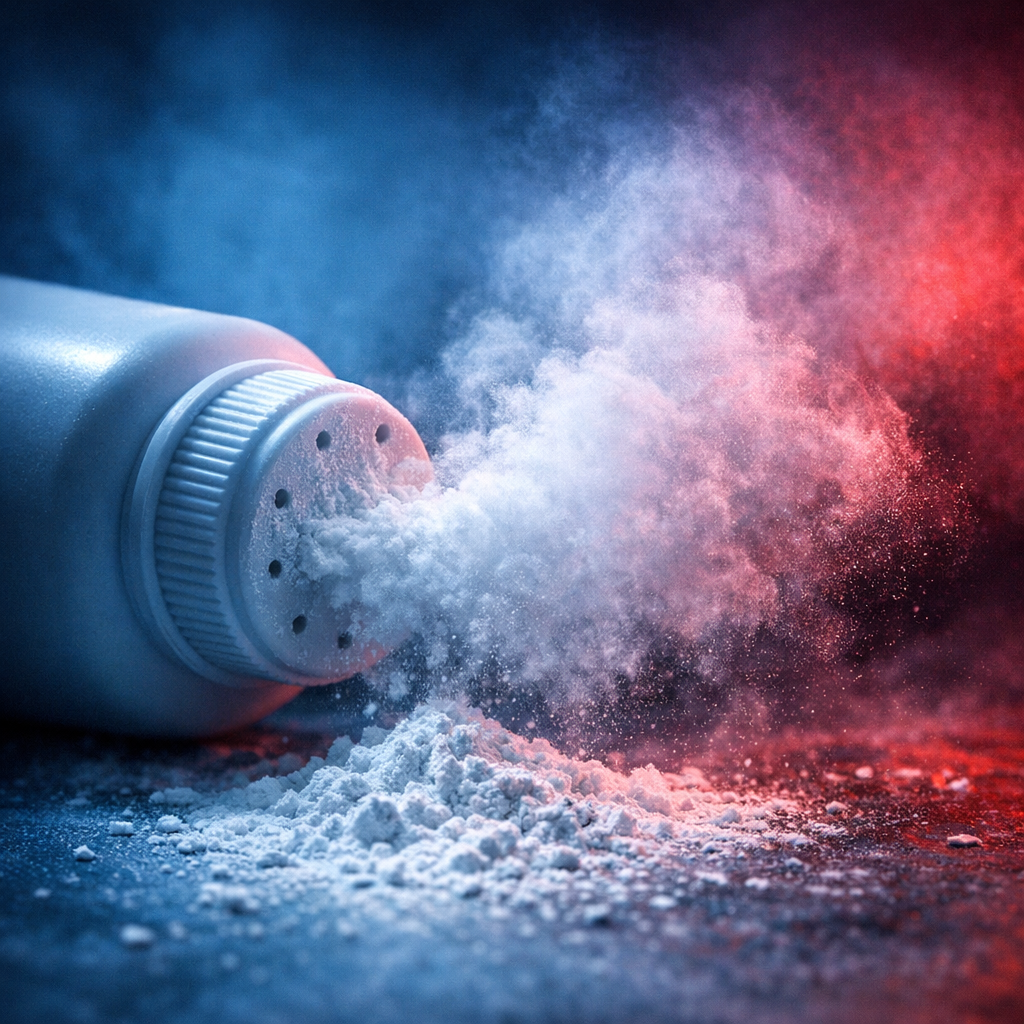
    Johnson & Johnson has again returned to bankruptcy court in an effort to resolve the largest remaining share of talc‑related ovarian‑cancer claims—this time with a proposed settlement valued at approximately $6.5 billion, to be paid over 25 years. The plan relies on a now‑familiar maneuver: placing talc liability into a specially created subsidiary and seeking relief under Chapter 11 through what has come to be known as the “Texas Two‑Step.” 
     
    Whether this effort succeeds may turn less on the total dollar figure than on a deeper legal question that has divided courts, regulators, plaintiffs’ counsel, and restructuring professionals: should a solvent parent company be permitted to use bankruptcy as a forum for resolving mass‑tort liability while remaining outside bankruptcy itself? 

    A Brief Procedural Recap 

    Under the Texas Two‑Step, a company separates its operations through a divisional merger under Texas law, assigning mass‑tort liabilities to a newly created entity while the operating business remains intact. The liability‑holding entity then files for bankruptcy and asks the court to channel current and future claims into a centralized resolution process. 

    Johnson & Johnson first attempted this strategy in 2021 through a subsidiary called LTL Management. After that effort and a subsequent filing were dismissed, the company tried again in September 2024 through Red River Talc LLC, a newly created affiliate that filed Chapter 11 in the Southern District of Texas. That case was assigned to U.S. Bankruptcy Judge Christopher M. Lopez. 

    The company argues that bankruptcy offers a more efficient and equitable forum than decades of piecemeal litigation scattered across state and federal courts. Plaintiffs’ lawyers opposing the filing counter that the strategy is an abuse of bankruptcy law designed to cap liability and restrict jury trials—without the financial distress that traditionally justifies Chapter 11 relief. 

    Claimant Votes and Competing Narratives 

    One difference between the current proposal and earlier efforts is Johnson & Johnson’s reliance on claimant voting to demonstrate support. The company has said that more than 75% of voting claimants approved the proposed settlement structure—an important statutory threshold for confirmation of a prepackaged plan. 

    Some plaintiffs’ attorneys have publicly supported the deal, particularly for clients who are elderly or seriously ill and face the prospect of prolonged litigation. Others have urged claimants to reject the plan, arguing that bankruptcy would strip plaintiffs of meaningful leverage and undervalue claims that might otherwise reach juries. 

    This split within the plaintiffs’ bar has been a defining feature of the talc bankruptcy fight: the disagreement is not about whether victims deserve compensation, but how—and in what forum—that compensation should be determined. 

    Judicial and Regulatory Skepticism 

    Federal courts have repeatedly questioned whether Johnson & Johnson’s talc subsidiaries belong in bankruptcy at all. In earlier rulings, courts emphasized that Chapter 11 is intended for companies in genuine financial distress, not for solvent enterprises seeking to manage litigation risk. 

    That skepticism has been echoed by the U.S. Trustee Program, the Department of Justice unit charged with protecting the integrity of the bankruptcy system. In prior filings, the Trustee has argued that Johnson & Johnson’s talc bankruptcies lacked a legitimate bankruptcy purpose and were designed primarily to benefit the non‑debtor parent. 

    Those objections place the current settlement effort squarely within a broader national debate—one also playing out in opioid, earplug, and environmental cases—about the limits of bankruptcy as a mass‑tort resolution tool. 

    Where did this begin? 

    The talc litigation did not begin in bankruptcy court. For years, claims proceeded through individual trials and coordinated proceedings, including MDL‑2738 in the District of New Jersey, which consolidated tens of thousands of federal cases alleging that perineal use of talc products caused ovarian cancer. 

    Several jury verdicts—most notably a 2018 Missouri verdict involving 22 plaintiffs—brought national attention to the litigation, even as appellate courts reduced those awards on jurisdictional and constitutional grounds. As litigation volume grew and verdict risk increased, Johnson & Johnson ultimately discontinued the sale of talc‑based baby powder in North America in 2020 and globally by 2023, while continuing to deny that its products cause cancer. 

    By the time Johnson & Johnson turned to bankruptcy, the talc docket had already tested nearly every traditional mass‑tort mechanism: bellwether trials, global negotiations, appellate review, and MDL coordination. Bankruptcy did not replace those processes—it interrupted them. 

    What does this case signal beyond talc? 

    Whether the Red River Talc effort survives or fails will likely influence how future mass‑tort defendants assess “creative” bankruptcy strategies. Courts reviewing the talc filings have been forced to confront foundational questions: 

    • How much financial distress is required for Chapter 11 access? 
    • What limits apply to third‑party releases? 
    • Can bankruptcy be used primarily as a litigation‑management tool? 

    The answers are unlikely to affect talc alone. 

    © Copyright 2026 Critical Legal Content LLC | Reprint, publishing requests, or other questions accepted at Editor@LitigationConferences.com.
    We welcome your thoughts on this post as well as your interest in collaborating with us on an article, podcast episode, or webinar. We also create content for law firms. Write to Editor@LitigationConferences.com. 

    Tom Hagy

    Tom HagyEditor-in-Chief

    Tom is a legal content provider with more than four decades’ experience as a writer, editor, publisher, podcaster, and legal education provider — always producing information and services on emerging areas of litigation. He founded HB in 2008 and CLC in 2012, to provide content for small firms and providers in the litigation space. If you have comments or wish to collaborate, write to him at Editor@LitigationConferences.com.

    Lessons from Talc for Mass‑Tort Bankruptcy 

    Last year practitioners and judges gathered at a conference in Florida, where they repeatedly returned to talc as a case study for the future of mass‑tort bankruptcy. Several themes emerged: 

    Bankruptcy and MDL serve different purposes.

    Speakers emphasized that MDL proceedings are designed to develop claim value through litigation, trials, and motion practice, while bankruptcy prioritizes restructuring and creditor management. Talc highlights the tension that arises when these systems collide.

    Control shifts dramatically in bankruptcy.

    In MDL proceedings, lead plaintiffs’ counsel exert significant influence over case development. In bankruptcy, influence depends on creditor status, committee composition, and voting power—often reshaping who has a voice at the table. 

    524(g) analogies are contested.

    Some restructuring arguments in talc rely on asbestos‑style logic under Section 524(g) of the Bankruptcy Code. Conference participants questioned whether those analogies hold when the debtor is a newly created subsidiary rather than an operating company overwhelmed by legacy asbestos claims. 

    Talc may be a fork in the road, not a one‑off.

    Several speakers framed talc as a potential blueprint—or warning—for other mass‑tort defendants. If a solvent parent can repeatedly attempt to resolve tort claims through newly formed debtors, courts will need to define clearer limits. 

    Process legitimacy matters as much as payout speed.

    Even practitioners focused on expediting compensation stressed that legitimacy—fair voting procedures, transparency, and adherence to bankruptcy principles—will ultimately determine whether mass‑tort bankruptcies are accepted or rejected by courts.  

    Where this leaves the talc litigation. 

    Johnson & Johnson’s proposal is best understood not simply as a settlement offer, but as a test of how far bankruptcy law can be stretched to address mass‑tort liability. Talc has already shaped product litigation, MDL practice, and corporate risk management. Its influence on bankruptcy doctrine may prove just as lasting. 

  • Subway Surfing Suit Against Meta and TikTok: Setting the Stage for Social Media Liability

    Subway Surfing Suit Against Meta and TikTok: Setting the Stage for Social Media Liability

    Emerging Litigation Podcast

    Emerging Litigation PodcastProduced by HB Litigation

    Interviews with leading attorneys and other subject matter experts on new twists in the law and how the law is responding to new twists in the world.

    Interested in contributing an article? Email us at Editor@LitigationConferences.com.

     Subway Surfing Suit Against Meta and TikTok: Setting the Stage for Social Media Liability 

    The Legal Battle Over Algorithmic Targeting and Dangerous Challenges 

    By Tom Hagy*

    I will confirm it, not that I will be the first. Without much prompting, teenage boys will do really stupid, really high-risk things. Or, in the minds of teenage boys, really exciting, really entertaining things.  

    I have stories I can only share now that my parents are no longer alive. I regularly surfed on top of a moving station wagon that my other friend was driving speedily up a pedestrian pathway. I rode my bike at top speed down a hill into a ditch, hoping it would swallow and lock my front wheel, just to see how far over the handlebars I would fly. On my first day ever on skis I jetted straight down an icy hill meant for experts, going as fast as I could – a trip cut short by a collision with a half-ton snow gun that snapped my ski in half. In each case, I suffered not a scratch. At least that I can remember. And I wasn’t one to journal.  

    Blame it on an undeveloped prefrontal cortex and/or the sweet rush of adrenaline. Either way, the outcome was the same. But with prompting, I would do even more. Now I think, what if I could have shared my feats with thousands or potentially millions of people around the world? Many of them girls! “Has anyone strapped themselves to a rocket recently?” I would have wondered.  

    Thanks to social media, that is what teenagers have at their disposal today. And that is what inspired a New York teenager to attempt what would end up being his last shot at social media attention and his last act. The lawsuit brought by his mother recently withstood a motion to dismiss, but with some paring. Below are details of that case, the arguments made by the parties, and some notes on other similar cases.  

    The Subway Surfing Case  

    On June 27, 2025, the New York County Supreme Court issued a decision in Nazario v. ByteDance Ltd., allowing a wrongful death lawsuit to proceed against social media giants Meta (Instagram) and TikTok’s parent company ByteDance. The case centers on the tragic death of 15-year-old Zackery Nazario, who died while “subway surfing” in Brooklyn—a risky act allegedly fueled by dangerous viral content promoted through algorithmic targeting on these platforms. 

    Justice Paul A. Goetz’s decision rejected the defendants’ attempt to dismiss the case on several grounds, signaling a potential shift in the landscape of platform liability. Norma Nazario, Zackery’s mother, contends that Meta and TikTok intentionally designed their products to addict young users and promoted hazardous “subway surfing” challenges to Zackery, encouraging participation in deadly trends. The court found these claims plausible, especially given allegations that the companies’ algorithms actively pushed such content to minors who had not even solicited it, potentially exceeding the protections afforded by Section 230 of the Communications Decency Act. 

    The ruling held that Section 230 immunity, often a powerful shield for social media companies, does not necessarily cover claims where platforms are alleged to have played an active role in targeting and promoting dangerous content. The court cited recent precedents, including Anderson v. TikTok, Inc. (3rd Cir. 2024), which recognized that algorithmic amplification of harmful challenges could fall outside Section 230’s scope. 

    Additionally, the court ruled that the plaintiff’s claims for strict product liability (design defect and failure to warn), negligence, wrongful death, and loss of services could proceed. Claims against the Metropolitan Transportation Authority and New York City Transit Authority were dismissed, with the judge finding that Zackery’s own conduct was the superseding cause and that transit agencies had no further duty to warn of the obvious dangers of subway surfing. 

    Part of a Broader Legal Trend 

    While the Nazario case has garnered attention for its focus on algorithmic promotion of dangerous challenges, it is not an isolated event. Across the United States and internationally, social media platforms face increasing litigation over their role in allegedly encouraging minors to participate in risky, and sometimes deadly, viral trends. 

    Other high-profile cases include lawsuits surrounding the so-called “Blackout Challenge,” where children lost their lives or suffered severe injury after participating in asphyxiation games promoted or popularized on social media. In Anderson v. TikTok, Inc., the Third Circuit Court of Appeals allowed claims to proceed, drawing similar lines between passive hosting of content and active algorithmic promotion to vulnerable users.  

    Families in multiple jurisdictions have brought wrongful death and product liability actions against platforms for challenges ranging from dangerous stunts to pharmaceutical misuse, with courts increasingly scrutinizing the underlying design and function of recommendation algorithms. 

    Many cases, like Nazario’s, allege that companies not only failed to curb the spread of hazardous content but also engineered their platforms to maximize engagement among minors, amplifying the reach and appeal of dangerous trends. Plaintiffs have also pointed to internal documents and whistleblower revelations that, they claim, demonstrate the companies’ awareness of the risks to young users. 

    Arguments in the Motion to Dismiss and Plaintiffs’ Response 

    In their motion to dismiss, Meta and TikTok argued: 

    • Section 230 Immunity: The companies argued that the Communications Decency Act shields them from liability because the content at issue was user-generated, and platforms are protected from claims arising from third-party content.
    • No Duty Owed Under Product Liability: They asserted that social media platforms are not “products” under New York law and thus not subject to strict product liability theories.
    • First Amendment Protection: The defendants claimed the suit sought to regulate protected speech, which would violate their First Amendment rights.
    • Dismissal of All Claims: They requested dismissal of all tort and statutory claims, including those for personal injury, unjust enrichment, and emotional distress.

    The plaintiffs countered:

    • Active Role and Algorithmic Promotion: Plaintiffs argued that the platforms went beyond mere hosting and played an active, targeted role by using algorithms to push dangerous content to minors. This, they contended, was not protected by Section 230.
    • Products Liability Applies: They asserted that, under New York law, digital platforms can constitute “products” when their design and function foreseeably lead to user harm. The court agreed, noting the plausibility of this legal theory.
    • First Amendment Not Absolute: Plaintiffs maintained that the lawsuit sought to regulate tortious conduct and negligent product design, not protected speech. The court concurred, holding that whether the companies’ actions were protected or actionable would require further factual development.
    • Survival of Key Claims: While some claims (including personal injury and certain statutory violations) were dismissed, the core allegations of strict product liability, negligence, wrongful death, and loss of services survived, ensuring the main case would proceed to discovery.

    Zooming Out 

    As I’ve said, there have been numerous lawsuits against social media companies alleging that their platforms encourage or amplify dangerous behavior, especially among children and teens. Here are some of the most notable examples and trends:

    1. Social Media Addiction and Harm MDL
    • Thousands of lawsuits have been filed against Meta (Facebook/Instagram), TikTok, Snapchat, YouTube, and Discord, alleging that these platforms are intentionally designed to be addictive to children and teens, causing mental health issues, self-harm, eating disorders, and even suicide.
    • These cases are consolidated in a multi-district litigation (MDL) in the Northern District of California, with bellwether trials set to begin in 2026.
    • Plaintiffs include families of affected children and school districts, arguing that platforms “prioritize engagement and growth over user safety” and “amplify dangerous content that prioritizes engagement over safety.”
    1. Viral Challenge Lawsuits
    • Subway Surfing Challenge (discussed in this article): The wrongful death lawsuit against Meta and TikTok for promoting subway surfing is part of a broader trend. Multiple lawsuits have been filed after children died or were injured participating in dangerous stunts seen on social media.
    • Blackout Challenge: TikTok faces lawsuits after children died participating in the “blackout challenge,” which encourages users to choke themselves until they lose consciousness. A federal appeals court recently ruled that TikTok can be sued for allegedly promoting this challenge through its algorithm.
    • Other Challenges: Lawsuits have also been filed over the “hot water challenge,” “Benadryl challenge,” and other dangerous viral trends.
    1. Product Liability Theory
    • Plaintiffs are increasingly using product liability claims to bypass Section 230 immunity, arguing that social media platforms are “defective products” because their design and algorithms addict users and promote harmful behavior.
    • Courts have begun to allow some claims to proceed, especially those focused on platform design rather than specific user content.
    1. Government and School District Lawsuits
    • Attorneys general in over 40 states have sued Meta, TikTok, and other platforms, alleging they misled the public about the dangers of social media and failed to protect children.
    • School districts are suing social media companies for contributing to the youth mental health crisis and increased disciplinary problems.
    1. Notable Cases and Rulings
    • Snapchat Speed Filter Case: A federal appeals court found that Snapchat could not invoke Section 230 to shield itself from a lawsuit claiming its speedometer filter encouraged speeding, resulting in a fatal crash.
    • Buffalo Shooting Case: The estates of victims of the 2022 Buffalo supermarket shooting sued social media platforms, arguing that their algorithms radicalized the shooter.

    Conclusion 

    The Subway Surfing case not only highlights the tragic consequences of dangerous viral challenges but also signals a shift in judicial willingness to scrutinize the design and operation of social media platforms. As courts allow more claims to proceed past the motion to dismiss stage, discovery will shed further light on algorithmic targeting and the responsibilities of tech companies to protect vulnerable users. The outcome of Nazario v. ByteDance Ltd., alongside similar cases nationwide, will start to shape the future of online safety, platform liability, and regulatory frameworks for years to come.


    *Tom Hagy has produced content for litigators in a variety of formats — news reporting services, conferences, webinars, podcasts, papers, and online research services — for more than 40 years. Wow. That’s longer than is probably healthy. He is founder of HB Litigation™, which is now a brand owned by Critical Legal Content LLC, provider of legal content for clients, which he founded in 2012. Tom can be reached at editor@litigationconferences.com. 

  • PFAS Litigation Deepens as 3M Reaches $450M Deal with New Jersey

    PFAS Litigation Deepens as 3M Reaches $450M Deal with New Jersey

    Emerging Litigation Podcast

    Emerging Litigation PodcastProduced by HB Litigation

    Interviews with leading attorneys and other subject matter experts on new twists in the law and how the law is responding to new twists in the world.

    Interested in contributing an article? Email us at Editor@LitigationConferences.com.

    PFAS Litigation Deepens as 3M Reaches $450M Deal with New Jersey

    From water contamination to consumer products, the legal front over ‘forever chemicals’ is expanding fast.

    By Jennifer Holmes

    The true cost of forever chemicals is only beginning to emerge.

    A Landmark Settlement in Environmental Law

    The legal and financial fallout surrounding per- and polyfluoroalkyl substances (PFAS), commonly known as “forever chemicals,” continues to grow, with 3M recently agreeing to a $450 million settlement with the state of New Jersey. Announced in May 2025, this deal marks one of the most significant developments in PFAS litigation to date and underscores the expanding landscape of environmental, insurance, and product liability concerns tied to these persistent compounds.

    New Jersey’s lawsuit alleged that 3M knowingly contaminated water supplies with PFAS through decades of manufacturing and product use. PFAS are highly resistant to heat, water, and oil—properties that make them useful in a wide range of consumer products but also extremely difficult to eliminate from the environment. The chemicals have been linked to various health risks, including cancer, thyroid disease, and reproductive issues.

    The settlement, announced in May 2025, follows a series of similar agreements, including 3M’s $850 million payout to the state of Minnesota in 2018 over PFAS contamination in the Twin Cities area.

    However, the New Jersey deal is not yet final. A judicial consent order covering both claims tied to the Chambers Works site and broader statewide contamination is set to be published in the New Jersey Register on July 7, 2025, initiating a 60-day public comment period before it can be approved by the court. Under the agreement’s current structure, 3M will pay $210 million upfront for site-specific claims and reserve an additional $75 million for future statewide claims between 2030 and 2050—payments that will be distributed over a 25-year period.

    Meanwhile, a separate bench trial continues against DuPont and Chemours over PFAS contamination at the Chambers Works facility. The New Jersey Attorney General’s office has alleged violations under the Spill Compensation and Control Act and the Water Pollution Control Act, pursuing accountability from other major players beyond 3M.


    Product Liability Moves Into the Spotlight

    While states and municipalities pursue cleanup and remediation costs, plaintiffs’ attorneys are increasingly targeting major brands alleged to have sold PFAS-containing products without adequate disclosure. One prominent example is Apple, which is now facing legal scrutiny over its watch bands.

    In January 2025, a class-action lawsuit was filed in the U.S. District Court for the Northern District of California, alleging that certain Apple Watch bands—including the Sport Band, Ocean Band, and Nike Sport Band—contain harmful levels of PFAS. The suit claims that these chemicals can be absorbed through the skin and enter the bloodstream, posing health risks to consumers.

    In response to earlier media coverage, Apple defended the safety of its products and denied that the bands pose health risks. The lawsuit raises broader questions about product design, corporate responsibility, and the evidentiary standards required in toxic tort claims involving emerging materials.


    Insurance Disputes and Recovery Challenges

    PFAS litigation is also creating ripple effects in the insurance industry. As claims multiply, insurers are increasingly resisting PFAS-related payouts, citing policy exclusions or arguing that such liabilities fall outside standard coverage.

    Nonetheless, policyholders may still find avenues for recovery under older general liability policies—though success will likely hinge on state-specific precedent and policy language. Because modern general liability policies frequently include pollution or PFAS-specific exclusions, many policyholders are turning to environmental liability policies, which are more tailored to address contamination and cleanup claims. However, these policies are highly variable and proprietary, making legal interpretation more complex.


    Regulatory Uncertainty Slows Accountability

    Further complicating the legal landscape is ongoing regulatory uncertainty. In 2020, the Trump administration withdrew a draft EPA rule that would have classified PFAS as hazardous substances under CERCLA. That rollback continues to reverberate in the courts, creating challenges for plaintiffs in the absence of uniform federal standards.

    In contrast, the Biden administration finalized the first-ever national drinking water standards for six PFAS compounds in April 2024, including a 4 parts per trillion limit for PFOA and PFOS. However, the Trump administration has since announced plans to roll back portions of these regulations, citing compliance cost concerns for utilities and chemical manufacturers. This regulatory whiplash continues to affect litigation timelines and may delay meaningful accountability.


    What Comes Next?

    For 3M, the New Jersey settlement is part of a broader effort to resolve thousands of PFAS-related claims across the U.S.—but it may only scratch the surface of potential liability. As litigation extends from manufacturers to retailers and from public water systems to individual consumer claims, the true cost of “forever chemicals” is still unfolding.

    With billions of dollars at stake, PFAS litigation is shaping up to be one of the most complex and consequential mass tort landscapes of the decade—blending environmental law, product liability, insurance coverage, and regulatory policy into a sprawling legal challenge with profound implications for public health and corporate accountability.


    Jennifer Holmes is a former journalist turned business writer and analyst. She can be reached at Editor@LitigationConferences.com.

  • Class action alleges Ziploc misled consumers about harmful microplastics in its products

    Class action alleges Ziploc misled consumers about harmful microplastics in its products

    Emerging Litigation Podcast

    Emerging Litigation PodcastProduced by HB Litigation

    Interviews with leading attorneys and other subject matter experts on new twists in the law and how the law is responding to new twists in the world.

    Interested in contributing an article? Email us at Editor@LitigationConferences.com.

    Class action alleges Ziploc misled consumers about harmful microplastics in its products

    By: Justin Ward

    “By pairing the ‘Microwave Safe’ and ‘Freezer’ labels on product packaging, SC Johnson implies that this practice is safe,” the suit alleges.

    A California woman initiated a class action lawsuit against SC Johnson in May, claiming that the company did not disclose the potential risks of microplastic leaching in its Ziploc brand plastic storage containers and bags. The suit alleges that SC Johnson made a “material omission” when it neglected to notify consumers that its products contain polyethylene and polypropylene, which have been shown to transfer microplastics into food.

    In the civil complaint, the plaintiff claims that SC Johnson’s “Microwave Safe” and “Freezer” labels on its storage products mislead consumers to think that it’s safe to freeze and reheat food inside their containers. The lawsuit cites research showing that freezing or reheating food stored in polyethylene and polypropylene containers can accelerate microplastic leaching.

    Furthermore, reheating food that has been previously frozen can worsen the “vulnerability to microwaving due to the weakened structure caused by freezing,” according to the suit. By pairing the “Microwave Safe” and “Freezer” labels on product packaging, SC Johnson implies that this practice is safe, the suit alleges.

    Though the SC Johnson includes extensive instructions in its packaging on how to safely reheat foods in its Ziploc containers, these contain no warnings about the risks posed by heating the containers themselves. When exposed to high temperatures, polypropylene products can release microplastics at rates up to 16.2 million particles per liter, according to one study on plastic baby bottles.

    Responding to the suit, a spokesperson for SC Johnson called the claims “without merit” and stated: “Plastic is in the food we eat, the water we drink, and the air we breathe, and it comes from many sources. That’s why we are strong advocates for plastic regulation, supporting a global plastics treaty, and sharing the latest scientific research.”

    However, the plaintiff in this case is not alleging a specific harm caused by SC Johnson’s product, which would be difficult to prove, given the multiple sources of microplastics in the environment. Following the lead of other high-profile “forever chemical” and microplastics class actions, the plaintiff is only contending that SC Johnson failed to warn consumers about potential harms, a more straightforward claim.


    Justin Ward is a Seattle-based investigative reporter specializing in politics, courts, and criminal justice. His work can be found in national and local media outlets, including USA Today, the Southern Poverty Law Center, and The Seattle Stranger. He can be reached at justinwardtexan@yahoo.com.

  • Facing PFAS lawsuit, Apple claims watch bands are safe, but what does the evidence say?

    Facing PFAS lawsuit, Apple claims watch bands are safe, but what does the evidence say?

    Emerging Litigation Podcast

    Emerging Litigation PodcastProduced by HB Litigation

    Interviews with leading attorneys and other subject matter experts on new twists in the law and how the law is responding to new twists in the world.

    Interested in contributing an article? Email us at Editor@LitigationConferences.com.

    Facing PFAS lawsuit, Apple claims watch bands are safe, but what does the evidence say?

    By: Justin Ward

    The plaintiffs argue that Apple marketed its smartwatch as ‘the ultimate device for a healthy life’—while knowing it contained hazardous forever chemicals.

    Apple has been doing damage control ever since a study found that its smartwatch bands contained “elevated levels” of so-called forever chemicals. Lawyers in California also filed a class action lawsuit earlier this year alleging that the company misleadingly marketed the watches as “safe” and “healthy.” The University of Notre Dame tested 22 smartwatch bands coated in fluoroelastomers to make the rubber materials more resistant to sweat and oil. They found that nine of them—including bands used in Apple smartwatches— had “very high concentrations” of perfluorohexanoic acid (PFHxA). This chemical is a polyfluoroalkyl substance (PFAS), known as a “forever chemical” because it breaks down slowly in the environment and builds up in the human body over time, causing health problems. The company has responded publicly, maintaining that the watch bands are “safe for users to wear” and referring to Apple’s “rigorous testing and analysis” of materials before bringing products to the market.

    At the same time, the plaintiffs in the class action lawsuit point to studies showing that PFAS can be absorbed through the skin. However, the Notre Dame study notes that research on dermal absorption is “limited,” and other research on durable waterproof clothing containing PFAS shows that forever chemicals are less likely to enter through the skin compared to other pathways, such as eating or drinking contaminated food and water or inhaling dust.

    The lawsuit joins other large class action lawsuits alleging that clothing made with PFAS causes lasting health hazards, including cancer. Firefighters have been at the forefront of PFAS litigation nationwide, winning billions in settlements against chemical companies over the use of PFAS in foam. More recently, they’ve turned their attention to protective gear, which is often made by the same companies, including 3M and DuPont. For example, Connecticut firefighters’ unions launched a $5 million lawsuit last summer seeking relief from the companies that produce their equipment. In February, a man in Vallejo sued Gore-Tex for allegedly using PFAS in its raincoats. Notably, REI prevailed in a similar case last year after the plaintiff failed to prove its jackets contained significant levels of PFAS.

    Forever chemicals are ever-present in the environment and can enter the body from multiple sources, so the plaintiffs in the Apple lawsuit may find it difficult to establish that they suffered actual damages from wearing Apple watches versus other more common pathways like inhalation or ingestion. Instead, the plaintiffs are focusing on false advertising as their primary cause of action, highlighting Apple’s marketing of its smartwatch as “the ultimate device for a healthy life.” They argue that Apple deceptively advertised their products as “safe” in violation of California’s Unfair Competition Law. The plaintiffs contended that Apple knew forever chemicals are hazardous and that their products contained PFAS.

    Apple announced in 2022 that it would completely phase out PFAS in its supply chain but claimed that existing materials containing PFAS are “safe during product use.”


    Justin Ward is a Seattle-based investigative reporter specializing in politics, courts, and criminal justice. His work can be found in national and local media outlets, including USA Today, the Southern Poverty Law Center, and The Seattle Stranger. He can be reached at justinwardtexan@yahoo.com.

  • PFAS Regulation, Litigation, and Differentiation

    PFAS Regulation, Litigation, and Differentiation

    PFAS
    Regulation, Litigation, and Differentiation

    Concepts: Per- and Polyfluorinated Substances, PFAS, PFAS Regulation, PFAS Litigation, Differentiation

    The PFAS family of human-made compounds are found in countless consumer products, as well as medical devices and firefighting foam. The incredibly strong carbon-fluorine bond that make PFAS so useful also makes them incredibly persistent. They are so ubiquitous that PFAS can be found in the blood of every human on earth and rainwater throughout the world. 

    In this episode, we are going to give you some history of the compounds, discuss some important differences among them, and review what litigation we’re seeing (including the various claims and defenses).  We will also explore what we can learn from recent settlement structures, forecast the impact of any new regulation, and predict what litigation might be next.

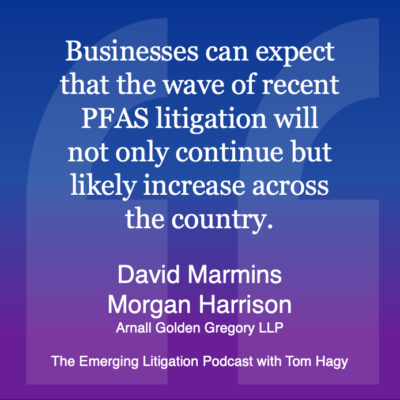
    Listen to my interview with David Marmins and Morgan Harrison, Partners with Arnall Golden Gregory LLP. David and Morgan have been at the forefront of PFAS litigation since they began defending carpet manufacturers in suits brought by two Alabama municipalities in 2017.

    BONUS! Read David and Morgan’s article on the subject, just published in the Journal of Emerging Issues in Litigation.

    I hope you enjoy the episode. If so, give us a rating!

    This podcast is the audio companion to the Journal on Emerging Issues in Litigation. The Journal is a collaborative project between HB Litigation Conferences and the vLex Fastcaselegal research family, which includes Full Court Press, Law Street Media, and Docket Alarm.

    If you have comments, ideas, or wish to participate, please drop me a note at Editor@LitigationConferences.com.

    Tom Hagy
    Litigation Enthusiast and
    Host of the Emerging Litigation Podcast
    Home Page
    LinkedIn

    Loved hearing what David & Morgan had to say?

    Read their Journal Article!

    PFAS Regulation: EPA Ushers in Next Era of Mass Tort and Environmental Litigation

    Want to appear on the
    Emerging Litigation Podcast?

    Send us your idea! 

    David Marmins

    David MarminsArnall Golden Gregory LLP

    David is a partner in the Litigation and Real Estate practices and co-chair of the firm’s Retail industry team. David has concentrated his practice on complex civil litigation since becoming a lawyer in 1995. While he handles a variety of high stakes disputes, he has developed a specialty in litigation related to commercial real estate and the retail industry. Clients hire him to resolve construction and leasing contract disputes, environmental nuisance and toxic tort matters, construction payment and defect claims, easement and right-of-way disputes, and various other disagreements over land use and ownership. David is at the forefront litigation over the use and disposal of PFAS, the subject of this episode, and currently serves as defense counsel to three carpet manufacturing industry clients in PFAS litigation in federal and state courts.

    Morgan Harrison

    Morgan HarrisonArnall Golden Gregory LLP

    Morgan is a partner in the firm’s Litigation & Dispute Resolution and Employment practices. She is also a member of the Payments Systems & Fintech and Background Screening industry teams. Morgan represents payment processors, consumer reporting agencies, fiduciaries, government entities, and individuals. She handles a wide variety of matters involving contract disputes, business torts, class actions, Fair Credit Reporting Act litigation, fiduciary disputes, and fraud and misrepresentation claims. Her experience includes work at both the trial and appellate levels across the country. Like David (above), Morgan practices on the leading edge of PFAS litigation. Since 2016, she has represented multiple companies in the carpet manufacturing industry in PFAS litigation brought in state and federal courts in Georgia and Alabama. Morgan has also published several articles with the American Bar Association and spoken at the Georgia Environmental Conference on the state of play in PFAS regulations and emerging trends in PFAS litigation.

  • Hair Relaxer Injury Litigation

    Hair Relaxer Injury Litigation

    Hair Relaxer Injury Litigation with Jennifer Hoekstra

    Last year the Aylstock, Witkin, Kreis & Overholtz law firm filed the first class action against L’Oréal and Softsheen-Carson for injuries, primarily to Black women, allegedly caused by hair relaxers and straighteners.  Now there are more than 60 cases consolidated in multidistrict litigation. 

    Recent studies cited in the litigation show that Black women who use these products develop cancers at a rate disproportionate to that experienced by white women. The plaintiffs say the products are marketed not only to women but to girls as well. The companies challenge the accuracy of the study methods and say, in the case of a key NIH study, that all of women had sisters who were diagnosed with cancer.

    Listen to my interview with veteran mass tort plaintiff attorney Jennifer M. Hoekstra, a partner with Aylstock, Witkin, Kreis & Overholtz. Jennifer boasts an impressive academic and professional record, including graduation from two of the nation’s top schools.  She earned her Bachelor of Arts in Environmental Science from Columbia College, Columbia University in the City of New York. She relocated to Louisiana to attend Tulane Law School, where she earned her J.D. while also completing a certificate in Environmental Law.  During her law school career, she spent a semester studying at the University of Wisconsin School of Law and visited on their International Law Journal as a Junior Member during her Hurricane Katrina evacuation semester.

    This is Jennifer’s second appearance on the podcast. She also was my guest on Greatly Exaggerated: The Impact of Bankruptcy on Mass Tort Litigation.

    *******

    This podcast is the audio companion to the Journal on Emerging Issues in Litigation. The Journal is a collaborative project between HB Litigation Conferences and the Fastcase legal research family, which includes Full Court Press, Law Street Media, and Docket Alarm. The podcast itself is a joint effort between HB and our friends at Law Street Media. If you have comments or wish to participate in one our projects please drop me a note at Editor@LitigationConferences.com.

    Tom Hagy

    (actual size)

    Tom Hagy
    Litigation Enthusiast and
    Host of the Emerging Litigation Podcast
    Home Page
    LinkedIn

    Jennifer Hoekstra

    Jennifer HoekstraAlystock Witkin Kreis & Overholtz

    Jennifer M. Hoekstra is a partner with Aylstock, Witkin, Kreis & Overholtz, PLLC. A native of Saint Paul, Minnesota, Ms. Hoekstra boasts an impressive academic and professional record, including graduation from two of the nation’s top schools. She earned her Bachelor of Arts in Environmental Science from Columbia College, Columbia University in the City of New York.

    She is licensed to practice before all Louisiana state and federal courts and the U.S. District Courts for the Northern District of Texas and Eastern District of Missouri as well as the 5th and 8th Circuit Courts.

  • Does the European Union Commission’s Proposal on AI Liability Act as a Game Changer for Fault-Based Liability Regimes in the EU?

    Does the European Union Commission’s Proposal on AI Liability Act as a Game Changer for Fault-Based Liability Regimes in the EU?

    Guest Writer

    Nils Lölfing

    Nils LölfingBird & Bird LLP

    Does the European Union Commission’s Proposal on AI Liability Act as a Game Changer for Fault-Based Liability Regimes in the EU?

    By Nils Lölfing

    Photo by Christian Lue on Unsplash

    Abstract: In this article, the author discusses increasing risks that artificial intelligence system providers, developers, and users will face from a liability directive proposed by the European Union Commission.

    The AI Liability Directive proposed by the European Union Commission puts additional liability risks on providers, developers and users of specifically high-risk artificial intelligence (AI)  systems. If enacted, it could become a game changer for fault-based liability regimes in the European Union, as it introduces a presumption of causality to prove fault and a right of access to evidence from companies and suppliers regarding high-risk AI systems. This will help victims enforce non-contractual civil law claims for damages caused by an AI system.

    What this is about and how it increases the liability risk exposure of actors in the AI systems supply chain will be discussed in this article.

    Background

    On September 28, 2022, the EU Commission published its  proposal for a Directive to establish new fault-based liability  rules for AI systems (AI Liability Directive), along with a reform for the existing rules on the strict liability of manufacturers for defective products. The current article focuses on the draft AI Liability Directive, which complements the AI Act by facilitating fault-based civil liability claims for damages, which the AI Act as specific product safety Regulation does not offer.

    On June 30, 2021, the EU Commission published an inception impact assessment road map on adapting civil liability rules to the digital age, in particular considering AI (based on the EU Commission’s White Paper on AI of February 19, 2020). With respect to AI in particular, the AI liability proposal is part of the approach by the EU Commission to develop an ecosystem of trust for AI (together with the proposed AI Act and the revised Product Safety and Machinery Directive).

    The proposal addresses the peculiarities tied to AI such as autonomous behavior and limited predictability, when applying fault-based liability rules. According to the EU Commission, the peculiarities of AI create legal uncertainties for businesses and make it difficult for consumers and other injured parties to receive compensation. In fact, in a representative survey of 2021, liability ranked among the top three barriers to the use of AI by European companies that are planning to but have not yet adopted AI.

    These new requirements, such as a presumption of the burden of proof, have the potential to fundamentally change the EU’s liability regime and will increase the exposure to liability risks for businesses who are involved in manufacturing, distributing, or using AI.

    What Is It All About and Why Is It a Potential Game Changer?

    The AI Liability Directive proposal intends to enable consumers and businesses injured by AI-based products like robots, drones, or smart-home systems to claim compensation more easily by way of non-contractual civil law claims for damages caused by such AI systems. The proposal generally covers any type of AI system (although, like the AI Act, it seems to predominantly intend to cover highrisk AI) and obliges providers, developers, and users of AI systems to compensate any type of damage covered by national law (life, health, property, privacy, discrimination, etc.) and for any type of victim (individuals, companies, organizations, etc.). This requires errors made by someone from within the supply chain, such as a provider, developer, or user of an AI system who caused the damages. Because of the peculiarities mentioned in AI systems, it will typically be difficult to prove a wrongful action or omission by a provider, developer, or user of an AI system.

    Therefore, the AI Liability Directive proposal recommends two groundbreaking changes, which will modify common liability rules, as we currently know them across most of the European Union:

    • Presumption of causality to prove fault. The proposed AI Liability Directive establishes a rebuttable presumption of causality, to enable claimants to be able to demonstrate a  causal link between a failure of an AI system (e.g., in the form of flawed output) and any damage caused to the claimant as the individual or business using the AI system. For example, where certain obligations under the AI Act are not complied with, fault of the relevant person that developed, provided, or used the AI system will be presumed. The presumed fault occurs only if it is reasonably likely, from the circumstances in which the damage occurred, that such fault has influenced the output produced by the AI system or the failure of the AI system to produce an output that gave rise to the damage. Such a fault can also be presumed
    by a court of law, on the basis of non-compliance, which would lead to a court order for disclosure or preservation of evidence (detailed in the next point). The presumption of causality generally applies to all AI systems, but in the case of non-high-risk AI systems it only applies where a court determines that it is excessively difficult for the claimant to prove the causal link. If the presumption is triggered, the burden is on the defendant to show that its system is not the cause of the harm suffered.
    • Right to access evidence from companies and suppliers regarding high-risk AI. When claiming damages from a high-risk AI system provider, developer, or user, claimants have disclosure powers and may ask the court to order the disclosure of relevant evidence about specific high-risk AI systems that are suspected of having caused damage. For this to happen, the claimant must make its claim plausible and show to a court that the damages were potentially caused by a high-risk AI system. The right to access evidence will ease the proving of claims and identify non-responsible actors in the supply chain much faster. However, commercially sensitive information (like trade secrets) is still protected. The access right does not pertain to AI systems that are not considered high-risk under the AI Act.

    What Are the Resulting Risks for Providers, Developers, and Users of AI Systems and How to Protect Against Them?

    The proposed AI Liability Directive significantly helps victims that suffered damages through AI systems with the presumption of causality and the right to access evidence, specifically with regard to high-risk AI systems.

    Risks for providers, developers, and users of (specifically highrisk) AI systems are not negligible in this regard. Claims brought by the AI Liability Directive can be very broad and far-reaching, as they include any type of damage covered by national law, and therefore typically also include non-material damages, such as for discrimination or potentially even privacy harms resulting from, for example, ad targeting. With the prospect of mass claims, providers, developers, and users of AI systems may see big obstacles in the future.

    If the proposed AI Liability Directive is enacted, it will be much more difficult for providers, developers, and users of AI to adequately protect themselves against damage claims due to acts or omissions of their AI systems. Nevertheless, providers, developers, and users of AI systems should find strategies to protect themselves
    against the presumption of causality by showing that a fault of their specific AI system could not have caused the damage. Additionally, strategies on how their information can be protected from being disclosed to claimants are sensible to mitigate disproportionate liability risk exposure.

    Outlook

    Specifically, developers of high-risk AI systems will face additional burden going forward. They not only have to comply with the complementary future AI Act, which is likely to put in place a couple of onerous obligations before their AI systems can be brought on the EU market. Under the AI Liability Directive, developers will also have to find strategies to defend themselves against potential claims as another layer of AI-related legal burdens on top of the AI Act.

    However, there is still enough time for providers, developers, and users of AI systems to influence the AI Liability Directive proposal. The European Parliament and the Council will soon start discussing and negotiating the Commission’s proposal. This may still not be the end of the road, at all. For now, the EU Commission has refrained from proposing strict liability regimes for AI systems, although the public consultations have highlighted a preference for such a regime among its respondents (whether with or without insurance).

    However, the EU Commission also highlighted that if AI systems could affect the public at large, namely putting a risk to important legal rights, such as the right to life, health, and property, then such strict liability regime will be reconsidered. To monitor developments, the EU Commission put in place a program to obtain information of incidents involving AI systems.

    With this information the EU Commission intends to assess whether additional measures would be needed, such as introducing a strict liability regime and/or mandatory insurance. This space must be closely watched!

  • Alleged Hair Product Injuries Impact Women of Color

    Alleged Hair Product Injuries Impact Women of Color

    L’Oréal Among Defendants in Litigation Over Hair Products.

    • Dozens of hair straightener cases allege higher incidence of cancers and other diseases.
    • Plaintiffs in dry shampoo litigation say products contain benzene. 
    • Seven companies control the U.S. hair product industry.

    Photo by Giorgio Trovato on Unsplash

    L’Oréal has been hit hard in recent hair care litigation related to straighteners, relaxants, and dry shampoos. L’Oréal was named a defendant in nearly sixty complaints alleging that straightening products manufactured by the beauty giant have caused cancer in its consumers. L’Oréal has also been named a defendant in a proposed class-action for its Redken dry shampoo that allegedly contains the carcinogen benzene. Other large industry players such as Johnson and Johnson and Unilever have also been accused of selling dry shampoos with dangerous levels of benzene.

    Straighteners and Relaxers Litigation

    Dozens of cases have been consolidated in multidistrict litigation against L’Oréal for its potentially cancerous hair straighteners and relaxers. Mitchell v. L’Oréal USA Inc. is a typical case.  It was filed by Missourian Jennifer Mitchell, a black woman, after her diagnosis of uterine cancer which she claims was caused by endocrine disrupting chemicals (EDCs) in L’Oréal’s hair straighteners and relaxers. Jennifer Mitchell was diagnosed with her cancer on August 10, 2018.

    “Ms. Mitchell was first exposed to EDCs and/or phthalate-based products around 2000, at or around the age of 10, when she began using Defendants’ Product.” She used the products as instructed for 22 years, leaving the chemicals in her hair for long periods of time. At the age of 28, she was diagnosed with uterine cancer despite the cancer not being in her family history. As a result of her cancer diagnosis, Ms. Mitchell had to undergo a full hysterectomy, causing her emotional and physical pain, and rendering her unable to have children.

    The complaint details a long history of marketing harmful hair relaxers and straighteners to black women to combat their natural hair texture and meet a Eurocentric white beauty standard.

    The filed complaint consisted of fifteen counts ranging from strict liability failure to warn and negligence to medical monitoring. The products included in the complaint were Motions, Dark & Lovely, Olive Oil Relaxer, and Organic Root Stimulator.

    Ms. Mitchell’s evidence supports her claims that the products allegedly caused her cancer due to EDCs. Health issues linked to EDCs include uterine cancer, breast cancer, uterine fibroids, endometriosis, and preterm delivery, amongst others. “On October 17, 2022, a study led by the National Institutes of Health (NIH) reported findings that women who frequently used chemical hair straightening or hair relaxer products were more than twice as likely to develop uterine cancer as women who did not use such products.

    Ms. Mitchell’s case was consolidated with dozens of other cases against L’Oréal and other defendants in Chicago federal court as In re: Hair Relaxer Marketing, Sales Practices, and Products Liability Litigation. The consolidation was opposed on December 7, 2022, by L’Oréal USA, Inc., L’Oréal USA Products, Inc., SoftSheen-Carson LLC, and SoftSheen-Carson (W.I.), Inc., collectively known as “the L’Oréal defendants.”

    In the L’Oréal defendants’ response to the motion for consolidation, the company first outlined its issues with the frequently referenced NIH study that catalyzed the filing of many of the plaintiffs’ lawsuits. For example, L’Oréal stated that the study “did not collect information on specific brands or ingredients used by the participants,” and that “all of the women in the NIH Study had sisters who had been diagnosed with breast cancer.” L’Oréal also argued that none of the plaintiffs’ cases were similar enough to consolidate. The plaintiffs’ cases differed in products used, timespans, named defendants, and injuries.

    Further, L’Oréal argued that if consolidation had to happen, then the case should use the Southern District of New York as a forum, where fifteen of the matters were pending, and where the company has its headquarters. The defendant also disagreed with the Chicago judge that the case would be assigned to—The Honorable Mary M. Rowland—claiming she lacked multidistrict litigation (MDL) experience.

    Despite L’Oréal’s best efforts, its motion was fruitless. Cases in “Schedule A” of the MDL (MDL No. 3060) were consolidated on February 6, 2023. Cases from California, New York, Georgia, and Illinois, including Ms. Mitchell’s case, were assigned to The Honorable Mary M. Rowland in the Northern District of Illinois. Since the original transfer, many other actions have been added to the MDL.

    Dry Shampoo Litigation

    In addition to allegations that its relaxing and straightening hair products cause cancer, L’Oréal is also currently facing accusations of using benzene, a well-known carcinogen, in its dry shampoo products. Other big-names that have been appearing in dry-shampoo complaints include Johnson and Johnson (J&J)’s OGX brand and Unilever’s Dove, Nexxus, Suave, Tigi and Tresemmé brands.

    What Is Benzene?

    Benzene is a chemical compound that can be both naturally and man-produced. Its harm to human health has been at the heart of many instances of litigation. Benzene, “a component of crude oil, gasoline, and cigarette smoke,” has been determined to be unsafe for human exposure in any quantity greater than zero. Government bodies such as the Food and Drug Administration (FDA), the Environmental Protection Agency, the Department of Health and Human Services, and the World Health Organization have spoken out against the dangers of benzene, and have attempted to limit its exposure to the public.

    Valisure’s Report

    On October 31, 2022, Valisure released a Citizen Petition on Benzene in Dry Shampoo Products, which prompted the wave of dry shampoo litigation hitting the U.S. court system. The company claims to have tested 148 batches of dry shampoo from 34 different brands and found that 70% of its samples contained benzene in varying amounts.

    Pictured Above: Valisure Table 6. Overview of first spray analyses by brand. In some cases, two bottles from the same lot were analyzed and these duplicate lots are grouped by a black outline around the two values.

    The petition itself requested a recall of the products Valisure found to be contaminated with benzene, that the Commissioner of the FDA establish better procedures for informing the public of their exposure to dangerous substances in cosmetics, amongst other requests.

    Hirsch v. L’Oréal USA, Inc.: The Complaint

    In a complaint filed on November 22, 2022, Plaintiff Eileen Hirsch and others similarly situated brought suit against L’Oréal USA, Inc. for its Redken brand dry shampoo products. The class action lawsuit alleges that the product line contains benzene, a carcinogen with evidence linking it to causing cancers such as leukemia, amongst other illnesses. Benzene was not a listed ingredient in the products. Yet, the independent study performed by Valisure found that the product contained as much as 7.55 parts per million (“ppm”) of benzene.

    Ms. Hirsch, a Chicago resident, purchased multiple canisters of the Redken dry shampoo from a salon in the area. The complaint alleges that she was harmed in two separate ways: “First, Ms. Hirsch purchased adulterated and misbranded products that were illegally sold to her, and therefore worthless. Second, Ms. Hirsch was deceived by Defendant’s representations and omissions regarding the presence of benzene in the Products.” Other class members are also individuals who have purchased Redken dry shampoo.

    Defendant’s Motion to Dismiss

    Defendant L’Oréal did its best to get the case dismissed in a motion filed on February 7, 2023. In its Motion to Dismiss, L’Oréal gave several reasons for the complaint’s deficiency, including that the plaintiffs lacked standing to bring the claim and that the claims are preempted. Further, L’Oréal argues that the independent Valisure study relied upon by the plaintiff is insufficient to support the claims, stating that “Valisure . . . [is an] untrustworthy laboratory that has been censured by the [FDA] and federal judges alike.”

    Plaintiffs responded to L’Oréal’s Motion to Dismiss, stating that the case was simple, standing had been correctly established, and the defendant’s allegations of insufficient Valisure testing were premature. L’Oréal has replied to the plaintiffs’ motion, but the court has not yet ruled on the Motion to Dismiss, determining the fate of the case.

    Looking Forward

    Those following the concert of haircare litigation should watch closely to see which product lines are tapped next and why. L’Oréal may be one of the more popular defendants, but that does not mean there aren’t other offenders.

    Most beauty products known to average consumers are owned by one of seven large companies—J&J, L’Oréal, Eéste Lauder, Unilever, Procter and Gamble, Shiseido, and Coty. For better or for worse, these corporate identities pioneer most of the research and manufacturing that goes into the creation of the world’s fashion, beauty, and hygiene products. That means when these companies use carcinogens, they can likely be found in a mind-boggling number of items behind your own bathroom mirror, leading to mass injury and extremely complex litigation.

    By Victoria Kline

    By Victoria Kline

    Victoria is a third-year student at the University of Miami School of Law, Juris Doctorate Candidate 2023, Law Review Staff Editor, and soon-to-be associate at Jones Day.

  • Medical Monitoring and PFAS Litigation—A Significant Growing Trend

    Medical Monitoring and PFAS Litigation—A Significant Growing Trend

    The Author

    John P. Gardella

    John P. GardellaCMBG3 Law

    John P. Gardella (jgardella@cmbg3.com) is a shareholder with CMBG3 Law and a recognized thought leader on PFAS issues. In his environmental and toxic torts practice, he represents companies ranging in size from small shops to the Fortune 100. John is also a member of the Editorial Board of Advisors for the Journal of Emerging Issues in Litigation.

    The Journal on Emerging Issues in Litigation

    Emerging Litigation Podcast

    Emerging Litigation PodcastProduced by HB Litigation and Law Street Media

    Interviews with leading attorneys and other subject matter experts on new twists in the law and how the law is responding to new twists in the world.

    Medical Monitoring and PFAS Litigation—A Significant Growing Trend

    “The arguments in favor of medical monitoring as a cause of action in lawsuits stem from the notion that having such programs funded by allegedly tortious companies promotes the public health benefit of early detection, which in turn often results in lower health care costs to plaintiffs and society at large.”

    Abstract: Medical monitoring as a tort claim is a hot-button issue in toxic torts, personal injury, and product liability litigation. The ubiquity of PFAS chemical compounds and the real and potential harm to health and the environment they create make examination of the medical monitoring debate specific to this burgeoning litigation worthy of individual attention. This article provides an explanation of PFAS, a brief overview of medical monitoring claims, how PFAS medical monitoring claims have impacted the litigation thus far, and what legal cases are pending that could alter the course of traditional medical monitoring litigation in the future.

    Download the article now!