Tag: Trial

  • Persuasion as Direct and Honest Trial Advocacy with Jack Siegal

    Persuasion as Direct and Honest Trial Advocacy with Jack Siegal

    Persuasion as Direct and Honest Advocacy with Jack Siegal

    The relevance to jury trials and jury persuasion is obvious. According to studies cited in a 2019 article in Business Insider, people develop first impressions of you “even before you open your mouth.” That means your mere appearance “affects how trustworthy, promiscuous, and powerful people think you are.”

    It’s the trustworthy part that attorneys need to pay attention to. Regardless of the strength of their case or whether the law is on their side, an attorney still must be persuasive. And, unless the audience – whether it is a judge, a panel of judges, a regulatory body, or a jury – sees you as credible, the rest will likely not matter. But what makes an attorney, or anyone for that matter, credible? Is this something you’re born with or is it something you can develop over time? Is it true, as some studies suggest, that you can change some first impressions by making some changes in how you present yourself, or are you just stuck with a less than trustworthy vibe? Interested in upping your jury persuasion game?

    A Good Place to Start

    Listen to my interview with attorney Jack I. Siegal, a partner with Fox Rothschild LLP in Boston. Jack believes we can all make positive adjustments in the nuanced practice of achieving credibility.

    This podcast is the audio companion to the Journal on Emerging Issues in Litigation. The Journal is a collaborative project between HB Litigation Conferences and the Fastcase legal research family, which includes Full Court Press, Law Street Media, and Docket Alarm. The podcast itself is a joint effort between HB and our friends at Law Street Media. If you have comments or wish to participate in one our projects please drop me a note at Editor@LitigationConferences.com.

    P.S. Toward the end I could barely manager my ADHD and took the conversation into a chat that ranged from TikTok clips of the attorneys in the Amber Heard/ Johnny Depp trial, somewhat on point, to discussion of great drumming, which would take some crafty knots to tie that in. Jack, being good natured and a good sport, went right along with me. Also, that’s me on the bongos.

    Tom Hagy

    (actual size)

    Tom Hagy
    Litigation Enthusiast and
    Host of the Emerging Litigation Podcast
    Home Page
    LinkedIn

    Jack Siegal

    Jack SiegalFox Rothschild LLP

    Jack is a seasoned trial lawyer with experience spanning 20 years experience, during which he has tried cases in several jurisdictions. He also provides transactional counseling for executive compensation agreements, mergers, and other matters. Jack focuses on complex commercial disputes, government investigations and white-collar defense, regulatory proceedings, and compliance across a wide range of industries, including financial, healthcare, high-technology, and government contracting.  Education: Santa Clara University School of Law, J.D., magna cum laude; Santa Clara University, B.A., Greek and Latin, magna cum laude, Phi Beta Kappa; University of Virginia, Graduate Study, Classics and Classical Languages, Literature, and Linguistics.

  • Modernizing Our Court System (but Don’t Attend Trial from Your Car) with Hon. Scott Schlegel

    Modernizing Our Court System (but Don’t Attend Trial from Your Car) with Hon. Scott Schlegel

    Modernizing Our Court System

    Photo by Ernest Ojeh via Unsplash

    The judicial system is overburdened for a number of reasons, and greater efficiency is a must if court systems are to achieve their important objectives.

    Technology and openness to all that it offers is a key solution, something that was tried, tested and proven during the Covid pandemic which closed courthouses and law offices around the nation. Along with technology, improvements can be made by reexamining their orthodoxies about how things should be done based on decades of “that’s how we’ve always done it.”

    This is a matter of importance to judges, lawyers, plaintiffs, defendants, and numerous others whose lives are impacted directly or indirectly when either the civil or criminal justice systems are inefficient, cumbersome, costly, confusing, slow, and even inaccessible. If only we had an example of at least one judge who is trying to do something about it. But wait …

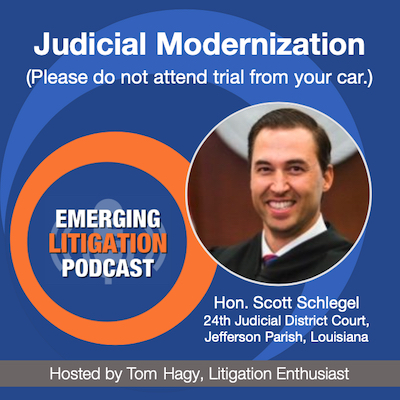
    Listen to my interview with the Hon. Scott Schlegelwho presides over criminal civil and domestic matters in Louisiana’s 24th Judicial District Court in Jefferson Parish. Judge Schlegel was elected to the bench in 2013, and quickly earned a reputation as a modern judge using technology to bring his court into the digital age, even before the pandemic forced the change on other jurists. He partnered with tech companies to develop efficiency tools like chat bots and online forms software. He launched courtonline.us and onlinejudge.us to consolidate his processes for the public. Judge Schlegel has received numerous awards and accolades, like the National Center for State Courts’ 26th Annual William H. Rehnquist Award for Judicial Excellence. He was the American Bar Association’s 2021 Legal Rebel. And he received the Fastcase 50 Award for his innovative approaches to the administration of justice. Prior to becoming a judge, he was a prosecutor and litigator. Judge Schlegel graduated with honors from Loyola University New Orleans College of Law.

    This podcast is the audio companion to the Journal on Emerging Issues in Litigation. The Journal is a collaborative project between HB Litigation Conferences and the Fastcase legal research family, which includes Full Court Press, Law Street Media, and Docket Alarm. The podcast itself is a joint effort between HB and our friends at Law Street Media. If you have comments or wish to participate in one our projects please drop me a note at Editor@LitigationConferences.com.

    Tom Hagy

    (actual size)

    Tom Hagy
    Litigation Enthusiast and
    Host of the Emerging Litigation Podcast
    Home Page
    LinkedIn

    Hon. Scott Schlegel

    Hon. Scott SchlegelLouisiana State Judge, Jefferson Parish

    Judge Schlegel was elected to the bench in 2013, and quickly earned a reputation as a modern judge using technology to bring his court into the digital age, even before the pandemic forced the change on other jurists. He partnered with tech companies to develop efficiency tools like chat bots and online forms software.

    He launched courtonline.us and onlinejudge.us to consolidate his processes for the public. Judge Schlegel has received numerous awards and accolades, like the National Center for State Courts’ 26th Annual William H. Rehnquist Award for Judicial Excellence. He was the American Bar Association’s 2021 Legal Rebel. And he received the Fastcase 50 Award for his innovative approaches to the administration of justice. Prior to becoming a judge, he was a prosecutor and litigator. Judge Schlegel graduated with honors from Loyola University New Orleans College of Law.

  • Class Certification Evidence: Standards of Admissibility and Probative Value Among the Circuits

    Class Certification Evidence: Standards of Admissibility and Probative Value Among the Circuits

    Class Certification Evidence

    What Are the Standards of Admissibility and Probative Value Among the Circuits?

    Numerous splits exist among the circuits on two key certification issues: What is required to prove the elements for class certification and whether plaintiff’s certification evidence must be admissible. Further, courts apply different admissibility standards to fact evidence than to expert evidence. Certain courts have issued clear guidance on these important issues, while others have remained circumspect, sending mixed signals. This is particularly vexing for defendants, who may be sued in more than one district or circuit. What is sufficient for class certification in one jurisdiction may be inadequate in another. With standards unsettled, counsel must anticipate and preserve the right to revisit class certification by preserving all objections and the factual record. Listen as the panel of class action attorneys discusses the standards of admissibility of evidence at certification and best strategies for leveraging ambiguities.

    Questions Addressed

    • How can defense counsel preserve objections to admissibility?
    • How can counsel leverage the law of other circuits in jurisdictions with no controlling precedent?
    • What does how a court assesses evidence imply about its view on admissibility standards?

    Webinar Outline

    1. Fact evidence
      1. Need not be admissible
      2. Must be admissible
      3. Ambiguous
    2. Expert evidence
      1. Full Daubert analysis
      2. Limited Daubert analysis
    3. Strategies for managing and leveraging the uncertainty

    Strafford and HB Logos

    On Demand CLE Webinar

    A Strafford production specially selected for HB audiences.

    Learn Strategies for
    Opposing or Narrowing Class Certification
    and Preserving Objections

    This Strafford production has been specially selected for HB audiences.

    Speakers

    Kevin Daly
    Counsel
    Robinson & Cole

    Alexander Madrid
    Partner
    McGuire Woods

    Michael Ruttinger
    Partner
    Tucker Ellis

    Robert Sparkes, III
    Partner
    K&L Gates

    This Strafford production has been specially selected for HB audiences.

  • Greatly Exaggerated: The Impact of Bankruptcy on Mass Torts with Jennifer Hoekstra

    Greatly Exaggerated: The Impact of Bankruptcy on Mass Torts with Jennifer Hoekstra

    ear plugs on red background

    When large companies face massive mass tort litigation, one way they can survive is to file for bankruptcy protection and reorganize. 

    3M recently put its Aearo Technologies subsidiary into bankruptcy in the face of more than 230,000 claims that’s its defective earplugs caused hearing loss.  When it came to filing bankruptcy 3M said Aearo was solely responsible for the product. But for several years of litigation 3M argued that it, as the parent, was solely responsible, not its various subsidiaries. That was a strategy that was beneficial to the company in multidistrict litigation.

    Why did 3M suddenly change course? What impact does bankruptcy have on claimants? Could corporations use bankruptcy law to neuter mass tort litigation for all eternity?  And how did the strategy sit with the federal magistrate judge overseeing the multidistrict litigation?

    Joining me to discuss this incredibly complex litigation is Jennifer M. Hoekstra, a partner with Aylstock Witkin Kreis & Overholtz. Jennifer has been involved in all varieties of complex litigation since 2007, focusing on mass torts, drug and device litigation, and others.  She has a J.D. from Tulane, which she earned while also completing a certificate in Environmental Law. She has actively served as trial counsel or an integral member of the trial team in several of the 3M Earplug trials securing nearly $300 million in compensatory damages for military veterans. Jennifer shared her insights on the intersection of complex mass torts and bankruptcy, an intersection that wasn’t originally on her roadmap.

    This podcast is the audio companion to the Journal on Emerging Issues in Litigation. The Journal is a collaborative project between HB Litigation Conferences and the Fastcase legal research family, which includes Full Court Press, Law Street Media, and Docket Alarm. The podcast itself is a joint effort between HB and our friends at Law Street Media. If you have comments or wish to participate in one our projects please drop me a note at Editor@LitigationConferences.com.

    Tom Hagy

    (actual size)

    Tom Hagy
    Litigation Enthusiast and
    Host of the Emerging Litigation Podcast
    Home Page
    LinkedIn

    P.S. During the podcast I mentioned an article and wanted to share the link. It’s called “Bankruptcy Grifters” by Lindsey D. Simon. It was published in the Yale Law Journal.

    Jennifer Hoekstra

    Jennifer Hoekstra

    Jennifer M. Hoekstra is a partner with Aylstock, Witkin, Kreis & Overholtz, PLLC. A native of Saint Paul, Minnesota, Ms. Hoekstra boasts an impressive academic and professional record, including graduation from two of the nation’s top schools. She earned her Bachelor of Arts in Environmental Science from Columbia College, Columbia University in the City of New York. She relocated to Louisiana to attend Tulane Law School, where she earned her J.D. while also completing a certificate in Environmental Law. During her law school career, she spent a semester studying at the University of Wisconsin School of Law and visited on their International Law Journal as a Junior Member during her Hurricane Katrina evacuation semester.

    Ms. Hoekstra has been involved in complex litigation cases of all forms since 2007. Ms. Hoekstra has earned a solid reputation as a skilled writer and researcher, and plays an integral role in several complex litigation cases, practicing in the areas of Pharmaceutical Mass Torts, Defective Device Mass Torts, and other complex litigation. She is currently a member of the Proton-Pump Inhibitors Plaintiff Executive Committee and the 3M Earplugs MDL Discovery and ESI Committee.

    Jennifer was central to the successful outcome in bellwether trials in the Genetically Modified Rice, Actos and DePuy Pinnacle Hip MDLs with more than $11 Billion in trial verdicts resulting from those cases. She has actively served as trial counsel or an integral member of the trial team in several of the 3M Earplug trials securing nearly $300 Million in compensatory damages for military veterans.

    She is licensed to practice before all Louisiana state and federal courts and the U.S. District Courts for the Northern District of Texas and Eastern District of Missouri as well as the 5th and 8th Circuit Courts. She is a member of the American Bar Association, the Louisiana Bar Association, the Acadiana Federal Bar Association, the Alexandria Louisiana Bar Association and the American Association for Justice. She is a member of Women En Mass, founding member of the board for the Society Women Trial Lawyers and was also a member of the inaugural 2018 Board of Directors for Emerge Louisiana.

  • Under Pressure: Courts and Lawyers Trying to Deal With It with Diana Manning

    Under Pressure: Courts and Lawyers Trying to Deal With It with Diana Manning

    The pressure on trial lawyers, judges, plaintiffs, defendants, and court systems is only increasing.

    The backlog of cases in New Jersey, for example, nearly quadrupled between February 2020 and 2021, the first year of the pandemic, according to NJ Spotlight News (NJSN). The state is also facing a historic shortage of jurists, NJSN reported, “leading to overworked judges, huge case backlogs and nearly 7,000 defendants in jail without bail, some 500 of them for more than two years despite a law that essentially requires a trial within two years for anyone detained.”

    As reported by NJSN, one court official told the state Assembly Budget Committee about the impact of the pandemic on the court system: “Buildings were closed to most in-person trials for more than a year, although other proceedings continued virtually. The business closures and high unemployment led to a housing crisis that resulted in more than 46,000 pending cases that involve landlord-tenant issues . . . . But with all courts open and staff back to work in person, it is impossible to eliminate the backlog of cases with so many open judge seats.” The problem is attributed to the state Senate, where the process is mired, even though the governor is making appointments.

    According to the National Counsel for State Courts, backlogs at one third of U.S. courts increased by 5%.  It would have been worse had courts not held virtual hearings.

    Using the Court Statistic Project database, the numbers reveal in stark terms the impact the pandemic had in the year it came to America. Dispositions dropped from 43M in 2019 to 28M in 2020. Bench trials fell from 3M in 2019 to under 2M in 2020. Jury trials plummeted from 49K in 2019 to less than 19K in 2020.

    The Washington Post reported that the Pennsylvania Supreme Court declared a judicial emergency and extended deadlines. Virginia’s Supreme Court suspended nonessential proceedings. The Iowa Supreme Court pushed back criminal trials and the Alabama’s Supreme Court suspended in-person proceedings. New Jersey Supreme Court Chief Justice Stuart Rabner warned that the judicial shortage “comes with a price.”

    Listen to my interview with Diana C. Manning, Managing Principal, Bressler, Amery & Ross, P.C., for the fallout from the judicial shortage and swelling case backlogs, and what needs to be done to dig out. An experienced and award winning complex commercial litigator, Diana is co-chair of the firm’s business and commercial litigation practice group. She received her J.D. from Rutgers University School of Law.

    This episode is the first of two about challenges to the court system and what can be done to address them. An upcoming episode will feature an Alabama state judge who is leading the way in the use of technology to modernize the courts.

    This podcast is the audio companion to the Journal on Emerging Issues in Litigation. The Journal is a collaborative project between HB Litigation Conferences and the Fastcase legal research family, which includes Full Court Press, Law Street Media, and Docket Alarm. The podcast itself is a joint effort between HB and our friends at Law Street Media. If you have comments or wish to participate in one our projects please drop me a note at Editor@LitigationConferences.com.

    Tom Hagy

    (actual size)

    Tom Hagy
    Litigation Enthusiast and
    Host of the Emerging Litigation Podcast
    Home Page
    LinkedIn

    Diana Manning

    Diana Manning

    Diana Manning is Managing Principal at Bressler, Amery & Ross in New Jersey. Diana has more than two decades of experience in complex commercial litigation at both the trial and appellate levels. She is Co-Chair of the firm’s Business and Commercial Litigation practice group, and spearheads the firm’s Appellate practice team. Diana has developed a successful track record of trial verdicts and settlements, especially in complex matters. She also has a reputation as a strategic, thoughtful, and fearless advocate for all of her clients.

    A distinguished trial lawyer, Diana is Certified by the Supreme Court of New Jersey as a Civil Trial Attorney. She is also an accomplished appellate lawyer who has participated in six matters before the New Jersey Supreme Court, including arguing four times. Diana is an avid presenter and author on business litigation, legal ethics, and professional liability. She is the author of the New Jersey Chapter of The Law of Lawyer’s Liability: Fifty-State Survey of Legal Malpractice, ABA/First Chair Press, which provides an overview of the laws governing attorney malpractice in each state.

    To date, Diana’s distinguished career has brought her offices and honors from many professional and legal industry organizations. Diana served on the District XA Ethics Committee for 10 years and was appointed Chair by the New Jersey Supreme Court from 2017-2019. She is also President of the New Jersey Women Lawyers Association, and is a Past President of Trial Attorneys of New Jersey, the Morris County Bar Association, and the Morris County Bar Foundation.

  • Lawyers for Good with Tara Trask and Jason Flom

    Lawyers for Good with Tara Trask and Jason Flom

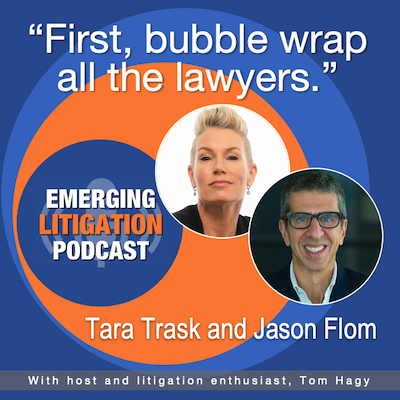
    If you’re feeling bad about being a lawyer, or just maybe tingling with the holiday spirit of giving back, this episode is for you. Listen to three professionals (well, maybe two “professionals”) who deeply admire for the legal profession, the important role attorneys play in society, and all the potential they have to make the world a better place.

    When there is strife, there is a supporting organization, and with them are lawyers. Wrongful convictions. Voting rights. Environmental protection. The rights of women, people of color, workers,  LGBTQ, immigrants, asylum seekers.  Lawyers are in a unique position to do something about all of this. And they do. And we hope more will.

    Join me as I interview nationally acclaimed trial consultant Tara Trask and music industry star-maker Jason Flom.

    Tara Trask is the President of Trask Consulting
    , a boutique litigation strategy, jury research and trial consulting firm. Tara  focuses complex commercial litigation, from intellectual property to antitrust, from products liability to insurance, and oil and gas. She has extensive experience assisting institutions and individuals in matters involving regulatory enforcement and white-collar defense. Tara has been involved in more 450 jury trials.

    Music industry executive Jason Flom is  CEO of Lava Records, Lava Music Publishing, and Lava Media, LLC.  He is former  CEO at Atlantic Records, Virgin Records and Capitol Music Group. Jason is personally responsible for launching acts such as Katy Perry and Greta Van Fleet, and discovering and developing the likes of Matchbox 20, The Corrs, Tory Amos, Jewel, and Stone Temple Pilots. The New Yorker described Jason as “one of the most successful record men of the past 20 years. He’s also committed to doing good. Through his Lava for Good company, Jason hosts the hit podcast Wrongful Conviction, now in its ninth season, which features interviews with people who have spent decades in prison for crimes they did not commit. Within two weeks of its release, the podcast shot to #7 on the iTunes charts and has raised more than $1 million to benefit the Innocence Project. Lava for Good’s Bone Valley, which tells the tragic story of  Leo Schofield, who was sentenced to life for the murder of his wife, Michelle, is also one of the top podcasts on iTunes (#19 as of this writing), and received a highly regarded “four thumbs up” from the Crime Writers On  podcast. Jason’s father, the fourth named partner in what is now known as Skadden, was dubbed one of the “Lawyers of the Century by The American Lawyer in 1999.

    This podcast is the audio companion to the Journal on Emerging Issues in Litigation. The Journal is a collaborative project between HB Litigation Conferences and the Fastcase legal research family, which includes Full Court Press, Law Street Media, and Docket Alarm. The podcast itself is a joint effort between HB and our friends at Law Street Media. If you have comments or wish to participate in one our projects please drop me a note at Editor@LitigationConferences.com.

    Tom Hagy

    (actual size)

    Tom Hagy
    Litigation Enthusiast and
    Host of the Emerging Litigation Podcast
    Home Page
    LinkedIn

    Loved hearing what Tara said on this subject matter?

    Explore more of subject content with Tara!

    Podcast: Jury Selection in the Age of Conspiracy Theories and Distrust with Tara Trask

    Podcast: Intellectual Property Trial Team Diversity with Tara Trask

    Tara Trask

    Tara TraskTrask Consulting

    Tara Trask is the President of Trask Consulting, a boutique litigation strategy, jury research and trial consulting firm. Tara focuses complex commercial litigation, from intellectual property to antitrust, from products liability to insurance, and oil and gas. She has extensive experience assisting institutions and individuals in matters involving regulatory enforcement and white-collar defense. Tara has been involved in more 450 jury trials.

    Jason Flom

    Jason Flom Lava Records

    Music industry executive Jason Flom is CEO of Lava Records, Lava Music Publishing, and Lava Media, LLC. He is former CEO at Atlantic Records, Virgin Records and Capitol Music Group. Jason is personally responsible for launching acts such as Katy Perry and Greta Van Fleet, and discovering and developing the likes of Matchbox 20, The Corrs, Tory Amos, Jewel, and Stone Temple Pilots. The New Yorker described Jason as “one of the most successful record men of the past 20 years. He’s also committed to doing good.

    Through his Lava for Good company, Jason hosts the hit podcast Wrongful Conviction, now in its ninth season, which features interviews with people who have spent decades in prison for crimes they did not commit. Within two weeks of its release, the podcast shot to #7 on the iTunes charts and has raised more than $1 million to benefit the Innocence Project. Lava for Good’s Bone Valley, which tells the tragic story of Leo Schofield, who was sentenced to life for the murder of his wife, Michelle, is also one of the top podcasts on iTunes (#19 as of this writing), and received a highly regarded “four thumbs up” from the Crime Writers On podcast. Jason’s father, the fourth named partner in what is now known as Skadden, was dubbed one of the “Lawyers of the Century by The American Lawyer in 1999.

    Tags

    Emerging Litigation & Risk Compliance Litigation & appeals Cybersecurity Data Privacy Artificial Intelligence (AI) Insurance Companies Risk Management Corporate & Securities Insurance Claims Recovery Regulations Data Breach Toxic Torts Antitrust Legal Tech Product Liability Settlements Trial Personal Injury Privacy Healthcare Per- and Polyfluoroalkyl Substances (PFAS) Data Analytics Arbitration Constitutional Law Climate Change Cannabis Labor Law Insurance Fraud Liability Claims COVID Alternative Dispute Resolution (ADR) Mediation Diversity Equity Inclusion (DEI) Claims management Professional Liability Legal Research & Writing Business Interruption Law Practice Management Trial Skills Property and Casualty Drug Laws Copyright Law Catastrophic Loss

  • Litigation’s Role in Gun Safety Advocacy: An Interview With Adam Skaggs of Giffords

    Litigation’s Role in Gun Safety Advocacy: An Interview With Adam Skaggs of Giffords

    The Role of Litigation in Advocating for Gun Safety

    Read the article

    We’re closing in on 400 million guns in America, weapons that have been used to kill 1.5 million Americans between 1968 and 2017. Can litigation be an effective tool in curbing this loss of life?

    In 2020 alone there were more than 45,000 gun deaths. The beyond tragic and senseless mass shootings at schools has become all too routine. Most Americans want stricter gun laws which they believe will reduce the senseless killing in our country, which leads the world in both the number of privately owned firearms and gun-related deaths.

    The Supreme Court, of course, didn’t take public opinion into account when it struck down a more than century old New York City ban on concealed firearms. Politicians do, however, pay close attention to polls. At the federal level, President Joe Biden signed a bipartisan law designed to make Americans safer in our gun-toting nation. Hailed as a “great start” and a rare but welcome exercise in reaching across the aisle, the law will result in safer citizens, but didn’t include much of what gun advocates say is really needed to effect meaningful change. In California, Governor Gavin Newsom signed a new law that gives citizens incentives to pursue gun manufacturers and dealers who sell illegal firearms. In New York, Democratic leaders, undaunted by the Supreme Court, have pushed through new gun restrictions at vulnerable locations like schools, malls, and stadiums.

    But what can lawyers and lawsuits do about it? Plenty. What reasonable measurers can be put into place that will not infringe on Second Amendment rights?  Several. Are we seeing litigation over these issues? You bet.

    For more specifics, read or listen to my interview with Adam Skaggs, chief counsel and policy director at leading gun safety advocacy group Giffords Law Center, co-founded by former Congresswoman Gabby Giffords. Prior to Giffords Law Center Adam was senior counsel at Everytown for Gun Safety and at the Brennan Center for Justice, where he worked on election law issues.  Adam’s commentary has been published in Slate, Politico, the Atlantic, and the New York Times, among other publications, and he has been widely quoted by media ranging from the Wall Street Journal and Fox News to the New York Times and MSNBC. Adam graduated summa cum laude from Brooklyn Law School, received an MS in Urban Affairs from Hunter College of the City University of New York, and holds a BA, awarded with distinction, from Swarthmore College.

    If you would like to learn more about Giffords Law Center and how you can get engaged, please reach out to to them. You may also email Adam directly. 

    The podcast is the audio companion to the Journal on Emerging Issues in Litigation. The Journal is a collaborative project between HB Litigation Conferences and the Fastcase legal research family, which includes Full Court Press, Law Street Media, and Docket Alarm. The podcast itself is a joint effort between HB and our friends at Law Street Media. If you have comments or wish to participate in one our projects please drop me a note at Editor@LitigationConferences.com.

    Gun Safety: The Role of Litigation in Advocacy

    Adam Skaggs

    Adam SkaggsChief Counsel & Policy Director

    Adam Skaggs serves as Giffords Law Center’s chief counsel and policy director. Previously, he was senior counsel at Everytown for Gun Safety and at the Brennan Center for Justice, where he worked on election law issues. Adam was also a litigation associate at Paul, Weiss, Rifkind, Wharton & Garrison and a law clerk at the Eleventh Circuit and the US District Court for the Eastern District of New York.

    Adam’s commentary has been published in Slate, Politico, the Atlantic, and the New York Times, among other publications, and he has been widely quoted by media ranging from the Wall Street Journal and Fox News to the New York Times and MSNBC.

    Adam graduated summa cum laude from Brooklyn Law School, received an MS in Urban Affairs from Hunter College of the City University of New York, and holds a BA, awarded with distinction, from Swarthmore College.

    Listen

  • Federal Judge, Two Attorneys Honored for Excellence in Ethics in Complex Litigation

    Federal Judge, Two Attorneys Honored for Excellence in Ethics in Complex Litigation

    For Immediate Release

    U.S. Appellate Judge, Two Attorneys Honored for Ethics in Complex Litigation

    • First-ever awards for ethics in complex litigation excellence will be presented Oct. 22, 2022.
    • Nominations were evaluated by a committee comprising a federal judge, scholars, and litigators.
    • Committee selected a current judge on the Ninth Circuit U.S. Court of Appeals, a plaintiff’s attorney, and a defense attorney.

    SAN FRANCISCO – Sept. 28, 2022 – Nominated for their contributions to ethics in class actions and complex litigation, the first-ever recipients of the Awards for Excellence in Ethics in Complex Litigation are: jurist, scholar, and teacher, the Honorable William Fletcher; preeminent plaintiff’s attorney Elizabeth J. Cabraser; and distinguished employment defense attorney Fred W. Alvarez. The awards will be presented at the inaugural Complex Litigation Ethics Conference on Oct. 22, 2022, held at the UC Hastings College of the Law in association with the college’s Center for Litigation and Courts.

    Program co-chairs Joshua P. Davis and Scott Dodson – both professors at UC Hastings – have assembled an exemplary faculty of leading jurists, litigators, and other subject matter experts.

    “In developing this program we wanted not only to educate litigators and stimulate discussion on the important and evolving ethical aspects of this practice, but also to honor those who have demonstrated leadership, scholarship, and dedication in promoting ethical behavior and professionalism and to whom others look for inspiration,” said Davis.  “Judge Fletcher, Elizabeth Cabraser, and Fred Alvarez,” Dodson added, “are exactly the kinds of individuals and representatives of the profession we had in mind when we developed these awards.

    More about the recipients of the Awards for Excellence in Ethics in Complex Litigation:

    Honorable William Fletcher, U.S. Court of Appeals for the Ninth Circuit (Judicial Recipient) – A respected jurist, scholar and teacher, Judge Fletcher was a professor at Berkeley Law for decades before his appointment to the federal bench. He is the co-author of an authoritative textbook on civil procedure which addresses complex litigation and class actions. Lauded for his wisdom and integrity, Judge Fletcher has demonstrated his respect for “the need to circumscribe the role of unelected judges in a democracy” and ensuring parties have the “practical capacity to protect their legal rights in court.” As he once explained in an interview, Judge Fletcher believes it is paramount that judges develop “a culture of decision making,” one in which they will, “to the extent of their ability and to the extent human nature will permit, state carefully, fully, and honestly the factual and legal bases for their decisions. I make no claim that American judges always live up to that ideal. We do not,” he said, “but we try.”

    Elizabeth J. Cabraser, Partner, Lieff Cabraser Heimann & Bernstein, LLP (Plaintiffs’ Counsel Recipient) – Few attorneys can boast leadership positions and success in so many consequential complex legal disputes implicating so many industries and varieties of claims. Cabraser’s role in litigation against Big Tobacco, Big Oil, Big Pharma, Big Auto, and others inspired Law360 to call her “a titan of the plaintiffs’ bar.” In their profile of Cabraser, Law360 wrote that defense attorneys see her as “a formidable opponent who comes to cases thoroughly prepared” and someone who can “win a judge’s ear.” Cabraser serves on the Executive Committee of the Counsel of the American Law Institute and as a Fellow of the American Academy of Arts and Sciences. She regularly lectures on complex litigation at Berkeley and Columbia Law Schools, publishes scholarship on complex litigation, and presents and conducts seminars in various settings, including the Federal Judicial Center, ALI-ABA, and the National Center for State Courts. She was nominated, in part, because she has “broken new ground not only as a plaintiffs’ lawyer, but also as a professional overcoming the various impediments to success for diverse attorneys. She serves as a role model for diverse young lawyers to pursue justice through complex litigation.”

    Fred W. Alvarez, Partner, Coblentz, Patch, Duffy & Bass LLP (Defense Counsel Recipient) – Alvarez is one of the foremost employment attorneys in the country, known for his experience, public service, and leadership in the profession. Early in his career, Alvarez was a trial attorney with the National Labor Relations Board, a commissioner on the U.S. Equal Employment Opportunity Commission, and Assistant Secretary of Labor. After serving in the government he moved into private practice defending employers against class actions. Alvarez, who has been recognized for his integrity and ethics before, has repeatedly been selected as a monitor or special master to oversee the implementation of employment and civil rights consent decrees and settlements. “This work is complex, typically spans several years, and requires the trust of the litigants and counsel,” his nomination read. “It matters that, once the active class action litigation is over, Mr. Alvarez commits his time to ensure that reforms negotiated as part of a class action settlement are faithfully implemented. In other words, it’s not just about the money. His work helps ensure that the promise of civil rights class action litigation can be realized.”

    The Complex Litigation Ethics Conference is being co-sponsored by Huntington National Bank, a nationwide provider of settlement fund and other financial services for law firms. Professor Davis is both a research professor at UC Hastings and managing partner of the San Francisco offices of Berger Montague, one of the nation’s oldest and most respected class action and complex litigation law firms. Professor Scott Dodson is Founding Director of the Center for Litigation and Courts at UC Hastings Law. The awards are being presented by the Center for Litigation and Courts and Huntington National Bank.

    Qualifying attorney attendees will be eligible to receive eight CLE credits (subject to state and local bar rules). Learn more and register at bit.ly/LitEthicsConf.

    Members of the legal and business press are invited to request passes to attend the event in San Francisco or via webstream, and to receive program materials. Pre-program interviews with the conference leaders and faculty should be addressed to Tom Hagy, +1 (484) 844-0428, or Editor@LitigationConferences.com.

    Media Contact:
    Tom Hagy, Critical Legal Content
    +1 (484) 844-0428

    Editor@LitigationConferences.com

    Excellence in Ethics in
    Complex Litigation

    2022 Honorees
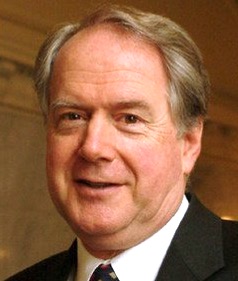
    Judge Fletcher

    Hon. William Fletcher

    Elizabeth Cabraser
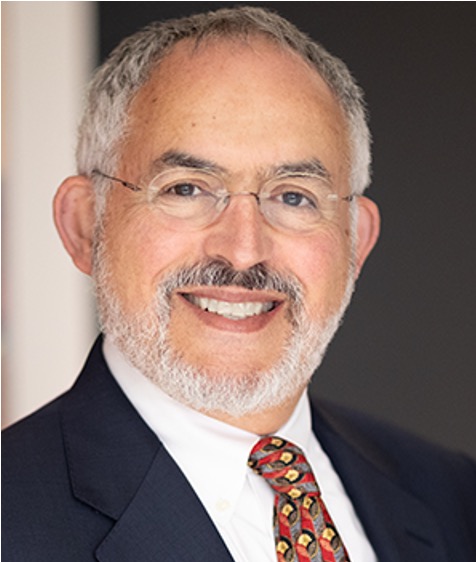
    Elizabeth Cabraser

    Fred Alvarez

    Fred Alvarez

    Awards presented by the Center for Litigation and Courts at UC Hastings Law and Huntington National Bank.

    Download the release

  • Alternative Financial Support for Plaintiffs During Litigation with Erin Waas

    Alternative Financial Support for Plaintiffs During Litigation with Erin Waas

    Our Guest

    Erin Waas

    Erin WaasThe Milestone Foundation

    Erin Waas is Executive Director of The Milestone Foundation, a national 501(c)(3) nonprofit that provides financial assistance to people pursuing a personal injury lawsuit. Erin brings nearly two decades of experience working in the public sector and with nonprofits in fundraising and communications, most recently at the University at Buffalo, where she served as senior advancement writer.

    Prior to relocating to Buffalo, Erin spent the bulk of her career to-date in Boston, where she worked in stewardship at Harvard University and as a consultant for nonprofits of all sizes.

    Alternative Financial Support for Plaintiffs During Litigation with Erin Waas

    For an individual, merely navigating litigation can be expensive, time consuming, and at times overwhelming. But when that individual is also unable to work, or cannot function normally  because they have been disabled by an injury, that explodes the level of stress on a person and their family.

    There are companies in the “non-recourse settlement advancement” space that will provide financial support to claimants in litigation. This helps them with their regular daily expenses – plus medical costs – until their case settles or until they receive an award. But most of these companies, as you can imagine, are for-profit entities. As such, their fees can make their support unaffordable and can leave the plaintiff with a substantially diminished payout.

    Listen to my interview with Erin Waas, Executive Director of The Milestone Foundation, a national 501(c)(3) nonprofit that provides financial assistance to people pursuing a personal injury lawsuit. Erin brings nearly two decades of experience working in the public sector and with nonprofits in fundraising and communications, most recently at the University at Buffalo, where she served as senior advancement writer. Prior to relocating to Buffalo, Erin spent the bulk of her career to-date in Boston, where she worked in stewardship at Harvard University and as a consultant for nonprofits of all sizes.  Speaking of fundraising, and if you believe in the cause, consider supporting the Foundation with a donation today.

    This podcast is the audio companion to the Journal on Emerging Issues in Litigation. The Journal is a collaborative project between HB Litigation Conferences and the Fastcase legal research family, which includes Full Court Press, Law Street Media, and Docket Alarm. The podcast itself is a joint effort between HB and our friends at Law Street Media. If you have comments or wish to participate in one our projects please drop me a note at Editor@LitigationConferences.com.

    Tom Hagy
    Host
    Emerging Litigation Podcast

  • Persuasion Science for Trial Lawyers with John Blumberg

    Persuasion Science for Trial Lawyers with John Blumberg

    Persuasion Science for Trial Lawyers with John Blumberg

    John joins me to discuss his study of the science behind persuasion. He examines a number of important concepts for trial attorneys, such as how emotions overcome rational thought, and how mental fatigue interferes with how we receive information, leading us to take mental shortcuts rather than doing the hard work of critical thinking. He also writes about understanding the differences between liberal and conservative brains.

    In addition to being an author, John is a board-certified trial attorney based in Long Beach, California. He handles both legal and medical malpractice litigation and is on American Board of Trial Advocates.

    You will especially want to hear my contributions, such as what I know about the rule of threes. For example, a joke about a doctor, a lawyer, and a duck is much funnier than one about just a doctor and a lawyer. Unless, of course, at least one of them is a duck.

    This podcast is the audio companion to the Journal on Emerging Issues in Litigation, a collaborative project between HB Litigation Conferences and the Fastcase legal research family, which includes Full Court Press, Law Street Media, and Docket Alarm. The podcast itself is a joint effort between HB and Law Street Media. If you have comments or wish to participate in one our projects, or want to tell me how much  you learned from John,  please drop me a note at Editor@LitigationConferences.com.

    Tom Hagy
    Litigation Enthusiast and Host of the Emerging Litigation Podcast

    “Your proposition may be good, but let’s have one thing understood: Whatever it is, I’m against it. And even when you’ve changed it or condensed it—I’m against it!”

    —Professor Wagstaff (Groucho Marx) in the 1932 movie Horse Feathers


    Attorney John P. Blumberg’s new book, Persuasion Science for Trial Lawyers, published by Fastcase Full Court Press, “takes a fascinating new approach to examining why certain advocacy techniques do and don’t work to persuade trial juries,” writes Susan G. Poehls. Director of Trial Advocacy Programs and William C. Hobbs Professor of Trial Advocacy at Loyola Law School, Poehls calls it an eye-opening read, one that will run “counter to what many of us have been taught for decades.”