Tag: Settlements

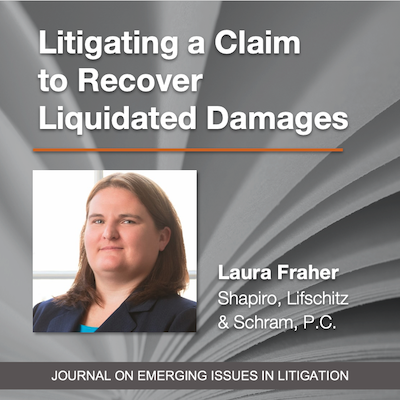
  • Litigating a Claim to Recover Liquidated Damages by Laura Fraher

    Litigating a Claim to Recover Liquidated Damages by Laura Fraher

    The Author

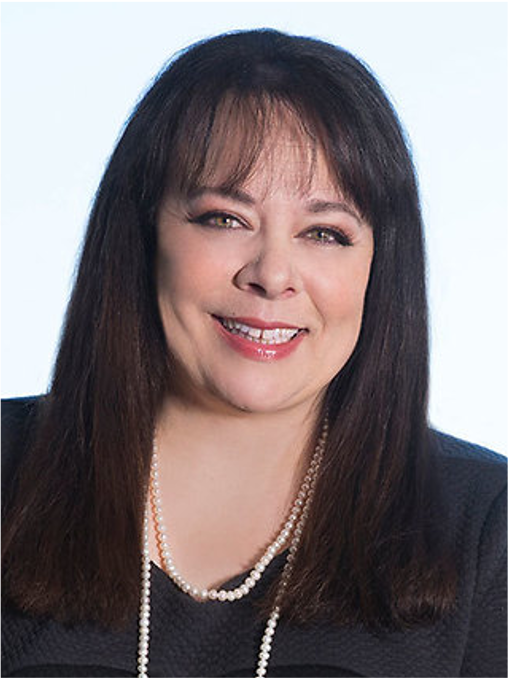
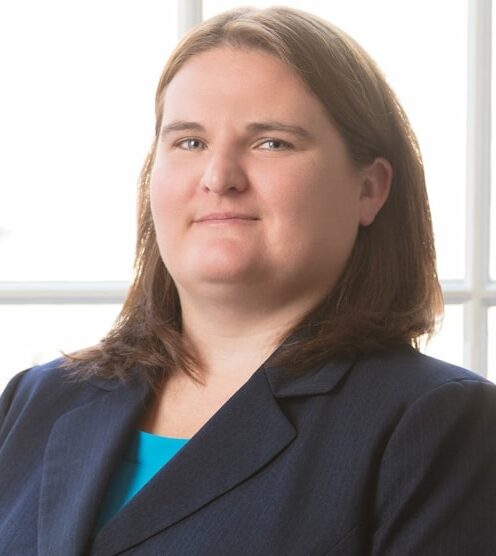
    Laura C. Fraher

    Laura C. FraherShapiro, Lifschitz and Schram

    Laura C. Fraher (fraher@slslaw.com) is a senior attorney in the trial and construction group at Shapiro, Lifschitz & Schram in Washington, D.C. She has extensive experience in civil litigation at both the trial court and appellate level. Competitive by nature, Laura played rugby for nearly 20 years. She puts this competitive spirit to work through her passion for the law and her clients.

    Education: St. John’s University School of Law, J.D., 2001, magna cum laude; SUNY College at Geneseo, B.A., Political Science, 1998.

    The Journal on Emerging Issues in Litigation

    Emerging Litigation Podcast

    Emerging Litigation PodcastProduced by HB Litigation and Law Street Media

    Interviews with leading attorneys and other subject matter experts on new twists in the law and how the law is responding to new twists in the world.

    Litigating a Claim to Recover Liquidated Damages:

    Enforceability Depends on Evidence of Good Faith Expectations

    “The tests and standards that courts apply to evaluate whether a particular liquidated damage provision is enforceable vary from state to state and it is imperative that litigants research and fully appreciate the particular standards that will be applied by the court in which they are litigating.”

    Abstract: The liquidated damages provision in a contract is a useful mechanism for mitigating risk in the event one of the parties to an agreement breaches the contract, costing the aggrieved party sometimes significant difficulty and substantial expense. Unfortunately, these provisions are often challenged, allowing the party responsible for the beach to exacerbate the burdens on the other party. In this article, the author discusses concepts of enforceability, proof, and avoiding litigation over liquidated damage provisions.

    A liquidated damage provision is an advance agreement of the damages that a party will be entitled to recover in the event of a future breach by the other party to a contract. These provisions can be an important tool for risk allocation and mitigation between parties when entering into a contract; both because the provision allows the parties to predict with certainty the financial ramifications of a future breach and because the liquidated damage provision should protect the aggrieved party against the difficulty and expense associated with proving actual damages in the event of a breach.

    In reality, however, when a breach occurs, liquidated damage provisions are frequently challenged and become the subject of costly litigation.  At the outset, it should be noted that the enforceability of a liquidated damage provision is generally considered an issue of law to be determined by the court, not an issue of fact to be presented to a fact finder. Thus, the key threshold issue of enforceability is likely to be determined on a pretrial motion rather than at trial and you should be prepared with both evidence and argument in order to sustain your claim.

    If you are faced with a challenge to dismiss your claim to recover liquidated damages based on unenforceability, it is important to remember that the law is in your favor.

    Liquidated damage provisions are viewed favorably by courts across the country and will generally be enforced so long as a court is satisfied that a liquidated damage provision is a stipulated agreement based on anticipated actual damages and not a penalty. A liquidated damages provision will be considered a penalty, and therefore unenforceable, if the court determines that the provision is designed to induce or secure performance by one party; conversely, a liquidated damage provision will not be viewed as a penalty, and will therefore be enforced if the court is satisfied that the provision is designed not to punish, but to provide a sum certain as compensation for a breach.

    Download the article now!

  • Epiq Class Action Settlement Efficiency

    Epiq Class Action Settlement Efficiency

    EpiqEpiq presents a CLE-eligible webinar
    Wait Wait … Don’t Settle!
    Essential elements of effective class action settlements.

    When it comes to complex class action litigation, once the hard work is done – litigation and settlement – more hard work begins – administering it.  But is the deal really ready?

    After years of arduous proceedings, discovery, motions, appeals, hearings, negotiations, and more, the scope and structure of your settlement has been drafted. Everyone is in agreement. The hard work of the courts, the attorneys, the legal teams, and the litigants is complete. Now it’s time to administer the settlement. Send out notices. Cut the checks. Get people paid. Boom! Sit back and relax. Get a claims administrator to take it from there.
    But wait … you find out that the terms of the agreement, the promises made, the budget established, and the deadlines calendared are not only inefficient, they are completely unworkable. Now the settlement is in jeopardy. The clients are frustrated. The court is frustrated. And you have a headache.
    That is a situation you, as a class action attorney, never want to find yourself in. The best way to avoid this quagmire is for attorneys to work with a professional and experienced claims administrator before you agree on settlement terms, someone who has been to this rodeo many, many times before. If you want smooth execution of your claims program, they must be on your team as you pull the pieces of the settlement together, not afterwards.
    Join us for a complimentary CLE webinar on Thursday, April 8, 2021, for a practical discussion based on Seven Elements of Effectively Settling Class Actions led by a class action litigator turned class action settlement expert, who will moderate a discussion with two highly regarded class action attorneys who have been involved in a number of high-profile complex cases.

    On Demand | Recorded April 2021

    On Demand Registration

    Included with registration

    • 1+ CLE credits (subject to bar rules). CLE codes are embedded in the video.
    • For questions write to CLE@LitigationConferences.com.
    • 75 minutes of insights from experienced professionals.
    • The complete PowerPoint presentation.
    • Continued access to the complete recording for later use.
    • Answers to your questions via email to the presenters, or write to HB and we will be sure to contact the speakers.

    KEY POINTS

    These Seven Elements of Effectively Settling Class Actions will serve as the framework for our practical presentation.
    • Consult Early, Before Settlement
    • Evaluate Noticing Options
    • More Outreach = More Claims
    • Understand Your Data
    • Use The Right Technology
    • Consider Appropriate Scope of Services
    • Compare Apples to Apples on Estimates

    On Demand Registration

    Meet the Panel

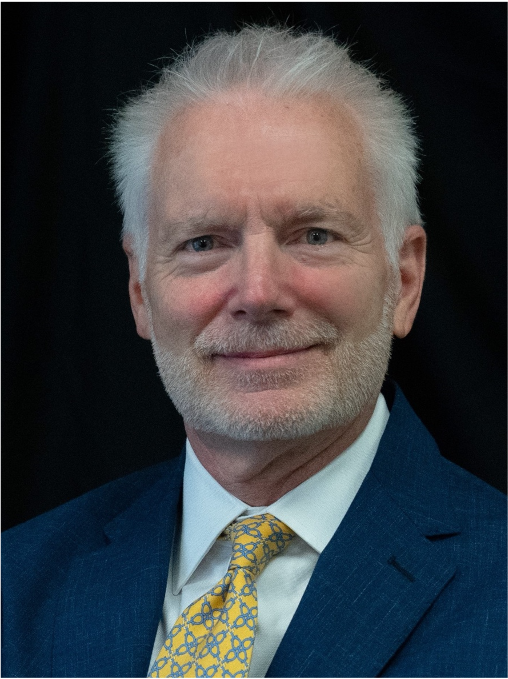
    Michael O’Connor
    Vice President
    Class Action & Mass Tort Solutions
    Epiq

    Over the past 10 years Michael O’Connor has established himself as a national expert on complex settlement administration matters and oversees client relationship development and strategic client communications. He works closely with our class action and mass tort team of project managers to ensure consistent, superior client service standards.

    Based in Washington, DC, Mr. O’Connor also works extensively on Epiq’s contracts with the United States Federal Government, including the Department of Justice, Federal Trade Commission, Securities and Exchange Commission and Consumer Financial Protection Bureau.  Currently, Mr. O’Connor also oversees Epiq’s administration of: (a) Peterson v. Islamic Republic of Iran, Case No. 10-CIV-4518 (S.D.N.Y., Hon. L. Preska), a $1.9 billion disbursement to victims of the 1983 Marine barracks bombing in Beirut; and (b) In re Payment Card Interchange Fee and Merchant Discount Antitrust Litigation, Case No. 1:05-MD-1720 (MKB) (JO) (E.D.N.Y.), a nearly $6 billion settlement brought by all U.S. merchants against Visa and Mastercard.

    A highly esteemed thought leader, O’Connor is a frequent national speaker on settlement administration best practices and has worked on and overseen many of Epiq’s largest and most complex engagements. He holds a Juris Doctor from the University of Oregon Law School and a Bachelor of Arts in political science from Yale University.  Before joining Epiq in 2010, Mr. O’Connor was a trial lawyer for thirteen years, most recently as an owner at Garvey Schubert Barer (now Foster Garvey).

    More about Michael

    Alexandra “Xan” Bernay
    Partner
    Robbins Geller Rudman & Dowd LLP

    Alexandra Bernay is a partner in Robbins Geller Rudman & Dowd LLP’s San Diego office, where she specializes in antitrust and unfair competition class-action litigation. She has also worked on some of the Firm’s largest securities fraud class actions, including the Enron litigation, which recovered an unprecedented $7.2 billion for investors.

    Xan currently serves as co-lead counsel in In re Payment Card Interchange Fee and Merchant Discount Antitrust Litigation, in which a settlement of $5.5 billion was approved in the Eastern District of New York. This case was brought on behalf of millions of U.S. merchants against Visa and MasterCard and various card-issuing banks, challenging the way these companies set and collect tens of billions of dollars annually in merchant fees. The settlement is believed to be the largest antitrust class action settlement of all time. Additionally, Xan is involved in In re Remicade Antitrust Litigation pending in the Eastern District of Pennsylvania – a large case involving anticompetitive conduct in the biosimilars market, where the Firm is sole lead counsel for the end-payor plaintiffs. She is also part of the litigation team in In re Dealer Mgmt. Sys. Antitrust Litigation (N.D. Ill.), which involves anticompetitive conduct related to dealer management systems on behalf of auto dealerships across the country. Another representative case is Persian Gulf Inc. v. BP West Coast Prods. LLC (S.D. Cal.), a massive case against the largest gas refiners in the world brought by gasoline station owners who allege they were overcharged for gasoline in California as a result of anticompetitive conduct. Xan has also had experience in large consumer class actions, including In re Checking Account Overdraft Litigation, which case was brought on behalf of bank customers who were overcharged for debit card transactions and resulted in more than $500 million in settlements with major banks that manipulated customers’ debit transactions to maximize overdraft fees. She also helped try to verdict a case against one of the world’s largest companies who was sued on behalf of consumers. Xan speaks on a variety of issues related to litigation, including recent changes to Rule 23 of the Federal Rules of Civil Procedure. In December 2018, with another lawyer, she prevailed for her client in a multi-day probate court trial as part of her pro bono work with the San Diego Volunteer Lawyers’ Program. Xan has been named a Leading Plaintiff Financial Lawyer by Lawdragon. She earned a Bachelor of Arts degree in Journalism from Humboldt State University, where she received the Society of Professional Journalists Outstanding Graduate Award. She then graduated magna cum laude with a Juris Doctor degree from the University of San Diego School of Law, where she was Comments Editor for the San Diego Law Review, and an Order of the Coif member.

    More about Xan

    On Demand Registration

    Keith Dubanevich
    Attorney
    Stoll Berne

    Keith is an accomplished trial, appellate, and healthcare lawyer with over 35 years of experience in more than a dozen different jurisdictions around the country. With a focus on complex dispute resolution, with particular emphasis in the healthcare industry, Keith is adept at handling multi-state and international antitrust cases, consumer litigation, and securities disputes. In healthcare, he has handled peer review disputes, partnership and incorporation matters, and billing investigations.

    Keith’s clients value his keen instincts in court and his ability to delve into complex legal issues while never losing sight of the overall strategy of a case. A judge commented that during a recent trial Keith was “remarkably thorough, … prepared, respectful, and efficient.” Keith has also received high praise from his peers including this comment about a recent arbitration proceeding: “I was so impressed with your professionalism and effectiveness. Your whole presentation was a model of what an advocate should be.”

    During his time at the Oregon Department of Justice as Associate Attorney General and Chief of Staff, Keith led the creation of a civil rights unit, managed securities litigation including multiple cases against financial services companies, and supervised antitrust investigations and prosecutions. He was also involved with the adoption of legislation that expanded the Unlawful Trade Practices Act to include financial services companies.

    More about Keith

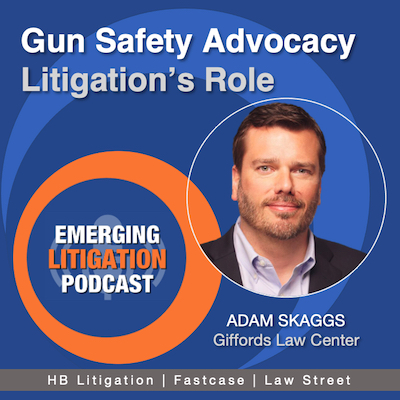
  • Litigation’s Role in Gun Safety Advocacy with Adam Skaggs

    Litigation’s Role in Gun Safety Advocacy with Adam Skaggs

    We’re closing in on 400 million guns in America, weapons that have been used to kill 1.5 million Americans between 1968 and 2017. Can litigation be an effective tool in curbing this loss of life?

    In 2020 alone there were more than 45,000 gun deaths. The beyond tragic and senseless mass shootings at schools has become all too routine. Most Americans want stricter gun laws which they believe will reduce the senseless killing in our country, which leads the world in both the number of privately owned firearms and gun-related deaths.

    The Supreme Court, of course, didn’t take public opinion into account when it struck down a more than century old New York City ban on concealed firearms. Politicians do, however, pay close attention to polls. At the federal level, President Joe Biden signed a bipartisan law designed to make Americans safer in our gun-toting nation. Hailed as a “great start” and a rare but welcome exercise in reaching across the aisle, the law will result in safer citizens, but didn’t include much of what gun advocates say is really needed to effect meaningful change. In California, Governor Gavin Newsom signed a new law that gives citizens incentives to pursue gun manufacturers and dealers who sell illegal firearms. In New York, Democratic leaders, undaunted by the Supreme Court, have pushed through new gun restrictions at vulnerable locations like schools, malls, and stadiums.

    But what can lawyers and lawsuits do about it? Plenty. What reasonable measurers can be put into place that will not infringe on Second Amendment rights?  Several. Are we seeing litigation over these issues? You bet.

    For more specifics, listen to my interview with Adam Skaggs, chief counsel and policy director at leading gun safety advocacy group Giffords Law Center, co-founded by former Congresswoman Gabby Giffords. Prior to Giffords Law Center Adam was senior counsel at Everytown for Gun Safety and at the Brennan Center for Justice, where he worked on election law issues.  Adam’s commentary has been published in Slate, Politico, the Atlantic, and the New York Times, among other publications, and he has been widely quoted by media ranging from the Wall Street Journal and Fox News to the New York Times and MSNBC. Adam graduated summa cum laude from Brooklyn Law School, received an MS in Urban Affairs from Hunter College of the City University of New York, and holds a BA, awarded with distinction, from Swarthmore College.

    If you would like to learn more about Giffords Law Center and how you can get engaged, please reach out to to them. You may also email Adam directly. 

    This podcast is the audio companion to the Journal on Emerging Issues in Litigation. The Journal is a collaborative project between HB Litigation Conferences and the Fastcase legal research family, which includes Full Court Press, Law Street Media, and Docket Alarm. The podcast itself is a joint effort between HB and our friends at Law Street Media. If you have comments or wish to participate in one our projects please drop me a note at Editor@LitigationConferences.com.

    Gun Safety: The Role of Litigation in Advocacy

    Adam Skaggs

    Adam SkaggsChief Counsel & Policy Director

    Adam Skaggs serves as Giffords Law Center’s chief counsel and policy director. Previously, he was senior counsel at Everytown for Gun Safety and at the Brennan Center for Justice, where he worked on election law issues. Adam was also a litigation associate at Paul, Weiss, Rifkind, Wharton & Garrison and a law clerk at the Eleventh Circuit and the US District Court for the Eastern District of New York.

    Adam’s commentary has been published in Slate, Politico, the Atlantic, and the New York Times, among other publications, and he has been widely quoted by media ranging from the Wall Street Journal and Fox News to the New York Times and MSNBC.

    Adam graduated summa cum laude from Brooklyn Law School, received an MS in Urban Affairs from Hunter College of the City University of New York, and holds a BA, awarded with distinction, from Swarthmore College.

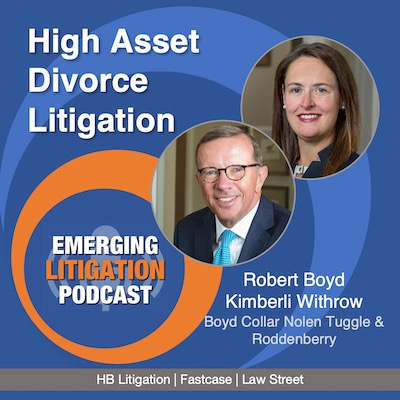
  • High-Asset Divorce Litigation with Robert D. Boyd and Kimberli C. Withrow

    High-Asset Divorce Litigation with Robert D. Boyd and Kimberli C. Withrow

    High-Asset Divorce Litigation 

    Let’s assume this is good news. The divorce rate appears to be coming down. Either people are more committed to these unions or have succumbed to lifetimes of misery. But the common belief — that “50% of all marriages end in divorce” — doesn’t enjoy statistical support. Six percent of people who divorce get back together, so that’s something, too.  

    According to Monster.com, the rate is higher among people working in fading industries, like certain machine operators. Despite frequent coverage of Hollywood breakups, they don’t mention entertainers, other than dancers and choreographers, who don’t fare well in marriage. Lawyers, in general, do not have a particularly high divorce rate.

    For insights into high-asset divorces, listen to my interview with Robert D. Boyd and Kimberli C. Withrow  of Boyd Collar Nolen Tuggle & Roddenbery.

    Bob Boyd is a widely recognized leader in the practice of high-net-worth divorce litigation and contested custody cases. He is a former prosecutor and a U.S. Army Ranger and Paratrooper.  Education: J.D., West Virginia University (Editor-in-Chief, West Virginia Law Review); B.A., United States Military Academy at West Point.

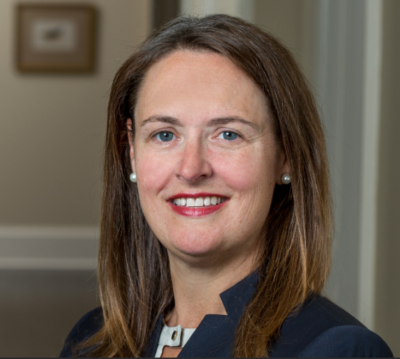
    Kimberli Withrow has 16 years’ experience representing clients in family law matters. She has served as trial counsel and hearings involving divorce, child custody, and child support matters.  Education: J.D., Emory University School of Law; B.A., Duke University.Speaking of which, this podcast is the audio companion to the Journal on Emerging Issues in Litigation. The Journal  is a collaborative project produced by HB Litigation Conferences and the Fastcase legal research family, which includes Full Court Press, Law Street Media, and Docket Alarm. The podcast itself is a joint effort between HB and our friends at Law Street Media. If you have comments or wish to participate in one our projects, or want to tell me how much you learned today – or if you’d like a copy of John’s and Jihee’s article — please drop me a note at Editor@LitigationConferences.com.

    This podcast is the audio companion to the Journal on Emerging Issues in Litigation. The Journal is a collaborative project between HB Litigation Conferences and the Fastcase legal research family, which includes Full Court Press, Law Street Media, and Docket Alarm. The podcast itself is a joint effort between HB and our friends at Law Street Media. If you have comments or wish to participate in one our projects please drop me a note at Editor@LitigationConferences.com.

    Tom Hagy
    Litigation Enthusiast and
    Host of the Emerging Litigation Podcast

    P.S. I don’t know why, but at some point I believe I mentioned chihuahua’s as a form of currency, and then something about Bezos. I’m sure it made sense at the time. It’s more likely, however, that it didn’t.

    Our Guests

    Robert Boyd

    Robert BoydBoyd Collar Nolen Tuggle & Roddenbery

    Bob Boyd is a widely recognized leader in the practice of high-net-worth divorce litigation and contested custody cases. He is a former prosecutor and a U.S. Army Ranger and Paratrooper. Education: J.D., West Virginia University (Editor-in-Chief, West Virginia Law Review); B.A., United States Military Academy at West Point.

    For more than 15 years, he has been selected by the Best Lawyers of America in the area of family law.

    Kimberli Withrow

    Kimberli WithrowBoyd Collar Nolen Tuggle & Roddenbery

    Kimberli Withrow has 16 years’ experience representing clients in family law matters. She has served as trial counsel and hearings involving divorce, child custody, and child support matters. Education: J.D., Emory University School of Law; B.A., Duke University.

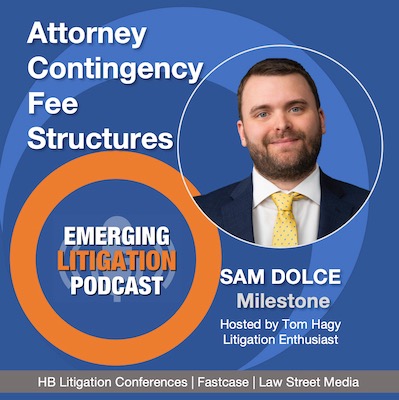
  • Attorney Fees and Settlement Funds with Sam Dolce

    Attorney Fees and Settlement Funds with Sam Dolce

    Our Guest

    Sam Dolce

    Sam DolceAttorney

    As an attorney at Milestone, Sam Dolce provides in-depth, comprehensive consultations with attorneys about qualified settlement funds, fee deferral, and settlement planning. He also oversees the establishment of QSFs.

    Sam received a Bachelor of Arts in History from Macalester College, followed by a Juris Doctor from SUNY Buffalo Law School. He served as a participant in the New York State Pro Bono Scholar Program and has received multiple acknowledgements and awards for his dedication to pro bono service and social justice. As a subject matter expert, Sam is a regular speaker and presenter at academic and legal conferences regarding post-settlement strategies.

    Attorney Fees and Settlement Funds with Sam Dolce

    Uncle Sam has created a way for you keep more of your hard-won settlement or award, but there is much to consider and new information to weigh.

    When a contingency fee case reaches a verdict or settlement, it’s a big day for a plaintiff attorney. You have worked hard and shouldered litigation costs — often for years without compensation — to achieve the best outcome for your client.

    In this episode I get to speak with a financial management professional who specializes in advising trial attorneys how they can take full advantage of attorney fee structures. The concept of fee deferral arrangements may be familiar to you, but the landscape continues to evolve.

    My guest is Sam Dolce, an attorney with Milestone, a financial firm that optimizes settlement funds for trial attorneys and plaintiffs.  Sam consults with legal professionals about about Qualified Settlement Funds, fee deferrals, and settlement planning. Sam received his B.A. from Macalester College and his J.D. from SUNY Buffalo Law School. Thanks to Sam for sharing his insights.

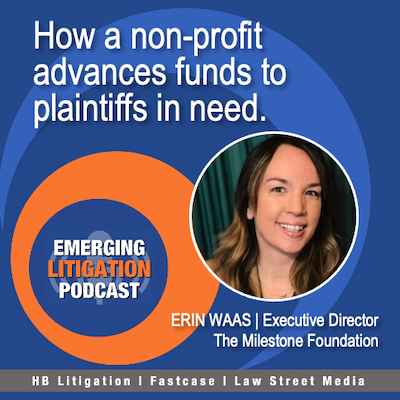
    On a previous episode you can hear Sam’s colleague, Erin Waas, who heads up the Milestone Foundation, a non-profit organization that provides low-cost funding to injured individuals in need of cash as their personal injury cases wind their way through court.

    This podcast is the audio companion to the Journal on Emerging Issues in Litigation. The Journal is a collaborative project between HB Litigation Conferences and the Fastcase legal research family, which includes Full Court Press, Law Street Media, and Docket Alarm. The podcast itself is a joint effort between HB and our friends at Law Street Media. If you have comments or wish to participate in one our projects please drop me a note at Editor@LitigationConferences.com.

  • Alternative Financial Support for Plaintiffs During Litigation with Erin Waas

    Alternative Financial Support for Plaintiffs During Litigation with Erin Waas

    Our Guest

    Erin Waas

    Erin WaasThe Milestone Foundation

    Erin Waas is Executive Director of The Milestone Foundation, a national 501(c)(3) nonprofit that provides financial assistance to people pursuing a personal injury lawsuit. Erin brings nearly two decades of experience working in the public sector and with nonprofits in fundraising and communications, most recently at the University at Buffalo, where she served as senior advancement writer.

    Prior to relocating to Buffalo, Erin spent the bulk of her career to-date in Boston, where she worked in stewardship at Harvard University and as a consultant for nonprofits of all sizes.

    Alternative Financial Support for Plaintiffs During Litigation with Erin Waas

    For an individual, merely navigating litigation can be expensive, time consuming, and at times overwhelming. But when that individual is also unable to work, or cannot function normally  because they have been disabled by an injury, that explodes the level of stress on a person and their family.

    There are companies in the “non-recourse settlement advancement” space that will provide financial support to claimants in litigation. This helps them with their regular daily expenses – plus medical costs – until their case settles or until they receive an award. But most of these companies, as you can imagine, are for-profit entities. As such, their fees can make their support unaffordable and can leave the plaintiff with a substantially diminished payout.

    Listen to my interview with Erin Waas, Executive Director of The Milestone Foundation, a national 501(c)(3) nonprofit that provides financial assistance to people pursuing a personal injury lawsuit. Erin brings nearly two decades of experience working in the public sector and with nonprofits in fundraising and communications, most recently at the University at Buffalo, where she served as senior advancement writer. Prior to relocating to Buffalo, Erin spent the bulk of her career to-date in Boston, where she worked in stewardship at Harvard University and as a consultant for nonprofits of all sizes.  Speaking of fundraising, and if you believe in the cause, consider supporting the Foundation with a donation today.

    This podcast is the audio companion to the Journal on Emerging Issues in Litigation. The Journal is a collaborative project between HB Litigation Conferences and the Fastcase legal research family, which includes Full Court Press, Law Street Media, and Docket Alarm. The podcast itself is a joint effort between HB and our friends at Law Street Media. If you have comments or wish to participate in one our projects please drop me a note at Editor@LitigationConferences.com.

    Tom Hagy
    Host
    Emerging Litigation Podcast

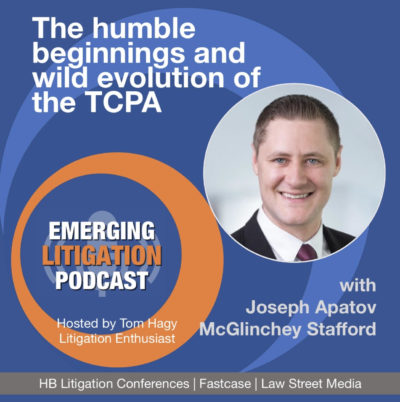
  • The Humble Beginnings and Wild Evolution of the TCPA with Joe Apatov

    The Humble Beginnings and Wild Evolution of the TCPA with Joe Apatov

    The Humble Beginnings and Wild Evolution of the TCPA with Joe Apatov

    Only $32 million!  I mean, why bother even getting out of bed? Joining me to discuss the evolution of the TCPA is Joseph A. Apatov (japatov@mcglinchey.com), a member of the McGlinchey Stafford law firm’s Consumer Financial Services Litigation practice group. Based in their Fort Lauderdale office, Joe litigates on behalf of financial services clients in both state and federal courts, with an emphasis on defending banks, mortgage lenders and servicers, private-label card issuers, and automobile finance companies. 

    Apologies for my trip down memory lane. Bear with me as I regale you with stories from the newsroom at Mealey’s Litigation Reports and the team’s anxious reliance on the “latest” technology: the facsimile machine.

    This podcast is the audio companion to the Journal on Emerging Issues in Litigation, a collaborative project between HB Litigation Conferences and the Fastcase legal research family, which includes Full Court Press, Law Street Media, and Docket Alarm. The podcast itself is a joint effort between HB and Law Street Media. If you have comments or wish to participate in one our projects, or want to tell me how much Joe enlightened you, please drop me a note at Editor@LitigationConferences.com.
     
    Tom Hagy
    Litigation Enthusiast and Host of the Emerging Litigation Podcast

    “The Telephone Consumer Protection Act had humble beginnings,” our guest writes, “with the bill’s sponsor explaining that the statute would permit consumers to bring small claims cases ‘without an attorney,’ and provides for an ‘amount of damages … fair to both the consumer and the telemarketer.’ Twenty-eight years after its enactment in 1991, the Eighth Circuit Court of Appeals affirmed a District Court’s decision to reduce a $1.6 billion jury award in a TCPA class action to only $32 million because the former was ‘shockingly large’ and ‘oppressive,’ in violation of the Due Process Clause …..”

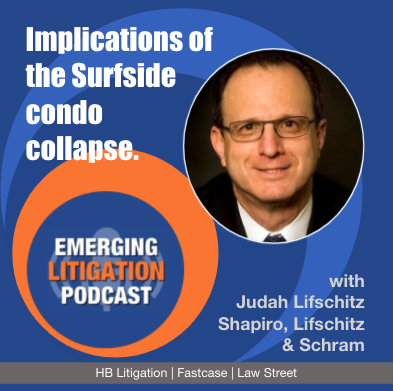
  • Impact of Surfside Condo Collapse with Judah Lifschitz

    Impact of Surfside Condo Collapse with Judah Lifschitz

    Impact of Surfside Condo Collapse with Judah Lifschitz

    Joining me is experienced construction law attorney Judah Lifschitz of Shapiro, Lifschitz & Schram  who spoke about the near- and long-term impacts of the Surfside condo collapse not only in Florida around the country.  Judah has extensive experience dealing with construction matters, representing clients in engineering, procurement and construction contracts and disputes. He represents and advises government agencies and private owners; regional, national and international contractors; construction managers and subcontractors; design professionals; and insurance companies. Notably, Judah won one of the largest liquidated damages awards in the history of the construction industry.  Education: George Washington University, J.D.; Yeshiva University, B.A., magna cum laude.

    This podcast is the audio companion to the Journal on Emerging Issues in Litigation, a collaborative project between HB Litigation Conferences and the Fastcase legal research family, which includes Full Court Press, Law Street Media, Docket Alarm and, most recently, Judicata. If you have comments or wish to participate in one our projects, or want to tell me how insightful and informative Judah is, please drop me a note at Editor@LitigationConferences.com.

    Thanks to Judah for speaking with me about this important topic. I was especially proud that I pronounced his name correctly on the first try, though he assured me that I could in no way do more damage to it than those who have come before me. (Clearly he doesn’t know me well.)

    Tom Hagy
    (pronounced HEY-ghee, for the record)

    via GIPHY

    Nothing illustrates the tragic consequences of building decay more than the June 24, 2021, collapse of the Champlain Towers South in Surfside, Florida, which claimed the lives of nearly 100 residents.

    The event raises questions about the building inspection process not only in Florida but around the country.

    What caused this calamity?

    Who is responsible?

    How many other buildings are in similar condition?

    Since any compensation for the loss of life, injuries, and property damage will likely be astronomical, where will any financial awards come from?

  • James Beck on the Drug & Device Law Blog: Something Both Sides Should Agree On (re Class Actions)

    James Beck on the Drug & Device Law Blog: Something Both Sides Should Agree On (re Class Actions)

    By James M. Beck

    Senior Life Sciences
    Policy Analyst
    Reed Smith LLP

    Drug & Device Law Blog: Something Both Sides Should Agree On (re Class Actions)

    We’ll be very clear – as we have before:  We don’t like most class actions.  Indeed, if given our druthers, we would abolish Rule 23, as it applies to class actions for damages, altogether.  But that’s not in the offing anytime soon.  Today, we offer a class action decision that we think both sides, us on the defense and those on the plaintiffs side, can agree on, excluding only those responsible for the problem.

    In Pearson v. Target Corp., 968 F.3d 827 (7th Cir. 2020), the court came up with one possible solution to the class action “objector problem.”

    What’s that?

    Well, once a class action settles (as most do), all too often “objectors” come out of the woodwork.  While these objectors purport to assert the interests of the class, usually, all they want is money to make them go away.  Or, as described in Pearson:

    We address here a recurring problem in class-action litigation known colloquially as “objector blackmail.”  The scenario is familiar to class-action litigators on both offense and defense.  A plaintiff class and a defendant submit a proposed settlement for approval by the district court.  A few class members object to the settlement but the court approves it. . . .  The objectors then file appeals.  As it turns out, though, they are willing to abandon their appeals in return for sizable side payments that do not benefit the plaintiff class: a figurative “blackmail” by selfish holdouts threatening to disrupt collective action unless they are paid off.

    …

    Read more at the Drug & Device Defense Law Blog.

    Safeguarding Against Financial Exploitation

    An on-demand CLE-eligible webinar Safeguarding Against Financial Exploitation   America’s senior population is growing. Nearly one in five U.S. residents will be 65 or older in 2030. Which means the average age of U.S. investors is climbing too. With that comes the risk that they will be exploited by people with access – or gain access through nefarious methods – to their investment portfolio. Seniors and vulnerable persons lose billions of dollars each year. Remarkably, 90% of the people to take advantage of senior investors are members of their own family. Attorneys who represent senior clients need to know the signs of vulnerability, red flags that their clients are being exploited, what laws apply, and rules lawyers must follow in these matters.   Questions our speakers answer: What is senior / vulnerable investor exploitation?   Who is protected by state and federal laws?   How prevalent is senior financial exploitation? What do the numbers tell us?  What is the pace of financial abuse SAR filings by securities firms?  What are the most popular scams?   What is diminished capacity?  What are the red flags indicating possible exploitation?  What are the laws, rules, and regulations governing law firms?  What are some best practices for law firms?  How can firms best protect their senior clients?   On Demand CLE Webinar What You Get PowerPoint and supplemental materials. Complete recording for later review. Answers to your questions via email. Invitation to contact speakers. 1.5 CLE credits (for licensed attorneys). CLE assistance.* *Subject to state bar rules. For licensed attorneys.  Register Meet the Speakers Joseph Calabrese Bressler, Amery & Ross, P.C. A 1991 Graduate of St. John’s University Law School, Mr. Calabrese brings 30 years of practice and 18 years of Securities Litigation/Regulatory experience to his role as principal in the New York office of  Bressler, Amery & Ross’s Financial Institutions Group. He began his career as a Wall Street litigator as an associate general counsel for Citigroup’s Smith Barney and […]

    Lien Resolution: Government & Private Plans Get Aggressive (Against Attorneys)

    Includes Nearly 75 minutes of insights from experienced professionals. CLE credit: 1+ (subject to bar rules). For CLE questions: CLE@LitigationConference.com The complete Power Point presentation. Continued access to the complete recording for later use. Answers to your questions via email to the presenters or write to HB and we will be sure to contact the speakers. What can you do to settle personal injury suits cleanly and avoid costly litigation and penalties? What recent cases can inform you about protecting your settlements and, as attorneys, yourselves, from post-settlement federal lawsuits? How can your firm set itself up to meet government expectations? What role might experts play in navigating these pitfalls? Medicare Advantage (42 USC § 1395w-22) Federal Medical Care Recovery Act (FMCRA) (42 USC § 2651) Armed Forces Act (10 USC §1095) Veterans’ Benefits (38 USC §1729) Third-Party Collection Rules (32 CFR 537.24; 38 CFR 17.101, etc.) Set-Asides under the Medicare Secondary Payer Act (42 USC § 1395y(b)(2)] On Demand Registration Lien Resolution Government & Private Plans Get Aggressive (Against Attorneys!) On Demand | Recorded September 2020 It is increasingly common these days. Personal injury attorneys settle a case, only to find themselves sued by a U.S. Attorney for failing to reimburse Medicare for conditional payments as required by the Medicare Secondary Payer Act. In some cases the attorney may be required to pay fines in addition to the reimbursements and interest, a costly proposition. Are you up to speed on issues surrounding Medicare Advantage, TRICARE, veterans’ claims, and Medicare set-asides? Join nationally recognized healthcare lien and resolution expert Franklin P. Solomon and go-to lien resolution provider Brett Newman as they offer a practical, in-depth CLE presentation. Franklin P. Solomon, Esq. Attorney & Founder, Solomon Law Firm  A graduate of Rutgers University School of Law at Camden, Franklin Solomon is based in Cherry Hill, NJ, with a practice focused on evaluation, litigation and resolution of healthcare “liens” and reimbursement claims. Mr. Solomon represents personal injury victims and their attorneys […]

    Telepsychiatry: Mitigating the Risks

    REGISTER Registration Includes Nearly 90 minutes of insights from experienced professionals. CLE credit: 1+ (subject to bar rules). For CLE questions: CLE@LitigationConference.com The complete Power Point presentation. Continued access to the complete recording for later use. Answers to your questions via email to the presenters or write to HB and we will be sure to contact the speakers. Understand the risks associated with telepsychiatry and how to manage them.  Telemedicine has emerged as an important solution for healthcare in general and psychiatric medicine specifically during the current global pandemic. Remote access for sub-practices including addiction counseling have been commonly used. Our panel of psychiatric professionals who have served as expert witnesses and attorneys who counsel and represent physicians have prepared a 90-minute session to share insights with attorneys, physicians, healthcare providers, risk professionals, and more. Agenda Examining procedures and best practices that exist for ensuring confidentiality in a telemedicine practice How do you draft a telepsychiatric consent form? What is the emerging standard of care for telemedicine? Will the standard of care for telemedicine become a national standard? (Should it?) Review the case law addressing telemedicine or telepsychiatry How do the HIPAA regulations and HITECH privacy laws impact telemedicine? How have the HIPAA regulations and HITECH privacy laws been relaxed during the pandemic? Will the relaxed HIPAA and HITECH regulations impacting telemedicine continue past the pandemic? Which technical platforms are preferred? Which ones to avoid? Panelists Mark Levy, M.D., Medical Director at fpamed David Kan, M.D., UCSF Psychiatry Department and the California Society for Substance Abuse Medicine Ayesha Ashai, M.D., associated with fpamed Stephen M. Fatum, J.D., Partner, Barnes & Thornburg LLP Angela W. Russell, J.D., Partner, Wilson Elser Moskowitz Edelman & Dicker LLP Meet our physician and attorney panelists. Mark Levy MD Medical Director fpamed Dr. Levy is a graduate of Columbia College (A.B. 1967) and the Columbia University College of Physicians and Surgeons (M.D. 1971) in New York. He is a Physician […]

    The Commercial Drone Industry: Privacy, Security, Threats, and Mitigation of Risk

    HB presents a CLE-eligible webinar Now on-demand at the West LegalEdcenter THE COMMERCIAL DRONE INDUSTRY Privacy, Security, Threats, and Mitigation of Risk Drones have become an increasingly valuable tool for businesses of all types and sizes. Drones are already being used in many applications, but more will certainly arise as the technology advances. This means that certain risks, like cyber threats, will also continue to present themselves. Protecting the transmission and storage of data collected through drones is critical. Unfortunately, security usually comes as an afterthought. The drone industry is part of the aviation industry, which, based on its knowledge, keeps safety as a number one concern. Part of that safety is having proper protection for your systems, including security as a fundamental design principle. Take this webinar to gain insights on the topics listed below, and shared by an attorney who practices on the cutting-edge of this evolving technology. Topics: Defining drones. Current and future applications. FAA Modernization and Reform Act of 2012. FAA Part 107 Regulations and waivers. Resources, e.g. the FAA Drone Zone and LAANC Portal. Penalties for violations. Privacy implications. Drones as weapons. Vulnerability to cyber attacks. Take it now! What you get: 1+ CLE credits (subject to bar rules). Insights from an experienced professional who specializes in this area of the law. The complete PowerPoint presentation. Continued access to the complete recording for later use. Answers to your questions. Fee: No additional charge to subscribers to the West LegalEdcenter. Non-subscribers may take the course for $170. Meet the Speaker Kathryn Rattigan Robinson & Cole LLP Kathryn Rattigan is a member of the firm’s Business Litigation Group and Data Privacy + Cybersecurity Team. She advises clients on data privacy and security, cybersecurity, and compliance with related state and federal laws. She assists clients in assessing risks related to technology and software contracts, as well as with compliance-related issues with outsourcing and […]

    The Intersection of Privacy and Antitrust Webinar Now Available On-Demand on the West LegalEdcenter

    Available as part of your subscription to The Thomson Reuters West LegalEdcenter®. Don’t subscribe to the West LegalEdcenter? This webinar is still available directly from HB. Take it now! Questions for speakers Questions@LitigationConferences.com CLE questions CLE@LitigationConferences.com Check out the MoginRubin blog for more insights on antitrust and privacy law. What attorneys and companies need to know about the increasing interplay between these critical areas of the law.  Highly publicized cases and investigations in the U.S. and Europe of big technology, e-commerce, and social media companies demonstrate how anti-competition laws are being used to scrutinize and challenge not only how these corporations conduct themselves in the marketplace, but the very core of their colossal success: the mass collection and utilization of user data. Are the privacy and antitrust worlds beginning to cross over? Or do they simply run parallel while addressing entirely different types of conduct? Whatever the answer, data is the raw material that drives the likes of Google, Facebook, Apple and Amazon, so how it is handled is a critical question when counseling clients on mergers and acquisitions. Moderator Daniel J.  Mogin | Managing Partner, MoginRubin LLP Speakers Jennifer M. Oliver, CIPP/US | Partner, MoginRubin LLP Thomas N. Dahdouh | Director, Western Region, Federal Trade Commission Franklin M. Rubinstein | Partner, Wilson Sonsini Goodrich & Rosati Randi W. Singer, CIPP/US, CIPT | Partner, Weil, Gotshal & Manges Contributor Dina Srinivasan | Independent Researcher & Author of The Antitrust Case Against Facebook Dina was unable to present but we thank her for her content contributions.  Agenda Who should regulate privacy violations in the U.S.? Which antitrust issues implicate privacy concerns? What role does machine learning play on the competitive landscape? What is big data really? How is it different from “data”? What are the elements of effective merger reviews? What are the appropriate remedies? What are “notice-and-choice” versus “harms-based” approaches? Plus answers to your questions. Send them to Questions@LitigationConferences.com.
  • Progress of Roundup Settlement in Question, Verus Reports

    Progress of Roundup Settlement in Question, Verus Reports

    By Kim Lavin

    Manager of Research Services
    Verus LLC
    klavin@verusllc.com
    609-466-0427

    Progress of Roundup Settlement in Question

    Judge Would Likely Not Have Agreed to a Stay Had He Known About the Contingency

    On August 27, plaintiffs’ counsel in the multi-district litigation involving Monsanto and its widely used weed killer Roundup, advised the court that parent company Bayer AG appeared to be going back on the settlement agreement announced in June. At that time, the company had agreed to settle about 75% of the 125,000 claims filed by plaintiffs alleging that their non-Hodgkin’s lymphoma was linked to Roundup use; the settlement was for an estimated $10 billion.

    At the hearing, Judge Vince Chhabria advised that he had received confidential letters from a number of plaintiffs’ counsel with cases pending in the MDL who were concerned that Bayer AG was going back on the settlement, noting that the company had terminated settlement term sheets and refused to execute master service agreements that would finalize their settlements; Bayer conceded that there were currently no final agreements.

    Bayer did advise Judge Chhabria that about 667 of the cases currently pending in the MDL had been resolved, a figure that the judge noted was only a fraction of the 4,000 currently filed.  The judge also pointed to Bayer’s June 24 announcement of the settlement, stating that he had taken “all of that to mean the MDL is settled.”  He indicated that he would likely not have agreed to a 60-day stay of the litigation had he known that the larger settlement was contingent on his approval of a separate class action settlement for $1.25 billion, designed to resolve any future Roundup cases.  The judge then advised the parties that although he would not lift the current stay, he would not extend it, expressing concerns that it was being used by the parties to manipulate the settlement talks.

    Read more at VerusLLC.com.

    Safeguarding Against Financial Exploitation

    An on-demand CLE-eligible webinar Safeguarding Against Financial Exploitation   America’s senior population is growing. Nearly one in five U.S. residents will be 65 or older in 2030. Which means the average age of U.S. investors is climbing too. With that comes the risk that they will be exploited by people with access – or gain access through nefarious methods – to their investment portfolio. Seniors and vulnerable persons lose billions of dollars each year. Remarkably, 90% of the people to take advantage of senior investors are members of their own family. Attorneys who represent senior clients need to know the signs of vulnerability, red flags that their clients are being exploited, what laws apply, and rules lawyers must follow in these matters.   Questions our speakers answer: What is senior / vulnerable investor exploitation?   Who is protected by state and federal laws?   How prevalent is senior financial exploitation? What do the numbers tell us?  What is the pace of financial abuse SAR filings by securities firms?  What are the most popular scams?   What is diminished capacity?  What are the red flags indicating possible exploitation?  What are the laws, rules, and regulations governing law firms?  What are some best practices for law firms?  How can firms best protect their senior clients?   On Demand CLE Webinar What You Get PowerPoint and supplemental materials. Complete recording for later review. Answers to your questions via email. Invitation to contact speakers. 1.5 CLE credits (for licensed attorneys). CLE assistance.* *Subject to state bar rules. For licensed attorneys.  Register Meet the Speakers Joseph Calabrese Bressler, Amery & Ross, P.C. A 1991 Graduate of St. John’s University Law School, Mr. Calabrese brings 30 years of practice and 18 years of Securities Litigation/Regulatory experience to his role as principal in the New York office of  Bressler, Amery & Ross’s Financial Institutions Group. He began his career as a Wall Street litigator as an associate general counsel for Citigroup’s Smith Barney and […]

    Lien Resolution: Government & Private Plans Get Aggressive (Against Attorneys)

    Includes Nearly 75 minutes of insights from experienced professionals. CLE credit: 1+ (subject to bar rules). For CLE questions: CLE@LitigationConference.com The complete Power Point presentation. Continued access to the complete recording for later use. Answers to your questions via email to the presenters or write to HB and we will be sure to contact the speakers. What can you do to settle personal injury suits cleanly and avoid costly litigation and penalties? What recent cases can inform you about protecting your settlements and, as attorneys, yourselves, from post-settlement federal lawsuits? How can your firm set itself up to meet government expectations? What role might experts play in navigating these pitfalls? Medicare Advantage (42 USC § 1395w-22) Federal Medical Care Recovery Act (FMCRA) (42 USC § 2651) Armed Forces Act (10 USC §1095) Veterans’ Benefits (38 USC §1729) Third-Party Collection Rules (32 CFR 537.24; 38 CFR 17.101, etc.) Set-Asides under the Medicare Secondary Payer Act (42 USC § 1395y(b)(2)] On Demand Registration Lien Resolution Government & Private Plans Get Aggressive (Against Attorneys!) On Demand | Recorded September 2020 It is increasingly common these days. Personal injury attorneys settle a case, only to find themselves sued by a U.S. Attorney for failing to reimburse Medicare for conditional payments as required by the Medicare Secondary Payer Act. In some cases the attorney may be required to pay fines in addition to the reimbursements and interest, a costly proposition. Are you up to speed on issues surrounding Medicare Advantage, TRICARE, veterans’ claims, and Medicare set-asides? Join nationally recognized healthcare lien and resolution expert Franklin P. Solomon and go-to lien resolution provider Brett Newman as they offer a practical, in-depth CLE presentation. Franklin P. Solomon, Esq. Attorney & Founder, Solomon Law Firm  A graduate of Rutgers University School of Law at Camden, Franklin Solomon is based in Cherry Hill, NJ, with a practice focused on evaluation, litigation and resolution of healthcare “liens” and reimbursement claims. Mr. Solomon represents personal injury victims and their attorneys […]

    Telepsychiatry: Mitigating the Risks

    REGISTER Registration Includes Nearly 90 minutes of insights from experienced professionals. CLE credit: 1+ (subject to bar rules). For CLE questions: CLE@LitigationConference.com The complete Power Point presentation. Continued access to the complete recording for later use. Answers to your questions via email to the presenters or write to HB and we will be sure to contact the speakers. Understand the risks associated with telepsychiatry and how to manage them.  Telemedicine has emerged as an important solution for healthcare in general and psychiatric medicine specifically during the current global pandemic. Remote access for sub-practices including addiction counseling have been commonly used. Our panel of psychiatric professionals who have served as expert witnesses and attorneys who counsel and represent physicians have prepared a 90-minute session to share insights with attorneys, physicians, healthcare providers, risk professionals, and more. Agenda Examining procedures and best practices that exist for ensuring confidentiality in a telemedicine practice How do you draft a telepsychiatric consent form? What is the emerging standard of care for telemedicine? Will the standard of care for telemedicine become a national standard? (Should it?) Review the case law addressing telemedicine or telepsychiatry How do the HIPAA regulations and HITECH privacy laws impact telemedicine? How have the HIPAA regulations and HITECH privacy laws been relaxed during the pandemic? Will the relaxed HIPAA and HITECH regulations impacting telemedicine continue past the pandemic? Which technical platforms are preferred? Which ones to avoid? Panelists Mark Levy, M.D., Medical Director at fpamed David Kan, M.D., UCSF Psychiatry Department and the California Society for Substance Abuse Medicine Ayesha Ashai, M.D., associated with fpamed Stephen M. Fatum, J.D., Partner, Barnes & Thornburg LLP Angela W. Russell, J.D., Partner, Wilson Elser Moskowitz Edelman & Dicker LLP Meet our physician and attorney panelists. Mark Levy MD Medical Director fpamed Dr. Levy is a graduate of Columbia College (A.B. 1967) and the Columbia University College of Physicians and Surgeons (M.D. 1971) in New York. He is a Physician […]

    The Commercial Drone Industry: Privacy, Security, Threats, and Mitigation of Risk

    HB presents a CLE-eligible webinar Now on-demand at the West LegalEdcenter THE COMMERCIAL DRONE INDUSTRY Privacy, Security, Threats, and Mitigation of Risk Drones have become an increasingly valuable tool for businesses of all types and sizes. Drones are already being used in many applications, but more will certainly arise as the technology advances. This means that certain risks, like cyber threats, will also continue to present themselves. Protecting the transmission and storage of data collected through drones is critical. Unfortunately, security usually comes as an afterthought. The drone industry is part of the aviation industry, which, based on its knowledge, keeps safety as a number one concern. Part of that safety is having proper protection for your systems, including security as a fundamental design principle. Take this webinar to gain insights on the topics listed below, and shared by an attorney who practices on the cutting-edge of this evolving technology. Topics: Defining drones. Current and future applications. FAA Modernization and Reform Act of 2012. FAA Part 107 Regulations and waivers. Resources, e.g. the FAA Drone Zone and LAANC Portal. Penalties for violations. Privacy implications. Drones as weapons. Vulnerability to cyber attacks. Take it now! What you get: 1+ CLE credits (subject to bar rules). Insights from an experienced professional who specializes in this area of the law. The complete PowerPoint presentation. Continued access to the complete recording for later use. Answers to your questions. Fee: No additional charge to subscribers to the West LegalEdcenter. Non-subscribers may take the course for $170. Meet the Speaker Kathryn Rattigan Robinson & Cole LLP Kathryn Rattigan is a member of the firm’s Business Litigation Group and Data Privacy + Cybersecurity Team. She advises clients on data privacy and security, cybersecurity, and compliance with related state and federal laws. She assists clients in assessing risks related to technology and software contracts, as well as with compliance-related issues with outsourcing and […]

    The Intersection of Privacy and Antitrust Webinar Now Available On-Demand on the West LegalEdcenter

    Available as part of your subscription to The Thomson Reuters West LegalEdcenter®. Don’t subscribe to the West LegalEdcenter? This webinar is still available directly from HB. Take it now! Questions for speakers Questions@LitigationConferences.com CLE questions CLE@LitigationConferences.com Check out the MoginRubin blog for more insights on antitrust and privacy law. What attorneys and companies need to know about the increasing interplay between these critical areas of the law.  Highly publicized cases and investigations in the U.S. and Europe of big technology, e-commerce, and social media companies demonstrate how anti-competition laws are being used to scrutinize and challenge not only how these corporations conduct themselves in the marketplace, but the very core of their colossal success: the mass collection and utilization of user data. Are the privacy and antitrust worlds beginning to cross over? Or do they simply run parallel while addressing entirely different types of conduct? Whatever the answer, data is the raw material that drives the likes of Google, Facebook, Apple and Amazon, so how it is handled is a critical question when counseling clients on mergers and acquisitions. Moderator Daniel J.  Mogin | Managing Partner, MoginRubin LLP Speakers Jennifer M. Oliver, CIPP/US | Partner, MoginRubin LLP Thomas N. Dahdouh | Director, Western Region, Federal Trade Commission Franklin M. Rubinstein | Partner, Wilson Sonsini Goodrich & Rosati Randi W. Singer, CIPP/US, CIPT | Partner, Weil, Gotshal & Manges Contributor Dina Srinivasan | Independent Researcher & Author of The Antitrust Case Against Facebook Dina was unable to present but we thank her for her content contributions.  Agenda Who should regulate privacy violations in the U.S.? Which antitrust issues implicate privacy concerns? What role does machine learning play on the competitive landscape? What is big data really? How is it different from “data”? What are the elements of effective merger reviews? What are the appropriate remedies? What are “notice-and-choice” versus “harms-based” approaches? Plus answers to your questions. Send them to Questions@LitigationConferences.com.