Category: Complex Business Litigation

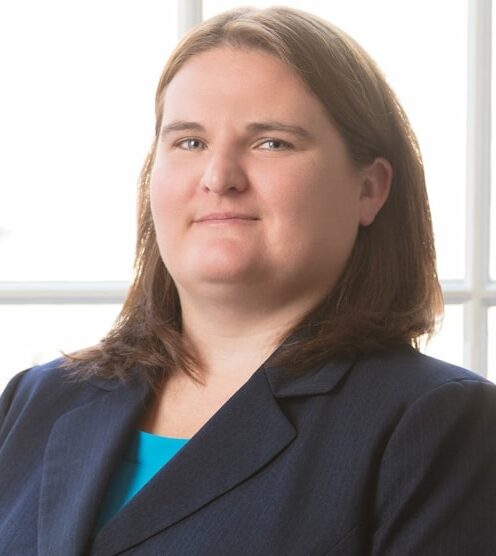
  • Under Pressure: Courts and Lawyers Trying to Deal With It with Diana Manning

    Under Pressure: Courts and Lawyers Trying to Deal With It with Diana Manning

    The pressure on trial lawyers, judges, plaintiffs, defendants, and court systems is only increasing.

    The backlog of cases in New Jersey, for example, nearly quadrupled between February 2020 and 2021, the first year of the pandemic, according to NJ Spotlight News (NJSN). The state is also facing a historic shortage of jurists, NJSN reported, “leading to overworked judges, huge case backlogs and nearly 7,000 defendants in jail without bail, some 500 of them for more than two years despite a law that essentially requires a trial within two years for anyone detained.”

    As reported by NJSN, one court official told the state Assembly Budget Committee about the impact of the pandemic on the court system: “Buildings were closed to most in-person trials for more than a year, although other proceedings continued virtually. The business closures and high unemployment led to a housing crisis that resulted in more than 46,000 pending cases that involve landlord-tenant issues . . . . But with all courts open and staff back to work in person, it is impossible to eliminate the backlog of cases with so many open judge seats.” The problem is attributed to the state Senate, where the process is mired, even though the governor is making appointments.

    According to the National Counsel for State Courts, backlogs at one third of U.S. courts increased by 5%.  It would have been worse had courts not held virtual hearings.

    Using the Court Statistic Project database, the numbers reveal in stark terms the impact the pandemic had in the year it came to America. Dispositions dropped from 43M in 2019 to 28M in 2020. Bench trials fell from 3M in 2019 to under 2M in 2020. Jury trials plummeted from 49K in 2019 to less than 19K in 2020.

    The Washington Post reported that the Pennsylvania Supreme Court declared a judicial emergency and extended deadlines. Virginia’s Supreme Court suspended nonessential proceedings. The Iowa Supreme Court pushed back criminal trials and the Alabama’s Supreme Court suspended in-person proceedings. New Jersey Supreme Court Chief Justice Stuart Rabner warned that the judicial shortage “comes with a price.”

    Listen to my interview with Diana C. Manning, Managing Principal, Bressler, Amery & Ross, P.C., for the fallout from the judicial shortage and swelling case backlogs, and what needs to be done to dig out. An experienced and award winning complex commercial litigator, Diana is co-chair of the firm’s business and commercial litigation practice group. She received her J.D. from Rutgers University School of Law.

    This episode is the first of two about challenges to the court system and what can be done to address them. An upcoming episode will feature an Alabama state judge who is leading the way in the use of technology to modernize the courts.

    This podcast is the audio companion to the Journal on Emerging Issues in Litigation. The Journal is a collaborative project between HB Litigation Conferences and the Fastcase legal research family, which includes Full Court Press, Law Street Media, and Docket Alarm. The podcast itself is a joint effort between HB and our friends at Law Street Media. If you have comments or wish to participate in one our projects please drop me a note at Editor@LitigationConferences.com.

    Tom Hagy

    (actual size)

    Tom Hagy
    Litigation Enthusiast and
    Host of the Emerging Litigation Podcast
    Home Page
    LinkedIn
    Diana Manning

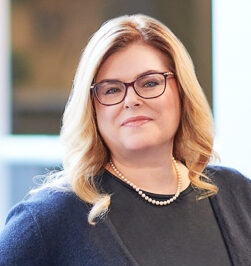
    Diana Manning

    Diana Manning is Managing Principal at Bressler, Amery & Ross in New Jersey. Diana has more than two decades of experience in complex commercial litigation at both the trial and appellate levels. She is Co-Chair of the firm’s Business and Commercial Litigation practice group, and spearheads the firm’s Appellate practice team. Diana has developed a successful track record of trial verdicts and settlements, especially in complex matters. She also has a reputation as a strategic, thoughtful, and fearless advocate for all of her clients.

    A distinguished trial lawyer, Diana is Certified by the Supreme Court of New Jersey as a Civil Trial Attorney. She is also an accomplished appellate lawyer who has participated in six matters before the New Jersey Supreme Court, including arguing four times. Diana is an avid presenter and author on business litigation, legal ethics, and professional liability. She is the author of the New Jersey Chapter of The Law of Lawyer’s Liability: Fifty-State Survey of Legal Malpractice, ABA/First Chair Press, which provides an overview of the laws governing attorney malpractice in each state.

    To date, Diana’s distinguished career has brought her offices and honors from many professional and legal industry organizations. Diana served on the District XA Ethics Committee for 10 years and was appointed Chair by the New Jersey Supreme Court from 2017-2019. She is also President of the New Jersey Women Lawyers Association, and is a Past President of Trial Attorneys of New Jersey, the Morris County Bar Association, and the Morris County Bar Foundation.
  • Policy Derailed: Can U.S. Antitrust Policy Toward Standard Essential Patents Get Back on Track by Jonathan Rubin

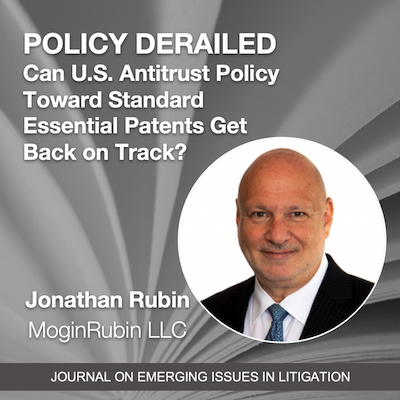
    Policy Derailed: Can U.S. Antitrust Policy Toward Standard Essential Patents Get Back on Track by Jonathan Rubin

    The Author

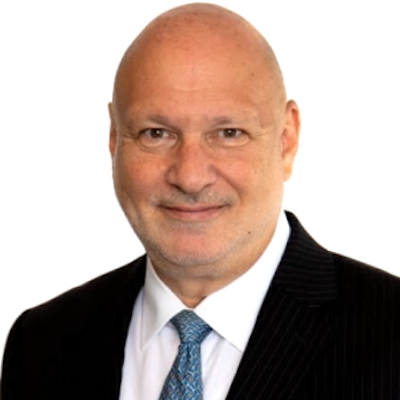
    Jonathan Rubin

    Jonathan RubinMoginRubin LLP

    Jonathan Rubin (jrubin@moginrubin.com) is Co-Founder and Partner of MoginRubin LLP, a boutique antitrust, mergers and acquisitions, and class action law firm. Since 2001, he has focused his legal practice exclusively on antitrust and competition law and policy. As a litigator he has led trial teams in major antitrust cases in courts throughout the country.

    Rubin is a member of the Editorial Board of Advisors for the Journal of Emerging
    Issues in Litigation.

    The Journal on Emerging Issues in Litigation

    Emerging Litigation Podcast

    Emerging Litigation PodcastProduced by HB Litigation and Law Street Media

    Interviews with leading attorneys and other subject matter experts on new twists in the law and how the law is responding to new twists in the world.

    Policy Derailed:
    Can U.S. Antitrust Policy Toward Standard Essential Patents Get Back on Track?

    “The failure to appropriately adjust the patent system to accommodate the competitive circumstances created when patents are incorporated into standards undermines the purposes of the standard-setting enterprise and impairs the utility and proliferation of standardized technologies. Without a course correction among the judiciary, the United States risks finding itself as a less desirable jurisdiction for pro-growth and pro-competitive patenting and standard-setting activities.”

    Abstract: A consensus at the intersection of patent and anti-trust law was achieved after a series of decisions finding that in some circumstances owners of standard essential patents (SEPs) have an antitrust duty to deal with willing licensees. Beginning in 2017, however, the Department of Justice derailed U.S. policy by undermining the role and usefulness of antitrust for policing abuses of the standard setting process. This article traces the emergence of the consensus, its abrogation by the DOJ, and the resulting effects and prospects for the future.

    Download the article now!

    Explore more from MoginRubin LLP!

    Blog: Emboldened by New Resources and Expanded Authority, Feds Continue 10-Year Look Back at Chinese Investment. By Dan Mogin, Jonathan Rubin, Jennifer Oliver, and Timothy LaComb. List

    OnDemand CLE Webinar: The Antitrust Case Against Google. Dan Mogin, Jonathan Rubin, Jennifer Oliver, Timothy LaComb, John Newman, Dr. Alan Grant

    Blog: FTC’s Case Against Facebook Will Test the Flexibility of U.S. Antitrust Law.Authors: Jonathan Rubin and Jennifer Oliver, MoginRubin LLP

    Blog: Full Ninth Circuit Removes Unwarranted Hurdles to Class Certification.

    Journal: Policy Derailed: Can U.S. Antitrust Policy Toward Standard Essential Patents Get Back on Track by Jonathan Rubin

    Webinar: Class Certification After Olean v. Bumble Bee with Jonathan Rubin, James Bogan lll, Jonathan Cohn, Bradley Hamburger.

    Journal: FTC v. Amazon: Market Definitions and Section 5 of the FTC Act

    Podcast: Algorithmic Software Facilitated Price Fixing with Jonathan Rubin

    Plus, additional insights from the MoginRubin Blog.

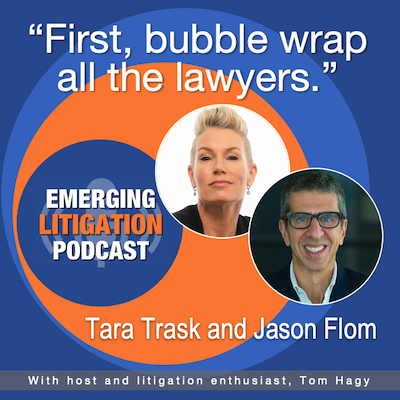
  • Lawyers for Good with Tara Trask and Jason Flom

    Lawyers for Good with Tara Trask and Jason Flom

    If you’re feeling bad about being a lawyer, or just maybe tingling with the holiday spirit of giving back, this episode is for you. Listen to three professionals (well, maybe two “professionals”) who deeply admire for the legal profession, the important role attorneys play in society, and all the potential they have to make the world a better place.

    When there is strife, there is a supporting organization, and with them are lawyers. Wrongful convictions. Voting rights. Environmental protection. The rights of women, people of color, workers,  LGBTQ, immigrants, asylum seekers.  Lawyers are in a unique position to do something about all of this. And they do. And we hope more will.

    Join me as I interview nationally acclaimed trial consultant Tara Trask and music industry star-maker Jason Flom.

    Tara Trask is the President of Trask Consulting
    , a boutique litigation strategy, jury research and trial consulting firm. Tara  focuses complex commercial litigation, from intellectual property to antitrust, from products liability to insurance, and oil and gas. She has extensive experience assisting institutions and individuals in matters involving regulatory enforcement and white-collar defense. Tara has been involved in more 450 jury trials.

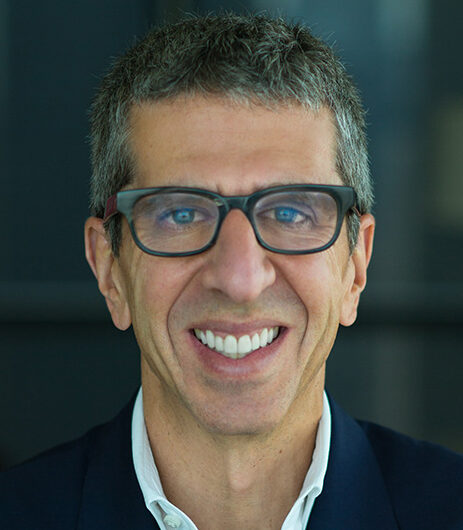
    Music industry executive Jason Flom is  CEO of Lava Records, Lava Music Publishing, and Lava Media, LLC.  He is former  CEO at Atlantic Records, Virgin Records and Capitol Music Group. Jason is personally responsible for launching acts such as Katy Perry and Greta Van Fleet, and discovering and developing the likes of Matchbox 20, The Corrs, Tory Amos, Jewel, and Stone Temple Pilots. The New Yorker described Jason as “one of the most successful record men of the past 20 years. He’s also committed to doing good. Through his Lava for Good company, Jason hosts the hit podcast Wrongful Conviction, now in its ninth season, which features interviews with people who have spent decades in prison for crimes they did not commit. Within two weeks of its release, the podcast shot to #7 on the iTunes charts and has raised more than $1 million to benefit the Innocence Project. Lava for Good’s Bone Valley, which tells the tragic story of  Leo Schofield, who was sentenced to life for the murder of his wife, Michelle, is also one of the top podcasts on iTunes (#19 as of this writing), and received a highly regarded “four thumbs up” from the Crime Writers On  podcast. Jason’s father, the fourth named partner in what is now known as Skadden, was dubbed one of the “Lawyers of the Century by The American Lawyer in 1999.

    This podcast is the audio companion to the Journal on Emerging Issues in Litigation. The Journal is a collaborative project between HB Litigation Conferences and the Fastcase legal research family, which includes Full Court Press, Law Street Media, and Docket Alarm. The podcast itself is a joint effort between HB and our friends at Law Street Media. If you have comments or wish to participate in one our projects please drop me a note at Editor@LitigationConferences.com.

    Tom Hagy

    (actual size)

    Tom Hagy
    Litigation Enthusiast and
    Host of the Emerging Litigation Podcast
    Home Page
    LinkedIn

    Loved hearing what Tara said on this subject matter?

    Explore more of subject content with Tara!

    Podcast: Jury Selection in the Age of Conspiracy Theories and Distrust with Tara Trask

    Podcast: Intellectual Property Trial Team Diversity with Tara Trask

    Tara Trask

    Tara TraskTrask Consulting

    Tara Trask is the President of Trask Consulting, a boutique litigation strategy, jury research and trial consulting firm. Tara focuses complex commercial litigation, from intellectual property to antitrust, from products liability to insurance, and oil and gas. She has extensive experience assisting institutions and individuals in matters involving regulatory enforcement and white-collar defense. Tara has been involved in more 450 jury trials.

    Jason Flom

    Jason Flom Lava Records

    Music industry executive Jason Flom is CEO of Lava Records, Lava Music Publishing, and Lava Media, LLC. He is former CEO at Atlantic Records, Virgin Records and Capitol Music Group. Jason is personally responsible for launching acts such as Katy Perry and Greta Van Fleet, and discovering and developing the likes of Matchbox 20, The Corrs, Tory Amos, Jewel, and Stone Temple Pilots. The New Yorker described Jason as “one of the most successful record men of the past 20 years. He’s also committed to doing good.

    Through his Lava for Good company, Jason hosts the hit podcast Wrongful Conviction, now in its ninth season, which features interviews with people who have spent decades in prison for crimes they did not commit. Within two weeks of its release, the podcast shot to #7 on the iTunes charts and has raised more than $1 million to benefit the Innocence Project. Lava for Good’s Bone Valley, which tells the tragic story of Leo Schofield, who was sentenced to life for the murder of his wife, Michelle, is also one of the top podcasts on iTunes (#19 as of this writing), and received a highly regarded “four thumbs up” from the Crime Writers On podcast. Jason’s father, the fourth named partner in what is now known as Skadden, was dubbed one of the “Lawyers of the Century by The American Lawyer in 1999.

    Tags

    Emerging Litigation & Risk Compliance Litigation & appeals Cybersecurity Data Privacy Artificial Intelligence (AI) Insurance Companies Risk Management Corporate & Securities Insurance Claims Recovery Regulations Data Breach Toxic Torts Antitrust Legal Tech Product Liability Settlements Trial Personal Injury Privacy Healthcare Per- and Polyfluoroalkyl Substances (PFAS) Data Analytics Arbitration Constitutional Law Climate Change Cannabis Labor Law Insurance Fraud Liability Claims COVID Alternative Dispute Resolution (ADR) Mediation Diversity Equity Inclusion (DEI) Claims management Professional Liability Legal Research & Writing Business Interruption Law Practice Management Trial Skills Property and Casualty Drug Laws Copyright Law Catastrophic Loss

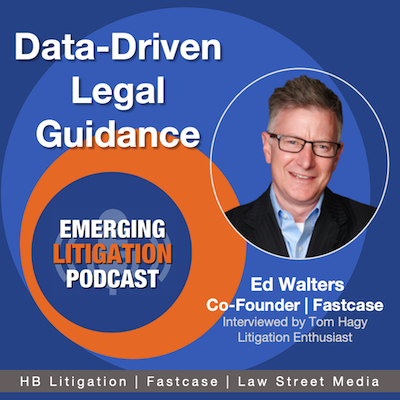
  • Data-Driven Legal Guidance with Ed Walters

    Data-Driven Legal Guidance with Ed Walters

    Today we’re going to talk about the weather. But only for a minute. Mostly we’re going to talk about the use of big data in the practice of law.

    There is a reason IBM acquired the digital assets of The Weather Channel, and it’s not because they are climate nerds. They bought it to put weather data to work to “operationalize [the] understanding of the impact of weather on business outcomes.” Think about the economic impact of snowstorms, hurricanes, and even less dramatic weather conditions, or the impact on the durability of manufacturing or building materials as temperatures rise or fall outside the norm.

    While we all crave meteorological precision, we also crave precision when making legal and business decisions.

    Clients ask questions like these all the time: What is our case worth? What size award will we get? Where should I file? Will the judge grant summary judgment? Should I even bring this suit?  Lawyers will draw on experience to offer their best advice, providing ranges followed by caveats and usually preceded by the most lawyerly of lawyer answers: “It depends.”  As my guest points out, lawyers also get business-related questions. Business-related answers may begin with “it depends,” but must end with a number. When a CEO asks how much revenue your project will generate, “more” is not the answer they’re looking for. I know. I’ve tried.

    Lawyers who seek greater precision in their predictions can take comfort in the increasing sophistication of analytical tools that can evaluate massive troves of data and account for myriad variables. Not only are we seeing advances in machine learning, artificial intelligence, and language processing, but there is greater access to important litigation-related data – BIG DATA – than ever before. Using new technologies to comb through millions of records – combined with an attorney’s insights – cannot only sharpen their predictive capabilities, but it can help them build, defend, and resolve cases.

    For insights on the past, present and future of legal guidance and analysis, listen to my interview with Ed Walters, co-founder and CEO of our partners on this podcast, Fastcase, the legal research and software company whose divisions include Fastcase Full Court Press (publishing), Law Street Media (legal news), Docket Alarm (docket tools), and NextChapter (software).  An entrepreneur, writer and professor, Ed brings his experience advising global Fortune 500 tech and pharma companies and sports leagues, serving in the White House on media affairs and speechwriting, and contributing to several major newspapers and journals. Ed is an adjunct law professor at Georgetown and Cornell universities. He is also a self-described “weather nerd,” which explains my tortured introduction.

    This podcast is the audio companion to the Journal on Emerging Issues in Litigation. The Journal is a collaborative project between HB Litigation Conferences and the Fastcase legal research family, which includes Full Court Press, Law Street Media, and Docket Alarm. The podcast itself is a joint effort between HB and our friends at Law Street Media. If you have comments or wish to participate in one our projects please drop me a note at Editor@LitigationConferences.com.

    Tom Hagy

    (actual size)

    Tom Hagy
    Litigation Enthusiast and
    Host of the Emerging Litigation Podcast
    Home Page
    LinkedIn

    Data-Driven Legal Guidance

    Ed Walters

    Ed WaltersFastcase

    Ed Walters is the CEO and co-founder of Fastcase, an online legal research software company based in Washington, D.C. Under Professor Walters’s leadership, Fastcase has grown to one of the world’s largest legal publishers, serving more than 1.1 million subscribers from around the world.

    Before founding Fastcase, Professor Walters worked at Covington & Burling, in Washington D.C. and Brussels, where he advised Microsoft, Merck, SmithKline, the Business Software Alliance, the National Football League, and the National Hockey League. His practice focused on corporate advisory work for software companies and sports leagues, and intellectual property litigation.

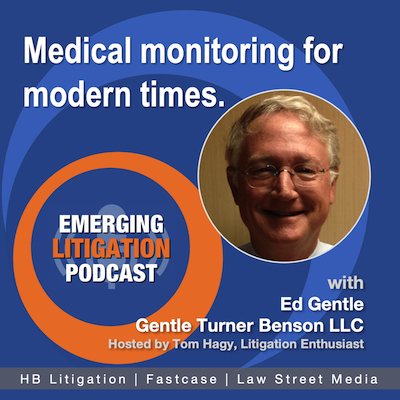
  • Medical Monitoring for Modern Times with Ed Gentle

    Medical Monitoring for Modern Times with Ed Gentle

    Medical Monitoring for Modern Times:
    Attorney and court-appointed neutral Ed Gentle shares his vision for a new paradigm for mass torts. 

    Marissa, a resident of a small town in Kentucky, learned that for some time her drinking water may have been contaminated with so-called “forever chemicals” or PFAS. It’s really a collection of chemicals used in products like fire-suppression foam, cookware, stain-resistant sprays, and food packaging. A local public radio reporter covering the story asked Marissa for her reaction. “I was never informed,” she said. “And now I’m worried, like, I hope I don’t have issues some day in my life.”  

    Marissa’s concern is like that of many people who find themselves in this situation and is at the center of this episode. When a case like Marissa’s goes to court, plaintiffs will seek a ruling that the responsible parties pay for years of medical monitoring. That means they are suing often without signs of an existing injury, and that defendants must pay for something when an injury may not arise.

    Attorney, author, and court-appointed case neutral, Edgar C. Gentle III, says  that approach is antiquated. He outlines a better way in his 2014 essay titled The Medical Monitoring Tort Remedy: Its Nationwide Status, Rationale and Practical Application (A Possible Dynamic Tort Remedy for Long Term Tort Maladies). Now he shares his latest insights on the Emerging Litigation Podcast.

    Ed Gentle is the Founding Partner of Gentle Turner & Benson, LLCin Birmingham, Ala. He is a Rhodes Scholar and has five college degrees, three in law. He has practiced for nearly four decades, spending 90% of his professional time serving as a neutral assigned by judges to oversee aspects of  mass tort litigation and settlements. He has helped create and administer over $2 billion in settlements during the past 25 years. Education: Bachelor of Science, Auburn University, summa cum laude, Danforth Scholar; Master of Science, University of Miami, summa cum laude, Maytag Fellow; B.A. and M.A. Degrees, Oxford University, Rhodes Scholar, Honors in Jurisprudence; and Juris Doctorate; University of Alabama School of Law, Hugo Black Scholar.

    This podcast is the audio companion to the Journal on Emerging Issues in Litigation. The Journal is a collaborative project between HB Litigation Conferences and the Fastcase legal research family, which includes Full Court Press, Law Street Media, and Docket Alarm. The podcast itself is a joint effort between HB and our friends at Law Street Media. If you have comments or wish to participate in one our projects please drop me a note at Editor@LitigationConferences.com.

    Tom Hagy

    (actual size)

    Tom Hagy
    Litigation Enthusiast and
    Host of the Emerging Litigation Podcast

    Loved Ed’s podcast?

    Explore Ed’s additional content on Medical Monitoring Tort.

    JEIL: Medical Monitoring for Modern Times with Ed Gentle

    OnDemand CLE Webinar: The Medical Monitoring Tort Remedy with Gentle and Benson

    Tags

    Emerging Litigation & Risk Compliance Litigation & appeals Cybersecurity Data Privacy Artificial Intelligence (AI) Insurance Companies Risk Management Corporate & Securities Insurance Claims Recovery Regulations Data Breach Toxic Torts Antitrust Legal Tech Product Liability Settlements Trial Personal Injury Privacy Healthcare Per- and Polyfluoroalkyl Substances (PFAS) Data Analytics Arbitration Constitutional Law Climate Change Cannabis Labor Law Insurance Fraud Liability Claims COVID Alternative Dispute Resolution (ADR) Mediation Diversity Equity Inclusion (DEI) Claims management Professional Liability Legal Research & Writing Business Interruption Law Practice Management Trial Skills Property and Casualty Drug Laws Copyright Law Catastrophic Loss

    Ed Gentle

    Ed Gentle Gentle Turner & Benson, LLC

    Ed Gentle is the Founding Partner of Gentle Turner & Benson, LLC in Birmingham, Ala. He is a Rhodes Scholar and has five college degrees, three in law. He has practiced for nearly four decades, spending 90% of his professional time serving as a neutral assigned by judges to oversee aspects of mass tort litigation and settlements.
    Education: Bachelor of Science, Auburn University, summa cum laude, Danforth Scholar; Master of Science, University of Miami, summa cum laude, Maytag Fellow; B.A. and M.A. Degrees, Oxford University, Rhodes Scholar, Honors in Jurisprudence; and Juris Doctorate; University of Alabama School of Law, Hugo Black Scholar.

  • Federal Judge, Two Attorneys Honored for Excellence in Ethics in Complex Litigation

    Federal Judge, Two Attorneys Honored for Excellence in Ethics in Complex Litigation

    For Immediate Release

    U.S. Appellate Judge, Two Attorneys Honored for Ethics in Complex Litigation

    • First-ever awards for ethics in complex litigation excellence will be presented Oct. 22, 2022.
    • Nominations were evaluated by a committee comprising a federal judge, scholars, and litigators.
    • Committee selected a current judge on the Ninth Circuit U.S. Court of Appeals, a plaintiff’s attorney, and a defense attorney.

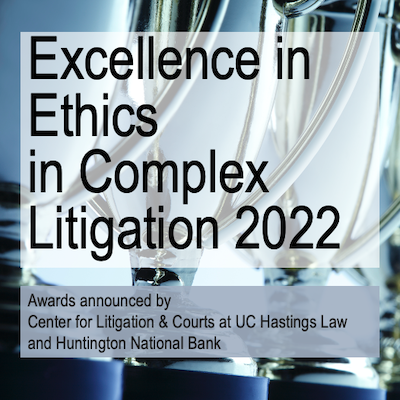
    SAN FRANCISCO – Sept. 28, 2022 – Nominated for their contributions to ethics in class actions and complex litigation, the first-ever recipients of the Awards for Excellence in Ethics in Complex Litigation are: jurist, scholar, and teacher, the Honorable William Fletcher; preeminent plaintiff’s attorney Elizabeth J. Cabraser; and distinguished employment defense attorney Fred W. Alvarez. The awards will be presented at the inaugural Complex Litigation Ethics Conference on Oct. 22, 2022, held at the UC Hastings College of the Law in association with the college’s Center for Litigation and Courts.

    Program co-chairs Joshua P. Davis and Scott Dodson – both professors at UC Hastings – have assembled an exemplary faculty of leading jurists, litigators, and other subject matter experts.

    “In developing this program we wanted not only to educate litigators and stimulate discussion on the important and evolving ethical aspects of this practice, but also to honor those who have demonstrated leadership, scholarship, and dedication in promoting ethical behavior and professionalism and to whom others look for inspiration,” said Davis.  “Judge Fletcher, Elizabeth Cabraser, and Fred Alvarez,” Dodson added, “are exactly the kinds of individuals and representatives of the profession we had in mind when we developed these awards.

    More about the recipients of the Awards for Excellence in Ethics in Complex Litigation:

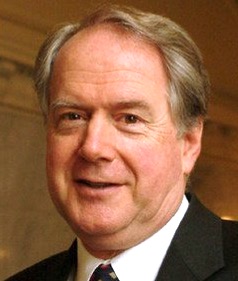
    Honorable William Fletcher, U.S. Court of Appeals for the Ninth Circuit (Judicial Recipient) – A respected jurist, scholar and teacher, Judge Fletcher was a professor at Berkeley Law for decades before his appointment to the federal bench. He is the co-author of an authoritative textbook on civil procedure which addresses complex litigation and class actions. Lauded for his wisdom and integrity, Judge Fletcher has demonstrated his respect for “the need to circumscribe the role of unelected judges in a democracy” and ensuring parties have the “practical capacity to protect their legal rights in court.” As he once explained in an interview, Judge Fletcher believes it is paramount that judges develop “a culture of decision making,” one in which they will, “to the extent of their ability and to the extent human nature will permit, state carefully, fully, and honestly the factual and legal bases for their decisions. I make no claim that American judges always live up to that ideal. We do not,” he said, “but we try.”

    Elizabeth J. Cabraser, Partner, Lieff Cabraser Heimann & Bernstein, LLP (Plaintiffs’ Counsel Recipient) – Few attorneys can boast leadership positions and success in so many consequential complex legal disputes implicating so many industries and varieties of claims. Cabraser’s role in litigation against Big Tobacco, Big Oil, Big Pharma, Big Auto, and others inspired Law360 to call her “a titan of the plaintiffs’ bar.” In their profile of Cabraser, Law360 wrote that defense attorneys see her as “a formidable opponent who comes to cases thoroughly prepared” and someone who can “win a judge’s ear.” Cabraser serves on the Executive Committee of the Counsel of the American Law Institute and as a Fellow of the American Academy of Arts and Sciences. She regularly lectures on complex litigation at Berkeley and Columbia Law Schools, publishes scholarship on complex litigation, and presents and conducts seminars in various settings, including the Federal Judicial Center, ALI-ABA, and the National Center for State Courts. She was nominated, in part, because she has “broken new ground not only as a plaintiffs’ lawyer, but also as a professional overcoming the various impediments to success for diverse attorneys. She serves as a role model for diverse young lawyers to pursue justice through complex litigation.”

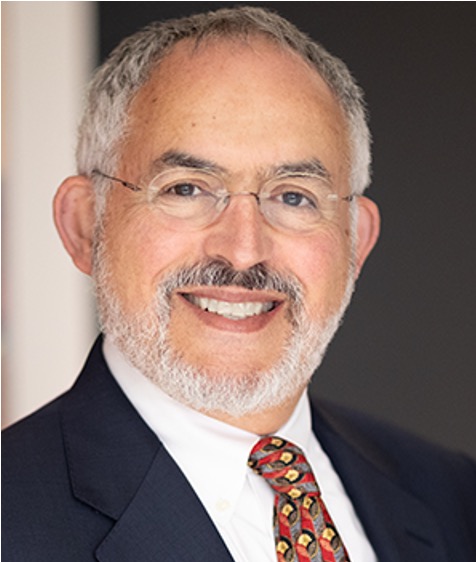
    Fred W. Alvarez, Partner, Coblentz, Patch, Duffy & Bass LLP (Defense Counsel Recipient) – Alvarez is one of the foremost employment attorneys in the country, known for his experience, public service, and leadership in the profession. Early in his career, Alvarez was a trial attorney with the National Labor Relations Board, a commissioner on the U.S. Equal Employment Opportunity Commission, and Assistant Secretary of Labor. After serving in the government he moved into private practice defending employers against class actions. Alvarez, who has been recognized for his integrity and ethics before, has repeatedly been selected as a monitor or special master to oversee the implementation of employment and civil rights consent decrees and settlements. “This work is complex, typically spans several years, and requires the trust of the litigants and counsel,” his nomination read. “It matters that, once the active class action litigation is over, Mr. Alvarez commits his time to ensure that reforms negotiated as part of a class action settlement are faithfully implemented. In other words, it’s not just about the money. His work helps ensure that the promise of civil rights class action litigation can be realized.”

    The Complex Litigation Ethics Conference is being co-sponsored by Huntington National Bank, a nationwide provider of settlement fund and other financial services for law firms. Professor Davis is both a research professor at UC Hastings and managing partner of the San Francisco offices of Berger Montague, one of the nation’s oldest and most respected class action and complex litigation law firms. Professor Scott Dodson is Founding Director of the Center for Litigation and Courts at UC Hastings Law. The awards are being presented by the Center for Litigation and Courts and Huntington National Bank.

    Qualifying attorney attendees will be eligible to receive eight CLE credits (subject to state and local bar rules). Learn more and register at bit.ly/LitEthicsConf.

    Members of the legal and business press are invited to request passes to attend the event in San Francisco or via webstream, and to receive program materials. Pre-program interviews with the conference leaders and faculty should be addressed to Tom Hagy, +1 (484) 844-0428, or Editor@LitigationConferences.com.

    Media Contact:
    Tom Hagy, Critical Legal Content
    +1 (484) 844-0428

    Editor@LitigationConferences.com

    Excellence in Ethics in
    Complex Litigation

    2022 Honorees

    Judge Fletcher

    Hon. William Fletcher

    Elizabeth Cabraser

    Elizabeth Cabraser

    Fred Alvarez

    Fred Alvarez

    Awards presented by the Center for Litigation and Courts at UC Hastings Law and Huntington National Bank.

    Download the release

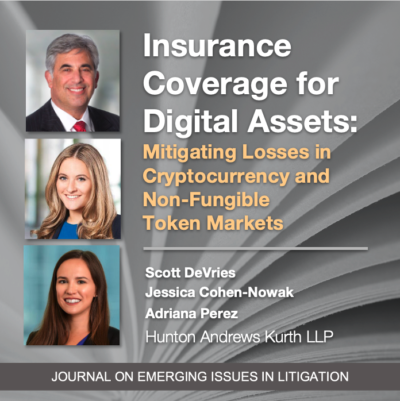
  • Insurance Coverage for Digital Assets: Mitigating Losses in Cryptocurrency and Non‐Fungible Token Markets by Scott DeVries, Jessica Cohen-Nowak and Adriana Perez of Hunton Andrews Kurth

    Insurance Coverage for Digital Assets: Mitigating Losses in Cryptocurrency and Non‐Fungible Token Markets by Scott DeVries, Jessica Cohen-Nowak and Adriana Perez of Hunton Andrews Kurth

    Journal on Emerging Issues in LitigationCompanies and individuals are riding the ups and downs of cryptocurrency and NFTs—with losses and swings in the billions of dollars—but digital assets are not going away.

    Abstract: The risk of loss in certain categories may be mitigated by insurance, whether provided by tailored policies and/or under policies designed specifically for digital asset owners. Those with exposure to the digital asset sector should be attuned to the emerging marketplace for such insurance products. While it is early days for NFT-specific coverage, the rise of cryptocurrency has created a substantial marketplace for crypto coverage. Insurers are becoming increasingly able to model and assess risk, so more products are coming to market. That said, digital asset holders need to be able to select coverage that best suits their needs. In this article, the authors discuss the history and status of coverage for digital assets to assist readers in exploring how they might use insurance to mitigate risk in this emerging and rocky sector of global finance.

    “Over the course of a decade, the marketplace for cryptocurrency has increased from zero to an estimated $250 billion. However, only $6 billion in insurance coverage is currently available. It would be a gross understatement to say that there is a truly remarkable imbalance between market value and insurance capacity.”

    Introduction

    Crypto markets are experiencing the greatest crash in their history to date.  The value of a Bitcoin (BTC) has plummeted 70% from its peak and Ethereum (ETH) has fallen 77%.  Since last November, the value of cryptocurrency tokens has lost $2 billion in value. As noted financial publication Barron’s put it: “Crypto is having a ‘Lehman moment,’ a shattering of confidence triggered by plunging asset prices, liquidity freezing up, and billions of dollars wiped out in a few scary weeks.” Cryptocurrency companies are halting withdrawals and transfers, platforms are seizing up, and regulators are circling.

    Nor has the devastation been limited to the coins themselves.  Non-fungible token (NFT) sales have reduced by 90% since September 2021.  The New York Times reported that Opensea.io (OpenSea) an NFT marketplace that receives 2.5% share of the proceeds for each NFT sale, has been plagued by “a surge of plagiarism, as sellers convert traditional artwork into NFTs and then list the images for sale without compensating the original creator.”  For example, DeviantArt, an artist collective that scans OpenSea for copyright infringement of the work of its artists, found 290,000 instances of unauthorized NFTs copying its artists’ works. While infringing listings can be deleted in response to take down requests filed by the artist, buyers of counterfeit NFTs are rarely given a refund.

    Against this backdrop, the issue of whether there may be claims associated with cryptocurrency and NFTs is far from a theoretical or esoteric thought exercise.  It is very real.  And when there are claims, businesses and investors doubtless will look to their insurers.

    A business or home is devastated by a wildfire.  Property insurance is available up to limits.  A home is broken into, and art and jewelry are stolen.  Crime/specie insurance is available.

    But what about new age assets?  What about cryptocurrency?  What about NFTs?  These obviously are not immune from theft by hackers.  In 2021, hackers stole at least $3.2 billion in cryptocurrency with schemes short of outright theft accounting for another $7.8 billion. In the first four months of 2022, NFT hacks accounted for $52 million in losses, an almost eight-fold increase from 2021.

    There typically is a significant time lag between the development of a product and the availability of product-specific insurance.  This general proposition applies with equal force here.  Over the course of a decade, the marketplace for cryptocurrency has increased from zero to an estimated $250 billion.  However, only $6 billion in insurance coverage is currently available.  It would be a gross understatement to say that there is a truly remarkable imbalance between market value and insurance capacity.

    Although NFTs have been around for the better part of a decade, it was only during the last two years that the marketplace has grown to upwards of $41 billion. In addition to its newness, NFTs pose additional risks for insurers, including questions of ownership, authenticity and the valuation of a truly “unique” asset.  Consequently, availability of insurance coverage for NFTs is even further behind.

    Given the rapid rate at which the digital asset field is developing, and claims are emerging, and the insurance industry’s attempts to specifically address coverage for these losses and claims, anything written on this topic will, at least in part, be outdated by the time it is published.  The objective of this article is to educate the reader on the history and status of the field, enabling them to ask the questions they need to ask, and to procure the coverage they need if available now or in coming months. 

    Download the article now!

    Insurance Coverage for Digital Assets:

    Mitigating Losses in Crypto and NFT Markets

    Scott DeVries

    Scott DeVriesHunton Andrews Kurth

    Scott DeVries (sdevries@huntonak.com) is Special Counsel at Hunton Andrews Kurth and long-time insurance coverage attorney for policyholders in a range of complex disputes as well as mass torts, class action, product liability, and complex business litigation.

    Jessica Cohen-Nowak

    Jessica Cohen-NowakHunton Andrews Kurth

    Jessica Cohen-Nowak (jcohen-nowak@huntonak.com) is an associate in Hunton Andrew Kurth LLP’s Intellectual Property group in the firm’s New York office. Jessica focuses her counseling and litigation practice on intellectual property matters in the fashion, fitness, entertainment, hospitality, and gaming industries as well as in technology and digital assets.

    Adriana Perez

    Adriana PerezHunton Andrews Kurth

    Adriana Perez (pereza@huntonak.com) is an associate in the firm’s Miami office where she focuses on insurance, reinsurance, and other business litigation.

  • The Environmental, Social, and Governance Police Have Arrived: Is Your Insurance Ready? by Robert D. Chesler and Dennis J. Artese

    The Environmental, Social, and Governance Police Have Arrived: Is Your Insurance Ready? by Robert D. Chesler and Dennis J. Artese

    The Authors

    Robert Chesler

    Robert CheslerAnderson Kill

    Robert D. Chesler (rchesler@andersonkill.com) is a shareholder in Anderson Kill’s New Jersey office and is a member of the firm’s Cyber Insurance Recovery Group. He represents policyholders in a broad variety of coverage claims against their insurers and advises companies with respect to their insurance programs.

    Dennis Artese

    Dennis ArteseAnderson Kill

    Dennis J. Artese is a shareholder in Anderson Kill’s New York office and chairs the firm’s Climate Change and Disaster Recovery Group. Both are members of the Editorial Advisory Board of the Journal.

    The Journal on Emerging Issues in Litigation

    Emerging Litigation Podcast

    Emerging Litigation PodcastProduced by HB Litigation and Law Street Media

    Interviews with leading attorneys and other subject matter experts on new twists in the law and how the law is responding to new twists in the world.

    The ESG Police Have Arrived:
    Is Your Insurance Ready?

    “ESG has become a major initiative for corporate America. In particular, the environmental prong of ESG calls for companies to institute sustainability goals and to invest in environmentally friendly companies. This emphasis has both economic and popular support. Environmental sustainability will make companies better able to compete and make their businesses less risky.”

    Abstract: The environmental, social, and governance movement is a positive one, but like many well-intentioned efforts there is room for abuse and risk. As corporations endeavor to earn accolades and good will for “doing the right thing,” they must also be certain they truly are. In this article the authors discuss increased government scrutiny, the attendant risks of implementing and reporting on ESG initiatives, insurance coverage implications for directors and officers, the pollution and other exclusions, the potential civil fines and penalties, and what companies can expect in the era of ESG.

    Download the article now!

    Explore More from Anderson Kill!

    Podcast 1 of 2 series: Insurance Coverage with Dr. Jaana Pietari and Jim Fenstermacher and Litigation with Bob Chesler.

    Podcast 2 of 2 series: PFAS Insurance Coverage with Robert D. Chesler of Anderson Kill.

    Sister article to podcast 1 of 2 series: Remediating, Insuring, and Litigating PFAS Claims. Authors: Dr. Jaana Pietari, PhD, MBA, PE, Jim Fenstermacher, PE, Dr. Michael Bock, PhD, MS, Robert D. Chesler and Nicholas M. Insua, Sheila Mulrennan, Robin Kelliher, Jason R. Waters

    Podcast: Autonomous Vehicles: The New Technology Driving the Litigation Conversation Podcast with Cort Malone, John Leonard, Joshua Zelen

    Podcast: Violations of Biometric Privacy Laws: Policyholders’ Victories and the Implications Going Forward with John Leonard and Cort Malone

    Journal on Emerging Issues, Editorial Board of Advisors: Dennis Artese, Robert D. Chesler

    Asymmetrical Combat: Bad Faith Liability in Insurance Recovery Cases. By William Passannante

    Climate Change, ESG, and D&O Insurance: Collision or Cooperation? Authors: Robert Chesler, Dennis J. Artese, and Joseph Villa

    Litigation After Biometric Privacy Law Violations: Policyholder Victories and Their Implications. Authors: Cort T. Malone, Abigail Damsky

    Protecting Policyholders as AI Is Developed for Insurance Claims Handling – Ensuring “Decency and Humanity” in the Digital Age. Authors: Marshall Gilinsky, Madison Marlow

    Police–The Environmental, Social, and Governance Police Have Arrived: Is your Insurance Ready. Authors: Dennis Artese, Bob Chesler

    How Insurance Companies Defraud Their Policyholders, and What Courts and Legislators Should Do About It. Authors: Robert Chesler, Amy Weiss, and Jade Sobh

    The Promise and Peril of Quantum Computing and Its Implications for Cyber Insurance. By Cameron R. Argetsinger

    The Use and Abuse of the Pollution Exclusion. Authors: Dennis Artese, Jamie O’Neil, Robert Chesler

    Property Insurance Coverage for Emerging Risk: Underground Climate Change. Authors: Dennis J. Artese, Ethan W. Middlebrooks, Thomas Dupont

    Autonomous Vehicles: The New Technology Driving the Litigation Conversation. Authors: Cort Malone, John Leonard, and Joshua Zelen

  • Announcing the Complex Litigation Ethics Conference

    Announcing the Complex Litigation Ethics Conference

    Joshua P. Davis

    Joshua P. DavisProfessor & Practicing Attorney

    A leading academic and practitioner, Joshua P. Davis (davisj@usfca.edu) is a nationally recognized expert on legal ethics and class actions, as well as on artificial intelligence in the law, antitrust, civil procedure, free speech, and jurisprudence. He has published more than 30 scholarly articles and book chapters on these subjects and is currently writing a book on AI titled Unnatural Law, which will be published by Cambridge University Press. He is Research Professor of Law at the University of California Hastings College of Law, and a Shareholder of the Berger Montague PC law firm and Manager of its new San Francisco Bay Area Office. Before taking these posts, for more than 20 years Davis was a tenured Professor of Law at University of San Francisco Law School, where he also served as the Director of the Center for Law and Ethics.

    Davis is also a member of the Editorial Board of Advisors for the Journal on Emerging Issues in Litigation, published by Fastcase Full Court Press. Tom Hagy, Editor in Chief.

    Scott Dodson

    Scott DodsonCenter for Litigation and Courts

    An expert in civil procedure and federal courts, Professor Scott Dodson is the James Edgar Hervey Chair in Litigation and Geoffrey C. Hazard Jr. Distinguished Professor of Law at UC Hastings Law. He has published seven book titles, including The Legacy of Ruth Bader Ginsburg (Cambridge 2015) and New Pleading in the Twenty-First Century (Oxford 2013). He has written around 100 shorter works appearing in such journals as Stanford Law Review, New York University Law Review, Michigan Law Review, University of Pennsylvania Law Review, California Law Review, Virginia Law Review, Duke Law Journal, Northwestern University Law Review, Georgetown Law Journal, American Journal of Comparative Law, American Journal of International Law, and Law & Society Review. His scholarly writings have been cited in more than 30 court opinions and have been downloaded more than 45,000 times. For 2010-14, he was listed as the 9th (tied) most-cited civil-procedure scholar. Professor Dodson is a frequent commentator in the news, including appearances on the 10:00 Nightly News, NPR Radio, and CNN Radio; quotes in various print media; and blogging stints at SCOTUSblog, SCOCAblog, Civil Procedure & Federal Courts Blog, and PrawfsBlawg.

    You can also listen to Josh on the Emerging Litigation Podcast!

    New Litigation Ethics Conference to Feature Sitting Judges, Legal Scholars, Prominent Attorneys

    For Immediate Release

    SAN FRANCISCO – Aug. 25, 2022 – Luminaries and thought leaders in the complex litigation arena will gather in San Francisco on Saturday, Oct. 22, 2022, to discuss insights and practices on an issue of critical significance to the nation’s justice system: ethical conduct among litigants and litigators.

    With a projected in-person and remote audience of 100 plus, this important continuing legal education program will be held at the UC Hastings College of Law in association with the school’s Center for Litigation in Courts. Professors Joshua P. Davis and Scott Dodson have assembled a faculty of leading jurists, litigators, and other subject matter experts.

    Complex Litigation Ethics Conference
    Oct. 22, 2022
    UC Hastings College of Law
    Learn more

    “Data suggest that, depending on the year, as much as half of all cases filed in federal court are part of multidistrict litigation, or MDL, proceedings or involve proposed class actions,” said Professor Davis, who is both a research professor at UC Davis and managing partner of the San Francisco offices of Berger Montague, a prominent class action and complex litigation law firm.

    According to the U.S. Judicial Panel on Multidistrict Litigation there were 186 MDL dockets pending, which brought together 770,623 actions, with 426,495 pending as of July 2022. At the same time, thousands of new class actions are filed each year (some put the number as high as 10,000) in state and federal courts representing millions of named and potential class members. Cases and claim types run the gamut, such as consumer product liability, antitrust, toxic substances, drug and device liability, data breaches, securities, employment, environmental contamination, and both injury and damage claims arising from wildfires and floods, to name a few.

    “Despite these figures, insufficient scholarly attention has been paid to the ways in which ethical rules, which are typically designed for traditional litigation, should be adapted and applied to MDLs and class actions,” said Professor Davis. “The Complex Litigation Ethics Conference will address these important and timely issues.”

    Topics include adapting general legal ethics rules to complex matters; ethics in litigation funding; diversity, equity, and inclusivity in complex litigation; and communications with “absent class members.”

    U.S. Judge Jon S. Tigar of the Northern District of California will be among the speakers. Judge Tigar has or continues to preside over headline-grabbing litigation brought against Apple Inc., Meta Platforms Inc. (Facebook), Twitter Inc., Uber Technologies Inc., Wells Fargo & Company, Subway restaurants, Sanofi S.A., and others.

    Also on the faculty are:

    • Lynn A. Baker, University of Texas School of Law
    • Jennifer Bennett, Gupta Wessler PLLC
    • Eric Cramer, Berger Montague PC
    • Lauren Godshall, Tulane Law School
    • Alexandra D. Lahav, Cornell Law School
    • Brent Landau, Hausfeld
    • Roger Michalski, University of Oklahoma College of Law
    • Melissa Mortazavi, University of Oklahoma College of Law
    • Sarah Ray, Latham & Watkins LLP
    • Maya Steinitz, University of Iowa, College of Law
    • Brad Wendel, Cornell Law School

    Three annual Awards for Excellence in Ethics in Complex Litigation will also be announced during the event, one to a plaintiffs’ attorney or law firm, one to a defense attorney or law firm, and one to a judge, scholar, third-party neutral, party to litigation, government official, other lawyer or law firm, non-profit organization, and other participant in or commentator on complex litigation. The winners will have demonstrated excellence in promoting ethics in class actions or other complex litigation (e.g., MDLs).

    Huntington National BankThe event is being co-sponsored by Huntington National Bank, a nationwide provider of settlement fund and other financial services for law firms.

    Members of the legal and business press are invited to request passes to attend the event in San Francisco or via webstream, and to receive program materials. Pre-program interviews with the conference leaders and faculty should be addressed to Tom Hagy, +1 (484) 844-0428, or Editor@LitigationConferences.com.

    DOWNLOAD THE RELEASE

  • Litigating a Claim to Recover Liquidated Damages by Laura Fraher

    Litigating a Claim to Recover Liquidated Damages by Laura Fraher

    The Author

    Laura C. Fraher

    Laura C. FraherShapiro, Lifschitz and Schram

    Laura C. Fraher (fraher@slslaw.com) is a senior attorney in the trial and construction group at Shapiro, Lifschitz & Schram in Washington, D.C. She has extensive experience in civil litigation at both the trial court and appellate level. Competitive by nature, Laura played rugby for nearly 20 years. She puts this competitive spirit to work through her passion for the law and her clients.

    Education: St. John’s University School of Law, J.D., 2001, magna cum laude; SUNY College at Geneseo, B.A., Political Science, 1998.

    The Journal on Emerging Issues in Litigation

    Emerging Litigation Podcast

    Emerging Litigation PodcastProduced by HB Litigation and Law Street Media

    Interviews with leading attorneys and other subject matter experts on new twists in the law and how the law is responding to new twists in the world.

    Litigating a Claim to Recover Liquidated Damages:

    Enforceability Depends on Evidence of Good Faith Expectations

    “The tests and standards that courts apply to evaluate whether a particular liquidated damage provision is enforceable vary from state to state and it is imperative that litigants research and fully appreciate the particular standards that will be applied by the court in which they are litigating.”

    Abstract: The liquidated damages provision in a contract is a useful mechanism for mitigating risk in the event one of the parties to an agreement breaches the contract, costing the aggrieved party sometimes significant difficulty and substantial expense. Unfortunately, these provisions are often challenged, allowing the party responsible for the beach to exacerbate the burdens on the other party. In this article, the author discusses concepts of enforceability, proof, and avoiding litigation over liquidated damage provisions.

    A liquidated damage provision is an advance agreement of the damages that a party will be entitled to recover in the event of a future breach by the other party to a contract. These provisions can be an important tool for risk allocation and mitigation between parties when entering into a contract; both because the provision allows the parties to predict with certainty the financial ramifications of a future breach and because the liquidated damage provision should protect the aggrieved party against the difficulty and expense associated with proving actual damages in the event of a breach.

    In reality, however, when a breach occurs, liquidated damage provisions are frequently challenged and become the subject of costly litigation.  At the outset, it should be noted that the enforceability of a liquidated damage provision is generally considered an issue of law to be determined by the court, not an issue of fact to be presented to a fact finder. Thus, the key threshold issue of enforceability is likely to be determined on a pretrial motion rather than at trial and you should be prepared with both evidence and argument in order to sustain your claim.

    If you are faced with a challenge to dismiss your claim to recover liquidated damages based on unenforceability, it is important to remember that the law is in your favor.

    Liquidated damage provisions are viewed favorably by courts across the country and will generally be enforced so long as a court is satisfied that a liquidated damage provision is a stipulated agreement based on anticipated actual damages and not a penalty. A liquidated damages provision will be considered a penalty, and therefore unenforceable, if the court determines that the provision is designed to induce or secure performance by one party; conversely, a liquidated damage provision will not be viewed as a penalty, and will therefore be enforced if the court is satisfied that the provision is designed not to punish, but to provide a sum certain as compensation for a breach.

    Download the article now!