Tag: Insurance Companies

  • Ohio Supreme Court Ruling Sends Important Reminder: Long-Standing, Fundamental Principles of Insurance Policy Construction and Law Are Applicable to Cyber Claims

    Ohio Supreme Court Ruling Sends Important Reminder: Long-Standing, Fundamental Principles of Insurance Policy Construction and Law Are Applicable to Cyber Claims

    The Authors

    Judy Selby

    Judy SelbyKennedys

    Judy Selby (judy.selby@kennedyslaw.com) is a Partner at Kennedys (New York) where she focuses her practice primarily on insurance coverage matters with a concentration in coverage for exposures arising out of emerging technology, digital, and compliance risks.

    Tracey Kline

    Tracey KlineKennedys

    Tracey M.Kline (tracey.kline@kennedyslaw.com) is an Associate at Kennedys (Philadelphia) where she focuses her practice primarily on insurance coverage litigation and cyber matters.

    The Journal on Emerging Issues in Litigation

    Emerging Litigation Podcast

    Emerging Litigation PodcastProduced by HB Litigation and Law Street Media

    Interviews with leading attorneys and other subject matter experts on new twists in the law and how the law is responding to new twists in the world.

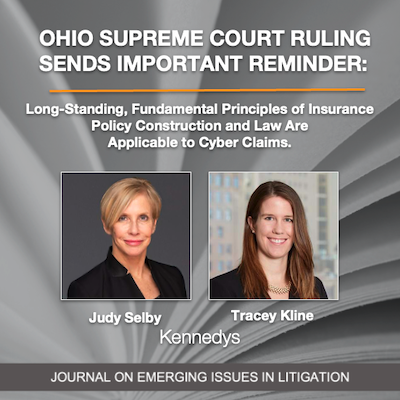
    Ohio Supreme Court Ruling Sends Important Reminder:

    Long-Standing, Fundamental Principles of Insurance Policy Construction and Law Are Applicable to Cyber Claims

    Abstract: On December 27, 2022, the Ohio Supreme Court unanimously ruled that a business owner’s property insurance policy issued by Owners Insurance Co. to EMOI Services, LLC did not afford coverage for losses sustained in a ransomware attack because computer software is “entirely intangible” and “cannot experience ‘direct physical loss or physical damage.’” EMOI Servs., LLC. v. Owners Ins. Co., 2022-Ohio-4649 (Ohio 2022). In doing so, the court reversed an attention-getting split decision by the lower appellate court. This article takes an in-depth look at the case and discusses its significant implications.

    The Ohio Supreme Court’s decision was based on its commonsense conclusions that software (as intangible property) cannot suffer physical damage, and that coverage for restoration of information under the Electronic Equipment Endorsement could not be triggered absent the threshold requirement of “direct physical loss or damage” to the media on which the information was stored. Although claims involving cyber events may be relatively new, this decision is an important reminder that long-standing, fundamental principles of insurance policy construction and law are applicable to cyber claims.

    Download the article now!

  • How Insurance Companies Defraud Their Policyholders, and What Courts and Legislators Should Do About It

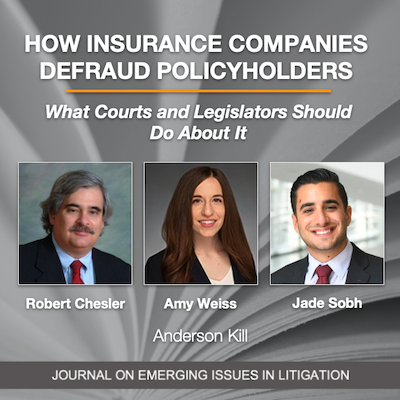
    How Insurance Companies Defraud Their Policyholders, and What Courts and Legislators Should Do About It

    The Authors

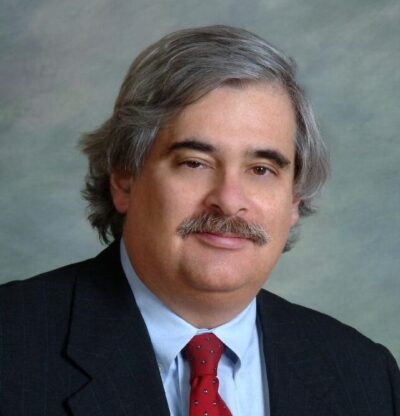
    Robert D. Chesler

    Robert D. CheslerAnderson Kill

    Robert D. Chesler (rchesler@andersonkill.com) is a shareholder in Anderson Kill’s Newark office. Bob represents policyholders in a broad variety of coverage claims against their insurers and advises companies with respect to their insurance programs. Bob is also a member of Anderson Kill’s Cyber Insurance Recovery group.

    Bob has served as the attorney of record in more than 30 reported insurance decisions, representing clients including General Electric, Ingersoll-Rand, Westinghouse, Schering, Chrysler, and Unilever, as well as many small businesses including gas stations and dry cleaners. He has received numerous professional accolades, including a top-tier ranking for Insurance Litigation: New Jersey in Chambers USA: American’s Leading Lawyers for Business, which dubs him a “dominant force in coverage disputes” and cites a client who calls him “a dean of the insurance Bar; one of the brightest in writing about and analyzing insurance coverage.”

    Amy Weiss

    Amy WeissAnderson Kill

    Amy Weiss (aweiss@andersonkill.com) is a law clerk pending admission in Anderson Kill’s New York office. She focuses her practice on insurance recovery, exclusively on behalf of policyholders.

    While attending the Benjamin N. Cardozo School of Law, Amy worked as a Summer Associate at Anderson Kill and a Judicial Intern for the Honorable Nicholas G. Garaufis at the United States District Court for the Eastern District of New York.

    She served as Senior Articles Editor for the Cardozo Arts and Entertainment Law Journal, participated in the Cardozo Visual & Performing Arts Law Field Clinic, was a teaching assistant for the Lawyering & Legal writing course, and was a research assistant for Professor Stewart E. Sterk. Amy received the Dean’s Merit Scholarship and graduated with Honors.

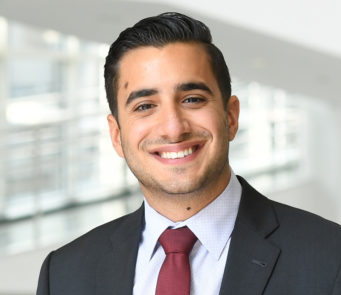
    Jade Sobh

    Jade SobhAnderson Kill

    Jade W. Sobh (jsobh@andersonkill.com) is an attorney in Anderson Kill’s New York office. Jade focuses his practice on both insurance recovery, exclusively on behalf of policyholders, as well as Government Enforcement, Internal Investigations, and White Collar Defense. Jade’s practice also encompasses regulatory and complex commercial litigation matters.

    Prior to joining Anderson Kill, Jade was an associate at a leading New Jersey law firm, where he concentrated his practice in commercial litigation and criminal defense. His work there focused on corporate disputes, complex commercial litigation, real estate litigation, and appellate litigation. In his previous role, Jade also assisted in representing clients facing federal drug possession charges, and healthcare fraud allegations, among other criminal matters.

    Previously, Jade was a law clerk to The Honorable Robert C. Wilson in the Superior Court of New Jersey, Civil Division. Jade worked with Judge Wilson on cases in Bergen County’s Complex Business Litigation Program including insurance recovery disputes, construction litigation, corporate ownership issues, breach of contract, arbitration agreements, and franchise agreements.

    The Journal on Emerging Issues in Litigation

    Emerging Litigation Podcast

    Emerging Litigation PodcastProduced by HB Litigation and Law Street Media

    Interviews with leading attorneys and other subject matter experts on new twists in the law and how the law is responding to new twists in the world.

    How Insurance Companies Defraud Their Policyholders 

    What Courts and Legislators Should Do About It

    “By its very nature, fraud involves concealment and is difficult to detect. The overwhelming majority of victims of fraud do not even know that they have been defrauded when an insurance company denies their claim or cancels their policy, and have no recourse.”

    Abstract: Insurance companies have legitimate reasons for denying claims, but sometimes denials or significant delays are the result of unfair practices or even fraud. Such actions may be systemic or undertaken by an individual. What rights do policyholders have? What can they do to combat illegitimate denials? What are the barriers individuals face when they are wrongfully denied coverage? Should there be a private right of action under the Unfair Trade Practices Act? Should policyholders’ attorneys’ fees be covered? What should courts and legislatures do to protect insurance consumers? In this article the authors answer these questions and more.

    Download the article now!

    Explore More from Anderson Kill!

    Journal on Emerging Issues, Editorial Board of Advisors

    The Use and Abuse of the Pollution Exclusion. By Dennis Artese, Jamie O’Neil, Robert Chesler

    The Environmental, Social, and Governance Police Have Arrived: Is your Insurance Ready. Authors: Dennis Artese, Bob Chesler.

    Podcast 1 of 2 series: PFAS Insurance Coverage with Jaana Pietari and Jim Fenstermacher and Litigation with Bob Chesler

    Poscast 2 of 2 series: Insurance Coverage for PFAS Claims

    How Insurance Companies Defraud Their Policyholders, and What Courts and Legislators Should Do About It. Authors: Robert Chesler, Amy Weiss, and Jade Sobh

    Climate Change, ESG, D&O Insurance: Collision or Cooperation? By Robert D. Chesler, Dennis J. Artese and Joseph Villa

    Remediating, Insuring, and Litigating PFAS Claims. By Dr. Jaana Pietari, PhD, MBA, PE, Jim Fenstermacher, PE, Dr. Michael Bock, PhD, MS, Robert D. Chesler and Nicholas M. Insua, Sheila Mulrennan, Robin Kelliher, Jason R. Waters

  • Will a New Wave of New Environmental/Toxic Tort Litigation and Claims Upend Insurance Industry Environmental Reserves?

    Will a New Wave of New Environmental/Toxic Tort Litigation and Claims Upend Insurance Industry Environmental Reserves?

    The Author

    Charlie Kingdollar

    Charlie Kingdollar

    Charlie Kingdollar spent his career as emerging issues officer for a major global insurance company, tracking hundreds of future risks like those discussed in this article. Charlie is also a valued member of the Editorial Board of Advisors for the Journal of Emerging Issues in Litigation.

    The Journal on Emerging Issues in Litigation

    Emerging Litigation Podcast

    Emerging Litigation PodcastProduced by HB Litigation and Law Street Media

    Interviews with leading attorneys and other subject matter experts on new twists in the law and how the law is responding to new twists in the world.

    Will a New Wave of New Environmental/Toxic Tort Litigation and Claims Upend Insurance Industry Environmental Reserves?

    “PFAS chemicals are commonly called “forever chemicals,” because once released into the environment they can take hundreds or even thousands of years to break down.”

    “Estimates that the ultimate costs of [these and other] environmental claims will land between $45 billion and $55 billion is terribly low. Maybe I’m missing something (always a possibility).  If not, the insurance industry is in for a rude awakening.” 

    Abstract: To remain profitable and viable, the insurance and reinsurance industry must rely on estimated forecasts of potential claims many years out to establish an appropriate level of reserves. They rely on data from rating agencies and, based on these estimates, ratchet their reserves up or down accordingly. In past years, major and once unforeseen developments like massive asbestos and environmental litigation provided urgent reasons to cast an especially critical eye on the adequacy of industry reserves. In this article, the author explains why it is that time again. In light of several potentially calamitous emerging global liabilities he reviews here, particularly if they land with the impact he fears they might, the author believes the insurance industry and its policyholders may be in for a jolt a few short years from now.

    Download the article now!

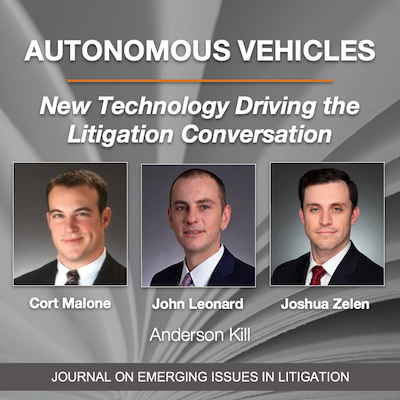
  • Autonomous Vehicles: The New Technology Driving the Litigation Conversation

    Autonomous Vehicles: The New Technology Driving the Litigation Conversation

    The Authors

    Cort Malone

    Cort MaloneAnderson Kill

    Cort T. Malone (cmalone@andersonkill.com) is a shareholder in the New York and Stamford offices of Anderson Kill and practices in the Insurance Recovery and the Corporate and Commercial Litigation Departments. An experienced litigator, he focuses on insurance coverage litigation and dispute resolution, with an emphasis on commercial general liability insurance, directors and officers insurance, employment
    practices liability insurance, advertising injury insurance, and property insurance issues.

    John M. Leonard

    John M. LeonardAnderson Kill

    John M. Leonard (jleonard@andersonkill.com) is a shareholder in Anderson Kill’s New York, New York, office, where he handles a full spectrum of insurance coverage matters, such as business interruption losses, D&O and E&O, commercial general liability, environmental liability.

    Joshua A. Zelen

    Joshua A. ZelenAnderson Kill

    Joshua A. Zelen (jzelen@andersonkill.com) is a law clerk pending admission in Anderson Kill’s New York office. He focuses his practice on insurance recovery.

    The Journal on Emerging Issues in Litigation

    Emerging Litigation Podcast

    Emerging Litigation PodcastProduced by HB Litigation and Law Street Media

    Interviews with leading attorneys and other subject matter experts on new twists in the law and how the law is responding to new twists in the world.

    Autonomous Vehicles: The New Technology Driving the Litigation Conversation

    “The AEV Act requires a policyholder’s insurance company to cover third-party damage caused by a self-driving automated vehicle. A policy may not exclude such damages, except for damages suffered as a direct result of software alterations made without the policyholder’s knowledge, or failure to install safety-critical software updates.”

    Abstract: So far, Congress has not been able to pass regulations governing the emergence of self-driving or autonomous vehicles. Twenty-one states and the United Kingdom are leading the way. As more of these vehicles take to the highway implications will emerge for the insurance industry. Auto
    insurance policies will have to determine how to insure against losses caused by nonhuman operators, commercial general liability policies will be affected when technology developers and car makers are sued for bodily injury and property damage arising from malfunctioning technology, and cyber policies could be implicated in the event of hacks or data breaches. The authors review these subjects and share their insights into what autonomous vehicle producers should consider when it comes to mitigating their risk.

    Download the article now!

    Read, listen, explore more content on the subject!

    Podcast: Biometric Privacy Litigation and Coverage Disputes with John Leonard and Cort Malone

    JEIL: Litigation After Biometric Privacy Law Violations: Policyholder Victories and Their Implications. Co-authors Cort Malone and Abigal Damsky 

    JEIL: Biometric Privacy Laws: Companies Will Need Insurance as Protection From New and Expanding Liability. Co-authors Cort Malone and Jade Sobh

    Podcast: Autonomous Vehicles: The New Technology Driving the Litigation Conversation with John Leonard and Cort Malone

    Tags

    Emerging Litigation & Risk Compliance Litigation & appeals Cybersecurity Data Privacy Artificial Intelligence (AI) Insurance Companies Risk Management Corporate & Securities Insurance Claims Recovery Regulations Data Breach Toxic Torts Antitrust Legal Tech Product Liability Settlements Trial Personal Injury Privacy Healthcare Per- and Polyfluoroalkyl Substances (PFAS) Data Analytics Arbitration Constitutional Law Climate Change Cannabis Labor Law Insurance Fraud Liability Claims COVID Alternative Dispute Resolution (ADR) Mediation Diversity Equity Inclusion (DEI) Claims management Professional Liability Legal Research & Writing Business Interruption Law Practice Management Trial Skills Property and Casualty Drug Laws Copyright Law Catastrophic Loss

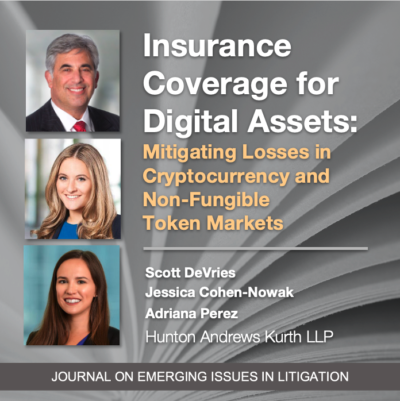
  • Insurance Coverage for Digital Assets: Mitigating Losses in Cryptocurrency and Non‐Fungible Token Markets by Scott DeVries, Jessica Cohen-Nowak and Adriana Perez of Hunton Andrews Kurth

    Insurance Coverage for Digital Assets: Mitigating Losses in Cryptocurrency and Non‐Fungible Token Markets by Scott DeVries, Jessica Cohen-Nowak and Adriana Perez of Hunton Andrews Kurth

    Journal on Emerging Issues in LitigationCompanies and individuals are riding the ups and downs of cryptocurrency and NFTs—with losses and swings in the billions of dollars—but digital assets are not going away.

    Abstract: The risk of loss in certain categories may be mitigated by insurance, whether provided by tailored policies and/or under policies designed specifically for digital asset owners. Those with exposure to the digital asset sector should be attuned to the emerging marketplace for such insurance products. While it is early days for NFT-specific coverage, the rise of cryptocurrency has created a substantial marketplace for crypto coverage. Insurers are becoming increasingly able to model and assess risk, so more products are coming to market. That said, digital asset holders need to be able to select coverage that best suits their needs. In this article, the authors discuss the history and status of coverage for digital assets to assist readers in exploring how they might use insurance to mitigate risk in this emerging and rocky sector of global finance.

    “Over the course of a decade, the marketplace for cryptocurrency has increased from zero to an estimated $250 billion. However, only $6 billion in insurance coverage is currently available. It would be a gross understatement to say that there is a truly remarkable imbalance between market value and insurance capacity.”

    Introduction

    Crypto markets are experiencing the greatest crash in their history to date.  The value of a Bitcoin (BTC) has plummeted 70% from its peak and Ethereum (ETH) has fallen 77%.  Since last November, the value of cryptocurrency tokens has lost $2 billion in value. As noted financial publication Barron’s put it: “Crypto is having a ‘Lehman moment,’ a shattering of confidence triggered by plunging asset prices, liquidity freezing up, and billions of dollars wiped out in a few scary weeks.” Cryptocurrency companies are halting withdrawals and transfers, platforms are seizing up, and regulators are circling.

    Nor has the devastation been limited to the coins themselves.  Non-fungible token (NFT) sales have reduced by 90% since September 2021.  The New York Times reported that Opensea.io (OpenSea) an NFT marketplace that receives 2.5% share of the proceeds for each NFT sale, has been plagued by “a surge of plagiarism, as sellers convert traditional artwork into NFTs and then list the images for sale without compensating the original creator.”  For example, DeviantArt, an artist collective that scans OpenSea for copyright infringement of the work of its artists, found 290,000 instances of unauthorized NFTs copying its artists’ works. While infringing listings can be deleted in response to take down requests filed by the artist, buyers of counterfeit NFTs are rarely given a refund.

    Against this backdrop, the issue of whether there may be claims associated with cryptocurrency and NFTs is far from a theoretical or esoteric thought exercise.  It is very real.  And when there are claims, businesses and investors doubtless will look to their insurers.

    A business or home is devastated by a wildfire.  Property insurance is available up to limits.  A home is broken into, and art and jewelry are stolen.  Crime/specie insurance is available.

    But what about new age assets?  What about cryptocurrency?  What about NFTs?  These obviously are not immune from theft by hackers.  In 2021, hackers stole at least $3.2 billion in cryptocurrency with schemes short of outright theft accounting for another $7.8 billion. In the first four months of 2022, NFT hacks accounted for $52 million in losses, an almost eight-fold increase from 2021.

    There typically is a significant time lag between the development of a product and the availability of product-specific insurance.  This general proposition applies with equal force here.  Over the course of a decade, the marketplace for cryptocurrency has increased from zero to an estimated $250 billion.  However, only $6 billion in insurance coverage is currently available.  It would be a gross understatement to say that there is a truly remarkable imbalance between market value and insurance capacity.

    Although NFTs have been around for the better part of a decade, it was only during the last two years that the marketplace has grown to upwards of $41 billion. In addition to its newness, NFTs pose additional risks for insurers, including questions of ownership, authenticity and the valuation of a truly “unique” asset.  Consequently, availability of insurance coverage for NFTs is even further behind.

    Given the rapid rate at which the digital asset field is developing, and claims are emerging, and the insurance industry’s attempts to specifically address coverage for these losses and claims, anything written on this topic will, at least in part, be outdated by the time it is published.  The objective of this article is to educate the reader on the history and status of the field, enabling them to ask the questions they need to ask, and to procure the coverage they need if available now or in coming months. 

    Download the article now!

    Insurance Coverage for Digital Assets:

    Mitigating Losses in Crypto and NFT Markets

    Scott DeVries

    Scott DeVriesHunton Andrews Kurth

    Scott DeVries (sdevries@huntonak.com) is Special Counsel at Hunton Andrews Kurth and long-time insurance coverage attorney for policyholders in a range of complex disputes as well as mass torts, class action, product liability, and complex business litigation.

    Jessica Cohen-Nowak

    Jessica Cohen-NowakHunton Andrews Kurth

    Jessica Cohen-Nowak (jcohen-nowak@huntonak.com) is an associate in Hunton Andrew Kurth LLP’s Intellectual Property group in the firm’s New York office. Jessica focuses her counseling and litigation practice on intellectual property matters in the fashion, fitness, entertainment, hospitality, and gaming industries as well as in technology and digital assets.

    Adriana Perez

    Adriana PerezHunton Andrews Kurth

    Adriana Perez (pereza@huntonak.com) is an associate in the firm’s Miami office where she focuses on insurance, reinsurance, and other business litigation.
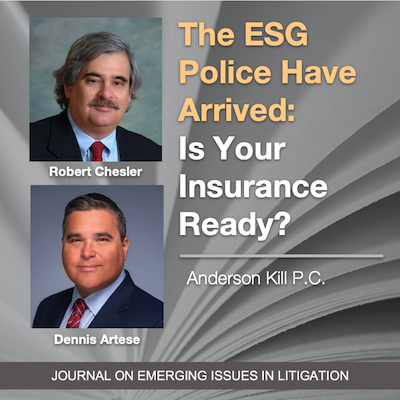
  • The Environmental, Social, and Governance Police Have Arrived: Is Your Insurance Ready? by Robert D. Chesler and Dennis J. Artese

    The Environmental, Social, and Governance Police Have Arrived: Is Your Insurance Ready? by Robert D. Chesler and Dennis J. Artese

    The Authors

    Robert Chesler

    Robert CheslerAnderson Kill

    Robert D. Chesler (rchesler@andersonkill.com) is a shareholder in Anderson Kill’s New Jersey office and is a member of the firm’s Cyber Insurance Recovery Group. He represents policyholders in a broad variety of coverage claims against their insurers and advises companies with respect to their insurance programs.

    Dennis Artese

    Dennis ArteseAnderson Kill

    Dennis J. Artese is a shareholder in Anderson Kill’s New York office and chairs the firm’s Climate Change and Disaster Recovery Group. Both are members of the Editorial Advisory Board of the Journal.

    The Journal on Emerging Issues in Litigation

    Emerging Litigation Podcast

    Emerging Litigation PodcastProduced by HB Litigation and Law Street Media

    Interviews with leading attorneys and other subject matter experts on new twists in the law and how the law is responding to new twists in the world.

    The ESG Police Have Arrived:
    Is Your Insurance Ready?

    “ESG has become a major initiative for corporate America. In particular, the environmental prong of ESG calls for companies to institute sustainability goals and to invest in environmentally friendly companies. This emphasis has both economic and popular support. Environmental sustainability will make companies better able to compete and make their businesses less risky.”

    Abstract: The environmental, social, and governance movement is a positive one, but like many well-intentioned efforts there is room for abuse and risk. As corporations endeavor to earn accolades and good will for “doing the right thing,” they must also be certain they truly are. In this article the authors discuss increased government scrutiny, the attendant risks of implementing and reporting on ESG initiatives, insurance coverage implications for directors and officers, the pollution and other exclusions, the potential civil fines and penalties, and what companies can expect in the era of ESG.

    Download the article now!

    Explore More from Anderson Kill!

    Podcast 1 of 2 series: Insurance Coverage with Dr. Jaana Pietari and Jim Fenstermacher and Litigation with Bob Chesler.

    Podcast 2 of 2 series: PFAS Insurance Coverage with Robert D. Chesler of Anderson Kill.

    Sister article to podcast 1 of 2 series: Remediating, Insuring, and Litigating PFAS Claims. Authors: Dr. Jaana Pietari, PhD, MBA, PE, Jim Fenstermacher, PE, Dr. Michael Bock, PhD, MS, Robert D. Chesler and Nicholas M. Insua, Sheila Mulrennan, Robin Kelliher, Jason R. Waters

    Podcast: Autonomous Vehicles: The New Technology Driving the Litigation Conversation Podcast with Cort Malone, John Leonard, Joshua Zelen

    Podcast: Violations of Biometric Privacy Laws: Policyholders’ Victories and the Implications Going Forward with John Leonard and Cort Malone

    Journal on Emerging Issues, Editorial Board of Advisors: Dennis Artese, Robert D. Chesler

    Asymmetrical Combat: Bad Faith Liability in Insurance Recovery Cases. By William Passannante

    Climate Change, ESG, and D&O Insurance: Collision or Cooperation? Authors: Robert Chesler, Dennis J. Artese, and Joseph Villa

    Litigation After Biometric Privacy Law Violations: Policyholder Victories and Their Implications. Authors: Cort T. Malone, Abigail Damsky

    Protecting Policyholders as AI Is Developed for Insurance Claims Handling – Ensuring “Decency and Humanity” in the Digital Age. Authors: Marshall Gilinsky, Madison Marlow

    Police–The Environmental, Social, and Governance Police Have Arrived: Is your Insurance Ready. Authors: Dennis Artese, Bob Chesler

    How Insurance Companies Defraud Their Policyholders, and What Courts and Legislators Should Do About It. Authors: Robert Chesler, Amy Weiss, and Jade Sobh

    The Promise and Peril of Quantum Computing and Its Implications for Cyber Insurance. By Cameron R. Argetsinger

    The Use and Abuse of the Pollution Exclusion. Authors: Dennis Artese, Jamie O’Neil, Robert Chesler

    Property Insurance Coverage for Emerging Risk: Underground Climate Change. Authors: Dennis J. Artese, Ethan W. Middlebrooks, Thomas Dupont

    Autonomous Vehicles: The New Technology Driving the Litigation Conversation. Authors: Cort Malone, John Leonard, and Joshua Zelen

  • Wildfire Claims and Coverage

    Wildfire Claims and Coverage

    The Authors

    Scott DeVries

    Scott DeVriesHunton Andrews Kurth LLP

    Scott P. DeVries (sdevries@huntonak.com) is a special counsel
    in the Hunton Andrews Kurth LLP’s Insurance Coverage group in the
    firm’s San Francisco office where he exclusively represents policyholder
    clients. An experienced trial and appellate lawyer who has served as lead
    counsel in landmark appeals in the field of insurance coverage in the
    California Supreme Court, the Ninth Circuit, and the California Court
    of Appeal, as well as high-value jury trials, Scott routinely represents
    clients throughout the country seeking recovery from their insurers
    on a wide range of insurance issues arising under first-party property
    policies, comprehensive general liability policies, directors and officers
    policies, EPLI policies, crime policies, crypto and digital asset policies,
    and cyber policies.

    Yosef Itkin

    Yosef ItkinHunton Andrews Kurth LLP

    Yosef Itkin is an associate in Hunton Andrews Kurth LLP’s Insurance Coverage group in the firm’s Los Angeles office. His practice focuses on representing and advising
    corporate policyholders in complex insurance coverage matters.

    The Journal on Emerging Issues in Litigation

    Emerging Litigation Podcast

    Emerging Litigation PodcastProduced by HB Litigation and Law Street Media

    Interviews with leading attorneys and other subject matter experts on new twists in the law and how the law is responding to new twists in the world.

    Wildfire Claims and Coverage

    “The wildfires are causing enormous losses for innumerable businesses on the West Coast. Often, you should be able to work with your adjuster to reach a satisfactory resolution. But where needed, you may wish to reach out to policyholder-side lawyers—whether to test what you may be entitled to or to help maximize recovery.”

    Abstract: Wildfires destroy millions of acres a year in the United States, spewing smoke across much of the nation. The cost of damage alone over the past several years soars into the hundreds of billions. When policyholders turn to their insurers many benefit from the coverage they wisely secured. But not all policyholders get the coverage they believe they paid for. When and how they present their claims is a critical factor. In this article, the authors strive to provide a comprehensive understanding of coverage risks, the regulatory landscape, and navigating the all-important claims process. 

    Sparked by lightning storms, devastating wildfires claimed more than 10 million acres in 2020, releasing substantial amounts of smoke above the western United States. Accuweather founder and CEO Dr. Joel N. Myers called 2020 “the worst fire season in history,” and estimated that the total damage and economic loss would be between $130 billion and $150 billion. And 2021 was not any better. According to the Insurance Information Institute, in 2021, while the hottest temperatures on record were recorded in California, Nevada, Oregon, Washington, and Arizona, and drought conditions reached an all-time high, the number of wildfires remained approximately the same (58,900) although the number of acres destroyed reduced to 7.1 million acres from the year before. Some of the wildfires were among the largest on record with the Bootleg Fire in Oregon destroying 400,000 acres and the Marshall Fire in Colorado causing an estimated $1 billion in losses.

    Fortunately, many individuals and businesses are fully insured, and most insurance companies work with policyholders to process claims and help them rebuild and get them back up and running. However, it does not always work that way for every insured. While property insurance may cover much of the losses from wildfires and other catastrophic events, not every policyholder is made whole or anything approaching this. And even for those that are fully insured, when and how to present a claim can materially affect how much they recover and when. This can be extraordinarily difficult at any time, but especially when a fire has destroyed everything.

    Download the article now!

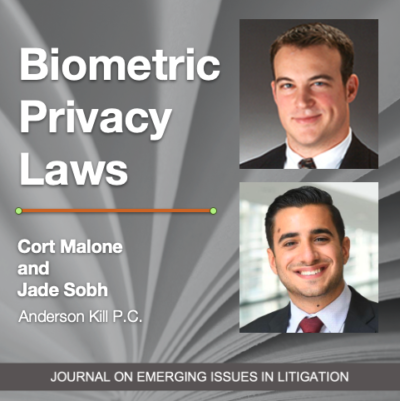
  • Biometric Privacy Laws: Companies Will Need Insurance as Protection From New and Expanding Liability

    Biometric Privacy Laws: Companies Will Need Insurance as Protection From New and Expanding Liability

    The Authors

    Cort T. Malone

    Cort T. MaloneAnderson Kill P.C.

    * Cort T. Malone (cmalone@andersonkill.com) is a shareholder
    in the New York and Stamford offices of Anderson Kill and practices
    in the Insurance Recovery and the Corporate and Commercial Litigation Departments. He represents policyholders in insurance coverage litigation and dispute resolution, with an emphasis on commercia general liability insurance, directors and officers insurance, employment practices liability insurance, advertising injury insurance, and property insurance issues.

    Jade Sobh

    Jade SobhAnderson Kill P.C.

    Jade W. Sobh (jsobh@andersonkill.com) is an attorney in Anderson Kill’s New York office. Jade focuses his practice on insurance recovery, exclusively on behalf of policyholders, as well as regulatory and complex commercial litigation matters.

    The Journal on Emerging Issues in Litigation

    Emerging Litigation Podcast

    Emerging Litigation PodcastProduced by HB Litigation and Law Street Media

    Interviews with leading attorneys and other subject matter experts on new twists in the law and how the law is responding to new twists in the world.

    Biometric Privacy Laws:  

    Companies Will Need Insurance as Protection From New and Expanding Liability

    “Businesses may look to various types of insurance policies for protection from the sudden and ever-increasing liability under present and soon to pass biometric data privacy laws, including commercial general liability insurance, employment practices liability insurance, cyber insurance, and directors & officers (D&O) insurance.”

    Abstract: As more states follow Illinois in enacting biometric privacy laws, the risk that companies will be hit with lawsuits and extensive damages awards increases. Employers are among the most active collectors of this type of data, collecting fingerprints and deploying facial recognition for timekeeping and security purposes. Several multi-million-dollar settlements have been reported for violations of biometric privacy laws. Meta, formerly Facebook, paid $650 million to resolve claims that it improperly stored face scans of its users. When companies turn to their insurance carriers, policyholders have a good track record of receiving coverage. Now that these claims are becoming more prevalent, will the insurance industry work to limit its exposure in this space? What should policyholders do in the event the industry is successful? In this article, the authors provide background on these emerging privacy laws, how they have played out in court, and what
    types of policies companies should consider to be sure they have the necessary protection.

    At least seven states have passed biometric privacy laws specifically intended to protect individuals from the collection, use, and sale of their personal biometric identifiable information. Several of these laws allow for extensive damages awards regardless of whether individuals suffered any actual harm as a result of the nonconsensual collection of biometric data. The companies facing class action lawsuits as a result should look to insurance to cover such claims, as the initial litigation with insurance companies has provided favorable results to policyholders. But insurance companies surely will seek to limit future exposure related to biometric privacy law violations, and companies either using biometrics or potentially doing so in the future would be wise to seek and maintain the broadest possible coverage.

    Biometric Identifiable Information (BII) is generally defined as any physiological or biological characteristic that is used by or on behalf of a commercial establishment to identify an individual. BII may take the form of a retina scan, a fingerprint, a voiceprint, a scan of hand or face geometry, or any other identifying characteristic.

    Download the article now!

    Read, listen, explore more content on the subject!

    Podcast: Biometric Privacy Litigation and Coverage Disputes with John Leonard and Cort Malone 

    Podcast: Autonomous Vehicles: The New Technology Driving the Litigation Conversation with Cort Malone and John Leonard

    JEIL: Litigation After Biometric Privacy Law Violations: Policyholder Victories and Their Implications with Cort Malone and Abigal Damsky

    JEIL: Autonomous Vehicles: The New Technology Driving the Litigation Conversation with Cort Malone, John Leonard, Joshua Zelen

    Tags

    Emerging Litigation & Risk Compliance Litigation & appeals Cybersecurity Data Privacy Artificial Intelligence (AI) Insurance Companies Risk Management Corporate & Securities Insurance Claims Recovery Regulations Data Breach Toxic Torts Antitrust Legal Tech Product Liability Settlements Trial Personal Injury Privacy Healthcare Per- and Polyfluoroalkyl Substances (PFAS) Data Analytics Arbitration Constitutional Law Climate Change Cannabis Labor Law Insurance Fraud Liability Claims COVID Alternative Dispute Resolution (ADR) Mediation Diversity Equity Inclusion (DEI) Claims management Professional Liability Legal Research & Writing Business Interruption Law Practice Management Trial Skills Property and Casualty Drug Laws Copyright Law Catastrophic Loss

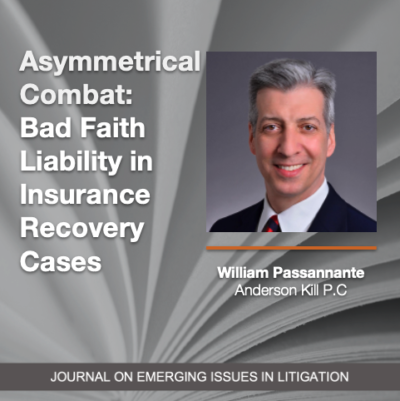
  • Asymmetrical Combat: Bad Faith Liability in Insurance Recovery Cases

    Asymmetrical Combat: Bad Faith Liability in Insurance Recovery Cases

    The Author

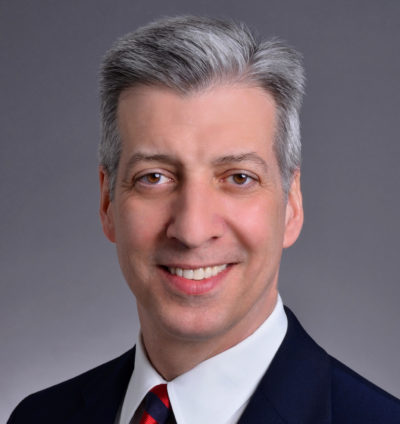
    William Passannante

    William PassannanteAnderson Kill P.C.

    William G. Passannante is co-chair of Anderson Kill’s Insurance Recovery Group and is a nationally recognized authority on policyholder insurance recovery in D&O, E&O, asbestos, environmental, property, food-borne illness, and other insurance disputes, with an emphasis on insurance recovery for corporate policyholders and educational and governmental institutions.

    The Journal on Emerging Issues in Litigation

    Emerging Litigation Podcast

    Emerging Litigation PodcastProduced by HB Litigation and Law Street Media

    Interviews with leading attorneys and other subject matter experts on new twists in the law and how the law is responding to new twists in the world.

    Asymmetrical Combat: Bad Faith Liability in Insurance Recovery Cases

    “Insurance policies are a unique product that requires the policyholder perform first—by paying insurance premiums—while the insurance company’s performance—the payment of the claim amount—is delayed until the insurance company determines to do so.”

    Abstract: Policyholder counsel see claims that an insurer violated its duty of good faith and fair dealing is an essential tool in leveling the playing field in policyholder–insurer disputes, especially in high-stakes litigation. Insurance companies write the policies, employ lobbyists, exchange information with each other, and, of course, have more experience handling claims. So, the author writes, bad faith allegations bring more balance to the relationship and provide a disincentive to “the profitable breach of the insurance promise.” He discusses above-policy limits risks for insurers, as well as attorneys’ fees, interest on unpaid claims, punitive damages, and more.
    Introduction: Bad faith insurance litigation presents high-stakes risks for insurance companies in the unbalanced battle between insurance companies and their policyholders. The asymmetric nature of the insurance claims process—insurance companies draft the insurance policies, lobby legislatures as an industry repeat litigant, exchange superior information among themselves, and have more experience with claims than any policyholder—means that policyholders need a counterbalance. Insurance company liability for bad faith and related above-policy limits liabilities can act as that counterbalance. Insurance company bad faith and related doctrines prove useful because of the claims-handling calculus used to attempt to avoid coverage for a claim.

    Without more an insurance company denying a claim faces what it did at the outset—the amount of the covered claim. Insurance companies thus engage in the profitable breach of the insurance promise. Most purchasers of the insurance product would think of their insurance company as a fiduciary or trustee from whom one can expect scrupulous candor. At claims time many policyholders do not receive what they expect. Still, hornbook contract law tells policyholders that every insurance policy contains within it a duty of good faith and fair dealing enforcing that duty of good faith and fair dealing helps level the insurance claim playing field . . . .

    Download the article now!

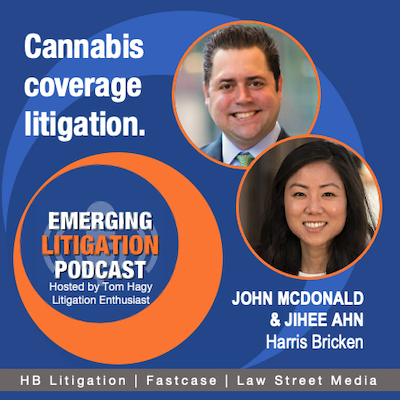
  • Cannabis Coverage Litigation with John McDonald and Jihee Ahn

    Cannabis Coverage Litigation with John McDonald and Jihee Ahn

    Our Guests

    John B. McDonald

    John B. McDonaldHarris Bricken

    John B. McDonald is an experienced litigator practicing in the Seattle and New York offices of Harris Bricken, where he represents clients in complex commercial, insurance, and partnership matters.

    Prior to joining Harris Bricken, John spent two years in Seattle with the Office of Chief Counsel, U.S. Customs and Border Protection (a component agency of the Department of Homeland Security), and five years in New York City at O’Melveny & Myers LLP, where he managed several cases. John graduated from the University of Miami School of Law, where he was an editorial member of the University of Miami Law Review. He also served as a research assistant for Professor Charlton Copeland on civil procedure and constitutional issues.

    Jihee Ahn

    Jihee AhnHarris Bricken

    Jihee is an experienced complex commercial litigator and chair of Harris Bricken’s Dispute Resolution/Litigation practice. She primarily represents clients in business, intellectual property, and real estate matters for both domestic and international clients. Having worked extensively in both federal and state courts, Jihee advises her clients from case intake through arbitration and trial. Over the course of her career, she has successfully prepared and argued numerous procedural and substantive motions, regularly conducted and defended depositions, and mediated disputes when appropriate for her clients.

    Prior to joining Harris Bricken, Jihee worked at Baker & Hostetler in Los Angeles, where she served as the lead attorney on several cases and mentored junior associates. Jihee graduated from the UCLA School of Law with a Business Law and Policy Specialization, and she served as a research assistant to Professor Sung Hui Kim on securities regulation issues throughout her third year of law school.
    Prior to relocating to Buffalo, Erin spent the bulk of her career to-date in Boston, where she worked in stewardship at Harvard University and as a consultant for nonprofits of all sizes.

    Cannabis Coverage Litigation: Where’s it Going? 

    While we may be in the final days, months, or years of it, the use and possession of cannabis remains illegal under the federal Controlled Substances Act.  So do the complications.

    Some states allow its use for medical purposes, others have made it legal for recreational purposes, and others have decriminalized it. But when cannabis is involved in disputes that lead to litigation, and that litigation leads to policyholder vs. insurer disputes, that state law patchwork and the illegality of cannabis under federal law is when things get complicated. This tension plays out in several other aspects of running a cannabis business, such as banking and interstate transportation of goods.

    My guests co-wrote an article for the Journal on Emerging Issues in Litigation, titled “Taking the High Ground: Where Cannabis Insurance Litigation Is Trending (and Why).” They write that it is up to litigators to frame their cases in ways that will determine the outcome of important disputes over insurance coverage. Read the article. 

    They are John B. McDonald an experienced litigator practicing in the Seattle and New York offices of Harris Bricken, where he represents clients in complex commercial, insurance, and partnership matters. And, Jihee Ahn, also an experienced complex commercial litigator with Harris Bricken, and chair of the firm’s Dispute Resolution/Litigation practice group. Their partner, Hilary Bricken, years ago founded the outstanding Canna Law Blog, a tremendous resource. Hilary and Harris Bricken co-founder Dan Harris are on the Editorial Board of Advisors for the Journal on Emerging Issues in Litigation and this podcast.

    Speaking of which, this podcast is the audio companion to the Journal on Emerging Issues in Litigation. The Journal  is a collaborative project produced by HB Litigation Conferences and the Fastcase legal research family, which includes Full Court Press, Law Street Media, and Docket Alarm. The podcast itself is a joint effort between HB and our friends at Law Street Media. If you have comments or wish to participate in one our projects, or want to tell me how much you learned today – or if you’d like a copy of John’s and Jihee’s article — please drop me a note at Editor@LitigationConferences.com.

    p.s. If you know why we call it “recreational” cannabis use but “social” drinking, please write to me. It’s literally keeping me up at night. So is my uncontrolled sarcasm.
    Psykogene faktorer er enten situationsbestemte, dvs. relateret til partnerens egenskaber, skyld eller angst, eller kan være forbundet med neuroser. For eksempel med fobier besøg denne hjemmeside, angstlidelser eller virkningerne af stoffer.