Tag: Fraud

  • Electronic Fund Transfer Fraud with Brad Rustin

    Electronic Fund Transfer Fraud with Brad Rustin

    Electronic Fund Transfer Fraud with Brad Rustin

    Grifters, scammers, con artists

    Sen. Elizabeth Warren, who championed the creation of Consumer Financial Protection Bureau (CFPB), calls the Zelle digital payments network a “preferred tool for grifters like romance scammers, cryptocurrency con artists, and those who prowl social media sites advertising concert tickets and purebred puppies — only to disappear with buyers’ cash after they pay.”  

    18 million Americans defrauded

    Scams and fraud committed via the Zelle platform and other peer-to-peer services are surging. According to one lawsuit 18 million Americans were defrauded by schemes perpetrated via apps like Zelle in 2020. Some 1,500 member banks and credit unions participate in the Zelle service. People sent $490 billion via the app in 2021.

    But Zelle owner, Early Warning, and its consortium comprising Bank of America, Truist, Capital One, JPMorgan Chase, PNC Bank, U.S. Bank, and Wells Fargo, have refused to refund customers for most of their losses. Sen. Warren issued a report that the claims for fraud received by just four banks will likely exceed $255 million by the end of 2022 – a $165 million increase over 2020. The senator and consumers say Zelle is violating federal consumer protection law.

    What is fraud?

    The heart of the problem is this: banks and consumers do not agree on the definition of “fraud.”

    For clarity on issues surrounding  the Electronic Fund Transfer Act (EFTA) and its implementing regulation—Regulation E—listen to my interview with fintech attorney Brad Rustin of Nelson Mullins.

    In addition to chairing the firm’s Financial Services Regulatory Practice, Brad counsels  financial institutions in regulatory matters, including strategic agreements, product development, and operational compliance.  Brad is a Certified Anti-Money Laundering Specialist and a Certified Regulatory Compliance Manager.  He received his JD, magna cum laude, from the University of South Carolina School of Law and his BA in Political Science and History, cum laude, from Furman University. Brad is also the FinTech advisor on the  Editorial Advisory Board of the Journal on Emerging Issues in Litigation.

    *******

    This podcast is the audio companion to the Journal on Emerging Issues in Litigation. The Journal is a collaborative project between HB Litigation Conferences and the Fastcase legal research family, which includes Full Court Press, Law Street Media, and Docket Alarm. The podcast itself is a joint effort between HB and our friends at Law Street Media. If you have comments or wish to participate in one our projects please drop me a note at Editor@LitigationConferences.com.

    Tom Hagy

    (actual size)

    Tom Hagy
    Litigation Enthusiast and
    Host of the Emerging Litigation Podcast
    Home Page
    LinkedIn

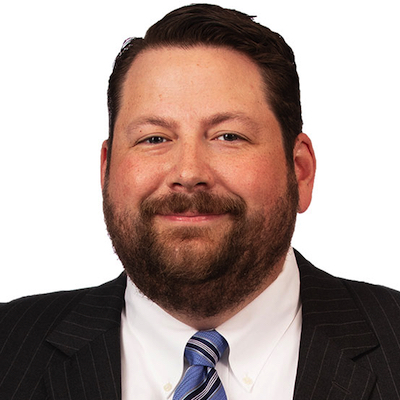
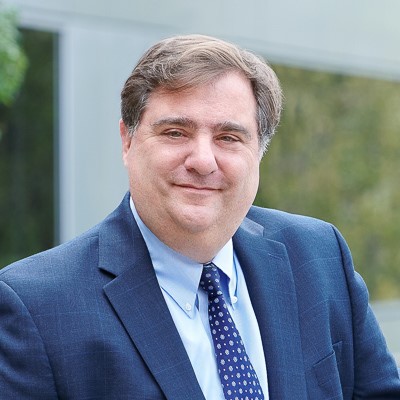
    Brad Rustin

    Brad RustinNelson Mullins

    Brad Rustin chairs the firm’s Financial Services Regulatory Practice.

    He began his career as a litigator focusing on consumer financial services litigation and defense of regulatory claims against chartered and non-chartered financial institutions, finance entities, and money services business. In the wake of the fiscal crisis, he began working with financial institutions, state-licensed lenders money transmitters, non-traditional lenders, check cashers, and mortgage brokers on issues of regulatory compliance.

    Brad is a Certified Anti-Money Laundering Specialist (CAMS) by ACAMS and a Certified Regulatory Compliance Manager (CRCM) by the American Bankers Association. He also serves as an expert witness of matters relating to financial regulations and compliance.

    He received his JD, magna cum laude, from the University of South Carolina School of Law and his BA in Political Science and History, cum laude, from Furman University. Brad is also the FinTech advisor on the Editorial Advisory Board of the Journal on Emerging Issues in Litigation.

  • The Cannabis Employment Law Patchwork with Keya Denner

    The Cannabis Employment Law Patchwork with Keya Denner

    The Cannabis Employment Law Patchwork with Keya Denner

    Maryland and Missouri are the latest states to legalize recreational cannabis for people 21 and older. Voters came out in favor of legalization in the November 2022 midterms, bringing the total recreational jurisdictions to 22 states and the District of Columbia. Voters in North Dakota, South Dakota, and Arkansas, however, decided against recreational marijuana. It remains legal for medical reasons in all five states. 

    In the employment context, both recreational and medicinal uses raise questions about protections for employees who use the drug legally.

    • Which states are enacting those protections?
    • What do multi-state employers need to do?
    • What about drug testing? As a requirement to get a job and as a requirement to keep your job?
    • What about this: who is going to say whether a worker is impaired? Will there really be hall monitors trained in spotting your high?

    For answers to these questions and more, listen to my interview with Keya Denner, a partner at Constangy, Brooks, Smith & Prophete LLP. Keya is an experienced litigator who has been practicing labor and employment law for almost 20 years. Few attorneys nationwide match Keya’s expertise in the area of legal cannabis and its impact on the workplace. He has counseled Fortune 500 companies in the retail, hospitality, and global logistics spaces to create compliant policies and better understand the ever-changing legal landscape brought about by the legalization of cannabis across the United States.  Most recently, Keya was named co-chair along with this colleague Ashley Orler of the firm’s new practice group focused on cannabis and employee substance abuse law. Keya received his J.D., cum laude, from Seton Hall University School of Law, J.D., cum laude, and his B.A., also cum laude, from Boston University.

    This podcast is the audio companion to the Journal on Emerging Issues in Litigation. The Journal is a collaborative project between HB Litigation Conferences and the Fastcase legal research family, which includes Full Court Press, Law Street Media, and Docket Alarm. The podcast itself is a joint effort between HB and our friends at Law Street Media. If you have comments or wish to participate in one our projects please drop me a note at Editor@LitigationConferences.com.

    Tom Hagy

    (actual size)

    Tom Hagy
    Litigation Enthusiast and
    Host of the Emerging Litigation Podcast
    Home Page
    LinkedIn

    Keya Denner

    Keya DennerConstangy, Brooks, Smith & Prophete, LLP

    Keya is an experienced litigator who has been practicing labor and employment law for almost 20 years. He has handled every type of labor and employment matter for his clients, ranging from discrimination, disability, non-compete and trade secret protections, to wage and hour class actions. Keya also has extensive experience counseling employers on matters relating to the Family and Medical Leave Act and the Americans with Disabilities Act.

    Most recently, Keya was named co-chair along with this colleague Ashley Orler of the firm’s new practice group focused on cannabis and employee substance abuse law. Keya received his J.D., cum laude, from Seton Hall University School of Law, J.D., cum laude, and his B.A., also cum laude, from Boston University.

  • How Insurance Companies Defraud Their Policyholders, and What Courts and Legislators Should Do About It

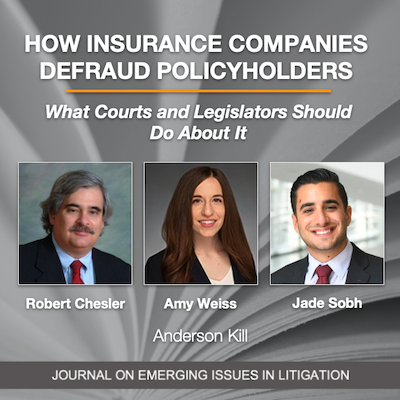
    How Insurance Companies Defraud Their Policyholders, and What Courts and Legislators Should Do About It

    The Authors

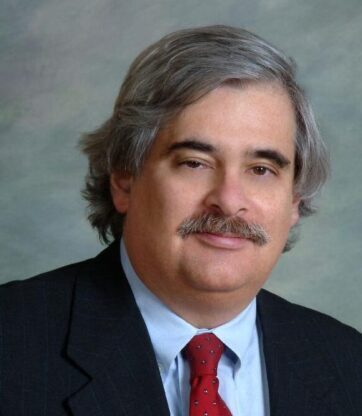
    Robert D. Chesler

    Robert D. CheslerAnderson Kill

    Robert D. Chesler (rchesler@andersonkill.com) is a shareholder in Anderson Kill’s Newark office. Bob represents policyholders in a broad variety of coverage claims against their insurers and advises companies with respect to their insurance programs. Bob is also a member of Anderson Kill’s Cyber Insurance Recovery group.

    Bob has served as the attorney of record in more than 30 reported insurance decisions, representing clients including General Electric, Ingersoll-Rand, Westinghouse, Schering, Chrysler, and Unilever, as well as many small businesses including gas stations and dry cleaners. He has received numerous professional accolades, including a top-tier ranking for Insurance Litigation: New Jersey in Chambers USA: American’s Leading Lawyers for Business, which dubs him a “dominant force in coverage disputes” and cites a client who calls him “a dean of the insurance Bar; one of the brightest in writing about and analyzing insurance coverage.”

    Amy Weiss

    Amy WeissAnderson Kill

    Amy Weiss (aweiss@andersonkill.com) is a law clerk pending admission in Anderson Kill’s New York office. She focuses her practice on insurance recovery, exclusively on behalf of policyholders.

    While attending the Benjamin N. Cardozo School of Law, Amy worked as a Summer Associate at Anderson Kill and a Judicial Intern for the Honorable Nicholas G. Garaufis at the United States District Court for the Eastern District of New York.

    She served as Senior Articles Editor for the Cardozo Arts and Entertainment Law Journal, participated in the Cardozo Visual & Performing Arts Law Field Clinic, was a teaching assistant for the Lawyering & Legal writing course, and was a research assistant for Professor Stewart E. Sterk. Amy received the Dean’s Merit Scholarship and graduated with Honors.

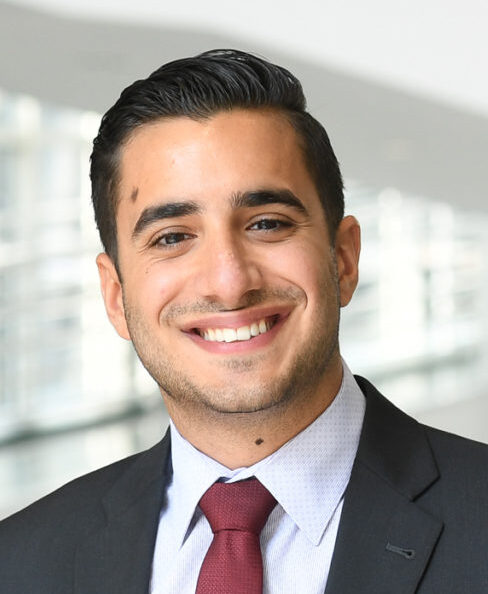
    Jade Sobh

    Jade SobhAnderson Kill

    Jade W. Sobh (jsobh@andersonkill.com) is an attorney in Anderson Kill’s New York office. Jade focuses his practice on both insurance recovery, exclusively on behalf of policyholders, as well as Government Enforcement, Internal Investigations, and White Collar Defense. Jade’s practice also encompasses regulatory and complex commercial litigation matters.

    Prior to joining Anderson Kill, Jade was an associate at a leading New Jersey law firm, where he concentrated his practice in commercial litigation and criminal defense. His work there focused on corporate disputes, complex commercial litigation, real estate litigation, and appellate litigation. In his previous role, Jade also assisted in representing clients facing federal drug possession charges, and healthcare fraud allegations, among other criminal matters.

    Previously, Jade was a law clerk to The Honorable Robert C. Wilson in the Superior Court of New Jersey, Civil Division. Jade worked with Judge Wilson on cases in Bergen County’s Complex Business Litigation Program including insurance recovery disputes, construction litigation, corporate ownership issues, breach of contract, arbitration agreements, and franchise agreements.

    The Journal on Emerging Issues in Litigation

    Emerging Litigation Podcast

    Emerging Litigation PodcastProduced by HB Litigation and Law Street Media

    Interviews with leading attorneys and other subject matter experts on new twists in the law and how the law is responding to new twists in the world.

    How Insurance Companies Defraud Their Policyholders 

    What Courts and Legislators Should Do About It

    “By its very nature, fraud involves concealment and is difficult to detect. The overwhelming majority of victims of fraud do not even know that they have been defrauded when an insurance company denies their claim or cancels their policy, and have no recourse.”

    Abstract: Insurance companies have legitimate reasons for denying claims, but sometimes denials or significant delays are the result of unfair practices or even fraud. Such actions may be systemic or undertaken by an individual. What rights do policyholders have? What can they do to combat illegitimate denials? What are the barriers individuals face when they are wrongfully denied coverage? Should there be a private right of action under the Unfair Trade Practices Act? Should policyholders’ attorneys’ fees be covered? What should courts and legislatures do to protect insurance consumers? In this article the authors answer these questions and more.

    Download the article now!

    Explore More from Anderson Kill!

    Journal on Emerging Issues, Editorial Board of Advisors

    The Use and Abuse of the Pollution Exclusion. By Dennis Artese, Jamie O’Neil, Robert Chesler

    The Environmental, Social, and Governance Police Have Arrived: Is your Insurance Ready. Authors: Dennis Artese, Bob Chesler.

    Podcast 1 of 2 series: PFAS Insurance Coverage with Jaana Pietari and Jim Fenstermacher and Litigation with Bob Chesler

    Poscast 2 of 2 series: Insurance Coverage for PFAS Claims

    How Insurance Companies Defraud Their Policyholders, and What Courts and Legislators Should Do About It. Authors: Robert Chesler, Amy Weiss, and Jade Sobh

    Climate Change, ESG, D&O Insurance: Collision or Cooperation? By Robert D. Chesler, Dennis J. Artese and Joseph Villa

    Remediating, Insuring, and Litigating PFAS Claims. By Dr. Jaana Pietari, PhD, MBA, PE, Jim Fenstermacher, PE, Dr. Michael Bock, PhD, MS, Robert D. Chesler and Nicholas M. Insua, Sheila Mulrennan, Robin Kelliher, Jason R. Waters

  • Safeguarding Against Financial Exploitation

    Safeguarding Against Financial Exploitation

    An on-demand CLE-eligible webinar

    Safeguarding Against Financial Exploitation  

    America’s senior population is growing. Nearly one in five U.S. residents will be 65 or older in 2030. Which means the average age of U.S. investors is climbing too. With that comes the risk that they will be exploited by people with access – or gain access through nefarious methods – to their investment portfolio. Seniors and vulnerable persons lose billions of dollars each year. Remarkably, 90% of the people to take advantage of senior investors are members of their own family. Attorneys who represent senior clients need to know the signs of vulnerability, red flags that their clients are being exploited, what laws apply, and rules lawyers must follow in these matters.  

    Questions our speakers answer:

    • What is senior / vulnerable investor exploitation?  
    • Who is protected by state and federal laws?  
    • How prevalent is senior financial exploitation? What do the numbers tell us? 
    • What is the pace of financial abuse SAR filings by securities firms? 
    • What are the most popular scams?  
    • What is diminished capacity? 
    • What are the red flags indicating possible exploitation? 
    • What are the laws, rules, and regulations governing law firms? 
    • What are some best practices for law firms? 
    • How can firms best protect their senior clients?  

    Blue image of money.

    On Demand CLE Webinar

    What You Get

    • PowerPoint and supplemental materials.
    • Complete recording for later review.
    • Answers to your questions via email.
    • Invitation to contact speakers.
    • 1.5 CLE credits (for licensed attorneys).
    • CLE assistance.*

    *Subject to state bar rules. For licensed attorneys. 

    Register

    Meet the Speakers

    Joseph Calabrese
    Bressler, Amery & Ross, P.C.

    A 1991 Graduate of St. John’s University Law School, Mr. Calabrese brings 30 years of practice and 18 years of Securities Litigation/Regulatory experience to his role as principal in the New York office of  Bressler, Amery & Ross’s Financial Institutions Group. He began his career as a Wall Street litigator as an associate general counsel for Citigroup’s Smith Barney and later served as an executive director and senior member of the Wealth Management Client Litigation Group at Morgan Stanley, where he ran the Early Dispute Resolution Group for seven years.

    He spent the first 13 years of his career as a prosecutor with the Kings County D.A.’s Office in Brooklyn, NY, the majority of that time, as a senior assistant district attorney in the Homicide Bureau. His areas of practice include financial institutions, financial institutions advisory practice, financial institutions enforcement defense, financial institutions litigation and arbitration. He is the co-head of the Pro Bono Committee and a member of the firm’s Senior & Vulnerable Investor Group. 

    More about Joseph

    Logan S. Fisher
    Bressler, Amery & Ross, P.C. 

    Logan Fisher is a Principal of Bressler, Amery and Ross. His practice is primarily devoted to representing and advising financial services professionals including broker-dealers, financial advisors, registered investment advisors, private equity, crowdfunding and other financial services professionals. Logan frequently represents broker-dealers and registered representatives in securities litigation, including customer-initiated complaints with self-regulatory organizations such as the Financial Industry Regulatory Authority (FINRA).

    He has successfully handled numerous arbitrations involving a variety of claims, including fraud, misrepresentation, unsuitability, unauthorized trading and churning. Logan also has experience counseling individual financial advisors regarding Form U4 and U5 disclosures. In his securities regulatory practice, Logan has represented broker-dealer and registered investment advisor clients in a variety of state, SEC and FINRA investigations. He has also counseled registered investment advisor clients concerning required disclosures under Form ADV. 

    More about Logan

    Angela Turiano
    Bressler, Amery & Ross, P.C.

    Angela Turiano represents brokerage firms and individual registered representatives in customer and employment arbitrations and litigation, as well as regulatory matters. Angela has worked as in-house counsel for two major securities firms, and thus understands, from an internal perspective, the highly specific needs of her clients. Highly respected throughout the financial services industry, Angela is an active speaker in the securities community, including speaking engagements at the SIFMA Annual Compliance and Legal Seminar, the New York State Bar Association, the American Conference Institute, and the renowned NYU Stern School of Business, all of where she has lectured on the latest trends in securities litigation.

    Angela is also an active member of Bressler’s Senior and Vulnerable Investor Group, where, in addition to advising and defending her clients with regard to senior issues, designs and conducts training and supervisory education programs on how to avoid regulatory and litigation risk in this space.

    More about Angela

  • The False Claims Act with Jack Siegal

    The False Claims Act with Jack Siegal

    The False Claims Act with Jack Siegal

    Joining me to discuss this important civil statute is Jack Siegal of McGlinchey Stafford in Boston. Jack’s practice focuses on financial services litigation, complex commercial disputes, government investigations and white-collar defense, securities litigation, regulatory proceedings, and compliance.

    This podcast is the audio companion to the Journal on Emerging Issues in Litigation, a collaborative project between HB Litigation Conferences and the Fastcase legal research family, which includes Full Court Press, Law Street Media, Docket Alarm and, most recently, Judicata. If you have comments or wish to participate in one our projects, or want to tell me how insightful and informative Jack is , please drop me a note at Editor@LitigationConferences.com.

    I hope you enjoy the interview, and especially how I managed not to include Jack’s answer to whether my dog could be sued for violating the FCA. “Nope. Not a person,” he said, with zero hesitation. I want to thank Jack for immediately taking on the role as Shiloh’s advocate, and for speaking with me about this important law.  –Tom Hagy

    Unscrupulous contractors have been ripping off the federal government for as long as there has been a federal government. President Lincoln, tired of being sold lame mules and rancid rations, signed the Federal Claims Act into law during The Civil War.

    In the last two decades the government, with the help of whistleblowers, has raked in more than $20 billion. 

  • Couple Pleads Guilty to $1.1 Million COVID-Relief Fraud After Falsely Claiming to Be Farmers

    Couple Pleads Guilty to $1.1 Million COVID-Relief Fraud After Falsely Claiming to Be Farmers

    HB NEWS

    Couple Pleads Guilty to $1.1 Million COVID-Relief Fraud After Falsely Claiming to Be Farmers

    News From the U.S. Department of Justice

    A Florida couple pleaded guilty for their participation in a scheme to file four fraudulent loan applications seeking more than $1.1 million in forgivable Paycheck Protection Program (PPP) and Economic Injury Disaster Loans (EIDL) loans guaranteed by the Small Business Administration (SBA) under the Coronavirus Aid, Relief, and Economic Security (CARES) Act. 

    On Aug. 26, 2020, Latoya Stanley, 38, and Johnny Philus, 33, both of Miami, were originally charged via a complaint filed in the Southern District of Florida.

    In Stanley’s PPP application, she claimed to employ 18 individuals from her company, Dream Gurl Beauty Supply LLC. Philus, meanwhile, stated that he employed 29 individuals at his company, Elegance Auto Boutique LLC. In actuality, Stanley and Philus did not employ anyone at their respective companies.

    In her EIDL application, Stanley claimed to generate over $800,000 in income and to employ five individuals from a farm based in the yard of her Miami home. In his EIDL application, Philus claimed to generate $400,000 in income and to employ 10 individuals from a farm located in the yard of a small residential home. In actuality, Stanley and Philus employed no one and the farms did not exist.

    Stanley and Philus worked together to effectuate the fraud and ultimately received over $1 million in fraudulent funds from the fraudulent PPP and EIDL applications before their schemes were uncovered.

    Sentencing has been scheduled for June 2.

    Acting Assistant Attorney General Nicholas L. McQuaid of the Justice Department’s Criminal Division; U.S. Attorney Ariana Fajardo Orshan of the Southern District of Florida; Treasury Inspector General for Tax Administration (TIGTA) J. Russell George; Inspector General Hannibal “Mike” Ware of the SBA’s Office of Inspector General (OIG); and Inspector in Charge Antonio Gomez of the U.S. Postal Inspection Service Miami Division made the announcement.

    The CARES Act is a federal law enacted on March 29, 2020, designed to provide emergency financial assistance to the millions of Americans who are suffering the economic effects caused by the COVID-19 pandemic. One source of relief provided by the CARES Act was the authorization of up to $349 billion in forgivable loans to small businesses for job retention and certain other expenses, through the PPP. In April 2020, Congress authorized over $300 billion in additional PPP funding.

    The PPP allows qualifying small businesses and other organizations to receive loans with a maturity of two years and an interest rate of 1%. PPP loan proceeds must be used by businesses on payroll costs, interest on mortgages, rent, and utilities. The PPP allows the interest and principal on the PPP loan to be forgiven if the business spends the loan proceeds on these expense items within a designated period of time after receiving the proceeds and uses at least a certain percentage of the PPP loan proceeds on payroll expenses.

    The EIDL program is designed to provide economic relief to small businesses that are currently experiencing a temporary loss of revenue. EIDL proceeds can be used to cover a wide array of working capital and normal operating expenses, such as continuation of health care benefits, rent, utilities and fixed debt payments. If an applicant also obtains a loan under the PPP, the EIDL funds cannot be used as the same purpose as the PPP funds.

    This case was investigated by the SBA-OIG, USPIS, and TITGA. Trial Attorney Louis Manzo of the Criminal Division’s Fraud Section is prosecuting the case.

    Safeguarding Against Financial Exploitation

    An on-demand CLE-eligible webinar Safeguarding Against Financial Exploitation   America’s senior population is growing. Nearly one in five U.S. residents will be 65 or older in 2030. Which means the average age of U.S. investors is climbing too. With that comes the risk that they will be exploited by people with access – or gain access through nefarious methods – to their investment portfolio. Seniors and vulnerable persons lose billions of dollars each year. Remarkably, 90% of the people to take advantage of senior investors are members of their own family. Attorneys who represent senior clients need to know the signs of vulnerability, red flags that their clients are being exploited, what laws apply, and rules lawyers must follow in these matters.   Questions our speakers answer: What is senior / vulnerable investor exploitation?   Who is protected by state and federal laws?   How prevalent is senior financial exploitation? What do the numbers tell us?  What is the pace of financial abuse SAR filings by securities firms?  What are the most popular scams?   What is diminished capacity?  What are the red flags indicating possible exploitation?  What are the laws, rules, and regulations governing law firms?  What are some best practices for law firms?  How can firms best protect their senior clients?   On Demand CLE Webinar What You Get PowerPoint and supplemental materials. Complete recording for later review. Answers to your questions via email. Invitation to contact speakers. 1.5 CLE credits (for licensed attorneys). CLE assistance.* *Subject to state bar rules. For licensed attorneys.  Register Meet the Speakers Joseph Calabrese Bressler, Amery & Ross, P.C. A 1991 Graduate of St. John’s University Law School, Mr. Calabrese brings 30 years of practice and 18 years of Securities Litigation/Regulatory experience to his role as principal in the New York office of  Bressler, Amery & Ross’s Financial Institutions Group. He began his career as a Wall Street litigator as an associate general counsel for Citigroup’s Smith Barney and […]

    Lien Resolution: Government & Private Plans Get Aggressive (Against Attorneys)

    Includes Nearly 75 minutes of insights from experienced professionals. CLE credit: 1+ (subject to bar rules). For CLE questions: CLE@LitigationConference.com The complete Power Point presentation. Continued access to the complete recording for later use. Answers to your questions via email to the presenters or write to HB and we will be sure to contact the speakers. What can you do to settle personal injury suits cleanly and avoid costly litigation and penalties? What recent cases can inform you about protecting your settlements and, as attorneys, yourselves, from post-settlement federal lawsuits? How can your firm set itself up to meet government expectations? What role might experts play in navigating these pitfalls? Medicare Advantage (42 USC § 1395w-22) Federal Medical Care Recovery Act (FMCRA) (42 USC § 2651) Armed Forces Act (10 USC §1095) Veterans’ Benefits (38 USC §1729) Third-Party Collection Rules (32 CFR 537.24; 38 CFR 17.101, etc.) Set-Asides under the Medicare Secondary Payer Act (42 USC § 1395y(b)(2)] On Demand Registration Lien Resolution Government & Private Plans Get Aggressive (Against Attorneys!) On Demand | Recorded September 2020 It is increasingly common these days. Personal injury attorneys settle a case, only to find themselves sued by a U.S. Attorney for failing to reimburse Medicare for conditional payments as required by the Medicare Secondary Payer Act. In some cases the attorney may be required to pay fines in addition to the reimbursements and interest, a costly proposition. Are you up to speed on issues surrounding Medicare Advantage, TRICARE, veterans’ claims, and Medicare set-asides? Join nationally recognized healthcare lien and resolution expert Franklin P. Solomon and go-to lien resolution provider Brett Newman as they offer a practical, in-depth CLE presentation. Franklin P. Solomon, Esq. Attorney & Founder, Solomon Law Firm  A graduate of Rutgers University School of Law at Camden, Franklin Solomon is based in Cherry Hill, NJ, with a practice focused on evaluation, litigation and resolution of healthcare “liens” and reimbursement claims. Mr. Solomon represents personal injury victims and their attorneys […]

    Telepsychiatry: Mitigating the Risks

    REGISTER Registration Includes Nearly 90 minutes of insights from experienced professionals. CLE credit: 1+ (subject to bar rules). For CLE questions: CLE@LitigationConference.com The complete Power Point presentation. Continued access to the complete recording for later use. Answers to your questions via email to the presenters or write to HB and we will be sure to contact the speakers. Understand the risks associated with telepsychiatry and how to manage them.  Telemedicine has emerged as an important solution for healthcare in general and psychiatric medicine specifically during the current global pandemic. Remote access for sub-practices including addiction counseling have been commonly used. Our panel of psychiatric professionals who have served as expert witnesses and attorneys who counsel and represent physicians have prepared a 90-minute session to share insights with attorneys, physicians, healthcare providers, risk professionals, and more. Agenda Examining procedures and best practices that exist for ensuring confidentiality in a telemedicine practice How do you draft a telepsychiatric consent form? What is the emerging standard of care for telemedicine? Will the standard of care for telemedicine become a national standard? (Should it?) Review the case law addressing telemedicine or telepsychiatry How do the HIPAA regulations and HITECH privacy laws impact telemedicine? How have the HIPAA regulations and HITECH privacy laws been relaxed during the pandemic? Will the relaxed HIPAA and HITECH regulations impacting telemedicine continue past the pandemic? Which technical platforms are preferred? Which ones to avoid? Panelists Mark Levy, M.D., Medical Director at fpamed David Kan, M.D., UCSF Psychiatry Department and the California Society for Substance Abuse Medicine Ayesha Ashai, M.D., associated with fpamed Stephen M. Fatum, J.D., Partner, Barnes & Thornburg LLP Angela W. Russell, J.D., Partner, Wilson Elser Moskowitz Edelman & Dicker LLP Meet our physician and attorney panelists. Mark Levy MD Medical Director fpamed Dr. Levy is a graduate of Columbia College (A.B. 1967) and the Columbia University College of Physicians and Surgeons (M.D. 1971) in New York. He is a Physician […]

    The Commercial Drone Industry: Privacy, Security, Threats, and Mitigation of Risk

    HB presents a CLE-eligible webinar Now on-demand at the West LegalEdcenter THE COMMERCIAL DRONE INDUSTRY Privacy, Security, Threats, and Mitigation of Risk Drones have become an increasingly valuable tool for businesses of all types and sizes. Drones are already being used in many applications, but more will certainly arise as the technology advances. This means that certain risks, like cyber threats, will also continue to present themselves. Protecting the transmission and storage of data collected through drones is critical. Unfortunately, security usually comes as an afterthought. The drone industry is part of the aviation industry, which, based on its knowledge, keeps safety as a number one concern. Part of that safety is having proper protection for your systems, including security as a fundamental design principle. Take this webinar to gain insights on the topics listed below, and shared by an attorney who practices on the cutting-edge of this evolving technology. Topics: Defining drones. Current and future applications. FAA Modernization and Reform Act of 2012. FAA Part 107 Regulations and waivers. Resources, e.g. the FAA Drone Zone and LAANC Portal. Penalties for violations. Privacy implications. Drones as weapons. Vulnerability to cyber attacks. Take it now! What you get: 1+ CLE credits (subject to bar rules). Insights from an experienced professional who specializes in this area of the law. The complete PowerPoint presentation. Continued access to the complete recording for later use. Answers to your questions. Fee: No additional charge to subscribers to the West LegalEdcenter. Non-subscribers may take the course for $170. Meet the Speaker Kathryn Rattigan Robinson & Cole LLP Kathryn Rattigan is a member of the firm’s Business Litigation Group and Data Privacy + Cybersecurity Team. She advises clients on data privacy and security, cybersecurity, and compliance with related state and federal laws. She assists clients in assessing risks related to technology and software contracts, as well as with compliance-related issues with outsourcing and […]

    The Intersection of Privacy and Antitrust Webinar Now Available On-Demand on the West LegalEdcenter

    Available as part of your subscription to The Thomson Reuters West LegalEdcenter®. Don’t subscribe to the West LegalEdcenter? This webinar is still available directly from HB. Take it now! Questions for speakers Questions@LitigationConferences.com CLE questions CLE@LitigationConferences.com Check out the MoginRubin blog for more insights on antitrust and privacy law. What attorneys and companies need to know about the increasing interplay between these critical areas of the law.  Highly publicized cases and investigations in the U.S. and Europe of big technology, e-commerce, and social media companies demonstrate how anti-competition laws are being used to scrutinize and challenge not only how these corporations conduct themselves in the marketplace, but the very core of their colossal success: the mass collection and utilization of user data. Are the privacy and antitrust worlds beginning to cross over? Or do they simply run parallel while addressing entirely different types of conduct? Whatever the answer, data is the raw material that drives the likes of Google, Facebook, Apple and Amazon, so how it is handled is a critical question when counseling clients on mergers and acquisitions. Moderator Daniel J.  Mogin | Managing Partner, MoginRubin LLP Speakers Jennifer M. Oliver, CIPP/US | Partner, MoginRubin LLP Thomas N. Dahdouh | Director, Western Region, Federal Trade Commission Franklin M. Rubinstein | Partner, Wilson Sonsini Goodrich & Rosati Randi W. Singer, CIPP/US, CIPT | Partner, Weil, Gotshal & Manges Contributor Dina Srinivasan | Independent Researcher & Author of The Antitrust Case Against Facebook Dina was unable to present but we thank her for her content contributions.  Agenda Who should regulate privacy violations in the U.S.? Which antitrust issues implicate privacy concerns? What role does machine learning play on the competitive landscape? What is big data really? How is it different from “data”? What are the elements of effective merger reviews? What are the appropriate remedies? What are “notice-and-choice” versus “harms-based” approaches? Plus answers to your questions. Send them to Questions@LitigationConferences.com.

  • Biogen Pays 22M To Resolve False Claims Act Charges For Paying Kickbacks

    Biogen Pays 22M To Resolve False Claims Act Charges For Paying Kickbacks

    The Justice Department has announced that Biogen, Inc., has agreed to pay $22 million to resolve claims that it violated the False Claims Act by illegally using foundations as a conduit to pay the copays of Medicare patients taking Biogen’s multiple sclerosis drugs, Avonex and Tysabri. Biogen did not admit liability in reaching the agreement.

    When a Medicare beneficiary obtains a prescription drug covered by Medicare, the beneficiary may be required to make a partial payment, which may take the form of a copayment, coinsurance, or a deductible (collectively “copays”). Congress included copay requirements in the Medicare program, in part, to serve as a check on health care costs, including the prices that pharmaceutical manufacturers can demand for their drugs.
    “The resolution announced today, like prior settlements concerning similar misconduct, demonstrates the government’s commitment to hold accountable companies that pay kickbacks to undermine important constraints on rising drug costs,” said Acting Assistant Attorney Jeffrey Bossert Clark of the Department of Justice’s Civil Division. “Drug companies that illegally manipulate charitable patient assistance programs to subsidize copays for their own products will be held accountable.”
    “Biogen coordinated with ACS to game the foundation system by timing its payments to two foundations with its transfer of financially needy free drug patients, all so that Biogen could obtain significant financial rewards,” said First Assistant United States Attorney Nathaniel R. Mendell. “By treating the foundations simply as conduits to pay the co-pays of its own patients, Biogen violated the anti-kickback statute and undermined Medicare’s co-pay structure, which Congress intended as a safeguard against inflated drug prices. We commend ACS for resolving this matter expeditiously and Biogen for resolving this matter on a cooperative basis.”
    “Kickback schemes can undermine our healthcare system and lead to higher costs for the Medicare program,” said Phillip Coyne, Special Agent in Charge, Office of the Inspector General of the Department of Health and Human Service’s Boston Regional Office.

    “We will continue to hold pharmaceutical companies and specialty pharmacies accountable if they work together to subvert the charitable donation process and violate the prohibition on the payment of kickbacks.”

    Under the Anti-Kickback Statute, a pharmaceutical company is prohibited from offering or paying, directly or indirectly, any remuneration—which includes money or any other thing of value— to induce Medicare patients to purchase the company’s drugs. This prohibition extends to the payment of patients’ copay obligations.
    Biogen sells Avonex and Tysabri, which are approved for treatment of multiple sclerosis. The government alleged that Biogen engaged in a prohibited kickback scheme by using two foundations, which claim 501(c)(3) status for tax purposes, as conduits to pay the copay obligations of Medicare patients to induce those patients to purchase Medicare-reimbursed Avonex and Tysabri prescriptions. As part of the scheme, Biogen identified for its vendor, Advanced Care Scripts (ACS), certain patients in Biogen’s Avonex or Tysabri free drug program. Biogen then worked with ACS to transfer these patients to the foundations, which received contemporaneous payments from Biogen and then covered the costs of Medicare copays for most or all of these patients. Medicare paid the remaining portion of the patients’ Avonex or Tysabri claims. The government alleged that Biogen engaged in this conduct in the first quarter of 2011 for certain Avonex patients, and in the second and third quarters of 2012 and 2013 for certain Tysabri patients.
    The allegations resolved by the settlement were originally raised in a case filed under the whistleblower, or qui tam, provision of the False Claims Act. The act permits private parties to sue for fraud on behalf of the United States and to share in any recovery. The act also permits the government to intervene in such actions, as the government did in this action. The whistleblower will receive approximately $3,960,000 of the settlement.
    In a separate settlement announced today, ACS has agreed to pay $1.4 million to resolve its role in the scheme.
    The investigation was conducted by the Civil Division’s Commercial Litigation Branch and the U.S. Attorney’s Office for the District of Massachusetts, in conjunction with the Department of Health and Human Services, Office of Inspector General and the Federal Bureau of Investigation. The lawsuit is captioned United States ex rel. Nee vs. Biogen et. al., Case No. 17-CV-10192-MLW (D. Mass.).
  • Cryptocurrency Article and Webinar

    Cryptocurrency:

    The Good, The Bad, and the Tricky

    Ben Franklin poses in sunglasses for cryptocurrency webinar. According to a recent Visual Capitalist article, there are now more than 5,000 cryptocurrencies in circulation, fueling an exploding $200 billion industry. Clearly it is a boom time for virtual asset service providers, or VASPs, like cryptocurrency exchanges and wallet providers. Despite its notoriety, mystique still surrounds cryptocurrency, from its use of blockchain technology, to the benefits and weaknesses of trading decentralized money, to national security implications. With crypto’s rise comes global implications. Its use often makes its way into headlines about criminal activity, such as the recent arrest of a 19-year-old and his friends for their alleged roles in a highly publicized Twitter hack. Forensic tools are in a constant state of development. For example, blockchain analysis tools assisted investigators in quickly identifying the young Twitter hackers, according to a post on the CipherTrace blog.

    Two Sides of the Digital Coin.

    There are many upsides to cryptocurrency. Transactions are secure without bank oversight. They can be processed at any time, not just during business hours. It has purchase power anywhere. Finally, cryptocurrency may provide greater benefit to developing countries where the local currency may swing due to exchange rate instability. In such countries, and where many citizens may be unbanked, supplanting traditional coinage with cryptocurrency could stabilize finance and open its doors to many.

    With crypto’s rise comes global implications. Shortcomings generally are human ones; intermediaries, like unregulated exchanges, create vulnerabilities. The ability to use pseudonyms in executing crypto transactions makes it ideal for bad actors, criminal syndicates, and terrorists. According to the international Financial Action Task Force, the risk of money laundering and terrorism financing is increased through “chain-hopping,” or “quick exchanges between different virtual assets,” which “allows the multiple layering of illicit funds within a short timeframe, allowing money laundering networks to disguise the origins of funds and launder illicit proceeds.” Some countries, like Venezuela, have even tried to use cryptocurrency to circumvent sanctions.

    Financial losses from criminal activity in this space are climbing. According to the CipherTrace Crytocurrency Crime & Anti-Money Laundering Report, Spring 2020, “In the first five months of 2020, crypto thefts, hacks, and frauds totaled $1.36 billion, suggesting 2020 could see the second-highest value in crypto crimes ever recorded. In a trend that continues from last year, fraud and misappropriation still make up most of the year’s stolen crypto compared to hacks and thefts. Of the $1.36 billion stolen, fraud and misappropriation account for 98% of the total value—nearly $1.3 billion.”

    This fast-changing technology is sometimes outpacing law enforcement agencies and the intelligence community, challenging their ability to detect, monitor, and stop cybercrime. But criminals have no reason to rest easy. A former stockbroker recently learned that the hard way. Following a multi-agency federal investigation, he quickly pleaded guilty to running a $33 million cryptocurrency scam.

    Watch the AccessData Webinar on Cryptocurrency

    This excellent program features blockchain expert Dina Mainville with CipherTrace, plus attorneys and former federal prosecutors David Haas of Haas Law PLLC, and Dan Eckhart with Dan Eckhart Law. The webinar is hosted by Sarah Hargreaves, who directs training internationally for AccessData, provider of digital forensics software solutions for law enforcement and government agencies.

  • $3M Transferred in Fraud Scheme, Law Firm Gets Sued, Says It Followed Client Instructions

    $3M Transferred in Fraud Scheme, Law Firm Gets Sued, Says It Followed Client Instructions

    $3M Transferred in Fraud Scheme, Law Firm Sued, Says It Followed Client Instructions

    Two related foundations hired a big law firm to sell stock and execute a merger via wire transfer. Cyber fraudsters had other ideas. Posing as stock seller, and intercepting a verification email, the perpetrators grabbed $3.1 million. The foundations sued the firm in state court in Utah, claiming the firm should have red-flagged certain inconsistencies and known it was being duped. The firm should also have picked up the phone to verify the source of the fraudulent emails and documents. Not so fast, the firm maintains. The plaintiff was not a client and it was only acting on wiring instructions sent via the plaintiff’s email system and provided the instructions to the paying agent. The money was sent to the account of an alleged furniture company in Hong Kong. Sorenson, et al. v.  Continental Stock Transfer, Tassel Parent, and Holland & Knight, 3rd. Jud. Dist. Ct., Salt Lake Co., Utah.

    Download

  • McLoughlin on Artificial Intelligence in Banking

    “Capital adequacy requirements are not the only kind of regulation that AI is helping banks to meet. An even bigger area is monitoring of trading activities for misconduct and abuse. The Bank of England estimates that misconduct by traders has cost banks a global cumulative of $320 billion to date. For this very large reason, banks are aggressively deploying machine learning to monitor the behavior of their traders and detect unusual behavior.”

    Read Michael McLoughlin’s post on LinkedIn.

    Michael McLoughlin is Global Digital Transformation Partner & Advocate with Microsoft.