Tag: Alternative Dispute Resolution (ADR)

  • Overconfidence: A Risky but Pervasive Phenomenon in Litigated Disputes

    Overconfidence: A Risky but Pervasive Phenomenon in Litigated Disputes

    The Author

    Jeff Trueman

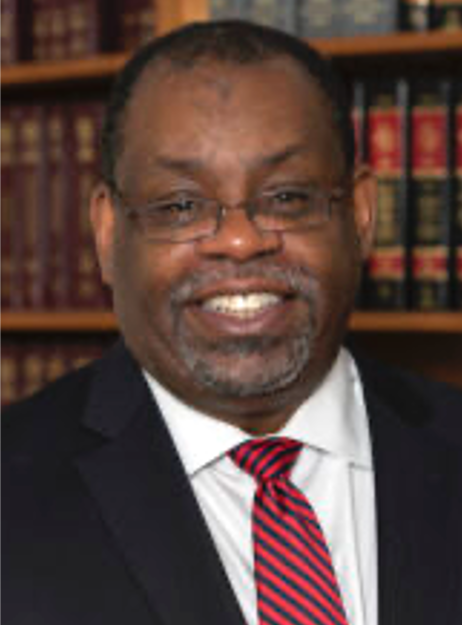
    Jeff TruemanMediator / Arbitrator

    Jeff Trueman (jt@jefftrueman.com) is an experienced, full-time mediator and arbitrator. He helps parties resolve a wide variety of litigated and pre-suit disputes and interpersonal problems concerning catastrophic injuries, wrongful death, professional malpractice, employment, business dissolution, real property, and domestic relations. Jeff is a past Director of Dispute Resolution for the Circuit Court for Baltimore City where he oversaw over 70 retired judges and senior attorneys conducting over 1,500 mediations, settlement conferences, and neutral evaluations per year. He is a Distinguished Fellow of the International Academy of Mediators, an invitation-only membership organization consisting of some of the most successful commercial mediators in the world.

    The Journal on Emerging Issues in Litigation

    Emerging Litigation Podcast

    Emerging Litigation PodcastProduced by HB Litigation and Law Street Media

    Interviews with leading attorneys and other subject matter experts on new twists in the law and how the law is responding to new twists in the world.

    Overconfidence: A Risky but Pervasive Phenomenon in Litigated Disputes

    “Lady Justice symbolizes fairness and impartiality as she oversees the adjudication process. Although she may hold the scales of justice in one hand, she also carries a large sword in her other hand. And she’s blindfolded. Knowing that, how confident should you be?” 

    Abstract: “Overconfidence” may have negative connotations, but it can be beneficial in competitive situations like litigation where parties compete for resources. Nonetheless, posturing and overconfidence of opposing parties and counsel are common frustrations felt by lawyers and claims professionals. Most litigants fail to see themselves as overconfident even though that can result in miscalculations and erroneous risk assessments. Litigants can employ techniques to improve decision making but sometimes going to trial is considered the right decision for reasons that are considered more important than whether the result is better than the last settlement demand or offer. In addition to focusing on legal and financial threats that are external to themselves, litigants might also consider threats of their own making; namely, how they think about risk amid uncertainty. Download the complete article for more insights from the author. 

    Download the article now!

  • Where’s Your Head? Managing the Mind in Mediation with Jeff Trueman

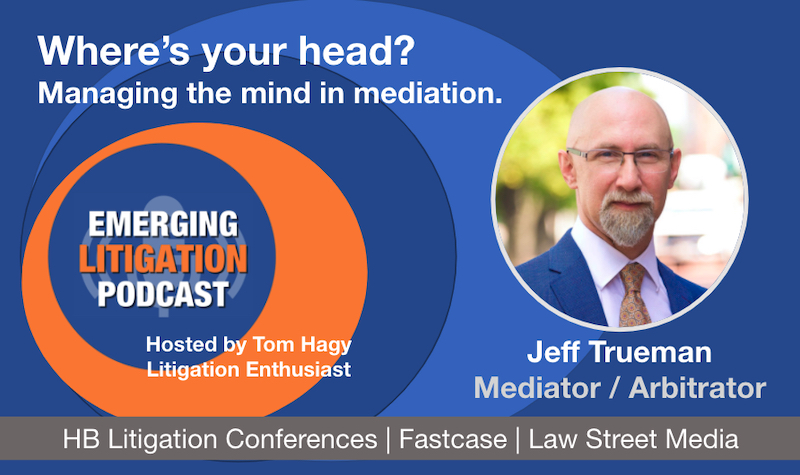
    Where’s Your Head? Managing the Mind in Mediation with Jeff Trueman

    Where’s Your Head? Managing the Mind in Mediation with Jeff Trueman

    Joining me to discuss this is  Jeff Trueman, an experienced, full-time mediator and arbitrator. Jeff helps parties resolve a wide variety of litigated and pre-suit disputes and interpersonal problems concerning catastrophic injuries, professional malpractice, wrongful death, employment, family business dissolution, real property, estate, and domestic relations. He is a panel mediator for the American Arbitration Association; a  panel arbitrator for the Financial Industry Regulatory Authority; a Distinguished Fellow of the International Academy of Mediators; a recipient of the Paul A. Dorf Alternative Dispute Resolution Memorial Award by the Bar Association of Baltimore City; and will soon hold an LLM from the Straus Institute for Dispute Resolution at the prestigious Pepperdine School of Law. 

    Finally, did I really suggest that having a mediator with a bad hip could help achieve a faster resolution? Did I really give a review of the HBO original movie Oslo, which I consider a must-see for anyone interested in conflict resolution? Did I really compare married couples during Covid-19 lockdowns to angry bees in a jar? Listen and find out. Spoiler alert: Yes. Yes I did. 

    This podcast is the audio companion to the Journal on Emerging Issues in Litigation, a collaborative project between HB Litigation Conferences and the Fastcase legal research family, which includes Full Court Press, Law Street Media, and Docket Alarm. The podcast itself is a joint effort between HB and Law Street Media. If you have comments or wish to participate in one our projects, or want to tell me how Jeff really got you thinking, please drop me a note at Editor@LitigationConferences.com.

    Tom Hagy
    Litigation Enthusiast and Host of the Emerging Litigation Podcast

    “Attorneys possess many of the same characteristics as their human cousins.” Someone said that. Probably me. They often bring to their jobs cognitive barriers that get in the way of negotiating resolutions to conflicts. Same for their human clients.

    Things like refusal to cede the moral high-ground, or stubbornly believing  there must always be someone to blame. Then there is overconfidence (i.e.,  “I am right and will win in court!”) or they might enjoy selective memory, confirmation bias, and loss aversion.  Attorneys are often in the position of mediator and problem solver. What can attorneys do to more effectively achieve satisfactory outcomes when the parties bring in their own set of human characteristics and emotions? 

  • Myriah Jaworski on Arbitration as Defense Against Data Breach Class Actions

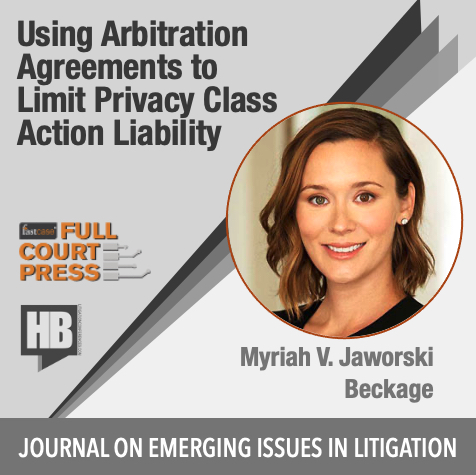
    Myriah Jaworski on Arbitration as Defense Against Data Breach Class Actions

    Myriah Jaworski on Individual Arbitration as a Defense Strategy Against Data Breach Class Actions

    Abstract
    Data privacy class actions are proliferating. Defendant companies may find an effective defense strategy is moving to compel individual arbitration. Not all contracts have the appropriate language, however, and, even if they do, they may not succeed. This article, which will appear in the forthcoming issue of the Journal on Emerging Issues in Litigation, discusses U.S. privacy litigation and case law on compelling arbitration of class claims in the privacy law context, with recommendations for businesses to improve their chances of securing court orders that enforce arbitration language in their agreements.

    Author
    Myriah V. Jaworski, Esq. (mjaworski@beckage.com), is a member with the Beckage, a law firm specializing in technology, data security and privacy. She is a Certified Information Privacy Professional, United States (CIPP/US) and Certified Information Privacy Professional, Europe (CIPP/E). She leads Beckage’s Privacy Litigation Practice Group where she represents clients in data breach actions, technology vendor disputes, and the defense of consumer class actions and related regulatory investigations. Myriah is also a former Trial Attorney with the Department of Justice.

    About
    The Journal on Emerging Issues in Litigation is a co-production of HB, Fastcase, and Law Street Media. You can also hear the complementary (and complimentary) Emerging Litigation Podcast wherever podcasts appear. For questions, contact Tom Hagy, Editor in Chief, at Editor@LitigationConferences.com.

    Loading Viewer…

    Safeguarding Against Financial Exploitation

    An on-demand CLE-eligible webinar Safeguarding Against Financial Exploitation   America’s senior population is growing. Nearly one in five U.S. residents will be 65 or older in 2030. Which means the average age of U.S. investors is climbing too. With that comes the risk that they will be exploited by people with access – or gain access through nefarious methods – to their investment portfolio. Seniors and vulnerable persons lose billions of dollars each year. Remarkably, 90% of the people to take advantage of senior investors are members of their own family. Attorneys who represent senior clients need to know the signs of vulnerability, red flags that their clients are being exploited, what laws apply, and rules lawyers must follow in these matters.   Questions our speakers answer: What is senior / vulnerable investor exploitation?   Who is protected by state and federal laws?   How prevalent is senior financial exploitation? What do the numbers tell us?  What is the pace of financial abuse SAR filings by securities firms?  What are the most popular scams?   What is diminished capacity?  What are the red flags indicating possible exploitation?  What are the laws, rules, and regulations governing law firms?  What are some best practices for law firms?  How can firms best protect their senior clients?   On Demand CLE Webinar What You Get PowerPoint and supplemental materials. Complete recording for later review. Answers to your questions via email. Invitation to contact speakers. 1.5 CLE credits (for licensed attorneys). CLE assistance.* *Subject to state bar rules. For licensed attorneys.  Register Meet the Speakers Joseph Calabrese Bressler, Amery & Ross, P.C. A 1991 Graduate of St. John’s University Law School, Mr. Calabrese brings 30 years of practice and 18 years of Securities Litigation/Regulatory experience to his role as principal in the New York office of  Bressler, Amery & Ross’s Financial Institutions Group. He began his career as a Wall Street litigator as an associate general counsel for Citigroup’s Smith Barney and […]

    Lien Resolution: Government & Private Plans Get Aggressive (Against Attorneys)

    Includes Nearly 75 minutes of insights from experienced professionals. CLE credit: 1+ (subject to bar rules). For CLE questions: CLE@LitigationConference.com The complete Power Point presentation. Continued access to the complete recording for later use. Answers to your questions via email to the presenters or write to HB and we will be sure to contact the speakers. What can you do to settle personal injury suits cleanly and avoid costly litigation and penalties? What recent cases can inform you about protecting your settlements and, as attorneys, yourselves, from post-settlement federal lawsuits? How can your firm set itself up to meet government expectations? What role might experts play in navigating these pitfalls? Medicare Advantage (42 USC § 1395w-22) Federal Medical Care Recovery Act (FMCRA) (42 USC § 2651) Armed Forces Act (10 USC §1095) Veterans’ Benefits (38 USC §1729) Third-Party Collection Rules (32 CFR 537.24; 38 CFR 17.101, etc.) Set-Asides under the Medicare Secondary Payer Act (42 USC § 1395y(b)(2)] On Demand Registration Lien Resolution Government & Private Plans Get Aggressive (Against Attorneys!) On Demand | Recorded September 2020 It is increasingly common these days. Personal injury attorneys settle a case, only to find themselves sued by a U.S. Attorney for failing to reimburse Medicare for conditional payments as required by the Medicare Secondary Payer Act. In some cases the attorney may be required to pay fines in addition to the reimbursements and interest, a costly proposition. Are you up to speed on issues surrounding Medicare Advantage, TRICARE, veterans’ claims, and Medicare set-asides? Join nationally recognized healthcare lien and resolution expert Franklin P. Solomon and go-to lien resolution provider Brett Newman as they offer a practical, in-depth CLE presentation. Franklin P. Solomon, Esq. Attorney & Founder, Solomon Law Firm  A graduate of Rutgers University School of Law at Camden, Franklin Solomon is based in Cherry Hill, NJ, with a practice focused on evaluation, litigation and resolution of healthcare “liens” and reimbursement claims. Mr. Solomon represents personal injury victims and their attorneys […]

    Telepsychiatry: Mitigating the Risks

    REGISTER Registration Includes Nearly 90 minutes of insights from experienced professionals. CLE credit: 1+ (subject to bar rules). For CLE questions: CLE@LitigationConference.com The complete Power Point presentation. Continued access to the complete recording for later use. Answers to your questions via email to the presenters or write to HB and we will be sure to contact the speakers. Understand the risks associated with telepsychiatry and how to manage them.  Telemedicine has emerged as an important solution for healthcare in general and psychiatric medicine specifically during the current global pandemic. Remote access for sub-practices including addiction counseling have been commonly used. Our panel of psychiatric professionals who have served as expert witnesses and attorneys who counsel and represent physicians have prepared a 90-minute session to share insights with attorneys, physicians, healthcare providers, risk professionals, and more. Agenda Examining procedures and best practices that exist for ensuring confidentiality in a telemedicine practice How do you draft a telepsychiatric consent form? What is the emerging standard of care for telemedicine? Will the standard of care for telemedicine become a national standard? (Should it?) Review the case law addressing telemedicine or telepsychiatry How do the HIPAA regulations and HITECH privacy laws impact telemedicine? How have the HIPAA regulations and HITECH privacy laws been relaxed during the pandemic? Will the relaxed HIPAA and HITECH regulations impacting telemedicine continue past the pandemic? Which technical platforms are preferred? Which ones to avoid? Panelists Mark Levy, M.D., Medical Director at fpamed David Kan, M.D., UCSF Psychiatry Department and the California Society for Substance Abuse Medicine Ayesha Ashai, M.D., associated with fpamed Stephen M. Fatum, J.D., Partner, Barnes & Thornburg LLP Angela W. Russell, J.D., Partner, Wilson Elser Moskowitz Edelman & Dicker LLP Meet our physician and attorney panelists. Mark Levy MD Medical Director fpamed Dr. Levy is a graduate of Columbia College (A.B. 1967) and the Columbia University College of Physicians and Surgeons (M.D. 1971) in New York. He is a Physician […]

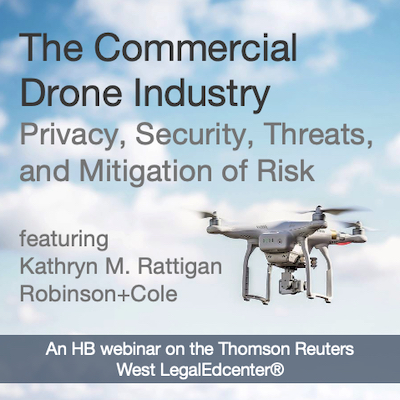
    The Commercial Drone Industry: Privacy, Security, Threats, and Mitigation of Risk

    HB presents a CLE-eligible webinar Now on-demand at the West LegalEdcenter THE COMMERCIAL DRONE INDUSTRY Privacy, Security, Threats, and Mitigation of Risk Drones have become an increasingly valuable tool for businesses of all types and sizes. Drones are already being used in many applications, but more will certainly arise as the technology advances. This means that certain risks, like cyber threats, will also continue to present themselves. Protecting the transmission and storage of data collected through drones is critical. Unfortunately, security usually comes as an afterthought. The drone industry is part of the aviation industry, which, based on its knowledge, keeps safety as a number one concern. Part of that safety is having proper protection for your systems, including security as a fundamental design principle. Take this webinar to gain insights on the topics listed below, and shared by an attorney who practices on the cutting-edge of this evolving technology. Topics: Defining drones. Current and future applications. FAA Modernization and Reform Act of 2012. FAA Part 107 Regulations and waivers. Resources, e.g. the FAA Drone Zone and LAANC Portal. Penalties for violations. Privacy implications. Drones as weapons. Vulnerability to cyber attacks. Take it now! What you get: 1+ CLE credits (subject to bar rules). Insights from an experienced professional who specializes in this area of the law. The complete PowerPoint presentation. Continued access to the complete recording for later use. Answers to your questions. Fee: No additional charge to subscribers to the West LegalEdcenter. Non-subscribers may take the course for $170. Meet the Speaker Kathryn Rattigan Robinson & Cole LLP Kathryn Rattigan is a member of the firm’s Business Litigation Group and Data Privacy + Cybersecurity Team. She advises clients on data privacy and security, cybersecurity, and compliance with related state and federal laws. She assists clients in assessing risks related to technology and software contracts, as well as with compliance-related issues with outsourcing and […]

    The Intersection of Privacy and Antitrust Webinar Now Available On-Demand on the West LegalEdcenter

    Available as part of your subscription to The Thomson Reuters West LegalEdcenter®. Don’t subscribe to the West LegalEdcenter? This webinar is still available directly from HB. Take it now! Questions for speakers Questions@LitigationConferences.com CLE questions CLE@LitigationConferences.com Check out the MoginRubin blog for more insights on antitrust and privacy law. What attorneys and companies need to know about the increasing interplay between these critical areas of the law.  Highly publicized cases and investigations in the U.S. and Europe of big technology, e-commerce, and social media companies demonstrate how anti-competition laws are being used to scrutinize and challenge not only how these corporations conduct themselves in the marketplace, but the very core of their colossal success: the mass collection and utilization of user data. Are the privacy and antitrust worlds beginning to cross over? Or do they simply run parallel while addressing entirely different types of conduct? Whatever the answer, data is the raw material that drives the likes of Google, Facebook, Apple and Amazon, so how it is handled is a critical question when counseling clients on mergers and acquisitions. Moderator Daniel J.  Mogin | Managing Partner, MoginRubin LLP Speakers Jennifer M. Oliver, CIPP/US | Partner, MoginRubin LLP Thomas N. Dahdouh | Director, Western Region, Federal Trade Commission Franklin M. Rubinstein | Partner, Wilson Sonsini Goodrich & Rosati Randi W. Singer, CIPP/US, CIPT | Partner, Weil, Gotshal & Manges Contributor Dina Srinivasan | Independent Researcher & Author of The Antitrust Case Against Facebook Dina was unable to present but we thank her for her content contributions.  Agenda Who should regulate privacy violations in the U.S.? Which antitrust issues implicate privacy concerns? What role does machine learning play on the competitive landscape? What is big data really? How is it different from “data”? What are the elements of effective merger reviews? What are the appropriate remedies? What are “notice-and-choice” versus “harms-based” approaches? Plus answers to your questions. Send them to Questions@LitigationConferences.com.


  • Assessing Risk in Medical Malpractice Mediation

    Assessing Risk in Medical Malpractice Mediation

    HB Litigation Conferences presents

    Assessing Risk in
    Medical Malpractice Mediation

    CLE-eligible on demand webinar | Recorded 2021

    Lawyers and claims professionals assess litigation outcomes all the time. The parties do not. You can help.

    Understandably, parties in medical malpractice disputes do not fully appreciate the risks inherent in litigation and are not aware of how continued litigation affects their underlying interests in the dispute. For example, some parties see the outcome as a reflection of their personal character. These challenges can hamper the parties’ ability to make good decisions in litigated medical malpractice cases. Even organizations that are experienced in assessing litigation risk can make more decisions in these cases with adverse outcomes.

    Hear our panel of medical malpractice and insurance attorneys and litigation experts as they share their insights on successfully guiding individuals and organizations through these disputes.

    Registration Includes

    • Nearly 90 minutes of insights from experienced professionals.
    • CLE credit: 1+ (subject to bar rules).
    • For CLE questions: CLE@LitigationConference.com
    • The complete Power Point presentation.
    • Continued access to the complete recording for later use.
    • Answers to your questions via email to the presenters or write to HB and we will be sure to contact the speakers.

    REGISTRATION

    Key Points

    • What are the intangible costs of medical malpractice litigation for individuals and institutions?
    • How can advocates, claims professionals, and parties make better decisions in these cases?
    • How are medical malpractice claims mediated?
    • How can advocates use risk assessments in settlement negotiations?
    • What do participants want from mediators?

    Meet the speakers.

    Gregory K. Wells

    Gregory K. Wells is a Maryland-based personal injury lawyer and partner with Shadoan, Michael & Wells LLP. His practice focuses on Plaintiff’s medical malpractice, serious personal injury and wrongful death cases, as well as commercial and business litigation. Greg is a Fellow of the International Academy of Trial Lawyers and the American College of Trial Lawyers. He has been listed in Best Lawyers in America in the specialties of Medical Malpractice, Personal Injury, Product Liability and Professional Malpractice Law, and in both the “Maryland Lawyers” published by Baltimore Magazine, and “Washington, D.C. Super Lawyers” published by Law & Politics since 2007. He has also been listed in Washingtonian Magazine’s “Washington D.C.’s Top Lawyers” (in every list since 2011.) Best Lawyers in America named Greg as “Lawyer of the Year” for 2013, 2018 and 2019 in the area of Professional Malpractice.

    Mike Coffey

    Michael Coffey is a Partner and member of the national Complex Trial team in Tyson & Mendes’ New York and Connecticut offices. He has handled many of the largest insurance related claims and litigated matters in New York State over the past 25 years.  The world’s largest companies routinely parachute in Mr. Coffey to handle complex high exposure liability and damages matters.  He is also an ABOTA attorney who has personally tried over 125 jury trials for companies and syndicates in state and federal courts throughout the U.S. in cases involving all types of high-stakes insurance related and commercial matters. Mr. Coffey and his bespoke litigation team deliver legal services that ensure excellent results in mitigating exposure and containing litigation costs, either through ADR or trial by jury, if necessary.

    Michele Newman

    Michele Newman

    Michele Newman is Litigation Manager at Hamlin & Burton Liability Management. She began her claims career with Aetna Life & Casualty in 1985. Thereafter, Michele joined Connecticut Medical Insurance Company where she handled bodily injury and medical professional liability claims for 28 years. She graduated from Southern Connecticut State University with a Bachelor of Science degree in Political Science and also holds Certifications in Claims Litigation Management, Mediation, and Negotiation. Michele is a past President for the Connecticut CLM Chapter and currently serves as a Dean for the School of Mediation at CLM’s Claims College.

    Prof. John Lande

    John Lande is the Isidor Loeb Professor Emeritus at the University of Missouri and former director of the LLM Program in Dispute Resolution. His scholarship focuses on various aspects of dispute systems design, including publications analyzing how lawyering and mediation practices transform each other, business lawyers’ and executives’ opinions about litigation and ADR, designing court-connected mediation programs, improving the quality of mediation practice, the “vanishing trial,” and planned early dispute resolution. Among his many books and articles, John co-authored “Litigation Interest and Risk Assessment: Help Your Clients Make Good Decisions,” with Michaela Keet and Heather Heavin, published by the American Bar Association in 2020.

    Jeff Trueman

    Jeff Trueman is a full-time mediator and arbitrator who handles a wide variety of disputes, including medical malpractice, wrongful death, nursing home, and catastrophic injury cases. Before starting his own private mediation practice, Jeff was the Director of Civil ADR for the Circuit Court for Baltimore City and an attorney in private practice in Baltimore City. Jeff is a Distinguished Fellow of the International Academy of Mediators and a Community Advisory Member of Safe Streets Baltimore (an anti-gun violence initiative). He also is an LL.M Candidate at the Straus Institute for Dispute Resolution, Pepperdine School of Law.

  • Settlement Psychology: Who is in Control? Homer Simpson or Mr. Spock?  | Complimentary Webinar

    Settlement Psychology: Who is in Control? Homer Simpson or Mr. Spock? | Complimentary Webinar

    Settlement Psychology

    Who’s in charge? Homer Simpson or Mr. Spock?

    Cognitive obstacles to finding common ground.

    [two-fifths-first]

    Complimentary On-Demand Webinar From HB!

    1 CLE credit

    CLE questions?
    CLE@LitigationConferences.com

    Questions for speakers?
    Questions@LitigationConferences.com

    SPEAKERS

    Jeff Trueman
    Mediator / Negotiator

    John Philip Miller
    Baltimore City Circuit Judge (ret.)

    This course is also available via the
    West LegalEdcenter.

    [/two-fifths-first] [three-fifths]

    Improve your negotiation strategy and outcomes.

    Mediator, arbitrator and settlement conference neutral Jeff Trueman says the lawyer’s mind can sometimes play tricks on them when it comes time to settle a claim. “The central question on the minds of counsel, their clients, and insurance professionals in civil litigation is, of course, ‘What’s the case worth?’ For mature torts there is enough historical settlement and verdict data exist for counsel to argue why a particular case should or should not fit within a certain settlement range. In the midst of these discussions, the human brain plays tricks on us. For example, litigators sometimes assume that their trial experience can determine how jurors will negotiate with one another and resolve factual discrepancies after closing arguments. This assumption is a ‘heuristic’ – a cognitive shortcut called attributional error or illusion of control.” Backed by his decades of psychological and economic sciences research, Trueman says there is a lot of room for attorneys to change their mindset when moving into settlement mode.

    Litigation Chicken

    “When differences over case value intensify, litigators return to threats of relinquishing control: ‘Maybe we have to try this case;’ or ‘We feel good about our chances in front of a jury.’ Underneath the games of litigation chicken that are the hallmark of settlement negotiation, heuristics lead to erroneous valuations and assessments of risk.”

    He says attorney would be well served, and would serve their clients well, if they make adjustments depending on their role at a given point in the process. “Many lawyers default to their role as advocates for legal rights without considering the quality of counsel they give to clients regarding risk management. This plays right into the endowment bias that potential clients carry, valuing property or experiences merely because they have them. When thinking about future risk, many lawyers exhibit an overconfidence and self-serving bias in favor of past success. Unfortunately, competitive bargainers are disinclined to compromise even when it would benefit their bottom lines. Of course, it goes without saying that clients are often better served by lawyers who have some experience in a courtroom. But prior success does not guarantee future results.”

    Learn what else Jeff has to say on the subject. He was joined by Judge John Philip Miller, now retired from the Circuit Court of Baltimore City. Judge Miller spent 16 years on the bench after a career in private practice.

    What they over: 

    + What are the cognitive barriers to assessing case value?
    + How can you use this information to your advantage?
    + How can you help your clients with this information?
    + What is the impact of unrealistic expectations — yours and your client’s?
    + Answers to your questions. Send them by email to Questions@LitigationConferences.com.


    Speaker Bios

    Jeff Trueman | Mediator / Negotiator

    Jeff is a private mediator of litigated civil disputes, including personal injury, premises liability, toxic and environmental torts, wrongful death, professional malpractice, partnership dissolution, employment, domestic, and guardianship petitions. He is a public speaker and presenter of mediation and negotiation-related dynamics at law schools, law firms, and litigation conferences. Jeff is author of an ADR column that appears semi-regularly in the Maryland Daily Record.

    Judge John Philip Miller (ret.) | Baltimore City Circuit Court 

    Judge Miller served on the bench for more than 16 years both in District and Circuit Court. Prior to his appointment to the bench, Judge Miller was a partner with Kaplan, Heyman, Greenberg, Engleman & Belgrad, P.A., and with Wright, Constable & Skeen, LLP. Judge Miller received a Juris Doctorate from Washington and Lee University School of Law and a Bachelor of Arts Degree from Gettysburg College. He was an adjunct professor with the Villa Julie College, an instructor with the Maryland Institute for Continuing Professional Education of Lawyers, and a lecturer at the Maryland Judicial institute. His honors include the Daily Record’s Leadership in Law Award.

    [/three-fifths]

  • Verdict & Settlement Lien Resolution Webinar | 3/6/2019


    [two-fifths-first]

    DATE: March 6, 2019

    TIME: 4 p.m. EDT; 3 p.m. CDT; 2 p.m. MDT; 1 p.m. PDT

    PLACE: Your computer or mobile device

    PRICE: $247 — but just $197 through Feb. 28 with promotion code JVRA50

    GROUPS ARE GOOD: Registering qualifies you to multiple attendees at your location.

    CLE: 1 credit
    Please send CLE questions to
    CLE@LitigationConferences.com

    SPEAKERS:

    Franklin Solomon
    Solomon Law Firm

    Brett Newman
    Newman Settlement Services Group

    [/two-fifths-first] [three-fifths]

    Tort Settlement Lien Resolution:

    Beyond Traditional Medicare and Medicaid Issues to ERISA, FEHBA, Medicare Advantage, VA, Tricare and Medicare Set-Asides.

    Take this highly practical course with two deeply experienced practitioners who share insights on issues that impact the cases on your desk today. Learn about the newest case law, agency positions and litigation tactics affecting health and disability plan reimbursement claims, including how to protect your clients and your practice in this rapidly developing area.

    Our speakers will discuss:

    Medicare Advantage Plans
    Federal Employees Health Benefits Act (FEHBA) Plans
    Employee Retirement Income Security Act (ERISA) Claims
    Medicare set-asides
    TRICARE
    Veterans Administration Claims


    Speaker Bios

    Franklin P. Solomon | Solomon Law Firm

    A graduate of Rutgers University School of Law at Camden, Franklin Solomon is based in Cherry Hill, NJ, with a practice focused on evaluation, litigation and resolution of healthcare “liens” and reimbursement claims. Franklin represents personal injury victims and their attorneys in defending against claims by health plans and government benefits programs seeking payment out of tort recoveries.

    Among his significant cases in the field, he argued before the New Jersey Supreme Court in Perreira v. Rediger, 169 N.J. 399 (2001), obtaining a decision which prohibited health insurers’ reimbursement claims against their insureds’ tort recoveries. He was plaintiffs’ counsel in Levine v. United Healthcare, 402 F.3d 156 (3d Cir. 2005), a federal class action challenging reimbursement claims of ERISA-governed health plans. He was also appellate counsel in Wurtz v. The Rawlings Company, 761 F.3d (2d Cir. 2014), a class action challenging New York insurers’ reimbursement claims against their insureds, and was plaintiffs’ counsel in Taransky v. Sebelius, 760 F.3d 307 (3d Cir. 2014), a class action challenging Medicare’s claims for reimbursement out of tort recoveries. More recently Mr. Solomon was appellate counsel in Arnone v. Aetna, 860 F.3d 97 (2d Cir. 2017), a decision which subjected ERISA plan disability insurers to state anti-subrogation law.

    Prior to opening his own firm, Franklin’s practice included 20 years of litigating mass tort and individual personal injury claims on behalf of plaintiffs.

    Brett Newman | Newman Settlement Services Group

    Recognizing the ever-growing nature of lien resolution, Medicare Set-asides, and Structured Settlements, and the ever-increasing associated liability, Brett Newman established The Newman Settlement Services Group (TNSSG). TNSSG was established with the mutual objective to provide assistance to attorneys and claimants of personal injury lawsuits as well as mass tort claimants in the protection of their proceeds and government benefits.

    Mr. Newman is known nationally by attorneys for his expertise on claims avoidance and reduction. He graduated with a degree in economics from Syracuse University in 1989. Subsequent to earning his degree, Mr. Newman consulted with clients in both the business and financial sectors. Mr. Newman is active in his community, and he takes particular pride in the role he plays in helping claimants and attorneys to expand their knowledge in regard to protection of government benefits and annuitization of settlements.

    [/three-fifths]

  • Cognitive Shortcuts: Assessing Case Value & Litigation Risk with Homer Simpson and Spock

    By Jeff Trueman, Esq.
    Mediator

    The central question on the minds of counsel, their clients, and insurance professionals in civil litigation is, of course, “What’s the case worth?” Although lead paint litigation may be going through some changes, it remains a mature tort where enough historical settlement and verdict data exist for counsel to argue why a particular case should or should not fit within a certain settlement range. In the midst of these discussions, the human brain plays tricks on us. For example, litigators sometimes assume that their trial experience can determine how jurors will negotiate with one another and resolve factual discrepancies after closing arguments. This assumption is a “heuristic” – a cognitive shortcut called attributional error or illusion of control.

    Underneath the games of litigation “chicken” that are the hallmark of settlement negotiation, heuristics lead to erroneous valuations and assessments of risk.

    Although more than one hundred heuristics exist, approximately 15-20 occur commonly in the context of settlement negotiations. It is easy for potential clients to employ a heuristic similar to the illusion of control by imagining a connection between something they desire, such as a favorable case outcome, and the past successes of their prospective lawyer. Representative and confirmation biases influence how we connect “model” to “outcome.” When differences over case value intensify, litigators return to threats of relinquishing control: “Maybe we have to try this case;” or “We feel good about our chances in front of a jury.” Underneath the games of litigation “chicken” that are the hallmark of settlement negotiation, heuristics lead to erroneous valuations and assessments of risk.

    Borrowing from Daniel Kahneman’s book, “Thinking Fast and Slow,” cognitive shortcuts live in our “System One” brain where we react to circumstances intuitively without giving much thought about the way in which we perceive problems or how to calculate probabilities and manage risk. “System Two” thinking is slower, more deliberate, logical, and usually more accurate. Think of the difference between Homer Simpson and Star Trek’s Spock and you get the picture.

    Although we like to think that we are System Two negotiators who act analytically and rationally, we usually operate within System One. We negotiate emotionally. For example, in terms of perceiving and managing financial risk, we prefer to avoid loss rather than experience an equivalent gain. It feels better not to lose five dollars rather than find five dollars. Whether we consider something a loss or a gain depends on a reference point (our expectations, for example) which is usually based on perceived surroundings, desires, or what we think happened to others. Loss and fear of loss carry significant psychological power when we think about the future.

    Many lawyers default to their role as advocates for legal rights without considering the quality of counsel they give to clients regarding risk management. This plays right into the endowment bias that potential clients carry, valuing property or experiences merely because they have them. When thinking about future risk, many lawyers exhibit an overconfidence and self-serving bias in favor of past success. Unfortunately, competitive bargainers are disinclined to compromise even when it would benefit their bottom lines. Of course, it goes without saying that clients are often better served by lawyers who have some experience in a courtroom. But prior success does not guarantee future results.

    Granted, it’s hard to know whether a particular settlement number is “good” since it’s impossible to compare trial verdicts to settlement results in the same case. Although most law suits settle on terms that are good enough, practically speaking, lawyers will emphasize trial advocacy and “justice” over risk management. Few potential clients want to hear about “cognitive heuristics” and risk management when they seek a fighter for a “just” cause. Even so, litigants who are aware of the well-worn chutes and ladders of emotion that commandeer their thinking can tune out Homer Simpson in favor of Spock to make better decisions about valuation and risk.


    Jeff Trueman, Esq., ADR Services, Sole Practitioner, Baltimore, MD. Private mediator of litigated civil disputes, including personal injury, premises liability, toxic and environmental torts, wrongful death, professional malpractice, partnership dissolution, employment, domestic, and guardianship petitions. Public speaker and presenter of mediation and negotiation-related dynamics at law schools, law firms, and litigation conferences. Author of ADR column that appears semi-regularly in the Maryland Daily Record.


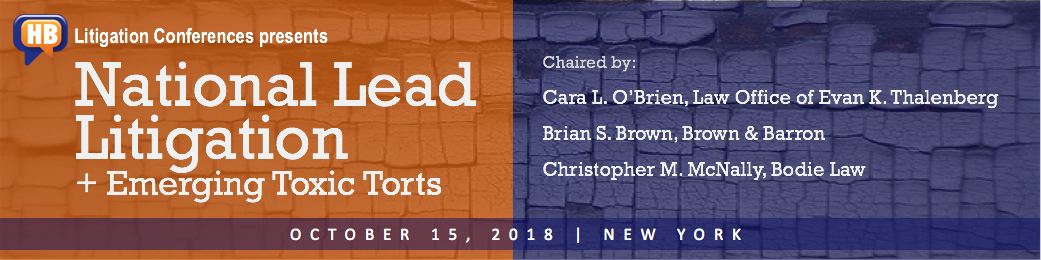
    Jeff is one of the featured presenters at this year’s National Lead Litigation + Emerging Toxic Torts Conference, Oct. 15 in New York.

    The event is being held at the same time and in the same location as our Drug & Defense Forum.

  • Right to Try Act: Commentary Roundup


    A Life Saver, Political Grandstand, or Harmful Scam?

    Depends on Who You Ask. And When.

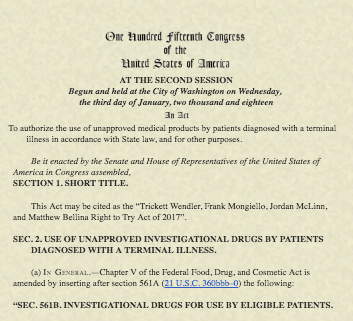
    It’s been two months since President Donald J. Trump signed into law the Right to Try Act which allows terminally ill patients access to experimental drugs not yet approved by the FDA. Like many things in America in 2018, opinions on the efficacy of this new law vary along party or ideological lines. Will it give hope and precious life-extending solutions for patients fighting terminal disease? Or is it a money-driven scheme intended to enrich corporations and the super rich? Signed into law on May 24, 2018, is it something that can be implemented effectively? Here are a few quotes that explain the controversy.

    Additional commentary or insights welcome.
    Send yours to Editor@LitigationConferences.com.
    “Timely access to promising treatments in … devastating circumstances.”

    “This new law amends the Federal Food, Drug, and Cosmetic Act to establish a new pathway aimed at increasing access to unapproved, investigational treatments for patients diagnosed with life-threatening diseases or conditions who have exhausted approved treatment options and who are unable to participate in a clinical trial. Our implementation of the Right to Try Act will build on our long-standing efforts to help patients and families who are facing life-threatening diseases or conditions, in a way that seeks to protect their autonomy, their safety, and the safety of others following in their paths.”

    “The decisions we reach related to products that can serve as an effective treatment for a terminal illness, or that can arrest a devastating and debilitating condition, are among the most important and carefully considered judgments that we make. We recognize the important balance between making sure patients have the assurances Congress intends, while enabling timely access to promising treatments in these devastating circumstances. And we’ll implement this new law consistent with these longstanding values.”

    FDA Commissioner Scott Gottlieb

    “GOP senator reveals the truth: Right-to-try bill was a scam tailored to harm public health”

    “Anyone with a smidgen of knowledge about healthcare understood that the right-to-try legislation signed by President Trump on Wednesday was a scam, perpetrated by the Koch brothers and their henchmen.”

    “Masquerading as a “compassionate” measure aimed at providing victims of terminal diseases with a last bit of hope that an experimental treatment might save them, it really was aimed at undermining the authority of the Food and Drug Administration to make sure our drugs are safe and effective.”

    Read the full article in the Los Angeles Times.

    “We remain skeptical about whether right-to-try statutes actually help anyone …

    … as opposed to being political grandstanding.  That said, from the perspective of attorneys representing pharmaceutical companies, this bill is about as good as it could be, and – to the extent that it extends preemption to the compassionate use program – it even marginally improves current law.”

    Read the full commentary written by James M. Beck of Reed Smith on the Drug & Device Law Blog. 

    Note: Beck’s commentary was written in March 2018.

    “Very little change for most patients …”

    “Despite these state gains and the policy’s growing popularity among states, ethical questions remain about the tangible impact of a federal right to try law on Americans with terminal illnesses. Most notably, a growing body of evidence from policy analysts argues that the legislation would unfortunately accomplish very little change for most patients, and it could actually make it harder to get new drugs approved in the future.”

    Written for CBS.com by Morten Wendelbo, a lecturer at the Bush School of Government and Public Service and a research fellow at the Scowcroft Institute of International Affairs at Texas A&M University, and Timothy Callaghan, assistant professor at Texas A&M University Health Science Center. Read the complete commentary. 


    Additional commentary or insights welcome.

    Send yours to Editor@LitigationConferences.com.
    This controversial topic will be on the agenda at the Drug & Device Defense Forum in New York Oct. 15, 2018.