Tag: COVID

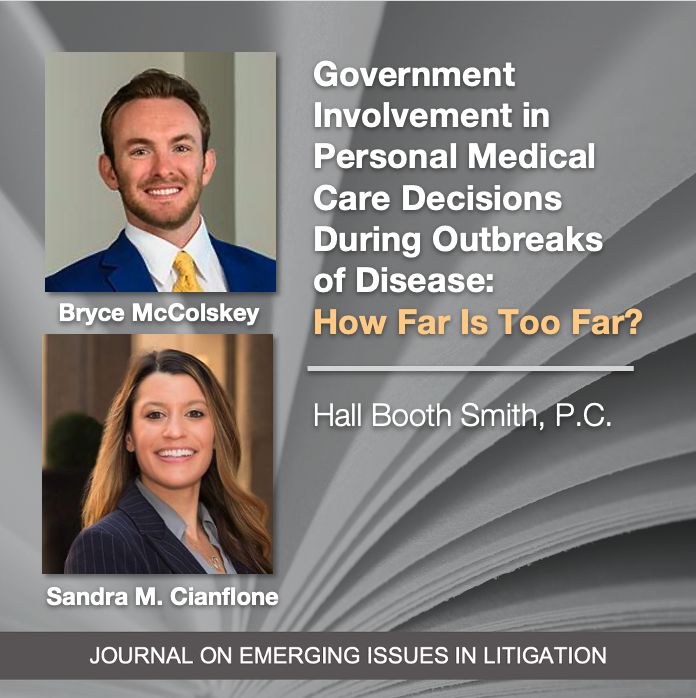
  • Government Involvement in Personal Medical Care Decisions During Outbreaks of Disease: How Far Is Too Far? by Bryce McColskey and Sandra M. Cianflone

    Government Involvement in Personal Medical Care Decisions During Outbreaks of Disease: How Far Is Too Far? by Bryce McColskey and Sandra M. Cianflone

    The Authors

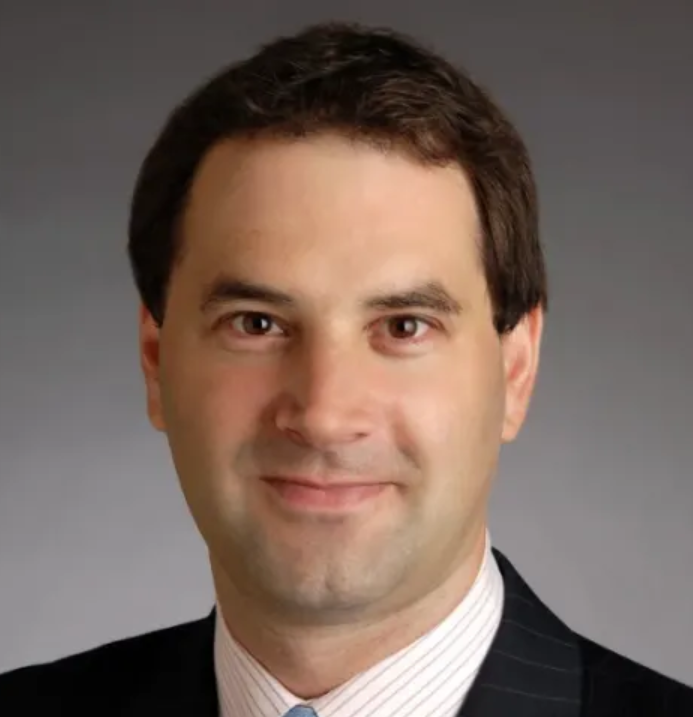
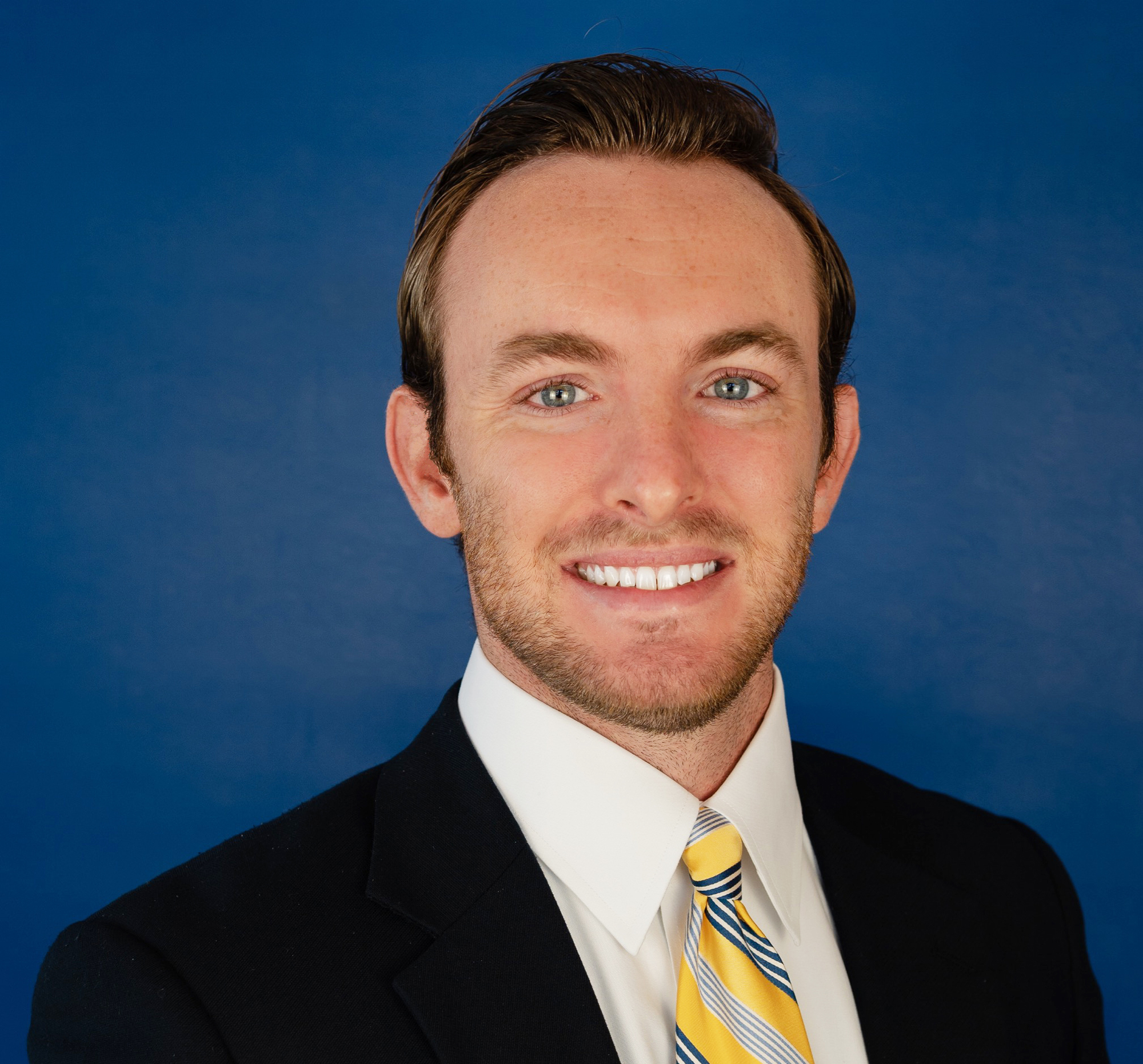
    Bryce McColskey

    Bryce McColskeyHall Booth Smith

    Bryce McColskey (bmccolskey@hallboothsmith.com) is an attorney with Hall Booth Smith, P.C., based in Jacksonville, Florida, where he focuses on medical malpractice and professional liability law.

    Sandra Cianflone

    Sandra CianfloneHall Booth Smith

    Sandra M. Cianflone (scianflone@hallboothsmith.com) is a partner in the Atlanta office of Hall Booth Smith, where she concentrates on a variety of aspects of healthcare defense and chairs the firm’s Coronavirus Task Force. She is also a member of the Editorial Board of Advisors of the Journal of Emerging Issues in Litigation.

    The Journal on Emerging Issues in Litigation

    Emerging Litigation Podcast

    Emerging Litigation PodcastProduced by HB Litigation and Law Street Media

    Interviews with leading attorneys and other subject matter experts on new twists in the law and how the law is responding to new twists in the world.

    Government Involvement in Personal Medical Care Decisions During Outbreaks of Disease: 

    How Far Is Too Far?

    “Breakthroughs in technologies, our knowledge of diseases and mutations, and advances in treatment options have been remarkable and have drastically reduced fatality rates from disease outbreaks. However, regardless of medical achievements, rapid changes in any field open the door to renewed debates over different laws and individual rights.”

    Abstract: The coronavirus pandemic is the latest health issue to raise the question of government’s involvement (or interference) with an individual’s control over their own healthcare and medical treatment. In this article, the authors, two health care and professional liability attorneys, discuss the intersection of law and medicine with a review of medical mandates, the impact of advances in science and medicine, and where role of government to protect public health intersects (or collides) with personal healthcare choices. Their focus is on governmental response to the coronavirus pandemic, and not the recent landmark case dealing with choice. But add to the equation the Supreme Court’s ruling on abortion in Dobbs v. Jackson Women’s Health, the “government as healthcare decision maker” is an issue that will be on the front burner for courts, policymakers, healthcare providers, patients, and attorneys for years to come.

    How much authority do government agencies or even the judiciary have over the healthcare decisions of individuals? This question has been hotly contested in recent years, specifically with the emergence of COVID-19. Individuals often assume the practice of medicine and the enactment and enforcement of laws are separate and independent enterprises; that they remain fixed in their respective corners.

    However, when we dive deeper into this issue and look at history and precedent, it is evident that the rights of individuals versus mandates of government in respect to healthcare has been going on for some time, and will continue for years to come.

    Download the article now!

  • Reimagining the Administration of Justice with Qudsiya Naqui of Pew Charitable Trust

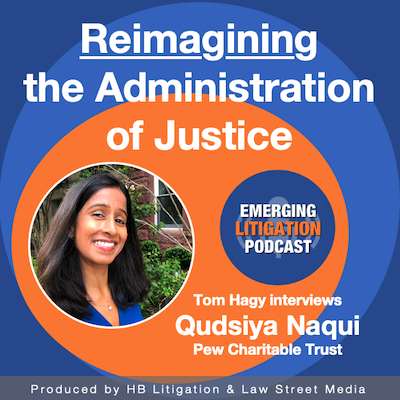
    Reimagining the Administration of Justice with Qudsiya Naqui of Pew Charitable Trust

    Before COVID-19 came to America in early 2020, “going to court” literally meant putting on your shoes and walking into a courthouse, typically a large building with courtrooms inside, and people in robes and business suits and, in some cases, more restrictive attire. 

    Stoked by necessity, courts sprinted toward solutions for keeping the wheels of justice spinning while also keeping everyone away from each other. Until then it didn’t seem possible that attorneys could or would appear before judges via digital screens, like George Jetson getting yelled at by Mr. Spacely over some hilarious mishap at the sprocket factory.

    Pew Charitable Trust concluded an in-depth study of the courts with the 2021 release of a report,  “How Courts Embraced Technology, Met the Pandemic Challenge, and Revolutionized Their Operations.” After examining emergency orders from all 50 states and Washington, D.C., and court approaches to virtual hearings, e-filing, and digital notarization, the researchers wrote that it was a time for “reimagining how to administer justice.”

    Was the adoption of technology effective? Were there any hiccups? Was technology widely embraced? Were the effects of new efficiencies enjoyed evenly across the socio-economic spectrum? Do we think courts will continue to reimagine how they administer justice without the crushing pressure of widespread disease?

    Listen to my interview with Qudsiya Naqui who leads Pew’s research at the intersection of technology and civil legal system reform. In this role, she evaluates and tests new technologies to ensure that they further efficiency, equity, and transparency in the legal process. This work is part of Pew’s Civil Justice Modernization Project.

    Before joining Pew, Qudsiya designed and implemented immigration, housing, and disaster recovery legal services programs at Equal Justice Works and the Vera Institute of Justice. She began her legal career representing immigrant women and girls seeking relief from deportation.

    Qudsiya holds a bachelor’s degree in political science and human rights from Barnard College and a Juris Doctor from Temple University.

    For more information about their work and the research, contact them at media@pewtrusts.org.

    This podcast is the audio companion to the Journal on Emerging Issues in Litigation. The Journal is a collaborative project between HB Litigation Conferences and the Fastcase legal research family, which includes Full Court Press, Law Street Media, and Docket Alarm. The podcast itself is a joint effort between HB and our friends at Law Street Media. If you have comments or wish to participate in one our projects please drop me a note at Editor@LitigationConferences.com.

    Tom Hagy

    (actual size)

    Tom Hagy
    Litigation Enthusiast and
    Host of the Emerging Litigation Podcast
    Home Page
    LinkedIn

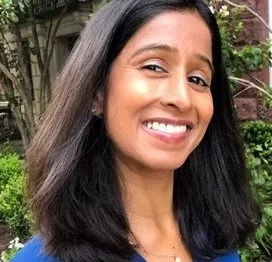
    Qudsiya Naqui

    Qudsiya NaquiPew Charitable Trust

    Qudsiya Naqui leads Pew’s research at the intersection of technology and civil legal system reform. In this role, she evaluates and tests new technologies to ensure that they further efficiency, equity, and transparency in the legal process. This work is part of Pew’s Civil Justice Modernization Project.

    Before joining Pew, Qudsiya designed and implemented immigration, housing, and disaster recovery legal services programs at Equal Justice Works and the Vera Institute of Justice. She began her legal career representing immigrant women and girls seeking relief from deportation.

    Qudsiya holds a bachelor’s degree in political science and human rights from Barnard College and a Juris Doctor from Temple University.

  • Covid Insurance Coverage Decisions with Guest Marshall Gilinsky. Are Policyholders Catching Up?

    Covid Insurance Coverage Decisions with Guest Marshall Gilinsky. Are Policyholders Catching Up?

    According to the online Covid Coverage Litigation Tracker (CCLT) run by Penn Law there have been more than 2,300 insurance coverage cases filed over denial of claims relating to Covid-19. Restaurants and bars were hardest hit by the pandemic and so led the way in seeking – and being denied – coverage, too. They are also leading the way in suing their insurers. The top five insurers in the defense position are Chubb Limited at #5, then #4 Lloyds of London, #3 Cincinnati Financial, and #2 Zurich.  And in the #1 position facing the most coverage suits is Hartford. 

    The insurance industry started off strong when this litigation began, winning the vast majority of the coverage suits. And they continue to do well, scoring with the argument that many of the claims do not involve actual property damage. Government closures don’t cause property damage, they argue. Courts have largely been siding with the carriers – but not all. Policyholders, a tenacious bunch, appear to be chipping away at the body of law in this suddenly expanding category.

    A recent case involving a New Orleans restaurant against Lloyd’s was penciled into the win column for carriers by a trial court , but an appeals court erased it and wrote the policyholder a narrow 3-2 victory. The appeals court said the language of the policy was ambiguous, and therefore had to be construed in favor of the restaurant.  What’s it  mean? Does this bode well for policyholders? Or can we expect to see, as we did in previous coverage wars, a mixed bag of decisions across the nation?

    For more on that case and today’s Covid coverage landscape, listen to my interview with Marshall Gilinsky, a shareholder in the New York office of Anderson Kill. Marshall has represented policyholders of various policy types for two decades, including those seeking coverage in the aftermath of the 9/11 attacks, Hurricane Katrina, and Superstorm Sandy. Thanks to Marshall for sharing his insights.

    This podcast is the audio companion to the Journal on Emerging Issues in Litigation. The Journal is a collaborative project between HB Litigation Conferences and the Fastcase legal research family, which includes Full Court Press, Law Street Media, and Docket Alarm. The podcast itself is a joint effort between HB and our friends at Law Street Media. If you have comments or wish to participate in one our projects please drop me a note at Editor@LitigationConferences.com.

    P.S. Please excuse my periodic memory lane strolls as I waxed nostalgic while stroking the gray bristles of my chin about the pollution exclusion, the sudden and accidental exception to the exclusion, and, you know, what really does it mean for something to “occur”? I’ve led a heart-stopping existence. And so can you.

    Tom Hagy

    (actual size)

    Tom Hagy
    Host
    Emerging Litigation Podcast

    Marshall Gilinsky

    Marshall GilinskyAnderson Kill

    Marshall Gilinsky is a shareholder in the New York office of Anderson Kill and practices in the firm’s Insurance Recovery and Commercial Litigation Departments. Marshall is co-chair of the firm’s Sexual Harassment and Abuse Insurance Recovery Group, and a member of the firm’s Banking and Lending Group and Hospitality Industry Practice Group.

    During his 20-year career representing policyholders, Marshall has recovered hundreds of millions of dollars for his clients, successfully litigating disputed claims under a variety of insurance products, including property and business interruption insurance, commercial general liability (CGL) insurance, errors and omissions (E&O) insurance, directors’ and officers’ (D&O) insurance and life insurance. Marshall has represented clients on numerous high-stakes, complex insurance claims arising out of prominent losses such as 9/11, Hurricane Katrina, Superstorm Sandy and the “Big Dig” in Boston. He also focuses extensively on assisting clients that own and manage captive insurance companies, especially with respect to resolving coverage disputes between the captive and its reinsurers.

  • Workplace Investigations: Proactive Assessments Mitigate the Risk of Costly Litigation in a Newly Remote Environment

    Workplace Investigations: Proactive Assessments Mitigate the Risk of Costly Litigation in a Newly Remote Environment

    The Author

    Stefani Schwartz

    Stefani SchwartzHatfield Schwartz Law Group

    Stefani C Schwartz is Senior Managing Partner at the Hatfield Schwartz Law Group LLC. She has devoted her career to representing and advising employers in the complete spectrum of employment law, including discrimination, harassment, retaliation, and wrongful termination. Stefani is a member of the Editorial Advisory Board of the Journal of Emerging Issues in Litigation.

    The Journal on Emerging Issues in Litigation

    Emerging Litigation Podcast

    Emerging Litigation PodcastProduced by HB Litigation and Law Street Media

    Interviews with leading attorneys and other subject matter experts on new twists in the law and how the law is responding to new twists in the world.

    Workplace Investigations: 

    Proactive Assessments Mitigate the Risk of Costly Litigation in a Newly Remote Environment

    “Investigations are a straightforward, efficient, and effective way to combat the risk of litigation because they reflect the best aspects of the employer–employee relationship: understanding, respect, communication, and shared goals.”

    Abstract: “Bullying, discrimination, sexual harassment and other forms of workplace misconduct can create a crisis for any company—and trying to ignore or cover it up will make a bad situation worse.” That’s the warning from a December 2021 article for Forbes, which goes on to say that in addition the damage to an employer’s reputation, a study by workplace misconduct reporting service Vault Platform found that workplace misconduct cost U.S. businesses more than $20 billion in 2021. In this article, the author discusses how proactively conducting workplace investigations can reduce an employer’s risk of winding up in court and paying the considerable tangible and intangible costs of misconduct, a risk further complicated by an increasingly home-based workforce. 

    Excerpt: During the past two years, the COVID-19 pandemic has introduced new factors in the ever-shifting area of employer liability: large-scale layoffs and furloughs, the introduction and/or expansion of possibilities for remote work, the drive for a safe return to the physical workplace, and the dual needs for vaccination and accommodation of religious objectors to vaccines to name a few. These issues predate the current public health crisis but have been pushed to the forefront of employer concerns as a result of the virus. Yet this new arena provides opportunities for cultural, scientific, and legal progress. Many employers may benefit from the familiarity their employees now have with remote work, and the development of successful mRNA vaccines has wide-ranging implications. The changing legal landscape, however, introduces uncertainty for employers concerned about the risks associated with any particular action.

    Consider, for instance, the decisions many employers have had to make about transitioning to a remote work environment, later transitioning back to in-person operations, and possibly having t revert to remote work as the COVID-19 situation changes. Those decisions are loaded with legal questions beyond the expected skillset of a business owner: Are you liable if one of your employees catches COVID-19 at your workplace? How do you deal with employees who do not want to be vaccinated? How are employees with different family situations, commuting concerns, and medical histories going to respond to your decision?

    Download the article now!

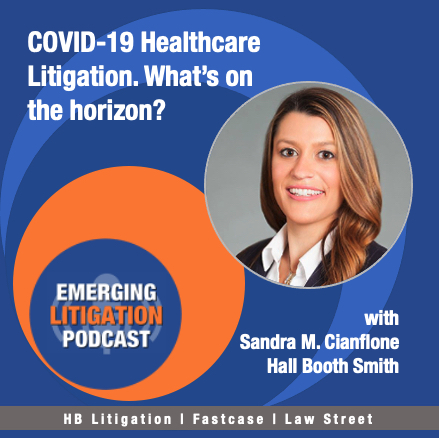
  • Sandra Cianflone on Current and Emerging COVID-19 Litigation

    Sandra Cianflone on Current and Emerging COVID-19 Litigation

    Sandra Cianflone on COVID-19 Litigation in 2021 and Beyond

    It’s now been more than 18 months since the world was besieged by the novel coronavirus pandemic.

    In addition to the human toll, it disrupted our lives in ways big and small, new and old, as it raced across continents, first visiting North America in January 2020. There are an estimated 15,000 lawsuits relating to the outbreak, with some 350 filings directed toward the healthcare and medical communities. The number of insurance coverage suits is fast-approaching 1,800.

    Litigation has been initiated against aging services, hospitals, and healthcare providers, with the next anticipated wave likely to  surround vaccines themselves. What will be the basis of these claims? What defenses will we see? And what can healthcare providers do now in anticipation of this onslaught?

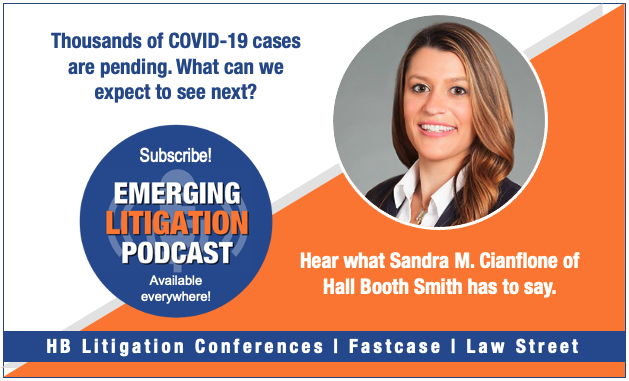
    Joining me to discuss this out-of-the-blue rash of litigation is Sandra M. Cianflone of Hall Booth Smith, P.C.Sandiecounsels and defends hospitals, physicians, nurses and institutional employees in a broad spectrum of catastrophic injury and medical malpractice cases. She received her Juris Doctorate from Pace University School of Law and her undergraduate degree from Fairleigh Dickinson University.

    This podcast is the audio companion to the Journal on Emerging Issues in Litigation, a collaborative project between HB Litigation Conferences and the Fastcase legal research family, which includes Full Court Press, Law Street Media, Docket Alarm and, most recently, Judicata. If you have comments or wish to participate in one our projects, or want to tell me how insightful and informative Sandie is, please drop me a note at Editor@LitigationConferences.com. This podcast is based on an article she wrote for the forthcoming issues of the Journal.

    I hope you enjoy the interview, and especially a brief story (after we wrap up) about Sandie’s experience delivering a baby in the Age of COVID-19. I also mangled a bit of basic Spanish, for which I am ashamed (lo siento), and was a little cavalier with some statistics, for which I am mortified.  Feel free to chastise me at the email address provided. –Tom Hagy

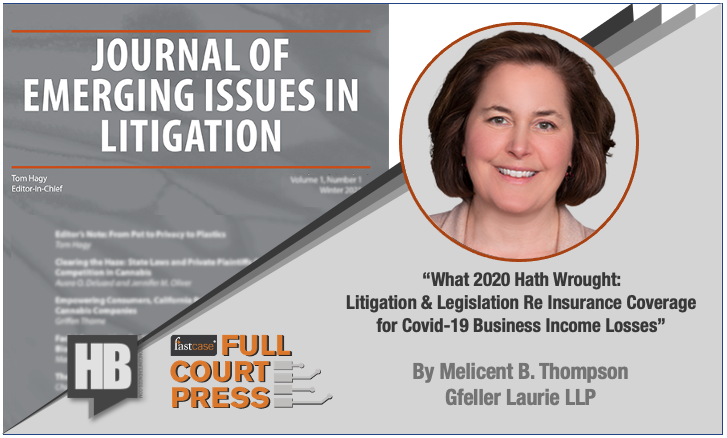
  • Melicent Thompson on Coverage for Covid-19 Business Income Losses

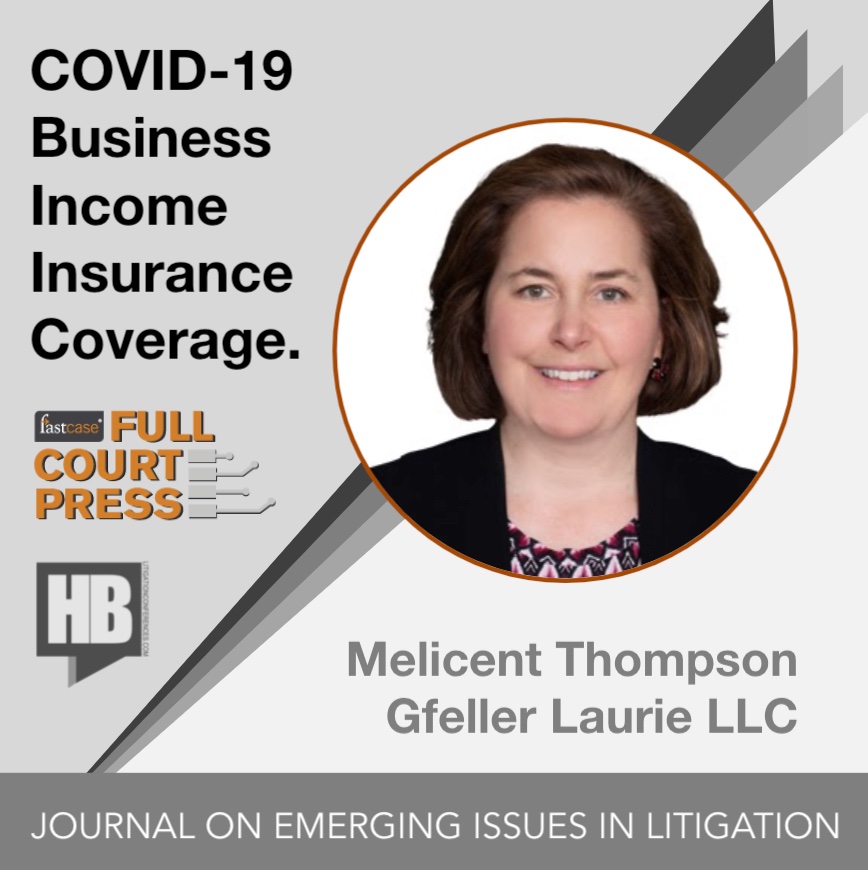
    Melicent Thompson on Coverage for Covid-19 Business Income Losses

    Melicent B. Thompson on COVID-19 Coverage

    Melicent Thompson

    Abstract
    COVID-19 indisputably has taken an enormous economic toll. Governmental shutdown orders early in the pandemic and ongoing restrictions on business’ operations have resulted in a flood of claims for insurance coverage for business income losses attributable to those orders and restrictions. This article reviews the litigation and legislative developments directed at attempting to find insurance coverage for such losses and the reasons why those efforts have been unsuccessful for the most part.

    Author
    Melicent B. Thompson (mthompson@gllawgroup.com) is a Partner with the law firm Gfeller Laurie, LLP, in West Hartford, Connecticut. She thanks her fellow Gfeller Laurie, LLP attorneys who contributed to this article. Melicent has close to 25 years of experience in litigation and corporate counseling. She actively practices in Connecticut and Georgia courts in insurance coverage, business disputes, professional liability claims, defense of educational and financial institutions and general liability. Her insurance coverage practice encompasses all areas of first and third party claims and related litigation services, including declaratory judgment actions, defense of bad faith claims and reinsurance matters. Melicent has substantial appellate court experience, having briefed and argued appeals before the Second Circuit Court of Appeals and the Connecticut Supreme and Appellate Courts. Her pro bono work includes serving as General Counsel to the Board of Directors of Gifts of Love, a charity providing basic needs to the working poor, based in Avon, Connecticut. She also serves as a member of the Advisory Council of Bay Path University (Longmeadow, Massachusetts).

    About
    The Journal on Emerging Issues in Litigation is a co-production of HB, Fastcase, and Law Street Media. You can also hear the complementary (and complimentary) Emerging Litigation Podcast wherever podcasts appear. For questions, contact Tom Hagy, Editor in Chief, at Editor@LitigationConferences.com.

    Loading Viewer…

    Safeguarding Against Financial Exploitation

    An on-demand CLE-eligible webinar Safeguarding Against Financial Exploitation   America’s senior population is growing. Nearly one in five U.S. residents will be 65 or older in 2030. Which means the average age of U.S. investors is climbing too. With that comes the risk that they will be exploited by people with access – or gain access through nefarious methods – to their investment portfolio. Seniors and vulnerable persons lose billions of dollars each year. Remarkably, 90% of the people to take advantage of senior investors are members of their own family. Attorneys who represent senior clients need to know the signs of vulnerability, red flags that their clients are being exploited, what laws apply, and rules lawyers must follow in these matters.   Questions our speakers answer: What is senior / vulnerable investor exploitation?   Who is protected by state and federal laws?   How prevalent is senior financial exploitation? What do the numbers tell us?  What is the pace of financial abuse SAR filings by securities firms?  What are the most popular scams?   What is diminished capacity?  What are the red flags indicating possible exploitation?  What are the laws, rules, and regulations governing law firms?  What are some best practices for law firms?  How can firms best protect their senior clients?   On Demand CLE Webinar What You Get PowerPoint and supplemental materials. Complete recording for later review. Answers to your questions via email. Invitation to contact speakers. 1.5 CLE credits (for licensed attorneys). CLE assistance.* *Subject to state bar rules. For licensed attorneys.  Register Meet the Speakers Joseph Calabrese Bressler, Amery & Ross, P.C. A 1991 Graduate of St. John’s University Law School, Mr. Calabrese brings 30 years of practice and 18 years of Securities Litigation/Regulatory experience to his role as principal in the New York office of  Bressler, Amery & Ross’s Financial Institutions Group. He began his career as a Wall Street litigator as an associate general counsel for Citigroup’s Smith Barney and […]

    Lien Resolution: Government & Private Plans Get Aggressive (Against Attorneys)

    Includes Nearly 75 minutes of insights from experienced professionals. CLE credit: 1+ (subject to bar rules). For CLE questions: CLE@LitigationConference.com The complete Power Point presentation. Continued access to the complete recording for later use. Answers to your questions via email to the presenters or write to HB and we will be sure to contact the speakers. What can you do to settle personal injury suits cleanly and avoid costly litigation and penalties? What recent cases can inform you about protecting your settlements and, as attorneys, yourselves, from post-settlement federal lawsuits? How can your firm set itself up to meet government expectations? What role might experts play in navigating these pitfalls? Medicare Advantage (42 USC § 1395w-22) Federal Medical Care Recovery Act (FMCRA) (42 USC § 2651) Armed Forces Act (10 USC §1095) Veterans’ Benefits (38 USC §1729) Third-Party Collection Rules (32 CFR 537.24; 38 CFR 17.101, etc.) Set-Asides under the Medicare Secondary Payer Act (42 USC § 1395y(b)(2)] On Demand Registration Lien Resolution Government & Private Plans Get Aggressive (Against Attorneys!) On Demand | Recorded September 2020 It is increasingly common these days. Personal injury attorneys settle a case, only to find themselves sued by a U.S. Attorney for failing to reimburse Medicare for conditional payments as required by the Medicare Secondary Payer Act. In some cases the attorney may be required to pay fines in addition to the reimbursements and interest, a costly proposition. Are you up to speed on issues surrounding Medicare Advantage, TRICARE, veterans’ claims, and Medicare set-asides? Join nationally recognized healthcare lien and resolution expert Franklin P. Solomon and go-to lien resolution provider Brett Newman as they offer a practical, in-depth CLE presentation. Franklin P. Solomon, Esq. Attorney & Founder, Solomon Law Firm  A graduate of Rutgers University School of Law at Camden, Franklin Solomon is based in Cherry Hill, NJ, with a practice focused on evaluation, litigation and resolution of healthcare “liens” and reimbursement claims. Mr. Solomon represents personal injury victims and their attorneys […]

    Telepsychiatry: Mitigating the Risks

    REGISTER Registration Includes Nearly 90 minutes of insights from experienced professionals. CLE credit: 1+ (subject to bar rules). For CLE questions: CLE@LitigationConference.com The complete Power Point presentation. Continued access to the complete recording for later use. Answers to your questions via email to the presenters or write to HB and we will be sure to contact the speakers. Understand the risks associated with telepsychiatry and how to manage them.  Telemedicine has emerged as an important solution for healthcare in general and psychiatric medicine specifically during the current global pandemic. Remote access for sub-practices including addiction counseling have been commonly used. Our panel of psychiatric professionals who have served as expert witnesses and attorneys who counsel and represent physicians have prepared a 90-minute session to share insights with attorneys, physicians, healthcare providers, risk professionals, and more. Agenda Examining procedures and best practices that exist for ensuring confidentiality in a telemedicine practice How do you draft a telepsychiatric consent form? What is the emerging standard of care for telemedicine? Will the standard of care for telemedicine become a national standard? (Should it?) Review the case law addressing telemedicine or telepsychiatry How do the HIPAA regulations and HITECH privacy laws impact telemedicine? How have the HIPAA regulations and HITECH privacy laws been relaxed during the pandemic? Will the relaxed HIPAA and HITECH regulations impacting telemedicine continue past the pandemic? Which technical platforms are preferred? Which ones to avoid? Panelists Mark Levy, M.D., Medical Director at fpamed David Kan, M.D., UCSF Psychiatry Department and the California Society for Substance Abuse Medicine Ayesha Ashai, M.D., associated with fpamed Stephen M. Fatum, J.D., Partner, Barnes & Thornburg LLP Angela W. Russell, J.D., Partner, Wilson Elser Moskowitz Edelman & Dicker LLP Meet our physician and attorney panelists. Mark Levy MD Medical Director fpamed Dr. Levy is a graduate of Columbia College (A.B. 1967) and the Columbia University College of Physicians and Surgeons (M.D. 1971) in New York. He is a Physician […]

    The Commercial Drone Industry: Privacy, Security, Threats, and Mitigation of Risk

    HB presents a CLE-eligible webinar Now on-demand at the West LegalEdcenter THE COMMERCIAL DRONE INDUSTRY Privacy, Security, Threats, and Mitigation of Risk Drones have become an increasingly valuable tool for businesses of all types and sizes. Drones are already being used in many applications, but more will certainly arise as the technology advances. This means that certain risks, like cyber threats, will also continue to present themselves. Protecting the transmission and storage of data collected through drones is critical. Unfortunately, security usually comes as an afterthought. The drone industry is part of the aviation industry, which, based on its knowledge, keeps safety as a number one concern. Part of that safety is having proper protection for your systems, including security as a fundamental design principle. Take this webinar to gain insights on the topics listed below, and shared by an attorney who practices on the cutting-edge of this evolving technology. Topics: Defining drones. Current and future applications. FAA Modernization and Reform Act of 2012. FAA Part 107 Regulations and waivers. Resources, e.g. the FAA Drone Zone and LAANC Portal. Penalties for violations. Privacy implications. Drones as weapons. Vulnerability to cyber attacks. Take it now! What you get: 1+ CLE credits (subject to bar rules). Insights from an experienced professional who specializes in this area of the law. The complete PowerPoint presentation. Continued access to the complete recording for later use. Answers to your questions. Fee: No additional charge to subscribers to the West LegalEdcenter. Non-subscribers may take the course for $170. Meet the Speaker Kathryn Rattigan Robinson & Cole LLP Kathryn Rattigan is a member of the firm’s Business Litigation Group and Data Privacy + Cybersecurity Team. She advises clients on data privacy and security, cybersecurity, and compliance with related state and federal laws. She assists clients in assessing risks related to technology and software contracts, as well as with compliance-related issues with outsourcing and […]

    The Intersection of Privacy and Antitrust Webinar Now Available On-Demand on the West LegalEdcenter

    Available as part of your subscription to The Thomson Reuters West LegalEdcenter®. Don’t subscribe to the West LegalEdcenter? This webinar is still available directly from HB. Take it now! Questions for speakers Questions@LitigationConferences.com CLE questions CLE@LitigationConferences.com Check out the MoginRubin blog for more insights on antitrust and privacy law. What attorneys and companies need to know about the increasing interplay between these critical areas of the law.  Highly publicized cases and investigations in the U.S. and Europe of big technology, e-commerce, and social media companies demonstrate how anti-competition laws are being used to scrutinize and challenge not only how these corporations conduct themselves in the marketplace, but the very core of their colossal success: the mass collection and utilization of user data. Are the privacy and antitrust worlds beginning to cross over? Or do they simply run parallel while addressing entirely different types of conduct? Whatever the answer, data is the raw material that drives the likes of Google, Facebook, Apple and Amazon, so how it is handled is a critical question when counseling clients on mergers and acquisitions. Moderator Daniel J.  Mogin | Managing Partner, MoginRubin LLP Speakers Jennifer M. Oliver, CIPP/US | Partner, MoginRubin LLP Thomas N. Dahdouh | Director, Western Region, Federal Trade Commission Franklin M. Rubinstein | Partner, Wilson Sonsini Goodrich & Rosati Randi W. Singer, CIPP/US, CIPT | Partner, Weil, Gotshal & Manges Contributor Dina Srinivasan | Independent Researcher & Author of The Antitrust Case Against Facebook Dina was unable to present but we thank her for her content contributions.  Agenda Who should regulate privacy violations in the U.S.? Which antitrust issues implicate privacy concerns? What role does machine learning play on the competitive landscape? What is big data really? How is it different from “data”? What are the elements of effective merger reviews? What are the appropriate remedies? What are “notice-and-choice” versus “harms-based” approaches? Plus answers to your questions. Send them to Questions@LitigationConferences.com.
  • Couple Pleads Guilty to $1.1 Million COVID-Relief Fraud After Falsely Claiming to Be Farmers

    Couple Pleads Guilty to $1.1 Million COVID-Relief Fraud After Falsely Claiming to Be Farmers

    HB NEWS

    Couple Pleads Guilty to $1.1 Million COVID-Relief Fraud After Falsely Claiming to Be Farmers

    News From the U.S. Department of Justice

    A Florida couple pleaded guilty for their participation in a scheme to file four fraudulent loan applications seeking more than $1.1 million in forgivable Paycheck Protection Program (PPP) and Economic Injury Disaster Loans (EIDL) loans guaranteed by the Small Business Administration (SBA) under the Coronavirus Aid, Relief, and Economic Security (CARES) Act. 

    On Aug. 26, 2020, Latoya Stanley, 38, and Johnny Philus, 33, both of Miami, were originally charged via a complaint filed in the Southern District of Florida.

    In Stanley’s PPP application, she claimed to employ 18 individuals from her company, Dream Gurl Beauty Supply LLC. Philus, meanwhile, stated that he employed 29 individuals at his company, Elegance Auto Boutique LLC. In actuality, Stanley and Philus did not employ anyone at their respective companies.

    In her EIDL application, Stanley claimed to generate over $800,000 in income and to employ five individuals from a farm based in the yard of her Miami home. In his EIDL application, Philus claimed to generate $400,000 in income and to employ 10 individuals from a farm located in the yard of a small residential home. In actuality, Stanley and Philus employed no one and the farms did not exist.

    Stanley and Philus worked together to effectuate the fraud and ultimately received over $1 million in fraudulent funds from the fraudulent PPP and EIDL applications before their schemes were uncovered.

    Sentencing has been scheduled for June 2.

    Acting Assistant Attorney General Nicholas L. McQuaid of the Justice Department’s Criminal Division; U.S. Attorney Ariana Fajardo Orshan of the Southern District of Florida; Treasury Inspector General for Tax Administration (TIGTA) J. Russell George; Inspector General Hannibal “Mike” Ware of the SBA’s Office of Inspector General (OIG); and Inspector in Charge Antonio Gomez of the U.S. Postal Inspection Service Miami Division made the announcement.

    The CARES Act is a federal law enacted on March 29, 2020, designed to provide emergency financial assistance to the millions of Americans who are suffering the economic effects caused by the COVID-19 pandemic. One source of relief provided by the CARES Act was the authorization of up to $349 billion in forgivable loans to small businesses for job retention and certain other expenses, through the PPP. In April 2020, Congress authorized over $300 billion in additional PPP funding.

    The PPP allows qualifying small businesses and other organizations to receive loans with a maturity of two years and an interest rate of 1%. PPP loan proceeds must be used by businesses on payroll costs, interest on mortgages, rent, and utilities. The PPP allows the interest and principal on the PPP loan to be forgiven if the business spends the loan proceeds on these expense items within a designated period of time after receiving the proceeds and uses at least a certain percentage of the PPP loan proceeds on payroll expenses.

    The EIDL program is designed to provide economic relief to small businesses that are currently experiencing a temporary loss of revenue. EIDL proceeds can be used to cover a wide array of working capital and normal operating expenses, such as continuation of health care benefits, rent, utilities and fixed debt payments. If an applicant also obtains a loan under the PPP, the EIDL funds cannot be used as the same purpose as the PPP funds.

    This case was investigated by the SBA-OIG, USPIS, and TITGA. Trial Attorney Louis Manzo of the Criminal Division’s Fraud Section is prosecuting the case.

    Safeguarding Against Financial Exploitation

    An on-demand CLE-eligible webinar Safeguarding Against Financial Exploitation   America’s senior population is growing. Nearly one in five U.S. residents will be 65 or older in 2030. Which means the average age of U.S. investors is climbing too. With that comes the risk that they will be exploited by people with access – or gain access through nefarious methods – to their investment portfolio. Seniors and vulnerable persons lose billions of dollars each year. Remarkably, 90% of the people to take advantage of senior investors are members of their own family. Attorneys who represent senior clients need to know the signs of vulnerability, red flags that their clients are being exploited, what laws apply, and rules lawyers must follow in these matters.   Questions our speakers answer: What is senior / vulnerable investor exploitation?   Who is protected by state and federal laws?   How prevalent is senior financial exploitation? What do the numbers tell us?  What is the pace of financial abuse SAR filings by securities firms?  What are the most popular scams?   What is diminished capacity?  What are the red flags indicating possible exploitation?  What are the laws, rules, and regulations governing law firms?  What are some best practices for law firms?  How can firms best protect their senior clients?   On Demand CLE Webinar What You Get PowerPoint and supplemental materials. Complete recording for later review. Answers to your questions via email. Invitation to contact speakers. 1.5 CLE credits (for licensed attorneys). CLE assistance.* *Subject to state bar rules. For licensed attorneys.  Register Meet the Speakers Joseph Calabrese Bressler, Amery & Ross, P.C. A 1991 Graduate of St. John’s University Law School, Mr. Calabrese brings 30 years of practice and 18 years of Securities Litigation/Regulatory experience to his role as principal in the New York office of  Bressler, Amery & Ross’s Financial Institutions Group. He began his career as a Wall Street litigator as an associate general counsel for Citigroup’s Smith Barney and […]

    Lien Resolution: Government & Private Plans Get Aggressive (Against Attorneys)

    Includes Nearly 75 minutes of insights from experienced professionals. CLE credit: 1+ (subject to bar rules). For CLE questions: CLE@LitigationConference.com The complete Power Point presentation. Continued access to the complete recording for later use. Answers to your questions via email to the presenters or write to HB and we will be sure to contact the speakers. What can you do to settle personal injury suits cleanly and avoid costly litigation and penalties? What recent cases can inform you about protecting your settlements and, as attorneys, yourselves, from post-settlement federal lawsuits? How can your firm set itself up to meet government expectations? What role might experts play in navigating these pitfalls? Medicare Advantage (42 USC § 1395w-22) Federal Medical Care Recovery Act (FMCRA) (42 USC § 2651) Armed Forces Act (10 USC §1095) Veterans’ Benefits (38 USC §1729) Third-Party Collection Rules (32 CFR 537.24; 38 CFR 17.101, etc.) Set-Asides under the Medicare Secondary Payer Act (42 USC § 1395y(b)(2)] On Demand Registration Lien Resolution Government & Private Plans Get Aggressive (Against Attorneys!) On Demand | Recorded September 2020 It is increasingly common these days. Personal injury attorneys settle a case, only to find themselves sued by a U.S. Attorney for failing to reimburse Medicare for conditional payments as required by the Medicare Secondary Payer Act. In some cases the attorney may be required to pay fines in addition to the reimbursements and interest, a costly proposition. Are you up to speed on issues surrounding Medicare Advantage, TRICARE, veterans’ claims, and Medicare set-asides? Join nationally recognized healthcare lien and resolution expert Franklin P. Solomon and go-to lien resolution provider Brett Newman as they offer a practical, in-depth CLE presentation. Franklin P. Solomon, Esq. Attorney & Founder, Solomon Law Firm  A graduate of Rutgers University School of Law at Camden, Franklin Solomon is based in Cherry Hill, NJ, with a practice focused on evaluation, litigation and resolution of healthcare “liens” and reimbursement claims. Mr. Solomon represents personal injury victims and their attorneys […]

    Telepsychiatry: Mitigating the Risks

    REGISTER Registration Includes Nearly 90 minutes of insights from experienced professionals. CLE credit: 1+ (subject to bar rules). For CLE questions: CLE@LitigationConference.com The complete Power Point presentation. Continued access to the complete recording for later use. Answers to your questions via email to the presenters or write to HB and we will be sure to contact the speakers. Understand the risks associated with telepsychiatry and how to manage them.  Telemedicine has emerged as an important solution for healthcare in general and psychiatric medicine specifically during the current global pandemic. Remote access for sub-practices including addiction counseling have been commonly used. Our panel of psychiatric professionals who have served as expert witnesses and attorneys who counsel and represent physicians have prepared a 90-minute session to share insights with attorneys, physicians, healthcare providers, risk professionals, and more. Agenda Examining procedures and best practices that exist for ensuring confidentiality in a telemedicine practice How do you draft a telepsychiatric consent form? What is the emerging standard of care for telemedicine? Will the standard of care for telemedicine become a national standard? (Should it?) Review the case law addressing telemedicine or telepsychiatry How do the HIPAA regulations and HITECH privacy laws impact telemedicine? How have the HIPAA regulations and HITECH privacy laws been relaxed during the pandemic? Will the relaxed HIPAA and HITECH regulations impacting telemedicine continue past the pandemic? Which technical platforms are preferred? Which ones to avoid? Panelists Mark Levy, M.D., Medical Director at fpamed David Kan, M.D., UCSF Psychiatry Department and the California Society for Substance Abuse Medicine Ayesha Ashai, M.D., associated with fpamed Stephen M. Fatum, J.D., Partner, Barnes & Thornburg LLP Angela W. Russell, J.D., Partner, Wilson Elser Moskowitz Edelman & Dicker LLP Meet our physician and attorney panelists. Mark Levy MD Medical Director fpamed Dr. Levy is a graduate of Columbia College (A.B. 1967) and the Columbia University College of Physicians and Surgeons (M.D. 1971) in New York. He is a Physician […]

    The Commercial Drone Industry: Privacy, Security, Threats, and Mitigation of Risk

    HB presents a CLE-eligible webinar Now on-demand at the West LegalEdcenter THE COMMERCIAL DRONE INDUSTRY Privacy, Security, Threats, and Mitigation of Risk Drones have become an increasingly valuable tool for businesses of all types and sizes. Drones are already being used in many applications, but more will certainly arise as the technology advances. This means that certain risks, like cyber threats, will also continue to present themselves. Protecting the transmission and storage of data collected through drones is critical. Unfortunately, security usually comes as an afterthought. The drone industry is part of the aviation industry, which, based on its knowledge, keeps safety as a number one concern. Part of that safety is having proper protection for your systems, including security as a fundamental design principle. Take this webinar to gain insights on the topics listed below, and shared by an attorney who practices on the cutting-edge of this evolving technology. Topics: Defining drones. Current and future applications. FAA Modernization and Reform Act of 2012. FAA Part 107 Regulations and waivers. Resources, e.g. the FAA Drone Zone and LAANC Portal. Penalties for violations. Privacy implications. Drones as weapons. Vulnerability to cyber attacks. Take it now! What you get: 1+ CLE credits (subject to bar rules). Insights from an experienced professional who specializes in this area of the law. The complete PowerPoint presentation. Continued access to the complete recording for later use. Answers to your questions. Fee: No additional charge to subscribers to the West LegalEdcenter. Non-subscribers may take the course for $170. Meet the Speaker Kathryn Rattigan Robinson & Cole LLP Kathryn Rattigan is a member of the firm’s Business Litigation Group and Data Privacy + Cybersecurity Team. She advises clients on data privacy and security, cybersecurity, and compliance with related state and federal laws. She assists clients in assessing risks related to technology and software contracts, as well as with compliance-related issues with outsourcing and […]

    The Intersection of Privacy and Antitrust Webinar Now Available On-Demand on the West LegalEdcenter

    Available as part of your subscription to The Thomson Reuters West LegalEdcenter®. Don’t subscribe to the West LegalEdcenter? This webinar is still available directly from HB. Take it now! Questions for speakers Questions@LitigationConferences.com CLE questions CLE@LitigationConferences.com Check out the MoginRubin blog for more insights on antitrust and privacy law. What attorneys and companies need to know about the increasing interplay between these critical areas of the law.  Highly publicized cases and investigations in the U.S. and Europe of big technology, e-commerce, and social media companies demonstrate how anti-competition laws are being used to scrutinize and challenge not only how these corporations conduct themselves in the marketplace, but the very core of their colossal success: the mass collection and utilization of user data. Are the privacy and antitrust worlds beginning to cross over? Or do they simply run parallel while addressing entirely different types of conduct? Whatever the answer, data is the raw material that drives the likes of Google, Facebook, Apple and Amazon, so how it is handled is a critical question when counseling clients on mergers and acquisitions. Moderator Daniel J.  Mogin | Managing Partner, MoginRubin LLP Speakers Jennifer M. Oliver, CIPP/US | Partner, MoginRubin LLP Thomas N. Dahdouh | Director, Western Region, Federal Trade Commission Franklin M. Rubinstein | Partner, Wilson Sonsini Goodrich & Rosati Randi W. Singer, CIPP/US, CIPT | Partner, Weil, Gotshal & Manges Contributor Dina Srinivasan | Independent Researcher & Author of The Antitrust Case Against Facebook Dina was unable to present but we thank her for her content contributions.  Agenda Who should regulate privacy violations in the U.S.? Which antitrust issues implicate privacy concerns? What role does machine learning play on the competitive landscape? What is big data really? How is it different from “data”? What are the elements of effective merger reviews? What are the appropriate remedies? What are “notice-and-choice” versus “harms-based” approaches? Plus answers to your questions. Send them to Questions@LitigationConferences.com.

  • Employment Law in the COVID-19 Era with Stefani Schwartz

    Employment Law in the COVID-19 Era with Stefani Schwartz

    Employment Law in the COVID-19 Era with Stefani Schwartz

    Joining me to discuss this important subject is Stefani Schwartz, co-founder of the woman-owned employment-and-labor boutique Hatfield Schwartz in New Jersey. Stefani has devoted her legal career to representing employers in all aspects of employment law, including discrimination, harassment, retaliation, and wrongful termination matters.

    Stefani will be featured in the next issue of the Journal on Emerging Issues in Litigation, a collaborative project between HB and the Fastcase legal research family, which includes Full Court Press, Law Street Media, Docket Alarm and, most recently, Judicata. If you have comments or wish to participate in one our projects, or want to tell me how awesome Stefani is, drop me a note at Editor@LitigationConferences.com.

    We hope you enjoy the interview, and a guest appearance by Benny, her Portuguese Water Dog, you know, because she’s working from home. Stefani also shares one retail customer’s quick fix for forgetting her face mask.

    More of us are working from home and, given it often has advantages, it’s an arrangement that is likely to continue for many of us. 

    This raised the general question: Is your home officially “the office,” with all the attendant rules and norms?

    What new risks do employers face? What new ways can employees find themselves in trouble?

    We’re also getting vaccinated. But many are not. Can companies required employees to get the shot?

    Studies reveal that we’re not all bearing the burden of remote working evenly. Who is carrying more of the load? 

    Given these dramatic changes, should employers adjust their policies?  

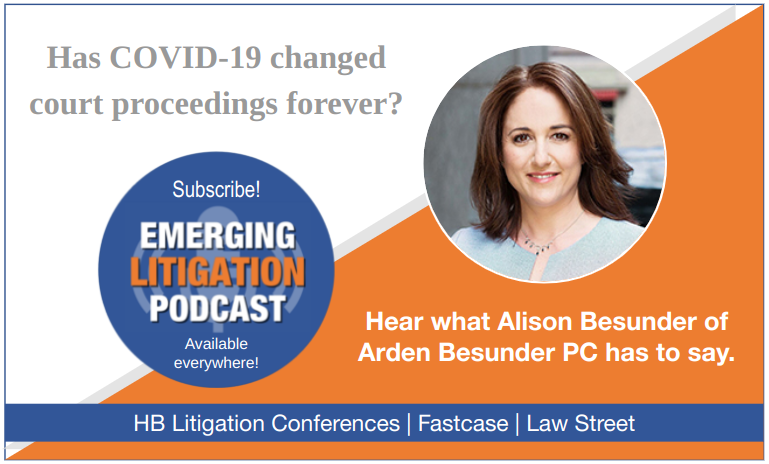
  • COVID-19 and the Courtroom with Alison Besunder

    COVID-19 and the Courtroom with Alison Besunder

    COVID-19 and the Courtroom with Alison Besunder

    Joining me is Alison Besunder on this timely and evolving subject.  It’s based on her article — Crisis is the Mother of Change: How a Pandemic Sparked Progress in Courtroom Efficiency — which will be featured in the January 2021 issue of the Journal on Emerging Issues in Litigation.
    Alison brings extensive experience counseling clients on matters ranging from the simple to complex, helping them prevent future disputes through proactive planning and to resolve disputes that proceed to litigation. She is a frequent speaker on topics such as Estate Planning During Divorce, End of Life Decision Making, Cyber-Security for Lawyers, and Social Media and Ethics.  She operated her own firm for several years and in 2019 joined Goetz Fitzpatrick LLP.
    The Journal is a collaborative project between HB and the Fastcase legal research family, which includes Full Court Press, Law Street Media, Docket Alarm and, most recently, Judicata. If you have comments or wish to participate in one our projects, or want to tell me how awesome Alison is, drop me a note at Editor@LitigationConferences.com.
    We hope you enjoy the interview.

    What efficiencies have been foisted upon our nation’s courts as a result of the COVID-19 pandemic? 

    What has worked and what has not?

    Are we going to see permanent implementation of things like webcam hearings and virtual trials?

  • Does Data Sharing and Zoombombing Cause Actual Harm?

    Does Data Sharing and Zoombombing Cause Actual Harm?

    By Kirsten Errick

    Legal Writer
    Law Street Media

    Zoom Says Data Sharing, Zoombombing Doesn’t Cause Personal Harm

    Zoom is a good name for this company. It seems to have come out of nowhere to become the new verb for web meetings, robbing that distinction from many more established competitors like WebEx and GoToMeeting, maybe because they don’t have cool web-sounding names, although people don’t seem to be saying “let’s Skype later,” as much as they used to. Sure, we still “Facetime,” but Zoom really shot to the top when it comes to name recognition. According to CNBC’s Ari Levy, Zoom reported fiscal third-quarter revenue growth of more than 300% after seeing 355% expansion in the prior period. The company’s stock was up almost seven-fold this year but “pulled back in November on positive news surrounding a coronavirus vaccine,” Levy reported. And with success comes risk, especially when dealing with private data.  Here is an excerpt of a post shared with the permission of Fastcase and Law Street Media. –Tom Hagy, HB Litigation Conferences

    Dec. 4, 2020 (San Francisco) — On Wednesday [Dec. 2], in the Northern District of California, Zoom Video Communications filed a motion to dismiss the plaintiffs’ first amended consolidated class action complaint (FAC) on the grounds that the FAC failed to state a claim for which relief may be granted.

    The consolidated complaint alleged that Zoom engaged in unauthorized data sharing with third parties, such as Facebook, LinkedIn, and Google. Additional complaints included an alleged failure to prevent unwanted meeting disruptions by outside parties, called Zoombombing; and misrepresentation of its encryption protocols claiming it used end-to-end encryption when it purportedly did not provide such encryption.

    Zoom stated that it faced unprecedented growth resulting from the COVID-19 pandemic, as people began using Zoom for teleconferences and to communicate with friends and family, but it “worked tirelessly since the pandemic’s onset to keep its services operational and secure, while developing and deploying extensive privacy and security enhancements to address new challenges caused by the massive uptick in non-corporate usage.”

    In its motion to dismiss, Zoom stated “(i)n an effort to capitalize on Zoom’s explosive growth during the COVID-19 pandemic, Plaintiffs seek to hold Zoom liable on behalf of a nationwide class under a scattershot array of loosely related factual and legal theories, largely drawn from sensationalist news reports.” Zoom claimed that in the latest attempt, the plaintiffs still failed to state claims upon which relief may be granted; instead, the plaintiffs’ FAC supposedly “recycles the same flawed claims as Plaintiffs’ original consolidated complaint (CAC) … with a few minor additional factual allegations.”

    Zoom averred that all of the plaintiffs’ claims fail because they do not allege that they were harmed by the company. Zoom contended that the plaintiffs failed to claim personal harm from the purported data sharing, meeting disruptions, and alleged misrepresentations and omissions about encryption.

    Read this and more at LawStreetMedia.com.

    Safeguarding Against Financial Exploitation

    An on-demand CLE-eligible webinar Safeguarding Against Financial Exploitation   America’s senior population is growing. Nearly one in five U.S. residents will be 65 or older in 2030. Which means the average age of U.S. investors is climbing too. With that comes the risk that they will be exploited by people with access – or gain access through nefarious methods – to their investment portfolio. Seniors and vulnerable persons lose billions of dollars each year. Remarkably, 90% of the people to take advantage of senior investors are members of their own family. Attorneys who represent senior clients need to know the signs of vulnerability, red flags that their clients are being exploited, what laws apply, and rules lawyers must follow in these matters.   Questions our speakers answer: What is senior / vulnerable investor exploitation?   Who is protected by state and federal laws?   How prevalent is senior financial exploitation? What do the numbers tell us?  What is the pace of financial abuse SAR filings by securities firms?  What are the most popular scams?   What is diminished capacity?  What are the red flags indicating possible exploitation?  What are the laws, rules, and regulations governing law firms?  What are some best practices for law firms?  How can firms best protect their senior clients?   On Demand CLE Webinar What You Get PowerPoint and supplemental materials. Complete recording for later review. Answers to your questions via email. Invitation to contact speakers. 1.5 CLE credits (for licensed attorneys). CLE assistance.* *Subject to state bar rules. For licensed attorneys.  Register Meet the Speakers Joseph Calabrese Bressler, Amery & Ross, P.C. A 1991 Graduate of St. John’s University Law School, Mr. Calabrese brings 30 years of practice and 18 years of Securities Litigation/Regulatory experience to his role as principal in the New York office of  Bressler, Amery & Ross’s Financial Institutions Group. He began his career as a Wall Street litigator as an associate general counsel for Citigroup’s Smith Barney and […]

    Lien Resolution: Government & Private Plans Get Aggressive (Against Attorneys)

    Includes Nearly 75 minutes of insights from experienced professionals. CLE credit: 1+ (subject to bar rules). For CLE questions: CLE@LitigationConference.com The complete Power Point presentation. Continued access to the complete recording for later use. Answers to your questions via email to the presenters or write to HB and we will be sure to contact the speakers. What can you do to settle personal injury suits cleanly and avoid costly litigation and penalties? What recent cases can inform you about protecting your settlements and, as attorneys, yourselves, from post-settlement federal lawsuits? How can your firm set itself up to meet government expectations? What role might experts play in navigating these pitfalls? Medicare Advantage (42 USC § 1395w-22) Federal Medical Care Recovery Act (FMCRA) (42 USC § 2651) Armed Forces Act (10 USC §1095) Veterans’ Benefits (38 USC §1729) Third-Party Collection Rules (32 CFR 537.24; 38 CFR 17.101, etc.) Set-Asides under the Medicare Secondary Payer Act (42 USC § 1395y(b)(2)] On Demand Registration Lien Resolution Government & Private Plans Get Aggressive (Against Attorneys!) On Demand | Recorded September 2020 It is increasingly common these days. Personal injury attorneys settle a case, only to find themselves sued by a U.S. Attorney for failing to reimburse Medicare for conditional payments as required by the Medicare Secondary Payer Act. In some cases the attorney may be required to pay fines in addition to the reimbursements and interest, a costly proposition. Are you up to speed on issues surrounding Medicare Advantage, TRICARE, veterans’ claims, and Medicare set-asides? Join nationally recognized healthcare lien and resolution expert Franklin P. Solomon and go-to lien resolution provider Brett Newman as they offer a practical, in-depth CLE presentation. Franklin P. Solomon, Esq. Attorney & Founder, Solomon Law Firm  A graduate of Rutgers University School of Law at Camden, Franklin Solomon is based in Cherry Hill, NJ, with a practice focused on evaluation, litigation and resolution of healthcare “liens” and reimbursement claims. Mr. Solomon represents personal injury victims and their attorneys […]

    Telepsychiatry: Mitigating the Risks

    REGISTER Registration Includes Nearly 90 minutes of insights from experienced professionals. CLE credit: 1+ (subject to bar rules). For CLE questions: CLE@LitigationConference.com The complete Power Point presentation. Continued access to the complete recording for later use. Answers to your questions via email to the presenters or write to HB and we will be sure to contact the speakers. Understand the risks associated with telepsychiatry and how to manage them.  Telemedicine has emerged as an important solution for healthcare in general and psychiatric medicine specifically during the current global pandemic. Remote access for sub-practices including addiction counseling have been commonly used. Our panel of psychiatric professionals who have served as expert witnesses and attorneys who counsel and represent physicians have prepared a 90-minute session to share insights with attorneys, physicians, healthcare providers, risk professionals, and more. Agenda Examining procedures and best practices that exist for ensuring confidentiality in a telemedicine practice How do you draft a telepsychiatric consent form? What is the emerging standard of care for telemedicine? Will the standard of care for telemedicine become a national standard? (Should it?) Review the case law addressing telemedicine or telepsychiatry How do the HIPAA regulations and HITECH privacy laws impact telemedicine? How have the HIPAA regulations and HITECH privacy laws been relaxed during the pandemic? Will the relaxed HIPAA and HITECH regulations impacting telemedicine continue past the pandemic? Which technical platforms are preferred? Which ones to avoid? Panelists Mark Levy, M.D., Medical Director at fpamed David Kan, M.D., UCSF Psychiatry Department and the California Society for Substance Abuse Medicine Ayesha Ashai, M.D., associated with fpamed Stephen M. Fatum, J.D., Partner, Barnes & Thornburg LLP Angela W. Russell, J.D., Partner, Wilson Elser Moskowitz Edelman & Dicker LLP Meet our physician and attorney panelists. Mark Levy MD Medical Director fpamed Dr. Levy is a graduate of Columbia College (A.B. 1967) and the Columbia University College of Physicians and Surgeons (M.D. 1971) in New York. He is a Physician […]

    The Commercial Drone Industry: Privacy, Security, Threats, and Mitigation of Risk

    HB presents a CLE-eligible webinar Now on-demand at the West LegalEdcenter THE COMMERCIAL DRONE INDUSTRY Privacy, Security, Threats, and Mitigation of Risk Drones have become an increasingly valuable tool for businesses of all types and sizes. Drones are already being used in many applications, but more will certainly arise as the technology advances. This means that certain risks, like cyber threats, will also continue to present themselves. Protecting the transmission and storage of data collected through drones is critical. Unfortunately, security usually comes as an afterthought. The drone industry is part of the aviation industry, which, based on its knowledge, keeps safety as a number one concern. Part of that safety is having proper protection for your systems, including security as a fundamental design principle. Take this webinar to gain insights on the topics listed below, and shared by an attorney who practices on the cutting-edge of this evolving technology. Topics: Defining drones. Current and future applications. FAA Modernization and Reform Act of 2012. FAA Part 107 Regulations and waivers. Resources, e.g. the FAA Drone Zone and LAANC Portal. Penalties for violations. Privacy implications. Drones as weapons. Vulnerability to cyber attacks. Take it now! What you get: 1+ CLE credits (subject to bar rules). Insights from an experienced professional who specializes in this area of the law. The complete PowerPoint presentation. Continued access to the complete recording for later use. Answers to your questions. Fee: No additional charge to subscribers to the West LegalEdcenter. Non-subscribers may take the course for $170. Meet the Speaker Kathryn Rattigan Robinson & Cole LLP Kathryn Rattigan is a member of the firm’s Business Litigation Group and Data Privacy + Cybersecurity Team. She advises clients on data privacy and security, cybersecurity, and compliance with related state and federal laws. She assists clients in assessing risks related to technology and software contracts, as well as with compliance-related issues with outsourcing and […]

    The Intersection of Privacy and Antitrust Webinar Now Available On-Demand on the West LegalEdcenter

    Available as part of your subscription to The Thomson Reuters West LegalEdcenter®. Don’t subscribe to the West LegalEdcenter? This webinar is still available directly from HB. Take it now! Questions for speakers Questions@LitigationConferences.com CLE questions CLE@LitigationConferences.com Check out the MoginRubin blog for more insights on antitrust and privacy law. What attorneys and companies need to know about the increasing interplay between these critical areas of the law.  Highly publicized cases and investigations in the U.S. and Europe of big technology, e-commerce, and social media companies demonstrate how anti-competition laws are being used to scrutinize and challenge not only how these corporations conduct themselves in the marketplace, but the very core of their colossal success: the mass collection and utilization of user data. Are the privacy and antitrust worlds beginning to cross over? Or do they simply run parallel while addressing entirely different types of conduct? Whatever the answer, data is the raw material that drives the likes of Google, Facebook, Apple and Amazon, so how it is handled is a critical question when counseling clients on mergers and acquisitions. Moderator Daniel J.  Mogin | Managing Partner, MoginRubin LLP Speakers Jennifer M. Oliver, CIPP/US | Partner, MoginRubin LLP Thomas N. Dahdouh | Director, Western Region, Federal Trade Commission Franklin M. Rubinstein | Partner, Wilson Sonsini Goodrich & Rosati Randi W. Singer, CIPP/US, CIPT | Partner, Weil, Gotshal & Manges Contributor Dina Srinivasan | Independent Researcher & Author of The Antitrust Case Against Facebook Dina was unable to present but we thank her for her content contributions.  Agenda Who should regulate privacy violations in the U.S.? Which antitrust issues implicate privacy concerns? What role does machine learning play on the competitive landscape? What is big data really? How is it different from “data”? What are the elements of effective merger reviews? What are the appropriate remedies? What are “notice-and-choice” versus “harms-based” approaches? Plus answers to your questions. Send them to Questions@LitigationConferences.com.