
Category: Mass Torts

  • Expert Depositions and Trial Disclosures: What Every Litigator Needs to Know

    Expert Depositions and Trial Disclosures: What Every Litigator Needs to Know

    The Author

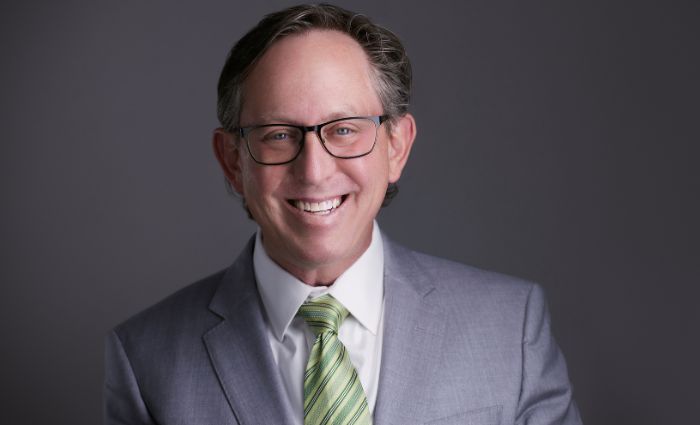
    Ethan Minkin

    Ethan MinkinHarris Sliwoski LLP

    Ethan Minkin is a seasoned attorney and has counseled clients on a wide variety of matters. His expertise includes complex transactions, healthcare regulatory matters, corporate bankruptcies and complex litigation. Ethan has handled hundreds of closings, from mergers and acquisitions to finance deals and securitizations. He has also litigated hundreds of matters in his career, having been involved in many high profile cases. Ethan has also counseled clients for cannabis related matters, including acquisitions, litigation and regulatory advice. He is currently assisting clients with cannabis regulatory issues.

    During Ethan’s career, he started the Phoenix bankruptcy practice for a AmLaw 100 law firm. He has represented clients in bankruptcy proceedings across the United States, and has been admitted pro hac vice in many jurisdictions, including the Southern District of New York, the Central District of Florida, the Central and Southern Districts of California, the District of Nevada, and several other jurisdictions. Ethan has represented some of the world’s largest banks, financial institutions and special servicers in various bankruptcy, insolvency and other civil matters, as well as many regional and local banks.

    Prior to returning to private practice in 2018, Ethan was the CEO and de facto General Counsel of a Phoenix-based biotech company. Prior to his CEO experience, Ethan has substantial experience as both a private practice attorney and an in-house attorney.

    In addition to working with the Phoenix-based biotech company, Ethan was in-house with one of the world’s largest financial institutions and a national Medicaid HMO that was purchased by Aetna. Ethan began his career with the largest Phoenix-based law firm, and went on to become a partner at two large national law firms (AmLaw 100 and 200 firms).

    Ethan received his undergraduate degree in Political Science from Washington University in St. Louis. He then received a Masters in Public Health, with a concentration in health policy, from the University of North Carolina at Chapel Hill. Ethan attended the University of Baltimore School of Law, where he graduated cum laude.

    The Journal on Emerging Issues in Litigation

    Emerging Litigation Podcast

    Emerging Litigation PodcastProduced by HB Litigation and Law Street Media

    Interviews with leading attorneys and other subject matter experts on new twists in the law and how the law is responding to new twists in the world.

    Expert Depositions and Trial Disclosures:

    What Every Litigator Needs to Know

    The consequences of failing to understand disclosure issues for experts are severe. In federal cases, counsel needs to be aware of the supplementation requirements. Failure to timely supplement an expert report can lead to inadmissible testimony by the expert. 

    The pretrial process requires an eye toward the future. Trial work is not limited to just knowing the applicable Rules of Evidence. The applicable Rules of Civil Procedure play an equally important, if not greater, role in helping to define what will happen at trial.

    Abstract:

    Expert disclosures in litigation are vitally important for trial testimony and planning for trial. Arizona law permits expert deposition testimony to expand on the topics and/ or opinions set forth in a disclosure statement. Conversely, supplementation for an expert’s report in federal court is more limited for deposition testimony, and likewise requires a timely written disclosure based on the deposition testimony. Failure to appreciate these issues can lead to unanticipated surprises at trial.


    Download the article now!

  • Copyright Issues in Generative AI for Software: Doe v. Github, Inc. et al.

    Copyright Issues in Generative AI for Software: Doe v. Github, Inc. et al.

    The Author

    Jeffrey W. Gluck

    Jeffrey W. GluckPanitch Schwarze Belisario & Nadel LLP

    With careers as an engineering researcher and as an intellectual property attorney, Dr. Jeffrey W. Gluck is able to bring both to the table when serving clients. His legal practice spans a broad range of areas, including patent application and prosecution, IP counseling, providing legal opinions, serving on litigation teams, and appellate litigation. He is a frequent author and speaker on matters relating to patent law and software IP law. His engineering experience includes roles in industry, academia, and government, and he has authored numerous technical papers. While his technical background lies in the electrical and computer areas, Jeff has successfully pursued work relating to a much broader range of topics, from vehicle steering and braking systems to shoes to gaming to business and finance.

    The Journal on Emerging Issues in Litigation

    Emerging Litigation Podcast

    Emerging Litigation PodcastProduced by HB Litigation and Law Street Media

    Interviews with leading attorneys and other subject matter experts on new twists in the law and how the law is responding to new twists in the world.

    Copyright Issues in Generative AI for Software:

    Doe v. Github, Inc. et al.

    Github is a case that may have far-reaching implications for AI-generated works in the future.

    Abstract:

    Generative artificial intelligence (AI) allows users to generate content based on providing prompts to the generative AI. There are generative AI programs now capable of generating different types of content, including software code. The ongoing Doe v. Github Inc. et al. litigation addresses copyright-related issues inherent in the Copilot generative AI that allows users to enter prompts to generate software code. This case addresses many of the issues involved in the training and use of generative AI for generating software code.

    Download the article now!

  • The Promise and Peril of Quantum Computing and Its Implications for Cyber Insurance

    The Promise and Peril of Quantum Computing and Its Implications for Cyber Insurance

    The Author

    Cameron R. Argetsinger

    Cameron R. ArgetsingerAnderson Kill P.C.

    Cameron Argetsinger is a Shareholder in the D.C. office of Anderson Kill. He focuses his practice on insurance recovery counseling and dispute resolution.

    The Journal on Emerging Issues in Litigation

    Emerging Litigation Podcast

    Emerging Litigation PodcastProduced by HB Litigation and Law Street Media

    Interviews with leading attorneys and other subject matter experts on new twists in the law and how the law is responding to new twists in the world.

    The Promise and Peril of Quantum Computing and Its Implications for Cyber Insurance

    While cyber insurance may provide some coverage for hazards that result from quantum computing, those policies may not respond to many of the risks, and insurance companies will take care to minimize their own exposure to difficult-to-predict losses in this arena by revising policy language and increasing premiums.

    Because of the potential that quantum computing may cause massive cyber losses across all industries, it is likely that insurers will take steps to curtail their own quantum exposures by rewriting current cyber policies to restrict coverage.

    Abstract:

    Quantum computing, like artificial intelligence, is one of several emerging technologies that could either save the planet or end the world, depending on which expert is holding forth on the issue. Still mostly theoretical, quantum computing promises to turbocharge computer processing speeds, allowing future quantum computers to solve in a matter of milliseconds complex mathematical equations that would take conventional computers thousands or even millions of years to perform. It is too early to know whether the potential benefits of quantum computing will outweigh the potential risks, or how those risks may be mitigated by modern cyber insurance policies. This article explores the promise and peril of quantum computing and the potential coverage implications under cyber insurance policies.

    Download the article now!

  • FTC v. Amazon: Market Definitions and Section 5 of the FTC Act

    FTC v. Amazon: Market Definitions and Section 5 of the FTC Act

    The Author

    Jonathan Rubin

    Jonathan RubinMoginRubin LLP

    For more than two decades Rubin has focused his legal practice exclusively on antitrust and competition law and policy. As a litigator, he has led trial teams in major antitrust cases in courts throughout the country. As a thought-leader in competition law, he has published in influential academic journals and has spoken to numerous professional groups, including the Directorate General for Competition of the European Commission, the Antitrust Section of the American Bar Association, the University of Wisconsin, and the American Antitrust Institute. Rubin has also made several appearances before Congressional committees.

    Rubin received his J.D. from University of Florida, Levin College of Law. Mogin also holds a PhD in Economics from the University of Copenhagen, an MA in Economics from Florida Atlantic University, and a BS in Biological Sciences from the University of Wisconsin at Madison.

    The Journal on Emerging Issues in Litigation

    Emerging Litigation Podcast

    Emerging Litigation PodcastProduced by HB Litigation and Law Street Media

    Interviews with leading attorneys and other subject matter experts on new twists in the law and how the law is responding to new twists in the world.

    FTC v. Amazon:

    Market Definitions and Section 5 of the FTC Act

    Traditional antitrust economics faces significant challenges grappling with the new economy industrial environment, and the Amazon case is likely to be a crucial test for antitrust and the usefulness of Section 5 of the FTC Act.

    The key issue is whether a price increase on Amazon could drive online shoppers to Google Shopping, Walmart, Target, Costco, eBay, Home Depot, Best Buy, Wayfair, or any number of other online retail destinations that are potential substitute outlets for products sold on Amazon.

    Abstract:

    The Federal Trade Commission’s (FTC) challenge to Amazon.com’s practices relating to its participation on its own platform—competing with the many merchants who rely on the powerful commercial hub to make sales—violate the Federal Trade Commission Act. The court’s analysis is likely to depend heavily on the FTC’s definition of the relevant antitrust markets in which it claims Amazon possesses market power and harms competition. Traditional antitrust economics face significant challenges grappling with the relatively new digital economy. The author examines these and other issues raised in the case, which he anticipates will be a crucial test for antitrust and the FTC Act.

    Download the article now!

    Get additional insights from Jonathan Rubin at the MoginRubin Blog.

    Explore more from MoginRubin LLP!

    Blog: Emboldened by New Resources and Expanded Authority, Feds Continue 10-Year Look Back at Chinese Investment. By Dan Mogin, Jonathan Rubin, Jennifer Oliver, and Timothy LaComb. List

    OnDemand CLE Webinar: The Antitrust Case Against Google. Dan Mogin, Jonathan Rubin, Jennifer Oliver, Timothy LaComb, John Newman, Dr. Alan Grant

    Blog: FTC’s Case Against Facebook Will Test the Flexibility of U.S. Antitrust Law.Authors: Jonathan Rubin and Jennifer Oliver, MoginRubin LLP

    Blog: Full Ninth Circuit Removes Unwarranted Hurdles to Class Certification.

    Journal: Policy Derailed: Can U.S. Antitrust Policy Toward Standard Essential Patents Get Back on Track by Jonathan Rubin

    Webinar: Class Certification After Olean v. Bumble Bee with Jonathan Rubin, James Bogan lll, Jonathan Cohn, Bradley Hamburger.

    Journal: FTC v. Amazon: Market Definitions and Section 5 of the FTC Act

    Podcast: Algorithmic Software Facilitated Price Fixing with Jonathan Rubin

  • PFAS Regulation, Litigation, and Differentiation

    PFAS Regulation, Litigation, and Differentiation

    PFAS
    Regulation, Litigation, and Differentiation

    Concepts: Per- and Polyfluorinated Substances, PFAS, PFAS Regulation, PFAS Litigation, Differentiation

    The PFAS family of human-made compounds are found in countless consumer products, as well as medical devices and firefighting foam. The incredibly strong carbon-fluorine bond that make PFAS so useful also makes them incredibly persistent. They are so ubiquitous that PFAS can be found in the blood of every human on earth and rainwater throughout the world. 

    In this episode, we are going to give you some history of the compounds, discuss some important differences among them, and review what litigation we’re seeing (including the various claims and defenses).  We will also explore what we can learn from recent settlement structures, forecast the impact of any new regulation, and predict what litigation might be next.

    Listen to my interview with David Marmins and Morgan Harrison, Partners with Arnall Golden Gregory LLP. David and Morgan have been at the forefront of PFAS litigation since they began defending carpet manufacturers in suits brought by two Alabama municipalities in 2017.

    BONUS! Read David and Morgan’s article on the subject, just published in the Journal of Emerging Issues in Litigation.

    I hope you enjoy the episode. If so, give us a rating!

    This podcast is the audio companion to the Journal on Emerging Issues in Litigation. The Journal is a collaborative project between HB Litigation Conferences and the vLex Fastcaselegal research family, which includes Full Court Press, Law Street Media, and Docket Alarm.

    If you have comments, ideas, or wish to participate, please drop me a note at Editor@LitigationConferences.com.

    Tom Hagy
    Litigation Enthusiast and
    Host of the Emerging Litigation Podcast
    Home Page
    LinkedIn

    Loved hearing what David & Morgan had to say?

    Read their Journal Article!

    PFAS Regulation: EPA Ushers in Next Era of Mass Tort and Environmental Litigation

    Want to appear on the
    Emerging Litigation Podcast?

    Send us your idea! 

    David Marmins

    David MarminsArnall Golden Gregory LLP

    David is a partner in the Litigation and Real Estate practices and co-chair of the firm’s Retail industry team. David has concentrated his practice on complex civil litigation since becoming a lawyer in 1995. While he handles a variety of high stakes disputes, he has developed a specialty in litigation related to commercial real estate and the retail industry. Clients hire him to resolve construction and leasing contract disputes, environmental nuisance and toxic tort matters, construction payment and defect claims, easement and right-of-way disputes, and various other disagreements over land use and ownership. David is at the forefront litigation over the use and disposal of PFAS, the subject of this episode, and currently serves as defense counsel to three carpet manufacturing industry clients in PFAS litigation in federal and state courts.

    Morgan Harrison

    Morgan HarrisonArnall Golden Gregory LLP

    Morgan is a partner in the firm’s Litigation & Dispute Resolution and Employment practices. She is also a member of the Payments Systems & Fintech and Background Screening industry teams. Morgan represents payment processors, consumer reporting agencies, fiduciaries, government entities, and individuals. She handles a wide variety of matters involving contract disputes, business torts, class actions, Fair Credit Reporting Act litigation, fiduciary disputes, and fraud and misrepresentation claims. Her experience includes work at both the trial and appellate levels across the country. Like David (above), Morgan practices on the leading edge of PFAS litigation. Since 2016, she has represented multiple companies in the carpet manufacturing industry in PFAS litigation brought in state and federal courts in Georgia and Alabama. Morgan has also published several articles with the American Bar Association and spoken at the Georgia Environmental Conference on the state of play in PFAS regulations and emerging trends in PFAS litigation.

  • PFAS Regulation: EPA Ushers in Next Era of Mass Tort and Environmental Litigation

    PFAS Regulation: EPA Ushers in Next Era of Mass Tort and Environmental Litigation

    The Authors

    David J. Marmins

    David J. MarminsArnall Golden Gregory LLP

    David is a business litigation partner at Arnall Golden Gregory LLP in Atlanta. He is at the forefront of land use law and environmental law in the context of PFAS, currently defending three manufacturers in litigation. He also has extensive experience handling banking and related disputes, and additional experience in complex business litigation, class actions, and medical malpractice defense of hospitals. David started his legal career as civil rights prosecutor and, before law school, as a reporter. He earned his J.D. from Georgia State University College of Law.

    Morgan E.M. Harrison

    Morgan E.M. HarrisonArnall Golden Gregory LLP

    Morgan is a partner at Arnall Golden Gregory LLP where she has represented defendants in PFAS litigation since 2016. Morgan also frequently speaks and writes on the subject. In addition to PFAS, she a member of the firm’s teams dedicated to Litigation & Dispute Resolution, Employment law, Payment Systems and Fintech, and the Background Screening industry. She earned her J.D. from Vanderbilt University School of Law.

    The Journal on Emerging Issues in Litigation

    Emerging Litigation Podcast

    Emerging Litigation PodcastProduced by HB Litigation and Law Street Media

    Interviews with leading attorneys and other subject matter experts on new twists in the law and how the law is responding to new twists in the world.

    Forever Chemicals Will Now Be Regulated

    EPA Ushers in New Era of Mass Tort and Environmental Litigation

    An enforceable drinking water standard will be an important tool for plaintiffs. Defendants will no longer be able to assert that they have not violated any federal limitations …. And with more government scrutiny … businesses can expect that the wave of recent PFAS litigation will not only continue but will likely increase across the country. 

    Abstract:

    The U.S. Environmental Protection Agency (EPA) announced the long-awaited proposed National Primary Drinking Water Regulation for six per- and polyfluoroalkyl substances, known as “PFAS,” on March 14, 2023. The agency anticipates finalizing the regulation by the end of 2023, and claims that it will save thousands of lives and reduce tens of thousands of serious illnesses.

    The EPA has been aware of PFAS since at least the 1990s, when one farmer’s investigation into the chemicals concluded with a seminal lawsuit against multinational chemical company DuPont. A book and subsequent feature film put that lawsuit in the spotlight, and PFAS became mainstream news.

    Today, PFAS claims are widely recognized as the next frontier of mass tort and environmental litigation. With the EPA poised to finally enact the first regulation of these chemicals, that frontier is ripe for exploration.

    This article explores PFAS and the origin of litigation around the substances as well as the state of PFAS litigation and regulation today. It concludes with some thoughts on what to expect when it comes to PFAS litigation going forward.

    Download the article now!

    Loved reading David & Morgan’s Journal Article?

    Listen to their Podcast!

    PFAS Regulation, Litigation, and Differentiation

    Tags

    Emerging Litigation & Risk Compliance Litigation & appeals Cybersecurity Data Privacy Artificial Intelligence (AI) Insurance Companies Risk Management Corporate & Securities Insurance Claims Recovery Regulations Data Breach Toxic Torts Antitrust Legal Tech Product Liability Settlements Trial Personal Injury Privacy Healthcare Per- and Polyfluoroalkyl Substances (PFAS) Data Analytics Arbitration Constitutional Law Climate Change Cannabis Labor Law Insurance Fraud Liability Claims COVID Alternative Dispute Resolution (ADR) Mediation Diversity Equity Inclusion (DEI) Claims management Professional Liability Legal Research & Writing Business Interruption Law Practice Management Trial Skills Property and Casualty Drug Laws Copyright Law Catastrophic Loss

  • TVPRA, State Statutes Open Door for Civil Damage Claims by Human-Trafficking Victims

    TVPRA, State Statutes Open Door for Civil Damage Claims by Human-Trafficking Victims

    The Authors

    Coryne Leyendecker

    Coryne Leyendecker Swift, Currie, McGhee & Hiers LLP

    Coryne Leyendecker is an attorney practicing in Swift Currie’s litigation section, defending businesses and insurers against claims related to commercial litigation, sexual abuse, governmental liability, premises liability, automobile litigation and construction law.

    Pamela Lee

    Pamela LeeSwift, Currie, McGhee & Hiers LLP

    Pamela N. Lee is a partner at Swift Currie with more than 15 years of experience practicing in the firm’s litigation section. Pamela devotes her entire practice to litigation, including various tort liability litigation, insurance coverage disputes and the defense of insurance bad faith matters. Her liability practice is wide and varied, encompassing premises liability, product liability, escalator and elevator liability, automobile liability and general personal injury law. She represents companies in the food, automobile and retail industries.

    The Journal on Emerging Issues in Litigation

    Emerging Litigation Podcast

    Emerging Litigation PodcastProduced by HB Litigation and Law Street Media

    Interviews with leading attorneys and other subject matter experts on new twists in the law and how the law is responding to new twists in the world.

    TVPRA, State Statutes Open Door for Civil Damage Claims by Human-Trafficking Victims

    “A plethora of nonprofit organizations and government agencies have collectively produced hundreds of available resources on how to help prevent human trafficking. Overwhelmingly, groups across the board agree that bringing awareness to human trafficking is the most foundational method to stopping human trafficking. By implementing intentional training and internal policies, businesses can not only insulate themselves from third-party claims but they can be a force for good in the fight against human trafficking. “

    Abstract: There is not a person alive with a soul that would believe sex trafficking and other variants of modern slavery is a good thing. The individuals that perpetrate those heinous acts should be punished accordingly. In 2003, Congress opened the door for human-trafficking victims to sue for civil damages under the Trafficking Victims Protection Act of 2000 (TVPRA). Since then the TVPRA and similarly drafted state statutes have allowed for human-trafficking victims to seek civil damages against any party that has benefited from their trafficking. Given this expansive inclusion of third-party liability, more and more businesses, especially those in the hospitality industry, are ultimately the ones left to pay for the criminal acts of human traffickers. This article discusses the evolving litigation around human-trafficking claims, beginning with a broad overview of human trafficking, followed by a discussion of the legal standard behind human-trafficking civil suits and recent guidance from U.S. courts on these types of claims. The article concludes with guidance of its own on how businesses can build a foundation for their own defense while simultaneously helping prevent human-trafficking crimes from ever occurring.

    Download the article now!

    Have an idea for an article?

    If you would like to propose an article for publication in the Journal on Emerging Issues in Litigation please review our specifications and benefits, then send us a summary, outline, or draft. If you also would like to discuss the topic on the Emerging Litigation Podcast, please note that.

  • Spotting the Risk, Reaping Rewards: Avoiding Increased Antitrust Scrutiny

    Spotting the Risk, Reaping Rewards: Avoiding Increased Antitrust Scrutiny

    The Authors

    Katie Reilly

    Katie ReillyWheeler Trigg O’Donnell LLP

    Katie has favorably represented antitrust clients in matters involving monopolization, conspiracy, price fixing, exclusive dealing, and other competition-related disputes, including trade secrets and non-compete actions. She has extensive knowledge of the regulatory hurdles and obligations her clients face. Katie earned her J.D. from the New York University School of Law, cum laude.

    Natalie West

    Natalie WestWheeler Trigg O’Donnell LLP

    Natalie West represents sophisticated clients in complex commercial disputes. She regularly serves as the lead brief writer in antitrust cases, employment and consumer class actions, and appellate matters. Natalie graduated with high honors from the University of Texas School of Law, where she served as a member of the Texas Law Review and was elected to the Order of the Coif.

    The Journal on Emerging Issues in Litigation

    Emerging Litigation Podcast

    Emerging Litigation PodcastProduced by HB Litigation and Law Street Media

    Interviews with leading attorneys and other subject matter experts on new twists in the law and how the law is responding to new twists in the world.

    Avoiding Antitrust Scrutiny

    Spotting the Risk, Reaping Rewards

    The increase in aggressive antitrust enforcement has certainly received significant attention. For the moment, juries are not rewarding the prosecutors. That said, even an unsuccessful government investigation is itself costly and can motivate plaintiffs’ lawyers. Best practices involve not only following the law but also maintaining solid optics to avoid the need for an expensive, if ultimately successful, defense.

    Abstract: 

    A decade ago, few lawyers across the country spent significant time thinking about antitrust law. But, since then, there has been an onslaught of antitrust attacks on businesses and executives across all sectors of the economy. Enforcement efforts have skyrocketed following President Biden’s July 2021 executive order directing a “whole of government” crackdown on competition abuses—and the trend shows no sign of letting up.

    Today, no matter the industry or the size of the business, everyone needs to understand these risks and have strategies to minimize them.

    This article will walk through the top antitrust risks of the moment and conclude with strategies on how to avoid not only violations but also bad optics that increase exposure.

    Download the article now!

  • International Discovery Tool Kit Aims to Facilitate Discovery in Both Domestic and Foreign Litigation

    International Discovery Tool Kit Aims to Facilitate Discovery in Both Domestic and Foreign Litigation

    The Authors

    Benjamin Daniels

    Benjamin DanielsRobinson+Cole

    Benjamin Daniels advises financial institutions and global corporations about litigation and dispute resolution. As a member of the Business Litigation Group, Ben provides creative and ardent advocacy during litigation, enforcement actions, investigations, crisis management, and white-collar defense matters.

    Ben’s clients often face complex, cross-border disputes. He has deep experience with the interplay between domestic and international courts, including discovery disputes and Hague convention proceedings. He also represents clients in international arbitrations and mediations.

    Jenna Scoville

    Jenna ScovilleRobinson+Cole

    Jenna Scoville is a member of the firm’s Business Litigation Group. She focuses her practice on all aspects of general business litigation and dispute resolution, as well as government enforcement matters, and appellate work. She helps companies respond to a variety of business disputes, including claims for breach of contract, unfair trade practices and fraud.

    Jenna also has extensive appellate experience. Prior to joining the firm, she clerked for the Honorable Peter W. Hall of the U.S. Court of Appeals for the Second Circuit.

    The Journal on Emerging Issues in Litigation

    Emerging Litigation Podcast

    Emerging Litigation PodcastProduced by HB Litigation and Law Street Media

    Interviews with leading attorneys and other subject matter experts on new twists in the law and how the law is responding to new twists in the world.

    International Discovery Tool Kit Aims to Facilitate Discovery in Both Domestic and Foreign Litigation

    “At a time when litigants have increasingly relied on U.S. federal courts to obtain otherwise unobtainable evidence from entities located within the United States, the U.S. Supreme Court has decisively closed the door to U.S.-style discovery in private arbitrations abroad. That means U.S. companies will no longer face the time, exposure, and expense of U.S.-style discovery that § 1782 had injected into those proceedings.“

    Abstract: Business knows no borders. Every year companies increase their global reach and open new offices both domestically and abroad. The COVID-19 pandemic accelerated this process—remote employees spread documents and witnesses from Chicago to Shanghai to Sumatra. This has made litigation—especially discovery—more complex. Navigating this environment requires a tool kit of resources to secure discovery in support of both domestic and foreign litigation. This article discusses those tools and several traps for the unwary practitioner facing cross-border discovery to anticipate to effectively use those tools to their benefit.

    When evaluating whether to allow a party to use the Hague Evidence Convention, courts consider several factors, including:

    1) the importance of the documents or information to the case,

    2) the specificity of the request,

    3) whether the information originated in the United States,

    4) the availability of other ways to secure the information, and

    5) whether compliance with the request would undermine important interests of the United States or the foreign country.

    Download the article now!

    Enjoyed reading Ben & Jenna’s article?

    Ben has a podcast exploring the subject more in 2024!

     Podcast: Navigating International Discovery

  • The Use—and Abuse—of Rule 41(a) to Destroy Federal Question Jurisdiction Post-Removal

    The Use—and Abuse—of Rule 41(a) to Destroy Federal Question Jurisdiction Post-Removal

    The Authors

    John Sear

    John SearNelson Mullins

    John defends manufacturers in product liability litigation involving a range of products, e.g., ATVs, RVs, institutional chemicals, medical devices, and pharmaceuticals. From single cases to mass tort litigation and class actions, John has defended clients in courtrooms around the country.

    T. Michael Pangburn

    T. Michael PangburnThor Motor Coach Inc.

    Michael is General Counsel of Thor Motor Coach Inc., a final-stage manufacturer of motor homes headquartered in Elkhart, Indiana. He is also an adjunct professor of commercial law at the Notre Dame Law School.

    Taryn Ryan

    Taryn RyanNelson Mullins

    Taryn focuses her practice on litigation. She has experience dealing with products liability, discovery issues, corporate structure and governance, wealth management, private and commercial lending, real estate, and Indian affairs for lobbying both on state and federal levels. Taryn contributed valuable research to this article.

    The Journal on Emerging Issues in Litigation

    Emerging Litigation Podcast

    Emerging Litigation PodcastProduced by HB Litigation and Law Street Media

    Interviews with leading attorneys and other subject matter experts on new twists in the law and how the law is responding to new twists in the world.

    The Use—and Abuse—of Rule 41(a) to Destroy Federal Question Jurisdiction Post-Removal

    “A plaintiff seeking to divest the court of subject matter jurisdiction post-removal should at least comply with the requirements of the rule they have relied on. Glossing over those requirements undermines the purpose and intent of both the rule and removal statutes. The case should stay put in federal court in the absence of compliance.”

    Abstract: Defendants in civil litigation can level the often uneven state court playing field by removing cases to federal court through federal question removal. In those cases in which the plaintiff has alleged a claim grounded in federal law, the defendant may remove the case to an often more impartial federal forum. Once removed, the plaintiff has few options for defeating removal. About the only option available to the plaintiff is to forgo the federal claim and divest the court of federal question jurisdiction, forcing remand to state court. In pursuit of a ticket back to state court, however, plaintiffs routinely misuse Fed. R. Civ. P. 41 in seeking to dismiss fewer than all claims and less than the entire action. Too frequently courts simply go along with the ruse. This article addresses the misuse and abuse of Rule 41. It provides an overview of the text and history of Rule 41, discusses how the rule should be used and applied, analyzes decisions that indulge the misuse, and explains how the misuse can and does prejudice defendants.

    GET THE COMPLETE ARTICLE