Category: Environmental Torts

  • Conservationists Try Again to Block Drilling in Alaska’s Western Arctic

    Conservationists Try Again to Block Drilling in Alaska’s Western Arctic

    Willow II:
    Conservation Groups Sue Again to Stop Oil Project in Alaska’s Western Arctic

    mountains clouds water

    Photo by Yuval Zukerman on Unsplash

    Several conservation groups filed a lawsuit in the U.S. District Court for the District of Alaska against the federal government in another effort to halt the Willow Master Development Plan (Willow Oil Project), a proposed oil and gas development in Alaska’s Western Arctic. Spearheading the development is ConocoPhillips Alaska Incorporated. The project was approved for a second time by the Biden Administration only a day before the filing of the plaintiffs’ complaint.

    The Willow Oil Project

    The Willow Oil Project is a multi-billion dollar project that would involve the construction of drilling pads, pipelines, and other infrastructure in the National Petroleum Reserve-Alaska (Reserve). The project involves drilling up to 250 wells for the purpose of generating 586 million barrels of oil within its 30-year lifespan. As a direct result of the activity, roughly 258 million metric tons of greenhouse gas emissions would be released into the atmosphere. The project has been controversial due to concerns over its potential impacts on the environment and wildlife in the area.

    Willow II Case History

    ConocoPhillips first proposed the Willow Oil Project to the Bureau of Land Management (BoLM) in May of 2018. After determining that the project was a major federally-involved action that would significantly affect the quality of the human environment, the BoLM knew it had to prepare an Environmental Impact Statement (EIS) pursuant to the National Environmental Policy Act (NEPA).

    After studying the Willow Oil Project and comparing it to three action-alternatives and one no-action alternative, as well as seeking public comment, the BLM published a final EIS for the Willow Oil Project on Aug. 14, 2020. The BLM’s approval was immediately contested in the Alaskan District Court by conservation and Alaska-native groups.

    About a year later, on August 18, 2021, the plaintiffs were successful in obtaining a court order vacating the first project approval due to NEPA and Endangered Species Act (ESA) violations. Regarding the NEPA, the BLM “fail[ed] to adequately disclose and analyze the project’s downstream greenhouse gas emissions and by restricting the project alternatives it considered based on the mistaken view that ConocoPhillips had a right to extract all of the oil and gas on its leases.” And, the U.S. Fish and Wildlife Service (FWS) “violated the ESA by relying on unspecified Marine Mammal Protection Act . . . mitigation measures to support the no jeopardy and adverse modification determinations in its biological opinion for the polar bear, and by issuing an arbitrary and capricious incidental take statement for the bear.” The court then remanded to the BoLM for actions not inconsistent with its ruling.

    On remand, the BoLM prepared a draft Supplemental EIS (SEIS) in July of 2022. The draft SEIS contained the same three alternative actions and one non-action alternative from the initial EIS, plus a new action alternative. After receiving public comment, including from the instant plaintiffs, the BoLM published its final SEIS for the Willow Oil Project on Feb. 3, 2023. Subsequently, the BoLM published a record of decision approving the Willow Project on March 13, 2023.
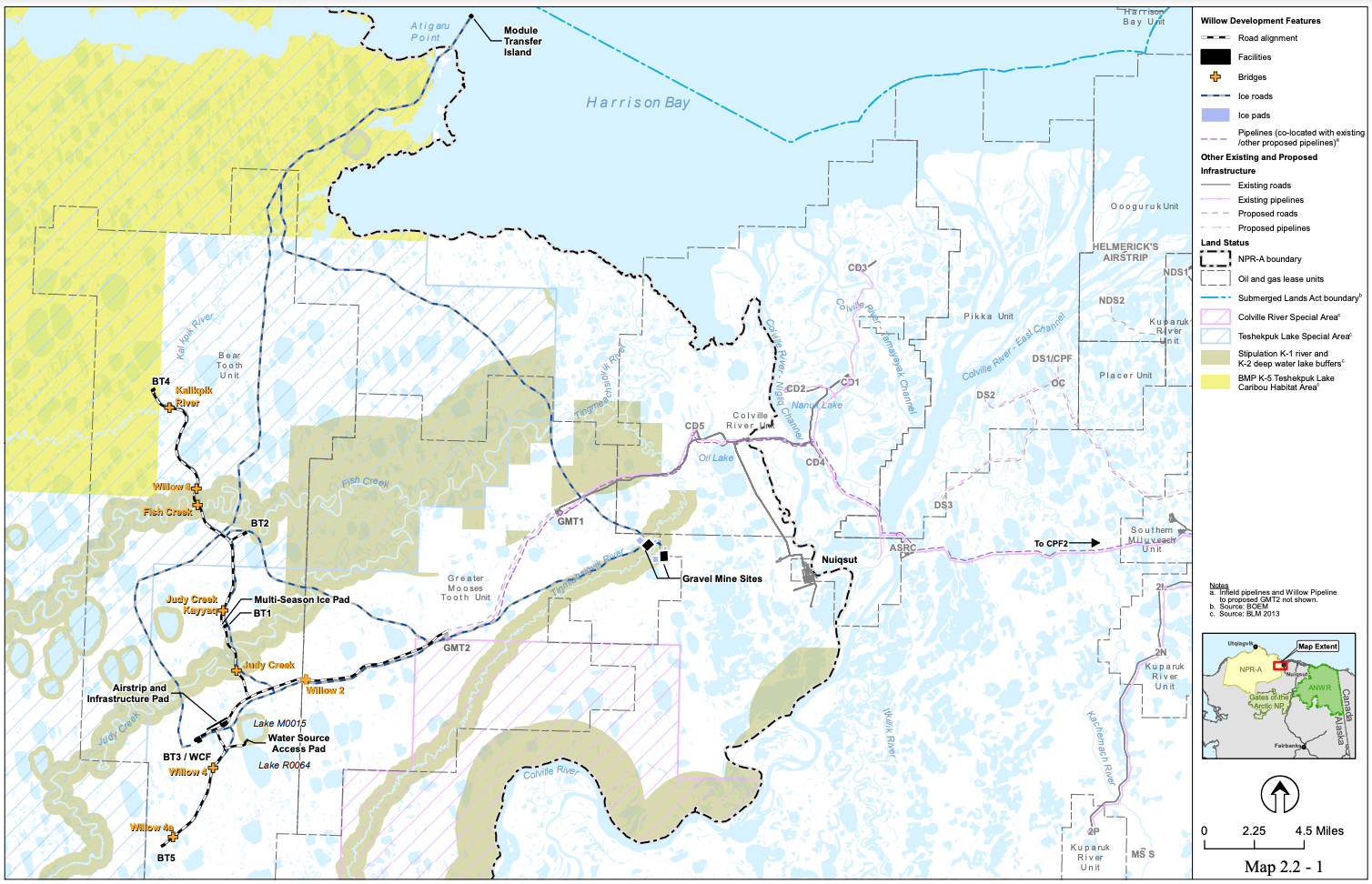
    image1

    Plaintiffs’ Complaint

    On March 14, 2023, Earthjustice, a non-profit environmental law organization, filed a complaint on behalf of several plaintiffs. Included in the group of plaintiffs are the Natural Resources Defense Council, Center for Biological Diversity, Defenders of Wildlife, Friends of the Earth, and Greenpeace, Inc.

    In their complaint, the plaintiffs allege that the BoLM failed to adequately assess the Willow Oil Project’s impacts on the region’s wildlife and its contributions to climate change before issuing its ROD, allowing the project to move forward, thus violating the NEPA, ESA, and Administrative Procedure Act (APA). The complaint consists of five claims for relief.

    Count I: NEPA

    In the first count, plaintiffs assert that the BoLM’s final SEIS violated the NEPA by failing to consider any project-alternative “that would meaningfully reduce the climate impacts of the Willow Project by reducing total downstream greenhouse gas emissions, or any alternative that would prohibit infrastructure in the Teshekpuk Lake Special Area and the Colville River Special Area.” Plaintiffs take issue with the fact that although BLM considered action alternatives as required by NEPA, all of the alternatives were based on BoLM fully developing the entirety of its oil and gas leases. Plaintiffs disagree with the BLM’s assertion that this was proper and necessary to avoid “strand[ing] an economically viable quantity of recoverable oil.”

    Count II: NEPA

    Plaintiffs’ second count alleges that the BLM committed another violation of NEPA by failing to take a “hard look” at the reasonably foreseeable risk of oil spills and potential discoveries of oil production prospects resulting from the project. Thus, the agency fell short of its NEPA duties to disclose and analyze the indirect and cumulative impacts of the Willow Oil Project.

    Count III: Reserves Act (APA)

    The third count in the plaintiffs’ complaint alleges that the BoLM violated the APA’s arbitrary and capricious decision-making standard by failing to act in accordance with the Reserves Act. The Reserves Act requires that the Secretary of the Department of the Interior “protect[] the ‘environmental, fish and wildlife, and historical or scenic values’ within the Reserve.” Plaintiffs believe that the BoLM’s evaluation of only “full lease development” project alternatives contradicts its protection duties under the Reserves Act “to condition, restrict, or prohibit activity as it determines necessary to protect surface resources.”

    Count IV: ESA – Unlawful NMFS Letter of Concurrence

    Plaintiffs’ fourth claim is that the BoLM biological assessment to the National Marine Fisheries Service (NMFS) and the NMFS Willow Letter of Concurrence failed to analyze the possible taking of ringed and bearded seals, along with other listed species. Plaintiffs fear that the taking of these ESA-listed seals would occur as a result of the project’s greenhouse gas emissions affecting their critical habitats. The complaint is silent on the nexus between the emissions and the habitat effects. Still, it asserts that the NMFS conclusions failed to properly engage in ESA Section 7 formal consultation to determine the project’s effects on the listed seals and prepare the necessary incidental take statements. Thus, the letter’s analysis of the affected threatened species and their critical habitats was arbitrary and capricious.

    Count V: ESA – Unlawful FWS Biological Opinion

    The fifth and final claim in the complaint argues that the FWS’s biological opinion was arbitrary and capricious due to its failure to properly consider in view of the best available science the threats to polar bears brought on by climate change exacerbated by the Willow Oil Project’s greenhouse gas emissions. Polar bears, like the seals above, are a listed species under the ESA. Plaintiffs allege that the potential greenhouse gas emissions would increase sea ice melting, which will decrease the availability of ice seal prey in the polar bear’s critical hunting habitat. The agency did not prepare the necessary incidental take statement for polar bears either.

    Requested Remedy

    To remedy the violations asserted, plaintiffs request that the court vacate the BoLM’s project approval and supporting documents on the ground that the approval decision was arbitrary and capricious. Plaintiffs also seek a reward of costs and attorneys fees related to the action.

    Defendants have not yet responded to the federal complaint, filed March 14, 2023. 
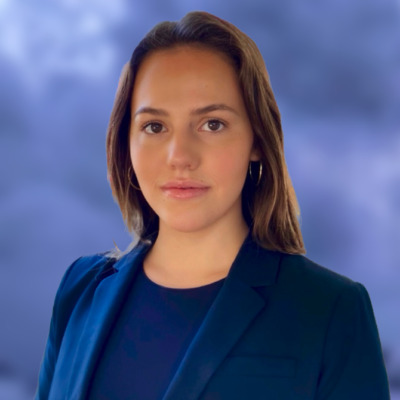
    Victoria Kline

    Victoria KlineGuest Writer

    Victoria is a third-year student at the University of Miami School of Law, Juris Doctorate Candidate 2023, Law Review Staff Editor, and soon-to-be associate at Jones Day.
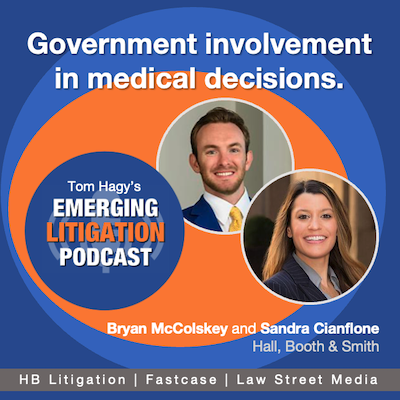

  • Government Involvement in Medical Decisions During Outbreaks with Bryce McColskey and Sandra Cianflone

    Government Involvement in Medical Decisions During Outbreaks with Bryce McColskey and Sandra Cianflone

    Government Involvement in Medical Decisions During Outbreaks 

    It’s apparently (and hopefully) on its last legs. The Covid-19 pandemic was the most recent health issue to raise questions around government’s involvement (or interference) in an individual’s control over their own medical treatment.

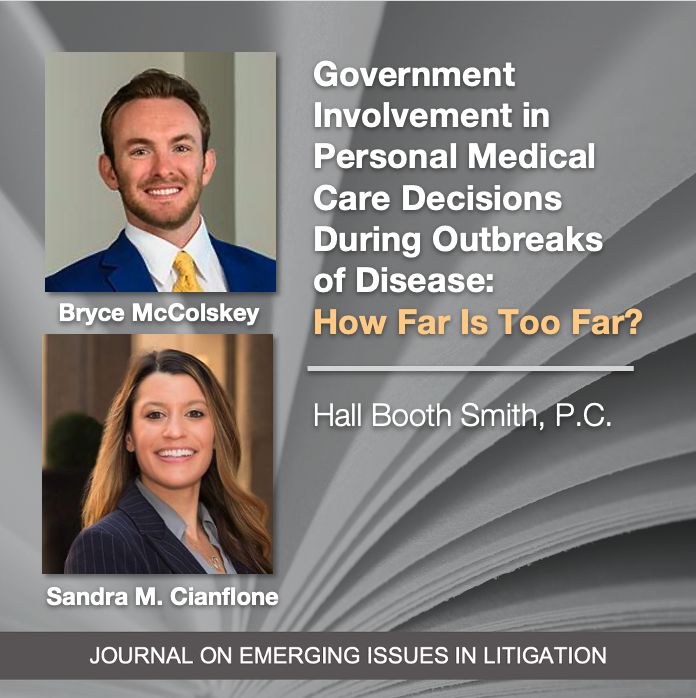
    In their article – Government Involvement in Medical Care Decisions During Outbreaks of Disease: How Far is Too Far? – our guests wrote about the intersection of law and medicine. They reviewed medical mandates, implications brought about by the impact of advances in science and medicine, and where role of government to protect public health intersects (or collides) with personal healthcare choices. They focused is on governmental responses to the pandemic, that is, what the government can mandate in the spirit of public health, and not on the separate issue of abortion, which is a “choice” subject for another day.

    How much authority do government agencies or even the courts have over a person’s healthcare decisions? People often assume the practice of medicine and the enactment and enforcement of laws are separate and independent enterprises; that they remain fixed in their respective corners. However, they wrote, after a deeper  dive  into  history and precedent, it’s evident that the tension between individual rights and health-related mandates has existed for some time.

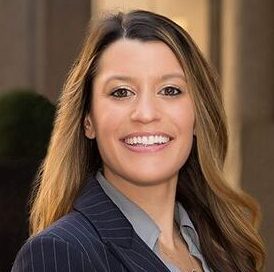
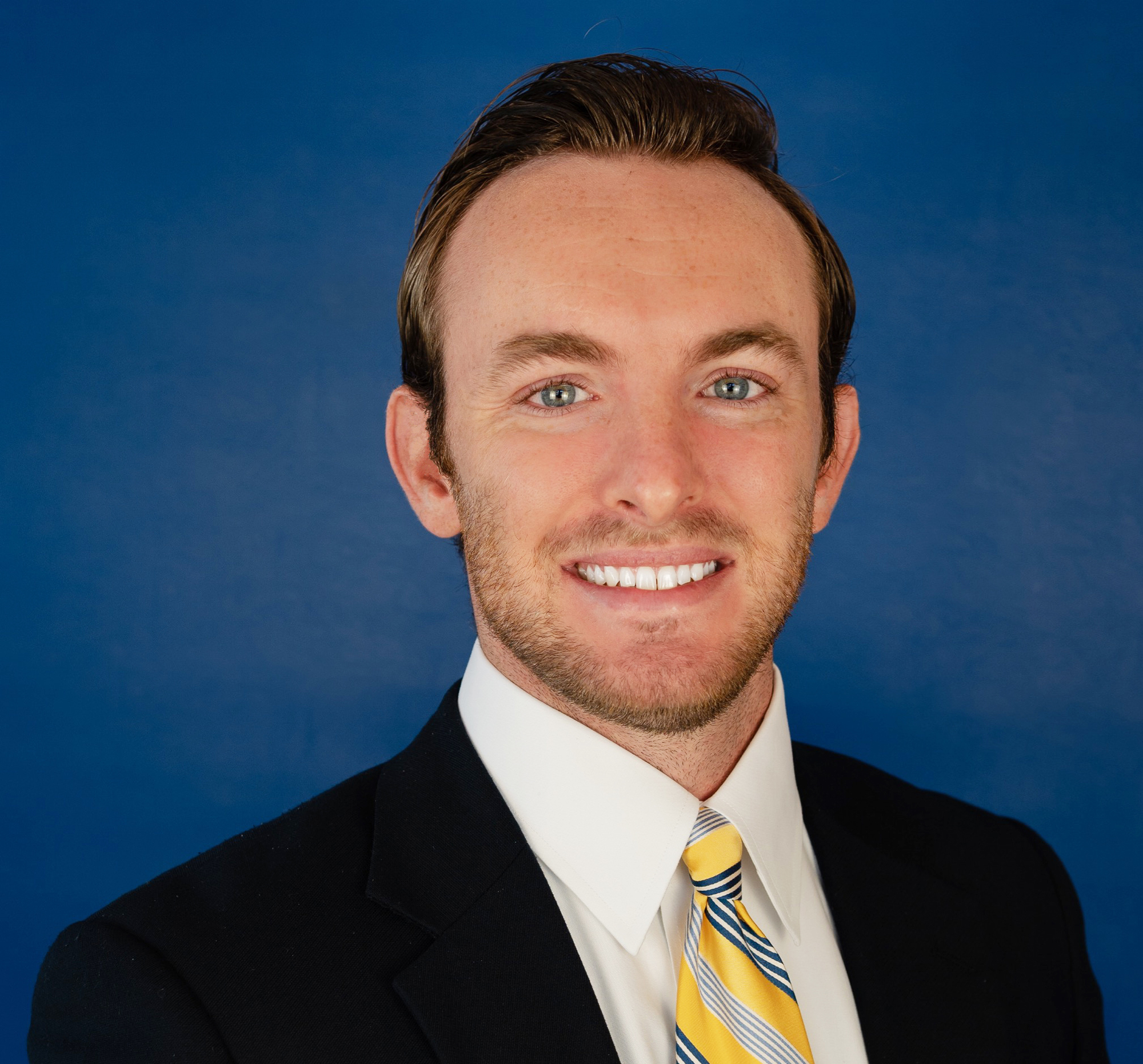
    Listen to my interview with the authors, Bryce McCloskey and  Sandra M. Cianflone with Hall Booth Smith, P.C. Bryce is based in Jacksonville, Fla., where he focuses on medical malpractice and professional liability law. Sandie is a partner in the firm’s Atlanta office where she concentrates on a variety of aspects of healthcare defense She chairs the firm’s Coronavirus Task Force and is a member of the firm’s National Trial Counsel team. She is also a valued member of the Editorial Board of Advisors of the Journal on Emerging Issues in Litigation.

    ***********

    This podcast is the audio companion to the Journal on Emerging Issues in Litigation. The Journal is a collaborative project between HB Litigation Conferences and the Fastcase legal research family, which includes Full Court Press, Law Street Media, and Docket Alarm. The podcast itself is a joint effort between HB and our friends at Law Street Media. If you have comments or wish to participate in one our projects please drop me a note at Editor@LitigationConferences.com.

    Tom Hagy

    (actual size)

    Tom Hagy
    Litigation Enthusiast and
    Host of the Emerging Litigation Podcast
    Home Page
    LinkedIn

    Bryce McColskey

    Bryce McColskeyHall Booth Smith P.C.

    Bryce McColskey focuses his practice on medical malpractice, professional liability, and general liability matters.

    Prior to joining Hall Booth Smith, Bryce was an Associate with another firm in Jacksonville where he focused his practice on workers’ compensation defense. Earlier in his career, he worked as a summer clerk for the University of North Florida’s Office of General Counsel and a local firm in Jacksonville.

    Bryce earned a Juris Doctorate from the University of Florida Levin College of Law where he was a member of the University of Florida Association of Law and Business and the Chester Bedell Inn of Court. Bryce earned his Bachelor of Science degree in Business Administration from the University of North Florida.

    Sandra Cianflone

    Sandra CianfloneHall Booth Smith P.C.

    Sandra Cianflone is a Partner in the Atlanta office of Hall Booth Smith. Her practice primarily focuses on medical malpractice on defending hospitals, healthcare institutions, physicians, nurses and institutional employees in medical malpractice actions from inception through trial. She is part of Hall Booth Smith’s National Trial Counsel team and has litigated cases across the country.

    Sandra also provides national risk management and crisis management services across the healthcare industry. These services have guided clients through tumultuous regulatory and statutory schemes by providing efficient approaches which assist with public/community relations, litigation preparation, defense alternatives, and effective case management. Ms. Cianflone is also the Chair of our Coronavirus Taskforce.

    Sandra received her Juris Doctorate from Pace University School of Law and her undergraduate degree from Fairleigh Dickinson University.

  • Government Involvement in Personal Medical Care Decisions During Outbreaks of Disease: How Far Is Too Far? by Bryce McColskey and Sandra M. Cianflone

    Government Involvement in Personal Medical Care Decisions During Outbreaks of Disease: How Far Is Too Far? by Bryce McColskey and Sandra M. Cianflone

    The Authors

    Bryce McColskey

    Bryce McColskeyHall Booth Smith

    Bryce McColskey (bmccolskey@hallboothsmith.com) is an attorney with Hall Booth Smith, P.C., based in Jacksonville, Florida, where he focuses on medical malpractice and professional liability law.

    Sandra Cianflone

    Sandra CianfloneHall Booth Smith

    Sandra M. Cianflone (scianflone@hallboothsmith.com) is a partner in the Atlanta office of Hall Booth Smith, where she concentrates on a variety of aspects of healthcare defense and chairs the firm’s Coronavirus Task Force. She is also a member of the Editorial Board of Advisors of the Journal of Emerging Issues in Litigation.

    The Journal on Emerging Issues in Litigation

    Emerging Litigation Podcast

    Emerging Litigation PodcastProduced by HB Litigation and Law Street Media

    Interviews with leading attorneys and other subject matter experts on new twists in the law and how the law is responding to new twists in the world.

    Government Involvement in Personal Medical Care Decisions During Outbreaks of Disease: 

    How Far Is Too Far?

    “Breakthroughs in technologies, our knowledge of diseases and mutations, and advances in treatment options have been remarkable and have drastically reduced fatality rates from disease outbreaks. However, regardless of medical achievements, rapid changes in any field open the door to renewed debates over different laws and individual rights.”

    Abstract: The coronavirus pandemic is the latest health issue to raise the question of government’s involvement (or interference) with an individual’s control over their own healthcare and medical treatment. In this article, the authors, two health care and professional liability attorneys, discuss the intersection of law and medicine with a review of medical mandates, the impact of advances in science and medicine, and where role of government to protect public health intersects (or collides) with personal healthcare choices. Their focus is on governmental response to the coronavirus pandemic, and not the recent landmark case dealing with choice. But add to the equation the Supreme Court’s ruling on abortion in Dobbs v. Jackson Women’s Health, the “government as healthcare decision maker” is an issue that will be on the front burner for courts, policymakers, healthcare providers, patients, and attorneys for years to come.

    How much authority do government agencies or even the judiciary have over the healthcare decisions of individuals? This question has been hotly contested in recent years, specifically with the emergence of COVID-19. Individuals often assume the practice of medicine and the enactment and enforcement of laws are separate and independent enterprises; that they remain fixed in their respective corners.

    However, when we dive deeper into this issue and look at history and precedent, it is evident that the rights of individuals versus mandates of government in respect to healthcare has been going on for some time, and will continue for years to come.

    Download the article now!

  • The Cannabis Employment Law Patchwork with Keya Denner

    The Cannabis Employment Law Patchwork with Keya Denner

    The Cannabis Employment Law Patchwork with Keya Denner

    Maryland and Missouri are the latest states to legalize recreational cannabis for people 21 and older. Voters came out in favor of legalization in the November 2022 midterms, bringing the total recreational jurisdictions to 22 states and the District of Columbia. Voters in North Dakota, South Dakota, and Arkansas, however, decided against recreational marijuana. It remains legal for medical reasons in all five states. 

    In the employment context, both recreational and medicinal uses raise questions about protections for employees who use the drug legally.

    • Which states are enacting those protections?
    • What do multi-state employers need to do?
    • What about drug testing? As a requirement to get a job and as a requirement to keep your job?
    • What about this: who is going to say whether a worker is impaired? Will there really be hall monitors trained in spotting your high?

    For answers to these questions and more, listen to my interview with Keya Denner, a partner at Constangy, Brooks, Smith & Prophete LLP. Keya is an experienced litigator who has been practicing labor and employment law for almost 20 years. Few attorneys nationwide match Keya’s expertise in the area of legal cannabis and its impact on the workplace. He has counseled Fortune 500 companies in the retail, hospitality, and global logistics spaces to create compliant policies and better understand the ever-changing legal landscape brought about by the legalization of cannabis across the United States.  Most recently, Keya was named co-chair along with this colleague Ashley Orler of the firm’s new practice group focused on cannabis and employee substance abuse law. Keya received his J.D., cum laude, from Seton Hall University School of Law, J.D., cum laude, and his B.A., also cum laude, from Boston University.

    This podcast is the audio companion to the Journal on Emerging Issues in Litigation. The Journal is a collaborative project between HB Litigation Conferences and the Fastcase legal research family, which includes Full Court Press, Law Street Media, and Docket Alarm. The podcast itself is a joint effort between HB and our friends at Law Street Media. If you have comments or wish to participate in one our projects please drop me a note at Editor@LitigationConferences.com.

    Tom Hagy

    (actual size)

    Tom Hagy
    Litigation Enthusiast and
    Host of the Emerging Litigation Podcast
    Home Page
    LinkedIn

    Keya Denner

    Keya DennerConstangy, Brooks, Smith & Prophete, LLP

    Keya is an experienced litigator who has been practicing labor and employment law for almost 20 years. He has handled every type of labor and employment matter for his clients, ranging from discrimination, disability, non-compete and trade secret protections, to wage and hour class actions. Keya also has extensive experience counseling employers on matters relating to the Family and Medical Leave Act and the Americans with Disabilities Act.

    Most recently, Keya was named co-chair along with this colleague Ashley Orler of the firm’s new practice group focused on cannabis and employee substance abuse law. Keya received his J.D., cum laude, from Seton Hall University School of Law, J.D., cum laude, and his B.A., also cum laude, from Boston University.

  • Medical Monitoring and PFAS Litigation—A Significant Growing Trend

    Medical Monitoring and PFAS Litigation—A Significant Growing Trend

    The Author

    John P. Gardella

    John P. GardellaCMBG3 Law

    John P. Gardella (jgardella@cmbg3.com) is a shareholder with CMBG3 Law and a recognized thought leader on PFAS issues. In his environmental and toxic torts practice, he represents companies ranging in size from small shops to the Fortune 100. John is also a member of the Editorial Board of Advisors for the Journal of Emerging Issues in Litigation.

    The Journal on Emerging Issues in Litigation

    Emerging Litigation Podcast

    Emerging Litigation PodcastProduced by HB Litigation and Law Street Media

    Interviews with leading attorneys and other subject matter experts on new twists in the law and how the law is responding to new twists in the world.

    Medical Monitoring and PFAS Litigation—A Significant Growing Trend

    “The arguments in favor of medical monitoring as a cause of action in lawsuits stem from the notion that having such programs funded by allegedly tortious companies promotes the public health benefit of early detection, which in turn often results in lower health care costs to plaintiffs and society at large.”

    Abstract: Medical monitoring as a tort claim is a hot-button issue in toxic torts, personal injury, and product liability litigation. The ubiquity of PFAS chemical compounds and the real and potential harm to health and the environment they create make examination of the medical monitoring debate specific to this burgeoning litigation worthy of individual attention. This article provides an explanation of PFAS, a brief overview of medical monitoring claims, how PFAS medical monitoring claims have impacted the litigation thus far, and what legal cases are pending that could alter the course of traditional medical monitoring litigation in the future.

    Download the article now!

  • Will a New Wave of New Environmental/Toxic Tort Litigation and Claims Upend Insurance Industry Environmental Reserves?

    Will a New Wave of New Environmental/Toxic Tort Litigation and Claims Upend Insurance Industry Environmental Reserves?

    The Author

    Charlie Kingdollar

    Charlie Kingdollar

    Charlie Kingdollar spent his career as emerging issues officer for a major global insurance company, tracking hundreds of future risks like those discussed in this article. Charlie is also a valued member of the Editorial Board of Advisors for the Journal of Emerging Issues in Litigation.

    The Journal on Emerging Issues in Litigation

    Emerging Litigation Podcast

    Emerging Litigation PodcastProduced by HB Litigation and Law Street Media

    Interviews with leading attorneys and other subject matter experts on new twists in the law and how the law is responding to new twists in the world.

    Will a New Wave of New Environmental/Toxic Tort Litigation and Claims Upend Insurance Industry Environmental Reserves?

    “PFAS chemicals are commonly called “forever chemicals,” because once released into the environment they can take hundreds or even thousands of years to break down.”

    “Estimates that the ultimate costs of [these and other] environmental claims will land between $45 billion and $55 billion is terribly low. Maybe I’m missing something (always a possibility).  If not, the insurance industry is in for a rude awakening.” 

    Abstract: To remain profitable and viable, the insurance and reinsurance industry must rely on estimated forecasts of potential claims many years out to establish an appropriate level of reserves. They rely on data from rating agencies and, based on these estimates, ratchet their reserves up or down accordingly. In past years, major and once unforeseen developments like massive asbestos and environmental litigation provided urgent reasons to cast an especially critical eye on the adequacy of industry reserves. In this article, the author explains why it is that time again. In light of several potentially calamitous emerging global liabilities he reviews here, particularly if they land with the impact he fears they might, the author believes the insurance industry and its policyholders may be in for a jolt a few short years from now.

    Download the article now!

  • PFAS Consumer Fraud Litigation with John Gardella

    PFAS Consumer Fraud Litigation with John Gardella

    These stubborn chemicals are everywhere. But when they find their way into products, shouldn’t someone tell consumers?

    Per- and poly-fluoroalkyl substances (“PFAS”) are a family of more 12,000 manmade compounds.  That’s a huge family. Most people would recognize the brand names Teflon, produced by Dupont and Scotchgard produced by 3M. They also go by the nickname “forever chemicals” because they are highly persistent and mobile in the environment and the human body. In addition to bodily injury and environmental pollution litigation, plaintiffs are bringing suits against companies for claiming their products and the making of their products are safe and green. New consumer lawsuits seeking millions in damages are targeting oral hygiene products — like a recent case involving dental floss — cosmetics, apparel, and food packaging.

    Listen to my interview with environmental lawyer John Gardella of CMBG3 Law who discusses why PFAS concern citizens, media and legislators, what legal risks corporations face, and why we’re seeing  a surge in consumer fraud litigation.

    This podcast is the audio companion to the Journal on Emerging Issues in Litigation. The Journal is a collaborative project between HB Litigation Conferences and the Fastcase legal research family, which includes Full Court Press, Law Street Media, and Docket Alarm. The podcast itself is a joint effort between HB and our friends at Law Street Media. If you have comments or wish to participate in one our projects please drop me a note at Editor@LitigationConferences.com.

    Tom Hagy

    (actual size)

    Tom Hagy
    Litigation Enthusiast and
    Host of the Emerging Litigation Podcast
    Home Page
    LinkedIn

    PFAS Consumer Fraud Litigation with John Gardella

    John Gardella

    John GardellaCMBG3 Law

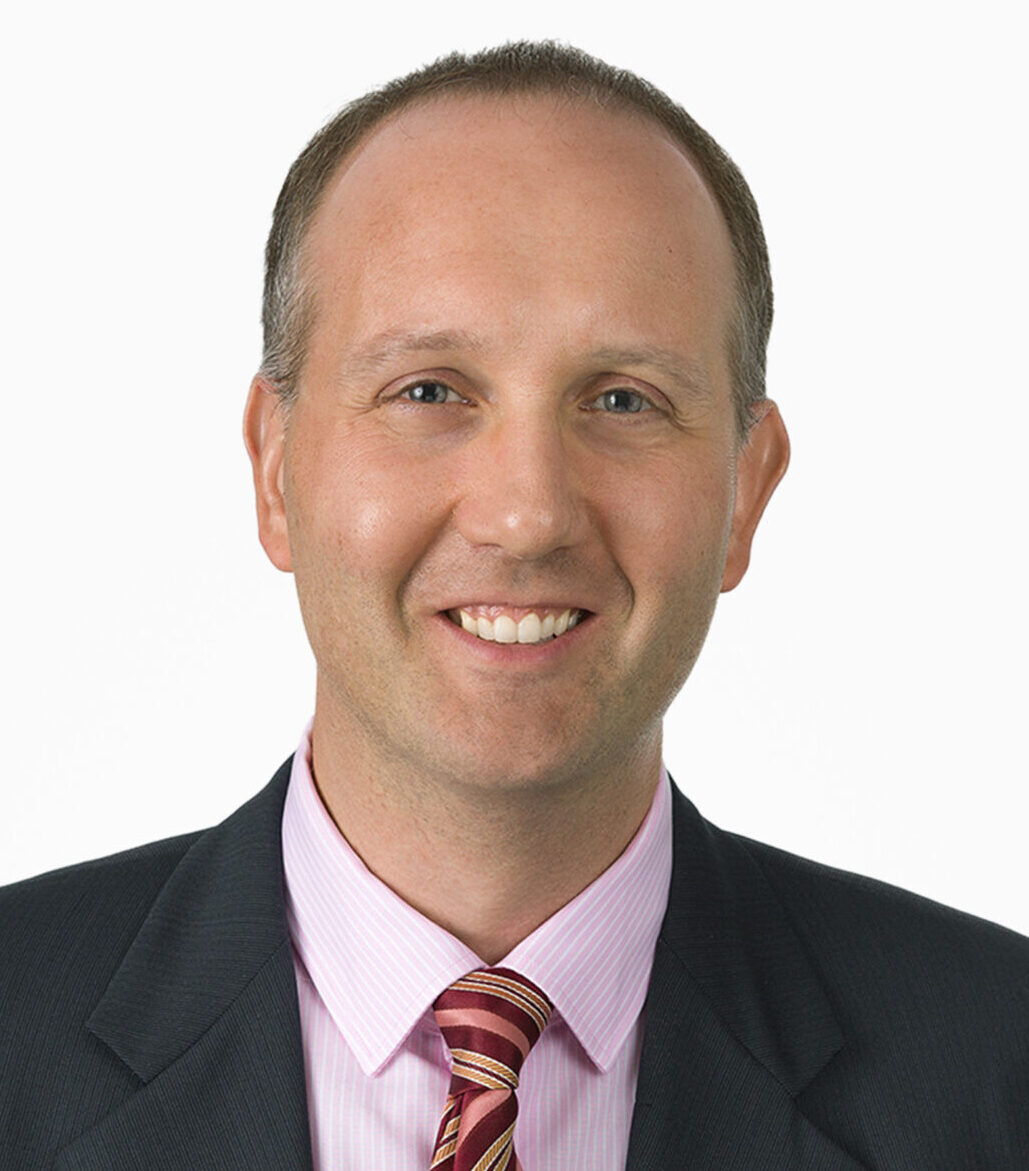
    John Gardella is a Shareholder and recognized thought leader on PFAS issues. He is licensed to practice in Massachusetts and Tennessee.

    A seasoned trial attorney with over 75 verdicts, John is the Chair of the firm’s PFAS, Environmental, Risk Management & Consulting, and ESG practice groups. His thought leadership and predictive risk abilities with respect to PFAS earned him the honor of being the only person in the country that was recognized as a thought leader on PFAS in 2020 and 2021 by the esteemed National Law Review. John is regularly interviewed by media on the subject of PFAS and other emerging chemicals of concern, and he consistently publishes his own thought leadership in several nationally syndicated resources, including Bloomberg Law, AM Best, and National Law Review. Private equity firms, the financial world, insurance companies, and corporations regularly seek John’s opinions on forward-looking environmental and chemical substances risk issues.

  • Medical Monitoring for Modern Times with Ed Gentle

    Medical Monitoring for Modern Times with Ed Gentle

    Medical Monitoring for Modern Times:
    Attorney and court-appointed neutral Ed Gentle shares his vision for a new paradigm for mass torts. 

    Marissa, a resident of a small town in Kentucky, learned that for some time her drinking water may have been contaminated with so-called “forever chemicals” or PFAS. It’s really a collection of chemicals used in products like fire-suppression foam, cookware, stain-resistant sprays, and food packaging. A local public radio reporter covering the story asked Marissa for her reaction. “I was never informed,” she said. “And now I’m worried, like, I hope I don’t have issues some day in my life.”  

    Marissa’s concern is like that of many people who find themselves in this situation and is at the center of this episode. When a case like Marissa’s goes to court, plaintiffs will seek a ruling that the responsible parties pay for years of medical monitoring. That means they are suing often without signs of an existing injury, and that defendants must pay for something when an injury may not arise.

    Attorney, author, and court-appointed case neutral, Edgar C. Gentle III, says  that approach is antiquated. He outlines a better way in his 2014 essay titled The Medical Monitoring Tort Remedy: Its Nationwide Status, Rationale and Practical Application (A Possible Dynamic Tort Remedy for Long Term Tort Maladies). Now he shares his latest insights on the Emerging Litigation Podcast.

    Ed Gentle is the Founding Partner of Gentle Turner & Benson, LLCin Birmingham, Ala. He is a Rhodes Scholar and has five college degrees, three in law. He has practiced for nearly four decades, spending 90% of his professional time serving as a neutral assigned by judges to oversee aspects of  mass tort litigation and settlements. He has helped create and administer over $2 billion in settlements during the past 25 years. Education: Bachelor of Science, Auburn University, summa cum laude, Danforth Scholar; Master of Science, University of Miami, summa cum laude, Maytag Fellow; B.A. and M.A. Degrees, Oxford University, Rhodes Scholar, Honors in Jurisprudence; and Juris Doctorate; University of Alabama School of Law, Hugo Black Scholar.

    This podcast is the audio companion to the Journal on Emerging Issues in Litigation. The Journal is a collaborative project between HB Litigation Conferences and the Fastcase legal research family, which includes Full Court Press, Law Street Media, and Docket Alarm. The podcast itself is a joint effort between HB and our friends at Law Street Media. If you have comments or wish to participate in one our projects please drop me a note at Editor@LitigationConferences.com.

    Tom Hagy

    (actual size)

    Tom Hagy
    Litigation Enthusiast and
    Host of the Emerging Litigation Podcast

    Loved Ed’s podcast?

    Explore Ed’s additional content on Medical Monitoring Tort.

    JEIL: Medical Monitoring for Modern Times with Ed Gentle

    OnDemand CLE Webinar: The Medical Monitoring Tort Remedy with Gentle and Benson

    Tags

    Emerging Litigation & Risk Compliance Litigation & appeals Cybersecurity Data Privacy Artificial Intelligence (AI) Insurance Companies Risk Management Corporate & Securities Insurance Claims Recovery Regulations Data Breach Toxic Torts Antitrust Legal Tech Product Liability Settlements Trial Personal Injury Privacy Healthcare Per- and Polyfluoroalkyl Substances (PFAS) Data Analytics Arbitration Constitutional Law Climate Change Cannabis Labor Law Insurance Fraud Liability Claims COVID Alternative Dispute Resolution (ADR) Mediation Diversity Equity Inclusion (DEI) Claims management Professional Liability Legal Research & Writing Business Interruption Law Practice Management Trial Skills Property and Casualty Drug Laws Copyright Law Catastrophic Loss

    Ed Gentle

    Ed Gentle Gentle Turner & Benson, LLC

    Ed Gentle is the Founding Partner of Gentle Turner & Benson, LLC in Birmingham, Ala. He is a Rhodes Scholar and has five college degrees, three in law. He has practiced for nearly four decades, spending 90% of his professional time serving as a neutral assigned by judges to oversee aspects of mass tort litigation and settlements.
    Education: Bachelor of Science, Auburn University, summa cum laude, Danforth Scholar; Master of Science, University of Miami, summa cum laude, Maytag Fellow; B.A. and M.A. Degrees, Oxford University, Rhodes Scholar, Honors in Jurisprudence; and Juris Doctorate; University of Alabama School of Law, Hugo Black Scholar.

  • Maximizing Insurance as Climate Change Intensifies

    Maximizing Insurance as Climate Change Intensifies

    HB presents an Anderson Kill webinar on-demand

    MAXIMIZING INSURANCE RECOVERY AS

    CLIMATE CHANGE INTENSIFIES

    As weather-induced disasters continue to intensify, maximizing insurance coverage after major storms, floods, wildfires, and other natural cataclysms is an essential survival skill for any business.

    In this session, attorneys who have successfully litigated property, business interruption and contingent business interruption claims from Hurricanes Katrina through Ida, along with wildfire and other major disaster claims, walk participants through all phases of insurance recovery, from buying the right policies to pursuing claims with persistence and awareness of pitfalls, to litigating successfully when necessary. Specific lessons from Hurricanes Sandy (2012), Harvey (2017) and Maria and Irma (2020) will be addressed.

    Topics:

    • Developing a pre-storm preparedness plan, including mitigation efforts, assembly of a claims team, and insurance coverage review;
    • Moving quickly to protect property from further damage, performing all emergency repairs, and documenting all losses in detail;
    • Preparing and presenting well-supported property damage claims;
    • Recognizing and including business interruption losses and extra expense outlays;
    • Highlighting policy interpretation issues that affect the scope of available coverage;
    • Outlining strategies for pursuing claims and incentivizing the insurance company to resolve them with due speed.

    On-Demand Registration

    Includes

    • 1+ CLE credits (subject to bar rules). CLE codes are embedded in the video. CLE questions?
    • Insights from experienced professionals.
    • The complete PowerPoint presentation.
    • Continued access to the complete recording for later use.
    • Answers to your questions via email to the presenters, or write to HB.

    Meet the Panel

    Finley Harckham
    Anderson Kill

    Finley is a senior litigation shareholder in the New York office of Anderson Kill and serves on
    the firm’s Executive Committee. Finley regularly represents and advises corporate policyholders and
    other entities in insurance coverage matters. He has successfully litigated, arbitrated and settled
    hundreds of complex coverage claims. His areas of particular focus include property loss, environmental,
    business interruption, directors and officers liability, construction, professional liability, aviation liability,
    cyber and general liability claims.

    Finley also has extensive experience in the field of international arbitration. His arbitration clients
    include government contractors, consumer products companies and manufacturers which Anderson Kill
    has represented in a wide range of disputes involving, among other things, service contracts, the
    purchase and sale of components, raw materials and products, and licensing agreements. He has
    successfully prosecuted and defended arbitrations in European countries and the United States under
    the London Arbitration Act, and the AAA, ICC and UNCITRAL arbitration rules.

    More about Finley

    Rhonda D. Orin
    Anderson Kill

    Rhonda is the managing partner of the firm’s Washington, D.C. office. She is also co-chair of the COVID Task Group. Rhonda represents policyholders in coverage cases nationwide, including cyber liability, third-party tort and environmental liability claims, first-party property damage and business interruption claims, directors & officers liability, errors & omissions liability, fidelity bonds and alternative risk transfer arrangements, including for employee benefit plans.

    She has served as lead counsel in multiple jury and bench trials, argued before the highest courts of several states, and appeared in two cases before U.S. Supreme Court. Through jury verdicts, summary judgment decisions and confidential settlements before and during litigation, she has recovered hundreds of millions of dollars for policyholders, including nine-figure recoveries.

    More about Rhonda

    Dennis J. Artese
    Anderson Kill

    Dennis is a shareholder in the New York office of Anderson Kill. He is also co-chair of the firm’s Construction Industry practice group and a member of the COVID Task group. Dennis’ national practice concentrates on all types of insurance recovery litigation, with an emphasis on securing insurance coverage for construction-related first-party property losses and third-party liability claims as well as for property and business interruption losses stemming from natural disasters and other perils.

    Dennis has substantial experience in all phases of litigation, arbitration and property insurance appraisals, and has recovered hundreds of millions of dollars of insurance proceeds on behalf of policyholders in connection with a variety of property, builder’s risk, commercial general liability, umbrella and excess liability, D&O, E&O, crime, and political risk insurance claims. Dennis also has extensive experience in litigating insurance broker malpractice cases and other general commercial litigation disputes, including construction-related disputes. Dennis has been recognized by Super Lawyers for Insurance Coverage since 2012. He also has been recognized by Legal 500 for Insurance Advice to Policyholders and singled out as being a “superb lawyer and subject-matter expert.”

    More about Dennis

    Ronald Papa
    National Fire Adjustment Co.

    Ronald has been instrumental in NFA’s growth for more than 30 years. He has successfully adjusted more than 2,000 insurance losses working for a wide range of clients. Ron earned the prestigious designation of Senior Professional Public Adjuster and is accredited by the National Association of Public Insurance Adjusters (NAPIA), of which he is past president.

    He was named Person of the Year by NAPIA for “outstanding leadership” and recently addressed the National Symposium of Insurance Commissioners at their conference in Florida. Ron is approved as an instructor by numerous State Insurance Departments, the New York State Bar Association, and the Society of CPAs. He graduated from Niagara University.

    More about Ronald

    On Demand Registration

  • Asymmetrical Combat: Bad Faith Liability in Insurance Recovery Cases

    Asymmetrical Combat: Bad Faith Liability in Insurance Recovery Cases

    The Author

    William Passannante

    William PassannanteAnderson Kill P.C.

    William G. Passannante is co-chair of Anderson Kill’s Insurance Recovery Group and is a nationally recognized authority on policyholder insurance recovery in D&O, E&O, asbestos, environmental, property, food-borne illness, and other insurance disputes, with an emphasis on insurance recovery for corporate policyholders and educational and governmental institutions.

    The Journal on Emerging Issues in Litigation

    Emerging Litigation Podcast

    Emerging Litigation PodcastProduced by HB Litigation and Law Street Media

    Interviews with leading attorneys and other subject matter experts on new twists in the law and how the law is responding to new twists in the world.

    Asymmetrical Combat: Bad Faith Liability in Insurance Recovery Cases

    “Insurance policies are a unique product that requires the policyholder perform first—by paying insurance premiums—while the insurance company’s performance—the payment of the claim amount—is delayed until the insurance company determines to do so.”

    Abstract: Policyholder counsel see claims that an insurer violated its duty of good faith and fair dealing is an essential tool in leveling the playing field in policyholder–insurer disputes, especially in high-stakes litigation. Insurance companies write the policies, employ lobbyists, exchange information with each other, and, of course, have more experience handling claims. So, the author writes, bad faith allegations bring more balance to the relationship and provide a disincentive to “the profitable breach of the insurance promise.” He discusses above-policy limits risks for insurers, as well as attorneys’ fees, interest on unpaid claims, punitive damages, and more.

    Introduction: Bad faith insurance litigation presents high-stakes risks for insurance companies in the unbalanced battle between insurance companies and their policyholders. The asymmetric nature of the insurance claims process—insurance companies draft the insurance policies, lobby legislatures as an industry repeat litigant, exchange superior information among themselves, and have more experience with claims than any policyholder—means that policyholders need a counterbalance. Insurance company liability for bad faith and related above-policy limits liabilities can act as that counterbalance. Insurance company bad faith and related doctrines prove useful because of the claims-handling calculus used to attempt to avoid coverage for a claim.

    Without more an insurance company denying a claim faces what it did at the outset—the amount of the covered claim. Insurance companies thus engage in the profitable breach of the insurance promise. Most purchasers of the insurance product would think of their insurance company as a fiduciary or trustee from whom one can expect scrupulous candor. At claims time many policyholders do not receive what they expect. Still, hornbook contract law tells policyholders that every insurance policy contains within it a duty of good faith and fair dealing enforcing that duty of good faith and fair dealing helps level the insurance claim playing field . . . .

    Download the article now!