Category: Employment

  • Mental Wellbeing and Fulfillment for Litigators: Sara Lord Interviews Gary Miles

    Mental Wellbeing and Fulfillment for Litigators: Sara Lord Interviews Gary Miles

    Mental Wellbeing and Fulfillment for Litigators: Sara Lord Interviews Gary Miles

    Concepts: Mental Health Awareness, Lawyer Wellbeing, Coping Strategies, Stress Management, Litigator Fulfillment

    This episode is dedicated to Mental Health Awareness Month — May 2024 — in which we explore some of the keys to achieving wellbeing as a human litigator.

    Lawyers contemplate suicide at “an exceedingly high rate.” Whereas 4.2% of adults have reported contemplating suicide, that figure is 10-12% among lawyers. According to a study published by MDPI, lawyers are prone to mental health issues, including anxiety, depression, and substance abuse. “[O]ur findings suggest the profile of a lawyer with the highest risk for suicide is a lonely or socially isolated male with a high level of unmanageable stress, who is overly committed to their work, and may have a history of mental health problems.” Released in 2023, the authors of the study — Stressed, Lonely, and Overcommitted: Predictors of Lawyer Suicide Risk (Krill, Thomas, Kramer, Degeneffe, and Anker) — say there is a need for interventions to address these risks, including “education, resources, and support for lawyers to better manage their workload, modifying work demands and expectations, and promoting a culture of openness and support within law firms.”

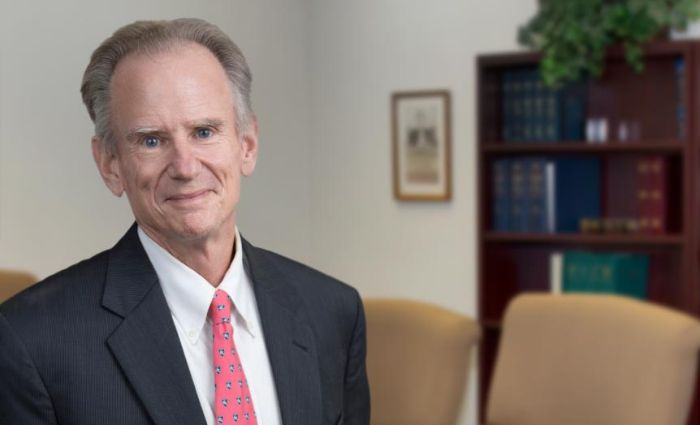
    With that as a backdrop, guest host and legal analytics professional Sara Lord interviews success coach and former litigator Gary Miles about the professional dissatisfaction litigators experience when the pursuit of fulfillment clashes with high-stress demands — from burnout to depression to imposter syndrome. Explore practical strategies for managing anxiety and embracing mindfulness, like reframing your thoughts, celebrating even small achievements, identifying trusted colleagues and mentors, the importance of rest, and reaching out for help. Learn some of the wisdom Gary imparts via his counseling services.

    Feeling emotionally crisp? “There is always a solution. Always,” Gary says.

    *******
    Need Immediate Help? If you are in the U.S. and experiencing thoughts of suicide, call or text the 988 Suicide and Crisis Lifeline at 988 or IMAlive at 1-800-784-2433. In the UK and Ireland – Call Samaritans UK at 116 123; in Australia – Call Lifeline Australia at 13 11 14; in other countries – Visit IASP or Suicide.org to find a helpline in your country.

    *******

    This podcast is the audio companion to the Journal on Emerging Issues in Litigation. The Journal is a collaborative project between HB Litigation Conferences and the vLex Fastcaselegal research family, which includes Full Court Press, Law Street Media, and Docket Alarm.

    If you have comments, ideas, or wish to participate, please drop me a note at Editor@LitigationConferences.com.

    Tom Hagy
    Litigation Enthusiast and
    Host of the Emerging Litigation Podcast
    Home Page
    LinkedIn

    Loved listening to Sara’s interview with Gary Miles?

    Listen to Sara’s other podcast interviews!

    Podcast: Technology-Assisted Review: Sara Lord Interviews Data Scientist Lenora Gray

    Podcast: Transforming Legal Workflows with AI: Sara Lord Interviews Tara Emory and Wilzette Louis

    Guest Host

    Sara Lord

    Sara LordManaging Director of Legal Metrics

    Sara Lord is a former practicing attorney with a decade of experience in data analytics. Sara applies her talents in large and small law firms and businesses to explore and address the cultural and practical barriers to diversity in law, and client-first business-oriented practices. As Managing Director of Legal Metrics, she leads a team of experts focused on providing the tools to support data-driven decision making in legal operations and closer collaboration between law firms and their clients through automation and standardization of industry metrics.

    Sara earned her J.D. from New York University School of Law.

    Guest

    Gary Miles

    Gary MilesSuccess Coach and Former Litigator

    Gary Miles has been a high-level trial attorney for over 40 years in a variety of areas including transportation law, serious personal injury, family law, and estate disputes. He presently focuses on family law and loves to lift and support his clients when they are in a very difficult place.

    He has been the managing partner of Huesman, Jones, and Miles for over 3 decades. He has been an active member of many professional associations including the American Bar Association.

    He is a trained mediator with over 120 hours in mediation training. He has participated in over 1000 mediations and settlement conferences both as counsel for one of the parties and as the facilitator. His studies featured specialized training for divorce mediation, including a focused course on child access, property, and financial issues, and commercial litigation mediation. He delights in helping clients solve their challenging issues.

    Gary brings over four decades of experience as a problem solver to his coaching business. He has an incredible passion for helping his clients discover the blocks that are holding them back and freeing them to better achieve their dreams. He has helped clients and parties resolve thousands of issues and disputes over the years. He is blessed with a calm demeanor and is an empathetic listener.

    Want to appear on the Emerging Litigation Podcast?

    Send us your idea! 

    Tags

    Emerging Litigation & Risk Compliance Litigation & appeals Cybersecurity Data Privacy Artificial Intelligence (AI) Insurance Companies Risk Management Corporate & Securities Insurance Claims Recovery Regulations Data Breach Toxic Torts Antitrust Legal Tech Product Liability Settlements Trial Personal Injury Privacy Healthcare Per- and Polyfluoroalkyl Substances (PFAS) Data Analytics Arbitration Constitutional Law Climate Change Cannabis Labor Law Insurance Fraud Liability Claims COVID Alternative Dispute Resolution (ADR) Mediation Diversity Equity Inclusion (DEI) Claims management Professional Liability Legal Research & Writing Business Interruption Law Practice Management Trial Skills Property and Casualty Drug Laws Copyright Law Catastrophic Loss


  • AI Nuts & Bolts Survival Guide: Artificial Intelligence – Discrimination in Employment Context

    AI Nuts & Bolts Survival Guide: Artificial Intelligence – Discrimination in Employment Context

    AI Nuts & Bolts Survival Guide: Artificial Intelligence – Discrimination in Employment Context 

    Leverage the Latest Court Decisions and Governmental Guidance to Tailor Use of AI Screening Tools in the Employment Context.

    AI, and generative AI in particular, took the employment world by storm in 2023, quickly becoming one of the most talked about and debated subjects among corporate counsel across the country. This trend is showing no signs of slowing down in 2024, as companies increasingly utilize AI as a resource to enhance decision-making processes. 

    As these processes are fine-tuned, those who seek to harness the power of AI must be aware of the risks associated with its use. 

    This webinar discusses two novel AI lawsuits and highlights recent governmental guidance related to AI use. As the impact of AI is still developing, companies should recognize the type of legal claims that may stem from the use of AI screening tools in the employment context, including the implications of possible unintended discriminatory conduct stemming from these tools.  

    BONUS: Read the paper our speakers authored for the Journal on Emerging Issues in Litigation.    

    Interested in More CLE OnDemand? Click here.

    Explore more from Duane Morris LLP!

    Journal (JEIL):Artificial Intelligence Litigation Risks in the Employment Discrimination Context. By Gerald Maatman Jr., Alex Karasik, and George Schaller

    CLE OnDemand Webinar: AI Nuts & Bolts Survival Guide: Artificial Intelligence – Discrimination in Employment Context. Gerald Maatman Jr., Alex Karasik, and George Schaller

    CLE OnDemand Webinar: Discovery Strategies in Wage and Hour Class and Collective Actions Before and After Certification of Putative Class. Gerald Maatman Jr., Noel P. Tripp

    Speakers

    Gerald L. Maatman, Jr.
    Partner
    Duane Morris LLP

    Alex W. Karasik
    Partner
    Duane Morris LLP

    George J. Schaller
    Associate
    Duane Morris LLP

    CLE On-Demand

    WANT A PREVIEW? CLICK HERE!

    Topics

    • Increasing use of AI as employment screening tool
    • Risks associated with AI use in employment context
    •  Two novel AI lawsuits in this area
    • Recent governmental guidance related to AI use
    • How companies can limit liability possible unintended discriminatory conduct stemming from the use of AI tools  in the employment context    

    Learning Objectives

    • Overview of Artificial Intelligence 
    • General Artificial Intelligence Use and Issues in Business 
    • Artificial Intelligence Regulatory Environment 
    • Artificial Intelligence Litigation – Class Actions & Employment Discrimination 
    • Risks of Internal Artificial Intelligence Use 
    • Risk Mitigation for Internal Use of Artificial Intelligence 

    Let’s Webinar Together!

    Send us your ideas. Get featured here and via social media. Add it to your website. Join other experts in the HB West LegalEdcenter library.

    Write to Editor@LitigationConferences.com.

  • AI Litigation Risks in Employment by Gerald L. Maatman Jr., Alex W. Karasik, and George J. Schaller

    AI Litigation Risks in Employment by Gerald L. Maatman Jr., Alex W. Karasik, and George J. Schaller

    The Authors

    Gerald L. Maatman Jr.

    Gerald L. Maatman Jr.Duane Morris LLP

    Chair Duane Morris’ Workplace Class Action group, Jerry has nearly four decades’ experience practicing law and has represented companies, executive teams, and boards across the country in class action litigation. He defended and won the largest systemic enforcement action ever brought in the history of the U.S. Equal Employment Opportunity Commission, the first  Attorney General prosecution of a Wall Street company for workplace discrimination and harassment, and the largest wage & hour class and collective actions ever brought in Florida and New York. He received his JD from Northwestern University School of Law, where he has been an adjunct professor for more than 30 years.

    Alex W. Karasik

    Alex W. KarasikDuane Morris LLP

    Alex is a core member of Duane Morris’ Workplace Class Action group. He defends businesses in employment law matters ranging from bet-the-company class actions to high-stakes single-plaintiff lawsuits and administrative charges. He represents clients in a broad range of industries, including restaurants, hotels, sporting venues, retailers, automotive manufacturers, logistics companies and staffing entities. Alex received Master of Communication Management and Bachelor of Arts degrees from the University of Southern California and his J.D. from Notre Dame Law School.

    George J. Schaller

    George J. SchallerDuane Morris LLP

    George practices in the area of employment law with a focus on employment-related class action litigation. He defends businesses in matters ranging from nationwide class and collective actions to single-plaintiff lawsuits and administrative charges. He represents clients in across various industries, including restaurants, logistics companies, financial services companies, and staffing entities. He is a 2021 graduate of the University of Illinois Chicago School of Law.

    Explore more from Duane Morris LLP!

    Journal (JEIL):Artificial Intelligence Litigation Risks in the Employment Discrimination Context. By Gerald Maatman Jr., Alex Karasik, and George Schaller

    CLE OnDemand Webinar: AI Nuts & Bolts Survival Guide: Artificial Intelligence – Discrimination in Employment Context. Gerald Maatman Jr., Alex Karasik, and George Schaller

    CLE OnDemand Webinar: Discovery Strategies in Wage and Hour Class and Collective Actions Before and After Certification of Putative Class. Gerald Maatman Jr., Noel P. Tripp

    Artificial Intelligence Litigation Risks in the Employment Discrimination Context

    AI is here to stay. Whether companies choose AI technology for any “employment decision,” companies must keep themselves up to date on any issued guidance and must actively monitor AI tools to prevent any possible discriminatory outputs.

    Abstract:

    AI, and generative AI in particular, took the employment world by storm in 2023, quickly becoming one of the most talked about and debated subjects among corporate counsel across the country. Companies will continue to use AI as a resource to enhance decision-making processes for the foreseeable future. As these processes are fine-tuned, those who seek to harness the power of AI must be aware of the risks associated with its use. This article analyzes two novel AI lawsuits and highlights recent governmental guidance related to AI use. As the impact of AI is still developing, companies should recognize the types of claims apt to be brought for use of AI screening tools in the employment context and the implications of possible discriminatory conduct stemming from these tools.

    Download the article now!

    Emerging Litigation Podcast

    Emerging Litigation PodcastProduced by HB Litigation and Law Street Media

    Interviews with leading attorneys and other subject matter experts on new twists in the law and how the law is responding to new twists in the world.

    Interested in CLE OnDemand? Click Here.

  • Fresh Produce Law, Contracts, and Risks

    Fresh Produce Law, Contracts, and Risks

    Fresh Produce Transportation Law

    Concepts: Fresh Produce Law, Perishable Agricultural Commodities Act, PACA, Food Law, Produce Transportation

    The average American consumes 137 pounds of fresh produce per year.* That not only fuels our bodies but also a $146 billion industry.  Produce starts to degrade immediately after harvest, so transporting fresh fruits and vegetables from farms to stores in a safe and timely manner poses numerous challenges.

    What legal and reputational risks do growers, brokers, and shippers face? What laws come into play? What are the essential components of contracts among participants in the supply chain?

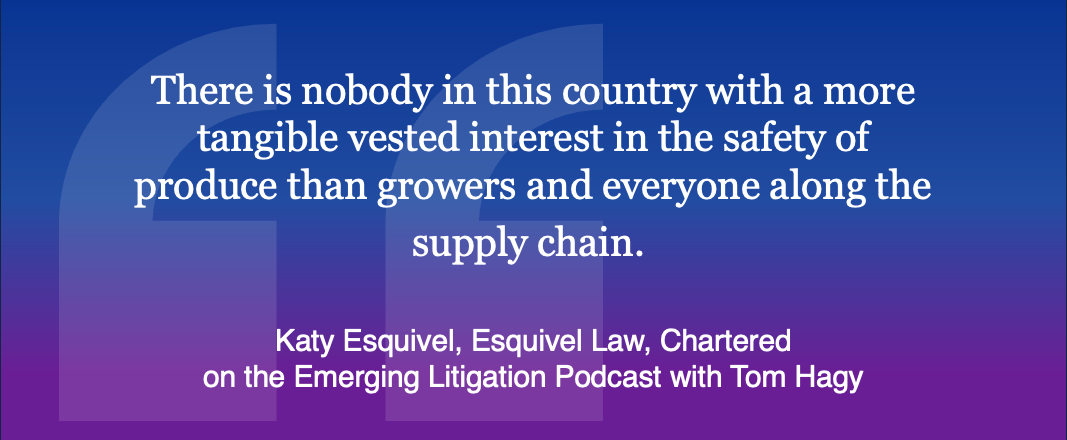
    Listen to my interview with Katy Esquivel, founder and principal attorney with Naples, Fla.-based Esquivel Law, Chartered.

    I hope you enjoy the episode. If so, give us a rating!

    This podcast is the audio companion to the Journal on Emerging Issues in Litigation. The Journal is a collaborative project between HB Litigation Conferences and the vLex Fastcaselegal research family, which includes Full Court Press, Law Street Media, and Docket Alarm.

    If you have comments, ideas, or wish to participate, please drop me a note at Editor@LitigationConferences.com.

    Tom Hagy
    Litigation Enthusiast and
    Host of the Emerging Litigation Podcast
    Home Page
    LinkedIn

    *  Source: Department of Agriculture

    Katy Esquivel

    Katy EsquivelOwner and Managing Attorney, Esquivel Law

    Katy Esquivel, a 15-year litigator and founder of her own practice, represents produce growers, buyers, and sellers, and regularly counsels clients on regulatory compliance in food safety, transportation, licensing, and business dealings. She specializes in various food and transportation laws, particularly the Perishable Agricultural Commodities Act (PACA). She is admitted to appear in federal district courts in key agricultural regions around the country. A creative practitioner, Katy began leveraging technology to better serve clients nationwide long before the pandemic.

    Katy earned her J.D. from St. Thomas University Benjamin L. Crump School of Law, and has completed the Produce Safety Alliance Grower Training Course to ensure she remains current on the latest food safety standards within the industry.

    Want to appear on the Emerging Litigation Podcast?

    Send us your idea! 

  • TVPRA, State Statutes Open Door for Civil Damage Claims by Human-Trafficking Victims

    TVPRA, State Statutes Open Door for Civil Damage Claims by Human-Trafficking Victims

    The Authors

    Coryne Leyendecker

    Coryne Leyendecker Swift, Currie, McGhee & Hiers LLP

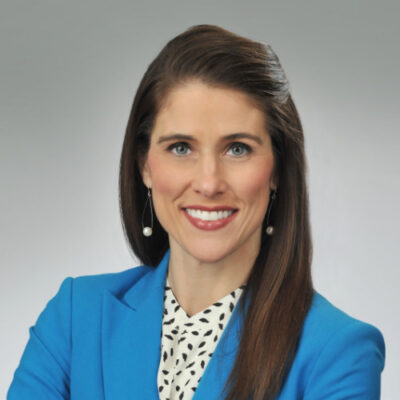
    Coryne Leyendecker is an attorney practicing in Swift Currie’s litigation section, defending businesses and insurers against claims related to commercial litigation, sexual abuse, governmental liability, premises liability, automobile litigation and construction law.

    Pamela Lee

    Pamela LeeSwift, Currie, McGhee & Hiers LLP

    Pamela N. Lee is a partner at Swift Currie with more than 15 years of experience practicing in the firm’s litigation section. Pamela devotes her entire practice to litigation, including various tort liability litigation, insurance coverage disputes and the defense of insurance bad faith matters. Her liability practice is wide and varied, encompassing premises liability, product liability, escalator and elevator liability, automobile liability and general personal injury law. She represents companies in the food, automobile and retail industries.

    The Journal on Emerging Issues in Litigation

    Emerging Litigation Podcast

    Emerging Litigation PodcastProduced by HB Litigation and Law Street Media

    Interviews with leading attorneys and other subject matter experts on new twists in the law and how the law is responding to new twists in the world.

    TVPRA, State Statutes Open Door for Civil Damage Claims by Human-Trafficking Victims

    “A plethora of nonprofit organizations and government agencies have collectively produced hundreds of available resources on how to help prevent human trafficking. Overwhelmingly, groups across the board agree that bringing awareness to human trafficking is the most foundational method to stopping human trafficking. By implementing intentional training and internal policies, businesses can not only insulate themselves from third-party claims but they can be a force for good in the fight against human trafficking. “

    Abstract: There is not a person alive with a soul that would believe sex trafficking and other variants of modern slavery is a good thing. The individuals that perpetrate those heinous acts should be punished accordingly. In 2003, Congress opened the door for human-trafficking victims to sue for civil damages under the Trafficking Victims Protection Act of 2000 (TVPRA). Since then the TVPRA and similarly drafted state statutes have allowed for human-trafficking victims to seek civil damages against any party that has benefited from their trafficking. Given this expansive inclusion of third-party liability, more and more businesses, especially those in the hospitality industry, are ultimately the ones left to pay for the criminal acts of human traffickers. This article discusses the evolving litigation around human-trafficking claims, beginning with a broad overview of human trafficking, followed by a discussion of the legal standard behind human-trafficking civil suits and recent guidance from U.S. courts on these types of claims. The article concludes with guidance of its own on how businesses can build a foundation for their own defense while simultaneously helping prevent human-trafficking crimes from ever occurring.

    Download the article now!

    Have an idea for an article?

    If you would like to propose an article for publication in the Journal on Emerging Issues in Litigation please review our specifications and benefits, then send us a summary, outline, or draft. If you also would like to discuss the topic on the Emerging Litigation Podcast, please note that.

  • Unarmed or Unwell: How Federal Law Infringes Medical Marijuana Users’ Second Amendment Rights

    Unarmed or Unwell: How Federal Law Infringes Medical Marijuana Users’ Second Amendment Rights

    The Author

    Griffen Thorne

    Griffen ThorneHarris Bricken

    Griffen Thorne (griffen@harrisbricken.com) is an attorney in the Los Angeles office of Harris Bricken Sliwoski LLP, an international emerging markets law firm. He represents clients in highly regulated emerging industries, such as cannabis, in corporate and commercial transactions.

    The Journal on Emerging Issues in Litigation

    Emerging Litigation Podcast

    Emerging Litigation PodcastProduced by HB Litigation and Law Street Media

    Interviews with leading attorneys and other subject matter experts on new twists in the law and how the law is responding to new twists in the world.

    Unarmed or Unwell:
    How Federal Law Infringes Medical Marijuana Users’ Second Amendment Rights

    As Justice Amy Coney Barrett noted while on the Seventh Circuit, “legislatures have the power to prohibit dangerous people from possessing guns. But that power extends only to people who are dangerous.” In the coming years, the government’s ability to write off all medical marijuana users as dangerous is likely to be curtailed, even if the Controlled Substances Act continues to make marijuana use a federal crime.

    Abstract: In the wake of the 2022 U.S. Supreme Court case New York State Rifle & Pistol Association, Inc. v. Bruen, federal courts have reached opposite outcomes on whether federal prohibitions on marijuana users’ rights to own or possess firearms are constitutional. As a result, there is a high likelihood of a circuit split that results in the overturning of those federal laws. The author discusses Bruen and several other cases at the intersection of drug laws and gun laws.

    Download the article now!

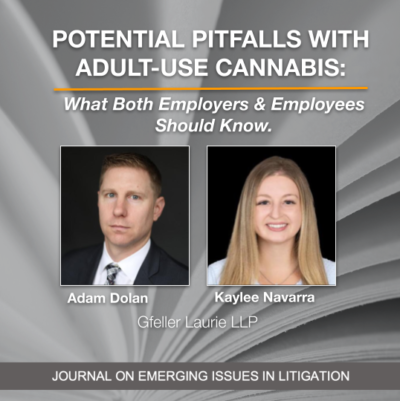
  • Potential Pitfalls with Adult-Use Cannabis: What Both Employers and Employees Should Know

    Potential Pitfalls with Adult-Use Cannabis: What Both Employers and Employees Should Know

    The Authors

    Adam R. Dolan

    Adam R. DolanGfeller Laurie LLP

    Adam R. Dolan (adolan@gllawgroup.com) is a partner with Gfeller Laurie LLP, a tested litigator with a multifaceted practice, he has extensive experience handling catastrophic transportation, general liability, and products liability matters. He is a frequent writer and speaker on topics related to the cannabis industry.

    Kaylee Navarra

    Kaylee NavarraGfeller Laurie LLP

    Kaylee E. Navarra (knavarra@gllawgroup.com) is an associate with Gfeller Laurie LLP where she works on matters involving commercial disputes, bad faith/
    extracontractual liability, and insurance coverage.

    The Journal on Emerging Issues in Litigation

    Emerging Litigation Podcast

    Emerging Litigation PodcastProduced by HB Litigation and Law Street Media

    Interviews with leading attorneys and other subject matter experts on new twists in the law and how the law is responding to new twists in the world.

    Potential Pitfalls with Adult-Use Cannabis:
    What Both Employers and Employees Should Know

    “Employers may also take action when the employee, while working, manifests specific articulable symptoms of cannabis impairment that decrease or lessen the employee’s performance of the employee’s tasks or duties and/or the employee, while working, manifests specific articulable symptoms of cannabis impairment that interfere with the employer’s obligation to provide a safe and healthy workplace as required by state and federal workplace safety laws.”

    Abstract: Recreational cannabis use for adults is legal in 21 states, having made its way eastward from Western jurisdictions that first addressed the issue. But these laws govern personal use during personal time. While they generally prohibit discrimination based on such use, these laws do not greenlight consumption at work or going to work under the influence. But with so many jurisdictions and job types, and variance among state laws, there aren’t simple answers. This is especially true for employers who conduct business nationwide, and because cannabis continues to be a Schedule I substance on the federal Controlled Substances Act. What rights and remedies do companies and workers have to resolve disputes? Are employers permitted to conduct drug tests? What about low-THC products and CBD? In this article the authors will address these and several other important questions.

    Download the article now!

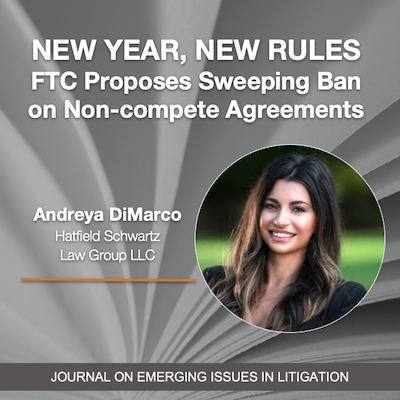
  • New Year, New Rules: FTC Proposes Sweeping Ban on Noncompete Agreements

    New Year, New Rules: FTC Proposes Sweeping Ban on Noncompete Agreements

    The Author

    Andreya DiMarco

    Andreya DiMarcoHatfield Schwartz Law Group LLC

    Andreya DiMarco (adimarco@hatfieldschwartzlaw.com) is counsel with Hatfield Schwartz Law Group LLC where she focuses on employment law and transactional matters.

    She has defended clients in state and federal courts and before administrative agencies, including the EEOC and DCR.

    The Journal on Emerging Issues in Litigation

    Emerging Litigation Podcast

    Emerging Litigation PodcastProduced by HB Litigation and Law Street Media

    Interviews with leading attorneys and other subject matter experts on new twists in the law and how the law is responding to new twists in the world.

    New Year, New Rules:
    FTC Proposes Sweeping Ban on Noncompetes

    “This is the FTC’s first attempt to ban non-compete agreements and strong opposition to the Proposed Rule as well as challenges regarding the scope of the FTC’s rule-making authority are likely to arise especially given the tremendous impact a retroactive and absolute non-compete ban would have.  …. [P]otential litigation over the FTC’s authority to issue and enforce such a rule may cause further delays…. Moreover, the Proposed Rule is full of ambiguity which will likely be challenged.”

    Abstract: On January 5, 2023, the Federal Trade Commission published a Notice of Proposed Rulemaking that would ban the use of noncompete agreements between employers and workers and would create an affirmative obligation for employers to void existing noncompete agreements. The Proposed Rule would also prohibit contractual clauses in other agreements or employment policies that have a similar effect. The Proposed Rule applies categorically to all workers, including independent contractors, without regard to a worker’s earnings or job function. This article discusses the nuances of the Proposed Rule as well as the legal and practical impact it will have if it is adopted.

    Download the article now!

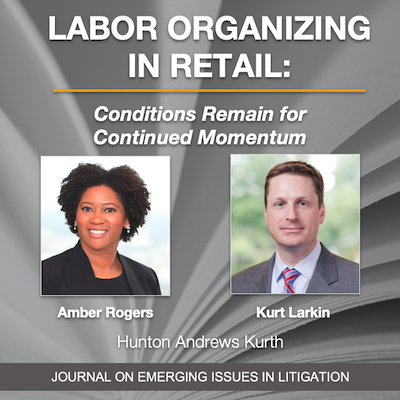
  • Labor Organizing in Retail: Conditions Remain for Continued Momentum

    Labor Organizing in Retail: Conditions Remain for Continued Momentum

    The Authors

    Amber Rogers

    Amber RogersHunton Andrews Kurth

    Amber is Board Certified in Labor & Employment Law by the Texas Board of Legal Specialization, and is a trial lawyer who has extensive experience representing and advising clients in traditional labor relations, such as collective bargaining, representation elections, decertification elections, unfair labor practice charges, arbitrating grievances, contract administration and interpretation, and union avoidance strategies.

    Amber’s litigation experience includes regularly representing clients in wage and hour collective and class actions, trade secrets and post-employment restrictive covenant disputes, and complex employment discrimination. As a part of Amber’s partnership with clients to avoid litigation, she frequently conducts and coordinates sensitive corporate investigations, and provides training presentations for clients on a multitude of topics.

    Kurt Larkin

    Kurt LarkinHunton Andrews Kurth

    Kurt helps businesses of all sizes solve their complex labor and employment challenges. He counsels clients on all aspects of labor-management relations, including representation elections, collective bargaining and strikes and lockouts, and also advises clients in strategic employment and human relations matters. Kurt litigates labor and employment cases in federal and state trial and appellate courts around the country and before the NLRB and EEOC.

    Kurt is a recognized thought leader in the area of traditional labor-management relations. He has been recognized as a leader in Labor and Employment by Chambers USA Virginia and as a 2022 Top 10 Labor Lawyer by Benchmark Litigation.

    The Journal on Emerging Issues in Litigation

    Emerging Litigation Podcast

    Emerging Litigation PodcastProduced by HB Litigation and Law Street Media

    Interviews with leading attorneys and other subject matter experts on new twists in the law and how the law is responding to new twists in the world.

    Labor Organizing in Retail: Conditions Remain for Continued Momentum

    “The political and social issues of the past few years, inflation, the looming recession, job security, wages, and pandemic-related frustration/unhappiness are just a few of the countless reasons cited for the boom in union support/approval.”

    Abstract: In 2022, labor organizing was in the spotlight with workers organizing at a rate not seen in years. The National Labor Relations Board saw an increase of union petitions during the last fiscal year, it was more than 50% higher than the previous year. Relatedly, more unions have won representation and American approval is at its highest in over 50 years. The rise of the “homegrown” union has directly impacted employers of all industries. The year 2022 can provide all industries and companies with lessons learned, particularly from those who faced threats for the first time. It is crucial to note too, however, that many of these companies and retailers have positive reputations. Labor and union laws continue to evolve as the Biden administration takes full control of the NLRB.

    Download the article now!

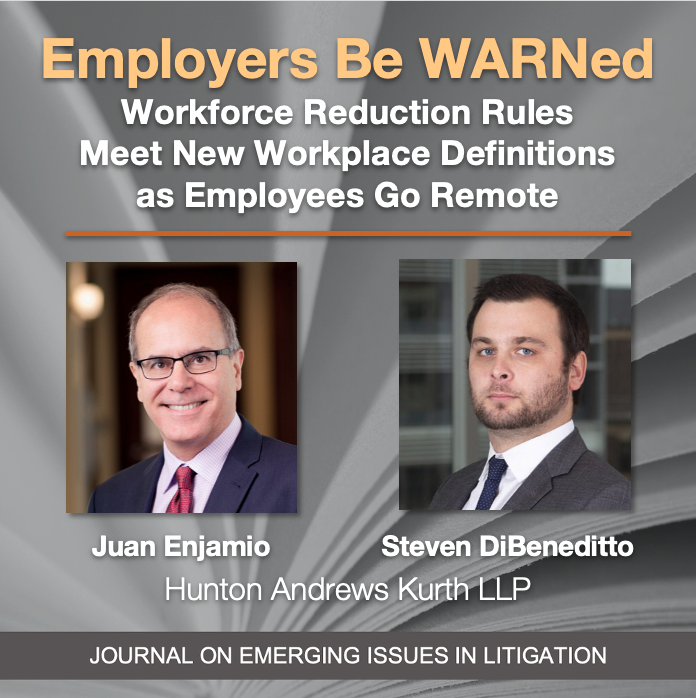
  • Employers Be WARNed: Workforce Reduction Rules Meet New Workplace Definitions as Employees Go Remote by Juan Enjamio and Steven DiBeneditto

    Employers Be WARNed: Workforce Reduction Rules Meet New Workplace Definitions as Employees Go Remote by Juan Enjamio and Steven DiBeneditto

    The Authors:

    Juan Enjamio

    Juan EnjamioHunton Andrews Kurth

    Juan C. Enjamio (jenjamio@huntonak.com) is managing parter of the Miami office of Hunton Andrews Kurth where he dedicates his practice to complex domestic and international employment law matters.

    Steven DiBeneditto Jr.

    Steven DiBeneditto Jr.Hunton Andrews Kurth

    Steven J. DiBeneditto Jr. (sdibeneditto@huntonak.com) is a Washington, DC-based associate in the firm’s employment and labor group.

    The Journal on Emerging Issues in Litigation

    Emerging Litigation Podcast

    Emerging Litigation PodcastProduced by HB Litigation and Law Street Media

    Interviews with leading attorneys and other subject matter experts on new twists in the law and how the law is responding to new twists in the world.

    Employers Be WARNed

    Workforce Reduction Rules Meet New Workplace Definitions as Employees Go Remote

    “Numerous courts have opined that a “home base” is a place in which the employee has some sort of physical connection. But this connection must be more than a “notional” base, whereby the employee has a menial relationship.”

    Introduction

    A common sentiment during the Covid-19 pandemic was that a different society would emerge from its ashes. While overstated in many cases, one segment of society that appears to have changed for good is the white collar workplace. Indeed, after enjoying the flexibility of working from home for more than 2 years, many white collar workers are demanding that a remote work option remain a permanent fixture at their place of employment. And with seemingly no negotiating leverage due to worker shortages across the country, employers have mostly acceded to these demands, with many opting to implement a “hybrid” workforce where employees work from home for part of the work week and transit to the physical workplace for the rest of the week. Other employers have opted to have employees work entirely from home in what is now generally known as a “remote” employee.

    But widespread adoption of a Hybrid Workforce presents a complex set of legal challenges for employers. These challenges are especially prevalent when making employment decisions using laws that were drafted decades ago to a new workplace that was never considered during the laws’ enactment. Nowhere is this problem more apparent than with the Worker Adjustment and Retraining Notification (“WARN”) Act, a statute adopted almost four decades ago in 1988. Simply put, the WARN Act sets forth notice requirements for employers who plan to close a plant or implement a reduction in force. Yet the WARN Act’s reduction in force provisions apply only to “single sites of employment,” which has been traditionally understood to mean a physical building or a group of buildings in contiguous locations. This  single site of employment definition makes the WARN Act ill-suited to address the emerging (but ubiquitous) issue of workers who are dispersed, e.g. Remote and Hybrid Workplaces.

    With that in mind, this article seeks to highlight the issues with the WARN Act and Remote and Hybrid Workplaces and package them into a guide for employers. The article begins by summarizing the WARN Act and the regulations for single sites of employment. It then shifts to a recent district court case analyzing the issue of Remote Work under the WARN Act for purposes of Rule 23(b)(3)’s predominance requirement for class certification. The article concludes by offering some suggestions to help prevent WARN Act liability.

    Download the article now!