Category: Employment

  • Ninth Circuit Rejects Religious Accommodation Claim in COVID Testing Case

    Ninth Circuit Rejects Religious Accommodation Claim in COVID Testing Case

    Emerging Litigation Podcast

    Emerging Litigation PodcastProduced by HB Litigation

    Interviews with leading attorneys and other subject matter experts on new twists in the law and how the law is responding to new twists in the world.

    Interested in contributing an article? Email us at Editor@LitigationConferences.com.

    Ninth Circuit Rejects Religious Accommodation Claim in COVID Testing Case 

    This ruling provides helpful clarity for employers—especially in healthcare—who continue to navigate religious accommodation requests post-pandemic.

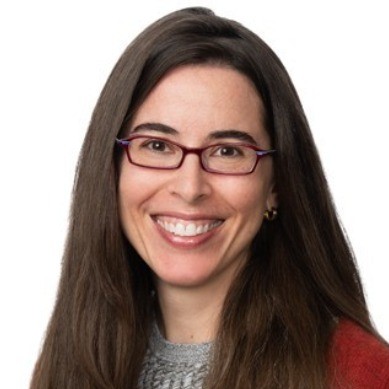
    –Stefani Schwartz

    In Detwiler v. Mid-Columbia Medical Center, the Ninth Circuit upheld the dismissal of a Title VII religious discrimination claim brought by a healthcare worker who objected to weekly COVID-19 antigen testing despite being granted a vaccination exemption. The court held that the plaintiff failed to plead a bona fide religious belief that conflicted with the testing requirement, and that the employer’s accommodation—masking plus testing—was reasonable. 

    Employment attorney Stafani Schwartz told HB Litigation that this ruling provides helpful clarity for employers—especially in healthcare—who continue to navigate religious accommodation requests post-pandemic. In practice, most litigation in this area turns on what is considered a reasonable accommodation, and how far an employer must go before it becomes an undue burden. 

    Stefani noted that the Ninth Circuit reinforced several key points for employers:
    • A religious objection must be tied to an identifiable and sincerely held religious belief—not personal or philosophical opposition.
    • Reasonable accommodations grounded in safety, such as testing or masking, are likely to be upheld when implemented consistently.
    • Employers are not required to offer an employee’s preferred accommodation if a reasonable alternative already exists. 

    Stefani emphasized that for defense counsel, the case highlights the continuing importance of:
    • Maintaining clear, consistent policies
    • Documenting an interactive accommodation process
    • Ensuring all decisions are tied to legitimate business and safety needs 

    Taken together, the ruling strengthens employers’ ability to defend against religious discrimination claims where a good-faith, reasonable accommodation has already been provided.

     

  • Unraveling “Reverse Discrimination” with Employment Attorney Leah Stiegler on the Emerging Litigation Podcast

    Unraveling “Reverse Discrimination” with Employment Attorney Leah Stiegler on the Emerging Litigation Podcast

    Unraveling “Reverse Discrimination” with Leah Stiegler

    Concepts: Discrimination ; Employment Law

    What happens when the traditional understanding of workplace discrimination is turned on its head? Will the Supreme Court’s unanimous ruling in Ames v. Ohio Department of Youth Services change how discrimination cases are evaluated when brought by members of majority groups?

    Attorney Leah Stiegler of Woods Rogers joins us to examine this decision that rejected the “background circumstances rule” — a standard that previously imposed a heightened evidentiary burden on white, heterosexual, or male plaintiffs claiming discrimination. As Leah explains, “There’s no such thing as reverse discrimination. It’s just discrimination.” This simple yet insightful statement captures the essence of the Court’s reasoning that Title VII protections apply equally to all employees, regardless of their demographic status.

    Leah shares results from mock trials conducted with identical facts in different Virginia jurisdictions. A conservative Lynchburg jury awarded a white male plaintiff $600,000, while a more liberal Richmond jury found no discrimination whatsoever with the exact same evidence. This highlights how geography and community values dramatically influence discrimination case outcomes, sometimes more than the legal standards themselves.

    We also explore the McDonnell Douglas burden-shifting framework that remains the analytical backbone of discrimination cases, the emerging concept of intersectional discrimination, and recent executive orders concerning religious expression in the workplace. Throughout our discussion, Leah offers practical insights for employers navigating these evolving issues, emphasizing that while the political discourse around DEI initiatives may be contentious, the fundamental prohibition against discrimination remains unchanged.

    Whether you’re an employer developing workplace policies, an HR professional conducting training, or an employee trying to understand your rights, this episode provides essential context for understanding how discrimination law is evolving in unexpected ways. Subscribe to the Emerging Litigation Podcast for more in-depth analysis of the legal issues shaping our workplaces and society.

    This is Leah’s second appearance on the podcast and I appreciate it!

    I hope you enjoy the conversation! If so, give us a rating!

    If you have comments, ideas, or wish to participate, please drop me a note at Editor@LitigationConferences.com.

    Tom Hagy
    Litigation Enthusiast and
    Host of the Emerging Litigation Podcast
    Home Page
    LinkedIn

    podcast logo face


    Want to appear on the Emerging Litigation Podcast?


    Send us your idea! 

    It’s possible it could make this man smile. But let’s not get ahead of ourselves.

    Leah Stiegler

    Leah StieglerWoodsRogers

    Leah can walk employers through any workplace situation. From complex personnel matters, to implementing client-specific performance management practices, Leah advises employers to navigate these issues to keep them out of court. Her counseling covers the entire employment spectrum: recruitment, onboarding, workplace culture, pay equity audits, RIFs, terminations and severance packages.

    Leah handles workplace investigations and defends actions before administrative agencies such as the EEOC, DOL, and NLRB. Leah has extensive litigation experience, defending employers in state and federal court.

    Leah also represents employers navigating union issues, labor relations arbitrations and collective bargaining. Every workforce loves Leah’s dynamic public speaking style. Having traveled the Mid-Atlantic to train front-line employees, upper management, HR and other industry professionals, Leah creates custom workforce training programs with her team and has fun doing it!

    Leah earned her J.D. from the University of Richmond School of Law, cum laude, Order of the Coif.

  • DEI Programs as a Source of Liability for Law Firms and Other Businesses

    DEI Programs as a Source of Liability for Law Firms and Other Businesses

    The Author

    William (Billy) Jones

    William (Billy) JonesMoye White LLP

    An experienced and accomplished litigator, Billy’s practice focuses on complex civil litigation and business disputes. He defends business clients involved in product liability defense, franchise and distribution disputes, insurance defense and coverage issues, trust and estate litigation, as well as real estate litigation.

    Billy’s practice has also included representation of clients in a variety of appellate courts, including the Colorado Court of Appeals, the federal Fourth and Tenth Circuit Courts of Appeals, the Virginia Supreme Court, and the South Dakota Supreme Court. Billy has tried cases in over 15 states over the lifetime of his career.

    Focused and aggressive, Billy represents corporate clients in the variety of claims that arise in the business world. For his clients with interests in manufacturing, product distribution, and retail businesses, Billy has extensive experience defending against manufacturing, design defect, negligence, and breach of warranty claims.

    Billy is the former Vice-chair of Moye White’s Trial Section and currently serves as Co-Chair of the Franchise & Distribution Group, representing franchisors in franchise disputes, and providing valuable advice regarding business development and sales, as well as offerings compliance. He is also active in representing clients in Colorado’s burgeoning brewing and distilling markets.

    A true advocate, Billy protects the interests of his clients against claims of directors’ and officers’ liability, bad faith, negligence, and other torts. He also has extensive experience in cases involving real estate and associated transactions.

    Billy provides exceptional counsel at trial, through appeal, and in mediation and arbitration proceedings. He has extensive experience before the state and federal courts in Colorado, and has represented clients in various federal courts throughout the country.

    DEI Programs as a Source of Liability for Law Firms and Other Businesses

    Whether internally or with clients, law firms should consider changes to programs that may still meet the goal of increasing underrepresented populations without running afoul of claims alleging racial discrimination. Creative solutions may be available, and attorneys should be discussing these options with their clients.

    From a risk management perspective, law firms should engage in an internal review of their own DEI initiatives and programs. Practices and programs that were once compliant with applicable law may no longer be.

    Abstract:

    Two recent cases against international law firms point to this emerging trend in litigation that could have widespread implications for diversity, equity, and inclusion (DEI) programs. In the wake of this year’s U.S. Supreme Court opinion striking down the use of race in college admissions, there was much speculation about the impact these rulings might have outside of the academic context—and that remains an unanswered question. However, two recent cases filed against international law firms for their DEI fellowships could be indicators of the impact for law firms and other private businesses.

    Download the article now!

  • DEI Programs as a Source of Liability for Law Firms and Other Businesses

    DEI Programs as a Source of Liability for Law Firms and Other Businesses

    The Author

    William (Billy) Jones

    William (Billy) JonesMoye White LLP

    An experienced and accomplished litigator, Billy’s practice focuses on complex civil litigation and business disputes. He defends business clients involved in product liability defense, franchise and distribution disputes, insurance defense and coverage issues, trust and estate litigation, as well as real estate litigation.

    Billy’s practice has also included representation of clients in a variety of appellate courts, including the Colorado Court of Appeals, the federal Fourth and Tenth Circuit Courts of Appeals, the Virginia Supreme Court, and the South Dakota Supreme Court. Billy has tried cases in over 15 states over the lifetime of his career.

    Focused and aggressive, Billy represents corporate clients in the variety of claims that arise in the business world. For his clients with interests in manufacturing, product distribution, and retail businesses, Billy has extensive experience defending against manufacturing, design defect, negligence, and breach of warranty claims.

    Billy is the former Vice-chair of Moye White’s Trial Section and currently serves as Co-Chair of the Franchise & Distribution Group, representing franchisors in franchise disputes, and providing valuable advice regarding business development and sales, as well as offerings compliance. He is also active in representing clients in Colorado’s burgeoning brewing and distilling markets.

    A true advocate, Billy protects the interests of his clients against claims of directors’ and officers’ liability, bad faith, negligence, and other torts. He also has extensive experience in cases involving real estate and associated transactions.

    Billy provides exceptional counsel at trial, through appeal, and in mediation and arbitration proceedings. He has extensive experience before the state and federal courts in Colorado, and has represented clients in various federal courts throughout the country.

    DEI Programs as a Source of Liability for Law Firms and Other Businesses

    Whether internally or with clients, law firms should consider changes to programs that may still meet the goal of increasing underrepresented populations without running afoul of claims alleging racial discrimination. Creative solutions may be available, and attorneys should be discussing these options with their clients.

    From a risk management perspective, law firms should engage in an internal review of their own DEI initiatives and programs. Practices and programs that were once compliant with applicable law may no longer be.

    Abstract:

    Two recent cases against international law firms point to this emerging trend in litigation that could have widespread implications for diversity, equity, and inclusion (DEI) programs. In the wake of this year’s U.S. Supreme Court opinion striking down the use of race in college admissions, there was much speculation about the impact these rulings might have outside of the academic context—and that remains an unanswered question. However, two recent cases filed against international law firms for their DEI fellowships could be indicators of the impact for law firms and other private businesses.

    Download the article now!

  • What DEI Changes Mean for Employers Featuring Patice Holland

    What DEI Changes Mean for Employers Featuring Patice Holland

    What DEI Changes Mean for Employers Featuring Patice Holland

    Concepts: DEI; Employment Law; Discrimination

    As political forces target Diversity, Equity, and Inclusion programs, companies reassessing their DEI strategies must tread carefully—because, while the landscape has shifted, employment discrimination law has not.

    Joining me on the Emerging Litigation Podcast is employment law attorney Patice L. Holland, a Principal at WoodsRogers in Roanoke, Va. Patice shares with me what companies need to know as they reassess their DEI initiatives in light of President Trump’s recent executive orders and increasing public and political pressure.

    Patice explains that while the administration has moved to eliminate disparate impact liability and deprioritize federal enforcement, core legal protections under Title VII and state laws remain fully intact. Employers—especially federal contractors—face complex new certification requirements and exposure to potential False Claims Act liability, while private businesses must weigh operational risk, employee morale, and public perception in their decisions.

    We also examine the ripple effects across corporate America—from Costco and Apple, which continue to be invested in DEI, to Target and Amazon, which scaled back initiatives and faced backlash. Patice suggests practical considerations for navigating any changes, emphasizing clear communication, leadership buy-in, and careful risk assessment.

    Listen in as she explains the real impact and power of the executive orders, how obligations differ for government contractors and private companies, the legal and strategic risks of altering DEI policies, and the real-world business consequences of staying the course—or stepping back.

    Have thoughts or want to contribute to future episodes? Email: Editor@LitigationConferences.com

    Tom Hagy
    Litigation Enthusiast and
    Host of the Emerging Litigation Podcast
    Home Page
    LinkedIn

    Patice Holland

    Patice HollandPrincipal, WoodsRogers

    Patice is an attorney with a diverse litigation practice and experience. She focuses primarily on employment litigation defense, employment investigations, transportation law (FELA, SAA, LIA), general civil and commercial litigation, commercial and residential landlord-tenant litigation, and insurance defense.

    She has extensive experience litigating cases in state and federal courts as well as in mediation. Through her litigation experience, Patice has garnered extensive knowledge in defending witness and document subpoenas and FOIA requests.

    As Chair of the firm’s E-Discovery group, she advises clients on all aspects of E-discovery, including litigation holds, custodial interviews/data collection and preservation, and review and production of electronically stored information (ESI). Patice has been involved in extensive discovery matters in complex litigation in both state and federal courts. She earned her J.D. from Stetson University College of Law.

    podcast logo face


    Want to appear on the Emerging Litigation Podcast?


    Send us your idea! 

    It might even make this man smile. “But I am smiling here.”

    No. No he’s not.

  • Injunction against Trump’s DEI executive orders unlikely to stem massive wave of ‘reverse discrimination’ lawsuits

    Injunction against Trump’s DEI executive orders unlikely to stem massive wave of ‘reverse discrimination’ lawsuits

    Emerging Litigation Podcast

    Emerging Litigation PodcastProduced by HB Litigation

    Interviews with leading attorneys and other subject matter experts on new twists in the law and how the law is responding to new twists in the world.

    Interested in contributing an article? Email us at Editor@LitigationConferences.com.

    Injunction against Trump’s DEI executive orders unlikely to stem massive wave of ‘reverse discrimination’ lawsuits  

    By: Justin Ward

    If the Supreme Court rules in the plaintiff’s favor, it could open the floodgates for ‘reverse discrimination’ suits by lowering the evidentiary threshold for claims.

    Last week, a federal court enjoined provisions of President Donald Trump’s executive orders targeting “illegal DEI” programs, but legal experts argue that it’s doubtful the ruling will halt the explosive growth in “reverse discrimination” suits under the current administration. 

    In the case of National Association of Diversity Officers in Higher Education et al. v. Trump et al, a district judge in Maryland issued a preliminary injunction against two executive orders targeting Diversity, Equity, and Inclusion programs in federal contracting and the private sector. One would require agencies to terminate all “equity-related” grants and contracts within 60 days. The second mandated that grant recipients certify compliance with federal anti-discrimination laws and called on the U.S. attorney general to open investigations into private sector DEI programs. 

    The judge found that the plaintiffs could likely prove the case on its merits that the executive order was unconstitutionally vague. The executive orders did not clearly define critical terms like “equity-related” and “DEI,” causing potential confusion for agencies, contractors, or private entities attempting to interpret and comply with the order.  On similar grounds, the judge argued that ambiguities around what constitutes “illegal DEI” in the orders’ enforcement provisions could have a chilling effect on free speech. 

    While the injunction temporarily prevents federal agencies, contractors, and grantees from losing funding under the executive orders, it will not affect ongoing and pending “reverse discrimination” suits under Title VII of the 1964 Civil Rights Act or the Equal Employment Opportunity Act. Nothing in the court opinion prevents third parties from bringing lawsuits under these longstanding legal frameworks. 

    The number of lawsuits claiming discrimination against majority groups has grown substantially in the wake of the Supreme Court’s 2023 ruling in Students for Fair Admission v. Harvard, which dealt a lethal blow to affirmative action in higher education.  

    Activists and individual plaintiffs have brought more than 100 claims of “reverse discrimination” since then. Meanwhile, state legislators have introduced over 80 anti-DEI laws aimed at programs that promote minority hiring, women-owned businesses, and bias training, potentially creating new causes of action. 

    Moreover, late last fall, the Supreme Court agreed to hear a case that could potentially lower the bar for successful “reverse discrimination” litigation.  Ames v. Ohio Department of Youth Services will determine if a person in a historical majority group must prove that “background circumstances” exist showing that an employer has an interest or inclination to discriminate in favor of a minority. 

    These “background circumstances” could include things like hiring  minority applicants who are unambiguously less qualified than majority ones or demonstrating an obvious pattern of preferring minority employees. In this case, the Sixth Circuit found that the plaintiff, a heterosexual woman who was demoted and replaced by a gay man, could not sufficiently prove there was a pattern by providing other examples of discrimination against heterosexuals. 

    If the Supreme Court rules in the plaintiff’s favor, it could open the floodgates for “reverse-discrimination” suits by lowering the evidentiary threshold for claims. Still, it’s noteworthy that one of the few times the conservative Supreme Court has broken with the Trump Administration was in the case of Bostock v. Clayton County, in which it found that Title VII applied to discrimination based on sexual orientation.  


    Justin Ward is a Seattle-based investigative reporter specializing in politics, courts, and criminal justice. His work can be found in national and local media outlets, including USA Today, the Southern Poverty Law Center, and The Seattle Stranger. He can be reached at justinwardtexan@yahoo.com.

  • Trends and Strategies in Wage & Hour Class and Collective Actions

    Trends and Strategies in Wage & Hour Class and Collective Actions

    Trends and Strategies in Wage & Hour Class and Collective Actions

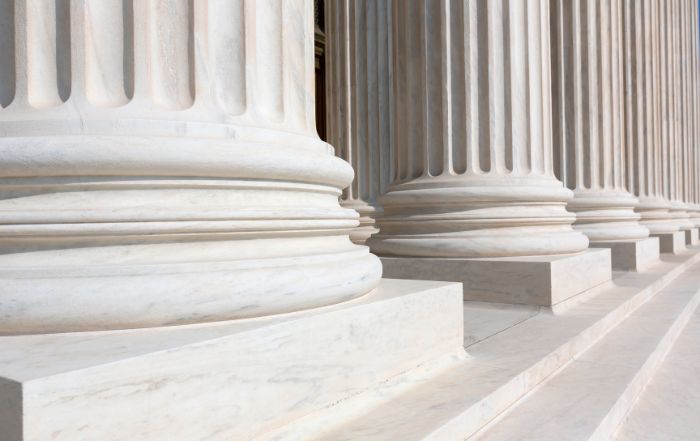
    The lower half of large stone pillars outside a courthouse, symbolizing strength and justice.

    Gain a better understanding of the Fair Labor Standards Act (FLSA) and wage and hour collective actions, get up to date on significant trends and recent key settlements in this area of law, and grasp the main considerations for conditional class certification and decertification and the key collective action rulings handed down in 2023.  

    Developed and presented by three practicing attorneys with expertise in employment law and complex litigation, this webinar is designed for attorneys and other professionals who wish to a) better understand the Fair Labor Standards Act (FLSA) and wage and hour class and collective actions, b) get up to date on significant trends and recent key settlements in this area of law, and c) grasp the main considerations for conditional class certification and decertification and the key collective action rulings handed down in 2023. This course’s core objectives are to give you an overview of FLSA, wage and hour class and collective actions, background on Rule 23 class actions, and insight into notable trends and leading settlements. We will address points of deliberation for conditional certification and decertification of class and collective actions, looking at widely used certification methods and certification rates, then close with key rulings in this area of law issued in 2023. 

    Join experienced class action defense litigators Gerald L. Maatman, Jr., Jennifer A. Riley, and Greg Tsonis for a high-level breakdown of trends and strategies in wage & hour class and collective actions. Sign up today!

    Learning Objectives

    Gain a working understanding of the Fair Labor Standards Act. 

    Get a clear picture of the wage and hour class and collective actions landscape. 

    Understand the background of Rule 23 class actions. 

    Get current on significant trends in the law.  

    Learn the details and significance of recent settlements.  

    Know what factors are considered for conditional certification and decertification. 

    Come away with a solid grasp of recent wage and hour rulings.   

    Other Class Action Podcasts Worth a Listen:

    Hair Relaxer Injury Litigation with Jennifer Hoekstra

    TAKE IT NOW

    Available now to CeriFi LegalEdge subscribers. Don’t subscribe? Don’t despair. Use code HB20 for 20% off. Or, HBSub20 for 20% off a full solo subscription. While supplies last.

    Speakers

    Gerald L. Maatman, Jr.

    Gerald L. Maatman, Jr.Partner, Duane Morris LLP

    A widely recognized workplace class action defense litigator, Jerry is a Partner at Duane Morris LLP, where he chairs the firm’s Class Action Defense Group. He is a graduate of Washington & Lee University and the Northwestern University School of Law, where he has served as an adjunct professor for 34 years. The author of eight books on the law, Jerry is a sought-after legal commentator by major news organizations. He works out of the Duane Morris offices in Chicago and New York.

    Jennifer A. Riley

    Jennifer A. RileyPartner, Duane Morris LLP

    A partner in the Duane Morris Chicago office, Jennifer is vice-chair of the firm’s Class Action Defense Group. She regularly defends companies facing class actions, collective actions, pattern or practice lawsuits, and other types of representative proceedings, ranging in size from dozens to tens of thousands of claims. Jennifer also helps employers navigate thorny issues, including investigations, compliance, and terminations. She earned her J.D. from the University of California, Berkeley School of Law, and her B.A. from Vanderbilt University, magna cum laude.

    Gregory Tsonis

    Gregory TsonisPartner, Duane Morris LLP

    Gregory “Greg” Tsonis is an integral member of the Workplace Class Action Group at Duane Morris. With a practice that encompasses defending companies in a wide spectrum of employment law cases, Mr. Tsonis adeptly handles everything from complex, high-stakes class actions asserting wage & hour and discrimination claims to intense individual plaintiff cases and government agency investigations. His knowledge extends to a broad spectrum of federal and state statutes, including the Fair Labor Standards Act, state wage & hour laws, the Civil Rights Act, the Americans with Disabilities Act, the Biometric Information Privacy Act, and state consumer protection laws, among others. Mr. Tsonis received his Bachelor of Arts degree from the University of Chicago and his law degree, with honors, from the University of Chicago Law School.

  • Humans at Work with Leah Stiegler

    Humans at Work with Leah Stiegler

    Humans at Work with Leah Stiegler

    Concepts: Workplace Culture, Employment Law, Employment Compliance, Workplace Romance, Workplace Disputes, Pregnancy at Work, Harassment at Work, Working Overtime, Implicit Biases, Microaggressions

    People. We’re complicated creatures. We can be compassionate. We can fall in love. Sometimes we don’t care for each other, but here we are. 

    Also, some people cross the lines of propriety, causing emotional or even physical harm to others on our teams, whether we work with them, for them, or whether we supervise them. And sometimes we work more than regular hours, either because we’re directed to or because we’re willing to do what it takes to help our teams succeed. The workplace can be a labyrinth of tricky situations, and employers need to know how to make sure workers are able to navigate them smoothly, appropriately, and within changing laws and regulations.

    Our guest is Leah M. Stiegler, aprincipal attorney at Woods Rogers, who comes to the podcast with extensive experience across a broad spectrum of employment law matters. Leah is a trusted advisor to employers, providing guidance on complex personnel issues, performance management challenges, and fostering a positive work culture. Leah earned her J.D. from University of Richmond School of Law, cum laude, Order of the Coif, and her B.A. and B.S. degrees from Virginia Tech, summa cum laude.

    Listen as Leah shares practical solutions for a variety of challenges, like love at work, pregnancy at work, discord at work, harassment at work, and working overtime. She talks about gender identity protections, implicit biases, and microaggressions, plus conducting administrative investigations, and ideas to mitigate risk, stay out of court, and maintain a positive work environment.

    Thanks to Leah for sharing her insights on issues that arise where many of us spend most of our waking hours – at work! Her enthusiasm and passion for this work will be obvious to anyone who listens. I hope you enjoy it as much as I did producing it.

    I hope you enjoy the conversation! If so, give us a rating!

    This podcast is the audio companion to the Journal on Emerging Issues in Litigation. The Journal is a collaborative project between HB Litigation Conferences and the vLex Fastcase legal research family, which includes Full Court Press, Law Street Media, and Docket Alarm.

    If you have comments, ideas, or wish to participate, please drop me a note at Editor@LitigationConferences.com.

    Tom Hagy
    Litigation Enthusiast and
    Host of the Emerging Litigation Podcast
    Home Page
    LinkedIn

    podcast logo face


    Want to appear on the Emerging Litigation Podcast?


    Send us your idea! 

    It’s possible it could make this man smile. But let’s not get ahead of ourselves.

    Leah Stiegler

    Leah StieglerWoodsRogers

    Leah can walk employers through any workplace situation. From complex personnel matters, to implementing client-specific performance management practices, Leah advises employers to navigate these issues to keep them out of court. Her counseling covers the entire employment spectrum: recruitment, onboarding, workplace culture, pay equity audits, RIFs, terminations and severance packages.

    Leah handles workplace investigations and defends actions before administrative agencies such as the EEOC, DOL, and NLRB. Leah has extensive litigation experience, defending employers in state and federal court.

    Leah also represents employers navigating union issues, labor relations arbitrations and collective bargaining. Every workforce loves Leah’s dynamic public speaking style. Having traveled the Mid-Atlantic to train front-line employees, upper management, HR and other industry professionals, Leah creates custom workforce training programs with her team and has fun doing it!

    Leah earned her J.D. from the University of Richmond School of Law, cum laude, Order of the Coif.

  • Mental Wellbeing and Fulfillment for Litigators: Sara Lord Interviews Gary Miles

    Mental Wellbeing and Fulfillment for Litigators: Sara Lord Interviews Gary Miles

    Mental Wellbeing and Fulfillment for Litigators: Sara Lord Interviews Gary Miles

    Concepts: Mental Health Awareness, Lawyer Wellbeing, Coping Strategies, Stress Management, Litigator Fulfillment

    This episode is dedicated to Mental Health Awareness Month — May 2024 — in which we explore some of the keys to achieving wellbeing as a human litigator.

    Lawyers contemplate suicide at “an exceedingly high rate.” Whereas 4.2% of adults have reported contemplating suicide, that figure is 10-12% among lawyers. According to a study published by MDPI, lawyers are prone to mental health issues, including anxiety, depression, and substance abuse. “[O]ur findings suggest the profile of a lawyer with the highest risk for suicide is a lonely or socially isolated male with a high level of unmanageable stress, who is overly committed to their work, and may have a history of mental health problems.” Released in 2023, the authors of the study — Stressed, Lonely, and Overcommitted: Predictors of Lawyer Suicide Risk (Krill, Thomas, Kramer, Degeneffe, and Anker) — say there is a need for interventions to address these risks, including “education, resources, and support for lawyers to better manage their workload, modifying work demands and expectations, and promoting a culture of openness and support within law firms.”

    With that as a backdrop, guest host and legal analytics professional Sara Lord interviews success coach and former litigator Gary Miles about the professional dissatisfaction litigators experience when the pursuit of fulfillment clashes with high-stress demands — from burnout to depression to imposter syndrome. Explore practical strategies for managing anxiety and embracing mindfulness, like reframing your thoughts, celebrating even small achievements, identifying trusted colleagues and mentors, the importance of rest, and reaching out for help. Learn some of the wisdom Gary imparts via his counseling services.

    Feeling emotionally crisp? “There is always a solution. Always,” Gary says.

    *******
    Need Immediate Help? If you are in the U.S. and experiencing thoughts of suicide, call or text the 988 Suicide and Crisis Lifeline at 988 or IMAlive at 1-800-784-2433. In the UK and Ireland – Call Samaritans UK at 116 123; in Australia – Call Lifeline Australia at 13 11 14; in other countries – Visit IASP or Suicide.org to find a helpline in your country.

    *******

    This podcast is the audio companion to the Journal on Emerging Issues in Litigation. The Journal is a collaborative project between HB Litigation Conferences and the vLex Fastcaselegal research family, which includes Full Court Press, Law Street Media, and Docket Alarm.

    If you have comments, ideas, or wish to participate, please drop me a note at Editor@LitigationConferences.com.

    Tom Hagy
    Litigation Enthusiast and
    Host of the Emerging Litigation Podcast
    Home Page
    LinkedIn

    Loved listening to Sara’s interview with Gary Miles?

    Listen to Sara’s other podcast interviews!

    Podcast: Technology-Assisted Review: Sara Lord Interviews Data Scientist Lenora Gray

    Podcast: Transforming Legal Workflows with AI: Sara Lord Interviews Tara Emory and Wilzette Louis

    Guest Host

    Sara Lord

    Sara LordManaging Director of Legal Metrics

    Sara Lord is a former practicing attorney with a decade of experience in data analytics. Sara applies her talents in large and small law firms and businesses to explore and address the cultural and practical barriers to diversity in law, and client-first business-oriented practices. As Managing Director of Legal Metrics, she leads a team of experts focused on providing the tools to support data-driven decision making in legal operations and closer collaboration between law firms and their clients through automation and standardization of industry metrics.

    Sara earned her J.D. from New York University School of Law.

    Guest

    Gary Miles

    Gary MilesSuccess Coach and Former Litigator

    Gary Miles has been a high-level trial attorney for over 40 years in a variety of areas including transportation law, serious personal injury, family law, and estate disputes. He presently focuses on family law and loves to lift and support his clients when they are in a very difficult place.

    He has been the managing partner of Huesman, Jones, and Miles for over 3 decades. He has been an active member of many professional associations including the American Bar Association.

    He is a trained mediator with over 120 hours in mediation training. He has participated in over 1000 mediations and settlement conferences both as counsel for one of the parties and as the facilitator. His studies featured specialized training for divorce mediation, including a focused course on child access, property, and financial issues, and commercial litigation mediation. He delights in helping clients solve their challenging issues.

    Gary brings over four decades of experience as a problem solver to his coaching business. He has an incredible passion for helping his clients discover the blocks that are holding them back and freeing them to better achieve their dreams. He has helped clients and parties resolve thousands of issues and disputes over the years. He is blessed with a calm demeanor and is an empathetic listener.

    Want to appear on the Emerging Litigation Podcast?

    Send us your idea! 

    Tags

    Emerging Litigation & Risk Compliance Litigation & appeals Cybersecurity Data Privacy Artificial Intelligence (AI) Insurance Companies Risk Management Corporate & Securities Insurance Claims Recovery Regulations Data Breach Toxic Torts Antitrust Legal Tech Product Liability Settlements Trial Personal Injury Privacy Healthcare Per- and Polyfluoroalkyl Substances (PFAS) Data Analytics Arbitration Constitutional Law Climate Change Cannabis Labor Law Insurance Fraud Liability Claims COVID Alternative Dispute Resolution (ADR) Mediation Diversity Equity Inclusion (DEI) Claims management Professional Liability Legal Research & Writing Business Interruption Law Practice Management Trial Skills Property and Casualty Drug Laws Copyright Law Catastrophic Loss

  • AI Nuts & Bolts Survival Guide: Artificial Intelligence – Discrimination in Employment Context

    AI Nuts & Bolts Survival Guide: Artificial Intelligence – Discrimination in Employment Context

    AI Nuts & Bolts Survival Guide: Artificial Intelligence – Discrimination in Employment Context 

    Leverage the Latest Court Decisions and Governmental Guidance to Tailor Use of AI Screening Tools in the Employment Context.

    AI, and generative AI in particular, took the employment world by storm in 2023, quickly becoming one of the most talked about and debated subjects among corporate counsel across the country. This trend is showing no signs of slowing down in 2024, as companies increasingly utilize AI as a resource to enhance decision-making processes. 

    As these processes are fine-tuned, those who seek to harness the power of AI must be aware of the risks associated with its use. 

    This webinar discusses two novel AI lawsuits and highlights recent governmental guidance related to AI use. As the impact of AI is still developing, companies should recognize the type of legal claims that may stem from the use of AI screening tools in the employment context, including the implications of possible unintended discriminatory conduct stemming from these tools.  

    BONUS: Read the paper our speakers authored for the Journal on Emerging Issues in Litigation.    

    Interested in More CLE OnDemand? Click here.

    Explore more from Duane Morris LLP!

    Journal (JEIL):Artificial Intelligence Litigation Risks in the Employment Discrimination Context. By Gerald Maatman Jr., Alex Karasik, and George Schaller

    CLE OnDemand Webinar: AI Nuts & Bolts Survival Guide: Artificial Intelligence – Discrimination in Employment Context. Gerald Maatman Jr., Alex Karasik, and George Schaller

    CLE OnDemand Webinar: Discovery Strategies in Wage and Hour Class and Collective Actions Before and After Certification of Putative Class. Gerald Maatman Jr., Noel P. Tripp

    Speakers

    Gerald L. Maatman, Jr.
    Partner
    Duane Morris LLP

    Alex W. Karasik
    Partner
    Duane Morris LLP

    George J. Schaller
    Associate
    Duane Morris LLP

    CLE On-Demand

    WANT A PREVIEW? CLICK HERE!

    Topics

    • Increasing use of AI as employment screening tool
    • Risks associated with AI use in employment context
    •  Two novel AI lawsuits in this area
    • Recent governmental guidance related to AI use
    • How companies can limit liability possible unintended discriminatory conduct stemming from the use of AI tools  in the employment context    

    Learning Objectives

    • Overview of Artificial Intelligence 
    • General Artificial Intelligence Use and Issues in Business 
    • Artificial Intelligence Regulatory Environment 
    • Artificial Intelligence Litigation – Class Actions & Employment Discrimination 
    • Risks of Internal Artificial Intelligence Use 
    • Risk Mitigation for Internal Use of Artificial Intelligence 

    Let’s Webinar Together!

    Send us your ideas. Get featured here and via social media. Add it to your website. Join other experts in the HB West LegalEdcenter library.

    Write to Editor@LitigationConferences.com.