Category: Employment

  • Women in Law

    Western Alliance Bank presents a CLE-eligible webinar
    Women in Law
    Becoming the Master of Your Career

    According to the National Association of Women Lawyers, there has been a “sustained (albeit small) improvement for women amongst equity partners since the survey’s inception in 2006 (15% compared to 19% – 21% in recent years).”
    “This is a positive trend toward a more representative legal profession, but change at this glacial pace will continue to result in future generations of lawyers entering a profession where women and diverse attorneys are underrepresented in positions of power and influence. A continued, rigorous examination of and changes to existing practices – a movement from talk to action – is needed to speed progress in a meaningful way for women and other underrepresented groups.”
    As women work to advance their careers amid these market and social realities, there is much they can do on their own initiative to navigate their career in a manner that — over time — will meet or exceed their professional and personal objectives.
    We are fortunate two extraordinary women professionals have agreed to share a wealth of insights, tactics and strategies they employed to steadily rise through the ranks of their respective professions.
    Mary Beth Foley is General Counsel of Ohio Police and Fire Fund, and President of the National Association of Public Pension Attorneys. Joining her is Barbara Hart, Director and Executive Committee Member at the law firm Grant & Eisenhofer. Barbara is also a member of the Thirty Percent Coalition which advocates for diversity on Fortune 500 boards.
    Join us for an engaging format in which Mary Beth and Barbara take turns interviewing one another about proven strategies they recommend other women in the profession consider as they chart their careers. Review the topics they will cover, their brief biographies, and register for this complimentary program, underwritten by Western Alliance Bank Settlement Services.

    NOW ON DEMAND!

    take it now!

    What you get:

    • 1+ CLE credits (subject to bar rules).
    • 75 minutes of insights from experienced professionals.
    • The complete PowerPoint presentation.
    • Additional reading materials.
    • Ability to watch multiple times.
    • Answers to your questions by writing to the speakers.

    What they cover:

    • Setting career goals and objectives
    • Understanding the phases of your career
    • Knowing when to acquire new skills
    • Building, nurturing, and leveraging your network
    • Developing and executing your own business and strategic plan
    • Understanding the importance of risk
    • Exercising caution effectively
    • Building and maintaining resilience
    • Recognizing allies to your long-term success
    • Becoming “the master of your career” — a personal and professional growth imperative
    • Getting in the room and securing your seat at the table

    CLE Assistance

    Meet the Speakers

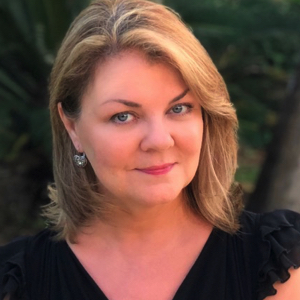
    Barbara Hart
    Director
    Grant & 
    Eisenhofer

    Barbara Hart is a director at Grant & Eisenhofer and serves on the firm’s Executive Committee. She has nearly three decades of experience as a leader in plaintiffs’ litigation. She has represented institutional investors, including many public pension funds, in securities and antitrust litigation and served as lead counsel in 4 of the top 100 securities class action settlements. Barbara has also achieved substantive antitrust and False Claims Act/Qui Tam settlements on behalf of her clients. In addition, she represents approximately 45 adult survivors of sexual abuse who are bringing claims against the Roman Catholic Archdiocese of New York, Rockefeller University and the Boy Scouts of America. Barbara is pioneering these claims in light of a change in New York law known as The Child Victim Act. Prior to joining G&E, she was President and CEO of a firm focusing on securities and antitrust litigation, and before that, she spent 17 years representing plaintiffs at the New York office of a complex financial litigation firm.

    Email

    Mary Beth Foley
    Interim Executive Director & General Counsel
    Ohio Police and Fire Pension Fund

    Mary Beth was appointed General Counsel to OP&F in 2008 and recently was named Interim Executive Director. She began her career with the Ohio Attorney General and spent eleven years as a trial attorney defending federal litigation brought against the State of Ohio. During that time she became a managing attorney in litigation and Assistant Chief of the Employment law division. Mary Beth later served as Fiduciary and Labor Counsel to the Attorney General and Auditor of State of Ohio. She was the Auditor’s advisor on the five Ohio Pension Systems as well as the Auditor’s board designee on the State Teachers Retirement System, the Ohio State Highway Patrol Retirement System and the School Employees Retirement System. Mary Beth is currently the President of the National Association of Pubic Pension Attorneys and Board liaison for the Public Safety Affinity Group. She is a member of the American Bar Association, the Ohio State Bar Association, Columbus Bar Association and a Mediator for the United States District Court for the Southern District of Ohio.

    Email

  • Organizational Values & Business Risks: Properly Balancing Stakeholder Concerns

    Organizational Values & Business Risks: Properly Balancing Stakeholder Concerns

    Topics Covered

    Accommodations. Appropriate accommodation for high-risk employees or employees with family members who are at a heightened risk.

    Mitigation. Attention to means of mitigating transmission and infection.

    Tracing. Contact tracing and management of data collected, including health data, as well as responses to employees who refuse to report.

    Patient Sensitivity. Duty to avoid discrimination and stigmatization.

    Preparedness. Developing plans to address possibility of re-occurrence in the fall and managing possible outbreaks in company’s offices.

    Take it now

    On-demand on the Thomson Reuters West LegalEdcenter as part of the HB catalog.

    Register now!

    Organizational Values & Coronavirus Business Risks:
    Properly Balancing Stakeholder Concerns

    Produced for Emory University Center for Ethics by HB Litigation Conferences

    The current pandemic confronts businesses, nonprofit organizations, governments, and the legal profession with innumerable ethical challenges.  Management issues and liability concerns, stakeholder demands and legal duties become even more complex in an environment of uncertainty and one where the consequences could result in serious illness or even death.  This program seeks to engage the participants in thinking through these challenges and developing processes of ethical response to them.  Managers must acknowledge and address the framework of fear associated with the pandemic, ranging from fear of contagion and death to fears of unemployment, childcare, and the duties of home-schooling.  Additionally, as the economy reopens there must be serious attention to the processes of doing so.

    Join Professor Edward L. Queen from Emory University for invaluable insights. Emory’s medical team was on the frontline of the 2014-2016 Ebola epidemic, which began in December 2013 when an 18-month-old Guinean boy contracted the disease. According to the CDC, the outbreak ended with more than 28,600 cases and 11,325 deaths. Eleven people were treated for Ebola in the United States.

    Edward L. Queen
    Director of Ethics and Servant Leadership
    Emory University

    Professor Queen Coronavirus-Ethical-Issues-Litigation Conferences-June-19-2020-

    Professor Edward L. Queen

    Edward L. Queen is director of the D. Abbott Turner Program in Ethics and Servant Leadership and Coordinator of Undergraduate Studies at Emory University’s Center for Ethics.  At Emory he also serves as Director of Research for the Institute of Human Rights and co-convener of the Initiative on Religion, Conflict, and Peacebuilding.  Queen received his B.A. from Birmingham-Southern College, his M.A. and Ph.D. degrees from the Divinity School of the University of Chicago, and his J.D. from the Indiana University School of Law-Indianapolis. Queen’s previously served as founding director of the Religion and Philanthropy Project at the Indiana University Center on Philanthropy and of the Islamic Society of North America’s Fellowship Program in Nonprofit Management and Governance.  A former program officer at Lilly Endowment, Inc. with a major responsibility for grants in nonprofit governance and leadership, Queen has consulted with numerous nonprofit, governmental, and educational organizations on management issues and ethics policies.  These organizations have included the Helsinki Committee for Human Rights, the Pew Charitable Trusts, Independent Sector, USAID, NAFSA: The Association of International Educators, the Southeastern Council of Foundations, and the Corporation for National and Community Service.

    A specialist in issues related to professional and social ethics, religious and ethnic conflict, and civil society, Queen has written, coauthored, or edited numerous books, including Serving Those In Need: A Handbook for Managing Faith-Based Human Services Organizations (2000), Philanthropy in the World’s Traditions (1998), and The Encyclopedia of American Religious History (1992, rev. ed. 2002, 3rd rev. ed. 2009).

  • Organizational Values & Coronavirus Business Risks | Join Our Webinar June 18

    Organizational Values & Coronavirus Business Risks | Join Our Webinar June 18

    Webinar:
    June 18, 2020
    2:00 pm ET
    60 mins.
    CLE: 1+
    Complimentary with registration.

    Get:
    +CLE
    +Materials
    +Recording
    +Answers!

    Also available to subscribers of the West LegalEdcenter.
    Register there!

    Email us your:
    Speaker questions
    CLE questions

    Speaker:

    Professor Edward L. Queen Ph.D. , J.D.
    Director Ethics and Servant Leadership: Emory Center for Ethics
    Emory University

    Organizational Values & Coronavirus Business Risks
    Properly Balancing Stakeholder Concerns

    Thursday, June 18, 2020 | 2pm ET | 1pm CT | 12pm MT | 11am PT 

    The pandemic brings with it complex liability concerns, stakeholder demands and legal duties.  We will take a closer look. 

    The current pandemic confronts businesses, nonprofit organizations, governments, and the legal profession with innumerable ethical challenges.  Management issues and liability concerns, stakeholder demands and legal duties become even more complex in an environment of uncertainty and one where the consequences could result in serious illness or even death.  This program seeks to engage the participants in thinking through these challenges and developing processes of ethical response to them.  Managers must acknowledge and address the framework of fear associated with the pandemic, ranging from fear of contagion and death to fears of unemployment, child care, and the duties of home-schooling.  Additionally, as the economy reopens there must be serious attention to the processes of doing so, including:

    We will address:   

    • Appropriate accommodation for high-risk employees or employees with family members who are at a heightened risk;

    • Attention to means of mitigating transmission and infection;

    • Contact tracing and management of data collected, including health data, as well as responses to employees who refuse to report;

    • Duty to avoid discrimination and stigmatization;

    • Developing plans to address possibility of re-occurrence in the fall and managing possible outbreaks in company’s offices.

  • PTSD Claims Brought by Facebook’s ‘Graphic Content’ Reviewers Goes to ADR, Putting Civil Action on Pause

    By Tom Hagy

    Facebook can be great fun. How else would I have seen a video of an eight-year-old drummer-girl utterly thrashing Led Zeppelin’s Good Times Bad Times? Or a dog running away with a lit skyrocket as his human friends run, duck and ditch for their lives? Or what your cat looks like in a tuxedo?

    Facebook can also be a source of horror. Some of the most distressful commentary and images you wish you could un-see. And that’s just from my family.

    Imagine your entire job is to monitor Facebook discussions and remove its graphic content. Day in and day out. That’s literally all you did.

    A group of Facebook employees says that was their job, and their exposure to an “unmitigated barrage of horrifying content” and “toxic images” has caused them to suffer “debilitating trauma-related injuries.”

    In September 2018 they filed suit in California Superior Court in San Mateo seeking an order requiring Facebook to implement safety guidelines for content moderators which, they say, the company has admitted are “necessary and appropriate.” They also want the company to fund a medical monitoring program for the diagnosis and treatment of psychological injuries including post-traumatic stress disorder, or PTSD. The plaintiffs quote Chris Harrison, whom they characterize as a Facebook executive in charge of the company’s “global resiliency team” as saying “of course” the company should offer content moderators post-employment counseling.

    The plaintiffs filed the suit as a proposed class action, and relied on state laws including the California Unfair Competition Law alleging Facebook’s conduct was negligent, and negligence forms the basis of a UCL claim.

    Facebook moved for a judgment on the pleadings, saying the facts are insufficient to constitute a community of interest required for class actions and that there is no ascertainable class. The company said the plaintiffs haven’t supported a claim for negligent provision of unsafe equipment or violation of the UCL, either.

    The issue was set for a hearing on Aug. 9 but the parties agreed to take the case to ADR and stay the litigation until Oct. 7. If they don’t come to an agreement by then they will submit a new case schedule to the court (Selena Scola, et al. v. Facebook, Inc., Civil Case No. 18CIV05135, Calif. Super. Ct., San Mateo Co.).

    What Lawyers Should Know

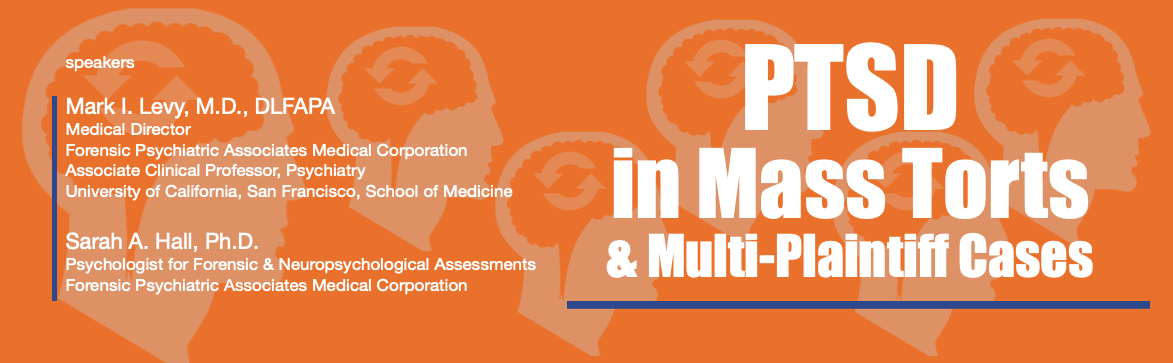
    Coincidentally — and this has nothing whatsoever to do with the Facebook case — in preparing for our Aug. 21 webinar — PTSD in Mass Tort & Multi-Plaintiff Cases — Mark I. Levy, M.D., DLFAPA (who is in no way involved in that case) told me that “a majority of people who experience a traumatic and stressful event do not develop PTSD.” He said that multiple studies revealed that even in the extreme case of rape, 40-50% of victims do not develop PTSD. Of course, the flip side of that is that more than half do.

    People have different levels of resiliency and vulnerability, he said, so what may cause PTSD in one person may not cause it in another. This isn’t to diminish anyone’s traumatic experience. The question is how these experiences impact the individual, not whether their experience was horrible or not, or illegal or not, which are separate questions. “The probability of an event causing PTSD in any particular individual is only partially related to the severity of the stressor,” Dr. Levy said. I asked him if there were degrees of PTSD, or whether someone can have “a touch of PTSD.” Dr. Levy explained that PTSD is a specific diagnosis with specific conditions. In other words, despite how the term may be used in common parlance, you can’t have “a little PTSD,” at least not in the clinical sense of the word.

    In his presentation materials, Dr. Levy gives two examples of bad experiences that resulted in litigation but were found not to cause PTSD. “After a board meeting a secretary ate a left-over pastry contaminated with rat feces. She alleged she had PTSD because she could never work in that office again. Hers was a truly disgusting experience, but it did not cause PTSD,” Dr. Levy said. In another case a woman who endured unwelcome and explicit sexual overtures from her boss were, while clearly offensive and even unlawful, did not result in the woman’s PTSD. Dr. Levy discusses examples where individuals developed PTSD, such as battle experiences, train crashes, and others.

    Here is a summary of the PTSD diagnostic criteria in the Diagnostic and Statistical Manual of Mental Disorders, or DSM-5:

    A. Exposure to actual or threatened death, serious injury, or sexual violence.
    B. Presence of one (or more) intrusive symptoms associated with the traumatic event(s).
    C. Persistent avoidance of stimuli associated with the traumatic event(s), beginning after the traumatic event(s) occurred.
    D. Negative alterations in cognitions and mood associated with the traumatic event(s), beginning or worsening after the traumatic event(s).
    E. Marked alterations in arousal and reactivity associated with the traumatic event(s).
    F. Duration of the disturbance (Criteria B, C, D, and E) is more than 1 month.
    G. Functional Impairment: The disturbance causes clinically significant distress or impairment in social, occupational, or other important areas of functioning.
    H. The disturbance is not attributable to the physiological effects of a substance (e.g., medication, alcohol) or another medical condition.

    In the majority of cases, PTSD is accompanied by other psychiatric diagnoses (co-morbidity): Major Depression and/or Anxiety Disorder and/or Substance Abuse.

    Dr. Levy — who is Medical Director at Forensic Psychiatric Associates Medical Corporation — cautions attorneys and others about the forensic use of DSM-5: “It is important to note that the definition of mental disorder included in DSM-5 was developed to meet the needs of clinicians, public health professionals, and research investigators rather than all of the technical needs of the courts and legal professionals.”

    For attorneys interested in hearing more from Dr. Levy, and his colleague, Sarah A. Hall, PhD., Clinical Psychologist Specializing in Forensic & Neuropsychological Assessments, click the banner below and learn more about the webinar.

  • PTSD in Multi-Plaintiff and Mass Tort Cases | Webinar OnDemand


    [one-fourth-first]

    Price: $47
    When: On-demand
    Where:
    Your computer or mobile device
    CLE:
    1 hour

    Speakers

    Mark I. Levy MD, DLFAPA
    Medical Director
    Forensic Psychiatric Associates Medical Corporation
    Associate Clinical Professor, Psychiatry
    University of California, San Francisco, School of Medicine
    415.388.8040
    mlevy@fpamed.com 

    Sarah A. Hall, PhD.
    Psychologist for Forensic & Neuropsychological Assessments
    Forensic Psychiatric Associates Medical Corporation
    shall@fpamed.com 

    [/one-fourth-first][three-fourths]

    What tort attorneys need to know about PTSD claims.

    Mass tort claims arise most frequently in man-made and natural disaster catastrophe litigation as well as personal injury, employment, product liability and toxic tort litigation. Frequently, these lawsuits include either primary or secondary allegations of emotional distress. PTSD is one of the most common emotional distress claims alleged within mass tort litigation, as well as allegations of depression and emotional stress (anxiety). 

    Join an experienced psychiatrist and psychologist who will cover the following topics relevant to the forensic psychiatric assessment of emotional damages within mass tort and complex litigation: 

    + Introduction: Defining PTSD. What it is and what it is not.

    + The methodological approach to assessing allegations of emotional distress in mass tort & complex litigation.

    + The importance and the methodology of psychological testing as part of the assessment of emotional distress claims in mass tort litigation.

    + Claimant population screening. Using psychological test instruments to differentiate claimants who require in-depth forensic psychiatric assessment from claimants who do not. 

    + Are all psych tests the same? Types of psychological test instruments we recommend and ones that we do not — and why.  

    + So-called “PTSD Tests.” Do they have a role in forensic psychological assessments?

    + Accuracy and reliability of conclusions derived from psychological test data.

    + Taking a “team approach” to emotional distress claim assessment in mass tort litigation. 

    [/three-fourths]

  • Million-Dollar Settlement in Employee Background Check Case, Top Class Actions Reports

    “Job applicants have secured a $1.2 million settlement ending allegations that Maxim Healthcare did not properly inform potential employees that they would have a consumer report pulled as part of the application process. Class Members include those who applied and got a job with the healthcare services company between May 5, 2009 and Aug. 27, 2012, who were also subject to a consumer report check by Maxim. The Maxim Healthcare class action lawsuit claimed that Maxim violated federal consumer privacy protections when procuring employee background checks.”

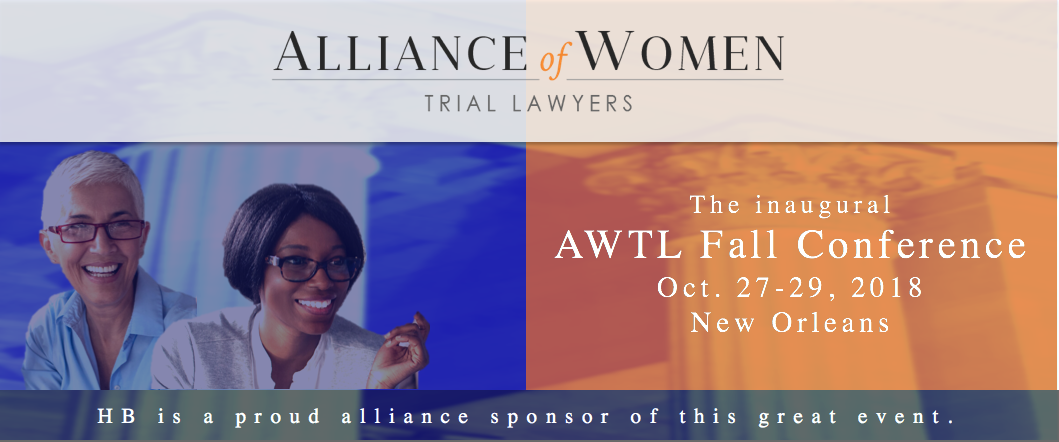
  • Alliance of Women Trial Lawyers | First Fall Conference 2018 | Oct. 27-29, 2018 | New Orleans


    [one-third-first]

    Contact
    Nancy Holston
    Founder
    Alliance of Women Trial Lawyers
    nancy@awtriallawyers.com


    DETAILS

    When
    Oct. 27-29, 2018

    Meeting Venue
    Ritz-Carlton
    New Orleans

    LEARN MORE

    REGISTER

    Prices

    The Alliance is all about women helping women so they’re offering discounts to anyone who brings a law student, clerk, or first year associate to the conference with them.

    • 1st and 2nd Attendee: $895/Attendee

    • 3 or more Attendees from same firm: $795 each

    • 1 Attendee with Guest (Law Student, Clerk or 1st Year Associate): $1,295 for Attendee and Guest

    • More than 5 Attendees please fill out their Contact form or call Nancy Holston at 850-304-9674 for more information

    To Register by Check: Click here for Payment by Mail Registration Form.

    [/one-third-first] [two-thirds]

    New Alliance of Women Trial Lawyers Announces First Event in New Orleans

    Congratulations to Nancy Holston on the formation of the Alliance of Women Trial Lawyers. HB is proud to support this group and a mission that is dear to our hearts — promoting the careers of women professionals.

    Nancy has been successful at building events for plaintiff attorneys — some you may have probably attended! — and it’s great to see her strike out on her own to develop something she believes in.

    Take a minute to learn more about the AWTL, and see who is speaking at their first event.

    AWTL Vision

    To create a community that inspires and empowers women trial lawyers, the Alliance is passionately committed to the purpose of the family of women lawyers. We support women who take responsibility for successful relationships with other professionals. The Alliance of Women Trial Lawyers advances the influence and impact of women in the legal community.

    We aim to represent the intelligence, creativity, complexity and diversity of women lawyers’ experience — across nation, ethnicity, race, religion, sexual orientation and economic background.

    The Alliance will provide an environment for women lawyers to lead, inspire, and mentor other women lawyers. We hope to help women litigators to embrace their power, purpose, and value, and to take responsibility for their relationships.

    Check out the complete agenda and faculty!

    [/two-thirds]