Tag: Emerging Litigation & Risk

  • Litigation After Biometric Privacy Law Violations

    Litigation After Biometric Privacy Law Violations

    Litigation After Biometric Privacy Law Violations

    A person’s hand with digitally rendered fingerprint patterns overlaying the fingertips, symbolizing biometric data and privacy technology.

    Better understand the state of biometric privacy litigation, the regulatory landscape, and insurance coverage considerations and rulings. 

    Systems using biometric information to enhance security and authentication processes are being deployed throughout the world. Biometric technology can provide more robust, advanced security, but it carries an increased risk.

    If compromised, biometric data can be used to steal identities, hack systems, and commit myriad privacy violations.  Legislatures throughout the U.S. are enacting statutes that require companies that collect this information to protect it as well.

    In this webinar, the speakers will discuss the state of biometric privacy litigation, the regulatory landscape, and insurance coverage considerations and rulings. 

    You will learn about: 

    • What is meant by biometrics, its positive and negative aspects, and requirements for collecting biometric information
    • Understanding BIPA (Illinois Biometric Information Privacy Act), including compliance requirements
    • Exploring biometric legislation in other states
    • Potential insurance coverage areas to consider and key takeaways
    • A look at legal cases which favor coverage for BIPA claims
    • Liability insurance for employment practices
    • D&O and cyber policies and potential coverage for biometric violations
    • Exclusions to be aware of, including cyber exclusions to consider in privacy context
    • Recent court decisions and litigation, including recent decisions challenging coverage and additional coverage concerns
    • How biometric privacy issues can inform the future of AI claims and coverage
    • How companies can protect themselves given the recent court decisions and legislation that are leading to increased risk and liability
    • What policyholders can do to ensure they maintain coverage for losses arising from biometric liability

    Loved watching Cort and John’s webinar?

    Explore Cort and John’s additional content on the subject matter.

    Podcast: Biometric Privacy Litigation and Coverage Disputes with John Leonard and Cort Malone

    HB on-demand CLE at

    the West LegalEdcenter

    TAKE IT NOW – For a limited time, use code HB20 for 20% off the webinar or HBSub20 for 20% off a full solo subscripton

    Included in subscriptions. Also available for individual purchase.

    Speakers

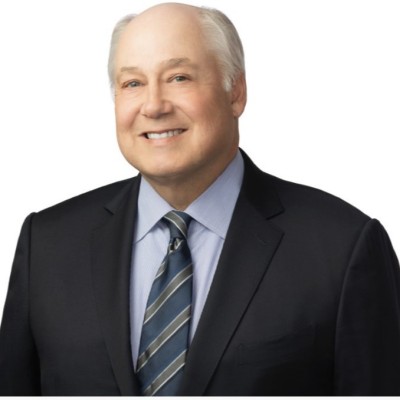
    Cort Malone

    Cort MaloneAttorney, Anderson Kill P.C.

    Cort T. Malone is a shareholder in Anderson Kill’s New York and Stamford offices and is the Chair of the firm’s Biometric Liability Insurance Recovery Group. Cort is an experienced litigator, focusing on insurance coverage litigation and dispute resolution, with an emphasis on commercial general liability insurance, cyber insurance, employment practices liability insurance, advertising injury insurance, directors and officers insurance, and property insurance issues. He is also a member of the firm’s Restaurant, Retail & Hospitality, Environmental Law, Cyber Insurance Recovery, and COVID Task Force groups. Malone earned his J.D. from Fordham University School of Law.

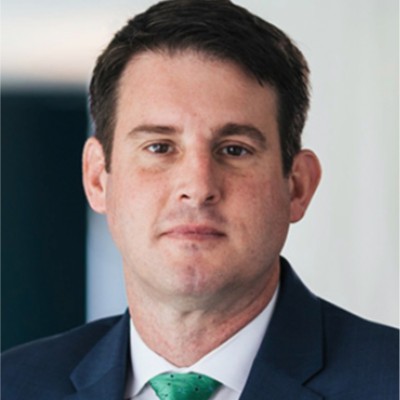
    John Leonard

    John LeonardAttorney, Anderson Kill P.C.

    John Leonard is a shareholder in Anderson Kill’s New York, NY office. He is Co-Chair of Anderson Kill’s Financial Services Group and Biometric Liability Practice Group. As a policyholder attorney, John has experience obtaining coverage under insurance policies relating to directors and officers liability, business interruption, general liability, environmental liability, health benefits, property damage, asbestos products, and crime losses. He has represented financial service providers, railroads, hospitals, hospitality organizations, consulting firms, municipalities, manufacturers, and retailers. He earned his J.D. from Fordham University School of Law.

  • Algorithmic Software Facilitated Price Fixing with Jonathan Rubin

    Algorithmic Software Facilitated Price Fixing with Jonathan Rubin

    Algorithmic Software Facilitated Price Fixing with Jonathan Rubin

    Concepts: Antitrust, Price Fixing, Algorithmic pricing, Algorithmic bias, Sherman Act, Anticompetitive

    Everyone knows that price fixing is against the law, chiefly Section 1 of the federal Sherman Antitrust Act of 1890.

    Competitors may not collude to keep prices where they want them, but there are relatively new price-calculation tools that some companies maintain takes them out of the equation. With these tools, shared across an industry, they do not have to directly swap private information with competitors. Instead, they claim, they feed their data to a third-party which uses algorithms to come up with prices. The subject has been getting a lot of attention as cases mount against a company called RealPage, a firm that provides shared pricing services for landlords. The company faces dozens of suits in multidistrict litigation and has also captured the attention of federal antitrust law enforcers. Several other companies face litigation as well.

    As our guest recently wrote: “When pricing algorithms are used by individual firms, such as airlines, e-commerce platforms, rideshare and room-share companies, stock traders, and others, there are unlikely to be anti-competitive consequences. It is when market competitors avail themselves of the same algorithmic program or service that the specter of unlawful collusion arises.” That risk increases as markets become more concentrated.

    He is Jonathan Rubin, Partner and Co-Founder of MoginRubin LLP, a widely recognized competition law attorney, economist, and commentator who has presented at antitrust conferences in the United States and Europe, testified before several congressional committee hearings, and before the Directorate General for Competition of the European Commission.

    “The fact that these services employ an algorithm is not central to what’s going on in this scenario,” he told me, “because what’s important is the conduct of the businesspeople involved.”

    Listen to my interview with Jonathan Rubin as we discusswhat algorithmic or software-facilitated pricing is, what the law says about price collusion, how this new pricing mechanism violates the law, and recent developments in litigation.

    I hope you enjoy the conversation! If so, give us a rating!

    This podcast is the audio companion to the Journal on Emerging Issues in Litigation. The Journal is a collaborative project between HB Litigation Conferences and the vLex Fastcaselegal research family, which includes Full Court Press, Law Street Media, and Docket Alarm.

    If you have comments, ideas, or wish to participate, please drop me a note at Editor@LitigationConferences.com.

    Tom Hagy
    Litigation Enthusiast and
    Host of the Emerging Litigation Podcast
    Home Page
    LinkedIn

    Disclosure: I provide content services to MoginRubin in my role at Critical Legal Content. Also, Jonathan is plaintiffs’ counsel in a pending software-enabled pricing case. Check out the MoginRubin Blog. –Tom

    Explore more from MoginRubin LLP!

    Blog: Emboldened by New Resources and Expanded Authority, Feds Continue 10-Year Look Back at Chinese Investment. By Dan Mogin, Jonathan Rubin, Jennifer Oliver, and Timothy LaComb. List

    OnDemand CLE Webinar: The Antitrust Case Against Google. Dan Mogin, Jonathan Rubin, Jennifer Oliver, Timothy LaComb, John Newman, Dr. Alan Grant

    Blog: FTC’s Case Against Facebook Will Test the Flexibility of U.S. Antitrust Law.Authors: Jonathan Rubin and Jennifer Oliver, MoginRubin LLP

    Blog: Full Ninth Circuit Removes Unwarranted Hurdles to Class Certification.

    Journal: Policy Derailed: Can U.S. Antitrust Policy Toward Standard Essential Patents Get Back on Track by Jonathan Rubin

    Webinar: Class Certification After Olean v. Bumble Bee with Jonathan Rubin, James Bogan lll, Jonathan Cohn, Bradley Hamburger.

    Journal: FTC v. Amazon: Market Definitions and Section 5 of the FTC Act

    Podcast: Algorithmic Software Facilitated Price Fixing with Jonathan Rubin

    Plus, additional insights from the MoginRubin Blog.

    Jonathan Rubin

    Jonathan RubinMoginRubin LLP

    Jonathan Rubin is co-founder and partner of MoginRubin LLP. For more than two decades he has focused his legal practice exclusively on antitrust and competition law and policy.

    As a litigator, Jonathan has led trial teams in major antitrust cases in courts throughout the country. As a thought-leader in competition law, he has published in influential academic journals and has spoken to numerous professional groups, including the Directorate General for Competition of the European Commission, the Antitrust Section of the American Bar Association, the University of Wisconsin, and the American Antitrust Institute. He also has made several appearances before congressional committees.

    Education:
    University of Copenhagen, Ph.D. Economics
    Florida Atlantic University, M.A. Economics
    University of Florida, Levin College of Law, J.D.
    University of Wisconsin at Madison, B.S. Biological Sciences

    Want to appear on the Emerging Litigation Podcast?

    Send us your idea! 

  • PFAS Litigation: Predicted Trends Given Regulatory Changes

    PFAS Litigation: Predicted Trends Given Regulatory Changes

    PFAS Litigation: Predicted Trends Given Regulatory Changes

    Laboratory testing tubes with chemicals, representing scientific analysis of PFAS contamination and related environmental litigation.

    Better understand the latest on regulatory and litigation issues related to PFAS and how they will impact corporations. 

    Every week, the PFAS litigation and regulatory landscape changes dramatically. The EPA presses forward full steam ahead with numerous PFAS regulations, while the states have proposed hundreds of pieces of legislation related to PFAS in the last three years.

    Meanwhile, class action litigation, environmental pollution litigation, and greenwashing suits are being filed against companies at a dramatically increasing rate year after year.

    In this webinar, the speaker will provide the latest on regulatory and litigation issues related to PFAS and how they will impact corporations.

    You will learn about: 

    • Current key federal changes that will drive litigation.
    • Current key state level changes that will drive litigation.
    • Current litigation landscape for PFAS
      • MDL
      • Class actions
      • Medical monitoring
      • Greenwashing lawsuits
    • Predictions on where litigation will go in the next 2-5 years.

    More great content from this attorney: 

    HB on-demand CLE on CeriFi LegalEdge

    TAKE IT NOW*

    PREVIEW

    *Included in subscriptions. Also available for individual purchase.

    John Gardella

    John Gardella
    CMBG3 Law

    A seasoned trial attorney with over 75 verdicts, John Gardella is Chair of CMBG3 Law’s PFAS, Environmental, Risk Management & Consulting, and ESG practice groups. His thought leadership and predictive risk abilities with respect to PFAS earned him the honor of being the only person in the country that was recognized as a thought leader on PFAS in 2020 and 2021 by the esteemed National Law Review.

    John is regularly interviewed by media on the subject of PFAS and other emerging chemicals of concern, and he consistently publishes his own thought leadership in several nationally syndicated resources, including Bloomberg Law, AM Best, and National Law Review. Private equity firms, the financial world, insurance companies, and corporations regularly seek John’s opinions on forward-looking environmental and chemical substances risk issues.

    He earned his J.D. from Vanderbilt School of Law.

  • Mitigating Greenwashing Litigation Risks with Ramya Ravishankar

    Mitigating Greenwashing Litigation Risks with Ramya Ravishankar

    Mitigating Greenwashing Litigation Risks with Ramya Ravishankar

    Concepts: ESG, ESG Reporting, Greenwashing, Greenwashing Litigation, Risk Mitigation, Misleading Claims, Sustainability Commitments

    Companies are grappling with how to market the eco-friendly, people friendly, and animal friendly characteristics of their products and services, while also not getting in trouble with the law. Some have learned this the hard way. Some have wisely consulted experts. (That’s foreshadowing.)

    ESG – or Environmental, Social and Governance – reporting and so-called greenwashing litigation have implications for a wide range of stakeholders. Companies face significant financial and reputational risks, while investors, regulators, advocacy groups, and consumers all have an interest in ensuring the accuracy and transparency of ESG information.

    Last year the SEC adopted amendments to the Investment Company Act with the “Names Rule,” which addresses fund names that are likely to mislead investors about a fund’s investments and risks.

    On the consumer side, the FTC has been on the case as it stalks misleading advertising claims. Violations have real consequences. In 2022 the FTC reached multimillion dollar settlements with store chains Kohl’s and Walmart over claims that certain products were eco-friendly and made from bamboo, when they were really made from rayon.

    More recently, a class action was filed in federal court in New York over the “carbon neutral” branding on bottled water.

    But there are some important court decisions our guest wants you to know about, involving shoemaker AllBirds and beauty products company Sephora.

    She is Ramya Ravishankar, General Counsel & Corporate Secretary of the HowGood company, an independent research firm that helps the world’s largest food brands meet their sustainability commitments. Ramya is a former environmental biologist turned attorney who is – as you will soon hear — passionate about the intersection of food and sustainability. Previously, Ramya was Associate General Counsel at Bowery Farming – producer of pesticide free lettuce, other leafy foods, and herbs. Before that she was a regulatory enforcement associate at Skadden Arps. Ramya earned her J.D. from Columbia Law School in New York and a B.S. from Queen’s University in Ontario, Canada.

    Also, she is awesome! I think you will enjoy the interview.

    *******

    This podcast is the audio companion to the Journal on Emerging Issues in Litigation. The Journal is a collaborative project between HB Litigation Conferences and the vLex Fastcaselegal research family, which includes Full Court Press, Law Street Media, and Docket Alarm.

    If you have comments, ideas, or wish to participate, please drop me a note at Editor@LitigationConferences.com.

    *******

    Tom Hagy
    Litigation Enthusiast and
    Host of the Emerging Litigation Podcast
    Home Page
    LinkedIn

    Guest

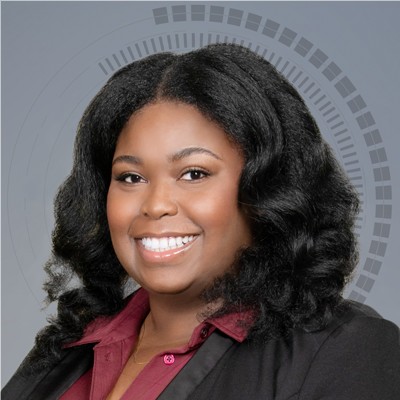
    Ramya Ravishankar

    Ramya RavishankarHowGood

    Ramya is a former environmental biologist turned attorney who is passionate about the intersection of food and sustainability. She is the General Counsel at HowGood, an independent research company powering the sustainability commitments of the world’s largest food brands. Previously, she has served as Associate General Counsel at Bowery Farming and as a regulatory enforcement associate at the law firm Skadden Arps.

    Want to appear on the Emerging Litigation Podcast?

    Send us your idea! 

  • Automation Comes to Our Litigation Nation with James Lee

    Automation Comes to Our Litigation Nation with James Lee

    Automation Comes to Our Litigation Nation with James Lee

    Concepts: Litigation Automation, Generative Artificial Intelligence, Generative AI, Legal Tech

    In this episode we talk about litigation automation, and another case in which innovators are using artificial intelligence to transform legal operations.

    We also speak with our guest about his transformation from a litigator to a tech entrepreneur, and how the company he co-founded is using modern tools to do in minutes what used to take hours. These tasks include responding to demand letters, complaints, and discovery requests, and executing matter profiling and data analytics, all of which are traditionally rote and repetitive and time-consuming undertakings.

    He is James M. Lee, co-founder and CEO of LegalMation. James conceived the idea behind LegalMation — which is to leverage the power of generative artificial intelligence to transform litigation and dispute resolution — while managing a litigation boutique.  An experienced and recognized litigator and trial attorney, James received his J.D. from Stanford Law School.

    Also joining me, I’m pleased to say, is the ever-inquisitive and always attentive Sara Lord, legal analytics professional extraordinaire, who raised questions from the litigator’s perspective.

    I hope you enjoy the conversation! If so, give us a rating!

    This podcast is the audio companion to the Journal on Emerging Issues in Litigation. The Journal is a collaborative project between HB Litigation Conferences and the vLex Fastcaselegal research family, which includes Full Court Press, Law Street Media, and Docket Alarm.

    If you have comments, ideas, or wish to participate, please drop me a note at Editor@LitigationConferences.com.

    Tom Hagy
    Litigation Enthusiast and
    Host of the Emerging Litigation Podcast
    Home Page
    LinkedIn

    Tags

    Emerging Litigation & Risk Compliance Litigation & appeals Cybersecurity Data Privacy Artificial Intelligence (AI) Insurance Companies Risk Management Corporate & Securities Insurance Claims Recovery Regulations Data Breach Toxic Torts Antitrust Legal Tech Product Liability Settlements Trial Personal Injury Privacy Healthcare Per- and Polyfluoroalkyl Substances (PFAS) Data Analytics Arbitration Constitutional Law Climate Change Cannabis Labor Law Insurance Fraud Liability Claims COVID Alternative Dispute Resolution (ADR) Mediation Diversity Equity Inclusion (DEI) Claims management Professional Liability Legal Research & Writing Business Interruption Law Practice Management Trial Skills Property and Casualty Drug Laws Copyright Law Catastrophic Loss

    James M. Lee | CEO

    James M. Lee | CEOLegalMation

    As the CEO of LegalMation, James is the key driver of the company’s vision and strategy. He devised the idea for LegalMation while managing LTL Attorneys LLP, a nationally-recognized litigation boutique he co-founded, as the first spin-off of Quinn Emanuel. As an experienced litigator, James has tried numerous cases in federal and state courts. He has been recognized as a top business litigator by various legal publications including the National Law Journal. He is a frequent and noted speaker and commentator in the field of AI and innovations in the legal industry. James received his J.D. from Stanford Law School.

    Want to appear on the Emerging Litigation Podcast?

    Send us your idea! 

  • The Medical Monitoring Tort Remedy

    The Medical Monitoring Tort Remedy

    The Medical Monitoring Tort Remedy

    Test tube with chemicals being poured into it, representing toxic exposure and laboratory analysis

    Better understand the medical monitoring tort remedy, which states recognize it, how it evolved, and how courts are treating it.

    The medical monitoring tort remedy – allowing for medical monitoring without physical injury – is recognized in 14 states and not allowed in 23. The law is divided in two states while the rest have not specifically addressed the issue.

    States that allow medical monitoring to do so when a group of claimants is at increased risk of disease or injury due to exposure to a known hazardous substance or a dangerous product as the result of a defendant’s conduct. Under this tort remedy, claimants are tested periodically, for an agreed or decided period, usually between 10 and 40 years.

    Medical monitoring recognizes the long-term harmful nature of toxins and man-made products, thereby matching a remedy with the malady.

    In this webinar the speakers will discuss the evolution of the tort, related cases, tests to determine whether the tort should be applied, types of monitoring, and the arguments for an against medical monitoring.

    You will learn about: 

    • The elements of the medical monitoring tort remedy and which states recognize it.
    • The evolution of the medical monitoring tort remedy and relevant court decisions addressing it.
    • A “classic case” to understand how a program was implemented and what it found.
    • Cases studies demonstrating claimant participation rates.
    • Different types of medical monitoring programs.
    • Elements necessary to establish a case for medical monitoring.
    • Legal background and typical implementation.
    • Arguments for and against medical monitoring from the plaintiff and defense perspectives.
    • A possible cure for the requirement of physical damage prior to having medical monitoring: sub-cellular damage proof.

    Loved watching Ed & Kip’s webinar?

    Explore Ed’s additional content on the subject matter.

    Podcast: Medical Monitoring for Modern Times with Ed Gentle

     JEIL: The Medical Monitoring Tort Remedy: Its Nationwide Status, Rationale, and Practical Application (A Possible Dynamic Tort Remedy for Long-Term Tort Maladies)

    HB on-demand CLE at

    the West LegalEdcenter

    TAKE IT NOW

    PREVIEW

    Included in subscriptions. Also available for individual purchase.

    Speakers

    Edgar C. Gentle III

    Edgar C. Gentle IIIGentle Turner & Benson LLC

    Edgar (“Ed”) C. Gentle III is founder and managing partner of Gentle, Turner, Sexton & Harbison, LLC, in Birmingham, Alabama. Largely focusing his practice on complex commercial litigation and mass tort/class action litigation, he often works for the courts as a neutral special master and settlement administrator. He is an experienced special master and claims administrator in mass tort litigation, providing claims administration and financial and business advice to courts, settling parties, and mass tort settlements. He has helped create and administer more than $6 billion in settlements during the past 20 years. He earned his J.D. from the University of Alabama School of Law as a Hugo Black Scholar.

    Katherine (“Kip”) A. Benson

    Katherine (“Kip”) A. Benson Attorney, Gentle Turner & Benson LLC

    Katherine (“Kip”) A. Benson is a partner at Gentle, Turner, & Benson, LLC and has experience in mass tort/class action settlement administration, probate law, general corporate practice, real estate, and telecommunications law. She specializes in Medicare/Medicaid lien resolution and other aspects of settlement administration. She has assisted with the administration of several multi-million-dollar class action settlements, including a $300 million PCB settlement involving 18,000 claimants. Benson earned her J.D. from the University of Alabama School of Law.

  • AI Nuts & Bolts Survival Guide: Artificial Intelligence – Discrimination in Employment Context

    AI Nuts & Bolts Survival Guide: Artificial Intelligence – Discrimination in Employment Context

    AI Nuts & Bolts Survival Guide: Artificial Intelligence – Discrimination in Employment Context 

    Leverage the Latest Court Decisions and Governmental Guidance to Tailor Use of AI Screening Tools in the Employment Context.

    AI, and generative AI in particular, took the employment world by storm in 2023, quickly becoming one of the most talked about and debated subjects among corporate counsel across the country. This trend is showing no signs of slowing down in 2024, as companies increasingly utilize AI as a resource to enhance decision-making processes. 

    As these processes are fine-tuned, those who seek to harness the power of AI must be aware of the risks associated with its use. 

    This webinar discusses two novel AI lawsuits and highlights recent governmental guidance related to AI use. As the impact of AI is still developing, companies should recognize the type of legal claims that may stem from the use of AI screening tools in the employment context, including the implications of possible unintended discriminatory conduct stemming from these tools.  

    BONUS: Read the paper our speakers authored for the Journal on Emerging Issues in Litigation.    

    Interested in More CLE OnDemand? Click here.

    Explore more from Duane Morris LLP!

    Journal (JEIL):Artificial Intelligence Litigation Risks in the Employment Discrimination Context. By Gerald Maatman Jr., Alex Karasik, and George Schaller

    CLE OnDemand Webinar: AI Nuts & Bolts Survival Guide: Artificial Intelligence – Discrimination in Employment Context. Gerald Maatman Jr., Alex Karasik, and George Schaller

    CLE OnDemand Webinar: Discovery Strategies in Wage and Hour Class and Collective Actions Before and After Certification of Putative Class. Gerald Maatman Jr., Noel P. Tripp

    Speakers

    Gerald L. Maatman, Jr.
    Partner
    Duane Morris LLP

    Alex W. Karasik
    Partner
    Duane Morris LLP

    George J. Schaller
    Associate
    Duane Morris LLP

    CLE On-Demand

    WANT A PREVIEW? CLICK HERE!

    Topics

    • Increasing use of AI as employment screening tool
    • Risks associated with AI use in employment context
    •  Two novel AI lawsuits in this area
    • Recent governmental guidance related to AI use
    • How companies can limit liability possible unintended discriminatory conduct stemming from the use of AI tools  in the employment context    

    Learning Objectives

    • Overview of Artificial Intelligence 
    • General Artificial Intelligence Use and Issues in Business 
    • Artificial Intelligence Regulatory Environment 
    • Artificial Intelligence Litigation – Class Actions & Employment Discrimination 
    • Risks of Internal Artificial Intelligence Use 
    • Risk Mitigation for Internal Use of Artificial Intelligence 

    Let’s Webinar Together!

    Send us your ideas. Get featured here and via social media. Add it to your website. Join other experts in the HB West LegalEdcenter library.

    Write to Editor@LitigationConferences.com.

  • JEIL S24 Top Legal Risks with Generative AI by Graham Reynolds, Robin Sagstetter, and Damon W.D. Wright

    JEIL S24 Top Legal Risks with Generative AI by Graham Reynolds, Robin Sagstetter, and Damon W.D. Wright

    The Authors

    Graham Reynolds

    Graham ReynoldsGordon Rees Scully Mansukhani

    Graham Reynolds is an experienced technology lawyer who is known for his ability to think outside the box, understand industry trends, and provide counsel on complex legal problems. He has a deep understanding of the issues surrounding the e-commerce and ad-tech industry and has been instrumental in helping numerous technology companies navigate the often-challenging legal landscape.

    In his current role as a Senior Counsel, Mr. Reynolds represents clients in a wide range of legal matters, including technology transactions, privacy matters, and FTC regulatory compliance.

    Robin Sagstetter

    Robin SagstetterGordon Rees Scully Mansukhani

    Robin G. Sagstetter is an Associate at GRSN working cases in the areas of Employment Law, Construction Law, Torts Product Liability, Professional Liability and Personal Injury, litigating cases in both state and federal courts.

    Damon W.D. Wright

    Damon W.D. WrightGordon Rees Scully Mansukhani

    Damon Wright heads the Advertising & E-Commerce practice. He represents leading brands, direct response advertisers, e-commerce retailers, lead generators, advertising agencies, fulfillment companies, technology companies, and related service providers.

    The Journal on Emerging Issues in Litigation

    Emerging Litigation Podcast

    Emerging Litigation PodcastProduced by HB Litigation and Law Street Media

    Interviews with leading attorneys and other subject matter experts on new twists in the law and how the law is responding to new twists in the world.

    Top Legal Risks with Generative AI

    AI poses tremendous benefits and significant legal risks for
    businesses. From algorithmic bias to copyright infringement, right
    of publicity, and web scraping, we can expect to see AI-related cases
    filling court dockets for years with courts applying well-established
    existing law as well as laws soon to come.

    Abstract:

    AI is dramatically transforming our world in positive and negative ways. Among the positives, AI makes it amazingly fast to make decisions or create interesting content. Among the negatives, AI makes it amazingly easy to violate, even unknowingly, a variety of laws. In the near future, we can expect to see a robust body of “AI law” through federal and state legislative action, as well as Federal Trade Commission and other agency rulemaking. But the absence of “AI law” today does not mean there is no law. Rather, businesses are being sued every day for alleged misuse of AI in violation of well-established existing law. As discussed in this article, the courts are seeing a host of AI cases involving a variety of issues, including algorithmic bias, copyright infringement, right of publicity, and web scraping.

    Download the article now!

  • Technology-Assisted Review: Sara Lord Interviews Data Scientist Lenora Gray

    Technology-Assisted Review: Sara Lord Interviews Data Scientist Lenora Gray

    Technology-Assisted Review: Sara Lord Interviews Data Scientist Lenora Gray

    Concepts: Emerging Technologies, eDiscovery, Data, Technology Assisted Review, TAR

    Our Legal Tech Host Sara Lord speaks with data scientist and eDiscovery expert Lenora Gray. 

    Discovery is a staple in any litigation practice, and it has been transformed by technology assisted review tools – or TAR. eDiscovery has developed into its own specialty – with eDiscovery experts on staff who know all there is to know about the technology, standards, processes, and practices.

    But every litigator needs to understand how eDiscovery tools work. They should be able to answer questions around the approach being used, why that approach was chosen, reliability of the assisted review, human oversight implemented, and more.

    This, like many areas of law, is filled with acronyms, specialized terminology, and a changing landscape – from technology developments to evolving legal standards to ethics competency issues. But because so much of the work is done by a technology vendor that has specialized tools, it can feel like your review is based on blind faith and that finding the pieces to support your case requires you to rely on dumb luck.

    Can we do more than pray to the document gods? Listen as Sara Lord interviews Lenora Gray, Data Scientist at Redgrave Data.

    Lenora Gray is an eDiscovery expert and data scientist who is skilled in auditing and evaluating eDiscovery systems. In her role as data scientist at Redgrave Data, she designed and analyzed structured and unstructured data sets, builds predictive models for use in TAR workflows, implements automation solutions, and develops custom software. Prior to joining Redgrave, she spent 12 years as a paralegal, a role in which she managed discovery teams. Lenora is now Associate Director of Data Science at Elevate.

    I welcome back Sara Lord as legal tech guest host for the Emerging Litigation Podcast. A former practicing attorney with a decade of experience in data analytics, Sara applies her time at law firms and companies to explore and address the cultural and practical barriers to diversity in law, supporting value-creation through legal operations and client-first business-oriented practices. In her recent work as Managing Director of Legal Metrics, she led a team of experts focused on providing the tools to support data-driven decision making in legal operations and closer collaboration between law firms and their clients through automation and standardization of industry metrics. Sara earned her J.D. from New York University School of Law.

    I hope you enjoy the episode. If so, give us a rating!

    TAR_Reference_One-Pager

    *******

    This podcast is the audio companion to the Journal on Emerging Issues in Litigation. The Journal is a collaborative project between HB Litigation Conferences and the vLex Fastcaselegal research family, which includes Full Court Press, Law Street Media, and Docket Alarm.

    If you have comments, ideas, or wish to participate, please drop me a note at Editor@LitigationConferences.com.

    Tom Hagy
    Litigation Enthusiast and
    Host of the Emerging Litigation Podcast
    Home Page
    LinkedIn

    Watch the video with outtakes and bonus content!

    Loved listening to Sara’s interview with Lenora Gray?

    Listen to Sara’s other podcasts!

    Podcast: Mental Wellbeing and Fulfillment for Litigators: Sara Lord Interviews Gary Miles

    Podcast: Transforming Legal Workflows with AI: Sara Lord Interviews Tara Emory and Wilzette Louis

    Guest Host

    Sara Lord

    Sara LordFormer Managing Director of Legal Metrics, Now Head of Strategic Insights at Reed Smith LLP

    Sara Lord is a former practicing attorney with a decade of experience in data analytics. Sara applies her talents in large and small law firms and businesses to explore and address the cultural and practical barriers to diversity in law, and client-first business-oriented practices. As former Managing Director of Legal Metrics, she led a team of experts focused on providing the tools to support data-driven decision making in legal operations and closer collaboration between law firms and their clients through automation and standardization of industry metrics.

    Sara earned her J.D. from New York University School of Law.

    Guest

    Lenora Gray

    Lenora GrayData Scientist, Formerly with Redgrave Data, Now with Elevate as Associate Director of Data Science

    Lenora has over 15 years of experience in law firm project management and matter support roles, where she has leveraged her organizational skills, research capabilities, and knowledge of analytics and technology. She has broad experience in eDiscovery, data management, and information governance.

    As a Data Scientist at Redgrave Data, Lenora worked with project teams to understand client business needs and deploy analytics solutions. Her role on the data science team included designing and carrying out analyses of structured and unstructured data sets, building predictive models for use in technology-assisted review (TAR) workflows, implementing automation solutions, developing custom software, and engaging in collaborative research with the aim to advance understanding and innovation within the field, ultimately contributing to more efficient and effective eDiscovery practices.

    Prior to joining Redgrave Data, Lenora was an Advisor at Redgrave LLP. Earlier in her career, Lenora worked as a Paralegal and Discovery Department Manager at law firms in South Florida. Lenora is now Associate Director of Data Science at Elevate.

    Lenora received her A.S. in Paralegal Studies from Miami Dade College and her B.S. in Computer Science from Florida Atlantic University. She has also received her M.S. in Data Science at the Johns Hopkins University’s Whiting School of Engineering as a Fellow of the National GEM Consortium.

    Want to appear on the Emerging Litigation Podcast?

    Send us your idea! 

  • Transforming Legal Workflows with AI: Sara Lord Interviews Tara Emory and Wilzette Louis

    Transforming Legal Workflows with AI: Sara Lord Interviews Tara Emory and Wilzette Louis

    Transforming Legal Workflows with AI

    Concepts: Emerging Technologies, Legal Workflows, Artificial Intelligence, AI, Robotic Process Automation, Data

    “Of all the opportunities legal operations teams might identify to save time, money, and resources while potentially improving quality, Robotic Process Automation may currently offer the biggest and most immediate opportunities.”

    That is from the forthcoming book, “Legal Operations in the Age of AI and Data,” specifically the “Automation in Legal Departments” chapter written by Tara Emory, Wilzette Louis and Adam Poeppelmeier of Redgrave Data, and Kassie Burns of King & Spalding.  (Available for pre-order now from Globe Law & Business.)

    Automating repetitive tasks and workflows required to effectively advance litigation frees litigators and support teams to focus on “strategic, analytical, and high-value work,” say the authors. Boosted by AI technology, like natural language processing, these tools can conduct data extraction and analysis from volumes of documents, create new documents, summarize documents, or initiate document drafting.

    How can litigators best leverage these capabilities? 

    Listen as our first-time guest host Sara Lord interviews Redgrave Data’s Tara Emory, SVP, Legal AI Strategy, and Wilzette Louis, Director of Client Solutions.

    Tara is a highly regarded legal industry executive and recognized expert in legal AI, ediscovery,  information governance operations, and consulting. She plays a leadership role in The Sedona Conference and was contracted to serve as eDiscovery Lead on the House of Representatives Select Committee to Investigate the Jan. 6th Attack on the U.S. Capitol. Tara holds a JD and LLM in International and Comparative Law from Duke University School of Law.

    Wilzette is an ediscovery expert and advisor focused on approaches for using technology and workflows to  maximize effectiveness, efficiency, and overall client satisfaction. Wilzette has a BS in computer science from the New York Institute of Technology.

    I welcome as guest host for the podcast Sara Lord, a former practicing attorney with a decade of experience in data analytics. Sara applies her talents in large and small law firms and businesses to explore and address the cultural and practical barriers to diversity in law, and client-first business-oriented practices. As Managing Director of Legal Metrics, she leads a team of experts focused on providing the tools to support data-driven decision making in legal operations and closer collaboration between law firms and their clients through automation and standardization of industry metrics. Sara earned her J.D. from New York University School of Law.

    Listen as Sara speaks with Tara and Wilzette about the game-changing potential of robotic process automation and AI, and how these are not just futuristic concepts but practical solutions to today’s legal challenges.

    I hope you enjoy the episode. If so, give us a rating!

    *******

    This podcast is the audio companion to the Journal on Emerging Issues in Litigation. The Journal is a collaborative project between HB Litigation Conferences and the vLex Fastcaselegal research family, which includes Full Court Press, Law Street Media, and Docket Alarm.

    If you have comments, ideas, or wish to participate, please drop me a note at Editor@LitigationConferences.com.

    Tom Hagy
    Litigation Enthusiast and
    Host of the Emerging Litigation Podcast
    Home Page
    LinkedIn

    Loved listening to Sara’s interview with Tara & Wilzette?

    Listen to more of Sara’s interviews!

    Podcast: Mental Wellbeing and Fulfillment for Litigators: Sara Lord Interviews Gary Miles

    Podcast: Technology-Assisted Review: Sara Lord Interviews Data Scientist Lenora Gray

    Guest Host

    Sara Lord

    Sara LordManaging Director of Legal Metrics

    Sara Lord is a former practicing attorney with a decade of experience in data analytics. Sara applies her talents in large and small law firms and businesses to explore and address the cultural and practical barriers to diversity in law, and client-first business-oriented practices. As Managing Director of Legal Metrics, she leads a team of experts focused on providing the tools to support data-driven decision making in legal operations and closer collaboration between law firms and their clients through automation and standardization of industry metrics.

    Sara earned her J.D. from New York University School of Law.

    Guests

    Tara Emory

    Tara EmorySenior Vice President of AI Legal Strategy

    Tara is Senior Vice President of Legal AI Strategy at Redgrave Data. She is an experienced legal technology consultant and lawyer, with a focus on guiding legal teams on efficient and compliant uses of Artificial Intelligence. Her expertise bridges the areas of law, data compliance, and technical aspects of data and software.

    Tara’s experience includes consulting in eDiscovery and InfoGov, including serving as an expert witness and court-appointed expert for eDiscovery issues. In litigation, she is an expert on search methodologies, technology assisted review (TAR/machine learning), data preservation and collection approaches, discovery protocols, and strategies for resolving discovery issues with litigation adversaries, government regulators, and the courts.

    Prior to joining Redgrave Data, Tara spearheaded an expert consulting team on eDiscovery and InfoGov. She has also practiced as an antitrust attorney at Skadden, Arps, Slate, Meagher & Flom; Cadwalader, Wickersham & Taft; and Clifford Chance. Tara is nationally ranked in Band 1/Top Tier by Chambers Litigation Support Guide.

    Tara received her J.D. and LL.M. in International and Comparative Law from Duke University School of Law.

    Wilzette Louis

    Wilzette LouisDirector of Client Solutions

    Wilzette is a skilled eDiscovery leader with a deep technology background and significant experience managing complex eDiscovery projects. With over two decades of experience in the field, she leverages her extensive knowledge surrounding eDiscovery analytical and review tools, including Relativity and Brainspace, to address issues related to complex data sources.

    As Director of Client Solutions at Redgrave Data, Wilzette advises client teams on approaches for using technology and advanced workflows to maximize effectiveness, efficiency, and overall client satisfaction.

    Prior to joining Redgrave Data, Wilzette held project manager roles at Patterson Belknap Webb and Tyler, Paul, Weiss, Rifkind, Wharton & Garrison LLP, and Hogan Lovells US LLP, where she served as Team Lead for the Advanced Client Data Solutions department and was instrumental in transitioning the department from litigation support to advanced technology consulting.

    Wilzette received her B.S. from the New York Institute of Technology. She is a Certified E-Discovery Specialist (CEDS), Relativity Certified Administrator, Relativity Management Specialist, Relativity Analytics Specialist, Brainspace Certified Analyst, Brainspace Certified Administrator, and Brainspace Certified Specialist, and holds certifications in Reveal AI and Reveal Reviewer.

    Want to appear on the Emerging Litigation Podcast?

    Send us your idea! 

    Tags

    Emerging Litigation & Risk Compliance Litigation & appeals Cybersecurity Data Privacy Artificial Intelligence (AI) Insurance Companies Risk Management Corporate & Securities Insurance Claims Recovery Regulations Data Breach Toxic Torts Antitrust Legal Tech Product Liability Settlements Trial Personal Injury Privacy Healthcare Per- and Polyfluoroalkyl Substances (PFAS) Data Analytics Arbitration Constitutional Law Climate Change Cannabis Labor Law Insurance Fraud Liability Claims COVID Alternative Dispute Resolution (ADR) Mediation Diversity Equity Inclusion (DEI) Claims management Professional Liability Legal Research & Writing Business Interruption Law Practice Management Trial Skills Property and Casualty Drug Laws Copyright Law Catastrophic Loss