Category: Class Actions

  • Pixel Litigation Tests Old Privacy Law

    Pixel Litigation Tests Old Privacy Law

    Pixel Litigation Tests Old Privacy Law featuring Myriah Jaworski

    Consumers are driving a wave of litigation against companies for allegedly sharing details of what videos they watch on their platforms. 

    •  Will litigation tamp down this activity?

    •  What harm is being caused?

    •  How will existing laws be interpreted?

    •  Are these organizations within their rights?

    Dozens of organizations — ranging from the rough-and-tumble NFL to the decidedly less rough-and-tumble NPR — are among the defendants in nearly 50 proposed class actions which claim Meta Platforms Inc.’s pixel tracking tool facilitated the sharing of personal video consumption data and identities from online platforms to Facebook without user consent. This, the plaintiffs say, violates the federal Video Privacy Protection Act (VPAA) of 1988.

    The rising number of VPAA cases demonstrates how plaintiff attorneys are creatively applying traditional causes of action to litigate modern privacy issues in the absence of a federal law. An act that far preceded the proliferation of online video streaming, it followed the publication of one-time Supreme Court nominee Robert Bork’s Blockbuster video rentals. The titles the judge rented disappointed anyone looking for scandal. They included nothing more salacious thanThe Man Who Knew Too Much  starring Jimmy Stewart and Doris Day.

    Listen to my interview with someone who knows plenty:   Myriah V. Jaworski, a member at Clark Hill PLC.  Myriah helps me explore the privacy issues raised by these cases and what the future holds for businesses and other parties who handle consumer data.

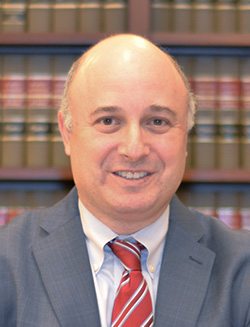
    Myriah represents clients in defense of data breach class actions, privacy torts and statutory claims (IRPA/BIPA), pixel tacking and commercial surveillance matters, internet defamation, technology disputes, and cyber subrogation claims. She defends them in response to regulatory inquiries and investigations arising out of data incidents and privacy practices, including before state Attorney General offices, the Federal Trade Commission and the Department of Human and Health Services – Office of Civil Rights. Myriah is a Certified Information Privacy Professional, United States (CIPP/US) and a Certified Information Privacy Professional, Europe (CIPP/E) as certified by the International Association of Privacy Professionals. She was also a Trial Attorney with the Department of Justice. She received her JD/MS degree from Syracuse University College of Law. And now, I am happy to say, she is a member of the Editorial Advisory Board for the Journal on Emerging Issues in Litigation.

    I hope you enjoy the episode. If so, give us a rating!

    *******

    This podcast is the audio companion to the Journal on Emerging Issues in Litigation. The Journal is a collaborative project between HB Litigation Conferences and the Fastcaselegal research family, which includes Full Court Press, Law Street Media, and Docket Alarm. The podcast itself is a joint effort between HB and our friends at Law Street Media. If you have comments or wish to participate in one our projects please drop me a note at Editor@LitigationConferences.com.

    Tom Hagy

    (actual size)

    Tom Hagy
    Litigation Enthusiast and
    Host of the Emerging Litigation Podcast
    Home Page
    LinkedIn

    Myriah V. Jaworski

    Myriah V. JaworskiClark Hill PLC

    Myriah represents clients in defense of data breach class actions, privacy torts and statutory claims (IRPA/BIPA), pixel tacking and commercial surveillance matters, internet defamation, technology disputes, and cyber subrogation claims.

    She defends them in response to regulatory inquiries and investigations arising out of data incidents and privacy practices, including before state Attorney General offices, the Federal Trade Commission and the Department of Human and Health Services – Office of Civil Rights.

    Myriah is a Certified Information Privacy Professional, United States (CIPP/US) and a Certified Information Privacy Professional, Europe (CIPP/E) as certified by the International Association of Privacy Professionals. She was also a Trial Attorney with the Department of Justice. She received her JD/MS degree from Syracuse University College of Law. And now, I am happy to say, she is a member of the Editorial Advisory Board for the Journal on Emerging Issues in Litigation.

  • The Use—and Abuse—of Rule 41(a) to Destroy Federal Question Jurisdiction Post-Removal

    The Use—and Abuse—of Rule 41(a) to Destroy Federal Question Jurisdiction Post-Removal

    The Authors

    John Sear

    John SearNelson Mullins

    John defends manufacturers in product liability litigation involving a range of products, e.g., ATVs, RVs, institutional chemicals, medical devices, and pharmaceuticals. From single cases to mass tort litigation and class actions, John has defended clients in courtrooms around the country.

    T. Michael Pangburn

    T. Michael PangburnThor Motor Coach Inc.

    Michael is General Counsel of Thor Motor Coach Inc., a final-stage manufacturer of motor homes headquartered in Elkhart, Indiana. He is also an adjunct professor of commercial law at the Notre Dame Law School.

    Taryn Ryan

    Taryn RyanNelson Mullins

    Taryn focuses her practice on litigation. She has experience dealing with products liability, discovery issues, corporate structure and governance, wealth management, private and commercial lending, real estate, and Indian affairs for lobbying both on state and federal levels. Taryn contributed valuable research to this article.

    The Journal on Emerging Issues in Litigation

    Emerging Litigation Podcast

    Emerging Litigation PodcastProduced by HB Litigation and Law Street Media

    Interviews with leading attorneys and other subject matter experts on new twists in the law and how the law is responding to new twists in the world.

    The Use—and Abuse—of Rule 41(a) to Destroy Federal Question Jurisdiction Post-Removal

    “A plaintiff seeking to divest the court of subject matter jurisdiction post-removal should at least comply with the requirements of the rule they have relied on. Glossing over those requirements undermines the purpose and intent of both the rule and removal statutes. The case should stay put in federal court in the absence of compliance.”

    Abstract: Defendants in civil litigation can level the often uneven state court playing field by removing cases to federal court through federal question removal. In those cases in which the plaintiff has alleged a claim grounded in federal law, the defendant may remove the case to an often more impartial federal forum. Once removed, the plaintiff has few options for defeating removal. About the only option available to the plaintiff is to forgo the federal claim and divest the court of federal question jurisdiction, forcing remand to state court. In pursuit of a ticket back to state court, however, plaintiffs routinely misuse Fed. R. Civ. P. 41 in seeking to dismiss fewer than all claims and less than the entire action. Too frequently courts simply go along with the ruse. This article addresses the misuse and abuse of Rule 41. It provides an overview of the text and history of Rule 41, discusses how the rule should be used and applied, analyzes decisions that indulge the misuse, and explains how the misuse can and does prejudice defendants.

    GET THE COMPLETE ARTICLE

  • The Plight of the Indirect Purchaser

    The Plight of the Indirect Purchaser

    The Plight of the Indirect Purchaser with Austin Cohen

    You might think that if you purchase a product for a price inflated by bad actors in the supply chain that you would be able to collect damages. Unfortunately, depending on who you are, you would be wrong.

    Consumers and businesses, indirect purchasers of products whose prices are fixed by those who supply the maker of your purchase may not collect damages in states that, surprisingly, do not have antitrust laws that give them standing.

    But what about federal law? Why do some states provide for damages and others do not? Are there alternatives?  Are there any pro-purchaser changes on the horizon that could impact antitrust litigation brought by indirect buyers?

    For answers to these questions and more, listen to my interview with attorney Austin Cohen of Levin Sedran & Berman LLP of Philadelphia. His practice focuses on  antitrust and business law, class actions, torts and products liability, and environmental damage litigation. Austin received a BA in Economics and History from the University of Pennsylvania and his JD, cum laude, from the University of Pittsburgh School of Law.

    I hope you enjoy the episode. If so, give us a rating!

    *******

    This podcast is the audio companion to the Journal on Emerging Issues in Litigation. The Journal is a collaborative project between HB Litigation Conferences and the Fastcaselegal research family, which includes Full Court Press, Law Street Media, and Docket Alarm. The podcast itself is a joint effort between HB and our friends at Law Street Media. If you have comments or wish to participate in one our projects please drop me a note at Editor@LitigationConferences.com.

    Tom Hagy

    (actual size)

    Tom Hagy
    Litigation Enthusiast and
    Host of the Emerging Litigation Podcast
    Home Page
    LinkedIn

    Austin B. Cohen

    Austin B. CohenLevin Sedran & Berman LLP

    Mr. Cohen, a native of West Islip, New York, received a BA in Economics and History from the University of Pennsylvania in 1990. He received a JD, cum laude, from the University of Pittsburgh School of Law in 1996. During law school, he interned for the Honorable Lowell Reed (E.D. Pa.) June – August, 1995. He also served as an Executive Editor and Associate Editor for the University of Pittsburgh Journal of Law and Commerce and was a finalist in the Murray S. Love Trial Moot Court Competition.

    His practice focuses on antitrust and business law, class actions, torts and products liability, and environmental damage litigation. Austin received a BA in Economics and History from the University of Pennsylvania and his JD, cum laude, from the University of Pittsburgh School of Law.

  • Intellectual Property Trial Team Diversity with Tara Trask

    Intellectual Property Trial Team Diversity with Tara Trask

    Intellectual Property Trial Team Diversity with Tara Trask

    Diversity and inclusion initiatives aren’t just valuable for checking off compliance boxes and writing marketing copy. Those benefits are a distant second and third to the genuine value team diversity has on the success of a company or a project. That also means law firms and trials.

    A recent article published by the American Bar Association Tort and Insurance Practice Section hailed diversity of perspectives for how they improve a team’s ability to resolve legal issues, innovate solutions, and introduce  factors homogeneous teams may miss.

    The National Association for Law Placement reported that women and people of color are making great progress at major law firms. Nearly half of associates are women and, based on summer associate statistics, women are expected to break the 50% as early as this year or next. Black associates made impressive gains, but there remains room for improvement. At the partner level, however, Black and Latinx women and men remain stuck in the low single digits.

    In this episode we drill down even further to examine trial teams in the intellectual property arena. I was thrilled to speak with Tara Trask, one of the nation’s leading experts on IP trials and juries, having directly worked on or observed more of these proceedings than just about anyone. Tara has championed research on this topic as part of her work and presentations for the American Intellectual Property Law Association. The diversity spark lit up for Tara when she and her panelists enjoyed an enthusiastic reaction to an AIPLA conference session she moderated titled, “Perspectives on Diversity: Views on Trial Teams From the Bench, The Boardroom, and the Jury Box.”

    Listen to Tara’s insights based on analysis of her own cases, analysis of related studies, and expanded fact-gathering she is leading in collaboration with the association.

    BREAKING NEWS! This episode kicks off a series of guest-hosted sessions for which Tara will take the mic to interview professionals from her impressive network on legal team diversity.

    Now You Can Watch the Podcast

    WATCH IT NOW

    This podcast is the audio companion to the Journal on Emerging Issues in Litigation. The Journal is a collaborative project between HB Litigation Conferences and the Fastcase legal research family, which includes Full Court Press, Law Street Media, and Docket Alarm. The podcast itself is a joint effort between HB and our friends at Law Street Media. If you have comments or wish to participate in one our projects please drop me a note at Editor@LitigationConferences.com.

    Tom Hagy
    Litigation Enthusiast and
    Host of the Emerging Litigation Podcast
    Home Page
    LinkedIn

    Loved hearing what Tara said about this subject matter?

    Explore more content from Tara!

    Podcast: Jury Selection in the Age of Conspiracy Theories and Distrust with Tara Trask 

    Podcast: Lawyers for Good with Tara Trask and Jason Flom

    Tara Trask

    Tara TraskTrask Consulting

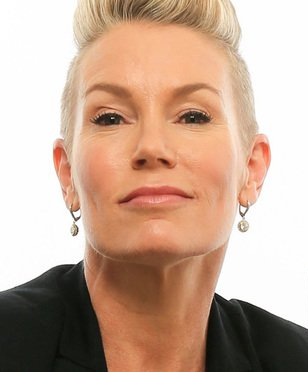
    Tara Trask is the President of Trask Consulting, a boutique litigation strategy, jury research, and trial consulting firm with offices in San Francisco, Houston, and New York. She focuses on civil litigation with an emphasis on complex commercial litigation, including intellectual property, antitrust, securities, breach of contract, and fraud.

    She has assisted both plaintiffs and defendants in cases involving products liability, insurance, and oil and gas. Tara has extensive experience in assisting institutions and individuals in matters involving regulatory enforcement and white-collar defense, as well. She has been involved in more than 500 jury trials.

    Tara Trask Consulting

    Tags

    Emerging Litigation & Risk Compliance Litigation & appeals Cybersecurity Data Privacy Artificial Intelligence (AI) Insurance Companies Risk Management Corporate & Securities Insurance Claims Recovery Regulations Data Breach Toxic Torts Antitrust Legal Tech Product Liability Settlements Trial Personal Injury Privacy Healthcare Per- and Polyfluoroalkyl Substances (PFAS) Data Analytics Arbitration Constitutional Law Climate Change Cannabis Labor Law Insurance Fraud Liability Claims COVID Alternative Dispute Resolution (ADR) Mediation Diversity Equity Inclusion (DEI) Claims management Professional Liability Legal Research & Writing Business Interruption Law Practice Management Trial Skills Property and Casualty Drug Laws Copyright Law Catastrophic Loss

  • “Years of Deception” Behind Consumer Privacy Violations Alleged

    “Years of Deception” Behind Consumer Privacy Violations Alleged

    Mental Health Platform’s Data Sharing Practices Challenged.

    • BetterHelp allegedly shared personal identifiable info with third parties. 
    • FTC files administrative complaint asserting “years of deception.”
    • Days later, two class actions were filed in the Northern District of California.  

    Photo by Nik Shuliahin 💛💙 on Unsplash

    Online mental health company BetterHelp, Inc. is facing allegations on two fronts for allegedly sharing personal identifiable information with third parties and breaching consumer privacy.

    The Federal Trade Commission (“FTC”) initiated an administrative complaint against the California-based online mental health company on March 2, 2023, after what they call years of deceptive practices and blatant denial of a media report published by Jezebel in February 2020. The article cited evidence that BetterHelp shares sensitive patient information and email account information with third parties such as Facebook, Snapchat, Criteo, and Pinterest.

    Days after the FTC filed its complaint, consumers filed two class actions in the Northern District of California’s San Jose Division (C.M. v. BetterHelp, Inc., March 7, 2023, 5:23-cv-01033 and Jane Doe v. BetterHelp, Inc., March 11, 2023, 5:23-cv-01096). Both consumer privacy lawsuits state that their facts are largely supported by experts in the field of data privacy.

    BetterHelp is a Delaware corporation with its principal office or place of business in Mountain View, Calif. On its website the company claims it is the “world’s largest therapy platform” with more than 25,000 licensed therapists available. BetterHelp operates generalized mental health therapy services and operates specialized therapy services for members of the LGBTQ community, members of the Christian Faith, Spanish-speaking clients, and teen counseling with parental consent. BetterHelp founder Alon Matas stated in a Medium article published Oct. 8, 2018, that, “One of our core missions is to destigmatize mental health. We firmly believe that nobody should ever feel ashamed or embarrassed to reach out for help.”

    Explosive Growth

    The FTC complaint states that BetterHelp’s website and app “has seen explosive growth over the last few years,” adding more than 118,000 U.S. users in 2018, 158,000 in 2019, and 641,000 in 2020. BetterHelp required new users between August 2017 to December 2020 to fill out mandatory questionnaires. These intake questionnaires reportedly ask a user’s age, marital status, whether they’ve been in therapy before, how they rate their sleeping and eating habits, employment status, and whether they are experiencing overwhelming emotions such as sadness, grief, and depression, and whether they have suicidal ideation.

    BetterHelp repeatedly assured users filling out these questionnaires that their email addresses and information would be “kept strictly private” and “never shared, sold or disclosed to anyone.” However, FTC said its investigation revealed that the company used clandestine tactics to share health information of more than 7 million users with Facebook, Snapchat, Criteo, and Pinterest.

    The FTC has filed a proposed order that would require BetterHelp to pay $7.8 million as compensation to users who signed up for BetterHelp’s services between Aug. 1, 2017 and Dec. 31, 2020. The compensation is intended to recoup costs patients paid to BetterHelp. The average patient paid an average $60 – $90 per week for these counseling services. The proposed order would also prohibit BetterHelp from sharing consumers’ health data for advertising, sharing their personal information for re-targeting, or serving ads to consumers who had visited the company’s website or app. The FTC is pushing for BetterHelp to accept a settlement where the company agrees to limit their data sharing in the future and the company would be directed to contact affected consumers about the case and must also direct third parties such as Facebook or Pinterest to delete consumers’ health and other personal data shared with them.

    Consumer Privacy Investigative Report

    During the Covid-19 pandemic, Jezebel gathered information on how BetterHelp handles its users’ data by having Jezebel employees sign up for therapeutic services and monitoring the kinds of information BetterHelp was collecting and sending to third parties. When presented with the findings, BetterHelp said their methods were “standard and that they far exceed all applicable, regulatory, ethical and legal requirements.” Jezebel reported that BetterHelp slipped data to dozens of third parties, monitored their behavior online, and signaled to companies like Facebook, Google, Snapchat, and Pinterest that the applicants were considering BetterHelp services.

    The FTC’s investigation followed the investigative report. The Commission states that in December 2020 BetterHelp changed its privacy statement to say, “Rest assured – your health information will stay private between you and your counselor” which was in use until September 2021. Upon notice of the FTC’s investigation and public pressure from consumers, the company changed its privacy statement again in October 2021 to say that it does disclose visitors’ IP addresses and other personal identifiers for advertising, and offered visitors an opportunity to out of these disclosures. Users did not have the option to opt out prior to October 2021.

    The FTC describes two methods that BetterHelp used to send information to Facebook.

    • In the first, the company compiled visitors’ and users’ email addresses which they then uploaded to Facebook to match the individuals with their Facebook user accounts for the purposes of targeting them and others like them with advertisements.
    • Secondly, between 2013 and December 2020, Better Help shared visitors’ and users’ email address, their IP address, and records known as “events” to Facebook. These events automatically tracked when each visitor or user on the main website or affiliate websites answered certain questions on the intake questionnaire or when they enrolled in a certain service. BetterHelp automatically disclosed these events to Facebook through what are known as web beacons that were placed on every website they operated.

    With two consumer privacy class actions looming and the FTC’s administrative complaint, BetterHelp faces significant pressure to make serious changes.

    By Hunter Schmitz

    By Hunter SchmitzGuest Writer

    Hunter Schmitz is a freelance legal writer and paralegal with Focus on Property Law and Civil Litigation.

  • Alleged Hair Product Injuries Impact Women of Color

    Alleged Hair Product Injuries Impact Women of Color

    L’Oréal Among Defendants in Litigation Over Hair Products.

    • Dozens of hair straightener cases allege higher incidence of cancers and other diseases.
    • Plaintiffs in dry shampoo litigation say products contain benzene. 
    • Seven companies control the U.S. hair product industry.

    Photo by Giorgio Trovato on Unsplash

    L’Oréal has been hit hard in recent hair care litigation related to straighteners, relaxants, and dry shampoos. L’Oréal was named a defendant in nearly sixty complaints alleging that straightening products manufactured by the beauty giant have caused cancer in its consumers. L’Oréal has also been named a defendant in a proposed class-action for its Redken dry shampoo that allegedly contains the carcinogen benzene. Other large industry players such as Johnson and Johnson and Unilever have also been accused of selling dry shampoos with dangerous levels of benzene.

    Straighteners and Relaxers Litigation

    Dozens of cases have been consolidated in multidistrict litigation against L’Oréal for its potentially cancerous hair straighteners and relaxers. Mitchell v. L’Oréal USA Inc. is a typical case.  It was filed by Missourian Jennifer Mitchell, a black woman, after her diagnosis of uterine cancer which she claims was caused by endocrine disrupting chemicals (EDCs) in L’Oréal’s hair straighteners and relaxers. Jennifer Mitchell was diagnosed with her cancer on August 10, 2018.

    “Ms. Mitchell was first exposed to EDCs and/or phthalate-based products around 2000, at or around the age of 10, when she began using Defendants’ Product.” She used the products as instructed for 22 years, leaving the chemicals in her hair for long periods of time. At the age of 28, she was diagnosed with uterine cancer despite the cancer not being in her family history. As a result of her cancer diagnosis, Ms. Mitchell had to undergo a full hysterectomy, causing her emotional and physical pain, and rendering her unable to have children.

    The complaint details a long history of marketing harmful hair relaxers and straighteners to black women to combat their natural hair texture and meet a Eurocentric white beauty standard.

    The filed complaint consisted of fifteen counts ranging from strict liability failure to warn and negligence to medical monitoring. The products included in the complaint were Motions, Dark & Lovely, Olive Oil Relaxer, and Organic Root Stimulator.

    Ms. Mitchell’s evidence supports her claims that the products allegedly caused her cancer due to EDCs. Health issues linked to EDCs include uterine cancer, breast cancer, uterine fibroids, endometriosis, and preterm delivery, amongst others. “On October 17, 2022, a study led by the National Institutes of Health (NIH) reported findings that women who frequently used chemical hair straightening or hair relaxer products were more than twice as likely to develop uterine cancer as women who did not use such products.

    Ms. Mitchell’s case was consolidated with dozens of other cases against L’Oréal and other defendants in Chicago federal court as In re: Hair Relaxer Marketing, Sales Practices, and Products Liability Litigation. The consolidation was opposed on December 7, 2022, by L’Oréal USA, Inc., L’Oréal USA Products, Inc., SoftSheen-Carson LLC, and SoftSheen-Carson (W.I.), Inc., collectively known as “the L’Oréal defendants.”

    In the L’Oréal defendants’ response to the motion for consolidation, the company first outlined its issues with the frequently referenced NIH study that catalyzed the filing of many of the plaintiffs’ lawsuits. For example, L’Oréal stated that the study “did not collect information on specific brands or ingredients used by the participants,” and that “all of the women in the NIH Study had sisters who had been diagnosed with breast cancer.” L’Oréal also argued that none of the plaintiffs’ cases were similar enough to consolidate. The plaintiffs’ cases differed in products used, timespans, named defendants, and injuries.

    Further, L’Oréal argued that if consolidation had to happen, then the case should use the Southern District of New York as a forum, where fifteen of the matters were pending, and where the company has its headquarters. The defendant also disagreed with the Chicago judge that the case would be assigned to—The Honorable Mary M. Rowland—claiming she lacked multidistrict litigation (MDL) experience.

    Despite L’Oréal’s best efforts, its motion was fruitless. Cases in “Schedule A” of the MDL (MDL No. 3060) were consolidated on February 6, 2023. Cases from California, New York, Georgia, and Illinois, including Ms. Mitchell’s case, were assigned to The Honorable Mary M. Rowland in the Northern District of Illinois. Since the original transfer, many other actions have been added to the MDL.

    Dry Shampoo Litigation

    In addition to allegations that its relaxing and straightening hair products cause cancer, L’Oréal is also currently facing accusations of using benzene, a well-known carcinogen, in its dry shampoo products. Other big-names that have been appearing in dry-shampoo complaints include Johnson and Johnson (J&J)’s OGX brand and Unilever’s Dove, Nexxus, Suave, Tigi and Tresemmé brands.

    What Is Benzene?

    Benzene is a chemical compound that can be both naturally and man-produced. Its harm to human health has been at the heart of many instances of litigation. Benzene, “a component of crude oil, gasoline, and cigarette smoke,” has been determined to be unsafe for human exposure in any quantity greater than zero. Government bodies such as the Food and Drug Administration (FDA), the Environmental Protection Agency, the Department of Health and Human Services, and the World Health Organization have spoken out against the dangers of benzene, and have attempted to limit its exposure to the public.

    Valisure’s Report

    On October 31, 2022, Valisure released a Citizen Petition on Benzene in Dry Shampoo Products, which prompted the wave of dry shampoo litigation hitting the U.S. court system. The company claims to have tested 148 batches of dry shampoo from 34 different brands and found that 70% of its samples contained benzene in varying amounts.

    Pictured Above: Valisure Table 6. Overview of first spray analyses by brand. In some cases, two bottles from the same lot were analyzed and these duplicate lots are grouped by a black outline around the two values.

    The petition itself requested a recall of the products Valisure found to be contaminated with benzene, that the Commissioner of the FDA establish better procedures for informing the public of their exposure to dangerous substances in cosmetics, amongst other requests.

    Hirsch v. L’Oréal USA, Inc.: The Complaint

    In a complaint filed on November 22, 2022, Plaintiff Eileen Hirsch and others similarly situated brought suit against L’Oréal USA, Inc. for its Redken brand dry shampoo products. The class action lawsuit alleges that the product line contains benzene, a carcinogen with evidence linking it to causing cancers such as leukemia, amongst other illnesses. Benzene was not a listed ingredient in the products. Yet, the independent study performed by Valisure found that the product contained as much as 7.55 parts per million (“ppm”) of benzene.

    Ms. Hirsch, a Chicago resident, purchased multiple canisters of the Redken dry shampoo from a salon in the area. The complaint alleges that she was harmed in two separate ways: “First, Ms. Hirsch purchased adulterated and misbranded products that were illegally sold to her, and therefore worthless. Second, Ms. Hirsch was deceived by Defendant’s representations and omissions regarding the presence of benzene in the Products.” Other class members are also individuals who have purchased Redken dry shampoo.

    Defendant’s Motion to Dismiss

    Defendant L’Oréal did its best to get the case dismissed in a motion filed on February 7, 2023. In its Motion to Dismiss, L’Oréal gave several reasons for the complaint’s deficiency, including that the plaintiffs lacked standing to bring the claim and that the claims are preempted. Further, L’Oréal argues that the independent Valisure study relied upon by the plaintiff is insufficient to support the claims, stating that “Valisure . . . [is an] untrustworthy laboratory that has been censured by the [FDA] and federal judges alike.”

    Plaintiffs responded to L’Oréal’s Motion to Dismiss, stating that the case was simple, standing had been correctly established, and the defendant’s allegations of insufficient Valisure testing were premature. L’Oréal has replied to the plaintiffs’ motion, but the court has not yet ruled on the Motion to Dismiss, determining the fate of the case.

    Looking Forward

    Those following the concert of haircare litigation should watch closely to see which product lines are tapped next and why. L’Oréal may be one of the more popular defendants, but that does not mean there aren’t other offenders.

    Most beauty products known to average consumers are owned by one of seven large companies—J&J, L’Oréal, Eéste Lauder, Unilever, Procter and Gamble, Shiseido, and Coty. For better or for worse, these corporate identities pioneer most of the research and manufacturing that goes into the creation of the world’s fashion, beauty, and hygiene products. That means when these companies use carcinogens, they can likely be found in a mind-boggling number of items behind your own bathroom mirror, leading to mass injury and extremely complex litigation.
    By Victoria Kline

    By Victoria Kline

    Victoria is a third-year student at the University of Miami School of Law, Juris Doctorate Candidate 2023, Law Review Staff Editor, and soon-to-be associate at Jones Day.


  • The Medical Monitoring Tort Remedy: Its Nationwide Status, Rationale, and Practical Application (A Possible Dynamic Tort Remedy for Long-Term Tort Maladies)

    The Medical Monitoring Tort Remedy: Its Nationwide Status, Rationale, and Practical Application (A Possible Dynamic Tort Remedy for Long-Term Tort Maladies)

    The Author

    Edgar C. Gentle

    Edgar C. GentleGentle, Turner, Sexton & Harbison LLC

    Edgar C. Gentle III (egentle@gtandslaw.com) is founder and managing partner of Gentle, Turner, Sexton & Harbison LLC in Birmingham, Alabama, where he focuses on complex commercial litigation, mass torts, and class actions. He also serves as a court appointed neutral and settlement administrator.

    The Journal on Emerging Issues in Litigation

    Emerging Litigation Podcast

    Emerging Litigation PodcastProduced by HB Litigation and Law Street Media

    Interviews with leading attorneys and other subject matter experts on new twists in the law and how the law is responding to new twists in the world.

    The Medical Monitoring Tort Remedy: Its Nationwide Status, Rationale, and Practical Application (A Possible Dynamic Tort Remedy for Long-Term Tort Maladies)

    “States that allow medical monitoring do so when a group of claimants has been exposed to a known hazardous substance, such as lead, or a dangerous product, such as football helmet concussions, or air decompression in an airplane, through the conduct of the Defendant, with the claimants therefore being at increased risk of contracting disease.  Under this tort remedy, claimants are tested periodically, for an agreed or decided period, usually between 10 and 40 years, to see if they contract the disease linked to the toxic substance or dangerous product. Thus, medical monitoring recognizes the long-term harmful nature of toxins and man-made products, thereby matching a remedy with the malady.“

    Abstract: The author administers six mass tort settlements with a medical component, including two with medical monitoring. This article reviews the status and history of medical monitoring, known claimant medical monitoring participation rates, the rationale for the remedy, arguments for and against its implementation, and its execution in practice. The author suggests a more holistic medical monitoring remedy,  which includes not only testing/or disease but paying claimants for personal injury when they get sicker later, from a capped fund and under an agreed payment matrix, to provide closure to defendants and class members for claims resulting from toxic substances and product defects, which have long-term and often unknown effects on plaintiffs. It is suggested that this remedy is the logical long-term result of the evolution of medical monitoring, and will provide a much needed dynamic remedy for long-term maladies.

    Download the article now!

    Loved what Ed covered in his article?

    Explore Ed’s additional content on the subject matter.

    OnDemand CLE Webinar: The Medical Monitoring Tort Remedy with Ed Gentle and Kip Benson

    Podcast: Medical Monitoring for Modern Times with Ed Gentle

    Tags

    Emerging Litigation & Risk Compliance Litigation & appeals Cybersecurity Data Privacy Artificial Intelligence (AI) Insurance Companies Risk Management Corporate & Securities Insurance Claims Recovery Regulations Data Breach Toxic Torts Antitrust Legal Tech Product Liability Settlements Trial Personal Injury Privacy Healthcare Per- and Polyfluoroalkyl Substances (PFAS) Data Analytics Arbitration Constitutional Law Climate Change Cannabis Labor Law Insurance Fraud Liability Claims COVID Alternative Dispute Resolution (ADR) Mediation Diversity Equity Inclusion (DEI) Claims management Professional Liability Legal Research & Writing Business Interruption Law Practice Management Trial Skills Property and Casualty Drug Laws Copyright Law Catastrophic Loss

  • Class Certification Evidence: Standards of Admissibility and Probative Value Among the Circuits

    Class Certification Evidence: Standards of Admissibility and Probative Value Among the Circuits

    Class Certification Evidence

    What Are the Standards of Admissibility and Probative Value Among the Circuits?

    Numerous splits exist among the circuits on two key certification issues: What is required to prove the elements for class certification and whether plaintiff’s certification evidence must be admissible. Further, courts apply different admissibility standards to fact evidence than to expert evidence. Certain courts have issued clear guidance on these important issues, while others have remained circumspect, sending mixed signals. This is particularly vexing for defendants, who may be sued in more than one district or circuit. What is sufficient for class certification in one jurisdiction may be inadequate in another. With standards unsettled, counsel must anticipate and preserve the right to revisit class certification by preserving all objections and the factual record. Listen as the panel of class action attorneys discusses the standards of admissibility of evidence at certification and best strategies for leveraging ambiguities.

    Questions Addressed

    • How can defense counsel preserve objections to admissibility?
    • How can counsel leverage the law of other circuits in jurisdictions with no controlling precedent?
    • What does how a court assesses evidence imply about its view on admissibility standards?

    Webinar Outline

    1. Fact evidence
      1. Need not be admissible
      2. Must be admissible
      3. Ambiguous
    2. Expert evidence
      1. Full Daubert analysis
      2. Limited Daubert analysis
    3. Strategies for managing and leveraging the uncertainty

    Strafford and HB Logos

    On Demand CLE Webinar

    A Strafford production specially selected for HB audiences.

    Learn Strategies for
    Opposing or Narrowing Class Certification
    and Preserving Objections

    This Strafford production has been specially selected for HB audiences.

    Speakers

    Kevin Daly
    Counsel
    Robinson & Cole

    Alexander Madrid
    Partner
    McGuire Woods

    Michael Ruttinger
    Partner
    Tucker Ellis

    Robert Sparkes, III
    Partner
    K&L Gates

    This Strafford production has been specially selected for HB audiences.

  • Discovery Strategies in Wage and Hour Class and Collective Actions Before and After Certification of Putative Class

    Discovery Strategies in Wage and Hour Class and Collective Actions Before and After Certification of Putative Class

    Discovery Strategies in Wage and Hour Class and Collective Actions Before and After Certification of Putative Class

    Strategically Limiting Discovery, Resolving Discovery Disputes

    Wage and hour class and collective actions are complex and discovery intensive. Discovery requests are often burdensome, seeking information concerning a broad swath of workers. This causes the discovery process to sometimes linger for years and creates a significant expense for employers.In recent years, courts have emphasized that parties must rein in extensive and expensive discovery requests. Employment litigators are increasingly raising proportionality arguments as a basis for objecting to opposing counsel’s discovery requests.

    Drafters are responding by tailoring requests to anticipate such challenges. Drafting discovery requests that are likely to withstand burden and proportionality challenges and objections to broad discovery requests is critical for litigators representing employers in wage and hour class and collective actions. Employment litigators must develop and implement effective discovery strategies both before and, as applicable, after certification of the putative class. These strategies often must anticipate the possibility of a future summary judgment motion, further certification practice, and trial on the merits.

    Listen as our authoritative panel of employment law attorneys explains effective strategies for pursuing or objecting to discovery requests in wage and hour collective and class actions and resolving discovery disputes that arise during litigation.

    Questions Addressed:

    • What are the most common discovery challenges counsel face when litigating wage and hour collective and class actions–from initiation through resolution of the case?
    • What strategies have been effective in wage and hour collective and class actions for obtaining essential information with the least expense?
    • What is the scope of discoverable evidence before and after certification of the putative class, and how can you limit or best manage discovery?
    • When drafting discovery requests in wage and hour class and collective actions, what should employment counsel consider to ensure that the requests align with the proportionality standard?

    Interested in More CLE OnDemand? Click Here.

    Interested in this program? Click here to send us a note.

    On Demand CLE Webinar

    Interested in this program? Click here to send us a note.

    Speakers

    Gerald Maatman Jr.
    Partner
    Duane Morris
    GMaatman@duanemorris.com

    Noel P. Tripp
    Principal
    Jackson Lewis
    Noel.Tripp@jacksonlewis.com

    Outline

    1. Pursuing or objecting to discovery requests in wage and hour collective and class actions
      1. Before conditional collective or class certification
      2. After conditional certification of a collective action
      3. After class certification
    2. Discovery considerations for summary judgment
    3. Discovery considerations for trial
    4. Resolving discovery disputes

    Explore more from Duane Morris LLP!

    Journal (JEIL) Artificial Intelligence Litigation Risks in the Employment Discrimination Context. By Gerald Maatman Jr., Alex Karasik, and George Schaller

    CLE OnDemand Webinar: AI Nuts & Bolts Survival Guide: Artificial Intelligence – Discrimination in Employment Context. Gerald Maatman Jr., Alex Karasik, and George Schaller

    CLE OnDemand Webinar: Discovery Strategies in Wage and Hour Class and Collective Actions Before and After Certification of Putative Class. Gerald Maatman Jr., Noel P. Tripp

    CLE OnDemand Webinar: Rule 23(c)(4) Issue Certification: Reconciling the Conflict With the Predominance Requirement. Gerald Maatman Jr., Timothy Congrove, Jennifer Mesko and James Muehlberger

  • Greatly Exaggerated: The Impact of Bankruptcy on Mass Torts with Jennifer Hoekstra

    Greatly Exaggerated: The Impact of Bankruptcy on Mass Torts with Jennifer Hoekstra

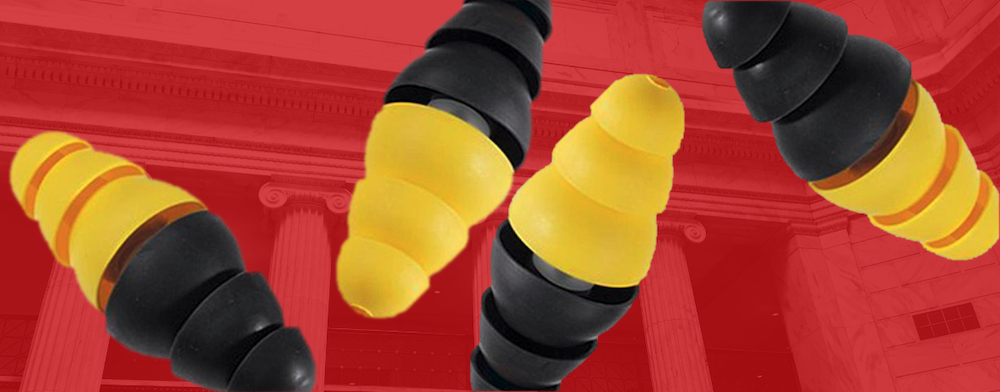
    ear plugs on red background

    When large companies face massive mass tort litigation, one way they can survive is to file for bankruptcy protection and reorganize. 

    3M recently put its Aearo Technologies subsidiary into bankruptcy in the face of more than 230,000 claims that’s its defective earplugs caused hearing loss.  When it came to filing bankruptcy 3M said Aearo was solely responsible for the product. But for several years of litigation 3M argued that it, as the parent, was solely responsible, not its various subsidiaries. That was a strategy that was beneficial to the company in multidistrict litigation.

    Why did 3M suddenly change course? What impact does bankruptcy have on claimants? Could corporations use bankruptcy law to neuter mass tort litigation for all eternity?  And how did the strategy sit with the federal magistrate judge overseeing the multidistrict litigation?

    Joining me to discuss this incredibly complex litigation is Jennifer M. Hoekstra, a partner with Aylstock Witkin Kreis & Overholtz. Jennifer has been involved in all varieties of complex litigation since 2007, focusing on mass torts, drug and device litigation, and others.  She has a J.D. from Tulane, which she earned while also completing a certificate in Environmental Law. She has actively served as trial counsel or an integral member of the trial team in several of the 3M Earplug trials securing nearly $300 million in compensatory damages for military veterans. Jennifer shared her insights on the intersection of complex mass torts and bankruptcy, an intersection that wasn’t originally on her roadmap.

    This podcast is the audio companion to the Journal on Emerging Issues in Litigation. The Journal is a collaborative project between HB Litigation Conferences and the Fastcase legal research family, which includes Full Court Press, Law Street Media, and Docket Alarm. The podcast itself is a joint effort between HB and our friends at Law Street Media. If you have comments or wish to participate in one our projects please drop me a note at Editor@LitigationConferences.com.

    Tom Hagy

    (actual size)

    Tom Hagy
    Litigation Enthusiast and
    Host of the Emerging Litigation Podcast
    Home Page
    LinkedIn

    P.S. During the podcast I mentioned an article and wanted to share the link. It’s called “Bankruptcy Grifters” by Lindsey D. Simon. It was published in the Yale Law Journal.

    Jennifer Hoekstra

    Jennifer Hoekstra

    Jennifer M. Hoekstra is a partner with Aylstock, Witkin, Kreis & Overholtz, PLLC. A native of Saint Paul, Minnesota, Ms. Hoekstra boasts an impressive academic and professional record, including graduation from two of the nation’s top schools. She earned her Bachelor of Arts in Environmental Science from Columbia College, Columbia University in the City of New York. She relocated to Louisiana to attend Tulane Law School, where she earned her J.D. while also completing a certificate in Environmental Law. During her law school career, she spent a semester studying at the University of Wisconsin School of Law and visited on their International Law Journal as a Junior Member during her Hurricane Katrina evacuation semester.

    Ms. Hoekstra has been involved in complex litigation cases of all forms since 2007. Ms. Hoekstra has earned a solid reputation as a skilled writer and researcher, and plays an integral role in several complex litigation cases, practicing in the areas of Pharmaceutical Mass Torts, Defective Device Mass Torts, and other complex litigation. She is currently a member of the Proton-Pump Inhibitors Plaintiff Executive Committee and the 3M Earplugs MDL Discovery and ESI Committee.

    Jennifer was central to the successful outcome in bellwether trials in the Genetically Modified Rice, Actos and DePuy Pinnacle Hip MDLs with more than $11 Billion in trial verdicts resulting from those cases. She has actively served as trial counsel or an integral member of the trial team in several of the 3M Earplug trials securing nearly $300 Million in compensatory damages for military veterans.

    She is licensed to practice before all Louisiana state and federal courts and the U.S. District Courts for the Northern District of Texas and Eastern District of Missouri as well as the 5th and 8th Circuit Courts. She is a member of the American Bar Association, the Louisiana Bar Association, the Acadiana Federal Bar Association, the Alexandria Louisiana Bar Association and the American Association for Justice. She is a member of Women En Mass, founding member of the board for the Society Women Trial Lawyers and was also a member of the inaugural 2018 Board of Directors for Emerge Louisiana.