Tag: International Law

  • Climate Change Law: Tension Increases Over Governmental and Corporate Responsibility

    Climate Change Law: Tension Increases Over Governmental and Corporate Responsibility

    Emerging Litigation Podcast

    Emerging Litigation PodcastProduced by HB Litigation

    Interviews with leading attorneys and other subject matter experts on new twists in the law and how the law is responding to new twists in the world.

    Interested in contributing an article? Email us at Editor@LitigationConferences.com.

     Climate Change Law: Tension Increases Over Governmental and Corporate Responsibility

    U.S. and UN policies diverge, as litigation over corporate responsibility falters in one state and advances in another.

    By Tom Hagy*

    The world’s leaders still don’t agree on what, if anything, to do about climate change – despite mounting evidence that, as a planet, we are in the soup.

    A major ruling from the International Court of Justice says states have an obligation to save the planet, as the U.S. president is enthusiastically sprinting the other way, inspiring cheers from his base and jeers from scientists.

    As for domestic litigation designed to pin liability on the fossil fuel industry, a case in South Carolina faltered as another in Hawaii is clearing hurdles.

    The ICJ’s Climate Opinion: A New Legal Standard for Global Accountability


    On July 23, 2025, the International Court of Justice (ICJ) issued a groundbreaking advisory opinion that could redefine the legal obligations of nations in addressing climate change. Requested by the United Nations General Assembly, the opinion affirms that:

    • States have a legal duty under international law to prevent environmental harm.
    • Countries with higher emissions bear greater responsibility.
    • Governments must regulate corporate climate impacts, including emissions and misinformation.
    • A healthy environment is a human right, protected under international law.

    This opinion doesn’t carry the force of binding precedent, but it sets a powerful normative standard. It will likely influence future litigation, especially in jurisdictions where international law is integrated into domestic legal systems. It also provides a legal foundation for climate activists and affected communities to challenge governmental inaction and corporate misconduct.

    Implications for Mass Torts and Litigation

    The ICJ’s opinion could bolster mass tort claims against multinational corporations by framing climate harm as a violation of human rights. Plaintiffs may now argue that companies and governments failed to meet international obligations, especially in cases involving vulnerable populations disproportionately affected by climate change.

    Charleston’s Climate Lawsuit Dismissed: A Setback for Municipal Tort Claims


    On August 6, 2025, a South Carolina state court dismissed a climate change lawsuit filed by the City of Charleston against several fossil fuel companies, including ExxonMobil, Chevron, and BP. The city alleged that these companies knowingly contributed to climate change and misled the public about its risks, resulting in costly infrastructure damage and increased flooding.

    The court’s decision hinged on several key findings:

    • Federal preemption: The judge ruled that federal law governs emissions and climate policy, preempting state tort claims.
    • Jurisdictional issues: Some defendants were dismissed due to lack of personal jurisdiction.
    • Causation and foreseeability: The court found the city’s theory of liability too broad, noting that climate change involves complex, global factors beyond the scope of tort law.

    Implications for Future Litigation

    Charleston’s loss is part of a broader trend of municipal climate lawsuits facing procedural hurdles. Courts have struggled with the challenge of attributing specific climate harms to individual companies, especially when those harms are diffuse and cumulative.

    However, the dismissal does not necessarily signal the end of climate torts. Plaintiffs may refine their legal theories, focus on narrower claims (e.g., fraud or consumer protection), or pursue litigation in more favorable jurisdictions. The case also underscores the importance of venue selection and the evolving role of federal courts in climate litigation.

    Honolulu’s Lawsuit Gains Momentum: A Bellwether for Climate Accountability


    While Charleston’s case faltered, Honolulu’s climate lawsuit continues to gain traction. Filed in 2020, the city’s suit targets major fossil fuel companies for allegedly deceiving the public about the dangers of fossil fuels and contributing to rising sea levels and extreme weather events.

    Unlike Charleston, Honolulu’s case has survived multiple procedural challenges and is moving toward trial. The city argues that:

    • Fossil fuel companies engaged in a decades-long campaign of misinformation.
    • The companies’ actions directly contributed to climate-related damages, including coastal erosion and infrastructure costs.
    • The defendants should be held liable under state tort law, including public nuisance and failure to warn.

    Why Honolulu Matters

    Honolulu’s case is widely viewed as a bellwether for climate litigation. If successful, it could open the floodgates for similar suits by other municipalities, states, and even private entities. The case also reflects a strategic shift: rather than focusing solely on emissions, plaintiffs are targeting alleged corporate deception and public misinformation.

    Trump Administration’s Political Overhaul of Environmental Policy


    In August 2025, the Trump administration issued a series of executive orders that dramatically reshape the federal government’s approach to climate science and environmental regulation. These actions reflect a broader agenda to centralize control over scientific research, dismantle climate protections, and boost fossil fuel development.

    Political Control Over Scientific Grants

    A new executive order places all federally funded research—including climate science—under direct political oversight. Agencies must now seek approval from political appointees before announcing or awarding grants. Previously awarded grants can be canceled if deemed inconsistent with the administration’s priorities. Peer review, long considered the gold standard for scientific integrity, is now advisory and subordinate to political judgment.

    This move has raised alarm across the scientific community, with critics warning that it could stifle innovation, politicize research, and undermine the credibility of U.S. science.

    Rewriting National Climate Reports

    The administration has begun revising past editions of the National Climate Assessment, a key document synthesizing federal climate science. Energy Secretary Chris Wright, a former fracking executive, announced that previous reports were being “reviewed” and would be replaced with new versions reflecting the administration’s views.

    This follows the revocation of the EPA’s “Endangerment Finding,” which underpins regulations on greenhouse gas emissions. The administration has also dismissed hundreds of scientists working on the next climate assessment, raising concerns about transparency and scientific integrity.

    Broad Rollback of Climate Protections

    The Trump administration has taken sweeping steps to dismantle climate action, including:

    • Opening 58 million acres of national forests to logging and development.
    • Phasing out FEMA, the nation’s disaster recovery agency, amid predictions of an intense hurricane season.
    • Fast-tracking deep-sea mining without environmental safeguards.
    • Blocking state-level climate laws, including ESG and carbon emission regulations.
    • Ramping up oil and gas production through emergency permitting and deregulation.
    • Mass layoffs at NOAA, weakening the country’s ability to forecast and respond to extreme weather.

    These actions mark a sharp departure from previous climate policy and have sparked legal challenges, public protests, and international criticism.

    Scientific Community Reacts to Trump Administration’s Climate Orders


    The Trump administration’s recent executive actions on climate change have sparked widespread concern and condemnation from the scientific community. These measures—ranging from political oversight of research grants to rewriting national climate reports—are seen by many experts as a direct assault on scientific integrity and environmental policy.

    DOE Climate Report Sparks Outrage

    A Department of Energy report claiming that global warming is “less damaging economically than commonly believed” has drawn sharp criticism. The report was authored by a group of climate skeptics, including John Christy, Judith Curry, Steven Koonin, Ross McKitrick, and Roy Spencer.

    “The alternative is to do nothing. I just don’t think I can do that.”

    Joellen Russell, an oceanographer at the University of Arizona, described the report as “designed to suppress science, not to enhance it or encourage it.” Benjamin Santer, a prominent climate scientist formerly with Lawrence Livermore National Laboratory, called it “a revision of science and a revision of history,” adding, “We have to respond.” Andrew Dessler, an atmospheric scientist at Texas A&M, is helping coordinate a rebuttal, saying, “The alternative is to do nothing. I just don’t think I can do that.”

    These scientists argue that the report misrepresents decades of climate research and is part of a broader strategy to repeal the EPA’s “Endangerment Finding,” which legally recognizes greenhouse gases as a threat to public welfare.

    Rewriting the National Climate Assessment

    Energy Secretary Wright confirmed that previous editions of the National Climate Assessment have been removed from public access and will be replaced with new versions reflecting the administration’s views. Hundreds of scientists working on the sixth edition of the report have been dismissed, despite legal obligations under the Global Change Research Act of 1990 to deliver the assessment to Congress and the president.

    This move has raised concerns about transparency and the politicization of climate science.

    Undermining Scientific Standards

    Critics say the administration’s actions represent a deliberate attempt to undermine the scientific foundation of climate policy. The DOE report selectively uses outdated or regionally limited data to obscure global trends, such as rising sea levels and record-breaking temperatures. It introduces misleading terminology—like referring to ocean acidification as “neutralizing ocean alkalinity”—and questions well-established phenomena like Arctic warming and urban heat effects.

    The revocation of the EPA’s Endangerment Finding is framed as a legal correction rather than a scientific reassessment, despite overwhelming evidence of climate-related harm.

    In response, scientists across the country are organizing formal rebuttals and public statements, warning that these actions could have long-term consequences for environmental regulation, public health, and the credibility of U.S. science.

    Broader Trends in Environmental Mass Torts


    These developments reflect several broader trends in environmental and climate-related mass tort litigation:

    Shift Toward Corporate Accountability

    Plaintiffs are increasingly focusing on corporate behavior—especially misinformation, failure to warn, and deceptive marketing—rather than emissions alone. This approach may be more legally viable and emotionally compelling to juries.

    International Law as a Litigation Tool

    The ICJ’s opinion and similar international rulings are being used to frame climate harm as a human rights violation. This could expand the scope of liability and introduce new legal standards into domestic courts.

    Municipalities as Plaintiffs

    Cities and counties are leading the charge in climate litigation, often citing local infrastructure damage, public health costs, and emergency response burdens. These cases are testing the limits of tort law and raising questions about causation, foreseeability, and jurisdiction.

    Procedural Challenges Remain

    Despite growing momentum, climate torts face significant hurdles, including federal preemption, standing, and causation. Courts are still grappling with how to apply traditional tort principles to global, systemic harms.


    *Tom Hagy has produced content for litigators in a variety of formats — news reporting services, conferences, webinars, podcasts, papers, and online research services — for more than 40 years. Wow. That’s longer than is probably healthy. He is founder of HB Litigation™, which is now a brand owned by Critical Legal Content LLC, provider of legal content for clients, which he founded in 2012. Tom can be reached at editor@litigationconferences.com. He also insisted *we* include the following acknowledgement: This piece was written with research and drafting assistance provided by Microsoft Copilot™, their AI tool, under the direction, review, editing, and adornment of a human editor — Tom being that human. Also, he wrote this part, in case that wasn’t obvious. 
  • Climate Change Law: Tension Increases Over Governmental and Corporate Responsibility

    Climate Change Law: Tension Increases Over Governmental and Corporate Responsibility

    Emerging Litigation Podcast

    Emerging Litigation PodcastProduced by HB Litigation

    Interviews with leading attorneys and other subject matter experts on new twists in the law and how the law is responding to new twists in the world.

    Interested in contributing an article? Email us at Editor@LitigationConferences.com.

     Climate Change Law: Tension Increases Over Governmental and Corporate Responsibility

    U.S. and UN policies diverge, as litigation over corporate responsibility falters in one state and advances in another.

    By Tom Hagy*

    The world’s leaders still don’t agree on what, if anything, to do about climate change – despite mounting evidence that, as a planet, we are in the soup.

    A major ruling from the International Court of Justice says states have an obligation to save the planet, as the U.S. president is enthusiastically sprinting the other way, inspiring cheers from his base and jeers from scientists.

    As for domestic litigation designed to pin liability on the fossil fuel industry, a case in South Carolina faltered as another in Hawaii is clearing hurdles.

    The ICJ’s Climate Opinion: A New Legal Standard for Global Accountability


    On July 23, 2025, the International Court of Justice (ICJ) issued a groundbreaking advisory opinion that could redefine the legal obligations of nations in addressing climate change. Requested by the United Nations General Assembly, the opinion affirms that:

    • States have a legal duty under international law to prevent environmental harm.
    • Countries with higher emissions bear greater responsibility.
    • Governments must regulate corporate climate impacts, including emissions and misinformation.
    • A healthy environment is a human right, protected under international law.

    This opinion doesn’t carry the force of binding precedent, but it sets a powerful normative standard. It will likely influence future litigation, especially in jurisdictions where international law is integrated into domestic legal systems. It also provides a legal foundation for climate activists and affected communities to challenge governmental inaction and corporate misconduct.

    Implications for Mass Torts and Litigation

    The ICJ’s opinion could bolster mass tort claims against multinational corporations by framing climate harm as a violation of human rights. Plaintiffs may now argue that companies and governments failed to meet international obligations, especially in cases involving vulnerable populations disproportionately affected by climate change.

    Charleston’s Climate Lawsuit Dismissed: A Setback for Municipal Tort Claims


    On August 6, 2025, a South Carolina state court dismissed a climate change lawsuit filed by the City of Charleston against several fossil fuel companies, including ExxonMobil, Chevron, and BP. The city alleged that these companies knowingly contributed to climate change and misled the public about its risks, resulting in costly infrastructure damage and increased flooding.

    The court’s decision hinged on several key findings:

    • Federal preemption: The judge ruled that federal law governs emissions and climate policy, preempting state tort claims.
    • Jurisdictional issues: Some defendants were dismissed due to lack of personal jurisdiction.
    • Causation and foreseeability: The court found the city’s theory of liability too broad, noting that climate change involves complex, global factors beyond the scope of tort law.

    Implications for Future Litigation

    Charleston’s loss is part of a broader trend of municipal climate lawsuits facing procedural hurdles. Courts have struggled with the challenge of attributing specific climate harms to individual companies, especially when those harms are diffuse and cumulative.

    However, the dismissal does not necessarily signal the end of climate torts. Plaintiffs may refine their legal theories, focus on narrower claims (e.g., fraud or consumer protection), or pursue litigation in more favorable jurisdictions. The case also underscores the importance of venue selection and the evolving role of federal courts in climate litigation.

    Honolulu’s Lawsuit Gains Momentum: A Bellwether for Climate Accountability


    While Charleston’s case faltered, Honolulu’s climate lawsuit continues to gain traction. Filed in 2020, the city’s suit targets major fossil fuel companies for allegedly deceiving the public about the dangers of fossil fuels and contributing to rising sea levels and extreme weather events.

    Unlike Charleston, Honolulu’s case has survived multiple procedural challenges and is moving toward trial. The city argues that:

    • Fossil fuel companies engaged in a decades-long campaign of misinformation.
    • The companies’ actions directly contributed to climate-related damages, including coastal erosion and infrastructure costs.
    • The defendants should be held liable under state tort law, including public nuisance and failure to warn.

    Why Honolulu Matters

    Honolulu’s case is widely viewed as a bellwether for climate litigation. If successful, it could open the floodgates for similar suits by other municipalities, states, and even private entities. The case also reflects a strategic shift: rather than focusing solely on emissions, plaintiffs are targeting alleged corporate deception and public misinformation.

    Trump Administration’s Political Overhaul of Environmental Policy


    In August 2025, the Trump administration issued a series of executive orders that dramatically reshape the federal government’s approach to climate science and environmental regulation. These actions reflect a broader agenda to centralize control over scientific research, dismantle climate protections, and boost fossil fuel development.

    Political Control Over Scientific Grants

    A new executive order places all federally funded research—including climate science—under direct political oversight. Agencies must now seek approval from political appointees before announcing or awarding grants. Previously awarded grants can be canceled if deemed inconsistent with the administration’s priorities. Peer review, long considered the gold standard for scientific integrity, is now advisory and subordinate to political judgment.

    This move has raised alarm across the scientific community, with critics warning that it could stifle innovation, politicize research, and undermine the credibility of U.S. science.

    Rewriting National Climate Reports

    The administration has begun revising past editions of the National Climate Assessment, a key document synthesizing federal climate science. Energy Secretary Chris Wright, a former fracking executive, announced that previous reports were being “reviewed” and would be replaced with new versions reflecting the administration’s views.

    This follows the revocation of the EPA’s “Endangerment Finding,” which underpins regulations on greenhouse gas emissions. The administration has also dismissed hundreds of scientists working on the next climate assessment, raising concerns about transparency and scientific integrity.

    Broad Rollback of Climate Protections

    The Trump administration has taken sweeping steps to dismantle climate action, including:

    • Opening 58 million acres of national forests to logging and development.
    • Phasing out FEMA, the nation’s disaster recovery agency, amid predictions of an intense hurricane season.
    • Fast-tracking deep-sea mining without environmental safeguards.
    • Blocking state-level climate laws, including ESG and carbon emission regulations.
    • Ramping up oil and gas production through emergency permitting and deregulation.
    • Mass layoffs at NOAA, weakening the country’s ability to forecast and respond to extreme weather.

    These actions mark a sharp departure from previous climate policy and have sparked legal challenges, public protests, and international criticism.

    Scientific Community Reacts to Trump Administration’s Climate Orders


    The Trump administration’s recent executive actions on climate change have sparked widespread concern and condemnation from the scientific community. These measures—ranging from political oversight of research grants to rewriting national climate reports—are seen by many experts as a direct assault on scientific integrity and environmental policy.

    DOE Climate Report Sparks Outrage

    A Department of Energy report claiming that global warming is “less damaging economically than commonly believed” has drawn sharp criticism. The report was authored by a group of climate skeptics, including John Christy, Judith Curry, Steven Koonin, Ross McKitrick, and Roy Spencer.

    “The alternative is to do nothing. I just don’t think I can do that.”

    Joellen Russell, an oceanographer at the University of Arizona, described the report as “designed to suppress science, not to enhance it or encourage it.” Benjamin Santer, a prominent climate scientist formerly with Lawrence Livermore National Laboratory, called it “a revision of science and a revision of history,” adding, “We have to respond.” Andrew Dessler, an atmospheric scientist at Texas A&M, is helping coordinate a rebuttal, saying, “The alternative is to do nothing. I just don’t think I can do that.”

    These scientists argue that the report misrepresents decades of climate research and is part of a broader strategy to repeal the EPA’s “Endangerment Finding,” which legally recognizes greenhouse gases as a threat to public welfare.

    Rewriting the National Climate Assessment

    Energy Secretary Wright confirmed that previous editions of the National Climate Assessment have been removed from public access and will be replaced with new versions reflecting the administration’s views. Hundreds of scientists working on the sixth edition of the report have been dismissed, despite legal obligations under the Global Change Research Act of 1990 to deliver the assessment to Congress and the president.

    This move has raised concerns about transparency and the politicization of climate science.

    Undermining Scientific Standards

    Critics say the administration’s actions represent a deliberate attempt to undermine the scientific foundation of climate policy. The DOE report selectively uses outdated or regionally limited data to obscure global trends, such as rising sea levels and record-breaking temperatures. It introduces misleading terminology—like referring to ocean acidification as “neutralizing ocean alkalinity”—and questions well-established phenomena like Arctic warming and urban heat effects.

    The revocation of the EPA’s Endangerment Finding is framed as a legal correction rather than a scientific reassessment, despite overwhelming evidence of climate-related harm.

    In response, scientists across the country are organizing formal rebuttals and public statements, warning that these actions could have long-term consequences for environmental regulation, public health, and the credibility of U.S. science.

    Broader Trends in Environmental Mass Torts


    These developments reflect several broader trends in environmental and climate-related mass tort litigation:

    Shift Toward Corporate Accountability

    Plaintiffs are increasingly focusing on corporate behavior—especially misinformation, failure to warn, and deceptive marketing—rather than emissions alone. This approach may be more legally viable and emotionally compelling to juries.

    International Law as a Litigation Tool

    The ICJ’s opinion and similar international rulings are being used to frame climate harm as a human rights violation. This could expand the scope of liability and introduce new legal standards into domestic courts.

    Municipalities as Plaintiffs

    Cities and counties are leading the charge in climate litigation, often citing local infrastructure damage, public health costs, and emergency response burdens. These cases are testing the limits of tort law and raising questions about causation, foreseeability, and jurisdiction.

    Procedural Challenges Remain

    Despite growing momentum, climate torts face significant hurdles, including federal preemption, standing, and causation. Courts are still grappling with how to apply traditional tort principles to global, systemic harms.


    *Tom Hagy has produced content for litigators in a variety of formats — news reporting services, conferences, webinars, podcasts, papers, and online research services — for more than 40 years. Wow. That’s longer than is probably healthy. He is founder of HB Litigation™, which is now a brand owned by Critical Legal Content LLC, provider of legal content for clients, which he founded in 2012. Tom can be reached at editor@litigationconferences.com. He also insisted *we* include the following acknowledgement: This piece was written with research and drafting assistance provided by Microsoft Copilot™, their AI tool, under the direction, review, editing, and adornment of a human editor — Tom being that human. Also, he wrote this part, in case that wasn’t obvious. 

  • Navigating International Discovery

    Navigating International Discovery

    Clearing International Discovery Hurdles

    Concepts: International Law, International Discovery, International Litigation

    There are no borders when it comes to commerce.

    That means there are no borders when it comes to business disputes and litigation, either. 

    In addition to evidence and witnesses being spread across continents — from Chicago to Shanghai to Sumatra — nations’  various rules and traditions governing discovery is another substantial complicating factor.  Navigating these complexities requires specialized tools, a thorough understanding of how they do things from jurisdiction to jurisdiction, and how to get your case over hurdles not seen in the U.S.

    Listen to my interview with Benjamin Daniels of Robinson+Cole, an experienced litigator and advisor to financial institutions and global corporations. As a member of the firm’s Business Litigation Group, Ben provides creative and ardent advocacy during litigation, enforcement actions, investigations, crisis management, and white-collar defense matters.  He received his J.D.  from Washington University School of Law in St. Louis. Also, and this is important, Ben had very nice things to say about Switzerland.

    I hope you enjoy the episode. If so, give us a rating!

    *******

    This podcast is the audio companion to the Journal on Emerging Issues in Litigation. The Journal is a collaborative project between HB Litigation Conferences and the Fastcaselegal research family, which includes Full Court Press, Law Street Media, and Docket Alarm. The podcast itself is a joint effort between HB and our friends at Law Street Media. If you have comments or wish to participate in one our projects please drop me a note at Editor@LitigationConferences.com.

    Tom Hagy

    Tom Hagy
    Litigation Enthusiast and
    Host of the Emerging Litigation Podcast
    Home Page
    LinkedIn

    Enjoyed listening to Ben’s podcast?

    Read the Journal article Ben co-authored with Jenna Scoville!

    JEIL: International Discovery Tool Kit Aims to Facilitate Discovery in Both Domestic and Foreign Litigation. Co-authors Benjamin Daniels, Jenna Scoville

    Tags

    Emerging Litigation & Risk Compliance Litigation & appeals Cybersecurity Data Privacy Artificial Intelligence (AI) Insurance Companies Risk Management Corporate & Securities Insurance Claims Recovery Regulations Data Breach Toxic Torts Antitrust Legal Tech Product Liability Settlements Trial Personal Injury Privacy Healthcare Per- and Polyfluoroalkyl Substances (PFAS) Data Analytics Arbitration Constitutional Law Climate Change Cannabis Labor Law Insurance Fraud Liability Claims COVID Alternative Dispute Resolution (ADR) Mediation Diversity Equity Inclusion (DEI) Claims management Professional Liability Legal Research & Writing Business Interruption Law Practice Management Trial Skills Property and Casualty Drug Laws Copyright Law Catastrophic Loss

    Benjamin Daniels

    Benjamin DanielsRobinson+Cole

    Benjamin Daniels advises financial institutions and global corporations about litigation and dispute resolution. As a member of the Business Litigation Group, Ben provides creative and ardent advocacy during litigation, enforcement actions, investigations, crisis management, and white-collar defense matters.

    Ben’s clients often face complex, cross-border disputes. He has deep experience with the interplay between domestic and international courts, including discovery disputes and Hague convention proceedings. He also represents clients in international arbitrations and mediations.

    Recent highlights include representing U.S. aerospace companies in international arbitration; representing an industry-leading video game developer in international discovery; representing creditors in a multi-billion-dollar bankruptcy in international discovery; representing a former head-of-state in U.S. litigation; and representing a foreign sovereign in the U.S. Supreme Court.

  • International Discovery Tool Kit Aims to Facilitate Discovery in Both Domestic and Foreign Litigation

    International Discovery Tool Kit Aims to Facilitate Discovery in Both Domestic and Foreign Litigation

    The Authors

    Benjamin Daniels

    Benjamin DanielsRobinson+Cole

    Benjamin Daniels advises financial institutions and global corporations about litigation and dispute resolution. As a member of the Business Litigation Group, Ben provides creative and ardent advocacy during litigation, enforcement actions, investigations, crisis management, and white-collar defense matters.

    Ben’s clients often face complex, cross-border disputes. He has deep experience with the interplay between domestic and international courts, including discovery disputes and Hague convention proceedings. He also represents clients in international arbitrations and mediations.

    Jenna Scoville

    Jenna ScovilleRobinson+Cole

    Jenna Scoville is a member of the firm’s Business Litigation Group. She focuses her practice on all aspects of general business litigation and dispute resolution, as well as government enforcement matters, and appellate work. She helps companies respond to a variety of business disputes, including claims for breach of contract, unfair trade practices and fraud.

    Jenna also has extensive appellate experience. Prior to joining the firm, she clerked for the Honorable Peter W. Hall of the U.S. Court of Appeals for the Second Circuit.

    The Journal on Emerging Issues in Litigation

    Emerging Litigation Podcast

    Emerging Litigation PodcastProduced by HB Litigation and Law Street Media

    Interviews with leading attorneys and other subject matter experts on new twists in the law and how the law is responding to new twists in the world.

    International Discovery Tool Kit Aims to Facilitate Discovery in Both Domestic and Foreign Litigation

    “At a time when litigants have increasingly relied on U.S. federal courts to obtain otherwise unobtainable evidence from entities located within the United States, the U.S. Supreme Court has decisively closed the door to U.S.-style discovery in private arbitrations abroad. That means U.S. companies will no longer face the time, exposure, and expense of U.S.-style discovery that § 1782 had injected into those proceedings.“

    Abstract: Business knows no borders. Every year companies increase their global reach and open new offices both domestically and abroad. The COVID-19 pandemic accelerated this process—remote employees spread documents and witnesses from Chicago to Shanghai to Sumatra. This has made litigation—especially discovery—more complex. Navigating this environment requires a tool kit of resources to secure discovery in support of both domestic and foreign litigation. This article discusses those tools and several traps for the unwary practitioner facing cross-border discovery to anticipate to effectively use those tools to their benefit.

    When evaluating whether to allow a party to use the Hague Evidence Convention, courts consider several factors, including:

    1) the importance of the documents or information to the case,

    2) the specificity of the request,

    3) whether the information originated in the United States,

    4) the availability of other ways to secure the information, and

    5) whether compliance with the request would undermine important interests of the United States or the foreign country.

    Download the article now!

    Enjoyed reading Ben & Jenna’s article?

    Ben has a podcast exploring the subject more in 2024!

     Podcast: Navigating International Discovery

  • The Rise of Multi-Claimant Litigation in England and How Companies Can Manage Potential Exposure

    The Rise of Multi-Claimant Litigation in England and How Companies Can Manage Potential Exposure

    The Authors

    Sheila L. Birnbaum

    Mark S. Cheffo

    Dorothy Cory-Wright

    Evan Flowers

    Jacqueline Harrington

    Will Sachse

    Stephen Surgeoner

    Rachel Leary

    Caroline Power

    Julie Witham

    The Journal on Emerging Issues in Litigation

    Emerging Litigation Podcast

    Emerging Litigation PodcastProduced by HB Litigation and Law Street Media

    Interviews with leading attorneys and other subject matter experts on new twists in the law and how the law is responding to new twists in the world.

    The Rise of Multi-Claimant Litigation in England and How Companies Can Manage
    Potential Exposure

    “With the growth in US/English partnerships for bringing multi-claimant actions in England, there may be an increased interest in leveraging US discovery for copycat English claims. The larger mass torts become in the United States, the more likely they are to feed into related multi-claimant actions in England.”

    Abstract: Recent court decisions have signaled the English courts’ willingness to embrace multi-claimant litigation and to broaden the types of questions decided on a collective basis. These developments have led UK-based plaintiffs’ lawyers to expand mass tort filings, including doing so in partnership with US plaintiffs’ lawyers who are actively advertising in England. This article provides an overview of multi-claimant litigation in England, highlights some of the factors that may lead to its increase, and discusses steps that companies operating in the English market can take now to manage potential exposure.

    Three primary mechanisms for bringing collective actions before an English court:

    1) Representative actions, group litigation orders (GLOs), and collective actions before the Competition Appeal Tribunal (CAT).

    2) Representative actions, in their current form, and GLOs are products of the general Civil Procedure Rules (CPR).

    3) Representative actions originated in the common law and permit a representative claimant or defendant with the “same interest” in a claim to represent that interest on behalf of a class.

    Download the article now!

  • How Companies Seeking to Leave China for Mexico Can Mitigate Their Legal Risks and Protect Against New Ones

    How Companies Seeking to Leave China for Mexico Can Mitigate Their Legal Risks and Protect Against New Ones

    The Author

    Dan Harris

    Dan HarrisHarris Bricken

    Dan Harris (dan@harrisbricken.com) is co-founder of Harris Bricken where he focuses his practice on international law and protecting businesses in their foreign operations. A leading authority on the subject, he is also editor of the highly regarded China Law Blog, and a valued member of the Editorial Board of Advisors for the Journal of
    Emerging Issues in Litigation.

    The Journal on Emerging Issues in Litigation

    Emerging Litigation Podcast

    Emerging Litigation PodcastProduced by HB Litigation and Law Street Media

    Interviews with leading attorneys and other subject matter experts on new twists in the law and how the law is responding to new twists in the world.

    How Companies Seeking to Leave China for Mexico Can Mitigate Their Legal Risks and Protect Against New Ones

    “Chinese manufacturers commonly seek retaliation against foreign buyers that cease buying product from them. For this reason, it is critical that you line up your new suppliers (preferably in a country other than China) and have them ready to go before you even hint to anyone in China that you might cease or reduce production with an existing China supplier.”

    Abstract: The author, one of the leading authorities on the legal issues related to international manufacturing, discusses the risks companies will face if they move their manufacturing out of China, what they should do to mitigate those risks, and what new risks they will face in a new country, such as Mexico. He comments on a variety of concepts, including manufacturing agreements, protection of intellectual property, strategies for a safe departure, potential retaliation tactics, and even personal security matters.

    Download the article now!

  • European Court of Human Rights to Hear Case on Climate Change by Victoria Kline

    European Court of Human Rights to Hear Case on Climate Change by Victoria Kline

    Guest Writer

    Victoria Kline

    Victoria Kline

    Victoria is a third-year student at the University of Miami School of Law, Juris Doctorate Candidate 2023, Law Review Staff Editor, and soon-to-be associate at Jones Day.

    European Court of Human Rights to Hear Case on Climate Change

    By Victoria Kline

    https://en.wikipedia.org/wiki/User:CherryX

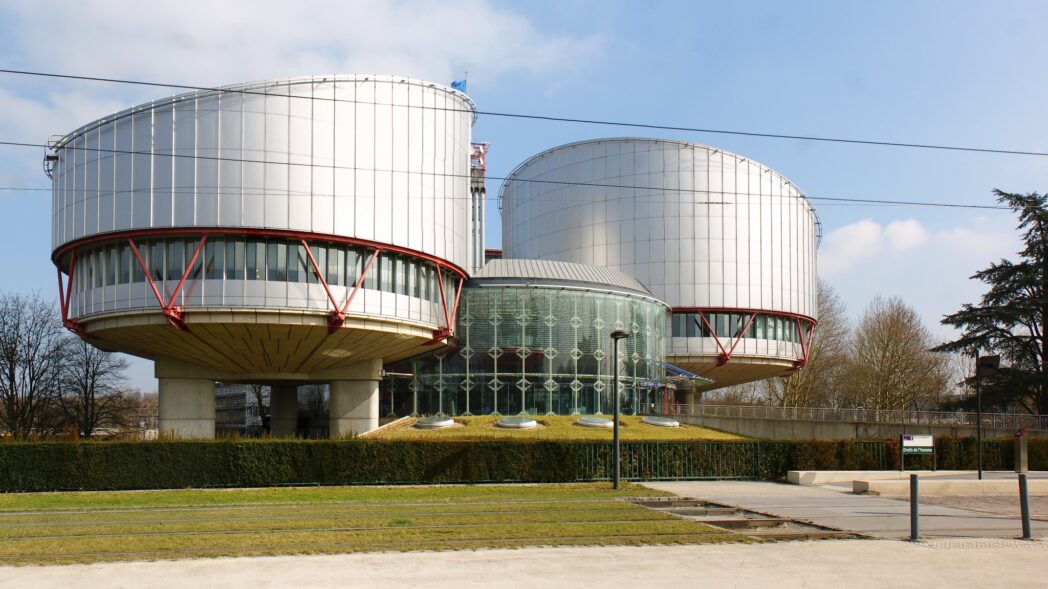
    The European Court of Human Rights (ECHR) is hearing a landmark case brought forward by the Senior Women for Climate Protection Switzerland, who are suing the Swiss government (the “State”) for human rights violations related to climate change. Verein KlimaSeniorinnen Schweiz and others v. Switzerland (“KlimaSeniorinnen”) is one of the first climate change matters the court has taken up. On Wednesday, March 29, 2023, the ECHR held a public hearing.

    History of the Case

    KlimaSeniorinnen began back in 2016, ignited by a group of women called KlimaSeniorinnen Schweiz, the Senior Women for Climate Protection Switzerland. The group filed suit in Swiss court against a variety of Swiss federal government bodies alleging violations of obligations set forth in the Swiss Constitution and the European Convention on Human Rights (the “Convention”). 

    The heart of the suit is the State’s shortcomings in progress being made towards the adopted Paris Agreement’s goal to keep “the increase in the global average temperature to well below 2°C above pre-industrial levels.” The elderly plaintiffs purport that their demographic is especially vulnerable to the “temperature-related morbidity and mortality” caused by “climate change-induced excessive heat.” 

    On April 25, 2017, the suit was dismissed by the Federal Department of the Environment Transport, Energy and Communications for lack of standing on the prongs of injury and remedy. Over a year later, the Swiss Federal Administrative Court rejected the plaintiffs’ appeal. Subsequently, on May 20, 2020, the Swiss Supreme Court also rejected the plaintiffs’ filed appeal, holding that plaintiffs should seek their desired government greenhouse gas reduction politically instead of judicially. 

    After exhausting their judicial remedies at their national level, the instant plaintiffs then applied for their case to be heard by the ECHR on November 26, 2020. 

    International Appeal 

    Plaintiff’s application to the ECHR, No. 53600/20, was granted to be heard with priority pursuant to Rule 41 of the Rules of Court. The ECHR, which is based in Strasbourg, France, is a court of last resort for individuals who claim that their rights under the Convention have been violated by a member state. Because Switzerland has ratified the Convention, it will be bound to the holding of the ECHR. 

    The hearing for the case, which was held on March 29, 2023, was the first climate change matter taken up by the ECHR. Parties argued in front of a 17-member Grand Chamber led by Síofra O’Leary of Ireland. A webcast of the proceeding was published online by the ECHR and can be found here. 

    The hearing, which lasted less than three hours, opened with arguments from both the State and plaintiffs, before two third parties spoke, and the panel of judges asked questions. Then, both the plaintiffs and the State were given the opportunity to reply before the close of the hearing. 

    During the hearing, the senior plaintiffs argued that Switzerland’s failure to take adequate measures to reduce greenhouse gas emissions was a violation of their right to life and their right to respect for private and family life, as guaranteed by Articles 2 and 8 of the Convention. Their arguments are backed by scientific research showing the increasingly dire health and safety effects that global warming is having on European senior citizens. 

    In contrast, the Swiss government argued that it is taking steps to address climate change, such as implementing a carbon tax and increasing the share of renewable energy in the country’s energy mix. However, it can only do so much as one state amongst many that are contributing to the emitted greenhouse gasses that are exacerbating climate change.

    What to Watch For

    Now that the hearing of the case is complete, the Grand Chamber has begun private deliberations on the matter. It is unknown exactly when the ECHR will issue its ruling. 

    The ECHR’s decision could provide insight on how to establish standing for particularized injuries suffered as a result of climate change, which by nature affect the world’s population. Further, while the court’s holding will not be legally binding on non-member states, if the ECHR finds in favor of the seniors, it could set a precedent for other climate change lawsuits in Europe and beyond. 

    Two other climate change cases are also being heard by the Grand Chamber—Carême v. France (no. 7189/21), and Duarte Agostinho and Others v. Portugal and Others (no. 39371/20). The ECHR’s handling of all three cases is expected to be closely watched by policymakers, industry members, and activists alike.

  • The New European Unified Patent Court with Marianne Schaffner and Thierry Lautier

    The New European Unified Patent Court with Marianne Schaffner and Thierry Lautier

    What’s the new European patent court mean to global innovators?

    The European Union’s new Unified Patent Court is an international body set up by participating EU Member States to deal with the infringement and validity of both Unitary Patents and European patents. The court’s objective is “putting an end to costly parallel litigation and enhancing legal certainty.”

    Unitary patents are intended to make it possible to get patent protection in up to 25 EU Member States by submitting a single request to the European Patent Office, making the procedure simpler and more cost effective for applicants. The new system goes live on June 1, 2023.

    What must U.S. and multi-national U.S.-based companies understand about the court?

    Why should inventors and their organizations factor it in to any existing or new patent strategy they may be developing?

    For answers to these questions and more listen to my interview with attorneys Marianne Schaffner and Thierry Lautier who practice out of the Paris office of Reed Smith. Marianne heads the intellectual Property team in Paris and the patent practice in Europe. She manages complex national and transnational patent, trade secrets and trademark disputes in the healthcare, chemistry, technology and telecommunications sectors. Thierry is part of the firm’s global Intellectual Property Group. With a dual legal and engineering/scientific background, Thierry uses his understanding, knowledge, and experience to provide clients with creative, technically robust, and business-oriented patent strategies.

    This podcast is the audio companion to the Journal on Emerging Issues in Litigation. The Journal is a collaborative project between HB Litigation Conferences and the Fastcase legal research family, which includes Full Court Press, Law Street Media, and Docket Alarm. The podcast itself is a joint effort between HB and our friends at Law Street Media. If you have comments or wish to participate in one our projects please drop me a note at Editor@LitigationConferences.com.

    Tom Hagy

    (actual size)

    Tom Hagy
    Litigation Enthusiast and
    Host of the Emerging Litigation Podcast
    Home Page
    LinkedIn

    Marianne Schaffner

    Marianne SchaffnerReed Smith

    Marianne Schaffner is a partner in our Paris office. She heads the Intellectual Property team in Paris and the Patent practice in Europe.

    Marianne is a well-known intellectual property litigation lawyer. She is recognized for coordinating and managing complex national and transnational patent, trade secrets and trademark disputes in the healthcare, chemistry, technology and telecommunications sectors.

    Having studied and worked in the UK, Germany, the Netherlands and the United States, she has extensive knowledge of both the European and American judicial systems.

    Marianne Schaffner is repeatedly ranked by Chambers Global and Chambers Europe and is regularly ranked in Legal 500 EMEA, Décideurs, Stratégie Finance Droit among the Top Leaders.

    Thierry Lautier

    Thierry LautierReed Smith

    Thierry Lautier is part of the firm’s global Intellectual Property Group.

    Thanks to his dual legal and engineering/scientific background, Thierry is unique in being one of very few French patent litigators, qualified as both an attorney-at-law and a European patent attorney. As an optics and electronics engineer by background, Thierry uses his understanding, knowledge, and experience to provide clients with creative, technically robust, and business-oriented patent strategies.

    In addition to patents, Thierry counsels his clients on trade secrets. Thierry’s practice includes the building up of corporate trade secrets programs (the so-called “reasonable steps” to protect trade secrets), as well as the protection of trade secrets during court litigation (regarding confidential evidence). Thierry is the author of many articles in France on trade secrets and on their interplay with intellectual property.

  • What Businesses and Lawyers Should Know About the U.S./China Relationship

    What Businesses and Lawyers Should Know About the U.S./China Relationship

    Our Guest

    Dan Harris

    Dan HarrisHarris Bricken

    Dan Harris is a leading authority on the legal and strategic aspects of conducting business in emerging markets. He is co-founder of the international practice of Seattle-based HarrisBricken, which has offices across the U.S., as well as in China, Spain, Mexico, and Brazil. His China Law Blog was named, and with good reason, to the ABA Journal’s “Blawg Hall of Fame.” Forbes, Business Week, Fortune, The BBC, The Wall Street Journal, The Washington Post, The Economist, CNBC, The New York Times, and many other major media players have looked to him for his perspective on international law issues. Dan writes and speaks extensively on international law with a focus on protecting businesses in their foreign operations and he has had the rare honor of being designated a “Super Lawyer.” He is also a member of the Editorial Board of Advisors for the Journal on Emerging Issues in Litigation and the Emerging Litigation Podcast.

    What Businesses and Lawyers Should Know About the U.S. / China Relationship

    “Americans mistakenly believe that China operates as a rational economic actor and that economics is their highest priority. It’s not and it never has been. Their highest priority is whatever is good for the Chinese Communist Party.”

    “Chinese companies view American and EU companies as very risky, in large part because so many American and EU companies are looking to move their manufacturing out of China.” 

    A major potential avalanche of risks are those that would shake the business world  should – as some expect it will –  trade relations between China, and America and EU, come to an end.

    China is America’s largest trading partner, a relationship responsible for $600B a year in commerce, according to the Office of the U.S. Trade Representative. By comparison, U.S. / European Union trade exceeds $1T. The trade deficit with China for goods is more than $300 billion, while the U.S. has a trade surplus for services of $25B. China is America’s largest supplier of imported goods, while China is America’s third largest export market. U.S. invests roughly $125B in China, compared to China’s investment of $38B in the U.S. The figures vary wildly depending on who you ask, but the Trade Representative puts the U.S. GDP at $21B and China’s at more than $14B.

    In case you missed it, U.S./China relations have been strained. President Trump cast a spotlight on the downsides of the relationship for the U.S., and China’s response to the sanctions imposed on Russia by President Biden and the West for invading Ukraine have made the relationship even rockier. The U.S./China marriage needs some serious counseling. Eventually, experts say, the couple is headed for divorce. How that breakup plays out, especially if or when China takes custody of Taiwan – peacefully or otherwise – is something the business world needs to brace for.  No; seriously. For example, should the West impose sanctions on China similar to those on Russia, the shift in the business world would be tectonic.

    Joining me on this episode is Dan Harris, a leading authority on the legal and strategic aspects of conducting business in emerging markets. Dan is co-founder of the international practice of Seattle-based HarrisBricken, which has offices across the U.S., as well as in China, Spain, Mexico, and Brazil. His China Law Blog was named, and with good reason, to the ABA Journal’s “Blawg Hall of Fame.”

    This podcast is the audio companion to the Journal on Emerging Issues in Litigation. The Journal is a collaborative project between HB Litigation Conferences and the Fastcase legal research family, which includes Full Court Press, Law Street Media, and Docket Alarm. The podcast itself is a joint effort between HB and our friends at Law Street Media. If you have comments or wish to participate in one our projects, or want to tell me how much  you learned from Dan,  please drop me a note at Editor@LitigationConferences.com.

    Tom Hagy
    Host and Litigation Enthusiast

    P.S. It’s possible I should stay away from forcing metaphors on my guests. The U.S. / China relationship is nothing like a marriage. We do, however, always forget our anniversary. We’re more like neighbors who have to deal with each other. Our “good mornings” and “have a nice days” are, at best, phony. There are lingering hurt feelings (“You always park in front of my house,” “You never invite us to parties”) and suspicions (“I’m pretty sure it’s you who doesn’t pick up after their dog”), but civility is a must when you share friends and a fence. Oh, man, and now our kids are playing together.