Category: Intellectual Property

  • Intellectual Property Trial Team Diversity with Tara Trask

    Intellectual Property Trial Team Diversity with Tara Trask

    Intellectual Property Trial Team Diversity with Tara Trask

    Diversity and inclusion initiatives aren’t just valuable for checking off compliance boxes and writing marketing copy. Those benefits are a distant second and third to the genuine value team diversity has on the success of a company or a project. That also means law firms and trials.

    A recent article published by the American Bar Association Tort and Insurance Practice Section hailed diversity of perspectives for how they improve a team’s ability to resolve legal issues, innovate solutions, and introduce  factors homogeneous teams may miss.

    The National Association for Law Placement reported that women and people of color are making great progress at major law firms. Nearly half of associates are women and, based on summer associate statistics, women are expected to break the 50% as early as this year or next. Black associates made impressive gains, but there remains room for improvement. At the partner level, however, Black and Latinx women and men remain stuck in the low single digits.

    In this episode we drill down even further to examine trial teams in the intellectual property arena. I was thrilled to speak with Tara Trask, one of the nation’s leading experts on IP trials and juries, having directly worked on or observed more of these proceedings than just about anyone. Tara has championed research on this topic as part of her work and presentations for the American Intellectual Property Law Association. The diversity spark lit up for Tara when she and her panelists enjoyed an enthusiastic reaction to an AIPLA conference session she moderated titled, “Perspectives on Diversity: Views on Trial Teams From the Bench, The Boardroom, and the Jury Box.”

    Listen to Tara’s insights based on analysis of her own cases, analysis of related studies, and expanded fact-gathering she is leading in collaboration with the association.

    BREAKING NEWS! This episode kicks off a series of guest-hosted sessions for which Tara will take the mic to interview professionals from her impressive network on legal team diversity.

    Now You Can Watch the Podcast

    WATCH IT NOW

    This podcast is the audio companion to the Journal on Emerging Issues in Litigation. The Journal is a collaborative project between HB Litigation Conferences and the Fastcase legal research family, which includes Full Court Press, Law Street Media, and Docket Alarm. The podcast itself is a joint effort between HB and our friends at Law Street Media. If you have comments or wish to participate in one our projects please drop me a note at Editor@LitigationConferences.com.

    Tom Hagy
    Litigation Enthusiast and
    Host of the Emerging Litigation Podcast
    Home Page
    LinkedIn

    Loved hearing what Tara said about this subject matter?

    Explore more content from Tara!

    Podcast: Jury Selection in the Age of Conspiracy Theories and Distrust with Tara Trask 

    Podcast: Lawyers for Good with Tara Trask and Jason Flom
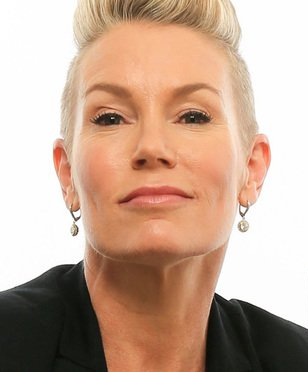
    Tara Trask

    Tara TraskTrask Consulting

    Tara Trask is the President of Trask Consulting, a boutique litigation strategy, jury research, and trial consulting firm with offices in San Francisco, Houston, and New York. She focuses on civil litigation with an emphasis on complex commercial litigation, including intellectual property, antitrust, securities, breach of contract, and fraud.

    She has assisted both plaintiffs and defendants in cases involving products liability, insurance, and oil and gas. Tara has extensive experience in assisting institutions and individuals in matters involving regulatory enforcement and white-collar defense, as well. She has been involved in more than 500 jury trials.

    Tara Trask Consulting

    Tags

    Emerging Litigation & Risk Compliance Litigation & appeals Cybersecurity Data Privacy Artificial Intelligence (AI) Insurance Companies Risk Management Corporate & Securities Insurance Claims Recovery Regulations Data Breach Toxic Torts Antitrust Legal Tech Product Liability Settlements Trial Personal Injury Privacy Healthcare Per- and Polyfluoroalkyl Substances (PFAS) Data Analytics Arbitration Constitutional Law Climate Change Cannabis Labor Law Insurance Fraud Liability Claims COVID Alternative Dispute Resolution (ADR) Mediation Diversity Equity Inclusion (DEI) Claims management Professional Liability Legal Research & Writing Business Interruption Law Practice Management Trial Skills Property and Casualty Drug Laws Copyright Law Catastrophic Loss
  • AI Image Generators and Copyright: Eligibility in the U.S., UK, EU, and More; Fair Use, Derivative Works, Liability

    AI Image Generators and Copyright: Eligibility in the U.S., UK, EU, and More; Fair Use, Derivative Works, Liability

    AI Image Generators and Copyright:

    Eligibility in the U.S., UK, EU, and More; Fair Use, Derivative Works, Liability

    Photo by Hitesh Choudhary on Unsplash

    AI programs are now readily available for all. Stability AI, Lensa, and other AI image creation tools create original works of art, raising the question of IP protection for such art. The United States requires human authorship in order to obtain copyright protection, and so far, the U.S. Copyright Office has declined to grant copyright registrations for AI-created works of art based on a lack of human authorship (one of these decisions is being challenged in Thaler v. Perlmutter (D.D.C. filed June 2, 2022)). While some countries take a similar approach to the US, others treat the issue of copyright eligibility for AI-generated art quite differently and provide at least some protection of computer generated works.

    Questions have also been raised as to whether AI-generated images constitute derivative works and whether such images and the AI generation tools used to create them infringe third-party copyrights, or whether the fair use doctrine or other defenses may apply. The first lawsuits involving image generators have now been filed raising copyright claims in addition to other claims.

    Listen as our authoritative panel of IP attorneys examines AI image generators and the associated copyright issues. The panel will discuss eligibility in the U.S. and the recent actions by the Copyright Office and contrast this with the approaches used in other countries. The panel will also address the recent cases that have been filed and the potential liability for copyright infringement in the U.S. and other countries.

    Strafford and HB Logos

    Speakers

    Michael R. Graif
    Member
    Mintz Levin Cohn Ferris Glovsky and Popeo

    Lisa T. Oratz
    Senior Counsel
    Perkins Coie

    Scott J. Sholder
    Partner
    Cowan DeBaets Abrahams & Sheppard

    CLE On-Demand Webinar

    This Strafford production has been specially selected for HB audiences.

    Topics

    • What hurdles confront counsel when demonstrating authorship of AI-generated works?
    • How does copyright apply to AI-generated works? How does it differ across jurisdictions?
    • What steps can counsel take to increase the likelihood of success when seeking copyright protection for AI-generated works?

    Outline

    1. AI-generated works of art and copyrightability
      1. Eligibility in the U.S.
      2. Eligibility in other countries
    2. AI image generators and copyright infringement
      1. Derivative works
      2. Fair use and other defenses
      3. Liability in other jurisdictions
      4. Best practices
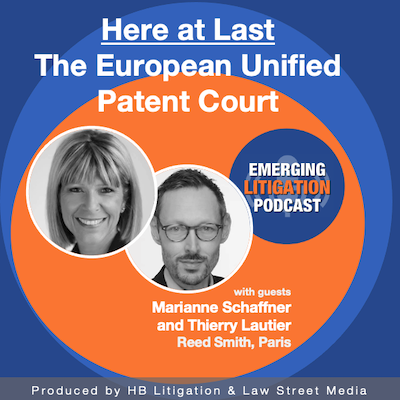
  • The New European Unified Patent Court with Marianne Schaffner and Thierry Lautier

    The New European Unified Patent Court with Marianne Schaffner and Thierry Lautier

    What’s the new European patent court mean to global innovators?

    The European Union’s new Unified Patent Court is an international body set up by participating EU Member States to deal with the infringement and validity of both Unitary Patents and European patents. The court’s objective is “putting an end to costly parallel litigation and enhancing legal certainty.”

    Unitary patents are intended to make it possible to get patent protection in up to 25 EU Member States by submitting a single request to the European Patent Office, making the procedure simpler and more cost effective for applicants. The new system goes live on June 1, 2023.

    What must U.S. and multi-national U.S.-based companies understand about the court?

    Why should inventors and their organizations factor it in to any existing or new patent strategy they may be developing?

    For answers to these questions and more listen to my interview with attorneys Marianne Schaffner and Thierry Lautier who practice out of the Paris office of Reed Smith. Marianne heads the intellectual Property team in Paris and the patent practice in Europe. She manages complex national and transnational patent, trade secrets and trademark disputes in the healthcare, chemistry, technology and telecommunications sectors. Thierry is part of the firm’s global Intellectual Property Group. With a dual legal and engineering/scientific background, Thierry uses his understanding, knowledge, and experience to provide clients with creative, technically robust, and business-oriented patent strategies.

    This podcast is the audio companion to the Journal on Emerging Issues in Litigation. The Journal is a collaborative project between HB Litigation Conferences and the Fastcase legal research family, which includes Full Court Press, Law Street Media, and Docket Alarm. The podcast itself is a joint effort between HB and our friends at Law Street Media. If you have comments or wish to participate in one our projects please drop me a note at Editor@LitigationConferences.com.

    Tom Hagy

    (actual size)

    Tom Hagy
    Litigation Enthusiast and
    Host of the Emerging Litigation Podcast
    Home Page
    LinkedIn

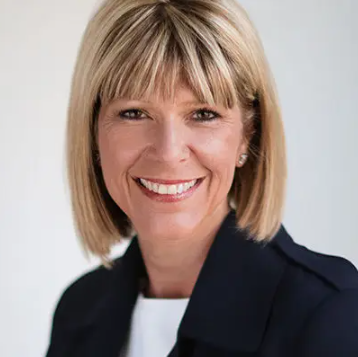
    Marianne Schaffner

    Marianne SchaffnerReed Smith

    Marianne Schaffner is a partner in our Paris office. She heads the Intellectual Property team in Paris and the Patent practice in Europe.

    Marianne is a well-known intellectual property litigation lawyer. She is recognized for coordinating and managing complex national and transnational patent, trade secrets and trademark disputes in the healthcare, chemistry, technology and telecommunications sectors.

    Having studied and worked in the UK, Germany, the Netherlands and the United States, she has extensive knowledge of both the European and American judicial systems.

    Marianne Schaffner is repeatedly ranked by Chambers Global and Chambers Europe and is regularly ranked in Legal 500 EMEA, Décideurs, Stratégie Finance Droit among the Top Leaders.

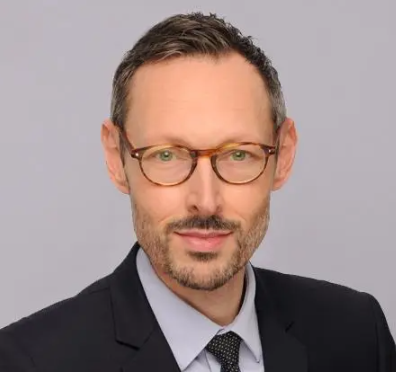
    Thierry Lautier

    Thierry LautierReed Smith

    Thierry Lautier is part of the firm’s global Intellectual Property Group.

    Thanks to his dual legal and engineering/scientific background, Thierry is unique in being one of very few French patent litigators, qualified as both an attorney-at-law and a European patent attorney. As an optics and electronics engineer by background, Thierry uses his understanding, knowledge, and experience to provide clients with creative, technically robust, and business-oriented patent strategies.

    In addition to patents, Thierry counsels his clients on trade secrets. Thierry’s practice includes the building up of corporate trade secrets programs (the so-called “reasonable steps” to protect trade secrets), as well as the protection of trade secrets during court litigation (regarding confidential evidence). Thierry is the author of many articles in France on trade secrets and on their interplay with intellectual property.

  • Putting an AI App to Work to Protect IP with Jan-Diederik Lindemans and Judith Bussé

    Putting an AI App to Work to Protect IP with Jan-Diederik Lindemans and Judith Bussé

    Putting an AI App to Work to Protect IP with Jan-Diederik Lindemans and Judith Bussé

    They are Crowell & Moring partner Jan-Diederik Lindemans and Judith Bussé, both part of the firm’s Technology & Intellectual Property Department in Brussels. And, working with Neotalogic, they developed an interactive app that takes you through a set of attorney-crafted questions that, depending on your answers, take you to other questions. The app applies a layer of artificial intelligence to enhance the information gathering process. Listen to what these innovators had to say about the Crowell & Moring IP Check-Up application, and take it for a test drive yourself.  Or, here is a quick video of someone using the app.

    This podcast is the audio companion to the Journal on Emerging Issues in Litigation*, a collaborative project between HB Litigation Conferences and the legal news folks at Law Street Media, and the Fastcase legal research family, which includes Docket Alarm and Judicata. If you have comments or wish to participate in one our projects, or want to tell me how insightful our guests are, please drop me a note at Editor@LitigationConferences.com.

    Tom Hagy
    Host of the Emerging Litigation Podcast

    * Highly regarded insurance and reinsurance industry attorney Laura Foggan of Crowell & Moring’s Washington, DC, office is on the Editorial Advisory Board. Thanks to Laura for connecting me with J.D. and Judith. 

    An organization’s intellectual property is often its most valuable asset.

    Whether it’s a patent or a trademark, a graphic design or proprietary market information, or just the unique way they do what they do, organizations must protect their innovations or risk significant damage to their future prospects.

    Assessing the vulnerabilities of such valuable inventory is as important as it is time-consuming. But a portfolio protection and process review involves answering the same long set of questions posed to any organization, no matter what type.

    There is the problem. You have a critical invention. You don’t know if it’s at risk. What do you do? You contact a lawyer, of course. You go through the process, one they have managed many times before. What if you could do this yourself first, before contacting a firm? What if it took just 20 minutes and could be done from the comfort of your desk? If you’re the attorney, what if you already had many of your questions answered before your first meeting with a new client? 

    An innovative pair of attorneys in Brussels asked these questions and came up with a solution. And I had the pleasure of interviewing them.

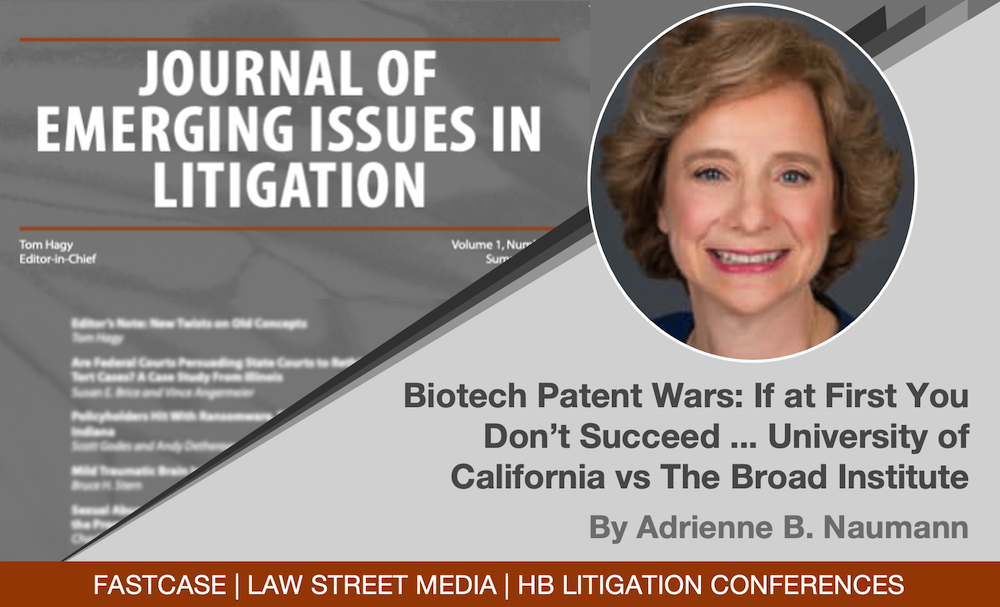
  • Biotech Patent Wars: If at First You Don’t Succeed . . . University of California v. The Broad Institute

    Biotech Patent Wars: If at First You Don’t Succeed . . . University of California v. The Broad Institute

    Biotech Patent Wars: If at First You Don’t Succeed . . . University of California v. The Broad Institute

    Abstract

    This case discussed in this article is about two methods of editing DNA: one that has infinitely more lucrative applications because it can edit human DNA (plus all animals and plants), another that works in cell-free environments. Whether inventions are separate or part of the same innovation is an important factor in patent interference disputes; if there are two patentably distinct inventions there cannot be interference. One party in this case lost its argument that there was only one invention at issue, but returned with a second interference claim, arguing that it was the first inventor to constructively reduce to practice the animal and plant DNA editor. In this article, the author examines the nuances and intricacies of the patent process in the world of biology, and how patent lawyers must possess a level of knowledge in disciplines related to the inventions they seek to protect. This is necessary, for example, in understanding whether an invention is a significant improvement over prior innovations. The author also shares the importance of confidentiality especially when potentially groundbreaking (and lucrative) inventions are in development.

    Author

    Adrienne B. Naumann (adriennebnaumann@uchicago.edu) practices intellectual property law at the Law Office of Adrienne B. Naumann in Skokie, Illinois. She has held leadership positions relating to patents, science, and technology law with the Chicago Bar Association and the Converging Technologies Association. She currently serves as Secretary on the Board of the University of Chicago Women’s Alliance. Ms. Naumann has also written numerous articles on intellectual 56 Journal of Emerging Issues in Litigation property law and her book United States Federal Intellectual Property Developments includes discussion of decisions under the Defend Trade Secrets Act as well as those by the Supreme Court and was published by Pincus Professional Education.

    About
    The Journal on Emerging Issues in Litigation is a co-production of HB, Fastcase, and Law Street Media. You can also hear the complementary (and complimentary) Emerging Litigation Podcast wherever podcasts appear. For questions, contact Tom Hagy, Editor in Chief, at Editor@LitigationConferences.com.

    Loading Viewer…

  • Psychedelics Decriminalization and Regulation with Griffen Thorne

    Psychedelics Decriminalization and Regulation with Griffen Thorne

    Psychedelics Decriminalization and Regulation with Griffen Thorne

    Thorne on Psychedelics

    Listen to my interview with Griffen Thorne, an attorney in the Los Angeles office of Harris Bricken LLP.  He focuses on corporate, transactional, intellectual property, data security, regulatory, and litigation matters across a wide variety of domestic and international industries.

    As part of Harris Bricken’s corporate cannabis team, he works closely with cannabis and hemp clients, whom he advises on obtaining licenses and permits, regulatory compliance, entity formation and structuring, mergers and acquisitions, corporate governance issues, contract drafting and negotiation, obtaining and protecting intellectual property rights, and administrative appeals and litigation.

    He also represents clients throughout a wide range of industries regarding compliance with United States, European, and Asian Internet, technology, and data security laws and regulations.

    We hope you enjoy the interview.

    Tom Hagy

    Send questions or comments to Editor@LitigationConferences.com.

    What does the future hold for psychedelics in America?

    How are states approaching the ownership and use of these drugs, either for recreational or their controlled therapeutic use?

  • Protecting Intangible Assets: Risk Transfer Market Yet to Catch Up

    Intrinsically Intangible.                        

    by Giles Harlow, Senior Vice President, Aon (Bermuda) Ltd.

    In the early 1980’s, tangible assets made up around 80% of the value of the S&P 500. Fast forward to today and nearly 85% of the value of the S&P 500 is attributable to intangible assets.

    However, the risk transfer market has not caught up. According to the Aon/Ponemon report of last year, whilst around 60% of tangible assets (property, plant and equipment) are currently being insured, only 12% of informational assets are.

    So what gives?

    If the vast majority of companies’ values in 2018 are attributable to intangibles, why are they not transferring those risks? Is it a lack of education on the client side? A lack of innovation in the brokerage community? A lack of understanding or willingness to accept these new risks on the carrier end? Or is it that whilst the marine and property markets have had centuries to evolve, the newer intangible insurance markets are just gearing up to size as they collate the data they need to properly price and model these risks?

    Likely, it is some combination of all of these factors. We have seen great strides in the cyber market, with double-digit premium growth over the last four-to-five years. The market has evolved from being focused on large data holders, to providing products which contemplate the cyber perils affecting manufacturers, the transportation industry and other non-data holders.  “Business interruption” has quickly morphed into “system failure coverage.” “Contingent business interruption” now looks more akin to full supply chain risk, not just for IT service providers but now contemplating all vendors. “Bodily injury” and “property damage” stemming from non-physical threats complete the circle back into tangible loss being covered under cyber policies.

    Intellectual property — hands down — makes up the largest dollar percentage of the intangible asset value of the S&P 500.  This has long been a conundrum for the industry as a whole – both in terms of how to value the asset and, more so, how to value the loss. Again, we have seen great momentum here with much larger limits than were historically available now obtainable from the markets both as a theft product as well as being offered for IP infringement. Even now carriers are contemplating supporting the multi-trillion dollar asset class of intellectual property when used as collateral. This could dramatically impact both the equity financing model and asset backed lending world we know today.

    Clearly the will to innovate is alive and well within the industry. It is tough to price emerging risk when the models that our industry are built on rely on historical data, data that is often out of date or irrelevant in these rapidly evolving intangible classes of business. New ways to price and structure these insurance purchases have to be found in order to maintain the industry’s relevance in today’s world.


    Bermuda is at the forefront of many of these initiatives and its underwriters and brokers are constantly seeking to raise the bar to address evolving client need. The panel titled “Evolution of Product and Buyer” will be tackling these and more topics in detail at the Dec. 6-7, 2018, International Cyber Risk Management Conference, or ICRMC, in Bermuda from the perspective of brokers, underwriters and insurance purchasers.

    Get 10% off the registration fee with promotion code HB2018. 

    http://www.aon.com/risk-services/cyber.jsp

    http://www.aon.com/risk-services/amats/intellectual-property-solutions.jsp