Category: ELP

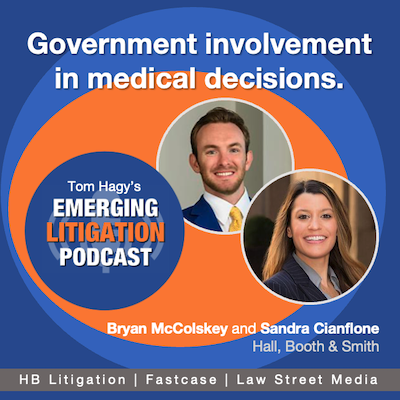
  • Government Involvement in Medical Decisions During Outbreaks with Bryce McColskey and Sandra Cianflone

    Government Involvement in Medical Decisions During Outbreaks with Bryce McColskey and Sandra Cianflone

    Government Involvement in Medical Decisions During Outbreaks 

    It’s apparently (and hopefully) on its last legs. The Covid-19 pandemic was the most recent health issue to raise questions around government’s involvement (or interference) in an individual’s control over their own medical treatment.

    In their article – Government Involvement in Medical Care Decisions During Outbreaks of Disease: How Far is Too Far? – our guests wrote about the intersection of law and medicine. They reviewed medical mandates, implications brought about by the impact of advances in science and medicine, and where role of government to protect public health intersects (or collides) with personal healthcare choices. They focused is on governmental responses to the pandemic, that is, what the government can mandate in the spirit of public health, and not on the separate issue of abortion, which is a “choice” subject for another day.

    How much authority do government agencies or even the courts have over a person’s healthcare decisions? People often assume the practice of medicine and the enactment and enforcement of laws are separate and independent enterprises; that they remain fixed in their respective corners. However, they wrote, after a deeper  dive  into  history and precedent, it’s evident that the tension between individual rights and health-related mandates has existed for some time.

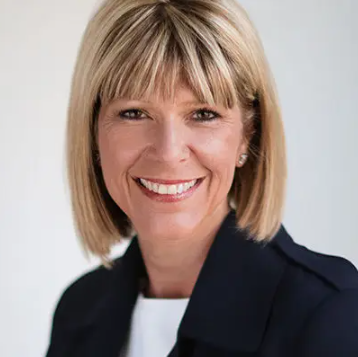
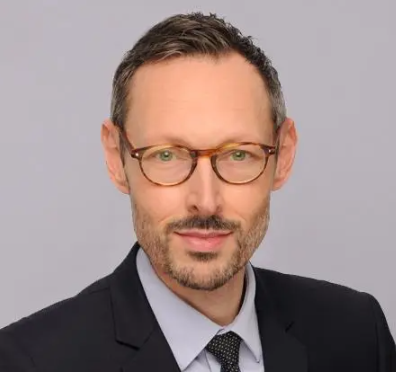
    Listen to my interview with the authors, Bryce McCloskey and  Sandra M. Cianflone with Hall Booth Smith, P.C. Bryce is based in Jacksonville, Fla., where he focuses on medical malpractice and professional liability law. Sandie is a partner in the firm’s Atlanta office where she concentrates on a variety of aspects of healthcare defense She chairs the firm’s Coronavirus Task Force and is a member of the firm’s National Trial Counsel team. She is also a valued member of the Editorial Board of Advisors of the Journal on Emerging Issues in Litigation.

    ***********

    This podcast is the audio companion to the Journal on Emerging Issues in Litigation. The Journal is a collaborative project between HB Litigation Conferences and the Fastcase legal research family, which includes Full Court Press, Law Street Media, and Docket Alarm. The podcast itself is a joint effort between HB and our friends at Law Street Media. If you have comments or wish to participate in one our projects please drop me a note at Editor@LitigationConferences.com.

    Tom Hagy

    (actual size)

    Tom Hagy
    Litigation Enthusiast and
    Host of the Emerging Litigation Podcast
    Home Page
    LinkedIn
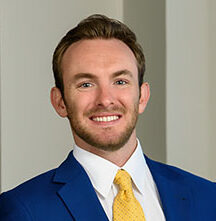
    Bryce McColskey

    Bryce McColskeyHall Booth Smith P.C.

    Bryce McColskey focuses his practice on medical malpractice, professional liability, and general liability matters.

    Prior to joining Hall Booth Smith, Bryce was an Associate with another firm in Jacksonville where he focused his practice on workers’ compensation defense. Earlier in his career, he worked as a summer clerk for the University of North Florida’s Office of General Counsel and a local firm in Jacksonville.

    Bryce earned a Juris Doctorate from the University of Florida Levin College of Law where he was a member of the University of Florida Association of Law and Business and the Chester Bedell Inn of Court. Bryce earned his Bachelor of Science degree in Business Administration from the University of North Florida.
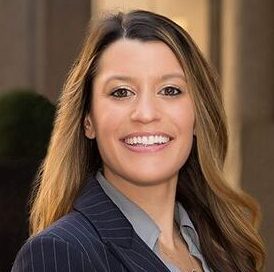
    Sandra Cianflone

    Sandra CianfloneHall Booth Smith P.C.

    Sandra Cianflone is a Partner in the Atlanta office of Hall Booth Smith. Her practice primarily focuses on medical malpractice on defending hospitals, healthcare institutions, physicians, nurses and institutional employees in medical malpractice actions from inception through trial. She is part of Hall Booth Smith’s National Trial Counsel team and has litigated cases across the country.

    Sandra also provides national risk management and crisis management services across the healthcare industry. These services have guided clients through tumultuous regulatory and statutory schemes by providing efficient approaches which assist with public/community relations, litigation preparation, defense alternatives, and effective case management. Ms. Cianflone is also the Chair of our Coronavirus Taskforce.

    Sandra received her Juris Doctorate from Pace University School of Law and her undergraduate degree from Fairleigh Dickinson University.

  • The Cannabis Employment Law Patchwork with Keya Denner

    The Cannabis Employment Law Patchwork with Keya Denner

    The Cannabis Employment Law Patchwork with Keya Denner

    Maryland and Missouri are the latest states to legalize recreational cannabis for people 21 and older. Voters came out in favor of legalization in the November 2022 midterms, bringing the total recreational jurisdictions to 22 states and the District of Columbia. Voters in North Dakota, South Dakota, and Arkansas, however, decided against recreational marijuana. It remains legal for medical reasons in all five states. 

    In the employment context, both recreational and medicinal uses raise questions about protections for employees who use the drug legally.

    • Which states are enacting those protections?
    • What do multi-state employers need to do?
    • What about drug testing? As a requirement to get a job and as a requirement to keep your job?
    • What about this: who is going to say whether a worker is impaired? Will there really be hall monitors trained in spotting your high?

    For answers to these questions and more, listen to my interview with Keya Denner, a partner at Constangy, Brooks, Smith & Prophete LLP. Keya is an experienced litigator who has been practicing labor and employment law for almost 20 years. Few attorneys nationwide match Keya’s expertise in the area of legal cannabis and its impact on the workplace. He has counseled Fortune 500 companies in the retail, hospitality, and global logistics spaces to create compliant policies and better understand the ever-changing legal landscape brought about by the legalization of cannabis across the United States.  Most recently, Keya was named co-chair along with this colleague Ashley Orler of the firm’s new practice group focused on cannabis and employee substance abuse law. Keya received his J.D., cum laude, from Seton Hall University School of Law, J.D., cum laude, and his B.A., also cum laude, from Boston University.

    This podcast is the audio companion to the Journal on Emerging Issues in Litigation. The Journal is a collaborative project between HB Litigation Conferences and the Fastcase legal research family, which includes Full Court Press, Law Street Media, and Docket Alarm. The podcast itself is a joint effort between HB and our friends at Law Street Media. If you have comments or wish to participate in one our projects please drop me a note at Editor@LitigationConferences.com.

    Tom Hagy

    (actual size)

    Tom Hagy
    Litigation Enthusiast and
    Host of the Emerging Litigation Podcast
    Home Page
    LinkedIn

    Keya Denner

    Keya DennerConstangy, Brooks, Smith & Prophete, LLP

    Keya is an experienced litigator who has been practicing labor and employment law for almost 20 years. He has handled every type of labor and employment matter for his clients, ranging from discrimination, disability, non-compete and trade secret protections, to wage and hour class actions. Keya also has extensive experience counseling employers on matters relating to the Family and Medical Leave Act and the Americans with Disabilities Act.

    Most recently, Keya was named co-chair along with this colleague Ashley Orler of the firm’s new practice group focused on cannabis and employee substance abuse law. Keya received his J.D., cum laude, from Seton Hall University School of Law, J.D., cum laude, and his B.A., also cum laude, from Boston University.

  • The New European Unified Patent Court with Marianne Schaffner and Thierry Lautier

    The New European Unified Patent Court with Marianne Schaffner and Thierry Lautier

    What’s the new European patent court mean to global innovators?

    The European Union’s new Unified Patent Court is an international body set up by participating EU Member States to deal with the infringement and validity of both Unitary Patents and European patents. The court’s objective is “putting an end to costly parallel litigation and enhancing legal certainty.”

    Unitary patents are intended to make it possible to get patent protection in up to 25 EU Member States by submitting a single request to the European Patent Office, making the procedure simpler and more cost effective for applicants. The new system goes live on June 1, 2023.

    What must U.S. and multi-national U.S.-based companies understand about the court?

    Why should inventors and their organizations factor it in to any existing or new patent strategy they may be developing?

    For answers to these questions and more listen to my interview with attorneys Marianne Schaffner and Thierry Lautier who practice out of the Paris office of Reed Smith. Marianne heads the intellectual Property team in Paris and the patent practice in Europe. She manages complex national and transnational patent, trade secrets and trademark disputes in the healthcare, chemistry, technology and telecommunications sectors. Thierry is part of the firm’s global Intellectual Property Group. With a dual legal and engineering/scientific background, Thierry uses his understanding, knowledge, and experience to provide clients with creative, technically robust, and business-oriented patent strategies.

    This podcast is the audio companion to the Journal on Emerging Issues in Litigation. The Journal is a collaborative project between HB Litigation Conferences and the Fastcase legal research family, which includes Full Court Press, Law Street Media, and Docket Alarm. The podcast itself is a joint effort between HB and our friends at Law Street Media. If you have comments or wish to participate in one our projects please drop me a note at Editor@LitigationConferences.com.

    Tom Hagy

    (actual size)

    Tom Hagy
    Litigation Enthusiast and
    Host of the Emerging Litigation Podcast
    Home Page
    LinkedIn

    Marianne Schaffner

    Marianne SchaffnerReed Smith

    Marianne Schaffner is a partner in our Paris office. She heads the Intellectual Property team in Paris and the Patent practice in Europe.

    Marianne is a well-known intellectual property litigation lawyer. She is recognized for coordinating and managing complex national and transnational patent, trade secrets and trademark disputes in the healthcare, chemistry, technology and telecommunications sectors.

    Having studied and worked in the UK, Germany, the Netherlands and the United States, she has extensive knowledge of both the European and American judicial systems.

    Marianne Schaffner is repeatedly ranked by Chambers Global and Chambers Europe and is regularly ranked in Legal 500 EMEA, Décideurs, Stratégie Finance Droit among the Top Leaders.

    Thierry Lautier

    Thierry LautierReed Smith

    Thierry Lautier is part of the firm’s global Intellectual Property Group.

    Thanks to his dual legal and engineering/scientific background, Thierry is unique in being one of very few French patent litigators, qualified as both an attorney-at-law and a European patent attorney. As an optics and electronics engineer by background, Thierry uses his understanding, knowledge, and experience to provide clients with creative, technically robust, and business-oriented patent strategies.

    In addition to patents, Thierry counsels his clients on trade secrets. Thierry’s practice includes the building up of corporate trade secrets programs (the so-called “reasonable steps” to protect trade secrets), as well as the protection of trade secrets during court litigation (regarding confidential evidence). Thierry is the author of many articles in France on trade secrets and on their interplay with intellectual property.

  • Reimagining the Administration of Justice with Qudsiya Naqui of Pew Charitable Trust

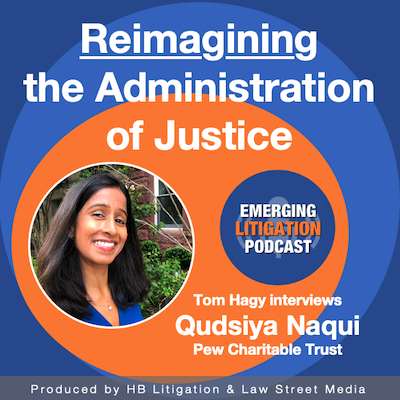
    Reimagining the Administration of Justice with Qudsiya Naqui of Pew Charitable Trust

    Before COVID-19 came to America in early 2020, “going to court” literally meant putting on your shoes and walking into a courthouse, typically a large building with courtrooms inside, and people in robes and business suits and, in some cases, more restrictive attire. 

    Stoked by necessity, courts sprinted toward solutions for keeping the wheels of justice spinning while also keeping everyone away from each other. Until then it didn’t seem possible that attorneys could or would appear before judges via digital screens, like George Jetson getting yelled at by Mr. Spacely over some hilarious mishap at the sprocket factory.

    Pew Charitable Trust concluded an in-depth study of the courts with the 2021 release of a report,  “How Courts Embraced Technology, Met the Pandemic Challenge, and Revolutionized Their Operations.” After examining emergency orders from all 50 states and Washington, D.C., and court approaches to virtual hearings, e-filing, and digital notarization, the researchers wrote that it was a time for “reimagining how to administer justice.”

    Was the adoption of technology effective? Were there any hiccups? Was technology widely embraced? Were the effects of new efficiencies enjoyed evenly across the socio-economic spectrum? Do we think courts will continue to reimagine how they administer justice without the crushing pressure of widespread disease?

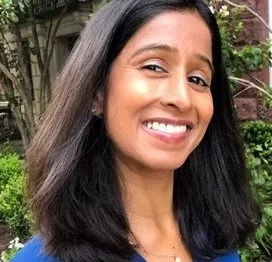
    Listen to my interview with Qudsiya Naqui who leads Pew’s research at the intersection of technology and civil legal system reform. In this role, she evaluates and tests new technologies to ensure that they further efficiency, equity, and transparency in the legal process. This work is part of Pew’s Civil Justice Modernization Project.

    Before joining Pew, Qudsiya designed and implemented immigration, housing, and disaster recovery legal services programs at Equal Justice Works and the Vera Institute of Justice. She began her legal career representing immigrant women and girls seeking relief from deportation.

    Qudsiya holds a bachelor’s degree in political science and human rights from Barnard College and a Juris Doctor from Temple University.

    For more information about their work and the research, contact them at media@pewtrusts.org.

    This podcast is the audio companion to the Journal on Emerging Issues in Litigation. The Journal is a collaborative project between HB Litigation Conferences and the Fastcase legal research family, which includes Full Court Press, Law Street Media, and Docket Alarm. The podcast itself is a joint effort between HB and our friends at Law Street Media. If you have comments or wish to participate in one our projects please drop me a note at Editor@LitigationConferences.com.

    Tom Hagy

    (actual size)

    Tom Hagy
    Litigation Enthusiast and
    Host of the Emerging Litigation Podcast
    Home Page
    LinkedIn

    Qudsiya Naqui

    Qudsiya NaquiPew Charitable Trust

    Qudsiya Naqui leads Pew’s research at the intersection of technology and civil legal system reform. In this role, she evaluates and tests new technologies to ensure that they further efficiency, equity, and transparency in the legal process. This work is part of Pew’s Civil Justice Modernization Project.

    Before joining Pew, Qudsiya designed and implemented immigration, housing, and disaster recovery legal services programs at Equal Justice Works and the Vera Institute of Justice. She began her legal career representing immigrant women and girls seeking relief from deportation.

    Qudsiya holds a bachelor’s degree in political science and human rights from Barnard College and a Juris Doctor from Temple University.

  • Modernizing Our Court System (but Don’t Attend Trial from Your Car) with Hon. Scott Schlegel

    Modernizing Our Court System (but Don’t Attend Trial from Your Car) with Hon. Scott Schlegel

    Modernizing Our Court System

    Photo by Ernest Ojeh via Unsplash

    The judicial system is overburdened for a number of reasons, and greater efficiency is a must if court systems are to achieve their important objectives.

    Technology and openness to all that it offers is a key solution, something that was tried, tested and proven during the Covid pandemic which closed courthouses and law offices around the nation. Along with technology, improvements can be made by reexamining their orthodoxies about how things should be done based on decades of “that’s how we’ve always done it.”

    This is a matter of importance to judges, lawyers, plaintiffs, defendants, and numerous others whose lives are impacted directly or indirectly when either the civil or criminal justice systems are inefficient, cumbersome, costly, confusing, slow, and even inaccessible. If only we had an example of at least one judge who is trying to do something about it. But wait …

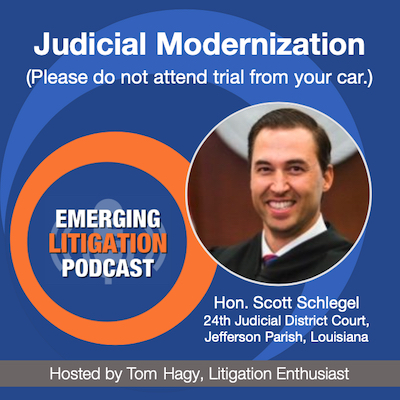
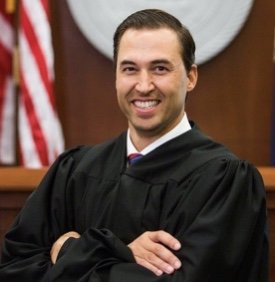
    Listen to my interview with the Hon. Scott Schlegelwho presides over criminal civil and domestic matters in Louisiana’s 24th Judicial District Court in Jefferson Parish. Judge Schlegel was elected to the bench in 2013, and quickly earned a reputation as a modern judge using technology to bring his court into the digital age, even before the pandemic forced the change on other jurists. He partnered with tech companies to develop efficiency tools like chat bots and online forms software. He launched courtonline.us and onlinejudge.us to consolidate his processes for the public. Judge Schlegel has received numerous awards and accolades, like the National Center for State Courts’ 26th Annual William H. Rehnquist Award for Judicial Excellence. He was the American Bar Association’s 2021 Legal Rebel. And he received the Fastcase 50 Award for his innovative approaches to the administration of justice. Prior to becoming a judge, he was a prosecutor and litigator. Judge Schlegel graduated with honors from Loyola University New Orleans College of Law.

    This podcast is the audio companion to the Journal on Emerging Issues in Litigation. The Journal is a collaborative project between HB Litigation Conferences and the Fastcase legal research family, which includes Full Court Press, Law Street Media, and Docket Alarm. The podcast itself is a joint effort between HB and our friends at Law Street Media. If you have comments or wish to participate in one our projects please drop me a note at Editor@LitigationConferences.com.

    Tom Hagy

    (actual size)

    Tom Hagy
    Litigation Enthusiast and
    Host of the Emerging Litigation Podcast
    Home Page
    LinkedIn

    Hon. Scott Schlegel

    Hon. Scott SchlegelLouisiana State Judge, Jefferson Parish

    Judge Schlegel was elected to the bench in 2013, and quickly earned a reputation as a modern judge using technology to bring his court into the digital age, even before the pandemic forced the change on other jurists. He partnered with tech companies to develop efficiency tools like chat bots and online forms software.

    He launched courtonline.us and onlinejudge.us to consolidate his processes for the public. Judge Schlegel has received numerous awards and accolades, like the National Center for State Courts’ 26th Annual William H. Rehnquist Award for Judicial Excellence. He was the American Bar Association’s 2021 Legal Rebel. And he received the Fastcase 50 Award for his innovative approaches to the administration of justice. Prior to becoming a judge, he was a prosecutor and litigator. Judge Schlegel graduated with honors from Loyola University New Orleans College of Law.

  • Greatly Exaggerated: The Impact of Bankruptcy on Mass Torts with Jennifer Hoekstra

    Greatly Exaggerated: The Impact of Bankruptcy on Mass Torts with Jennifer Hoekstra

    ear plugs on red background

    When large companies face massive mass tort litigation, one way they can survive is to file for bankruptcy protection and reorganize. 

    3M recently put its Aearo Technologies subsidiary into bankruptcy in the face of more than 230,000 claims that’s its defective earplugs caused hearing loss.  When it came to filing bankruptcy 3M said Aearo was solely responsible for the product. But for several years of litigation 3M argued that it, as the parent, was solely responsible, not its various subsidiaries. That was a strategy that was beneficial to the company in multidistrict litigation.

    Why did 3M suddenly change course? What impact does bankruptcy have on claimants? Could corporations use bankruptcy law to neuter mass tort litigation for all eternity?  And how did the strategy sit with the federal magistrate judge overseeing the multidistrict litigation?

    Joining me to discuss this incredibly complex litigation is Jennifer M. Hoekstra, a partner with Aylstock Witkin Kreis & Overholtz. Jennifer has been involved in all varieties of complex litigation since 2007, focusing on mass torts, drug and device litigation, and others.  She has a J.D. from Tulane, which she earned while also completing a certificate in Environmental Law. She has actively served as trial counsel or an integral member of the trial team in several of the 3M Earplug trials securing nearly $300 million in compensatory damages for military veterans. Jennifer shared her insights on the intersection of complex mass torts and bankruptcy, an intersection that wasn’t originally on her roadmap.

    This podcast is the audio companion to the Journal on Emerging Issues in Litigation. The Journal is a collaborative project between HB Litigation Conferences and the Fastcase legal research family, which includes Full Court Press, Law Street Media, and Docket Alarm. The podcast itself is a joint effort between HB and our friends at Law Street Media. If you have comments or wish to participate in one our projects please drop me a note at Editor@LitigationConferences.com.

    Tom Hagy

    (actual size)

    Tom Hagy
    Litigation Enthusiast and
    Host of the Emerging Litigation Podcast
    Home Page
    LinkedIn

    P.S. During the podcast I mentioned an article and wanted to share the link. It’s called “Bankruptcy Grifters” by Lindsey D. Simon. It was published in the Yale Law Journal.

    Jennifer Hoekstra

    Jennifer Hoekstra

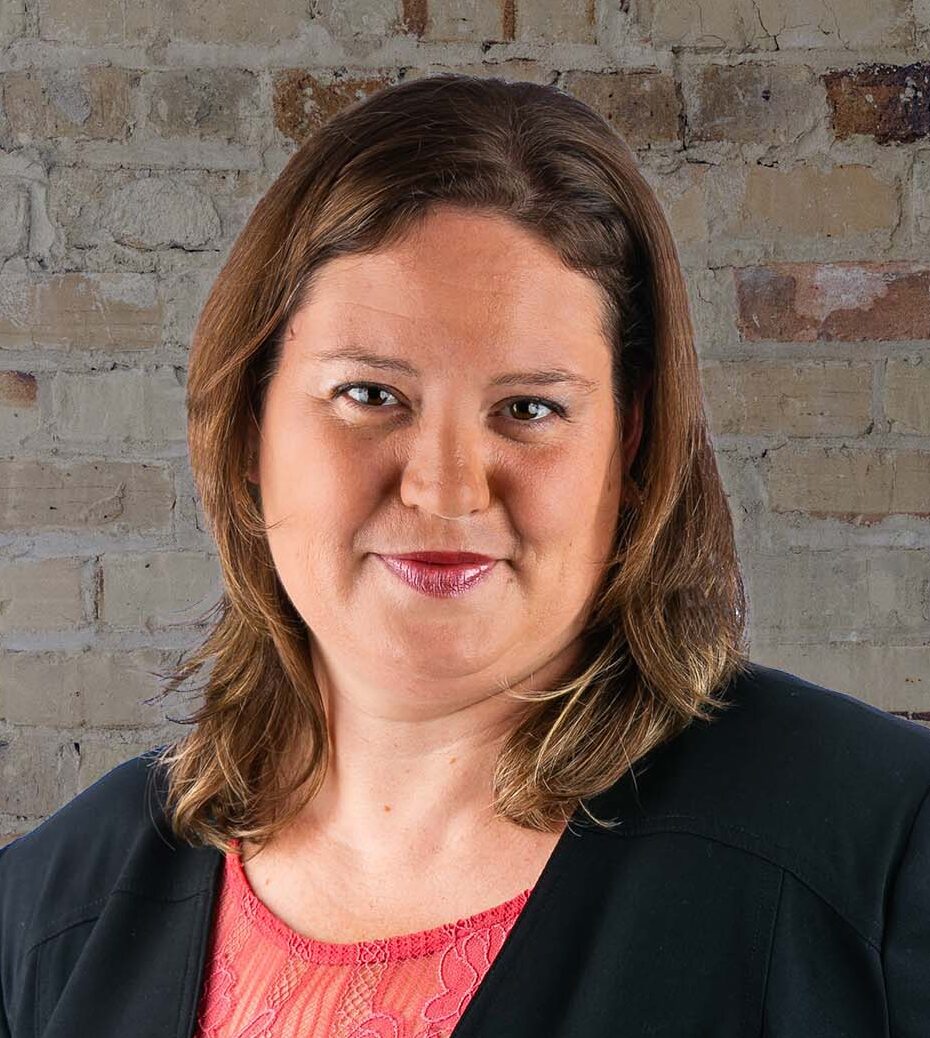
    Jennifer M. Hoekstra is a partner with Aylstock, Witkin, Kreis & Overholtz, PLLC. A native of Saint Paul, Minnesota, Ms. Hoekstra boasts an impressive academic and professional record, including graduation from two of the nation’s top schools. She earned her Bachelor of Arts in Environmental Science from Columbia College, Columbia University in the City of New York. She relocated to Louisiana to attend Tulane Law School, where she earned her J.D. while also completing a certificate in Environmental Law. During her law school career, she spent a semester studying at the University of Wisconsin School of Law and visited on their International Law Journal as a Junior Member during her Hurricane Katrina evacuation semester.

    Ms. Hoekstra has been involved in complex litigation cases of all forms since 2007. Ms. Hoekstra has earned a solid reputation as a skilled writer and researcher, and plays an integral role in several complex litigation cases, practicing in the areas of Pharmaceutical Mass Torts, Defective Device Mass Torts, and other complex litigation. She is currently a member of the Proton-Pump Inhibitors Plaintiff Executive Committee and the 3M Earplugs MDL Discovery and ESI Committee.

    Jennifer was central to the successful outcome in bellwether trials in the Genetically Modified Rice, Actos and DePuy Pinnacle Hip MDLs with more than $11 Billion in trial verdicts resulting from those cases. She has actively served as trial counsel or an integral member of the trial team in several of the 3M Earplug trials securing nearly $300 Million in compensatory damages for military veterans.

    She is licensed to practice before all Louisiana state and federal courts and the U.S. District Courts for the Northern District of Texas and Eastern District of Missouri as well as the 5th and 8th Circuit Courts. She is a member of the American Bar Association, the Louisiana Bar Association, the Acadiana Federal Bar Association, the Alexandria Louisiana Bar Association and the American Association for Justice. She is a member of Women En Mass, founding member of the board for the Society Women Trial Lawyers and was also a member of the inaugural 2018 Board of Directors for Emerge Louisiana.

  • Under Pressure: Courts and Lawyers Trying to Deal With It with Diana Manning

    Under Pressure: Courts and Lawyers Trying to Deal With It with Diana Manning

    The pressure on trial lawyers, judges, plaintiffs, defendants, and court systems is only increasing.

    The backlog of cases in New Jersey, for example, nearly quadrupled between February 2020 and 2021, the first year of the pandemic, according to NJ Spotlight News (NJSN). The state is also facing a historic shortage of jurists, NJSN reported, “leading to overworked judges, huge case backlogs and nearly 7,000 defendants in jail without bail, some 500 of them for more than two years despite a law that essentially requires a trial within two years for anyone detained.”

    As reported by NJSN, one court official told the state Assembly Budget Committee about the impact of the pandemic on the court system: “Buildings were closed to most in-person trials for more than a year, although other proceedings continued virtually. The business closures and high unemployment led to a housing crisis that resulted in more than 46,000 pending cases that involve landlord-tenant issues . . . . But with all courts open and staff back to work in person, it is impossible to eliminate the backlog of cases with so many open judge seats.” The problem is attributed to the state Senate, where the process is mired, even though the governor is making appointments.

    According to the National Counsel for State Courts, backlogs at one third of U.S. courts increased by 5%.  It would have been worse had courts not held virtual hearings.

    Using the Court Statistic Project database, the numbers reveal in stark terms the impact the pandemic had in the year it came to America. Dispositions dropped from 43M in 2019 to 28M in 2020. Bench trials fell from 3M in 2019 to under 2M in 2020. Jury trials plummeted from 49K in 2019 to less than 19K in 2020.

    The Washington Post reported that the Pennsylvania Supreme Court declared a judicial emergency and extended deadlines. Virginia’s Supreme Court suspended nonessential proceedings. The Iowa Supreme Court pushed back criminal trials and the Alabama’s Supreme Court suspended in-person proceedings. New Jersey Supreme Court Chief Justice Stuart Rabner warned that the judicial shortage “comes with a price.”

    Listen to my interview with Diana C. Manning, Managing Principal, Bressler, Amery & Ross, P.C., for the fallout from the judicial shortage and swelling case backlogs, and what needs to be done to dig out. An experienced and award winning complex commercial litigator, Diana is co-chair of the firm’s business and commercial litigation practice group. She received her J.D. from Rutgers University School of Law.

    This episode is the first of two about challenges to the court system and what can be done to address them. An upcoming episode will feature an Alabama state judge who is leading the way in the use of technology to modernize the courts.

    This podcast is the audio companion to the Journal on Emerging Issues in Litigation. The Journal is a collaborative project between HB Litigation Conferences and the Fastcase legal research family, which includes Full Court Press, Law Street Media, and Docket Alarm. The podcast itself is a joint effort between HB and our friends at Law Street Media. If you have comments or wish to participate in one our projects please drop me a note at Editor@LitigationConferences.com.

    Tom Hagy

    (actual size)

    Tom Hagy
    Litigation Enthusiast and
    Host of the Emerging Litigation Podcast
    Home Page
    LinkedIn

    Diana Manning

    Diana Manning

    Diana Manning is Managing Principal at Bressler, Amery & Ross in New Jersey. Diana has more than two decades of experience in complex commercial litigation at both the trial and appellate levels. She is Co-Chair of the firm’s Business and Commercial Litigation practice group, and spearheads the firm’s Appellate practice team. Diana has developed a successful track record of trial verdicts and settlements, especially in complex matters. She also has a reputation as a strategic, thoughtful, and fearless advocate for all of her clients.

    A distinguished trial lawyer, Diana is Certified by the Supreme Court of New Jersey as a Civil Trial Attorney. She is also an accomplished appellate lawyer who has participated in six matters before the New Jersey Supreme Court, including arguing four times. Diana is an avid presenter and author on business litigation, legal ethics, and professional liability. She is the author of the New Jersey Chapter of The Law of Lawyer’s Liability: Fifty-State Survey of Legal Malpractice, ABA/First Chair Press, which provides an overview of the laws governing attorney malpractice in each state.

    To date, Diana’s distinguished career has brought her offices and honors from many professional and legal industry organizations. Diana served on the District XA Ethics Committee for 10 years and was appointed Chair by the New Jersey Supreme Court from 2017-2019. She is also President of the New Jersey Women Lawyers Association, and is a Past President of Trial Attorneys of New Jersey, the Morris County Bar Association, and the Morris County Bar Foundation.

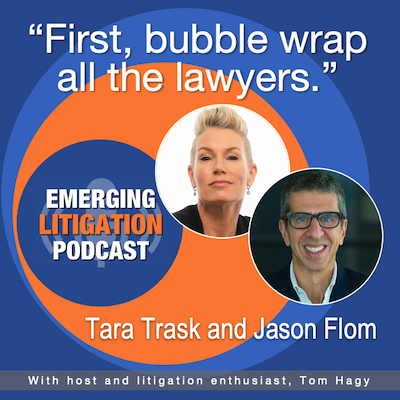
  • Lawyers for Good with Tara Trask and Jason Flom

    Lawyers for Good with Tara Trask and Jason Flom

    If you’re feeling bad about being a lawyer, or just maybe tingling with the holiday spirit of giving back, this episode is for you. Listen to three professionals (well, maybe two “professionals”) who deeply admire for the legal profession, the important role attorneys play in society, and all the potential they have to make the world a better place.

    When there is strife, there is a supporting organization, and with them are lawyers. Wrongful convictions. Voting rights. Environmental protection. The rights of women, people of color, workers,  LGBTQ, immigrants, asylum seekers.  Lawyers are in a unique position to do something about all of this. And they do. And we hope more will.

    Join me as I interview nationally acclaimed trial consultant Tara Trask and music industry star-maker Jason Flom.

    Tara Trask is the President of Trask Consulting
    , a boutique litigation strategy, jury research and trial consulting firm. Tara  focuses complex commercial litigation, from intellectual property to antitrust, from products liability to insurance, and oil and gas. She has extensive experience assisting institutions and individuals in matters involving regulatory enforcement and white-collar defense. Tara has been involved in more 450 jury trials.

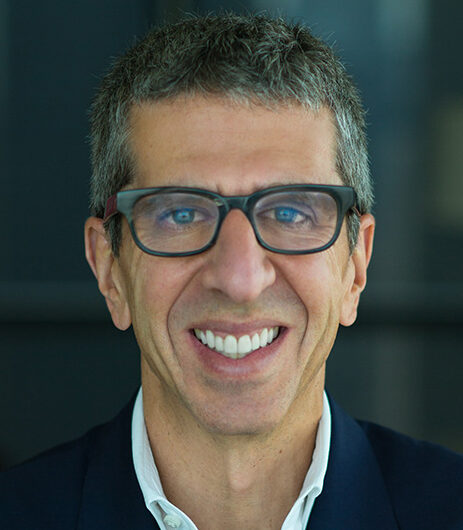
    Music industry executive Jason Flom is  CEO of Lava Records, Lava Music Publishing, and Lava Media, LLC.  He is former  CEO at Atlantic Records, Virgin Records and Capitol Music Group. Jason is personally responsible for launching acts such as Katy Perry and Greta Van Fleet, and discovering and developing the likes of Matchbox 20, The Corrs, Tory Amos, Jewel, and Stone Temple Pilots. The New Yorker described Jason as “one of the most successful record men of the past 20 years. He’s also committed to doing good. Through his Lava for Good company, Jason hosts the hit podcast Wrongful Conviction, now in its ninth season, which features interviews with people who have spent decades in prison for crimes they did not commit. Within two weeks of its release, the podcast shot to #7 on the iTunes charts and has raised more than $1 million to benefit the Innocence Project. Lava for Good’s Bone Valley, which tells the tragic story of  Leo Schofield, who was sentenced to life for the murder of his wife, Michelle, is also one of the top podcasts on iTunes (#19 as of this writing), and received a highly regarded “four thumbs up” from the Crime Writers On  podcast. Jason’s father, the fourth named partner in what is now known as Skadden, was dubbed one of the “Lawyers of the Century by The American Lawyer in 1999.

    This podcast is the audio companion to the Journal on Emerging Issues in Litigation. The Journal is a collaborative project between HB Litigation Conferences and the Fastcase legal research family, which includes Full Court Press, Law Street Media, and Docket Alarm. The podcast itself is a joint effort between HB and our friends at Law Street Media. If you have comments or wish to participate in one our projects please drop me a note at Editor@LitigationConferences.com.

    Tom Hagy

    (actual size)

    Tom Hagy
    Litigation Enthusiast and
    Host of the Emerging Litigation Podcast
    Home Page
    LinkedIn

    Loved hearing what Tara said on this subject matter?

    Explore more of subject content with Tara!

    Podcast: Jury Selection in the Age of Conspiracy Theories and Distrust with Tara Trask

    Podcast: Intellectual Property Trial Team Diversity with Tara Trask

    Tara Trask

    Tara TraskTrask Consulting

    Tara Trask is the President of Trask Consulting, a boutique litigation strategy, jury research and trial consulting firm. Tara focuses complex commercial litigation, from intellectual property to antitrust, from products liability to insurance, and oil and gas. She has extensive experience assisting institutions and individuals in matters involving regulatory enforcement and white-collar defense. Tara has been involved in more 450 jury trials.

    Jason Flom

    Jason Flom Lava Records

    Music industry executive Jason Flom is CEO of Lava Records, Lava Music Publishing, and Lava Media, LLC. He is former CEO at Atlantic Records, Virgin Records and Capitol Music Group. Jason is personally responsible for launching acts such as Katy Perry and Greta Van Fleet, and discovering and developing the likes of Matchbox 20, The Corrs, Tory Amos, Jewel, and Stone Temple Pilots. The New Yorker described Jason as “one of the most successful record men of the past 20 years. He’s also committed to doing good.

    Through his Lava for Good company, Jason hosts the hit podcast Wrongful Conviction, now in its ninth season, which features interviews with people who have spent decades in prison for crimes they did not commit. Within two weeks of its release, the podcast shot to #7 on the iTunes charts and has raised more than $1 million to benefit the Innocence Project. Lava for Good’s Bone Valley, which tells the tragic story of Leo Schofield, who was sentenced to life for the murder of his wife, Michelle, is also one of the top podcasts on iTunes (#19 as of this writing), and received a highly regarded “four thumbs up” from the Crime Writers On podcast. Jason’s father, the fourth named partner in what is now known as Skadden, was dubbed one of the “Lawyers of the Century by The American Lawyer in 1999.

    Tags

    Emerging Litigation & Risk Compliance Litigation & appeals Cybersecurity Data Privacy Artificial Intelligence (AI) Insurance Companies Risk Management Corporate & Securities Insurance Claims Recovery Regulations Data Breach Toxic Torts Antitrust Legal Tech Product Liability Settlements Trial Personal Injury Privacy Healthcare Per- and Polyfluoroalkyl Substances (PFAS) Data Analytics Arbitration Constitutional Law Climate Change Cannabis Labor Law Insurance Fraud Liability Claims COVID Alternative Dispute Resolution (ADR) Mediation Diversity Equity Inclusion (DEI) Claims management Professional Liability Legal Research & Writing Business Interruption Law Practice Management Trial Skills Property and Casualty Drug Laws Copyright Law Catastrophic Loss

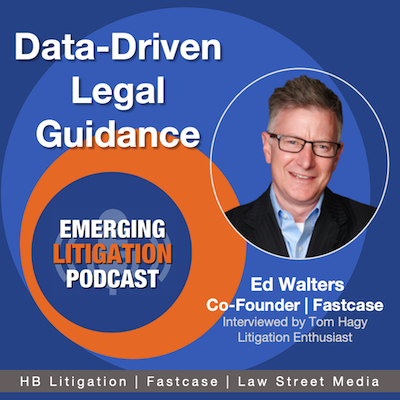
  • Data-Driven Legal Guidance with Ed Walters

    Data-Driven Legal Guidance with Ed Walters

    Today we’re going to talk about the weather. But only for a minute. Mostly we’re going to talk about the use of big data in the practice of law.

    There is a reason IBM acquired the digital assets of The Weather Channel, and it’s not because they are climate nerds. They bought it to put weather data to work to “operationalize [the] understanding of the impact of weather on business outcomes.” Think about the economic impact of snowstorms, hurricanes, and even less dramatic weather conditions, or the impact on the durability of manufacturing or building materials as temperatures rise or fall outside the norm.

    While we all crave meteorological precision, we also crave precision when making legal and business decisions.

    Clients ask questions like these all the time: What is our case worth? What size award will we get? Where should I file? Will the judge grant summary judgment? Should I even bring this suit?  Lawyers will draw on experience to offer their best advice, providing ranges followed by caveats and usually preceded by the most lawyerly of lawyer answers: “It depends.”  As my guest points out, lawyers also get business-related questions. Business-related answers may begin with “it depends,” but must end with a number. When a CEO asks how much revenue your project will generate, “more” is not the answer they’re looking for. I know. I’ve tried.

    Lawyers who seek greater precision in their predictions can take comfort in the increasing sophistication of analytical tools that can evaluate massive troves of data and account for myriad variables. Not only are we seeing advances in machine learning, artificial intelligence, and language processing, but there is greater access to important litigation-related data – BIG DATA – than ever before. Using new technologies to comb through millions of records – combined with an attorney’s insights – cannot only sharpen their predictive capabilities, but it can help them build, defend, and resolve cases.

    For insights on the past, present and future of legal guidance and analysis, listen to my interview with Ed Walters, co-founder and CEO of our partners on this podcast, Fastcase, the legal research and software company whose divisions include Fastcase Full Court Press (publishing), Law Street Media (legal news), Docket Alarm (docket tools), and NextChapter (software).  An entrepreneur, writer and professor, Ed brings his experience advising global Fortune 500 tech and pharma companies and sports leagues, serving in the White House on media affairs and speechwriting, and contributing to several major newspapers and journals. Ed is an adjunct law professor at Georgetown and Cornell universities. He is also a self-described “weather nerd,” which explains my tortured introduction.

    This podcast is the audio companion to the Journal on Emerging Issues in Litigation. The Journal is a collaborative project between HB Litigation Conferences and the Fastcase legal research family, which includes Full Court Press, Law Street Media, and Docket Alarm. The podcast itself is a joint effort between HB and our friends at Law Street Media. If you have comments or wish to participate in one our projects please drop me a note at Editor@LitigationConferences.com.

    Tom Hagy

    (actual size)

    Tom Hagy
    Litigation Enthusiast and
    Host of the Emerging Litigation Podcast
    Home Page
    LinkedIn

    Data-Driven Legal Guidance

    Ed Walters

    Ed WaltersFastcase

    Ed Walters is the CEO and co-founder of Fastcase, an online legal research software company based in Washington, D.C. Under Professor Walters’s leadership, Fastcase has grown to one of the world’s largest legal publishers, serving more than 1.1 million subscribers from around the world.

    Before founding Fastcase, Professor Walters worked at Covington & Burling, in Washington D.C. and Brussels, where he advised Microsoft, Merck, SmithKline, the Business Software Alliance, the National Football League, and the National Hockey League. His practice focused on corporate advisory work for software companies and sports leagues, and intellectual property litigation.

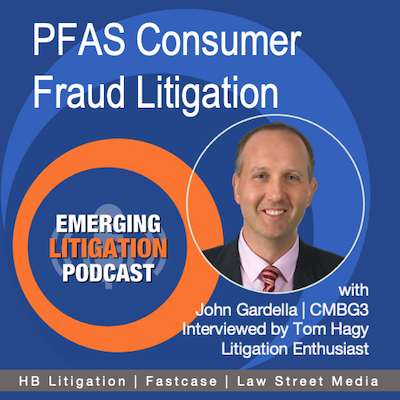
  • PFAS Consumer Fraud Litigation with John Gardella

    PFAS Consumer Fraud Litigation with John Gardella

    These stubborn chemicals are everywhere. But when they find their way into products, shouldn’t someone tell consumers?

    Per- and poly-fluoroalkyl substances (“PFAS”) are a family of more 12,000 manmade compounds.  That’s a huge family. Most people would recognize the brand names Teflon, produced by Dupont and Scotchgard produced by 3M. They also go by the nickname “forever chemicals” because they are highly persistent and mobile in the environment and the human body. In addition to bodily injury and environmental pollution litigation, plaintiffs are bringing suits against companies for claiming their products and the making of their products are safe and green. New consumer lawsuits seeking millions in damages are targeting oral hygiene products — like a recent case involving dental floss — cosmetics, apparel, and food packaging.

    Listen to my interview with environmental lawyer John Gardella of CMBG3 Law who discusses why PFAS concern citizens, media and legislators, what legal risks corporations face, and why we’re seeing  a surge in consumer fraud litigation.

    This podcast is the audio companion to the Journal on Emerging Issues in Litigation. The Journal is a collaborative project between HB Litigation Conferences and the Fastcase legal research family, which includes Full Court Press, Law Street Media, and Docket Alarm. The podcast itself is a joint effort between HB and our friends at Law Street Media. If you have comments or wish to participate in one our projects please drop me a note at Editor@LitigationConferences.com.

    Tom Hagy

    (actual size)

    Tom Hagy
    Litigation Enthusiast and
    Host of the Emerging Litigation Podcast
    Home Page
    LinkedIn

    PFAS Consumer Fraud Litigation with John Gardella

    John Gardella

    John GardellaCMBG3 Law

    John Gardella is a Shareholder and recognized thought leader on PFAS issues. He is licensed to practice in Massachusetts and Tennessee.

    A seasoned trial attorney with over 75 verdicts, John is the Chair of the firm’s PFAS, Environmental, Risk Management & Consulting, and ESG practice groups. His thought leadership and predictive risk abilities with respect to PFAS earned him the honor of being the only person in the country that was recognized as a thought leader on PFAS in 2020 and 2021 by the esteemed National Law Review. John is regularly interviewed by media on the subject of PFAS and other emerging chemicals of concern, and he consistently publishes his own thought leadership in several nationally syndicated resources, including Bloomberg Law, AM Best, and National Law Review. Private equity firms, the financial world, insurance companies, and corporations regularly seek John’s opinions on forward-looking environmental and chemical substances risk issues.