Category: Complex Business Litigation

  • When Litigation Financing Goes Wrong, Who Pays?

    When Litigation Financing Goes Wrong, Who Pays?

    Emerging Litigation Podcast

    Emerging Litigation PodcastProduced by HB Litigation

    Interviews with leading attorneys and other subject matter experts on new twists in the law and how the law is responding to new twists in the world.

    Interested in contributing an article? Email us at Editor@LitigationConferences.com.

    When Litigation Financing Goes Wrong, Who Pays?

    With Crushing Debt Owed to Financiers, Mass Tort Firm Files Bankruptcy 

    By Jennifer Holmes

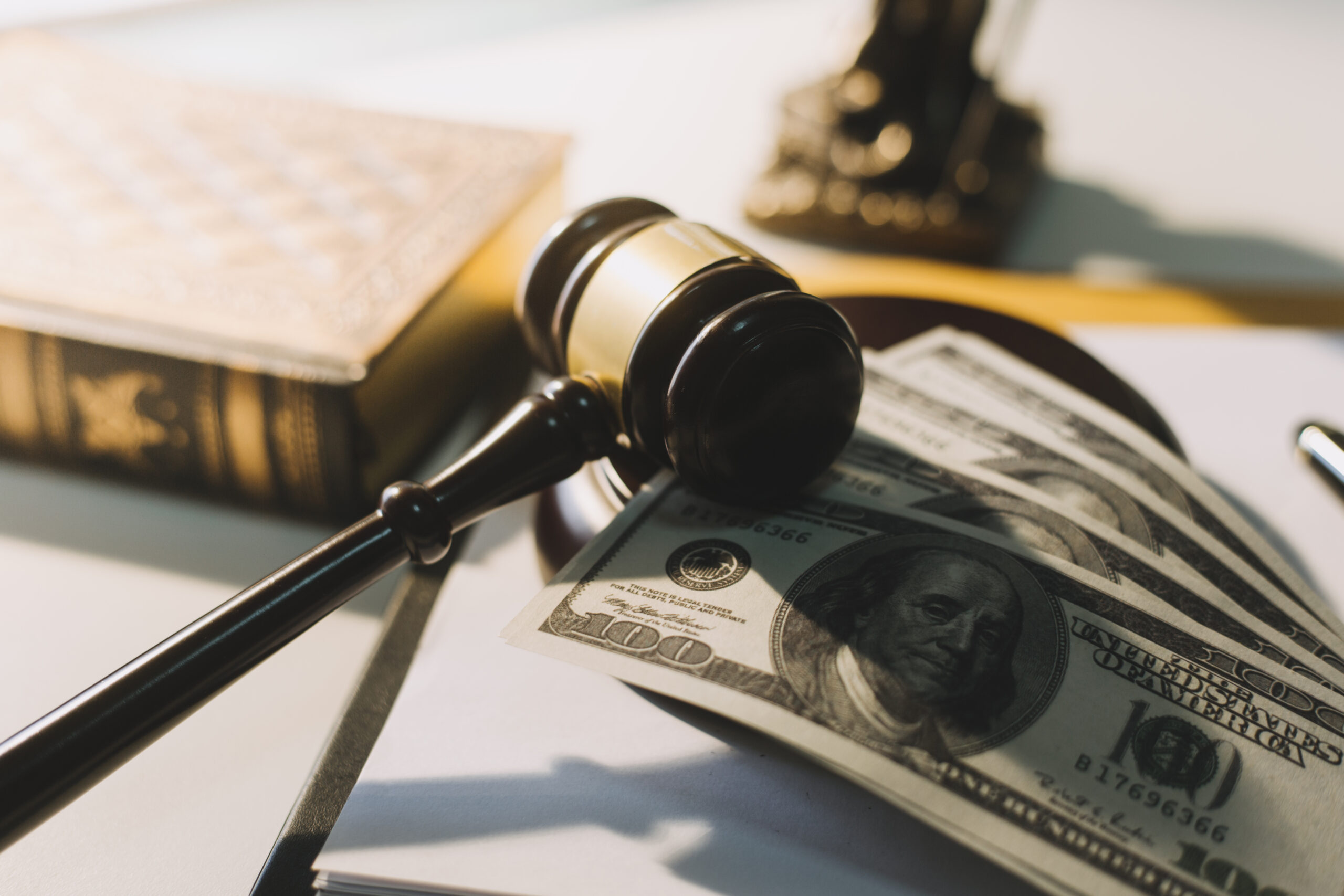
    The AkinMears LLP bankruptcy serves as a cautionary tale for law firms navigating the high-stakes world of litigation financing—where access to capital can be a lifeline, but financial overreach can lead to collapse.

    In January 2025, Houston-based mass tort law firm AkinMears LLP filed for Chapter 7 bankruptcy, citing over $200 million in debt owed to litigation funding companies Virage SPV 1 ($116.4M) and Rocade Capital ($86M). This filing marks a significant moment in the legal industry, highlighting the financial risks law firms face when heavily relying on third-party litigation financing.

    According to Bloomberg Law’s U.S. Bankruptcy Tracker, AkinMears LLP was the only U.S. law firm filing for bankruptcy in January 2025 with $50 million or more in liabilities. In total, 12 large law firms declared bankruptcy in January 2025, up from seven in January 2024 but slightly below the 17 cases recorded in January 2023.

    The Role of Litigation Funders

    Litigation financing has become a crucial resource for law firms pursuing large-scale mass tort cases. Virage SPV 1 and Rocade Capital are two key players in this space, specializing in providing capital to firms operating on a contingency fee basis.

    • Virage SPV 1: Founded in 2013 and based in Houston, Virage Capital Management LP provides financial solutions to attorneys and law firms, deploying over $1.1 billion across various portfolios. Their funding model allows firms to cover litigation costs, operational expenses, and case acquisitions without an immediate financial burden.

    • Rocade Capital: A private credit firm, Rocade Capital provides flexible growth capital to plaintiff law firms. It emerged as a major litigation finance player after partnering with Barings LLC and EJF Capital, raising approximately $470 million in 2023 to support legal funding initiatives.

    These third-party litigation funding (TPLF) companies evaluate cases based on their likelihood of success. If a firm wins, the funder receives a share of the proceeds, often as a first-priority creditor. If the firm loses, the funder bears the financial loss. However, as the AkinMears case demonstrates, the system carries significant risks for all involved.

    AkinMears’ Previous Financial Struggles

    AkinMears LLP has faced finance-related legal disputes before. In 2015, the firm was embroiled in litigation with financier Amir Shenaq, who was hired to secure funding for mass tort cases.

    According to Shenaq, he helped arrange approximately $90 million in loans for the firm, which was used to finance the acquisition of 14,000 lawsuits from other firms. However, a dispute over unpaid commissions led Shenaq to file a lawsuit, alleging that AkinMears owed him $4.2 million.

    This case underscored the volatility of litigation finance arrangements and the financial strain that firms face when relying heavily on external funding.

    The Risks of Litigation Financing

    One of the biggest challenges in litigation finance is the unpredictable nature of mass tort cases. AkinMears’ bankruptcy suggests that a backlog of unresolved cases, missed payments to funders, and investor pressure created an unsustainable financial situation. The firm’s collapse raises broader questions about the long-term viability of litigation financing as a business model.

    Key Questions Remain

    Should there be greater transparency and regulatory oversight to prevent potential undue influence from litigation funders?

    Should judges be informed when a mass tort case is being financed by a third party?

    Are some cases being extended unnecessarily to maximize payouts for funders and attorneys?

    How can law firms balance the financial advantages of litigation funding with the risks of over-leveraging?

    While litigation financing provides critical resources for plaintiffs and law firms, the AkinMears LLP case illustrates the dangers of misalignment between financial strategies and legal practice. As the legal industry grapples with these challenges, law firms must carefully weigh the benefits and risks of third-party financing.


    Jennifer Holmes is a former journalist turned business writer and analyst. She can be reached at Editor@LitigationConferences.com.


  • Appellate Lawyers at Trial: Don’t Wait Until Your Ox is in the Ditch with Jeff Doss

    Appellate Lawyers at Trial: Don’t Wait Until Your Ox is in the Ditch with Jeff Doss

    Appellate Lawyers at Trial: Don’t Wait Until Your Ox is in the Ditch with Jeff Doss

    Concepts: Trial, Criminal Defense, Civil Litigation, Appeals

    Whopping jury verdicts from 2024 illustrate why trial teams sometimes include appellate counsel, because including them — even as you prepare to defend a high stakes case at trial — can improve your chances on appeal should a jury hand you a half-billion-dollar verdict.

    But what functions do appellate attorneys perform at trial? Are they listening for errors or proactively guiding trial counsel? Do they ever address the court or sit quietly at the defense table or maybe in the back row?

    To answer these questions and more is Jeffrey P. Doss, a partner in the White-Collar Criminal Defense & Corporate Investigations practice group at Lightfoot, Franklin & White LLC, a civil defense litigation firm. Jeff has served as appellate counsel for an automobile manufacturer for 10 years. In this role, he has supported trial teams pre-trial, at trial, and post-verdict through appeal. Jeff has developed and implemented strategies to address a range of legal issues, from jury selection errors to expert exclusions, evidentiary objections, and post-verdict challenges to punitive damages awards.

    Thanks to Jeff for taking the time to share his insights on this, and for entertaining my curiosity about the efficacy of beards in the practice of law.

    I hope you enjoy the conversation! If so, give us a rating!

    If you have comments, ideas, or wish to participate, please drop me a note at Editor@LitigationConferences.com.
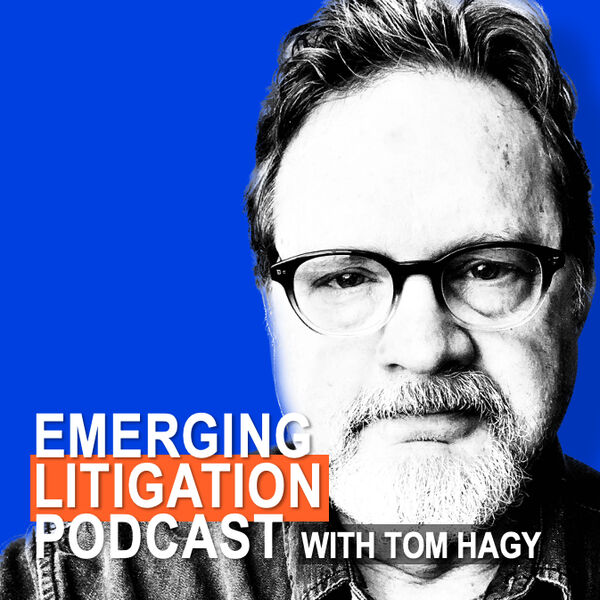
    Tom Hagy
    Litigation Enthusiast and
    Host of the Emerging Litigation Podcast
    Home Page
    LinkedIn

    Jeffrey P. Doss

    Jeffrey P. DossPartner, Lightfoot, Franklin & White LLC

    Jeff focuses his practice on trial advocacy in the areas of white-collar criminal defense and complex civil litigation. In addition to conducting internal investigations for private and public entities, he has defended businesses and individuals in connection with grand jury investigations, administrative enforcement proceedings and criminal prosecutions at the trial and appellate levels.

    For nearly a decade, Jeff has served as appellate counsel for an automobile manufacturer. In that capacity, he has aided trial teams pre-trial, at trial, and post-verdict through appeal. As appellate counsel, Jeff has developed and implemented strategies to address a myriad of legal issues, from errors in jury selection to exclusions of experts to evidentiary objections to post-verdict challenges to punitive damages awards. Jeff received his J.D., cum laude from Samford University, Cumberland School of Law.

    podcast logo face


    Want to appear on the Emerging Litigation Podcast?


    Send us your idea! 

    It might even make this man smile. “But I am smiling here.”

    No. No he’s not.

  • Key Developments in Antitrust Class Action Litigation: Recent Developments, Key Class Action Trends, Significant Rulings, and Major Settlements Shaping the Future of Antitrust

    Key Developments in Antitrust Class Action Litigation: Recent Developments, Key Class Action Trends, Significant Rulings, and Major Settlements Shaping the Future of Antitrust

    Key Developments in Antitrust Class Action Litigation:

    Recent Developments, Key Class Action Trends, Significant Rulings, and Major Settlements Shaping the Future of Antitrust

    An old-fashioned two-way scale symbolizing legal balance, fairness, and antitrust justice

    Gain an understanding of the latest developments in antitrust class action litigation, including evolving class certification standards, key rulings on multi-district litigation, and major settlements shaping the field. 

    Developed and presented by three practicing attorneys with an expertise in class action defense and antitrust and competition law, this webinar is essential for attorneys and professionals looking to deepen their understanding of antitrust class action litigation. Gain valuable insights into the latest developments, explore key class action trends, examine significant rulings, and review major settlements that are shaping the future of antitrust. Stay informed and equipped with the knowledge to navigate this complex area of law.

    This webinar offers an in-depth look at the latest updates in antitrust law and key trends in class action litigation. Participants will explore significant developments in class certification, including evolving interpretations of Rule 23’s numerosity requirement and the impracticability of joinder. The session will also cover landmark rulings on pivotal issues such as the application of the per se treatment, quick-look analysis, and rule-of- reason test, as well as decisions impacting multi-district litigation, baseball’s antitrust exemption, the right-to-repair movement, and pricing algorithms.

    Learning Objectives

    Stay up to date on recent developments in antitrust

    Gain an understanding of key class action trends, including evolving class certification standards

    Explore significant rulings in class action litigation, such as:

    -Per se treatment vs. quick-look analysis vs. rule of reason

    -Rule 23’s numerosity requirement and the impracticability of joinder

    -Key rulings on changes to multi-district Litigation

    -Baseball’s antitrust exemption and its ongoing implications

    -Rulings on the right-to-repair movement

    -Decisions impacting pricing algorithms

    Learn about major settlements that are reshaping antitrust

    TAKE IT NOW

    Available now to CeriFi LegalEdge subscribers. Don’t subscribe? Don’t despair. Use code HB20 for 20% off. Or, HBSub20 for 20% off a full solo subscription. While supplies last.

    Speakers

    Gerald L. Maatman, Jr.

    Gerald L. Maatman, Jr.Partner, Duane Morris LLP

    A widely recognized workplace class action defense litigator, Jerry is a Partner at Duane Morris LLP, where he chairs the firm’s Class Action Defense Group. He is a graduate of Washington & Lee University and the Northwestern University School of Law, where he has served as an adjunct professor for 34 years. The author of eight books on the law, Jerry is a sought-after legal commentator by major news organizations. He works out of the Duane Morris offices in Chicago and New York.

    Jennifer A. Riley

    Jennifer A. RileyPartner, Duane Morris LLP

    A partner in the Duane Morris Chicago office, Jennifer is vice-chair of the firm’s Class Action Defense Group. She regularly defends companies facing class actions, collective actions, pattern or practice lawsuits, and other types of representative proceedings, ranging in size from dozens to tens of thousands of claims. Jennifer also helps employers navigate thorny issues, including investigations, compliance, and terminations. She earned her J.D. from the University of California, Berkeley School of Law, and her B.A. from Vanderbilt University, magna cum laude.

    Sean P. McConnell

    Sean P. McConnellPartner, Duane Morris LLP

    Sean P. McConnell, chair of Duane Morris’ Antitrust division of the Trial Practice Group, has represented numerous clients in their most high-stakes and sophisticated antitrust disputes. Mr. McConnell represents U.S. and international clients on the full range of antitrust matters, from counseling and compliance to defense of bet-the-company class actions and private litigation, to government investigations, to the competitive aspects associated with mergers, acquisitions, joint ventures, and other collaborations. Chambers USA has identified Mr. McConnell as an “up-and-coming antitrust practitioner who is commended for his representation of clients in sophisticated class actions.” Mr. McConnell is a 2009 graduate of Villanova University School of Law, where he was a member of the Villanova Law Review, and he is a 2005 graduate of the University of Notre Dame with a degree in Finance.

  • Trends and Strategies in Wage & Hour Class and Collective Actions

    Trends and Strategies in Wage & Hour Class and Collective Actions

    Trends and Strategies in Wage & Hour Class and Collective Actions

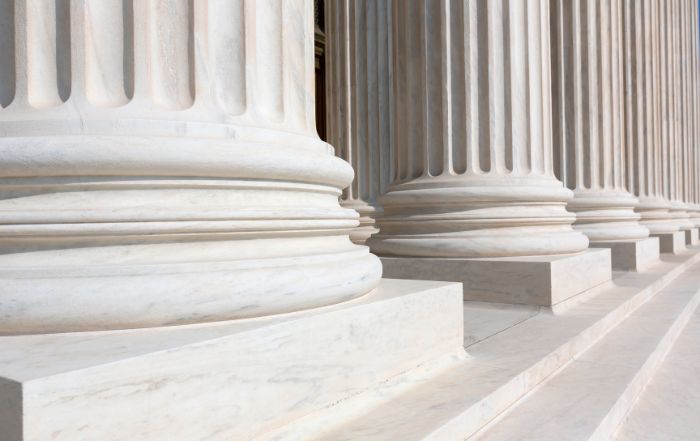
    The lower half of large stone pillars outside a courthouse, symbolizing strength and justice.

    Gain a better understanding of the Fair Labor Standards Act (FLSA) and wage and hour collective actions, get up to date on significant trends and recent key settlements in this area of law, and grasp the main considerations for conditional class certification and decertification and the key collective action rulings handed down in 2023.  

    Developed and presented by three practicing attorneys with expertise in employment law and complex litigation, this webinar is designed for attorneys and other professionals who wish to a) better understand the Fair Labor Standards Act (FLSA) and wage and hour class and collective actions, b) get up to date on significant trends and recent key settlements in this area of law, and c) grasp the main considerations for conditional class certification and decertification and the key collective action rulings handed down in 2023. This course’s core objectives are to give you an overview of FLSA, wage and hour class and collective actions, background on Rule 23 class actions, and insight into notable trends and leading settlements. We will address points of deliberation for conditional certification and decertification of class and collective actions, looking at widely used certification methods and certification rates, then close with key rulings in this area of law issued in 2023. 

    Join experienced class action defense litigators Gerald L. Maatman, Jr., Jennifer A. Riley, and Greg Tsonis for a high-level breakdown of trends and strategies in wage & hour class and collective actions. Sign up today!

    Learning Objectives

    Gain a working understanding of the Fair Labor Standards Act. 

    Get a clear picture of the wage and hour class and collective actions landscape. 

    Understand the background of Rule 23 class actions. 

    Get current on significant trends in the law.  

    Learn the details and significance of recent settlements.  

    Know what factors are considered for conditional certification and decertification. 

    Come away with a solid grasp of recent wage and hour rulings.   

    Other Class Action Podcasts Worth a Listen:

    Hair Relaxer Injury Litigation with Jennifer Hoekstra

    TAKE IT NOW

    Available now to CeriFi LegalEdge subscribers. Don’t subscribe? Don’t despair. Use code HB20 for 20% off. Or, HBSub20 for 20% off a full solo subscription. While supplies last.

    Speakers

    Gerald L. Maatman, Jr.

    Gerald L. Maatman, Jr.Partner, Duane Morris LLP

    A widely recognized workplace class action defense litigator, Jerry is a Partner at Duane Morris LLP, where he chairs the firm’s Class Action Defense Group. He is a graduate of Washington & Lee University and the Northwestern University School of Law, where he has served as an adjunct professor for 34 years. The author of eight books on the law, Jerry is a sought-after legal commentator by major news organizations. He works out of the Duane Morris offices in Chicago and New York.

    Jennifer A. Riley

    Jennifer A. RileyPartner, Duane Morris LLP

    A partner in the Duane Morris Chicago office, Jennifer is vice-chair of the firm’s Class Action Defense Group. She regularly defends companies facing class actions, collective actions, pattern or practice lawsuits, and other types of representative proceedings, ranging in size from dozens to tens of thousands of claims. Jennifer also helps employers navigate thorny issues, including investigations, compliance, and terminations. She earned her J.D. from the University of California, Berkeley School of Law, and her B.A. from Vanderbilt University, magna cum laude.

    Gregory Tsonis

    Gregory TsonisPartner, Duane Morris LLP

    Gregory “Greg” Tsonis is an integral member of the Workplace Class Action Group at Duane Morris. With a practice that encompasses defending companies in a wide spectrum of employment law cases, Mr. Tsonis adeptly handles everything from complex, high-stakes class actions asserting wage & hour and discrimination claims to intense individual plaintiff cases and government agency investigations. His knowledge extends to a broad spectrum of federal and state statutes, including the Fair Labor Standards Act, state wage & hour laws, the Civil Rights Act, the Americans with Disabilities Act, the Biometric Information Privacy Act, and state consumer protection laws, among others. Mr. Tsonis received his Bachelor of Arts degree from the University of Chicago and his law degree, with honors, from the University of Chicago Law School.

  • When Chemical Crises Strike with Ed Gentle and Kip Benson

    When Chemical Crises Strike with Ed Gentle and Kip Benson

    When Chemical Crises Strike with Ed Gentle and Kip Benson

    Concepts: Toxic Events, Toxic Torts, Chemical Disasters, Emergency Response, Legal Activity, Risk Mitigation, Claims Settlement, Chemical Litigation

    Soon after emergency response teams scramble into action to address chemical fires, explosions, or other toxic events, attorneys begin gathering and analyzing information either to mitigate corporate risk or to seek remedies for anyone impacted by such an event.

    Listen to my interview with Edgar C. “Ed” Gentle III and Katherine “Kip” Benson of Gentle, Turner & Benson LLC, about legal activity that goes on in the immediate aftermath of a toxic event, using as a backdrop the recent chemical plant disaster that forced 17,000 Conyers, Georgia, residents to evacuate and many more to  shelter in place as a toxic plume hung stubbornly over the homes of as many as 100,000 residents. Ed and Kip draw on their deep experience resolving this type of litigation — including the settlement of a 20-year-old disaster at the same location — to discuss the flurry of activity that unfolds at law firms and inside legal departments within hours of a disaster. They also share the impact on such cases of a recent $600 million court-approved settlement of claims that followed the highly publicized toxic train derailment that occurred in East Palestine, Ohio, in early 2023.

    This is Ed Gentle’s second appearance on the podcast. He spoke with me on Episode 48 titled Medical Monitoring for Modern Times. He was the featured speaker on that subject for an HB CLE webinar distributed on the West LegalEdcenter, then Kip Benson joined him for an advanced level webinar on the Medical Monitoring Tort Remedy. You can download his article on the subject for free as published in the Journal of Emerging Issues in Litigation.

    I hope you enjoy the conversation! If so, give us a rating!

    This podcast is the audio companion to the Journal on Emerging Issues in Litigation. The Journal is a collaborative project between HB Litigation Conferences and the vLex Fastcase legal research family, which includes Full Court Press, Law Street Media, and Docket Alarm.

    If you have comments, ideas, or wish to participate, please drop me a note at Editor@LitigationConferences.com.

    Tom Hagy
    Litigation Enthusiast and
    Host of the Emerging Litigation Podcast
    Home Page
    LinkedIn

    podcast logo face


    Want to appear on the Emerging Litigation Podcast?


    Send us your idea! 

    It’s possible it could make this man smile. But let’s not get ahead of ourselves.

    Ed Gentle

    Ed GentleGentle Turner & Benson LLC

    A dedicated attorney with more than three decades of experience, Ed Gentle is the founder and managing partner of Gentle, Turner, Sexton & Harbison, LLC, in Birmingham, Alabama. Largely focusing his practice on complex commercial litigation and mass tort/class action litigation, he often works for the courts as a neutral special master and settlement administrator.

    In addition to his legal practice, Ed Gentle regularly gives talks and writes papers about topics related to mass torts. Some of the topics he has addressed include the challenges of administering local settlements and the selection of lead counsel by the courts. He attended the University of Alabama School of Law as a Hugo Black Scholar. He earned his J.D. and was admitted to the Alabama State Bar in 1981. 

    Katherine (“Kip”) A. Benson

    Katherine (“Kip”) A. Benson Gentle Turner & Benson LLC

    Ms. Benson is a Partner at Gentle, Turner, & Benson, LLC and has experience in mass tort/class action settlement administration, probate law, general corporate practice, real estate, and telecommunications law. With over 14 years of mass tort/class action settlement administration, Ms. Benson specializes in Medicare/Medicaid lien resolution, and various other aspects of settlement administration.

    Ms. Benson earned her J.D. from the University of Alabama School of Law in 1998 and was admitted to the Alabama State Bar in 1998. In addition to the Alabama State Bar, Ms. Benson is a member of the Birmingham Bar Association.

  • Defense of Data Breach Class Actions: Key Trends, Rulings, and Settlements

    Defense of Data Breach Class Actions: Key Trends, Rulings, and Settlements

    Defense of Data Breach Class Actions: Key Trends, Rulings, and Settlements

    Obtain a high-level breakdown of the data breach class action landscape through analysis of key trends, rulings, and litigation strategies.

    Data breach class actions have emerged as one of the fastest growing areas in the complex litigation space, forcing companies to navigate evolving cybersecurity risks, negative publicity, and costly litigation as a result. Data breach litigation was particularly notable in 2023, with a record-breaking number of filings and several high-profile cases resulting in substantial settlements. The sheer volume of individuals affected by data breaches has grown significantly, leading to larger classes and subsequently higher settlement demands. Furthermore, the nature of the data being compromised is becoming more sensitive – including financial and health information – which increases the potential damages awarded in these cases.

    Join experienced class action defense litigators Gerald L. Maatman, Jr. and Jennifer A. Riley for a high-level breakdown of the data breach class action landscape through analysis of key trends, rulings, and litigation strategies.

    Learning Objectives

    • Understand the rapid evolution of data breach claims
    • Assess key litigation trends over the past 24 months
    • Analyze significant rulings in data breach class actions
    • Identify major settlements in the data breach class action space
    • Learn best practices to mitigate risk of data breach claims

    Other Class Action Podcasts Worth a Listen:

    Hair Relaxer Injury Litigation with Jennifer Hoekstra

    TAKE IT NOW

    Available now to LegalEdge subscribers. Don’t subscribe? Don’t despair. Use code HB20 for 20% off. Or, HBSub20 for 20% off a full solo subscription. While supplies last.

    Speakers

    Gerald L. Maatman, Jr.

    Gerald L. Maatman, Jr.Partner, Duane Morris LLP

    A widely recognized workplace class action defense litigator, Jerry is a Partner at Duane Morris LLP, where he chairs the firm’s Class Action Defense Group. He is a graduate of Washington & Lee University and the Northwestern University School of Law, where he has served as an adjunct professor for 34 years. The author of eight books on the law, Jerry is a sought-after legal commentator by major news organizations. He works out of the Duane Morris offices in Chicago and New York.

    Jennifer A. Riley

    Jennifer A. RileyPartner, Duane Morris LLP

    A partner in the Duane Morris Chicago office, Jennifer is vice-chair of the firm’s Class Action Defense Group. She regularly defends companies facing class actions, collective actions, pattern or practice lawsuits, and other types of representative proceedings, ranging in size from dozens to tens of thousands of claims. Jennifer also helps employers navigate thorny issues, including investigations, compliance, and terminations. She earned her J.D. from the University of California, Berkeley School of Law, and her B.A. from Vanderbilt University, magna cum laude.

  • AI Survival Guide: Best Practices to Mitigate AI Litigation Risk

    AI Survival Guide: Best Practices to Mitigate AI Litigation Risk

    AI Survival Guide: Best Practices to Mitigate AI Litigation Risk

    Digital brain composed of circuitry and computer components set against a blurred technology background, symbolizing the fusion of AI and legal innovation.

    Learn about recent trends in high-stakes litigation involving AI technologies and best practices to consider to mitigate AI litigation risk.  

    Organizations using artificial intelligence-based technologies that perform facial recognition or other facial analysis, website advertising, profiling, automated decision making, educational operations, clinical medicine, generative AI, and more, increasingly face the risk of being targeted by class action lawsuits and government enforcement actions alleging that they improperly obtained, disclosed, and misused personal data of website visitors, employees, customers, students, patients, and others, or that they infringed copyrights, fixed prices, and more.  These disputes often seek millions or billions of dollars against businesses of all sizes.

    This webinar identifies recent trends in such varied but similar AI litigation, draws common threads, and discusses best practices that corporate counsel should consider to mitigate AI litigation risk, including adding or updating arbitration clauses to mitigate the risks of mass arbitration; establishing an AI Committee; collaborating with IT, cybersecurity, and risk/compliance departments and outside advisors to identify and manage AI risks; and updating notices to third parties and vendor agreements.

    Learning Objectives

    Identify Recent Trends in High-Stakes Litigation Involving AI Technologies

    “Biometric” Technology Litigation

    Website Advertising Technology (Adtech) Litigation

    Profiling / Automated Decision Making (ADM) Technology Litigation

    Other AI Litigation – Key Examples (Healthcare Tech & Gen AI)

    Identify State Laws Governing AI

    Identify Best Practices to Mitigate AI Litigation Risk

    Steps to Mitigate the Risk of Mass Arbitration

    Steps to Mitigate the Risk of Legal Noncompliance

    TAKE IT NOW & Check Your State CLE specifications

    This webinar is available to subscribers of the CeriFi LegalEdge (formerly West LegalEdcenter). If you don’t subscribe, don’t despair! Use promo code HB20 for 20% off the individual price. 

    Speakers

    Gerald L. Maatman, Jr.

    Gerald L. Maatman, Jr.Partner, Duane Morris LLP

    Gerald L. Maatman, Jr., chair of Duane Morris’ Workplace Class Action group, has nearly four decades’ experience of practicing law and has defended some of the most significant bet-the-company cases ever filed against corporate America. Mr. Maatman has represented companies, executive teams and boards across the country in class action litigation, ranging in size from thousands to hundreds of thousands of claims by employees.

    Mr. Maatman also writes and lectures extensively on class action and employment litigation topics. He has authored six books on employment law topics and has spoken to employer groups throughout the United States, as well as in Asia, Europe, Canada and Mexico. Mr. Maatman is the author and editor of a widely circulated, highly regarded industry class action report, published yearly since 2003. The report, called by EPLiC Magazine “the bible on class actions that no corporate counsel should do without,” is widely praised for its sharp analysis backed by comprehensive research, helps corporate employers navigate an increasingly volatile class action landscape.

    Mr. Maatman is recognized regularly by legal publications for his excellent work on behalf of clients. He is a 2021 Law360 MVP for Employment Law, which is his sixth such honor from Law360 since 2013. Winners of this accolade have distinguished themselves from their peers by securing impressive successes in high-stakes litigation, complex global matters and record-breaking deals. Overall, Mr. Maatman has received more Law360 MVP awards than any other attorney in the United States.

    Mr. Maatman is a graduate of Northwestern University School of Law (J.D. 1981) and Washington and Lee University (B.A., magna cum laude, 1978). He has served as an adjunct professor of law at Northwestern for more than 30 years.

    Justin Donoho

    Justin DonohoSpecial Counsel, Duane Morris LLP

    Justin Donoho, Special Counsel in Duane Morris’ Workplace Class Action Group, has defended companies faced with high-stakes, complex litigation matters for nearly fifteen years. Mr. Donoho regularly defends class actions alleging cybersecurity incidents, data privacy violations, and other issues involving thousands or millions of claims and seeking millions or billions of dollars. With a deep background in information technology, Mr. Donoho regularly helps his clients navigate IT-related issues.

    He has successfully litigated data privacy and cybersecurity issues under states’ wiretap acts, consumer fraud statutes, and common laws; the Illinois Biometric Information Privacy Act (BIPA); the Electronic Communications Privacy Act (ECPA); the California Consumer Privacy Act (CCPA); the EU’s General Data Protection Regulation (GDPR); and other laws.

    Mr. Donoho leads case teams from complaint to resolution. He has first- and second-chaired trials and mediations. Clients often compliment Mr. Donoho’s legal strategies, courtroom performances, persuasive writings, settlement negotiations, handling of depositions, management of complex discovery, dedication, and responsiveness to their needs.

    Mr. Donoho is a graduate of the University of Chicago Law School (J.D., 2009) and the University of Illinois at Urbana-Champaign (B.S., Computer Engineering, 1999).

  • False Claims Act, Health Care Whistleblowers, and Whistling in the Wind with Justin Lugar

    False Claims Act, Health Care Whistleblowers, and Whistling in the Wind with Justin Lugar

    False Claims Act, Health Care Whistleblowers, and Whistling in the Wind with Justin Lugar

    Concepts: Health Care Fraud, Whistleblower Claims, False Claims Act

    The DOJ’s annual report for 2023 revealed that the agency’s Health Care Fraud Unit was its busiest criminal enforcement section, responsible for convicting more than $3.8 billion in False Claims Act and whistleblower claims.

    There has reportedly been an uptick in whistleblower work among law firms and a record number of whistleblower cases. Still, some healthcare providers and hospital systems tend to hide their heads in their scrubs after being served. 

    Today we’re going to talk about how whistleblower cases come about, the benefits of rewarding whistleblowers, how things are done differently outside the U.S., what’s driving the acceleration of this area of law, and best practices when your company is served.

    Drawing on his background as both public servant and private practitioner, my guest, Justin M. Lugar, counsel with WoodsRogers in Roanoke, Virginia, is going to walk through these issues and others.

    Justin represents clients in all types of government investigations. He’s obviously well suited for the task. Prior to WoodsRogers he was Assistant U.S. Attorney in the Western District of Virginia, where he led the Affirmative Civil Enforcement team managing dozens of fraud investigations, many of which had parallel criminal investigations under the False Claims Act and related state statutes.

    Justin served as the Department of Justice’s Civil Health Care Fraud Coordinator, Affirmative Civil Enforcement Coordinator, and Civil Rights Coordinator for the Western District of Virginia. Justin was recently recognized by the Drug Enforcement Agency for his efforts enforcing the Controlled Substances Act, leading to the largest fine assessed against a hospital system in the United States at the time.

    When he was a  federal prosecutor, Justin led investigations involving numerous state and federal agency partners, from the FBI to the IRS to the Department of Energy to the FDA and the Defense Department.

    Justin started his career at a major global firm in London, conducting international investigations around the globe.  But my favorite part of his background is – when he was a religious studies major in college – he lived at a Tibetan Buddhist Monastery in Kathmandu, Nepal. Not to brag, but I just returned from Vermont.

    There is more to Justin’s background, like his LLM in international dispute resolution, which he earned at the School of Oriental and African Studies at the University of London, his J.D. from Liberty University School of Law, and his B.A. from the University of Virginia.

    I hope you enjoy the conversation! If so, give us a rating!

    This podcast is the audio companion to the Journal on Emerging Issues in Litigation. The Journal is a collaborative project between HB Litigation Conferences and the vLex Fastcase legal research family, which includes Full Court Press, Law Street Media, and Docket Alarm.

    If you have comments, ideas, or wish to participate, please drop me a note at Editor@LitigationConferences.com.

    Tom Hagy
    Litigation Enthusiast and
    Host of the Emerging Litigation Podcast
    Home Page
    LinkedIn

    Justin Lugar

    Justin LugarWoodsRogers

    Drawing on his background as both public servant and private practitioner, Justin represents clients facing all manner of government investigations, including grand jury investigations, congressional investigations, administrative investigations, regulatory inquiries, False Claims Act/whistleblower investigations, RFIs, civil rights investigations, and Inspectors General investigations.

    Prior to joining Woods Rogers, Justin served as an Assistant U.S. Attorney in the Western District of Virginia, where he led the Affirmative Civil Enforcement team in managing dozens of active fraud investigations, many of which had parallel criminal investigations under the False Claims Act and various state analog statutes.

    Justin also served as the Department of Justice’s Civil Health Care Fraud Coordinator, ACE coordinator, and Civil Rights Coordinator for the Western District of Virginia. Justin was recently recognized by the DEA for his efforts in enforcing the Controlled Substances Act, leading to the largest fine assessed against a hospital system in the United States at the time.

    Justin earned his J.D. from Liberty University School of Law.

    podcast logo face


    Want to appear on the Emerging Litigation Podcast?


    Send us your idea! 

    It might even make this man smile. “But I am smiling here.”

    No. No he’s not.

  • Avoiding the Nuclear Verdict or the Defense Verdict

    Avoiding the Nuclear Verdict or the Defense Verdict

    Avoiding the Nuclear Verdict or the Defense Verdict

    Better understand the rise of nuclear verdicts, or defense verdicts, and how to avoid them, considering both the strategic and psychological factors at play.

    According to professionals in the insurance industry and the defense bar, the number of nuclear verdicts, or verdicts that exceed $10M, is on the rise. Although the defense may prevail over plaintiffs more often at trial, when the defense loses, they lose big. And plaintiffs who could have obtained needed resources in settlement, sometimes “roll the dice” at trial and get less, or nothing at all.

    Do clients really want to engage in such high stakes showdowns? Is there a better way to administer “justice?”

    This webinar addresses these very questions. It is designed for attorneys and other professionals practicing in litigation, mediation, and negotiation who wish to better understand the rise of nuclear verdicts and how to avoid them, considering both the strategic and psychological factors at play.

    The objectives of this course are to help you understand why nuclear verdicts are occurring more frequently in recent years; the strategic factors to consider, including retaining control over decision outcomes and playing the percentages; and the psychological factors to consider, including assessing your mediation and negotiation tactics and the accuracy of your predictions of litigated outcomes.

    Attendees will come away with strategies for improving their approach to negotiation, mediation, and litigation to curtail instances of self-serving bias and over-confidence which can increase the likelihood of a nuclear verdict, with an eye to avoiding this type of verdict wherever possible.

    Your Learning Outcomes: 

    • Understand and manage heuristics such as overconfidence, anchoring, and confirmation bias. These are only three of many mental shortcuts we make, but they occur most frequently.

    • Understand the value of beginning the process early which will positively influence the outcome – even if you litigate all the way to verdict. Assessments should come first, case valuations will follow. Rinse and repeat since the litigation landscape shifts often.

    • Learn how the information you get about the other side’s position will influence their response and your strategy. How you ask for a demand, for example, influences the response.

    • Learn how your approach to bargaining influences what kind of information you learn about the other side; information is the real currency in negotiation.

    • Assess who is on your team. Do you find yourself in an echo chamber that isn’t helping you make the best settlement decision?

    • Assess how well, or how extensively, you use your mediator. Is your strategy limited to getting the mediator to deliver the “tough” news to the other side, or your own client?

    More from HB on Nuclear Verdicts:

    Avoiding the Nuclear Verdict or the Defense Verdict

    Going Viral or Going Nuclear: Social Inflation’s Impact on Jury Verdicts

    Social Inflation’s Impact on Jury Verdicts

    HB on-demand CLE at

    CeriFi LegalEdge (formerly West LegalEdcenter)

    TAKE IT NOW – For a limited time, use code HB20 for 20% off the webinar or HBSub20 for 20% off a full solo subscripton

    PREVIEW NOW!

    *Included in subscriptions. Also available for individual purchase.

    Avoiding the Nuclear Verdict or the Defense Verdict with Jeff Trueman Esq., LL.M. | Mediator Arbitrator and John Lowry President | The Lowry Group LLC (TLG)

    Jeff Trueman
    Esq., LL.M. | Mediator Arbitrator 

    Jeff is a full-time mediator and arbitrator with 20 years of experience helping parties resolve litigated and pre-suit disputes concerning wrongful death, catastrophic injuries, employment, professional malpractice, and business dissolutions.

    He is a Distinguished Fellow of the International Academy of Mediators and the National Association of Distinguished Neutrals, invitation-only membership organizations consisting of some of the most successful commercial mediators in the country and the world. Jeff is a recipient of the Maryland State Bar Association’s Chief Judge Robert M. Bell Award for his efforts in “promoting the use of alternative dispute resolution in the Maryland judiciary, schools, government and communities” and the Bar Association of Baltimore City’s Paul A. Dorf Alternative Dispute Resolution Memorial Award.

    He is also an adjunct professor at the University of Maryland Francis King Carey School of Law and Pepperdine Caruso School of Law.

    John Lowry
    President | The Lowry Group LLC (TLG)  

    John is a recognized authority on negotiation with experience as a lawyer, business consultant, entrepreneur, negotiation coach, and university administrator. He teaches negotiation at the Straus Institute for Dispute Resolution at Pepperdine University School of Law and in Vanderbilt University’s Master’s in Management in Health Care program.

    As president of The Lowry Group, LLC (TLG) he provides negotiation training and coaching for governmental entities, insurance companies, law firms, health care organizations, and other businesses. He is the author of Negotiation Made Simple, published by HarperCollins in 2023, and is host of the Negotiation Made Simple podcast. John is also CEO of Thrivence, a management consulting firm in Nashville.

    He earned his bachelor’s degree in speech communications from Pepperdine University and his J.D. from Southern Methodist University’s Dedman School of Law. He also completed graduate work in public policy at California State University, Sacramento while serving as a Jesse M. Unruh Assembly Fellow in the California Legislature.

  • Algorithmic Software Facilitated Price Fixing with Jonathan Rubin

    Algorithmic Software Facilitated Price Fixing with Jonathan Rubin

    Algorithmic Software Facilitated Price Fixing with Jonathan Rubin

    Concepts: Antitrust, Price Fixing, Algorithmic pricing, Algorithmic bias, Sherman Act, Anticompetitive

    Everyone knows that price fixing is against the law, chiefly Section 1 of the federal Sherman Antitrust Act of 1890.

    Competitors may not collude to keep prices where they want them, but there are relatively new price-calculation tools that some companies maintain takes them out of the equation. With these tools, shared across an industry, they do not have to directly swap private information with competitors. Instead, they claim, they feed their data to a third-party which uses algorithms to come up with prices. The subject has been getting a lot of attention as cases mount against a company called RealPage, a firm that provides shared pricing services for landlords. The company faces dozens of suits in multidistrict litigation and has also captured the attention of federal antitrust law enforcers. Several other companies face litigation as well.

    As our guest recently wrote: “When pricing algorithms are used by individual firms, such as airlines, e-commerce platforms, rideshare and room-share companies, stock traders, and others, there are unlikely to be anti-competitive consequences. It is when market competitors avail themselves of the same algorithmic program or service that the specter of unlawful collusion arises.” That risk increases as markets become more concentrated.

    He is Jonathan Rubin, Partner and Co-Founder of MoginRubin LLP, a widely recognized competition law attorney, economist, and commentator who has presented at antitrust conferences in the United States and Europe, testified before several congressional committee hearings, and before the Directorate General for Competition of the European Commission.

    “The fact that these services employ an algorithm is not central to what’s going on in this scenario,” he told me, “because what’s important is the conduct of the businesspeople involved.”

    Listen to my interview with Jonathan Rubin as we discusswhat algorithmic or software-facilitated pricing is, what the law says about price collusion, how this new pricing mechanism violates the law, and recent developments in litigation.

    I hope you enjoy the conversation! If so, give us a rating!

    This podcast is the audio companion to the Journal on Emerging Issues in Litigation. The Journal is a collaborative project between HB Litigation Conferences and the vLex Fastcaselegal research family, which includes Full Court Press, Law Street Media, and Docket Alarm.

    If you have comments, ideas, or wish to participate, please drop me a note at Editor@LitigationConferences.com.
    Tom Hagy
    Litigation Enthusiast and
    Host of the Emerging Litigation Podcast
    Home Page
    LinkedIn

    Disclosure: I provide content services to MoginRubin in my role at Critical Legal Content. Also, Jonathan is plaintiffs’ counsel in a pending software-enabled pricing case. Check out the MoginRubin Blog. –Tom

    Explore more from MoginRubin LLP!

    Blog: Emboldened by New Resources and Expanded Authority, Feds Continue 10-Year Look Back at Chinese Investment. By Dan Mogin, Jonathan Rubin, Jennifer Oliver, and Timothy LaComb. List

    OnDemand CLE Webinar: The Antitrust Case Against Google. Dan Mogin, Jonathan Rubin, Jennifer Oliver, Timothy LaComb, John Newman, Dr. Alan Grant

    Blog: FTC’s Case Against Facebook Will Test the Flexibility of U.S. Antitrust Law.Authors: Jonathan Rubin and Jennifer Oliver, MoginRubin LLP

    Blog: Full Ninth Circuit Removes Unwarranted Hurdles to Class Certification.

    Journal: Policy Derailed: Can U.S. Antitrust Policy Toward Standard Essential Patents Get Back on Track by Jonathan Rubin

    Webinar: Class Certification After Olean v. Bumble Bee with Jonathan Rubin, James Bogan lll, Jonathan Cohn, Bradley Hamburger.

    Journal: FTC v. Amazon: Market Definitions and Section 5 of the FTC Act

    Podcast: Algorithmic Software Facilitated Price Fixing with Jonathan Rubin

    Plus, additional insights from the MoginRubin Blog.

    Jonathan Rubin

    Jonathan RubinMoginRubin LLP

    Jonathan Rubin is co-founder and partner of MoginRubin LLP. For more than two decades he has focused his legal practice exclusively on antitrust and competition law and policy.

    As a litigator, Jonathan has led trial teams in major antitrust cases in courts throughout the country. As a thought-leader in competition law, he has published in influential academic journals and has spoken to numerous professional groups, including the Directorate General for Competition of the European Commission, the Antitrust Section of the American Bar Association, the University of Wisconsin, and the American Antitrust Institute. He also has made several appearances before congressional committees.

    Education:
    University of Copenhagen, Ph.D. Economics
    Florida Atlantic University, M.A. Economics
    University of Florida, Levin College of Law, J.D.
    University of Wisconsin at Madison, B.S. Biological Sciences

    Want to appear on the Emerging Litigation Podcast?

    Send us your idea!