Category: Complex Business Litigation

  • From Socks to Strategy: What Zoom Focus Groups Reveal About Your Case with Elizabeth Larrick

    From Socks to Strategy: What Zoom Focus Groups Reveal About Your Case with Elizabeth Larrick

    From Socks to Strategy: What Zoom Focus Groups Reveal About Your Case with Elizabeth Larrick

    Concepts: Trial Strategy; Jury Insights

    How do you know if your witness is credible? Is your evidence compelling—or confusing? And will a jury really care about those bright orange socks?

    In this episode of the Emerging Litigation Podcast, trial attorney and focus group consultant Elizabeth Larrick joins me to explain how remote focus groups are changing the way lawyers prepare for trial. Elizabeth shares what she’s learned from conducting over 1,000 Zoom focus groups—insights on testing case narratives, assessing witness credibility, refining trial strategy, and even improving jury selection.

    You’ll hear how quick, targeted virtual sessions help identify blind spots, shape more persuasive stories, and prevent courtroom surprises—while also giving lawyers valuable practice engaging with real people before trial.

    Plus: What happens when jurors prefer the disheveled guy over the polished one? Why you should probably rethink those flashy shoes? And why, sometimes, less (facial expression) is more.

    Thanks to Elizabeth for sharing her expertise—and her sharp eye for socks.

    If you have comments or wish to participate in one our projects please drop me a note at Editor@LitigationConferences.com.

    Tom Hagy
    Litigation Enthusiast and
    Host of the Emerging Litigation Podcast
    Home Page
    LinkedIn

    Elizabeth Larrick

    Elizabeth LarrickTrial Attorney and Focus Group Consultant

    Elizabeth Larrick is a litigation consultant, trial lawyer, and founder of the Larrick Law Firm in Austin, Texas. A former fellow at the prestigious Keenan Law Firm, she has worked on high-stakes cases nationwide and served for over five years as Co-Dean of Witness Preparation at the Keenan Trial Institute. With a deep background in personal injury law and over 1,000 focus groups conducted, Elizabeth now helps attorneys across the U.S. strengthen their case strategy, witness preparation, and trial presentations through virtual and in-person consulting.

    podcast logo face


    Want to appear on the Emerging Litigation Podcast?


    Send us your idea! 

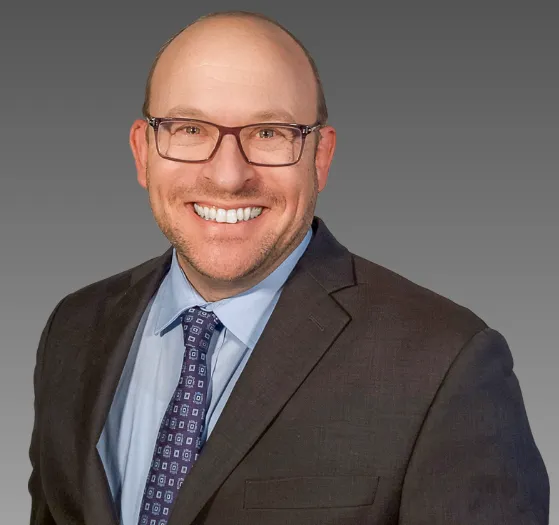
    It might even make this man smile. “But I am smiling here.”

    No. No he’s not.

  • DEI Programs as a Source of Liability for Law Firms and Other Businesses

    DEI Programs as a Source of Liability for Law Firms and Other Businesses

    The Author

    William (Billy) Jones

    William (Billy) JonesMoye White LLP

    An experienced and accomplished litigator, Billy’s practice focuses on complex civil litigation and business disputes. He defends business clients involved in product liability defense, franchise and distribution disputes, insurance defense and coverage issues, trust and estate litigation, as well as real estate litigation.

    Billy’s practice has also included representation of clients in a variety of appellate courts, including the Colorado Court of Appeals, the federal Fourth and Tenth Circuit Courts of Appeals, the Virginia Supreme Court, and the South Dakota Supreme Court. Billy has tried cases in over 15 states over the lifetime of his career.

    Focused and aggressive, Billy represents corporate clients in the variety of claims that arise in the business world. For his clients with interests in manufacturing, product distribution, and retail businesses, Billy has extensive experience defending against manufacturing, design defect, negligence, and breach of warranty claims.

    Billy is the former Vice-chair of Moye White’s Trial Section and currently serves as Co-Chair of the Franchise & Distribution Group, representing franchisors in franchise disputes, and providing valuable advice regarding business development and sales, as well as offerings compliance. He is also active in representing clients in Colorado’s burgeoning brewing and distilling markets.

    A true advocate, Billy protects the interests of his clients against claims of directors’ and officers’ liability, bad faith, negligence, and other torts. He also has extensive experience in cases involving real estate and associated transactions.

    Billy provides exceptional counsel at trial, through appeal, and in mediation and arbitration proceedings. He has extensive experience before the state and federal courts in Colorado, and has represented clients in various federal courts throughout the country.

    DEI Programs as a Source of Liability for Law Firms and Other Businesses

    Whether internally or with clients, law firms should consider changes to programs that may still meet the goal of increasing underrepresented populations without running afoul of claims alleging racial discrimination. Creative solutions may be available, and attorneys should be discussing these options with their clients.

    From a risk management perspective, law firms should engage in an internal review of their own DEI initiatives and programs. Practices and programs that were once compliant with applicable law may no longer be.

    Abstract:

    Two recent cases against international law firms point to this emerging trend in litigation that could have widespread implications for diversity, equity, and inclusion (DEI) programs. In the wake of this year’s U.S. Supreme Court opinion striking down the use of race in college admissions, there was much speculation about the impact these rulings might have outside of the academic context—and that remains an unanswered question. However, two recent cases filed against international law firms for their DEI fellowships could be indicators of the impact for law firms and other private businesses.

    Download the article now!

  • DEI Programs as a Source of Liability for Law Firms and Other Businesses

    DEI Programs as a Source of Liability for Law Firms and Other Businesses

    The Author

    William (Billy) Jones

    William (Billy) JonesMoye White LLP

    An experienced and accomplished litigator, Billy’s practice focuses on complex civil litigation and business disputes. He defends business clients involved in product liability defense, franchise and distribution disputes, insurance defense and coverage issues, trust and estate litigation, as well as real estate litigation.

    Billy’s practice has also included representation of clients in a variety of appellate courts, including the Colorado Court of Appeals, the federal Fourth and Tenth Circuit Courts of Appeals, the Virginia Supreme Court, and the South Dakota Supreme Court. Billy has tried cases in over 15 states over the lifetime of his career.

    Focused and aggressive, Billy represents corporate clients in the variety of claims that arise in the business world. For his clients with interests in manufacturing, product distribution, and retail businesses, Billy has extensive experience defending against manufacturing, design defect, negligence, and breach of warranty claims.

    Billy is the former Vice-chair of Moye White’s Trial Section and currently serves as Co-Chair of the Franchise & Distribution Group, representing franchisors in franchise disputes, and providing valuable advice regarding business development and sales, as well as offerings compliance. He is also active in representing clients in Colorado’s burgeoning brewing and distilling markets.

    A true advocate, Billy protects the interests of his clients against claims of directors’ and officers’ liability, bad faith, negligence, and other torts. He also has extensive experience in cases involving real estate and associated transactions.

    Billy provides exceptional counsel at trial, through appeal, and in mediation and arbitration proceedings. He has extensive experience before the state and federal courts in Colorado, and has represented clients in various federal courts throughout the country.

    DEI Programs as a Source of Liability for Law Firms and Other Businesses

    Whether internally or with clients, law firms should consider changes to programs that may still meet the goal of increasing underrepresented populations without running afoul of claims alleging racial discrimination. Creative solutions may be available, and attorneys should be discussing these options with their clients.

    From a risk management perspective, law firms should engage in an internal review of their own DEI initiatives and programs. Practices and programs that were once compliant with applicable law may no longer be.

    Abstract:

    Two recent cases against international law firms point to this emerging trend in litigation that could have widespread implications for diversity, equity, and inclusion (DEI) programs. In the wake of this year’s U.S. Supreme Court opinion striking down the use of race in college admissions, there was much speculation about the impact these rulings might have outside of the academic context—and that remains an unanswered question. However, two recent cases filed against international law firms for their DEI fellowships could be indicators of the impact for law firms and other private businesses.

    Download the article now!

  • Am I Covered For? . . . A Discussion of Insurance Coverage Issues

    Am I Covered For? . . . A Discussion of Insurance Coverage Issues

    Am I Covered For? . . . A Discussion of Insurance Coverage Issues

    Gain a better understanding of core insurance coverages and the common challenges policyholders face when seeking recovery.

    This session provides a basic introduction to insurance coverage generally and the types of issues that typically arise when policyholders seek coverage under those policies.  We start with the basics, outlining the difference between first party and third-party claims, which provides a foundation for our discussion.  We then discuss the following insurance policies, providing a brief description of what they typically cover: commercial general liability policies; property policies; directors & officers liability policies; errors & omissions liability policies; employment practices liability policies; commercial crime or fidelity policies; cyber policies; and contamination and recall policies.  We offer real examples of challenges policyholders face in attempting to procure coverage, from the time of the loss, to providing notice, to subsequent litigation.  Our presentation then highlights some interesting cases, their facts, and the ultimate holdings.  We provide practical tips regarding the application process, providing notice, and potential alternatives to litigation.

    Learning Objectives

    By the end of this webinar, you’ll gain a solid foundation in:

    • Several different types of insurance policies;

    • What those insurance policies typically cover;

    • Examples of common issues that arise in seeking coverage under those policies;

    • How courts have dealt with certain types of insurance claims; and

    • Practical tips on common insurance-related claim issues.

    TAKE IT NOW

    Available now to CeriFi LegalEdge subscribers. Don’t subscribe? Don’t despair. Use code HB20 for 20% off. Or, HBSub20 for 20% off a full solo subscription. While supplies last.

    Speakers

    Steven J. Pudell

    Steven J. PudellManaging Shareholder | Anderson Kill Newark

    Steven J. Pudell is managing shareholder of Anderson Kill’s Newark office, focusing on insurance recovery for policyholders and commercial litigation. Recognized by Chambers USA, Best Lawyers, and The Legal 500, Steve represents clients in the food, chemical, pharmaceutical, and real estate industries. He frequently writes and speaks on insurance coverage and has held leadership roles in the ABA and New Jersey legal community.

    Christina Yousef

    Christina YousefShareholder | Anderson Kill

    Christina Yousef is a shareholder in Anderson Kill’s New Jersey office, representing policyholders in high-stakes insurance recoveries involving D&O liability, food contamination, construction defects, and environmental claims. She has litigated in courts nationwide and advises clients across the hospitality, manufacturing, and construction sectors. Christina holds a J.D. from Seton Hall and clerked at the U.S. District Court for the District of New Jersey.

    William Harrison

    William HarrisonManaging Director, Product Recall Practice | Gallagher

    Bill Harrison is a leading expert in product recall and contamination insurance. He launched the first brokerage group focused on crisis risks like product contamination, recall, K&R, and terrorism. Now with Gallagher, Bill brings decades of experience from AIG, Aon, and Marsh to help clients manage complex product risk. He is also co-author of The Executive’s Desk Book on Corporate Risks and Response for Homeland Security.

  • Artificial Intelligence Litigation Roundup

    Artificial Intelligence Litigation Roundup

    Emerging Litigation Podcast

    Emerging Litigation PodcastProduced by HB Litigation

    Interviews with leading attorneys and other subject matter experts on new twists in the law and how the law is responding to new twists in the world.

    Interested in contributing an article? Email us at Editor@LitigationConferences.com.

    Artificial Intelligence Litigation Roundup

    Algorithmic Pricing and Copyright Violations Dominate First Wave of A.I. Fights

    The rapid evolution of artificial intelligence (AI) is generating a surge of legal challenges, particularly in the realms of antitrust and copyright law. Below is an abstract of an article appearing on the Mogin Law LLP website, edited by Tom Hagy. Read the complete article for a snapshot of the first wave of AI-related litigation. In addition to his roles at Critical Legal Content and HB Litigation, Hagy is editor-in-chief of the Mogin Law Blog and Competition Law News.  

    Antitrust: Algorithms and Collusion in Focus 

    AI-driven pricing tools are at the center of groundbreaking antitrust lawsuits. Notable among these are multifamily rental housing actions against RealPage, Inc. and Yardi Systems, Inc. Plaintiffs allege that these companies, through their revenue management software, facilitated horizontal price-fixing conspiracies by enabling competitors to delegate pricing decisions to algorithmic systems that aggregate sensitive commercial data. The RealPage case, centralized in the Middle District of Tennessee, and the Yardi litigation, pending in Washington’s Western District, spotlight the increasing scrutiny over algorithmic pricing’s role in potential market collusion. Plaintiffs argue that such practices have driven up rental rates nationwide, seeking treble damages and injunctive relief under the Sherman Act. 

    Other significant antitrust actions include a health care providers’ suit against MultiPlan, Inc. and several insurers. Here, plaintiffs claim that MultiPlan’s pricing platform suppressed out-of-network reimbursement rates through a “hub-and-spokes” horizontal agreement, surviving motions to dismiss and setting the stage for further litigation. In the hospitality sector, cases against Cendyn and casino hotels in Las Vegas and Atlantic City allege algorithmic price-fixing via shared software, but district courts have dismissed complaints due to insufficient evidence of collusion and lack of shared proprietary data. Appeals are pending, and the DOJ’s intervention underscores the high stakes as courts consider the implications of algorithm-driven market conduct. 

    Additionally, the construction equipment rental market faces its own proposed class action, with Dwight Roberts Construction Company accusing major rental firms and Rouse Services LLC of coordinated price fixing using sensitive data and enforced pricing strategies—a case with the potential to reshape industry practices. 

    Copyright: The Battle Over AI Training Data 

    Copyright litigation is equally dynamic, with publishers, artists, software developers, and authors challenging the unlicensed use of their works for AI training. Lawsuits against companies like Cohere Inc., Stability AI, Google, GitHub, Microsoft, OpenAI, and Meta span allegations from direct copyright infringement to unfair competition and DMCA violations. Plaintiffs assert that their written works, images, code, and proprietary content were used without authorization to develop AI models that generate outputs competing with the original works, threatening revenue streams and rights of creators. 

    Defendants frequently invoke fair use, public availability of data, and the transformative nature of AI-generated outputs as defenses. The outcomes of these cases—some at the summary judgment or trial phase, others under renewed motions to dismiss—will likely set industry-shaping precedents regarding the scope of copyright protection, the enforceability of open-source licenses, and acceptable practices for training AI language models. 

    Conclusion 

    Orange and grey logoAI’s integration into core business practices has accelerated legal conflicts with broad implications for competition, creativity, and consumer protection. Attorneys should monitor the ongoing developments in these landmark cases for guidance on compliance and risk management. Read the complete article on the Mogin Law LLP website. Also, read Big Tech’s Decade of Artificial Intelligence Shopping, also on the Mogin Law site.  

  • Federal court rejects First Amendment defense in chatbot wrongful death case

    Federal court rejects First Amendment defense in chatbot wrongful death case

    Emerging Litigation Podcast

    Emerging Litigation PodcastProduced by HB Litigation

    Interviews with leading attorneys and other subject matter experts on new twists in the law and how the law is responding to new twists in the world.

    Interested in contributing an article? Email us at Editor@LitigationConferences.com.

    Federal court rejects First Amendment defense in chatbot wrongful death case

    By: Justin Ward

    The court is not prepared to hold that Character AI’s output is speech.

                        — U.S. District Judge Anne Conway

    In late May, a US district court judge rejected Character AI’s motion to dismiss a wrongful death case on the grounds that the company’s product – AI chatbots that imitate fictional characters – have First Amendment protections under the constitution. The court decided not to throw out a case brought by the mother of a user who committed suicide, arguing that the court “was not prepared to hold that Character AI’s output is speech.”

    Megan Garcia sued Character AI last fall after her 14-year-old son Sewell Setzer III took his own life. Setzer became obsessed with the company’s AI-generated reproduction of the Game of Thrones character Daenerys Targaryen, which was affecting his schoolwork and mental health. When Garcia confiscated his phone, Setzer committed suicide.

    Mirroring legal arguments brought against social media companies, Garcia’s suit alleges that Character AI negligently marketed its product to teens and children while fully understanding the potential harms it could cause to developing brains.

    Moving to dismiss, Character AI contended that Garcia’s suit infringed on the First Amendment rights of its users and the company. The company likened its product to video games, which the Supreme Court considers constitutionally protected speech.

    However, US District Judge Anne Conway wrote in her decision that this analogy fell short. Video games are protected speech, Judge Conway argued, because they represent their creators’ intentional expressions, whereas the large language models that power Character AI’s product are merely trained on large volumes of text to respond to queries. Therefore, they are not “expressive” enough to be considered speech under the Constitution.

    At the same time, Judge Conway did grant some of Character AI’s motions. She dismissed Alphabet Inc, the parent company of Google, which licenses Character AI’s LLM, from the suit. The court also dismissed without prejudice Garcia’s claim of intentional infliction of emotional distress.


    Justin Ward is a Seattle-based investigative reporter specializing in politics, courts, and criminal justice. His work can be found in national and local media outlets, including USA Today, the Southern Poverty Law Center, and The Seattle Stranger. He can be reached at justinwardtexan@yahoo.com.

  • AI tools may be the cause of the explosion in nuclear verdicts — and also the solution

    AI tools may be the cause of the explosion in nuclear verdicts — and also the solution

    Emerging Litigation Podcast

    Emerging Litigation PodcastProduced by HB Litigation

    Interviews with leading attorneys and other subject matter experts on new twists in the law and how the law is responding to new twists in the world.

    Interested in contributing an article? Email us at Editor@LitigationConferences.com.

    AI tools may be the cause of the explosion in nuclear verdicts— and also the solution

    By: Justin Ward

    The rise of nuclear verdicts is being fueled by AI-driven case selection and strategy optimization—giving plaintiff attorneys a powerful edge while forcing insurers and defense teams to rethink their approach.

    The popularization of artificial intelligence in the legal industry is a significant source of growth in unexpectedly large payouts known as “nuclear verdicts,” with plaintiff attorneys using software modeling to select cases and optimize their strategies. At the same time, insurance companies and corporate lawyers are also now turning to the same technology to mitigate risks and minimize losses.

    According to a report by Allianz Commercial, the number of nuclear verdicts over $10 million has tripled since 2020 and the thermonuclear verdicts over $100 million grew by more than 30 percent over the previous year. Allianz attributes this to several causes, including the normalization of massive verdicts and the adoption of “psychological tactics” like “anchoring” unjustifiably high damage amounts in juries’ minds. 

    Another notable factor driving the rise in nuclear verdicts is the emergence and adoption of artificial intelligence by plaintiff attorneys in the past two years. Since the debut of ChatGPT in 2022, there has been an arms race in artificial intelligence and machine learning, as companies search for novel practical uses for the technology. Many law firms are already dipping their toes into artificial intelligence, using it to automate menial tasks and reduce non-attorney headcounts, but Thomson Reuters predicts “wide-scale business model changes” in the next decade. 

    We’re seeing a preview of what that transformation might look like in the proliferation of nuclear verdicts. In addition to using artificial intelligence and machine learning to streamline critical work like document review, law firms are adopting AI-based predictive analytics to decide which cases to take and whether to settle or go to court. 

    Writing for the American Bar Association, lawyers Ashley Hallene and Jeffrey Allen explained how this works. By leveraging big data assets, law firms can identify cases with the most potential for damages and find the most sympathetic jurisdiction. They noted that lawyers could use a high-powered predictive model to analyze the histories of judges and opposing lawyers dealing with similar cases and provide a probability that specific approaches might succeed. 

    “Algorithms can be applied to detect patterns in the data, such as how certain judges rule on specific types of cases or which arguments have historically succeeded in certain courts. Through this analysis, AI tools can predict the likely outcome of a case, considering factors like jurisdiction, judge behavior, precedent, and case specifics. 

    Lawyers on the other side are also using AI to insulate clients against nuclear verdicts. A new platform called NaVeL, short for “nuclear verdict exposure likelihood,” analyzes insurance or government claims data and flags cases with a high chance of going nuclear. The idea is that insurers can detect problem cases earlier and start preparing strategies to prevent the worst-case scenario.

    The co-creators are Bob Tyson, a lawyer at a firm specializing in defending against nuclear verdicts, and his sister Denise, an insurance executive. 

    “Nuclear verdicts are happening to the most experienced and to the best defense lawyers in America, which is very concerning. What that means is that the old ways aren’t working,” Bob Tyson said. 


    Justin Ward is a Seattle-based investigative reporter specializing in politics, courts, and criminal justice. His work can be found in national and local media outlets, including USA Today, the Southern Poverty Law Center, and The Seattle Stranger. He can be reached at justinwardtexan@yahoo.com.

  • Supreme Court to Reconsider Separate Sovereignties

    Supreme Court to Reconsider Separate Sovereignties

    Emerging Litigation Podcast

    Emerging Litigation PodcastProduced by HB Litigation

    Interviews with leading attorneys and other subject matter experts on new twists in the law and how the law is responding to new twists in the world.

    Interested in contributing an article? Email us at Editor@LitigationConferences.com.

    Supreme Court to Reconsider Separate Sovereignties

    By Bret Thurman

    The Supreme Court’s decision to reconsider the separate sovereignties exception in Barrett v. United States could redefine the balance of power between state and federal prosecutions—reshaping double jeopardy protections for generations to come.

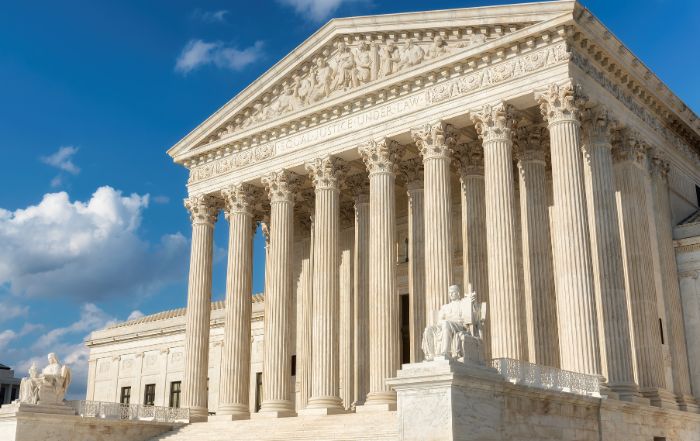
    Following a private conference in February 2025, the Supremes agreed to consider Barrett vs. United States, a Second Circuit case that tests the limits of the separate sovereignties exception to the Double Jeopardy clause.

    The announcement that the court had granted review in Barrett v. United States came as part of a list of orders released from the justices’ private conference on Friday, Feb. 28. Dwayne Barrett was convicted of Hobbs Act robbery and related charges. In Barrett, the justices agreed to decide whether the Fifth Amendment’s ban on double jeopardy prohibits sentencing him for two different crimes based on the same robbery.

    Double Jeopardy and Separate Sovereignties: A Primer

    At least in the Western world, the Double Jeopardy clause has a rich history going back to ancient Greece. In 355 B.C., Athenian statesman Demosthenes pronounced that “the law forbids the same man to be tried twice on the same issue.” The Romans picked up the rule, as did the English in the Common Law period.

    For some reason, the protection never caught on in the East, neither in ancient (Babylon and Sumeria) or more modern (Muslim) times.

    Here in the Land of the Free and the Home of the Brave, New Hampshire’s 1784 constitution was the first document to guarantee this right. Several other states quickly followed suit.

    In the 1790s, James Madison’s original double jeopardy clause stated that “No person shall be subject, except in cases of impeachment, to more than one punishment or trial for the same offense.” Some people objected, claiming that the broad language prohibited retrials after criminal appeals. 

    Madison, who cared a lot about the constitution but very little about double jeopardy, quickly bowed to this pressure and backed a modified, abstruse version (nor shall any person be subject for the same offence to be twice put in jeopardy of life or limb). Ever since, courts have struggled to define exactly what this provision means.

    The Supreme Court carved out the separate sovereignties (dual sovereignty) exception in 1847’s Fox vs. Ohio. That case involved the federal and state prosecution of a woman who was convicted of passing a fake silver dollar. According to prosecutors, Fox violated state fraud laws and abridged on the federal government’s exclusive right to coin money.

    The Justices reasoned that states and the federal government are separate and distinct. Therefore, parallel state and federal prosecutions are different “offenses” under the double jeopardy clause, and the decisions of one government on what to prosecute or not prosecute are not binding upon the other.

    The Court put an exclamation point on Fox some thirty years later. In 1847’s United States v. Cruikshank, et al., the late great Morrison Waite, who presided over the Court during a very difficult period in American history, rather poetically wrote that “The citizen cannot complain, because he has voluntarily submitted himself to such a form of government. He owes allegiance to the two departments, so to speak, and within their respective spheres must pay the penalties which each exacts for disobedience to its laws.”

    When Can I Use a Double Jeopardy Argument?

    The first situation is easy. Simply stated, defendants cannot be tried twice for the same crime, or a substantially similar crime. 

    Drug possession isn’t substantially similar to drug trafficking, even if the two originate from the same criminal episode. Trafficking has elements that possession doesn’t have. Similarly, conspiring to commit a crime is different from committing a crime.

    After that, things get complicated.

    Implied Acquittals

    Lesser-included offense charges (e.g. first-degree murder and second-degree murder) are very common. For example, after a second-degree murder trial which resulted in a guilty verdict, a witness may come forward with information about the defendant’s premeditation.

    The implied acquittal doctrine states that a person convicted on the lesser charge can never again be tried on the greater charge.

    Non-Final Judgments

    These “judgements” include most mistials, verdicts set aside after a motion for new trial, reversals due to procedural errors, and sometimes, involuntary dismissals.

    Oddly, if the defendant moves for a mistrial, there is no bar to retrial, even if the prosecutor or judge caused the error that forms the basis of the motion.

    Prosecutors may also appeal when a trial judge sets aside a jury verdict for conviction with a judgment notwithstanding verdict for the defendant. A successful appeal simply reinstates the jury’s verdict and therefore doesn’t place the defendant at risk of another trial.

    Insufficient Evidence

    We mentioned that procedural appeals don’t trigger the double jeopardy prohibition. However, if a court overturns a trial verdict for substantive reasons, specifically a lack of evidence, the state (or federal government) cannot retry the defendant.

    The reasoning is simple. If the trial court ruled the evidence was insufficient, the double jeopardy clause would kick in. The appeals court substitutes for the trial court, in this case.

    What about affirmative defenses, such as coercion, voluntary intoxication, statute of limitations, and entrapment? The law is uncertain on this point.

    Fraud

    A fraudulent trial is no trial at all. For example, in 1977, Chicago mobster Harry “Hook” Aleman the September 1972 death of William Logan. Nearly twenty years later, two persons in the Federal Witness Protection program confirmed that Aleman murdered Logan, and he then later bribed the trial judge to return an acquittal.

    The Seventh Circuit ruled that Aleman was under no risk of conviction in the 1977 trial and upheld the sentence of 100 to 300 years in prison.

    Risk is the key concept. If a defendant “fixes” a trial, the fix doesn’t necessarily guarantee an outcome. Even though the New England Patriots played with rigged equipment, they didn’t win all their home playoff games.

    Multiple Punishments

    Courts have the power to vacate or reduce sentences. They also have the power to augment sentences without running afoul of the Double Jeopardy clause. However, a court cannot revisit a case and impose the death penalty.

    Insanity

    This problem is interesting. Usually, a jury can decide that a defendant was “not guilty by reason of insanity” or “guilty but insane.” These two verdicts have vastly different meanings.

    In 2012, Damien McElrath allegedly killed his mother and was charged with several offenses under Georgia law (malice murder, felony murder, and aggravated assault). On the malice murder charge, the jury returned a verdict of “not guilty by reason of insanity.”  But on the other two, jurors ruled that McElrath was “guilty but mentally ill.”

    The Supreme Court later agreed with McElrath that “NGBROI” was an acquittal that precluded his retrial on the malice murder charge. 

    So, if a client pleads guilty, pay very close attention to what s/he’s pleading guilty to. An arrangement with unsuspecting prosecutors may be in order.


    Bret Thurman is a Dallas-based legal writer who practiced law in Texas for over twenty years. His writing focuses on criminal defense, family law, consumer bankruptcy, and personal injury. He obtained his B.A. in history from Baylor University and his J.D. from the University of Texas at Austin. Bret is also an award-winning screenwriter and father of four. He can be reached at Editor@LitigationConferences.com.


  • Fall bellwether trials for social media addiction cases to test novel legal theories

    Fall bellwether trials for social media addiction cases to test novel legal theories

    Emerging Litigation Podcast

    Emerging Litigation PodcastProduced by HB Litigation

    Interviews with leading attorneys and other subject matter experts on new twists in the law and how the law is responding to new twists in the world.

    Interested in contributing an article? Email us at Editor@LitigationConferences.com.
    Fall bellwether trials for social media addiction cases to test novel legal theories 

    By: Justin Ward

    Comparing social media to an addictive chemical like nicotine presents a challenging legal argument. Unlike substances, social media has a significant speech component, and any attempt to regulate it could raise First Amendment concerns.

    Bellwether trials for two consolidated cases against some of the world’s largest social media platforms are expected to begin later this year, testing the novel application of legal theories traditionally used in cases against producers of addictive substances like nicotine and opioids.

    More than 1,900 individual personal injury, school district, state attorney general, and municipal claims from nearly every state have been merged into multidistrict litigation (MDL) and Judicial Council Coordinated Proceedings (JCCP) cases in California. The courts are expected to hear a subset of these cases—the bellwether trials—before the year’s end.

    The primary defendants include the parent companies of platforms with large youth audiences, such as Instagram, TikTok, Snapchat, and YouTube. Plaintiffs’ attorneys argue that these platforms are marketed to children and deliberately designed to exploit adolescent brains, which are particularly vulnerable at that stage of development.

    Their complaint cites a growing body of research linking frequent social media use to negative mental health outcomes in young people, including an increased risk of suicide, eating disorders, anxiety, and behavioral problems. It also alleges that the companies were aware of these potential harms but failed to take action to mitigate the risks or warn consumers.

    Whether these claims will prevail depends on a lengthy discovery process and competing testimony from expert witnesses. However, early rulings in California and other jurisdictions provide insight into how courts may interpret the law.

    Legal Challenges and Early Rulings

    Claims brought by school districts arguing that social media constitutes a “public nuisance” have seen mixed results. Some state and federal courts have allowed them to proceed, while others have dismissed them. California Superior Court Judge Carolyn Kuhl, who oversees the JCCP lawsuit, has dismissed public nuisance and product liability claims but has allowed the case to move forward on negligence and failure-to-warn grounds.

    In October, Meta, the parent company of Instagram and Facebook, moved to dismiss the MDL, citing Section 230 of the Communications Decency Act, which protects platforms from liability for user-generated content. Judge Yvonne Gonzalez Rogers ruled that the case could proceed, though she found that Section 230 provided the company with partial immunity. Notably, Rogers and Kuhl differ in how they classify social media platforms—as products versus speech-based services—which could have significant legal implications.

    First Amendment and Addiction Comparisons

    Comparing social media to an addictive chemical like nicotine presents a challenging legal argument. Unlike substances, social media has a significant speech component, and any attempt to regulate it could raise First Amendment concerns.

    In late January, the 9th U.S. Circuit Court of Appeals issued a preliminary injunction blocking California’s Protecting Our Kids from Social Media Addiction Act from taking effect while an appeal is pending. The panel of judges ruled that some of the plaintiffs’ claims were likely to succeed.

    While the MDL bellwether trial was initially scheduled for October 2025, it has since been postponed.


    Justin Ward is a Seattle-based investigative reporter specializing in politics, courts, and criminal justice. His work can be found in national and local media outlets, including USA Today, the Southern Poverty Law Center, and The Seattle Stranger. He can be reached at justinwardtexan@yahoo.com.

  • 22 States Sue New York Over Climate Fund, Calling It an ‘Unconstitutional Shakedown’

    22 States Sue New York Over Climate Fund, Calling It an ‘Unconstitutional Shakedown’

    Emerging Litigation Podcast

    Emerging Litigation PodcastProduced by HB Litigation

    Interviews with leading attorneys and other subject matter experts on new twists in the law and how the law is responding to new twists in the world.

    Interested in contributing an article? Email us at Editor@LitigationConferences.com.

    22 States Sue New York Over Climate Fund, Calling It an ‘Unconstitutional Shakedown’

    By: Tim Zyla

    The lawsuit against New York’s Climate Change Superfund Act underscores a high-stakes battle over state authority, federal oversight, and the financial burden placed on energy producers in the name of climate accountability.

    A coalition of 22 states, led by West Virginia, is suing New York just over two months after Governor Kathy Hochul signed a law requiring energy producers to pay $75 billion to cover damages caused by climate change.

    The lawsuit, filed in the U.S. District Court for the Northern District of New York in Albany, names New York Attorney General Letitia James, Interim Commissioner of the State Department of Environmental Conservation, and Acting Tax Commissioner of the State Department of Taxation and Finance Amanda Hiller as defendants.

    The states seek declaratory and injunctive relief, arguing that New York’s fund attempts to “seize control over the makeup of America’s energy industry.” The suit claims the fund was politically motivated and seeks to impose “tens of billions of dollars of liability on traditional energy producers” while using the money to “subsidize certain New York-based ‘infrastructure’ projects, such as a new sewer system in New York City.”


    Legal Arguments

    The plaintiffs argue that New York’s law violates multiple constitutional provisions and oversteps federal authority:

    🔹 Commerce Clause (Article I, Section 8) – The lawsuit claims the law retroactively imposes financial penalties on out-of-state companies, effectively regulating businesses beyond New York’s jurisdiction.

    🔹 Clean Air Act (42 U.S.C. § 7401(a)(3)) – While states play a role in controlling air pollution, the plaintiffs assert that the federal government holds primary authority over interstate emissions standards.

    🔹 Supreme Court Precedent – The lawsuit cites Okla. Tax Comm’n v. Jefferson Lines, Inc. and Kansas v. Colorado, arguing that states cannot legislate where Congress has chosen not to act or impose policies on other states.

    🔹 State Tariffs Violation – The Climate Change Superfund Act functions as a form of state tariff, which Comptroller of Treasury of Md. v. Wynne identified as “one of the chief evils that led to the adoption of the Constitution.”

    🔹 Due Process Clause (14th Amendment) – The law is allegedly “unreasonable” and “arbitrary” because it seeks to impose retroactive penalties on a select group of energy producers who lawfully extracted and refined fossil fuels.

    🔹 Equal Protection Clause (14th Amendment) – The plaintiffs argue the law favors New York-based energy producers while penalizing out-of-state companies, making it discriminatory.

    🔹 Eighth and Fifth Amendments – The lawsuit claims the law imposes excessive penalties and violates due process protections.

    Additionally, the plaintiffs argue that the Clean Air Act only allows lawsuits from the state where the pollution originates, citing City of New York v. Chevron Corp.


    Disputed Payment Structure

    The lawsuit challenges the fund’s payment structure, which requires energy companies to pay $3 billion per year for 25 years to reach $75 billion. The plaintiffs highlight a statement from New York Assemblyman Jeffrey Dinowitz, who admitted the assessment rate was set arbitrarily, stating:

    “I didn’t want it to be too little, (and) didn’t want it to be too much.”

    The lawsuit also references Dinowitz’s remarks after the bill’s passage, where he claimed the law had “set a precedent for the nation to follow.” The states argue this confirms their concern that other states may adopt similar measures, creating a patchwork of conflicting state-level climate policies that could burden energy companies and disrupt national commerce.


    Motion to Dismiss and Support for the Fund

    A pro se West Virginia resident has filed a request for dismissal with prejudice, arguing that the states leading the lawsuit are violating the U.S. Constitution. The filing claims that the states are breaching:

    🔹 Article VI, Clause 3 – Oath of state officers.

    🔹 Article I, Section 10 – Prohibiting states from making agreements without Congressional approval.

    🔹 Article IV, Section 1 – Full Faith and Credit Clause, requiring states to recognize New York’s laws.

    The anonymous filer asserts that New York acted in the best interest of public health, whereas the suing states are representing “unnatural entities” (fossil fuel corporations) that may be harming U.S. citizens. The request also calls for a $50 million fine against each plaintiff state, with funds directed to the Climate Change Superfund.

    Furthermore, the filing argues that Congress has not yet provided guidance on how states should enforce such laws, making the lawsuit premature.


    The Lawsuit’s Demands

    The coalition of states is requesting the court:

    🔹 Declare the Climate Change Superfund Act unconstitutional and preempted by federal law.

    🔹 Block New York officials from enforcing or implementing the law.

    🔹 Award the plaintiffs legal fees and costs.

    🔹 Grant any other relief deemed necessary and appropriate.

    As this legal battle unfolds, the case could set a major precedent for how states hold fossil fuel companies accountable for climate-related costs. If upheld, the law could pave the way for other states to adopt similar measures, while a ruling against New York could curtail state-level climate initiatives and reinforce federal control over emissions regulations.

    📄 Read the full complaint here: Final Superfund Complaint


    Tim Zyla is a lifelong journalist working as managing editor of two daily newspapers in Pennsylvania and is an avid follower of criminal law and law enforcement. He may be reached at tim@timzyla.com.