Author: Tom Hagy

  • Mexico Bans Imports of Foreign Textiles: Does My Insurance Policy Cover That?

    Mexico Bans Imports of Foreign Textiles: Does My Insurance Policy Cover That?

    Emerging Litigation Podcast

    Emerging Litigation PodcastProduced by HB Litigation

    Interviews with leading attorneys and other subject matter experts on new twists in the law and how the law is responding to new twists in the world.

    Interested in contributing an article? Email us at Editor@LitigationConferences.com.

    Mexico Bans Imports of Foreign Textiles 

    Does My Insurance Policy Cover That?

    By: Diana Gliedman, Dennis Nolan, Fiona Hogan

    When pursuing insurance coverage, time is of the essence. If your business is affected by the recent Mexican presidential decree, you should take immediate action to review your policies, speak with your insurance brokers, notify your insurance companies, carefully document your losses, and contact an insurance professional if questions arise concerning the scope of applicable coverage.

    By presidential decree, Mexico recently banned certain temporary textile imports through its Manufacturing, Maquiladora and Export Services Industry (IMMEX) import duty-deferral program and increased tariffs on many textile products. Previously, the IMMEX program allowed textiles to move temporarily into Mexico duty-free if they were intended for re-export to the United States.

    The decree has left many textile and apparel companies and third-party logistics (3PL) providers scrambling. 3PL companies are unable to receive foreign textile imports in Mexico, while textile and apparel companies face mounting costs as they attempt to reroute and store products, pay unexpected duties and other costs, find alternate suppliers and warehouses, and more.

    Companies affected by Mexico’s prohibition of textile imports should look to their insurance programs to recover for potential losses. Specifically, the following policies may provide insurance coverage:

    • Supply Chain: Supply chain insurance provides coverage for loss resulting in a delay or disruption in the receipt of products, components, or services from a supplier. This coverage does not require physical loss or damage and can be implicated by various unexpected events such as natural disasters, industrial accidents, labor issues, production process problems, civil or military action, regulatory issues, financial issues, and closure of transportation infrastructure.
    • Business Interruption (BI): This form of business income insurance provides protection against revenue losses due to the suspension or reduction of operations of a policyholder’s business. Courts have required that loss relate to physical damage. Recently, insurance companies have begun selling non-physical damage business interruption insurance, after New York Governor Kathy Hochul signed a law authorizing such coverage last September. BI coverage often includes:

    Civil Authority: Civil authority clauses are often part of business income coverage that cover losses sustained due to an order or action of civil or military authority issued in connection with a covered peril.

    Contingent Business Interruption (CBI): CBI is a form of business income insurance that provides protection against revenue losses resulting from a third-party supplier or distributor shutdown that affects the policyholder’s ability to produce a product or provide a service. CBI coverage generally requires that the shutdown result from a cause (e.g., flood) covered in the policyholder’s property policy.

    Contingent Extra Expense: Contingent extra expense insurance provides coverage for extra expenses incurred when a customer or supplier’s business is interrupted.

    • Marine Cargo/Stock Throughput: Marine cargo insurance typically covers the owner of goods in transit against physical loss or damage. Although many marine cargo policies expressly exclude losses caused by delay, some policies, including stock throughput policies, may cover such losses. Marine cargo insurance may also cover other losses caused by detours or delays in shipping, such as forwarding and warehousing expenses, or the cost of additional fees owed to the transportation company, which could be particularly relevant here.

    When pursuing insurance coverage, time is of the essence. If your business is affected by the recent Mexican presidential decree, you should take immediate action to review your policies, speak with your insurance brokers, notify your insurance companies, carefully document your losses, and contact an insurance professional if questions arise concerning the scope of applicable coverage.


    Diana Shafter Gliedman, a senior shareholder with Anderson Kill’s insurance recovery group, has represented policyholders in multi-party, multi-issue insurance coverage disputes with an emphasis on Comprehensive General Liability Insurance, Directors & Officers Liability Insurance, Property Insurance and Errors & Omissions/Professional Liability Insurance for over 20 years. She can be reached at dgliedman@andersonkill.com.

    Dennis J. Nolan, a shareholder in Anderson Kill’s New York office, concentrates his practice in commercial litigation with an emphasis on insurance recovery. Dennis advises policyholders with respect to a broad range of insurance policies, including Marine Cargo, Cyber, Directors and Officers, Errors and Omissions, Employment Practices Liability, Marine Cargo, and Commercial General Liability policies. He can be reached at dnolan@andersonkill.com.

    Fiona Hogan is an attorney in Anderson Kill’s New York office and a member of the firm’s Insurance Recovery Group.  She represents policyholders in a wide range of insurance coverage disputes, including third-party matters involving coverage for products liability, tort claims, directors and officers liability, professional liability, employment practices liability, and cyber claims, as well as first-party coverage disputes for losses related to criminal acts, cyber, and property damage. She can be reached at fhogan@andersonkill.com.

  • Trump’s rollback of draft PFAS regulation means uncertain future for ‘forever chemicals’ torts

    Trump’s rollback of draft PFAS regulation means uncertain future for ‘forever chemicals’ torts

    Emerging Litigation Podcast

    Emerging Litigation PodcastProduced by HB Litigation

    Interviews with leading attorneys and other subject matter experts on new twists in the law and how the law is responding to new twists in the world.

    Interested in contributing an article? Email us at Editor@LitigationConferences.com.

    More PFAS Posts

    HB Environmental Update | Tuesday, Feb. 3, 2026 | Climate Funding, Wind Power, Wild Horses, PFAS Regs, PFAS Settlement, and the Decades of Debate Over the Pollution Exclusion

    February 6th, 2026|

    PFAS Litigation Deepens as 3M Reaches $450M Deal with New Jersey

    July 1st, 2025|

    Facing PFAS lawsuit, Apple claims watch bands are safe, but what does the evidence say?

    April 10th, 2025|

    Forever Chemicals: Insurance Recoveries for PFAS Liabilities

    March 26th, 2025|

    Trump’s rollback of draft PFAS regulation means uncertain future for ‘forever chemicals’ torts

    February 21st, 2025|

    The EPA’s New PFAS Safe Drinking Water Rule with John Gardella

    November 12th, 2024|

    The Medical Monitoring Tort Remedy: Advanced Level

    August 29th, 2024|

    PFAS Litigation: Predicted Trends Given Regulatory Changes

    July 2nd, 2024|

    PFAS Regulation, Litigation, and Differentiation

    November 9th, 2023|

    PFAS Regulation: EPA Ushers in Next Era of Mass Tort and Environmental Litigation

    September 21st, 2023|

    Medical Monitoring and PFAS Litigation—A Significant Growing Trend

    February 24th, 2023|

    Will a New Wave of New Environmental/Toxic Tort Litigation and Claims Upend Insurance Industry Environmental Reserves?

    February 24th, 2023|

    Trump’s rollback of draft PFAS regulation means uncertain future for ‘forever chemicals’ torts

    By Justin Ward

    Despite regulatory uncertainty at the federal level, PFAS litigation is gaining momentum, with lawsuits expanding beyond chemical companies to target manufacturers that market PFAS-containing products as ‘safe’ or ‘natural.

    The proposed rule would have expanded the water treatment guidelines for poly-fluoroalkyl substances, or PFAS, the Biden Administration enacted last April for drinking water to also regulate those chemicals in industrial wastewater. The move was in response to growing alarm about the potential public health threat posed by PFAS chemicals, which are hazardous at microscopic levels and break down slowly in the environment and the human body. 

    Commonly found in non-stick cookware, flame-resistant clothing and fire foam, PFAS describes a class of chemicals resistant to grease, oil, heat and water. Biden’s presidency saw thousands of lawsuits against chemical companies, manufacturers that use PFAS in products, and water treatment facilities, with settlements to date totaling more than $18 billion. 

    While it’s still unclear what Trump’s decision to return the draft rule to the EPA means, environmentalists worry it could signal broader deregulation of water treatment and chemical manufacturing. Trump’s EPA took some action on PFAS in his first term, but he has since pledged to eliminate 10 regulations for every one implemented. Still, an environmental lawyer in the EPA told Newsweek that it’s common for incoming administrations to put pending regulations on hold and that the regulatory status quo of PFAS guidelines remains intact. That could change depending on the administration’s actions in the coming year. 

    John Gardella of CMBG3 specializes in PFAS and environmental law told HB he believes the drinking water MCLs “will be walked back but not eliminated – specifically, the 4ppt for PFOA and PFOS will be increased, while the Hazard Index for the other PFAS will be eliminated entirely.”

    “With respect to CERCLA,” Gardella told us, “the litigation is now stayed pursuant to efforts by the administration, so they have a couple of months to try to negotiate a CERCLA exemption for passive receivers. If that is successful, it will be touted as a win by the current administration. If the exemption negotiations fail, I believe the administration’s interest will be in eliminating the PFOA and PFOS hazardous substance designation.”

    If Trump does implement the proposed regulations, some analysts predict that the final rules will be notably different from the draft and their implementation will be significantly delayed. The proposed regulations were in their final stages and were only the beginning of a larger push to regulate industrial PFAS discharge. Placing Biden’s rules– affecting only 13 facilities – on hold would slow down the process of addressing PFAS at an estimated 120,000 sites where people are potentially exposed.

    The Trump Administration could also revise EPA regulations passed in 2024, designating two kinds of PFAS chemicals as “hazardous substances,” which could have a trickle-down effect on states and municipal water treatment plants.   

    Some environmentalists have expressed cautious optimism about what Trump’s appointment of former New York representative Lee Zeldin to head the EPA might mean for the future of PFAS regulation. As a congressman, Zeldin co-founded PFAS Task Force and voted in favor of the PFAS Action Act of 2021. At the same time, Zeldin shares Trump’s zeal for deregulation and slashing agency budgets. 

    Despite the question marks lingering over the regulatory environment, the outlook for “forever chemicals” litigation still looks bullish, according to legal analysts. The traditional targets of PFAS torts were chemical companies and water treatment plants, but now more consumer class action lawsuits are aimed at manufacturers who advertised products containing PFAS as “safe” or “natural.”

    Though federal regulation remains in limbo, filings are proceeding under state laws at a steady clip. Eleven states have passed PFAS water regulations almost identical to the proposed rules while others have passed regulations governing the use of PFAS in manufactured products.

    Edited by Tom Hagy and Sarah Gannon.

  • California’s climate disclosure laws withstand initial US Chamber of Commerce challenge

    California’s climate disclosure laws withstand initial US Chamber of Commerce challenge

    Emerging Litigation Podcast

    Emerging Litigation PodcastProduced by HB Litigation

    Interviews with leading attorneys and other subject matter experts on new twists in the law and how the law is responding to new twists in the world.

    Interested in contributing an article? Email us at Editor@LitigationConferences.com.

    California’s climate disclosure laws withstand initial US Chamber of Commerce challenge

    By Justin Ward

    California’s climate disclosure laws have survived a major legal hurdle, signaling a strong push toward corporate transparency in environmental impact reporting.

    California laws requiring large companies to disclose greenhouse emissions survived a legal challenge from the US Chamber of Commerce when a federal judge rejected two of the Chamber’s core legal claims in early February.

    While the court did not dismiss the lawsuit altogether, Judge Otis Wright narrowed the scope significantly, tossing out the Chamber’s claim that the law violated the Constitution’s Supremacy Clause and its extraterritoriality argument that the unduly burdened interstate commerce outside of California’s jurisdiction.

    Governor Gavin Newsom signed amended versions of the Climate Corporate Data Accountability Act (SB 253) and Climate-Related Financial Risk Act (SB 261) into law in October 2023. SB 253 requires companies with over $1 billion in annual revenue to conduct detailed emissions assessments, including their supply chain, and disclose that information in annual reports. Similarly, SB 261  mandates that companies with revenue over $500 million compile information about climate-related risks. 

    After the bill was signed, the US Chamber of Commerce and other business associations filed a complaint in the California Central District Court challenging the law’s constitutionality. They argued that the laws would “compel thousands of businesses to make costly, burdensome, and politically fraught statements” that would “stigmatize those companies and shape their behavior.”

    The plaintiffs also contended that the laws represented a “defacto regulatory scheme” that usurped federal authority and imposed state law on business entities outside of California’s jurisdiction. Judge Wright found these arguments unconvincing. 

    First, the court found that these claims were not sufficiently ripe for consideration, as they apply to rules that have not been written or enacted. The California Air Resources Board (CARB), tasked with developing the regulations under SB 253 and SB 261, has not imposed any regulations. Amendments to the laws pushed back the rulemaking deadlines to 2026.

    Even if the claims were ripe, Wright argued that the legislation does not regulate emissions and, therefore, would not be preempted by federal laws like the Clean Air Act: “It imposes no liability for failure to reduce emissions; only for failure to disclose climate-related financial risk and the measures adopted to reduce such risk.” 

    The court also found that the US Chamber of Commerce failed to offer any evidence showing that the law would be discriminatory against other states or overly burdensome to interstate commerce.

    With the supremacy and extraterritoriality claims dismissed, the last remaining cause of action is the Chamber’s allegation that the disclosure requirements constitute “compelled speech” in violation of the First Amendment. 

    The Chamber of Commerce alleged that the laws would “compel companies to publicly express a speculative, noncommercial, controversial, and politically-charged message that they otherwise would not express” to “shame those companies into reducing their emissions” and “facilitate public-pressure campaigns to coerce companies into reducing their emissions of greenhouse gases.” 

    The court found that the laws regulate speech and allowed the case to proceed on those grounds but dismissed the extraterritoriality claim without prejudice, meaning the plaintiff’s lawyers may amend their complaint to show plausible evidence that they burden interstate commerce. The supremacy claim was dismissed with prejudice.   

  • Appellate Lawyers at Trial: Don’t Wait Until Your Ox is in the Ditch with Jeff Doss

    Appellate Lawyers at Trial: Don’t Wait Until Your Ox is in the Ditch with Jeff Doss

    Appellate Lawyers at Trial: Don’t Wait Until Your Ox is in the Ditch with Jeff Doss

    Concepts: Trial, Criminal Defense, Civil Litigation, Appeals

    Whopping jury verdicts from 2024 illustrate why trial teams sometimes include appellate counsel, because including them — even as you prepare to defend a high stakes case at trial — can improve your chances on appeal should a jury hand you a half-billion-dollar verdict.

    But what functions do appellate attorneys perform at trial? Are they listening for errors or proactively guiding trial counsel? Do they ever address the court or sit quietly at the defense table or maybe in the back row?

    To answer these questions and more is Jeffrey P. Doss, a partner in the White-Collar Criminal Defense & Corporate Investigations practice group at Lightfoot, Franklin & White LLC, a civil defense litigation firm. Jeff has served as appellate counsel for an automobile manufacturer for 10 years. In this role, he has supported trial teams pre-trial, at trial, and post-verdict through appeal. Jeff has developed and implemented strategies to address a range of legal issues, from jury selection errors to expert exclusions, evidentiary objections, and post-verdict challenges to punitive damages awards.

    Thanks to Jeff for taking the time to share his insights on this, and for entertaining my curiosity about the efficacy of beards in the practice of law.

    I hope you enjoy the conversation! If so, give us a rating!

    If you have comments, ideas, or wish to participate, please drop me a note at Editor@LitigationConferences.com.

    Tom Hagy
    Litigation Enthusiast and
    Host of the Emerging Litigation Podcast
    Home Page
    LinkedIn

    Jeffrey P. Doss

    Jeffrey P. DossPartner, Lightfoot, Franklin & White LLC

    Jeff focuses his practice on trial advocacy in the areas of white-collar criminal defense and complex civil litigation. In addition to conducting internal investigations for private and public entities, he has defended businesses and individuals in connection with grand jury investigations, administrative enforcement proceedings and criminal prosecutions at the trial and appellate levels.

    For nearly a decade, Jeff has served as appellate counsel for an automobile manufacturer. In that capacity, he has aided trial teams pre-trial, at trial, and post-verdict through appeal. As appellate counsel, Jeff has developed and implemented strategies to address a myriad of legal issues, from errors in jury selection to exclusions of experts to evidentiary objections to post-verdict challenges to punitive damages awards. Jeff received his J.D., cum laude from Samford University, Cumberland School of Law.

    podcast logo face


    Want to appear on the Emerging Litigation Podcast?


    Send us your idea! 

    It might even make this man smile. “But I am smiling here.”

    No. No he’s not.

  • Key Developments in Antitrust Class Action Litigation: Recent Developments, Key Class Action Trends, Significant Rulings, and Major Settlements Shaping the Future of Antitrust

    Key Developments in Antitrust Class Action Litigation: Recent Developments, Key Class Action Trends, Significant Rulings, and Major Settlements Shaping the Future of Antitrust

    Key Developments in Antitrust Class Action Litigation:

    Recent Developments, Key Class Action Trends, Significant Rulings, and Major Settlements Shaping the Future of Antitrust

    An old-fashioned two-way scale symbolizing legal balance, fairness, and antitrust justice

    Gain an understanding of the latest developments in antitrust class action litigation, including evolving class certification standards, key rulings on multi-district litigation, and major settlements shaping the field. 

    Developed and presented by three practicing attorneys with an expertise in class action defense and antitrust and competition law, this webinar is essential for attorneys and professionals looking to deepen their understanding of antitrust class action litigation. Gain valuable insights into the latest developments, explore key class action trends, examine significant rulings, and review major settlements that are shaping the future of antitrust. Stay informed and equipped with the knowledge to navigate this complex area of law.

    This webinar offers an in-depth look at the latest updates in antitrust law and key trends in class action litigation. Participants will explore significant developments in class certification, including evolving interpretations of Rule 23’s numerosity requirement and the impracticability of joinder. The session will also cover landmark rulings on pivotal issues such as the application of the per se treatment, quick-look analysis, and rule-of- reason test, as well as decisions impacting multi-district litigation, baseball’s antitrust exemption, the right-to-repair movement, and pricing algorithms.

    Learning Objectives

    Stay up to date on recent developments in antitrust

    Gain an understanding of key class action trends, including evolving class certification standards

    Explore significant rulings in class action litigation, such as:

    -Per se treatment vs. quick-look analysis vs. rule of reason

    -Rule 23’s numerosity requirement and the impracticability of joinder

    -Key rulings on changes to multi-district Litigation

    -Baseball’s antitrust exemption and its ongoing implications

    -Rulings on the right-to-repair movement

    -Decisions impacting pricing algorithms

    Learn about major settlements that are reshaping antitrust

    TAKE IT NOW

    Available now to CeriFi LegalEdge subscribers. Don’t subscribe? Don’t despair. Use code HB20 for 20% off. Or, HBSub20 for 20% off a full solo subscription. While supplies last.

    Speakers

    Gerald L. Maatman, Jr.

    Gerald L. Maatman, Jr.Partner, Duane Morris LLP

    A widely recognized workplace class action defense litigator, Jerry is a Partner at Duane Morris LLP, where he chairs the firm’s Class Action Defense Group. He is a graduate of Washington & Lee University and the Northwestern University School of Law, where he has served as an adjunct professor for 34 years. The author of eight books on the law, Jerry is a sought-after legal commentator by major news organizations. He works out of the Duane Morris offices in Chicago and New York.

    Jennifer A. Riley

    Jennifer A. RileyPartner, Duane Morris LLP

    A partner in the Duane Morris Chicago office, Jennifer is vice-chair of the firm’s Class Action Defense Group. She regularly defends companies facing class actions, collective actions, pattern or practice lawsuits, and other types of representative proceedings, ranging in size from dozens to tens of thousands of claims. Jennifer also helps employers navigate thorny issues, including investigations, compliance, and terminations. She earned her J.D. from the University of California, Berkeley School of Law, and her B.A. from Vanderbilt University, magna cum laude.

    Sean P. McConnell

    Sean P. McConnellPartner, Duane Morris LLP

    Sean P. McConnell, chair of Duane Morris’ Antitrust division of the Trial Practice Group, has represented numerous clients in their most high-stakes and sophisticated antitrust disputes. Mr. McConnell represents U.S. and international clients on the full range of antitrust matters, from counseling and compliance to defense of bet-the-company class actions and private litigation, to government investigations, to the competitive aspects associated with mergers, acquisitions, joint ventures, and other collaborations. Chambers USA has identified Mr. McConnell as an “up-and-coming antitrust practitioner who is commended for his representation of clients in sophisticated class actions.” Mr. McConnell is a 2009 graduate of Villanova University School of Law, where he was a member of the Villanova Law Review, and he is a 2005 graduate of the University of Notre Dame with a degree in Finance.

  • Catastrophic Wildfires Recovery – Get the Most from Your Insurance Coverage

    Catastrophic Wildfires Recovery – Get the Most from Your Insurance Coverage

    Catastrophic Wildfires Recovery – Get the Most from Your Insurance Coverage

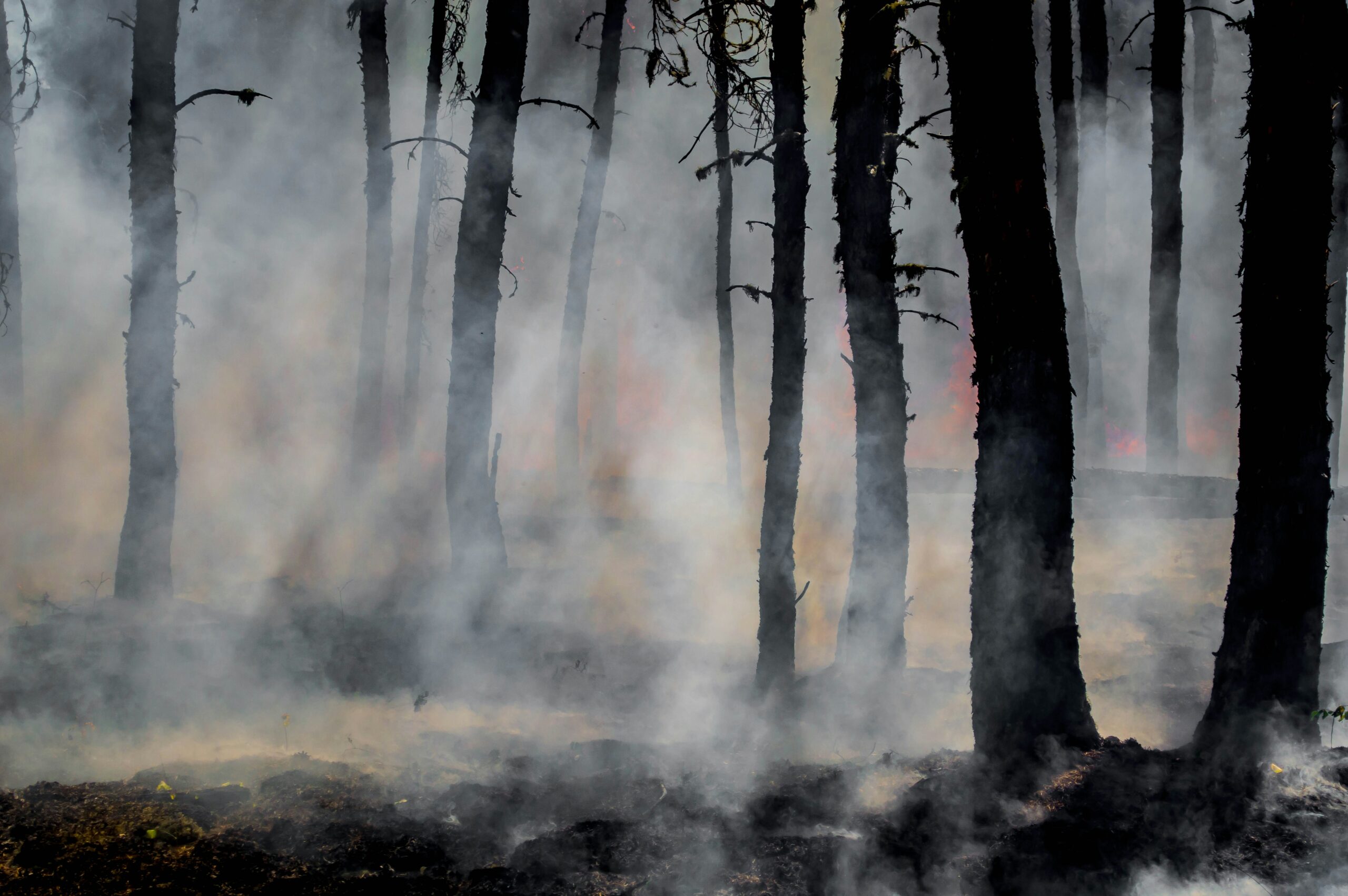
    A foggy forest landscape representing the aftermath and risk of wildfires for homeowners and businesses

    Gain an understanding of the complex insurance coverage and remediation issues arising from wildfire disasters, including property damage claims under commercial all-risk and homeowners insurance, valuation provisions like replacement cost and ACV, and time element coverages such as business income loss, civil authority coverage, and additional living expenses.

    This webinar addresses a host of insurance coverage and remediation issues stemming from the wildfire disasters. It focuses on property damage and remediation under various forms of property insurance including commercial all-risk coverage and homeowners insurance. Speakers address coverage issues involving valuation provisions such as replacement cost coverage, ACV, and ordinance and law coverage grants and limitations.  Time element coverage is also addressed as it appears in provisions promising protection for business income losses, CBI, ingress and egress coverage, service interruption, civil authority coverage, and loss of use/additional living expenses coverage

    The panel offers insights into the claims handling process, such as time sensitive clauses ranging from notice of claim to suit limitation provisions.  Claim investigation, adjustment, and forensic accounting aspects of property loss adjustment are also explained and commented on in detail. Policyholders and other stakeholders will benefit from insights on claim issues that arise in the context of largescale natural disasters, and steps policyholders – whether they are large organizations or individual homeowners – can take to position themselves for fair claim payments.  Additionally, the program outlines claim valuation and coverage dispute resolution options that may be available, as well as the potential for bad faith allegations.

    Learning Objectives

    Understand scope of coverage under commercial property and homeowners policies. Gain a clear perspective of what types of damages and losses are typically covered and time element protections for business interruption, civil authority, loss of use and other coverages that protect businesses and communities.

    Learn to assess policy limitations. Learn to identify common and misunderstood limitations in insurance policies that may affect coverage for wildfire-related claims.

    Know the recent case law. Review recent decisions that have shaped the current landscape of wildfire insurance coverage. Understand their implications for future claims.

    Gain insights to better navigate the claims process. Acquire practical tips and strategies for effectively managing and negotiating insurance claims related to wildfire damage, including documentation, communication with insurers, and dispute resolution.

    Understand how to preserve your rights. Addressing how to safeguard insurance and time sensitive fine print that is used to delay and void covered claims by the insurance industry, including notice of loss clauses, proofs of loss terms, suit limitation provisions and documenting cooperation and information flows during the claim adjustment process.

    Better comprehend loss adjustment, claim investigation and reaching fair valuations. This speaker addresses the inevitable arguments insurance companies use to limit claim payment for PD losses and time element coverages such as business interruption, civil authority, ingress/egress, and contingent business interruption coverage. Learn how to utilize these coverages to maximize recoveries after a disaster.

    Learn the value of public adjustors. This discussion will also address the efficient use of public adjustors to help policyholders prepare their claims and get a proper resolution of their reimbursement for covered losses.

    TAKE IT NOW

    Available now to CeriFi LegalEdge subscribers. Don’t subscribe? Don’t despair. Use code HB20 for 20% off. Or, HBSub20 for 20% off a full solo subscription. While supplies last.

    Speakers

    Dennis J. Artese

    Dennis J. ArteseShareholder, Anderson Kill P.C.

    Dennis Artese is a shareholder in Anderson Kill’s New York office and is chair of the firm’s Climate Change and Disaster Recovery practice group. Dennis has substantial experience in all phases of litigation, arbitration and property insurance appraisals, and has recovered hundreds of millions of dollars of insurance proceeds on behalf of policyholders in connection with a variety of property, builder’s risk, commercial general liability, umbrella and excess liability, D&O, E&O, crime, and political risk insurance claims. He earned his B.A. at the University of Connecticut and his J.D., cum laude, at St. John’s University School of Law.

    Marshall Gilinsky

    Marshall GilinskyShareholder, Anderson Kill P.C.

    Marshall Gilinsky is a shareholder at Anderson Kill’s Boston office, focusing on Insurance Recovery and Commercial Litigation. Co-chair of the firm’s Sexual Harassment and Abuse Insurance Recovery Group and Sports, Media, and Entertainment Group, Marshall has recovered hundreds of millions of dollars for clients during his 20-year career. He has represented clients on complex insurance claims related to major losses, including 9/11, Hurricane Katrina, Superstorm Sandy, and Boston’s “Big Dig.” He represents a diverse range of policyholders in high-stakes disputes. Marshall earned his B.S. from Cornell University and his J.D., with honors, from The George Washington University Law School.

    Joshua Gold

    Joshua GoldShareholder, Anderson Kill P.C.

    Joshua Gold is a shareholder in Anderson Kill’s New York office and serves as chair of the Cyber Insurance Recovery Group and co-chair of the Marine Cargo Insurance Group. He has represented numerous corporate and non-profit policyholders in various industries, with recoveries for his clients well in excess of $1.5 billion. Josh’s practice involves matters ranging from international arbitration, data security, directors and officers insurance, business income/property insurance, commercial crime insurance, admiralty, cargo, and marine insurance disputes. He earned his B.A. at the University of Massachusetts at Amherst and his J.D. at Benjamin N. Cardozo School of Law.

  • Class Action Defense: Key Developments on the Arbitration Front

    Class Action Defense: Key Developments on the Arbitration Front

    Class Action Defense: Key Developments on the Arbitration Front

    Enhance your knowledge of critical arbitration developments in class action defense, including pivotal U.S. Supreme Court rulings shaping litigation and key arbitration trends to watch closely.

    Developed and presented by two practicing attorneys with an expertise in Class Action Defense, this webinar is designed for attorneys and other professionals who wish to better understand the key developments on the arbitration front related to class action defense, including the key U.S. Supreme Court rulings shaping the litigation landscape and the main arbitration trends to remain vigilant for.

    This webinar provides a comprehensive overview of significant advancements in arbitration as they pertain to class action defense. Participants will explore five pivotal U.S. Supreme Court decisions that are reshaping litigation strategies and examine how lower courts are interpreting and applying these rulings. The session also highlights critical mass arbitration trends, including the growing prevalence of mass arbitration, a detailed look at the process, and strategies for leveraging it to achieve early settlements. Attendees will gain insights into recent key rulings, updates to the American Arbitration Association’s rules, and the broader implications of these trends on the arbitration landscape.

    Learning Objectives

    Learn about key developments on the arbitration front with regard to class action defense

    Delve into 5 key U.S. Supreme Court rulings shaping the litigation landscape

    Gain knowledge of the lower court rulings in the wake of the U.S. Supreme Court decisions

    Gain an understanding of the main mass arbitration trends to be aware of, including:

    -The rise of mass arbitration

    -An overview of the mass arbitration process

    -Leveraging mass arbitration into early settlements

    -Key developments and rulings

    -American Arbitration Association’s amended rules

    -Noteworthy impacts of the mass arbitration trends

    Other Class Action Podcasts Worth a Listen:

    Hair Relaxer Injury Litigation with Jennifer Hoekstra

    TAKE IT NOW

    Available now to CeriFi LegalEdge subscribers. Don’t subscribe? Don’t despair. Use code HB20 for 20% off. Or, HBSub20 for 20% off a full solo subscription. While supplies last.

    Speakers

    Gerald L. Maatman, Jr.

    Gerald L. Maatman, Jr.Partner, Duane Morris LLP

    A widely recognized workplace class action defense litigator, Jerry is a Partner at Duane Morris LLP, where he chairs the firm’s Class Action Defense Group. He is a graduate of Washington & Lee University and the Northwestern University School of Law, where he has served as an adjunct professor for 34 years. The author of eight books on the law, Jerry is a sought-after legal commentator by major news organizations. He works out of the Duane Morris offices in Chicago and New York.

    Eden E. Anderson

    Eden E. AndersonSpecial Counsel, Duane Morris LLP

    Eden E. Anderson practices in the area of employment law and litigation. Ms. Anderson defends employers against discrimination, harassment, retaliation and attendant claims under California’s FEHA, as well as other single-plaintiff matters. Her practice also entails defense of wage and hour class actions and PAGA claims. Ms. Anderson has substantial appellate experience before the California Court of Appeal, California Supreme Court, and Ninth Circuit Court of Appeals. She also has expertise defending companies against disability access claims brought under California’s Unruh Civil Rights Act and Title III of the ADA. Ms. Anderson is a 2004 graduate of Berkeley Law.

  • Trends and Strategies in Wage & Hour Class and Collective Actions

    Trends and Strategies in Wage & Hour Class and Collective Actions

    Trends and Strategies in Wage & Hour Class and Collective Actions

    The lower half of large stone pillars outside a courthouse, symbolizing strength and justice.

    Gain a better understanding of the Fair Labor Standards Act (FLSA) and wage and hour collective actions, get up to date on significant trends and recent key settlements in this area of law, and grasp the main considerations for conditional class certification and decertification and the key collective action rulings handed down in 2023.  

    Developed and presented by three practicing attorneys with expertise in employment law and complex litigation, this webinar is designed for attorneys and other professionals who wish to a) better understand the Fair Labor Standards Act (FLSA) and wage and hour class and collective actions, b) get up to date on significant trends and recent key settlements in this area of law, and c) grasp the main considerations for conditional class certification and decertification and the key collective action rulings handed down in 2023. This course’s core objectives are to give you an overview of FLSA, wage and hour class and collective actions, background on Rule 23 class actions, and insight into notable trends and leading settlements. We will address points of deliberation for conditional certification and decertification of class and collective actions, looking at widely used certification methods and certification rates, then close with key rulings in this area of law issued in 2023. 

    Join experienced class action defense litigators Gerald L. Maatman, Jr., Jennifer A. Riley, and Greg Tsonis for a high-level breakdown of trends and strategies in wage & hour class and collective actions. Sign up today!

    Learning Objectives

    Gain a working understanding of the Fair Labor Standards Act. 

    Get a clear picture of the wage and hour class and collective actions landscape. 

    Understand the background of Rule 23 class actions. 

    Get current on significant trends in the law.  

    Learn the details and significance of recent settlements.  

    Know what factors are considered for conditional certification and decertification. 

    Come away with a solid grasp of recent wage and hour rulings.   

    Other Class Action Podcasts Worth a Listen:

    Hair Relaxer Injury Litigation with Jennifer Hoekstra

    TAKE IT NOW

    Available now to CeriFi LegalEdge subscribers. Don’t subscribe? Don’t despair. Use code HB20 for 20% off. Or, HBSub20 for 20% off a full solo subscription. While supplies last.

    Speakers

    Gerald L. Maatman, Jr.

    Gerald L. Maatman, Jr.Partner, Duane Morris LLP

    A widely recognized workplace class action defense litigator, Jerry is a Partner at Duane Morris LLP, where he chairs the firm’s Class Action Defense Group. He is a graduate of Washington & Lee University and the Northwestern University School of Law, where he has served as an adjunct professor for 34 years. The author of eight books on the law, Jerry is a sought-after legal commentator by major news organizations. He works out of the Duane Morris offices in Chicago and New York.

    Jennifer A. Riley

    Jennifer A. RileyPartner, Duane Morris LLP

    A partner in the Duane Morris Chicago office, Jennifer is vice-chair of the firm’s Class Action Defense Group. She regularly defends companies facing class actions, collective actions, pattern or practice lawsuits, and other types of representative proceedings, ranging in size from dozens to tens of thousands of claims. Jennifer also helps employers navigate thorny issues, including investigations, compliance, and terminations. She earned her J.D. from the University of California, Berkeley School of Law, and her B.A. from Vanderbilt University, magna cum laude.

    Gregory Tsonis

    Gregory TsonisPartner, Duane Morris LLP

    Gregory “Greg” Tsonis is an integral member of the Workplace Class Action Group at Duane Morris. With a practice that encompasses defending companies in a wide spectrum of employment law cases, Mr. Tsonis adeptly handles everything from complex, high-stakes class actions asserting wage & hour and discrimination claims to intense individual plaintiff cases and government agency investigations. His knowledge extends to a broad spectrum of federal and state statutes, including the Fair Labor Standards Act, state wage & hour laws, the Civil Rights Act, the Americans with Disabilities Act, the Biometric Information Privacy Act, and state consumer protection laws, among others. Mr. Tsonis received his Bachelor of Arts degree from the University of Chicago and his law degree, with honors, from the University of Chicago Law School.

  • Wildfire Insurance Coverage for Homeowners and Businesses with Anderson Kill

    Wildfire Insurance Coverage for Homeowners and Businesses with Anderson Kill

    Wildfire Insurance Coverage for Homeowners and Businesses with Anderson Kill

    Concepts: Natural Disasters, Damage and Loss, Homeowner Insurance, Property Insurance, Risk Mitigation, Insurance Recovery

    The horrific wildfires unleashing carnage in Southern California underscore the need for reliable insurance protection both for businesses and homeowners.

    As of Jan. 16, 2025, these wildfires have scorched more than 60 square miles, claimed at least 25 lives, and left 26 people missing. With more than 12,000 structures destroyed and tens of thousands displaced, the economic impact is estimated between $135 billion and $150 billion.

    On a new episode of the Emerging Litigation Podcast, we discuss the types of damages and losses typically covered under homeowner and commercial property insurance policies, policy limitations, navigating the claims process, and business interruption coverage. We also discuss a Jan. 10, 2025, ruling out of the Northern District of California in Bottega v. National Surety which held in a business interruption case that whether smoke damage caused the suspension of operations at the policyholders’ businesses is a genuine issue of fact.

    My guests are all from the long-time insurance recovery law firm of Anderson Kill. Dennis Artese is a shareholder in the New York office and is chair of the firm’s Climate Change and Disaster Recovery practice group. Marshall Gilinsky is a shareholder the firm’s Boston office and practices in the firm’s Insurance Recovery and Commercial Litigation groups, as well as its Restaurant, Retail & Hospitality Group. Joshua Gold is a shareholder in the New York office. He chairs the Cyber Insurance Recovery Group and co-chairs the Marine Cargo Insurance Group. He also handles directors and officers insurance and business income/property insurance matters.

    If you have comments or wish to participate in one our projects please drop me a note at Editor@LitigationConferences.com.

    Tom Hagy
    Litigation Enthusiast and
    Host of the Emerging Litigation Podcast
    Home Page
    LinkedIn

    podcast logo face


    Want to appear on the Emerging Litigation Podcast?


    Send us your idea! 

    It’s possible it could make this man smile. But let’s not get ahead of ourselves.

    Dennis J. Artese

    Dennis J. ArteseAnderson Kill

    Dennis Artese is a shareholder in Anderson Kill’s New York office and is chair of the firm’s Climate Change and Disaster Recovery practice group. He is also co-chair of the firm’s Construction Industry group. Dennis’s national practice concentrates on all types of insurance recovery litigation, with an emphasis on securing insurance coverage for property and business interruption losses stemming from natural disasters and other perils as well as for construction-related first-party property losses and third-party liability claims.

    Dennis has substantial experience in all phases of litigation, arbitration and property insurance appraisals, and has recovered hundreds of millions of dollars of insurance proceeds on behalf of policyholders in connection with a variety of property, builder’s risk, commercial general liability, umbrella and excess liability, D&O, E&O, crime, and political risk insurance claims. Dennis also has extensive experience in litigating insurance broker malpractice cases and other general commercial litigation disputes, including construction-related disputes.

    Marshall Gilinsky

    Marshall GilinskyAnderson Kill

    Marshall Gilinsky is a shareholder in Anderson Kill’s Boston office and practices in the firm’s Insurance Recovery and Commercial Litigation groups. Marshall is co-chair of the firm’s Sexual Harassment and Abuse Insurance Recovery Group and Sports, Media and Entertainment Group, and a member of the firm’s Banking and Lending Group and Restaurant, Retail & Hospitality Group.

    During his 20-year career representing policyholders, Marshall has recovered hundreds of millions of dollars for his clients, successfully litigating disputed claims under a variety of insurance products, including property and business interruption insurance, commercial general liability (CGL) insurance, errors and omissions (E&O) insurance, directors and officers (D&O) insurance and life insurance.

    Marshall Gilinsky has represented clients on numerous high-stakes, complex insurance claims arising out of prominent losses such as 9/11, Hurricane Katrina, Superstorm Sandy and the “Big Dig” in Boston. He also focuses extensively on assisting clients that own and manage captive insurance companies, especially with respect to resolving coverage disputes between the captive and its reinsurers.

    Joshua Gold

    Joshua GoldAnderson Kill

    Joshua Gold is a shareholder in Anderson Kill’s New York office and serves as chair of the Cyber Insurance Recovery Group and co-chair of the Marine Cargo Insurance Group. He has represented numerous corporate and non-profit policyholders in various industries, with recoveries for his clients well in excess of $1.5 billion.

    Josh’s practice involves matters ranging from international arbitration, data security, directors and officers insurance, business income/property insurance, commercial crime insurance, admiralty, cargo, and marine insurance disputes. He has been lead trial counsel in multi-party bench and jury trials, and has negotiated and crafted scores of settlement agreements including coverage-in-place agreements.

  • Last Days of Patent Eligibility Confusion with Ryan Phelan

    Last Days of Patent Eligibility Confusion with Ryan Phelan

    Last Days of Patent Eligibility Confusion with Ryan Phelan

    Concepts: Emerging Technologies, Intellectual Property

    As if the rocketing evolution of technology isn’t presenting enough challenges to inventors under patent law, the Supreme Court has done its part, too.

    I just finished reading Graham Moore’s novel “The Last Days of Night,” where titans of the late 1800s and early 1990s Thomas Edison, George Westinghouse, and Nikola Tesla “clashed with sparks flying over AC and DC electrical power systems,” a corny description suggested by my AI editor.

    Having read the book, it was fun to speak with modern day attorney Ryan N. Phelan of modern day Marshall Gerstein. Listen as this seasoned patent attorney walks me through:

    The intricate landscape of patent eligibility in the United States.

    Twin patent law decisions from the Supreme Court — Mayo and Alice (the name of a singer-songwriter group if I ever heard one, or a sandwich shop).

    The proposed Patent Eligibility Restoration Act and how — if passed — it could unlock new opportunities for innovation amid the challenges posed by judicial exceptions.

    I hope you enjoy the conversation! If so, give us a rating!

    If you have comments, ideas, or wish to participate, please drop me a note at Editor@LitigationConferences.com.

    Tom Hagy
    Litigation Enthusiast and
    Host of the Emerging Litigation Podcast
    Home Page
    LinkedIn

    Ryan N. Phelan

    Ryan N. PhelanMarshall Gerstein

    Ryan N. Phelan is a registered patent attorney who counsels and works with clients in all areas of intellectual property (IP), with a focus on patents. With a MBA from Northwestern’s Kellogg School of Management, Ryan works with clients to achieve their business objectives, including developing and protecting their innovations and businesses with IP.

    As a former technology consultant with Accenture and with a background in computer science and engineering, Ryan has extensive experience in computer system, hardware, and software design, engineering, development and related technologies.

    He represents numerous startup and Fortune 500 clients with patent matters in technical areas and industries including artificial intelligence and machine learning, medical devices, biometrics data and services, virtual reality, imaging, internet and e-commerce, computer networking, data storage and management, encryption and security, mobile telecommunications, consumer electronics, insurance and finance applications, mechanical devices, among others.

    podcast logo face


    Want to appear on the Emerging Litigation Podcast?


    Send us your idea! 

    It might even make this man smile. “But I am smiling here.”

    No. No he’s not.