Author: Tom Hagy

  • The Medical Monitoring Tort Remedy: Advanced Level

    The Medical Monitoring Tort Remedy: Advanced Level

    The Medical Monitoring Tort Remedy: Advanced Level

    Test tube with chemicals being poured into it, representing toxic exposure and laboratory analysis

    Better understand the foundational aspects of building and administering a PFOA chemical medical monitoring program, including the mechanics of a) building a budget and b) program administration.

    Medical monitoring is a claim most often asserted in toxic exposure claims, including those associated with PFOA (Perfluorooctanoic acid) exposure, a substance with allegedly harmful, but latent, symptoms. It’s essential to understand how to build and administer a PFOA medical monitoring program in any medical monitoring tort remedy.

    This webinar is designed for attorneys and other professionals practicing in the area of Medical Monitoring who wish to better understand the foundational aspects of building and administering a PFOA chemical medical monitoring program, including the mechanics of a) building a budget and b) program administration. The objectives of this course are to help you understand how to become skilled at building and administering a PFOA medical monitoring program, from beginning to end. Attendees will come away with an understanding of the mechanics of building a budget, the advice and actions to take to establish a strong claim for relief, and key criteria to take into consideration in a medical monitoring tort remedy.

    Key Learning Outcomes: 

    • Gain an understanding of the mechanics of building a PFOA medical monitoring program budget.
    • Learn about the expert medical advice needed to establish a linkage between the toxin and the disease and recommend types of testing.
    • Learn how to add an epidemiological component up front.
    • Learn about matching a dynamic malady with a dynamically evolving monitoring program with guidance from a science advisory panel.
    • Learn more about the importance of:
      • Administration mechanics;
      • The value of participant time;
      • Use of a retail model;
      • Following one step, not two;
      • The use of local medical services; and
      • Planning ahead to administer to out-of-area claimants.

    Loved watching Ed’s webinar?

    Explore additional content from Ed.

    Podcast: Medical Monitoring for Modern Times with Ed Gentle

     JEIL: The Medical Monitoring Tort Remedy: Its Nationwide Status, Rationale, and Practical Application (A Possible Dynamic Tort Remedy for Long-Term Tort Maladies)

    HB on-demand CLE at

    the West LegalEdcenter

    TAKE IT NOW – For a limited time, use code HB20 for 20% off the webinar or HBSub20 for 20% off a full solo subscripton

    PREVIEW COMING SOON!

    Included with WLEc subscriptions. Also available for individual purchase.

    Speaker

    Edgar C. Gentle III

    Edgar C. Gentle IIIGentle Turner & Benson LLC

    Edgar (“Ed”) C. Gentle III is founder and managing partner of Gentle, Turner, Sexton & Harbison, LLC, in Birmingham, Alabama. Largely focusing his practice on complex commercial litigation and mass tort/class action litigation, he often works for the courts as a neutral special master and settlement administrator. He is an experienced special master and claims administrator in mass tort litigation, providing claims administration and financial and business advice to courts, settling parties, and mass tort settlements. He has helped create and administer more than $6 billion in settlements during the past 20 years. He earned his J.D. from the University of Alabama School of Law as a Hugo Black Scholar.

  • False Claims Act, Health Care Whistleblowers, and Whistling in the Wind with Justin Lugar

    False Claims Act, Health Care Whistleblowers, and Whistling in the Wind with Justin Lugar

    False Claims Act, Health Care Whistleblowers, and Whistling in the Wind with Justin Lugar

    Concepts: Health Care Fraud, Whistleblower Claims, False Claims Act

    The DOJ’s annual report for 2023 revealed that the agency’s Health Care Fraud Unit was its busiest criminal enforcement section, responsible for convicting more than $3.8 billion in False Claims Act and whistleblower claims.

    There has reportedly been an uptick in whistleblower work among law firms and a record number of whistleblower cases. Still, some healthcare providers and hospital systems tend to hide their heads in their scrubs after being served. 

    Today we’re going to talk about how whistleblower cases come about, the benefits of rewarding whistleblowers, how things are done differently outside the U.S., what’s driving the acceleration of this area of law, and best practices when your company is served.

    Drawing on his background as both public servant and private practitioner, my guest, Justin M. Lugar, counsel with WoodsRogers in Roanoke, Virginia, is going to walk through these issues and others.

    Justin represents clients in all types of government investigations. He’s obviously well suited for the task. Prior to WoodsRogers he was Assistant U.S. Attorney in the Western District of Virginia, where he led the Affirmative Civil Enforcement team managing dozens of fraud investigations, many of which had parallel criminal investigations under the False Claims Act and related state statutes.

    Justin served as the Department of Justice’s Civil Health Care Fraud Coordinator, Affirmative Civil Enforcement Coordinator, and Civil Rights Coordinator for the Western District of Virginia. Justin was recently recognized by the Drug Enforcement Agency for his efforts enforcing the Controlled Substances Act, leading to the largest fine assessed against a hospital system in the United States at the time.

    When he was a  federal prosecutor, Justin led investigations involving numerous state and federal agency partners, from the FBI to the IRS to the Department of Energy to the FDA and the Defense Department.

    Justin started his career at a major global firm in London, conducting international investigations around the globe.  But my favorite part of his background is – when he was a religious studies major in college – he lived at a Tibetan Buddhist Monastery in Kathmandu, Nepal. Not to brag, but I just returned from Vermont.

    There is more to Justin’s background, like his LLM in international dispute resolution, which he earned at the School of Oriental and African Studies at the University of London, his J.D. from Liberty University School of Law, and his B.A. from the University of Virginia.

    I hope you enjoy the conversation! If so, give us a rating!

    This podcast is the audio companion to the Journal on Emerging Issues in Litigation. The Journal is a collaborative project between HB Litigation Conferences and the vLex Fastcase legal research family, which includes Full Court Press, Law Street Media, and Docket Alarm.

    If you have comments, ideas, or wish to participate, please drop me a note at Editor@LitigationConferences.com.

    Tom Hagy
    Litigation Enthusiast and
    Host of the Emerging Litigation Podcast
    Home Page
    LinkedIn

    Justin Lugar

    Justin LugarWoodsRogers

    Drawing on his background as both public servant and private practitioner, Justin represents clients facing all manner of government investigations, including grand jury investigations, congressional investigations, administrative investigations, regulatory inquiries, False Claims Act/whistleblower investigations, RFIs, civil rights investigations, and Inspectors General investigations.

    Prior to joining Woods Rogers, Justin served as an Assistant U.S. Attorney in the Western District of Virginia, where he led the Affirmative Civil Enforcement team in managing dozens of active fraud investigations, many of which had parallel criminal investigations under the False Claims Act and various state analog statutes.

    Justin also served as the Department of Justice’s Civil Health Care Fraud Coordinator, ACE coordinator, and Civil Rights Coordinator for the Western District of Virginia. Justin was recently recognized by the DEA for his efforts in enforcing the Controlled Substances Act, leading to the largest fine assessed against a hospital system in the United States at the time.

    Justin earned his J.D. from Liberty University School of Law.

    podcast logo face


    Want to appear on the Emerging Litigation Podcast?


    Send us your idea! 

    It might even make this man smile. “But I am smiling here.”

    No. No he’s not.

  • Avoiding the Nuclear Verdict or the Defense Verdict

    Avoiding the Nuclear Verdict or the Defense Verdict

    Avoiding the Nuclear Verdict or the Defense Verdict

    Better understand the rise of nuclear verdicts, or defense verdicts, and how to avoid them, considering both the strategic and psychological factors at play.

    According to professionals in the insurance industry and the defense bar, the number of nuclear verdicts, or verdicts that exceed $10M, is on the rise. Although the defense may prevail over plaintiffs more often at trial, when the defense loses, they lose big. And plaintiffs who could have obtained needed resources in settlement, sometimes “roll the dice” at trial and get less, or nothing at all.

    Do clients really want to engage in such high stakes showdowns? Is there a better way to administer “justice?”

    This webinar addresses these very questions. It is designed for attorneys and other professionals practicing in litigation, mediation, and negotiation who wish to better understand the rise of nuclear verdicts and how to avoid them, considering both the strategic and psychological factors at play.

    The objectives of this course are to help you understand why nuclear verdicts are occurring more frequently in recent years; the strategic factors to consider, including retaining control over decision outcomes and playing the percentages; and the psychological factors to consider, including assessing your mediation and negotiation tactics and the accuracy of your predictions of litigated outcomes.

    Attendees will come away with strategies for improving their approach to negotiation, mediation, and litigation to curtail instances of self-serving bias and over-confidence which can increase the likelihood of a nuclear verdict, with an eye to avoiding this type of verdict wherever possible.

    Your Learning Outcomes: 

    • Understand and manage heuristics such as overconfidence, anchoring, and confirmation bias. These are only three of many mental shortcuts we make, but they occur most frequently.

    • Understand the value of beginning the process early which will positively influence the outcome – even if you litigate all the way to verdict. Assessments should come first, case valuations will follow. Rinse and repeat since the litigation landscape shifts often.

    • Learn how the information you get about the other side’s position will influence their response and your strategy. How you ask for a demand, for example, influences the response.

    • Learn how your approach to bargaining influences what kind of information you learn about the other side; information is the real currency in negotiation.

    • Assess who is on your team. Do you find yourself in an echo chamber that isn’t helping you make the best settlement decision?

    • Assess how well, or how extensively, you use your mediator. Is your strategy limited to getting the mediator to deliver the “tough” news to the other side, or your own client?

    More from HB on Nuclear Verdicts:

    Avoiding the Nuclear Verdict or the Defense Verdict

    Going Viral or Going Nuclear: Social Inflation’s Impact on Jury Verdicts

    Social Inflation’s Impact on Jury Verdicts

    HB on-demand CLE at

    CeriFi LegalEdge (formerly West LegalEdcenter)

    TAKE IT NOW – For a limited time, use code HB20 for 20% off the webinar or HBSub20 for 20% off a full solo subscripton

    PREVIEW NOW!

    *Included in subscriptions. Also available for individual purchase.

    Avoiding the Nuclear Verdict or the Defense Verdict with Jeff Trueman Esq., LL.M. | Mediator Arbitrator and John Lowry President | The Lowry Group LLC (TLG)

    Jeff Trueman
    Esq., LL.M. | Mediator Arbitrator 

    Jeff is a full-time mediator and arbitrator with 20 years of experience helping parties resolve litigated and pre-suit disputes concerning wrongful death, catastrophic injuries, employment, professional malpractice, and business dissolutions.

    He is a Distinguished Fellow of the International Academy of Mediators and the National Association of Distinguished Neutrals, invitation-only membership organizations consisting of some of the most successful commercial mediators in the country and the world. Jeff is a recipient of the Maryland State Bar Association’s Chief Judge Robert M. Bell Award for his efforts in “promoting the use of alternative dispute resolution in the Maryland judiciary, schools, government and communities” and the Bar Association of Baltimore City’s Paul A. Dorf Alternative Dispute Resolution Memorial Award.

    He is also an adjunct professor at the University of Maryland Francis King Carey School of Law and Pepperdine Caruso School of Law.

    John Lowry
    President | The Lowry Group LLC (TLG)  

    John is a recognized authority on negotiation with experience as a lawyer, business consultant, entrepreneur, negotiation coach, and university administrator. He teaches negotiation at the Straus Institute for Dispute Resolution at Pepperdine University School of Law and in Vanderbilt University’s Master’s in Management in Health Care program.

    As president of The Lowry Group, LLC (TLG) he provides negotiation training and coaching for governmental entities, insurance companies, law firms, health care organizations, and other businesses. He is the author of Negotiation Made Simple, published by HarperCollins in 2023, and is host of the Negotiation Made Simple podcast. John is also CEO of Thrivence, a management consulting firm in Nashville.

    He earned his bachelor’s degree in speech communications from Pepperdine University and his J.D. from Southern Methodist University’s Dedman School of Law. He also completed graduate work in public policy at California State University, Sacramento while serving as a Jesse M. Unruh Assembly Fellow in the California Legislature.

  • President Biden’s Critical Infrastructure Cyber Memo and CrowdStrike’s Whoopsie Daisy with Elizabeth Burgin Waller

    President Biden’s Critical Infrastructure Cyber Memo and CrowdStrike’s Whoopsie Daisy with Elizabeth Burgin Waller

    President Biden’s Critical Infrastructure Cyber Memo and CrowdStrike’s Whoopsie Daisy with Elizabeth Burgin Waller

    Concepts: Cybersecurity, Critical Infrastructure

    How secure is our nation’s critical infrastructure? One recent event serves as a cautionary tale.

    In this episode, we tackle this pressing question in the context of cybersecurity. We’ll address President Biden’s recent National Security Memorandum on Critical Infrastructure Security and Resilience, and its implications for energy, transportation, water supplies, and other systems that allow society to function.

    Our guest, Elizabeth Burgin Waller, from Virginia’s WoodsRogers law firm, brings her extensive knowledge in privacy and cybersecurity law to the discussion.

    Join me as I ask Beth about ransomware as a service, shedding light on its franchise-like model and the significant challenges in tracking and prosecuting these cybercriminals, especially those hiding in countries like Russia, the recent takedown of the LockBit ransomware gang under Operation Kronos, and the persistent and growing complications of IoT security.

    Beth tells me about CrowdStrike’s recent software “glitch,” which, while not a malicious attack, serves as a stark reminder of the importance of testing and transparency around cyber incidents, and the vulnerability of the systems that drive critical industries. Beth also shares her insights and reflections on the evolving regulatory landscape and what it means for mitigating risk in the Digital Age.

    Beth is Principal and Cybersecurity & Data Privacy Practice Chair at WoodsRogers. In addition to a J.D. from William and Mary School of Law, she is certified as a Privacy Law Specialist by the International Association of Privacy Professionals (IAPP), which is accredited by the American Bar Association, a Certified Information Privacy Professional with expertise in both U.S. and European law (CIPP/US & CIPP/E), and a Certified Information Privacy Manager (CIPM), also from the IAPP. Beth also graduated magna cum laude with a B.A. in creative writing, so maybe I should have let her write the show notes.

    I hope you enjoy the conversation! If so, give us a rating!

    This podcast is the audio companion to the Journal on Emerging Issues in Litigation. The Journal is a collaborative project between HB Litigation Conferences and the vLex Fastcase legal research family, which includes Full Court Press, Law Street Media, and Docket Alarm.

    If you have comments, ideas, or wish to participate, please drop me a note at Editor@LitigationConferences.com.

    Tom Hagy
    Litigation Enthusiast and
    Host of the Emerging Litigation Podcast
    Home Page
    LinkedIn

    Elizabeth Burgin Waller

    Elizabeth Burgin WallerWoodsRogers

    As chair of the Cybersecurity & Data Privacy practice at Woods Rogers, Beth’s practice is fully devoted to cybersecurity, data privacy, and artificial intelligence (AI). Clients ranging from local government and state agencies to mid-market firms and Fortune 200 companies depend on Beth for advice and counsel. Her clients span industries such as banking, healthcare, manufacturing, high-tech, and energy. She has deep experience counseling clients pioneering new technologies, including in the intersection of artificial intelligence (AI) with privacy regulatory concerns.

    Beth earned her J.D. from William & Mary School of Law.

    podcast logo face


    Want to appear on the Emerging Litigation Podcast?


    Send us your idea! 

    It might even make this man smile. “But I am smiling here.”

    No. No he’s not.

  • Trademarks, Copyrights, Brands, T-Shirts, and Champagne with Tiffany Gehrke and Kelley Gordon

    Trademarks, Copyrights, Brands, T-Shirts, and Champagne with Tiffany Gehrke and Kelley Gordon

    Trademarks, Copyrights, Brands, T-Shirts, and Champagne with Tiffany Gehrke and Kelley Gordon

    Concepts: Intellectual Property Law, Copyright Law, Trademark Law

    Listen as intellectual property attorneys Tiffany Gehrke and Kelley Gordon of Marshall Gerstein in Chicago share their insights into three matters relevant to anyone watching copyright and trademark law, or anyone fond of branded t-shirts and fancy French beverages. 

    I talk to Tiffany Gehrke about two cases. One isVidal v. Elster, better known as the “TRUMP TOO SMALL” case. Just decided by the Supreme Court, this deals with whether a mark containing criticism of a government official or public figure – which is barred by the “names clause” of the Lanham Act – violates free speech. Justice Thomas wrote the majority opinion, which Tiffany outlines.

    The other case is Penn State v. Vintage Brands, which is pending in Pennsylvania federal court and is expected to have wide-reaching implications for retailers and brand owners alike. Vintage Brand uses Penn State’s registered Nittany Lions trademarks on t-shirts, hats, and other goods, and argues that use of the trademarks constitute a defensible “ornamental use.” We shall see!

    Finally, I ask Kelley Gordon for her take on a dispute between a popular Instagram influencer, Lauren Holifield, and champagne brand Veuve Clicquot. Holifield temporarily and surprisingly lost her IG account after Veuve Clicquot raised trademark infringement concerns on three of Holifield’s videos. This was a big deal for her. She was earning six figures. OMG. Hear what Kelley has to say.

    I hope you enjoy the conversation! If so, give us a rating!

    This podcast is the audio companion to the Journal on Emerging Issues in Litigation. The Journal is a collaborative project between HB Litigation Conferences and the vLex Fastcaselegal research family, which includes Full Court Press, Law Street Media, and Docket Alarm.

    If you have comments, ideas, or wish to participate, please drop me a note at Editor@LitigationConferences.com.

    Tom Hagy
    Litigation Enthusiast and
    Host of the Emerging Litigation Podcast
    Home Page
    LinkedIn

    podcast logo face


    Want to appear on the Emerging Litigation Podcast?


    Send us your idea! 

    It’s possible it could make this man smile. But let’s not get ahead of ourselves.

    Tiffany D. Gehrke

    Tiffany D. GehrkeMarshall, Gerstein & Borun LLP

    Partner and chair of Marshall Gerstein’s Trademarks & Copyrights practice group Tiffany D. Gehrke helps people protect their most important assets – their ideas and their reputation. Whether a business is a multi-national corporation or a startup, Tiffany partners with clients to strategically protect their products, their services, and their brand identity. She has extensive experience representing a variety of organizations, and frequently counsels biotech and pharmaceutical clients. Tiffany has many years of experience practicing before state and federal courts, the U. S. Patent and Trademark Office, and other dispute resolution forums. Tiffany counsels clients for a variety of transactions, including licenses and assignments, and has guided them through acquisitions and divestitures of IP assets. Tiffany earned her J.D. from Loyola University Chicago School of Law.

    Kelley S. Gordon

    Kelley S. GordonMarshall, Gerstein & Borun LLP

    A partner at Marshall, Gerstein & Borun LLP, Kelley Gordon’s background in both science and the arts in combination with a broad range of litigation experience allows her to provide unique guidance in advising clients with their litigation and enforcement strategies across a variety of industries including pharmaceuticals, technology, consumer products, and service industries. Kelley assists clients with their individualized global and domestic portfolio maintenance goals, develops enforcement strategies, and serves clients’ litigation needs before the Trademark Trial and Appeals Board, District Court and the United States International Trade Commission. In addition to counseling clients in branding strategies and aiding clients in registering trademarks and copyrights, Kelley’s practice focuses on enforcement of clients’ intellectual property through opposition and cancellation proceedings, social media enforcement, Uniform Domain-Name Dispute-Resolution Policy proceedings, and District Court litigation. Kelley earned her J.D. from The John Marshall Law School in Chicago (now University of Illinois-Chicago School of Law) where she earned her certificate in Intellectual Property Law.

  • Litigation After Biometric Privacy Law Violations

    Litigation After Biometric Privacy Law Violations

    Litigation After Biometric Privacy Law Violations

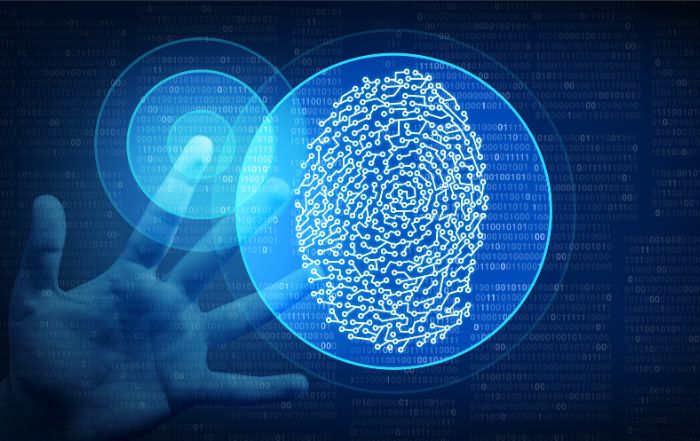
    A person’s hand with digitally rendered fingerprint patterns overlaying the fingertips, symbolizing biometric data and privacy technology.

    Better understand the state of biometric privacy litigation, the regulatory landscape, and insurance coverage considerations and rulings. 

    Systems using biometric information to enhance security and authentication processes are being deployed throughout the world. Biometric technology can provide more robust, advanced security, but it carries an increased risk.

    If compromised, biometric data can be used to steal identities, hack systems, and commit myriad privacy violations.  Legislatures throughout the U.S. are enacting statutes that require companies that collect this information to protect it as well.

    In this webinar, the speakers will discuss the state of biometric privacy litigation, the regulatory landscape, and insurance coverage considerations and rulings. 

    You will learn about: 

    • What is meant by biometrics, its positive and negative aspects, and requirements for collecting biometric information
    • Understanding BIPA (Illinois Biometric Information Privacy Act), including compliance requirements
    • Exploring biometric legislation in other states
    • Potential insurance coverage areas to consider and key takeaways
    • A look at legal cases which favor coverage for BIPA claims
    • Liability insurance for employment practices
    • D&O and cyber policies and potential coverage for biometric violations
    • Exclusions to be aware of, including cyber exclusions to consider in privacy context
    • Recent court decisions and litigation, including recent decisions challenging coverage and additional coverage concerns
    • How biometric privacy issues can inform the future of AI claims and coverage
    • How companies can protect themselves given the recent court decisions and legislation that are leading to increased risk and liability
    • What policyholders can do to ensure they maintain coverage for losses arising from biometric liability

    Loved watching Cort and John’s webinar?

    Explore Cort and John’s additional content on the subject matter.

    Podcast: Biometric Privacy Litigation and Coverage Disputes with John Leonard and Cort Malone

    HB on-demand CLE at

    the West LegalEdcenter

    TAKE IT NOW – For a limited time, use code HB20 for 20% off the webinar or HBSub20 for 20% off a full solo subscripton

    Included in subscriptions. Also available for individual purchase.

    Speakers

    Cort Malone

    Cort MaloneAttorney, Anderson Kill P.C.

    Cort T. Malone is a shareholder in Anderson Kill’s New York and Stamford offices and is the Chair of the firm’s Biometric Liability Insurance Recovery Group. Cort is an experienced litigator, focusing on insurance coverage litigation and dispute resolution, with an emphasis on commercial general liability insurance, cyber insurance, employment practices liability insurance, advertising injury insurance, directors and officers insurance, and property insurance issues. He is also a member of the firm’s Restaurant, Retail & Hospitality, Environmental Law, Cyber Insurance Recovery, and COVID Task Force groups. Malone earned his J.D. from Fordham University School of Law.

    John Leonard

    John LeonardAttorney, Anderson Kill P.C.

    John Leonard is a shareholder in Anderson Kill’s New York, NY office. He is Co-Chair of Anderson Kill’s Financial Services Group and Biometric Liability Practice Group. As a policyholder attorney, John has experience obtaining coverage under insurance policies relating to directors and officers liability, business interruption, general liability, environmental liability, health benefits, property damage, asbestos products, and crime losses. He has represented financial service providers, railroads, hospitals, hospitality organizations, consulting firms, municipalities, manufacturers, and retailers. He earned his J.D. from Fordham University School of Law.

  • Property Insurance Coverage for Emerging Risk of Underground Climate Change 

    Property Insurance Coverage for Emerging Risk of Underground Climate Change 

    Property Insurance Coverage for Emerging Risk of Underground Climate Change 

    Black and white image of a cracked road with smoke rising from the fissure, illustrating damage and underground heat effects.

    Better understand permutations of policy language and state law that may affect coverage for damage caused by underground climate change.

    Studies have shown that heat emanating from basements, train tunnels, sewers, and other underground systems in major metropolises in the United States and Europe is heating the ground between city surfaces and the bedrock by as much as 27 degrees Fahrenheit.

    As one of our presenters – a structural engineer – will illustrate, this “underground climate change” is affecting ground soil conditions, causing structural strains on buildings and exacerbating cracks and defects in walls and foundations.

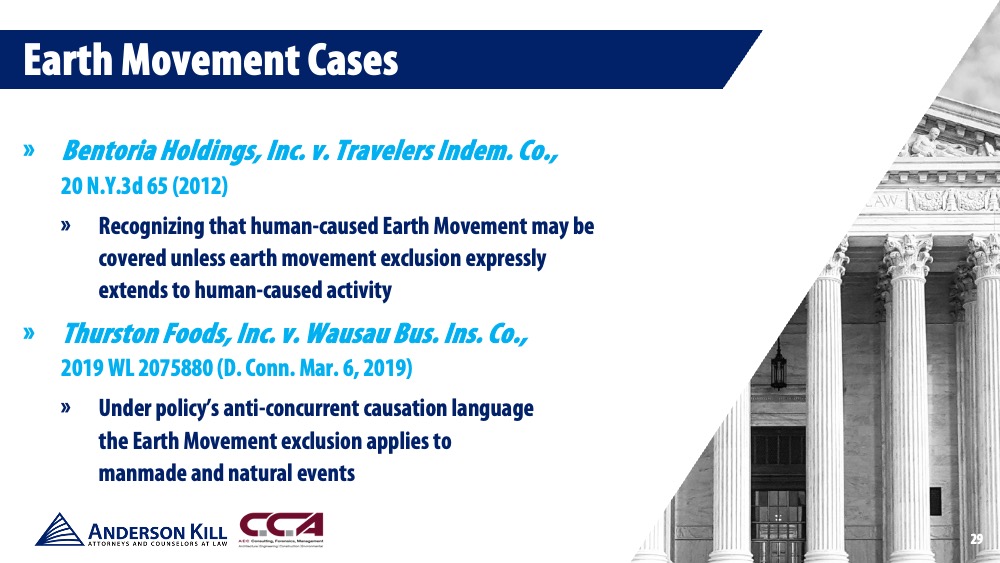
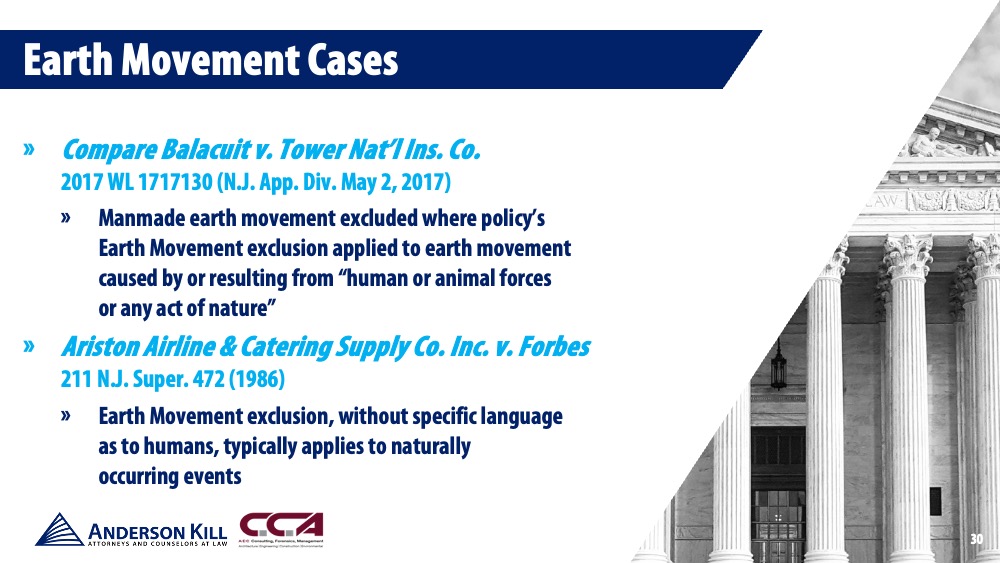
    Whether property insurance coverage will respond to loss and damage resulting from underground climate change will likely hinge on the application of the “earth movement” exclusion and potential exceptions thereto, in addition to other policy exceptions.

    Focusing on broad “all risk” commercial property insurance policies, this webinar analyzes permutations of policy language and state law that may affect coverage for damage caused by underground climate change, including how state law treats anti-concurrent causation clauses, whether “human-caused” exceptions to earth movement exclusions may apply to underground climate change, and whether “abrupt collapse” exceptions to exclusions for building collapse may apply when undetected structural damage triggered by underground climate change triggers collapse.

    You will learn about: 

    • What is meant by underground climate change and what are the causes?
    • What does science say about the impact of underground warming on structures?
    • What are some real-life examples of the effects of underground warming?
    • Will commercial property insurance policies cover losses and damage?
    • What various exclusions and exceptions of insurance are implicated?
    • What is the state of litigation and what can we learn from it?

    HB on-demand CLE at

    the West LegalEdcenter

    TAKE IT NOW

    PREVIEW

    Included in subscriptions. Also available for individual purchase.

    Speakers

    Dennis J. Artese

    Dennis J. ArteseAttorney, Anderson Kill P.C.

    Dennis Artese is a shareholder in Anderson Kill’s New York office and is chair of the firm’s Climate Change and Disaster Recovery practice group. He is also co-chair of the firm’s Construction Industry group. Dennis’s national practice concentrates on all types of insurance recovery litigation, with an emphasis on securing insurance coverage for property and business interruption losses stemming from natural disasters and other perils as well as for construction-related first-party property losses and third-party liability claims. He earned his J.D. from St. John’s University School of Law.

    Ethan W. Middlebrooks

    Ethan W. MiddlebrooksAttorney, Anderson Kill P.C.

    Ethan W. Middlebrooks is a shareholder in Anderson Kill’s New York office, where he concentrates his practice in insurance recovery, exclusively on behalf of policyholders. Ethan has assisted numerous policyholders with insurance recovery on a range of matters, including first-party claims involving property and business interruption, and liability claims involving construction losses, D&O liability, educational management liability, and public officials’ liability. Middlebrooks earned his J.D. from City University of New York (CUNY) School of Law.

    Thomas Dupont

    Thomas DupontAttorney, Anderson Kill P.C.

    Thomas Dupont is an attorney in Anderson Kill’s New York office. He focuses his practice on insurance recovery, exclusively on behalf of policyholders. While attending the University of Connecticut School of Law, Tom worked as a legal intern for Greater Hartford Legal Aid. He was a Legal Practice Teaching Assistant, as well as the Note and Comment Editor of the Connecticut Journal of International Law. In addition, he was recognized as a UConn Scholar and a Public Interest Law Group Summer Fellow; he graduated with Honors. Prior to attending law school, Tom was an English Teacher in Madrid and worked as a Legal Assistant at the Connecticut Institute for Refugees and Immigrants. He earned his JD from the University of Connecticut School of Law.

    Kenneth R. Quigley

    Kenneth R. QuigleyExecutive Vice President, Construction Consulting Associates, LLC

    Kenneth R. Quigley, PE, MS, is Executive Vice President, Construction Consulting Associates, LLC. Ken has more than 45 years of experience and training in engineering, design, construction, planning, and management. For the past 20 years he has been performing forensic engineering and design engineering at CCA. Experience includes several decades as a structural/civil engineer and engineering manager in many engineering fields. He has successfully completed a diverse array of residential, commercial, and industrial engineering projects and has led the design of numerous buildings and facilities.

    He is an expert in the preparation and production of construction drawings and specifications, as well as the direct provision of construction support services for new and renovated facilities. Ken is a registered Professional Engineer in numerous states, and is a member of the American Society of Civil Engineers, the American Concrete Institute, ASTM International (formerly the American Society for Testing and Materials), and the International Concrete Repair Institute.

  • Algorithmic Software Facilitated Price Fixing with Jonathan Rubin

    Algorithmic Software Facilitated Price Fixing with Jonathan Rubin

    Algorithmic Software Facilitated Price Fixing with Jonathan Rubin

    Concepts: Antitrust, Price Fixing, Algorithmic pricing, Algorithmic bias, Sherman Act, Anticompetitive

    Everyone knows that price fixing is against the law, chiefly Section 1 of the federal Sherman Antitrust Act of 1890.

    Competitors may not collude to keep prices where they want them, but there are relatively new price-calculation tools that some companies maintain takes them out of the equation. With these tools, shared across an industry, they do not have to directly swap private information with competitors. Instead, they claim, they feed their data to a third-party which uses algorithms to come up with prices. The subject has been getting a lot of attention as cases mount against a company called RealPage, a firm that provides shared pricing services for landlords. The company faces dozens of suits in multidistrict litigation and has also captured the attention of federal antitrust law enforcers. Several other companies face litigation as well.

    As our guest recently wrote: “When pricing algorithms are used by individual firms, such as airlines, e-commerce platforms, rideshare and room-share companies, stock traders, and others, there are unlikely to be anti-competitive consequences. It is when market competitors avail themselves of the same algorithmic program or service that the specter of unlawful collusion arises.” That risk increases as markets become more concentrated.

    He is Jonathan Rubin, Partner and Co-Founder of MoginRubin LLP, a widely recognized competition law attorney, economist, and commentator who has presented at antitrust conferences in the United States and Europe, testified before several congressional committee hearings, and before the Directorate General for Competition of the European Commission.

    “The fact that these services employ an algorithm is not central to what’s going on in this scenario,” he told me, “because what’s important is the conduct of the businesspeople involved.”

    Listen to my interview with Jonathan Rubin as we discusswhat algorithmic or software-facilitated pricing is, what the law says about price collusion, how this new pricing mechanism violates the law, and recent developments in litigation.

    I hope you enjoy the conversation! If so, give us a rating!

    This podcast is the audio companion to the Journal on Emerging Issues in Litigation. The Journal is a collaborative project between HB Litigation Conferences and the vLex Fastcaselegal research family, which includes Full Court Press, Law Street Media, and Docket Alarm.

    If you have comments, ideas, or wish to participate, please drop me a note at Editor@LitigationConferences.com.

    Tom Hagy
    Litigation Enthusiast and
    Host of the Emerging Litigation Podcast
    Home Page
    LinkedIn

    Disclosure: I provide content services to MoginRubin in my role at Critical Legal Content. Also, Jonathan is plaintiffs’ counsel in a pending software-enabled pricing case. Check out the MoginRubin Blog. –Tom

    Explore more from MoginRubin LLP!

    Blog: Emboldened by New Resources and Expanded Authority, Feds Continue 10-Year Look Back at Chinese Investment. By Dan Mogin, Jonathan Rubin, Jennifer Oliver, and Timothy LaComb. List

    OnDemand CLE Webinar: The Antitrust Case Against Google. Dan Mogin, Jonathan Rubin, Jennifer Oliver, Timothy LaComb, John Newman, Dr. Alan Grant

    Blog: FTC’s Case Against Facebook Will Test the Flexibility of U.S. Antitrust Law.Authors: Jonathan Rubin and Jennifer Oliver, MoginRubin LLP

    Blog: Full Ninth Circuit Removes Unwarranted Hurdles to Class Certification.

    Journal: Policy Derailed: Can U.S. Antitrust Policy Toward Standard Essential Patents Get Back on Track by Jonathan Rubin

    Webinar: Class Certification After Olean v. Bumble Bee with Jonathan Rubin, James Bogan lll, Jonathan Cohn, Bradley Hamburger.

    Journal: FTC v. Amazon: Market Definitions and Section 5 of the FTC Act

    Podcast: Algorithmic Software Facilitated Price Fixing with Jonathan Rubin

    Plus, additional insights from the MoginRubin Blog.

    Jonathan Rubin

    Jonathan RubinMoginRubin LLP

    Jonathan Rubin is co-founder and partner of MoginRubin LLP. For more than two decades he has focused his legal practice exclusively on antitrust and competition law and policy.

    As a litigator, Jonathan has led trial teams in major antitrust cases in courts throughout the country. As a thought-leader in competition law, he has published in influential academic journals and has spoken to numerous professional groups, including the Directorate General for Competition of the European Commission, the Antitrust Section of the American Bar Association, the University of Wisconsin, and the American Antitrust Institute. He also has made several appearances before congressional committees.

    Education:
    University of Copenhagen, Ph.D. Economics
    Florida Atlantic University, M.A. Economics
    University of Florida, Levin College of Law, J.D.
    University of Wisconsin at Madison, B.S. Biological Sciences

    Want to appear on the Emerging Litigation Podcast?

    Send us your idea! 

  • PFAS Litigation: Predicted Trends Given Regulatory Changes

    PFAS Litigation: Predicted Trends Given Regulatory Changes

    PFAS Litigation: Predicted Trends Given Regulatory Changes

    Laboratory testing tubes with chemicals, representing scientific analysis of PFAS contamination and related environmental litigation.

    Better understand the latest on regulatory and litigation issues related to PFAS and how they will impact corporations. 

    Every week, the PFAS litigation and regulatory landscape changes dramatically. The EPA presses forward full steam ahead with numerous PFAS regulations, while the states have proposed hundreds of pieces of legislation related to PFAS in the last three years.

    Meanwhile, class action litigation, environmental pollution litigation, and greenwashing suits are being filed against companies at a dramatically increasing rate year after year.

    In this webinar, the speaker will provide the latest on regulatory and litigation issues related to PFAS and how they will impact corporations.

    You will learn about: 

    • Current key federal changes that will drive litigation.
    • Current key state level changes that will drive litigation.
    • Current litigation landscape for PFAS
      • MDL
      • Class actions
      • Medical monitoring
      • Greenwashing lawsuits
    • Predictions on where litigation will go in the next 2-5 years.

    More great content from this attorney: 

    HB on-demand CLE on CeriFi LegalEdge

    TAKE IT NOW*

    PREVIEW

    *Included in subscriptions. Also available for individual purchase.

    John Gardella

    John Gardella
    CMBG3 Law

    A seasoned trial attorney with over 75 verdicts, John Gardella is Chair of CMBG3 Law’s PFAS, Environmental, Risk Management & Consulting, and ESG practice groups. His thought leadership and predictive risk abilities with respect to PFAS earned him the honor of being the only person in the country that was recognized as a thought leader on PFAS in 2020 and 2021 by the esteemed National Law Review.

    John is regularly interviewed by media on the subject of PFAS and other emerging chemicals of concern, and he consistently publishes his own thought leadership in several nationally syndicated resources, including Bloomberg Law, AM Best, and National Law Review. Private equity firms, the financial world, insurance companies, and corporations regularly seek John’s opinions on forward-looking environmental and chemical substances risk issues.

    He earned his J.D. from Vanderbilt School of Law.

  • Biometric Privacy Litigation and Coverage Disputes with John Leonard and Cort Malone

    Biometric Privacy Litigation and Coverage Disputes with John Leonard and Cort Malone

    Biometric Privacy Litigation and Coverage Disputes with John Leonard and Cort Malone

    Concepts: Biometric Privacy Litigation, Biometric Privacy Violations, Coverage Disputes

    Biometric data is big business. It many cases it even helps make our lives better.  It also presents  significant risks for a variety of parties, in addition to those of us who surrender our data. Companies collecting,  storing, utilizing, and monetizing the data face penalties and litigation bolstered by the increasing number of states enacting biometric information privacy acts, or BIPAs, the first of which was in Illinois.

    Biometric information —  fingerprints, facial and retinal scans, and DNA — it’s all used in many ways we don’t even think about, like building security, banking access and online payments, smartphone access, patient identification in healthcare, employee tracking, law enforcement, air travel security and hotel check-ins, consumer tracking and customer experience analysis, border security, validating recipients of government welfare benefits, identifying students taking exams, and more.

    I just finished hosting a webinar titled “Litigation After Biometric Privacy Law Violations” with attorneys John M. Leonard and Cort T. Malone of Anderson Kill. They spoke extensively about the state of biometric privacy litigation, the regulatory landscape,  insurance coverage considerations, and recent rulings. They’re both shareholders at Anderson Kill and they are both graduates of the Fordham University School of Law.

    John M. Leonard is co-chair of the firm’s biometric liability group. He has recovered millions of dollars for policyholders in a full spectrum of insurance coverage matters, including disputes over business interruption, D&O and E&O, defense and indemnity, general liability losses, and environmental liability.

    Cort T. Malone, chair of the firm’s Biometric Liability Insurance Recovery Group, is an experienced litigator who focuses on insurance coverage litigation and dispute resolution, with an emphasis on commercial general liability insurance, cyber insurance, employment practices insurance, advertising injury, D&O, E&O, and property insurance. He’s also a member of the firm’s practice groups relating to restaurant, retail and hospitality; environmental law; cyber insurance recovery; and COVID litigation.

    Following the webinar (coming soon to the West LegalEdcenter), Cort and John stuck around to answer some of my questions about a couple of recent cases I thought illustrated the types of underlying and coverage matters we’re seeing out there.

    I hope you enjoy the episode. If so, give us a rating!

    This podcast is the audio companion to the Journal on Emerging Issues in Litigation. The Journal is a collaborative project between HB Litigation Conferences and the vLex Fastcaselegal research family, which includes Full Court Press, Law Street Media, and Docket Alarm.

    If you have comments, ideas, or wish to participate, please drop me a note at Editor@LitigationConferences.com.

    Tom Hagy
    Litigation Enthusiast and
    Host of the Emerging Litigation Podcast
    Home Page
    LinkedIn

    Explore More from Anderson Kill!

    Podcast 1 of 2 series: Insurance Coverage with Dr. Jaana Pietari and Jim Fenstermacher and Litigation with Bob Chesler.

    Podcast 2 of 2 series: PFAS Insurance Coverage with Robert D. Chesler of Anderson Kill.

    Sister article to podcast 1 of 2 series: Remediating, Insuring, and Litigating PFAS Claims. Authors: Dr. Jaana Pietari, PhD, MBA, PE, Jim Fenstermacher, PE, Dr. Michael Bock, PhD, MS, Robert D. Chesler and Nicholas M. Insua, Sheila Mulrennan, Robin Kelliher, Jason R. Waters

    Podcast: Autonomous Vehicles: The New Technology Driving the Litigation Conversation with Cort Malone and John LeonardJoshua

    Podcast: Violations of Biometric Privacy Laws: Policyholders’ Victories and the Implications Going Forward with John Leonard and Cort Malone

    Asymmetrical Combat: Bad Faith Liability in Insurance Recovery Cases. By William Passannante

    Climate Change, ESG, and D&O Insurance: Collision or Cooperation? Authors: Robert Chesler, Dennis J. Artese, and Joseph Villa

    JEIL: Litigation After Biometric Privacy Law Violations: Policyholder Victories and Their Implications with Cort Malone and Abigal Damsky

    JEIL: Autonomous Vehicles: The New Technology Driving the LitigationConversation with Cort Malone, John Leonard, Zelen

    JEIL: Biometric Privacy Laws: Companies Will Need Insurance as Protection From New and Expanding Liability with Cort Malone and Jade Sobh

    Protecting Policyholders as AI Is Developed for Insurance Claims Handling – Ensuring “Decency and Humanity” in the Digital Age. Authors: Marshall Gilinsky, Madison Marlow

    Police–The Environmental, Social, and Governance Police Have Arrived: Is your Insurance Ready. Authors: Dennis Artese, Bob Chesler

    How Insurance Companies Defraud Their Policyholders, and What Courts and Legislators Should Do About It. Authors: Robert Chesler, Amy Weiss, and Jade Sobh

    The Promise and Peril of Quantum Computing and Its Implications for Cyber Insurance. By Cameron R. Argetsinger

    The Use and Abuse of the Pollution Exclusion. Authors: Dennis Artese, Jamie O’Neil, Robert Chesler

    Property Insurance Coverage for Emerging Risk: Underground Climate Change. Authors: Dennis J. Artese, Ethan W. Middlebrooks, Thomas Dupont

    John M. Leonard
    Shareholder | Anderson Kill P.C.

    John Leonard is a shareholder in Anderson Kill’s New York, NY office and co-chair of the firm’s Biometric Liability Group. He has recovered millions of dollars for policyholders in a full spectrum of insurance coverage matters, including disputes over business interruption losses, D&O and E&O defense and indemnity, general liability losses, and environmental liability. He is also a member of the firm’s Corporate and Commercial Litigation Group and COVID Task Group.
    Cort T. Malone
    Shareholder | Anderson Kill P.C.

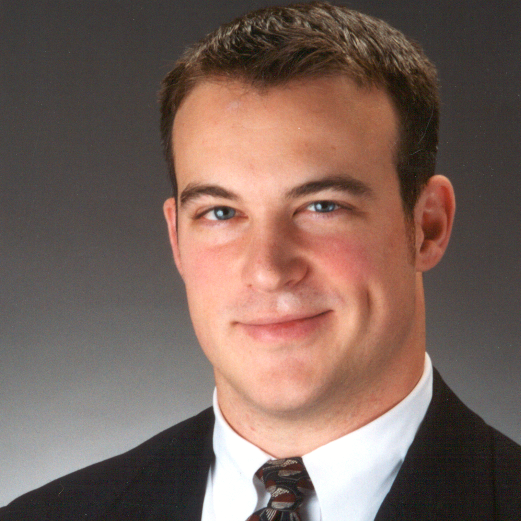
    Cort T. Malone is a shareholder in the New York and Stamford offices of Anderson Kill and is the Chair of the firm’s Biometric Liability Insurance Recovery Group. Cort is an experienced litigator, focusing on insurance coverage litigation and dispute resolution, with an emphasis on commercial general liability insurance, cyber insurance, employment practices liability insurance, advertising injury insurance, directors and officers insurance, and property insurance issues. He is also a member of the firm’s Restaurant, Retail & Hospitality, Environmental Law, Cyber Insurance Recovery, and COVID Task Force groups.

    Cort also possesses extensive commercial litigation experience, including arbitration and alternative dispute resolution relating to a variety of tort, contract, and regulatory disputes. While attending the Fordham University School of Law, Cort was a member of the Fordham Moot Court Board and garnered several awards for both oral argument and brief writing skills at various inter- and intra-school competitions. He spent five years teaching a first-year Legal Writing course as an adjunct professor at Fordham Law.

    Want to appear on the Emerging Litigation Podcast?

    Send us your idea! 

    Tags