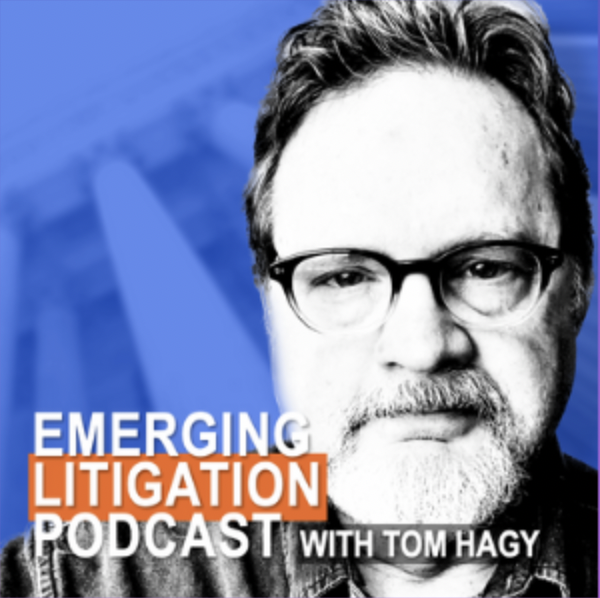
Author: Tom Hagy

  • Generative AI & Insurance

    Generative AI & Insurance

    Generative AI & Insurance

    Gain an understanding of how generative AI is reshaping insurance by examining its emerging risks, practical use cases, E&O considerations, and potential impacts on claims handling and policy design.

    Many businesses are exploring AI to enhance productivity and profitability, and the insurance industry is no exception. Wheels are turning to developing AI tools to assist insurance companies in their operations – both on the underwriting and claims handling sides of the business.

    This exciting webinar will discuss the possibilities that lie ahead for AI and insurance. Our panelists on the front lines will address:

    Generative AI Risks and Insurance Considerations

    Practical Use Cases of AI in Insurance

    E&O Considerations for Insurance Agents and Brokers

    Intersection of Insurance and AI: An Eye on Claims Handling

    What tools and goals are in the works?

    Who will they help?

    What are the benefits and challenges that lie ahead?

    In addition, we will explore the potential for a change in the landscape of insured risks that policyholders face and how insurance products and wordings might adapt as we all move towards a brave new world.

    Learning Objectives

    By the end of this webinar, you’ll gain a solid foundation in:

    • Why AI is suddenly everywhere—and why it matters now

    • What generative AI is, and how it’s reshaping risk landscapes

    • The emerging liabilities and legal uncertainties tied to AI-generated content

    • Key insurance considerations and how to evaluate coverage for evolving exposures

    Whether you’re in risk management, underwriting, legal, or leadership, this session offers the clarity you need to navigate AI’s role in today’s insurance environment.

    TAKE IT NOW

    Available now to CeriFi LegalEdge subscribers. Don’t subscribe? Don’t despair. Use code HB20 for 20% off. Or, HBSub20 for 20% off a full solo subscription. While supplies last.

    Speakers

    Marshall Gilinsky

    Marshall GilinskyShareholder | Anderson Kill, Boston

    Marshall Gilinsky is a shareholder in Anderson Kill’s Boston office and co-chair of the firm’s Sexual Harassment and Abuse Insurance Recovery and Sports, Media & Entertainment Groups. With over 20 years of experience representing policyholders, he has recovered hundreds of millions of dollars in high-stakes insurance claims, including those stemming from 9/11, Hurricane Katrina, and Superstorm Sandy. Marshall focuses on property, business interruption, D&O, E&O, and captive insurance disputes. A frequent writer and speaker on insurance issues, he’s been quoted in The New York Times, The Wall Street Journal, CNN, and Business Insurance.

    Tiago Henriques

    Tiago HenriquesChief Underwriting Officer | Coalition Insurance

    Tiago Henriques is the Chief Underwriting Officer at Coalition, overseeing technical underwriting and security research. Previously, he founded BinaryEdge, acquired by Coalition, and held roles at Microsoft (NASDAQ:MSFT), UBS (NYSE: UBS), and Swisscom. With deep expertise in cyber risk, Tiago shapes innovative underwriting strategies to protect businesses from emerging threats.

    Marc Schein

    Marc ScheinRisk Management Consultant | Marsh McLennan Agency

    Marc Schein is a Risk Management Consultant at Marsh, specializing in customized commercial insurance programs and Total Cost of Risk (TCoR) assessments. With expertise across industries including food services, real estate, and professional services, he advises on cyber, E&O, EPLI, and more. A Certified Insurance Counselor (CIC), he’s a recognized speaker on cybersecurity and risk transfer. Marc earned his B.S. in Business Economics with a Communications minor from SUNY Oneonta, where he made Dean’s List.

    Colleen M. Murphy

    Colleen M. MurphyPartner | Goldberg Segalla

    Colleen M. Murphy leads Goldberg Segalla’s insurance regulatory team, advising clients on domestic and international insurance and reinsurance matters. With over 25 years of experience, she represents insurers, brokers, TPAs, and other professionals in regulatory, licensing, and E&O matters nationwide. Colleen has defended hundreds of E&O cases and class actions, handled complex regulatory enforcement, and led major insurance transactions, including a $350M cross-border Insurtech deal. She is widely recognized for her strategic counsel on risk management, regulatory compliance, and bad faith litigation.

  • Artificial Intelligence Litigation Roundup

    Artificial Intelligence Litigation Roundup

    Emerging Litigation Podcast

    Emerging Litigation PodcastProduced by HB Litigation

    Interviews with leading attorneys and other subject matter experts on new twists in the law and how the law is responding to new twists in the world.

    Interested in contributing an article? Email us at Editor@LitigationConferences.com.

    Artificial Intelligence Litigation Roundup

    Algorithmic Pricing and Copyright Violations Dominate First Wave of A.I. Fights

    The rapid evolution of artificial intelligence (AI) is generating a surge of legal challenges, particularly in the realms of antitrust and copyright law. Below is an abstract of an article appearing on the Mogin Law LLP website, edited by Tom Hagy. Read the complete article for a snapshot of the first wave of AI-related litigation. In addition to his roles at Critical Legal Content and HB Litigation, Hagy is editor-in-chief of the Mogin Law Blog and Competition Law News.  

    Antitrust: Algorithms and Collusion in Focus 

    AI-driven pricing tools are at the center of groundbreaking antitrust lawsuits. Notable among these are multifamily rental housing actions against RealPage, Inc. and Yardi Systems, Inc. Plaintiffs allege that these companies, through their revenue management software, facilitated horizontal price-fixing conspiracies by enabling competitors to delegate pricing decisions to algorithmic systems that aggregate sensitive commercial data. The RealPage case, centralized in the Middle District of Tennessee, and the Yardi litigation, pending in Washington’s Western District, spotlight the increasing scrutiny over algorithmic pricing’s role in potential market collusion. Plaintiffs argue that such practices have driven up rental rates nationwide, seeking treble damages and injunctive relief under the Sherman Act. 

    Other significant antitrust actions include a health care providers’ suit against MultiPlan, Inc. and several insurers. Here, plaintiffs claim that MultiPlan’s pricing platform suppressed out-of-network reimbursement rates through a “hub-and-spokes” horizontal agreement, surviving motions to dismiss and setting the stage for further litigation. In the hospitality sector, cases against Cendyn and casino hotels in Las Vegas and Atlantic City allege algorithmic price-fixing via shared software, but district courts have dismissed complaints due to insufficient evidence of collusion and lack of shared proprietary data. Appeals are pending, and the DOJ’s intervention underscores the high stakes as courts consider the implications of algorithm-driven market conduct. 

    Additionally, the construction equipment rental market faces its own proposed class action, with Dwight Roberts Construction Company accusing major rental firms and Rouse Services LLC of coordinated price fixing using sensitive data and enforced pricing strategies—a case with the potential to reshape industry practices. 

    Copyright: The Battle Over AI Training Data 

    Copyright litigation is equally dynamic, with publishers, artists, software developers, and authors challenging the unlicensed use of their works for AI training. Lawsuits against companies like Cohere Inc., Stability AI, Google, GitHub, Microsoft, OpenAI, and Meta span allegations from direct copyright infringement to unfair competition and DMCA violations. Plaintiffs assert that their written works, images, code, and proprietary content were used without authorization to develop AI models that generate outputs competing with the original works, threatening revenue streams and rights of creators. 

    Defendants frequently invoke fair use, public availability of data, and the transformative nature of AI-generated outputs as defenses. The outcomes of these cases—some at the summary judgment or trial phase, others under renewed motions to dismiss—will likely set industry-shaping precedents regarding the scope of copyright protection, the enforceability of open-source licenses, and acceptable practices for training AI language models. 

    Conclusion 

    Orange and grey logoAI’s integration into core business practices has accelerated legal conflicts with broad implications for competition, creativity, and consumer protection. Attorneys should monitor the ongoing developments in these landmark cases for guidance on compliance and risk management. Read the complete article on the Mogin Law LLP website. Also, read Big Tech’s Decade of Artificial Intelligence Shopping, also on the Mogin Law site.  

  • PFAS Litigation Deepens as 3M Reaches $450M Deal with New Jersey

    PFAS Litigation Deepens as 3M Reaches $450M Deal with New Jersey

    Emerging Litigation Podcast

    Emerging Litigation PodcastProduced by HB Litigation

    Interviews with leading attorneys and other subject matter experts on new twists in the law and how the law is responding to new twists in the world.

    Interested in contributing an article? Email us at Editor@LitigationConferences.com.

    PFAS Litigation Deepens as 3M Reaches $450M Deal with New Jersey

    From water contamination to consumer products, the legal front over ‘forever chemicals’ is expanding fast.

    By Jennifer Holmes

    The true cost of forever chemicals is only beginning to emerge.

    A Landmark Settlement in Environmental Law

    The legal and financial fallout surrounding per- and polyfluoroalkyl substances (PFAS), commonly known as “forever chemicals,” continues to grow, with 3M recently agreeing to a $450 million settlement with the state of New Jersey. Announced in May 2025, this deal marks one of the most significant developments in PFAS litigation to date and underscores the expanding landscape of environmental, insurance, and product liability concerns tied to these persistent compounds.

    New Jersey’s lawsuit alleged that 3M knowingly contaminated water supplies with PFAS through decades of manufacturing and product use. PFAS are highly resistant to heat, water, and oil—properties that make them useful in a wide range of consumer products but also extremely difficult to eliminate from the environment. The chemicals have been linked to various health risks, including cancer, thyroid disease, and reproductive issues.

    The settlement, announced in May 2025, follows a series of similar agreements, including 3M’s $850 million payout to the state of Minnesota in 2018 over PFAS contamination in the Twin Cities area.

    However, the New Jersey deal is not yet final. A judicial consent order covering both claims tied to the Chambers Works site and broader statewide contamination is set to be published in the New Jersey Register on July 7, 2025, initiating a 60-day public comment period before it can be approved by the court. Under the agreement’s current structure, 3M will pay $210 million upfront for site-specific claims and reserve an additional $75 million for future statewide claims between 2030 and 2050—payments that will be distributed over a 25-year period.

    Meanwhile, a separate bench trial continues against DuPont and Chemours over PFAS contamination at the Chambers Works facility. The New Jersey Attorney General’s office has alleged violations under the Spill Compensation and Control Act and the Water Pollution Control Act, pursuing accountability from other major players beyond 3M.


    Product Liability Moves Into the Spotlight

    While states and municipalities pursue cleanup and remediation costs, plaintiffs’ attorneys are increasingly targeting major brands alleged to have sold PFAS-containing products without adequate disclosure. One prominent example is Apple, which is now facing legal scrutiny over its watch bands.

    In January 2025, a class-action lawsuit was filed in the U.S. District Court for the Northern District of California, alleging that certain Apple Watch bands—including the Sport Band, Ocean Band, and Nike Sport Band—contain harmful levels of PFAS. The suit claims that these chemicals can be absorbed through the skin and enter the bloodstream, posing health risks to consumers.

    In response to earlier media coverage, Apple defended the safety of its products and denied that the bands pose health risks. The lawsuit raises broader questions about product design, corporate responsibility, and the evidentiary standards required in toxic tort claims involving emerging materials.


    Insurance Disputes and Recovery Challenges

    PFAS litigation is also creating ripple effects in the insurance industry. As claims multiply, insurers are increasingly resisting PFAS-related payouts, citing policy exclusions or arguing that such liabilities fall outside standard coverage.

    Nonetheless, policyholders may still find avenues for recovery under older general liability policies—though success will likely hinge on state-specific precedent and policy language. Because modern general liability policies frequently include pollution or PFAS-specific exclusions, many policyholders are turning to environmental liability policies, which are more tailored to address contamination and cleanup claims. However, these policies are highly variable and proprietary, making legal interpretation more complex.


    Regulatory Uncertainty Slows Accountability

    Further complicating the legal landscape is ongoing regulatory uncertainty. In 2020, the Trump administration withdrew a draft EPA rule that would have classified PFAS as hazardous substances under CERCLA. That rollback continues to reverberate in the courts, creating challenges for plaintiffs in the absence of uniform federal standards.

    In contrast, the Biden administration finalized the first-ever national drinking water standards for six PFAS compounds in April 2024, including a 4 parts per trillion limit for PFOA and PFOS. However, the Trump administration has since announced plans to roll back portions of these regulations, citing compliance cost concerns for utilities and chemical manufacturers. This regulatory whiplash continues to affect litigation timelines and may delay meaningful accountability.


    What Comes Next?

    For 3M, the New Jersey settlement is part of a broader effort to resolve thousands of PFAS-related claims across the U.S.—but it may only scratch the surface of potential liability. As litigation extends from manufacturers to retailers and from public water systems to individual consumer claims, the true cost of “forever chemicals” is still unfolding.

    With billions of dollars at stake, PFAS litigation is shaping up to be one of the most complex and consequential mass tort landscapes of the decade—blending environmental law, product liability, insurance coverage, and regulatory policy into a sprawling legal challenge with profound implications for public health and corporate accountability.


    Jennifer Holmes is a former journalist turned business writer and analyst. She can be reached at Editor@LitigationConferences.com.

  • Federal court rejects First Amendment defense in chatbot wrongful death case

    Federal court rejects First Amendment defense in chatbot wrongful death case

    Emerging Litigation Podcast

    Emerging Litigation PodcastProduced by HB Litigation

    Interviews with leading attorneys and other subject matter experts on new twists in the law and how the law is responding to new twists in the world.

    Interested in contributing an article? Email us at Editor@LitigationConferences.com.

    Federal court rejects First Amendment defense in chatbot wrongful death case

    By: Justin Ward

    The court is not prepared to hold that Character AI’s output is speech.

                        — U.S. District Judge Anne Conway

    In late May, a US district court judge rejected Character AI’s motion to dismiss a wrongful death case on the grounds that the company’s product – AI chatbots that imitate fictional characters – have First Amendment protections under the constitution. The court decided not to throw out a case brought by the mother of a user who committed suicide, arguing that the court “was not prepared to hold that Character AI’s output is speech.”

    Megan Garcia sued Character AI last fall after her 14-year-old son Sewell Setzer III took his own life. Setzer became obsessed with the company’s AI-generated reproduction of the Game of Thrones character Daenerys Targaryen, which was affecting his schoolwork and mental health. When Garcia confiscated his phone, Setzer committed suicide.

    Mirroring legal arguments brought against social media companies, Garcia’s suit alleges that Character AI negligently marketed its product to teens and children while fully understanding the potential harms it could cause to developing brains.

    Moving to dismiss, Character AI contended that Garcia’s suit infringed on the First Amendment rights of its users and the company. The company likened its product to video games, which the Supreme Court considers constitutionally protected speech.

    However, US District Judge Anne Conway wrote in her decision that this analogy fell short. Video games are protected speech, Judge Conway argued, because they represent their creators’ intentional expressions, whereas the large language models that power Character AI’s product are merely trained on large volumes of text to respond to queries. Therefore, they are not “expressive” enough to be considered speech under the Constitution.

    At the same time, Judge Conway did grant some of Character AI’s motions. She dismissed Alphabet Inc, the parent company of Google, which licenses Character AI’s LLM, from the suit. The court also dismissed without prejudice Garcia’s claim of intentional infliction of emotional distress.


    Justin Ward is a Seattle-based investigative reporter specializing in politics, courts, and criminal justice. His work can be found in national and local media outlets, including USA Today, the Southern Poverty Law Center, and The Seattle Stranger. He can be reached at justinwardtexan@yahoo.com.

  • Class action alleges Ziploc misled consumers about harmful microplastics in its products

    Class action alleges Ziploc misled consumers about harmful microplastics in its products

    Emerging Litigation Podcast

    Emerging Litigation PodcastProduced by HB Litigation

    Interviews with leading attorneys and other subject matter experts on new twists in the law and how the law is responding to new twists in the world.

    Interested in contributing an article? Email us at Editor@LitigationConferences.com.

    Class action alleges Ziploc misled consumers about harmful microplastics in its products

    By: Justin Ward

    “By pairing the ‘Microwave Safe’ and ‘Freezer’ labels on product packaging, SC Johnson implies that this practice is safe,” the suit alleges.

    A California woman initiated a class action lawsuit against SC Johnson in May, claiming that the company did not disclose the potential risks of microplastic leaching in its Ziploc brand plastic storage containers and bags. The suit alleges that SC Johnson made a “material omission” when it neglected to notify consumers that its products contain polyethylene and polypropylene, which have been shown to transfer microplastics into food.

    In the civil complaint, the plaintiff claims that SC Johnson’s “Microwave Safe” and “Freezer” labels on its storage products mislead consumers to think that it’s safe to freeze and reheat food inside their containers. The lawsuit cites research showing that freezing or reheating food stored in polyethylene and polypropylene containers can accelerate microplastic leaching.

    Furthermore, reheating food that has been previously frozen can worsen the “vulnerability to microwaving due to the weakened structure caused by freezing,” according to the suit. By pairing the “Microwave Safe” and “Freezer” labels on product packaging, SC Johnson implies that this practice is safe, the suit alleges.

    Though the SC Johnson includes extensive instructions in its packaging on how to safely reheat foods in its Ziploc containers, these contain no warnings about the risks posed by heating the containers themselves. When exposed to high temperatures, polypropylene products can release microplastics at rates up to 16.2 million particles per liter, according to one study on plastic baby bottles.

    Responding to the suit, a spokesperson for SC Johnson called the claims “without merit” and stated: “Plastic is in the food we eat, the water we drink, and the air we breathe, and it comes from many sources. That’s why we are strong advocates for plastic regulation, supporting a global plastics treaty, and sharing the latest scientific research.”

    However, the plaintiff in this case is not alleging a specific harm caused by SC Johnson’s product, which would be difficult to prove, given the multiple sources of microplastics in the environment. Following the lead of other high-profile “forever chemical” and microplastics class actions, the plaintiff is only contending that SC Johnson failed to warn consumers about potential harms, a more straightforward claim.


    Justin Ward is a Seattle-based investigative reporter specializing in politics, courts, and criminal justice. His work can be found in national and local media outlets, including USA Today, the Southern Poverty Law Center, and The Seattle Stranger. He can be reached at justinwardtexan@yahoo.com.

  • What DEI Changes Mean for Employers Featuring Patice Holland

    What DEI Changes Mean for Employers Featuring Patice Holland

    What DEI Changes Mean for Employers Featuring Patice Holland

    Concepts: DEI; Employment Law; Discrimination

    As political forces target Diversity, Equity, and Inclusion programs, companies reassessing their DEI strategies must tread carefully—because, while the landscape has shifted, employment discrimination law has not.

    Joining me on the Emerging Litigation Podcast is employment law attorney Patice L. Holland, a Principal at WoodsRogers in Roanoke, Va. Patice shares with me what companies need to know as they reassess their DEI initiatives in light of President Trump’s recent executive orders and increasing public and political pressure.

    Patice explains that while the administration has moved to eliminate disparate impact liability and deprioritize federal enforcement, core legal protections under Title VII and state laws remain fully intact. Employers—especially federal contractors—face complex new certification requirements and exposure to potential False Claims Act liability, while private businesses must weigh operational risk, employee morale, and public perception in their decisions.

    We also examine the ripple effects across corporate America—from Costco and Apple, which continue to be invested in DEI, to Target and Amazon, which scaled back initiatives and faced backlash. Patice suggests practical considerations for navigating any changes, emphasizing clear communication, leadership buy-in, and careful risk assessment.

    Listen in as she explains the real impact and power of the executive orders, how obligations differ for government contractors and private companies, the legal and strategic risks of altering DEI policies, and the real-world business consequences of staying the course—or stepping back.

    Have thoughts or want to contribute to future episodes? Email: Editor@LitigationConferences.com

    Tom Hagy
    Litigation Enthusiast and
    Host of the Emerging Litigation Podcast
    Home Page
    LinkedIn

    Patice Holland

    Patice HollandPrincipal, WoodsRogers

    Patice is an attorney with a diverse litigation practice and experience. She focuses primarily on employment litigation defense, employment investigations, transportation law (FELA, SAA, LIA), general civil and commercial litigation, commercial and residential landlord-tenant litigation, and insurance defense.

    She has extensive experience litigating cases in state and federal courts as well as in mediation. Through her litigation experience, Patice has garnered extensive knowledge in defending witness and document subpoenas and FOIA requests.

    As Chair of the firm’s E-Discovery group, she advises clients on all aspects of E-discovery, including litigation holds, custodial interviews/data collection and preservation, and review and production of electronically stored information (ESI). Patice has been involved in extensive discovery matters in complex litigation in both state and federal courts. She earned her J.D. from Stetson University College of Law.

    podcast logo face


    Want to appear on the Emerging Litigation Podcast?


    Send us your idea! 

    It might even make this man smile. “But I am smiling here.”

    No. No he’s not.

  • Arson Investigations: Best Practices for Establishing Fraud and Avoiding Bad Faith

    Arson Investigations: Best Practices for Establishing Fraud and Avoiding Bad Faith

    Emerging Litigation Podcast

    Emerging Litigation PodcastProduced by HB Litigation

    Interviews with leading attorneys and other subject matter experts on new twists in the law and how the law is responding to new twists in the world.

    Interested in contributing an article? Email us at Editor@LitigationConferences.com.

    Arson Investigations

    Best Practices for Establishing Fraud and Avoiding Bad Faith 

    By: Melissa A. Segel

    Diligent claim handling means using all resources that the policy and applicable law provides while allowing inherent curiosity to lead to the proper legal and ethical conclusion.

    It has been decades since arson was graduated from a mere property crime to an economic crime, one that triggers many billions of dollars’ worth of fraudulent claims each year. Fortunately, the technologies available to investigate these pervasive criminal acts have evolved as well. When handling fire damage claims, however, the duties of insurance companies and best practices to mitigate risk remain as important as ever. 

    In 1979, the U.S. Senate conducted a study on the role of the insurance industry in dealing with arson for profit, noting the industry’s estimate of arson payouts for just one year, 1977, was $1.6 billion. That would be more than $8 billion today.  

    In 1980, the Bureau of Alcohol, Tobacco, Firearms and Explosives (ATF) ranked arson for profit among the nation’s fastest-growing crimes.  

    It was in 1996 that firefighting information service, Firehouse, declared that setting fires had evolved from a property crime into an “economic crime used to extort money from insurance companies.”  

    By 1998, property loss resulting from arson exceeded $3 billion ($7.5 billion in today’s money).  

    From 2014 to 2023 dollar-value losses due to residential arson increased by 26%.  

    In 2023, ATF estimated that 25% of all fires reported were due to arson.  

    Arsonists don’t just target buildings and structures. The Coalition Against Insurance Fraud reports that in 2020 nearly 9,000 car fires in the U.S. were set by arsonists.  

    Finding that arson was not only a serious economic crime but a blight on society, the recommendations that came out of the 1979 Senate investigation included a focus on underwriting practices, urging insurance carriers to develop systems to detect suspicious fires and encouraging the modification of privacy and fair claims practices laws.  

    It remains important today for insurance carriers to develop resources to protect themselves from this pervasive economic crime with prompt investigations, good faith claims handling, and vigorous defenses. Insurance carriers and their experts must stay up to date on the latest tools and technology available, including the use of artificial intelligence (AI), 3D scanning, mapping software, drone imaging and accelerant detection, alongside the tried-and-true methodologies such as canine alerts from trained arson dogs.  

    Establishing Arson Fraud 

    Typically, insurance companies do not file suit against their insureds for arson, instead choosing to deny and defend the claim without taking an affirmative action. If an insured files suit and the insurance company asserts an arson defense, East Park, Inc. v. Federal Insurance Co. (794 F.2d 616, 618–19 (11th Cir. 1986)) established that the defense must provide evidence that: (1) the fire was of incendiary origin, (2) the insured had the motive to have the fire set, and (3) either the insured had the opportunity to have the fire set or unexplained surrounding circumstantial evidence implicate the insured. Essentially, “evidence of incendiary origin and motive by themselves are not sufficient to establish an arson defense; there must be in addition some evidence which would link the suspect to the arson.” Georgia case law, based on Blackwell v. American Southern Ins. Co. (121 Ga. App. 671, 672 (1970)), also will not permit an insured to recover under a policy if a preponderance of credible evidence (direct or circumstantial) establishes that a loss was intentional and that an insured was involved in causing or procuring a loss.  

    Key elements for success in an arson fraud case include a prompt and thorough on-site investigation to establish that the fire was the result of an intentional human act, detailed witness interviews, and gathering admissible evidence to establish motive and opportunity. Insurance carriers should not rely on responding firefighters to establish that the fire was incendiary. Instead, once red flags are identified, insurance carriers should retain a qualified and independent origin and cause investigator to conduct a scene inspection and be prepared to testify and present evidence of their findings in court. Just as insurance carriers need to utilize new technology, origin and cause experts must as well. The NFPA 921 Guide for Fire and Explosion Investigations, widely recognized as the fire investigation “bible,” now includes updates on fire patterns, arc mapping and fire classification. Photographs and video tell a compelling story.  

    Claim representatives should also conduct prompt witness interviews, including of the insureds, but certainly should not leave out a thorough examination under oath (EUO) of the insured(s). An EUO is typically taken by legal counsel and is critical because unlike a recorded statement, an EUO can be useful as impeachment evidence should the matter go to trial. An EUO also gives insurance carriers earlier and broader access to information than a deposition. One example of the benefits of an EUO is that an insured may not invoke legal privileges, even the fifth amendment right against self-incrimination. Harary v. Allstate Ins. Co., 988 F. Supp. 93, 103 (E.D.N.Y. 1997), aff’d, 162 F.3d 1147 (2d Cir. 1998) (an insured may not use her Fifth Amendment privilege as a sword against her fire insurer); Pervis v. State Farm Fire and Cas. Co., 901 F.2d 944 (11th Cir. 1998) (holding that the fifth amendment privilege against self-incrimination did not excuse the insured from fulfilling his contractual obligation to answer questions that were material to insurer’s investigation during examination under oath). 

    Utilizing the resources of the policy’s cooperation requirements, insurance carriers should also demand that the insured fully cooperate and produce critical and relevant records and documents. This evidence can then be used to establish that the insured had both the motive and the opportunity to set the fire. Collected items should include activity records, such as phone records and social media posts, financial records showing income and expenditures, and documentation to support ownership of the items claimed. It is important to keep in mind that if an insured fails to cooperate, that in and of itself can provide the insurance carrier with an affirmative defense. Halcome v. Cincinnati Ins. Co., 254 Ga. 742, 344 S.E.2d 155 (1985); Allstate Ins. Co. v. Hamler, 247 Ga. App. 574, 545 S.E.2d 12 (2001); Diamonds & Denims v. First of Ga. Ins. Co., 203 Ga. App. 681, 417 S.E.2d 440 (1992).  

    Lawsuits and Bad Faith  

    If an insured files suit after a claim is denied for arson, pretrial discovery plays a critical role in uncovering fraud since the determination of whether an insurer’s decision was made in bad faith depends upon the sufficiency of its evidence in court, not the information it had at the time the claim was denied. Attorneys should seek legally credible and reliable copies of all documents used for the arson and fraud defense to ensure the records will be admissible in litigation. This includes getting certified copies of those phone records and bank statements secured in the preliminary investigation. It is important to document the claim file thoroughly with as much information as possible but also to understand that certain information may require a subpoena to be obtained from other sources if the claim progresses into litigation.  

    In order to avoid bad faith and potential extra-contractual penalties in this current litigious environment, insurance claim professionals must conduct their claim investigations while considering regulatory requirements, case law and industry standards, along with the potential legal ramifications for failing to adequately investigate suspicious claims. Most states have an unfair claims practices act or similar statute that penalizes insurance carriers who unreasonably fail to settle covered claims. See e.g. Georgia statutes O.C.G.A. §§ 33-4-6, 33-4-7. It is important to stay up to date on relevant state laws, both statutory and common law, to ensure compliance with processes and time limits. 

    Keep in mind that most states require an insurer to satisfy not only the bad faith statute’s procedural requirements but also its substantive requirements. For example, under Georgia law, there can be no finding of bad faith under O.C.G.A. § 33-4-6 if “it can be said as a matter of law that there was a reasonable defense which vindicates the good faith of the insurer,” and that “the insurer had reasonable and probable cause for making a defense to the claim.” Colonial Life & Accident Ins. Co. v. McClain, 243 Ga. 263, 265 (1979). Additionally, with no statutory definition of “bad faith,” Georgia courts have defined it as a “frivolous and unfounded refusal in law or in fact” to provide coverage according to the terms of the policy. See e.g. Interstate Life & Accident Ins. Co. v. Williamson, 220 Ga. 323 (1964). Furthermore, whether the insurer’s denial was “frivolous or unfounded” is determined based on the evidence presented at trial, not at the time the claim decision was made. Hudson v. State Farm Mut. Auto. Ins. Co., 201 Ga App. 351 (1991). 

    Investigating and Reporting Arson Fraud 

    While conducting thorough investigations to root out arson, carriers also must consider the potential exposure for failing to investigate claims, whether based upon a cost-benefit analysis or upon some urgency in processing claims, such as during a catastrophe. Arson and insurance fraud are crimes in every state. Many states have insurance fraud bureaus or departments that investigate illegal insurance activities (whether by carriers or by policyholders).  

    Several states require insurance carriers to have mandatory fraud plans and report insurance fraud when discovered. Many states have enacted legislation requiring insurance companies to notify law enforcement authorities when arson or fraud is suspected and to cooperate in third-party governmental investigations of arson and fraud claims while giving immunity from criminal or civil prosecution for such cooperation. See e.g. Georgia: O.C.G.A. §§ 25-2-33, 33-1-16; Florida: Fla. Stat. §§ 633.126, 626.989; Illinois: 215 ILCS 145/1, 215 ILCS 5/155.24; Michigan: MCLS §§ 29.4, 500.4509. However, such immunity from criminal and civil liability is often limited to insurance carriers who cooperate and report in good faith in the investigation of suspected arson and fraud.  

    Investigating arson and fraud is, in many states, an insurer’s obligation. “An insurance company has a ‘responsibility to marshal all … facts’ necessary to make a determination as to coverage ‘before its refusal to pay.’” Jones v. Alfa Mut. Ins. Co., 1 So. 3d 23, 36 (Ala. 2008) quoting Aetna Life Insurance Co. v. Lavoie, 505 So.2d 1050, (Ala.1987) (finding the question of bad faith could go to a jury when the evidence showed that the carrier failed to investigate the pre-loss condition of the house). 

    Insurance carriers should then follow the requirements of their respective state laws in releasing information to the authorized official, whether the state fire marshal, insurance commissioner or other law enforcement agency. For example, in Georgia, O.C.G.A. § 33-1-16 requires an insurer to comply with requests for information from the insurance commissioner and the commissioner’s investigative agents but does not provide a specific definition identifying the appropriate law enforcement authorities to whom an insurer may release information. Instead, the statute generally identifies qualified law enforcement agencies as any federal, state, county or consolidated police or law enforcement departments and any prosecutors or district attorneys. Thus, the list of individuals to whom insurance carriers may or are obligated to release information appears very broad.  

    Consequently, there is seemingly no limit on the number of governmental investigative agencies to which an insurer should produce its claims file. As such, for those insurance carriers who wish to rely upon the statute in reporting suspected arson or fraud to law enforcement authorities, it would probably be beneficial to narrowly construe the statute when providing information voluntarily.  

    In other words, if there is a question as to the propriety of voluntarily releasing information to a particular public authority not listed in the statute, the insurer should err on the side of caution and not voluntarily release that information.  

    Although certainly not a new problem, arson continues to be an ongoing concern for insurance companies. Diligent claim handling means using all resources that the policy and applicable law provides while allowing inherent curiosity to lead to the proper legal and ethical conclusion. 

    Key Takeaways

    • Arson is a serious economic crime that impacts society, necessitating robust underwriting practices in the insurance industry.

    • Insurance companies should utilize modern technology, such as AI, 3D scanning, drone imaging, and accelerant detection, to investigate suspicious fires.

    • Establishing an arson fraud case requires proving the fire’s incendiary origin, the insured’s motive, and their opportunity to set the fire.

    • Insurance carriers should promptly conduct thorough on-site investigations and witness interviews, including examinations under oath (EUO).

    • Failure of the insured to cooperate in the investigation can provide the insurance carrier with an affirmative defense.

    • Insurance carriers must adhere to regulatory requirements, case law, and industry standards to avoid bad faith and extra-contractual penalties.

    • Most states have laws requiring insurance companies to report suspected arson and fraud, with immunity often granted for good faith cooperation.

    • Thorough documentation and legally credible evidence are crucial for defending against claims of bad faith in court.


    Melissa A. Segel, a partner at Swift Currie, focuses her practice on insurance coverage matters with an emphasis on defending against bad faith and fraudulent claims, including those related to arson; automobile accidents; and theft in homeowner, business and auto insurance policies. She may be reached at melissa.segel@swiftcurrie.com. 

  • Facing PFAS lawsuit, Apple claims watch bands are safe, but what does the evidence say?

    Facing PFAS lawsuit, Apple claims watch bands are safe, but what does the evidence say?

    Emerging Litigation Podcast

    Emerging Litigation PodcastProduced by HB Litigation

    Interviews with leading attorneys and other subject matter experts on new twists in the law and how the law is responding to new twists in the world.

    Interested in contributing an article? Email us at Editor@LitigationConferences.com.

    Facing PFAS lawsuit, Apple claims watch bands are safe, but what does the evidence say?

    By: Justin Ward

    The plaintiffs argue that Apple marketed its smartwatch as ‘the ultimate device for a healthy life’—while knowing it contained hazardous forever chemicals.

    Apple has been doing damage control ever since a study found that its smartwatch bands contained “elevated levels” of so-called forever chemicals. Lawyers in California also filed a class action lawsuit earlier this year alleging that the company misleadingly marketed the watches as “safe” and “healthy.” The University of Notre Dame tested 22 smartwatch bands coated in fluoroelastomers to make the rubber materials more resistant to sweat and oil. They found that nine of them—including bands used in Apple smartwatches— had “very high concentrations” of perfluorohexanoic acid (PFHxA). This chemical is a polyfluoroalkyl substance (PFAS), known as a “forever chemical” because it breaks down slowly in the environment and builds up in the human body over time, causing health problems. The company has responded publicly, maintaining that the watch bands are “safe for users to wear” and referring to Apple’s “rigorous testing and analysis” of materials before bringing products to the market.

    At the same time, the plaintiffs in the class action lawsuit point to studies showing that PFAS can be absorbed through the skin. However, the Notre Dame study notes that research on dermal absorption is “limited,” and other research on durable waterproof clothing containing PFAS shows that forever chemicals are less likely to enter through the skin compared to other pathways, such as eating or drinking contaminated food and water or inhaling dust.

    The lawsuit joins other large class action lawsuits alleging that clothing made with PFAS causes lasting health hazards, including cancer. Firefighters have been at the forefront of PFAS litigation nationwide, winning billions in settlements against chemical companies over the use of PFAS in foam. More recently, they’ve turned their attention to protective gear, which is often made by the same companies, including 3M and DuPont. For example, Connecticut firefighters’ unions launched a $5 million lawsuit last summer seeking relief from the companies that produce their equipment. In February, a man in Vallejo sued Gore-Tex for allegedly using PFAS in its raincoats. Notably, REI prevailed in a similar case last year after the plaintiff failed to prove its jackets contained significant levels of PFAS.

    Forever chemicals are ever-present in the environment and can enter the body from multiple sources, so the plaintiffs in the Apple lawsuit may find it difficult to establish that they suffered actual damages from wearing Apple watches versus other more common pathways like inhalation or ingestion. Instead, the plaintiffs are focusing on false advertising as their primary cause of action, highlighting Apple’s marketing of its smartwatch as “the ultimate device for a healthy life.” They argue that Apple deceptively advertised their products as “safe” in violation of California’s Unfair Competition Law. The plaintiffs contended that Apple knew forever chemicals are hazardous and that their products contained PFAS.

    Apple announced in 2022 that it would completely phase out PFAS in its supply chain but claimed that existing materials containing PFAS are “safe during product use.”


    Justin Ward is a Seattle-based investigative reporter specializing in politics, courts, and criminal justice. His work can be found in national and local media outlets, including USA Today, the Southern Poverty Law Center, and The Seattle Stranger. He can be reached at justinwardtexan@yahoo.com.

  • AI tool that summarizes evidence from cracked phones wades into uncharted constitutional waters

    AI tool that summarizes evidence from cracked phones wades into uncharted constitutional waters

    Emerging Litigation Podcast

    Emerging Litigation PodcastProduced by HB Litigation

    Interviews with leading attorneys and other subject matter experts on new twists in the law and how the law is responding to new twists in the world.

    Interested in contributing an article? Email us at Editor@LitigationConferences.com.

    AI tool that summarizes evidence from cracked phones wades into uncharted constitutional waters

    By: Justin Ward

    The Fourth Amendment does not permit law enforcement to rummage through data, but only to review information for which there is probable cause.
    — Jennifer Granick, ACLU

    Civil rights organizations are sounding the alarm over a newly released platform that leverages generative AI to analyze large volumes of data from confiscated phones and sniff out traces of criminal activity. While evidence obtained using this brand-new technology has yet to be challenged, watchdogs argue the software violates Fourth Amendment protections against illegal search and seizure.

    In early February, Israeli digital forensics company Cellebrite announced that it would add generative AI to its Guardian evidence-management platform. Guardian complements the primary service Cellebrite offers to police: the ability to unlock and decrypt cell phones. Cellebrite bills generative AI as a time-saving feature that will help detectives suss out useful information from gigabytes of data by analyzing browser histories, summarizing chat threads, and evaluating relationships with contacts. In their press release, the company cites the example of a pilot program in a small Pennsylvania town that allegedly used the software to delve into data on a package thief’s cell phone and connect him to an “international organized crime ring.”

    However, American Civil Liberties Union attorney Jennifer Granick notes that using artificial intelligence to scan an entire phone this way flies in the face of how some courts have ruled on cell phone searches.“The Fourth Amendment does not permit law enforcement to rummage through data, but only to review information for which there is probable cause,” said Granick, who works for ACLU’s Speech, Privacy, and Technology Project. Referencing the case cited in Cellebrite’s press release, she added that “if you have some porch robberies, but no reason to suspect that they are part of a criminal ring, you are not allowed to fish through the data on a hunch, in the hopes of finding something, or ‘just in case.’”

    Courts have long upheld that cell phones should be treated differently under the Fourth Amendment than other forms of property. The Supreme Court ruled in Riley v. California that police must obtain a warrant to search a phone. However, that ruling did not establish a standard governing the scope of cell phone searches. As a result, how the Constitution is applied varies significantly across jurisdictions.

    Some courts authorize warrants for police to search entire phones if there is probable cause that doing so will yield evidence of any crime. Others may limit searches to specific categories of information — such as call logs, text messages, images — or time periods. For example, in US v. Morton, the Fifth Circuit found that police had sufficient probable cause to search Morton’s contacts, call logs, and messages for evidence of drug trafficking but lacked enough evidence to root through the pictures on his phone and ultimately discover child sexual abuse materials.

    Similarly, in Richardson v. Maryland, the Maryland Court of Appeals ruled that a warrant to search the entire contents of a teen’s cell phone was overly broad, arguing that “a search warrant for a cell phone must be specific enough so that the officers will only search for the items that are related to the probable cause that justifies the search in the first place.” So, while some courts limit its application, Cellebrite’s new tool will remain legal to use without restriction in many jurisdictions until the Supreme Court says otherwise.


    Justin Ward is a Seattle-based investigative reporter specializing in politics, courts, and criminal justice. His work can be found in national and local media outlets, including USA Today, the Southern Poverty Law Center, and The Seattle Stranger. He can be reached at justinwardtexan@yahoo.com.

  • Valid Antitrust Concerns or Partisan Objectives: Which Will Guide Trump’s FTC?  

    Valid Antitrust Concerns or Partisan Objectives: Which Will Guide Trump’s FTC?  

    Emerging Litigation Podcast

    Emerging Litigation PodcastProduced by HB Litigation

    Interviews with leading attorneys and other subject matter experts on new twists in the law and how the law is responding to new twists in the world.

    Interested in contributing an article? Email us at Editor@LitigationConferences.com.

    Valid Antitrust Concerns or Partisan Objectives: Which Will Guide Trump’s FTC?  

    By Tom Hagy

    Will retribution, like that seen with U.S. law firms, play a role in the federal government’s assessment of mergers and acquisitions? 

    It would have created the largest supermarket conglomerate in the country at a time when the price of groceries appears to be a deciding factor in whether America remains a democratic republic or morphs into a kleptocratic theocratic oligarchic authoritarian regime. Or whatever we want to call it. My current go-to is “shit show.” 

    In October 2022, Kroger and Albertsons – two of the nation’s largest chains – announced their intention to merge into what could have been called Grocery Goliath Incorporated. The deal quickly attracted the attention of antitrust enforcers, including the Federal Trade Commission and various state attorneys general, who sued to stop it in January 2024. Facing the specter of trial after failing to get the suits dismissed, the companies dropped plans for their $24.6 billion deal in December 2024.  

    The federal case was brought during the Biden administration under leadership of Chair Lina Khan, who came into the national spotlight with a paper penned during her third year at Yale Law School titled “Amazon’s Antitrust Paradox.” The premise of the piece was that today’s antitrust law framework, with its focus on consumer prices, is ill-suited to address the anticompetitive effects of platform-based businesses like Amazon. The same could be said for Meta and Alphabet and others.  

    Viewed as a fresh-thinking visionary by the left and an unqualified “antitrust hipster” by the right, the paper and Khan’s subsequent work captured the attention of President Biden who appointed her to the commission and later as head of the whole shebang. But — and this will only be news to anyone lucky enough to be opening their peepers after a five-month nap — the FTC is very different today.  

    When President Trump took office the Commission shifted to a Republican majority, with two of the five commissioners being Democrats, one of whom was appointed to a Democratic seat by President Trump during his first term. That is how it is done. Historically, the five-member panel was to have no more than three commissioners from the same party. Much like the rest of the government, though, some of the commissioners’ opinions had become increasingly infused with partisan spices.  

    Now, with Trump’s early firing of Alvaro Bedoya and Rebecca Kelly Slaughter, both Democratic commissioners who were still serving their seven-year terms, the Commission no longer has its historical balance. (I would say it now has a “hysterical imbalance,” but that would be sophomoric wordplay, although that is my sandbox.) And that is new. Slaughter was appointed in 2018 during Trump’s first term; Bedoya was appointed in 2022 by President Biden. Both are planning to sue and are confident they will be reinstated. “The President illegally fired me from my position as a Federal Trade Commissioner,” Slaughter said, “violating the plain language of a statute and clear Supreme Court precedent.” 

    Bedoya and Slaughter appeared recently on the podcast “On with Kara Swisher,” where they explained the “immense political pressure” they were under regarding the Kroger-Albertsons deal. Some politicians urged them to block it, but many said to allow it, including some Democrats. Bedoya noted evidence of the harm the merger would do. He recalled a Kroger executive saying under oath that the company was already emboldened enough to mark up milk and eggs well above inflation (it always comes back to eggs). The Commission ultimately voted to block the deal because it would decrease competition. That’s how it is done.  

    “My concern,” Bedoya told Swisher, “is what’s going to happen with the next mega grocery merger? None of that stuff is going to matter. Higher prices, lower wages, doesn’t matter. What’s going to matter is the donors … That is what I’m deathly afraid of happening at the FTC, and it’s going to screw over regular people … not billionaires.”  

    “And it’s not just Kroger,” Slaughter added. “The amount of political lobbying and pressure around, for example, the Microsoft Activision deal was outrageous.” She said political pressure is nothing new, but, “Up to this point, that had not come from the White House …”    

    Put differently, the Commission no longer has a minority point of view or the independence Congress intended.

    Democrats’ “Assault on American Businesses”  

    Trump selected Mark Meador to what was still the fifth seat on the FTC, creating the body’s Republican majority. Meador is considered to be relatively moderate, even though decidedly old-school conservative. He has expressed support for underused and unorthodox enforcement tactics, such as reviving the Robinson-Patman Act to target discriminatory pricing. He is a veteran antitrust attorney with experience in private practice, the FTC, the DOJ’s Antitrust Division, and was an advisor to Senator Mike Lee (R-UT) on antitrust matters. He will be on board to pursue aggressive antitrust enforcement against Big Tech. He even drafted legislation to break up Google’s digital advertising business.  

    But no one would describe Andrew Ferguson, Trump’s pick to succeed Chair Khan, as “relatively moderate.” To be sure, his appointment pleases right-leaning observers and is predicted by some to be less inclined to challenge deals or litigate against anticompetitive conduct, although recent activity suggests more of a status quo. But the year is young.   

    During the Biden and Khan years Andrew Ferguson frequently dissented in acrid partisan prose. “The Democratic majority’s four-year regulatory assault on American businesses has hindered economic growth and increased costs to the American consumer. The American people resoundingly rejected this approach at the ballot box in November,” he wrote in one case.  

    He strongly opposed the ban on non-compete agreements, but on grounds of administrative authority. “I am sympathetic to the policy embodied in the Final Rule [banning non-competes]. Anglo-American law has regarded noncompete agreements with deep suspicion for centuries. They cut against the grain of our ancient common-law tradition protecting every man’s right to ply his trade, and may in some circumstances undermine competition and innovation. But beginning with policy puts the cart before the horse. Lawmaking by the administrative state sits uncomfortably in a democracy. Our Constitution assigns Congress the legislative power because Congress answers to the people for its choices. We are not a legislature; we are an administrative agency wielding only the power lawfully conferred on us by Congress.”  

    Anyone reading tea leaves will see his use of “administrative state” as a partisan belief that the government is being run by bureaucrats who are simultaneously inept lackadaisical buffoons and diabolically gifted political plants hell-bent on manifesting their own nanny-state agendas.   

    Andrew Ferguson’s record may suggest a higher threshold for challenging deals and litigating against allegedly anticompetitive conduct, but said the following after the Bedoya and Slaughter terminations: “President Donald J. Trump is the head of the executive branch and is vested with all of the executive power in our government. I have no doubts about his constitutional authority to remove Commissioners, which is necessary to ensure democratic accountability for our government. The Federal Trade Commission will continue its tireless work to protect consumers, lower prices, and police anticompetitive behavior.” (I assume, although quizzically, that he used the phrase “democratic accountability” with a straight face.)

    On the pro-competition side of the scorecard, the FTC recently issued a statement reaffirming its opposition to an Indiana hospital merger and has sued to block the merger of two medical device companies which the Commission said would harm competition in the market for hydrophilic coatings used in the manufacture of catheters and guidewires. So, there is, at least, that.  

    First, Executive Order All the Lawyers 

    A scan through FTC statements and press releases is a bit like watching ping-pong, as focus moves swiftly from fighting monopolies to fighting Democrats and – a new target of today’s executive branch – attorneys and law firms viewed by the administration as anti-Trump. In fact, the entire profession is considered suspect.  

    In a statement about the American Bar Association, Ferguson explained why he was banning FTC appointments from participating in the organization.  

    “[The ABA] advances radical left-wing causes and promotes the business interests of Big Tech. If that ceased to be the case, perhaps senior government officials could once again participate in ABA events. But even after conservatives have for years tried to work within the ABA to make it more balanced, the organization has become only more left-wing and radical. The FTC’s senior leadership should not lend a patina of nonpartisan legitimacy to an organization guided by the principles of the Democrat [sic] Party and the priorities of Big Tech. Rather, we will focus on what is important: Fighting monopolies, promoting competition and economic liberty, protecting consumers from fraud and unfairness, and helping President Trump usher in America’s Golden Age.”  

    I don’t recall such far-out characterizations and juvenile barbs in official statements. (I’m not a political historian so I welcome insights on the subject.) Politics aside, the use of “Democrat” as an adjective offends the grammar enthusiast in me. It’s the Democratic Party. Democratic. Democratic Party. Also, while “common law” is “Anglo-American law,” the latter is not a phrase I’ve seen used often in my reading of case law for four decades. Common law is more common.

    As for the Democrats supporting Big Tech, the legal actions taken against them under Democratic leadership speak for themselves.

    One more thing. Ferguson said of the ABA that he does not want to “lend a patina of nonpartisan legitimacy” to a “Democrat” organization.  Mr. Chair, you do not have such a patina to loan. Neither a borrower of a patina or a lender of a patina be, especially when you are fresh out of patina. Can I interest you in a petunia of bipartisanship?   

    This and President Trump’s recent threats against several of the nation’s largest law firms for representing his political opponents are severely concerning. Bravo to WilmerHale, Jenner & Block and Perkins Coie for fighting the fight. (And now he is going after, Susman Godfrey, the firm that successfully advanced the libel case against FoxNEWS on behalf of Dominion Voting Systems, scoring a $788 million settlement). Without law firms, we will be lawless. I can’t judge Paul Weiss, Skadden Arps, Milbank and Willkie Farr for what can only be characterized as buckling, but I know the world is more complicated than that. I’ve never run a major law firm that has represented major clients or taken up globally consequential matters. If a firm goes under, what good is it? But I do know that a united front has a better chance than a fractured one and, in the long run, if the sun sets on our democracy, we will have little use for law firms as we know them. After all, united is kind of what we do in America, even if begrudgingly. It’s in our name and everything. 

    Chair Ferguson has also been vocal about what he sees as Big Tech’s censorship of conservative views and the Democrats’ “trans agenda,” although I will say with zero research that Republicans talk much more about this sliver of the population than any Democrat. Ferguson authored a chapter of The Heritage Foundation’s Project 2025, widely seen (although falsely disavowed during the election) as the roadmap for President Trump’s campaign to seize unprecedented power over the federal government and eliminate big parts of it.  

    Axes and Pain Killers 

    While there is evidence that today’s FTC will carry on its pro-markets mission in areas like healthcare, we can expect sharper attacks on Big Tech. That is, unless the “tech bro” CEOs succeed in getting along with the new administration. Bedoya shared with Kara Swisher that his last public statement as commissioner included criticism of Amazon CEO Jeff Bezos for working his people so hard that they had to install pain-killer dispensers in their warehouses. And, who is the new head of the Occupational Safety & Health Administration just appointed by President Trump? A former Amazon executive. You may take your pain-killer now. 

    The question today is whether efforts to rein in lopsided corporate power will be driven solely by numbers – e.g., the number of players in a market, market shares, price increases, new entrants – or, as the attack on law firms demonstrates, by axes to grind. The latter feels inevitable. Our president has enough axes to fill all the bathrooms and all the ballrooms at Mar-a-Lago. No need to order them from Amazon. They are DIY. And, to put a bow on this, what if one of the president’s least favorite law firms is working on a big merger? You know it is going to happen.  

    Article updated on 4/11/2025 at 5:30 p.m.


    Tom Hagy is a business owner, legal writer, and podcaster living in the Chester County exurbs of Philadelphia. He has covered litigation and created products for litigators for four decades. He is founder of HB Litigation and Critical Legal Content. The thoughts express here are his own. After all, who in their right mind would want them?