Category: Corporate Compliance

  • Workplace Investigations: Proactive Assessments Mitigate the Risk of Costly Litigation in a Newly Remote Environment

    Workplace Investigations: Proactive Assessments Mitigate the Risk of Costly Litigation in a Newly Remote Environment

    The Author

    Stefani Schwartz

    Stefani SchwartzHatfield Schwartz Law Group

    Stefani C Schwartz is Senior Managing Partner at the Hatfield Schwartz Law Group LLC. She has devoted her career to representing and advising employers in the complete spectrum of employment law, including discrimination, harassment, retaliation, and wrongful termination. Stefani is a member of the Editorial Advisory Board of the Journal of Emerging Issues in Litigation.

    The Journal on Emerging Issues in Litigation

    Emerging Litigation Podcast

    Emerging Litigation PodcastProduced by HB Litigation and Law Street Media

    Interviews with leading attorneys and other subject matter experts on new twists in the law and how the law is responding to new twists in the world.

    Workplace Investigations: 

    Proactive Assessments Mitigate the Risk of Costly Litigation in a Newly Remote Environment

    “Investigations are a straightforward, efficient, and effective way to combat the risk of litigation because they reflect the best aspects of the employer–employee relationship: understanding, respect, communication, and shared goals.”

    Abstract: “Bullying, discrimination, sexual harassment and other forms of workplace misconduct can create a crisis for any company—and trying to ignore or cover it up will make a bad situation worse.” That’s the warning from a December 2021 article for Forbes, which goes on to say that in addition the damage to an employer’s reputation, a study by workplace misconduct reporting service Vault Platform found that workplace misconduct cost U.S. businesses more than $20 billion in 2021. In this article, the author discusses how proactively conducting workplace investigations can reduce an employer’s risk of winding up in court and paying the considerable tangible and intangible costs of misconduct, a risk further complicated by an increasingly home-based workforce. 

    Excerpt: During the past two years, the COVID-19 pandemic has introduced new factors in the ever-shifting area of employer liability: large-scale layoffs and furloughs, the introduction and/or expansion of possibilities for remote work, the drive for a safe return to the physical workplace, and the dual needs for vaccination and accommodation of religious objectors to vaccines to name a few. These issues predate the current public health crisis but have been pushed to the forefront of employer concerns as a result of the virus. Yet this new arena provides opportunities for cultural, scientific, and legal progress. Many employers may benefit from the familiarity their employees now have with remote work, and the development of successful mRNA vaccines has wide-ranging implications. The changing legal landscape, however, introduces uncertainty for employers concerned about the risks associated with any particular action.

    Consider, for instance, the decisions many employers have had to make about transitioning to a remote work environment, later transitioning back to in-person operations, and possibly having t revert to remote work as the COVID-19 situation changes. Those decisions are loaded with legal questions beyond the expected skillset of a business owner: Are you liable if one of your employees catches COVID-19 at your workplace? How do you deal with employees who do not want to be vaccinated? How are employees with different family situations, commuting concerns, and medical histories going to respond to your decision?

    Download the article now!

  • What Businesses and Lawyers Should Know About the U.S./China Relationship

    What Businesses and Lawyers Should Know About the U.S./China Relationship

    Our Guest

    Dan Harris

    Dan HarrisHarris Bricken

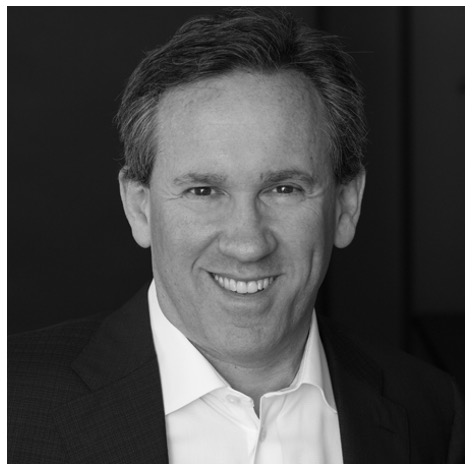
    Dan Harris is a leading authority on the legal and strategic aspects of conducting business in emerging markets. He is co-founder of the international practice of Seattle-based HarrisBricken, which has offices across the U.S., as well as in China, Spain, Mexico, and Brazil. His China Law Blog was named, and with good reason, to the ABA Journal’s “Blawg Hall of Fame.” Forbes, Business Week, Fortune, The BBC, The Wall Street Journal, The Washington Post, The Economist, CNBC, The New York Times, and many other major media players have looked to him for his perspective on international law issues. Dan writes and speaks extensively on international law with a focus on protecting businesses in their foreign operations and he has had the rare honor of being designated a “Super Lawyer.” He is also a member of the Editorial Board of Advisors for the Journal on Emerging Issues in Litigation and the Emerging Litigation Podcast.

    What Businesses and Lawyers Should Know About the U.S. / China Relationship

    “Americans mistakenly believe that China operates as a rational economic actor and that economics is their highest priority. It’s not and it never has been. Their highest priority is whatever is good for the Chinese Communist Party.”

    “Chinese companies view American and EU companies as very risky, in large part because so many American and EU companies are looking to move their manufacturing out of China.” 

    A major potential avalanche of risks are those that would shake the business world  should – as some expect it will –  trade relations between China, and America and EU, come to an end.

    China is America’s largest trading partner, a relationship responsible for $600B a year in commerce, according to the Office of the U.S. Trade Representative. By comparison, U.S. / European Union trade exceeds $1T. The trade deficit with China for goods is more than $300 billion, while the U.S. has a trade surplus for services of $25B. China is America’s largest supplier of imported goods, while China is America’s third largest export market. U.S. invests roughly $125B in China, compared to China’s investment of $38B in the U.S. The figures vary wildly depending on who you ask, but the Trade Representative puts the U.S. GDP at $21B and China’s at more than $14B.

    In case you missed it, U.S./China relations have been strained. President Trump cast a spotlight on the downsides of the relationship for the U.S., and China’s response to the sanctions imposed on Russia by President Biden and the West for invading Ukraine have made the relationship even rockier. The U.S./China marriage needs some serious counseling. Eventually, experts say, the couple is headed for divorce. How that breakup plays out, especially if or when China takes custody of Taiwan – peacefully or otherwise – is something the business world needs to brace for.  No; seriously. For example, should the West impose sanctions on China similar to those on Russia, the shift in the business world would be tectonic.

    Joining me on this episode is Dan Harris, a leading authority on the legal and strategic aspects of conducting business in emerging markets. Dan is co-founder of the international practice of Seattle-based HarrisBricken, which has offices across the U.S., as well as in China, Spain, Mexico, and Brazil. His China Law Blog was named, and with good reason, to the ABA Journal’s “Blawg Hall of Fame.”

    This podcast is the audio companion to the Journal on Emerging Issues in Litigation. The Journal is a collaborative project between HB Litigation Conferences and the Fastcase legal research family, which includes Full Court Press, Law Street Media, and Docket Alarm. The podcast itself is a joint effort between HB and our friends at Law Street Media. If you have comments or wish to participate in one our projects, or want to tell me how much  you learned from Dan,  please drop me a note at Editor@LitigationConferences.com.

    Tom Hagy
    Host and Litigation Enthusiast

    P.S. It’s possible I should stay away from forcing metaphors on my guests. The U.S. / China relationship is nothing like a marriage. We do, however, always forget our anniversary. We’re more like neighbors who have to deal with each other. Our “good mornings” and “have a nice days” are, at best, phony. There are lingering hurt feelings (“You always park in front of my house,” “You never invite us to parties”) and suspicions (“I’m pretty sure it’s you who doesn’t pick up after their dog”), but civility is a must when you share friends and a fence. Oh, man, and now our kids are playing together.

  • Tanks and Banks: What Fintechs Must Know About Sanctions on Russia

    Tanks and Banks: What Fintechs Must Know About Sanctions on Russia

    The Guest

    Brad Rustin

    Brad RustinPartner | Nelson Mullins Riley & Scarborough

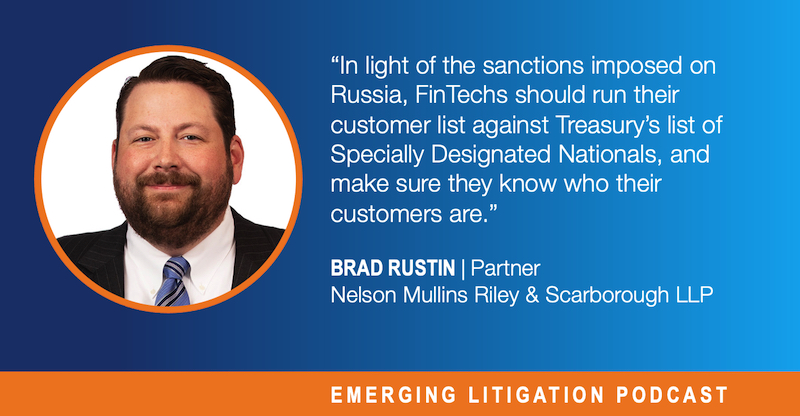
    A highly regarded attorney and much-sought-after speaker for his expertise on the laws and operations of the technology-driven global financial system. Also a member of the Editorial Board of Advisors for the Journal on Emerging Issues in Litigation.

    Emerging Litigation Podcast

    Emerging Litigation PodcastProduced by HB Litigation and Law Street Media

    Interviews with leading attorneys and other subject matter experts on new twists in the law and how the law is responding to new twists in the world.

    The Journal on Emerging Issues in Litigation

    Tanks and Banks: What Fintechs Must Know About Sanctions on Russia

    Tom Hagy Interviews Brad Rustin of Nelson, Mullins, Riley & Scarborough

    Click below to get the complete article.

    Tanks and Banks: an interview with Brad Rustin on Russian Sanctions and Fintechs

  • Cybersecurity and Data Privacy Year in Review 2021

    Cybersecurity and Data Privacy Year in Review 2021

    The Authors

    The authors are all attorneys with the Kennedys law firm (kennedyslaw.com). Joshua Mooney (joshua.mooney@kennedyslaw) and Judy Selby (judy.selby@kennedyslaw.com) are partners. Tracey Kline (tracey.kline@kennedyslaw.com) and Alexis Childs (alexis.childs@kennedyslaw.com) are associates. Bridget Mead, associate, and Javier Vijil, senior associate, also contributed to this article.

    Judy Selby is also a member of the Editorial Board of Advisors for the Journal on Emerging Issues in Litigation.

    The Journal on Emerging Issues in Litigation

    Cybersecurity and Data Privacy 2021 in Review

    By Joshua Mooney, Judy Selby, Tracey Kline, and Alexis Childs

    Abstract:

    As the world emerged from lockdown, it should come as no surprise that cybersecurity and data privacy remained dominant topics in the media and legal industry. Some of 2021 was much like 2020—ransomware attacks continued to fill the headlines, and in the aggregate, constituted significant loss paid under cyber insurance policies. OFAC reminded victim companies and incident response firms (and cyber carriers) that it remains unlawful to pay ransom payments to designated organizations. Comprehensive federal legislation addressing cyber defenses and notification requirements never materialized. Yet in 2021, we saw new and significant developments. U.S. law continued its drift toward comprehensive privacy regulation with two new significant pieces of privacy legislation and California’s enforcement of the California Consumer Privacy Act. In the absence of federal legislation, federal agencies either stepped up enforcement actions or signaled that they intend to do so within their realms of governance. Litigation under the Illinois Biometric Information Privacy Act continued its surge while the Illinois high courts rendered two impactful decisions and a circuit court punted to Illinois’s highest court. This review provides a brief synopsis of many events and developments that made the authors’ list.  

    Perhaps one of the most significant developments in U.S. privacy law for 2021 was the enactment of comprehensive data privacy laws in Virginia and Colorado. Both pieces of legislation, which go into effect in 2023, adopt frameworks resembling those in the EU General Data Protection Regulation 2016/679 (GDPR) and the California Consumer Privacy Act (CCPA). Both laws also grant consumers significant rights with respect to their personal data, but neither contains a private right of action. 

    Get the article now!

  • Can we rely on shareholders to compel corporations to meaningfully act on ESG issues? | By Rebecca Boon and John Rizio-Hamilton | Bernstein Litowitz Berger & Grossmann

    Can we rely on shareholders to compel corporations to meaningfully act on ESG issues? | By Rebecca Boon and John Rizio-Hamilton | Bernstein Litowitz Berger & Grossmann

    The Authors

    Rebecca Boon

    Rebecca BoonPartner | Bernstein Litowitz Berger & Grossmann

    Rebecca Boon has been litigating securities fraud and shareholder rights actions for over a decade, recovering more than $1.5 billion for the firm’s institutional investor clients. Her work at the firm expands beyond litigation. Rebecca has advanced equality in the workplace by co-founding the Beyond #MeToo working group and leading landmark recoveries that have resulted in hundreds of millions of dollars back to investors and important social change among industries.

    Contact: rebecca.Boon@blbglaw.com

    John Rizio-Hamilton

    John Rizio-HamiltonPartner | Bernstein Litowitz Berger & Grossmann

    John Rizio-Hamilton is one of America’s top shareholder litigators. He works on the most complex and high-stakes securities class action cases, and has recovered billions of dollars on behalf of institutional investor clients.

    John led the trial team that recovered $240 million for investors in In re Signet Jewelers Limited Securities Litigation, a precedent-setting case that marks the first successful resolution of a securities fraud class action based on allegations of sexual harassment.

    Contact: johnr@blbglaw.com

    Can we rely on shareholders to compel corporations to meaningfully act on ESG issues?

    By Rebecca Boon and John Rizio-Hamilton

    This article was first published in the Responsible Investor, Aug., 10th, 2021. Posted with permission of the authors. Copyright 2021 by Rebecca Boon & John Rizio-Hamilton.  All rights reserved.

    There is an ongoing debate about the role that regulators should take regarding corporate obligations and accountability for ESG issues. Earlier this year, the Ontario Capital Markets Modernization Taskforce weighed in with its long-anticipated recommendation on diversity quotas for corporate boards. After receiving significant industry feedback, the Ontario Taskforce changed its initial recommendation from a requirement that public companies meet specific diversity targets, to allowing companies to set their own targets, report them, and develop a timeline for implementation. This ‘market-based’ framework for diversity would rely on investors to push corporations and hold them accountable.

    There was significant backlash when the Ontario Taskforce changed its initial recommendation. It was accused of not going far enough and caving to corporate pressure. However, it decided that allowing corporations to set their own quotas would avoid a ‘one size fits all’ approach, prevent corporations from simply complying with a minimum target, and limit instances of tokenism. The reporting requirement would force companies to implement material quotas and stand by them because they would be too afraid of investor reactions to do anything less than meaningful.

    In crafting governance reforms in some of the most significant derivative litigation in history, we spend considerable time thinking about how to enact meaningful and lasting social change at corporations. One key component is to get insider buy-in – because if the change is simply imposed from above, there could be internal resistance, a lack of commitment and a tendency to make only superficial progress. But the question is: can we rely on shareholders to compel corporations to meaningfully act on ESG issues? Recent history says yes. A market-based approach that incentivises good ESG practices could make a significant difference, when coupled with smart regulation.

    A recent study found that for every additional 8% of a company’s stock owned by the Big Three, the number of new women board members increased by 76%.

    For example, UK regulators just announced that London-listed companies should have at least 40% women and one non-white director on their boards. Similar to the Ontario Taskforce, the goals are not binding but if companies do not meet them, they must explain why. In the US, the Securities and Exchange Commission’s Advisory Panel also recently offered ESG and Diversity & Inclusion disclosure recommendations, designed to allow investors to understand what terms like ‘sustainable’ or ‘green’ actually mean.

    According to Chairman Gary Gensler, “investors should be able to drill down to see what’s under the hoods” at the companies and investment funds making these claims.

    The ‘Big Three’ asset management firms – BlackRock, Vanguard and State Street Global Advisors – recently made headlines when they supported Engine No.1, the Exxon activist investor that led a successful campaign to secure three board seats for its chosen candidates, in a bid to push Exxon to address long-term climate risk and move to clean energy, among other things. Exxon Director Ursula Burns acknowledged that the campaign’s success is part of a “tidal wave” of investor concerns on ESG issues. This victory would not have been possible without the support of three of the biggest investors in the US.

    In addition, big investors have committed to vote against firms that do not appoint more women directors to their boards. In January, State Street announced that it will now vote against the Chair of the Nominating & Governance Committee at companies in the S&P 500 and FTSE 100 that do not disclose the racial and ethnic composition of their boards; and in 2022, it will vote against them if they do not have at least one director from an underrepresented community.

    Similarly, Goldman Sachs will no longer take a company public without two diverse board members, one of whom must be a woman.

    The SEC has just approved a proposal by US marketplace Nasdaq for all its listed companies to disclose board-level diversity statistics and either meet the objective of 1 or 2 ‘diverse’ directors (depending on size) or explain why they have not. Some criticised the Ontario Taskforce – and others heralded it – for not taking Nasdaq’s “extreme position”.

    Are any of these initiatives enough? No. But investor pressure works. A recent study from the Kellogg School of Management at Northwestern University found that for every additional 8% of a company’s stock owned by the Big Three, the number of new women board members increased by 76%. Critically, the same study found that in response to investor pressure, women on boards get “power positions” on audit and nominating committees at even higher numbers than companies complying with mandatory quotas.

    Investors have also taken direct action by filing lawsuits alleging toxic workplace cultures of discrimination and retaliation against female executives, and racial and gender bias. And investors are no less active on environmental issues. For example, investors are currently prosecuting a securities fraud class action in Ohio against Energy Transfer, arising from the explosion of a natural gas pipeline that wreaked environmental havoc in Pennsylvania. These lawsuits are in early stages, but the pressure is on. Corporations have to address social issues because investors are demanding it.

    We have already seen what investor demands for accountability can do in US securities cases involving #MeToo issues and sexual harassment allegations. As the #MeToo movement went mainstream, we saw the first successful securities case addressing sexual harassment allegations – in a shareholder derivative lawsuit involving Fox News parent Twenty-First Century Fox. Investors were listening.

    Following a year of litigation, the lawsuit uncovered allegedly systemic problems at the network involving multiple senior executives, multiple types of discrimination and harassment, and a toxic workplace characterised by surveillance, retaliation and fear.

    Ultimately, as part of a $90m settlement, the plaintiff and the company unveiled a series of governance reforms designed to fix the broken sexual harassment culture at Fox News. The resulting Fox News Workplace Professionalism and Inclusion Council is majority-independent, but also has company participation, along with broad powers and a mandate to identify and solve the problems at the company. A critical component is investor accountability – the Council has the power to issue minority reports that Fox is mandated to post publicly for investors and the world to see. It also has a mandatory five-year term and if Fox determines to dissolve the Council, it must publicly state the reasons why. This approach set the stage for the recent high-profile settlement of a securities case against L Brands, which also settled for $90m. The firm committed to invest a further $45m over at least five years in a Diversity, Equity & Inclusion Council, and take other measures to protect employees from harassment and discrimination, requiring accountability when misconduct occurs.

    We also recently saw the first successful direct securities action certified as a class action involving allegations of sexual harassment against Signet Jewelers. When the market learned that hundreds of women had submitted declarations describing alleged sexual harassment reaching to the company’s highest levels, Signet was forced to halt trading to address them; and when trading resumed, the company’s stock price declined 13%. Again, investors were listening.  The Signet case settled for $240m in late 2020.

    It is too soon to know whether the newer cases will be successful, or whether the new regulations will have any teeth. But pressure from the Big Three and the corresponding dramatic increase in the number of women on corporate boards confirms that when investors demand diversity, companies respond. Investors have shown that they are willing and ready to compel corporations to act on important social issues. And recent securities cases involving #MeToo issues have demonstrated to the corporate world that investors can use their significant power to demand change and hold corporations accountable when they fail to act.


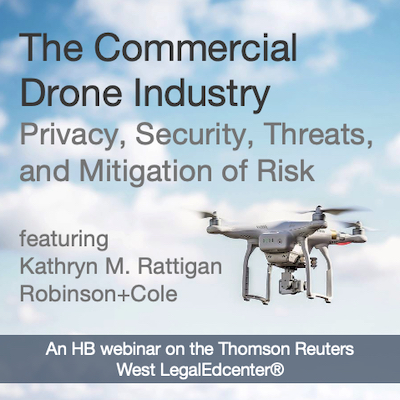
  • The Commercial Drone Industry: Privacy, Security, Threats, and Mitigation of Risk

    The Commercial Drone Industry: Privacy, Security, Threats, and Mitigation of Risk

    HB presents a CLE-eligible webinar
    Now on-demand at the West LegalEdcenter
    THE COMMERCIAL DRONE INDUSTRY
    Privacy, Security, Threats, and Mitigation of Risk

    Drones have become an increasingly valuable tool for businesses of all types and sizes.

    Drones are already being used in many applications, but more will certainly arise as the technology advances. This means that certain risks, like cyber threats, will also continue to present themselves. Protecting the transmission and storage of data collected through drones is critical.

    Unfortunately, security usually comes as an afterthought. The drone industry is part of the aviation industry, which, based on its knowledge, keeps safety as a number one concern. Part of that safety is having proper protection for your systems, including security as a fundamental design principle.

    Take this webinar to gain insights on the topics listed below, and shared by an attorney who practices on the cutting-edge of this evolving technology.

    Topics:

    • Defining drones.
    • Current and future applications.
    • FAA Modernization and Reform Act of 2012.
    • FAA Part 107 Regulations and waivers.
    • Resources, e.g. the FAA Drone Zone and LAANC Portal.
    • Penalties for violations.
    • Privacy implications.
    • Drones as weapons.
    • Vulnerability to cyber attacks.

    Take it now!

    What you get:

    1+ CLE credits (subject to bar rules).

    Insights from an experienced professional who specializes in this area of the law.

    The complete PowerPoint presentation.

    Continued access to the complete recording for later use.

    Answers to your questions.

    Fee:

    No additional charge to subscribers to the West LegalEdcenter.

    Non-subscribers may take the course for $170.

    Meet the Speaker

    Kathryn Rattigan
    Robinson & Cole LLP

    Kathryn Rattigan is a member of the firm’s Business Litigation Group and Data Privacy + Cybersecurity Team. She advises clients on data privacy and security, cybersecurity, and compliance with related state and federal laws. She assists clients in assessing risks related to technology and software contracts, as well as with compliance-related issues with outsourcing and vendor management. She represents clients across all industries, such as manufacturing, insurance, health care, education, energy, and construction.

    Kathryn helps clients comply with all state and federal regulations related to data privacy and cybersecurity. She is also a member of the firm’s Drone Compliance Team. As such, she advises clients on all legal issues surrounding the use of commercial drones, including navigation of Federal Aviation Administration regulations, commercial registration requirements, and Part 107 waivers.

    She is committed to doing pro bono work and being involved in the community. Her recent efforts include assisting Inner Explorer, a non-profit which works to help students focus and succeed through mindfulness practice in the classroom, and College Visions, which helps low-income students pursue a college education.

    She writes for two of the firm’s blogs, Data Privacy + Security Insider and Health Law Diagnosis.

    More about Kathryn

    Also, listen to my interview with Kathryn for the the Emerging Litigation Podcast!

    –Tom Hagy

  • The False Claims Act with Jack Siegal

    The False Claims Act with Jack Siegal

    The False Claims Act with Jack Siegal

    Joining me to discuss this important civil statute is Jack Siegal of McGlinchey Stafford in Boston. Jack’s practice focuses on financial services litigation, complex commercial disputes, government investigations and white-collar defense, securities litigation, regulatory proceedings, and compliance.

    This podcast is the audio companion to the Journal on Emerging Issues in Litigation, a collaborative project between HB Litigation Conferences and the Fastcase legal research family, which includes Full Court Press, Law Street Media, Docket Alarm and, most recently, Judicata. If you have comments or wish to participate in one our projects, or want to tell me how insightful and informative Jack is , please drop me a note at Editor@LitigationConferences.com.

    I hope you enjoy the interview, and especially how I managed not to include Jack’s answer to whether my dog could be sued for violating the FCA. “Nope. Not a person,” he said, with zero hesitation. I want to thank Jack for immediately taking on the role as Shiloh’s advocate, and for speaking with me about this important law.  –Tom Hagy

    Unscrupulous contractors have been ripping off the federal government for as long as there has been a federal government. President Lincoln, tired of being sold lame mules and rancid rations, signed the Federal Claims Act into law during The Civil War.

    In the last two decades the government, with the help of whistleblowers, has raked in more than $20 billion. 

  • Labor Law in 2021 with Kathryn Hatfield

    Labor Law in 2021 with Kathryn Hatfield

    Labor Law in 2021 with Kathryn Hatfield

    Participation in labor unions is less than half of what it was 40 years ago. It has seen an uptick in the service sector, but a sharp decline in manufacturing. According to economist Heidi Shierholz decline in union rolls is partly responsible for today’s yawning income inequality gap. Recently we’ve seen the formation of a modest union at Google and a movement among Amazon workers. We’ve also seen how the pandemic has shone a bright light on the fragility of our nation’s workforce struggling to survive at the bottom rungs of the pay scale.

    Joining me to speak about these issues is Kathryn Van Deusen Hatfield, a senior managing partner at Hatfield Schwartz Law Group in New Jersey.  Kathy represents private and public sector employers in all aspects of labor and employment law, with expertise in litigating state and federal cases on behalf of employers involving Title VII, the ADA, the ADEA and the New Jersey Law Against Discrimination, and providing legal opinions and advice on personnel, employment and labor issues.  Kathy shares her insights on recent developments in the labor movement, some of the causes of its decline, how unions get a bad rap, and how, even though she represents management, she believes unions can be a good thing for everyone — employees and companies alike.

    This podcast is the audio companion to the Journal on Emerging Issues in Litigation, a collaborative project between HB Litigation Conferences and the Fastcase legal research family, which includes Full Court Press, Law Street Media, Docket Alarm and, most recently, Judicata. If you have comments or wish to participate in one our projects, or want to tell me how insightful and informative David and Dan are, please drop me a note at Editor@LitigationConferences.com.

    I hope you enjoy the interview, and how I managed to demonstrate how little I know about sports. I feel made up for it by learning something about baseball Hall of Famer Jim Rice, who did something really cool and heroic in 1982.

  • Biotech, Life Sciences, Food & Drug News from NLR

    Biotech,
    Life Sciences,
    Food & Drug News
    from
    National Law Review

    [wp-rss-aggregator feeds=”nlr-biotech-drugs”]

  • Kathryn Hatfield on Labor Law in 2021

    Kathryn Hatfield on Labor Law in 2021

    Kathryn Hatfield on Labor Law in 2021

    Participation in labor unions is less than half of what it was 40 years ago. It has seen an uptick in the service sector, but a sharp decline in manufacturing. According to Heidi Shierholz — former chief economist at the Department of Labor, now senior economist and policy director at the Economic Policy Institute — decline in union rolls is partly responsible for today’s yawning income inequality gap. Recently we’ve seen the formation of a modest union at Google and a movement among Amazon workers. We’ve also seen how the pandemic has shone a bright light on the fragility of our nation’s workforce struggling to survive at the bottom rungs of the pay scale.

    Joining me to speak about these issues is Kathryn Van Deusen Hatfield, a senior managing partner at Hatfield Schwartz Law Group in New Jersey.  Kathy represents private and public sector employers in all aspects of labor and employment law, with expertise in litigating state and federal cases on behalf of employers involving Title VII, the ADA, the ADEA and the New Jersey Law Against Discrimination, and providing legal opinions and advice on personnel, employment and labor issues.  Kathy shares her insights on recent developments in the labor movement, some of the causes of its decline, how unions get a bad rap, and how, even though she represents management, she believes unions can be a good thing for everyone — employees and companies alike.

    This podcast is the audio companion to the Journal on Emerging Issues in Litigation, a collaborative project between HB Litigation Conferences and the Fastcase legal research family, which includes Full Court Press, Law Street Media, Docket Alarm and, most recently, Judicata. If you have comments or wish to participate in one our projects, or want to tell me how insightful and informative Kathy is, please drop me a note at Editor@LitigationConferences.com.

    I hope you enjoy the interview, and how I managed to demonstrate how little I know about sports. I feel made up for it by learning something about baseball Hall of Famer Jim Rice, who did something really cool and heroic in 1982.

    Safeguarding Against Financial Exploitation

    An on-demand CLE-eligible webinar Safeguarding Against Financial Exploitation   America’s senior population is growing. Nearly one in five U.S. residents will be 65 or older in 2030. Which means the average age of U.S. investors is climbing too. With that comes the risk that they will be exploited by people with access – or gain access through nefarious methods – to their investment portfolio. Seniors and vulnerable persons lose billions of dollars each year. Remarkably, 90% of the people to take advantage of senior investors are members of their own family. Attorneys who represent senior clients need to know the signs of vulnerability, red flags that their clients are being exploited, what laws apply, and rules lawyers must follow in these matters.   Questions our speakers answer: What is senior / vulnerable investor exploitation?   Who is protected by state and federal laws?   How prevalent is senior financial exploitation? What do the numbers tell us?  What is the pace of financial abuse SAR filings by securities firms?  What are the most popular scams?   What is diminished capacity?  What are the red flags indicating possible exploitation?  What are the laws, rules, and regulations governing law firms?  What are some best practices for law firms?  How can firms best protect their senior clients?   On Demand CLE Webinar What You Get PowerPoint and supplemental materials. Complete recording for later review. Answers to your questions via email. Invitation to contact speakers. 1.5 CLE credits (for licensed attorneys). CLE assistance.* *Subject to state bar rules. For licensed attorneys.  Register Meet the Speakers Joseph Calabrese Bressler, Amery & Ross, P.C. A 1991 Graduate of St. John’s University Law School, Mr. Calabrese brings 30 years of practice and 18 years of Securities Litigation/Regulatory experience to his role as principal in the New York office of  Bressler, Amery & Ross’s Financial Institutions Group. He began his career as a Wall Street litigator as an associate general counsel for Citigroup’s Smith Barney and […]

    Lien Resolution: Government & Private Plans Get Aggressive (Against Attorneys)

    Includes Nearly 75 minutes of insights from experienced professionals. CLE credit: 1+ (subject to bar rules). For CLE questions: CLE@LitigationConference.com The complete Power Point presentation. Continued access to the complete recording for later use. Answers to your questions via email to the presenters or write to HB and we will be sure to contact the speakers. What can you do to settle personal injury suits cleanly and avoid costly litigation and penalties? What recent cases can inform you about protecting your settlements and, as attorneys, yourselves, from post-settlement federal lawsuits? How can your firm set itself up to meet government expectations? What role might experts play in navigating these pitfalls? Medicare Advantage (42 USC § 1395w-22) Federal Medical Care Recovery Act (FMCRA) (42 USC § 2651) Armed Forces Act (10 USC §1095) Veterans’ Benefits (38 USC §1729) Third-Party Collection Rules (32 CFR 537.24; 38 CFR 17.101, etc.) Set-Asides under the Medicare Secondary Payer Act (42 USC § 1395y(b)(2)] On Demand Registration Lien Resolution Government & Private Plans Get Aggressive (Against Attorneys!) On Demand | Recorded September 2020 It is increasingly common these days. Personal injury attorneys settle a case, only to find themselves sued by a U.S. Attorney for failing to reimburse Medicare for conditional payments as required by the Medicare Secondary Payer Act. In some cases the attorney may be required to pay fines in addition to the reimbursements and interest, a costly proposition. Are you up to speed on issues surrounding Medicare Advantage, TRICARE, veterans’ claims, and Medicare set-asides? Join nationally recognized healthcare lien and resolution expert Franklin P. Solomon and go-to lien resolution provider Brett Newman as they offer a practical, in-depth CLE presentation. Franklin P. Solomon, Esq. Attorney & Founder, Solomon Law Firm  A graduate of Rutgers University School of Law at Camden, Franklin Solomon is based in Cherry Hill, NJ, with a practice focused on evaluation, litigation and resolution of healthcare “liens” and reimbursement claims. Mr. Solomon represents personal injury victims and their attorneys […]

    Telepsychiatry: Mitigating the Risks

    REGISTER Registration Includes Nearly 90 minutes of insights from experienced professionals. CLE credit: 1+ (subject to bar rules). For CLE questions: CLE@LitigationConference.com The complete Power Point presentation. Continued access to the complete recording for later use. Answers to your questions via email to the presenters or write to HB and we will be sure to contact the speakers. Understand the risks associated with telepsychiatry and how to manage them.  Telemedicine has emerged as an important solution for healthcare in general and psychiatric medicine specifically during the current global pandemic. Remote access for sub-practices including addiction counseling have been commonly used. Our panel of psychiatric professionals who have served as expert witnesses and attorneys who counsel and represent physicians have prepared a 90-minute session to share insights with attorneys, physicians, healthcare providers, risk professionals, and more. Agenda Examining procedures and best practices that exist for ensuring confidentiality in a telemedicine practice How do you draft a telepsychiatric consent form? What is the emerging standard of care for telemedicine? Will the standard of care for telemedicine become a national standard? (Should it?) Review the case law addressing telemedicine or telepsychiatry How do the HIPAA regulations and HITECH privacy laws impact telemedicine? How have the HIPAA regulations and HITECH privacy laws been relaxed during the pandemic? Will the relaxed HIPAA and HITECH regulations impacting telemedicine continue past the pandemic? Which technical platforms are preferred? Which ones to avoid? Panelists Mark Levy, M.D., Medical Director at fpamed David Kan, M.D., UCSF Psychiatry Department and the California Society for Substance Abuse Medicine Ayesha Ashai, M.D., associated with fpamed Stephen M. Fatum, J.D., Partner, Barnes & Thornburg LLP Angela W. Russell, J.D., Partner, Wilson Elser Moskowitz Edelman & Dicker LLP Meet our physician and attorney panelists. Mark Levy MD Medical Director fpamed Dr. Levy is a graduate of Columbia College (A.B. 1967) and the Columbia University College of Physicians and Surgeons (M.D. 1971) in New York. He is a Physician […]

    The Commercial Drone Industry: Privacy, Security, Threats, and Mitigation of Risk

    HB presents a CLE-eligible webinar Now on-demand at the West LegalEdcenter THE COMMERCIAL DRONE INDUSTRY Privacy, Security, Threats, and Mitigation of Risk Drones have become an increasingly valuable tool for businesses of all types and sizes. Drones are already being used in many applications, but more will certainly arise as the technology advances. This means that certain risks, like cyber threats, will also continue to present themselves. Protecting the transmission and storage of data collected through drones is critical. Unfortunately, security usually comes as an afterthought. The drone industry is part of the aviation industry, which, based on its knowledge, keeps safety as a number one concern. Part of that safety is having proper protection for your systems, including security as a fundamental design principle. Take this webinar to gain insights on the topics listed below, and shared by an attorney who practices on the cutting-edge of this evolving technology. Topics: Defining drones. Current and future applications. FAA Modernization and Reform Act of 2012. FAA Part 107 Regulations and waivers. Resources, e.g. the FAA Drone Zone and LAANC Portal. Penalties for violations. Privacy implications. Drones as weapons. Vulnerability to cyber attacks. Take it now! What you get: 1+ CLE credits (subject to bar rules). Insights from an experienced professional who specializes in this area of the law. The complete PowerPoint presentation. Continued access to the complete recording for later use. Answers to your questions. Fee: No additional charge to subscribers to the West LegalEdcenter. Non-subscribers may take the course for $170. Meet the Speaker Kathryn Rattigan Robinson & Cole LLP Kathryn Rattigan is a member of the firm’s Business Litigation Group and Data Privacy + Cybersecurity Team. She advises clients on data privacy and security, cybersecurity, and compliance with related state and federal laws. She assists clients in assessing risks related to technology and software contracts, as well as with compliance-related issues with outsourcing and […]

    The Intersection of Privacy and Antitrust Webinar Now Available On-Demand on the West LegalEdcenter

    Available as part of your subscription to The Thomson Reuters West LegalEdcenter®. Don’t subscribe to the West LegalEdcenter? This webinar is still available directly from HB. Take it now! Questions for speakers Questions@LitigationConferences.com CLE questions CLE@LitigationConferences.com Check out the MoginRubin blog for more insights on antitrust and privacy law. What attorneys and companies need to know about the increasing interplay between these critical areas of the law.  Highly publicized cases and investigations in the U.S. and Europe of big technology, e-commerce, and social media companies demonstrate how anti-competition laws are being used to scrutinize and challenge not only how these corporations conduct themselves in the marketplace, but the very core of their colossal success: the mass collection and utilization of user data. Are the privacy and antitrust worlds beginning to cross over? Or do they simply run parallel while addressing entirely different types of conduct? Whatever the answer, data is the raw material that drives the likes of Google, Facebook, Apple and Amazon, so how it is handled is a critical question when counseling clients on mergers and acquisitions. Moderator Daniel J.  Mogin | Managing Partner, MoginRubin LLP Speakers Jennifer M. Oliver, CIPP/US | Partner, MoginRubin LLP Thomas N. Dahdouh | Director, Western Region, Federal Trade Commission Franklin M. Rubinstein | Partner, Wilson Sonsini Goodrich & Rosati Randi W. Singer, CIPP/US, CIPT | Partner, Weil, Gotshal & Manges Contributor Dina Srinivasan | Independent Researcher & Author of The Antitrust Case Against Facebook Dina was unable to present but we thank her for her content contributions.  Agenda Who should regulate privacy violations in the U.S.? Which antitrust issues implicate privacy concerns? What role does machine learning play on the competitive landscape? What is big data really? How is it different from “data”? What are the elements of effective merger reviews? What are the appropriate remedies? What are “notice-and-choice” versus “harms-based” approaches? Plus answers to your questions. Send them to Questions@LitigationConferences.com.