Category: Complex Business Litigation
-

Settlement Psychology: Who is in Control? Homer Simpson or Mr. Spock? | Complimentary Webinar
Settlement Psychology
Who’s in charge? Homer Simpson or Mr. Spock?
Cognitive obstacles to finding common ground.
[two-fifths-first]
Complimentary On-Demand Webinar From HB!
1 CLE credit
CLE questions?
CLE@LitigationConferences.comQuestions for speakers?
Questions@LitigationConferences.comSPEAKERS

Jeff Trueman
Mediator / Negotiator
John Philip Miller
Baltimore City Circuit Judge (ret.)This course is also available via the
West LegalEdcenter.[/two-fifths-first] [three-fifths]
Improve your negotiation strategy and outcomes.
Mediator, arbitrator and settlement conference neutral Jeff Trueman says the lawyer’s mind can sometimes play tricks on them when it comes time to settle a claim. “The central question on the minds of counsel, their clients, and insurance professionals in civil litigation is, of course, ‘What’s the case worth?’ For mature torts there is enough historical settlement and verdict data exist for counsel to argue why a particular case should or should not fit within a certain settlement range. In the midst of these discussions, the human brain plays tricks on us. For example, litigators sometimes assume that their trial experience can determine how jurors will negotiate with one another and resolve factual discrepancies after closing arguments. This assumption is a ‘heuristic’ – a cognitive shortcut called attributional error or illusion of control.” Backed by his decades of psychological and economic sciences research, Trueman says there is a lot of room for attorneys to change their mindset when moving into settlement mode.
Litigation Chicken
“When differences over case value intensify, litigators return to threats of relinquishing control: ‘Maybe we have to try this case;’ or ‘We feel good about our chances in front of a jury.’ Underneath the games of litigation chicken that are the hallmark of settlement negotiation, heuristics lead to erroneous valuations and assessments of risk.”
He says attorney would be well served, and would serve their clients well, if they make adjustments depending on their role at a given point in the process. “Many lawyers default to their role as advocates for legal rights without considering the quality of counsel they give to clients regarding risk management. This plays right into the endowment bias that potential clients carry, valuing property or experiences merely because they have them. When thinking about future risk, many lawyers exhibit an overconfidence and self-serving bias in favor of past success. Unfortunately, competitive bargainers are disinclined to compromise even when it would benefit their bottom lines. Of course, it goes without saying that clients are often better served by lawyers who have some experience in a courtroom. But prior success does not guarantee future results.”
Learn what else Jeff has to say on the subject. He was joined by Judge John Philip Miller, now retired from the Circuit Court of Baltimore City. Judge Miller spent 16 years on the bench after a career in private practice.
What they over:
+ What are the cognitive barriers to assessing case value?
+ How can you use this information to your advantage?
+ How can you help your clients with this information?
+ What is the impact of unrealistic expectations — yours and your client’s?
+ Answers to your questions. Send them by email to Questions@LitigationConferences.com.
Speaker Bios
Jeff Trueman | Mediator / Negotiator
Jeff is a private mediator of litigated civil disputes, including personal injury, premises liability, toxic and environmental torts, wrongful death, professional malpractice, partnership dissolution, employment, domestic, and guardianship petitions. He is a public speaker and presenter of mediation and negotiation-related dynamics at law schools, law firms, and litigation conferences. Jeff is author of an ADR column that appears semi-regularly in the Maryland Daily Record.
Judge John Philip Miller (ret.) | Baltimore City Circuit Court
Judge Miller served on the bench for more than 16 years both in District and Circuit Court. Prior to his appointment to the bench, Judge Miller was a partner with Kaplan, Heyman, Greenberg, Engleman & Belgrad, P.A., and with Wright, Constable & Skeen, LLP. Judge Miller received a Juris Doctorate from Washington and Lee University School of Law and a Bachelor of Arts Degree from Gettysburg College. He was an adjunct professor with the Villa Julie College, an instructor with the Maryland Institute for Continuing Professional Education of Lawyers, and a lecturer at the Maryland Judicial institute. His honors include the Daily Record’s Leadership in Law Award.
[/three-fifths]
-
Dan Mogin: Antitrust, Pro-Privacy Moves Led Outside U.S.
In a move that could redefine how 2.6 billion people use Facebook Messenger and Facebook’s acquired WhatsApp and Instagram apps, The New York Times reported on Jan. 25 that Facebook CEO Mark Zuckerberg plans to integrate the platforms. The announcement turned up the volume on antitrust and privacy warnings directed at the social media giant.
 “Facebook can be legitimately criticized for merging these apps after contrary assurances and perhaps for trying to dominate messaging,” MoginRubin Partner Dan Mogin said, “but perhaps more importantly, this is another example of the evolving convergence between antitrust and privacy that appears to be being driven by forces outside the US enforcement agencies. It’s a challenging issue for antitrust and may eventually lead to a sea change.”
See the complete post on the MoginRubin Blog.
-
Two Judges Find Florida Medical Marijuana Law Unconstitutional
The Program is ‘Absolutely Broken’ — Now What?
Edited by Tom Hagy
 Florida Circuit Judge Karen Gievers just held that the Florida medical marijuana law is unconstitutional. Reporting on the judge’s Trulieve decision for the Florida Politics news service, journalist Jim Rosica called it “a rebuke to lawmakers and the Rick Scott Administration” that was “stunning even for” Judge Gievers. “In the spirit of boxing legend Muhammad Ali, known for his pre-fight rhymes, Gievers opined that in Florida ‘the medical marijuana system was broken. Now, in the Constitution, the people have spoken.’”
Rosica reported that while Gov. Scott is appealing the major marijuana decisions against the state Department of Health, the transition team of Republican Governor-elect Ron DeSantis, including Lt. Gov.-elect Jeanette Nuñez, has suggested that he will not continue to defend the law in court.
Rosica continued: “Gievers, who retires in April, said her decision striking down the law ‘includ(ed), but (is) not limited to, replacement of the voter-selected registry plan with an arbitrary, inconsistent licensing scheme … throttling access of qualifying patients to … safe use of medical marijuana from (providers that) the Department has a clear, undisputed duty to register.’ In fact, just passing the law was itself unconstitutional, Gievers suggested: ‘Voters made clear in 2016 that the Legislature was to have no role in implementing access to and availability of medical marijuana.’” Read Rosica’s full article.
‘It is incumbent on the Legislature to fix this’
 Today I spoke with attorney Jonathan Robbins, who is actively litigating the matter on behalf of Tampa-based Florigrown. Robbins, chair of the cannabis practice at Akerman LLP , pointed to a similar holding in the Florigrown case, commenting that, yes, “yet another judge has found that the statute implementing the amendment is unconstitutional because of the arbitrary cap on the number of dispensaries that would qualify for licensing.”
“This further illustrates,” Robbins told me, “that the Florida medical marijuana program is absolutely broken and needs to be fixed. But rather than the courts repairing it piecemeal, the Legislature needs to get something done. It is incumbent on the Legislature to fix this.”
In the Florigrown case, Leon County Circuit Judge Charles Dodson granted an injunction and ordered DOH to issue licenses. Once DOH appealed that triggered an automatic stay. “We went back to Judge Dodson to lift the stay because people need their meds,” Robbins said. “The judge lifted the stay, but the DOH appealed to the 1st District to reimpose the stay, which the court did.” Briefing is under way.
“Our client wants to operate but is restricted because the statute unconstitutionally creates special classes of companies entitled to licensing. Not only does it arbitrarily cap the number of licenses, it requires that licensees must be fully vertically integrated, meaning companies must cultivate, process and sell medical marijuana. This is inconsistent with what the citizens voted for,” Robbins said. He said this prohibits a company from merely dispensing the product, for example, effectively and unfairly shutting out many businesses.
“The Legislature was charged with providing safe and affordable medical marijuana to patients who need it. All of this was to be in place in 2017. Here we are in 2019 and we still don’t have it,” Robbins said.
While there are 14 companies operating and people can get marijuana, many more potential competitors are blocked from operating.
Clearly, implementation of the law, overwhelmingly approved by Florida voters, has been less than smooth and requires quite a bit more ironing out. The lack of competition hurts businesses and patients alike, critics say. In the meantime there is plenty of confusion for companies ready to provide medical marijuana services in Florida.

Join our webinar on Jan. 25, when attorneys in the thick of the issue – Akerman LLP partners Jonathan S. Robbins and Ari H. Gerstin — will share background, insights and practical guidance.
What we will cover:
- Background: Federal vs. State Law Conflict
- History of Medical Marijuana in Florida
- The 2016 Amendment to the Florida Constitution
- Implementation of the State Medical Marijuana Program
- Litigation Over the Constitutionality of the Implementation
- Practical Considerations When Operating in This Industry
- Banking and Insurance Issues
- Ethical Considerations for Attorneys
What you will get:
- Up-to-the-minute insights from attorneys active in the litigation.
- Thorough course materials for later reference.
- Real-time answers to your questions via our moderated chat.
- The ability to send questions in advance.
- Continuing legal education credit (CLE)
- Access for your entire team with a feed into your conference room.
- No scheduling risk: Suddenly can’t make it? We will send you the recording.
Register by Jan. 18 and save $50.
-
Cyber Risks Enter a New and Increasingly Vicious Phase
For anyone plotting the evolution of cyber risks, the last phase of cyber-attacks was dominated by breaches that resulted in lost or stolen personal or financial data that could then be monetized.
The current phase is different.
“We have observed a significant increase in the number of disruptive breaches that our clients are dealing with,” says Charles Carmakal, Vice President at Mandiant/FireEye. “These involve destruction, extortion, or public shaming.”
How are organizations dealing with this shift?

“It’s catching many organizations off guard. Most don’t have a playbook for dealing with extortion,” Carmakal says. “While they may have thought about a ransomware situation, that’s different from the more common type of extortion we are seeing these days, where a threat actor threatens C-level executives or corporate board members with the release of sensitive information.”
“Many organizations assume the default is they wouldn’t give into the demands, but when in the middle of a crisis too often the decision is made to pay the threat actors,” he says.
“So it’s important to consider what your organization will do in this situation. For example, who will be involved in the decision-making process? Organizations should play out an extortion scenario so they have a plan when faced with real demands.”
How can organizations better test the efficacy of their security capabilities?
Many organizations conduct penetration testing or red-teaming exercises, but they often undermine their own efforts.
“A problem arises when an organization contracts a third-party to test their capabilities, but puts a lot of restrictions on those who are doing the testing,” Carmakal says. “For example, they will tell the testing team or red team to identify vulnerabilities, but not to exploit them, or they can exploit a vulnerability but stop there and not dig any further. The penetration testers might be allowed to test only during a certain day of the week or certain time of day. Or they might be allowed to sample only a fraction of the organization’s IP addresses and ignore everything else.”
“What happens is the penetration testers are not permitted access to the crown jewels,” Carmakal warns. “They can’t demonstrate business impact to the organization. This creates a false sense of security because the organization can say they had a team of qualified people try and fail to break into the network, but in reality they were unable to break through because of all the unrealistic restrictions imposed on that team.”
This false sense of security travels to the top. “Testing results are shared with the board and the board believes that because a really good third-party was not able to get to the crown jewels that they have a much safer environment than they really do. That’s a very common theme we see across the industry,” Carmakal says.
How do penetration testers deal with unrealistic testing parameters?
 “It’s part of the education process,” he says. “When a company wants us to do a very limited test, and we believe our reports will be shared with the leadership team or the board, then we just won’t take the engagement. We try to make it clear that this is not an exercise to make anyone look bad, but a way to leverage the lessons from all the bad guys who are breaking into organizations so you can strengthen your security.”
In the end, he says, “It’s better we identify the vulnerabilities than have the bad guys do it.”
What the geopolitical trends you are seeing?
Iran – “They used to be unorganized. They even clumsily posted social media profiles of themselves,” Carmakal says. “But they have become much more organized, more structured, more technologically adept, and have affiliated with government entities.”
“In 2017 we saw more intrusions from Iran than we had ever seen before. There was a noticeable spike in offensive intrusions coming from them. For some reason, in 2018 we really haven’t seen Iran targeting organizations in the United States. They’ve scaled back significantly in the US, but are still active in other parts of the world.”
“What makes security professionals nervous about Iran,” Carmakal says, “is that they are a wildcard. You don’t know what they are going to do. You don’t understand the rationale behind their activity. But what we do see is a capability and a willingness to be incredibly destructive – taking down businesses and publicly shaming organizations. The fact that they’ve slowed down their attacks on U.S. organizations is interesting, but we expect that to change.”
Russia – “Russia is not hacking the U.S. midterm elections like they were with the presidential election in 2016, but they are conducting some significant offensive operations around the world. They are very capable. They are also very good at disinformation and throwing false flags, so when you investigate them it’s difficult to tell who they really are. Russia is one of the few countries that demonstrates the willingness and capabilities to cause kinetic consequences through cyber-attacks, such as when they turned off the lights in Ukraine.”
In March 2018 The New York Times wrote, “The Trump administration accused Russia … of engineering a series of cyber-attacks that targeted American and European nuclear power plants and water and electric systems, and could have sabotaged or shut power plants off at will.”
When asked about this and the reporting that surrounded it, Carmakal said the story was a bit “sensationalized” and not 100% accurate. “While the intrusion was serious, we didn’t see the Russian actors getting anywhere near being able to shut off the lights,” he said, adding that they “certainly have the capability” in other parts of the world.
China – There has been a “notable decrease” in cyber intrusions from China since the 2015 bi-lateral cyber agreement was reached between President Obama and China’s President Xi, Carmakal says. While narrow in scope, addressing economic espionage — China’s state-sponsored theft of private U.S. intellectual property and then turning it over to state-owned and private companies in China — the agreement does appear have helped, reports suggest. “They are still hacking organizations and are following a defined playbook. We’re keeping a close eye on them to see how their offensive operations evolve,” Carmakal says.
North Korea – Except for the highly publicized attack against a major U.S.-based entertainment company, “North Korea rarely goes after Western organizations.” Given the country’s need for cash, “their focus has been more on robbing digital currency exchanges and stealing from banks digitally,” Carmakal says, adding that they, like Iran, are a bit of a “wild card.” North Korea actors have stolen more than $100 million from victims, Carmakal says.
You will be able to hear insights like these, and updates on anything that occurs between now and December in Bermuda when Carmakal and his fellow panelists discuss important trends in global cyber risks.

This posted was edited by HB Founder & Managing Director Tom Hagy. In the 1990s Tom launched one of the first nationwide legal reports in this area — Mealey’s Litigation Report: Cyber Tech & E-Commerce — when he was publisher at Mealey’s, now part of LexisNexis. If you are interested in posting on this site or discussing speaking opportunities, please contact us at Editor@LitigationConferences.com.
-
PFOA: Science & Litigation | 11/15/2018

[one-third-first]

DATE: Nov. 15, 2018
TIME: 2 p.m. EDT; 1 p.m. CDT; 12 p.m. MDT; 11 a.m. PDT
PLACE: Your computer or mobile device
PRICE: $197* per dial-in site
*Price is good through Oct. 31. After that it’s $247.GROUPS ARE GOOD: Registering qualifies you to multiple attendees at your location.
CLE: 1 credit
Please send CLE questions to
CLE@LitigationConferences.comspeakers
Michael Dourson, Ph.D., DABT, FATS, FSRA
Director of Science
Toxicology Excellence for Risk Assessment (TERA)
Register now and get:
-
Access for multiple colleagues at your location.
-
Practical insights from a board-certified toxicologist.
-
A through and informative PowerPoint presentation for later reference.
-
Answers to your questions via live chat.
-
CLE credit.
And more!
[/one-third-first] [two-thirds]
PFOA Toxicology: What’s a Safe Level for the Environment?
What toxic tort and environmental attorneys need to know about this ubiquitous compound.
Perfluorooctanoic acid (PFOA) has been described as more toxic than methyl mercury. Yet not all organizations tasked with developing safe-dose levels agree on the best approach for PFOA, resulting in recommended levels that are more than 100-times apart.
Differences in these recommended safe-dose levels result in cleanup costs that vary by billions of dollars.

Background
Environmental contamination with PFOA has been known for some time. In the early 2000s safe doses in drinking water were considered to be in the range of 30-to-50 parts per billion. Recent safe-dose assessments by EPA, ATSDR and several states have significantly lowered these safe doses to parts-per-trillion measurements.
PFOA, also known as C8, is used to make Teflon® and similar chemicals known as fluorotelomers. According to the American Cancer Society, PFOA is “burned off during the [manufacturing] process and is not present in significant amounts in the final products.”
However, the American Cancer Society says, “PFOA has the potential to be a health concern because it can stay in the environment and in the human body for long periods of time. Studies have found that it is present worldwide at very low levels in just about everyone’s blood. Higher blood levels have been found in community residents where local water supplies have been contaminated by PFOA. People exposed to PFOA in the workplace can have levels many times higher.
“PFOA and some similar compounds can be found at low levels in some foods, drinking water, and in household dust. Although PFOA levels in drinking water are usually low, they can be higher in certain areas, such as near chemical plants that use PFOA.
“People can also be exposed to PFOA from ski wax or from fabrics and carpeting that have been treated to be stain resistant. Non-stick cookware is not a significant source of PFOA exposure.”
The underlying toxicity data has not changed that much. What differs is our understanding of the differences between experiments on animals and humans in how PFOA is excreted from the body. Recently it has been suggested that the federal approach to this safe dose assessment has not followed its own risk assessment guidelines. If true, this lack of adherence to guidelines calls into question whether the significantly lower safe doses are appropriate. If these much lower levels are not appropriate, then clean up standards to these levels may be overly costly.
Earlier this year, the Agency for Toxic Substances and Disease Registry (ATSDR), within the Department of Health and Human Services (HHS) announced the availability of the Draft Toxicological Profile for Perfluoroalkyls for review and comment. All toxicological profiles issued as “Drafts for Public Comment” represent ATSDR’s best efforts to provide important toxicological information on priority hazardous substances. You can see the many comments received at the ATSDR website.
Is PFOA really more toxic than methyl mercury?
Do we really need to spend billions of dollars in its clean up?
How can it be that these safe doses vary so widely?
Attendees of this webinar will learn the nuances of safe dose assessment from a board-certified toxicologist, including:
— A thorough background on the toxicology of PFOA.
— A practical overview of animal vs human studies.
— An understanding of the latest federal approach to estimating the safe dose of PFOA.
— A review of the underlying risk assessment guidelines.
— An explanation of how more typical approaches likely yield higher safe-dose levels and less costly cleanups.
And more!
speaker
Dr. Michael Dourson is a board-certified toxicologist serving as the Director of Science. Most recently, he was Senior Advisor in the Office of the Administrator at the U.S. Environmental Protection Agency. Prior to this position, Dr. Dourson was a Professor in the Risk Science Center at the University of Cincinnati, College of Medicine and worked at TERA and EPA. He was awarded the Arnold J. Lehman award from the Society of Toxicology, the International Achievement Award by the International Society of Regulatory Toxicology and Pharmacology, and 4 bronze medals from the EPA. He has been elected as a Fellow of the Academy of Toxicological Sciences and as a Fellow for the Society for Risk Analysis. He has co-published more than 150 papers on risk assessment methods or chemical-specific analyses, and co-authored well over 100 government risk assessment documents, many of them risk assessment guidance texts. He has made over 150 invited presentations to a variety of organizations, and has chaired over 150 sessions at scientific meetings and independent peer reviews. He has been elected to multiple officer positions in the American Board of Toxicology (including its President), the Society of Toxicology (including the President of 3 specialty sections), the Society for Risk Analysis (including its Secretary), and is currently the President of the Toxicology Education Foundation, a nonprofit organization with a vision to help the public understand the essentials of toxicology. In addition to numerous appointments on government panels, such as EPA’s Science Advisory Board, he is a current member on the editorial board of Regulatory Toxicology and Pharmacology and Human and Experimental Toxicology.[/two-thirds]
-
-
Cognitive Shortcuts: Assessing Case Value & Litigation Risk with Homer Simpson and Spock
By Jeff Trueman, Esq.
MediatorThe central question on the minds of counsel, their clients, and insurance professionals in civil litigation is, of course, “What’s the case worth?” Although lead paint litigation may be going through some changes, it remains a mature tort where enough historical settlement and verdict data exist for counsel to argue why a particular case should or should not fit within a certain settlement range. In the midst of these discussions, the human brain plays tricks on us. For example, litigators sometimes assume that their trial experience can determine how jurors will negotiate with one another and resolve factual discrepancies after closing arguments. This assumption is a “heuristic” – a cognitive shortcut called attributional error or illusion of control.
Underneath the games of litigation “chicken” that are the hallmark of settlement negotiation, heuristics lead to erroneous valuations and assessments of risk.
Although more than one hundred heuristics exist, approximately 15-20 occur commonly in the context of settlement negotiations. It is easy for potential clients to employ a heuristic similar to the illusion of control by imagining a connection between something they desire, such as a favorable case outcome, and the past successes of their prospective lawyer. Representative and confirmation biases influence how we connect “model” to “outcome.” When differences over case value intensify, litigators return to threats of relinquishing control: “Maybe we have to try this case;” or “We feel good about our chances in front of a jury.” Underneath the games of litigation “chicken” that are the hallmark of settlement negotiation, heuristics lead to erroneous valuations and assessments of risk.
Borrowing from Daniel Kahneman’s book, “Thinking Fast and Slow,” cognitive shortcuts live in our “System One” brain where we react to circumstances intuitively without giving much thought about the way in which we perceive problems or how to calculate probabilities and manage risk. “System Two” thinking is slower, more deliberate, logical, and usually more accurate. Think of the difference between Homer Simpson and Star Trek’s Spock and you get the picture.
Although we like to think that we are System Two negotiators who act analytically and rationally, we usually operate within System One. We negotiate emotionally. For example, in terms of perceiving and managing financial risk, we prefer to avoid loss rather than experience an equivalent gain. It feels better not to lose five dollars rather than find five dollars. Whether we consider something a loss or a gain depends on a reference point (our expectations, for example) which is usually based on perceived surroundings, desires, or what we think happened to others. Loss and fear of loss carry significant psychological power when we think about the future.
Many lawyers default to their role as advocates for legal rights without considering the quality of counsel they give to clients regarding risk management. This plays right into the endowment bias that potential clients carry, valuing property or experiences merely because they have them. When thinking about future risk, many lawyers exhibit an overconfidence and self-serving bias in favor of past success. Unfortunately, competitive bargainers are disinclined to compromise even when it would benefit their bottom lines. Of course, it goes without saying that clients are often better served by lawyers who have some experience in a courtroom. But prior success does not guarantee future results.
Granted, it’s hard to know whether a particular settlement number is “good” since it’s impossible to compare trial verdicts to settlement results in the same case. Although most law suits settle on terms that are good enough, practically speaking, lawyers will emphasize trial advocacy and “justice” over risk management. Few potential clients want to hear about “cognitive heuristics” and risk management when they seek a fighter for a “just” cause. Even so, litigants who are aware of the well-worn chutes and ladders of emotion that commandeer their thinking can tune out Homer Simpson in favor of Spock to make better decisions about valuation and risk.

Jeff Trueman, Esq., ADR Services, Sole Practitioner, Baltimore, MD. Private mediator of litigated civil disputes, including personal injury, premises liability, toxic and environmental torts, wrongful death, professional malpractice, partnership dissolution, employment, domestic, and guardianship petitions. Public speaker and presenter of mediation and negotiation-related dynamics at law schools, law firms, and litigation conferences. Author of ADR column that appears semi-regularly in the Maryland Daily Record.
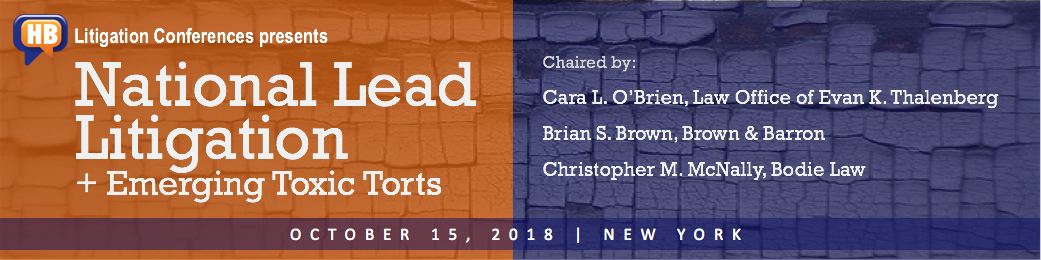
Jeff is one of the featured presenters at this year’s National Lead Litigation + Emerging Toxic Torts Conference, Oct. 15 in New York.
The event is being held at the same time and in the same location as our Drug & Defense Forum.

-
Complex Post-Settlement Liens | CLE Course | Recorded July 26, 2018

[two-fifths-first]
Two ways to access this session.

Get it direct from HB for just $197 for the video — audio synced with slides.

Or, it’s included in your West LegalEdcenter (Thomson Reuters) subscription.
____________________
Speakers
Franklin Solomon
Solomon Law Firm
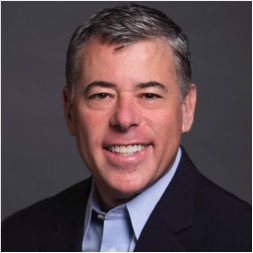
Brett Newman
Lien Resolution Group
[/two-fifths-first] [three-fifths]
Complex Post-Settlement Liens:
Beyond Traditional Medicare and Medicaid Issues
Take this highly practical course with two deeply experienced practitioners who share insights on issues that impact the cases on your desk today.
Learn about the newest case law, agency positions and litigation tactics affecting health and disability plan reimbursement claims, including how to protect your clients and your practice in this rapidly developing area.
Our speakers discuss:
Medicare Advantage Plans
Federal Employees Health Benefits Act (FEHBA) Plans
Employee Retirement Income Security Act (ERISA) Claims
Medicare set-asides
TRICARE
Veterans Administration Claims
Speaker Bios
Franklin P. Solomon | Solomon Law Firm
Franklin Solomon has a nationwide practice focused on evaluation, litigation and resolution of healthcare lien/reimbursement claims. He represents personal injury victims and their attorneys in defending against claims by health plans and government benefits programs seeking payment out of tort recoveries. Most recently, he was plaintiffs’ counsel in two federal appellate court cases decided last summer: Wurtz v. The Rawlings Company, ___ F.3d ___, (2d Cir. 2014), a class action challenging New York insurers’ reimbursement claims against their insureds, and Taransky v. Sec. U.S. Dept. of Health & Human Svcs., ___ F.3d ___ (3d Cir. 2014), a class action challenging Medicare’s claims for reimbursement out of New Jersey tort recoveries.
Brett Newman | The Lien Resolution Group
Brett Newman is known nationally by plaintiff attorneys for his expertise on claims avoidance and reduction. Recognizing the ever-growing nature of lien resolution and the ever-increasing associated liability, Brett established The Lien Resolution Group and The Newman Structured Settlement Group to assist both individual claimants of personal injury lawsuits and mass tort claimants in the protection of their proceeds and government benefits.
[/three-fifths]
-
Oracle Health Sciences on Pharmacovigilance and Artificial Intelligence

“The potential to use artificial intelligence methods increasingly for the analysis of the increasing amounts of pharmacovigilance data is well understood and many companies are moving (or planning to move) there, and we can predict that routine tasks in pharmacovigilance will in the future be increasingly automated. It will be crucial, however, for regulatory authorities to very clearly provide a position about the use of AI as well as the acceptable level of quality from AI applications. But in parallel with the shaping of those definitions, given the massive increase in their AE case workloads that most companies are currently experiencing, the industry will out of necessity proceed swiftly with the adoption of AI and cloud technologies to reduce their costs and increase their efficiencies.
“Like other industries, the pharmaceutical business and in particular the pharmacovigilance field will see a massive change in their processes in the near future, away from tedious, repetitive manual tasks towards a better utilization of scarce resources, in particular medical and scientific knowledge, for value-adding tasks. It is imperative for all stakeholders – industry, service providers and regulators – to provide an environment in which such a transformation can take place without ever compromising public health or the safety of the individual patient, and ideally providing additional benefit for patients.”
A quote from
Addressing the Data Challenges of PharmacovigilanceDownload the paper from Oracle Health Sciences
We are covering this subject at:
Drug & Device Defense Forum | Oct. 15, 2018 | New York
-
Artificial Intelligence in the Drug and Device Industries
Are Data Divers and Miners Going to Lead Innovation?
The big tech companies are into it. Apple, IBM and Google. Roche is into it. Medtronic, as well. Artificial intelligence has been a big part of innovation in the healthcare space for several years, and its impact is only going to get bigger.
“Artificial intelligence-based healthcare technologies have contributed to improved drug discoveries, tumor identification, diagnosis, risk assessments, electronic health records (EHR), and mental health tools, among others,” writes Blank Rome attorney Brian Higgins in his Artificial Intelligence and the Law Blog (it’s excellent, by the way). [1]
Daniel Faggella of TechEmergence.com writes that machine learning healthcare applications are getting a lot of attention in the press and from the investment community. He adds to the list of machine learning’s impact things like treatment queries and suggestions, and even robotic surgery.
But optimism for AI’s application to drug discovery seems greater than that inspired by other healthcare sectors. One reason for that, Faggella writes, is that compared to other segments where various laws and stakeholder incentives may not align, “drug discovery stands out as a relatively straightforward economic value for machine learning healthcare application creators.” He adds that this application also involves “one relatively clear customer who happens to generally have deep pockets: drug companies.” [2]
Also writing for TechEmergence.com, Kumba Sennaa says doctors may feel threatened at the idea of competing with artificial intelligence tools. Not so in the case of drug makers. “Unlike doctors, pharma companies have every reason in the world to adopt the most cutting-edge technologies in the expensive and lengthy process of drug discovery,” Sennaa writes. “Unlike other applications within healthcare facilities, drug discovery seems to have a clearer path to adoption.” [3]
AI-fueled innovation is, in turn, fueled by data. Lots and lots of data. “And there is no better place to find big data sets than in the healthcare sector,” Higgins says. “According to an article last year in the New England Journal of Medicine, by 2012 as much as 30% of the world’s stored data was being generated in the healthcare industry.”
“Thanks in large part to AI and the availability of health-related data,” Higgins says, “health tech is one of the fastest growing segments of healthcare and one of the reasons why the sector ranks highest on many lists.”
“To be successful,” Higgins predicts, “tomorrow’s healthcare leaders may be those who have access to data that drives innovation in the health tech segment. This may explain why, according to a recent survey, healthcare CIOs whose companies plan spending increases in 2018 indicated that their investments will likely be directed first toward AI and related technologies.”
Related
Given the investment and tremendous opportunity AI provides for the drug and device industries, the chairs of our Fifth Annual Drug & Device Forum are developing a session on the subject. Join us for this and discussion of other important topics on Oct. 15, 2018 in New York.
If you have ideas please reach out to one of our chairs directly or via Ideas@LitigationConferences.com. They are Megan Grossman of Segal McCambridge Singer & Mahoney, Michelle Hart Yeary of Dechert, and Jim Frederick of Goodell DeVries Leech & Dann. Learn more.
Also, on Sept. 27 we are co-producing a webinar titled A.I. Best Practices: Rules and Policies for Using Artificial Intelligence in Your Business. The webinar features John Weaver of the McClane Middleton law firm and contributing author to the Journal of Robotics, Artificial Intelligence & Law. We are producing this in collaboration with growing legal research company Fastcase. Learn more.
Links to the articles cited in this post:
#1. http://aitechnologylaw.com/2018/03/data-driven-health-tech-innovation/
#2. https://www.techemergence.com/machine-learning-healthcare-applications/
#3. https://www.techemergence.com/ai-in-pharma-and-biomedicine/
