Category: Complex Business Litigation

  • The Rise of Robojudges with Josh Davis

    The Rise of Robojudges with Josh Davis

    The Rise of Robojudges with Joshua Davis

    The good news for all of us, not the least of which are the robe and wig industries,  is that we still have time. Artificial intelligence is advancing rapidly, but it’s still not able to think like a learned jurist. We can say it will have flaws, but so do our human deciders. So it will be a tradeoff, right? What are the risks? What are the upsides? Will robojudges be able to absorb infinitely more information quickly? Will they hand down decisions free from the influence of bias? Wouldn’t it be great to eliminate conflicts of interest? 

    Joining me to discuss this not-so-out-there concept is Joshua P. Davis, a nationally recognized expert on legal ethics, class actions, and artificial intelligence in the law. He is Research Professor of Law at the University of California Hastings College of Law, and Shareholder and Manager of Berger & Montague, P.C.’s new San Francisco Bay Area Office. For more than 20 years Josh was a tenured Professor of Law at the University of San Francisco Law School, where he also served as the Director of the Center for Law and Ethics. Josh is authoring two books, one titled Unnatural Law, dealing with AI and the law, and a second on the important issue of class action ethics. 

    Finally, remind me never to assume anything when I ask Josh a question. I said something like, “Surely we’re not talking about sci-fi robots here,” to which he basically said, “Not so fast.” This happened more than once. When will I learn? 

    This podcast is the audio companion to the Journal on Emerging Issues in Litigation, a collaborative project between HB Litigation Conferences and the Fastcase legal research family, which includes Full Court Press, Law Street Media, Docket Alarm and, most recently, Judicata. If you have comments or wish to participate in one our projects, or want to tell me how insightful and forward-thinking Josh is, please drop me a note at Editor@LitigationConferences.com.

    Tom Hagy
    Host of the Emerging Litigation Podcast

    According to an article written by our guest, “Some of the most exciting, vexing, and terrifying issues at the intersection of AI and law involve robojudges.” 

    Can we build a robojudiciary that replaces human judiciaries? Should we? Doing so would massively disrupt how our legal systems operate. It also might transform democratic self-government.” I have to ask: Would any of that be so bad? It’s not like humans are doing such a bang-up job. The risk, of course, is what if we get it all wrong? 

    via GIPHY

  • Broken Privilege and IoT with Kathryn Rattigan

    Broken Privilege and IoT with Kathryn Rattigan

    Broken Privilege and IoT with Kathryn Rattigan

    Broken Privilege IOT Kathryn Rattigan

    Joining me to discuss this emerging area of law is Kathryn M. Rattigan, a member of the Business Litigation Group, the Data Privacy + Cybersecurity Team, and the Drone Compliance Team in the Rhode Island office of Robinson Cole.

    Kathryn provides clients guidance regarding privacy and data protection in connection with mobile devices, data storage technologies, mobile apps, and location-based services. She  assists with the development of website and mobile app privacy policies and  terms and conditions. Kathryn is a frequent contributor to the excellent Robinson Cole Data Privacy + Cybersecurity Insider blog.  She holds a J.D. from the Roger Williams University School of Law and a B.A. (magna cum laude) from Stonehill College.

    This podcast is the audio companion to the Journal on Emerging Issues in Litigation, a collaborative project between HB Litigation Conferences and the Fastcase legal research family, which includes Full Court Press, Law Street Media, Docket Alarm and, most recently, Judicata. If you have comments or wish to participate in one our projects, or want to tell me how insightful and informative Kathryn is, please drop me a note at Editor@LitigationConferences.com.

    Finally, yes, “skeevy” is a word. And the law is not settled as to whether Shiloh has privacy rights.

    Tom Hagy
    Host of the Emerging Litigation Podcast

    There are now billions and billions of interconnected devices in the world with more coming online every day. Smart cars. Smart cities. Smart agriculture and so much more. Even our pets are connected.

    And you have to look no further than the Colonial Pipeline ransomware attack to see the real-world consequences of what criminals can pull off by connecting with things large and small.

    Worried about your privacy? Well. There is plenty to worry about.

    Fortunately we also have a lot of people fighting back on the technical, security, law enforcement, and legal fronts.

  • Public Justice Shares Inside Look at Roundup Trial and Appeal in First Episode of “Justice Pod”

    Public Justice Shares Inside Look at Roundup Trial and Appeal in First Episode of “Justice Pod”

    Public Justice Discusses Hardeman v. Monsanto in First Episode of Justice Pod

    Justice Pod

    That is according to a post written by Leslie Brueckner, Senior Attorney with Public Justice following the May 2021 Ninth Circuit U.S. Court of Appeals ruling against Monsanto, and for Edwin Hardeman, a California resident who developed non-Hodgkin’s lymphoma after decades of exposure to Roundup. The jury awarded Hardeman $5,267.634.10 in compensatory damages, and $75 million in punitive damages. The district court reduced the punitive damages award to $20 million. 

    In this inaugural episode of Justice Pod: Conversations with Public Justice Change Makers, Leslie, is joined by David J. Wool, an attorney with the Wagstaff Law Firm.  Wool and Jennifer A. Moore of the Moore Law Group, were on the trial team led by highly-regarded mass tort plaintiff attorney Aimee Wagstaff.  Public Justice’s Brueckner served as co-lead appellate counsel along with Wool before the Ninth Circuit.

    Listen to what they felt inspired the jury to return such a substantial award, how Monsanto attempted to defend its actions, what the evidence revealed, and what it was like in the courtroom with the Hardeman family when the foreman read the verdict.

    I hope you find the episode inspiring and informative!

    Susan Gombert
    Host of Justice Pod:
    Conversations with Public Justice Change Makers

    Listen Now!

    Monsanto Co. has “stopped at nothing to deny the overwhelming scientific evidence” that its widely used and extremely profitable weed killer,  Roundup, is a “deadly product that causes cancer and ruins lives and families.”

  • Biotech Patent Wars: If at First You Don’t Succeed . . . University of California v. The Broad Institute

    Biotech Patent Wars: If at First You Don’t Succeed . . . University of California v. The Broad Institute

    Biotech Patent Wars: If at First You Don’t Succeed . . . University of California v. The Broad Institute

    Abstract

    This case discussed in this article is about two methods of editing DNA: one that has infinitely more lucrative applications because it can edit human DNA (plus all animals and plants), another that works in cell-free environments. Whether inventions are separate or part of the same innovation is an important factor in patent interference disputes; if there are two patentably distinct inventions there cannot be interference. One party in this case lost its argument that there was only one invention at issue, but returned with a second interference claim, arguing that it was the first inventor to constructively reduce to practice the animal and plant DNA editor. In this article, the author examines the nuances and intricacies of the patent process in the world of biology, and how patent lawyers must possess a level of knowledge in disciplines related to the inventions they seek to protect. This is necessary, for example, in understanding whether an invention is a significant improvement over prior innovations. The author also shares the importance of confidentiality especially when potentially groundbreaking (and lucrative) inventions are in development.

    Author

    Adrienne B. Naumann (adriennebnaumann@uchicago.edu) practices intellectual property law at the Law Office of Adrienne B. Naumann in Skokie, Illinois. She has held leadership positions relating to patents, science, and technology law with the Chicago Bar Association and the Converging Technologies Association. She currently serves as Secretary on the Board of the University of Chicago Women’s Alliance. Ms. Naumann has also written numerous articles on intellectual 56 Journal of Emerging Issues in Litigation property law and her book United States Federal Intellectual Property Developments includes discussion of decisions under the Defend Trade Secrets Act as well as those by the Supreme Court and was published by Pincus Professional Education.

    About
    The Journal on Emerging Issues in Litigation is a co-production of HB, Fastcase, and Law Street Media. You can also hear the complementary (and complimentary) Emerging Litigation Podcast wherever podcasts appear. For questions, contact Tom Hagy, Editor in Chief, at Editor@LitigationConferences.com.

    Loading Viewer…

  • Mega Verdict Threat: Tackling Damages Early Can Mitigate Outsized Jury Awards

    Mega Verdict Threat: Tackling Damages Early Can Mitigate Outsized Jury Awards

    Mega Verdict Threat: Tackling Damages Early Can Mitigate Outsized Jury Awards

    Abstract

    Why have medical malpractice verdicts in recent years reached such astronomical new heights? In this article the author addresses several of the factors that drive juries to return such punishing awards, discussing the unexpected impact of tort reform, the role of life-care planners and economists in determining damages, the ramifications of litigation financing, plaintiff attorneys’ utilization of the so-called reptile theory, and the influence of how the media reports on these verdicts. The author offers practical methods for defense attorneys involved in this litigation and insights that will benefit attorneys in any type of tort matter.

    Author

    Sandra M. Cianflone (scianflone@hallboothsmith.com) is an attorney at law firm Hall Booth Smith, P.C., whose practice primarily focuses on medical malpractice.

    About
    The Journal on Emerging Issues in Litigation is a co-production of HB, Fastcase, and Law Street Media. You can also hear the complementary (and complimentary) Emerging Litigation Podcast wherever podcasts appear. For questions, contact Tom Hagy, Editor in Chief, at Editor@LitigationConferences.com.

    Loading Viewer…

  • Gamification of Stock Trading with Brad Rustin

    Gamification of Stock Trading with Brad Rustin

    Gamification of Stock Trading with Brad Rustin

    “What’s the deal?” you ask? Find out! Listen to my interview with FinTech attorney Brad Rustin, a partner with Nelson Mullins. In addition to chairing the firm’s Financial Services Regulatory Practice, Brad counsels  financial institutions in regulatory matters, including strategic agreements, product development, and operational compliance.

    A large portion of his work is on bank and non-bank partnerships involving white-label deployments, FinTech partnerships, or payments, digital assets, cryptocurrency, and lending partnerships. Brad is a Certified Anti-Money Laundering Specialist (CAMS) by ACAMS and a Certified Regulatory Compliance Manager (CRCM) by the American Bankers Association.

    He received his JD, magna cum laude, from the University of South Carolina School of Law and his BA in Political Science and History, cum laude, from Furman University. And now, he is not only a guest on the Emerging Litigation Podcast, but the FinTech advisor on the  Editorial Advisory Board of the Journal on Emerging Issues in Litigation.

    This podcast is the audio companion to the Journal on Emerging Issues in Litigation, a collaborative project between HB Litigation Conferences and the legal news folks at Law Street Media, and the Fastcase legal research family, which includes Docket Alarm and Judicata. If you have comments or wish to participate in one our projects, or want to tell me how insightful and informative our guests are, please drop me a note at Editor@LitigationConferences.com.

    Thanks to Brad for speaking with me about this fascinating subject. As for me, I will stay away from “game trading.” Hearing people describe it reminds me of my PacMan obsession in college, which frequently cost me many hours that I should have spent differently, and too often a functioning shoulder.

    Tom Hagy

    via GIPHY

    As brokerages focus on enhancing user experience, they risk shifting their customer’s focus from serious financial decisions to a game-like experience.  Some think this is a good thing. That it will help engage the next generation of traders. Others think it’s a bad thing. That it will create a more spastic type of trader with unrealistic expectations on potential returns. State and federal regulators are focusing on digital brokerages and exploring guardrails for these types of platforms.

    The challenges facing traditional technology providers (volume controls, fraud, system outages, and liquidity) are now facing these digital brokerages—with real-life consequences for individuals and their savings and retirement accounts.

    One company that has been making headlines is Robinhood, which was on the receiving end of a $70 million fine handed down by the Financial Industry Regulatory Authority, or FINRA, for what it called “systemic supervisory failures.”

    In coming up with the award, FINRA said it considered the “widespread and significant harm suffered by customers, including millions of customers who received false or misleading information from the firm, millions of customers affected by the firm’s systems outages in March 2020, and thousands of customers the firm approved to trade options even when it was not appropriate for the customers to do so.” Robinhood is also defending itself in litigation involving dozens of cases.

    Will we continue to see litigation over these platforms as more and more retail customers (many young and inexperienced) realize that securities involve market risks?

    What’s the deal?

  • Impact of Surfside Condo Collapse with Judah Lifschitz

    Impact of Surfside Condo Collapse with Judah Lifschitz

    Impact of Surfside Condo Collapse with Judah Lifschitz

    Joining me is experienced construction law attorney Judah Lifschitz of Shapiro, Lifschitz & Schram  who spoke about the near- and long-term impacts of the Surfside condo collapse not only in Florida around the country.  Judah has extensive experience dealing with construction matters, representing clients in engineering, procurement and construction contracts and disputes. He represents and advises government agencies and private owners; regional, national and international contractors; construction managers and subcontractors; design professionals; and insurance companies. Notably, Judah won one of the largest liquidated damages awards in the history of the construction industry.  Education: George Washington University, J.D.; Yeshiva University, B.A., magna cum laude.

    This podcast is the audio companion to the Journal on Emerging Issues in Litigation, a collaborative project between HB Litigation Conferences and the Fastcase legal research family, which includes Full Court Press, Law Street Media, Docket Alarm and, most recently, Judicata. If you have comments or wish to participate in one our projects, or want to tell me how insightful and informative Judah is, please drop me a note at Editor@LitigationConferences.com.

    Thanks to Judah for speaking with me about this important topic. I was especially proud that I pronounced his name correctly on the first try, though he assured me that I could in no way do more damage to it than those who have come before me. (Clearly he doesn’t know me well.)

    Tom Hagy
    (pronounced HEY-ghee, for the record)

    via GIPHY

    Nothing illustrates the tragic consequences of building decay more than the June 24, 2021, collapse of the Champlain Towers South in Surfside, Florida, which claimed the lives of nearly 100 residents.

    The event raises questions about the building inspection process not only in Florida but around the country.

    What caused this calamity?

    Who is responsible?

    How many other buildings are in similar condition?

    Since any compensation for the loss of life, injuries, and property damage will likely be astronomical, where will any financial awards come from?

  • Digital Payments in Class Administration

    Digital Payments in Class Administration

    Now On Demand

    Epiq presents
    DIGITAL PAYMENTS
    Best Practices for Efficiency in Class Actions

    Recorded: Sept. 23, 2020
    75 minutes

    CLE credit: 1+
    Registration includes recording, materials, and answers to your questions.

    TAKE IT NOW!

    Epiq presents a CLE-eligible webinar
    Digital Payments
    Best Practices for Efficiency in Class Actions

    Recorded Live | Sept. 23, 2020

    produced by HB Litigation Conferences

    Modern life increasingly relies on digital solutions. Nothing has made that more apparent than the novel coronavirus pandemic. In terms of class action settlement payments, the impetus has never been greater to transition to the e-payment realm for security, convenience, cost-reduction, and improved fund disbursement.

    Class counsel and claims administrators have experimented for years with pre-paid debit cards, automated clearing house (ACH) deposits, and wire transfers, while others have tested judicial appetites for registered-user payment systems like PayPal and Venmo. However, digital payment schemes with multiple options — the primary of which is direct deposit — seem to be emerging as the favored solution.

    Though class action notice is increasingly being digitized, aided by the 2018 amendments to Federal Rule of Civil Procedure, particularly Rule 23(c)(2)(B), which permits notice by electronic means like emails and digital and social media, payment itself has lagged behind. Even with these challenges, electronic payment distribution is now a viable option. Courts are encouraging the shift to electronic payments, too. As the U.S. District Court for the Northern District of California specified in its November 2018 Procedural Guidance for Class Action Settlements, “[c]lass counsel should consider… distributions to class members via direct deposit.”

    As class actions lawyers and claims administrators consider digital payments, they must propose workable and achievable solutions, adhere to Rule 23, and minimize cy pres. Though widespread acceptance of this technology is still evolving, understanding the concept and embracing its benefits may lead to quicker adoption.

    Take our webinar as our panelists will address: 

    • Statistical trends in digital payment.
    • How to choose the right plan for your settlement structure.
    • How to choose the right plan for your class size & payment amounts.
    • Cost variables associated with different methods.
    • Vendor and program characteristics.
    • How to implement an effective program.
    • Avoiding excessive unclaimed funds.
    • Data security and privacy concerns.
    • Questions your judge will ask.

    Meet the Speakers

    Adam Zapala
    Partner
    Cotchett Pitre

    Adam Zapala is a partner in the San Francisco office of Cotchett Pitre, where he focuses on complex litigation, including antitrust, employment and civil rights, privacy and cybersecurity, qui tam/false claims, consumer protection, and class actions generally. He has served as lead counsel in some of the largest and most complex litigation matters in the country. He received his B.A. from Stanford University and his J.D. from the University of California Hastings College of Law. Read more about Adam and Cotchett Pitre.

    Paul G. Karlsgodt
    Partner
    BakerHostetler

    Paul is a partner in the Denver office of BakerHostetler, and serves as leader of the firm’s Privacy and Digital Risk Class Action and Litigation Team. He has significant experience representing companies in the insurance, healthcare, consumer, and education sectors, and is routinely named among the best lawyers in his field. Paul earned his J.D. from the University of Denver Sturm College of law and his B.S. from Purdue University. Read more about Paul and BakerHostetler. 

    Chris Ljungkull
    Director of Sales
    Digital Pay

    Chris brings Ljungkull 10+ years of experience building strategic partnerships across Financial Services, Enterprise SaaS, CPG, eCommerce, and Logistics. He draws heavily on his experience in fulfillment, print, and mail industries to help Legal Service customers develop solutions that do more with less. Read more about Chris and Digital Pay.

    Kim Stephens
    Member Partner
    Tousley Brain Stephens

    Kim Stephens is a Member Partner at Tousley Brain Stephens PLLC, where he focuses on commercial and class action litigation.  Prior to joining the firm he was a judicial extern clerk to Hon. Eugene A. Wright of the Ninth Circuit, and worked for the Seattle criminal defense firm of Allen &Hansen.  He has been appointed special attorney general for Washington State, as well as lead and co-lead counsel to manage numerous state, federal and multi-district class action matters. He received his B.A. from the University of Washington and his J.D. from the University of Washington School of Law. Read more about Kim and Tousley Brain Stephens.

    Judge Suzanne H. Segal (Ret.)
    Mediator
    Signature Resolution
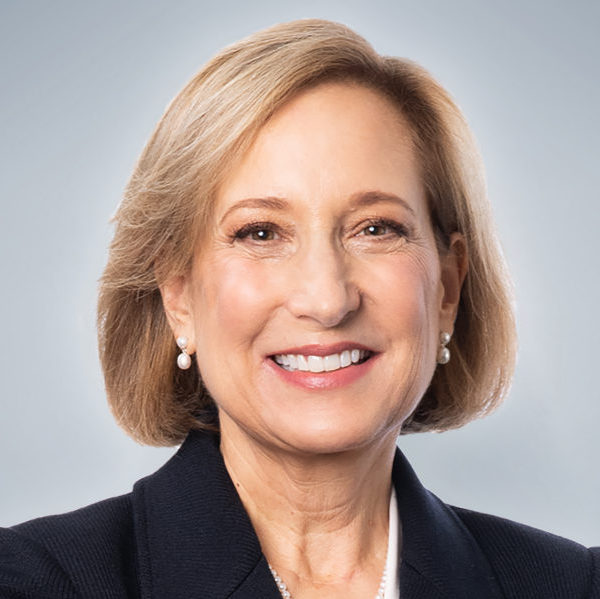
    After 18 years as a U.S. Magistrate Judge with the Central District of California, including four years as the Chief Magistrate Judge, Hon. Suzanne H. Segal (Ret.) joined Signature Resolution as a mediator and arbitrator. During her tenure on the federal bench, Judge Segal presided over numerous trials, evidentiary hearings, motions and discovery conferences involving a variety of cases. Before that she served for 12 years as Assistant U.S. Attorney in the Civil Division of the Los Angeles U.S. Attorney’s Office. She received her J.D. from Claremont McKenna College and her J.D. from Cornell Law School. Read more about Judge Suzanne H. Legal.

    Moderator: Aideen Gaffney
    Vice President
    Epiq

    Aideen Gaffney draws upon over two decades of experience as an attorney and a skilled business development strategist to expand the scope and impact of our service offerings while providing effective solutions to our clients’ project needs.  Based on the West Coast, her particular experience centers upon class action administration, mass tort global litigation programs, and data breach response programs. Earlier in her career, Gaffney practiced law in San Francisco at Gordon & Rees LLP, and in Portland at Bullivant Houser Bailey PC,  handling complex insurance litigation and participating in two jury trials and two bench trials involving ‘bad faith’ litigation. She is a frequent speaker and writer on current topics affecting the legal administration industry, and has presented numerous CLE programs to clients. Aideen received her B.S. from Santa Clara University and her J.D. from Santa Clara University School of Law. Read more about Aideen and Epiq here.

  • Virtual Hearings: Changing Perceptions of Executive Testimony?

    Virtual Hearings: Changing Perceptions of Executive Testimony?

    Virtual Hearings: Changing Perceptions of Executive Testimony?

    Abstract
    Given the newly acceptable ease of securing testimony via webcam—necessitated by the pandemic—this article focuses on efforts to compel the appearance of corporate executives to testify in litigation. While there are many practical advantages to virtual testimony, the authors maintain that mere convenience cannot replace legal standards of relevance and undue burden when pursing the testimony of executives.

    Authors

    Sean J. Coughlin (scoughlin@bressler.com) is a Principal in the Financial Institutions group at Bressler, Amery & Ross, P.C., where he represents institutions and individuals in regulatory investigations and defense litigation. Before joining the firm, he was an Executive Director in the legal department at Morgan Stanley, a Managing Director at Citigroup/Smith Barney, and a Senior Assistant District Attorney in the Kings County District Attorney’s office.

    Jacqueline R. Meyers (jmeyers@bressler.com) is an associate at Bressler, Amery & Ross, P.C., whose practice focuses on securities defense litigation, arbitration, and regulatory investigations. She has specialized experience in litigation concerning arbitrability and enforcement of arbitration awards.

    About
    The Journal on Emerging Issues in Litigation is a co-production of HB, Fastcase, and Law Street Media. You can also hear the complementary (and complimentary) Emerging Litigation Podcast wherever podcasts appear. For questions, contact Tom Hagy, Editor in Chief, at Editor@LitigationConferences.com.

    Loading Viewer…

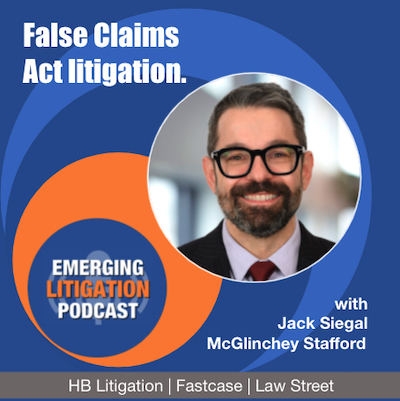
  • The False Claims Act with Jack Siegal

    The False Claims Act with Jack Siegal

    The False Claims Act with Jack Siegal

    Joining me to discuss this important civil statute is Jack Siegal of McGlinchey Stafford in Boston. Jack’s practice focuses on financial services litigation, complex commercial disputes, government investigations and white-collar defense, securities litigation, regulatory proceedings, and compliance.

    This podcast is the audio companion to the Journal on Emerging Issues in Litigation, a collaborative project between HB Litigation Conferences and the Fastcase legal research family, which includes Full Court Press, Law Street Media, Docket Alarm and, most recently, Judicata. If you have comments or wish to participate in one our projects, or want to tell me how insightful and informative Jack is , please drop me a note at Editor@LitigationConferences.com.

    I hope you enjoy the interview, and especially how I managed not to include Jack’s answer to whether my dog could be sued for violating the FCA. “Nope. Not a person,” he said, with zero hesitation. I want to thank Jack for immediately taking on the role as Shiloh’s advocate, and for speaking with me about this important law.  –Tom Hagy

    Unscrupulous contractors have been ripping off the federal government for as long as there has been a federal government. President Lincoln, tired of being sold lame mules and rancid rations, signed the Federal Claims Act into law during The Civil War.

    In the last two decades the government, with the help of whistleblowers, has raked in more than $20 billion.