Blog
-
Mitigating Operational Cyber Risk: As Business Technology Changes, So Does Your Risk Profile
By Tom Hagy
The various risks of doing business in our digitally connected world continue to evolve. So must the approach organizations take in confronting those risks, for failing to do so in the current risk landscape can be far more dangerous than in prior years.
I spoke with Nick Galletto, Global Cyber Risk Leader at Deloitte, who traced the evolution of the dangers of doing business in a digitally connected world. Early on, our focus in the cyber risk management space was on how to protect websites from being defaced, he explained. Organizations had to make sure websites were functioning properly, that data was secure, and the integrity was maintained.
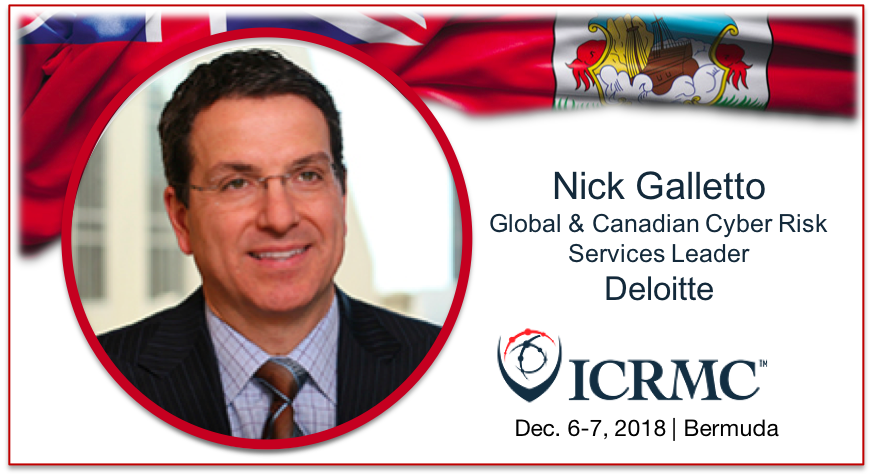 Galletto went on to say that we’ve moved from an era of compliance and risk management to an era of complexity. From an organization’s perspective, their focus was on making sure the company was compliant with new and evolving regulations, and risk management meant having policies, procedures and effective controls in place.
“While compliance is a necessity, it is not the silver bullet that’s going to protect us from any potential breaches,” Galletto said. “So organizations must look at conducting their business in this connected world not merely from a compliance perspective but from a risk perspective. A clear example of this is the number of PCI-compliant companies that were still getting breached.”
“Now as organizations move into an era of complexity, they need to be proactive in detecting anomalies and suspicious behavior and be prepared so their teams have a playbook that allows for seamless response. Effective organizations will play back possible breach scenarios – whether they involved data breaches or denial of service — to prevent and prepare for similar attacks. They also focus on understanding what their crown jewels are and where they reside and how to best protect them. Much of this also has to do with data,” Galletto said.
“Organizations are increasingly reliant on the cloud and they must understand the associated risks and the individuals responsible for managing those risks,” he said. “They need to be sure they have the right coverage as well.”
“This era of complexity – automation, machine learning, artificial intelligence and the internet of things, along with the tremendous advantages, like the cloud – also bring new risks,” Galletto continued. “As consumers we see use of these technologies more and more in our daily lives. But organizations are increasingly integrating them into their operations. When something goes wrong here there can be actual safety implications, such as with autonomous vehicles or industrial controls in the mining and manufacturing sectors, as examples. In the financial sector these technologies bring great advantages to customers in terms of accessing their information more efficiently or providing better customer support. But as machine learning and AI become more prevalent in the world of FinTech, decisions are being made without human cognitive capabilities to know right from wrong. These new technologies bring more complexity.”
“As organizations take advantage of these innovative new technologies, they also have to know that their risk profile is changing right along with them. Smart companies will be proactive in understanding the risks associated with cyber everywhere, understanding where their cyber posture is and make adjustments along the way to better manage complexity.”
Galletto is one of the speakers at this week’s International Cyber Risk Management Conference in Bermuda, which just kicked off this afternoon with more than 200 professionals in this center of global cyber risk.
-
Aon SVP Belfiore on Corporate Cyber Risk
Cyber Risk of Paramount Concern to Corporate Boards
Lack of History Remains a Challenge
“Cyber security is the most polarizing issue on the corporate board agenda these days,” says Anthony Belfiore, SVP and Chief Information Security Officer at Aon. “It has the most potential impact and the most regulatory pressure among all risks companies face. Nothing is more top of mind right now.”
 “You just have to look at the amount of media coverage and the actual realized impacts companies are experiencing. Hundreds of thousands of businesses from big to small are being affected. The entire healthcare system in the UK went down. The impact is tangible. It’s affecting day-to-day operations,” he says. “And no one is immune. Board members come from a diverse set of industries, and all are impacted.”
Why is cyber risk such a hot button for companies versus other types of risks?
“The risk has become more urgent as it has shifted to actual business interruption,” Belfiore says. “Historically companies were concerned with data leakage and loss, or regulatory fines, but now the actual operation itself can come to a halt. When a company goes down for three days that hits the media. Analysts notice. You can trace a specific event to a drop in stock values.”
Aren’t fines still a concern?
“Yes. We are operating in a regulatory environment which can have a significant downside,” Belfiore says. “This is especially true if you are a multi-national firm with considerable operating and capital expenses. You can sustain significant and unforeseen punitive fines which can be imposed anywhere around the globe, for example, if you’re found non-compliant with GDPR.”
What about directors themselves?
“Potential for board liability for failing to protect shareholders is a hot-button issue right now. D&O liability and coverage is evolving,” says Belfiore. “There is uncertainty as to who is protected.”
The digitization of so many aspects of conducting business has been around for a while now. So why does cyber risk continue to present challenges for the insurance industry?
“Historical data is a challenge for insurers because there is very little relative to other risks like those posed by fire or storms for which we have decades of statistics. This makes it difficult to qualify and quantify the risk. Models are used to gauge the potential for losses but, still,” he says, “there isn’t a lot of history to go on.”
Aren’t companies and boards okay as long as they have insurance?
“Organizations who think they are covered may come to a different conclusion when they read the fine print. That’s why it’s imperative to work with an experienced broker to navigate the various coverages and nuances in policy language,” Belfiore says.
At a high-level, what should security leaders at companies do to reduce risk and anxiety around potential cyber losses?
Belfiore urges companies to “set up effective governance and establish an effective governance committee. Examine how you run your operation day-to-day, consider how to best manage the expectations of the C-suite and the board. Get the most out of governance committee discussions, ensure you have alignment up and down the stack, and make sure you have installed effective risk management and risk protocols.”
Belfiore is on “The CISO Perspective” panel at the International Cyber Risk Management Conference (ICRMC) on Dec. 6-7, 2018 in Bermuda, along with Tim Dawson, Cybersecurity Chief Technology Officer at HSBC; Tom Pageler, Chief Security Officer at BitGo, Inc.; and Derek Vadala, Chief Information Security Officer at Moody’s Corporation.
You will be able to hear insights like these, and updates on anything that occurs between now and December in Bermuda.

This posted was edited by HB Founder & Managing Director Tom Hagy. In the 1990s Tom launched one of the first nationwide legal reports in this area — Mealey’s Litigation Report: Cyber Tech & E-Commerce — when he was publisher at Mealey’s, now part of LexisNexis. If you are interested in posting on this site or discussing speaking opportunities, please contact us at Editor@LitigationConferences.com.
-
Cyber Risks Enter a New and Increasingly Vicious Phase
For anyone plotting the evolution of cyber risks, the last phase of cyber-attacks was dominated by breaches that resulted in lost or stolen personal or financial data that could then be monetized.
The current phase is different.
“We have observed a significant increase in the number of disruptive breaches that our clients are dealing with,” says Charles Carmakal, Vice President at Mandiant/FireEye. “These involve destruction, extortion, or public shaming.”
How are organizations dealing with this shift?

“It’s catching many organizations off guard. Most don’t have a playbook for dealing with extortion,” Carmakal says. “While they may have thought about a ransomware situation, that’s different from the more common type of extortion we are seeing these days, where a threat actor threatens C-level executives or corporate board members with the release of sensitive information.”
“Many organizations assume the default is they wouldn’t give into the demands, but when in the middle of a crisis too often the decision is made to pay the threat actors,” he says.
“So it’s important to consider what your organization will do in this situation. For example, who will be involved in the decision-making process? Organizations should play out an extortion scenario so they have a plan when faced with real demands.”
How can organizations better test the efficacy of their security capabilities?
Many organizations conduct penetration testing or red-teaming exercises, but they often undermine their own efforts.
“A problem arises when an organization contracts a third-party to test their capabilities, but puts a lot of restrictions on those who are doing the testing,” Carmakal says. “For example, they will tell the testing team or red team to identify vulnerabilities, but not to exploit them, or they can exploit a vulnerability but stop there and not dig any further. The penetration testers might be allowed to test only during a certain day of the week or certain time of day. Or they might be allowed to sample only a fraction of the organization’s IP addresses and ignore everything else.”
“What happens is the penetration testers are not permitted access to the crown jewels,” Carmakal warns. “They can’t demonstrate business impact to the organization. This creates a false sense of security because the organization can say they had a team of qualified people try and fail to break into the network, but in reality they were unable to break through because of all the unrealistic restrictions imposed on that team.”
This false sense of security travels to the top. “Testing results are shared with the board and the board believes that because a really good third-party was not able to get to the crown jewels that they have a much safer environment than they really do. That’s a very common theme we see across the industry,” Carmakal says.
How do penetration testers deal with unrealistic testing parameters?
 “It’s part of the education process,” he says. “When a company wants us to do a very limited test, and we believe our reports will be shared with the leadership team or the board, then we just won’t take the engagement. We try to make it clear that this is not an exercise to make anyone look bad, but a way to leverage the lessons from all the bad guys who are breaking into organizations so you can strengthen your security.”
In the end, he says, “It’s better we identify the vulnerabilities than have the bad guys do it.”
What the geopolitical trends you are seeing?
Iran – “They used to be unorganized. They even clumsily posted social media profiles of themselves,” Carmakal says. “But they have become much more organized, more structured, more technologically adept, and have affiliated with government entities.”
“In 2017 we saw more intrusions from Iran than we had ever seen before. There was a noticeable spike in offensive intrusions coming from them. For some reason, in 2018 we really haven’t seen Iran targeting organizations in the United States. They’ve scaled back significantly in the US, but are still active in other parts of the world.”
“What makes security professionals nervous about Iran,” Carmakal says, “is that they are a wildcard. You don’t know what they are going to do. You don’t understand the rationale behind their activity. But what we do see is a capability and a willingness to be incredibly destructive – taking down businesses and publicly shaming organizations. The fact that they’ve slowed down their attacks on U.S. organizations is interesting, but we expect that to change.”
Russia – “Russia is not hacking the U.S. midterm elections like they were with the presidential election in 2016, but they are conducting some significant offensive operations around the world. They are very capable. They are also very good at disinformation and throwing false flags, so when you investigate them it’s difficult to tell who they really are. Russia is one of the few countries that demonstrates the willingness and capabilities to cause kinetic consequences through cyber-attacks, such as when they turned off the lights in Ukraine.”
In March 2018 The New York Times wrote, “The Trump administration accused Russia … of engineering a series of cyber-attacks that targeted American and European nuclear power plants and water and electric systems, and could have sabotaged or shut power plants off at will.”
When asked about this and the reporting that surrounded it, Carmakal said the story was a bit “sensationalized” and not 100% accurate. “While the intrusion was serious, we didn’t see the Russian actors getting anywhere near being able to shut off the lights,” he said, adding that they “certainly have the capability” in other parts of the world.
China – There has been a “notable decrease” in cyber intrusions from China since the 2015 bi-lateral cyber agreement was reached between President Obama and China’s President Xi, Carmakal says. While narrow in scope, addressing economic espionage — China’s state-sponsored theft of private U.S. intellectual property and then turning it over to state-owned and private companies in China — the agreement does appear have helped, reports suggest. “They are still hacking organizations and are following a defined playbook. We’re keeping a close eye on them to see how their offensive operations evolve,” Carmakal says.
North Korea – Except for the highly publicized attack against a major U.S.-based entertainment company, “North Korea rarely goes after Western organizations.” Given the country’s need for cash, “their focus has been more on robbing digital currency exchanges and stealing from banks digitally,” Carmakal says, adding that they, like Iran, are a bit of a “wild card.” North Korea actors have stolen more than $100 million from victims, Carmakal says.
You will be able to hear insights like these, and updates on anything that occurs between now and December in Bermuda when Carmakal and his fellow panelists discuss important trends in global cyber risks.
This posted was edited by HB Founder & Managing Director Tom Hagy. In the 1990s Tom launched one of the first nationwide legal reports in this area — Mealey’s Litigation Report: Cyber Tech & E-Commerce — when he was publisher at Mealey’s, now part of LexisNexis. If you are interested in posting on this site or discussing speaking opportunities, please contact us at Editor@LitigationConferences.com.
-
Foggan & Huggins on Opioid Litigation Defense Coverage
Is a drug company that’s sued in connection with the manufacture, promotion and distribution of opioids covered by its insurer for defense costs?
According to Laura A. Foggan and Michael Lee Huggins of Crowell & Moring, LLP, that determination will come down to whether, in the relevant state, an accident takes place when either the act or the injury was unintentional, or whether an accident occurred if only the act was unintentional.
This definition will vary by state, Foggan and Huggins wrote in California Litigation, published by the Litigation Section of the California Bar earlier this year.
South Carolina may permit coverage if “either the act or the injury was unintentional,” they explained. In Liberty Mutual v. J.M. Smith, the Fourth Circuit held that if a drug company failed to identify and alert regulatory agencies of suspicious drug orders, then there may be a duty to defend.
But in California, the Crowell & Moring attorneys wrote, with that state’s definition of “accident” a state appellate court in Travelers v. Actavis held that a “deliberate act is not an accident, even if the injury is unintentional, unless the injury was produced by an additional, unexpected, independent, and unforeseen happening.”
In that case drug company Actavis allegedly engaged in deceptive marketing in order to sell more opioids and reap more profits. According to Foggan and Huggins, the court said such alleged conduct can only be described as deliberate and intentional. Whether the company intended to injure anyone is irrelevant in determining coverage, the court determined.
“[T]he court concluded that none of the alleged injuries — including the flood of opioids into the American medical market, the opioid epidemic, the resurgence in heroin use, or the increased public healthcare costs resulting from long-term opioid use — was an ‘additional, unexpected, independent, or unforeseen’ event that would support a duty to defend,” the attorneys wrote. For these reasons the California appeals court found there was no possibility of defense coverage under a CGL policy.
The latest is that the California Supreme Court granted review of Travelers v. Actavis but deferred briefing until there is a ruling on the definition of “occurrence” in another case, Liberty Surplus v. Ledesma & Meyer.
Foggan and Huggins also discussed issues such as “relief sought ‘for’ or ‘because of’ bodily injury,” products exclusions, and a number of untested coverage issues, such as whether opioid injuries constitute a continuous trigger of coverage or how the role a defendant played in the opioid market impacts coverage.
The complete article will be included with the handouts accompanying our Dec. 4, 2018, CLE webinar. Laura will be joined by policyholder counsel Bernard Bell of Miller Friel PLLC.

-
PFOA: Science & Litigation | 11/15/2018

[one-third-first]

DATE: Nov. 15, 2018
TIME: 2 p.m. EDT; 1 p.m. CDT; 12 p.m. MDT; 11 a.m. PDT
PLACE: Your computer or mobile device
PRICE: $197* per dial-in site
*Price is good through Oct. 31. After that it’s $247.GROUPS ARE GOOD: Registering qualifies you to multiple attendees at your location.
CLE: 1 credit
Please send CLE questions to
CLE@LitigationConferences.comspeakers

Michael Dourson, Ph.D., DABT, FATS, FSRA
Director of Science
Toxicology Excellence for Risk Assessment (TERA)
Register now and get:
-
Access for multiple colleagues at your location.
-
Practical insights from a board-certified toxicologist.
-
A through and informative PowerPoint presentation for later reference.
-
Answers to your questions via live chat.
-
CLE credit.
And more!
[/one-third-first] [two-thirds]
PFOA Toxicology: What’s a Safe Level for the Environment?
What toxic tort and environmental attorneys need to know about this ubiquitous compound.
Perfluorooctanoic acid (PFOA) has been described as more toxic than methyl mercury. Yet not all organizations tasked with developing safe-dose levels agree on the best approach for PFOA, resulting in recommended levels that are more than 100-times apart.
Differences in these recommended safe-dose levels result in cleanup costs that vary by billions of dollars.

Background
Environmental contamination with PFOA has been known for some time. In the early 2000s safe doses in drinking water were considered to be in the range of 30-to-50 parts per billion. Recent safe-dose assessments by EPA, ATSDR and several states have significantly lowered these safe doses to parts-per-trillion measurements.
PFOA, also known as C8, is used to make Teflon® and similar chemicals known as fluorotelomers. According to the American Cancer Society, PFOA is “burned off during the [manufacturing] process and is not present in significant amounts in the final products.”
However, the American Cancer Society says, “PFOA has the potential to be a health concern because it can stay in the environment and in the human body for long periods of time. Studies have found that it is present worldwide at very low levels in just about everyone’s blood. Higher blood levels have been found in community residents where local water supplies have been contaminated by PFOA. People exposed to PFOA in the workplace can have levels many times higher.
“PFOA and some similar compounds can be found at low levels in some foods, drinking water, and in household dust. Although PFOA levels in drinking water are usually low, they can be higher in certain areas, such as near chemical plants that use PFOA.
“People can also be exposed to PFOA from ski wax or from fabrics and carpeting that have been treated to be stain resistant. Non-stick cookware is not a significant source of PFOA exposure.”
The underlying toxicity data has not changed that much. What differs is our understanding of the differences between experiments on animals and humans in how PFOA is excreted from the body. Recently it has been suggested that the federal approach to this safe dose assessment has not followed its own risk assessment guidelines. If true, this lack of adherence to guidelines calls into question whether the significantly lower safe doses are appropriate. If these much lower levels are not appropriate, then clean up standards to these levels may be overly costly.
Earlier this year, the Agency for Toxic Substances and Disease Registry (ATSDR), within the Department of Health and Human Services (HHS) announced the availability of the Draft Toxicological Profile for Perfluoroalkyls for review and comment. All toxicological profiles issued as “Drafts for Public Comment” represent ATSDR’s best efforts to provide important toxicological information on priority hazardous substances. You can see the many comments received at the ATSDR website.
Is PFOA really more toxic than methyl mercury?
Do we really need to spend billions of dollars in its clean up?
How can it be that these safe doses vary so widely?
Attendees of this webinar will learn the nuances of safe dose assessment from a board-certified toxicologist, including:
— A thorough background on the toxicology of PFOA.
— A practical overview of animal vs human studies.
— An understanding of the latest federal approach to estimating the safe dose of PFOA.
— A review of the underlying risk assessment guidelines.
— An explanation of how more typical approaches likely yield higher safe-dose levels and less costly cleanups.
And more!
speaker
Dr. Michael Dourson is a board-certified toxicologist serving as the Director of Science. Most recently, he was Senior Advisor in the Office of the Administrator at the U.S. Environmental Protection Agency. Prior to this position, Dr. Dourson was a Professor in the Risk Science Center at the University of Cincinnati, College of Medicine and worked at TERA and EPA. He was awarded the Arnold J. Lehman award from the Society of Toxicology, the International Achievement Award by the International Society of Regulatory Toxicology and Pharmacology, and 4 bronze medals from the EPA. He has been elected as a Fellow of the Academy of Toxicological Sciences and as a Fellow for the Society for Risk Analysis. He has co-published more than 150 papers on risk assessment methods or chemical-specific analyses, and co-authored well over 100 government risk assessment documents, many of them risk assessment guidance texts. He has made over 150 invited presentations to a variety of organizations, and has chaired over 150 sessions at scientific meetings and independent peer reviews. He has been elected to multiple officer positions in the American Board of Toxicology (including its President), the Society of Toxicology (including the President of 3 specialty sections), the Society for Risk Analysis (including its Secretary), and is currently the President of the Toxicology Education Foundation, a nonprofit organization with a vision to help the public understand the essentials of toxicology. In addition to numerous appointments on government panels, such as EPA’s Science Advisory Board, he is a current member on the editorial board of Regulatory Toxicology and Pharmacology and Human and Experimental Toxicology.[/two-thirds]
-
-
Kenneth Jones of Tanenbaum Keale on Law Firm Tech Development Capabilities
Should Law Firms Should be Able to Develop Custom Technologies?
Here is #10 of Jones’ Top-10 List.
 #10. Security. The cloud is great, and generally speaking, companies in this space operate systems in a highly professional manner. However, occasionally one encounters special business needs which call for extensive “above and beyond” levels of security. This could be times a firm is storing financial information, medical records, or other data they wish to absolutely, positively protect. In these situations — under the theory that “no one does things better than I do” —it’s nice to have the option to build super-secure systems with features such as encrypted data within database tables, and to manage the systems with a very small number of highly trusted professionals specifically known by the law firm. Read more of the article posted by Thomson Reuters.
Kenneth Jones oversees various aspects of technology at Tanenbaum Keale LLP in the role of Chief Technologist. He leads efforts to support TK’s computing environment and infrastructure, one that features a strategy of professionally protecting and processing client data in the cloud with highly skilled and respected leading-edge business partners in the technology space. Ken also helps lead and support various TK programs in the areas of security, compliance, business continuity and firm administration. Learn more.
-
Protecting Intangible Assets: Risk Transfer Market Yet to Catch Up
Intrinsically Intangible.
by Giles Harlow, Senior Vice President, Aon (Bermuda) Ltd.
 In the early 1980’s, tangible assets made up around 80% of the value of the S&P 500. Fast forward to today and nearly 85% of the value of the S&P 500 is attributable to intangible assets.
However, the risk transfer market has not caught up. According to the Aon/Ponemon report of last year, whilst around 60% of tangible assets (property, plant and equipment) are currently being insured, only 12% of informational assets are.
So what gives?
If the vast majority of companies’ values in 2018 are attributable to intangibles, why are they not transferring those risks? Is it a lack of education on the client side? A lack of innovation in the brokerage community? A lack of understanding or willingness to accept these new risks on the carrier end? Or is it that whilst the marine and property markets have had centuries to evolve, the newer intangible insurance markets are just gearing up to size as they collate the data they need to properly price and model these risks?
Likely, it is some combination of all of these factors. We have seen great strides in the cyber market, with double-digit premium growth over the last four-to-five years. The market has evolved from being focused on large data holders, to providing products which contemplate the cyber perils affecting manufacturers, the transportation industry and other non-data holders. “Business interruption” has quickly morphed into “system failure coverage.” “Contingent business interruption” now looks more akin to full supply chain risk, not just for IT service providers but now contemplating all vendors. “Bodily injury” and “property damage” stemming from non-physical threats complete the circle back into tangible loss being covered under cyber policies.
Intellectual property — hands down — makes up the largest dollar percentage of the intangible asset value of the S&P 500. This has long been a conundrum for the industry as a whole – both in terms of how to value the asset and, more so, how to value the loss. Again, we have seen great momentum here with much larger limits than were historically available now obtainable from the markets both as a theft product as well as being offered for IP infringement. Even now carriers are contemplating supporting the multi-trillion dollar asset class of intellectual property when used as collateral. This could dramatically impact both the equity financing model and asset backed lending world we know today.
Clearly the will to innovate is alive and well within the industry. It is tough to price emerging risk when the models that our industry are built on rely on historical data, data that is often out of date or irrelevant in these rapidly evolving intangible classes of business. New ways to price and structure these insurance purchases have to be found in order to maintain the industry’s relevance in today’s world.
Bermuda is at the forefront of many of these initiatives and its underwriters and brokers are constantly seeking to raise the bar to address evolving client need. The panel titled “Evolution of Product and Buyer” will be tackling these and more topics in detail at the Dec. 6-7, 2018, International Cyber Risk Management Conference, or ICRMC, in Bermuda from the perspective of brokers, underwriters and insurance purchasers.
Get 10% off the registration fee with promotion code HB2018.
http://www.aon.com/risk-services/cyber.jsp
http://www.aon.com/risk-services/amats/intellectual-property-solutions.jsp
-
Cyber Insurance Policy Language Review: A Deep Dive Into Key Policy Provisions and Important Differences Among Cyber Policies | Oct. 25, 2018 | Now On-Demand!

[one-third-first]
Now Available On Demand
PLACE: Your computer or mobile device
PRICE: $197
CLE: 1 credit
Please send CLE questions to
CLE@LitigationConferences.comSPEAKERS:
Judy Selby
Principal
Judy Selby Consulting LLCScott Godes
Partner
Barnes & Thornburg
Please contact us with any registration questions:
Brownie.Bokelman@LitigationConferences.com
Kathleen.McFadden@LitigationConferences.com
Your registration includes:
• A site license to attend this webinar (invite as many people in one location as you can fit around your computer at no extra charge).
• Downloadable PowerPoint presentations from our speakers.
• The opportunity to connect directly with speakers via email to
HBWebinars@LitigationConferences.com• At least one-hour of CLE credit.
Produced in collaboration with
Judy Selby Consulting LLC

Also available as part of your subscription at
the Thomson Reuters West LegalEdcenter.
[/one-third-first] [two-thirds]
What’s in your cyber policy?
Cyber insurance can provide a lifeline to companies dealing with today’s high stakes and constantly evolving cyber risk and regulatory compliance landscape. But not all cyber policies are created equal, and a single policy word can mean the difference between a covered and an uncovered claim.
In this session, we analyze various cyber insurance coverage terms, conditions, and exclusions and describe how the words can impact coverage for real-life claims.
What you will learn:
• Important differences among generally available insurance coverages for cyber and privacy risks
• Understanding basic cyber insurance policy conditions and how they can affect coverage
• The importance of common insurance policy provisions concerning “other insurance” and “choice of law” in the cyber insurance context
• How certain cyber insurance policy exclusions can affect coverage for common cyber and privacy liabilities
• How to reconcile coverage under cyber insurance policies with other “traditional” insurance policies
Speakers
Judy Selby | Principal | Judy Selby Consulting LLC
 Judy brings 25 years of insurance coverage litigation experience on behalf of insurers and policyholders to her insurance consulting work and this webinar. She has a particular expertise in cyber insurance and coverage under various policy forms for today’s emerging risks. Judy provides coverage evaluation, policy negotiation, and gap analysis services to companies across multiple industries, helping them to make the most of their insurance premium dollars. She also provides insurance due diligence, expert witness and litigation consulting services to both policyholders and insurance companies in coverage disputes.
In the course of her career, she has evaluated coverage under a wide variety of policy forms, including: CGL; D&O; / E&O; Employment Practices; Homeowners / Fine Arts & Collections / Auto; Tech E&O; Commercial Property; Manufacturers Output (MOP) / Commercial Output (COP); Bermuda Form; Crime; and Fidelity.
She is a prolific author and sought-after speaker on insurance, cyber, technology, and compliance issues. She has been quoted in leading publications, including the Wall Street Journal, Fortune, Forbes, Reuters, Directors & Boards, InformationWeek, Business Insurance, Law360, Bloomberg BNA, CIO, CSO, Insurance Business America, National Law Journal, Dark Reading, Corporate Executive Board, and LegalTech News. Judy has authored the eBooks “Demystifying Cyber Insurance: 5 Steps to the Right Coverage” and “Big Data for Business Leaders.”
In addition to her law degree, she have completed courses in Finance with Harvard Business School HBX, Big Data, Crisis Management/Business Continuity, Cyber Security and the Internet of Things (IoT) with the Massachusetts Institute of Technology (MIT) Professional Education, and Cloud Computing with IEEE.
Judy is a former co-chair of the CLM Cyber Committee and member of the Law360 Insurance Editorial Board and a 2015 finalist for the CLM Outside Professional of the Year award.
Scott Godes | Partner | Barnes & Thornburg

Scott N. Godes (pronounced GOD-ess) is a veteran trial lawyer with experience litigating – in and out of trial – matters involving insurance coverage, technology and Section 337 of the Tariff Act before the International Trade Commission (ITC). He is a partner in Barnes & Thornburg LLP’s Washington, D.C., office and is a member of the firm’s Litigation Department, co-chair of the Data Security and Privacy Practice Group, and a member of the Insurance Recovery and Counseling Group, the Internet & Technology Law Group and the Federal Procurement Practice Group.
Scott has assisted a variety of clients over the years to obtain more than $1 billion in insurance coverage. In one of his most significant matters, he was co-lead counsel in a landmark class action trial. It was the first case of its kind to determine that insurance coverage was available, without aggregate limits, for thousands of asbestos claims. In addition, he represents clients facing cybersecurity, data breach, cyberattack, privacy and other technology-related claims.
Scott has litigated one of the few court cases regarding the scope of coverage available under a cyberinsurance policy, resulting in favorable settlements for his client.
Scott serves as co-chair of the Cyber Risk & Data Privacy Subcommittee of the American Bar Association Section of Litigation Insurance Coverage Litigation Committee. He has also been a co-chair of the American Bar Association’s Computer Technology Subcommittee of the Insurance Coverage Litigation Committee. He edits the BT Policyholder Protection blog. Since 2017, Scott has been named on The Best Lawyers in America list for his work in insurance law.
He has represented policyholders in declaratory judgment, breach of contract, and bad faith insurance coverage actions, insurance-related bankruptcies and adversary actions, federal court receiverships, insurer rehabilitation actions, and commercial arbitrations. He has litigated and advised clients regarding insurance coverage for cyberattacks, data breaches, and cyber security issues; business email compromises and CEO fraud; advertising injury claims; personal injury and libel claims; ransomware claims; Telephone Consumer Protection Act (TCPA) claims; directors and officers and securities claims; errors and omissions claims; crime and fidelity claims; general liability claims; consumer class action claims; business interruption, extra expense, and contingent business interruption claims; first-party property claims; computer data, hardware, and software claims; mass tort liabilities; product liability claims; class actions; asbestos claims; environmental property damage involving PCBs and underground storage tanks (UST); flood claims; and class actions.
Scott received a J.D., with honors, in 1998 from The George Washington University Law School, where he was managing editor for the Public Contract Law Journal and was a member of the Moot Court Board. He received his B.A., cum laude, from Middlebury College in 1994.
[/two-thirds]