Blog
-
Million-Dollar Settlement in Employee Background Check Case, Top Class Actions Reports
“Job applicants have secured a $1.2 million settlement ending allegations that Maxim Healthcare did not properly inform potential employees that they would have a consumer report pulled as part of the application process. Class Members include those who applied and got a job with the healthcare services company between May 5, 2009 and Aug. 27, 2012, who were also subject to a consumer report check by Maxim. The Maxim Healthcare class action lawsuit claimed that Maxim violated federal consumer privacy protections when procuring employee background checks.”

-

Settlement Psychology: Who is in Control? Homer Simpson or Mr. Spock? | Complimentary Webinar
Settlement Psychology
Who’s in charge? Homer Simpson or Mr. Spock?
Cognitive obstacles to finding common ground.
[two-fifths-first]
Complimentary On-Demand Webinar From HB!
1 CLE credit
CLE questions?
CLE@LitigationConferences.comQuestions for speakers?
Questions@LitigationConferences.comSPEAKERS

Jeff Trueman
Mediator / Negotiator
John Philip Miller
Baltimore City Circuit Judge (ret.)This course is also available via the
West LegalEdcenter.[/two-fifths-first] [three-fifths]
Improve your negotiation strategy and outcomes.
Mediator, arbitrator and settlement conference neutral Jeff Trueman says the lawyer’s mind can sometimes play tricks on them when it comes time to settle a claim. “The central question on the minds of counsel, their clients, and insurance professionals in civil litigation is, of course, ‘What’s the case worth?’ For mature torts there is enough historical settlement and verdict data exist for counsel to argue why a particular case should or should not fit within a certain settlement range. In the midst of these discussions, the human brain plays tricks on us. For example, litigators sometimes assume that their trial experience can determine how jurors will negotiate with one another and resolve factual discrepancies after closing arguments. This assumption is a ‘heuristic’ – a cognitive shortcut called attributional error or illusion of control.” Backed by his decades of psychological and economic sciences research, Trueman says there is a lot of room for attorneys to change their mindset when moving into settlement mode.
Litigation Chicken
“When differences over case value intensify, litigators return to threats of relinquishing control: ‘Maybe we have to try this case;’ or ‘We feel good about our chances in front of a jury.’ Underneath the games of litigation chicken that are the hallmark of settlement negotiation, heuristics lead to erroneous valuations and assessments of risk.”
He says attorney would be well served, and would serve their clients well, if they make adjustments depending on their role at a given point in the process. “Many lawyers default to their role as advocates for legal rights without considering the quality of counsel they give to clients regarding risk management. This plays right into the endowment bias that potential clients carry, valuing property or experiences merely because they have them. When thinking about future risk, many lawyers exhibit an overconfidence and self-serving bias in favor of past success. Unfortunately, competitive bargainers are disinclined to compromise even when it would benefit their bottom lines. Of course, it goes without saying that clients are often better served by lawyers who have some experience in a courtroom. But prior success does not guarantee future results.”
Learn what else Jeff has to say on the subject. He was joined by Judge John Philip Miller, now retired from the Circuit Court of Baltimore City. Judge Miller spent 16 years on the bench after a career in private practice.
What they over:
+ What are the cognitive barriers to assessing case value?
+ How can you use this information to your advantage?
+ How can you help your clients with this information?
+ What is the impact of unrealistic expectations — yours and your client’s?
+ Answers to your questions. Send them by email to Questions@LitigationConferences.com.
Speaker Bios
Jeff Trueman | Mediator / Negotiator
Jeff is a private mediator of litigated civil disputes, including personal injury, premises liability, toxic and environmental torts, wrongful death, professional malpractice, partnership dissolution, employment, domestic, and guardianship petitions. He is a public speaker and presenter of mediation and negotiation-related dynamics at law schools, law firms, and litigation conferences. Jeff is author of an ADR column that appears semi-regularly in the Maryland Daily Record.
Judge John Philip Miller (ret.) | Baltimore City Circuit Court
Judge Miller served on the bench for more than 16 years both in District and Circuit Court. Prior to his appointment to the bench, Judge Miller was a partner with Kaplan, Heyman, Greenberg, Engleman & Belgrad, P.A., and with Wright, Constable & Skeen, LLP. Judge Miller received a Juris Doctorate from Washington and Lee University School of Law and a Bachelor of Arts Degree from Gettysburg College. He was an adjunct professor with the Villa Julie College, an instructor with the Maryland Institute for Continuing Professional Education of Lawyers, and a lecturer at the Maryland Judicial institute. His honors include the Daily Record’s Leadership in Law Award.
[/three-fifths]
-
Dan Mogin: Antitrust, Pro-Privacy Moves Led Outside U.S.
In a move that could redefine how 2.6 billion people use Facebook Messenger and Facebook’s acquired WhatsApp and Instagram apps, The New York Times reported on Jan. 25 that Facebook CEO Mark Zuckerberg plans to integrate the platforms. The announcement turned up the volume on antitrust and privacy warnings directed at the social media giant.
 “Facebook can be legitimately criticized for merging these apps after contrary assurances and perhaps for trying to dominate messaging,” MoginRubin Partner Dan Mogin said, “but perhaps more importantly, this is another example of the evolving convergence between antitrust and privacy that appears to be being driven by forces outside the US enforcement agencies. It’s a challenging issue for antitrust and may eventually lead to a sea change.”
See the complete post on the MoginRubin Blog.
-
Attorney General Ferguson of Washington Sues State’s Top Opioid Distributers
“We are woefully under-resourced when it comes to treatment. The people who are responsible for this epidemic should being paying for it. We are going to hold these companies accountable and get more money into our communities for treatment.” –Washington AG Bob Ferguson
The three largest distributors of prescription opioids in Washington State are being sued by Attorney General Bob Ferguson for fueling the state’s opioid epidemic. Detailed in Ferguson’s King County lawsuit are the billions of dollars made from these suspicious shipments of over 2 billion pills of unregulated oxycodone, fentanyl, hydrocodone and other opioids.
“Prescriptions and sales of opioids in Washington skyrocketed more than 500 percent between 1997 and 2011. In 2011, at the peak of overall sales in Washington, more than 112 million daily doses of all prescription opioids were dispensed in the state — enough for a 16-day supply for every woman, man and child in Washington,” according to the AG’s announcement.
“In 2014 McKesson, Cardinal Health and AmerisourceBergen shipped enough opioids to Pend Orielle County to supply every single resident with dozens of pills. In 2009, McKesson alone supplied enough for dozens of pills for every resident of the county. The specific shipment numbers are currently under seal.”

The accused distributors are in the top 15 Fortune 500 list based on 2017 revenue. In addition to the lawsuit, the distributors owe millions of dollars in fines, and must surrender the profits, the state maintains. “The surrendered profits will be used to remediate the effects of the opioid epidemic, possibly funding treatment, education and more.”
In September of 2017, Ferguson sued one of the nation’s largest opioid manufacturers, Purdue Pharma, accusing the OxyContin maker of “fueling the state’s opioid epidemic by embarking on a massive deceptive marketing campaign and convincing doctors and the public that their drugs are effective for treating chronic pain and have a low risk of addiction, contrary to overwhelming evidence.” In April 2018 a King County judge denied Purdue’s attempt to dismiss Ferguson’s lawsuit. State medical boards have since implemented opioid prescription limits. Read the Washington State Attorney General’s Press Release here.
-
Verdict & Settlement Lien Resolution Webinar | 3/6/2019

[two-fifths-first]

DATE: March 6, 2019
TIME: 4 p.m. EDT; 3 p.m. CDT; 2 p.m. MDT; 1 p.m. PDT
PLACE: Your computer or mobile device
PRICE: $247 — but just $197 through Feb. 28 with promotion code JVRA50
GROUPS ARE GOOD: Registering qualifies you to multiple attendees at your location.
CLE: 1 credit
Please send CLE questions to
CLE@LitigationConferences.comSPEAKERS:

Franklin Solomon
Solomon Law Firm

Brett Newman
Newman Settlement Services Group
[/two-fifths-first] [three-fifths]
Tort Settlement Lien Resolution:
Beyond Traditional Medicare and Medicaid Issues to ERISA, FEHBA, Medicare Advantage, VA, Tricare and Medicare Set-Asides.
Take this highly practical course with two deeply experienced practitioners who share insights on issues that impact the cases on your desk today. Learn about the newest case law, agency positions and litigation tactics affecting health and disability plan reimbursement claims, including how to protect your clients and your practice in this rapidly developing area.
Our speakers will discuss:
Medicare Advantage Plans
Federal Employees Health Benefits Act (FEHBA) Plans
Employee Retirement Income Security Act (ERISA) Claims
Medicare set-asides
TRICARE
Veterans Administration Claims
Speaker Bios
Franklin P. Solomon | Solomon Law Firm
A graduate of Rutgers University School of Law at Camden, Franklin Solomon is based in Cherry Hill, NJ, with a practice focused on evaluation, litigation and resolution of healthcare “liens” and reimbursement claims. Franklin represents personal injury victims and their attorneys in defending against claims by health plans and government benefits programs seeking payment out of tort recoveries.
Among his significant cases in the field, he argued before the New Jersey Supreme Court in Perreira v. Rediger, 169 N.J. 399 (2001), obtaining a decision which prohibited health insurers’ reimbursement claims against their insureds’ tort recoveries. He was plaintiffs’ counsel in Levine v. United Healthcare, 402 F.3d 156 (3d Cir. 2005), a federal class action challenging reimbursement claims of ERISA-governed health plans. He was also appellate counsel in Wurtz v. The Rawlings Company, 761 F.3d (2d Cir. 2014), a class action challenging New York insurers’ reimbursement claims against their insureds, and was plaintiffs’ counsel in Taransky v. Sebelius, 760 F.3d 307 (3d Cir. 2014), a class action challenging Medicare’s claims for reimbursement out of tort recoveries. More recently Mr. Solomon was appellate counsel in Arnone v. Aetna, 860 F.3d 97 (2d Cir. 2017), a decision which subjected ERISA plan disability insurers to state anti-subrogation law.
Prior to opening his own firm, Franklin’s practice included 20 years of litigating mass tort and individual personal injury claims on behalf of plaintiffs.
Brett Newman | Newman Settlement Services Group
Recognizing the ever-growing nature of lien resolution, Medicare Set-asides, and Structured Settlements, and the ever-increasing associated liability, Brett Newman established The Newman Settlement Services Group (TNSSG). TNSSG was established with the mutual objective to provide assistance to attorneys and claimants of personal injury lawsuits as well as mass tort claimants in the protection of their proceeds and government benefits.
Mr. Newman is known nationally by attorneys for his expertise on claims avoidance and reduction. He graduated with a degree in economics from Syracuse University in 1989. Subsequent to earning his degree, Mr. Newman consulted with clients in both the business and financial sectors. Mr. Newman is active in his community, and he takes particular pride in the role he plays in helping claimants and attorneys to expand their knowledge in regard to protection of government benefits and annuitization of settlements.
[/three-fifths]
-
South Korea, EU Having ‘Adequacy’ Discussions
Because of its robust network connectedness, its advanced use of mobile devices and its rich collection of intellectual property, South Korea is a leading target for hackers.
Discussions are under way between the EU and South Korea to determine, as a non-EU country, whether its data protections are adequate. Also, South Korea has joined the APEC Cross-Border Privacy Rules system. Significant caselaw is developing regarding this country’s 2011 data protection statute as well as its sector-specific laws.
Daniel Solove and Paul Schwartz have selected Professor Haksoo Ko from the Law School at Seoul National University to speak at the International #PrivacySecurity Forum April 3-5, 2019. Ko will co-present to provide an up-to-date account of developments in South Korea and analyze the most important compliance hurdles.
Learn more: http://bit.ly/IPSF-2019

-
Financial Institutions Struggle to Keep Up with ‘Changing Business Needs’ Such as Social Mobile Apps, and Getting Risk Data Quickly, Deloitte Report Suggests
Deloitte’s report is based on a survey of 94 financial institutions around the world that operate in a range of financial sectors and with aggregate assets of $29.1 trillion.
Deloitte’s Edward Hida — financial risk community of practice global leader and a partner in Deloitte Risk and Financial Advisory — posted his executive summary the latest Global Risk Management Survey which is the organization’s eleventh. The report is a detailed one and Deloitte draws quite a few conclusions around the continued focus on cyber security, engagement of boards of directors, increase attention to non-financial risks, the potential of digital risk management, enterprise risk management, the proliferation of Chief Risk Officers, an increased reliance on stress testing and more.
A couple figures jumped out at me which show at least two challenges to financial institutions.

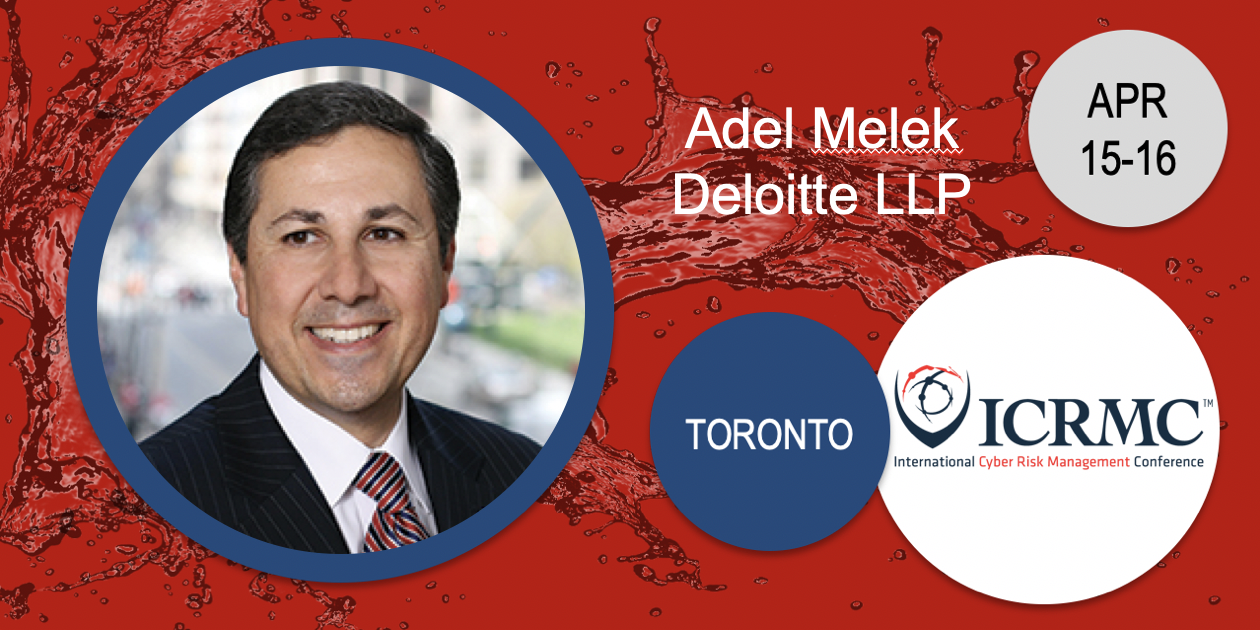
Hear this Deloitte professional at ICRMC in Toronto April 15-16!
Respondents are finding “extremely challenging” the need to keep up with changing business operational needs, such as deployment of social mobile applications, data analytics and cloud-based risks. Also in the “extremely challenging” category, not surprisingly, are threats from “sophisticated actors,” like foreign governments and crackerjack hacktivists.
Other issues categorized as “extremely high priority “revolve around getting quality risk data quickly. Given the average length of time other studies show that a hacker can poke around in your network before you realize it — and how much damage they can do when they have all that time — it’s easy to see why this is a major concern for financial institutions.
You can read the rest of his executive summary here. You can also download the full report as well as all of Deloitte’s past editions.
Two of Edward Hida’s Deloitte colleagues — Beth Dewitt and Adel Melek — are speaking at the International Cyber Risk Management Conference April 15-16, 2019, in Toronto. They are addressing the global regulatory landscape.
Here is the session description:
“Large-scale data breaches are increasingly in the public eye; consumer trust in brands is faltering, creating a surge in data and privacy protection discussions from the Boardroom to the front lines. While the European Union’s General Data Protection Regulation (GDPR) has occupied much of the spotlight since coming into effect in May, globally there has been a barrage of privacy laws like the California Consumer Privacy Act that was passed in June and the breach-reporting amendments to PIPEDA came into force on November 1st. What do these and the plethora of other privacy regulations mean for your organization when it comes to protecting an individual’s personal data?”
-
Two Judges Find Florida Medical Marijuana Law Unconstitutional
The Program is ‘Absolutely Broken’ — Now What?
Edited by Tom Hagy
 Florida Circuit Judge Karen Gievers just held that the Florida medical marijuana law is unconstitutional. Reporting on the judge’s Trulieve decision for the Florida Politics news service, journalist Jim Rosica called it “a rebuke to lawmakers and the Rick Scott Administration” that was “stunning even for” Judge Gievers. “In the spirit of boxing legend Muhammad Ali, known for his pre-fight rhymes, Gievers opined that in Florida ‘the medical marijuana system was broken. Now, in the Constitution, the people have spoken.’”
Rosica reported that while Gov. Scott is appealing the major marijuana decisions against the state Department of Health, the transition team of Republican Governor-elect Ron DeSantis, including Lt. Gov.-elect Jeanette Nuñez, has suggested that he will not continue to defend the law in court.
Rosica continued: “Gievers, who retires in April, said her decision striking down the law ‘includ(ed), but (is) not limited to, replacement of the voter-selected registry plan with an arbitrary, inconsistent licensing scheme … throttling access of qualifying patients to … safe use of medical marijuana from (providers that) the Department has a clear, undisputed duty to register.’ In fact, just passing the law was itself unconstitutional, Gievers suggested: ‘Voters made clear in 2016 that the Legislature was to have no role in implementing access to and availability of medical marijuana.’” Read Rosica’s full article.
‘It is incumbent on the Legislature to fix this’
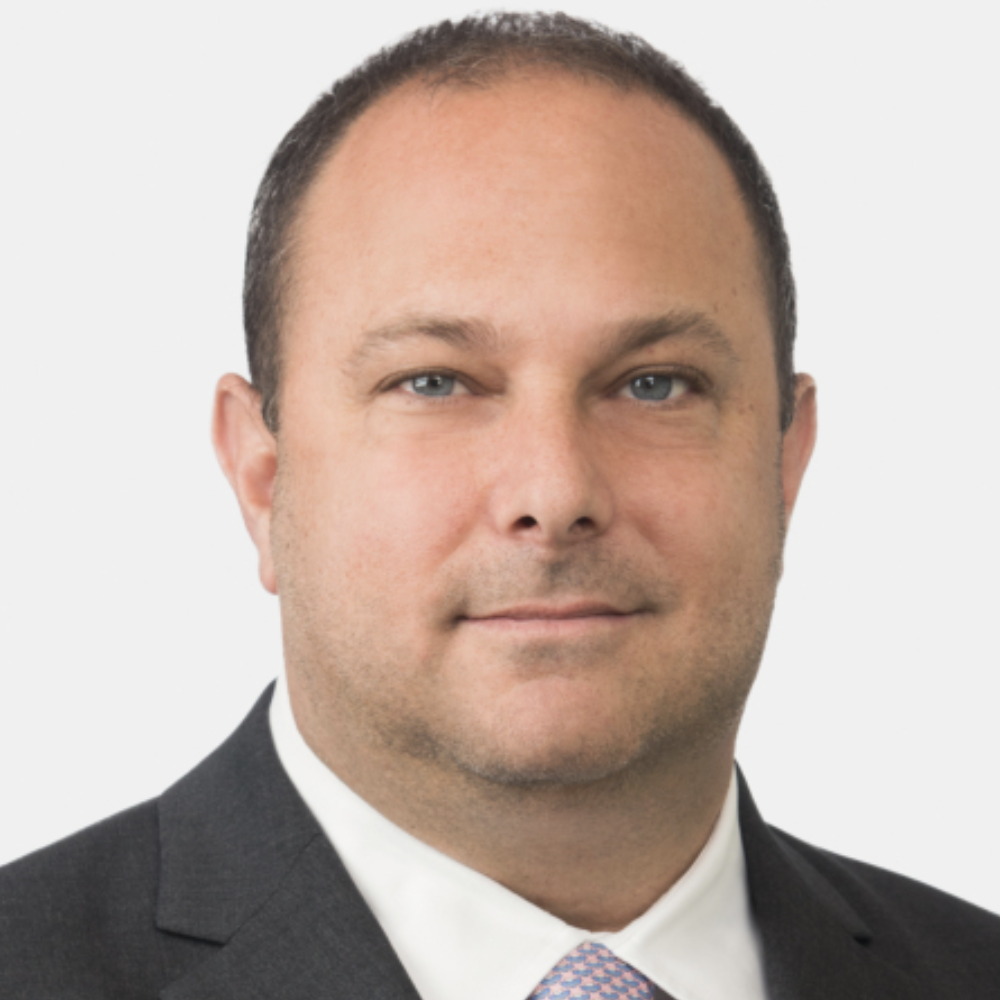 Today I spoke with attorney Jonathan Robbins, who is actively litigating the matter on behalf of Tampa-based Florigrown. Robbins, chair of the cannabis practice at Akerman LLP , pointed to a similar holding in the Florigrown case, commenting that, yes, “yet another judge has found that the statute implementing the amendment is unconstitutional because of the arbitrary cap on the number of dispensaries that would qualify for licensing.”
“This further illustrates,” Robbins told me, “that the Florida medical marijuana program is absolutely broken and needs to be fixed. But rather than the courts repairing it piecemeal, the Legislature needs to get something done. It is incumbent on the Legislature to fix this.”
In the Florigrown case, Leon County Circuit Judge Charles Dodson granted an injunction and ordered DOH to issue licenses. Once DOH appealed that triggered an automatic stay. “We went back to Judge Dodson to lift the stay because people need their meds,” Robbins said. “The judge lifted the stay, but the DOH appealed to the 1st District to reimpose the stay, which the court did.” Briefing is under way.
“Our client wants to operate but is restricted because the statute unconstitutionally creates special classes of companies entitled to licensing. Not only does it arbitrarily cap the number of licenses, it requires that licensees must be fully vertically integrated, meaning companies must cultivate, process and sell medical marijuana. This is inconsistent with what the citizens voted for,” Robbins said. He said this prohibits a company from merely dispensing the product, for example, effectively and unfairly shutting out many businesses.
“The Legislature was charged with providing safe and affordable medical marijuana to patients who need it. All of this was to be in place in 2017. Here we are in 2019 and we still don’t have it,” Robbins said.
While there are 14 companies operating and people can get marijuana, many more potential competitors are blocked from operating.
Clearly, implementation of the law, overwhelmingly approved by Florida voters, has been less than smooth and requires quite a bit more ironing out. The lack of competition hurts businesses and patients alike, critics say. In the meantime there is plenty of confusion for companies ready to provide medical marijuana services in Florida.

Join our webinar on Jan. 25, when attorneys in the thick of the issue – Akerman LLP partners Jonathan S. Robbins and Ari H. Gerstin — will share background, insights and practical guidance.
What we will cover:
- Background: Federal vs. State Law Conflict
- History of Medical Marijuana in Florida
- The 2016 Amendment to the Florida Constitution
- Implementation of the State Medical Marijuana Program
- Litigation Over the Constitutionality of the Implementation
- Practical Considerations When Operating in This Industry
- Banking and Insurance Issues
- Ethical Considerations for Attorneys
What you will get:
- Up-to-the-minute insights from attorneys active in the litigation.
- Thorough course materials for later reference.
- Real-time answers to your questions via our moderated chat.
- The ability to send questions in advance.
- Continuing legal education credit (CLE)
- Access for your entire team with a feed into your conference room.
- No scheduling risk: Suddenly can’t make it? We will send you the recording.
Register by Jan. 18 and save $50.