Blog

  • Surfside Condo Collapse: A 360-Degree Insurance Coverage Analysis

    Surfside Condo Collapse: A 360-Degree Insurance Coverage Analysis

    Surfside Condo Collapse: A 360-Degree Insurance Coverage Analysis

    Abstract

    The horrific and fatal collapse of Champlain Towers South in the summer of 2021 not only shook the ground in Surfside, Florida, but it brought into question the integrity of structures everywhere. If professionals in the construction, real estate, and building management industries were relaxed about signs of structural decay before, they are not anymore. The insurance industry also has reasons to worry, as potentially responsible players turn to their policies to defend or indemnify them for claims for accidents causing losses including from property damage, personal injury, or death. In this article the authors evaluate the factors that are addressed when coverage determinations are made, as well as the various types of policies that come into play.

    Authors

    Allen R. Wolff (awolff@andersonkill.com) is a shareholder in Anderson Kill’s New York office, where he concentrates on the intersection of construction litigation and insurance recovery. Allen is co-chair of the firm’s Construction Industry Practice group and Corporate and Commercial Litigation Practice group. He advises and represents policyholders—building owners, developers, contractors, retailers, municipalities, financial institutions, hospitality businesses, condominium associations, and tenants’ associations—in a range of insurance coverage disputes. Allen’s colleagues, Ethan W. Middlebrooks (emiddlebrooks@andersonkill.com) and Jason Kosek (jkosek@andersonkill.com), are also attorneys in Anderson Kill’s New York office. They also concentrate on insurance recovery for policyholders and other complex matters.

    About
    The Journal on Emerging Issues in Litigation is a co-production of HB, Fastcase, and Law Street Media. You can also hear the complementary (and complimentary) Emerging Litigation Podcast wherever podcasts appear. For questions, contact Tom Hagy, Editor in Chief, at Editor@LitigationConferences.com.

    Loading Viewer…

  • To Pay or Not to Pay: Does Your Insurance Policy Cover Ransomware Losses? | By Pamela Hans | Anderson Kill

    To Pay or Not to Pay: Does Your Insurance Policy Cover Ransomware Losses? | By Pamela Hans | Anderson Kill

    To Pay or Not to Pay: Does Your Insurance Policy Cover Ransomware Losses?

    Abstract

    Ransomware attacks are a rapidly growing threat against organizations. Paying ransom demands is a risky proposition and may even lead to sanctions against the targeted company. Either way, the damage to a company’s operation and integrity can be cripplingly severe. Should a company suffer losses from cyber extortion, its insurance company will be one of the resources it turns to for relief. But with cyber
    coverage increasingly out of reach for some, policyholders may find coverage in more traditional coverages. In this article, the author evaluates the potential for coverage under several policy types, and underscores the importance of understanding policy language, the relevant law, and the potential regulatory ramifications of meeting ransom demands.

    Author

    Pamela D. Hans (phans@andersonkill.com) is the managing shareholder of Anderson Kill’s Philadelphia office. Her practice concentrates on insurance coverage exclusively on behalf of policyholders. Pam is also a member of the firm’s COVID Task Group and Cyber Recovery Group.

    About
    The Journal on Emerging Issues in Litigation is a co-production of HB, Fastcase, and Law Street Media. You can also hear the complementary (and complimentary) Emerging Litigation Podcast wherever podcasts appear. For questions, contact Tom Hagy, Editor in Chief, at Editor@LitigationConferences.com.

    Loading Viewer…

  • Wildfire Litigation and Recovery with Ed Diab

    Wildfire Litigation and Recovery with Ed Diab

    Wildfire Litigation and Recovery with Ed Diab

    I had the pleasure of interviewing Ed Diab, co-founder of Dixon Diab & Chambers in San Diego, about his firm’s role in the litigation, what the claims are, what defenses they encounter, settlements they have secured, what evidentiary hurdles plaintiffs face, and  more.  They’ve been successful. Since 2018, Dixon Diab & Chambers has recovered more $1.4 billion in settlements. And there is more to come. The firm represents more than 40 public entities – including some of the largest cities and counties in California – as well as thousands of individuals and families. Ed leads the firm’s mass tort practice which, in addition to wildfire litigation, represents people who allege injuries from defective drugs and medical devices.

    This podcast is the audio companion to the Journal on Emerging Issues in Litigation, a collaborative project between HB Litigation Conferences and the legal news folks at Law Street Media. If you have comments or wish to participate in one our projects, or want to tell me how insightful our guests are, please drop me a note at Editor@LitigationConferences.com.

    Thanks to Ed Diab for speaking with me about this fascinating and frightening subject, and to Baron & Budd’s Scott Summy for introducing us.  For my part, I am sure my suggestion that they install smoke detectors all over the forest is complete nonsense.  Also, I spoke with a friend who majored in Latin. Even though I showed zero confidence, I apparently stumbled close to the pronunciation of flammagenitus, Latin for “fire cloud.” I promised you a photo of one. Also called pyrocumulus clouds, they look as terrifying as they sound.

    Tom Hagy
    Host
    Emerging Litigation Podcast

    via GIPHY

    Wildfires are causing more destruction in North America than at any time in recorded history. 

    In 2010 they consumed 3.4 million acres, but nearly tripled to devour more than 10 million acres in 2020.

    They also have been responsible for numerous injuries and loss of life, razing thousands of homes, displacing wildlife, destroying natural resources, and even spewing air pollution thousands of miles away. Fighting these hellish infernos is a massive, all-out-war-like undertaking. The 2020 Dixie Fire was finally brought under control with the help of 6,500 personnel (from firefighters to the people who fed them), 1,000 fire trucks, water tankers, and bulldozers, and 1,000 miles of firehose. While some fires occur naturally, set off by lightening, for example, 84% are caused by humans. And, no matter how you slice it, humans are helping create the conditions of this continental tinderbox.

    One group of attorneys from Baron & Budd and Dixon Diab & Chambers LLP is securing and seeking recovery for individuals, municipalities, and insurance companies that pay claims, when they can accomplish the difficult task of identifying the responsible parties. Positioned as “Wildfire Recovery Attorneys,” they have done so in cases against Pacific Gas & Electric Corp. and Southern California Edison, which they have sued for allegedly failing to maintain power lines and the areas beneath them, among other things.

  • Gamification of Stock Trading with Brad Rustin

    Gamification of Stock Trading with Brad Rustin

    Gamification of Stock Trading with Brad Rustin

    “What’s the deal?” you ask? Find out! Listen to my interview with FinTech attorney Brad Rustin, a partner with Nelson Mullins. In addition to chairing the firm’s Financial Services Regulatory Practice, Brad counsels  financial institutions in regulatory matters, including strategic agreements, product development, and operational compliance.

    A large portion of his work is on bank and non-bank partnerships involving white-label deployments, FinTech partnerships, or payments, digital assets, cryptocurrency, and lending partnerships. Brad is a Certified Anti-Money Laundering Specialist (CAMS) by ACAMS and a Certified Regulatory Compliance Manager (CRCM) by the American Bankers Association.

    He received his JD, magna cum laude, from the University of South Carolina School of Law and his BA in Political Science and History, cum laude, from Furman University. And now, he is not only a guest on the Emerging Litigation Podcast, but the FinTech advisor on the  Editorial Advisory Board of the Journal on Emerging Issues in Litigation.

    This podcast is the audio companion to the Journal on Emerging Issues in Litigation, a collaborative project between HB Litigation Conferences and the legal news folks at Law Street Media, and the Fastcase legal research family, which includes Docket Alarm and Judicata. If you have comments or wish to participate in one our projects, or want to tell me how insightful and informative our guests are, please drop me a note at Editor@LitigationConferences.com.

    Thanks to Brad for speaking with me about this fascinating subject. As for me, I will stay away from “game trading.” Hearing people describe it reminds me of my PacMan obsession in college, which frequently cost me many hours that I should have spent differently, and too often a functioning shoulder.

    Tom Hagy

    via GIPHY

    As brokerages focus on enhancing user experience, they risk shifting their customer’s focus from serious financial decisions to a game-like experience.  Some think this is a good thing. That it will help engage the next generation of traders. Others think it’s a bad thing. That it will create a more spastic type of trader with unrealistic expectations on potential returns. State and federal regulators are focusing on digital brokerages and exploring guardrails for these types of platforms.

    The challenges facing traditional technology providers (volume controls, fraud, system outages, and liquidity) are now facing these digital brokerages—with real-life consequences for individuals and their savings and retirement accounts.

    One company that has been making headlines is Robinhood, which was on the receiving end of a $70 million fine handed down by the Financial Industry Regulatory Authority, or FINRA, for what it called “systemic supervisory failures.”

    In coming up with the award, FINRA said it considered the “widespread and significant harm suffered by customers, including millions of customers who received false or misleading information from the firm, millions of customers affected by the firm’s systems outages in March 2020, and thousands of customers the firm approved to trade options even when it was not appropriate for the customers to do so.” Robinhood is also defending itself in litigation involving dozens of cases.

    Will we continue to see litigation over these platforms as more and more retail customers (many young and inexperienced) realize that securities involve market risks?

    What’s the deal?

  • A Special Episode: A lovable litigator with Danny Karon

    A Special Episode: A lovable litigator with Danny Karon

    A Special Episode: A lovable litigator with Danny Karon

    For  30 years attorney Daniel R. Karon has successfully represented plaintiffs and defendants in class-action and individual lawsuits. He’s also chair of one of the leading class action conferences for lawyers, judges and law professors: the American Bar Association National Institute on Class Actions. He’s passionate about educating up-and-coming lawyers. He teaches and writes extensively, and has been featured on podcasts and television news shows.  

    While practicing law (handling some intensely serious matters), Danny became acutely aware of “a societal bias against access to justice where people who need justice the most often get it the least.” One response to that was to launch Your Lovable Lawyer, a multi-media website whose goal is to “make  justice more accessible to people who don’t know, can’t find, or can’t pay for lawyers.” He endeavors to provide actionable insights regarding common legal problems. He refers to his “lovable” concept as “legal wellness,” and encourages regular folks to take a proactive approach to legal matters and potential conflicts. 

    This podcast is the audio companion to the Journal on Emerging Issues in Litigation, a collaborative project between HB Litigation Conferences and the Fastcase legal research family, which includes Full Court Press, Law Street Media, Docket Alarm and, most recently, Judicata. If you have comments or wish to participate in one our projects, or want to tell me how lovable Danny is, please drop me a note at Editor@LitigationConferences.com. 

    via GIPHY

  • Impact of Surfside Condo Collapse with Judah Lifschitz

    Impact of Surfside Condo Collapse with Judah Lifschitz

    Impact of Surfside Condo Collapse with Judah Lifschitz

    Joining me is experienced construction law attorney Judah Lifschitz of Shapiro, Lifschitz & Schram  who spoke about the near- and long-term impacts of the Surfside condo collapse not only in Florida around the country.  Judah has extensive experience dealing with construction matters, representing clients in engineering, procurement and construction contracts and disputes. He represents and advises government agencies and private owners; regional, national and international contractors; construction managers and subcontractors; design professionals; and insurance companies. Notably, Judah won one of the largest liquidated damages awards in the history of the construction industry.  Education: George Washington University, J.D.; Yeshiva University, B.A., magna cum laude.

    This podcast is the audio companion to the Journal on Emerging Issues in Litigation, a collaborative project between HB Litigation Conferences and the Fastcase legal research family, which includes Full Court Press, Law Street Media, Docket Alarm and, most recently, Judicata. If you have comments or wish to participate in one our projects, or want to tell me how insightful and informative Judah is, please drop me a note at Editor@LitigationConferences.com.

    Thanks to Judah for speaking with me about this important topic. I was especially proud that I pronounced his name correctly on the first try, though he assured me that I could in no way do more damage to it than those who have come before me. (Clearly he doesn’t know me well.)

    Tom Hagy
    (pronounced HEY-ghee, for the record)

    via GIPHY

    Nothing illustrates the tragic consequences of building decay more than the June 24, 2021, collapse of the Champlain Towers South in Surfside, Florida, which claimed the lives of nearly 100 residents.

    The event raises questions about the building inspection process not only in Florida but around the country.

    What caused this calamity?

    Who is responsible?

    How many other buildings are in similar condition?

    Since any compensation for the loss of life, injuries, and property damage will likely be astronomical, where will any financial awards come from?

  • Digital Payments in Class Administration

    Digital Payments in Class Administration

    Now On Demand

    Epiq presents
    DIGITAL PAYMENTS
    Best Practices for Efficiency in Class Actions

    Recorded: Sept. 23, 2020
    75 minutes

    CLE credit: 1+
    Registration includes recording, materials, and answers to your questions.

    TAKE IT NOW!

    Epiq presents a CLE-eligible webinar
    Digital Payments
    Best Practices for Efficiency in Class Actions

    Recorded Live | Sept. 23, 2020

    produced by HB Litigation Conferences

    Modern life increasingly relies on digital solutions. Nothing has made that more apparent than the novel coronavirus pandemic. In terms of class action settlement payments, the impetus has never been greater to transition to the e-payment realm for security, convenience, cost-reduction, and improved fund disbursement.

    Class counsel and claims administrators have experimented for years with pre-paid debit cards, automated clearing house (ACH) deposits, and wire transfers, while others have tested judicial appetites for registered-user payment systems like PayPal and Venmo. However, digital payment schemes with multiple options — the primary of which is direct deposit — seem to be emerging as the favored solution.

    Though class action notice is increasingly being digitized, aided by the 2018 amendments to Federal Rule of Civil Procedure, particularly Rule 23(c)(2)(B), which permits notice by electronic means like emails and digital and social media, payment itself has lagged behind. Even with these challenges, electronic payment distribution is now a viable option. Courts are encouraging the shift to electronic payments, too. As the U.S. District Court for the Northern District of California specified in its November 2018 Procedural Guidance for Class Action Settlements, “[c]lass counsel should consider… distributions to class members via direct deposit.”

    As class actions lawyers and claims administrators consider digital payments, they must propose workable and achievable solutions, adhere to Rule 23, and minimize cy pres. Though widespread acceptance of this technology is still evolving, understanding the concept and embracing its benefits may lead to quicker adoption.

    Take our webinar as our panelists will address: 

    • Statistical trends in digital payment.
    • How to choose the right plan for your settlement structure.
    • How to choose the right plan for your class size & payment amounts.
    • Cost variables associated with different methods.
    • Vendor and program characteristics.
    • How to implement an effective program.
    • Avoiding excessive unclaimed funds.
    • Data security and privacy concerns.
    • Questions your judge will ask.

    Meet the Speakers

    Adam Zapala
    Partner
    Cotchett Pitre

    Adam Zapala is a partner in the San Francisco office of Cotchett Pitre, where he focuses on complex litigation, including antitrust, employment and civil rights, privacy and cybersecurity, qui tam/false claims, consumer protection, and class actions generally. He has served as lead counsel in some of the largest and most complex litigation matters in the country. He received his B.A. from Stanford University and his J.D. from the University of California Hastings College of Law. Read more about Adam and Cotchett Pitre.

    Paul G. Karlsgodt
    Partner
    BakerHostetler

    Paul is a partner in the Denver office of BakerHostetler, and serves as leader of the firm’s Privacy and Digital Risk Class Action and Litigation Team. He has significant experience representing companies in the insurance, healthcare, consumer, and education sectors, and is routinely named among the best lawyers in his field. Paul earned his J.D. from the University of Denver Sturm College of law and his B.S. from Purdue University. Read more about Paul and BakerHostetler. 

    Chris Ljungkull
    Director of Sales
    Digital Pay

    Chris brings Ljungkull 10+ years of experience building strategic partnerships across Financial Services, Enterprise SaaS, CPG, eCommerce, and Logistics. He draws heavily on his experience in fulfillment, print, and mail industries to help Legal Service customers develop solutions that do more with less. Read more about Chris and Digital Pay.

    Kim Stephens
    Member Partner
    Tousley Brain Stephens

    Kim Stephens is a Member Partner at Tousley Brain Stephens PLLC, where he focuses on commercial and class action litigation.  Prior to joining the firm he was a judicial extern clerk to Hon. Eugene A. Wright of the Ninth Circuit, and worked for the Seattle criminal defense firm of Allen &Hansen.  He has been appointed special attorney general for Washington State, as well as lead and co-lead counsel to manage numerous state, federal and multi-district class action matters. He received his B.A. from the University of Washington and his J.D. from the University of Washington School of Law. Read more about Kim and Tousley Brain Stephens.

    Judge Suzanne H. Segal (Ret.)
    Mediator
    Signature Resolution
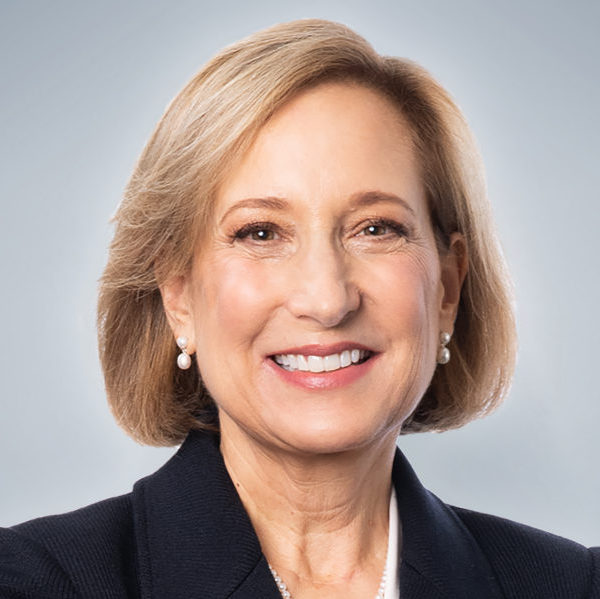
    After 18 years as a U.S. Magistrate Judge with the Central District of California, including four years as the Chief Magistrate Judge, Hon. Suzanne H. Segal (Ret.) joined Signature Resolution as a mediator and arbitrator. During her tenure on the federal bench, Judge Segal presided over numerous trials, evidentiary hearings, motions and discovery conferences involving a variety of cases. Before that she served for 12 years as Assistant U.S. Attorney in the Civil Division of the Los Angeles U.S. Attorney’s Office. She received her J.D. from Claremont McKenna College and her J.D. from Cornell Law School. Read more about Judge Suzanne H. Legal.

    Moderator: Aideen Gaffney
    Vice President
    Epiq

    Aideen Gaffney draws upon over two decades of experience as an attorney and a skilled business development strategist to expand the scope and impact of our service offerings while providing effective solutions to our clients’ project needs.  Based on the West Coast, her particular experience centers upon class action administration, mass tort global litigation programs, and data breach response programs. Earlier in her career, Gaffney practiced law in San Francisco at Gordon & Rees LLP, and in Portland at Bullivant Houser Bailey PC,  handling complex insurance litigation and participating in two jury trials and two bench trials involving ‘bad faith’ litigation. She is a frequent speaker and writer on current topics affecting the legal administration industry, and has presented numerous CLE programs to clients. Aideen received her B.S. from Santa Clara University and her J.D. from Santa Clara University School of Law. Read more about Aideen and Epiq here.

  • Drone Law with Kathryn Rattigan

    Drone Law with Kathryn Rattigan

    Drone Law with Kathryn Rattigan

    Joining me to discuss this emerging area of law is Kathryn M. Rattigan, a member of the Business Litigation Group, the Data Privacy + Cybersecurity Team, and the Drone Compliance Team in the Rhode Island office of Robinson Cole.  Kathryn advises clients on these matters with expertise in the relevant Federal Aviation Administration regulations. She and her colleagues also advise clients on employee and subcontractor contracts, insurance policies, privacy regulations, state and local laws, and best practices as recommended by the National Telecommunications and Information Administration.  She handles product defect, personal injury, and property damage litigation, too.  Kathryn is a frequent contributor to the excellent Robinson Cole Data Privacy + Cybersecurity Insider blog.  She holds a J.D. from the Roger Williams University School of Law and a B.A. (magna cum laude) from Stonehill College.

    This podcast is the audio companion to the Journal on Emerging Issues in Litigation, a collaborative project between HB Litigation Conferences and the Fastcase legal research family, which includes Full Court Press, Law Street Media, Docket Alarm and, most recently, Judicata. If you have comments or wish to participate in one our projects, or want to tell me how insightful and informative Kathryn is, please drop me a note at Editor@LitigationConferences.com. This podcast is based on an article she wrote for the Journal.

    Just to clarify. Kathryn does own a drone, but not a “sheep drone.” I regret the error, and I wouldn’t have it any other way.  Thanks to Kathryn for speaking with me about this fascinating area of the law.

    Tom Hagy
    Host and Litigation Enthusiast

    via GIPHY

    The sky will be speckled with commercial drones, carrying our precious products and pills, or performing risky work, like inspecting bridges and buildings, monitoring crops and livestock, and keeping an eye on pipelines and oil rigs.

    It’s not “if,” but “when.”

    What must companies know about deploying a drone fleet?

    What industries are leading the way?

    What are the potential legal liabilities?

    How does one begin to navigate the regulatory labyrinth?

    If one is flying over my swimming pool taking photos, may I shoot it down?

    And who in their right minds would ever allow a teenage boy to operate one?

    via GIPHY

  • Virtual Hearings: Changing Perceptions of Executive Testimony?

    Virtual Hearings: Changing Perceptions of Executive Testimony?

    Virtual Hearings: Changing Perceptions of Executive Testimony?

    Abstract
    Given the newly acceptable ease of securing testimony via webcam—necessitated by the pandemic—this article focuses on efforts to compel the appearance of corporate executives to testify in litigation. While there are many practical advantages to virtual testimony, the authors maintain that mere convenience cannot replace legal standards of relevance and undue burden when pursing the testimony of executives.

    Authors

    Sean J. Coughlin (scoughlin@bressler.com) is a Principal in the Financial Institutions group at Bressler, Amery & Ross, P.C., where he represents institutions and individuals in regulatory investigations and defense litigation. Before joining the firm, he was an Executive Director in the legal department at Morgan Stanley, a Managing Director at Citigroup/Smith Barney, and a Senior Assistant District Attorney in the Kings County District Attorney’s office.

    Jacqueline R. Meyers (jmeyers@bressler.com) is an associate at Bressler, Amery & Ross, P.C., whose practice focuses on securities defense litigation, arbitration, and regulatory investigations. She has specialized experience in litigation concerning arbitrability and enforcement of arbitration awards.

    About
    The Journal on Emerging Issues in Litigation is a co-production of HB, Fastcase, and Law Street Media. You can also hear the complementary (and complimentary) Emerging Litigation Podcast wherever podcasts appear. For questions, contact Tom Hagy, Editor in Chief, at Editor@LitigationConferences.com.

    Loading Viewer…