A Special Episode: A lovable litigator with Danny Karon


Epiq presents
DIGITAL PAYMENTS
Best Practices for Efficiency in Class Actions
Recorded: Sept. 23, 2020
75 minutes
CLE credit: 1+
Registration includes recording, materials, and answers to your questions.
TAKE IT NOW!

Recorded Live | Sept. 23, 2020
Modern life increasingly relies on digital solutions. Nothing has made that more apparent than the novel coronavirus pandemic. In terms of class action settlement payments, the impetus has never been greater to transition to the e-payment realm for security, convenience, cost-reduction, and improved fund disbursement.
Class counsel and claims administrators have experimented for years with pre-paid debit cards, automated clearing house (ACH) deposits, and wire transfers, while others have tested judicial appetites for registered-user payment systems like PayPal and Venmo. However, digital payment schemes with multiple options — the primary of which is direct deposit — seem to be emerging as the favored solution.
Though class action notice is increasingly being digitized, aided by the 2018 amendments to Federal Rule of Civil Procedure, particularly Rule 23(c)(2)(B), which permits notice by electronic means like emails and digital and social media, payment itself has lagged behind. Even with these challenges, electronic payment distribution is now a viable option. Courts are encouraging the shift to electronic payments, too. As the U.S. District Court for the Northern District of California specified in its November 2018 Procedural Guidance for Class Action Settlements, “[c]lass counsel should consider… distributions to class members via direct deposit.”
As class actions lawyers and claims administrators consider digital payments, they must propose workable and achievable solutions, adhere to Rule 23, and minimize cy pres. Though widespread acceptance of this technology is still evolving, understanding the concept and embracing its benefits may lead to quicker adoption.
Take our webinar as our panelists will address:

Adam Zapala is a partner in the San Francisco office of Cotchett Pitre, where he focuses on complex litigation, including antitrust, employment and civil rights, privacy and cybersecurity, qui tam/false claims, consumer protection, and class actions generally. He has served as lead counsel in some of the largest and most complex litigation matters in the country. He received his B.A. from Stanford University and his J.D. from the University of California Hastings College of Law. Read more about Adam and Cotchett Pitre.

Paul is a partner in the Denver office of BakerHostetler, and serves as leader of the firm’s Privacy and Digital Risk Class Action and Litigation Team. He has significant experience representing companies in the insurance, healthcare, consumer, and education sectors, and is routinely named among the best lawyers in his field. Paul earned his J.D. from the University of Denver Sturm College of law and his B.S. from Purdue University. Read more about Paul and BakerHostetler.

Chris brings Ljungkull 10+ years of experience building strategic partnerships across Financial Services, Enterprise SaaS, CPG, eCommerce, and Logistics. He draws heavily on his experience in fulfillment, print, and mail industries to help Legal Service customers develop solutions that do more with less. Read more about Chris and Digital Pay.

Kim Stephens is a Member Partner at Tousley Brain Stephens PLLC, where he focuses on commercial and class action litigation. Prior to joining the firm he was a judicial extern clerk to Hon. Eugene A. Wright of the Ninth Circuit, and worked for the Seattle criminal defense firm of Allen &Hansen. He has been appointed special attorney general for Washington State, as well as lead and co-lead counsel to manage numerous state, federal and multi-district class action matters. He received his B.A. from the University of Washington and his J.D. from the University of Washington School of Law. Read more about Kim and Tousley Brain Stephens.
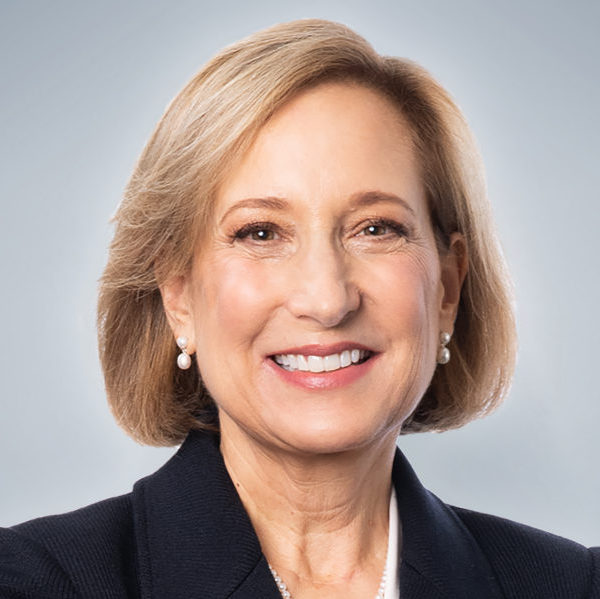
After 18 years as a U.S. Magistrate Judge with the Central District of California, including four years as the Chief Magistrate Judge, Hon. Suzanne H. Segal (Ret.) joined Signature Resolution as a mediator and arbitrator. During her tenure on the federal bench, Judge Segal presided over numerous trials, evidentiary hearings, motions and discovery conferences involving a variety of cases. Before that she served for 12 years as Assistant U.S. Attorney in the Civil Division of the Los Angeles U.S. Attorney’s Office. She received her J.D. from Claremont McKenna College and her J.D. from Cornell Law School. Read more about Judge Suzanne H. Legal.

Aideen Gaffney draws upon over two decades of experience as an attorney and a skilled business development strategist to expand the scope and impact of our service offerings while providing effective solutions to our clients’ project needs. Based on the West Coast, her particular experience centers upon class action administration, mass tort global litigation programs, and data breach response programs. Earlier in her career, Gaffney practiced law in San Francisco at Gordon & Rees LLP, and in Portland at Bullivant Houser Bailey PC, handling complex insurance litigation and participating in two jury trials and two bench trials involving ‘bad faith’ litigation. She is a frequent speaker and writer on current topics affecting the legal administration industry, and has presented numerous CLE programs to clients. Aideen received her B.S. from Santa Clara University and her J.D. from Santa Clara University School of Law. Read more about Aideen and Epiq here.

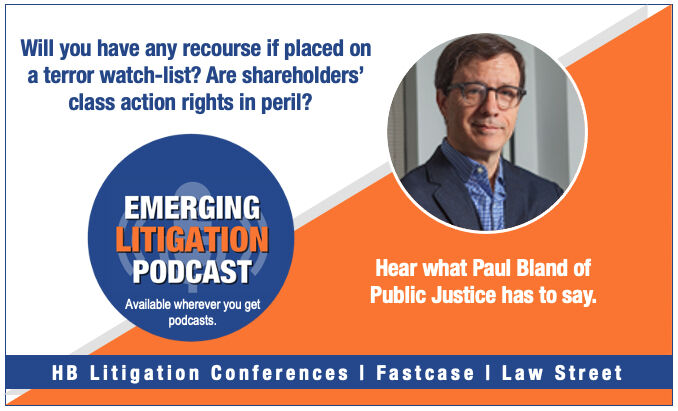
Joining me to discuss this emerging area of law is Kathryn M. Rattigan, a member of the Business Litigation Group, the Data Privacy + Cybersecurity Team, and the Drone Compliance Team in the Rhode Island office of Robinson Cole. Kathryn advises clients on these matters with expertise in the relevant Federal Aviation Administration regulations. She and her colleagues also advise clients on employee and subcontractor contracts, insurance policies, privacy regulations, state and local laws, and best practices as recommended by the National Telecommunications and Information Administration. She handles product defect, personal injury, and property damage litigation, too. Kathryn is a frequent contributor to the excellent Robinson Cole Data Privacy + Cybersecurity Insider blog. She holds a J.D. from the Roger Williams University School of Law and a B.A. (magna cum laude) from Stonehill College.
This podcast is the audio companion to the Journal on Emerging Issues in Litigation, a collaborative project between HB Litigation Conferences and the Fastcase legal research family, which includes Full Court Press, Law Street Media, Docket Alarm and, most recently, Judicata. If you have comments or wish to participate in one our projects, or want to tell me how insightful and informative Kathryn is, please drop me a note at Editor@LitigationConferences.com. This podcast is based on an article she wrote for the Journal.
Just to clarify. Kathryn does own a drone, but not a “sheep drone.” I regret the error, and I wouldn’t have it any other way. Thanks to Kathryn for speaking with me about this fascinating area of the law.
Tom Hagy
Host and Litigation Enthusiast
What must companies know about deploying a drone fleet?
What industries are leading the way?
What are the potential legal liabilities?
How does one begin to navigate the regulatory labyrinth?
If one is flying over my swimming pool taking photos, may I shoot it down?
And who in their right minds would ever allow a teenage boy to operate one?

Ausra O. DeluardCounsel | Dentons LLP
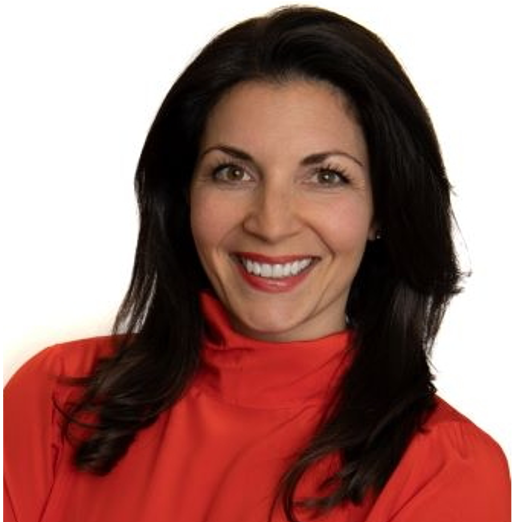
Jennifer M. OliverPartner | MoginRubin LLP
What can legitimate cannabis companies do to level the playing field, not only against others who walk the straight and narrow, but dealers still thriving on the black market?
It was my pleasure to interview Ausra Deluard and Jennifer Oliver for what was an informative and even surprising podcast. It’s based on their article — Clearing the Haze: State Laws and Private Plaintiffs Critical to Preserve Competition in Cannabis — which will be featured in the inaugural issue of the Journal on Emerging Issues in Litigation, which will release in January 2021.
Ausra, who is an attorney with the global law firm Dentons LLP, has spent more than a decade advising clients in a range of antitrust matters including merger investigations, competitor collaborations, and pricing and distribution policies. She works closely with cannabis clients to help them navigate the rapidly evolving cannabis laws and regulations throughout the U.S.
Jennifer is a partner at national antitrust boutique MoginRubin LLP, where she litigates and advises clients on competition issues. Her work includes representing classes of plaintiffs in class actions, risk mitigation and regulatory advice in mergers and acquisitions, and other complex business litigation. Check out the MoginRubin Blog.
The Journal is a collaborative project between HB and the Fastcase legal research family, which includes Full Court Press, Law Street Media, Docket Alarm and, most recently, Judicata. If you have comments or wish to participate in one our projects, or want to tell me how awesome Ausra and Jennifer are, drop me a note at Question@LitigationConferences.com.
We hope you enjoy the interview.
Tom Hagy
Founder & Managing Director
HB Litigation Conferences


Abstract
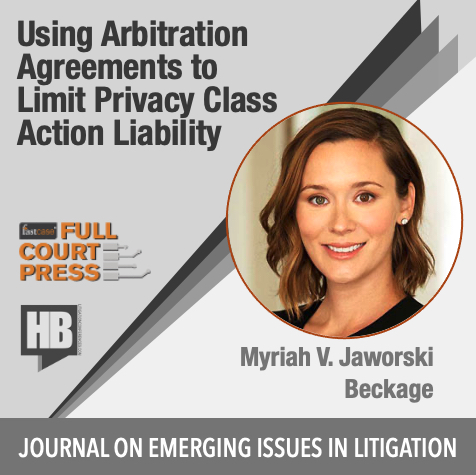
Data privacy class actions are proliferating. Defendant companies may find an effective defense strategy is moving to compel individual arbitration. Not all contracts have the appropriate language, however, and, even if they do, they may not succeed. This article, which will appear in the forthcoming issue of the Journal on Emerging Issues in Litigation, discusses U.S. privacy litigation and case law on compelling arbitration of class claims in the privacy law context, with recommendations for businesses to improve their chances of securing court orders that enforce arbitration language in their agreements.
Author
Myriah V. Jaworski, Esq. (mjaworski@beckage.com), is a member with the Beckage, a law firm specializing in technology, data security and privacy. She is a Certified Information Privacy Professional, United States (CIPP/US) and Certified Information Privacy Professional, Europe (CIPP/E). She leads Beckage’s Privacy Litigation Practice Group where she represents clients in data breach actions, technology vendor disputes, and the defense of consumer class actions and related regulatory investigations. Myriah is also a former Trial Attorney with the Department of Justice.
About
The Journal on Emerging Issues in Litigation is a co-production of HB, Fastcase, and Law Street Media. You can also hear the complementary (and complimentary) Emerging Litigation Podcast wherever podcasts appear. For questions, contact Tom Hagy, Editor in Chief, at Editor@LitigationConferences.com.
Loading Viewer…
An on-demand CLE-eligible webinar Safeguarding Against Financial Exploitation America’s senior population is growing. Nearly one in five U.S. residents will be 65 or older in 2030. Which means the average age of U.S. investors is climbing too. With that comes the risk that they will be exploited by people with access – or gain access through nefarious methods – to their investment portfolio. Seniors and vulnerable persons lose billions of dollars each year. Remarkably, 90% of the people to take advantage of senior investors are members of their own family. Attorneys who represent senior clients need to know the signs of vulnerability, red flags that their clients are being exploited, what laws apply, and rules lawyers must follow in these matters. Questions our speakers answer: What is senior / vulnerable investor exploitation? Who is protected by state and federal laws? How prevalent is senior financial exploitation? What do the numbers tell us? What is the pace of financial abuse SAR filings by securities firms? What are the most popular scams? What is diminished capacity? What are the red flags indicating possible exploitation? What are the laws, rules, and regulations governing law firms? What are some best practices for law firms? How can firms best protect their senior clients? On Demand CLE Webinar What You Get PowerPoint and supplemental materials. Complete recording for later review. Answers to your questions via email. Invitation to contact speakers. 1.5 CLE credits (for licensed attorneys). CLE assistance.* *Subject to state bar rules. For licensed attorneys. Register Meet the Speakers Joseph Calabrese Bressler, Amery & Ross, P.C. A 1991 Graduate of St. John’s University Law School, Mr. Calabrese brings 30 years of practice and 18 years of Securities Litigation/Regulatory experience to his role as principal in the New York office of Bressler, Amery & Ross’s Financial Institutions Group. He began his career as a Wall Street litigator as an associate general counsel for Citigroup’s Smith Barney and […]
Lien Resolution: Government & Private Plans Get Aggressive (Against Attorneys)
Includes Nearly 75 minutes of insights from experienced professionals. CLE credit: 1+ (subject to bar rules). For CLE questions: CLE@LitigationConference.com The complete Power Point presentation. Continued access to the complete recording for later use. Answers to your questions via email to the presenters or write to HB and we will be sure to contact the speakers. What can you do to settle personal injury suits cleanly and avoid costly litigation and penalties? What recent cases can inform you about protecting your settlements and, as attorneys, yourselves, from post-settlement federal lawsuits? How can your firm set itself up to meet government expectations? What role might experts play in navigating these pitfalls? Medicare Advantage (42 USC § 1395w-22) Federal Medical Care Recovery Act (FMCRA) (42 USC § 2651) Armed Forces Act (10 USC §1095) Veterans’ Benefits (38 USC §1729) Third-Party Collection Rules (32 CFR 537.24; 38 CFR 17.101, etc.) Set-Asides under the Medicare Secondary Payer Act (42 USC § 1395y(b)(2)] On Demand Registration Lien Resolution Government & Private Plans Get Aggressive (Against Attorneys!) On Demand | Recorded September 2020 It is increasingly common these days. Personal injury attorneys settle a case, only to find themselves sued by a U.S. Attorney for failing to reimburse Medicare for conditional payments as required by the Medicare Secondary Payer Act. In some cases the attorney may be required to pay fines in addition to the reimbursements and interest, a costly proposition. Are you up to speed on issues surrounding Medicare Advantage, TRICARE, veterans’ claims, and Medicare set-asides? Join nationally recognized healthcare lien and resolution expert Franklin P. Solomon and go-to lien resolution provider Brett Newman as they offer a practical, in-depth CLE presentation. Franklin P. Solomon, Esq. Attorney & Founder, Solomon Law Firm A graduate of Rutgers University School of Law at Camden, Franklin Solomon is based in Cherry Hill, NJ, with a practice focused on evaluation, litigation and resolution of healthcare “liens” and reimbursement claims. Mr. Solomon represents personal injury victims and their attorneys […]
REGISTER Registration Includes Nearly 90 minutes of insights from experienced professionals. CLE credit: 1+ (subject to bar rules). For CLE questions: CLE@LitigationConference.com The complete Power Point presentation. Continued access to the complete recording for later use. Answers to your questions via email to the presenters or write to HB and we will be sure to contact the speakers. Understand the risks associated with telepsychiatry and how to manage them. Telemedicine has emerged as an important solution for healthcare in general and psychiatric medicine specifically during the current global pandemic. Remote access for sub-practices including addiction counseling have been commonly used. Our panel of psychiatric professionals who have served as expert witnesses and attorneys who counsel and represent physicians have prepared a 90-minute session to share insights with attorneys, physicians, healthcare providers, risk professionals, and more. Agenda Examining procedures and best practices that exist for ensuring confidentiality in a telemedicine practice How do you draft a telepsychiatric consent form? What is the emerging standard of care for telemedicine? Will the standard of care for telemedicine become a national standard? (Should it?) Review the case law addressing telemedicine or telepsychiatry How do the HIPAA regulations and HITECH privacy laws impact telemedicine? How have the HIPAA regulations and HITECH privacy laws been relaxed during the pandemic? Will the relaxed HIPAA and HITECH regulations impacting telemedicine continue past the pandemic? Which technical platforms are preferred? Which ones to avoid? Panelists Mark Levy, M.D., Medical Director at fpamed David Kan, M.D., UCSF Psychiatry Department and the California Society for Substance Abuse Medicine Ayesha Ashai, M.D., associated with fpamed Stephen M. Fatum, J.D., Partner, Barnes & Thornburg LLP Angela W. Russell, J.D., Partner, Wilson Elser Moskowitz Edelman & Dicker LLP Meet our physician and attorney panelists. Mark Levy MD Medical Director fpamed Dr. Levy is a graduate of Columbia College (A.B. 1967) and the Columbia University College of Physicians and Surgeons (M.D. 1971) in New York. He is a Physician […]

The Commercial Drone Industry: Privacy, Security, Threats, and Mitigation of Risk
HB presents a CLE-eligible webinar Now on-demand at the West LegalEdcenter THE COMMERCIAL DRONE INDUSTRY Privacy, Security, Threats, and Mitigation of Risk Drones have become an increasingly valuable tool for businesses of all types and sizes. Drones are already being used in many applications, but more will certainly arise as the technology advances. This means that certain risks, like cyber threats, will also continue to present themselves. Protecting the transmission and storage of data collected through drones is critical. Unfortunately, security usually comes as an afterthought. The drone industry is part of the aviation industry, which, based on its knowledge, keeps safety as a number one concern. Part of that safety is having proper protection for your systems, including security as a fundamental design principle. Take this webinar to gain insights on the topics listed below, and shared by an attorney who practices on the cutting-edge of this evolving technology. Topics: Defining drones. Current and future applications. FAA Modernization and Reform Act of 2012. FAA Part 107 Regulations and waivers. Resources, e.g. the FAA Drone Zone and LAANC Portal. Penalties for violations. Privacy implications. Drones as weapons. Vulnerability to cyber attacks. Take it now! What you get: 1+ CLE credits (subject to bar rules). Insights from an experienced professional who specializes in this area of the law. The complete PowerPoint presentation. Continued access to the complete recording for later use. Answers to your questions. Fee: No additional charge to subscribers to the West LegalEdcenter. Non-subscribers may take the course for $170. Meet the Speaker Kathryn Rattigan Robinson & Cole LLP Kathryn Rattigan is a member of the firm’s Business Litigation Group and Data Privacy + Cybersecurity Team. She advises clients on data privacy and security, cybersecurity, and compliance with related state and federal laws. She assists clients in assessing risks related to technology and software contracts, as well as with compliance-related issues with outsourcing and […]
The Intersection of Privacy and Antitrust Webinar Now Available On-Demand on the West LegalEdcenter
Available as part of your subscription to The Thomson Reuters West LegalEdcenter®. Don’t subscribe to the West LegalEdcenter? This webinar is still available directly from HB. Take it now! Questions for speakers Questions@LitigationConferences.com CLE questions CLE@LitigationConferences.com Check out the MoginRubin blog for more insights on antitrust and privacy law. What attorneys and companies need to know about the increasing interplay between these critical areas of the law. Highly publicized cases and investigations in the U.S. and Europe of big technology, e-commerce, and social media companies demonstrate how anti-competition laws are being used to scrutinize and challenge not only how these corporations conduct themselves in the marketplace, but the very core of their colossal success: the mass collection and utilization of user data. Are the privacy and antitrust worlds beginning to cross over? Or do they simply run parallel while addressing entirely different types of conduct? Whatever the answer, data is the raw material that drives the likes of Google, Facebook, Apple and Amazon, so how it is handled is a critical question when counseling clients on mergers and acquisitions. Moderator Daniel J. Mogin | Managing Partner, MoginRubin LLP Speakers Jennifer M. Oliver, CIPP/US | Partner, MoginRubin LLP Thomas N. Dahdouh | Director, Western Region, Federal Trade Commission Franklin M. Rubinstein | Partner, Wilson Sonsini Goodrich & Rosati Randi W. Singer, CIPP/US, CIPT | Partner, Weil, Gotshal & Manges Contributor Dina Srinivasan | Independent Researcher & Author of The Antitrust Case Against Facebook Dina was unable to present but we thank her for her content contributions. Agenda Who should regulate privacy violations in the U.S.? Which antitrust issues implicate privacy concerns? What role does machine learning play on the competitive landscape? What is big data really? How is it different from “data”? What are the elements of effective merger reviews? What are the appropriate remedies? What are “notice-and-choice” versus “harms-based” approaches? Plus answers to your questions. Send them to Questions@LitigationConferences.com.

While the Sackler family has upped the ante, the settlement is met with some groans and skepticism.
Jessica Hartogs, Editor at LinkedIn News:
“Purdue Pharma has offered up a $10 billion restructuring plan that would pay $500 million up front to settle approximately 135,000 claims linked to the company’s role in the opioid epidemic. The Sackler family would pay more than $4 billion over a decade and also give up domestic ownership of the company, which is alleged to have fueled the deadly national opioid crisis with its OxyContin drug. They would also admit no wrongdoing. Two dozen state attorneys general immediately rejected the plan, reported NPR.”
Charlie Kingdollar, Retired Emerging Issues Officer at Gen Re:
Members of the Sackler family offered roughly $4.3 billion to resolve sprawling opioid litigation, up from $3 billion initially proposed in settlement discussions.
Siladitya Ray, Staff Writer, Forbes:
“The new settlement plan put forth by the Sacklers is $1.3 billion higher than their original offer and if approved it will be used to reimburse states, local governments, Native American tribes and other plaintiffs who have successfully sued Purdue for its role in fueling the opioid crisis… As part of the proposal, the $4.28 billion from the Sacklers will be paid in installments over a decade and additionally the company would pay around $500 million in cash up front.”
Jonathan Randles and Sara Randazzo, Wall Street Journal:
Purdue’s chapter 11 plan must be approved by a bankruptcy judge and likely will be challenged in court by individuals who have suffered injuries from opioids and state attorneys general who have not signed onto the deal. A final resolution isn’t expected before the summer. “We’re going to keep fighting for the accountability that families all across this country deserve,” said Massachusetts Attorney General Maura Healey, who, along with 23 other attorneys general, voiced opposition to the plan Monday and called for greater transparency and more money upfront from the Sacklers.
Fred Johnson, Attorney, Spencer Fane LLP:
“[T]he company that introduced America to OxyContin and is alleged to have ushered in the opioid epidemic in the country, has proposed a $10B settlement to resolve 1000s of civil lawsuits and other civil and criminal matters and its bankruptcy, and allegedly intends to fund part of the settlement through the sale of ‘overdose reversal’ and addiction treatment drugs that it has in development. Seriously.”
An on-demand CLE-eligible webinar Safeguarding Against Financial Exploitation America’s senior population is growing. Nearly one in five U.S. residents will be 65 or older in 2030. Which means the average age of U.S. investors is climbing too. With that comes the risk that they will be exploited by people with access – or gain access through nefarious methods – to their investment portfolio. Seniors and vulnerable persons lose billions of dollars each year. Remarkably, 90% of the people to take advantage of senior investors are members of their own family. Attorneys who represent senior clients need to know the signs of vulnerability, red flags that their clients are being exploited, what laws apply, and rules lawyers must follow in these matters. Questions our speakers answer: What is senior / vulnerable investor exploitation? Who is protected by state and federal laws? How prevalent is senior financial exploitation? What do the numbers tell us? What is the pace of financial abuse SAR filings by securities firms? What are the most popular scams? What is diminished capacity? What are the red flags indicating possible exploitation? What are the laws, rules, and regulations governing law firms? What are some best practices for law firms? How can firms best protect their senior clients? On Demand CLE Webinar What You Get PowerPoint and supplemental materials. Complete recording for later review. Answers to your questions via email. Invitation to contact speakers. 1.5 CLE credits (for licensed attorneys). CLE assistance.* *Subject to state bar rules. For licensed attorneys. Register Meet the Speakers Joseph Calabrese Bressler, Amery & Ross, P.C. A 1991 Graduate of St. John’s University Law School, Mr. Calabrese brings 30 years of practice and 18 years of Securities Litigation/Regulatory experience to his role as principal in the New York office of Bressler, Amery & Ross’s Financial Institutions Group. He began his career as a Wall Street litigator as an associate general counsel for Citigroup’s Smith Barney and […]
Lien Resolution: Government & Private Plans Get Aggressive (Against Attorneys)
Includes Nearly 75 minutes of insights from experienced professionals. CLE credit: 1+ (subject to bar rules). For CLE questions: CLE@LitigationConference.com The complete Power Point presentation. Continued access to the complete recording for later use. Answers to your questions via email to the presenters or write to HB and we will be sure to contact the speakers. What can you do to settle personal injury suits cleanly and avoid costly litigation and penalties? What recent cases can inform you about protecting your settlements and, as attorneys, yourselves, from post-settlement federal lawsuits? How can your firm set itself up to meet government expectations? What role might experts play in navigating these pitfalls? Medicare Advantage (42 USC § 1395w-22) Federal Medical Care Recovery Act (FMCRA) (42 USC § 2651) Armed Forces Act (10 USC §1095) Veterans’ Benefits (38 USC §1729) Third-Party Collection Rules (32 CFR 537.24; 38 CFR 17.101, etc.) Set-Asides under the Medicare Secondary Payer Act (42 USC § 1395y(b)(2)] On Demand Registration Lien Resolution Government & Private Plans Get Aggressive (Against Attorneys!) On Demand | Recorded September 2020 It is increasingly common these days. Personal injury attorneys settle a case, only to find themselves sued by a U.S. Attorney for failing to reimburse Medicare for conditional payments as required by the Medicare Secondary Payer Act. In some cases the attorney may be required to pay fines in addition to the reimbursements and interest, a costly proposition. Are you up to speed on issues surrounding Medicare Advantage, TRICARE, veterans’ claims, and Medicare set-asides? Join nationally recognized healthcare lien and resolution expert Franklin P. Solomon and go-to lien resolution provider Brett Newman as they offer a practical, in-depth CLE presentation. Franklin P. Solomon, Esq. Attorney & Founder, Solomon Law Firm A graduate of Rutgers University School of Law at Camden, Franklin Solomon is based in Cherry Hill, NJ, with a practice focused on evaluation, litigation and resolution of healthcare “liens” and reimbursement claims. Mr. Solomon represents personal injury victims and their attorneys […]
REGISTER Registration Includes Nearly 90 minutes of insights from experienced professionals. CLE credit: 1+ (subject to bar rules). For CLE questions: CLE@LitigationConference.com The complete Power Point presentation. Continued access to the complete recording for later use. Answers to your questions via email to the presenters or write to HB and we will be sure to contact the speakers. Understand the risks associated with telepsychiatry and how to manage them. Telemedicine has emerged as an important solution for healthcare in general and psychiatric medicine specifically during the current global pandemic. Remote access for sub-practices including addiction counseling have been commonly used. Our panel of psychiatric professionals who have served as expert witnesses and attorneys who counsel and represent physicians have prepared a 90-minute session to share insights with attorneys, physicians, healthcare providers, risk professionals, and more. Agenda Examining procedures and best practices that exist for ensuring confidentiality in a telemedicine practice How do you draft a telepsychiatric consent form? What is the emerging standard of care for telemedicine? Will the standard of care for telemedicine become a national standard? (Should it?) Review the case law addressing telemedicine or telepsychiatry How do the HIPAA regulations and HITECH privacy laws impact telemedicine? How have the HIPAA regulations and HITECH privacy laws been relaxed during the pandemic? Will the relaxed HIPAA and HITECH regulations impacting telemedicine continue past the pandemic? Which technical platforms are preferred? Which ones to avoid? Panelists Mark Levy, M.D., Medical Director at fpamed David Kan, M.D., UCSF Psychiatry Department and the California Society for Substance Abuse Medicine Ayesha Ashai, M.D., associated with fpamed Stephen M. Fatum, J.D., Partner, Barnes & Thornburg LLP Angela W. Russell, J.D., Partner, Wilson Elser Moskowitz Edelman & Dicker LLP Meet our physician and attorney panelists. Mark Levy MD Medical Director fpamed Dr. Levy is a graduate of Columbia College (A.B. 1967) and the Columbia University College of Physicians and Surgeons (M.D. 1971) in New York. He is a Physician […]
The Commercial Drone Industry: Privacy, Security, Threats, and Mitigation of Risk
HB presents a CLE-eligible webinar Now on-demand at the West LegalEdcenter THE COMMERCIAL DRONE INDUSTRY Privacy, Security, Threats, and Mitigation of Risk Drones have become an increasingly valuable tool for businesses of all types and sizes. Drones are already being used in many applications, but more will certainly arise as the technology advances. This means that certain risks, like cyber threats, will also continue to present themselves. Protecting the transmission and storage of data collected through drones is critical. Unfortunately, security usually comes as an afterthought. The drone industry is part of the aviation industry, which, based on its knowledge, keeps safety as a number one concern. Part of that safety is having proper protection for your systems, including security as a fundamental design principle. Take this webinar to gain insights on the topics listed below, and shared by an attorney who practices on the cutting-edge of this evolving technology. Topics: Defining drones. Current and future applications. FAA Modernization and Reform Act of 2012. FAA Part 107 Regulations and waivers. Resources, e.g. the FAA Drone Zone and LAANC Portal. Penalties for violations. Privacy implications. Drones as weapons. Vulnerability to cyber attacks. Take it now! What you get: 1+ CLE credits (subject to bar rules). Insights from an experienced professional who specializes in this area of the law. The complete PowerPoint presentation. Continued access to the complete recording for later use. Answers to your questions. Fee: No additional charge to subscribers to the West LegalEdcenter. Non-subscribers may take the course for $170. Meet the Speaker Kathryn Rattigan Robinson & Cole LLP Kathryn Rattigan is a member of the firm’s Business Litigation Group and Data Privacy + Cybersecurity Team. She advises clients on data privacy and security, cybersecurity, and compliance with related state and federal laws. She assists clients in assessing risks related to technology and software contracts, as well as with compliance-related issues with outsourcing and […]
The Intersection of Privacy and Antitrust Webinar Now Available On-Demand on the West LegalEdcenter
Available as part of your subscription to The Thomson Reuters West LegalEdcenter®. Don’t subscribe to the West LegalEdcenter? This webinar is still available directly from HB. Take it now! Questions for speakers Questions@LitigationConferences.com CLE questions CLE@LitigationConferences.com Check out the MoginRubin blog for more insights on antitrust and privacy law. What attorneys and companies need to know about the increasing interplay between these critical areas of the law. Highly publicized cases and investigations in the U.S. and Europe of big technology, e-commerce, and social media companies demonstrate how anti-competition laws are being used to scrutinize and challenge not only how these corporations conduct themselves in the marketplace, but the very core of their colossal success: the mass collection and utilization of user data. Are the privacy and antitrust worlds beginning to cross over? Or do they simply run parallel while addressing entirely different types of conduct? Whatever the answer, data is the raw material that drives the likes of Google, Facebook, Apple and Amazon, so how it is handled is a critical question when counseling clients on mergers and acquisitions. Moderator Daniel J. Mogin | Managing Partner, MoginRubin LLP Speakers Jennifer M. Oliver, CIPP/US | Partner, MoginRubin LLP Thomas N. Dahdouh | Director, Western Region, Federal Trade Commission Franklin M. Rubinstein | Partner, Wilson Sonsini Goodrich & Rosati Randi W. Singer, CIPP/US, CIPT | Partner, Weil, Gotshal & Manges Contributor Dina Srinivasan | Independent Researcher & Author of The Antitrust Case Against Facebook Dina was unable to present but we thank her for her content contributions. Agenda Who should regulate privacy violations in the U.S.? Which antitrust issues implicate privacy concerns? What role does machine learning play on the competitive landscape? What is big data really? How is it different from “data”? What are the elements of effective merger reviews? What are the appropriate remedies? What are “notice-and-choice” versus “harms-based” approaches? Plus answers to your questions. Send them to Questions@LitigationConferences.com.
Debbie Reynolds
Founder, CEO & CDPO
Debbie Reynolds Consulting
Website
Martin T. Tully
Founding Partner
Actuate Law
Website
Editor’s Note:
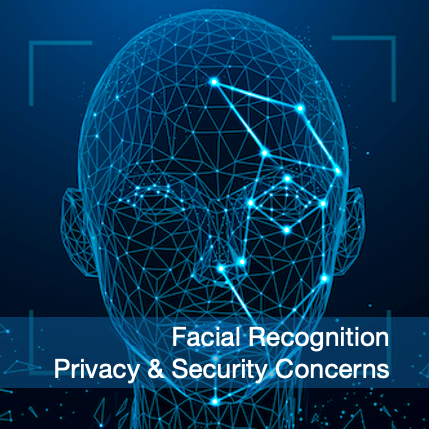
Imagine how great technology would be if it weren’t for people. Since the beginning of time man has developed remarkable solutions to common problems. But leave it to nefarious, despicable, criminal or just plain dumb people to ruin them for the rest of us. You know, like gun powder, nuclear power, and the internet. Facial recognition programs and collection of biometric data would appear to have more benefits than risks, but those risks are there. As use of the technology proliferates we can expect more litigation as additional states follow Illinois — the first to enact a state Biometric Information Privacy Act. Martin T. Tully of Actuate Law LLC and Debbie Reynolds of Debbie Reynolds Consulting LLC, outline these risks and how regulation and litigation is responding in their article: Facial Recognition Proliferation: Litigation and Legal Implications of Biometric Technologies. Below are a couple excerpts from their article, published in the January 2021 edition of the Journal on Emerging Issues in Litigation. —Tom Hagy
Some FR technologies use a scanner to identify 4,500 different points of facial geometry to create a map of a person’s face. The application doesn’t necessarily store photos of faces; it generates and stores a unique, algorithmic representation of faces. Think of it as a hash value for that individual. The hash value can then recognize that person when they return to a facility after initially registering. “Ah, you’re Mary, the FedEx driver. You are authorized to go to Suite 501 and deliver this package to Acme Corporation because you previously registered yourself here in that capacity.” Notably, the hash value in this example is encrypted and is not personally identifiable information by itself; it is useless outside the visitor management system. In this situation, if there was unauthorized access to or disclosure of the hashed representations of facial geometry, they could not be used to identify any individuals unless the unauthorized recipient also had access to both the registration system and the registered individual. It is vital to understand how the particular FR technology works when considering its privacy implications.
…
For all its applications, the technology is not without its drawbacks. Erroneous identification using FR, especially when paired with bias in the use of artificial intelligence (AI), has raised legitimate red flags. Newsweek reported in July 2020 that Amazon’s FR technology falsely identified 28 members of Congress as people who had been arrested for crimes. Similarly, in late 2017, the iPhone X in China was criticized for its inability to distinguish between Chinese faces. Thus, there can be real risk of inaccuracies and bias with the current state of both FR technology and the AI that often powers it.
…
The Illinois BIPA came to the forefront in 2015 when some enterprising lawyers realized a statute could be used to challenge companies such as Facebook and Google. The statute is pretty broad and punitive in its application. It has led to numerous class action lawsuits not only in Illinois, but across the country. A case against Facebook was filed in federal court in California, ultimately settling for $550 million (Patel, et al. v. Facebook, No. 3:15-cv-03747-JD, N.D. Calif.). Facebook previously settled a case with the FTC over its use of facial recognition technology for $5 billion.
In many BIPA lawsuits, standing has been an issue of contention. For some time, there was a split in the Illinois appellate courts about whether a claimant needed to show an actual concrete injury in order to sue under the statute. For example, just because I didn’t give you the written policy, or, I didn’t get your consent before I collected your information, do you have to show some other harm to have standing?
Essentially, if nothing’s happened to you, nobody has sold your information, nobody has stolen your identity and if you haven’t been harmed, do you have the standing to sue? That was a big question until early 2019 when the Illinois Supreme Court, in Rosenbach v. Six Flags Entertainment Corp., held that the answer was “no.” The Court found that the Illinois General Assembly clarified that as a public policy matter, violating the statute alone, without any further showing of actual harm, or concrete or tangible harm, is sufficient to confer standing upon somebody to sue under BIPA. Once that issue was resolved, it fanned the flames of additional BIPA class actions (Rosenbach v. Six Flags Entm’t Corp., 2019 IL 123186, 432 Ill. Dec. 654, 129 N.E.3d 1197).
An on-demand CLE-eligible webinar Safeguarding Against Financial Exploitation America’s senior population is growing. Nearly one in five U.S. residents will be 65 or older in 2030. Which means the average age of U.S. investors is climbing too. With that comes the risk that they will be exploited by people with access – or gain access through nefarious methods – to their investment portfolio. Seniors and vulnerable persons lose billions of dollars each year. Remarkably, 90% of the people to take advantage of senior investors are members of their own family. Attorneys who represent senior clients need to know the signs of vulnerability, red flags that their clients are being exploited, what laws apply, and rules lawyers must follow in these matters. Questions our speakers answer: What is senior / vulnerable investor exploitation? Who is protected by state and federal laws? How prevalent is senior financial exploitation? What do the numbers tell us? What is the pace of financial abuse SAR filings by securities firms? What are the most popular scams? What is diminished capacity? What are the red flags indicating possible exploitation? What are the laws, rules, and regulations governing law firms? What are some best practices for law firms? How can firms best protect their senior clients? On Demand CLE Webinar What You Get PowerPoint and supplemental materials. Complete recording for later review. Answers to your questions via email. Invitation to contact speakers. 1.5 CLE credits (for licensed attorneys). CLE assistance.* *Subject to state bar rules. For licensed attorneys. Register Meet the Speakers Joseph Calabrese Bressler, Amery & Ross, P.C. A 1991 Graduate of St. John’s University Law School, Mr. Calabrese brings 30 years of practice and 18 years of Securities Litigation/Regulatory experience to his role as principal in the New York office of Bressler, Amery & Ross’s Financial Institutions Group. He began his career as a Wall Street litigator as an associate general counsel for Citigroup’s Smith Barney and […]
Lien Resolution: Government & Private Plans Get Aggressive (Against Attorneys)
Includes Nearly 75 minutes of insights from experienced professionals. CLE credit: 1+ (subject to bar rules). For CLE questions: CLE@LitigationConference.com The complete Power Point presentation. Continued access to the complete recording for later use. Answers to your questions via email to the presenters or write to HB and we will be sure to contact the speakers. What can you do to settle personal injury suits cleanly and avoid costly litigation and penalties? What recent cases can inform you about protecting your settlements and, as attorneys, yourselves, from post-settlement federal lawsuits? How can your firm set itself up to meet government expectations? What role might experts play in navigating these pitfalls? Medicare Advantage (42 USC § 1395w-22) Federal Medical Care Recovery Act (FMCRA) (42 USC § 2651) Armed Forces Act (10 USC §1095) Veterans’ Benefits (38 USC §1729) Third-Party Collection Rules (32 CFR 537.24; 38 CFR 17.101, etc.) Set-Asides under the Medicare Secondary Payer Act (42 USC § 1395y(b)(2)] On Demand Registration Lien Resolution Government & Private Plans Get Aggressive (Against Attorneys!) On Demand | Recorded September 2020 It is increasingly common these days. Personal injury attorneys settle a case, only to find themselves sued by a U.S. Attorney for failing to reimburse Medicare for conditional payments as required by the Medicare Secondary Payer Act. In some cases the attorney may be required to pay fines in addition to the reimbursements and interest, a costly proposition. Are you up to speed on issues surrounding Medicare Advantage, TRICARE, veterans’ claims, and Medicare set-asides? Join nationally recognized healthcare lien and resolution expert Franklin P. Solomon and go-to lien resolution provider Brett Newman as they offer a practical, in-depth CLE presentation. Franklin P. Solomon, Esq. Attorney & Founder, Solomon Law Firm A graduate of Rutgers University School of Law at Camden, Franklin Solomon is based in Cherry Hill, NJ, with a practice focused on evaluation, litigation and resolution of healthcare “liens” and reimbursement claims. Mr. Solomon represents personal injury victims and their attorneys […]
REGISTER Registration Includes Nearly 90 minutes of insights from experienced professionals. CLE credit: 1+ (subject to bar rules). For CLE questions: CLE@LitigationConference.com The complete Power Point presentation. Continued access to the complete recording for later use. Answers to your questions via email to the presenters or write to HB and we will be sure to contact the speakers. Understand the risks associated with telepsychiatry and how to manage them. Telemedicine has emerged as an important solution for healthcare in general and psychiatric medicine specifically during the current global pandemic. Remote access for sub-practices including addiction counseling have been commonly used. Our panel of psychiatric professionals who have served as expert witnesses and attorneys who counsel and represent physicians have prepared a 90-minute session to share insights with attorneys, physicians, healthcare providers, risk professionals, and more. Agenda Examining procedures and best practices that exist for ensuring confidentiality in a telemedicine practice How do you draft a telepsychiatric consent form? What is the emerging standard of care for telemedicine? Will the standard of care for telemedicine become a national standard? (Should it?) Review the case law addressing telemedicine or telepsychiatry How do the HIPAA regulations and HITECH privacy laws impact telemedicine? How have the HIPAA regulations and HITECH privacy laws been relaxed during the pandemic? Will the relaxed HIPAA and HITECH regulations impacting telemedicine continue past the pandemic? Which technical platforms are preferred? Which ones to avoid? Panelists Mark Levy, M.D., Medical Director at fpamed David Kan, M.D., UCSF Psychiatry Department and the California Society for Substance Abuse Medicine Ayesha Ashai, M.D., associated with fpamed Stephen M. Fatum, J.D., Partner, Barnes & Thornburg LLP Angela W. Russell, J.D., Partner, Wilson Elser Moskowitz Edelman & Dicker LLP Meet our physician and attorney panelists. Mark Levy MD Medical Director fpamed Dr. Levy is a graduate of Columbia College (A.B. 1967) and the Columbia University College of Physicians and Surgeons (M.D. 1971) in New York. He is a Physician […]
The Commercial Drone Industry: Privacy, Security, Threats, and Mitigation of Risk
HB presents a CLE-eligible webinar Now on-demand at the West LegalEdcenter THE COMMERCIAL DRONE INDUSTRY Privacy, Security, Threats, and Mitigation of Risk Drones have become an increasingly valuable tool for businesses of all types and sizes. Drones are already being used in many applications, but more will certainly arise as the technology advances. This means that certain risks, like cyber threats, will also continue to present themselves. Protecting the transmission and storage of data collected through drones is critical. Unfortunately, security usually comes as an afterthought. The drone industry is part of the aviation industry, which, based on its knowledge, keeps safety as a number one concern. Part of that safety is having proper protection for your systems, including security as a fundamental design principle. Take this webinar to gain insights on the topics listed below, and shared by an attorney who practices on the cutting-edge of this evolving technology. Topics: Defining drones. Current and future applications. FAA Modernization and Reform Act of 2012. FAA Part 107 Regulations and waivers. Resources, e.g. the FAA Drone Zone and LAANC Portal. Penalties for violations. Privacy implications. Drones as weapons. Vulnerability to cyber attacks. Take it now! What you get: 1+ CLE credits (subject to bar rules). Insights from an experienced professional who specializes in this area of the law. The complete PowerPoint presentation. Continued access to the complete recording for later use. Answers to your questions. Fee: No additional charge to subscribers to the West LegalEdcenter. Non-subscribers may take the course for $170. Meet the Speaker Kathryn Rattigan Robinson & Cole LLP Kathryn Rattigan is a member of the firm’s Business Litigation Group and Data Privacy + Cybersecurity Team. She advises clients on data privacy and security, cybersecurity, and compliance with related state and federal laws. She assists clients in assessing risks related to technology and software contracts, as well as with compliance-related issues with outsourcing and […]
The Intersection of Privacy and Antitrust Webinar Now Available On-Demand on the West LegalEdcenter
Available as part of your subscription to The Thomson Reuters West LegalEdcenter®. Don’t subscribe to the West LegalEdcenter? This webinar is still available directly from HB. Take it now! Questions for speakers Questions@LitigationConferences.com CLE questions CLE@LitigationConferences.com Check out the MoginRubin blog for more insights on antitrust and privacy law. What attorneys and companies need to know about the increasing interplay between these critical areas of the law. Highly publicized cases and investigations in the U.S. and Europe of big technology, e-commerce, and social media companies demonstrate how anti-competition laws are being used to scrutinize and challenge not only how these corporations conduct themselves in the marketplace, but the very core of their colossal success: the mass collection and utilization of user data. Are the privacy and antitrust worlds beginning to cross over? Or do they simply run parallel while addressing entirely different types of conduct? Whatever the answer, data is the raw material that drives the likes of Google, Facebook, Apple and Amazon, so how it is handled is a critical question when counseling clients on mergers and acquisitions. Moderator Daniel J. Mogin | Managing Partner, MoginRubin LLP Speakers Jennifer M. Oliver, CIPP/US | Partner, MoginRubin LLP Thomas N. Dahdouh | Director, Western Region, Federal Trade Commission Franklin M. Rubinstein | Partner, Wilson Sonsini Goodrich & Rosati Randi W. Singer, CIPP/US, CIPT | Partner, Weil, Gotshal & Manges Contributor Dina Srinivasan | Independent Researcher & Author of The Antitrust Case Against Facebook Dina was unable to present but we thank her for her content contributions. Agenda Who should regulate privacy violations in the U.S.? Which antitrust issues implicate privacy concerns? What role does machine learning play on the competitive landscape? What is big data really? How is it different from “data”? What are the elements of effective merger reviews? What are the appropriate remedies? What are “notice-and-choice” versus “harms-based” approaches? Plus answers to your questions. Send them to Questions@LitigationConferences.com.

Legal Writer
Law Street Media
Zoom is a good name for this company. It seems to have come out of nowhere to become the new verb for web meetings, robbing that distinction from many more established competitors like WebEx and GoToMeeting, maybe because they don’t have cool web-sounding names, although people don’t seem to be saying “let’s Skype later,” as much as they used to. Sure, we still “Facetime,” but Zoom really shot to the top when it comes to name recognition. According to CNBC’s Ari Levy, Zoom reported fiscal third-quarter revenue growth of more than 300% after seeing 355% expansion in the prior period. The company’s stock was up almost seven-fold this year but “pulled back in November on positive news surrounding a coronavirus vaccine,” Levy reported. And with success comes risk, especially when dealing with private data. Here is an excerpt of a post shared with the permission of Fastcase and Law Street Media. –Tom Hagy, HB Litigation Conferences
Dec. 4, 2020 (San Francisco) — On Wednesday [Dec. 2], in the Northern District of California, Zoom Video Communications filed a motion to dismiss the plaintiffs’ first amended consolidated class action complaint (FAC) on the grounds that the FAC failed to state a claim for which relief may be granted.
The consolidated complaint alleged that Zoom engaged in unauthorized data sharing with third parties, such as Facebook, LinkedIn, and Google. Additional complaints included an alleged failure to prevent unwanted meeting disruptions by outside parties, called Zoombombing; and misrepresentation of its encryption protocols claiming it used end-to-end encryption when it purportedly did not provide such encryption.
Zoom stated that it faced unprecedented growth resulting from the COVID-19 pandemic, as people began using Zoom for teleconferences and to communicate with friends and family, but it “worked tirelessly since the pandemic’s onset to keep its services operational and secure, while developing and deploying extensive privacy and security enhancements to address new challenges caused by the massive uptick in non-corporate usage.”
In its motion to dismiss, Zoom stated “(i)n an effort to capitalize on Zoom’s explosive growth during the COVID-19 pandemic, Plaintiffs seek to hold Zoom liable on behalf of a nationwide class under a scattershot array of loosely related factual and legal theories, largely drawn from sensationalist news reports.” Zoom claimed that in the latest attempt, the plaintiffs still failed to state claims upon which relief may be granted; instead, the plaintiffs’ FAC supposedly “recycles the same flawed claims as Plaintiffs’ original consolidated complaint (CAC) … with a few minor additional factual allegations.”
Zoom averred that all of the plaintiffs’ claims fail because they do not allege that they were harmed by the company. Zoom contended that the plaintiffs failed to claim personal harm from the purported data sharing, meeting disruptions, and alleged misrepresentations and omissions about encryption.
Read this and more at LawStreetMedia.com.
An on-demand CLE-eligible webinar Safeguarding Against Financial Exploitation America’s senior population is growing. Nearly one in five U.S. residents will be 65 or older in 2030. Which means the average age of U.S. investors is climbing too. With that comes the risk that they will be exploited by people with access – or gain access through nefarious methods – to their investment portfolio. Seniors and vulnerable persons lose billions of dollars each year. Remarkably, 90% of the people to take advantage of senior investors are members of their own family. Attorneys who represent senior clients need to know the signs of vulnerability, red flags that their clients are being exploited, what laws apply, and rules lawyers must follow in these matters. Questions our speakers answer: What is senior / vulnerable investor exploitation? Who is protected by state and federal laws? How prevalent is senior financial exploitation? What do the numbers tell us? What is the pace of financial abuse SAR filings by securities firms? What are the most popular scams? What is diminished capacity? What are the red flags indicating possible exploitation? What are the laws, rules, and regulations governing law firms? What are some best practices for law firms? How can firms best protect their senior clients? On Demand CLE Webinar What You Get PowerPoint and supplemental materials. Complete recording for later review. Answers to your questions via email. Invitation to contact speakers. 1.5 CLE credits (for licensed attorneys). CLE assistance.* *Subject to state bar rules. For licensed attorneys. Register Meet the Speakers Joseph Calabrese Bressler, Amery & Ross, P.C. A 1991 Graduate of St. John’s University Law School, Mr. Calabrese brings 30 years of practice and 18 years of Securities Litigation/Regulatory experience to his role as principal in the New York office of Bressler, Amery & Ross’s Financial Institutions Group. He began his career as a Wall Street litigator as an associate general counsel for Citigroup’s Smith Barney and […]
Lien Resolution: Government & Private Plans Get Aggressive (Against Attorneys)
Includes Nearly 75 minutes of insights from experienced professionals. CLE credit: 1+ (subject to bar rules). For CLE questions: CLE@LitigationConference.com The complete Power Point presentation. Continued access to the complete recording for later use. Answers to your questions via email to the presenters or write to HB and we will be sure to contact the speakers. What can you do to settle personal injury suits cleanly and avoid costly litigation and penalties? What recent cases can inform you about protecting your settlements and, as attorneys, yourselves, from post-settlement federal lawsuits? How can your firm set itself up to meet government expectations? What role might experts play in navigating these pitfalls? Medicare Advantage (42 USC § 1395w-22) Federal Medical Care Recovery Act (FMCRA) (42 USC § 2651) Armed Forces Act (10 USC §1095) Veterans’ Benefits (38 USC §1729) Third-Party Collection Rules (32 CFR 537.24; 38 CFR 17.101, etc.) Set-Asides under the Medicare Secondary Payer Act (42 USC § 1395y(b)(2)] On Demand Registration Lien Resolution Government & Private Plans Get Aggressive (Against Attorneys!) On Demand | Recorded September 2020 It is increasingly common these days. Personal injury attorneys settle a case, only to find themselves sued by a U.S. Attorney for failing to reimburse Medicare for conditional payments as required by the Medicare Secondary Payer Act. In some cases the attorney may be required to pay fines in addition to the reimbursements and interest, a costly proposition. Are you up to speed on issues surrounding Medicare Advantage, TRICARE, veterans’ claims, and Medicare set-asides? Join nationally recognized healthcare lien and resolution expert Franklin P. Solomon and go-to lien resolution provider Brett Newman as they offer a practical, in-depth CLE presentation. Franklin P. Solomon, Esq. Attorney & Founder, Solomon Law Firm A graduate of Rutgers University School of Law at Camden, Franklin Solomon is based in Cherry Hill, NJ, with a practice focused on evaluation, litigation and resolution of healthcare “liens” and reimbursement claims. Mr. Solomon represents personal injury victims and their attorneys […]
REGISTER Registration Includes Nearly 90 minutes of insights from experienced professionals. CLE credit: 1+ (subject to bar rules). For CLE questions: CLE@LitigationConference.com The complete Power Point presentation. Continued access to the complete recording for later use. Answers to your questions via email to the presenters or write to HB and we will be sure to contact the speakers. Understand the risks associated with telepsychiatry and how to manage them. Telemedicine has emerged as an important solution for healthcare in general and psychiatric medicine specifically during the current global pandemic. Remote access for sub-practices including addiction counseling have been commonly used. Our panel of psychiatric professionals who have served as expert witnesses and attorneys who counsel and represent physicians have prepared a 90-minute session to share insights with attorneys, physicians, healthcare providers, risk professionals, and more. Agenda Examining procedures and best practices that exist for ensuring confidentiality in a telemedicine practice How do you draft a telepsychiatric consent form? What is the emerging standard of care for telemedicine? Will the standard of care for telemedicine become a national standard? (Should it?) Review the case law addressing telemedicine or telepsychiatry How do the HIPAA regulations and HITECH privacy laws impact telemedicine? How have the HIPAA regulations and HITECH privacy laws been relaxed during the pandemic? Will the relaxed HIPAA and HITECH regulations impacting telemedicine continue past the pandemic? Which technical platforms are preferred? Which ones to avoid? Panelists Mark Levy, M.D., Medical Director at fpamed David Kan, M.D., UCSF Psychiatry Department and the California Society for Substance Abuse Medicine Ayesha Ashai, M.D., associated with fpamed Stephen M. Fatum, J.D., Partner, Barnes & Thornburg LLP Angela W. Russell, J.D., Partner, Wilson Elser Moskowitz Edelman & Dicker LLP Meet our physician and attorney panelists. Mark Levy MD Medical Director fpamed Dr. Levy is a graduate of Columbia College (A.B. 1967) and the Columbia University College of Physicians and Surgeons (M.D. 1971) in New York. He is a Physician […]
The Commercial Drone Industry: Privacy, Security, Threats, and Mitigation of Risk
HB presents a CLE-eligible webinar Now on-demand at the West LegalEdcenter THE COMMERCIAL DRONE INDUSTRY Privacy, Security, Threats, and Mitigation of Risk Drones have become an increasingly valuable tool for businesses of all types and sizes. Drones are already being used in many applications, but more will certainly arise as the technology advances. This means that certain risks, like cyber threats, will also continue to present themselves. Protecting the transmission and storage of data collected through drones is critical. Unfortunately, security usually comes as an afterthought. The drone industry is part of the aviation industry, which, based on its knowledge, keeps safety as a number one concern. Part of that safety is having proper protection for your systems, including security as a fundamental design principle. Take this webinar to gain insights on the topics listed below, and shared by an attorney who practices on the cutting-edge of this evolving technology. Topics: Defining drones. Current and future applications. FAA Modernization and Reform Act of 2012. FAA Part 107 Regulations and waivers. Resources, e.g. the FAA Drone Zone and LAANC Portal. Penalties for violations. Privacy implications. Drones as weapons. Vulnerability to cyber attacks. Take it now! What you get: 1+ CLE credits (subject to bar rules). Insights from an experienced professional who specializes in this area of the law. The complete PowerPoint presentation. Continued access to the complete recording for later use. Answers to your questions. Fee: No additional charge to subscribers to the West LegalEdcenter. Non-subscribers may take the course for $170. Meet the Speaker Kathryn Rattigan Robinson & Cole LLP Kathryn Rattigan is a member of the firm’s Business Litigation Group and Data Privacy + Cybersecurity Team. She advises clients on data privacy and security, cybersecurity, and compliance with related state and federal laws. She assists clients in assessing risks related to technology and software contracts, as well as with compliance-related issues with outsourcing and […]
The Intersection of Privacy and Antitrust Webinar Now Available On-Demand on the West LegalEdcenter
Available as part of your subscription to The Thomson Reuters West LegalEdcenter®. Don’t subscribe to the West LegalEdcenter? This webinar is still available directly from HB. Take it now! Questions for speakers Questions@LitigationConferences.com CLE questions CLE@LitigationConferences.com Check out the MoginRubin blog for more insights on antitrust and privacy law. What attorneys and companies need to know about the increasing interplay between these critical areas of the law. Highly publicized cases and investigations in the U.S. and Europe of big technology, e-commerce, and social media companies demonstrate how anti-competition laws are being used to scrutinize and challenge not only how these corporations conduct themselves in the marketplace, but the very core of their colossal success: the mass collection and utilization of user data. Are the privacy and antitrust worlds beginning to cross over? Or do they simply run parallel while addressing entirely different types of conduct? Whatever the answer, data is the raw material that drives the likes of Google, Facebook, Apple and Amazon, so how it is handled is a critical question when counseling clients on mergers and acquisitions. Moderator Daniel J. Mogin | Managing Partner, MoginRubin LLP Speakers Jennifer M. Oliver, CIPP/US | Partner, MoginRubin LLP Thomas N. Dahdouh | Director, Western Region, Federal Trade Commission Franklin M. Rubinstein | Partner, Wilson Sonsini Goodrich & Rosati Randi W. Singer, CIPP/US, CIPT | Partner, Weil, Gotshal & Manges Contributor Dina Srinivasan | Independent Researcher & Author of The Antitrust Case Against Facebook Dina was unable to present but we thank her for her content contributions. Agenda Who should regulate privacy violations in the U.S.? Which antitrust issues implicate privacy concerns? What role does machine learning play on the competitive landscape? What is big data really? How is it different from “data”? What are the elements of effective merger reviews? What are the appropriate remedies? What are “notice-and-choice” versus “harms-based” approaches? Plus answers to your questions. Send them to Questions@LitigationConferences.com.

 When a Medicare beneficiary obtains a prescription drug covered by Medicare, the beneficiary may be required to make a partial payment, which may take the form of a copayment, coinsurance, or a deductible (collectively “copays”). Congress included copay requirements in the Medicare program, in part, to serve as a check on health care costs, including the prices that pharmaceutical manufacturers can demand for their drugs.
“We will continue to hold pharmaceutical companies and specialty pharmacies accountable if they work together to subvert the charitable donation process and violate the prohibition on the payment of kickbacks.”

