A Special Episode: A lovable litigator with Danny Karon


Epiq presents
DIGITAL PAYMENTS
Best Practices for Efficiency in Class Actions
Recorded: Sept. 23, 2020
75 minutes
CLE credit: 1+
Registration includes recording, materials, and answers to your questions.
TAKE IT NOW!

Recorded Live | Sept. 23, 2020
Modern life increasingly relies on digital solutions. Nothing has made that more apparent than the novel coronavirus pandemic. In terms of class action settlement payments, the impetus has never been greater to transition to the e-payment realm for security, convenience, cost-reduction, and improved fund disbursement.
Class counsel and claims administrators have experimented for years with pre-paid debit cards, automated clearing house (ACH) deposits, and wire transfers, while others have tested judicial appetites for registered-user payment systems like PayPal and Venmo. However, digital payment schemes with multiple options — the primary of which is direct deposit — seem to be emerging as the favored solution.
Though class action notice is increasingly being digitized, aided by the 2018 amendments to Federal Rule of Civil Procedure, particularly Rule 23(c)(2)(B), which permits notice by electronic means like emails and digital and social media, payment itself has lagged behind. Even with these challenges, electronic payment distribution is now a viable option. Courts are encouraging the shift to electronic payments, too. As the U.S. District Court for the Northern District of California specified in its November 2018 Procedural Guidance for Class Action Settlements, “[c]lass counsel should consider… distributions to class members via direct deposit.”
As class actions lawyers and claims administrators consider digital payments, they must propose workable and achievable solutions, adhere to Rule 23, and minimize cy pres. Though widespread acceptance of this technology is still evolving, understanding the concept and embracing its benefits may lead to quicker adoption.
Take our webinar as our panelists will address:

Adam Zapala is a partner in the San Francisco office of Cotchett Pitre, where he focuses on complex litigation, including antitrust, employment and civil rights, privacy and cybersecurity, qui tam/false claims, consumer protection, and class actions generally. He has served as lead counsel in some of the largest and most complex litigation matters in the country. He received his B.A. from Stanford University and his J.D. from the University of California Hastings College of Law. Read more about Adam and Cotchett Pitre.

Paul is a partner in the Denver office of BakerHostetler, and serves as leader of the firm’s Privacy and Digital Risk Class Action and Litigation Team. He has significant experience representing companies in the insurance, healthcare, consumer, and education sectors, and is routinely named among the best lawyers in his field. Paul earned his J.D. from the University of Denver Sturm College of law and his B.S. from Purdue University. Read more about Paul and BakerHostetler.

Chris brings Ljungkull 10+ years of experience building strategic partnerships across Financial Services, Enterprise SaaS, CPG, eCommerce, and Logistics. He draws heavily on his experience in fulfillment, print, and mail industries to help Legal Service customers develop solutions that do more with less. Read more about Chris and Digital Pay.

Kim Stephens is a Member Partner at Tousley Brain Stephens PLLC, where he focuses on commercial and class action litigation. Prior to joining the firm he was a judicial extern clerk to Hon. Eugene A. Wright of the Ninth Circuit, and worked for the Seattle criminal defense firm of Allen &Hansen. He has been appointed special attorney general for Washington State, as well as lead and co-lead counsel to manage numerous state, federal and multi-district class action matters. He received his B.A. from the University of Washington and his J.D. from the University of Washington School of Law. Read more about Kim and Tousley Brain Stephens.
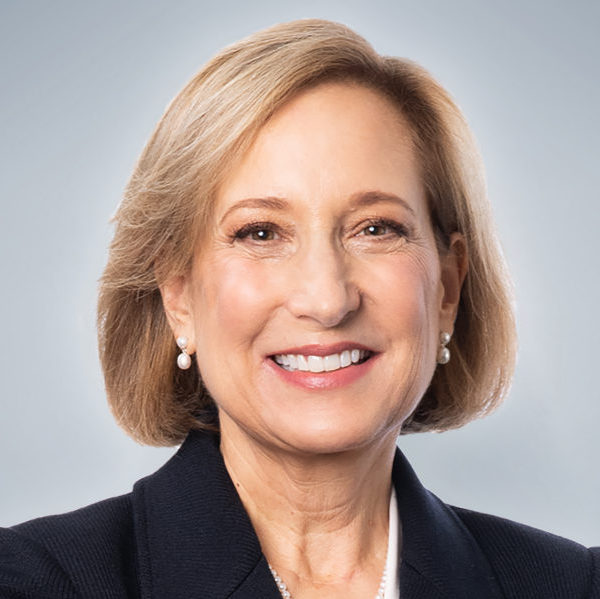
After 18 years as a U.S. Magistrate Judge with the Central District of California, including four years as the Chief Magistrate Judge, Hon. Suzanne H. Segal (Ret.) joined Signature Resolution as a mediator and arbitrator. During her tenure on the federal bench, Judge Segal presided over numerous trials, evidentiary hearings, motions and discovery conferences involving a variety of cases. Before that she served for 12 years as Assistant U.S. Attorney in the Civil Division of the Los Angeles U.S. Attorney’s Office. She received her J.D. from Claremont McKenna College and her J.D. from Cornell Law School. Read more about Judge Suzanne H. Legal.

Aideen Gaffney draws upon over two decades of experience as an attorney and a skilled business development strategist to expand the scope and impact of our service offerings while providing effective solutions to our clients’ project needs. Based on the West Coast, her particular experience centers upon class action administration, mass tort global litigation programs, and data breach response programs. Earlier in her career, Gaffney practiced law in San Francisco at Gordon & Rees LLP, and in Portland at Bullivant Houser Bailey PC, handling complex insurance litigation and participating in two jury trials and two bench trials involving ‘bad faith’ litigation. She is a frequent speaker and writer on current topics affecting the legal administration industry, and has presented numerous CLE programs to clients. Aideen received her B.S. from Santa Clara University and her J.D. from Santa Clara University School of Law. Read more about Aideen and Epiq here.
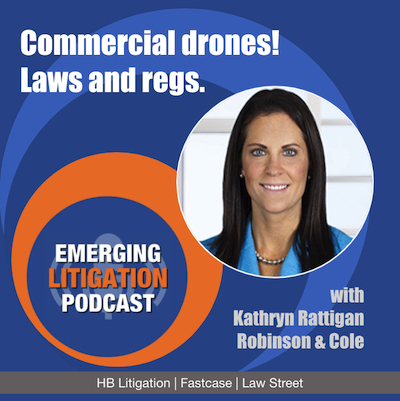

Joining me to discuss this emerging area of law is Kathryn M. Rattigan, a member of the Business Litigation Group, the Data Privacy + Cybersecurity Team, and the Drone Compliance Team in the Rhode Island office of Robinson Cole. Kathryn advises clients on these matters with expertise in the relevant Federal Aviation Administration regulations. She and her colleagues also advise clients on employee and subcontractor contracts, insurance policies, privacy regulations, state and local laws, and best practices as recommended by the National Telecommunications and Information Administration. She handles product defect, personal injury, and property damage litigation, too. Kathryn is a frequent contributor to the excellent Robinson Cole Data Privacy + Cybersecurity Insider blog. She holds a J.D. from the Roger Williams University School of Law and a B.A. (magna cum laude) from Stonehill College.
This podcast is the audio companion to the Journal on Emerging Issues in Litigation, a collaborative project between HB Litigation Conferences and the Fastcase legal research family, which includes Full Court Press, Law Street Media, Docket Alarm and, most recently, Judicata. If you have comments or wish to participate in one our projects, or want to tell me how insightful and informative Kathryn is, please drop me a note at Editor@LitigationConferences.com. This podcast is based on an article she wrote for the Journal.
Just to clarify. Kathryn does own a drone, but not a “sheep drone.” I regret the error, and I wouldn’t have it any other way. Thanks to Kathryn for speaking with me about this fascinating area of the law.
Tom Hagy
Host and Litigation Enthusiast
What must companies know about deploying a drone fleet?
What industries are leading the way?
What are the potential legal liabilities?
How does one begin to navigate the regulatory labyrinth?
If one is flying over my swimming pool taking photos, may I shoot it down?
And who in their right minds would ever allow a teenage boy to operate one?
Loading Viewer…



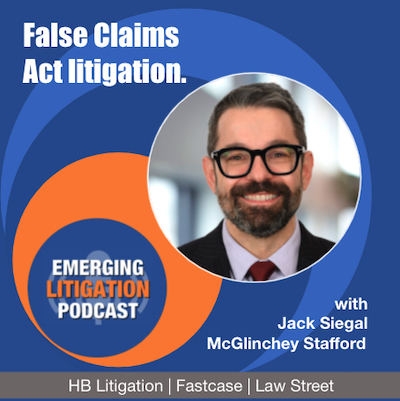
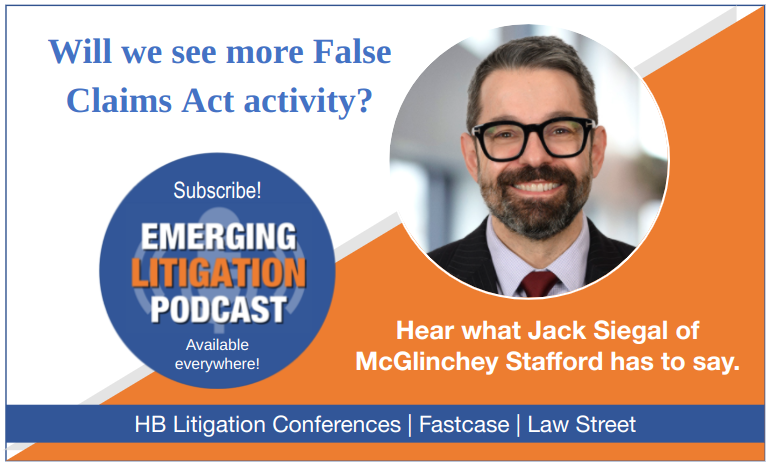
This podcast is the audio companion to the Journal on Emerging Issues in Litigation, a collaborative project between HB Litigation Conferences and the Fastcase legal research family, which includes Full Court Press, Law Street Media, Docket Alarm and, most recently, Judicata. If you have comments or wish to participate in one our projects, or want to tell me how insightful and informative Jack is , please drop me a note at Editor@LitigationConferences.com.
I hope you enjoy the interview, and especially how I managed not to include Jack’s answer to whether my dog could be sued for violating the FCA. “Nope. Not a person,” he said, with zero hesitation. I want to thank Jack for immediately taking on the role as Shiloh’s advocate, and for speaking with me about this important law. –Tom Hagy