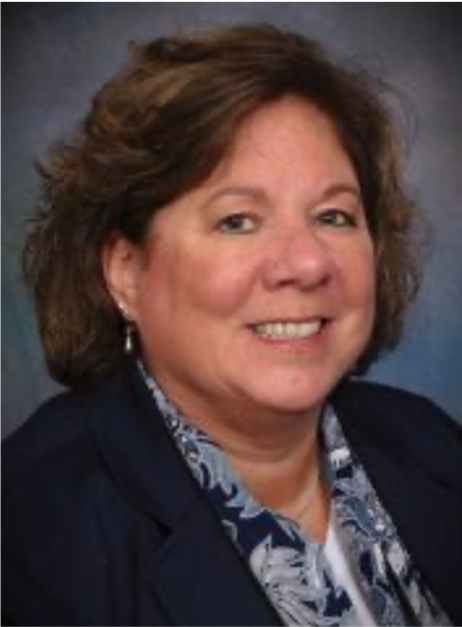
Author: Tom Hagy

  • Women in Law

    Western Alliance Bank presents a CLE-eligible webinar
    Women in Law
    Becoming the Master of Your Career

    According to the National Association of Women Lawyers, there has been a “sustained (albeit small) improvement for women amongst equity partners since the survey’s inception in 2006 (15% compared to 19% – 21% in recent years).”
    “This is a positive trend toward a more representative legal profession, but change at this glacial pace will continue to result in future generations of lawyers entering a profession where women and diverse attorneys are underrepresented in positions of power and influence. A continued, rigorous examination of and changes to existing practices – a movement from talk to action – is needed to speed progress in a meaningful way for women and other underrepresented groups.”
    As women work to advance their careers amid these market and social realities, there is much they can do on their own initiative to navigate their career in a manner that — over time — will meet or exceed their professional and personal objectives.
    We are fortunate two extraordinary women professionals have agreed to share a wealth of insights, tactics and strategies they employed to steadily rise through the ranks of their respective professions.
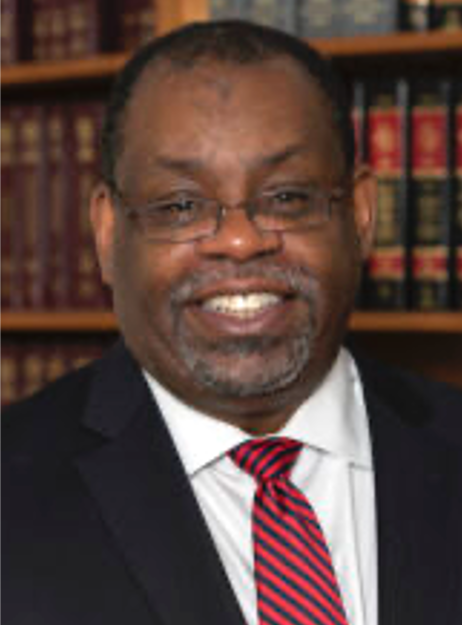
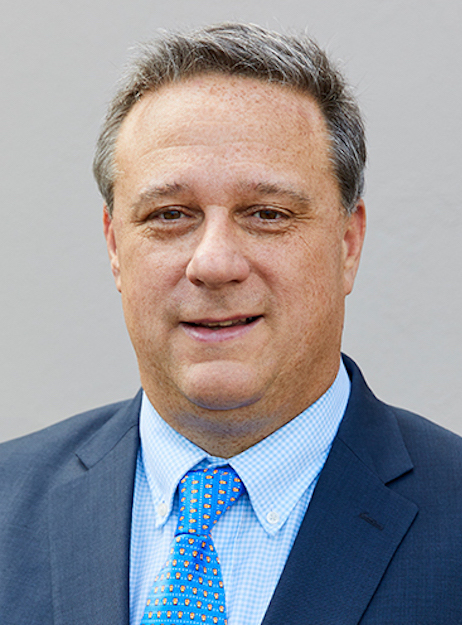
    Mary Beth Foley is General Counsel of Ohio Police and Fire Fund, and President of the National Association of Public Pension Attorneys. Joining her is Barbara Hart, Director and Executive Committee Member at the law firm Grant & Eisenhofer. Barbara is also a member of the Thirty Percent Coalition which advocates for diversity on Fortune 500 boards.
    Join us for an engaging format in which Mary Beth and Barbara take turns interviewing one another about proven strategies they recommend other women in the profession consider as they chart their careers. Review the topics they will cover, their brief biographies, and register for this complimentary program, underwritten by Western Alliance Bank Settlement Services.

    NOW ON DEMAND!

    take it now!

    What you get:

    • 1+ CLE credits (subject to bar rules).
    • 75 minutes of insights from experienced professionals.
    • The complete PowerPoint presentation.
    • Additional reading materials.
    • Ability to watch multiple times.
    • Answers to your questions by writing to the speakers.

    What they cover:

    • Setting career goals and objectives
    • Understanding the phases of your career
    • Knowing when to acquire new skills
    • Building, nurturing, and leveraging your network
    • Developing and executing your own business and strategic plan
    • Understanding the importance of risk
    • Exercising caution effectively
    • Building and maintaining resilience
    • Recognizing allies to your long-term success
    • Becoming “the master of your career” — a personal and professional growth imperative
    • Getting in the room and securing your seat at the table

    CLE Assistance

    Meet the Speakers

    Barbara Hart
    Director
    Grant & 
    Eisenhofer

    Barbara Hart is a director at Grant & Eisenhofer and serves on the firm’s Executive Committee. She has nearly three decades of experience as a leader in plaintiffs’ litigation. She has represented institutional investors, including many public pension funds, in securities and antitrust litigation and served as lead counsel in 4 of the top 100 securities class action settlements. Barbara has also achieved substantive antitrust and False Claims Act/Qui Tam settlements on behalf of her clients. In addition, she represents approximately 45 adult survivors of sexual abuse who are bringing claims against the Roman Catholic Archdiocese of New York, Rockefeller University and the Boy Scouts of America. Barbara is pioneering these claims in light of a change in New York law known as The Child Victim Act. Prior to joining G&E, she was President and CEO of a firm focusing on securities and antitrust litigation, and before that, she spent 17 years representing plaintiffs at the New York office of a complex financial litigation firm.

    Email

    Mary Beth Foley
    Interim Executive Director & General Counsel
    Ohio Police and Fire Pension Fund

    Mary Beth was appointed General Counsel to OP&F in 2008 and recently was named Interim Executive Director. She began her career with the Ohio Attorney General and spent eleven years as a trial attorney defending federal litigation brought against the State of Ohio. During that time she became a managing attorney in litigation and Assistant Chief of the Employment law division. Mary Beth later served as Fiduciary and Labor Counsel to the Attorney General and Auditor of State of Ohio. She was the Auditor’s advisor on the five Ohio Pension Systems as well as the Auditor’s board designee on the State Teachers Retirement System, the Ohio State Highway Patrol Retirement System and the School Employees Retirement System. Mary Beth is currently the President of the National Association of Pubic Pension Attorneys and Board liaison for the Public Safety Affinity Group. She is a member of the American Bar Association, the Ohio State Bar Association, Columbus Bar Association and a Mediator for the United States District Court for the Southern District of Ohio.

    Email

  • Facial Recognition: How It Works and How It Doesn’t

    Authors

    Debbie Reynolds
    Founder, CEO & CDPO
    Debbie Reynolds Consulting
    Website

    Martin T. Tully
    Founding Partner
    Actuate Law
    Website
    Facial Recognition: Benefits & Risks

    Editor’s Note:

    Imagine how great technology would be if it weren’t for people. Since the beginning of time man has developed remarkable solutions to common problems. But leave it to nefarious, despicable, criminal or just plain dumb people to ruin them for the rest of us. You know, like gun powder, nuclear power, and the internet. Facial recognition programs and collection of biometric data would appear to have more benefits than risks, but those risks are there. As use of the technology proliferates we can expect more litigation as additional states follow Illinois — the first to enact a state Biometric Information Privacy Act. Martin T. Tully of Actuate Law LLC and Debbie Reynolds of Debbie Reynolds Consulting LLC, outline these risks and how regulation and litigation is responding in their article: Facial Recognition Proliferation: Litigation and Legal Implications of Biometric Technologies. Below are a couple excerpts from their article, published in the January 2021 edition of the Journal on Emerging Issues in Litigation. —Tom Hagy

    Some FR technologies use a scanner to identify 4,500 different points of facial geometry to create a map of a person’s face. The application doesn’t necessarily store photos of faces; it generates and stores a unique, algorithmic representation of faces. Think of it as a hash value for that individual. The hash value can then recognize that person when they return to a facility after initially registering. “Ah, you’re Mary, the FedEx driver. You are authorized to go to Suite 501 and deliver this package to Acme Corporation because you previously registered yourself here in that capacity.” Notably, the hash value in this example is encrypted and is not personally identifiable information by itself; it is useless outside the visitor management system. In this situation, if there was unauthorized access to or disclosure of the hashed representations of facial geometry, they could not be used to identify any individuals unless the unauthorized recipient also had access to both the registration system and the registered individual. It is vital to understand how the particular FR technology works when considering its privacy implications.

    …

    For all its applications, the technology is not without its drawbacks. Erroneous identification using FR, especially when paired with bias in the use of artificial intelligence (AI), has raised legitimate red flags. Newsweek reported in July 2020 that Amazon’s FR technology falsely identified 28 members of Congress as people who had been arrested for crimes. Similarly, in late 2017, the iPhone X in China was criticized for its inability to distinguish between Chinese faces. Thus, there can be real risk of inaccuracies and bias with the current state of both FR technology and the AI that often powers it.

    …

    The Illinois BIPA came to the forefront in 2015 when some enterprising lawyers realized a statute could be used to challenge companies such as Facebook and Google. The statute is pretty broad and punitive in its application. It has led to numerous class action lawsuits not only in Illinois, but across the country.  A case against Facebook was filed in federal court in California, ultimately settling for $550 million (Patel, et al. v. Facebook, No. 3:15-cv-03747-JD, N.D. Calif.). Facebook previously settled a case with the FTC over its use of facial recognition technology for $5 billion.

    In many BIPA lawsuits, standing has been an issue of contention. For some time, there was a split in the Illinois appellate courts about whether a claimant needed to show an actual concrete injury in order to sue under the statute. For example, just because I didn’t give you the written policy, or, I didn’t get your consent before I collected your information, do you have to show some other harm to have standing?

    Essentially, if nothing’s happened to you, nobody has sold your information, nobody has stolen your identity and if you haven’t been harmed, do you have the standing to sue? That was a big question until early 2019 when the Illinois Supreme Court, in Rosenbach v. Six Flags Entertainment Corp., held that the answer was “no.” The Court found that the Illinois General Assembly clarified that as a public policy matter, violating the statute alone, without any further showing of actual harm, or concrete or tangible harm, is sufficient to confer standing upon somebody to sue under BIPA. Once that issue was resolved, it fanned the flames of additional BIPA class actions (Rosenbach v. Six Flags Entm’t Corp., 2019 IL 123186, 432 Ill. Dec. 654, 129 N.E.3d 1197).

    Get the entire article by contacting the authors directly, or purchasing the January issue which has other insightful articles like this one.

    Also, check out their webinar.
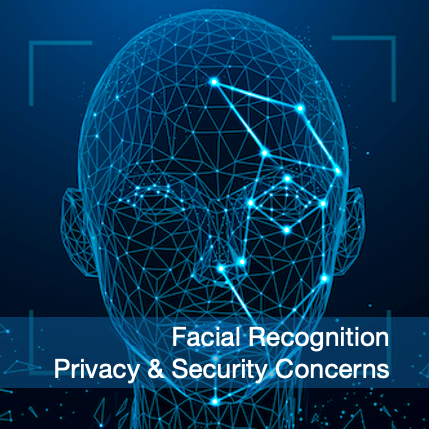
    Facial Recognition Privacy and Security Concerns

    Safeguarding Against Financial Exploitation

    An on-demand CLE-eligible webinar Safeguarding Against Financial Exploitation   America’s senior population is growing. Nearly one in five U.S. residents will be 65 or older in 2030. Which means the average age of U.S. investors is climbing too. With that comes the risk that they will be exploited by people with access – or gain access through nefarious methods – to their investment portfolio. Seniors and vulnerable persons lose billions of dollars each year. Remarkably, 90% of the people to take advantage of senior investors are members of their own family. Attorneys who represent senior clients need to know the signs of vulnerability, red flags that their clients are being exploited, what laws apply, and rules lawyers must follow in these matters.   Questions our speakers answer: What is senior / vulnerable investor exploitation?   Who is protected by state and federal laws?   How prevalent is senior financial exploitation? What do the numbers tell us?  What is the pace of financial abuse SAR filings by securities firms?  What are the most popular scams?   What is diminished capacity?  What are the red flags indicating possible exploitation?  What are the laws, rules, and regulations governing law firms?  What are some best practices for law firms?  How can firms best protect their senior clients?   On Demand CLE Webinar What You Get PowerPoint and supplemental materials. Complete recording for later review. Answers to your questions via email. Invitation to contact speakers. 1.5 CLE credits (for licensed attorneys). CLE assistance.* *Subject to state bar rules. For licensed attorneys.  Register Meet the Speakers Joseph Calabrese Bressler, Amery & Ross, P.C. A 1991 Graduate of St. John’s University Law School, Mr. Calabrese brings 30 years of practice and 18 years of Securities Litigation/Regulatory experience to his role as principal in the New York office of  Bressler, Amery & Ross’s Financial Institutions Group. He began his career as a Wall Street litigator as an associate general counsel for Citigroup’s Smith Barney and […]

    Lien Resolution: Government & Private Plans Get Aggressive (Against Attorneys)

    Includes Nearly 75 minutes of insights from experienced professionals. CLE credit: 1+ (subject to bar rules). For CLE questions: CLE@LitigationConference.com The complete Power Point presentation. Continued access to the complete recording for later use. Answers to your questions via email to the presenters or write to HB and we will be sure to contact the speakers. What can you do to settle personal injury suits cleanly and avoid costly litigation and penalties? What recent cases can inform you about protecting your settlements and, as attorneys, yourselves, from post-settlement federal lawsuits? How can your firm set itself up to meet government expectations? What role might experts play in navigating these pitfalls? Medicare Advantage (42 USC § 1395w-22) Federal Medical Care Recovery Act (FMCRA) (42 USC § 2651) Armed Forces Act (10 USC §1095) Veterans’ Benefits (38 USC §1729) Third-Party Collection Rules (32 CFR 537.24; 38 CFR 17.101, etc.) Set-Asides under the Medicare Secondary Payer Act (42 USC § 1395y(b)(2)] On Demand Registration Lien Resolution Government & Private Plans Get Aggressive (Against Attorneys!) On Demand | Recorded September 2020 It is increasingly common these days. Personal injury attorneys settle a case, only to find themselves sued by a U.S. Attorney for failing to reimburse Medicare for conditional payments as required by the Medicare Secondary Payer Act. In some cases the attorney may be required to pay fines in addition to the reimbursements and interest, a costly proposition. Are you up to speed on issues surrounding Medicare Advantage, TRICARE, veterans’ claims, and Medicare set-asides? Join nationally recognized healthcare lien and resolution expert Franklin P. Solomon and go-to lien resolution provider Brett Newman as they offer a practical, in-depth CLE presentation. Franklin P. Solomon, Esq. Attorney & Founder, Solomon Law Firm  A graduate of Rutgers University School of Law at Camden, Franklin Solomon is based in Cherry Hill, NJ, with a practice focused on evaluation, litigation and resolution of healthcare “liens” and reimbursement claims. Mr. Solomon represents personal injury victims and their attorneys […]

    Telepsychiatry: Mitigating the Risks

    REGISTER Registration Includes Nearly 90 minutes of insights from experienced professionals. CLE credit: 1+ (subject to bar rules). For CLE questions: CLE@LitigationConference.com The complete Power Point presentation. Continued access to the complete recording for later use. Answers to your questions via email to the presenters or write to HB and we will be sure to contact the speakers. Understand the risks associated with telepsychiatry and how to manage them.  Telemedicine has emerged as an important solution for healthcare in general and psychiatric medicine specifically during the current global pandemic. Remote access for sub-practices including addiction counseling have been commonly used. Our panel of psychiatric professionals who have served as expert witnesses and attorneys who counsel and represent physicians have prepared a 90-minute session to share insights with attorneys, physicians, healthcare providers, risk professionals, and more. Agenda Examining procedures and best practices that exist for ensuring confidentiality in a telemedicine practice How do you draft a telepsychiatric consent form? What is the emerging standard of care for telemedicine? Will the standard of care for telemedicine become a national standard? (Should it?) Review the case law addressing telemedicine or telepsychiatry How do the HIPAA regulations and HITECH privacy laws impact telemedicine? How have the HIPAA regulations and HITECH privacy laws been relaxed during the pandemic? Will the relaxed HIPAA and HITECH regulations impacting telemedicine continue past the pandemic? Which technical platforms are preferred? Which ones to avoid? Panelists Mark Levy, M.D., Medical Director at fpamed David Kan, M.D., UCSF Psychiatry Department and the California Society for Substance Abuse Medicine Ayesha Ashai, M.D., associated with fpamed Stephen M. Fatum, J.D., Partner, Barnes & Thornburg LLP Angela W. Russell, J.D., Partner, Wilson Elser Moskowitz Edelman & Dicker LLP Meet our physician and attorney panelists. Mark Levy MD Medical Director fpamed Dr. Levy is a graduate of Columbia College (A.B. 1967) and the Columbia University College of Physicians and Surgeons (M.D. 1971) in New York. He is a Physician […]

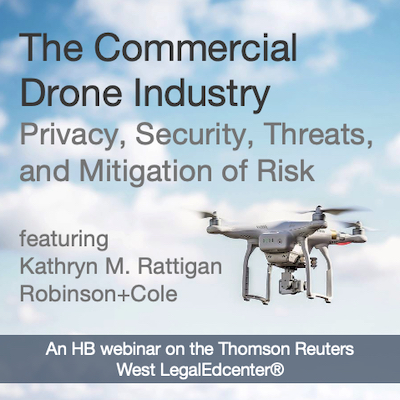
    The Commercial Drone Industry: Privacy, Security, Threats, and Mitigation of Risk

    HB presents a CLE-eligible webinar Now on-demand at the West LegalEdcenter THE COMMERCIAL DRONE INDUSTRY Privacy, Security, Threats, and Mitigation of Risk Drones have become an increasingly valuable tool for businesses of all types and sizes. Drones are already being used in many applications, but more will certainly arise as the technology advances. This means that certain risks, like cyber threats, will also continue to present themselves. Protecting the transmission and storage of data collected through drones is critical. Unfortunately, security usually comes as an afterthought. The drone industry is part of the aviation industry, which, based on its knowledge, keeps safety as a number one concern. Part of that safety is having proper protection for your systems, including security as a fundamental design principle. Take this webinar to gain insights on the topics listed below, and shared by an attorney who practices on the cutting-edge of this evolving technology. Topics: Defining drones. Current and future applications. FAA Modernization and Reform Act of 2012. FAA Part 107 Regulations and waivers. Resources, e.g. the FAA Drone Zone and LAANC Portal. Penalties for violations. Privacy implications. Drones as weapons. Vulnerability to cyber attacks. Take it now! What you get: 1+ CLE credits (subject to bar rules). Insights from an experienced professional who specializes in this area of the law. The complete PowerPoint presentation. Continued access to the complete recording for later use. Answers to your questions. Fee: No additional charge to subscribers to the West LegalEdcenter. Non-subscribers may take the course for $170. Meet the Speaker Kathryn Rattigan Robinson & Cole LLP Kathryn Rattigan is a member of the firm’s Business Litigation Group and Data Privacy + Cybersecurity Team. She advises clients on data privacy and security, cybersecurity, and compliance with related state and federal laws. She assists clients in assessing risks related to technology and software contracts, as well as with compliance-related issues with outsourcing and […]

    The Intersection of Privacy and Antitrust Webinar Now Available On-Demand on the West LegalEdcenter

    Available as part of your subscription to The Thomson Reuters West LegalEdcenter®. Don’t subscribe to the West LegalEdcenter? This webinar is still available directly from HB. Take it now! Questions for speakers Questions@LitigationConferences.com CLE questions CLE@LitigationConferences.com Check out the MoginRubin blog for more insights on antitrust and privacy law. What attorneys and companies need to know about the increasing interplay between these critical areas of the law.  Highly publicized cases and investigations in the U.S. and Europe of big technology, e-commerce, and social media companies demonstrate how anti-competition laws are being used to scrutinize and challenge not only how these corporations conduct themselves in the marketplace, but the very core of their colossal success: the mass collection and utilization of user data. Are the privacy and antitrust worlds beginning to cross over? Or do they simply run parallel while addressing entirely different types of conduct? Whatever the answer, data is the raw material that drives the likes of Google, Facebook, Apple and Amazon, so how it is handled is a critical question when counseling clients on mergers and acquisitions. Moderator Daniel J.  Mogin | Managing Partner, MoginRubin LLP Speakers Jennifer M. Oliver, CIPP/US | Partner, MoginRubin LLP Thomas N. Dahdouh | Director, Western Region, Federal Trade Commission Franklin M. Rubinstein | Partner, Wilson Sonsini Goodrich & Rosati Randi W. Singer, CIPP/US, CIPT | Partner, Weil, Gotshal & Manges Contributor Dina Srinivasan | Independent Researcher & Author of The Antitrust Case Against Facebook Dina was unable to present but we thank her for her content contributions.  Agenda Who should regulate privacy violations in the U.S.? Which antitrust issues implicate privacy concerns? What role does machine learning play on the competitive landscape? What is big data really? How is it different from “data”? What are the elements of effective merger reviews? What are the appropriate remedies? What are “notice-and-choice” versus “harms-based” approaches? Plus answers to your questions. Send them to Questions@LitigationConferences.com.


  • Does Data Sharing and Zoombombing Cause Actual Harm?

    Does Data Sharing and Zoombombing Cause Actual Harm?

    By Kirsten Errick

    Legal Writer
    Law Street Media

    FTC Settles Health Data Sharing and Privacy Suit With Fertility App Flo Health

    Nothing in this life is free. Or cheap. Free and low-cost apps. Free internet searches. Free email. Free iPhones. Yeah. We’re paying for it one way or the other. In this case, once again, it’s private health information some folks are paying with.  Here is an excerpt of a post shared with the permission of Fastcase and Law Street Media. —Tom Hagy, HB Litigation Conferences

    WASHINGTON, DC — Jan. 13, 2021 — The Federal Trade Commission (FTC)  announced that that it has reached a  proposed settlement with Flo Health, Inc., the “developer of a period and fertility-tracking app used by more than 100 million consumers,” over claims that the company shared user health information with third-party data analytics providers despite promising that this information would remain private.

    In the complaint, the FTC alleged that Flo promised users that it would keep their health data, which includes menstrual cycle tracking and a PMS symptom log, as well as ovulation, fertility, and pregnancy information, private because it would only use this information to provide the app’s services to users. However, the FTC averred that Flo disclosed millions of users’ health data from its Flo Period & Ovulation Tracker app to third-parties “that provided marketing and analytics services to the app, including Facebook’s analytics division, Google’s analytics division, Google’s Fabric service, AppsFlyer, and Flurry.”

    Read the complete story and more at LawStreetMedia.com.

    Safeguarding Against Financial Exploitation

    An on-demand CLE-eligible webinar Safeguarding Against Financial Exploitation   America’s senior population is growing. Nearly one in five U.S. residents will be 65 or older in 2030. Which means the average age of U.S. investors is climbing too. With that comes the risk that they will be exploited by people with access – or gain access through nefarious methods – to their investment portfolio. Seniors and vulnerable persons lose billions of dollars each year. Remarkably, 90% of the people to take advantage of senior investors are members of their own family. Attorneys who represent senior clients need to know the signs of vulnerability, red flags that their clients are being exploited, what laws apply, and rules lawyers must follow in these matters.   Questions our speakers answer: What is senior / vulnerable investor exploitation?   Who is protected by state and federal laws?   How prevalent is senior financial exploitation? What do the numbers tell us?  What is the pace of financial abuse SAR filings by securities firms?  What are the most popular scams?   What is diminished capacity?  What are the red flags indicating possible exploitation?  What are the laws, rules, and regulations governing law firms?  What are some best practices for law firms?  How can firms best protect their senior clients?   On Demand CLE Webinar What You Get PowerPoint and supplemental materials. Complete recording for later review. Answers to your questions via email. Invitation to contact speakers. 1.5 CLE credits (for licensed attorneys). CLE assistance.* *Subject to state bar rules. For licensed attorneys.  Register Meet the Speakers Joseph Calabrese Bressler, Amery & Ross, P.C. A 1991 Graduate of St. John’s University Law School, Mr. Calabrese brings 30 years of practice and 18 years of Securities Litigation/Regulatory experience to his role as principal in the New York office of  Bressler, Amery & Ross’s Financial Institutions Group. He began his career as a Wall Street litigator as an associate general counsel for Citigroup’s Smith Barney and […]

    Lien Resolution: Government & Private Plans Get Aggressive (Against Attorneys)

    Includes Nearly 75 minutes of insights from experienced professionals. CLE credit: 1+ (subject to bar rules). For CLE questions: CLE@LitigationConference.com The complete Power Point presentation. Continued access to the complete recording for later use. Answers to your questions via email to the presenters or write to HB and we will be sure to contact the speakers. What can you do to settle personal injury suits cleanly and avoid costly litigation and penalties? What recent cases can inform you about protecting your settlements and, as attorneys, yourselves, from post-settlement federal lawsuits? How can your firm set itself up to meet government expectations? What role might experts play in navigating these pitfalls? Medicare Advantage (42 USC § 1395w-22) Federal Medical Care Recovery Act (FMCRA) (42 USC § 2651) Armed Forces Act (10 USC §1095) Veterans’ Benefits (38 USC §1729) Third-Party Collection Rules (32 CFR 537.24; 38 CFR 17.101, etc.) Set-Asides under the Medicare Secondary Payer Act (42 USC § 1395y(b)(2)] On Demand Registration Lien Resolution Government & Private Plans Get Aggressive (Against Attorneys!) On Demand | Recorded September 2020 It is increasingly common these days. Personal injury attorneys settle a case, only to find themselves sued by a U.S. Attorney for failing to reimburse Medicare for conditional payments as required by the Medicare Secondary Payer Act. In some cases the attorney may be required to pay fines in addition to the reimbursements and interest, a costly proposition. Are you up to speed on issues surrounding Medicare Advantage, TRICARE, veterans’ claims, and Medicare set-asides? Join nationally recognized healthcare lien and resolution expert Franklin P. Solomon and go-to lien resolution provider Brett Newman as they offer a practical, in-depth CLE presentation. Franklin P. Solomon, Esq. Attorney & Founder, Solomon Law Firm  A graduate of Rutgers University School of Law at Camden, Franklin Solomon is based in Cherry Hill, NJ, with a practice focused on evaluation, litigation and resolution of healthcare “liens” and reimbursement claims. Mr. Solomon represents personal injury victims and their attorneys […]

    Telepsychiatry: Mitigating the Risks

    REGISTER Registration Includes Nearly 90 minutes of insights from experienced professionals. CLE credit: 1+ (subject to bar rules). For CLE questions: CLE@LitigationConference.com The complete Power Point presentation. Continued access to the complete recording for later use. Answers to your questions via email to the presenters or write to HB and we will be sure to contact the speakers. Understand the risks associated with telepsychiatry and how to manage them.  Telemedicine has emerged as an important solution for healthcare in general and psychiatric medicine specifically during the current global pandemic. Remote access for sub-practices including addiction counseling have been commonly used. Our panel of psychiatric professionals who have served as expert witnesses and attorneys who counsel and represent physicians have prepared a 90-minute session to share insights with attorneys, physicians, healthcare providers, risk professionals, and more. Agenda Examining procedures and best practices that exist for ensuring confidentiality in a telemedicine practice How do you draft a telepsychiatric consent form? What is the emerging standard of care for telemedicine? Will the standard of care for telemedicine become a national standard? (Should it?) Review the case law addressing telemedicine or telepsychiatry How do the HIPAA regulations and HITECH privacy laws impact telemedicine? How have the HIPAA regulations and HITECH privacy laws been relaxed during the pandemic? Will the relaxed HIPAA and HITECH regulations impacting telemedicine continue past the pandemic? Which technical platforms are preferred? Which ones to avoid? Panelists Mark Levy, M.D., Medical Director at fpamed David Kan, M.D., UCSF Psychiatry Department and the California Society for Substance Abuse Medicine Ayesha Ashai, M.D., associated with fpamed Stephen M. Fatum, J.D., Partner, Barnes & Thornburg LLP Angela W. Russell, J.D., Partner, Wilson Elser Moskowitz Edelman & Dicker LLP Meet our physician and attorney panelists. Mark Levy MD Medical Director fpamed Dr. Levy is a graduate of Columbia College (A.B. 1967) and the Columbia University College of Physicians and Surgeons (M.D. 1971) in New York. He is a Physician […]

    The Commercial Drone Industry: Privacy, Security, Threats, and Mitigation of Risk

    HB presents a CLE-eligible webinar Now on-demand at the West LegalEdcenter THE COMMERCIAL DRONE INDUSTRY Privacy, Security, Threats, and Mitigation of Risk Drones have become an increasingly valuable tool for businesses of all types and sizes. Drones are already being used in many applications, but more will certainly arise as the technology advances. This means that certain risks, like cyber threats, will also continue to present themselves. Protecting the transmission and storage of data collected through drones is critical. Unfortunately, security usually comes as an afterthought. The drone industry is part of the aviation industry, which, based on its knowledge, keeps safety as a number one concern. Part of that safety is having proper protection for your systems, including security as a fundamental design principle. Take this webinar to gain insights on the topics listed below, and shared by an attorney who practices on the cutting-edge of this evolving technology. Topics: Defining drones. Current and future applications. FAA Modernization and Reform Act of 2012. FAA Part 107 Regulations and waivers. Resources, e.g. the FAA Drone Zone and LAANC Portal. Penalties for violations. Privacy implications. Drones as weapons. Vulnerability to cyber attacks. Take it now! What you get: 1+ CLE credits (subject to bar rules). Insights from an experienced professional who specializes in this area of the law. The complete PowerPoint presentation. Continued access to the complete recording for later use. Answers to your questions. Fee: No additional charge to subscribers to the West LegalEdcenter. Non-subscribers may take the course for $170. Meet the Speaker Kathryn Rattigan Robinson & Cole LLP Kathryn Rattigan is a member of the firm’s Business Litigation Group and Data Privacy + Cybersecurity Team. She advises clients on data privacy and security, cybersecurity, and compliance with related state and federal laws. She assists clients in assessing risks related to technology and software contracts, as well as with compliance-related issues with outsourcing and […]

    The Intersection of Privacy and Antitrust Webinar Now Available On-Demand on the West LegalEdcenter

    Available as part of your subscription to The Thomson Reuters West LegalEdcenter®. Don’t subscribe to the West LegalEdcenter? This webinar is still available directly from HB. Take it now! Questions for speakers Questions@LitigationConferences.com CLE questions CLE@LitigationConferences.com Check out the MoginRubin blog for more insights on antitrust and privacy law. What attorneys and companies need to know about the increasing interplay between these critical areas of the law.  Highly publicized cases and investigations in the U.S. and Europe of big technology, e-commerce, and social media companies demonstrate how anti-competition laws are being used to scrutinize and challenge not only how these corporations conduct themselves in the marketplace, but the very core of their colossal success: the mass collection and utilization of user data. Are the privacy and antitrust worlds beginning to cross over? Or do they simply run parallel while addressing entirely different types of conduct? Whatever the answer, data is the raw material that drives the likes of Google, Facebook, Apple and Amazon, so how it is handled is a critical question when counseling clients on mergers and acquisitions. Moderator Daniel J.  Mogin | Managing Partner, MoginRubin LLP Speakers Jennifer M. Oliver, CIPP/US | Partner, MoginRubin LLP Thomas N. Dahdouh | Director, Western Region, Federal Trade Commission Franklin M. Rubinstein | Partner, Wilson Sonsini Goodrich & Rosati Randi W. Singer, CIPP/US, CIPT | Partner, Weil, Gotshal & Manges Contributor Dina Srinivasan | Independent Researcher & Author of The Antitrust Case Against Facebook Dina was unable to present but we thank her for her content contributions.  Agenda Who should regulate privacy violations in the U.S.? Which antitrust issues implicate privacy concerns? What role does machine learning play on the competitive landscape? What is big data really? How is it different from “data”? What are the elements of effective merger reviews? What are the appropriate remedies? What are “notice-and-choice” versus “harms-based” approaches? Plus answers to your questions. Send them to Questions@LitigationConferences.com.

  • COVID-19 and the Courtroom with Alison Besunder

    COVID-19 and the Courtroom with Alison Besunder

    COVID-19 and the Courtroom with Alison Besunder

    Joining me is Alison Besunder on this timely and evolving subject.  It’s based on her article — Crisis is the Mother of Change: How a Pandemic Sparked Progress in Courtroom Efficiency — which will be featured in the January 2021 issue of the Journal on Emerging Issues in Litigation.
    Alison brings extensive experience counseling clients on matters ranging from the simple to complex, helping them prevent future disputes through proactive planning and to resolve disputes that proceed to litigation. She is a frequent speaker on topics such as Estate Planning During Divorce, End of Life Decision Making, Cyber-Security for Lawyers, and Social Media and Ethics.  She operated her own firm for several years and in 2019 joined Goetz Fitzpatrick LLP.
    The Journal is a collaborative project between HB and the Fastcase legal research family, which includes Full Court Press, Law Street Media, Docket Alarm and, most recently, Judicata. If you have comments or wish to participate in one our projects, or want to tell me how awesome Alison is, drop me a note at Editor@LitigationConferences.com.
    We hope you enjoy the interview.

    What efficiencies have been foisted upon our nation’s courts as a result of the COVID-19 pandemic? 

    What has worked and what has not?

    Are we going to see permanent implementation of things like webcam hearings and virtual trials?

  • Does Data Sharing and Zoombombing Cause Actual Harm?

    Does Data Sharing and Zoombombing Cause Actual Harm?

    By Kirsten Errick

    Legal Writer
    Law Street Media

    Zoom Says Data Sharing, Zoombombing Doesn’t Cause Personal Harm

    Zoom is a good name for this company. It seems to have come out of nowhere to become the new verb for web meetings, robbing that distinction from many more established competitors like WebEx and GoToMeeting, maybe because they don’t have cool web-sounding names, although people don’t seem to be saying “let’s Skype later,” as much as they used to. Sure, we still “Facetime,” but Zoom really shot to the top when it comes to name recognition. According to CNBC’s Ari Levy, Zoom reported fiscal third-quarter revenue growth of more than 300% after seeing 355% expansion in the prior period. The company’s stock was up almost seven-fold this year but “pulled back in November on positive news surrounding a coronavirus vaccine,” Levy reported. And with success comes risk, especially when dealing with private data.  Here is an excerpt of a post shared with the permission of Fastcase and Law Street Media. –Tom Hagy, HB Litigation Conferences

    Dec. 4, 2020 (San Francisco) — On Wednesday [Dec. 2], in the Northern District of California, Zoom Video Communications filed a motion to dismiss the plaintiffs’ first amended consolidated class action complaint (FAC) on the grounds that the FAC failed to state a claim for which relief may be granted.

    The consolidated complaint alleged that Zoom engaged in unauthorized data sharing with third parties, such as Facebook, LinkedIn, and Google. Additional complaints included an alleged failure to prevent unwanted meeting disruptions by outside parties, called Zoombombing; and misrepresentation of its encryption protocols claiming it used end-to-end encryption when it purportedly did not provide such encryption.

    Zoom stated that it faced unprecedented growth resulting from the COVID-19 pandemic, as people began using Zoom for teleconferences and to communicate with friends and family, but it “worked tirelessly since the pandemic’s onset to keep its services operational and secure, while developing and deploying extensive privacy and security enhancements to address new challenges caused by the massive uptick in non-corporate usage.”

    In its motion to dismiss, Zoom stated “(i)n an effort to capitalize on Zoom’s explosive growth during the COVID-19 pandemic, Plaintiffs seek to hold Zoom liable on behalf of a nationwide class under a scattershot array of loosely related factual and legal theories, largely drawn from sensationalist news reports.” Zoom claimed that in the latest attempt, the plaintiffs still failed to state claims upon which relief may be granted; instead, the plaintiffs’ FAC supposedly “recycles the same flawed claims as Plaintiffs’ original consolidated complaint (CAC) … with a few minor additional factual allegations.”

    Zoom averred that all of the plaintiffs’ claims fail because they do not allege that they were harmed by the company. Zoom contended that the plaintiffs failed to claim personal harm from the purported data sharing, meeting disruptions, and alleged misrepresentations and omissions about encryption.

    Read this and more at LawStreetMedia.com.

    Safeguarding Against Financial Exploitation

    An on-demand CLE-eligible webinar Safeguarding Against Financial Exploitation   America’s senior population is growing. Nearly one in five U.S. residents will be 65 or older in 2030. Which means the average age of U.S. investors is climbing too. With that comes the risk that they will be exploited by people with access – or gain access through nefarious methods – to their investment portfolio. Seniors and vulnerable persons lose billions of dollars each year. Remarkably, 90% of the people to take advantage of senior investors are members of their own family. Attorneys who represent senior clients need to know the signs of vulnerability, red flags that their clients are being exploited, what laws apply, and rules lawyers must follow in these matters.   Questions our speakers answer: What is senior / vulnerable investor exploitation?   Who is protected by state and federal laws?   How prevalent is senior financial exploitation? What do the numbers tell us?  What is the pace of financial abuse SAR filings by securities firms?  What are the most popular scams?   What is diminished capacity?  What are the red flags indicating possible exploitation?  What are the laws, rules, and regulations governing law firms?  What are some best practices for law firms?  How can firms best protect their senior clients?   On Demand CLE Webinar What You Get PowerPoint and supplemental materials. Complete recording for later review. Answers to your questions via email. Invitation to contact speakers. 1.5 CLE credits (for licensed attorneys). CLE assistance.* *Subject to state bar rules. For licensed attorneys.  Register Meet the Speakers Joseph Calabrese Bressler, Amery & Ross, P.C. A 1991 Graduate of St. John’s University Law School, Mr. Calabrese brings 30 years of practice and 18 years of Securities Litigation/Regulatory experience to his role as principal in the New York office of  Bressler, Amery & Ross’s Financial Institutions Group. He began his career as a Wall Street litigator as an associate general counsel for Citigroup’s Smith Barney and […]

    Lien Resolution: Government & Private Plans Get Aggressive (Against Attorneys)

    Includes Nearly 75 minutes of insights from experienced professionals. CLE credit: 1+ (subject to bar rules). For CLE questions: CLE@LitigationConference.com The complete Power Point presentation. Continued access to the complete recording for later use. Answers to your questions via email to the presenters or write to HB and we will be sure to contact the speakers. What can you do to settle personal injury suits cleanly and avoid costly litigation and penalties? What recent cases can inform you about protecting your settlements and, as attorneys, yourselves, from post-settlement federal lawsuits? How can your firm set itself up to meet government expectations? What role might experts play in navigating these pitfalls? Medicare Advantage (42 USC § 1395w-22) Federal Medical Care Recovery Act (FMCRA) (42 USC § 2651) Armed Forces Act (10 USC §1095) Veterans’ Benefits (38 USC §1729) Third-Party Collection Rules (32 CFR 537.24; 38 CFR 17.101, etc.) Set-Asides under the Medicare Secondary Payer Act (42 USC § 1395y(b)(2)] On Demand Registration Lien Resolution Government & Private Plans Get Aggressive (Against Attorneys!) On Demand | Recorded September 2020 It is increasingly common these days. Personal injury attorneys settle a case, only to find themselves sued by a U.S. Attorney for failing to reimburse Medicare for conditional payments as required by the Medicare Secondary Payer Act. In some cases the attorney may be required to pay fines in addition to the reimbursements and interest, a costly proposition. Are you up to speed on issues surrounding Medicare Advantage, TRICARE, veterans’ claims, and Medicare set-asides? Join nationally recognized healthcare lien and resolution expert Franklin P. Solomon and go-to lien resolution provider Brett Newman as they offer a practical, in-depth CLE presentation. Franklin P. Solomon, Esq. Attorney & Founder, Solomon Law Firm  A graduate of Rutgers University School of Law at Camden, Franklin Solomon is based in Cherry Hill, NJ, with a practice focused on evaluation, litigation and resolution of healthcare “liens” and reimbursement claims. Mr. Solomon represents personal injury victims and their attorneys […]

    Telepsychiatry: Mitigating the Risks

    REGISTER Registration Includes Nearly 90 minutes of insights from experienced professionals. CLE credit: 1+ (subject to bar rules). For CLE questions: CLE@LitigationConference.com The complete Power Point presentation. Continued access to the complete recording for later use. Answers to your questions via email to the presenters or write to HB and we will be sure to contact the speakers. Understand the risks associated with telepsychiatry and how to manage them.  Telemedicine has emerged as an important solution for healthcare in general and psychiatric medicine specifically during the current global pandemic. Remote access for sub-practices including addiction counseling have been commonly used. Our panel of psychiatric professionals who have served as expert witnesses and attorneys who counsel and represent physicians have prepared a 90-minute session to share insights with attorneys, physicians, healthcare providers, risk professionals, and more. Agenda Examining procedures and best practices that exist for ensuring confidentiality in a telemedicine practice How do you draft a telepsychiatric consent form? What is the emerging standard of care for telemedicine? Will the standard of care for telemedicine become a national standard? (Should it?) Review the case law addressing telemedicine or telepsychiatry How do the HIPAA regulations and HITECH privacy laws impact telemedicine? How have the HIPAA regulations and HITECH privacy laws been relaxed during the pandemic? Will the relaxed HIPAA and HITECH regulations impacting telemedicine continue past the pandemic? Which technical platforms are preferred? Which ones to avoid? Panelists Mark Levy, M.D., Medical Director at fpamed David Kan, M.D., UCSF Psychiatry Department and the California Society for Substance Abuse Medicine Ayesha Ashai, M.D., associated with fpamed Stephen M. Fatum, J.D., Partner, Barnes & Thornburg LLP Angela W. Russell, J.D., Partner, Wilson Elser Moskowitz Edelman & Dicker LLP Meet our physician and attorney panelists. Mark Levy MD Medical Director fpamed Dr. Levy is a graduate of Columbia College (A.B. 1967) and the Columbia University College of Physicians and Surgeons (M.D. 1971) in New York. He is a Physician […]

    The Commercial Drone Industry: Privacy, Security, Threats, and Mitigation of Risk

    HB presents a CLE-eligible webinar Now on-demand at the West LegalEdcenter THE COMMERCIAL DRONE INDUSTRY Privacy, Security, Threats, and Mitigation of Risk Drones have become an increasingly valuable tool for businesses of all types and sizes. Drones are already being used in many applications, but more will certainly arise as the technology advances. This means that certain risks, like cyber threats, will also continue to present themselves. Protecting the transmission and storage of data collected through drones is critical. Unfortunately, security usually comes as an afterthought. The drone industry is part of the aviation industry, which, based on its knowledge, keeps safety as a number one concern. Part of that safety is having proper protection for your systems, including security as a fundamental design principle. Take this webinar to gain insights on the topics listed below, and shared by an attorney who practices on the cutting-edge of this evolving technology. Topics: Defining drones. Current and future applications. FAA Modernization and Reform Act of 2012. FAA Part 107 Regulations and waivers. Resources, e.g. the FAA Drone Zone and LAANC Portal. Penalties for violations. Privacy implications. Drones as weapons. Vulnerability to cyber attacks. Take it now! What you get: 1+ CLE credits (subject to bar rules). Insights from an experienced professional who specializes in this area of the law. The complete PowerPoint presentation. Continued access to the complete recording for later use. Answers to your questions. Fee: No additional charge to subscribers to the West LegalEdcenter. Non-subscribers may take the course for $170. Meet the Speaker Kathryn Rattigan Robinson & Cole LLP Kathryn Rattigan is a member of the firm’s Business Litigation Group and Data Privacy + Cybersecurity Team. She advises clients on data privacy and security, cybersecurity, and compliance with related state and federal laws. She assists clients in assessing risks related to technology and software contracts, as well as with compliance-related issues with outsourcing and […]

    The Intersection of Privacy and Antitrust Webinar Now Available On-Demand on the West LegalEdcenter

    Available as part of your subscription to The Thomson Reuters West LegalEdcenter®. Don’t subscribe to the West LegalEdcenter? This webinar is still available directly from HB. Take it now! Questions for speakers Questions@LitigationConferences.com CLE questions CLE@LitigationConferences.com Check out the MoginRubin blog for more insights on antitrust and privacy law. What attorneys and companies need to know about the increasing interplay between these critical areas of the law.  Highly publicized cases and investigations in the U.S. and Europe of big technology, e-commerce, and social media companies demonstrate how anti-competition laws are being used to scrutinize and challenge not only how these corporations conduct themselves in the marketplace, but the very core of their colossal success: the mass collection and utilization of user data. Are the privacy and antitrust worlds beginning to cross over? Or do they simply run parallel while addressing entirely different types of conduct? Whatever the answer, data is the raw material that drives the likes of Google, Facebook, Apple and Amazon, so how it is handled is a critical question when counseling clients on mergers and acquisitions. Moderator Daniel J.  Mogin | Managing Partner, MoginRubin LLP Speakers Jennifer M. Oliver, CIPP/US | Partner, MoginRubin LLP Thomas N. Dahdouh | Director, Western Region, Federal Trade Commission Franklin M. Rubinstein | Partner, Wilson Sonsini Goodrich & Rosati Randi W. Singer, CIPP/US, CIPT | Partner, Weil, Gotshal & Manges Contributor Dina Srinivasan | Independent Researcher & Author of The Antitrust Case Against Facebook Dina was unable to present but we thank her for her content contributions.  Agenda Who should regulate privacy violations in the U.S.? Which antitrust issues implicate privacy concerns? What role does machine learning play on the competitive landscape? What is big data really? How is it different from “data”? What are the elements of effective merger reviews? What are the appropriate remedies? What are “notice-and-choice” versus “harms-based” approaches? Plus answers to your questions. Send them to Questions@LitigationConferences.com.

  • Biogen Pays 22M To Resolve False Claims Act Charges For Paying Kickbacks

    Biogen Pays 22M To Resolve False Claims Act Charges For Paying Kickbacks

    The Justice Department has announced that Biogen, Inc., has agreed to pay $22 million to resolve claims that it violated the False Claims Act by illegally using foundations as a conduit to pay the copays of Medicare patients taking Biogen’s multiple sclerosis drugs, Avonex and Tysabri. Biogen did not admit liability in reaching the agreement.

    When a Medicare beneficiary obtains a prescription drug covered by Medicare, the beneficiary may be required to make a partial payment, which may take the form of a copayment, coinsurance, or a deductible (collectively “copays”). Congress included copay requirements in the Medicare program, in part, to serve as a check on health care costs, including the prices that pharmaceutical manufacturers can demand for their drugs.
    “The resolution announced today, like prior settlements concerning similar misconduct, demonstrates the government’s commitment to hold accountable companies that pay kickbacks to undermine important constraints on rising drug costs,” said Acting Assistant Attorney Jeffrey Bossert Clark of the Department of Justice’s Civil Division. “Drug companies that illegally manipulate charitable patient assistance programs to subsidize copays for their own products will be held accountable.”
    “Biogen coordinated with ACS to game the foundation system by timing its payments to two foundations with its transfer of financially needy free drug patients, all so that Biogen could obtain significant financial rewards,” said First Assistant United States Attorney Nathaniel R. Mendell. “By treating the foundations simply as conduits to pay the co-pays of its own patients, Biogen violated the anti-kickback statute and undermined Medicare’s co-pay structure, which Congress intended as a safeguard against inflated drug prices. We commend ACS for resolving this matter expeditiously and Biogen for resolving this matter on a cooperative basis.”
    “Kickback schemes can undermine our healthcare system and lead to higher costs for the Medicare program,” said Phillip Coyne, Special Agent in Charge, Office of the Inspector General of the Department of Health and Human Service’s Boston Regional Office.

    “We will continue to hold pharmaceutical companies and specialty pharmacies accountable if they work together to subvert the charitable donation process and violate the prohibition on the payment of kickbacks.”

    Under the Anti-Kickback Statute, a pharmaceutical company is prohibited from offering or paying, directly or indirectly, any remuneration—which includes money or any other thing of value— to induce Medicare patients to purchase the company’s drugs. This prohibition extends to the payment of patients’ copay obligations.
    Biogen sells Avonex and Tysabri, which are approved for treatment of multiple sclerosis. The government alleged that Biogen engaged in a prohibited kickback scheme by using two foundations, which claim 501(c)(3) status for tax purposes, as conduits to pay the copay obligations of Medicare patients to induce those patients to purchase Medicare-reimbursed Avonex and Tysabri prescriptions. As part of the scheme, Biogen identified for its vendor, Advanced Care Scripts (ACS), certain patients in Biogen’s Avonex or Tysabri free drug program. Biogen then worked with ACS to transfer these patients to the foundations, which received contemporaneous payments from Biogen and then covered the costs of Medicare copays for most or all of these patients. Medicare paid the remaining portion of the patients’ Avonex or Tysabri claims. The government alleged that Biogen engaged in this conduct in the first quarter of 2011 for certain Avonex patients, and in the second and third quarters of 2012 and 2013 for certain Tysabri patients.
    The allegations resolved by the settlement were originally raised in a case filed under the whistleblower, or qui tam, provision of the False Claims Act. The act permits private parties to sue for fraud on behalf of the United States and to share in any recovery. The act also permits the government to intervene in such actions, as the government did in this action. The whistleblower will receive approximately $3,960,000 of the settlement.
    In a separate settlement announced today, ACS has agreed to pay $1.4 million to resolve its role in the scheme.
    The investigation was conducted by the Civil Division’s Commercial Litigation Branch and the U.S. Attorney’s Office for the District of Massachusetts, in conjunction with the Department of Health and Human Services, Office of Inspector General and the Federal Bureau of Investigation. The lawsuit is captioned United States ex rel. Nee vs. Biogen et. al., Case No. 17-CV-10192-MLW (D. Mass.).
  • FTC’s Case Against Facebook Will Test the Flexibility of U.S. Antitrust Law

    FTC’s Case Against Facebook Will Test the Flexibility of U.S. Antitrust Law

    By Jonathan Rubin and Jennifer Oliver

    MoginRubin LLP
    Washington, DC | San Diego

    Explore more from MoginRubin LLP!

    Blog: Emboldened by New Resources and Expanded Authority, Feds Continue 10-Year Look Back at Chinese Investment. By Dan Mogin, Jonathan Rubin, Jennifer Oliver, and Timothy LaComb. List

    OnDemand CLE Webinar: The Antitrust Case Against Google. Dan Mogin, Jonathan Rubin, Jennifer Oliver, Timothy LaComb, John Newman, Dr. Alan Grant

    Blog: FTC’s Case Against Facebook Will Test the Flexibility of U.S. Antitrust Law.Authors: Jonathan Rubin and Jennifer Oliver, MoginRubin LLP

    Blog: Full Ninth Circuit Removes Unwarranted Hurdles to Class Certification. Jonathan Rubin, Dan Mogin.

    Journal: Policy Derailed: Can U.S. Antitrust Policy Toward Standard Essential Patents Get Back on Track by Jonathan Rubin

    Webinar: Class Certification After Olean v. Bumble Bee with Jonathan Rubin, James Bogan lll, Jonathan Cohn, Bradley Hamburger.

    Journal: FTC v. Amazon: Market Definitions and Section 5 of the FTC Act

    Podcast: Algorithmic Software Facilitated Price Fixing with Jonathan Rubin

    Plus, additional insights from the MoginRubin Blog.

    FTC’s Case Against Facebook Will Challenge the Adaptability of U.S. Antitrust Law

    Society leads, and the law follows.

    This is especially true in antitrust, where industries and markets undergo constant change brought about by innovation and changing consumer behavior. Confronted with ever evolving commercial circumstances, the courts face a constant struggle to keep up. With the filing of the antitrust cases against the Facebook “monopoly” by the Federal Trade Commission and 47 state attorneys general, U.S. antitrust faces one of its most significant tests since the case of U.S. v. Microsoft, now 20 years old.

    In the intervening decades, the Internet has spawned a new category of industry, “demand aggregators.” These businesses seek to grow market share not just by capturing supply, but also demand. The power of the dominant digital platforms—Google, Apple, Facebook, Amazon, Uber—arises as much or more from their position as the source of customers than as a supply of goods or services. Of course, the platform must be able to deliver, but when customers view your website as the place to go—Amazon for goods, Uber for rides, Facebook for friends—the supply will follow.

    Demand-side dominance is only one of the thorny issues the court will have to resolve in the antitrust authorities’ cases against Facebook …

    Read the complete post by antitrust and competition law experts Jonathan Rubin and Jennifer M. Oliver as well as other posts on competition law in the tech space, including commentary on Google, Uber, Amazon, Apple, and more at the MoginRubin Blog.

    ***

    Responses to posts appearing on the HB site, or fresh news and articles, are welcome. Write to Editor@LitigationConferences.com. 

    Safeguarding Against Financial Exploitation

    An on-demand CLE-eligible webinar Safeguarding Against Financial Exploitation   America’s senior population is growing. Nearly one in five U.S. residents will be 65 or older in 2030. Which means the average age of U.S. investors is climbing too. With that comes the risk that they will be exploited by people with access – or gain access through nefarious methods – to their investment portfolio. Seniors and vulnerable persons lose billions of dollars each year. Remarkably, 90% of the people to take advantage of senior investors are members of their own family. Attorneys who represent senior clients need to know the signs of vulnerability, red flags that their clients are being exploited, what laws apply, and rules lawyers must follow in these matters.   Questions our speakers answer: What is senior / vulnerable investor exploitation?   Who is protected by state and federal laws?   How prevalent is senior financial exploitation? What do the numbers tell us?  What is the pace of financial abuse SAR filings by securities firms?  What are the most popular scams?   What is diminished capacity?  What are the red flags indicating possible exploitation?  What are the laws, rules, and regulations governing law firms?  What are some best practices for law firms?  How can firms best protect their senior clients?   On Demand CLE Webinar What You Get PowerPoint and supplemental materials. Complete recording for later review. Answers to your questions via email. Invitation to contact speakers. 1.5 CLE credits (for licensed attorneys). CLE assistance.* *Subject to state bar rules. For licensed attorneys.  Register Meet the Speakers Joseph Calabrese Bressler, Amery & Ross, P.C. A 1991 Graduate of St. John’s University Law School, Mr. Calabrese brings 30 years of practice and 18 years of Securities Litigation/Regulatory experience to his role as principal in the New York office of  Bressler, Amery & Ross’s Financial Institutions Group. He began his career as a Wall Street litigator as an associate general counsel for Citigroup’s Smith Barney and […]

    Lien Resolution: Government & Private Plans Get Aggressive (Against Attorneys)

    Includes Nearly 75 minutes of insights from experienced professionals. CLE credit: 1+ (subject to bar rules). For CLE questions: CLE@LitigationConference.com The complete Power Point presentation. Continued access to the complete recording for later use. Answers to your questions via email to the presenters or write to HB and we will be sure to contact the speakers. What can you do to settle personal injury suits cleanly and avoid costly litigation and penalties? What recent cases can inform you about protecting your settlements and, as attorneys, yourselves, from post-settlement federal lawsuits? How can your firm set itself up to meet government expectations? What role might experts play in navigating these pitfalls? Medicare Advantage (42 USC § 1395w-22) Federal Medical Care Recovery Act (FMCRA) (42 USC § 2651) Armed Forces Act (10 USC §1095) Veterans’ Benefits (38 USC §1729) Third-Party Collection Rules (32 CFR 537.24; 38 CFR 17.101, etc.) Set-Asides under the Medicare Secondary Payer Act (42 USC § 1395y(b)(2)] On Demand Registration Lien Resolution Government & Private Plans Get Aggressive (Against Attorneys!) On Demand | Recorded September 2020 It is increasingly common these days. Personal injury attorneys settle a case, only to find themselves sued by a U.S. Attorney for failing to reimburse Medicare for conditional payments as required by the Medicare Secondary Payer Act. In some cases the attorney may be required to pay fines in addition to the reimbursements and interest, a costly proposition. Are you up to speed on issues surrounding Medicare Advantage, TRICARE, veterans’ claims, and Medicare set-asides? Join nationally recognized healthcare lien and resolution expert Franklin P. Solomon and go-to lien resolution provider Brett Newman as they offer a practical, in-depth CLE presentation. Franklin P. Solomon, Esq. Attorney & Founder, Solomon Law Firm  A graduate of Rutgers University School of Law at Camden, Franklin Solomon is based in Cherry Hill, NJ, with a practice focused on evaluation, litigation and resolution of healthcare “liens” and reimbursement claims. Mr. Solomon represents personal injury victims and their attorneys […]

    Telepsychiatry: Mitigating the Risks

    REGISTER Registration Includes Nearly 90 minutes of insights from experienced professionals. CLE credit: 1+ (subject to bar rules). For CLE questions: CLE@LitigationConference.com The complete Power Point presentation. Continued access to the complete recording for later use. Answers to your questions via email to the presenters or write to HB and we will be sure to contact the speakers. Understand the risks associated with telepsychiatry and how to manage them.  Telemedicine has emerged as an important solution for healthcare in general and psychiatric medicine specifically during the current global pandemic. Remote access for sub-practices including addiction counseling have been commonly used. Our panel of psychiatric professionals who have served as expert witnesses and attorneys who counsel and represent physicians have prepared a 90-minute session to share insights with attorneys, physicians, healthcare providers, risk professionals, and more. Agenda Examining procedures and best practices that exist for ensuring confidentiality in a telemedicine practice How do you draft a telepsychiatric consent form? What is the emerging standard of care for telemedicine? Will the standard of care for telemedicine become a national standard? (Should it?) Review the case law addressing telemedicine or telepsychiatry How do the HIPAA regulations and HITECH privacy laws impact telemedicine? How have the HIPAA regulations and HITECH privacy laws been relaxed during the pandemic? Will the relaxed HIPAA and HITECH regulations impacting telemedicine continue past the pandemic? Which technical platforms are preferred? Which ones to avoid? Panelists Mark Levy, M.D., Medical Director at fpamed David Kan, M.D., UCSF Psychiatry Department and the California Society for Substance Abuse Medicine Ayesha Ashai, M.D., associated with fpamed Stephen M. Fatum, J.D., Partner, Barnes & Thornburg LLP Angela W. Russell, J.D., Partner, Wilson Elser Moskowitz Edelman & Dicker LLP Meet our physician and attorney panelists. Mark Levy MD Medical Director fpamed Dr. Levy is a graduate of Columbia College (A.B. 1967) and the Columbia University College of Physicians and Surgeons (M.D. 1971) in New York. He is a Physician […]

    The Commercial Drone Industry: Privacy, Security, Threats, and Mitigation of Risk

    HB presents a CLE-eligible webinar Now on-demand at the West LegalEdcenter THE COMMERCIAL DRONE INDUSTRY Privacy, Security, Threats, and Mitigation of Risk Drones have become an increasingly valuable tool for businesses of all types and sizes. Drones are already being used in many applications, but more will certainly arise as the technology advances. This means that certain risks, like cyber threats, will also continue to present themselves. Protecting the transmission and storage of data collected through drones is critical. Unfortunately, security usually comes as an afterthought. The drone industry is part of the aviation industry, which, based on its knowledge, keeps safety as a number one concern. Part of that safety is having proper protection for your systems, including security as a fundamental design principle. Take this webinar to gain insights on the topics listed below, and shared by an attorney who practices on the cutting-edge of this evolving technology. Topics: Defining drones. Current and future applications. FAA Modernization and Reform Act of 2012. FAA Part 107 Regulations and waivers. Resources, e.g. the FAA Drone Zone and LAANC Portal. Penalties for violations. Privacy implications. Drones as weapons. Vulnerability to cyber attacks. Take it now! What you get: 1+ CLE credits (subject to bar rules). Insights from an experienced professional who specializes in this area of the law. The complete PowerPoint presentation. Continued access to the complete recording for later use. Answers to your questions. Fee: No additional charge to subscribers to the West LegalEdcenter. Non-subscribers may take the course for $170. Meet the Speaker Kathryn Rattigan Robinson & Cole LLP Kathryn Rattigan is a member of the firm’s Business Litigation Group and Data Privacy + Cybersecurity Team. She advises clients on data privacy and security, cybersecurity, and compliance with related state and federal laws. She assists clients in assessing risks related to technology and software contracts, as well as with compliance-related issues with outsourcing and […]

    The Intersection of Privacy and Antitrust Webinar Now Available On-Demand on the West LegalEdcenter

    Available as part of your subscription to The Thomson Reuters West LegalEdcenter®. Don’t subscribe to the West LegalEdcenter? This webinar is still available directly from HB. Take it now! Questions for speakers Questions@LitigationConferences.com CLE questions CLE@LitigationConferences.com Check out the MoginRubin blog for more insights on antitrust and privacy law. What attorneys and companies need to know about the increasing interplay between these critical areas of the law.  Highly publicized cases and investigations in the U.S. and Europe of big technology, e-commerce, and social media companies demonstrate how anti-competition laws are being used to scrutinize and challenge not only how these corporations conduct themselves in the marketplace, but the very core of their colossal success: the mass collection and utilization of user data. Are the privacy and antitrust worlds beginning to cross over? Or do they simply run parallel while addressing entirely different types of conduct? Whatever the answer, data is the raw material that drives the likes of Google, Facebook, Apple and Amazon, so how it is handled is a critical question when counseling clients on mergers and acquisitions. Moderator Daniel J.  Mogin | Managing Partner, MoginRubin LLP Speakers Jennifer M. Oliver, CIPP/US | Partner, MoginRubin LLP Thomas N. Dahdouh | Director, Western Region, Federal Trade Commission Franklin M. Rubinstein | Partner, Wilson Sonsini Goodrich & Rosati Randi W. Singer, CIPP/US, CIPT | Partner, Weil, Gotshal & Manges Contributor Dina Srinivasan | Independent Researcher & Author of The Antitrust Case Against Facebook Dina was unable to present but we thank her for her content contributions.  Agenda Who should regulate privacy violations in the U.S.? Which antitrust issues implicate privacy concerns? What role does machine learning play on the competitive landscape? What is big data really? How is it different from “data”? What are the elements of effective merger reviews? What are the appropriate remedies? What are “notice-and-choice” versus “harms-based” approaches? Plus answers to your questions. Send them to Questions@LitigationConferences.com.

  • Chubb’s COVID-19 Claim Denials Draw Litigation from Hollywood

    Chubb’s COVID-19 Claim Denials Draw Litigation from Hollywood

    By Tom Hagy

    Editor and Managing Director
    HB Litigation Conferences
    Editor@LitigationConferences.com

    Chubb’s COVID-19 Claim Denials Draw Litigation from Hollywood

    Well-known policyholder and insurance recovery attorney Kirk Pasich and his firm have sued Chubb insurance companies on behalf of policyholders in the entertainment industry to recover millions in losses they suffered as a result of the Covid-19 pandemic.

    Entertainment Business Interruption

    On Nov. 11, 2020, the firm filed suit on behalf of United Talent Agency LLC in Los Angeles County Superior Court against Vigilant Insurance Co. and Federal Insurance Co. UTA seeks coverage for the millions it lost when concerts and television and movie projections had to be cancelled. The complaint says both carriers are part of the Chubb group, “which has adopted a universal practice of denying coverage for all business interruption claims associated with SARS-CoV-2, Covid-19, and subsequent events” (UTA v. Vigilant, No. 20STCV43745, Calif. Super. Ct., Los Angeles). Acts affected include Post Malone, Guns N’ Roses, and Toby Keith.

    The case hinges in part on the carriers’ assertion that there was no “physical loss or damage.” UTA finds Vigilant based its finding on little information, and knowing for decades that “many courts have held that the presence of a hazardous substance on a property, including the airspace inside buildings, constitutes property damage and that there may be ‘direct physical loss’ to property even if the property is not structurally damaged.”

    Pasich and his partner Michael S. Gehrt represent UTA.

    Film Coverage “Fraudulently Reformed”

    On Sept. 9, 2020, motion picture production company Hoosegow (Hypnotic) Productions Inc. sued Chubb National Insurance Company in federal court in California, arguing that the carrier breached its agreement to extend coverage for the film, titled Hypnotic starring actors including Ben Afleck, should production be delayed.

    When Covid-19 hit and stopped production, Chubb, instead of extending the policy, cancelled it and offered to renew it with a Covid-19 exclusion. This is a “material reduction in the scope of the insurance,” the complaint states (Hoosegow v. Chubb National, No. 2:20-cv-08253, C.D. Calif.).

    “Chubb National’s conduct is despicable,” the complaint continues, “and has been done with a conscious disregard of Hoosegow’s rights, constituting oppression, fraud, and/or malice.” The production company claims substantial financial losses due to the carrier’s “intent to injure,” justifying an award of punitive damages. Breach of contract, bad faith, fraudulent promise without intent to perform, fraud in the inducement, negligent misrepresentation, and fraudulent reformation of the contract are among the claims brought against the carrier.

    Pasich and his colleague Jacquelyn M. Mohr represent Hoosegow.

    Chubb CEO Evan Greenberg reportedly said on an earnings call this summer that plaintiff attorneys are “attempting to torture or reverse engineer insurance contract language to conjure up business interruption coverage that for the most part simply doesn’t exist.”

    Responses, news and articles are welcome. Write to Editor@LitigationConferences.com. 

    Safeguarding Against Financial Exploitation

    An on-demand CLE-eligible webinar Safeguarding Against Financial Exploitation   America’s senior population is growing. Nearly one in five U.S. residents will be 65 or older in 2030. Which means the average age of U.S. investors is climbing too. With that comes the risk that they will be exploited by people with access – or gain access through nefarious methods – to their investment portfolio. Seniors and vulnerable persons lose billions of dollars each year. Remarkably, 90% of the people to take advantage of senior investors are members of their own family. Attorneys who represent senior clients need to know the signs of vulnerability, red flags that their clients are being exploited, what laws apply, and rules lawyers must follow in these matters.   Questions our speakers answer: What is senior / vulnerable investor exploitation?   Who is protected by state and federal laws?   How prevalent is senior financial exploitation? What do the numbers tell us?  What is the pace of financial abuse SAR filings by securities firms?  What are the most popular scams?   What is diminished capacity?  What are the red flags indicating possible exploitation?  What are the laws, rules, and regulations governing law firms?  What are some best practices for law firms?  How can firms best protect their senior clients?   On Demand CLE Webinar What You Get PowerPoint and supplemental materials. Complete recording for later review. Answers to your questions via email. Invitation to contact speakers. 1.5 CLE credits (for licensed attorneys). CLE assistance.* *Subject to state bar rules. For licensed attorneys.  Register Meet the Speakers Joseph Calabrese Bressler, Amery & Ross, P.C. A 1991 Graduate of St. John’s University Law School, Mr. Calabrese brings 30 years of practice and 18 years of Securities Litigation/Regulatory experience to his role as principal in the New York office of  Bressler, Amery & Ross’s Financial Institutions Group. He began his career as a Wall Street litigator as an associate general counsel for Citigroup’s Smith Barney and […]

    Lien Resolution: Government & Private Plans Get Aggressive (Against Attorneys)

    Includes Nearly 75 minutes of insights from experienced professionals. CLE credit: 1+ (subject to bar rules). For CLE questions: CLE@LitigationConference.com The complete Power Point presentation. Continued access to the complete recording for later use. Answers to your questions via email to the presenters or write to HB and we will be sure to contact the speakers. What can you do to settle personal injury suits cleanly and avoid costly litigation and penalties? What recent cases can inform you about protecting your settlements and, as attorneys, yourselves, from post-settlement federal lawsuits? How can your firm set itself up to meet government expectations? What role might experts play in navigating these pitfalls? Medicare Advantage (42 USC § 1395w-22) Federal Medical Care Recovery Act (FMCRA) (42 USC § 2651) Armed Forces Act (10 USC §1095) Veterans’ Benefits (38 USC §1729) Third-Party Collection Rules (32 CFR 537.24; 38 CFR 17.101, etc.) Set-Asides under the Medicare Secondary Payer Act (42 USC § 1395y(b)(2)] On Demand Registration Lien Resolution Government & Private Plans Get Aggressive (Against Attorneys!) On Demand | Recorded September 2020 It is increasingly common these days. Personal injury attorneys settle a case, only to find themselves sued by a U.S. Attorney for failing to reimburse Medicare for conditional payments as required by the Medicare Secondary Payer Act. In some cases the attorney may be required to pay fines in addition to the reimbursements and interest, a costly proposition. Are you up to speed on issues surrounding Medicare Advantage, TRICARE, veterans’ claims, and Medicare set-asides? Join nationally recognized healthcare lien and resolution expert Franklin P. Solomon and go-to lien resolution provider Brett Newman as they offer a practical, in-depth CLE presentation. Franklin P. Solomon, Esq. Attorney & Founder, Solomon Law Firm  A graduate of Rutgers University School of Law at Camden, Franklin Solomon is based in Cherry Hill, NJ, with a practice focused on evaluation, litigation and resolution of healthcare “liens” and reimbursement claims. Mr. Solomon represents personal injury victims and their attorneys […]

    Telepsychiatry: Mitigating the Risks

    REGISTER Registration Includes Nearly 90 minutes of insights from experienced professionals. CLE credit: 1+ (subject to bar rules). For CLE questions: CLE@LitigationConference.com The complete Power Point presentation. Continued access to the complete recording for later use. Answers to your questions via email to the presenters or write to HB and we will be sure to contact the speakers. Understand the risks associated with telepsychiatry and how to manage them.  Telemedicine has emerged as an important solution for healthcare in general and psychiatric medicine specifically during the current global pandemic. Remote access for sub-practices including addiction counseling have been commonly used. Our panel of psychiatric professionals who have served as expert witnesses and attorneys who counsel and represent physicians have prepared a 90-minute session to share insights with attorneys, physicians, healthcare providers, risk professionals, and more. Agenda Examining procedures and best practices that exist for ensuring confidentiality in a telemedicine practice How do you draft a telepsychiatric consent form? What is the emerging standard of care for telemedicine? Will the standard of care for telemedicine become a national standard? (Should it?) Review the case law addressing telemedicine or telepsychiatry How do the HIPAA regulations and HITECH privacy laws impact telemedicine? How have the HIPAA regulations and HITECH privacy laws been relaxed during the pandemic? Will the relaxed HIPAA and HITECH regulations impacting telemedicine continue past the pandemic? Which technical platforms are preferred? Which ones to avoid? Panelists Mark Levy, M.D., Medical Director at fpamed David Kan, M.D., UCSF Psychiatry Department and the California Society for Substance Abuse Medicine Ayesha Ashai, M.D., associated with fpamed Stephen M. Fatum, J.D., Partner, Barnes & Thornburg LLP Angela W. Russell, J.D., Partner, Wilson Elser Moskowitz Edelman & Dicker LLP Meet our physician and attorney panelists. Mark Levy MD Medical Director fpamed Dr. Levy is a graduate of Columbia College (A.B. 1967) and the Columbia University College of Physicians and Surgeons (M.D. 1971) in New York. He is a Physician […]

    The Commercial Drone Industry: Privacy, Security, Threats, and Mitigation of Risk

    HB presents a CLE-eligible webinar Now on-demand at the West LegalEdcenter THE COMMERCIAL DRONE INDUSTRY Privacy, Security, Threats, and Mitigation of Risk Drones have become an increasingly valuable tool for businesses of all types and sizes. Drones are already being used in many applications, but more will certainly arise as the technology advances. This means that certain risks, like cyber threats, will also continue to present themselves. Protecting the transmission and storage of data collected through drones is critical. Unfortunately, security usually comes as an afterthought. The drone industry is part of the aviation industry, which, based on its knowledge, keeps safety as a number one concern. Part of that safety is having proper protection for your systems, including security as a fundamental design principle. Take this webinar to gain insights on the topics listed below, and shared by an attorney who practices on the cutting-edge of this evolving technology. Topics: Defining drones. Current and future applications. FAA Modernization and Reform Act of 2012. FAA Part 107 Regulations and waivers. Resources, e.g. the FAA Drone Zone and LAANC Portal. Penalties for violations. Privacy implications. Drones as weapons. Vulnerability to cyber attacks. Take it now! What you get: 1+ CLE credits (subject to bar rules). Insights from an experienced professional who specializes in this area of the law. The complete PowerPoint presentation. Continued access to the complete recording for later use. Answers to your questions. Fee: No additional charge to subscribers to the West LegalEdcenter. Non-subscribers may take the course for $170. Meet the Speaker Kathryn Rattigan Robinson & Cole LLP Kathryn Rattigan is a member of the firm’s Business Litigation Group and Data Privacy + Cybersecurity Team. She advises clients on data privacy and security, cybersecurity, and compliance with related state and federal laws. She assists clients in assessing risks related to technology and software contracts, as well as with compliance-related issues with outsourcing and […]

    The Intersection of Privacy and Antitrust Webinar Now Available On-Demand on the West LegalEdcenter

    Available as part of your subscription to The Thomson Reuters West LegalEdcenter®. Don’t subscribe to the West LegalEdcenter? This webinar is still available directly from HB. Take it now! Questions for speakers Questions@LitigationConferences.com CLE questions CLE@LitigationConferences.com Check out the MoginRubin blog for more insights on antitrust and privacy law. What attorneys and companies need to know about the increasing interplay between these critical areas of the law.  Highly publicized cases and investigations in the U.S. and Europe of big technology, e-commerce, and social media companies demonstrate how anti-competition laws are being used to scrutinize and challenge not only how these corporations conduct themselves in the marketplace, but the very core of their colossal success: the mass collection and utilization of user data. Are the privacy and antitrust worlds beginning to cross over? Or do they simply run parallel while addressing entirely different types of conduct? Whatever the answer, data is the raw material that drives the likes of Google, Facebook, Apple and Amazon, so how it is handled is a critical question when counseling clients on mergers and acquisitions. Moderator Daniel J.  Mogin | Managing Partner, MoginRubin LLP Speakers Jennifer M. Oliver, CIPP/US | Partner, MoginRubin LLP Thomas N. Dahdouh | Director, Western Region, Federal Trade Commission Franklin M. Rubinstein | Partner, Wilson Sonsini Goodrich & Rosati Randi W. Singer, CIPP/US, CIPT | Partner, Weil, Gotshal & Manges Contributor Dina Srinivasan | Independent Researcher & Author of The Antitrust Case Against Facebook Dina was unable to present but we thank her for her content contributions.  Agenda Who should regulate privacy violations in the U.S.? Which antitrust issues implicate privacy concerns? What role does machine learning play on the competitive landscape? What is big data really? How is it different from “data”? What are the elements of effective merger reviews? What are the appropriate remedies? What are “notice-and-choice” versus “harms-based” approaches? Plus answers to your questions. Send them to Questions@LitigationConferences.com.

  • Assessing Risk in Medical Malpractice Mediation

    Assessing Risk in Medical Malpractice Mediation

    HB Litigation Conferences presents

    Assessing Risk in
    Medical Malpractice Mediation

    CLE-eligible on demand webinar | Recorded 2021

    Lawyers and claims professionals assess litigation outcomes all the time. The parties do not. You can help.

    Understandably, parties in medical malpractice disputes do not fully appreciate the risks inherent in litigation and are not aware of how continued litigation affects their underlying interests in the dispute. For example, some parties see the outcome as a reflection of their personal character. These challenges can hamper the parties’ ability to make good decisions in litigated medical malpractice cases. Even organizations that are experienced in assessing litigation risk can make more decisions in these cases with adverse outcomes.

    Hear our panel of medical malpractice and insurance attorneys and litigation experts as they share their insights on successfully guiding individuals and organizations through these disputes.

    Registration Includes

    • Nearly 90 minutes of insights from experienced professionals.
    • CLE credit: 1+ (subject to bar rules).
    • For CLE questions: CLE@LitigationConference.com
    • The complete Power Point presentation.
    • Continued access to the complete recording for later use.
    • Answers to your questions via email to the presenters or write to HB and we will be sure to contact the speakers.

    REGISTRATION

    Key Points

    • What are the intangible costs of medical malpractice litigation for individuals and institutions?
    • How can advocates, claims professionals, and parties make better decisions in these cases?
    • How are medical malpractice claims mediated?
    • How can advocates use risk assessments in settlement negotiations?
    • What do participants want from mediators?

    Meet the speakers.

    Gregory K. Wells

    Gregory K. Wells is a Maryland-based personal injury lawyer and partner with Shadoan, Michael & Wells LLP. His practice focuses on Plaintiff’s medical malpractice, serious personal injury and wrongful death cases, as well as commercial and business litigation. Greg is a Fellow of the International Academy of Trial Lawyers and the American College of Trial Lawyers. He has been listed in Best Lawyers in America in the specialties of Medical Malpractice, Personal Injury, Product Liability and Professional Malpractice Law, and in both the “Maryland Lawyers” published by Baltimore Magazine, and “Washington, D.C. Super Lawyers” published by Law & Politics since 2007. He has also been listed in Washingtonian Magazine’s “Washington D.C.’s Top Lawyers” (in every list since 2011.) Best Lawyers in America named Greg as “Lawyer of the Year” for 2013, 2018 and 2019 in the area of Professional Malpractice.

    Mike Coffey

    Michael Coffey is a Partner and member of the national Complex Trial team in Tyson & Mendes’ New York and Connecticut offices. He has handled many of the largest insurance related claims and litigated matters in New York State over the past 25 years.  The world’s largest companies routinely parachute in Mr. Coffey to handle complex high exposure liability and damages matters.  He is also an ABOTA attorney who has personally tried over 125 jury trials for companies and syndicates in state and federal courts throughout the U.S. in cases involving all types of high-stakes insurance related and commercial matters. Mr. Coffey and his bespoke litigation team deliver legal services that ensure excellent results in mitigating exposure and containing litigation costs, either through ADR or trial by jury, if necessary.

    Michele Newman

    Michele Newman

    Michele Newman is Litigation Manager at Hamlin & Burton Liability Management. She began her claims career with Aetna Life & Casualty in 1985. Thereafter, Michele joined Connecticut Medical Insurance Company where she handled bodily injury and medical professional liability claims for 28 years. She graduated from Southern Connecticut State University with a Bachelor of Science degree in Political Science and also holds Certifications in Claims Litigation Management, Mediation, and Negotiation. Michele is a past President for the Connecticut CLM Chapter and currently serves as a Dean for the School of Mediation at CLM’s Claims College.

    Prof. John Lande

    John Lande is the Isidor Loeb Professor Emeritus at the University of Missouri and former director of the LLM Program in Dispute Resolution. His scholarship focuses on various aspects of dispute systems design, including publications analyzing how lawyering and mediation practices transform each other, business lawyers’ and executives’ opinions about litigation and ADR, designing court-connected mediation programs, improving the quality of mediation practice, the “vanishing trial,” and planned early dispute resolution. Among his many books and articles, John co-authored “Litigation Interest and Risk Assessment: Help Your Clients Make Good Decisions,” with Michaela Keet and Heather Heavin, published by the American Bar Association in 2020.

    Jeff Trueman

    Jeff Trueman is a full-time mediator and arbitrator who handles a wide variety of disputes, including medical malpractice, wrongful death, nursing home, and catastrophic injury cases. Before starting his own private mediation practice, Jeff was the Director of Civil ADR for the Circuit Court for Baltimore City and an attorney in private practice in Baltimore City. Jeff is a Distinguished Fellow of the International Academy of Mediators and a Community Advisory Member of Safe Streets Baltimore (an anti-gun violence initiative). He also is an LL.M Candidate at the Straus Institute for Dispute Resolution, Pepperdine School of Law.