Tag: Settlements
-
Philadelphia Jury Hits J&J with $120M Award in Mesh Injury Case — Law360
[one-half-first]
 [/one-half-first] [one-half]
“Jurors credited claims from Susan McFarland that the negligent design of a mesh implant she received in 2008 caused the product to saw through the soft tissue in her pelvis and become exposed in her vagina. She was eventually forced to undergo a second surgery to remove a portion of the implant.
“The pain she’s been left with as a result of the complications, she says, has prevented her from having sex with her husband for the last 10 years.
“This is the second time jurors have been asked to determine whether McFarland and her husband should be awarded damages for injuries she attributes to alleged defects in a so-called TVT-O implant she received to treat urinary stress incontinence.”
Read the complete article on Law360 here. [/one-half]
-

Settlement Psychology: Who is in Control? Homer Simpson or Mr. Spock? | Complimentary Webinar
Settlement Psychology
Who’s in charge? Homer Simpson or Mr. Spock?
Cognitive obstacles to finding common ground.
[two-fifths-first]
Complimentary On-Demand Webinar From HB!
1 CLE credit
CLE questions?
CLE@LitigationConferences.comQuestions for speakers?
Questions@LitigationConferences.comSPEAKERS

Jeff Trueman
Mediator / Negotiator
John Philip Miller
Baltimore City Circuit Judge (ret.)This course is also available via the
West LegalEdcenter.[/two-fifths-first] [three-fifths]
Improve your negotiation strategy and outcomes.
Mediator, arbitrator and settlement conference neutral Jeff Trueman says the lawyer’s mind can sometimes play tricks on them when it comes time to settle a claim. “The central question on the minds of counsel, their clients, and insurance professionals in civil litigation is, of course, ‘What’s the case worth?’ For mature torts there is enough historical settlement and verdict data exist for counsel to argue why a particular case should or should not fit within a certain settlement range. In the midst of these discussions, the human brain plays tricks on us. For example, litigators sometimes assume that their trial experience can determine how jurors will negotiate with one another and resolve factual discrepancies after closing arguments. This assumption is a ‘heuristic’ – a cognitive shortcut called attributional error or illusion of control.” Backed by his decades of psychological and economic sciences research, Trueman says there is a lot of room for attorneys to change their mindset when moving into settlement mode.
Litigation Chicken
“When differences over case value intensify, litigators return to threats of relinquishing control: ‘Maybe we have to try this case;’ or ‘We feel good about our chances in front of a jury.’ Underneath the games of litigation chicken that are the hallmark of settlement negotiation, heuristics lead to erroneous valuations and assessments of risk.”
He says attorney would be well served, and would serve their clients well, if they make adjustments depending on their role at a given point in the process. “Many lawyers default to their role as advocates for legal rights without considering the quality of counsel they give to clients regarding risk management. This plays right into the endowment bias that potential clients carry, valuing property or experiences merely because they have them. When thinking about future risk, many lawyers exhibit an overconfidence and self-serving bias in favor of past success. Unfortunately, competitive bargainers are disinclined to compromise even when it would benefit their bottom lines. Of course, it goes without saying that clients are often better served by lawyers who have some experience in a courtroom. But prior success does not guarantee future results.”
Learn what else Jeff has to say on the subject. He was joined by Judge John Philip Miller, now retired from the Circuit Court of Baltimore City. Judge Miller spent 16 years on the bench after a career in private practice.
What they over:
+ What are the cognitive barriers to assessing case value?
+ How can you use this information to your advantage?
+ How can you help your clients with this information?
+ What is the impact of unrealistic expectations — yours and your client’s?
+ Answers to your questions. Send them by email to Questions@LitigationConferences.com.
Speaker Bios
Jeff Trueman | Mediator / Negotiator
Jeff is a private mediator of litigated civil disputes, including personal injury, premises liability, toxic and environmental torts, wrongful death, professional malpractice, partnership dissolution, employment, domestic, and guardianship petitions. He is a public speaker and presenter of mediation and negotiation-related dynamics at law schools, law firms, and litigation conferences. Jeff is author of an ADR column that appears semi-regularly in the Maryland Daily Record.
Judge John Philip Miller (ret.) | Baltimore City Circuit Court
Judge Miller served on the bench for more than 16 years both in District and Circuit Court. Prior to his appointment to the bench, Judge Miller was a partner with Kaplan, Heyman, Greenberg, Engleman & Belgrad, P.A., and with Wright, Constable & Skeen, LLP. Judge Miller received a Juris Doctorate from Washington and Lee University School of Law and a Bachelor of Arts Degree from Gettysburg College. He was an adjunct professor with the Villa Julie College, an instructor with the Maryland Institute for Continuing Professional Education of Lawyers, and a lecturer at the Maryland Judicial institute. His honors include the Daily Record’s Leadership in Law Award.
[/three-fifths]
-
Verdict & Settlement Lien Resolution Webinar | 3/6/2019

[two-fifths-first]

DATE: March 6, 2019
TIME: 4 p.m. EDT; 3 p.m. CDT; 2 p.m. MDT; 1 p.m. PDT
PLACE: Your computer or mobile device
PRICE: $247 — but just $197 through Feb. 28 with promotion code JVRA50
GROUPS ARE GOOD: Registering qualifies you to multiple attendees at your location.
CLE: 1 credit
Please send CLE questions to
CLE@LitigationConferences.comSPEAKERS:
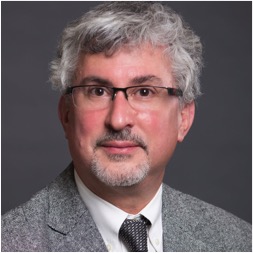
Franklin Solomon
Solomon Law Firm
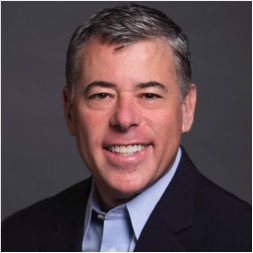
Brett Newman
Newman Settlement Services Group
[/two-fifths-first] [three-fifths]
Tort Settlement Lien Resolution:
Beyond Traditional Medicare and Medicaid Issues to ERISA, FEHBA, Medicare Advantage, VA, Tricare and Medicare Set-Asides.
Take this highly practical course with two deeply experienced practitioners who share insights on issues that impact the cases on your desk today. Learn about the newest case law, agency positions and litigation tactics affecting health and disability plan reimbursement claims, including how to protect your clients and your practice in this rapidly developing area.
Our speakers will discuss:
Medicare Advantage Plans
Federal Employees Health Benefits Act (FEHBA) Plans
Employee Retirement Income Security Act (ERISA) Claims
Medicare set-asides
TRICARE
Veterans Administration Claims
Speaker Bios
Franklin P. Solomon | Solomon Law Firm
A graduate of Rutgers University School of Law at Camden, Franklin Solomon is based in Cherry Hill, NJ, with a practice focused on evaluation, litigation and resolution of healthcare “liens” and reimbursement claims. Franklin represents personal injury victims and their attorneys in defending against claims by health plans and government benefits programs seeking payment out of tort recoveries.
Among his significant cases in the field, he argued before the New Jersey Supreme Court in Perreira v. Rediger, 169 N.J. 399 (2001), obtaining a decision which prohibited health insurers’ reimbursement claims against their insureds’ tort recoveries. He was plaintiffs’ counsel in Levine v. United Healthcare, 402 F.3d 156 (3d Cir. 2005), a federal class action challenging reimbursement claims of ERISA-governed health plans. He was also appellate counsel in Wurtz v. The Rawlings Company, 761 F.3d (2d Cir. 2014), a class action challenging New York insurers’ reimbursement claims against their insureds, and was plaintiffs’ counsel in Taransky v. Sebelius, 760 F.3d 307 (3d Cir. 2014), a class action challenging Medicare’s claims for reimbursement out of tort recoveries. More recently Mr. Solomon was appellate counsel in Arnone v. Aetna, 860 F.3d 97 (2d Cir. 2017), a decision which subjected ERISA plan disability insurers to state anti-subrogation law.
Prior to opening his own firm, Franklin’s practice included 20 years of litigating mass tort and individual personal injury claims on behalf of plaintiffs.
Brett Newman | Newman Settlement Services Group
Recognizing the ever-growing nature of lien resolution, Medicare Set-asides, and Structured Settlements, and the ever-increasing associated liability, Brett Newman established The Newman Settlement Services Group (TNSSG). TNSSG was established with the mutual objective to provide assistance to attorneys and claimants of personal injury lawsuits as well as mass tort claimants in the protection of their proceeds and government benefits.
Mr. Newman is known nationally by attorneys for his expertise on claims avoidance and reduction. He graduated with a degree in economics from Syracuse University in 1989. Subsequent to earning his degree, Mr. Newman consulted with clients in both the business and financial sectors. Mr. Newman is active in his community, and he takes particular pride in the role he plays in helping claimants and attorneys to expand their knowledge in regard to protection of government benefits and annuitization of settlements.
[/three-fifths]
-
Complex Post-Settlement Liens | CLE Course | Recorded July 26, 2018

[two-fifths-first]
Two ways to access this session.

Get it direct from HB for just $197 for the video — audio synced with slides.

Or, it’s included in your West LegalEdcenter (Thomson Reuters) subscription.
____________________
SpeakersFranklin Solomon
Solomon Law FirmBrett Newman
Lien Resolution Group
[/two-fifths-first] [three-fifths]
Complex Post-Settlement Liens:
Beyond Traditional Medicare and Medicaid Issues
Take this highly practical course with two deeply experienced practitioners who share insights on issues that impact the cases on your desk today.
Learn about the newest case law, agency positions and litigation tactics affecting health and disability plan reimbursement claims, including how to protect your clients and your practice in this rapidly developing area.
Our speakers discuss:
Medicare Advantage Plans
Federal Employees Health Benefits Act (FEHBA) Plans
Employee Retirement Income Security Act (ERISA) Claims
Medicare set-asides
TRICARE
Veterans Administration Claims
Speaker Bios
Franklin P. Solomon | Solomon Law Firm
Franklin Solomon has a nationwide practice focused on evaluation, litigation and resolution of healthcare lien/reimbursement claims. He represents personal injury victims and their attorneys in defending against claims by health plans and government benefits programs seeking payment out of tort recoveries. Most recently, he was plaintiffs’ counsel in two federal appellate court cases decided last summer: Wurtz v. The Rawlings Company, ___ F.3d ___, (2d Cir. 2014), a class action challenging New York insurers’ reimbursement claims against their insureds, and Taransky v. Sec. U.S. Dept. of Health & Human Svcs., ___ F.3d ___ (3d Cir. 2014), a class action challenging Medicare’s claims for reimbursement out of New Jersey tort recoveries.
Brett Newman | The Lien Resolution Group
Brett Newman is known nationally by plaintiff attorneys for his expertise on claims avoidance and reduction. Recognizing the ever-growing nature of lien resolution and the ever-increasing associated liability, Brett established The Lien Resolution Group and The Newman Structured Settlement Group to assist both individual claimants of personal injury lawsuits and mass tort claimants in the protection of their proceeds and government benefits.
[/three-fifths]
-
Right to Try Act: Commentary Roundup

A Life Saver, Political Grandstand, or Harmful Scam?
Depends on Who You Ask. And When.
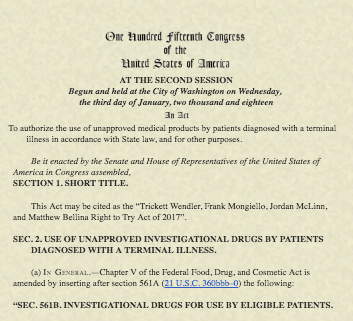
It’s been two months since President Donald J. Trump signed into law the Right to Try Act which allows terminally ill patients access to experimental drugs not yet approved by the FDA. Like many things in America in 2018, opinions on the efficacy of this new law vary along party or ideological lines. Will it give hope and precious life-extending solutions for patients fighting terminal disease? Or is it a money-driven scheme intended to enrich corporations and the super rich? Signed into law on May 24, 2018, is it something that can be implemented effectively? Here are a few quotes that explain the controversy.
Additional commentary or insights welcome.
Send yours to Editor@LitigationConferences.com.
“Timely access to promising treatments in … devastating circumstances.”
“This new law amends the Federal Food, Drug, and Cosmetic Act to establish a new pathway aimed at increasing access to unapproved, investigational treatments for patients diagnosed with life-threatening diseases or conditions who have exhausted approved treatment options and who are unable to participate in a clinical trial. Our implementation of the Right to Try Act will build on our long-standing efforts to help patients and families who are facing life-threatening diseases or conditions, in a way that seeks to protect their autonomy, their safety, and the safety of others following in their paths.”
“The decisions we reach related to products that can serve as an effective treatment for a terminal illness, or that can arrest a devastating and debilitating condition, are among the most important and carefully considered judgments that we make. We recognize the important balance between making sure patients have the assurances Congress intends, while enabling timely access to promising treatments in these devastating circumstances. And we’ll implement this new law consistent with these longstanding values.”
FDA Commissioner Scott Gottlieb
“GOP senator reveals the truth: Right-to-try bill was a scam tailored to harm public health”
“Anyone with a smidgen of knowledge about healthcare understood that the right-to-try legislation signed by President Trump on Wednesday was a scam, perpetrated by the Koch brothers and their henchmen.”
“Masquerading as a “compassionate” measure aimed at providing victims of terminal diseases with a last bit of hope that an experimental treatment might save them, it really was aimed at undermining the authority of the Food and Drug Administration to make sure our drugs are safe and effective.”
Read the full article in the Los Angeles Times.
“We remain skeptical about whether right-to-try statutes actually help anyone …
… as opposed to being political grandstanding. That said, from the perspective of attorneys representing pharmaceutical companies, this bill is about as good as it could be, and – to the extent that it extends preemption to the compassionate use program – it even marginally improves current law.”
Read the full commentary written by James M. Beck of Reed Smith on the Drug & Device Law Blog.
Note: Beck’s commentary was written in March 2018.
“Very little change for most patients …”
“Despite these state gains and the policy’s growing popularity among states, ethical questions remain about the tangible impact of a federal right to try law on Americans with terminal illnesses. Most notably, a growing body of evidence from policy analysts argues that the legislation would unfortunately accomplish very little change for most patients, and it could actually make it harder to get new drugs approved in the future.”
Written for CBS.com by Morten Wendelbo, a lecturer at the Bush School of Government and Public Service and a research fellow at the Scowcroft Institute of International Affairs at Texas A&M University, and Timothy Callaghan, assistant professor at Texas A&M University Health Science Center. Read the complete commentary.
Additional commentary or insights welcome.
Send yours to Editor@LitigationConferences.com.
This controversial topic will be on the agenda at the Drug & Device Defense Forum in New York Oct. 15, 2018.
