Blog

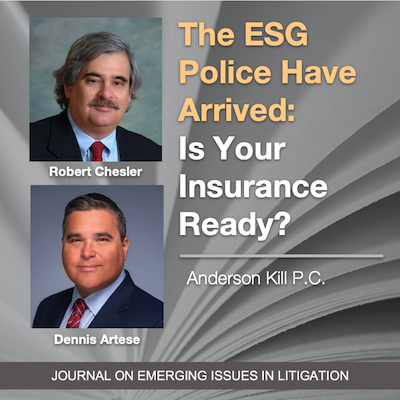
  • The Environmental, Social, and Governance Police Have Arrived: Is Your Insurance Ready? by Robert D. Chesler and Dennis J. Artese

    The Environmental, Social, and Governance Police Have Arrived: Is Your Insurance Ready? by Robert D. Chesler and Dennis J. Artese

    The Authors

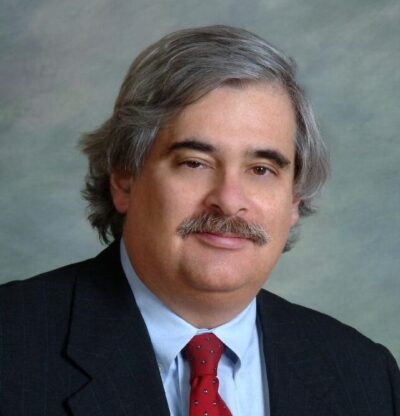
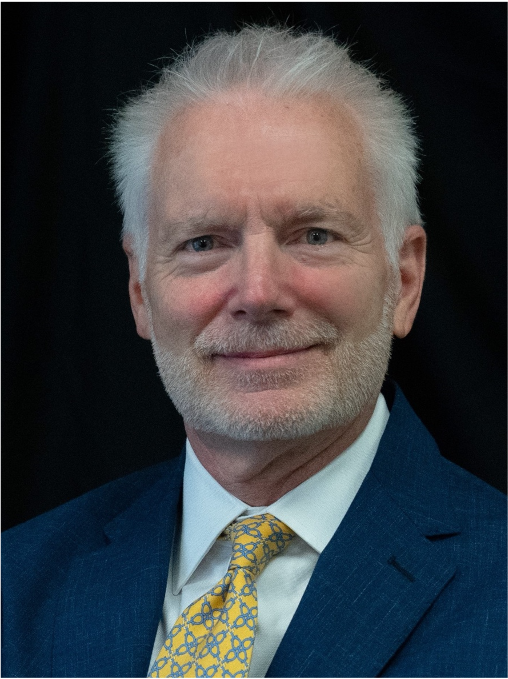
    Robert Chesler

    Robert CheslerAnderson Kill

    Robert D. Chesler (rchesler@andersonkill.com) is a shareholder in Anderson Kill’s New Jersey office and is a member of the firm’s Cyber Insurance Recovery Group. He represents policyholders in a broad variety of coverage claims against their insurers and advises companies with respect to their insurance programs.

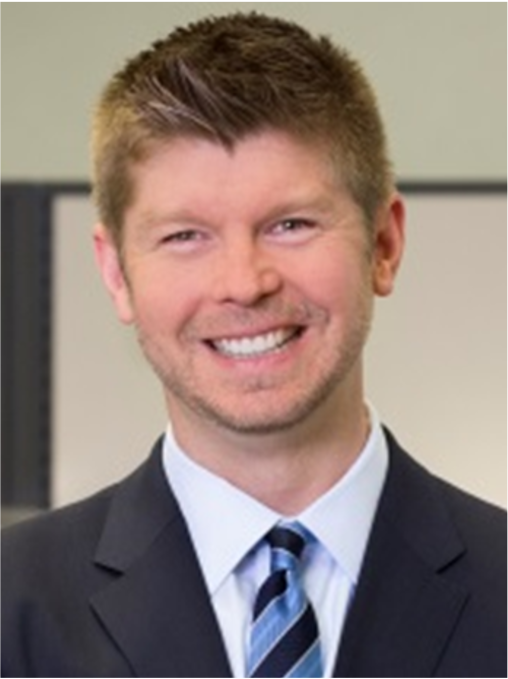
    Dennis Artese

    Dennis ArteseAnderson Kill

    Dennis J. Artese is a shareholder in Anderson Kill’s New York office and chairs the firm’s Climate Change and Disaster Recovery Group. Both are members of the Editorial Advisory Board of the Journal.

    The Journal on Emerging Issues in Litigation

    Emerging Litigation Podcast

    Emerging Litigation PodcastProduced by HB Litigation and Law Street Media

    Interviews with leading attorneys and other subject matter experts on new twists in the law and how the law is responding to new twists in the world.

    The ESG Police Have Arrived:
    Is Your Insurance Ready?

    “ESG has become a major initiative for corporate America. In particular, the environmental prong of ESG calls for companies to institute sustainability goals and to invest in environmentally friendly companies. This emphasis has both economic and popular support. Environmental sustainability will make companies better able to compete and make their businesses less risky.”

    Abstract: The environmental, social, and governance movement is a positive one, but like many well-intentioned efforts there is room for abuse and risk. As corporations endeavor to earn accolades and good will for “doing the right thing,” they must also be certain they truly are. In this article the authors discuss increased government scrutiny, the attendant risks of implementing and reporting on ESG initiatives, insurance coverage implications for directors and officers, the pollution and other exclusions, the potential civil fines and penalties, and what companies can expect in the era of ESG.

    Download the article now!

    Explore More from Anderson Kill!

    Podcast 1 of 2 series: Insurance Coverage with Dr. Jaana Pietari and Jim Fenstermacher and Litigation with Bob Chesler.

    Podcast 2 of 2 series: PFAS Insurance Coverage with Robert D. Chesler of Anderson Kill.

    Sister article to podcast 1 of 2 series: Remediating, Insuring, and Litigating PFAS Claims. Authors: Dr. Jaana Pietari, PhD, MBA, PE, Jim Fenstermacher, PE, Dr. Michael Bock, PhD, MS, Robert D. Chesler and Nicholas M. Insua, Sheila Mulrennan, Robin Kelliher, Jason R. Waters

    Podcast: Autonomous Vehicles: The New Technology Driving the Litigation Conversation Podcast with Cort Malone, John Leonard, Joshua Zelen

    Podcast: Violations of Biometric Privacy Laws: Policyholders’ Victories and the Implications Going Forward with John Leonard and Cort Malone

    Journal on Emerging Issues, Editorial Board of Advisors: Dennis Artese, Robert D. Chesler

    Asymmetrical Combat: Bad Faith Liability in Insurance Recovery Cases. By William Passannante

    Climate Change, ESG, and D&O Insurance: Collision or Cooperation? Authors: Robert Chesler, Dennis J. Artese, and Joseph Villa

    Litigation After Biometric Privacy Law Violations: Policyholder Victories and Their Implications. Authors: Cort T. Malone, Abigail Damsky

    Protecting Policyholders as AI Is Developed for Insurance Claims Handling – Ensuring “Decency and Humanity” in the Digital Age. Authors: Marshall Gilinsky, Madison Marlow

    Police–The Environmental, Social, and Governance Police Have Arrived: Is your Insurance Ready. Authors: Dennis Artese, Bob Chesler

    How Insurance Companies Defraud Their Policyholders, and What Courts and Legislators Should Do About It. Authors: Robert Chesler, Amy Weiss, and Jade Sobh

    The Promise and Peril of Quantum Computing and Its Implications for Cyber Insurance. By Cameron R. Argetsinger

    The Use and Abuse of the Pollution Exclusion. Authors: Dennis Artese, Jamie O’Neil, Robert Chesler

    Property Insurance Coverage for Emerging Risk: Underground Climate Change. Authors: Dennis J. Artese, Ethan W. Middlebrooks, Thomas Dupont

    Autonomous Vehicles: The New Technology Driving the Litigation Conversation. Authors: Cort Malone, John Leonard, and Joshua Zelen

  • Announcing the Complex Litigation Ethics Conference

    Announcing the Complex Litigation Ethics Conference

    Joshua P. Davis

    Joshua P. DavisProfessor & Practicing Attorney

    A leading academic and practitioner, Joshua P. Davis (davisj@usfca.edu) is a nationally recognized expert on legal ethics and class actions, as well as on artificial intelligence in the law, antitrust, civil procedure, free speech, and jurisprudence. He has published more than 30 scholarly articles and book chapters on these subjects and is currently writing a book on AI titled Unnatural Law, which will be published by Cambridge University Press. He is Research Professor of Law at the University of California Hastings College of Law, and a Shareholder of the Berger Montague PC law firm and Manager of its new San Francisco Bay Area Office. Before taking these posts, for more than 20 years Davis was a tenured Professor of Law at University of San Francisco Law School, where he also served as the Director of the Center for Law and Ethics.

    Davis is also a member of the Editorial Board of Advisors for the Journal on Emerging Issues in Litigation, published by Fastcase Full Court Press. Tom Hagy, Editor in Chief.

    Scott Dodson

    Scott DodsonCenter for Litigation and Courts

    An expert in civil procedure and federal courts, Professor Scott Dodson is the James Edgar Hervey Chair in Litigation and Geoffrey C. Hazard Jr. Distinguished Professor of Law at UC Hastings Law. He has published seven book titles, including The Legacy of Ruth Bader Ginsburg (Cambridge 2015) and New Pleading in the Twenty-First Century (Oxford 2013). He has written around 100 shorter works appearing in such journals as Stanford Law Review, New York University Law Review, Michigan Law Review, University of Pennsylvania Law Review, California Law Review, Virginia Law Review, Duke Law Journal, Northwestern University Law Review, Georgetown Law Journal, American Journal of Comparative Law, American Journal of International Law, and Law & Society Review. His scholarly writings have been cited in more than 30 court opinions and have been downloaded more than 45,000 times. For 2010-14, he was listed as the 9th (tied) most-cited civil-procedure scholar. Professor Dodson is a frequent commentator in the news, including appearances on the 10:00 Nightly News, NPR Radio, and CNN Radio; quotes in various print media; and blogging stints at SCOTUSblog, SCOCAblog, Civil Procedure & Federal Courts Blog, and PrawfsBlawg.

    You can also listen to Josh on the Emerging Litigation Podcast!

    New Litigation Ethics Conference to Feature Sitting Judges, Legal Scholars, Prominent Attorneys

    For Immediate Release

    SAN FRANCISCO – Aug. 25, 2022 – Luminaries and thought leaders in the complex litigation arena will gather in San Francisco on Saturday, Oct. 22, 2022, to discuss insights and practices on an issue of critical significance to the nation’s justice system: ethical conduct among litigants and litigators.

    With a projected in-person and remote audience of 100 plus, this important continuing legal education program will be held at the UC Hastings College of Law in association with the school’s Center for Litigation in Courts. Professors Joshua P. Davis and Scott Dodson have assembled a faculty of leading jurists, litigators, and other subject matter experts.

    Complex Litigation Ethics Conference
    Oct. 22, 2022
    UC Hastings College of Law
    Learn more

    “Data suggest that, depending on the year, as much as half of all cases filed in federal court are part of multidistrict litigation, or MDL, proceedings or involve proposed class actions,” said Professor Davis, who is both a research professor at UC Davis and managing partner of the San Francisco offices of Berger Montague, a prominent class action and complex litigation law firm.

    According to the U.S. Judicial Panel on Multidistrict Litigation there were 186 MDL dockets pending, which brought together 770,623 actions, with 426,495 pending as of July 2022. At the same time, thousands of new class actions are filed each year (some put the number as high as 10,000) in state and federal courts representing millions of named and potential class members. Cases and claim types run the gamut, such as consumer product liability, antitrust, toxic substances, drug and device liability, data breaches, securities, employment, environmental contamination, and both injury and damage claims arising from wildfires and floods, to name a few.

    “Despite these figures, insufficient scholarly attention has been paid to the ways in which ethical rules, which are typically designed for traditional litigation, should be adapted and applied to MDLs and class actions,” said Professor Davis. “The Complex Litigation Ethics Conference will address these important and timely issues.”

    Topics include adapting general legal ethics rules to complex matters; ethics in litigation funding; diversity, equity, and inclusivity in complex litigation; and communications with “absent class members.”

    U.S. Judge Jon S. Tigar of the Northern District of California will be among the speakers. Judge Tigar has or continues to preside over headline-grabbing litigation brought against Apple Inc., Meta Platforms Inc. (Facebook), Twitter Inc., Uber Technologies Inc., Wells Fargo & Company, Subway restaurants, Sanofi S.A., and others.

    Also on the faculty are:

    • Lynn A. Baker, University of Texas School of Law
    • Jennifer Bennett, Gupta Wessler PLLC
    • Eric Cramer, Berger Montague PC
    • Lauren Godshall, Tulane Law School
    • Alexandra D. Lahav, Cornell Law School
    • Brent Landau, Hausfeld
    • Roger Michalski, University of Oklahoma College of Law
    • Melissa Mortazavi, University of Oklahoma College of Law
    • Sarah Ray, Latham & Watkins LLP
    • Maya Steinitz, University of Iowa, College of Law
    • Brad Wendel, Cornell Law School

    Three annual Awards for Excellence in Ethics in Complex Litigation will also be announced during the event, one to a plaintiffs’ attorney or law firm, one to a defense attorney or law firm, and one to a judge, scholar, third-party neutral, party to litigation, government official, other lawyer or law firm, non-profit organization, and other participant in or commentator on complex litigation. The winners will have demonstrated excellence in promoting ethics in class actions or other complex litigation (e.g., MDLs).

    Huntington National BankThe event is being co-sponsored by Huntington National Bank, a nationwide provider of settlement fund and other financial services for law firms.

    Members of the legal and business press are invited to request passes to attend the event in San Francisco or via webstream, and to receive program materials. Pre-program interviews with the conference leaders and faculty should be addressed to Tom Hagy, +1 (484) 844-0428, or Editor@LitigationConferences.com.

    DOWNLOAD THE RELEASE

  • Litigating a Claim to Recover Liquidated Damages by Laura Fraher

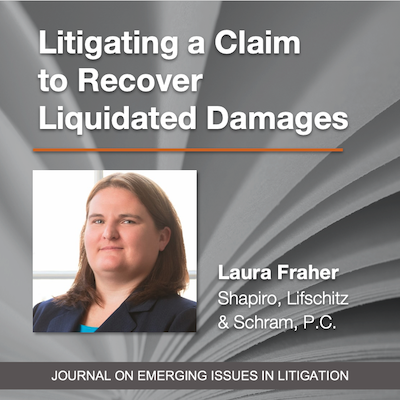
    Litigating a Claim to Recover Liquidated Damages by Laura Fraher

    The Author

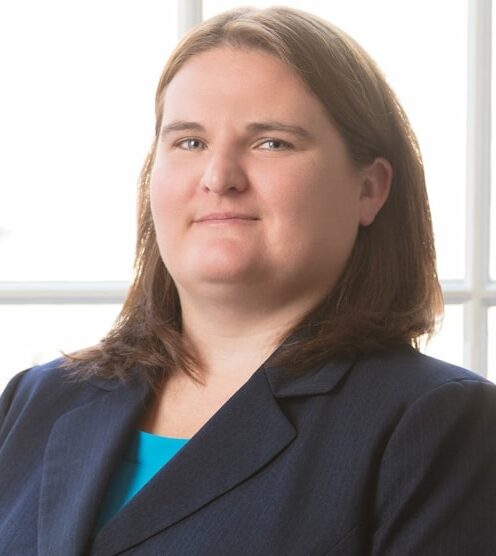
    Laura C. Fraher

    Laura C. FraherShapiro, Lifschitz and Schram

    Laura C. Fraher (fraher@slslaw.com) is a senior attorney in the trial and construction group at Shapiro, Lifschitz & Schram in Washington, D.C. She has extensive experience in civil litigation at both the trial court and appellate level. Competitive by nature, Laura played rugby for nearly 20 years. She puts this competitive spirit to work through her passion for the law and her clients.

    Education: St. John’s University School of Law, J.D., 2001, magna cum laude; SUNY College at Geneseo, B.A., Political Science, 1998.

    The Journal on Emerging Issues in Litigation

    Emerging Litigation Podcast

    Emerging Litigation PodcastProduced by HB Litigation and Law Street Media

    Interviews with leading attorneys and other subject matter experts on new twists in the law and how the law is responding to new twists in the world.

    Litigating a Claim to Recover Liquidated Damages:

    Enforceability Depends on Evidence of Good Faith Expectations

    “The tests and standards that courts apply to evaluate whether a particular liquidated damage provision is enforceable vary from state to state and it is imperative that litigants research and fully appreciate the particular standards that will be applied by the court in which they are litigating.”

    Abstract: The liquidated damages provision in a contract is a useful mechanism for mitigating risk in the event one of the parties to an agreement breaches the contract, costing the aggrieved party sometimes significant difficulty and substantial expense. Unfortunately, these provisions are often challenged, allowing the party responsible for the beach to exacerbate the burdens on the other party. In this article, the author discusses concepts of enforceability, proof, and avoiding litigation over liquidated damage provisions.

    A liquidated damage provision is an advance agreement of the damages that a party will be entitled to recover in the event of a future breach by the other party to a contract. These provisions can be an important tool for risk allocation and mitigation between parties when entering into a contract; both because the provision allows the parties to predict with certainty the financial ramifications of a future breach and because the liquidated damage provision should protect the aggrieved party against the difficulty and expense associated with proving actual damages in the event of a breach.

    In reality, however, when a breach occurs, liquidated damage provisions are frequently challenged and become the subject of costly litigation.  At the outset, it should be noted that the enforceability of a liquidated damage provision is generally considered an issue of law to be determined by the court, not an issue of fact to be presented to a fact finder. Thus, the key threshold issue of enforceability is likely to be determined on a pretrial motion rather than at trial and you should be prepared with both evidence and argument in order to sustain your claim.

    If you are faced with a challenge to dismiss your claim to recover liquidated damages based on unenforceability, it is important to remember that the law is in your favor.

    Liquidated damage provisions are viewed favorably by courts across the country and will generally be enforced so long as a court is satisfied that a liquidated damage provision is a stipulated agreement based on anticipated actual damages and not a penalty. A liquidated damages provision will be considered a penalty, and therefore unenforceable, if the court determines that the provision is designed to induce or secure performance by one party; conversely, a liquidated damage provision will not be viewed as a penalty, and will therefore be enforced if the court is satisfied that the provision is designed not to punish, but to provide a sum certain as compensation for a breach.

    Download the article now!

  • Epiq Class Action Settlement Efficiency

    Epiq Class Action Settlement Efficiency

    EpiqEpiq presents a CLE-eligible webinar
    Wait Wait … Don’t Settle!
    Essential elements of effective class action settlements.

    When it comes to complex class action litigation, once the hard work is done – litigation and settlement – more hard work begins – administering it.  But is the deal really ready?

    After years of arduous proceedings, discovery, motions, appeals, hearings, negotiations, and more, the scope and structure of your settlement has been drafted. Everyone is in agreement. The hard work of the courts, the attorneys, the legal teams, and the litigants is complete. Now it’s time to administer the settlement. Send out notices. Cut the checks. Get people paid. Boom! Sit back and relax. Get a claims administrator to take it from there.
    But wait … you find out that the terms of the agreement, the promises made, the budget established, and the deadlines calendared are not only inefficient, they are completely unworkable. Now the settlement is in jeopardy. The clients are frustrated. The court is frustrated. And you have a headache.
    That is a situation you, as a class action attorney, never want to find yourself in. The best way to avoid this quagmire is for attorneys to work with a professional and experienced claims administrator before you agree on settlement terms, someone who has been to this rodeo many, many times before. If you want smooth execution of your claims program, they must be on your team as you pull the pieces of the settlement together, not afterwards.
    Join us for a complimentary CLE webinar on Thursday, April 8, 2021, for a practical discussion based on Seven Elements of Effectively Settling Class Actions led by a class action litigator turned class action settlement expert, who will moderate a discussion with two highly regarded class action attorneys who have been involved in a number of high-profile complex cases.

    On Demand | Recorded April 2021

    On Demand Registration

    Included with registration

    • 1+ CLE credits (subject to bar rules). CLE codes are embedded in the video.
    • For questions write to CLE@LitigationConferences.com.
    • 75 minutes of insights from experienced professionals.
    • The complete PowerPoint presentation.
    • Continued access to the complete recording for later use.
    • Answers to your questions via email to the presenters, or write to HB and we will be sure to contact the speakers.

    KEY POINTS

    These Seven Elements of Effectively Settling Class Actions will serve as the framework for our practical presentation.
    • Consult Early, Before Settlement
    • Evaluate Noticing Options
    • More Outreach = More Claims
    • Understand Your Data
    • Use The Right Technology
    • Consider Appropriate Scope of Services
    • Compare Apples to Apples on Estimates

    On Demand Registration

    Meet the Panel

    Michael O’Connor
    Vice President
    Class Action & Mass Tort Solutions
    Epiq

    Over the past 10 years Michael O’Connor has established himself as a national expert on complex settlement administration matters and oversees client relationship development and strategic client communications. He works closely with our class action and mass tort team of project managers to ensure consistent, superior client service standards.

    Based in Washington, DC, Mr. O’Connor also works extensively on Epiq’s contracts with the United States Federal Government, including the Department of Justice, Federal Trade Commission, Securities and Exchange Commission and Consumer Financial Protection Bureau.  Currently, Mr. O’Connor also oversees Epiq’s administration of: (a) Peterson v. Islamic Republic of Iran, Case No. 10-CIV-4518 (S.D.N.Y., Hon. L. Preska), a $1.9 billion disbursement to victims of the 1983 Marine barracks bombing in Beirut; and (b) In re Payment Card Interchange Fee and Merchant Discount Antitrust Litigation, Case No. 1:05-MD-1720 (MKB) (JO) (E.D.N.Y.), a nearly $6 billion settlement brought by all U.S. merchants against Visa and Mastercard.

    A highly esteemed thought leader, O’Connor is a frequent national speaker on settlement administration best practices and has worked on and overseen many of Epiq’s largest and most complex engagements. He holds a Juris Doctor from the University of Oregon Law School and a Bachelor of Arts in political science from Yale University.  Before joining Epiq in 2010, Mr. O’Connor was a trial lawyer for thirteen years, most recently as an owner at Garvey Schubert Barer (now Foster Garvey).

    More about Michael

    Alexandra “Xan” Bernay
    Partner
    Robbins Geller Rudman & Dowd LLP

    Alexandra Bernay is a partner in Robbins Geller Rudman & Dowd LLP’s San Diego office, where she specializes in antitrust and unfair competition class-action litigation. She has also worked on some of the Firm’s largest securities fraud class actions, including the Enron litigation, which recovered an unprecedented $7.2 billion for investors.

    Xan currently serves as co-lead counsel in In re Payment Card Interchange Fee and Merchant Discount Antitrust Litigation, in which a settlement of $5.5 billion was approved in the Eastern District of New York. This case was brought on behalf of millions of U.S. merchants against Visa and MasterCard and various card-issuing banks, challenging the way these companies set and collect tens of billions of dollars annually in merchant fees. The settlement is believed to be the largest antitrust class action settlement of all time. Additionally, Xan is involved in In re Remicade Antitrust Litigation pending in the Eastern District of Pennsylvania – a large case involving anticompetitive conduct in the biosimilars market, where the Firm is sole lead counsel for the end-payor plaintiffs. She is also part of the litigation team in In re Dealer Mgmt. Sys. Antitrust Litigation (N.D. Ill.), which involves anticompetitive conduct related to dealer management systems on behalf of auto dealerships across the country. Another representative case is Persian Gulf Inc. v. BP West Coast Prods. LLC (S.D. Cal.), a massive case against the largest gas refiners in the world brought by gasoline station owners who allege they were overcharged for gasoline in California as a result of anticompetitive conduct. Xan has also had experience in large consumer class actions, including In re Checking Account Overdraft Litigation, which case was brought on behalf of bank customers who were overcharged for debit card transactions and resulted in more than $500 million in settlements with major banks that manipulated customers’ debit transactions to maximize overdraft fees. She also helped try to verdict a case against one of the world’s largest companies who was sued on behalf of consumers. Xan speaks on a variety of issues related to litigation, including recent changes to Rule 23 of the Federal Rules of Civil Procedure. In December 2018, with another lawyer, she prevailed for her client in a multi-day probate court trial as part of her pro bono work with the San Diego Volunteer Lawyers’ Program. Xan has been named a Leading Plaintiff Financial Lawyer by Lawdragon. She earned a Bachelor of Arts degree in Journalism from Humboldt State University, where she received the Society of Professional Journalists Outstanding Graduate Award. She then graduated magna cum laude with a Juris Doctor degree from the University of San Diego School of Law, where she was Comments Editor for the San Diego Law Review, and an Order of the Coif member.

    More about Xan

    On Demand Registration

    Keith Dubanevich
    Attorney
    Stoll Berne

    Keith is an accomplished trial, appellate, and healthcare lawyer with over 35 years of experience in more than a dozen different jurisdictions around the country. With a focus on complex dispute resolution, with particular emphasis in the healthcare industry, Keith is adept at handling multi-state and international antitrust cases, consumer litigation, and securities disputes. In healthcare, he has handled peer review disputes, partnership and incorporation matters, and billing investigations.

    Keith’s clients value his keen instincts in court and his ability to delve into complex legal issues while never losing sight of the overall strategy of a case. A judge commented that during a recent trial Keith was “remarkably thorough, … prepared, respectful, and efficient.” Keith has also received high praise from his peers including this comment about a recent arbitration proceeding: “I was so impressed with your professionalism and effectiveness. Your whole presentation was a model of what an advocate should be.”

    During his time at the Oregon Department of Justice as Associate Attorney General and Chief of Staff, Keith led the creation of a civil rights unit, managed securities litigation including multiple cases against financial services companies, and supervised antitrust investigations and prosecutions. He was also involved with the adoption of legislation that expanded the Unlawful Trade Practices Act to include financial services companies.

    More about Keith

  • Lien Resolution: Government & Private Plans Get Aggressive (Against Attorneys)

    Lien Resolution: Government & Private Plans Get Aggressive (Against Attorneys)

    On-Demand Webinar

    Includes

    • Nearly 75 minutes of insights from experienced professionals.
    • CLE credit: 1+ (subject to bar rules).
    • For CLE questions: CLE@LitigationConference.com
    • The complete Power Point presentation.
    • Continued access to the complete recording for later use.
    • Answers to your questions via email to the presenters or write to HB and we will be sure to contact the speakers.

    KEY POINTS

    • What can you do to settle personal injury suits cleanly and avoid costly litigation and penalties?
    • What recent cases can inform you about protecting your settlements and, as attorneys, yourselves, from post-settlement federal lawsuits?
    • How can your firm set itself up to meet government expectations?
    • What role might experts play in navigating these pitfalls?

    Statutes Discussed

    Medicare Advantage (42 USC § 1395w-22)

    Federal Medical Care Recovery Act (FMCRA) (42 USC § 2651)

    Armed Forces Act (10 USC §1095)

    Veterans’ Benefits (38 USC §1729)

    Third-Party Collection Rules (32 CFR 537.24; 38 CFR 17.101, etc.)

    Set-Asides under the Medicare Secondary Payer Act (42 USC § 1395y(b)(2)]

    On Demand Registration

    Lien Resolution
    Government & Private Plans Get Aggressive (Against Attorneys!)

    On Demand | Recorded September 2020

    It is increasingly common these days. Personal injury attorneys settle a case, only to find themselves sued by a U.S. Attorney for failing to reimburse Medicare for conditional payments as required by the Medicare Secondary Payer Act. In some cases the attorney may be required to pay fines in addition to the reimbursements and interest, a costly proposition. Are you up to speed on issues surrounding Medicare Advantage, TRICARE, veterans’ claims, and Medicare set-asides? Join nationally recognized healthcare lien and resolution expert Franklin P. Solomon and go-to lien resolution provider Brett Newman as they offer a practical, in-depth CLE presentation.

    Franklin P. Solomon, Esq.
    Attorney & Founder, Solomon Law Firm 

    A graduate of Rutgers University School of Law at Camden, Franklin Solomon is based in Cherry Hill, NJ, with a practice focused on evaluation, litigation and resolution of healthcare “liens” and reimbursement claims. Mr. Solomon represents personal injury victims and their attorneys in defending against claims by health plans and government benefits programs seeking payment out of tort recoveries. Among his significant cases in the field, Mr. Solomon argued before the New Jersey Supreme Court in Perreira v. Rediger, 169 N.J. 399 (2001), obtaining a decision which prohibited health insurers’ reimbursement claims against their insureds’ tort recoveries. He was plaintiffs’ counsel in Levine v. United Healthcare, 402 F.3d 156 (3d Cir. 2005), a federal class action challenging reimbursement claims of ERISA-governed health plans. He was also appellate counsel in Wurtz v. The Rawlings Company, 761 F.3d (2d Cir. 2014), a class action challenging New York insurers’ reimbursement claims against their insureds, and was plaintiffs’ counsel in Taransky v. Sebelius, 760 F.3d 307 (3d Cir. 2014), a class action challenging Medicare’s claims for reimbursement out of tort recoveries. More recently Mr. Solomon was appellate counsel in Arnone v. Aetna, 860 F.3d 97 (2d Cir. 2017), a decision which subjected ERISA plan disability insurers to state anti-subrogation law. Prior to opening his own firm, Mr. Solomon’s practice included 20 years of litigating mass tort and individual personal injury claims on behalf of plaintiffs.

    Brett Newman
    Founder, Newman Settlement Services Group

    Brett Newman is known nationally by plaintiff attorneys for his expertise on claims avoidance and reduction. Recognizing the ever-growing nature of lien resolution and the ever-increasing associated liability, Brett established Newman Settlement Services Group to assist both individual claimants of personal injury lawsuits and mass tort claimants in the protection of their proceeds and government benefits. 

  • Telepsychiatry: Mitigating the Risks

    Telepsychiatry: Mitigating the Risks

    REGISTER

    Registration Includes

    • Nearly 90 minutes of insights from experienced professionals.
    • CLE credit: 1+ (subject to bar rules).
    • For CLE questions: CLE@LitigationConference.com
    • The complete Power Point presentation.
    • Continued access to the complete recording for later use.
    • Answers to your questions via email to the presenters or write to HB and we will be sure to contact the speakers.

    Understand the risks associated with telepsychiatry and how to manage them. 

    Telemedicine has emerged as an important solution for healthcare in general and psychiatric medicine specifically during the current global pandemic. Remote access for sub-practices including addiction counseling have been commonly used. Our panel of psychiatric professionals who have served as expert witnesses and attorneys who counsel and represent physicians have prepared a 90-minute session to share insights with attorneys, physicians, healthcare providers, risk professionals, and more.

    Agenda

    • Examining procedures and best practices that exist for ensuring confidentiality in a telemedicine practice
    • How do you draft a telepsychiatric consent form?
    • What is the emerging standard of care for telemedicine?
    • Will the standard of care for telemedicine become a national standard? (Should it?)
    • Review the case law addressing telemedicine or telepsychiatry
    • How do the HIPAA regulations and HITECH privacy laws impact telemedicine?
    • How have the HIPAA regulations and HITECH privacy laws been relaxed during the pandemic?
    • Will the relaxed HIPAA and HITECH regulations impacting telemedicine continue past the pandemic?
    • Which technical platforms are preferred? Which ones to avoid?

    Panelists

    • Mark Levy, M.D., Medical Director at fpamed
    • David Kan, M.D., UCSF Psychiatry Department and the California Society for Substance Abuse Medicine
    • Ayesha Ashai, M.D., associated with fpamed
    • Stephen M. Fatum, J.D., Partner, Barnes & Thornburg LLP
    • Angela W. Russell, J.D., Partner, Wilson Elser Moskowitz Edelman & Dicker LLP

    Meet our physician and attorney panelists.

    Mark Levy MD
    Medical Director
    fpamed

    Dr. Levy is a graduate of Columbia College (A.B. 1967) and the Columbia University College of Physicians and Surgeons (M.D. 1971) in New York. He is a Physician and Surgeon licensed since 1972 by the State of California and the State of Hawaii since 2004.

    He is certified in Adult Psychiatry (1981) and Forensic Psychiatry (1999, 2009) by the American Board of Psychiatry and Neurology. In the past he has served as a Qualified Medical Examiner (“QME”) for the State of California (active status 1993-96, currently “inactive”). He is also a Psychoanalyst and a graduate of the San Francisco Psychoanalytic Institute.

    He is Assistant Clinical Professor, Psychiatry, School of Medicine, University of California, San Francisco where has been on the faculty since 1977 and , among other teaching activities, he lectures in the Law and Psychiatry Fellowship. He is also on the Faculty of the San Francisco Psychoanalytic Institute and is the Founder and former Chairman and President of the San Francisco Foundation for Psychoanalysis, a community service outreach organization.

    In January 2006 Dr. Levy established Forensic Psychiatric Associates Medical Corporation (fpamed.com) of which he is the medical director. In addition to consulting on a broad range of civil (and criminal) matters in which there are behavioral questions to be addressed by a forensic psychiatric expert, fpamed as a group specializes in assessing psychological injury claims of populations of litigants in mass tort or multi-plaintiff litigation.

    Mark Levy founded fpamed in 2006.

    More about Dr. Levy here …

    David Kan MD
    UCSF Psychiatry Dept. &
    Calif. Society for Substance Abuse Medicine

    Dr. Kan graduated from Northwestern University Medical School. He finished his General Psychiatry Residency and Forensic Psychiatry Fellowship at the University of California, San Francisco (UCSF). He is Board-certified by the American Board of Psychiatry and Neurology in General and Forensic Psychiatry and he is Board-Certified by the American Board of Addiction Medicine in Addiction Medicine. He is a member of the faculty at the UCSF Department of Psychiatry.

    Dr. Kan enjoys teaching, in addition to his direct work with patients. He has won multiple awards for teaching and clinical care delivery. Dr. Kan teaches and supervises psychiatrists-in-training in his role as faculty member at UCSF. Throughout the year, he speaks at professional conferences on topics including treatment of addictive disorder.

    Dr. Kan offers forensic consulting services to courts and attorneys in civil, criminal, and administrative matters. He has testified in multiple states, counties and federal court as an expert witness. He is a member of the American Academy of Psychiatry and the Law.

    Dr. Kan is an active member of the California Society of Addiction Medicine (CSAM). CSAM is a physician organization dedicated to improving the treatment of substance use disorders. Dr. Kan has planned conferences and spoken to many physician and non-physician groups. Dr. Kan is the current President of CSAM. Dr. Kan is a Distinguished Fellow of the American Society of Addiction Medicine (D.F.A.S.A.M.).  Dr. Kan has testified numerous times before the California Assembly and Senate on addiction treatment. Dr. Kan has testified before Congress advocating for expanding access to addiction treatment.

    More about Dr. Kan here …

    Ayesha Ashai MD
    Associated with
    fpamed

    Dr. Ayesha Ashai received her BA in Psychology and Spanish from University of Michigan in Ann Arbor. She went on to attend medical school at Wright State University Boonshoft School of Medicine in Dayton, Ohio. She completed her adult psychiatry residency at University of Maryland and Sheppard Enoch Pratt Hospital in Baltimore, Maryland, where she later served as the executive chief resident. After, she completed her forensic psychiatry fellowship under the leadership of Dr. Charles Scott at University of California, Davis in Sacramento, California.

    She is certified by the American Board of Psychiatry and Neurology in Psychiatry with added qualifications in Forensic Psychiatry. She has years of experience in the diagnosis and treatment of a broad range of psychiatric disorders in various settings including civil and forensic hospitals, emergency rooms, outpatient clinics, and jails.  She has specialized experience in working with patients who are Muslim, those with an Indian or Pakistani background, as well as Hispanic patients. She is licensed to practice medicine in California, Ohio, Pennsylvania, Illinois and Texas.

    Currently, Dr. Ashai works as a telepsychiatrist in two outpatient mental health clinics in Ohio and Illinois. She also provides treatment for offenders incarcerated at the Winnebago County Jail and offenders with a serious mental illness that are released from incarceration as part of a therapeutic intervention program. In 2013, she was awarded the Dr. George U. Balis Award for Excellence in Medical Student Education for her work with medical students. She will soon be joining University of Illinois- Chicago as a volunteer clinical faculty member.

    Dr. Ashai has been an independent contractor with fpamed since 2020.

    More about Ayesha Ashai M.D. here …

    Stephen M. Fatum
    Partner
    Barnes & Thornburg LLP

    Stephen Fatum advises on healthcare industry-related matters for physicians, physician organizations and nonprofit entities. Stephen’s decade of in-house experience for large organizations helps him counsel clients about practical strategies to achieve their goals. His style of negotiation relies upon listening, understanding, respect, identifying common ground, appealing to collective self-interests, collaboration and creativity.

    Stephen has counseled senior management and members of the boards of directors of medical groups, associations, hospitals, and health systems regarding governance structures, bylaws, operating agreements, mergers and acquisitions, reimbursement, compensation plans, joint ventures and federal and state regulatory compliance. Notably, Stephen is the former general counsel of Advocate Medical Group, S.C., which at the time was a multispecialty medical group of 270 physicians practicing in the suburbs of Chicago. Before holding this position, he served as general counsel of the Lutheran General Medical Group, S.C. He also acted as assistant general counsel of Lutheran General HealthSystem when it combined with another health system to form Advocate Health Care.

    Having worked in-house as general counsel for healthcare organizations and volunteered for five years as the board chair of a large mental health agency, Stephen has worked closely with board chairs, CEOs, COOs, CFOs, CSOs, CMOs, and numerous other chief executives. He understands the business perspective and multidimensional challenges and financial pressures facing physicians and executives who lead health systems, medical groups, not for profit organizations and physician organizations.

    Read more about Stephen Fatum here …

    On Demand Registration
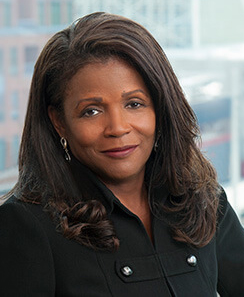
    Angela Russell Telepsychiatry Standards & Practices COVID 19

    Angela W. Russell
    Partner
    Wilson Elser Moskowitz Edelman & Dicker LLP

    Angela Russell is the regional managing partner of the Baltimore office and chair of the firm’s Diversity Committee. She has significant trial experience and has tried cases in the District of Columbia and across the state of Maryland. Her practice encompasses the defense of professional liability matters, including medical malpractice and legal malpractice actions in addition to claims against agents, brokers and other professionals. Angela regularly handles and supervises general casualty matters for insurers and self-insured entities on premises liability claims, security matters, hospitality cases and recreational defense claims. Angela is also frequently called on to handle toxic tort matters.

    Angela possesses an innate ability to connect with her clients, identify their needs and communicate effectively throughout the litigation cycle. Her rapport in the courtroom is equally impressive. An aggressive litigator, Angela is adept at tapping the persistence, preparation and training she gained early on in a variety of public speaking engagements and tackling two marathons. Angela worked at prominent defense firms in Minnesota and Washington, DC, prior to joining Wilson Elser.

    Professional Distinctions
    Angela is the former co-chairperson of the Civil Jury Instructions Committee for the Bar Association for the District of Columbia as well as a former adjunct professor at William Mitchell College of Law in St. Paul, MN.

    Read more about Angela Russell here …
  • Maximizing Insurance as Climate Change Intensifies

    Maximizing Insurance as Climate Change Intensifies

    HB presents an Anderson Kill webinar on-demand

    MAXIMIZING INSURANCE RECOVERY AS

    CLIMATE CHANGE INTENSIFIES

    As weather-induced disasters continue to intensify, maximizing insurance coverage after major storms, floods, wildfires, and other natural cataclysms is an essential survival skill for any business.

    In this session, attorneys who have successfully litigated property, business interruption and contingent business interruption claims from Hurricanes Katrina through Ida, along with wildfire and other major disaster claims, walk participants through all phases of insurance recovery, from buying the right policies to pursuing claims with persistence and awareness of pitfalls, to litigating successfully when necessary. Specific lessons from Hurricanes Sandy (2012), Harvey (2017) and Maria and Irma (2020) will be addressed.

    Topics:

    • Developing a pre-storm preparedness plan, including mitigation efforts, assembly of a claims team, and insurance coverage review;
    • Moving quickly to protect property from further damage, performing all emergency repairs, and documenting all losses in detail;
    • Preparing and presenting well-supported property damage claims;
    • Recognizing and including business interruption losses and extra expense outlays;
    • Highlighting policy interpretation issues that affect the scope of available coverage;
    • Outlining strategies for pursuing claims and incentivizing the insurance company to resolve them with due speed.

    On-Demand Registration

    Includes

    • 1+ CLE credits (subject to bar rules). CLE codes are embedded in the video. CLE questions?
    • Insights from experienced professionals.
    • The complete PowerPoint presentation.
    • Continued access to the complete recording for later use.
    • Answers to your questions via email to the presenters, or write to HB.

    Meet the Panel

    Finley Harckham
    Anderson Kill

    Finley is a senior litigation shareholder in the New York office of Anderson Kill and serves on
    the firm’s Executive Committee. Finley regularly represents and advises corporate policyholders and
    other entities in insurance coverage matters. He has successfully litigated, arbitrated and settled
    hundreds of complex coverage claims. His areas of particular focus include property loss, environmental,
    business interruption, directors and officers liability, construction, professional liability, aviation liability,
    cyber and general liability claims.

    Finley also has extensive experience in the field of international arbitration. His arbitration clients
    include government contractors, consumer products companies and manufacturers which Anderson Kill
    has represented in a wide range of disputes involving, among other things, service contracts, the
    purchase and sale of components, raw materials and products, and licensing agreements. He has
    successfully prosecuted and defended arbitrations in European countries and the United States under
    the London Arbitration Act, and the AAA, ICC and UNCITRAL arbitration rules.

    More about Finley

    Rhonda D. Orin
    Anderson Kill

    Rhonda is the managing partner of the firm’s Washington, D.C. office. She is also co-chair of the COVID Task Group. Rhonda represents policyholders in coverage cases nationwide, including cyber liability, third-party tort and environmental liability claims, first-party property damage and business interruption claims, directors & officers liability, errors & omissions liability, fidelity bonds and alternative risk transfer arrangements, including for employee benefit plans.

    She has served as lead counsel in multiple jury and bench trials, argued before the highest courts of several states, and appeared in two cases before U.S. Supreme Court. Through jury verdicts, summary judgment decisions and confidential settlements before and during litigation, she has recovered hundreds of millions of dollars for policyholders, including nine-figure recoveries.

    More about Rhonda

    Dennis J. Artese
    Anderson Kill

    Dennis is a shareholder in the New York office of Anderson Kill. He is also co-chair of the firm’s Construction Industry practice group and a member of the COVID Task group. Dennis’ national practice concentrates on all types of insurance recovery litigation, with an emphasis on securing insurance coverage for construction-related first-party property losses and third-party liability claims as well as for property and business interruption losses stemming from natural disasters and other perils.

    Dennis has substantial experience in all phases of litigation, arbitration and property insurance appraisals, and has recovered hundreds of millions of dollars of insurance proceeds on behalf of policyholders in connection with a variety of property, builder’s risk, commercial general liability, umbrella and excess liability, D&O, E&O, crime, and political risk insurance claims. Dennis also has extensive experience in litigating insurance broker malpractice cases and other general commercial litigation disputes, including construction-related disputes. Dennis has been recognized by Super Lawyers for Insurance Coverage since 2012. He also has been recognized by Legal 500 for Insurance Advice to Policyholders and singled out as being a “superb lawyer and subject-matter expert.”

    More about Dennis

    Ronald Papa
    National Fire Adjustment Co.

    Ronald has been instrumental in NFA’s growth for more than 30 years. He has successfully adjusted more than 2,000 insurance losses working for a wide range of clients. Ron earned the prestigious designation of Senior Professional Public Adjuster and is accredited by the National Association of Public Insurance Adjusters (NAPIA), of which he is past president.

    He was named Person of the Year by NAPIA for “outstanding leadership” and recently addressed the National Symposium of Insurance Commissioners at their conference in Florida. Ron is approved as an instructor by numerous State Insurance Departments, the New York State Bar Association, and the Society of CPAs. He graduated from Niagara University.

    More about Ronald

    On Demand Registration

  • Litigation’s Role in Gun Safety Advocacy with Adam Skaggs

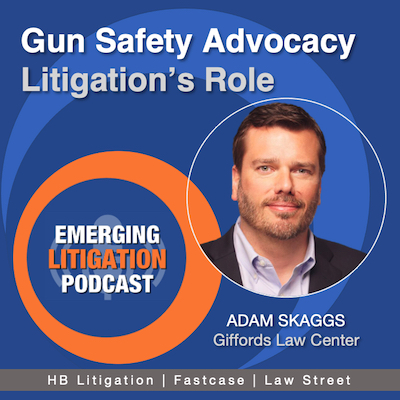
    Litigation’s Role in Gun Safety Advocacy with Adam Skaggs

    We’re closing in on 400 million guns in America, weapons that have been used to kill 1.5 million Americans between 1968 and 2017. Can litigation be an effective tool in curbing this loss of life?

    In 2020 alone there were more than 45,000 gun deaths. The beyond tragic and senseless mass shootings at schools has become all too routine. Most Americans want stricter gun laws which they believe will reduce the senseless killing in our country, which leads the world in both the number of privately owned firearms and gun-related deaths.

    The Supreme Court, of course, didn’t take public opinion into account when it struck down a more than century old New York City ban on concealed firearms. Politicians do, however, pay close attention to polls. At the federal level, President Joe Biden signed a bipartisan law designed to make Americans safer in our gun-toting nation. Hailed as a “great start” and a rare but welcome exercise in reaching across the aisle, the law will result in safer citizens, but didn’t include much of what gun advocates say is really needed to effect meaningful change. In California, Governor Gavin Newsom signed a new law that gives citizens incentives to pursue gun manufacturers and dealers who sell illegal firearms. In New York, Democratic leaders, undaunted by the Supreme Court, have pushed through new gun restrictions at vulnerable locations like schools, malls, and stadiums.

    But what can lawyers and lawsuits do about it? Plenty. What reasonable measurers can be put into place that will not infringe on Second Amendment rights?  Several. Are we seeing litigation over these issues? You bet.

    For more specifics, listen to my interview with Adam Skaggs, chief counsel and policy director at leading gun safety advocacy group Giffords Law Center, co-founded by former Congresswoman Gabby Giffords. Prior to Giffords Law Center Adam was senior counsel at Everytown for Gun Safety and at the Brennan Center for Justice, where he worked on election law issues.  Adam’s commentary has been published in Slate, Politico, the Atlantic, and the New York Times, among other publications, and he has been widely quoted by media ranging from the Wall Street Journal and Fox News to the New York Times and MSNBC. Adam graduated summa cum laude from Brooklyn Law School, received an MS in Urban Affairs from Hunter College of the City University of New York, and holds a BA, awarded with distinction, from Swarthmore College.

    If you would like to learn more about Giffords Law Center and how you can get engaged, please reach out to to them. You may also email Adam directly. 

    This podcast is the audio companion to the Journal on Emerging Issues in Litigation. The Journal is a collaborative project between HB Litigation Conferences and the Fastcase legal research family, which includes Full Court Press, Law Street Media, and Docket Alarm. The podcast itself is a joint effort between HB and our friends at Law Street Media. If you have comments or wish to participate in one our projects please drop me a note at Editor@LitigationConferences.com.

    Gun Safety: The Role of Litigation in Advocacy

    Adam Skaggs

    Adam SkaggsChief Counsel & Policy Director

    Adam Skaggs serves as Giffords Law Center’s chief counsel and policy director. Previously, he was senior counsel at Everytown for Gun Safety and at the Brennan Center for Justice, where he worked on election law issues. Adam was also a litigation associate at Paul, Weiss, Rifkind, Wharton & Garrison and a law clerk at the Eleventh Circuit and the US District Court for the Eastern District of New York.

    Adam’s commentary has been published in Slate, Politico, the Atlantic, and the New York Times, among other publications, and he has been widely quoted by media ranging from the Wall Street Journal and Fox News to the New York Times and MSNBC.

    Adam graduated summa cum laude from Brooklyn Law School, received an MS in Urban Affairs from Hunter College of the City University of New York, and holds a BA, awarded with distinction, from Swarthmore College.

  • High-Asset Divorce Litigation with Robert D. Boyd and Kimberli C. Withrow

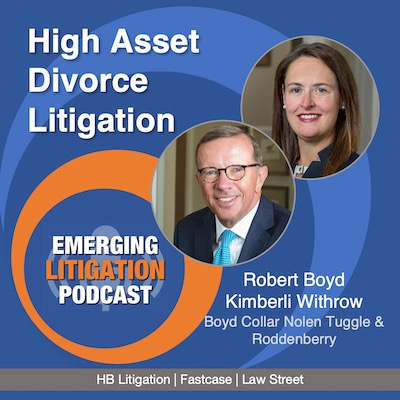
    High-Asset Divorce Litigation with Robert D. Boyd and Kimberli C. Withrow

    High-Asset Divorce Litigation 

    Let’s assume this is good news. The divorce rate appears to be coming down. Either people are more committed to these unions or have succumbed to lifetimes of misery. But the common belief — that “50% of all marriages end in divorce” — doesn’t enjoy statistical support. Six percent of people who divorce get back together, so that’s something, too.  

    According to Monster.com, the rate is higher among people working in fading industries, like certain machine operators. Despite frequent coverage of Hollywood breakups, they don’t mention entertainers, other than dancers and choreographers, who don’t fare well in marriage. Lawyers, in general, do not have a particularly high divorce rate.

    For insights into high-asset divorces, listen to my interview with Robert D. Boyd and Kimberli C. Withrow  of Boyd Collar Nolen Tuggle & Roddenbery.

    Bob Boyd is a widely recognized leader in the practice of high-net-worth divorce litigation and contested custody cases. He is a former prosecutor and a U.S. Army Ranger and Paratrooper.  Education: J.D., West Virginia University (Editor-in-Chief, West Virginia Law Review); B.A., United States Military Academy at West Point.

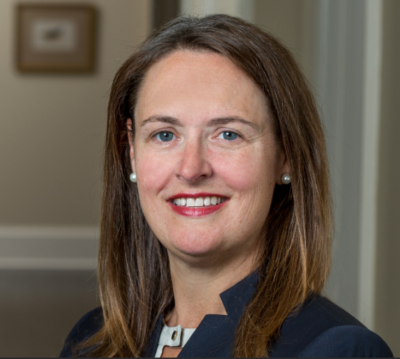
    Kimberli Withrow has 16 years’ experience representing clients in family law matters. She has served as trial counsel and hearings involving divorce, child custody, and child support matters.  Education: J.D., Emory University School of Law; B.A., Duke University.Speaking of which, this podcast is the audio companion to the Journal on Emerging Issues in Litigation. The Journal  is a collaborative project produced by HB Litigation Conferences and the Fastcase legal research family, which includes Full Court Press, Law Street Media, and Docket Alarm. The podcast itself is a joint effort between HB and our friends at Law Street Media. If you have comments or wish to participate in one our projects, or want to tell me how much you learned today – or if you’d like a copy of John’s and Jihee’s article — please drop me a note at Editor@LitigationConferences.com.

    This podcast is the audio companion to the Journal on Emerging Issues in Litigation. The Journal is a collaborative project between HB Litigation Conferences and the Fastcase legal research family, which includes Full Court Press, Law Street Media, and Docket Alarm. The podcast itself is a joint effort between HB and our friends at Law Street Media. If you have comments or wish to participate in one our projects please drop me a note at Editor@LitigationConferences.com.

    Tom Hagy
    Litigation Enthusiast and
    Host of the Emerging Litigation Podcast

    P.S. I don’t know why, but at some point I believe I mentioned chihuahua’s as a form of currency, and then something about Bezos. I’m sure it made sense at the time. It’s more likely, however, that it didn’t.

    Our Guests

    Robert Boyd

    Robert BoydBoyd Collar Nolen Tuggle & Roddenbery

    Bob Boyd is a widely recognized leader in the practice of high-net-worth divorce litigation and contested custody cases. He is a former prosecutor and a U.S. Army Ranger and Paratrooper. Education: J.D., West Virginia University (Editor-in-Chief, West Virginia Law Review); B.A., United States Military Academy at West Point.

    For more than 15 years, he has been selected by the Best Lawyers of America in the area of family law.

    Kimberli Withrow

    Kimberli WithrowBoyd Collar Nolen Tuggle & Roddenbery

    Kimberli Withrow has 16 years’ experience representing clients in family law matters. She has served as trial counsel and hearings involving divorce, child custody, and child support matters. Education: J.D., Emory University School of Law; B.A., Duke University.