Category: Insurance

  • The Cloud: Selected Benefits, Risks, and Insurance Coverage Issues (Part 1) — Barnes & Thornburg

    Cloud Risk: Do You Transfer Liability Along with Data?

    Many of us were using data clouds before we even knew what they were. Now, while most of us are comfortable with the concept, we may not be comfortable knowing who is liable when data is lost, damaged or breached. It’s not a given that your cloud provider absorbs any liabilities, and it’s not a given they can even afford the liability should it arise. Below are quotes from an article by Scott Godes, Kara Cleary, and Heidi Fessler of Barnes & Thornburg LLP on the subject, and a link to their complete article. 

    Godes, Cleary, and Fessler list several cloud-related risks: data breaches, data loss, interruption of access, compromised credentials and broken authentication, and denial of service.  But two other categories for concern are: 

    #1. BYOC, or Bring Your Own Cloud. Employees may be innocently using productivity applications that store work data on non-company clouds, in effect, “bringing their own clouds” to the workplace.

    #2. Multi-Tenancy. This involves risks posed when unrelated cloud users are sharing the same computing resources. 

    “Both the cloud provider and the user must be aware of system and data security to prevent a breach in the security. In addition, when a risk is realized, it may not always be clear who is at fault for the system or security failure.

    “There are a lot of misconceptions around the cloud and liability,” the Barnes & Thornburg attorneys write. 

    “Many companies assume that along with the transfer of their data, they have also transferred their risk to the cloud provider,” they say. “Absent a clear agreement that shifts liability to the cloud provider, the practical reality is that in most cases, there’s very little protection in terms of liability with cloud providers, unless parties are willing to engage in protracted litigation to determine otherwise. The shifting of liability is not nearly as easy as the transfer of data and often it may be the case that the responsibility for a data breach rests with the party that collected and maintained the data originally. Perhaps the most notable exception has been in the healthcare industry, where companies providing support often are classified as ‘business associates’ under HIPAA and might be subject to the same obligations for protecting data as the entity with the original patient relationship. Even here, one could argue that liability transfer does not occur, but rather a liability expansion that includes the cloud provider.” 

    Read the complete article, the first in a series, on the Barnes & Thornburg blog.

  • Stigma and Shame Hampered AIDS Treatment in the 80s, and Opioid Treatment Today

    By Tom Hagy

    I worked in the press office of the New Jersey Department of Health in the 1980s. Aside from hazardous waste, asbestos, cancer, a chemical fire or two, the annual influenza “crisis” and the occasional salmonella outbreak, AIDS was one of the most urgent, frightening and misunderstood health issues of the day. The U.S. epidemic began with one reported case in 1981, according to the Centers for Disease Control, and grew to an astounding 36.9 million people living with HIV/AIDS in 2017 as reported by the World Health Organization.

    The office I worked in was tasked with providing information to the public and members of the press. At the time many public health professionals believed — as is the case with many diseases — that education on how to prevent transmission of the HIV virus would all but eliminate its spread. All we had to do was educate the public and, most importantly, the high-risk groups. Education is a common weapon in fighting disease.  It’s why we wash our hands, cough into our elbows and try not to put salt on absolutely everything we put in our mouths.

    In the early 1980s the “problem” was that the high-risk groups were having homosexual sex and injecting drugs — not typical themes addressed by politicians. Early on more conservative policymakers didn’t want to distribute pamphlets on methods of having safe homosexual sex — such as mutual masturbation and condom use during anal sex — or exercising hygienic methods of shooting heroin. (The state, did, however, have a needle-exchange program to keep addicts from re-using syringes.)

    I recall the frustration of at least one of the state’s public health professionals and AIDS awareness groups who strongly advocated for education — and the more specific the better. The political reality — that the state could at least slow down the epidemic through education but policymakers were not anxious to put their names on “how to” guides for gay sex and illegal drug use — troubled me. At first I didn’t understand it. Then I did. And yet again, I really didn’t. What about our mission of ensuring public health and safety? Well, gradually public health physicians prevailed and policymakers got it.  If you look at the NJ DOH website today you will find all kinds of information on prevention and treatment of the disease. They offer HIV Care and Support Services and educational events. They continue to have a syringe access program with listings of locations where drug users can safely dispose of dirty injection equipment and walk away with clean syringes and needles.

    AIDS would go on to claim the lives of 448,000 people in the U.S. by the end of 2000. Thanks to medical advancements — and educational programs and services offered by non-governmental and governmental organizations, like the NJ DOH — the rate of deaths slowed. Still, in 2017, 940,000 people died from HIV-related illnesses worldwide, according to WHO.

    The social stigma of homosexuality and, relevant to this post, drug use, most certainly played a role in allowing the disease to spread. The same is true today when it comes to the opioid crisis. According to the Hazelden Betty Ford Foundation website there are insufficient resources dedicated to confronting addiction due in part to public stigma.

    A Moral Issue or a Health Problem?

    “For generations, [the] combination of personal shame and public stigma has produced tremendous obstacles to addressing the problem of alcoholism and other drug addiction in America. Today, the stigma of addiction is seen as a primary barrier to effective addiction prevention, treatment and recovery efforts at the individual, family, community and societal levels,” the Hazelden Betty Ford Foundation site reads. “Addiction stigma prevents too many people from getting the help they need. Drug and alcohol addiction is too often seen as a moral issue or a criminal matter rather than a health problem. Many public policies and practices related to housing, education, jobs, voting rights and insurance discriminate against individuals who have addiction, even after they’ve established long-term recovery.”

    The CDC reported that in 2016 there were 63,600 drug overdoses — a jump of 21% in one year. Opioids are currently the main driver of drug overdoses, comprising 42,000 of the annual total. The states of Ohio, West Virginia, New Hampshire, Washington, DC and Pennsylvania see the most opioid overdoses.

    As reported by NPR last year, the crisis has reversed the trend of lengthening life expectancies which fell two years in a row. It was 78.9 in 2014; in 2016 it fell to 78.6. The last time it fell was in 1993 due to the AIDS epidemic, but hasn’t fallen two years in a row since the 1960s, NPR reported based on government statistics.

    The Monetary Cost

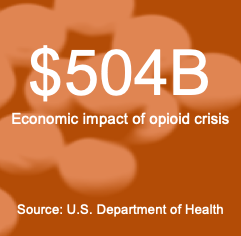
    In addition to the toll on life and health, the opioid crisis is costly.  The U.S. Department of Health puts the economic costs at $504 billion, which includes  healthcare costs, criminal justice costs, lost productivity due to addiction and incarceration, and more. The CDC puts the annual cost of the opioid crisis at $75 billion.

    Efforts to recover these costs include litigation. From there, defendants turn to the insurers where another layer of dispute arises.

    Speaking on an HB webinar titled Insurance Coverage Issues Arising from Opioid Litigation and Investigations, policyholder attorney Bernard Bell of Miller Friel PLLC said lawsuits fall into three categories: 1) state and local governments, and tribes, are suing to recover expenses associated with their response to opioid abuse; 2) suits against manufacturers for alleged gross misrepresentation of the risks and against distributors for failing to monitor suspicious orders; and 3) individuals suing drug makers and distributors for their addictions.

    There are 2,000 lawsuits pending, with 1,200 of them in MDL in the U.S. District Court for the Northern District of Ohio in Cleveland. Plaintiff attorneys have recently said that a mandatory class maybe be the only way to resolve the litigation.

    A new class action lawsuit filed in November 2018 in West Virginia seeks to represent children exposed to opioids in utero. According to Top Class Actions, the suit alleges that in 2017, 50 out of every 1,000 babies born in West Virginia were born addicted to opioids.

    Many of the costs associated with the crisis “don’t always fit very well with specific losses that insurance policies are designed to cover,” said insurance industry attorney Laura Foggan of Crowell & Moring LLP.

    For that reason, and with so much at stake, so much liability, and so many deep pockets, we can expect policyholders and insurers to battle the issue out in the courts.


    Foggan and Bell addressed the insurance aspects of the litigation during a recent HB webinar, titled Insurance Coverage Issues Arising from Opioid Litigation and Investigations. The program is now available on-demand. Click to register.

  • Aon SVP Belfiore on Corporate Cyber Risk

    Cyber Risk of Paramount Concern to Corporate Boards

    Lack of History Remains a Challenge

    “Cyber security is the most polarizing issue on the corporate board agenda these days,” says Anthony Belfiore, SVP and Chief Information Security Officer at Aon. “It has the most potential impact and the most regulatory pressure among all risks companies face. Nothing is more top of mind right now.”

    “You just have to look at the amount of media coverage and the actual realized impacts companies are experiencing. Hundreds of thousands of businesses from big to small are being affected. The entire healthcare system in the UK went down. The impact is tangible. It’s affecting day-to-day operations,” he says. “And no one is immune. Board members come from a diverse set of industries, and all are impacted.”

    Why is cyber risk such a hot button for companies versus other types of risks?

    “The risk has become more urgent as it has shifted to actual business interruption,” Belfiore says. “Historically companies were concerned with data leakage and loss, or regulatory fines, but now the actual operation itself can come to a halt. When a company goes down for three days that hits the media. Analysts notice. You can trace a specific event to a drop in stock values.”

    Aren’t fines still a concern?  

    “Yes. We are operating in a regulatory environment which can have a significant downside,” Belfiore says. “This is especially true if you are a multi-national firm with considerable operating and capital expenses. You can sustain significant and unforeseen punitive fines which can be imposed anywhere around the globe, for example, if you’re found non-compliant with GDPR.”

    What about directors themselves?  

    “Potential for board liability for failing to protect shareholders is a hot-button issue right now.  D&O liability and coverage is evolving,” says Belfiore.  “There is uncertainty as to who is protected.”

    The digitization of so many aspects of conducting business has been around for a while now. So why does cyber risk continue to present challenges for the insurance industry?

    “Historical data is a challenge for insurers because there is very little relative to other risks like those posed by fire or storms for which we have decades of statistics. This makes it difficult to qualify and quantify the risk. Models are used to gauge the potential for losses but, still,” he says, “there isn’t a lot of history to go on.”

    Aren’t companies and boards okay as long as they have insurance?  

    “Organizations who think they are covered may come to a different conclusion when they read the fine print. That’s why it’s imperative to work with an experienced broker to navigate the various coverages and nuances in policy language,” Belfiore says.

    At a high-level, what should security leaders at companies do to reduce risk and anxiety around potential cyber losses? 

    Belfiore urges companies to “set up effective governance and establish an effective governance committee. Examine how you run your operation day-to-day, consider how to best manage the expectations of the C-suite and the board. Get the most out of governance committee discussions, ensure you have alignment up and down the stack, and make sure you have installed effective risk management and risk protocols.”


    Belfiore is on “The CISO Perspective” panel at the International Cyber Risk Management Conference (ICRMC) on Dec. 6-7, 2018 in Bermuda, along with Tim Dawson, Cybersecurity Chief Technology Officer at HSBC; Tom Pageler, Chief Security Officer at BitGo, Inc.; and Derek Vadala, Chief Information Security Officer at Moody’s Corporation.  

    You will be able to hear insights like these, and updates on anything that occurs between now and December in Bermuda.

    This posted was edited by HB Founder & Managing Director Tom Hagy. In the 1990s Tom launched one of the first nationwide legal reports in this area — Mealey’s Litigation Report: Cyber Tech & E-Commerce — when he was publisher at Mealey’s, now part of LexisNexis. If you are interested in posting on this site or discussing speaking opportunities, please contact us at Editor@LitigationConferences.com.

  • Foggan & Huggins on Opioid Litigation Defense Coverage

    Is a drug company that’s sued in connection with the manufacture, promotion and distribution of opioids covered by its insurer for defense costs?

    According to Laura A. Foggan and Michael Lee Huggins of Crowell & Moring, LLP, that determination will come down to whether, in the relevant state, an accident takes place when either the act or the injury was unintentional, or whether an accident occurred if only the act was unintentional.

    This definition will vary by state, Foggan and Huggins wrote in California Litigation, published by the Litigation Section of the California Bar earlier this year.

    South Carolina may permit coverage if “either the act or the injury was unintentional,” they explained. In Liberty Mutual v. J.M. Smith, the Fourth Circuit held that if a drug company failed to identify and alert regulatory agencies of suspicious drug orders, then there may be a duty to defend.

    But in California, the Crowell & Moring attorneys wrote, with that state’s definition of “accident” a state appellate court in Travelers v. Actavis held that a “deliberate act is not an accident, even if the injury is unintentional, unless the injury was produced by an additional, unexpected, independent, and unforeseen happening.”

    In that case drug company Actavis allegedly engaged in deceptive marketing in order to sell more opioids and reap more profits. According to Foggan and Huggins, the court said such alleged conduct can only be described as deliberate and intentional. Whether the company intended to injure anyone is irrelevant in determining coverage, the court determined.

    “[T]he court concluded that none of the alleged injuries — including the flood of opioids into the American medical market, the opioid epidemic, the resurgence in heroin use, or the increased public healthcare costs resulting from long-term opioid use — was an ‘additional, unexpected, independent, or unforeseen’ event that would support a duty to defend,” the attorneys wrote. For these reasons the California appeals court found there was no possibility of defense coverage under a CGL policy.

    The latest is that the California Supreme Court granted review of Travelers v. Actavis but deferred briefing until there is a ruling on the definition of “occurrence” in another case, Liberty Surplus v. Ledesma & Meyer.

    Foggan and Huggins also discussed issues such as “relief sought ‘for’ or ‘because of’ bodily injury,” products exclusions, and a number of untested coverage issues, such as whether opioid injuries constitute a continuous trigger of coverage or how the role a defendant played in the opioid market impacts coverage.

    The complete article will be included with the handouts accompanying our Dec. 4, 2018, CLE webinar. Laura will be joined by policyholder counsel Bernard Bell of Miller Friel PLLC. 

  • Protecting Intangible Assets: Risk Transfer Market Yet to Catch Up

    Intrinsically Intangible.                        

    by Giles Harlow, Senior Vice President, Aon (Bermuda) Ltd.

    In the early 1980’s, tangible assets made up around 80% of the value of the S&P 500. Fast forward to today and nearly 85% of the value of the S&P 500 is attributable to intangible assets.

    However, the risk transfer market has not caught up. According to the Aon/Ponemon report of last year, whilst around 60% of tangible assets (property, plant and equipment) are currently being insured, only 12% of informational assets are.

    So what gives?

    If the vast majority of companies’ values in 2018 are attributable to intangibles, why are they not transferring those risks? Is it a lack of education on the client side? A lack of innovation in the brokerage community? A lack of understanding or willingness to accept these new risks on the carrier end? Or is it that whilst the marine and property markets have had centuries to evolve, the newer intangible insurance markets are just gearing up to size as they collate the data they need to properly price and model these risks?

    Likely, it is some combination of all of these factors. We have seen great strides in the cyber market, with double-digit premium growth over the last four-to-five years. The market has evolved from being focused on large data holders, to providing products which contemplate the cyber perils affecting manufacturers, the transportation industry and other non-data holders.  “Business interruption” has quickly morphed into “system failure coverage.” “Contingent business interruption” now looks more akin to full supply chain risk, not just for IT service providers but now contemplating all vendors. “Bodily injury” and “property damage” stemming from non-physical threats complete the circle back into tangible loss being covered under cyber policies.

    Intellectual property — hands down — makes up the largest dollar percentage of the intangible asset value of the S&P 500.  This has long been a conundrum for the industry as a whole – both in terms of how to value the asset and, more so, how to value the loss. Again, we have seen great momentum here with much larger limits than were historically available now obtainable from the markets both as a theft product as well as being offered for IP infringement. Even now carriers are contemplating supporting the multi-trillion dollar asset class of intellectual property when used as collateral. This could dramatically impact both the equity financing model and asset backed lending world we know today.

    Clearly the will to innovate is alive and well within the industry. It is tough to price emerging risk when the models that our industry are built on rely on historical data, data that is often out of date or irrelevant in these rapidly evolving intangible classes of business. New ways to price and structure these insurance purchases have to be found in order to maintain the industry’s relevance in today’s world.


    Bermuda is at the forefront of many of these initiatives and its underwriters and brokers are constantly seeking to raise the bar to address evolving client need. The panel titled “Evolution of Product and Buyer” will be tackling these and more topics in detail at the Dec. 6-7, 2018, International Cyber Risk Management Conference, or ICRMC, in Bermuda from the perspective of brokers, underwriters and insurance purchasers.

    Get 10% off the registration fee with promotion code HB2018. 

    http://www.aon.com/risk-services/cyber.jsp

    http://www.aon.com/risk-services/amats/intellectual-property-solutions.jsp

  • Financial Services Cyber Risk Information Sharing

    Why We Need to be More Like Apes, Less Like Seagulls

    By Tom Hagy

    Featuring Craigg Ballance, Director of Canadian Member Services, FS-ISAC

    Even before we can walk we are encouraged to share. We’re told to share our things even when we barely have any. Even some wild animals share food and resources – even when those resources are scarce. Some creatures are better at it than others, of course. Apes and lions? Absolutely. Seagulls? All you have to do next time you’re on the beach is toss what’s left of your ham sandwich into the air and see how generous gulls are.

    People fall into sharing — and not-fond-of-sharing — groups, too. Sharing is particularly critical in the financial sector where, while privacy and security regulations command a tight lid on data, global financial institutions are successfully sharing data about cyber risk, says Craigg Ballance, Director of Canadian Member Services for FS-ISAC in Toronto. But, he says, sharing has to take place across a broad landscape.

    “Information analysis sharing has to cut across the various subsets of the financial sector,” says Ballance. “While banks share local data, they are trying more and more to share globally, but,” he says, “banks need to share with other institutions, like insurers, investment funds, pension funds, and other types of financial institutions, for this cooperation to have the greatest and most effective impact on security.”

    While some IT professionals may tend to want to play things close to the vest, when it comes to cybersecurity teams it is the IT professional who works openly with others who is an invaluable player.

    The Danger of Over-Confidence

    Some blamed over-confident IT professionals for the massive cyber attack that temporarily crippled shipping giant Maersk in June 2017. At the same time, as reported by Reuters on June 27, 2017, Ukrainian commercial banks also sustained a cyber attacks.

    “There are a lot of smart people out there actively trying to figure out ways to mess us up,” Ballance says, whether it’s through new denial of service attacks, or cyberware and ransomware, or the creatively diabolical phishing attacks. “When one entity is falls prey to one of these schemes we’re suddenly all at greater risk,” Ballance says. “There is a limited volume of resources and talent to combat cyber-attacks, so pooling resources, information and skill sets is critical.”

    Ballance emphasizes the importance of having a playbook so when a crisis occurs people know who is supposed to do what and when. “In the midst of an attack people tend to lose their minds and not necessarily act logically,” he says. “So having a prepared methodology to get your organization out of a pickle is a piece of work we strongly advocate, as well as sharing that methodology across industries. This way, as examples, banks and insurance companies and investors can enrich each other with new insights and skills.”

    He also advocates simulated attacks and table-top exercises so people can engage as if they are dealing with a real disaster, like those conducted by FS-ISAC. Conducting post-event analysis to improve response and sharing those findings is also important.

    Experience tells us that when it comes to global cybersecurity we need to be more like gorillas and big cats than selfish seagulls down by the sea shore.


    Craigg Ballance will share insights like these and more at the International Cyber Risk Management Conference Dec. 6-7, 2018 in Bermuda. He will be joined by Nick Galletto, Global Cyber Risk Services Leader at Deloitte in a session titled, “Strength Through Information Sharing Within the Global Financial Services Arena.”

    Over the past three-plus decades, Ballance has led and managed advanced technology-enabled business initiatives across a wide range of competitive sectors, countries and areas of innovation. These build on his experience in leading electronic commerce development in one of the world’s path-setting banks in the field and on his extensive work in finance, logistics, international business and government. He is the author/co-author of three books on leveraging technology for business innovation.

    Tom Hagy is a Philadelphia-based writer and entrepreneur, Founder and Managing Director of HB Litigation Conferences LLC and Custom Legal Content LLC, former Editor and Publisher of Mealey’s Litigation Reports, and a former Vice President at LexisNexis®.

  • A.I. Best Practices: Rules and Policies for Using Artificial Intelligence in Your Business

    Explore how cybersecurity breaches impact insurance, risk management, and data privacy with evolving legal and compliance challenges.

    [one-third-first]

    DATE: Sept. 27, 2018

    TIME: 2 p.m. EDT; 1 p.m. CDT; 12 p.m. MDT; 11 a.m. PDT

    PLACE: Your computer or mobile device

    PRICE: $197* per dial-in site
    *Price is good through Aug. 16. After that it’s $247.

    GROUPS ARE GOOD: Registering qualifies you to multiple attendees at your location.

    CLE: 1 credit
    Please send CLE questions to
    CLE@LitigationConferences.com

    SPEAKER:
    John Frank Weaver
    Attorney
    McLane Middleton

    Your registration includes:

    •  A site license to attend this webinar (invite as many people in one location as you can fit around your computer at no extra charge).

    • Downloadable PowerPoint presentations from our speakers.

    •  The opportunity to connect directly with speakers during the audience Q&A session.

    •  At least one-hour of CLE credit.

    Produced in collaboration with

    and their new
    Journal of Robotics, Artificial
    Intelligence & Law

    [/one-third-first] [two-thirds]

    Nearly every industry is adopting or preparing to adopt artificial intelligence applications into their business practices.

    That’s exciting. However, there are almost no government regulations for their use and few resources providing best practices that anticipate ethical considerations and forthcoming legal requirements.

    This lack of direction poses a serious problem as A.I. applications become more widespread. Businesses are creating their own ad hoc practices without considering the eventual government oversight and ethical consensus, which will result in costs and potential liability later when those companies have to change their practices.

    This webinar looks at how your company should approach its A.I. rules and policies in order to minimize the impact of expected government action and cultural norms.

    Register now and join our speaker as he explores existing laws addressing privacy and data security, pending A.I. legislation at the state and federal levels, and the recommendations of federal agencies that are most likely to be codified.

    The webinar will provide practical guidance for attendees to use when developing internal rules, policies, practices, contracts, and public facing documents. The speaker will rely on relevant existing laws, proposed legislation, and reports from federal agencies that advocate certain public policies for the governance of AI.

    What you will learn:

    1.     The requirements of privacy laws – including GDPR, Canada’s PIPEDA, and the new California privacy statute – that have special application to A.I.

    2.     Best practices for drafting a public facing privacy policy that addresses your use of A.I.

    3.     Best practices for preparing internal rules and policies governing your employees’ use of A.I.

    4.     Best practices for bots and other forms of A.I. that interact with consumers.

    5.     Best practices for A.I.-specific terms of use and consents.

    6.     Best practices for addressing A.I. in employee contracts and handbooks.

    7.     Best practices for addressing A.I. in vendor contracts, including assignment of liability and indemnification obligations.

    And more!

    Attendees will be able to go back to their companies and review their current A.I. practices, policies, and rules to determine how appropriate they are in light of expected regulations and expectations. The ultimate goal is to avoid costly revisions in response to evolving consumer expectations and government requirements. A little investment now could potentially save a lot of money in revisions changes, PR, and remediation later. — John Weaver, speaker


    Speaker

    The webinar speaker, John Frank Weaver, is an attorney with McClane Middleton whose practice focuses on A.I. and autonomous technology. He is the author of Robots Are People Too: How Siri, Google Car, and Artificial Intelligence Will Force Us to Change Our Laws, a contributing writer at Slate focusing on legal issues implicated by AI and autonomous devices, and a columnist for and member of the board of editors of The Journal of Robotics, Artificial Intelligence & Law.

    REGISTER NOW

    [/two-thirds]

  • Joshua Gold on Cyber Crime and Insurance

    With the amount of trickery going into thefts and embezzlements these days, crime insurance companies too often use the many steps involved in a fraudulent scheme to argue that losses are indirect and otherwise uncovered.

    The recent decisions of the Second Circuit and Sixth Circuit on the “direct loss” argument and the scope of computer fraud coverage are important victories for policyholders generally, making clear that where the predominant step in the chain is some type of covered fraudulent misconduct involving a computer, a court is not going to entertain a direct loss defense to excuse the insurance company from paying.

    As such, policyholders should be familiar with their crime coverage and promptly notify all potentially implicated lines of insurance coverage when a cybercriminal is afoot. — Joshua Gold, Anderson Kill 

    Read Josh’s complete article. 

    Joshua Gold is Chair of Anderson Kill’s Cyber Insurance Recovery Practice and was amicus counsel for United Policyholders in the Medidata Solutions, Inc. v. Federal Insurance Company case before the Second Circuit.

  • Willis Towers Watson: Cyber Risk Top D&O Concern

    Based on their survey, Willis Towers Watson says cyber risk continues to top the list of concerns for directors and officers (right up there with employee claims). As for coverage, while they care about price, things like their relationship with the carriers and how well they handle claims are critical elements.

    And, maybe one key reason cyber events keep happening: “Only 13% of board members feel that their organizations learn from past cyber mistakes.”

    Read the results of the Willis Towers Watson survey. 

  • Crowell & Moring on Insurance for Autonomous Vehicles Accidents

    “As responsibility for accidents shifts away from drivers and towards the companies that design, manufacture, and maintain autonomous vehicles, the pool of companies potentially liable for accidents will deepen.Companies need to consider potential liability risk when designing autonomous vehicle-related systems and partnering with other companies.”

    Another good piece from the team Crowell & Moring LLP