Category: HB Risk Notes

  • Organizational Values & Business Risks: Properly Balancing Stakeholder Concerns

    Organizational Values & Business Risks: Properly Balancing Stakeholder Concerns

    Topics Covered

    Accommodations. Appropriate accommodation for high-risk employees or employees with family members who are at a heightened risk.

    Mitigation. Attention to means of mitigating transmission and infection.

    Tracing. Contact tracing and management of data collected, including health data, as well as responses to employees who refuse to report.

    Patient Sensitivity. Duty to avoid discrimination and stigmatization.

    Preparedness. Developing plans to address possibility of re-occurrence in the fall and managing possible outbreaks in company’s offices.

    Take it now

    On-demand on the Thomson Reuters West LegalEdcenter as part of the HB catalog.

    Register now!

    Organizational Values & Coronavirus Business Risks:
    Properly Balancing Stakeholder Concerns

    Produced for Emory University Center for Ethics by HB Litigation Conferences
    The current pandemic confronts businesses, nonprofit organizations, governments, and the legal profession with innumerable ethical challenges.  Management issues and liability concerns, stakeholder demands and legal duties become even more complex in an environment of uncertainty and one where the consequences could result in serious illness or even death.  This program seeks to engage the participants in thinking through these challenges and developing processes of ethical response to them.  Managers must acknowledge and address the framework of fear associated with the pandemic, ranging from fear of contagion and death to fears of unemployment, childcare, and the duties of home-schooling.  Additionally, as the economy reopens there must be serious attention to the processes of doing so.

    Join Professor Edward L. Queen from Emory University for invaluable insights. Emory’s medical team was on the frontline of the 2014-2016 Ebola epidemic, which began in December 2013 when an 18-month-old Guinean boy contracted the disease. According to the CDC, the outbreak ended with more than 28,600 cases and 11,325 deaths. Eleven people were treated for Ebola in the United States.

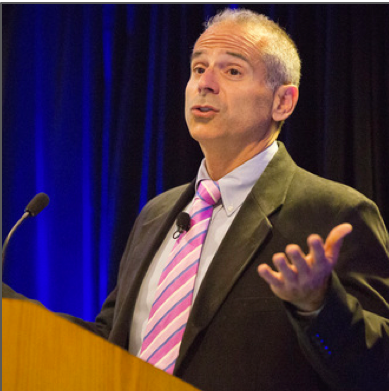
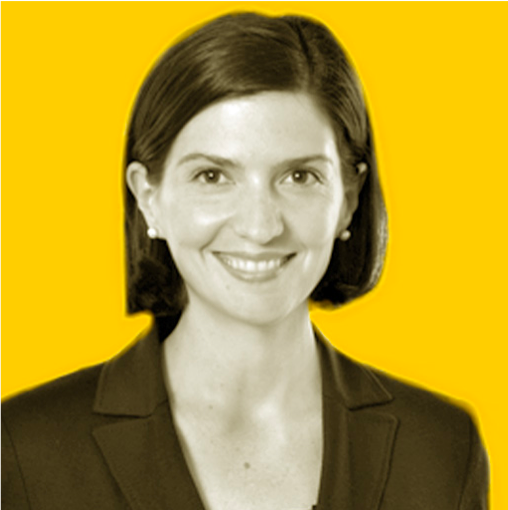
    Edward L. Queen
    Director of Ethics and Servant Leadership
    Emory University

    Professor Queen Coronavirus-Ethical-Issues-Litigation Conferences-June-19-2020-

    Professor Edward L. Queen

    Edward L. Queen is director of the D. Abbott Turner Program in Ethics and Servant Leadership and Coordinator of Undergraduate Studies at Emory University’s Center for Ethics.  At Emory he also serves as Director of Research for the Institute of Human Rights and co-convener of the Initiative on Religion, Conflict, and Peacebuilding.  Queen received his B.A. from Birmingham-Southern College, his M.A. and Ph.D. degrees from the Divinity School of the University of Chicago, and his J.D. from the Indiana University School of Law-Indianapolis. Queen’s previously served as founding director of the Religion and Philanthropy Project at the Indiana University Center on Philanthropy and of the Islamic Society of North America’s Fellowship Program in Nonprofit Management and Governance.  A former program officer at Lilly Endowment, Inc. with a major responsibility for grants in nonprofit governance and leadership, Queen has consulted with numerous nonprofit, governmental, and educational organizations on management issues and ethics policies.  These organizations have included the Helsinki Committee for Human Rights, the Pew Charitable Trusts, Independent Sector, USAID, NAFSA: The Association of International Educators, the Southeastern Council of Foundations, and the Corporation for National and Community Service.

    A specialist in issues related to professional and social ethics, religious and ethnic conflict, and civil society, Queen has written, coauthored, or edited numerous books, including Serving Those In Need: A Handbook for Managing Faith-Based Human Services Organizations (2000), Philanthropy in the World’s Traditions (1998), and The Encyclopedia of American Religious History (1992, rev. ed. 2002, 3rd rev. ed. 2009).

  • $3M Transferred in Fraud Scheme, Law Firm Gets Sued, Says It Followed Client Instructions

    $3M Transferred in Fraud Scheme, Law Firm Gets Sued, Says It Followed Client Instructions

    $3M Transferred in Fraud Scheme, Law Firm Sued, Says It Followed Client Instructions

    Two related foundations hired a big law firm to sell stock and execute a merger via wire transfer. Cyber fraudsters had other ideas. Posing as stock seller, and intercepting a verification email, the perpetrators grabbed $3.1 million. The foundations sued the firm in state court in Utah, claiming the firm should have red-flagged certain inconsistencies and known it was being duped. The firm should also have picked up the phone to verify the source of the fraudulent emails and documents. Not so fast, the firm maintains. The plaintiff was not a client and it was only acting on wiring instructions sent via the plaintiff’s email system and provided the instructions to the paying agent. The money was sent to the account of an alleged furniture company in Hong Kong. Sorenson, et al. v.  Continental Stock Transfer, Tassel Parent, and Holland & Knight, 3rd. Jud. Dist. Ct., Salt Lake Co., Utah.

    Download

  • Microsoft Sued Over Data Sharing in Class Action

    Microsoft Sued Over Data Sharing in Class Action

    Microsoft Sued Over Data Sharing in Class Action

    Consumers, including individuals and companies, filed a class action complaint  against Microsoft in U.S. District Court for the Northern District of California, claiming the company shared consumer data without consent to subcontractors and third parties, including Facebook, despite policies that stated otherwise. 

    The plaintiffs accused Microsoft of “misrepresenting its privacy and security practices, violating federal and state law, and illegally sharing and using its business-class Microsoft Office 365 and Microsoft Exchange customers’ data.” 

    Read more from Law Street Media: https://lawstreetmedia.com/tech/microsoft-sued-over-data-sharing-in-class-action/

  • Cannabis, CBD: Advertising and Drug Test Problems

    Cannabis, CBD: Advertising and Drug Test Problems

    COVID-19 vs Cannabis: Are Closures Legal?

    In the category of “damned if you do; damned if you don’t,” Massachusetts Governor Charlie Baker shut down recreational cannabis shops, citing concerns over the spread of COVID-19. The dispensaries say the shutdown could seriously damage the industry. But, the governor said, the spread of disease will continue to damage the health of his constituents, especially as residents of states where recreational marijuana is illegal, come to Massachusetts to do their cannabis shopping. Citizens of the state may still obtain medical cannabis, as reported by WBUR.

    Too Much TCH: Can CBD Use Cost You Your Job?

    A New York truck driver has sued a CBD company for allegedly making a product, which he says he uses for pain relief, with too much THC, more than the label indicates. A Pennsylvania woman filed a similar case and a Missouri school bus monitor had a similar experience. Another Missourian blames the store where he purchased his CBD, saying he was assured the product contained minimal THC. All claim they were told they could pass drug tests. All failed their test. And all lost their jobs, according to a post on the Huffs & Puffs website.

    “Courtesy of a dearth of strict standards of testing, many companies tend to list lower values of THC on the product label,” writes Huffs & Puffs. “The quantities of THC will never be ‘as high to make you high’ but they may be enough for you to fail a drug test, conducted via not the most of the sophisticated equipment out there.”

    “For entrepreneurs in the cannabis niche, this is a topic of huge concern as the number of such lawsuits are only going to increase as people keep failing drug tests after consuming CBD.

    Not Enough THC: No Golden Ticket

    Californians have proposed a class action against the owners of a CBD-infused-chocolate factory for selling candy with far less CBD and THC than advertised. For consumers these ingredients justified the premium prices they were paying. And yet, as shareholders, executive officers and managers allegedly knew, the levels were below what the labels had them believe, says Law360.

    No Proof of Health Claims

    The FTC has sued Whole Leaf Organics over the company’s claims that their CBD products effectively treat cancer and prevent or reduce COVID-19 risk. The Bureau of Consumer Protection says that there is “no proof that any product will prevent or treat COVID-19 or that any CBD product will treat cancer.” We can only hope.

    The California marketer and founder of Whole Leaf, Marc Ching, agreed to a preliminary order that prohibits him from making those claims. Pending the resolution of a parallel FTC administrative action, the proposed order also bars the defendant from representing that three CBD-based products he sells are effective cancer treatments.

    According to the FTC: Since December 2018, defendant Marc Ching, also doing business as Whole Leaf Organics, has sold Thrive – a tablet consisting primarily of Vitamin C and herbal extracts. But beginning in March 2020, Thrive underwent something of a marketing make-over. The defendant began pitching the product as a way for consumers to ward off coronavirus. His website claimed, “Formulated with potent antiviral herbal extracts, Thrive by Whole Leaf Organics is the perfect way to strengthen your immunity against pathogens like ‘COVID-19,’ the coronavirus.” The defendant also represented that the product is indicated to “combat” a list of ailments, “as well as the coronavirus.” In addition, the defendant claimed Thrive is “formulated with clinically tested and proven ingredients” and that “our time test formulas are proven and deliver results.”
    Photo by Matthew Brodeur on Unsplash

  • The Dark Net:  Anonymity, Infrastructure, and the Future

    The Dark Net: Anonymity, Infrastructure, and the Future

    Register

    Webinar Info

    Wednesday, Aug. 5, 2020

    United States
    8am PT | 10am CT | 11am ET

    United Kingdom
    4pm BST

    Get CLE or CPE, a complete set of materials, and answers to your questions!

    Email us your:
    Speaker questions
    CLE questions

    Topics Covered

    Physical and Logical Topology and Method of Data Transmission

    Using the Dark Net for Threat Hunting

    Hacking Groups and Malicious Hackers  

    The Future of The Dark Net and Anonymity

    The Dark Net: Anonymity, Infrastructure, and the Future
    Is the Dark Web Getting Darker? 

    Wed., Aug. 5, 2020 | Produced for Access Data by HB Litigation Conferences

    The web, however singular it may seem from behind an everyday user’s computer or smartphone screen, comprises three distinctive parts: the public net (or web), the deep net, and the dark net. Though the dark net contains some innocuous content and is used for legitimate purposes, it also operates as a platform for illegal marketplaces. These offer almost anything a criminal or cybercriminal might want to buy or sell like malware, exploits, hackers-for-hire, information lifted from data breaches, censored content, and goods like drugs, guns, and other contraband.

    Observers report that the dark web is getting darker, meaning hardcore criminals make up a greater percentage of its user base. Exploits and other hacking tools and techniques used to disrupt business, critical infrastructure, and misappropriate confidential information are continually diversifying and becoming more complex. According to Cyber Defense Magazine, the annual cost of cybercrime damages to users, online businesses, and nations is expected to hit $5 trillion this year, with some estimates ranging as high as $10 trillion.

    Join two highly experienced data security professionals – Mary T. Frantz of Enterprise Knowledge Partners and Frank Krahn of Burdock Consulting – as they discuss how cybercrime fighters must overcome a variety of challenges as they threat-hunt on the dark net: detecting, monitoring, and gathering intelligence on cybercrimes and the actors behind them. Frantz and Krahn will discuss how the cybersecurity community will address emerging threats, what changes the web may undergo as a result, and more. The session will be moderated by the head of international training at AccessData, Sarah Hargreaves, who brings her own experience in forensics to the discussion.

    Meet our panelists.


    Frank Krahn
    Co-Founder, Burdock Consulting, LLC

    Before co-founding Burdock Consulting, Frank had a long tenure with the Mayo Clinic, where he served as the Director of Operational Risk Management. He holds various specialist certificates in information security and computer crime investigation and forensics. Frank has taught classes and consulted for law enforcement agencies on computer crime-related matters, and has worked with the FBI. He is also an e-discovery specialist.


    Mary T. Frantz

    Founder & Managing Partner, Enterprise Knowledge Partners, LLC

    Mary is a technology and strategy professional with more than 25 years’ experience as a corporate and consulting firm executive. Her expertise includes IT strategy, e-discovery, compliance, enterprise risk, information security, and enterprise architecture. Mary has served as a legal expert on a variety of cyber security topics. She is also an author, keynote speaker, and adjunct professor.


    moderator

    Sarah Hargreaves ACI, ACE
    Director of Training – International
    AccessData, United Kingdom

    Sarah started her career in digital forensics in 2003.  Previously working in a criminal law practice, Sarah moved over to forensics after working on a number of investigations which inspired her to change career path.  Her journey continued with a number of roles in Digital Forensic Laboratories, primarily supporting law enforcement in Child Sexual Exploitation investigation and general crime.  Sarah progressed to Laboratory Management and later into Training Management.

    Sarah is experienced in digital investigation, laboratory management, ISO17025 and evidential process.

    Sarah lives in the North West of England and is a mum to two young children.  She enjoys days out with her family and traveling.

  • Contract Drafting Fundamentals

    Contract Drafting Fundamentals

    Contract Drafting Fundamentals with Will Marshall

    Register Now

    Contract Drafting Fundamentals:
    What I Wish They Taught Me in Law School

    Speaker:

    Will Marshall | Partner
    UBM Law LLP

    Date:
    Thursday | July 23, 2020

    Time:
    2pm ET
    1pm CT
    12pm MT
    11am PT

    Duration:
    75 minutes

    Price:
    Early Bird Registration: $75
    After July 14: $95

    Special:
    Complimentary with discount code!

    What you get:

    • CLE credit

    • Course materials

    • Webinar recording

    • Answers to your questions!

    Contact CLE Manager

    Get practical insights on contract drafting.

    For new and seasoned attorneys alike, this 75-minute program will cover core, practical aspects of contract drafting, including a broad range of fundamental concepts, skills, and tips.  The program is designed to make you a more deliberate drafter and improve your ability to assess the purpose and effectiveness of each provision in your contract.  We will discuss not only what is on the page, but external dynamics that affect drafting and negotiation. Finally, we will reserve time to answer your questions.

    I am offering this program for free to my network to help you develop these foundational skills. If you haven’t received it, please contact me directly for the complimentary pass code.  — Will Marshall,  Partner, UBM Law Group LLP

    Key topics: 

    • The goals and challenges of good drafting.

    • The anatomy and building blocks of a contract.

    • Categories of contract language.

    • Typical sources of ambiguity.

    • Tips on everything from file naming conventions to how to draft a nested signature block and what a tipping basket is.

    • Your questions via live chat or by email before or and after the event.

    Send Will a Question

    Meet our panelist.

    Will Marshall

    Will Marshall | Partner
    UBM Law Group, LLC

    UBM Law Group

    Will is a co-founder of UBM Law Group. He has substantial experience in drafting and negotiating a wide range of commercial contracts, including SaaS and traditional software licensing agreements, supply, distribution, and professional services agreements, and confidentiality agreements.

    Prior to co-founding UBM Law Group, Mr. Marshall served as General Counsel and SEVP of Operations of Javo Beverage Company, a publicly traded manufacturing company in Vista, California. As one of the founding executives of Javo, he was integral in leading the ground-up capitalization and commercialization of the company over the course of a decade and he uses his in-house and executive experience to help his clients negotiate clear, effective contracts.

    Read more about Will Marshall here …

  • Organizational Values & Coronavirus Business Risks | Join Our Webinar June 18

    Organizational Values & Coronavirus Business Risks | Join Our Webinar June 18

    Webinar:
    June 18, 2020
    2:00 pm ET
    60 mins.
    CLE: 1+
    Complimentary with registration.

    Get:
    +CLE
    +Materials
    +Recording
    +Answers!

    Also available to subscribers of the West LegalEdcenter.
    Register there!

    Email us your:
    Speaker questions
    CLE questions

    Speaker:

    Professor Edward L. Queen Ph.D. , J.D.
    Director Ethics and Servant Leadership: Emory Center for Ethics
    Emory University

    Organizational Values & Coronavirus Business Risks
    Properly Balancing Stakeholder Concerns

    Thursday, June 18, 2020 | 2pm ET | 1pm CT | 12pm MT | 11am PT 

    The pandemic brings with it complex liability concerns, stakeholder demands and legal duties.  We will take a closer look. 

    The current pandemic confronts businesses, nonprofit organizations, governments, and the legal profession with innumerable ethical challenges.  Management issues and liability concerns, stakeholder demands and legal duties become even more complex in an environment of uncertainty and one where the consequences could result in serious illness or even death.  This program seeks to engage the participants in thinking through these challenges and developing processes of ethical response to them.  Managers must acknowledge and address the framework of fear associated with the pandemic, ranging from fear of contagion and death to fears of unemployment, child care, and the duties of home-schooling.  Additionally, as the economy reopens there must be serious attention to the processes of doing so, including:

    We will address:   

    • Appropriate accommodation for high-risk employees or employees with family members who are at a heightened risk;

    • Attention to means of mitigating transmission and infection;

    • Contact tracing and management of data collected, including health data, as well as responses to employees who refuse to report;

    • Duty to avoid discrimination and stigmatization;

    • Developing plans to address possibility of re-occurrence in the fall and managing possible outbreaks in company’s offices.

  • The Intersection of Privacy and Antitrust Webinar Now Available On-Demand on the West LegalEdcenter

    Available as part of your subscription to
    The Thomson Reuters West LegalEdcenter®.

    Don’t subscribe to the West LegalEdcenter?
    This webinar is still available directly from HB. Take it now!

    Questions for speakers
    Questions@LitigationConferences.com

    CLE questions
    CLE@LitigationConferences.com

    Check out the MoginRubin blog for more insights on antitrust and privacy law.

    What attorneys and companies need to know about the increasing interplay between these critical areas of the law. 

    Highly publicized cases and investigations in the U.S. and Europe of big technology, e-commerce, and social media companies demonstrate how anti-competition laws are being used to scrutinize and challenge not only how these corporations conduct themselves in the marketplace, but the very core of their colossal success: the mass collection and utilization of user data.

    Are the privacy and antitrust worlds beginning to cross over? Or do they simply run parallel while addressing entirely different types of conduct? Whatever the answer, data is the raw material that drives the likes of Google, Facebook, Apple and Amazon, so how it is handled is a critical question when counseling clients on mergers and acquisitions.

    Moderator
    Daniel J.  Mogin | Managing Partner, MoginRubin LLP

    Speakers
    Jennifer M. Oliver, CIPP/US | Partner, MoginRubin LLP
    Thomas N. Dahdouh | Director, Western Region, Federal Trade Commission
    Franklin M. Rubinstein | Partner, Wilson Sonsini Goodrich & Rosati
    Randi W. Singer, CIPP/US, CIPT | Partner, Weil, Gotshal & Manges

    Contributor
    Dina Srinivasan | 
    Independent Researcher & Author of The Antitrust Case Against Facebook
    Dina was unable to present but we thank her for her content contributions. 

    Agenda

    • Who should regulate privacy violations in the U.S.?
    • Which antitrust issues implicate privacy concerns?
    • What role does machine learning play on the competitive landscape?
    • What is big data really? How is it different from “data”?
    • What are the elements of effective merger reviews?
    • What are the appropriate remedies?
    • What are “notice-and-choice” versus “harms-based” approaches?
    • Plus answers to your questions. Send them to Questions@LitigationConferences.com.

  • The Intersection of Antitrust & Privacy | A MoginRubin Webinar | 10.31.2019

    The Intersection of Antitrust & Privacy Law


    [two-fifths-first] Recorded: Oct. 31, 2019
    Duration: 100 minutes
    Presented by:  MoginRubin LLP
    Produced by: HB Litigation Conferences

    The Panel

    Moderator
    Daniel J.  Mogin | Managing Partner, MoginRubin LLP

    Speakers
    Jennifer M. Oliver, CIPP/US | Partner, MoginRubin LLP
    Thomas N. Dahdouh | Director, Western Region, Federal Trade Commission
    Franklin M. Rubinstein | Partner, Wilson Sonsini Goodrich & Rosati
    Randi W. Singer, CIPP/US, CIPT | Partner, Weil, Gotshal & Manges

    Contributor
    Dina Srinivasan |
    Independent Researcher & Author of The Antitrust Case Against Facebook
    Dina was unable to present but we thank her for her content contributions. 

    What you will get:

    • At least 1 hour of CLE credit.
    • Answers to your questions via email.
    • The opportunity to share with others on your team.
    • The complete Powerpoint.
    • The Antitrust Case Against Facebook
    • Dina Srinivasan’s statement to the House Committee on the Judiciary, Subcommittee on Antitrust, Commercial, and Administrative Law
    • The Chicago Booth School Stigler Center Committee on Digital Platforms Final Report

    Write to us at CLE@LitigationConferences.com to:

    • Ask about CLE
    • Request the materials
    • Send a question for the speakers

    [/two-fifths-first][three-fifths]

    Market Behavior and Data-Driven Market Power

    Highly publicized cases and investigations in the U.S. and Europe of big technology, e-commerce, and social media companies demonstrate how anti-competition laws are being used to scrutinize and challenge not only how these corporations conduct themselves in the marketplace, but the very core of their colossal success: the mass collection and utilization of user data.

    Are the privacy and antitrust worlds beginning to cross over?

    Or do they simply run parallel while addressing entirely different types of conduct? Whatever the answer, data is the raw material that drives the likes of Google, Facebook, Apple and Amazon, so how it is handled is a critical question when counseling clients on mergers and acquisitions.


    Meanwhile, there is increasing pressure on antitrust enforcers to consider privacy issues when conducting merger reviews.

    Antitrust laws allow and require consideration of data collection, handling, and use if there is a risk to fair competition. But are the agencies equipped to analyze the effect of post-merger datasets? Should they examine the privacy ramifications of proposed deals?

    Viewpoints on the overlap between the regimes are wide-ranging and nuanced. In a June speech, DOJ Antitrust Division chief Makan Delrahim said that “by protecting competition we can have an impact on privacy and data protection.” During a 2018 interview, though, FTC commissioner Noah Phillips argued that “privacy law and antitrust law each addresses different harms and vindicates different rights.”

    What does all of this mean to the practitioner or in-house counsel?

    Take this 100-minute webinar now to gain insights from leading experts on these issues, with a balance of perspectives from both the plaintiff and defense bars, academia, and regulatory enforcement.

    Get answers to questions like these:

    • Who should regulate privacy violations in the U.S.?
    • Which antitrust issues implicate privacy concerns?
    • What role does machine learning play on the competitive landscape?
    • What is big data really? How is it different from “data”?
    • What are the elements of effective merger reviews?
    • What are the appropriate remedies?
    • What are “notice-and-choice” versus “harms-based” approaches?
    • And more!

    [/three-fifths]


    Moderator & Speaker

    Daniel J.  Mogin, Managing Partner, MoginRubin LLP. Dan concentrates on antitrust, unfair competition and complex and business litigation. He has been selected as lead or liaison counsel in numerous cases and has also frequently served on Steering and Executive committees charged with overall responsibility for direction of complex Multi-District Litigation and Judicial Council Coordination Proceedings. He has participated in some of the largest antitrust class actions in the United States. Dan is frequently invited to participate in these cases by other law firms and often consults with law firms engaged in antitrust cases. He has also provided expert testimony in cases and before the California State Senate Judiciary Committee. Dan received his B.A. in Economics from Indiana University and his J.D. from the University of San Diego.

    Speakers

    Jennifer M. Oliver, CIPP/US, Partner, MoginRubin LLP.  Jennifer joined MoginRubin LLP in 2017 after nearly ten years as a complex business litigator in New York City. She focuses on antitrust, as well as complex business and investment litigation.  Jennifer is a member of the California Lawyer’s Association’s Privacy subcommittee and of the International Association of Privacy Professionals (IAPP), and is an IAPP Certified Information Privacy Professional. Jennifer has played active roles in high-profile jury trials, served as lead counsel in complex mediations, and argued before both trial and appellate courts. In addition to her merger and cartel work, Jennifer has also advised on antitrust issues in mergers and acquisitions and litigated cases involving trade secrets, RICO conspiracies, securities fraud, unfair trade practices, breaches of contract and privacy cases. She earned her B.S. in Business Administration, M.B.A., and J.D. from the University at Buffalo, each with honors.

    Thomas N. Dahdouh, Director, Western Region, Federal Trade Commission.  Prior to his current position Tom served as Assistant Regional Director for the Western Region.  He worked for 14 years as a staff attorney in the San Francisco office of the FTC, handling consumer protection and antitrust matters.  Previously, he worked at the FTC’s Washington, D.C., headquarters for two commissioners.  He has also served on the Executive Committee of the California State Bar’s Antitrust, UCL and Privacy Section since 2009, most recently serving as its Chair from 2014-2015.  He received his J.D. from Harvard Law School and his B.A. from Yale University.

    Franklin M. Rubinstein, Partner, Wilson Sonsini Goodrich & Rosati. Franklin is an antitrust partner in the Washington, D.C., office. His practice encompasses a wide variety of antitrust matters, including mergers and acquisitions, investigations by the United States Department of Justice and the Federal Trade Commission, litigation, criminal investigations, and counseling on issues such as distribution, monopolization, tying, exclusive dealing, price-fixing, and antitrust compliance. Franklin has represented a diverse set of clients in the software, computer hardware, pharmaceutical, medical device, gaming, automobile, natural resource, Internet, and media industries. Education: J.D., University of Chicago Law School; B.A., Swarthmore College.

    Randi W. Singer, CIPP/US, CIPT, Partner, Weil, Gotshal & Manges. Randi has earned the Certified Information Privacy Professional (CIPP/US) and Certified Information Privacy Technologist (CIPT) credentials and regularly advises clients in connection with privacy, cybersecurity, and social media issues in a wide variety of matters, including hundreds of transactions ranging from high-profile deals such as Facebook’s acquisition of Whatsapp, Inc. to large public company mergers and small talent acquisitions. In 2015, The National Law Journal recognized Randi as one of its inaugural “Trailblazers” nationwide for her cutting-edge work in the cybersecurity and data privacy area. 

    Contributor

    Dina Srinivasan, Independent Researcher & Author of The Antitrust Case Against Facebook. Dina currently advises on the economics of digital advertising markets and continues to write about tech and antitrust. She is the author of “The Antitrust Case Against Facebook“, an academic paper published in the Berkeley Business Law Journal (February 2019)  that explains Facebook’s monopoly power under U.S. antitrust law. Her research and commentary on tech and antitrust have been covered or cited by U.S. Congress, The New York Times, Bloomberg, Business Insider, NBC News, the Today Show, and other publications and radio stations, domestically and globally. She was an executive with WPP, the world’s largest advertising holding company. She founded Effidia, an advertising technology company whose technology was acquired by a division of WPP. Dina also created one of the first applications to bridge text messaging across CDMA, TDMA, and GSM spectrum networks in the U.S.  She holds a J.D. from Yale Law School, where she studied law & economics and was an Olin Fellow with the Kauffman Program in Law, Economics and Entrepreneurship.


    Privacy Matters

    Take a look at the Apple privacy commercial. This comes up during the webinar. If it raises any questions for you, please let the speaker know. Write to us at Questions@LitigationConferences.com. What do you think?


    Check out the MoginRubin Blog for insights on anticompetition, privacy, mergers and more.

  • Canna Law Blog Reviews Hemp-CBD Regulations State-by-State, Week-by-Week

    “When it comes to hemp, few states have embraced it like Colorado,” writes Harris Bricken attorney Daniel Shortt. “If you buy a product containing hemp, in any state across the country, it likely came from Colorado.” The state has allocated more than 12,000 acres of outdoor space and 2.35 million square feet of indoor space to hemp cultivation, according to Marijuana Business Daily.

    Shortt and his colleagues are working their way through a state-by-state series on the Canna Law Blog™, titled Hemp-CBD Across State Lines. The Harris Bricken team has covered Alabama, Alaska, Arizona, Arkansas and California, and added Colorado to the list yesterday, July 21.

    The firm’s series covers state regulatory activity following the enactment of the federal Agriculture Improvement Act of 2018, aka “The Farm Bill,” which removed hemp and its derivatives from the definition of marijuana under the Controlled Substances Act. The bill gave the USDA regulatory authority over hemp cultivation at the federal level, but states may maintain primary regulatory authority over the crop cultivated within their borders by submitting a plan to the USDA, Shortt explains.

    Read the Canna Law Blog’s Colorado post and follow this series, updated weekly.

    Related Webinar This Week

    The Harris Bricken law firm has been on the forefront of the law regarding cannabis and related products for years. Three Harris Bricken attorneys, Daniel Shortt, Nathalie Bougenies, and Griffen Thorne — plus Anastasia Gilmartin, General Counsel at CBD product maker OLEO Inc. — will discuss how the legal landscape of hemp-derived CBD is affecting various stakeholders.

    They will:

    + Discuss both the 2014 and 2018 Farm Bills
    + Analyze the FDA’s position on products containing hemp and/or CBD (including food, beverages, cosmetics, dietary supplements, drugs, and smokeable products)
    + Provide an overview of state laws
    + Share insights on where this industry is headed
    + Answer your questions via live chat

    Learn more