Category: HB Risk Notes

  • Two Judges Find Florida Medical Marijuana Law Unconstitutional

    The Program is ‘Absolutely Broken’ — Now What?

    Edited by Tom Hagy

    Florida Circuit Judge Karen Gievers just held that the Florida medical marijuana law is unconstitutional. Reporting on the judge’s Trulieve decision for the Florida Politics news service, journalist Jim Rosica called it “a rebuke to lawmakers and the Rick Scott Administration” that was “stunning even for” Judge Gievers. “In the spirit of boxing legend Muhammad Ali, known for his pre-fight rhymes, Gievers opined that in Florida ‘the medical marijuana system was broken. Now, in the Constitution, the people have spoken.’”

    Rosica reported that while Gov. Scott is appealing the major marijuana decisions against the state Department of Health, the transition team of Republican Governor-elect Ron DeSantis, including Lt. Gov.-elect  Jeanette Nuñez, has suggested that he will not continue to defend the law in court.

    Rosica continued: “Gievers, who retires in April, said her decision striking down the law ‘includ(ed), but (is) not limited to, replacement of the voter-selected registry plan with an arbitrary, inconsistent licensing scheme … throttling access of qualifying patients to … safe use of medical marijuana from (providers that) the Department has a clear, undisputed duty to register.’ In fact, just passing the law was itself unconstitutional, Gievers suggested: ‘Voters made clear in 2016 that the Legislature was to have no role in implementing access to and availability of medical marijuana.’” Read Rosica’s full article.

    ‘It is incumbent on the Legislature to fix this’

    Today I spoke with attorney Jonathan Robbins, who is actively litigating the matter on behalf of Tampa-based Florigrown. Robbins, chair of the cannabis practice at Akerman LLP , pointed to a similar holding in the Florigrown case, commenting that, yes, “yet another judge has found that the statute implementing the amendment is unconstitutional because of the arbitrary cap on the number of dispensaries that would qualify for licensing.”

    “This further illustrates,” Robbins told me, “that the Florida medical marijuana program is absolutely broken and needs to be fixed. But rather than the courts repairing it piecemeal, the Legislature needs to get something done. It is incumbent on the Legislature to fix this.”

    In the Florigrown case, Leon County Circuit Judge Charles Dodson granted an injunction and ordered DOH to issue licenses. Once DOH appealed that triggered an automatic stay. “We went back to Judge Dodson to lift the stay because people need their meds,” Robbins said. “The judge lifted the stay, but the DOH appealed to the 1st District to reimpose the stay, which the court did.” Briefing is under way.

    “Our client wants to operate but is restricted because the statute unconstitutionally creates special classes of companies entitled to licensing. Not only does it arbitrarily cap the number of licenses, it requires that licensees must be fully vertically integrated, meaning companies must cultivate, process and sell medical marijuana. This is inconsistent with what the citizens voted for,” Robbins said. He said this prohibits a company from merely dispensing the product, for example, effectively and unfairly shutting out many businesses.

    “The Legislature was charged with providing safe and affordable medical marijuana to patients who need it. All of this was to be in place in 2017. Here we are in 2019 and we still don’t have it,” Robbins said.

    While there are 14 companies operating and people can get marijuana, many more potential competitors are blocked from operating.

    Clearly, implementation of the law, overwhelmingly approved by Florida voters, has been less than smooth and requires quite a bit more ironing out. The lack of competition hurts businesses and patients alike, critics say. In the meantime there is plenty of confusion for companies ready to provide medical marijuana services in Florida.


    Join our webinar on Jan. 25,  when attorneys in the thick of the issue –  Akerman LLP  partners Jonathan S. Robbins  and  Ari H. Gerstin  — will share background, insights and practical guidance.

    What we will cover:

    • Background: Federal vs. State Law Conflict
    • History of Medical Marijuana in Florida
    • The 2016 Amendment to the Florida Constitution
    • Implementation of the State Medical Marijuana Program
    • Litigation Over the Constitutionality of the Implementation
    • Practical Considerations When Operating in This Industry
    • Banking and Insurance Issues
    • Ethical Considerations for Attorneys

    What you will get:

    • Up-to-the-minute insights from attorneys active in the litigation.
    • Thorough course materials for later reference.
    • Real-time answers to your questions via our moderated chat.
    • The ability to send questions in advance.
    • Continuing legal education credit (CLE)
    • Access for your entire team with a feed into your conference room.
    • No scheduling risk: Suddenly can’t make it? We will send you the recording.

    Register by Jan. 18 and save $50. 

  • Stigma and Shame Hampered AIDS Treatment in the 80s, and Opioid Treatment Today

    By Tom Hagy

    I worked in the press office of the New Jersey Department of Health in the 1980s. Aside from hazardous waste, asbestos, cancer, a chemical fire or two, the annual influenza “crisis” and the occasional salmonella outbreak, AIDS was one of the most urgent, frightening and misunderstood health issues of the day. The U.S. epidemic began with one reported case in 1981, according to the Centers for Disease Control, and grew to an astounding 36.9 million people living with HIV/AIDS in 2017 as reported by the World Health Organization.

    The office I worked in was tasked with providing information to the public and members of the press. At the time many public health professionals believed — as is the case with many diseases — that education on how to prevent transmission of the HIV virus would all but eliminate its spread. All we had to do was educate the public and, most importantly, the high-risk groups. Education is a common weapon in fighting disease.  It’s why we wash our hands, cough into our elbows and try not to put salt on absolutely everything we put in our mouths.

    In the early 1980s the “problem” was that the high-risk groups were having homosexual sex and injecting drugs — not typical themes addressed by politicians. Early on more conservative policymakers didn’t want to distribute pamphlets on methods of having safe homosexual sex — such as mutual masturbation and condom use during anal sex — or exercising hygienic methods of shooting heroin. (The state, did, however, have a needle-exchange program to keep addicts from re-using syringes.)

    I recall the frustration of at least one of the state’s public health professionals and AIDS awareness groups who strongly advocated for education — and the more specific the better. The political reality — that the state could at least slow down the epidemic through education but policymakers were not anxious to put their names on “how to” guides for gay sex and illegal drug use — troubled me. At first I didn’t understand it. Then I did. And yet again, I really didn’t. What about our mission of ensuring public health and safety? Well, gradually public health physicians prevailed and policymakers got it.  If you look at the NJ DOH website today you will find all kinds of information on prevention and treatment of the disease. They offer HIV Care and Support Services and educational events. They continue to have a syringe access program with listings of locations where drug users can safely dispose of dirty injection equipment and walk away with clean syringes and needles.

    AIDS would go on to claim the lives of 448,000 people in the U.S. by the end of 2000. Thanks to medical advancements — and educational programs and services offered by non-governmental and governmental organizations, like the NJ DOH — the rate of deaths slowed. Still, in 2017, 940,000 people died from HIV-related illnesses worldwide, according to WHO.

    The social stigma of homosexuality and, relevant to this post, drug use, most certainly played a role in allowing the disease to spread. The same is true today when it comes to the opioid crisis. According to the Hazelden Betty Ford Foundation website there are insufficient resources dedicated to confronting addiction due in part to public stigma.

    A Moral Issue or a Health Problem?

    “For generations, [the] combination of personal shame and public stigma has produced tremendous obstacles to addressing the problem of alcoholism and other drug addiction in America. Today, the stigma of addiction is seen as a primary barrier to effective addiction prevention, treatment and recovery efforts at the individual, family, community and societal levels,” the Hazelden Betty Ford Foundation site reads. “Addiction stigma prevents too many people from getting the help they need. Drug and alcohol addiction is too often seen as a moral issue or a criminal matter rather than a health problem. Many public policies and practices related to housing, education, jobs, voting rights and insurance discriminate against individuals who have addiction, even after they’ve established long-term recovery.”

    The CDC reported that in 2016 there were 63,600 drug overdoses — a jump of 21% in one year. Opioids are currently the main driver of drug overdoses, comprising 42,000 of the annual total. The states of Ohio, West Virginia, New Hampshire, Washington, DC and Pennsylvania see the most opioid overdoses.

    As reported by NPR last year, the crisis has reversed the trend of lengthening life expectancies which fell two years in a row. It was 78.9 in 2014; in 2016 it fell to 78.6. The last time it fell was in 1993 due to the AIDS epidemic, but hasn’t fallen two years in a row since the 1960s, NPR reported based on government statistics.

    The Monetary Cost

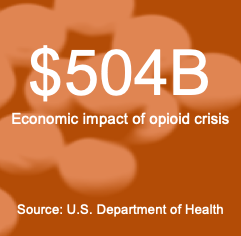
    In addition to the toll on life and health, the opioid crisis is costly.  The U.S. Department of Health puts the economic costs at $504 billion, which includes  healthcare costs, criminal justice costs, lost productivity due to addiction and incarceration, and more. The CDC puts the annual cost of the opioid crisis at $75 billion.

    Efforts to recover these costs include litigation. From there, defendants turn to the insurers where another layer of dispute arises.

    Speaking on an HB webinar titled Insurance Coverage Issues Arising from Opioid Litigation and Investigations, policyholder attorney Bernard Bell of Miller Friel PLLC said lawsuits fall into three categories: 1) state and local governments, and tribes, are suing to recover expenses associated with their response to opioid abuse; 2) suits against manufacturers for alleged gross misrepresentation of the risks and against distributors for failing to monitor suspicious orders; and 3) individuals suing drug makers and distributors for their addictions.

    There are 2,000 lawsuits pending, with 1,200 of them in MDL in the U.S. District Court for the Northern District of Ohio in Cleveland. Plaintiff attorneys have recently said that a mandatory class maybe be the only way to resolve the litigation.

    A new class action lawsuit filed in November 2018 in West Virginia seeks to represent children exposed to opioids in utero. According to Top Class Actions, the suit alleges that in 2017, 50 out of every 1,000 babies born in West Virginia were born addicted to opioids.

    Many of the costs associated with the crisis “don’t always fit very well with specific losses that insurance policies are designed to cover,” said insurance industry attorney Laura Foggan of Crowell & Moring LLP.

    For that reason, and with so much at stake, so much liability, and so many deep pockets, we can expect policyholders and insurers to battle the issue out in the courts.


    Foggan and Bell addressed the insurance aspects of the litigation during a recent HB webinar, titled Insurance Coverage Issues Arising from Opioid Litigation and Investigations. The program is now available on-demand. Click to register.

  • Mitigating Operational Cyber Risk: As Business Technology Changes, So Does Your Risk Profile

    By Tom Hagy

    The various risks of doing business in our digitally connected world continue to evolve.  So must the approach organizations take in confronting those risks, for failing to do so in the current risk landscape can be far more dangerous than in prior years.

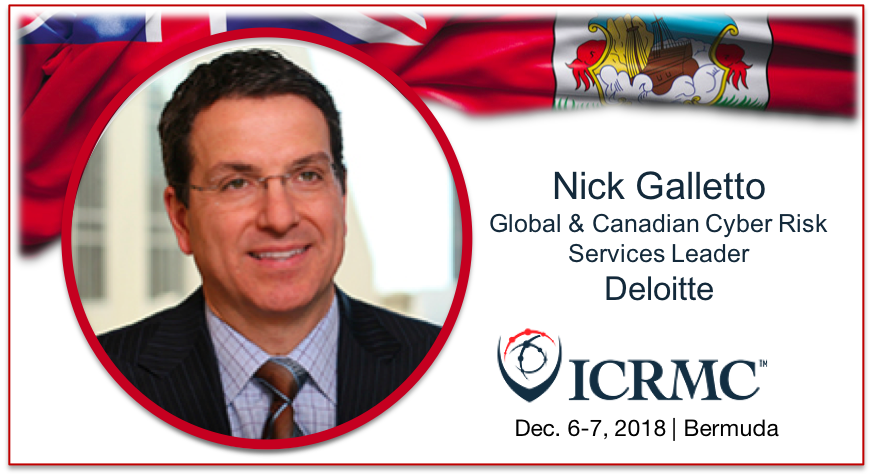
    I spoke with Nick Galletto, Global Cyber Risk Leader at Deloitte, who traced the evolution of the dangers of doing business in a digitally connected world. Early on, our focus in the cyber risk management space was on how to protect websites from being defaced, he explained. Organizations had to make sure websites were functioning properly, that data was secure, and the integrity was maintained.

    Galletto went on to say that we’ve moved from an era of compliance and risk management to an era of complexity.  From an organization’s perspective, their focus was on making sure the company was compliant with new and evolving regulations, and risk management meant having policies, procedures and effective controls in place.

    “While compliance is a necessity, it is not the silver bullet that’s going to protect us from any potential breaches,” Galletto said. “So organizations must look at conducting their business in this connected world not merely from a compliance perspective but from a risk perspective. A clear example of this is the number of PCI-compliant companies that were still getting breached.”

    “Now as organizations move into an era of complexity, they need to be proactive in detecting anomalies and suspicious behavior and be prepared so their teams have a playbook that allows for seamless response. Effective organizations will play back possible breach scenarios – whether they involved data breaches or denial of service — to  prevent and prepare for similar attacks. They also focus on understanding what their crown jewels are and where they reside and how to best protect them.  Much of this also has to do with data,” Galletto said.

    “Organizations are increasingly reliant on the cloud and they must understand the associated risks and the individuals responsible for managing those risks,” he said. “They need to be sure they have the right coverage as well.”

    “This era of complexity – automation, machine learning, artificial intelligence and the internet of things, along with the tremendous advantages, like the cloud – also bring new risks,” Galletto continued. “As consumers we see use of these technologies more and more in our daily lives. But organizations are increasingly integrating them into their operations. When something goes wrong here there can be actual safety implications, such as with autonomous vehicles or industrial controls in the mining and manufacturing sectors, as examples. In the financial sector these technologies bring great advantages to customers in terms of accessing their information more efficiently or providing better customer support. But as machine learning and AI become more prevalent in the world of FinTech, decisions are being made without human cognitive capabilities to know right from wrong. These new technologies bring more complexity.”

    “As organizations take advantage of these innovative new technologies, they also have to know that their risk profile is changing right along with them. Smart companies will be proactive in understanding the risks associated with cyber everywhere, understanding where their cyber posture is and make adjustments along the way to better manage complexity.”

    Galletto is one of the speakers at this week’s International Cyber Risk Management Conference in Bermuda, which just kicked off this afternoon with more than 200 professionals in this center of global cyber risk.  

  • Aon SVP Belfiore on Corporate Cyber Risk

    Cyber Risk of Paramount Concern to Corporate Boards

    Lack of History Remains a Challenge

    “Cyber security is the most polarizing issue on the corporate board agenda these days,” says Anthony Belfiore, SVP and Chief Information Security Officer at Aon. “It has the most potential impact and the most regulatory pressure among all risks companies face. Nothing is more top of mind right now.”

    “You just have to look at the amount of media coverage and the actual realized impacts companies are experiencing. Hundreds of thousands of businesses from big to small are being affected. The entire healthcare system in the UK went down. The impact is tangible. It’s affecting day-to-day operations,” he says. “And no one is immune. Board members come from a diverse set of industries, and all are impacted.”

    Why is cyber risk such a hot button for companies versus other types of risks?

    “The risk has become more urgent as it has shifted to actual business interruption,” Belfiore says. “Historically companies were concerned with data leakage and loss, or regulatory fines, but now the actual operation itself can come to a halt. When a company goes down for three days that hits the media. Analysts notice. You can trace a specific event to a drop in stock values.”

    Aren’t fines still a concern?  

    “Yes. We are operating in a regulatory environment which can have a significant downside,” Belfiore says. “This is especially true if you are a multi-national firm with considerable operating and capital expenses. You can sustain significant and unforeseen punitive fines which can be imposed anywhere around the globe, for example, if you’re found non-compliant with GDPR.”

    What about directors themselves?  

    “Potential for board liability for failing to protect shareholders is a hot-button issue right now.  D&O liability and coverage is evolving,” says Belfiore.  “There is uncertainty as to who is protected.”

    The digitization of so many aspects of conducting business has been around for a while now. So why does cyber risk continue to present challenges for the insurance industry?

    “Historical data is a challenge for insurers because there is very little relative to other risks like those posed by fire or storms for which we have decades of statistics. This makes it difficult to qualify and quantify the risk. Models are used to gauge the potential for losses but, still,” he says, “there isn’t a lot of history to go on.”

    Aren’t companies and boards okay as long as they have insurance?  

    “Organizations who think they are covered may come to a different conclusion when they read the fine print. That’s why it’s imperative to work with an experienced broker to navigate the various coverages and nuances in policy language,” Belfiore says.

    At a high-level, what should security leaders at companies do to reduce risk and anxiety around potential cyber losses? 

    Belfiore urges companies to “set up effective governance and establish an effective governance committee. Examine how you run your operation day-to-day, consider how to best manage the expectations of the C-suite and the board. Get the most out of governance committee discussions, ensure you have alignment up and down the stack, and make sure you have installed effective risk management and risk protocols.”


    Belfiore is on “The CISO Perspective” panel at the International Cyber Risk Management Conference (ICRMC) on Dec. 6-7, 2018 in Bermuda, along with Tim Dawson, Cybersecurity Chief Technology Officer at HSBC; Tom Pageler, Chief Security Officer at BitGo, Inc.; and Derek Vadala, Chief Information Security Officer at Moody’s Corporation.  

    You will be able to hear insights like these, and updates on anything that occurs between now and December in Bermuda.

    This posted was edited by HB Founder & Managing Director Tom Hagy. In the 1990s Tom launched one of the first nationwide legal reports in this area — Mealey’s Litigation Report: Cyber Tech & E-Commerce — when he was publisher at Mealey’s, now part of LexisNexis. If you are interested in posting on this site or discussing speaking opportunities, please contact us at Editor@LitigationConferences.com.

  • Cyber Risks Enter a New and Increasingly Vicious Phase

    For anyone plotting the evolution of cyber risks, the last phase of cyber-attacks was dominated by breaches that resulted in lost or stolen personal or financial data that could then be monetized.

    The current phase is different.

    “We have observed a significant increase in the number of disruptive breaches that our clients are dealing with,” says Charles Carmakal, Vice President at Mandiant/FireEye. “These involve destruction, extortion, or public shaming.”

    How are organizations dealing with this shift?

    “It’s catching many organizations off guard. Most don’t have a playbook for dealing with extortion,” Carmakal says. “While they may have thought about a ransomware situation, that’s different from the more common type of extortion we are seeing these days, where a threat actor threatens C-level executives or corporate board members with the release of sensitive information.”

    “Many organizations assume the default is they wouldn’t give into the demands, but when in the middle of a crisis too often the decision is made to pay the threat actors,” he says.

    “So it’s important to consider what your organization will do in this situation. For example, who will be involved in the decision-making process? Organizations should play out an extortion scenario so they have a plan when faced with real demands.”

    How can organizations better test the efficacy of their security capabilities?

    Many organizations conduct penetration testing or red-teaming exercises, but they often undermine their own efforts.

    “A problem arises when an organization contracts a third-party to test their capabilities, but puts a lot of restrictions on those who are doing the testing,” Carmakal says. “For example, they will tell the testing team or red team to identify vulnerabilities, but not to exploit them, or they can exploit a vulnerability but stop there and not dig any further.  The penetration testers might be allowed to test only during a certain day of the week or certain time of day. Or they might be allowed to sample only a fraction of the organization’s IP addresses and ignore everything else.”

    “What happens is the penetration testers are not permitted access to the crown jewels,” Carmakal warns. “They can’t demonstrate business impact to the organization. This creates a false sense of security because the organization can say they had a team of qualified people try and fail to break into the network, but in reality they were unable to break through because of all the unrealistic restrictions imposed on that team.”

    This false sense of security travels to the top. “Testing results are shared with the board and the board believes that because a really good third-party was not able to get to the crown jewels that they have a much safer environment than they really do. That’s a very common theme we see across the industry,” Carmakal says.

    How do penetration testers deal with unrealistic testing parameters?

    “It’s part of the education process,” he says. “When a company wants us to do a very limited test, and we believe our reports will be shared with the leadership team or the board, then we just won’t take the engagement. We try to make it clear that this is not an exercise to make anyone look bad, but a way to leverage the lessons from all the bad guys who are breaking into organizations so you can strengthen your security.”

    In the end, he says, “It’s better we identify the vulnerabilities than have the bad guys do it.”

    What the geopolitical trends you are seeing?

    Iran – “They used to be unorganized. They even clumsily posted social media profiles of themselves,” Carmakal says. “But they have become much more organized, more structured, more technologically adept, and have affiliated with government entities.”

    “In 2017 we saw more intrusions from Iran than we had ever seen before. There was a noticeable spike in offensive intrusions coming from them. For some reason, in 2018 we really haven’t seen Iran targeting organizations in the United States. They’ve scaled back significantly in the US, but are still active in other parts of the world.”

    “What makes security professionals nervous about Iran,” Carmakal says, “is that they are a wildcard. You don’t know what they are going to do. You don’t understand the rationale behind their activity. But what we do see is a capability and a willingness to be incredibly destructive – taking down businesses and publicly shaming organizations. The fact that they’ve slowed down their attacks on U.S. organizations is interesting, but we expect that to change.”

    Russia – “Russia is not hacking the U.S. midterm elections like they were with the presidential election in 2016, but they are conducting some significant offensive operations around the world. They are very capable. They are also very good at disinformation and throwing false flags, so when you investigate them it’s difficult to tell who they really are. Russia is one of the few countries that demonstrates the willingness and capabilities to cause kinetic consequences through cyber-attacks, such as when they turned off the lights in Ukraine.”

    In March 2018 The New York Times wrote, “The Trump administration accused Russia … of engineering a series of cyber-attacks that targeted American and European nuclear power plants and water and electric systems, and could have sabotaged or shut power plants off at will.”

    When asked about this and the reporting that surrounded it, Carmakal said the story was a bit “sensationalized” and not 100% accurate. “While the intrusion was serious, we didn’t see the Russian actors getting anywhere near being able to shut off the lights,” he said, adding that they “certainly have the capability” in other parts of the world.

    China – There has been a “notable decrease” in cyber intrusions from China since the 2015 bi-lateral cyber agreement was reached between President Obama and China’s President Xi, Carmakal says. While narrow in scope, addressing economic espionage — China’s state-sponsored theft of private U.S. intellectual property and then turning it over to state-owned and private companies in China — the agreement does appear have helped, reports suggest. “They are still hacking organizations and are following a defined playbook. We’re keeping a close eye on them to see how their offensive operations evolve,” Carmakal says.

    North Korea – Except for the highly publicized attack against a major U.S.-based entertainment company, “North Korea rarely goes after Western organizations.” Given the country’s need for cash, “their focus has been more on robbing digital currency exchanges and stealing from banks digitally,” Carmakal says, adding that they, like Iran, are a bit of a “wild card.” North Korea actors have stolen more than $100 million from victims, Carmakal says.


    You will be able to hear insights like these, and updates on anything that occurs between now and December in Bermuda when Carmakal and his fellow panelists discuss important trends in global cyber risks.

    This posted was edited by HB Founder & Managing Director Tom Hagy. In the 1990s Tom launched one of the first nationwide legal reports in this area — Mealey’s Litigation Report: Cyber Tech & E-Commerce — when he was publisher at Mealey’s, now part of LexisNexis. If you are interested in posting on this site or discussing speaking opportunities, please contact us at Editor@LitigationConferences.com.

  • Foggan & Huggins on Opioid Litigation Defense Coverage

    Is a drug company that’s sued in connection with the manufacture, promotion and distribution of opioids covered by its insurer for defense costs?

    According to Laura A. Foggan and Michael Lee Huggins of Crowell & Moring, LLP, that determination will come down to whether, in the relevant state, an accident takes place when either the act or the injury was unintentional, or whether an accident occurred if only the act was unintentional.

    This definition will vary by state, Foggan and Huggins wrote in California Litigation, published by the Litigation Section of the California Bar earlier this year.

    South Carolina may permit coverage if “either the act or the injury was unintentional,” they explained. In Liberty Mutual v. J.M. Smith, the Fourth Circuit held that if a drug company failed to identify and alert regulatory agencies of suspicious drug orders, then there may be a duty to defend.

    But in California, the Crowell & Moring attorneys wrote, with that state’s definition of “accident” a state appellate court in Travelers v. Actavis held that a “deliberate act is not an accident, even if the injury is unintentional, unless the injury was produced by an additional, unexpected, independent, and unforeseen happening.”

    In that case drug company Actavis allegedly engaged in deceptive marketing in order to sell more opioids and reap more profits. According to Foggan and Huggins, the court said such alleged conduct can only be described as deliberate and intentional. Whether the company intended to injure anyone is irrelevant in determining coverage, the court determined.

    “[T]he court concluded that none of the alleged injuries — including the flood of opioids into the American medical market, the opioid epidemic, the resurgence in heroin use, or the increased public healthcare costs resulting from long-term opioid use — was an ‘additional, unexpected, independent, or unforeseen’ event that would support a duty to defend,” the attorneys wrote. For these reasons the California appeals court found there was no possibility of defense coverage under a CGL policy.

    The latest is that the California Supreme Court granted review of Travelers v. Actavis but deferred briefing until there is a ruling on the definition of “occurrence” in another case, Liberty Surplus v. Ledesma & Meyer.

    Foggan and Huggins also discussed issues such as “relief sought ‘for’ or ‘because of’ bodily injury,” products exclusions, and a number of untested coverage issues, such as whether opioid injuries constitute a continuous trigger of coverage or how the role a defendant played in the opioid market impacts coverage.

    The complete article will be included with the handouts accompanying our Dec. 4, 2018, CLE webinar. Laura will be joined by policyholder counsel Bernard Bell of Miller Friel PLLC. 

  • Kenneth Jones of Tanenbaum Keale on Law Firm Tech Development Capabilities

    Should Law Firms Should be Able to Develop Custom Technologies?

    Here is #10 of Jones’ Top-10 List.

    #10. Security. The cloud is great, and generally speaking, companies in this space operate systems in a highly professional manner. However, occasionally one encounters special business needs which call for extensive “above and beyond” levels of security. This could be times a firm is storing financial information, medical records, or other data they wish to absolutely, positively protect. In these situations — under the theory that “no one does things better than I do” —it’s nice to have the option to build super-secure systems with features such as encrypted data within database tables, and to manage the systems with a very small number of highly trusted professionals specifically known by the law firm. Read more of the article posted by Thomson Reuters.


    Kenneth Jones oversees various aspects of technology at Tanenbaum Keale LLP in the role of Chief Technologist. He leads efforts to support TK’s computing environment and infrastructure, one that features a strategy of professionally protecting and processing client data in the cloud with highly skilled and respected leading-edge business partners in the technology space. Ken also helps lead and support various TK programs in the areas of security, compliance, business continuity and firm administration. Learn more. 

  • Protecting Intangible Assets: Risk Transfer Market Yet to Catch Up

    Intrinsically Intangible.                        

    by Giles Harlow, Senior Vice President, Aon (Bermuda) Ltd.

    In the early 1980’s, tangible assets made up around 80% of the value of the S&P 500. Fast forward to today and nearly 85% of the value of the S&P 500 is attributable to intangible assets.

    However, the risk transfer market has not caught up. According to the Aon/Ponemon report of last year, whilst around 60% of tangible assets (property, plant and equipment) are currently being insured, only 12% of informational assets are.

    So what gives?

    If the vast majority of companies’ values in 2018 are attributable to intangibles, why are they not transferring those risks? Is it a lack of education on the client side? A lack of innovation in the brokerage community? A lack of understanding or willingness to accept these new risks on the carrier end? Or is it that whilst the marine and property markets have had centuries to evolve, the newer intangible insurance markets are just gearing up to size as they collate the data they need to properly price and model these risks?

    Likely, it is some combination of all of these factors. We have seen great strides in the cyber market, with double-digit premium growth over the last four-to-five years. The market has evolved from being focused on large data holders, to providing products which contemplate the cyber perils affecting manufacturers, the transportation industry and other non-data holders.  “Business interruption” has quickly morphed into “system failure coverage.” “Contingent business interruption” now looks more akin to full supply chain risk, not just for IT service providers but now contemplating all vendors. “Bodily injury” and “property damage” stemming from non-physical threats complete the circle back into tangible loss being covered under cyber policies.

    Intellectual property — hands down — makes up the largest dollar percentage of the intangible asset value of the S&P 500.  This has long been a conundrum for the industry as a whole – both in terms of how to value the asset and, more so, how to value the loss. Again, we have seen great momentum here with much larger limits than were historically available now obtainable from the markets both as a theft product as well as being offered for IP infringement. Even now carriers are contemplating supporting the multi-trillion dollar asset class of intellectual property when used as collateral. This could dramatically impact both the equity financing model and asset backed lending world we know today.

    Clearly the will to innovate is alive and well within the industry. It is tough to price emerging risk when the models that our industry are built on rely on historical data, data that is often out of date or irrelevant in these rapidly evolving intangible classes of business. New ways to price and structure these insurance purchases have to be found in order to maintain the industry’s relevance in today’s world.


    Bermuda is at the forefront of many of these initiatives and its underwriters and brokers are constantly seeking to raise the bar to address evolving client need. The panel titled “Evolution of Product and Buyer” will be tackling these and more topics in detail at the Dec. 6-7, 2018, International Cyber Risk Management Conference, or ICRMC, in Bermuda from the perspective of brokers, underwriters and insurance purchasers.

    Get 10% off the registration fee with promotion code HB2018. 

    http://www.aon.com/risk-services/cyber.jsp

    http://www.aon.com/risk-services/amats/intellectual-property-solutions.jsp

  • Financial Services Cyber Risk Information Sharing

    Why We Need to be More Like Apes, Less Like Seagulls

    By Tom Hagy

    Featuring Craigg Ballance, Director of Canadian Member Services, FS-ISAC

    Even before we can walk we are encouraged to share. We’re told to share our things even when we barely have any. Even some wild animals share food and resources – even when those resources are scarce. Some creatures are better at it than others, of course. Apes and lions? Absolutely. Seagulls? All you have to do next time you’re on the beach is toss what’s left of your ham sandwich into the air and see how generous gulls are.

    People fall into sharing — and not-fond-of-sharing — groups, too. Sharing is particularly critical in the financial sector where, while privacy and security regulations command a tight lid on data, global financial institutions are successfully sharing data about cyber risk, says Craigg Ballance, Director of Canadian Member Services for FS-ISAC in Toronto. But, he says, sharing has to take place across a broad landscape.

    “Information analysis sharing has to cut across the various subsets of the financial sector,” says Ballance. “While banks share local data, they are trying more and more to share globally, but,” he says, “banks need to share with other institutions, like insurers, investment funds, pension funds, and other types of financial institutions, for this cooperation to have the greatest and most effective impact on security.”

    While some IT professionals may tend to want to play things close to the vest, when it comes to cybersecurity teams it is the IT professional who works openly with others who is an invaluable player.

    The Danger of Over-Confidence

    Some blamed over-confident IT professionals for the massive cyber attack that temporarily crippled shipping giant Maersk in June 2017. At the same time, as reported by Reuters on June 27, 2017, Ukrainian commercial banks also sustained a cyber attacks.

    “There are a lot of smart people out there actively trying to figure out ways to mess us up,” Ballance says, whether it’s through new denial of service attacks, or cyberware and ransomware, or the creatively diabolical phishing attacks. “When one entity is falls prey to one of these schemes we’re suddenly all at greater risk,” Ballance says. “There is a limited volume of resources and talent to combat cyber-attacks, so pooling resources, information and skill sets is critical.”

    Ballance emphasizes the importance of having a playbook so when a crisis occurs people know who is supposed to do what and when. “In the midst of an attack people tend to lose their minds and not necessarily act logically,” he says. “So having a prepared methodology to get your organization out of a pickle is a piece of work we strongly advocate, as well as sharing that methodology across industries. This way, as examples, banks and insurance companies and investors can enrich each other with new insights and skills.”

    He also advocates simulated attacks and table-top exercises so people can engage as if they are dealing with a real disaster, like those conducted by FS-ISAC. Conducting post-event analysis to improve response and sharing those findings is also important.

    Experience tells us that when it comes to global cybersecurity we need to be more like gorillas and big cats than selfish seagulls down by the sea shore.


    Craigg Ballance will share insights like these and more at the International Cyber Risk Management Conference Dec. 6-7, 2018 in Bermuda. He will be joined by Nick Galletto, Global Cyber Risk Services Leader at Deloitte in a session titled, “Strength Through Information Sharing Within the Global Financial Services Arena.”

    Over the past three-plus decades, Ballance has led and managed advanced technology-enabled business initiatives across a wide range of competitive sectors, countries and areas of innovation. These build on his experience in leading electronic commerce development in one of the world’s path-setting banks in the field and on his extensive work in finance, logistics, international business and government. He is the author/co-author of three books on leveraging technology for business innovation.

    Tom Hagy is a Philadelphia-based writer and entrepreneur, Founder and Managing Director of HB Litigation Conferences LLC and Custom Legal Content LLC, former Editor and Publisher of Mealey’s Litigation Reports, and a former Vice President at LexisNexis®.

  • Blockchain: Power to the People

    Dan Solove, co-founder of the Privacy+Security Forum and professor at GW Law School, just posted an interview with Steve Shillingford, Founder and CEO of Anonyome Labs, a consumer privacy software company. Below is part of just one exchange in the interview. 

    SOLOVE: The Internet has made so many things possible that we couldn’t do in an analog world. Yet, in some ways, the online world seems to lack the capabilities of the offline world. In the offline world, it is much easier to have anonymous transactions. This becomes much more challenging online. How can the online world be made more like the offline world in this regard?

    SHILLINGFORD: Blockchain technology shifts the balance of power back to people—to individuals—and away from tech giants, governments and data miners. It allows you to transact on your terms, just as you do offline. And it’s not just limited to financial transactions. Put anything on the blockchain you want. The blockchain gives a person the ability to publish only the information THEY decide to divulge. Nothing more, nothing less. And no more hidden agendas, no selling personal data without your consent, no worries about privacy. Just like the analogue world, you decide the context, the content, and duration of the information you provide…not the big guys. It can really be that easy.

    Read the complete interview. 

    See the latest faculty and agenda updates for the Privacy+Security Forum 2018 | Oct. 3-5, 2018 | Washington, D.C.