Category: Emerging Litigation & Risk

  • Wildfire Insurance Coverage for Homeowners and Businesses with Anderson Kill

    Wildfire Insurance Coverage for Homeowners and Businesses with Anderson Kill

    Wildfire Insurance Coverage for Homeowners and Businesses with Anderson Kill

    Concepts: Natural Disasters, Damage and Loss, Homeowner Insurance, Property Insurance, Risk Mitigation, Insurance Recovery

    The horrific wildfires unleashing carnage in Southern California underscore the need for reliable insurance protection both for businesses and homeowners.

    As of Jan. 16, 2025, these wildfires have scorched more than 60 square miles, claimed at least 25 lives, and left 26 people missing. With more than 12,000 structures destroyed and tens of thousands displaced, the economic impact is estimated between $135 billion and $150 billion.

    On a new episode of the Emerging Litigation Podcast, we discuss the types of damages and losses typically covered under homeowner and commercial property insurance policies, policy limitations, navigating the claims process, and business interruption coverage. We also discuss a Jan. 10, 2025, ruling out of the Northern District of California in Bottega v. National Surety which held in a business interruption case that whether smoke damage caused the suspension of operations at the policyholders’ businesses is a genuine issue of fact.

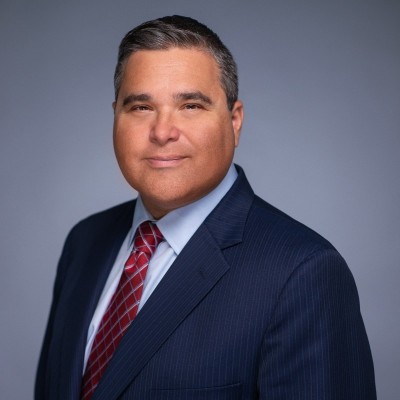
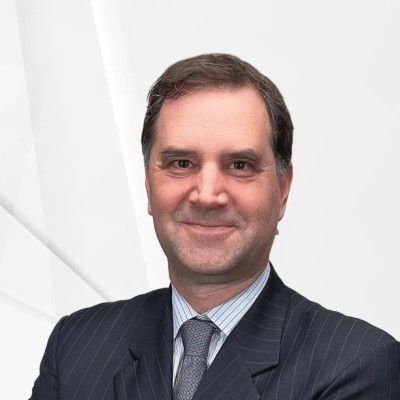
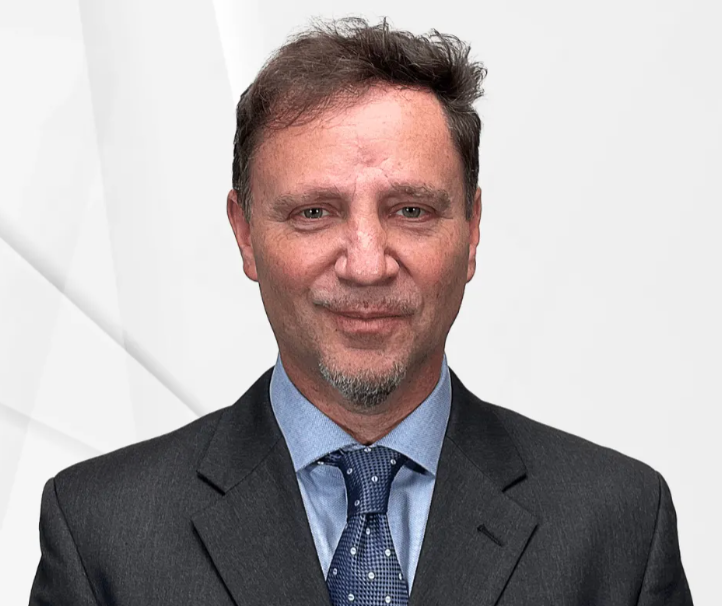
    My guests are all from the long-time insurance recovery law firm of Anderson Kill. Dennis Artese is a shareholder in the New York office and is chair of the firm’s Climate Change and Disaster Recovery practice group. Marshall Gilinsky is a shareholder the firm’s Boston office and practices in the firm’s Insurance Recovery and Commercial Litigation groups, as well as its Restaurant, Retail & Hospitality Group. Joshua Gold is a shareholder in the New York office. He chairs the Cyber Insurance Recovery Group and co-chairs the Marine Cargo Insurance Group. He also handles directors and officers insurance and business income/property insurance matters.

    If you have comments or wish to participate in one our projects please drop me a note at Editor@LitigationConferences.com.

    Tom Hagy
    Litigation Enthusiast and
    Host of the Emerging Litigation Podcast
    Home Page
    LinkedIn

    podcast logo face


    Want to appear on the Emerging Litigation Podcast?


    Send us your idea! 

    It’s possible it could make this man smile. But let’s not get ahead of ourselves.

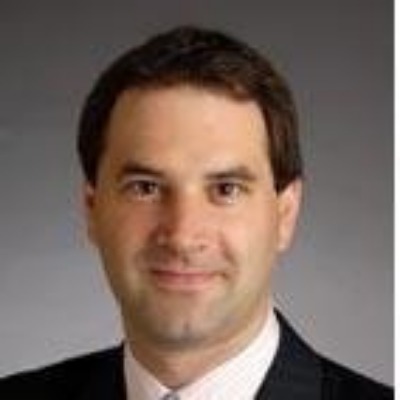
    Dennis J. Artese

    Dennis J. ArteseAnderson Kill

    Dennis Artese is a shareholder in Anderson Kill’s New York office and is chair of the firm’s Climate Change and Disaster Recovery practice group. He is also co-chair of the firm’s Construction Industry group. Dennis’s national practice concentrates on all types of insurance recovery litigation, with an emphasis on securing insurance coverage for property and business interruption losses stemming from natural disasters and other perils as well as for construction-related first-party property losses and third-party liability claims.

    Dennis has substantial experience in all phases of litigation, arbitration and property insurance appraisals, and has recovered hundreds of millions of dollars of insurance proceeds on behalf of policyholders in connection with a variety of property, builder’s risk, commercial general liability, umbrella and excess liability, D&O, E&O, crime, and political risk insurance claims. Dennis also has extensive experience in litigating insurance broker malpractice cases and other general commercial litigation disputes, including construction-related disputes.

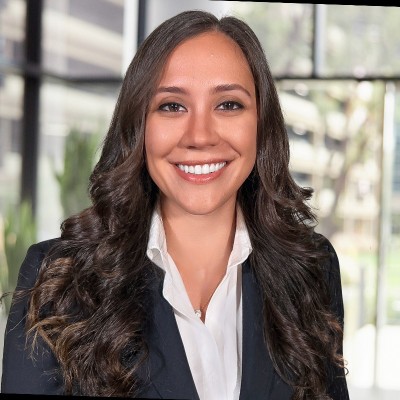
    Marshall Gilinsky

    Marshall GilinskyAnderson Kill

    Marshall Gilinsky is a shareholder in Anderson Kill’s Boston office and practices in the firm’s Insurance Recovery and Commercial Litigation groups. Marshall is co-chair of the firm’s Sexual Harassment and Abuse Insurance Recovery Group and Sports, Media and Entertainment Group, and a member of the firm’s Banking and Lending Group and Restaurant, Retail & Hospitality Group.

    During his 20-year career representing policyholders, Marshall has recovered hundreds of millions of dollars for his clients, successfully litigating disputed claims under a variety of insurance products, including property and business interruption insurance, commercial general liability (CGL) insurance, errors and omissions (E&O) insurance, directors and officers (D&O) insurance and life insurance.

    Marshall Gilinsky has represented clients on numerous high-stakes, complex insurance claims arising out of prominent losses such as 9/11, Hurricane Katrina, Superstorm Sandy and the “Big Dig” in Boston. He also focuses extensively on assisting clients that own and manage captive insurance companies, especially with respect to resolving coverage disputes between the captive and its reinsurers.

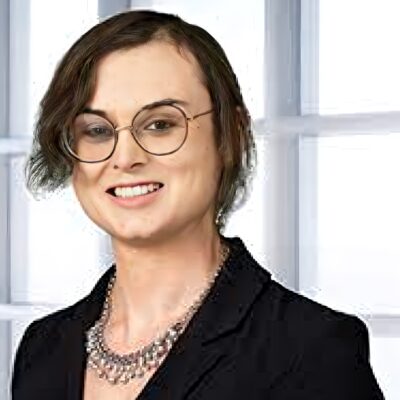
    Joshua Gold

    Joshua GoldAnderson Kill

    Joshua Gold is a shareholder in Anderson Kill’s New York office and serves as chair of the Cyber Insurance Recovery Group and co-chair of the Marine Cargo Insurance Group. He has represented numerous corporate and non-profit policyholders in various industries, with recoveries for his clients well in excess of $1.5 billion.

    Josh’s practice involves matters ranging from international arbitration, data security, directors and officers insurance, business income/property insurance, commercial crime insurance, admiralty, cargo, and marine insurance disputes. He has been lead trial counsel in multi-party bench and jury trials, and has negotiated and crafted scores of settlement agreements including coverage-in-place agreements.

  • Humans at Work with Leah Stiegler

    Humans at Work with Leah Stiegler

    Humans at Work with Leah Stiegler

    Concepts: Workplace Culture, Employment Law, Employment Compliance, Workplace Romance, Workplace Disputes, Pregnancy at Work, Harassment at Work, Working Overtime, Implicit Biases, Microaggressions

    People. We’re complicated creatures. We can be compassionate. We can fall in love. Sometimes we don’t care for each other, but here we are. 

    Also, some people cross the lines of propriety, causing emotional or even physical harm to others on our teams, whether we work with them, for them, or whether we supervise them. And sometimes we work more than regular hours, either because we’re directed to or because we’re willing to do what it takes to help our teams succeed. The workplace can be a labyrinth of tricky situations, and employers need to know how to make sure workers are able to navigate them smoothly, appropriately, and within changing laws and regulations.

    Our guest is Leah M. Stiegler, aprincipal attorney at Woods Rogers, who comes to the podcast with extensive experience across a broad spectrum of employment law matters. Leah is a trusted advisor to employers, providing guidance on complex personnel issues, performance management challenges, and fostering a positive work culture. Leah earned her J.D. from University of Richmond School of Law, cum laude, Order of the Coif, and her B.A. and B.S. degrees from Virginia Tech, summa cum laude.

    Listen as Leah shares practical solutions for a variety of challenges, like love at work, pregnancy at work, discord at work, harassment at work, and working overtime. She talks about gender identity protections, implicit biases, and microaggressions, plus conducting administrative investigations, and ideas to mitigate risk, stay out of court, and maintain a positive work environment.

    Thanks to Leah for sharing her insights on issues that arise where many of us spend most of our waking hours – at work! Her enthusiasm and passion for this work will be obvious to anyone who listens. I hope you enjoy it as much as I did producing it.

    I hope you enjoy the conversation! If so, give us a rating!

    This podcast is the audio companion to the Journal on Emerging Issues in Litigation. The Journal is a collaborative project between HB Litigation Conferences and the vLex Fastcase legal research family, which includes Full Court Press, Law Street Media, and Docket Alarm.

    If you have comments, ideas, or wish to participate, please drop me a note at Editor@LitigationConferences.com.

    Tom Hagy
    Litigation Enthusiast and
    Host of the Emerging Litigation Podcast
    Home Page
    LinkedIn

    podcast logo face


    Want to appear on the Emerging Litigation Podcast?


    Send us your idea! 

    It’s possible it could make this man smile. But let’s not get ahead of ourselves.

    Leah Stiegler

    Leah StieglerWoodsRogers

    Leah can walk employers through any workplace situation. From complex personnel matters, to implementing client-specific performance management practices, Leah advises employers to navigate these issues to keep them out of court. Her counseling covers the entire employment spectrum: recruitment, onboarding, workplace culture, pay equity audits, RIFs, terminations and severance packages.

    Leah handles workplace investigations and defends actions before administrative agencies such as the EEOC, DOL, and NLRB. Leah has extensive litigation experience, defending employers in state and federal court.

    Leah also represents employers navigating union issues, labor relations arbitrations and collective bargaining. Every workforce loves Leah’s dynamic public speaking style. Having traveled the Mid-Atlantic to train front-line employees, upper management, HR and other industry professionals, Leah creates custom workforce training programs with her team and has fun doing it!

    Leah earned her J.D. from the University of Richmond School of Law, cum laude, Order of the Coif.

  • The Long and Brawny Arm of the Foreign Corrupt Practices Act with Mark Bini and Tom Suddath

    The Long and Brawny Arm of the Foreign Corrupt Practices Act with Mark Bini and Tom Suddath

    The Long and Brawny Arm of the Foreign Corrupt Practices Act with Mark Bini and Tom Suddath

    Concepts: Corruption, FCPA, Corporate Crime, International Business, FEPA, Regulatory Enforcement

    The United Nations and World Economic Forum calculate that the cost of corporate corruption globally is $5 trillion a year, or 5% of the world’s 2022 GDP.

    Corruption can hamper economic growth by discouraging investment, increasing transaction costs, and distorting market competition. It can perpetuate poverty by diverting resources away from essential services and benefiting the wealthy and powerful. It can undermine democratic institutions and erode public trust in governments. It can hinder sustainable development by diverting resources away from essential infrastructure and social services.

    The Foreign Corrupt Practices Act, or the FCPA – the government’s leading weapon in this global war on corporate crime – has far-reaching implications for companies engaged in international business. For those who violate it the consequences can be severe. And with the recent addition of the Foreign Extortion Prevention Act (FEPA), the federal government has even more to work with.

    I had the pleasure of learning more about this fascinating and complex area of the law by speaking with two attorneys with Reed Smith who practice in the firm’s Global Regulatory Enforcement Group.

    Mark E. Biniisa former federal and state prosecutor in New York. He has led multiple multi-year cross-border investigations of corporations and individuals and has particular experience in investigations involving potential Foreign Corrupt Practices Act (FCPA) violations. As a prosecutor, he worked closely and in parallel with many domestic and foreign law enforcement agencies and regulators, including the United Kingdom’s Financial Conduct Authority and Brazil’s Ministerio Publico Federal.

    Thomas H. Suddath, Jr., a former Assistant U.S. Attorney in the Criminal Division of the U.S. Attorney’s Office in Philadelphia, has extensive experience conducting international and domestic internal investigations and frequently counsels companies on compliance and voluntary disclosure issues related to the FCPA. He has handled FCPA and other internal investigations in many countries including Russia, Poland, Turkey, Greece, Hungary, Czech Republic, Mexico and Colombia.

    Thanks to Mark and Tom for sharing their insights based on decades of experience.

    I hope you enjoy the conversation! If so, give us a rating!

    This podcast is the audio companion to the Journal on Emerging Issues in Litigation. The Journal is a collaborative project between HB Litigation Conferences and the vLex Fastcase legal research family, which includes Full Court Press, Law Street Media, and Docket Alarm.

    If you have comments, ideas, or wish to participate, please drop me a note at Editor@LitigationConferences.com.

    Tom Hagy
    Litigation Enthusiast and
    Host of the Emerging Litigation Podcast
    Home Page
    LinkedIn

    podcast logo face


    Want to appear on the Emerging Litigation Podcast?


    Send us your idea! 

    It’s possible it could make this man smile. But let’s not get ahead of ourselves.

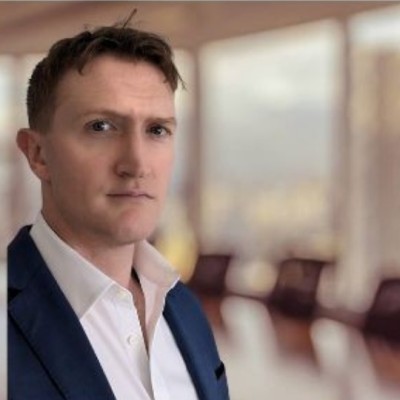
    Mark E. Bini

    Mark E. BiniReed Smith LLP

    Mark is a former federal and state prosecutor who represents corporations and individuals in connection with government investigations, internal investigations, criminal and regulatory proceedings and related civil litigation. Mark has tried 25 cases, including some of the Department of Justice’s most complex financial fraud trials in recent years, and led multiple multi-year cross-border investigations of corporations and individuals. Mark has particular experience in investigations involving securities fraud, Foreign Corrupt Practices Act (FCPA) violations, crypto fraud, health care fraud, cyber-crime, bank fraud, money laundering and Bank Secrecy Act (BSA) violations.

    Prior to joining the firm, Mark served in the Department of Justice for nearly 10 years as an Assistant U.S. Attorney in the Eastern District of New York (EDNY) and the Middle District of Florida, where he specialized in investigating and prosecuting financial and corporate crime. Before that, Mark served as an Assistant District Attorney in the Manhattan District Attorney’s Office for five years. Prior to becoming a prosecutor, Mark clerked for a judge in the Southern District of New York, and worked at a major international law firm in New York, handling complex civil litigation and white collar matters.

    Thomas H. Suddath, Jr.

    Thomas H. Suddath, Jr.Reed Smith LLP

    Tom represents companies and individuals, particularly within the healthcare sector, involved in criminal and other government investigations and related civil litigation, including matters under the Foreign Corrupt Practices Act (FCPA), the False Claims Act (FCA), the Sherman Act, the federal Food Drug and Cosmetic Act and the Anti-Kickback statute.

    Beyond the healthcare industry, he represents companies and individuals in domestic and international government investigations involving antitrust, securities fraud, political corruption, tax fraud, environmental violations and economic espionage. He has extensive experience conducting international and domestic internal investigations and frequently counsels companies on compliance and voluntary disclosure issues related to the FCPA and health care compliance. He has handled FCPA and other internal investigations in numerous countries including Russia, Poland, Turkey, Greece, Hungary, Czech Republic, Mexico and Colombia.

  • AI Survival Guide: Best Practices to Mitigate AI Litigation Risk

    AI Survival Guide: Best Practices to Mitigate AI Litigation Risk

    AI Survival Guide: Best Practices to Mitigate AI Litigation Risk

    Digital brain composed of circuitry and computer components set against a blurred technology background, symbolizing the fusion of AI and legal innovation.

    Learn about recent trends in high-stakes litigation involving AI technologies and best practices to consider to mitigate AI litigation risk.  

    Organizations using artificial intelligence-based technologies that perform facial recognition or other facial analysis, website advertising, profiling, automated decision making, educational operations, clinical medicine, generative AI, and more, increasingly face the risk of being targeted by class action lawsuits and government enforcement actions alleging that they improperly obtained, disclosed, and misused personal data of website visitors, employees, customers, students, patients, and others, or that they infringed copyrights, fixed prices, and more.  These disputes often seek millions or billions of dollars against businesses of all sizes.

    This webinar identifies recent trends in such varied but similar AI litigation, draws common threads, and discusses best practices that corporate counsel should consider to mitigate AI litigation risk, including adding or updating arbitration clauses to mitigate the risks of mass arbitration; establishing an AI Committee; collaborating with IT, cybersecurity, and risk/compliance departments and outside advisors to identify and manage AI risks; and updating notices to third parties and vendor agreements.

    Learning Objectives

    Identify Recent Trends in High-Stakes Litigation Involving AI Technologies

    “Biometric” Technology Litigation

    Website Advertising Technology (Adtech) Litigation

    Profiling / Automated Decision Making (ADM) Technology Litigation

    Other AI Litigation – Key Examples (Healthcare Tech & Gen AI)

    Identify State Laws Governing AI

    Identify Best Practices to Mitigate AI Litigation Risk

    Steps to Mitigate the Risk of Mass Arbitration

    Steps to Mitigate the Risk of Legal Noncompliance

    TAKE IT NOW & Check Your State CLE specifications

    This webinar is available to subscribers of the CeriFi LegalEdge (formerly West LegalEdcenter). If you don’t subscribe, don’t despair! Use promo code HB20 for 20% off the individual price. 

    Speakers

    Gerald L. Maatman, Jr.

    Gerald L. Maatman, Jr.Partner, Duane Morris LLP

    Gerald L. Maatman, Jr., chair of Duane Morris’ Workplace Class Action group, has nearly four decades’ experience of practicing law and has defended some of the most significant bet-the-company cases ever filed against corporate America. Mr. Maatman has represented companies, executive teams and boards across the country in class action litigation, ranging in size from thousands to hundreds of thousands of claims by employees.

    Mr. Maatman also writes and lectures extensively on class action and employment litigation topics. He has authored six books on employment law topics and has spoken to employer groups throughout the United States, as well as in Asia, Europe, Canada and Mexico. Mr. Maatman is the author and editor of a widely circulated, highly regarded industry class action report, published yearly since 2003. The report, called by EPLiC Magazine “the bible on class actions that no corporate counsel should do without,” is widely praised for its sharp analysis backed by comprehensive research, helps corporate employers navigate an increasingly volatile class action landscape.

    Mr. Maatman is recognized regularly by legal publications for his excellent work on behalf of clients. He is a 2021 Law360 MVP for Employment Law, which is his sixth such honor from Law360 since 2013. Winners of this accolade have distinguished themselves from their peers by securing impressive successes in high-stakes litigation, complex global matters and record-breaking deals. Overall, Mr. Maatman has received more Law360 MVP awards than any other attorney in the United States.

    Mr. Maatman is a graduate of Northwestern University School of Law (J.D. 1981) and Washington and Lee University (B.A., magna cum laude, 1978). He has served as an adjunct professor of law at Northwestern for more than 30 years.

    Justin Donoho

    Justin DonohoSpecial Counsel, Duane Morris LLP

    Justin Donoho, Special Counsel in Duane Morris’ Workplace Class Action Group, has defended companies faced with high-stakes, complex litigation matters for nearly fifteen years. Mr. Donoho regularly defends class actions alleging cybersecurity incidents, data privacy violations, and other issues involving thousands or millions of claims and seeking millions or billions of dollars. With a deep background in information technology, Mr. Donoho regularly helps his clients navigate IT-related issues.

    He has successfully litigated data privacy and cybersecurity issues under states’ wiretap acts, consumer fraud statutes, and common laws; the Illinois Biometric Information Privacy Act (BIPA); the Electronic Communications Privacy Act (ECPA); the California Consumer Privacy Act (CCPA); the EU’s General Data Protection Regulation (GDPR); and other laws.

    Mr. Donoho leads case teams from complaint to resolution. He has first- and second-chaired trials and mediations. Clients often compliment Mr. Donoho’s legal strategies, courtroom performances, persuasive writings, settlement negotiations, handling of depositions, management of complex discovery, dedication, and responsiveness to their needs.

    Mr. Donoho is a graduate of the University of Chicago Law School (J.D., 2009) and the University of Illinois at Urbana-Champaign (B.S., Computer Engineering, 1999).

  • AI Litigation Risks in Employment by Gerald L. Maatman Jr., Alex W. Karasik, and George J. Schaller

    AI Litigation Risks in Employment by Gerald L. Maatman Jr., Alex W. Karasik, and George J. Schaller

    The Authors

    Gerald L. Maatman Jr.

    Gerald L. Maatman Jr.Duane Morris LLP

    Chair Duane Morris’ Workplace Class Action group, Jerry has nearly four decades’ experience practicing law and has represented companies, executive teams, and boards across the country in class action litigation. He defended and won the largest systemic enforcement action ever brought in the history of the U.S. Equal Employment Opportunity Commission, the first  Attorney General prosecution of a Wall Street company for workplace discrimination and harassment, and the largest wage & hour class and collective actions ever brought in Florida and New York. He received his JD from Northwestern University School of Law, where he has been an adjunct professor for more than 30 years.

    Alex W. Karasik

    Alex W. KarasikDuane Morris LLP

    Alex is a core member of Duane Morris’ Workplace Class Action group. He defends businesses in employment law matters ranging from bet-the-company class actions to high-stakes single-plaintiff lawsuits and administrative charges. He represents clients in a broad range of industries, including restaurants, hotels, sporting venues, retailers, automotive manufacturers, logistics companies and staffing entities. Alex received Master of Communication Management and Bachelor of Arts degrees from the University of Southern California and his J.D. from Notre Dame Law School.

    George J. Schaller

    George J. SchallerDuane Morris LLP

    George practices in the area of employment law with a focus on employment-related class action litigation. He defends businesses in matters ranging from nationwide class and collective actions to single-plaintiff lawsuits and administrative charges. He represents clients in across various industries, including restaurants, logistics companies, financial services companies, and staffing entities. He is a 2021 graduate of the University of Illinois Chicago School of Law.

    Explore more from Duane Morris LLP!

    Journal (JEIL):Artificial Intelligence Litigation Risks in the Employment Discrimination Context. By Gerald Maatman Jr., Alex Karasik, and George Schaller

    CLE OnDemand Webinar: AI Nuts & Bolts Survival Guide: Artificial Intelligence – Discrimination in Employment Context. Gerald Maatman Jr., Alex Karasik, and George Schaller

    CLE OnDemand Webinar: Discovery Strategies in Wage and Hour Class and Collective Actions Before and After Certification of Putative Class. Gerald Maatman Jr., Noel P. Tripp

    Artificial Intelligence Litigation Risks in the Employment Discrimination Context

    AI is here to stay. Whether companies choose AI technology for any “employment decision,” companies must keep themselves up to date on any issued guidance and must actively monitor AI tools to prevent any possible discriminatory outputs.

    Abstract:

    AI, and generative AI in particular, took the employment world by storm in 2023, quickly becoming one of the most talked about and debated subjects among corporate counsel across the country. Companies will continue to use AI as a resource to enhance decision-making processes for the foreseeable future. As these processes are fine-tuned, those who seek to harness the power of AI must be aware of the risks associated with its use. This article analyzes two novel AI lawsuits and highlights recent governmental guidance related to AI use. As the impact of AI is still developing, companies should recognize the types of claims apt to be brought for use of AI screening tools in the employment context and the implications of possible discriminatory conduct stemming from these tools.

    Download the article now!

    Emerging Litigation Podcast

    Emerging Litigation PodcastProduced by HB Litigation and Law Street Media

    Interviews with leading attorneys and other subject matter experts on new twists in the law and how the law is responding to new twists in the world.

    Interested in CLE OnDemand? Click Here.

  • Protecting Policyholders as AI Is Developed for Insurance Claims Handling by Marshall Gilinsky and Madison Marlow

    Protecting Policyholders as AI Is Developed for Insurance Claims Handling by Marshall Gilinsky and Madison Marlow

    The Authors

    Marshall Gilinsky

    Marshall GilinskyAnderson Kill P.C.

    Marshall Gilinsky is a shareholder of Anderson Kill and practices in the firm’s Insurance Recovery and Commercial Litigation Departments. Marshall is co-chair of the firm’s Sexual Harassment and Abuse Insurance Recovery Group, and a member of the firm’s Banking and Lending Group and Hospitality Industry Practice Group.

    During his 20-year career representing policyholders, Marshall has recovered hundreds of millions of dollars for his clients, successfully litigating disputed claims under a variety of insurance products, including property and business interruption insurance, commercial general liability (CGL) insurance, errors and omissions (E&O) insurance, directors’ and officers’ (D&O) insurance and life insurance. Marshall has represented clients on numerous high-stakes, complex insurance claims arising out of prominent losses such as 9/11, Hurricane Katrina, Superstorm Sandy and the “Big Dig” in Boston. He also focuses extensively on assisting clients that own and manage captive insurance companies, especially with respect to resolving coverage disputes between the captive and its reinsurers.

    Madison Marlow

    Madison MarlowAnderson Kill P.C.

    Madison Marlow is an attorney in Anderson Kill’s New York office. She focuses her practice on insurance recovery, exclusively on behalf of policyholders.

    Prior to joining Anderson Kill full time, Madison worked at the firm during her law school years as recipient of the Gene Anderson Clerkship and as a summer associate. She was also an Alexander Fellow to the Honorable Susan D. Wigenton at the United States District Court for the District of New Jersey, where she held a full time judicial internship during her Fall 2022 academic semester.

    The Journal on Emerging Issues in Litigation

    Emerging Litigation Podcast

    Emerging Litigation PodcastProduced by HB Litigation and Law Street Media

    Interviews with leading attorneys and other subject matter experts on new twists in the law and how the law is responding to new twists in the world.

    Protecting Policyholders as AI Is Developed for
    Insurance Claims Handling:

    Ensuring “Decency and Humanity” in the Digital Age

    Adherence to “decency and humanity” in the claims-handling function must not be curtailed. In an age increasingly dominated by AI, it becomes even more crucial that these principles guide the integration of technology in insurance company operations.

    Abstract:

    The integration of artificial intelligence (AI) within the insurance industry raises concerns that insurance companies might use the technology to unfairly curtail or deny policyholders’ claims. Drawing on the historical example of the Colossus software, this article outlines the potential consequences of diminished human oversight in AI-driven claims handling. In the past, technology was used to boost insurance companies’ bottom lines while undervaluing policyholders’ claims. We may be seeing a similar situation unfold in real time with recent investigations into and lawsuits against certain health insurance companies for their alleged algorithm-driven claim denials. This article highlights the need for watchdogs and regulators to demand that AI tools under development afford “explainability” and protect policyholder rights. Insurance companies must stand by their fundamental duty of good faith to policyholders, and courts must maintain long-standing precedent that demands “decency and humanity” in insurance company claims operations.

    Download the article now!

  • Adapting to AI: Taking a Practical Approach to Governance by Blair Robinson

    Adapting to AI: Taking a Practical Approach to Governance by Blair Robinson

    The Author

    Blair Robinson

    Blair RobinsonAttorney, Formerly with Robinson+Cole

    Blair Victoria Robinson’s practice areas included Artificial Intelligence, Data Privacy and Cybersecurity, and Business Litigation and Dispute Resolution.

    Blair has experience in data privacy and security, cybersecurity, information security governance, information technology (IT), and General Data Protection Regulation (GDPR).

    The Journal on Emerging Issues in Litigation

    Emerging Litigation Podcast

    Emerging Litigation PodcastProduced by HB Litigation and Law Street Media

    Interviews with leading attorneys and other subject matter experts on new twists in the law and how the law is responding to new twists in the world.

    Adapting to AI:

    Taking a Practical Approach to Governance

    Taking a methodical and use-case-driven approach may allow a business to embrace the transformative power of AI in critical areas while managing “wild west”-style use by employees without governance approval.

    Abstract:

    The burgeoning realm of AI presents a double-edged sword: its potential to enhance efficiency spans sectors, yet it bears considerable risks for privacy, equity, and human rights due to possible inaccuracies, hallucinations, and biases. There has been a call for regulation by both federal and state bodies, fostering a tapestry of AI-related legislation, regulations, and guidance. This paper addresses the demands of navigating this evolving legal milieu, emphasizing the need for a practical AI governance framework that businesses must embrace to harness AI’s transformative promise responsibly. With the regulatory landscape being as fragmented as it is—and with guidelines emerging from numerous authorities such as the FTC, SEC, and state privacy laws—businesses should take a diligent, strategic, and technically nuanced approach to AI governance.

    Download the article now!

  • JEIL S24 Top Legal Risks with Generative AI by Graham Reynolds, Robin Sagstetter, and Damon W.D. Wright

    JEIL S24 Top Legal Risks with Generative AI by Graham Reynolds, Robin Sagstetter, and Damon W.D. Wright

    The Authors

    Graham Reynolds

    Graham ReynoldsGordon Rees Scully Mansukhani

    Graham Reynolds is an experienced technology lawyer who is known for his ability to think outside the box, understand industry trends, and provide counsel on complex legal problems. He has a deep understanding of the issues surrounding the e-commerce and ad-tech industry and has been instrumental in helping numerous technology companies navigate the often-challenging legal landscape.

    In his current role as a Senior Counsel, Mr. Reynolds represents clients in a wide range of legal matters, including technology transactions, privacy matters, and FTC regulatory compliance.

    Robin Sagstetter

    Robin SagstetterGordon Rees Scully Mansukhani

    Robin G. Sagstetter is an Associate at GRSN working cases in the areas of Employment Law, Construction Law, Torts Product Liability, Professional Liability and Personal Injury, litigating cases in both state and federal courts.

    Damon W.D. Wright

    Damon W.D. WrightGordon Rees Scully Mansukhani

    Damon Wright heads the Advertising & E-Commerce practice. He represents leading brands, direct response advertisers, e-commerce retailers, lead generators, advertising agencies, fulfillment companies, technology companies, and related service providers.

    The Journal on Emerging Issues in Litigation

    Emerging Litigation Podcast

    Emerging Litigation PodcastProduced by HB Litigation and Law Street Media

    Interviews with leading attorneys and other subject matter experts on new twists in the law and how the law is responding to new twists in the world.

    Top Legal Risks with Generative AI

    AI poses tremendous benefits and significant legal risks for
    businesses. From algorithmic bias to copyright infringement, right
    of publicity, and web scraping, we can expect to see AI-related cases
    filling court dockets for years with courts applying well-established
    existing law as well as laws soon to come.

    Abstract:

    AI is dramatically transforming our world in positive and negative ways. Among the positives, AI makes it amazingly fast to make decisions or create interesting content. Among the negatives, AI makes it amazingly easy to violate, even unknowingly, a variety of laws. In the near future, we can expect to see a robust body of “AI law” through federal and state legislative action, as well as Federal Trade Commission and other agency rulemaking. But the absence of “AI law” today does not mean there is no law. Rather, businesses are being sued every day for alleged misuse of AI in violation of well-established existing law. As discussed in this article, the courts are seeing a host of AI cases involving a variety of issues, including algorithmic bias, copyright infringement, right of publicity, and web scraping.

    Download the article now!

  • The Use and Abuse of the Pollution Exclusion by Robert D. Chesler, Dennis J. Artese, and Jamie O’Neill

    The Use and Abuse of the Pollution Exclusion by Robert D. Chesler, Dennis J. Artese, and Jamie O’Neill

    The Authors

    Robert Chesler

    Robert CheslerAnderson Kill P.C.

    A leading participant in the birth of modern insurance law in the early 1980s, Robert D. Chesler is a shareholder in Anderson Kill’s Newark office. He represents policyholders in a broad variety of coverage claims against their insurers and advises companies with respect to their insurance programs.

    Dennis J. Artese

    Dennis J. ArteseAnderson Kill P.C.

    Dennis Artese is a shareholder in the New York office of Anderson Kill. He is chair of the firm’s Climate Change and Disaster Recovery practice group and co-chair of the firm’s Construction Industry practice group. Dennis’s national practice concentrates on all types of insurance recovery litigation.

    Jamie O'Neill

    Jamie O’NeillAnderson Kill P.C.

    Jamie O’Neill is an attorney in Anderson Kill’s New York office. She focuses her practice on insurance recovery, exclusively on behalf of policyholders.

    The Use and Abuse of the Pollution Exclusion

    The basic legal issue of what constitutes a pollutant or contaminant is
    overlaid with fact issues. Policyholders will continue to be at risk
    as courts in the 50 states apply pollution exclusions in fact patterns
    that policyholders never expected.

    Abstract:

    Recent court decisions and ongoing cases have brought to the forefront the critical issue of the reach of pollution exclusions in insurance policies. Jurisdictions from South Dakota to Hawaii are redefining the scope of what constitutes a “pollutant,” with significant developments that affect coverage in cases that range from contaminated agricultural products to carbon monoxide poisoning and greenhouse gas emissions. The thread that brings these cases together is the age-old question of what constitutes a “pollutant”: Is the term limited to traditional environmental pollution, or should it be read more broadly to encompass other contaminants and non-environmental situations?

    Download the article now!

    Explore More from Anderson Kill!

    Journal on Emerging Issues, Editorial Board of Advisors 

    The Use and Abuse of the Pollution Exclusion. By Dennis Artese, Jamie O’Neil, Robert Chesler

    The Environmental, Social, and Governance Police Have Arrived: Is your Insurance Ready. Authors: Dennis Artese, Bob Chesler.

    Podcast 1 of 2 series: PFAS Insurance Coverage with Jaana Pietari and Jim Fenstermacher and Litigation with Bob Chesler

    Sister article to podcast 1 of 2 series: Remediating,, and Litigating PFAS Claims. By Dr. Jaana Pietari, PhD, MBA, PE, Jim Fenstermacher, PE, Dr. Michael Bock, PhD, MS, Robert D. Chesler and Nicholas M. Insua, Sheila Mulrennan, Robin Kelliher, Jason R. Waters

    Podcast 2 of 2 series: Insurance Coverage for PFAS Claims with Robert Chesler of Anderson Kill

    Podcast: Autonomous Vehicles: The New Technology Driving the Litigation Conversation Podcast with Cort Malone, John Leonard, Joshua Zelen

    Podcast: Violations of Biometric Privacy Laws: Policyholders’ Victories and the Implications Going Forward with John Leonard and Cort Malone

    Police–The Environmental, Social, and Governance Police Have Arrived: Is your Insurance Ready. Authors: Dennis Artese, Bob Chesler

    How Insurance Companies Defraud Their Policyholders, and What Courts and Legislators Should Do About It. Authors: Robert Chesler, Amy Weiss, and Jade Sobh

    The Promise and Peril of Quantum Computing and Its Implications for Cyber Insurance. By Cameron R. Argetsinger

    Climate Change, ESG, D&O Insurance: Collision or Cooperation? By Robert D. Chesler, Dennis J. Artese and Joseph Villa

    The Use and Abuse of the Pollution Exclusion. Authors: Dennis Artese, Jamie O’Neil, Robert Chesler

    Property Insurance Coverage for Emerging Risk: Underground Climate Change. Authors: Dennis J. Artese, Ethan W. Middlebrooks, Thomas Dupont

    Litigation After Biometric Privacy Law Violations: Policyholder Victories and Their Implications. Authors: Cort T. Malone, Abigail Damsky

    Autonomous Vehicles: The New Technology Driving the Litigation Conversation. Authors: Cort Malone, John Leonard, and Joshua Zelen

  • Cracking the College Sports “Cartel”: Good for Athletes, Competition, and the Games by Joy Sidhwa and Tim LaComb

    Cracking the College Sports “Cartel”: Good for Athletes, Competition, and the Games by Joy Sidhwa and Tim LaComb

    The Authors

    Joy M. Sidhwa

    Joy M. SidhwaMoginRubin, LLP

    Ms. Sidhwa concentrates on antitrust and other complex litigation for MoginRubin and leads the document discovery team. She is involved in many facets of litigation, including creative discovery strategy and expert and trial preparation. Based on her expertise and results, Ms. Sidhwa was named to the Best of the Bar by the San Diego Business Journal and received the 2018, 2019 and 2021 International Advisory Experts Award for Complex Litigation in California. She also received the Pan Asian Lawyers of San Diego’s President’s Award for Outstanding Service in 2009 and 2010 for her service to the Board of Directors and regularly volunteers in various community services. She continues to volunteer her time to the Filipino-American Lawyers of San Diego (Director), the University of Michigan Club of San Diego (Board of Governor), and the Lawyers Club North County Committee. In 2020, she was appointed to serve as Board of Director for the Women of Color in Law, she recently stepped down from that role and is currently serving as an Advisory Board member.

    Ms. Sidhwa obtained her law degree from California Western School of Law and her Bachelor of Science degree from the University of Michigan. Prior to joining MoginRubin, Ms. Sidhwa provided expertise to national law firms in electronic document discovery and trial preparation in patent infringement, trademark, complex securities litigation, and intellectual property.
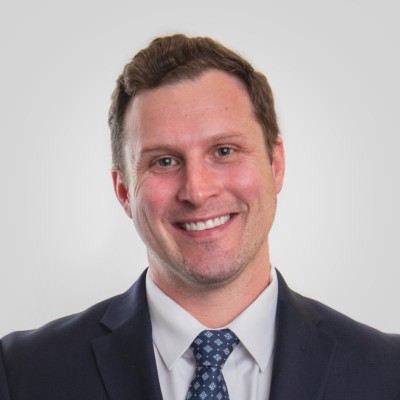
    Timothy Z. LaComb

    Timothy Z. LaCombMoginRubin, LLP

    Mr. LaComb is an Associate in MoginRubin LLP’s San Diego office and his practice focuses on antitrust, unfair competition, and complex business litigation, particularly as they relate to mergers and acquisitions.

    Prior to joining MoginRubin LLP, Mr. LaComb was an Associate at Robbins Geller Rudman & Dowd LLP where he helped secure several multi-million-dollar recoveries for shareholders in merger-related class action litigation. Through his extensive experience in complex litigation, he has developed an expertise and proficiency in electronic and other discovery-related issues. Mr. LaComb also worked as a Transaction Associate at David F. Grams & Associates, S.C. immediately after law school. He is admitted in both California and Wisconsin.

    Tim earned his J.D. from the University of Wisconsin School of Law, where he was on the Dean’s List and a member of the UW Law Moot Court Board, and earned his B.A. in Economics from the University of San Diego.

    The Journal on Emerging Issues in Litigation

    Emerging Litigation Podcast

    Emerging Litigation PodcastProduced by HB Litigation and Law Street Media

    Interviews with leading attorneys and other subject matter experts on new twists in the law and how the law is responding to new twists in the world.

    Cracking the College Sports “Cartel”:

    Good for Athletes, Competition, and the Games

    Time will show that amateurism is not what fills stadiums.


    Editor’s Note: This article will appear in the spring issue of the Journal on Emerging Issues in Litigation, published by Fastcase Full Court Press. Download a pre-publication copy now. Thanks to California Sports Lawyer Jeremy Evans for his valuable contributions to this article.

    Alston Opinion Changed Everything

    In NCAA v. Alston, 141 S. Ct. 2141 (2021), the Supreme Court upheld a district court and subsequent affirmation by the Ninth Circuit Court of Appeals in favor of players. The National Collegiate Athletic Association (NCAA) rules limiting education-related compensation violated Section 1 of the Sherman Act, the high court affirmed. Just days later, the NCAA announced interim measures allowing name, image, and likeness (NIL)–related benefits. It continued to restrict non-educational compensation, however. Left intact were bans on pay-for-play arrangements and inducements to influence a student’s choice of schools. The athletes did not challenge the remaining rules, but the Supreme Court’s decision, combined with the principles of antitrust law, opened the door to further efforts to overturn bans on compensation unrelated to education, which we are seeing.

    Before Alston, there was a string of NCAA cases before California federal courts challenging its long-standing amateurism rules. Most had reached some form of the following conclusions:

    1. If compensation distorts the amateur-professional distinction, then the NCAA has a procompetitive justification in restricting it because demand for NCAA sports is based on the amateur status of the players.
    2. If compensation is tied to the cost of attending school or an education-related benefit, then it does not threaten the amateur-professional distinction and the NCAA lacks a pro-competitive justification for restricting it.

    The Ninth Circuit found in its Alston ruling that the student athletes established that the NCAA rules produced significant anticompetitive effects within the relevant market for their labor. It then considered the NCAA’s procompetitive justification for the rules—that demand for college sports is based on the amateur status of the athletes and the rules preserve that tradition. Relying on market-demand experts, consumer survey evidence, and testimony from NCAA officials, the panel held the NCAA had a procompetitive justification to prohibit unfettered student athlete compensation but not non-cash education-related benefits. The court permitted the latter category because it would not alter the amateur-professional distinction of the student athletes. Alston v. NCAA (In re NCAA Ath. Grant-In-Aid Cap Antitrust Litig.), 958 F.3d 1239 (9th Cir. 2020)

    “Cartel of Buyers Acting in Concert”

    In a concurring opinion, Judge Milan Smith described the NCAA as a “cartel of buyers acting in concert to artificially depress the price that sellers could otherwise receive for their services.” The NCAA’s rules, the judge commented, deprived young athletes “the fundamental protections that our antitrust laws were meant to provide them.”

    The Supreme Court affirmed. Writing for the court, Justice Neil Gorsuch agreed with the district judge that the NCAA and its member schools are commercial enterprises governed by the Sherman Act. In applying the rule of reason test, he agreed with the NCAA that “antitrust law does not require businesses to use anything like the least restrictive means of achieving legitimate business purposes.” However, Gorsuch found the district court’s analysis in line with antitrust law.

    Justice Brett Kavanaugh concurred, saying the NCAA’s restrictions on non-education-related compensation left serious antitrust questions unanswered. “Businesses like the NCAA cannot avoid the consequences of price-fixing labor by incorporating price-fixed labor into the definition of the product,” he wrote, adding, “Nowhere else in America can businesses get away with agreeing not to pay their workers a fair market rate on the theory that their product is defined by not paying their workers a fair market rate.”

    From Nil to NIL: Does Amateurism Really Drive Demand for NCAA Sports?

    Opponents to NIL deals claim amateurism is what fills seats; people cram themselves into stadiums not because players earn financial rewards, but because of their passion for competition.

    As in O’Bannon v. NCAA (O’Bannon II), 802 F.3d 1049 (9th Cir. 2015), the Ninth Circuit in Alston v. NCAA focused on whether different forms of compensation impair the amateur-professional distinction. Critics challenge the notion that this distinction drives demand for college sports, and they have a point. In fact, games often become more popular after amateurs go pro. The Olympic Games, once hailed as the apotheosis of amateur competition, requires only wrestlers to compete without compensation. The popularity of the Games surged after professionals were permitted to compete. Golf followed a similar transformation.

    NIL proponents also argue that the quality of NCAA sports (i.e., the product) would improve if student-athletes were compensated. Top players often leave college early to turn professional; many would rather stay in school if they could afford it. At least some players, if compensated, would play additional seasons in college and delay advancing to the NBA. This is particularly true in college basketball, where top recruits increasingly skip college to get paid overseas or in the NBA’s developmental league.

    In its review of Alston v. NCAA, the Supreme Court noted the NCAA’s advocacy for amateurism as it describes the term. But, as the district court found in its opinion—In re NCAA Ath. Grant-In- Aid Cap Antitrust Litig., 375 F. Supp. 3d 1058 (N.D. Cal. 2019)—the NCAA never had a consistent definition of the concept; in fact, it shifted “markedly” over time. Nor did the NCAA refer to “considerations of consumer demand” in defining the word. “None of this is product redesign;” Justice Gorsuch wrote, “it is a straightforward application of the rule of reason.”

    The ultimate test of whether amateurism drives demand will come after new state laws allow compensation unrelated to education. If compensation doesn’t trigger a drop in demand, the NCAA will lose its procompetitive justification for the restriction and likely bring an end to amateurism rules.

    Momentum is clearly swinging in favor of college players in general, as additional guidance comes from states about implementing NIL policies and from judges as they encounter new arguments from athletes.

    Antitrust Class Action Certified in California

    On Nov. 3, 2023, U.S. District Judge Claudia Wilken of the Northern District of California, certified three classes of college athletes in their suit for antitrust damages (In Re College Athlete NIL Litigation, N.D. Calif.) In addition to being required to end its restraints, NCAA could face monetary damages based on payments college athletes would have received from broadcasts, video games, and other sources had they not be restricted. The plaintiffs demonstrated that issues of antitrust injury and damages could be resolved with common proof via class action, the judge determined. Further, she wrote that there is no dispute that the central question of whether the challenged rules violate Section 1 can also be resolved on a class-wide basis. With that, the court found the players showed that the predominance requirement of Rule 23(b)(3) was met with respect to the proposed damages classes.

    In their unsuccessful request for an interlocutory appeal to the Ninth Circuit, the NCAA and the “Power Five” college conferences said that if the players were to win the case, the organizations would suffer catastrophic damages – a “death knell” – for denying players a share of revenues and opportunities. They said they would be forced to settle even if they believe the players are wrong.

    Interestingly, the NCCA and the Power Five cited comments made by a leading beneficiary of NIL deals, University of Southern California quarterback Caleb Williams. The 2022 Heisman Trophy winner questioned why video game giant Electronic Arts was going to pay football players all the same flat $500 fee to appear in one of its games. Williams told Yahoo Sports: “It’s like if you go to school and you are a straight-A student and there’s another kid whose strong suit isn’t school, and he gets B’s or B-minuses. How fair would it be if you get the same grade as him? That never works in school, and it doesn’t make sense.”

    The NCCA used Williams’ remarks to support their position that star athletes would suffer if lumped into a class with average players, as opposed to allowing them to pursue individual litigation. The appeals court denied review on Jan. 18.

    On one hand, the chasm in compensation between stars and non-stars is nothing new in sports, or any field for that matter; on the other hand, it’s easy for a top-level quarterback to say, and downplays the contributions his teammates have made to his success.

    Antitrust Class Action Filed in Colorado

    Totaling the many billions of dollars generated by television broadcasts, the named plaintiff – former University of Colorado football player Alex Fontenot – says athletes “get nothing” even though they are “the most significant driver of that revenue.” To claim that amateurism is the main attraction is a “sham argument,” he says in a proposed class action filed against the NCAA and five conferences in federal court in Denver (Alex Fontenot v. NCAA, et al., No. 1:23-cv-03076, D. Colo.).

    “Defendants are operating a cartel that fixes wages—a classic antitrust violation,” the complaint reads. “The NCAA’s members (which includes its schools and conferences) are horizontal competitors. In a competitive market, they would compete for players by providing them with salaries commensurate with the true value of their labor. That competition would lead to the athletes receiving a significant share of revenue, including the television revenue from these media agreements. Athletes in other leagues (such as in European soccer leagues, the National Football League, and the National Basketball Association) regularly receive 50-60% of revenue.”

    “Many of these athletes are from disadvantaged backgrounds,” the complaint explains. “They have only a limited window to earn money based on their athletic talents, and they risk serious injury to compete in the sports that they, and fans, love. Only a small percentage of the athletes in the labor market at issue will ever play in the NFL, NBA, or WNBA, so for many of these athletes, college is their only chance to be compensated for their athletics skills. The NCAA’s rules have inflicted very serious and very great harm on the thousands of athletes that work so hard to make the NCAA’s product possible.”

    Filed Nov. 20, 2023, the complaint cites violations of Sections 1 and 2 of the Sherman Act. It seeks treble damages and a jury trial.

    Legislation

    Since NIL was unleashed on a sports-loving nation, more than half the states enacted NIL laws, fencing in the practice to varying degrees to avoid potentially unfavorable consequences. Other states and Congress are considering the issue, as well.

    Florida

    Florida was among the first NIL states and just two years later had already changed the law. The Sunshine State’s HB 7-B was enacted on Feb. 16, 2023, repealing and replacing its 2021 law which required NIL deals with student athletes to be facilitated by third parties – not universities. Now, Florida school officials may introduce and help broker NIL opportunities for players and prospects with third-party sponsors, boosters, and collectives. HB 7-B also requires universities and colleges to conduct financial literacy, life skills, and entrepreneurship workshops for players as part of receiving NIL-generated profits.

    One provision that remains in effect in Florida, however, is that universities may not use NIL as a recruitment or inducement tool, something that concerns the NCAA, universities, and college athletes. To mitigate the risk of abuse, NCAA leadership must develop anti-corruption policies and procedures, and address compliance, monitoring, education, conference parity, and fairness concerns.

    In the category of unexpected consequences, potential harm could come to those who lead NIL college teams on the playing field. Coaches make various decisions about their players. They determine how much athletes play and whether to bench or suspend them – decisions that could adversely impact their financial prospects. The new Florida law protects coaches from potential liability claims. This is sound policy, but it raises a question about NIL deals when connected to performance and pay-for-play. A traditional NIL pulls from three buckets: (1) money, (2) product, and/or (3) equity for the services of social media posting, advertising, endorsing, or consulting, or some similar activity or job. However, there have been questions raised during the anything-goes era of NIL contracts, in which they can be connected to performance, playing time, or whether a college athlete is playing for a certain university. As long as NIL deals are allowed, these issues will have to be addressed by the NCAA, universities, and legislatures.

    California

    In the first state to author NIL legislation, the California legislature is considering whether to pay college athletes more money unrelated to free market NIL payments from university television revenue or an athletic department surplus (e.g., 50% into a college fund). In addition, any payments would have to be made according to Title IX rules (e.g., equal payments to all student athletes regardless of sport profit or gender). There is also a proposed college athlete “bill of rights” and one provision that supports graduation and education. If the legislation passes (such measures have failed before) universities may look for ways to spend the money to avoid a surplus. As we’ve made clear, the surpluses can be enormous. UCLA and USC left the Pac-12 for the Big Ten to gain $40-60 million in additional television revenue each year.

    The draft legislation in California also states that employment is not to be assumed by any guaranteed payments. However, guaranteed payments in legislation for college athletes would support an argument that an employee-employment relationship exists, especially given California’s definition of independent contractors and when compared to professional athletes. An employment misclassification dispute could lead to expensive litigation against universities.

    National Solution?

    Federal legislators are also paying attention to the issue. In the summer of 2023, Sen. Richard Blumenthal co-sponsored a bill that would create a national NIL standard, as did Sens. Joe Manchin and Tommy Tuberville, and Rep. Gus Bilirakis. Sen. Chris Murphy and Rep. Lori Trahan (a former Division I volleyball player) proposed a bill that would allow international student-athletes to engage in NIL activity without losing their student visa status. That bill is also designed to encourage negotiation between athletes and their colleges for the use of athletes’ NIL for promotion and media rights deals, and ensure colleges and collectives do not discriminate based on gender, race, or participating sports when facilitating NIL deals.

    The NCAA and colleges have called for a federal standard. But, after a hearing this month on Bilirakis’ proposals, Rep. Trahan told Steve Berkowitz of USA Today, “It’s hard to imagine in this Congress, getting to an agreement on an antitrust exemption — on employment … That’s not going to pass both chambers and … Democrats and Republicans won’t come together on that one.”

    The Competition Cash Cow

    Looking back, we find it interesting that the only amateurs in the “college sports industry” – which generates billions of dollars in revenue and pays many thousands of salaries – seemed to be the players themselves. Everyone from coaches to broadcasters to hotdog vendors are compensated. Even cheerleaders and marching band musicians have been free to negotiate NIL deals.

    It seems odd to refer to college sports as an industry, but the label is warranted. According to the NCAA, Division I athletics generated $15.8 billion in 2019 from ticket sales, media rights, licensing, and donations. The Knight Commission on Intercollegiate Athletics estimates that in 2020, Division I and Division II athletics generated $21 billion. The industry also supports employment, raises tax revenue, and boosts local economies. The Knight Commission estimates that college sports generated more than 700,000 jobs and contributed $74 billion to the 2020 U.S. economy, which is about $230 per American.

    Lifting the ban is something pro-NIL groups advocated for years, just as fervently as anti-NIL forces feared it would ruin the concept of amateurism.

    Those arguing in favor of allowing players to profit from NIL have done so on the basis of fairness, empowerment, and economic opportunity for students. They asked: Why shouldn’t college athletes be rewarded for the value of their images? Why shouldn’t they have more control over their own finances and career opportunities? Permitting NIL deals offers them new economic opportunities, which are particularly meaningful to lower-income students. Of course, NIL deals help schools attract and retain top athletic talent, which further fuels the competition cash cow.

    In addition to claiming amateurism has always been the main attraction of college sports, opponents argue that allowing NIL deals will further commercialize the events, give an unfair advantage to wealthier schools, and lead to the exploitation of college athletes. While commercialization isn’t inherently a bad thing, the latter two concerns will have to be addressed.

    Contributing to this article was Jeremy Evans (jeremy@csllegal.com), CEO, Founder, and Managing Attorney of California Sports Lawyer®. Evans writes a weekly column and hosts the California Sports Lawyer® Podcast with Jeremy Evans.

    Download the abstract now!