Author: Tom Hagy

  • Foggan & Huggins on Opioid Litigation Defense Coverage

    Is a drug company that’s sued in connection with the manufacture, promotion and distribution of opioids covered by its insurer for defense costs?

    According to Laura A. Foggan and Michael Lee Huggins of Crowell & Moring, LLP, that determination will come down to whether, in the relevant state, an accident takes place when either the act or the injury was unintentional, or whether an accident occurred if only the act was unintentional.

    This definition will vary by state, Foggan and Huggins wrote in California Litigation, published by the Litigation Section of the California Bar earlier this year.

    South Carolina may permit coverage if “either the act or the injury was unintentional,” they explained. In Liberty Mutual v. J.M. Smith, the Fourth Circuit held that if a drug company failed to identify and alert regulatory agencies of suspicious drug orders, then there may be a duty to defend.

    But in California, the Crowell & Moring attorneys wrote, with that state’s definition of “accident” a state appellate court in Travelers v. Actavis held that a “deliberate act is not an accident, even if the injury is unintentional, unless the injury was produced by an additional, unexpected, independent, and unforeseen happening.”

    In that case drug company Actavis allegedly engaged in deceptive marketing in order to sell more opioids and reap more profits. According to Foggan and Huggins, the court said such alleged conduct can only be described as deliberate and intentional. Whether the company intended to injure anyone is irrelevant in determining coverage, the court determined.

    “[T]he court concluded that none of the alleged injuries — including the flood of opioids into the American medical market, the opioid epidemic, the resurgence in heroin use, or the increased public healthcare costs resulting from long-term opioid use — was an ‘additional, unexpected, independent, or unforeseen’ event that would support a duty to defend,” the attorneys wrote. For these reasons the California appeals court found there was no possibility of defense coverage under a CGL policy.

    The latest is that the California Supreme Court granted review of Travelers v. Actavis but deferred briefing until there is a ruling on the definition of “occurrence” in another case, Liberty Surplus v. Ledesma & Meyer.

    Foggan and Huggins also discussed issues such as “relief sought ‘for’ or ‘because of’ bodily injury,” products exclusions, and a number of untested coverage issues, such as whether opioid injuries constitute a continuous trigger of coverage or how the role a defendant played in the opioid market impacts coverage.

    The complete article will be included with the handouts accompanying our Dec. 4, 2018, CLE webinar. Laura will be joined by policyholder counsel Bernard Bell of Miller Friel PLLC. 

  • PFOA: Science & Litigation | 11/15/2018

    [one-third-first]

    DATE: Nov. 15, 2018

    TIME: 2 p.m. EDT; 1 p.m. CDT; 12 p.m. MDT; 11 a.m. PDT

    PLACE: Your computer or mobile device

    PRICE: $197* per dial-in site
    *Price is good through Oct. 31. After that it’s $247.

    GROUPS ARE GOOD: Registering qualifies you to multiple attendees at your location.

    CLE: 1 credit
    Please send CLE questions to
    CLE@LitigationConferences.com

    speakers

    Michael Dourson, Ph.D., DABT, FATS, FSRA
    Director of Science
    Toxicology Excellence for Risk Assessment (TERA)

    Register now and get:

    • Access for multiple colleagues at your location.

    • Practical insights from a board-certified toxicologist.

    • A through and informative PowerPoint presentation for later reference.

    • Answers to your questions via live chat.

    • CLE credit.

    And more!

    [/one-third-first] [two-thirds]

    PFOA Toxicology: What’s a Safe Level for the Environment?

    What toxic tort and environmental attorneys need to know about this ubiquitous compound. 

    Perfluorooctanoic acid (PFOA) has been described as more toxic than methyl mercury. Yet not all organizations tasked with developing safe-dose levels agree on the best approach for PFOA, resulting in recommended levels that are more than 100-times apart.

    Differences in these recommended safe-dose levels result in cleanup costs that vary by billions of dollars.

    Background

    Environmental contamination with PFOA has been known for some time. In the early 2000s safe doses in drinking water were considered to be in the range of 30-to-50 parts per billion.  Recent safe-dose assessments by EPA, ATSDR and several states have significantly lowered these safe doses to parts-per-trillion measurements.

    PFOA, also known as C8, is used to make Teflon® and similar chemicals known as fluorotelomers. According to the American Cancer Society, PFOA is “burned off during the [manufacturing] process and is not present in significant amounts in the final products.”

    However, the American Cancer Society says, “PFOA has the potential to be a health concern because it can stay in the environment and in the human body for long periods of time. Studies have found that it is present worldwide at very low levels in just about everyone’s blood. Higher blood levels have been found in community residents where local water supplies have been contaminated by PFOA. People exposed to PFOA in the workplace can have levels many times higher.

    “PFOA and some similar compounds can be found at low levels in some foods, drinking water, and in household dust. Although PFOA levels in drinking water are usually low, they can be higher in certain areas, such as near chemical plants that use PFOA.

    “People can also be exposed to PFOA from ski wax or from fabrics and carpeting that have been treated to be stain resistant. Non-stick cookware is not a significant source of PFOA exposure.”

    The underlying toxicity data has not changed that much. What differs is our understanding of the differences between experiments on animals and humans in how PFOA is excreted from the body. Recently it has been suggested that the federal approach to this safe dose assessment has not followed its own risk assessment guidelines. If true, this lack of adherence to guidelines calls into question whether the significantly lower safe doses are appropriate. If these much lower levels are not appropriate, then clean up standards to these levels may be overly costly.

    Earlier this year, the Agency for Toxic Substances and Disease Registry (ATSDR), within the Department of Health and Human Services (HHS) announced the availability of the Draft Toxicological Profile for Perfluoroalkyls for review and comment. All toxicological profiles issued as “Drafts for Public Comment” represent ATSDR’s best efforts to provide important toxicological information on priority hazardous substances. You can see the many comments received at the ATSDR website. 

    Is PFOA really more toxic than methyl mercury?

    Do we really need to spend billions of dollars in its clean up?

    How can it be that these safe doses vary so widely?

    Attendees of this webinar will learn the nuances of safe dose assessment from a board-certified toxicologist, including:

    — A thorough background on the toxicology of PFOA.

    — A practical overview of animal vs human studies.

    — An understanding of the latest federal approach to estimating the safe dose of PFOA.

    — A review of the underlying risk assessment guidelines.

    — An explanation of how more typical approaches likely yield higher safe-dose levels and less costly cleanups.

    And more!


    speaker

    Dr. Michael Dourson is a board-certified toxicologist serving as the Director of Science. Most recently, he was Senior Advisor in the Office of the Administrator at the U.S. Environmental Protection Agency. Prior to this position, Dr. Dourson was a Professor in the Risk Science Center at the University of Cincinnati, College of Medicine and worked at TERA and EPA. He was awarded the Arnold J. Lehman award from the Society of Toxicology, the International Achievement Award by the International Society of Regulatory Toxicology and Pharmacology, and 4 bronze medals from the EPA. He has been elected as a Fellow of the Academy of Toxicological Sciences and as a Fellow for the Society for Risk Analysis. He has co-published more than 150 papers on risk assessment methods or chemical-specific analyses, and co-authored well over 100 government risk assessment documents, many of them risk assessment guidance texts. He has made over 150 invited presentations to a variety of organizations, and has chaired over 150 sessions at scientific meetings and independent peer reviews. He has been elected to multiple officer positions in the American Board of Toxicology (including its President), the Society of Toxicology (including the President of 3 specialty sections), the Society for Risk Analysis (including its Secretary), and is currently the President of the Toxicology Education Foundation, a nonprofit organization with a vision to help the public understand the essentials of toxicology. In addition to numerous appointments on government panels, such as EPA’s Science Advisory Board, he is a current member on the editorial board of Regulatory Toxicology and Pharmacology and Human and Experimental Toxicology.

    REGISTER NOW

    [/two-thirds]

  • Kenneth Jones of Tanenbaum Keale on Law Firm Tech Development Capabilities

    Should Law Firms Should be Able to Develop Custom Technologies?

    Here is #10 of Jones’ Top-10 List.

    #10. Security. The cloud is great, and generally speaking, companies in this space operate systems in a highly professional manner. However, occasionally one encounters special business needs which call for extensive “above and beyond” levels of security. This could be times a firm is storing financial information, medical records, or other data they wish to absolutely, positively protect. In these situations — under the theory that “no one does things better than I do” —it’s nice to have the option to build super-secure systems with features such as encrypted data within database tables, and to manage the systems with a very small number of highly trusted professionals specifically known by the law firm. Read more of the article posted by Thomson Reuters.


    Kenneth Jones oversees various aspects of technology at Tanenbaum Keale LLP in the role of Chief Technologist. He leads efforts to support TK’s computing environment and infrastructure, one that features a strategy of professionally protecting and processing client data in the cloud with highly skilled and respected leading-edge business partners in the technology space. Ken also helps lead and support various TK programs in the areas of security, compliance, business continuity and firm administration. Learn more. 

  • Protecting Intangible Assets: Risk Transfer Market Yet to Catch Up

    Intrinsically Intangible.                        

    by Giles Harlow, Senior Vice President, Aon (Bermuda) Ltd.

    In the early 1980’s, tangible assets made up around 80% of the value of the S&P 500. Fast forward to today and nearly 85% of the value of the S&P 500 is attributable to intangible assets.

    However, the risk transfer market has not caught up. According to the Aon/Ponemon report of last year, whilst around 60% of tangible assets (property, plant and equipment) are currently being insured, only 12% of informational assets are.

    So what gives?

    If the vast majority of companies’ values in 2018 are attributable to intangibles, why are they not transferring those risks? Is it a lack of education on the client side? A lack of innovation in the brokerage community? A lack of understanding or willingness to accept these new risks on the carrier end? Or is it that whilst the marine and property markets have had centuries to evolve, the newer intangible insurance markets are just gearing up to size as they collate the data they need to properly price and model these risks?

    Likely, it is some combination of all of these factors. We have seen great strides in the cyber market, with double-digit premium growth over the last four-to-five years. The market has evolved from being focused on large data holders, to providing products which contemplate the cyber perils affecting manufacturers, the transportation industry and other non-data holders.  “Business interruption” has quickly morphed into “system failure coverage.” “Contingent business interruption” now looks more akin to full supply chain risk, not just for IT service providers but now contemplating all vendors. “Bodily injury” and “property damage” stemming from non-physical threats complete the circle back into tangible loss being covered under cyber policies.

    Intellectual property — hands down — makes up the largest dollar percentage of the intangible asset value of the S&P 500.  This has long been a conundrum for the industry as a whole – both in terms of how to value the asset and, more so, how to value the loss. Again, we have seen great momentum here with much larger limits than were historically available now obtainable from the markets both as a theft product as well as being offered for IP infringement. Even now carriers are contemplating supporting the multi-trillion dollar asset class of intellectual property when used as collateral. This could dramatically impact both the equity financing model and asset backed lending world we know today.

    Clearly the will to innovate is alive and well within the industry. It is tough to price emerging risk when the models that our industry are built on rely on historical data, data that is often out of date or irrelevant in these rapidly evolving intangible classes of business. New ways to price and structure these insurance purchases have to be found in order to maintain the industry’s relevance in today’s world.


    Bermuda is at the forefront of many of these initiatives and its underwriters and brokers are constantly seeking to raise the bar to address evolving client need. The panel titled “Evolution of Product and Buyer” will be tackling these and more topics in detail at the Dec. 6-7, 2018, International Cyber Risk Management Conference, or ICRMC, in Bermuda from the perspective of brokers, underwriters and insurance purchasers.

    Get 10% off the registration fee with promotion code HB2018. 

    http://www.aon.com/risk-services/cyber.jsp

    http://www.aon.com/risk-services/amats/intellectual-property-solutions.jsp

  • Cyber Insurance Policy Language Review: A Deep Dive Into Key Policy Provisions and Important Differences Among Cyber Policies | Oct. 25, 2018 | Now On-Demand!

    [one-third-first]

    Now Available On Demand

    PLACE: Your computer or mobile device

    PRICE:  $197

    CLE: 1 credit
    Please send CLE questions to
    CLE@LitigationConferences.com

    SPEAKERS:

    Judy Selby
    Principal
    Judy Selby Consulting LLC 

    Scott Godes
    Partner
    Barnes & Thornburg

    Please contact us with any registration questions:

    Brownie.Bokelman@LitigationConferences.com

    Kathleen.McFadden@LitigationConferences.com

    Your registration includes:

    •  A site license to attend this webinar (invite as many people in one location as you can fit around your computer at no extra charge).

    • Downloadable PowerPoint presentations from our speakers.

    •  The opportunity to connect directly with speakers via email to
           HBWebinars@LitigationConferences.com

    •  At least one-hour of CLE credit.

    Produced in collaboration with

    Judy Selby Consulting LLC

    Also available as part of your subscription at
    the Thomson Reuters West LegalEdcenter.

    [/one-third-first] [two-thirds]

    What’s in your cyber policy?

    Cyber insurance can provide a lifeline to companies dealing with today’s high stakes and constantly evolving cyber risk and regulatory compliance landscape. But not all cyber policies are created equal, and a single policy word can mean the difference between a covered and an uncovered claim.  

    In this session, we analyze various cyber insurance coverage terms, conditions, and exclusions and describe how the words can impact coverage for real-life claims.

    What you will learn:

    • Important differences among generally available insurance coverages for cyber and privacy risks 

    • Understanding basic cyber insurance policy conditions and how they can affect coverage  

    • The importance of common insurance policy provisions concerning “other insurance” and “choice of law” in the cyber insurance context 

    • How certain cyber insurance policy exclusions can affect coverage for common cyber and privacy liabilities 

    • How to reconcile coverage under cyber insurance policies with other “traditional” insurance policies 


    Speakers

    Judy Selby | Principal | Judy Selby Consulting LLC 

    Judy brings 25 years of insurance coverage litigation experience on behalf of insurers and policyholders to her insurance consulting work and this webinar. She has a particular expertise in cyber insurance and coverage under various policy forms for today’s emerging risks. Judy provides coverage evaluation, policy negotiation, and gap analysis services to companies across multiple industries, helping them to make the most of their insurance premium dollars. She also provides insurance due diligence, expert witness and litigation consulting services to both policyholders and insurance companies in coverage disputes.

    In the course of her career, she has evaluated coverage under a wide variety of policy forms, including: CGL; D&O; / E&O; Employment Practices; Homeowners / Fine Arts & Collections / Auto; Tech E&O; Commercial Property; Manufacturers Output (MOP) / Commercial Output (COP); Bermuda Form; Crime; and Fidelity.

    She is a prolific author and sought-after speaker on insurance, cyber, technology, and compliance issues. She has been quoted in leading publications, including the Wall Street Journal, Fortune, Forbes, Reuters, Directors & Boards, InformationWeek, Business Insurance, Law360, Bloomberg BNA, CIO, CSO, Insurance Business America, National Law Journal, Dark Reading, Corporate Executive Board, and LegalTech News. Judy has authored the eBooks “Demystifying Cyber Insurance: 5 Steps to the Right Coverage” and “Big Data for Business Leaders.”

    In addition to her law degree, she have completed courses in Finance with Harvard Business School HBX, Big Data, Crisis Management/Business Continuity, Cyber Security and the Internet of Things (IoT) with the Massachusetts Institute of Technology (MIT) Professional Education, and Cloud Computing with IEEE.

    Judy is a former co-chair of the CLM Cyber Committee and member of the Law360 Insurance Editorial Board and a 2015 finalist for the CLM Outside Professional of the Year award.

    Scott Godes | Partner | Barnes & Thornburg

    Scott N. Godes (pronounced GOD-ess) is a veteran trial lawyer with experience litigating – in and out of trial – matters involving insurance coverage, technology and Section 337 of the Tariff Act before the International Trade Commission (ITC). He is a partner in Barnes & Thornburg LLP’s Washington, D.C., office and is a member of the firm’s Litigation Department, co-chair of the Data Security and Privacy Practice Group, and a member of the Insurance Recovery and Counseling Group, the Internet & Technology Law Group and the Federal Procurement Practice Group.

    Scott has assisted a variety of clients over the years to obtain more than $1 billion in insurance coverage. In one of his most significant matters, he was co-lead counsel in a landmark class action trial. It was the first case of its kind to determine that insurance coverage was available, without aggregate limits, for thousands of asbestos claims. In addition, he represents clients facing cybersecurity, data breach, cyberattack, privacy and other technology-related claims.

    Scott has litigated one of the few court cases regarding the scope of coverage available under a cyberinsurance policy, resulting in favorable settlements for his client.

    Scott serves as co-chair of the Cyber Risk & Data Privacy Subcommittee of the American Bar Association Section of Litigation Insurance Coverage Litigation Committee. He has also been a co-chair of the American Bar Association’s Computer Technology Subcommittee of the Insurance Coverage Litigation Committee. He edits the BT Policyholder Protection blog. Since 2017, Scott has been named on The Best Lawyers in America list for his work in insurance law.

    He has represented policyholders in declaratory judgment, breach of contract, and bad faith insurance coverage actions, insurance-related bankruptcies and adversary actions, federal court receiverships, insurer rehabilitation actions, and commercial arbitrations. He has litigated and advised clients regarding insurance coverage for cyberattacks, data breaches, and cyber security issues; business email compromises and CEO fraud; advertising injury claims; personal injury and libel claims; ransomware claims; Telephone Consumer Protection Act (TCPA) claims; directors and officers and securities claims; errors and omissions claims; crime and fidelity claims; general liability claims; consumer class action claims; business interruption, extra expense, and contingent business interruption claims; first-party property claims; computer data, hardware, and software claims; mass tort liabilities; product liability claims; class actions; asbestos claims; environmental property damage involving PCBs and underground storage tanks (UST); flood claims; and class actions.

    Scott received a J.D., with honors, in 1998 from The George Washington University Law School, where he was managing editor for the Public Contract Law Journal and was a member of the Moot Court Board. He received his B.A., cum laude, from Middlebury College in 1994.

    REGISTER NOW

    [/two-thirds]

  • Financial Services Cyber Risk Information Sharing

    Why We Need to be More Like Apes, Less Like Seagulls

    By Tom Hagy

    Featuring Craigg Ballance, Director of Canadian Member Services, FS-ISAC

    Even before we can walk we are encouraged to share. We’re told to share our things even when we barely have any. Even some wild animals share food and resources – even when those resources are scarce. Some creatures are better at it than others, of course. Apes and lions? Absolutely. Seagulls? All you have to do next time you’re on the beach is toss what’s left of your ham sandwich into the air and see how generous gulls are.

    People fall into sharing — and not-fond-of-sharing — groups, too. Sharing is particularly critical in the financial sector where, while privacy and security regulations command a tight lid on data, global financial institutions are successfully sharing data about cyber risk, says Craigg Ballance, Director of Canadian Member Services for FS-ISAC in Toronto. But, he says, sharing has to take place across a broad landscape.

    “Information analysis sharing has to cut across the various subsets of the financial sector,” says Ballance. “While banks share local data, they are trying more and more to share globally, but,” he says, “banks need to share with other institutions, like insurers, investment funds, pension funds, and other types of financial institutions, for this cooperation to have the greatest and most effective impact on security.”

    While some IT professionals may tend to want to play things close to the vest, when it comes to cybersecurity teams it is the IT professional who works openly with others who is an invaluable player.

    The Danger of Over-Confidence

    Some blamed over-confident IT professionals for the massive cyber attack that temporarily crippled shipping giant Maersk in June 2017. At the same time, as reported by Reuters on June 27, 2017, Ukrainian commercial banks also sustained a cyber attacks.

    “There are a lot of smart people out there actively trying to figure out ways to mess us up,” Ballance says, whether it’s through new denial of service attacks, or cyberware and ransomware, or the creatively diabolical phishing attacks. “When one entity is falls prey to one of these schemes we’re suddenly all at greater risk,” Ballance says. “There is a limited volume of resources and talent to combat cyber-attacks, so pooling resources, information and skill sets is critical.”

    Ballance emphasizes the importance of having a playbook so when a crisis occurs people know who is supposed to do what and when. “In the midst of an attack people tend to lose their minds and not necessarily act logically,” he says. “So having a prepared methodology to get your organization out of a pickle is a piece of work we strongly advocate, as well as sharing that methodology across industries. This way, as examples, banks and insurance companies and investors can enrich each other with new insights and skills.”

    He also advocates simulated attacks and table-top exercises so people can engage as if they are dealing with a real disaster, like those conducted by FS-ISAC. Conducting post-event analysis to improve response and sharing those findings is also important.

    Experience tells us that when it comes to global cybersecurity we need to be more like gorillas and big cats than selfish seagulls down by the sea shore.


    Craigg Ballance will share insights like these and more at the International Cyber Risk Management Conference Dec. 6-7, 2018 in Bermuda. He will be joined by Nick Galletto, Global Cyber Risk Services Leader at Deloitte in a session titled, “Strength Through Information Sharing Within the Global Financial Services Arena.”

    Over the past three-plus decades, Ballance has led and managed advanced technology-enabled business initiatives across a wide range of competitive sectors, countries and areas of innovation. These build on his experience in leading electronic commerce development in one of the world’s path-setting banks in the field and on his extensive work in finance, logistics, international business and government. He is the author/co-author of three books on leveraging technology for business innovation.

    Tom Hagy is a Philadelphia-based writer and entrepreneur, Founder and Managing Director of HB Litigation Conferences LLC and Custom Legal Content LLC, former Editor and Publisher of Mealey’s Litigation Reports, and a former Vice President at LexisNexis®.


  • Cognitive Shortcuts: Assessing Case Value & Litigation Risk with Homer Simpson and Spock

    By Jeff Trueman, Esq.
    Mediator

    The central question on the minds of counsel, their clients, and insurance professionals in civil litigation is, of course, “What’s the case worth?” Although lead paint litigation may be going through some changes, it remains a mature tort where enough historical settlement and verdict data exist for counsel to argue why a particular case should or should not fit within a certain settlement range. In the midst of these discussions, the human brain plays tricks on us. For example, litigators sometimes assume that their trial experience can determine how jurors will negotiate with one another and resolve factual discrepancies after closing arguments. This assumption is a “heuristic” – a cognitive shortcut called attributional error or illusion of control.

    Underneath the games of litigation “chicken” that are the hallmark of settlement negotiation, heuristics lead to erroneous valuations and assessments of risk.

    Although more than one hundred heuristics exist, approximately 15-20 occur commonly in the context of settlement negotiations. It is easy for potential clients to employ a heuristic similar to the illusion of control by imagining a connection between something they desire, such as a favorable case outcome, and the past successes of their prospective lawyer. Representative and confirmation biases influence how we connect “model” to “outcome.” When differences over case value intensify, litigators return to threats of relinquishing control: “Maybe we have to try this case;” or “We feel good about our chances in front of a jury.” Underneath the games of litigation “chicken” that are the hallmark of settlement negotiation, heuristics lead to erroneous valuations and assessments of risk.

    Borrowing from Daniel Kahneman’s book, “Thinking Fast and Slow,” cognitive shortcuts live in our “System One” brain where we react to circumstances intuitively without giving much thought about the way in which we perceive problems or how to calculate probabilities and manage risk. “System Two” thinking is slower, more deliberate, logical, and usually more accurate. Think of the difference between Homer Simpson and Star Trek’s Spock and you get the picture.

    Although we like to think that we are System Two negotiators who act analytically and rationally, we usually operate within System One. We negotiate emotionally. For example, in terms of perceiving and managing financial risk, we prefer to avoid loss rather than experience an equivalent gain. It feels better not to lose five dollars rather than find five dollars. Whether we consider something a loss or a gain depends on a reference point (our expectations, for example) which is usually based on perceived surroundings, desires, or what we think happened to others. Loss and fear of loss carry significant psychological power when we think about the future.

    Many lawyers default to their role as advocates for legal rights without considering the quality of counsel they give to clients regarding risk management. This plays right into the endowment bias that potential clients carry, valuing property or experiences merely because they have them. When thinking about future risk, many lawyers exhibit an overconfidence and self-serving bias in favor of past success. Unfortunately, competitive bargainers are disinclined to compromise even when it would benefit their bottom lines. Of course, it goes without saying that clients are often better served by lawyers who have some experience in a courtroom. But prior success does not guarantee future results.

    Granted, it’s hard to know whether a particular settlement number is “good” since it’s impossible to compare trial verdicts to settlement results in the same case. Although most law suits settle on terms that are good enough, practically speaking, lawyers will emphasize trial advocacy and “justice” over risk management. Few potential clients want to hear about “cognitive heuristics” and risk management when they seek a fighter for a “just” cause. Even so, litigants who are aware of the well-worn chutes and ladders of emotion that commandeer their thinking can tune out Homer Simpson in favor of Spock to make better decisions about valuation and risk.


    Jeff Trueman, Esq., ADR Services, Sole Practitioner, Baltimore, MD. Private mediator of litigated civil disputes, including personal injury, premises liability, toxic and environmental torts, wrongful death, professional malpractice, partnership dissolution, employment, domestic, and guardianship petitions. Public speaker and presenter of mediation and negotiation-related dynamics at law schools, law firms, and litigation conferences. Author of ADR column that appears semi-regularly in the Maryland Daily Record.


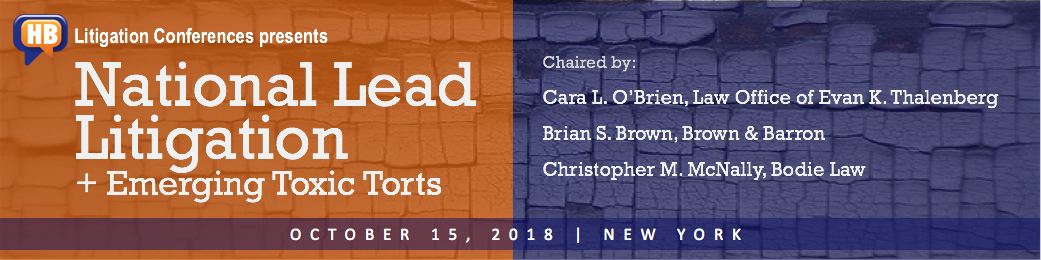
    Jeff is one of the featured presenters at this year’s National Lead Litigation + Emerging Toxic Torts Conference, Oct. 15 in New York.

    The event is being held at the same time and in the same location as our Drug & Defense Forum.

  • Complex Post-Settlement Liens | CLE Course | Recorded July 26, 2018


    [two-fifths-first]

    Two ways to access this session.

    Get it direct from HB for just $197 for the video — audio synced with slides.

    Or, it’s included in your West LegalEdcenter (Thomson Reuters) subscription.

    ____________________


    Speakers

    Franklin Solomon
    Solomon Law Firm

    Brett Newman
    Lien Resolution Group

    [/two-fifths-first] [three-fifths]

    Complex Post-Settlement Liens:

    Beyond Traditional Medicare and Medicaid Issues

    Take this highly practical course with two deeply experienced practitioners who share insights on issues that impact the cases on your desk today.

    Learn about the newest case law, agency positions and litigation tactics affecting health and disability plan reimbursement claims, including how to protect your clients and your practice in this rapidly developing area.

    Our speakers discuss:

    Medicare Advantage Plans

    Federal Employees Health Benefits Act (FEHBA) Plans

    Employee Retirement Income Security Act (ERISA) Claims

    Medicare set-asides

    TRICARE

    Veterans Administration Claims


    Speaker Bios

    Franklin P. Solomon | Solomon Law Firm

    Franklin Solomon has a nationwide practice focused on evaluation, litigation and resolution of healthcare lien/reimbursement claims. He represents personal injury victims and their attorneys in defending against claims by health plans and government benefits programs seeking payment out of tort recoveries. Most recently, he was plaintiffs’ counsel in two federal appellate court cases decided last summer: Wurtz v. The Rawlings Company, ___ F.3d ___, (2d Cir. 2014), a class action challenging New York insurers’ reimbursement claims against their insureds, and Taransky v. Sec. U.S. Dept. of Health & Human Svcs., ___ F.3d ___ (3d Cir. 2014), a class action challenging Medicare’s claims for reimbursement out of New Jersey tort recoveries.

    Brett Newman | The Lien Resolution Group

    Brett Newman is known nationally by plaintiff attorneys for his expertise on claims avoidance and reduction. Recognizing the ever-growing nature of lien resolution and the ever-increasing associated liability, Brett established The Lien Resolution Group and The Newman Structured Settlement Group to assist both individual claimants of personal injury lawsuits and mass tort claimants in the protection of their proceeds and government benefits.

    [/three-fifths]

  • Alliance of Women Trial Lawyers | First Fall Conference 2018 | Oct. 27-29, 2018 | New Orleans


    [one-third-first]

    Contact
    Nancy Holston
    Founder
    Alliance of Women Trial Lawyers
    nancy@awtriallawyers.com


    DETAILS

    When
    Oct. 27-29, 2018

    Meeting Venue
    Ritz-Carlton
    New Orleans

    LEARN MORE

    REGISTER

    Prices

    The Alliance is all about women helping women so they’re offering discounts to anyone who brings a law student, clerk, or first year associate to the conference with them.

    • 1st and 2nd Attendee: $895/Attendee

    • 3 or more Attendees from same firm: $795 each

    • 1 Attendee with Guest (Law Student, Clerk or 1st Year Associate): $1,295 for Attendee and Guest

    • More than 5 Attendees please fill out their Contact form or call Nancy Holston at 850-304-9674 for more information

    To Register by Check: Click here for Payment by Mail Registration Form.

    [/one-third-first] [two-thirds]

    New Alliance of Women Trial Lawyers Announces First Event in New Orleans

    Congratulations to Nancy Holston on the formation of the Alliance of Women Trial Lawyers. HB is proud to support this group and a mission that is dear to our hearts — promoting the careers of women professionals.

    Nancy has been successful at building events for plaintiff attorneys — some you may have probably attended! — and it’s great to see her strike out on her own to develop something she believes in.

    Take a minute to learn more about the AWTL, and see who is speaking at their first event.

    AWTL Vision

    To create a community that inspires and empowers women trial lawyers, the Alliance is passionately committed to the purpose of the family of women lawyers. We support women who take responsibility for successful relationships with other professionals. The Alliance of Women Trial Lawyers advances the influence and impact of women in the legal community.

    We aim to represent the intelligence, creativity, complexity and diversity of women lawyers’ experience — across nation, ethnicity, race, religion, sexual orientation and economic background.

    The Alliance will provide an environment for women lawyers to lead, inspire, and mentor other women lawyers. We hope to help women litigators to embrace their power, purpose, and value, and to take responsibility for their relationships.

    Check out the complete agenda and faculty!

    [/two-thirds]

  • HB Announces Alliance with Alliance of Women Trial Lawyers

    We are proud to announce our latest alliance with a new trial attorneys group just for women on the plaintiff side of tort litigation.

    Founded by plaintiff law conference veteran Nancy Holston, the Alliance of Women Trial Lawyers is committed to empowering these professionals, helping them to overcome “systematic obstacles and to realize greater self-sufficiency and wholeness through support, acknowledgement and utilization of dormant, yet innate strengths.” Before founding the Alliance in July 2018, Nancy was a principal at 360 Advocacy and before that the first Executive Director of Mass Torts Made Perfect.  Nancy is well-connected in the plaintiff bar and is excited by the initial reaction to her new venture.

    Nancy is equally inspired by the feedback she is getting for the Alliance’s first national conference which will be held from Saturday, Oct. 27th through Monday, Oct. 29 at the Ritz-Carlton in New Orleans. The program features many of the leading women trial attorneys in the country and a range of topics on practice development, litigation strategy, preparing witnesses, jury selection, deposition skills, direct examination, opening arguments and ethical issues involved in settlements. 

    “I admire anyone who takes a risk to do something they believe in, and Nancy has demonstrated both enthusiasm and commitment to improving the professional lives — and personal lives, for that matter — of women who represent plaintiffs in mass torts,” said Tom Hagy of HB Litigation Conferences. “It’s an important mission and we’re excited to lend our support.”

    “We look forward to working together to grow our respective portfolios and educate attorneys on important and emerging legal issues. There is an outside chance we will also have some fun along the way,” Tom added.

    Click here for more information about the AWTL’s 2018 Fall Conference.