Tag: Social Media

  • Subway Surfing Suit Against Meta and TikTok: Setting the Stage for Social Media Liability

    Subway Surfing Suit Against Meta and TikTok: Setting the Stage for Social Media Liability

    Emerging Litigation Podcast

    Emerging Litigation PodcastProduced by HB Litigation

    Interviews with leading attorneys and other subject matter experts on new twists in the law and how the law is responding to new twists in the world.

    Interested in contributing an article? Email us at Editor@LitigationConferences.com.

     Subway Surfing Suit Against Meta and TikTok: Setting the Stage for Social Media Liability 

    The Legal Battle Over Algorithmic Targeting and Dangerous Challenges 

    By Tom Hagy*

    I will confirm it, not that I will be the first. Without much prompting, teenage boys will do really stupid, really high-risk things. Or, in the minds of teenage boys, really exciting, really entertaining things.  

    I have stories I can only share now that my parents are no longer alive. I regularly surfed on top of a moving station wagon that my other friend was driving speedily up a pedestrian pathway. I rode my bike at top speed down a hill into a ditch, hoping it would swallow and lock my front wheel, just to see how far over the handlebars I would fly. On my first day ever on skis I jetted straight down an icy hill meant for experts, going as fast as I could – a trip cut short by a collision with a half-ton snow gun that snapped my ski in half. In each case, I suffered not a scratch. At least that I can remember. And I wasn’t one to journal.  

    Blame it on an undeveloped prefrontal cortex and/or the sweet rush of adrenaline. Either way, the outcome was the same. But with prompting, I would do even more. Now I think, what if I could have shared my feats with thousands or potentially millions of people around the world? Many of them girls! “Has anyone strapped themselves to a rocket recently?” I would have wondered.  

    Thanks to social media, that is what teenagers have at their disposal today. And that is what inspired a New York teenager to attempt what would end up being his last shot at social media attention and his last act. The lawsuit brought by his mother recently withstood a motion to dismiss, but with some paring. Below are details of that case, the arguments made by the parties, and some notes on other similar cases.  

    The Subway Surfing Case  

    On June 27, 2025, the New York County Supreme Court issued a decision in Nazario v. ByteDance Ltd., allowing a wrongful death lawsuit to proceed against social media giants Meta (Instagram) and TikTok’s parent company ByteDance. The case centers on the tragic death of 15-year-old Zackery Nazario, who died while “subway surfing” in Brooklyn—a risky act allegedly fueled by dangerous viral content promoted through algorithmic targeting on these platforms. 

    Justice Paul A. Goetz’s decision rejected the defendants’ attempt to dismiss the case on several grounds, signaling a potential shift in the landscape of platform liability. Norma Nazario, Zackery’s mother, contends that Meta and TikTok intentionally designed their products to addict young users and promoted hazardous “subway surfing” challenges to Zackery, encouraging participation in deadly trends. The court found these claims plausible, especially given allegations that the companies’ algorithms actively pushed such content to minors who had not even solicited it, potentially exceeding the protections afforded by Section 230 of the Communications Decency Act. 

    The ruling held that Section 230 immunity, often a powerful shield for social media companies, does not necessarily cover claims where platforms are alleged to have played an active role in targeting and promoting dangerous content. The court cited recent precedents, including Anderson v. TikTok, Inc. (3rd Cir. 2024), which recognized that algorithmic amplification of harmful challenges could fall outside Section 230’s scope. 

    Additionally, the court ruled that the plaintiff’s claims for strict product liability (design defect and failure to warn), negligence, wrongful death, and loss of services could proceed. Claims against the Metropolitan Transportation Authority and New York City Transit Authority were dismissed, with the judge finding that Zackery’s own conduct was the superseding cause and that transit agencies had no further duty to warn of the obvious dangers of subway surfing. 

    Part of a Broader Legal Trend 

    While the Nazario case has garnered attention for its focus on algorithmic promotion of dangerous challenges, it is not an isolated event. Across the United States and internationally, social media platforms face increasing litigation over their role in allegedly encouraging minors to participate in risky, and sometimes deadly, viral trends. 

    Other high-profile cases include lawsuits surrounding the so-called “Blackout Challenge,” where children lost their lives or suffered severe injury after participating in asphyxiation games promoted or popularized on social media. In Anderson v. TikTok, Inc., the Third Circuit Court of Appeals allowed claims to proceed, drawing similar lines between passive hosting of content and active algorithmic promotion to vulnerable users.  

    Families in multiple jurisdictions have brought wrongful death and product liability actions against platforms for challenges ranging from dangerous stunts to pharmaceutical misuse, with courts increasingly scrutinizing the underlying design and function of recommendation algorithms. 

    Many cases, like Nazario’s, allege that companies not only failed to curb the spread of hazardous content but also engineered their platforms to maximize engagement among minors, amplifying the reach and appeal of dangerous trends. Plaintiffs have also pointed to internal documents and whistleblower revelations that, they claim, demonstrate the companies’ awareness of the risks to young users. 

    Arguments in the Motion to Dismiss and Plaintiffs’ Response 

    In their motion to dismiss, Meta and TikTok argued: 

    • Section 230 Immunity: The companies argued that the Communications Decency Act shields them from liability because the content at issue was user-generated, and platforms are protected from claims arising from third-party content.
    • No Duty Owed Under Product Liability: They asserted that social media platforms are not “products” under New York law and thus not subject to strict product liability theories.
    • First Amendment Protection: The defendants claimed the suit sought to regulate protected speech, which would violate their First Amendment rights.
    • Dismissal of All Claims: They requested dismissal of all tort and statutory claims, including those for personal injury, unjust enrichment, and emotional distress.

    The plaintiffs countered:

    • Active Role and Algorithmic Promotion: Plaintiffs argued that the platforms went beyond mere hosting and played an active, targeted role by using algorithms to push dangerous content to minors. This, they contended, was not protected by Section 230.
    • Products Liability Applies: They asserted that, under New York law, digital platforms can constitute “products” when their design and function foreseeably lead to user harm. The court agreed, noting the plausibility of this legal theory.
    • First Amendment Not Absolute: Plaintiffs maintained that the lawsuit sought to regulate tortious conduct and negligent product design, not protected speech. The court concurred, holding that whether the companies’ actions were protected or actionable would require further factual development.
    • Survival of Key Claims: While some claims (including personal injury and certain statutory violations) were dismissed, the core allegations of strict product liability, negligence, wrongful death, and loss of services survived, ensuring the main case would proceed to discovery.

    Zooming Out 

    As I’ve said, there have been numerous lawsuits against social media companies alleging that their platforms encourage or amplify dangerous behavior, especially among children and teens. Here are some of the most notable examples and trends:

    1. Social Media Addiction and Harm MDL
    • Thousands of lawsuits have been filed against Meta (Facebook/Instagram), TikTok, Snapchat, YouTube, and Discord, alleging that these platforms are intentionally designed to be addictive to children and teens, causing mental health issues, self-harm, eating disorders, and even suicide.
    • These cases are consolidated in a multi-district litigation (MDL) in the Northern District of California, with bellwether trials set to begin in 2026.
    • Plaintiffs include families of affected children and school districts, arguing that platforms “prioritize engagement and growth over user safety” and “amplify dangerous content that prioritizes engagement over safety.”
    1. Viral Challenge Lawsuits
    • Subway Surfing Challenge (discussed in this article): The wrongful death lawsuit against Meta and TikTok for promoting subway surfing is part of a broader trend. Multiple lawsuits have been filed after children died or were injured participating in dangerous stunts seen on social media.
    • Blackout Challenge: TikTok faces lawsuits after children died participating in the “blackout challenge,” which encourages users to choke themselves until they lose consciousness. A federal appeals court recently ruled that TikTok can be sued for allegedly promoting this challenge through its algorithm.
    • Other Challenges: Lawsuits have also been filed over the “hot water challenge,” “Benadryl challenge,” and other dangerous viral trends.
    1. Product Liability Theory
    • Plaintiffs are increasingly using product liability claims to bypass Section 230 immunity, arguing that social media platforms are “defective products” because their design and algorithms addict users and promote harmful behavior.
    • Courts have begun to allow some claims to proceed, especially those focused on platform design rather than specific user content.
    1. Government and School District Lawsuits
    • Attorneys general in over 40 states have sued Meta, TikTok, and other platforms, alleging they misled the public about the dangers of social media and failed to protect children.
    • School districts are suing social media companies for contributing to the youth mental health crisis and increased disciplinary problems.
    1. Notable Cases and Rulings
    • Snapchat Speed Filter Case: A federal appeals court found that Snapchat could not invoke Section 230 to shield itself from a lawsuit claiming its speedometer filter encouraged speeding, resulting in a fatal crash.
    • Buffalo Shooting Case: The estates of victims of the 2022 Buffalo supermarket shooting sued social media platforms, arguing that their algorithms radicalized the shooter.

    Conclusion 

    The Subway Surfing case not only highlights the tragic consequences of dangerous viral challenges but also signals a shift in judicial willingness to scrutinize the design and operation of social media platforms. As courts allow more claims to proceed past the motion to dismiss stage, discovery will shed further light on algorithmic targeting and the responsibilities of tech companies to protect vulnerable users. The outcome of Nazario v. ByteDance Ltd., alongside similar cases nationwide, will start to shape the future of online safety, platform liability, and regulatory frameworks for years to come.


    *Tom Hagy has produced content for litigators in a variety of formats — news reporting services, conferences, webinars, podcasts, papers, and online research services — for more than 40 years. Wow. That’s longer than is probably healthy. He is founder of HB Litigation™, which is now a brand owned by Critical Legal Content LLC, provider of legal content for clients, which he founded in 2012. Tom can be reached at editor@litigationconferences.com. 

  • Fall bellwether trials for social media addiction cases to test novel legal theories

    Fall bellwether trials for social media addiction cases to test novel legal theories

    Emerging Litigation Podcast

    Emerging Litigation PodcastProduced by HB Litigation

    Interviews with leading attorneys and other subject matter experts on new twists in the law and how the law is responding to new twists in the world.

    Interested in contributing an article? Email us at Editor@LitigationConferences.com.

    Fall bellwether trials for social media addiction cases to test novel legal theories 

    By: Justin Ward

    Comparing social media to an addictive chemical like nicotine presents a challenging legal argument. Unlike substances, social media has a significant speech component, and any attempt to regulate it could raise First Amendment concerns.

    Bellwether trials for two consolidated cases against some of the world’s largest social media platforms are expected to begin later this year, testing the novel application of legal theories traditionally used in cases against producers of addictive substances like nicotine and opioids.

    More than 1,900 individual personal injury, school district, state attorney general, and municipal claims from nearly every state have been merged into multidistrict litigation (MDL) and Judicial Council Coordinated Proceedings (JCCP) cases in California. The courts are expected to hear a subset of these cases—the bellwether trials—before the year’s end.

    The primary defendants include the parent companies of platforms with large youth audiences, such as Instagram, TikTok, Snapchat, and YouTube. Plaintiffs’ attorneys argue that these platforms are marketed to children and deliberately designed to exploit adolescent brains, which are particularly vulnerable at that stage of development.

    Their complaint cites a growing body of research linking frequent social media use to negative mental health outcomes in young people, including an increased risk of suicide, eating disorders, anxiety, and behavioral problems. It also alleges that the companies were aware of these potential harms but failed to take action to mitigate the risks or warn consumers.

    Whether these claims will prevail depends on a lengthy discovery process and competing testimony from expert witnesses. However, early rulings in California and other jurisdictions provide insight into how courts may interpret the law.

    Legal Challenges and Early Rulings

    Claims brought by school districts arguing that social media constitutes a “public nuisance” have seen mixed results. Some state and federal courts have allowed them to proceed, while others have dismissed them. California Superior Court Judge Carolyn Kuhl, who oversees the JCCP lawsuit, has dismissed public nuisance and product liability claims but has allowed the case to move forward on negligence and failure-to-warn grounds.

    In October, Meta, the parent company of Instagram and Facebook, moved to dismiss the MDL, citing Section 230 of the Communications Decency Act, which protects platforms from liability for user-generated content. Judge Yvonne Gonzalez Rogers ruled that the case could proceed, though she found that Section 230 provided the company with partial immunity. Notably, Rogers and Kuhl differ in how they classify social media platforms—as products versus speech-based services—which could have significant legal implications.

    First Amendment and Addiction Comparisons

    Comparing social media to an addictive chemical like nicotine presents a challenging legal argument. Unlike substances, social media has a significant speech component, and any attempt to regulate it could raise First Amendment concerns.

    In late January, the 9th U.S. Circuit Court of Appeals issued a preliminary injunction blocking California’s Protecting Our Kids from Social Media Addiction Act from taking effect while an appeal is pending. The panel of judges ruled that some of the plaintiffs’ claims were likely to succeed.

    While the MDL bellwether trial was initially scheduled for October 2025, it has since been postponed.


    Justin Ward is a Seattle-based investigative reporter specializing in politics, courts, and criminal justice. His work can be found in national and local media outlets, including USA Today, the Southern Poverty Law Center, and The Seattle Stranger. He can be reached at justinwardtexan@yahoo.com.

  • Social Inflation’s Impact on Jury Verdicts

    Social Inflation’s Impact on Jury Verdicts

    Social Inflation’s Impact on Jury Verdicts in Healthcare Litigation

    Our guests wrote in the Journal on Emerging Issues in Litigation: “These outsize awards are often driven by myriad factors including sympathetic jurors, societal conceptions about income and wealth of corporations, the use of emotion-driven ‘Reptile Theory’ tactics by plaintiff attorneys, the media spotlight on ‘bad apple’ physicians, and numerous other social factors. A new factor that influences elevated jury verdicts is the increasing volume of information—whether true or false—that is exchanged on social media platforms.”

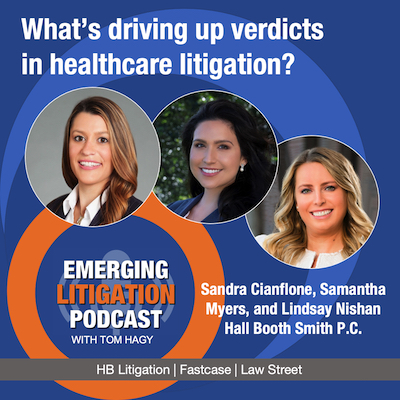
    Podcast on jury verdictsListen to my interview with Hall Booth Smith P.C. attorneys Sandra Cianflone, Samantha Myers, and Lindsay Nishan, each of whom represents members of the healthcare industry, as they discuss what drives large verdict and what attorneys should consider in mitigating the effects of this phenomenon.

    In keeping with tradition, we may have strayed a bit from the topic. One guest’s Aunt Lulu made an appearance. It turns out Covid lockdowns may have produced more enthusiastic jurors. And I added another reason why writing and podcasting, and not the practice of law, was a better career path for me. (Apparently lawyers aren’t supposed to laugh in people’s faces. Noted.)

    This podcast is the audio companion to the Journal on Emerging Issues in Litigation, a collaborative project between HB Litigation Conferences and the Fastcase legal research family, which includes Full Court Press, Law Street Media, and Docket Alarm. The podcast itself is a joint effort between HB and our friends at Law Street Media. If you have comments or wish to participate in one our projects, or want to tell me how much  you learned from Sandie, Sam, Lindsay, or Aunt Lulu,  please drop me a note at Editor@LitigationConferences.com.

    Tom Hagy
    Litigation Enthusiast
    Host of the Emerging Litigation Podcast

    Jurors’ perceptions of big corporations, insurance companies, drug companies, physicians and other healthcare providers is increasingly colored by TV and social media. 


    The same is true for people’s understanding of the practice law or medicine, which may be as wrong as it is immovable. “Social inflation” refers to rising litigation costs and the resulting higher insurance payouts which drive up the cost of insurance. The phrase has taken on new meanings as it is used in the general press. To some it means tort reform rollbacks, litigation funding, and is most often seen in references to so-called “nuclear” jury verdicts, i.e., awards that exceed $10 million.

    What factors contribute to these jury awards?

  • Going Viral or Going Nuclear: Social Inflation’s Impact on Jury Verdicts …

    Going Viral or Going Nuclear: Social Inflation’s Impact on Jury Verdicts …

    The Authors

    All three authors are with the law firm of Hall Booth Smith, P.C., and concentrate on various aspects of healthcare defense.  Lindsay A. Nishan (lnishan@hallboothsmith.com) is an Associate in the HBS Charleston office. Samantha Bowen Myers (smyers@hallboothsmith.com) is an Associate in their West Palm Beach, Florida, office. Sandra Mekita Cianflone (scianflone@hallboothsmith.com) is a Partner in the firm’s Atlanta office. She is also a member of the Editorial Board of Advisors for the Journal on Emerging Issues in Litigation, and a frequent contributor to the Emerging Litigation Podcast.

    Going Viral or Going Nuclear:

    Social Inflation’s Impact on Jury Verdicts and How to Safeguard Against It

    By Lindsay A. Nishan, Samantha B. Myers
    and Sandra M. Cianflone

    A juror’s perception of companies and healthcare providers is increasingly colored by TV and social media. The same is true for their understanding of the practice law or medicine, which may be as wrong as it is immovable. “Social inflation” refers to rising litigation costs and the resulting higher insurance payouts which drive up the cost of insurance. In this article the authors, each of whom represents parties in the healthcare industry, discuss the evolving social trends that lead jurors to render “nuclear verdicts,” and what attorneys should consider in mitigating the effects of this phenomenon.

    Social media feeds today are crammed with flashy advertisements from lawyers promising big-dollar settlements against “rich insurance companies.” The number of these commercials has spiked since the 1970s as the phenomenon known as “social inflation” has taken root in the legal system.

    Social inflation is a term of art that refers to rising litigation costs, the impact those costs have on insurance claim payouts, and how much the average policyholder is expected to pay for basic coverage. Recently, the term social inflation has taken on a new meaning as it has become more widely used in the general press. The phrase has come to be associated with tort reform rollbacks, litigation funding, and is most seen in references to so-called “nuclear” jury verdicts, i.e., a jury award that exceeds $10 million.

    But the question remains: What factors contribute to these exorbitantly high jury verdicts?  These outsize awards are often driven by myriad factors including sympathetic jurors, societal conceptions about income and wealth of corporations, the use of emotion-driven “Reptile Theory” tactics by plaintiff attorneys, the media spotlight on “bad apple” physicians, and numerous other social factors. A new factor that influences elevated jury verdicts is the increasing volume of information—whether true or false—that is exchanged on social media platforms.

    One of the lines most affected by this form of social inflation is the healthcare industry and the soaring costs of medical malpractice litigation. This includes lawsuits involving hospital systems, pharmaceutical companies, and their insurers.

    See what the authors have to say about mitigating the impact of social inflation. 

    Get the article now!

  • The Age of Social Disparagement with Charlie Kingdollar

    The Age of Social Disparagement with Charlie Kingdollar

    The Age of Social Disparagement with Charlie Kingdollar

    It was my pleasure to interview Charlie Kingdollar for our first episode of the Emerging Litigation Podcast.

    Charlie spent more than four decades with General Reinsurance, three-quarters of which as the company’s Emerging Issues Officer. One colleague described him as “one of the most prescient and gifted industry futurists I have met in my 36 year professional career within the insurance industry. Entertaining and insightful, his ability to digest and communicate complex issues, many before they are readily apparent, is both a gift and a talent.”

    This interview is based on his article on social disparagement coming out in the inaugural issue of the Journal on Emerging Issues in Litigation in January 2021.  The Journal is a collaborative project between HB and Fastcase. If you have comments or wish to participate in one our projects, or want to tell me how awesome Charlie is, drop me a note at Editor@LitigationConferences.com.

    We hope you enjoy the interview.

    Are the risks posed by social media — which has added jet fuel to one person’s ability to smear another — adequately addressed by the insurance market?

  • FTC’s Case Against Facebook Will Test the Flexibility of U.S. Antitrust Law

    FTC’s Case Against Facebook Will Test the Flexibility of U.S. Antitrust Law

    By Jonathan Rubin and Jennifer Oliver

    MoginRubin LLP
    Washington, DC | San Diego

    Explore more from MoginRubin LLP!

    Blog: Emboldened by New Resources and Expanded Authority, Feds Continue 10-Year Look Back at Chinese Investment. By Dan Mogin, Jonathan Rubin, Jennifer Oliver, and Timothy LaComb. List

    OnDemand CLE Webinar: The Antitrust Case Against Google. Dan Mogin, Jonathan Rubin, Jennifer Oliver, Timothy LaComb, John Newman, Dr. Alan Grant

    Blog: FTC’s Case Against Facebook Will Test the Flexibility of U.S. Antitrust Law.Authors: Jonathan Rubin and Jennifer Oliver, MoginRubin LLP

    Blog: Full Ninth Circuit Removes Unwarranted Hurdles to Class Certification. Jonathan Rubin, Dan Mogin.

    Journal: Policy Derailed: Can U.S. Antitrust Policy Toward Standard Essential Patents Get Back on Track by Jonathan Rubin

    Webinar: Class Certification After Olean v. Bumble Bee with Jonathan Rubin, James Bogan lll, Jonathan Cohn, Bradley Hamburger.

    Journal: FTC v. Amazon: Market Definitions and Section 5 of the FTC Act

    Podcast: Algorithmic Software Facilitated Price Fixing with Jonathan Rubin

    Plus, additional insights from the MoginRubin Blog.

    FTC’s Case Against Facebook Will Challenge the Adaptability of U.S. Antitrust Law

    Society leads, and the law follows.

    This is especially true in antitrust, where industries and markets undergo constant change brought about by innovation and changing consumer behavior. Confronted with ever evolving commercial circumstances, the courts face a constant struggle to keep up. With the filing of the antitrust cases against the Facebook “monopoly” by the Federal Trade Commission and 47 state attorneys general, U.S. antitrust faces one of its most significant tests since the case of U.S. v. Microsoft, now 20 years old.

    In the intervening decades, the Internet has spawned a new category of industry, “demand aggregators.” These businesses seek to grow market share not just by capturing supply, but also demand. The power of the dominant digital platforms—Google, Apple, Facebook, Amazon, Uber—arises as much or more from their position as the source of customers than as a supply of goods or services. Of course, the platform must be able to deliver, but when customers view your website as the place to go—Amazon for goods, Uber for rides, Facebook for friends—the supply will follow.

    Demand-side dominance is only one of the thorny issues the court will have to resolve in the antitrust authorities’ cases against Facebook …

    Read the complete post by antitrust and competition law experts Jonathan Rubin and Jennifer M. Oliver as well as other posts on competition law in the tech space, including commentary on Google, Uber, Amazon, Apple, and more at the MoginRubin Blog.

    ***

    Responses to posts appearing on the HB site, or fresh news and articles, are welcome. Write to Editor@LitigationConferences.com. 

    Safeguarding Against Financial Exploitation

    An on-demand CLE-eligible webinar Safeguarding Against Financial Exploitation   America’s senior population is growing. Nearly one in five U.S. residents will be 65 or older in 2030. Which means the average age of U.S. investors is climbing too. With that comes the risk that they will be exploited by people with access – or gain access through nefarious methods – to their investment portfolio. Seniors and vulnerable persons lose billions of dollars each year. Remarkably, 90% of the people to take advantage of senior investors are members of their own family. Attorneys who represent senior clients need to know the signs of vulnerability, red flags that their clients are being exploited, what laws apply, and rules lawyers must follow in these matters.   Questions our speakers answer: What is senior / vulnerable investor exploitation?   Who is protected by state and federal laws?   How prevalent is senior financial exploitation? What do the numbers tell us?  What is the pace of financial abuse SAR filings by securities firms?  What are the most popular scams?   What is diminished capacity?  What are the red flags indicating possible exploitation?  What are the laws, rules, and regulations governing law firms?  What are some best practices for law firms?  How can firms best protect their senior clients?   On Demand CLE Webinar What You Get PowerPoint and supplemental materials. Complete recording for later review. Answers to your questions via email. Invitation to contact speakers. 1.5 CLE credits (for licensed attorneys). CLE assistance.* *Subject to state bar rules. For licensed attorneys.  Register Meet the Speakers Joseph Calabrese Bressler, Amery & Ross, P.C. A 1991 Graduate of St. John’s University Law School, Mr. Calabrese brings 30 years of practice and 18 years of Securities Litigation/Regulatory experience to his role as principal in the New York office of  Bressler, Amery & Ross’s Financial Institutions Group. He began his career as a Wall Street litigator as an associate general counsel for Citigroup’s Smith Barney and […]

    Lien Resolution: Government & Private Plans Get Aggressive (Against Attorneys)

    Includes Nearly 75 minutes of insights from experienced professionals. CLE credit: 1+ (subject to bar rules). For CLE questions: CLE@LitigationConference.com The complete Power Point presentation. Continued access to the complete recording for later use. Answers to your questions via email to the presenters or write to HB and we will be sure to contact the speakers. What can you do to settle personal injury suits cleanly and avoid costly litigation and penalties? What recent cases can inform you about protecting your settlements and, as attorneys, yourselves, from post-settlement federal lawsuits? How can your firm set itself up to meet government expectations? What role might experts play in navigating these pitfalls? Medicare Advantage (42 USC § 1395w-22) Federal Medical Care Recovery Act (FMCRA) (42 USC § 2651) Armed Forces Act (10 USC §1095) Veterans’ Benefits (38 USC §1729) Third-Party Collection Rules (32 CFR 537.24; 38 CFR 17.101, etc.) Set-Asides under the Medicare Secondary Payer Act (42 USC § 1395y(b)(2)] On Demand Registration Lien Resolution Government & Private Plans Get Aggressive (Against Attorneys!) On Demand | Recorded September 2020 It is increasingly common these days. Personal injury attorneys settle a case, only to find themselves sued by a U.S. Attorney for failing to reimburse Medicare for conditional payments as required by the Medicare Secondary Payer Act. In some cases the attorney may be required to pay fines in addition to the reimbursements and interest, a costly proposition. Are you up to speed on issues surrounding Medicare Advantage, TRICARE, veterans’ claims, and Medicare set-asides? Join nationally recognized healthcare lien and resolution expert Franklin P. Solomon and go-to lien resolution provider Brett Newman as they offer a practical, in-depth CLE presentation. Franklin P. Solomon, Esq. Attorney & Founder, Solomon Law Firm  A graduate of Rutgers University School of Law at Camden, Franklin Solomon is based in Cherry Hill, NJ, with a practice focused on evaluation, litigation and resolution of healthcare “liens” and reimbursement claims. Mr. Solomon represents personal injury victims and their attorneys […]

    Telepsychiatry: Mitigating the Risks

    REGISTER Registration Includes Nearly 90 minutes of insights from experienced professionals. CLE credit: 1+ (subject to bar rules). For CLE questions: CLE@LitigationConference.com The complete Power Point presentation. Continued access to the complete recording for later use. Answers to your questions via email to the presenters or write to HB and we will be sure to contact the speakers. Understand the risks associated with telepsychiatry and how to manage them.  Telemedicine has emerged as an important solution for healthcare in general and psychiatric medicine specifically during the current global pandemic. Remote access for sub-practices including addiction counseling have been commonly used. Our panel of psychiatric professionals who have served as expert witnesses and attorneys who counsel and represent physicians have prepared a 90-minute session to share insights with attorneys, physicians, healthcare providers, risk professionals, and more. Agenda Examining procedures and best practices that exist for ensuring confidentiality in a telemedicine practice How do you draft a telepsychiatric consent form? What is the emerging standard of care for telemedicine? Will the standard of care for telemedicine become a national standard? (Should it?) Review the case law addressing telemedicine or telepsychiatry How do the HIPAA regulations and HITECH privacy laws impact telemedicine? How have the HIPAA regulations and HITECH privacy laws been relaxed during the pandemic? Will the relaxed HIPAA and HITECH regulations impacting telemedicine continue past the pandemic? Which technical platforms are preferred? Which ones to avoid? Panelists Mark Levy, M.D., Medical Director at fpamed David Kan, M.D., UCSF Psychiatry Department and the California Society for Substance Abuse Medicine Ayesha Ashai, M.D., associated with fpamed Stephen M. Fatum, J.D., Partner, Barnes & Thornburg LLP Angela W. Russell, J.D., Partner, Wilson Elser Moskowitz Edelman & Dicker LLP Meet our physician and attorney panelists. Mark Levy MD Medical Director fpamed Dr. Levy is a graduate of Columbia College (A.B. 1967) and the Columbia University College of Physicians and Surgeons (M.D. 1971) in New York. He is a Physician […]

    The Commercial Drone Industry: Privacy, Security, Threats, and Mitigation of Risk

    HB presents a CLE-eligible webinar Now on-demand at the West LegalEdcenter THE COMMERCIAL DRONE INDUSTRY Privacy, Security, Threats, and Mitigation of Risk Drones have become an increasingly valuable tool for businesses of all types and sizes. Drones are already being used in many applications, but more will certainly arise as the technology advances. This means that certain risks, like cyber threats, will also continue to present themselves. Protecting the transmission and storage of data collected through drones is critical. Unfortunately, security usually comes as an afterthought. The drone industry is part of the aviation industry, which, based on its knowledge, keeps safety as a number one concern. Part of that safety is having proper protection for your systems, including security as a fundamental design principle. Take this webinar to gain insights on the topics listed below, and shared by an attorney who practices on the cutting-edge of this evolving technology. Topics: Defining drones. Current and future applications. FAA Modernization and Reform Act of 2012. FAA Part 107 Regulations and waivers. Resources, e.g. the FAA Drone Zone and LAANC Portal. Penalties for violations. Privacy implications. Drones as weapons. Vulnerability to cyber attacks. Take it now! What you get: 1+ CLE credits (subject to bar rules). Insights from an experienced professional who specializes in this area of the law. The complete PowerPoint presentation. Continued access to the complete recording for later use. Answers to your questions. Fee: No additional charge to subscribers to the West LegalEdcenter. Non-subscribers may take the course for $170. Meet the Speaker Kathryn Rattigan Robinson & Cole LLP Kathryn Rattigan is a member of the firm’s Business Litigation Group and Data Privacy + Cybersecurity Team. She advises clients on data privacy and security, cybersecurity, and compliance with related state and federal laws. She assists clients in assessing risks related to technology and software contracts, as well as with compliance-related issues with outsourcing and […]

    The Intersection of Privacy and Antitrust Webinar Now Available On-Demand on the West LegalEdcenter

    Available as part of your subscription to The Thomson Reuters West LegalEdcenter®. Don’t subscribe to the West LegalEdcenter? This webinar is still available directly from HB. Take it now! Questions for speakers Questions@LitigationConferences.com CLE questions CLE@LitigationConferences.com Check out the MoginRubin blog for more insights on antitrust and privacy law. What attorneys and companies need to know about the increasing interplay between these critical areas of the law.  Highly publicized cases and investigations in the U.S. and Europe of big technology, e-commerce, and social media companies demonstrate how anti-competition laws are being used to scrutinize and challenge not only how these corporations conduct themselves in the marketplace, but the very core of their colossal success: the mass collection and utilization of user data. Are the privacy and antitrust worlds beginning to cross over? Or do they simply run parallel while addressing entirely different types of conduct? Whatever the answer, data is the raw material that drives the likes of Google, Facebook, Apple and Amazon, so how it is handled is a critical question when counseling clients on mergers and acquisitions. Moderator Daniel J.  Mogin | Managing Partner, MoginRubin LLP Speakers Jennifer M. Oliver, CIPP/US | Partner, MoginRubin LLP Thomas N. Dahdouh | Director, Western Region, Federal Trade Commission Franklin M. Rubinstein | Partner, Wilson Sonsini Goodrich & Rosati Randi W. Singer, CIPP/US, CIPT | Partner, Weil, Gotshal & Manges Contributor Dina Srinivasan | Independent Researcher & Author of The Antitrust Case Against Facebook Dina was unable to present but we thank her for her content contributions.  Agenda Who should regulate privacy violations in the U.S.? Which antitrust issues implicate privacy concerns? What role does machine learning play on the competitive landscape? What is big data really? How is it different from “data”? What are the elements of effective merger reviews? What are the appropriate remedies? What are “notice-and-choice” versus “harms-based” approaches? Plus answers to your questions. Send them to Questions@LitigationConferences.com.

  • Podcast: Charlie Kingdollar on Social Disparagement

    Podcast: Charlie Kingdollar on Social Disparagement

    HBLC · HBPC Charlie Kingdollar Social Disparagement – 10:8:20, 7.57 PM

    Charlie Kingdollar

    Charlie KingdollarEmerging Issues Professional

    Charlie Kingdollar spent more than four decades with General Reinsurance, three-quarters of which as the company’s Emerging Issues Officer. One colleague described him as “one of the most prescient and gifted industry futurists I have met in my 36 year professional career within the insurance industry. Entertaining and insightful, his ability to digest and communicate complex issues, many before they are readily apparent, is both a gift and a talent.” Follow him on LinkedIn.

    Charlie Kingdollar on Social Media Disparagement

    Are the risks posed by social media — which has added jet fuel to one person’s ability to smear another — adequately addressed by the insurance market?

    It was my pleasure to interview Charlie for our first emerging issues podcast. It’s based on his article on social disparagement which will be featured in the inaugural issue of the Journal on Emerging Issues in Litigation (JEIL), which will release in January 2021. JEIL is a collaborative project between HB and the Fastcase legal research family, which includes Full Court Press, Law Street Media, Docket Alarm and, most recently, Judicata. If you have comments or wish to participate in one our projects, or want to tell me how awesome Charlie is, drop me a note at Question@LitigationConferences.com.

    We hope you enjoy the interview.

    Tom Hagy
    Founder & Managing Director
    HB Litigation Conferences

    Download Charlie’s article as a preview of the Journal of Emerging Issues in Litigation.

    Journal on Emerging Issues in Litigation

  • PTSD Claims Brought by Facebook’s ‘Graphic Content’ Reviewers Goes to ADR, Putting Civil Action on Pause

    By Tom Hagy

    Facebook can be great fun. How else would I have seen a video of an eight-year-old drummer-girl utterly thrashing Led Zeppelin’s Good Times Bad Times? Or a dog running away with a lit skyrocket as his human friends run, duck and ditch for their lives? Or what your cat looks like in a tuxedo?

    Facebook can also be a source of horror. Some of the most distressful commentary and images you wish you could un-see. And that’s just from my family.

    Imagine your entire job is to monitor Facebook discussions and remove its graphic content. Day in and day out. That’s literally all you did.

    A group of Facebook employees says that was their job, and their exposure to an “unmitigated barrage of horrifying content” and “toxic images” has caused them to suffer “debilitating trauma-related injuries.”

    In September 2018 they filed suit in California Superior Court in San Mateo seeking an order requiring Facebook to implement safety guidelines for content moderators which, they say, the company has admitted are “necessary and appropriate.” They also want the company to fund a medical monitoring program for the diagnosis and treatment of psychological injuries including post-traumatic stress disorder, or PTSD. The plaintiffs quote Chris Harrison, whom they characterize as a Facebook executive in charge of the company’s “global resiliency team” as saying “of course” the company should offer content moderators post-employment counseling.

    The plaintiffs filed the suit as a proposed class action, and relied on state laws including the California Unfair Competition Law alleging Facebook’s conduct was negligent, and negligence forms the basis of a UCL claim.

    Facebook moved for a judgment on the pleadings, saying the facts are insufficient to constitute a community of interest required for class actions and that there is no ascertainable class. The company said the plaintiffs haven’t supported a claim for negligent provision of unsafe equipment or violation of the UCL, either.

    The issue was set for a hearing on Aug. 9 but the parties agreed to take the case to ADR and stay the litigation until Oct. 7. If they don’t come to an agreement by then they will submit a new case schedule to the court (Selena Scola, et al. v. Facebook, Inc., Civil Case No. 18CIV05135, Calif. Super. Ct., San Mateo Co.).

    What Lawyers Should Know

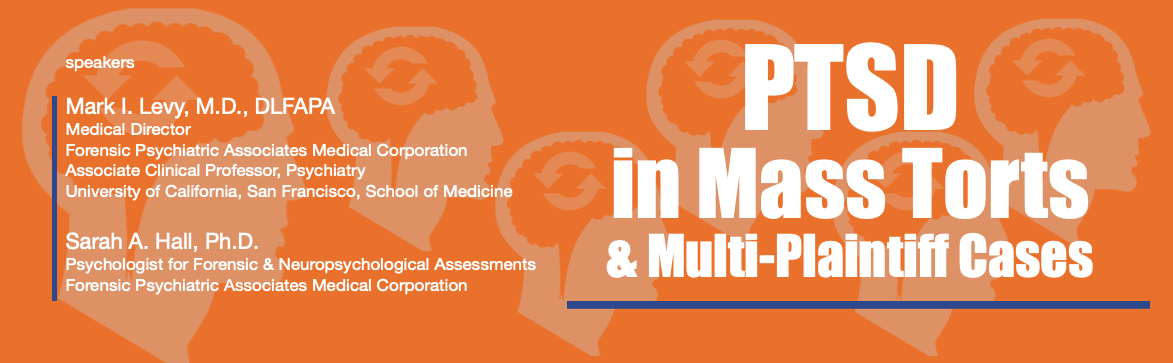
    Coincidentally — and this has nothing whatsoever to do with the Facebook case — in preparing for our Aug. 21 webinar — PTSD in Mass Tort & Multi-Plaintiff Cases — Mark I. Levy, M.D., DLFAPA (who is in no way involved in that case) told me that “a majority of people who experience a traumatic and stressful event do not develop PTSD.” He said that multiple studies revealed that even in the extreme case of rape, 40-50% of victims do not develop PTSD. Of course, the flip side of that is that more than half do.

    People have different levels of resiliency and vulnerability, he said, so what may cause PTSD in one person may not cause it in another. This isn’t to diminish anyone’s traumatic experience. The question is how these experiences impact the individual, not whether their experience was horrible or not, or illegal or not, which are separate questions. “The probability of an event causing PTSD in any particular individual is only partially related to the severity of the stressor,” Dr. Levy said. I asked him if there were degrees of PTSD, or whether someone can have “a touch of PTSD.” Dr. Levy explained that PTSD is a specific diagnosis with specific conditions. In other words, despite how the term may be used in common parlance, you can’t have “a little PTSD,” at least not in the clinical sense of the word.

    In his presentation materials, Dr. Levy gives two examples of bad experiences that resulted in litigation but were found not to cause PTSD. “After a board meeting a secretary ate a left-over pastry contaminated with rat feces. She alleged she had PTSD because she could never work in that office again. Hers was a truly disgusting experience, but it did not cause PTSD,” Dr. Levy said. In another case a woman who endured unwelcome and explicit sexual overtures from her boss were, while clearly offensive and even unlawful, did not result in the woman’s PTSD. Dr. Levy discusses examples where individuals developed PTSD, such as battle experiences, train crashes, and others.

    Here is a summary of the PTSD diagnostic criteria in the Diagnostic and Statistical Manual of Mental Disorders, or DSM-5:

    A. Exposure to actual or threatened death, serious injury, or sexual violence.
    B. Presence of one (or more) intrusive symptoms associated with the traumatic event(s).
    C. Persistent avoidance of stimuli associated with the traumatic event(s), beginning after the traumatic event(s) occurred.
    D. Negative alterations in cognitions and mood associated with the traumatic event(s), beginning or worsening after the traumatic event(s).
    E. Marked alterations in arousal and reactivity associated with the traumatic event(s).
    F. Duration of the disturbance (Criteria B, C, D, and E) is more than 1 month.
    G. Functional Impairment: The disturbance causes clinically significant distress or impairment in social, occupational, or other important areas of functioning.
    H. The disturbance is not attributable to the physiological effects of a substance (e.g., medication, alcohol) or another medical condition.

    In the majority of cases, PTSD is accompanied by other psychiatric diagnoses (co-morbidity): Major Depression and/or Anxiety Disorder and/or Substance Abuse.

    Dr. Levy — who is Medical Director at Forensic Psychiatric Associates Medical Corporation — cautions attorneys and others about the forensic use of DSM-5: “It is important to note that the definition of mental disorder included in DSM-5 was developed to meet the needs of clinicians, public health professionals, and research investigators rather than all of the technical needs of the courts and legal professionals.”

    For attorneys interested in hearing more from Dr. Levy, and his colleague, Sarah A. Hall, PhD., Clinical Psychologist Specializing in Forensic & Neuropsychological Assessments, click the banner below and learn more about the webinar.

  • Dan Mogin: Antitrust, Pro-Privacy Moves Led Outside U.S.

    In a move that could redefine how 2.6 billion people use Facebook Messenger and Facebook’s acquired WhatsApp and Instagram apps, The New York Times reported on Jan. 25 that Facebook CEO Mark Zuckerberg plans to integrate the platforms. The announcement turned up the volume on antitrust and privacy warnings directed at the social media giant.

    “Facebook can be legitimately criticized for merging these apps after contrary assurances and perhaps for trying to dominate messaging,” MoginRubin Partner Dan Mogin said, “but perhaps more importantly, this is another example of the evolving convergence between antitrust and privacy that appears to be being driven by forces outside the US enforcement agencies. It’s a challenging issue for antitrust and may eventually lead to a sea change.”

    See the complete post on the MoginRubin Blog. 

  • Courtney Klein on Social Media & Security

    A Restructured Paradigm for Corporate Teamwork

    By Courtney Klein of Soteria Risk Consultants

    Social media has become an integral part of everyday life. It’s how some of us get our news, research our opinions, learn about local events, and connect with friends. For the modern western business, it is also immensely important for staying in touch with customers, advertising, and overall visibility. For this reason, many companies employ veritable armies of “Social Media Specialists” that do everything from designing graphics to writing tweets to replying to customer questions and complaints. Some companies interact with each other (such as the hilarious and long-standing Twitter Battle between Wendy’s and McDonald’s), and some use it as their primary form of communication.

    Customers, too, know that social media is a way to get in touch with a company – for good reasons and for bad – and while many companies are aware that they will and do receive threats on social media, very few of them have any kind of protocol in place for how to deal with them – and even fewer still encourage their social media teams to pass this information on to or (better yet) work together with their security team. This sort of blasé attitude to threats – either because “it’s not my job” or “they can’t be serious” – leads to real-world ramifications. Incidents such as the April 4th Youtube Shootings (which, we acknowledge, was a failure of many different departments, companies, and law enforcement operations) are a reminder of just how social media “banter” can turn into a real-world nightmare.

    Now, in defense of essentially any company guilty of this, Social Media is a new beast that even the best are still trying to get their arms wrapped around. Not only is social media relatively new to the game, but it’s dynamic and ever-changing. What was relevant yesterday no longer will be tomorrow. Updates add new features and kill our favorites, terms of service changes impact business, trends are fleeting but ever so important for a business to understand, customer service issues must be dealt with in a timely fashion. Take all of this and add security concerns on top of the social media specialist’s plate and you’re only going to run into failure. That’s why we at Soteria are such strong believers in having social media and security teams work together every step of the way.

    Folding security into the fray … will make a world of difference

    With few exceptions, social media teams plan their calendar very carefully. Words must be scripted, graphics must be designed, legal must be consulted; it’s not often that there’s a “last minute tweet that just has to go out right here right now.” With everything else that goes into these seemingly benign releases, folding security into the fray is, ultimately, a minor change, but one that will make a world of difference. Giving the security team insight into what will be posted provides a number of benefits.

    The security team will be able to assess what posts may aggravate any known or active threats. In general, security teams like to keep information about who wants to do harm to a company under relative secrecy so as to not unnecessarily alarm staff. As a dedicated intelligence analyst (working for a company with an incredible need to integrate a security function into social media) I personally witnessed a number of occasions where I’d read a post – a perfectly fine, professional post that a normal person wouldn’t bat an eye at – and thought “Oh heck, John Doe isn’t going to be happy about this one,” and upon further investigation discovered that, as suspected, Doe was all sorts of worked up over 260 characters and was heading down to the local office to cause a ruckus. With a little bit of notice, my team could have prepared our local staff for the event and given them adequate time to get ready rather than going into overdrive mode.

    It can help reduce the stress that the social media team feels during the normal course of their duties. Most people know that it’s possible to directly message a company’s customer service group via social media, but often times it’s actually the social media team that is in charge of screening and fielding these messages. On the occasion when a hateful comment or threat comes through, the social media specialist on the receiving end – who likely and rightly doesn’t have a lot of experience with such things – may react in any number of ways, from panic to disbelief. Whatever the response is, the likelihood that they’ll consider sending it to security for analysis without some previous instruction to do so is slim to none. At the very least, giving these staff this simple instruction can mitigate some of the basic issues. At best, it can begin to smooth the path for future growth into a more robust Social Media-Security partnership.

    Even security teams with dedicated social media analysts are still constrained by the limits of being human. While your company may have a well staffed social media threat team there is only so much a person can handle at any given time. In reality, though, it’s more likely that whoever is watching social media for threats is also juggling a multitude of different security tasks as well. By working or liaising with your organization’s social media team, you’ll have extra eyes on all the time. Many times, when a person is threatening an organization online they are not directing this information to the company’s inbox or direct messaging their team. Sometimes it’s as simple (and clear) as someone saying “I’m going to go shoot up XYZ Company tomorrow” without any connection to official accounts. Most social media groups monitor for any mention of their company’s name as part of a marketing strategy and to ensure only legitimate accounts are using the company branding. Clearly, this threat is not something that they should be dealing with – but it is certainly the job of corporate security. Even a tenuous partnership between the teams could result in threats like this being effectively handled.

    Just as your average security specialist wouldn’t know how to effectively announce a major company event on Twitter, neither will your typical social media analyst have the tools and skills necessary to investigate threats and persons.

    Security teams, by the nature of our work, are often able to access information that is not available to social media teams. Tools like Nexis and TLO aren’t given to groups without a legitimate use case, but these tools are often necessary in order to identify a threat actor. Depending on the severity of a threat, this information is often incredibly useful when providing information to the police. They are generally so overworked, underfunded, and understaffed, that having so much information handed to them, especially with an honest, well-documented case file that explains the methodology of your investigation, is a relief, and will help jumpstart an investigation.

    Social media teams know who is a regular issue. They know that John Doe sends rude comments to the Instagram inbox every time something is posted. They also know that they have a lot more to their job description than just reading mean comments. The regulars are remembered because of their consistency, but there are other threats who may not come up often enough to remember, and these may be the most dangerous. Likewise, if John Doe suddenly stops sending his vitriol, a social media specialist is likely to feel relief, whereas an intelligence analyst or other security professional might feel apprehension. What’s changed? Where did he go? Was he arrested? Did he find a new target? Or is he planning something that’s taking all of his time? For five years Jarrod Ramos threatened the staff at the Capital Gazette through social media, phone calls, emails, and any means he could find. It was normal for them, though the staff never ignored his threats. But in 2016 he went quiet. The small newspaper had neither the staff nor the resources to figure out why, and it would have been impossible for them to guess that in June of 2018 Ramos would be responsible for the vicious murder of five of their colleagues, but that’s exactly what happened. Likewise, in the reverse, should a case of minor, random harassment become more regular it’s possible an overworked social media specialist might be so harried they just wouldn’t notice. Paying attention to and noticing such trends is well within the wheelhouse of Corporate Security, but our ability to do this work is dependent on good, effective, two-way communication with the people on the receiving end (including and beyond social media).

    Finally, and very importantly, it is imperative for any security team to work with the people in their organization if for no other reason than to build relationships. Security is, if we’re being frank, a pain for everyone. While, yes, our goal is to keep people alive and well, completing this task also means we have to be an impediment. The same perimeter security measures that keep out a bad actor also slow down the company’s employee during a torrential downpour. The same check-in procedures that ensure only authorized persons and wanted guests get past the lobby also make the new guy late right before a big meeting when he’s left his badge at home. The same systems that only grant entry to someone with a need-to-access also ruins the forgetful employee’s day when she hears the door click shut behind her just as she notices she left her access card on her desk. Security costs money but doesn’t make it. Security gets in the way of art and gardens and aesthetics. Security is necessary, but it’s also difficult for everyone. By working amicably with as many people as possible throughout an organization and making sure they understand that you’re there to help them get their job done, you are building bridges to better relationships. You’re recruiting ambassadors that can help explain to others why piggybacking is such an issue. You’re educating additional bodies who can come to your team when they notice that outside door isn’t locking when it shuts. You’re expanding the pool of people who will quickly let you know when something doesn’t seem right, rather than just telling you after the fact. And, unlike many teams within many organizations, the social media team is often overwhelmingly comprised of young employees who will be more vocal about their support for you and may even come up with interesting, innovative ways to spread the security word that we may not think of.

    The long and short of it is that the world is always changing and evolving and in a field as vast and dynamic as security, we will always be met with new challenges. The most effective way to deal with such hurdles, at least on the front end, may very well be referring to the expertise of other professionals. By working with them instead of against them, we’ll be more able to understand the threats posed to our organizations and communities, and better ensure the continued safety of those who depend on us.

    Editor’s note: This article was re-published with the generous permission of the author. She is not the poor soul depicted in the photo above, however, who, for my money, is being a bit dramatic. –Tom Hagy


    COURTNEY KLEIN, PSP
    Courtney got her start in security while pursuing her master’s degree in criminal justice. Since then, she has served in a consulting capacity for educational institutions, major law firms, local and federal law enforcement, religious organizations, internationally celebrated entertainers, a number of non-profit organizations, a preeminent entertainment company, and state task forces grappling with innovative standards designs.

    Much of Courtney’s experience also rests in serving on dedicated corporate security teams, focused on everything from basic CPTED design and access control to international travel security and internal fraud investigations. Currently, Courtney proudly serves as the Senior Intelligence Analyst for a major international non-profit, where she uses her experience to identify and monitor individuals who pose a physical or intellectual threat to the organization’s employees, clients, assets and mission.

    Read more about Soteria Risk Consultants.