Tag: Pollution

  • Toxic Train Wreck Sparks Litigation

    Toxic Train Wreck Sparks Litigation

    Legal News: Ohio AG Sues Norfolk Southern Over East Palestine Train Spill.

    legal news toxic train wreck

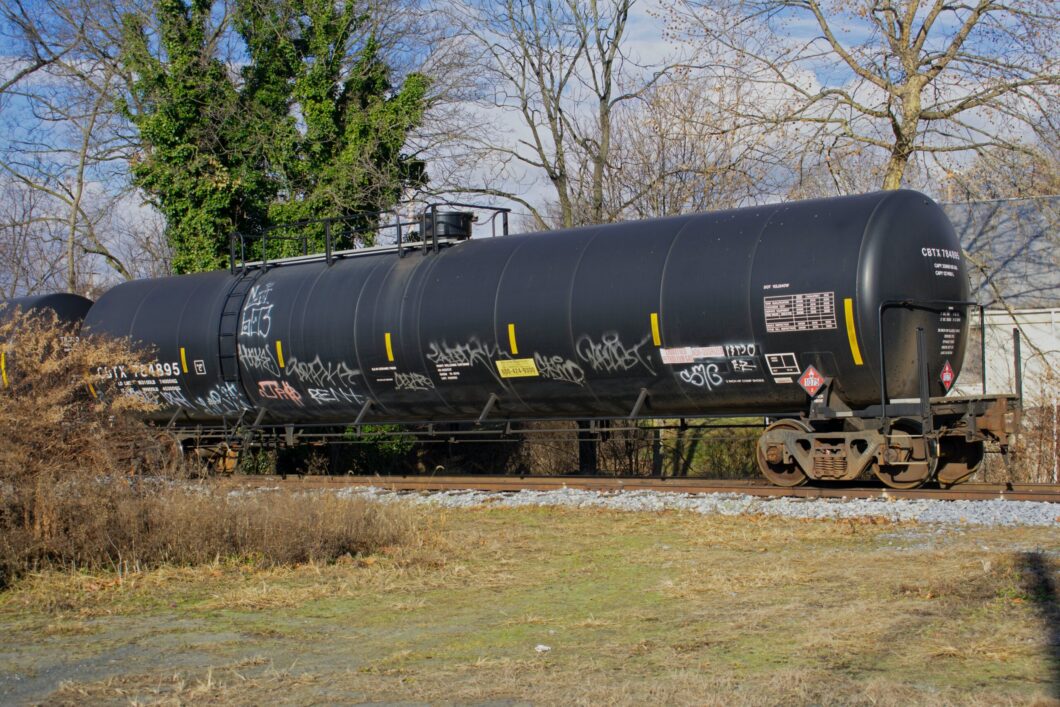
    Photo by Raymond Eichelberger on Unsplash

    Legal News

    On March 14, 2023, Ohio filed a lawsuit against Norfolk Southern Railway Company, a multi-billion dollar entity, in the U.S. District Court for the Northern District of Ohio. The lawsuit stems from the East Palestine train derailment (the “Derailment”), which took place on February 3, 2023. The lawsuit seeks to “recover response costs, redress damages to natural resources, and receive an order for injunctive relief, civil penalties, and damages.” 

    The Derailment 

    The Derailment of train 32N occurred at approximately 9 PM in East Palestine, Ohio—roughly fifty miles northwest of Pittsburgh, Pennsylvania. The accident is believed to have been caused by the overheating and failure of at least one wheel bearing. Twenty of the derailed cars contained hazardous materials, including vinyl chloride, butyl acrylate, ethylhexyl, acrylate, and ethylene glycol monobutyl ether. 

    Chief among the substance concerns was vinyl chloride, which emits toxic substances when it burns. The Environmental Protection Agency (EPA) states that it was notified of the Derailment about two hours after it occurred, and personnel were on site five hours after the accident. The surrounding downwind area was evacuated. Reports were made of health and safety hazards to people and animals in the affected region. Three days after the crash, emergency responders intitiated a controlled release and burn of the remaining vinyl chloride. All the while, the EPA was overseeing air monitoring, water sampling, and other safety controls.  

    On February 10, 2023, EPA Region Five sent a notice of potential liability to Norfolk Southern’s Deputy General Counsel, Matt Gernand. The letter conveyed that the company was a potentially responsible party that might be responsible for cleaning up the Derailment site, or reimbursing the EPA for the cleanup costs incurred by the Agency, under Sections 106(a) and 107 the Comprehensive Environmental Response, Compensation, and Liability Act (CERCLA), colloquially known as the “Superfund Act.”

    Ohio’s Lawsuit  

    About a month and a half after the Derailment, Dave Yost, the Attorney General (AG) of Ohio, filed a 106-paged complaint in federal court against Norfolk Southern. The complaint consists of 58 counts alleging violations of Ohio state laws, the federal CERCLA, and common law. In an announcement released the day of the filing, AG Yost stated, “Ohio shouldn’t have to bear the tremendous financial burden of Norfolk Southern’s glaring negligence.” 

    Ohio’s lawsuit points out that this Derailment is only the latest in a series of recent Norfolk Southern accidents. In fact, the company’s “accident rate has nearly doubled in the past 10 years, and at least 20 of those derailments since 2015 have involved chemical releases.” Ohio alleges that the entity’s increasingly common incidents are a result of putting its bottom line above health and safety. The instant filing details how this particular disaster was “foreseeable and preventable.” Prior to the Derailment, Norfolk Southern received real-time warnings and reports of malfunctions occurring with the train’s wheel bearings. 

    Ohio seeks to hold the transporter accountable for its “release of over one million gallons of hazardous materials, hazardous substances, hazardous wastes, and/or other harmful pollutants into Ohio’s air, streams, rivers, soil, and groundwater, killing tens of thousands of fish and other animals, and recklessly endangering the health of Ohioans throughout the region.” Sought-after compensatory and punitive relief for the harm caused by the Derailment includes the cost of emergency response and cleanup efforts, as well as compensation for the physical and economic harm suffered by local residents. The complaint also requests that the court issue a series of injunctions and declarations that would prohibit Norfolk Southern from further violating the law and negligently injuring. 

    What To Watch For

    Ohio’s lawsuit is just one of many that Norfolk Southern is facing in the aftermath of the Derailment. Norfolk Southern has yet to answer the Ohio complaint. However, the company has previously stated that it is committed to safety and has invested in new technologies and training programs to prevent incidents like the East Palestine train derailment from occurring. 

    The Derailment suits against Norfolk Southern are expected to be closely watched by other transportation companies and industry experts, as they could set a precedent for future cases involving train derailments and hazardous materials. The outcome of this particular lawsuit could have a significant impact on the federal and state safety standards and regulations governing the transportation of hazardous materials by rail in the United States.

    Victoria Kline

    Victoria KlineGuest Writer

    Victoria is a third-year student at the University of Miami School of Law, Juris Doctorate Candidate 2023, Law Review Staff Editor, and soon-to-be associate at Jones Day.

  • Remediating, Insuring, and Litigating PFAS Claims

    Remediating, Insuring, and Litigating PFAS Claims

    Remediating, Insuring, and Litigating PFAS Claims

    Abstract
    PFAS are a group of chemicals found in a variety of products (e.g., Teflon®) and have been used widely in industrial and environmental processes (e.g., oil recovery, firefighting). They do not break down, and over time can accumulate in the body and the environment. While largely no longer used in the United States, they continue to be used internationally. Studies have shown they have adverse health effects on humans and animals.
    In this article the authors discuss the history and impact of PFAS, insurance coverage for claims relating to PFAS contamination, the practice of “insurance archaeology,” maximizing insurance coverage, and, finally, existing and anticipated litigation arising from environmental damage and bodily harm from PFAS.

    Authors

    Dr. Jaana Pietari, PhD, MBA, PE (jpietari@ramboll.com), Senior Managing Consultant with Ramboll Group, has more than twenty years of professional and academic experience in the fate and transport of contaminants, the reconstruction of environmental releases to groundwater and sediments, and environmental forensics.

    Jim Fenstermacher, PE (jim.fenstermacher@ramboll.com), is a Subject Matter Expert on PFAS environmental fate, transport, and regularly interfaces with academia, provides branding, and supports business development efforts regarding PFAS issues.

    Dr. Michael Bock, PhD, MS (mbock@intell-group.com), Managing Director at The Intelligence Group, has more than twenty-five years of experience in environmental consulting with a specialization in environmental forensics and the investigation and assessment of contaminated soils, groundwater, and marine and freshwater sediments.

    Robert D. Chesler (rchesler@andersonkill.com) is a shareholder in Anderson Kill’s Newark office. Bob represents policyholders in a broad variety of coverage claims against their insurers and advises companies with respect to their insurance programs. Bob is also a member of Anderson Kill’s Cyber Insurance Recovery group.

    Nicholas M. Insua (ninsua@andersonkill.com) is a shareholder in the New Jersey and Philadelphia offices of Anderson Kill who focuses his practice on insurance recovery litigation and counseling. Nick also represents clients in business disputes outside the insurance coverage context. He is a member of the firm’s COVID Task Group.

    Sheila Mulrennan (smulrennan@iagltd.com) is the President of Insurance Archaeology Group (IAG) which she founded in 1985. Featured in a survey of “One Hundred Leading Women” in Business Insurance, Sheila is one of the nation’s foremost specialists in historic insurance reconstruction. Under her direction, IAG has pioneered the methods to research missing policies.

    Robin Kelliher (robin.kelliher@willistowerswatson.com) is the National Director for Environmental Claims with the Environmental Practice at WillisTowersWatson. As National Director of the Environmental Claims Practice, Robin leads a team of claim professionals responsible for delivery of technical and strategic consulting services designed to assist clients in managing environmental loss and claims.

    Jason R. Waters (jason.waters@wilsonelser.com) is the Regional Managing Partner of Wilson Elser’s McLean, Virginia office. He also co-chairs the firm’s national Toxic Tort & Environmental Practice Team. Jason has more than 20 years of experience litigating complex claims involving a wide variety of alleged exposures.

    About
    The Journal on Emerging Issues in Litigation is a co-production of HB, Fastcase, and Law Street Media. You can also hear the complementary (and complimentary) Emerging Litigation Podcast wherever podcasts appear. For questions, contact Tom Hagy, Editor in Chief, at Editor@LitigationConferences.com.

    Loading Viewer…

    via GIPHY

    Listen Now

    Explore more from Bob Chesler and Anderson Kill

    Journal on Emerging Issues, Editorial Board of Advisors

    The Use and Abuse of the Pollution Exclusion. By Dennis Artese, Jamie O’Neil, Robert Chesler

    The Environmental, Social, and Governance Police Have Arrived: Is your Insurance Ready. Authors: Dennis Artese, Bob Chesler.

    PFAS Insurance Coverage with Jaana Pietari and Jim Fenstermacher and Litigation with Bob Chesler: Part 1 of 2 Podcasts

    PFAS Insurance Coverage with Robert D. Chesler of Anderson Kill. Part 2 of 2 Podcasts

    How Insurance Companies Defraud Their Policyholders, and What Courts and Legislators Should Do About It. By Robert Chesler and Amy Weiss 

    Climate Change, ESG, D&O Insurance: Collision or Cooperation? By Robert D. Chesler, Dennis J. Artese and Joseph Villa

    Remediating, Insuring, and Litigating PFAS Claims. Authors: Dr. Jaana Pietari, PhD, MBA, PE, Jim Fenstermacher, PE, Dr. Michael Bock, PhD, MS, Robert D. Chesler and Nicholas M. Insua, Sheila Mulrennan, Robin Kelliher, Jason R. Waters

  • Plastics-Related Liabilities and Insurance Recovery with Mikaela Whitman

    Plastics-Related Liabilities and Insurance Recovery with Mikaela Whitman

    Plastics-Related Liabilities and Insurance Recovery with Mikaela Whitman

    Joining me to discuss this important civil statute is Mikaela Whitman for what was an informative and insightful podcast on this potentially enormous area of litigation. It’s based on her article — One Word: Plastics. Two Words: Pollution Exclusion. Why CGL Policies Should Cover Plastics-Related Liabilities — which will be featured in the inaugural issue of the Journal on Emerging Issues in Litigation  in January 2021.
    Mikaela (mwhitman@pasichllp.com) is a partner in Pasich LLP’s New York office and a member of the firm’s insurance recovery practice. Her practice focuses on the representation of insureds in all phases of insurance coverage recovery, from pre-suit negotiations through alternative dispute resolution and litigation.
    The Journal and Podcast are part of a collaborative project between HB and the Fastcase legal research family, which includes Full Court Press, Law Street Media, Docket Alarm and, most recently, Judicata. If you have comments or wish to participate in one our projects, or want to tell me how awesome Mikaela is, drop me a note at Editor@LitigationConferences.com.
    We hope you enjoy the interview.

    As we see liability actions relating to plastics creeping into the nation’s dockets, what types of claims will survive?

    How much more of this might we see?

    And if it really hits the fan, how will insurance companies respond?

    Will policyholders find protection in their comprehensive general liability policies?

    Their directors and officers policies? Other policies?  

  • Offshore Wind Power Initiatives with Jack Smith

    Offshore Wind Power Initiatives with Jack Smith

    Offshore Wind Power Initiatives with Jack Smith

    Joining me to discuss this important subject is Jack Smith, a partner with Nelson Mullins in Charleston, South Carolina. Jack’s practice includes hazardous waste site management and remediation, contaminated property liability negotiation, litigation, redevelopment and related regulatory counseling. He has also worked for several state and federal government environmental agencies. Jack earned his JD from the University of South Carolina School of Law and a BS in Psychology, also from the University of South Carolina.

    This podcast is the audio companion to the Journal on Emerging Issues in Litigation, a collaborative project between HB Litigation Conferences and the Fastcase legal research family, which includes Full Court Press, Law Street Media, Docket Alarm and, most recently, Judicata. If you have comments or wish to participate in one our projects, or want to tell me how insightful and informative Jack is, please drop me a note at Editor@LitigationConferences.com. This interview is based in part on an article Jack is writing for the Journal.

    I hope you enjoy the interview, and especially my solution for preventing birds from flying into windmills. I’m going to be rich. –Tom Hagy

    President Biden  has called for the doubling of offshore wind energy capacity by 2030.

    To say the process for getting such projects up and running is complex is an understatement. There will be plenty of obstacles to the administration’s lofty goal.

    Where will these impediments to development arise?

    What role will states play?

    How will NGOs react to this ambitious ramp-up?

  • Heavy Metals in SFO Bay

    Heavy Metals in SFO Bay

    By Christina Tabacco

    Legal Writer
    Law Street Media
    San Francisco Baykeeper Sues Aviation Part Manufacturer Over Heavy Metal Pollution

    Reposted with permission of Law Street Media and Fastcase.

    On Tuesday in the Northern District of California, plaintiff San Francisco Baykeeper filed a civil action against defendants Allied Engineering & Production Corp., Allied Land Co. (collectively Allied), and Stone Boatyard to rectify the alleged past and ongoing contamination of canal shoreline near the San Francisco Bay. The plaintiff brings the suit under the private attorney general provision, asserting rights on behalf of the public against the defendants for supposedly dumping metal shavings in the Oakland Inner Harbor Tidal Canal in violation of the law.

    Baykeeper is an environmental non-profit organization with approximately 3,500 members who live and recreate in and around the San Francisco Bay area. The organization’s mission is “to defend San Francisco Bay from the biggest threats and hold polluters accountable to create healthier communities and help wildlife thrive.” It monitors and investigates pollution as part of its efforts to ensure that the bay is clean and safe for recreation.

    Defendant Allied Engineering operated a machine shop from 1951 to about 2011, located in Alameda, Calif., on a property that Allied Land owned. The machine shop manufactured aviation industry components and stored hazardous materials, hydraulic oils, lubricants, greases, fuels, coolants, and solvents, the complaint avers. The defendants are charged with dumping materials onto an adjacent parcel that was formerly owned by the United States but is now owned by Stone Boatyard.

    The plaintiff organization alleges that some of its members alerted it to a stretch of the canal’s shoreline contaminated with metal waste. Baykeeper staff investigated and discovered that the contamination consisted of metal shavings or swarf. The complaint also explains that “[s]ampling indicates the presence of lead contamination in the contaminated soil in excess of California Hazardous Waste Criteria.” On information and belief, the complaint avers, Allied knowingly dumped the swarf, thereby violating tort law and the Resource Conservation and Recovery Act (RCRA).

    Baykeeper contends that the canal’s heavy-metal concentrations “adversely affects the water quality of San Francisco Bay and San Leandro Bay and threatens the beneficial uses and ecosystem of those interconnected habitats, including key habitat for threatened and endangered species.” Baykeeper’s members suffer harm because they cannot safely hike, swim, fish, surf, kayak and observe wildlife, among other activities, in a toxified environment.

    Baykeeper asserts an RCRA cause of action, nuisance per se, and public nuisance. The plaintiff asks that the defendants be enjoined from committing further violations, and that they be required to remediate environmental harm caused by the dumping.

    The plaintiff is represented by Aqua Terra Aeris Law Group and its own representation.

    Read this and more at LawStreetMedia.com.

    Safeguarding Against Financial Exploitation

    An on-demand CLE-eligible webinar Safeguarding Against Financial Exploitation   America’s senior population is growing. Nearly one in five U.S. residents will be 65 or older in 2030. Which means the average age of U.S. investors is climbing too. With that comes the risk that they will be exploited by people with access – or gain access through nefarious methods – to their investment portfolio. Seniors and vulnerable persons lose billions of dollars each year. Remarkably, 90% of the people to take advantage of senior investors are members of their own family. Attorneys who represent senior clients need to know the signs of vulnerability, red flags that their clients are being exploited, what laws apply, and rules lawyers must follow in these matters.   Questions our speakers answer: What is senior / vulnerable investor exploitation?   Who is protected by state and federal laws?   How prevalent is senior financial exploitation? What do the numbers tell us?  What is the pace of financial abuse SAR filings by securities firms?  What are the most popular scams?   What is diminished capacity?  What are the red flags indicating possible exploitation?  What are the laws, rules, and regulations governing law firms?  What are some best practices for law firms?  How can firms best protect their senior clients?   On Demand CLE Webinar What You Get PowerPoint and supplemental materials. Complete recording for later review. Answers to your questions via email. Invitation to contact speakers. 1.5 CLE credits (for licensed attorneys). CLE assistance.* *Subject to state bar rules. For licensed attorneys.  Register Meet the Speakers Joseph Calabrese Bressler, Amery & Ross, P.C. A 1991 Graduate of St. John’s University Law School, Mr. Calabrese brings 30 years of practice and 18 years of Securities Litigation/Regulatory experience to his role as principal in the New York office of  Bressler, Amery & Ross’s Financial Institutions Group. He began his career as a Wall Street litigator as an associate general counsel for Citigroup’s Smith Barney and […]

    Lien Resolution: Government & Private Plans Get Aggressive (Against Attorneys)

    Includes Nearly 75 minutes of insights from experienced professionals. CLE credit: 1+ (subject to bar rules). For CLE questions: CLE@LitigationConference.com The complete Power Point presentation. Continued access to the complete recording for later use. Answers to your questions via email to the presenters or write to HB and we will be sure to contact the speakers. What can you do to settle personal injury suits cleanly and avoid costly litigation and penalties? What recent cases can inform you about protecting your settlements and, as attorneys, yourselves, from post-settlement federal lawsuits? How can your firm set itself up to meet government expectations? What role might experts play in navigating these pitfalls? Medicare Advantage (42 USC § 1395w-22) Federal Medical Care Recovery Act (FMCRA) (42 USC § 2651) Armed Forces Act (10 USC §1095) Veterans’ Benefits (38 USC §1729) Third-Party Collection Rules (32 CFR 537.24; 38 CFR 17.101, etc.) Set-Asides under the Medicare Secondary Payer Act (42 USC § 1395y(b)(2)] On Demand Registration Lien Resolution Government & Private Plans Get Aggressive (Against Attorneys!) On Demand | Recorded September 2020 It is increasingly common these days. Personal injury attorneys settle a case, only to find themselves sued by a U.S. Attorney for failing to reimburse Medicare for conditional payments as required by the Medicare Secondary Payer Act. In some cases the attorney may be required to pay fines in addition to the reimbursements and interest, a costly proposition. Are you up to speed on issues surrounding Medicare Advantage, TRICARE, veterans’ claims, and Medicare set-asides? Join nationally recognized healthcare lien and resolution expert Franklin P. Solomon and go-to lien resolution provider Brett Newman as they offer a practical, in-depth CLE presentation. Franklin P. Solomon, Esq. Attorney & Founder, Solomon Law Firm  A graduate of Rutgers University School of Law at Camden, Franklin Solomon is based in Cherry Hill, NJ, with a practice focused on evaluation, litigation and resolution of healthcare “liens” and reimbursement claims. Mr. Solomon represents personal injury victims and their attorneys […]

    Telepsychiatry: Mitigating the Risks

    REGISTER Registration Includes Nearly 90 minutes of insights from experienced professionals. CLE credit: 1+ (subject to bar rules). For CLE questions: CLE@LitigationConference.com The complete Power Point presentation. Continued access to the complete recording for later use. Answers to your questions via email to the presenters or write to HB and we will be sure to contact the speakers. Understand the risks associated with telepsychiatry and how to manage them.  Telemedicine has emerged as an important solution for healthcare in general and psychiatric medicine specifically during the current global pandemic. Remote access for sub-practices including addiction counseling have been commonly used. Our panel of psychiatric professionals who have served as expert witnesses and attorneys who counsel and represent physicians have prepared a 90-minute session to share insights with attorneys, physicians, healthcare providers, risk professionals, and more. Agenda Examining procedures and best practices that exist for ensuring confidentiality in a telemedicine practice How do you draft a telepsychiatric consent form? What is the emerging standard of care for telemedicine? Will the standard of care for telemedicine become a national standard? (Should it?) Review the case law addressing telemedicine or telepsychiatry How do the HIPAA regulations and HITECH privacy laws impact telemedicine? How have the HIPAA regulations and HITECH privacy laws been relaxed during the pandemic? Will the relaxed HIPAA and HITECH regulations impacting telemedicine continue past the pandemic? Which technical platforms are preferred? Which ones to avoid? Panelists Mark Levy, M.D., Medical Director at fpamed David Kan, M.D., UCSF Psychiatry Department and the California Society for Substance Abuse Medicine Ayesha Ashai, M.D., associated with fpamed Stephen M. Fatum, J.D., Partner, Barnes & Thornburg LLP Angela W. Russell, J.D., Partner, Wilson Elser Moskowitz Edelman & Dicker LLP Meet our physician and attorney panelists. Mark Levy MD Medical Director fpamed Dr. Levy is a graduate of Columbia College (A.B. 1967) and the Columbia University College of Physicians and Surgeons (M.D. 1971) in New York. He is a Physician […]

    The Commercial Drone Industry: Privacy, Security, Threats, and Mitigation of Risk

    HB presents a CLE-eligible webinar Now on-demand at the West LegalEdcenter THE COMMERCIAL DRONE INDUSTRY Privacy, Security, Threats, and Mitigation of Risk Drones have become an increasingly valuable tool for businesses of all types and sizes. Drones are already being used in many applications, but more will certainly arise as the technology advances. This means that certain risks, like cyber threats, will also continue to present themselves. Protecting the transmission and storage of data collected through drones is critical. Unfortunately, security usually comes as an afterthought. The drone industry is part of the aviation industry, which, based on its knowledge, keeps safety as a number one concern. Part of that safety is having proper protection for your systems, including security as a fundamental design principle. Take this webinar to gain insights on the topics listed below, and shared by an attorney who practices on the cutting-edge of this evolving technology. Topics: Defining drones. Current and future applications. FAA Modernization and Reform Act of 2012. FAA Part 107 Regulations and waivers. Resources, e.g. the FAA Drone Zone and LAANC Portal. Penalties for violations. Privacy implications. Drones as weapons. Vulnerability to cyber attacks. Take it now! What you get: 1+ CLE credits (subject to bar rules). Insights from an experienced professional who specializes in this area of the law. The complete PowerPoint presentation. Continued access to the complete recording for later use. Answers to your questions. Fee: No additional charge to subscribers to the West LegalEdcenter. Non-subscribers may take the course for $170. Meet the Speaker Kathryn Rattigan Robinson & Cole LLP Kathryn Rattigan is a member of the firm’s Business Litigation Group and Data Privacy + Cybersecurity Team. She advises clients on data privacy and security, cybersecurity, and compliance with related state and federal laws. She assists clients in assessing risks related to technology and software contracts, as well as with compliance-related issues with outsourcing and […]

    The Intersection of Privacy and Antitrust Webinar Now Available On-Demand on the West LegalEdcenter

    Available as part of your subscription to The Thomson Reuters West LegalEdcenter®. Don’t subscribe to the West LegalEdcenter? This webinar is still available directly from HB. Take it now! Questions for speakers Questions@LitigationConferences.com CLE questions CLE@LitigationConferences.com Check out the MoginRubin blog for more insights on antitrust and privacy law. What attorneys and companies need to know about the increasing interplay between these critical areas of the law.  Highly publicized cases and investigations in the U.S. and Europe of big technology, e-commerce, and social media companies demonstrate how anti-competition laws are being used to scrutinize and challenge not only how these corporations conduct themselves in the marketplace, but the very core of their colossal success: the mass collection and utilization of user data. Are the privacy and antitrust worlds beginning to cross over? Or do they simply run parallel while addressing entirely different types of conduct? Whatever the answer, data is the raw material that drives the likes of Google, Facebook, Apple and Amazon, so how it is handled is a critical question when counseling clients on mergers and acquisitions. Moderator Daniel J.  Mogin | Managing Partner, MoginRubin LLP Speakers Jennifer M. Oliver, CIPP/US | Partner, MoginRubin LLP Thomas N. Dahdouh | Director, Western Region, Federal Trade Commission Franklin M. Rubinstein | Partner, Wilson Sonsini Goodrich & Rosati Randi W. Singer, CIPP/US, CIPT | Partner, Weil, Gotshal & Manges Contributor Dina Srinivasan | Independent Researcher & Author of The Antitrust Case Against Facebook Dina was unable to present but we thank her for her content contributions.  Agenda Who should regulate privacy violations in the U.S.? Which antitrust issues implicate privacy concerns? What role does machine learning play on the competitive landscape? What is big data really? How is it different from “data”? What are the elements of effective merger reviews? What are the appropriate remedies? What are “notice-and-choice” versus “harms-based” approaches? Plus answers to your questions. Send them to Questions@LitigationConferences.com.