Tag: Multi-District Litigation (MDL)

  • Fall bellwether trials for social media addiction cases to test novel legal theories

    Fall bellwether trials for social media addiction cases to test novel legal theories

    Emerging Litigation Podcast

    Emerging Litigation PodcastProduced by HB Litigation

    Interviews with leading attorneys and other subject matter experts on new twists in the law and how the law is responding to new twists in the world.

    Interested in contributing an article? Email us at Editor@LitigationConferences.com.

    Fall bellwether trials for social media addiction cases to test novel legal theories 

    By: Justin Ward

    Comparing social media to an addictive chemical like nicotine presents a challenging legal argument. Unlike substances, social media has a significant speech component, and any attempt to regulate it could raise First Amendment concerns.

    Bellwether trials for two consolidated cases against some of the world’s largest social media platforms are expected to begin later this year, testing the novel application of legal theories traditionally used in cases against producers of addictive substances like nicotine and opioids.

    More than 1,900 individual personal injury, school district, state attorney general, and municipal claims from nearly every state have been merged into multidistrict litigation (MDL) and Judicial Council Coordinated Proceedings (JCCP) cases in California. The courts are expected to hear a subset of these cases—the bellwether trials—before the year’s end.

    The primary defendants include the parent companies of platforms with large youth audiences, such as Instagram, TikTok, Snapchat, and YouTube. Plaintiffs’ attorneys argue that these platforms are marketed to children and deliberately designed to exploit adolescent brains, which are particularly vulnerable at that stage of development.

    Their complaint cites a growing body of research linking frequent social media use to negative mental health outcomes in young people, including an increased risk of suicide, eating disorders, anxiety, and behavioral problems. It also alleges that the companies were aware of these potential harms but failed to take action to mitigate the risks or warn consumers.

    Whether these claims will prevail depends on a lengthy discovery process and competing testimony from expert witnesses. However, early rulings in California and other jurisdictions provide insight into how courts may interpret the law.

    Legal Challenges and Early Rulings

    Claims brought by school districts arguing that social media constitutes a “public nuisance” have seen mixed results. Some state and federal courts have allowed them to proceed, while others have dismissed them. California Superior Court Judge Carolyn Kuhl, who oversees the JCCP lawsuit, has dismissed public nuisance and product liability claims but has allowed the case to move forward on negligence and failure-to-warn grounds.

    In October, Meta, the parent company of Instagram and Facebook, moved to dismiss the MDL, citing Section 230 of the Communications Decency Act, which protects platforms from liability for user-generated content. Judge Yvonne Gonzalez Rogers ruled that the case could proceed, though she found that Section 230 provided the company with partial immunity. Notably, Rogers and Kuhl differ in how they classify social media platforms—as products versus speech-based services—which could have significant legal implications.

    First Amendment and Addiction Comparisons

    Comparing social media to an addictive chemical like nicotine presents a challenging legal argument. Unlike substances, social media has a significant speech component, and any attempt to regulate it could raise First Amendment concerns.

    In late January, the 9th U.S. Circuit Court of Appeals issued a preliminary injunction blocking California’s Protecting Our Kids from Social Media Addiction Act from taking effect while an appeal is pending. The panel of judges ruled that some of the plaintiffs’ claims were likely to succeed.

    While the MDL bellwether trial was initially scheduled for October 2025, it has since been postponed.


    Justin Ward is a Seattle-based investigative reporter specializing in politics, courts, and criminal justice. His work can be found in national and local media outlets, including USA Today, the Southern Poverty Law Center, and The Seattle Stranger. He can be reached at justinwardtexan@yahoo.com.


  • Key Developments in Antitrust Class Action Litigation: Recent Developments, Key Class Action Trends, Significant Rulings, and Major Settlements Shaping the Future of Antitrust

    Key Developments in Antitrust Class Action Litigation: Recent Developments, Key Class Action Trends, Significant Rulings, and Major Settlements Shaping the Future of Antitrust

    Key Developments in Antitrust Class Action Litigation:

    Recent Developments, Key Class Action Trends, Significant Rulings, and Major Settlements Shaping the Future of Antitrust

    An old-fashioned two-way scale symbolizing legal balance, fairness, and antitrust justice

    Gain an understanding of the latest developments in antitrust class action litigation, including evolving class certification standards, key rulings on multi-district litigation, and major settlements shaping the field. 

    Developed and presented by three practicing attorneys with an expertise in class action defense and antitrust and competition law, this webinar is essential for attorneys and professionals looking to deepen their understanding of antitrust class action litigation. Gain valuable insights into the latest developments, explore key class action trends, examine significant rulings, and review major settlements that are shaping the future of antitrust. Stay informed and equipped with the knowledge to navigate this complex area of law.

    This webinar offers an in-depth look at the latest updates in antitrust law and key trends in class action litigation. Participants will explore significant developments in class certification, including evolving interpretations of Rule 23’s numerosity requirement and the impracticability of joinder. The session will also cover landmark rulings on pivotal issues such as the application of the per se treatment, quick-look analysis, and rule-of- reason test, as well as decisions impacting multi-district litigation, baseball’s antitrust exemption, the right-to-repair movement, and pricing algorithms.

    Learning Objectives

    Stay up to date on recent developments in antitrust

    Gain an understanding of key class action trends, including evolving class certification standards

    Explore significant rulings in class action litigation, such as:

    -Per se treatment vs. quick-look analysis vs. rule of reason

    -Rule 23’s numerosity requirement and the impracticability of joinder

    -Key rulings on changes to multi-district Litigation

    -Baseball’s antitrust exemption and its ongoing implications

    -Rulings on the right-to-repair movement

    -Decisions impacting pricing algorithms

    Learn about major settlements that are reshaping antitrust

    TAKE IT NOW

    Available now to CeriFi LegalEdge subscribers. Don’t subscribe? Don’t despair. Use code HB20 for 20% off. Or, HBSub20 for 20% off a full solo subscription. While supplies last.

    Speakers

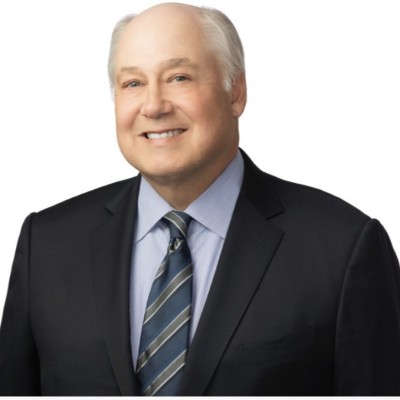
    Gerald L. Maatman, Jr.

    Gerald L. Maatman, Jr.Partner, Duane Morris LLP

    A widely recognized workplace class action defense litigator, Jerry is a Partner at Duane Morris LLP, where he chairs the firm’s Class Action Defense Group. He is a graduate of Washington & Lee University and the Northwestern University School of Law, where he has served as an adjunct professor for 34 years. The author of eight books on the law, Jerry is a sought-after legal commentator by major news organizations. He works out of the Duane Morris offices in Chicago and New York.

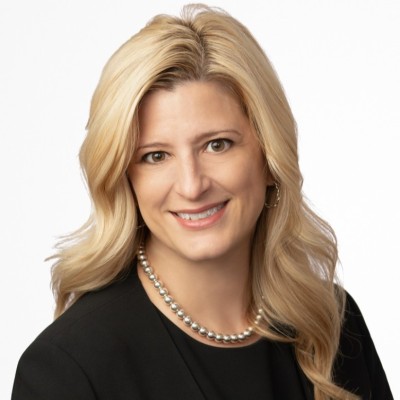
    Jennifer A. Riley

    Jennifer A. RileyPartner, Duane Morris LLP

    A partner in the Duane Morris Chicago office, Jennifer is vice-chair of the firm’s Class Action Defense Group. She regularly defends companies facing class actions, collective actions, pattern or practice lawsuits, and other types of representative proceedings, ranging in size from dozens to tens of thousands of claims. Jennifer also helps employers navigate thorny issues, including investigations, compliance, and terminations. She earned her J.D. from the University of California, Berkeley School of Law, and her B.A. from Vanderbilt University, magna cum laude.

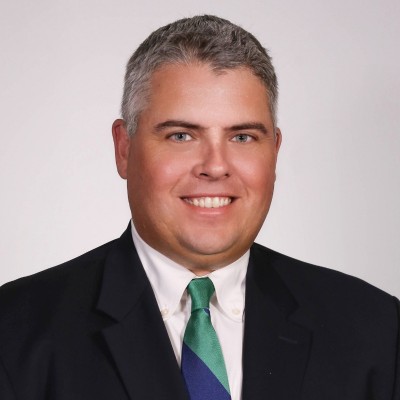
    Sean P. McConnell

    Sean P. McConnellPartner, Duane Morris LLP

    Sean P. McConnell, chair of Duane Morris’ Antitrust division of the Trial Practice Group, has represented numerous clients in their most high-stakes and sophisticated antitrust disputes. Mr. McConnell represents U.S. and international clients on the full range of antitrust matters, from counseling and compliance to defense of bet-the-company class actions and private litigation, to government investigations, to the competitive aspects associated with mergers, acquisitions, joint ventures, and other collaborations. Chambers USA has identified Mr. McConnell as an “up-and-coming antitrust practitioner who is commended for his representation of clients in sophisticated class actions.” Mr. McConnell is a 2009 graduate of Villanova University School of Law, where he was a member of the Villanova Law Review, and he is a 2005 graduate of the University of Notre Dame with a degree in Finance.

  • Announcing the Complex Litigation Ethics Conference

    Announcing the Complex Litigation Ethics Conference

    Joshua P. Davis

    Joshua P. DavisProfessor & Practicing Attorney

    A leading academic and practitioner, Joshua P. Davis (davisj@usfca.edu) is a nationally recognized expert on legal ethics and class actions, as well as on artificial intelligence in the law, antitrust, civil procedure, free speech, and jurisprudence. He has published more than 30 scholarly articles and book chapters on these subjects and is currently writing a book on AI titled Unnatural Law, which will be published by Cambridge University Press. He is Research Professor of Law at the University of California Hastings College of Law, and a Shareholder of the Berger Montague PC law firm and Manager of its new San Francisco Bay Area Office. Before taking these posts, for more than 20 years Davis was a tenured Professor of Law at University of San Francisco Law School, where he also served as the Director of the Center for Law and Ethics.

    Davis is also a member of the Editorial Board of Advisors for the Journal on Emerging Issues in Litigation, published by Fastcase Full Court Press. Tom Hagy, Editor in Chief.

    Scott Dodson

    Scott DodsonCenter for Litigation and Courts

    An expert in civil procedure and federal courts, Professor Scott Dodson is the James Edgar Hervey Chair in Litigation and Geoffrey C. Hazard Jr. Distinguished Professor of Law at UC Hastings Law. He has published seven book titles, including The Legacy of Ruth Bader Ginsburg (Cambridge 2015) and New Pleading in the Twenty-First Century (Oxford 2013). He has written around 100 shorter works appearing in such journals as Stanford Law Review, New York University Law Review, Michigan Law Review, University of Pennsylvania Law Review, California Law Review, Virginia Law Review, Duke Law Journal, Northwestern University Law Review, Georgetown Law Journal, American Journal of Comparative Law, American Journal of International Law, and Law & Society Review. His scholarly writings have been cited in more than 30 court opinions and have been downloaded more than 45,000 times. For 2010-14, he was listed as the 9th (tied) most-cited civil-procedure scholar. Professor Dodson is a frequent commentator in the news, including appearances on the 10:00 Nightly News, NPR Radio, and CNN Radio; quotes in various print media; and blogging stints at SCOTUSblog, SCOCAblog, Civil Procedure & Federal Courts Blog, and PrawfsBlawg.

    You can also listen to Josh on the Emerging Litigation Podcast!

    New Litigation Ethics Conference to Feature Sitting Judges, Legal Scholars, Prominent Attorneys

    For Immediate Release

    SAN FRANCISCO – Aug. 25, 2022 – Luminaries and thought leaders in the complex litigation arena will gather in San Francisco on Saturday, Oct. 22, 2022, to discuss insights and practices on an issue of critical significance to the nation’s justice system: ethical conduct among litigants and litigators.

    With a projected in-person and remote audience of 100 plus, this important continuing legal education program will be held at the UC Hastings College of Law in association with the school’s Center for Litigation in Courts. Professors Joshua P. Davis and Scott Dodson have assembled a faculty of leading jurists, litigators, and other subject matter experts.

    Complex Litigation Ethics Conference
    Oct. 22, 2022
    UC Hastings College of Law
    Learn more

    “Data suggest that, depending on the year, as much as half of all cases filed in federal court are part of multidistrict litigation, or MDL, proceedings or involve proposed class actions,” said Professor Davis, who is both a research professor at UC Davis and managing partner of the San Francisco offices of Berger Montague, a prominent class action and complex litigation law firm.

    According to the U.S. Judicial Panel on Multidistrict Litigation there were 186 MDL dockets pending, which brought together 770,623 actions, with 426,495 pending as of July 2022. At the same time, thousands of new class actions are filed each year (some put the number as high as 10,000) in state and federal courts representing millions of named and potential class members. Cases and claim types run the gamut, such as consumer product liability, antitrust, toxic substances, drug and device liability, data breaches, securities, employment, environmental contamination, and both injury and damage claims arising from wildfires and floods, to name a few.

    “Despite these figures, insufficient scholarly attention has been paid to the ways in which ethical rules, which are typically designed for traditional litigation, should be adapted and applied to MDLs and class actions,” said Professor Davis. “The Complex Litigation Ethics Conference will address these important and timely issues.”

    Topics include adapting general legal ethics rules to complex matters; ethics in litigation funding; diversity, equity, and inclusivity in complex litigation; and communications with “absent class members.”

    U.S. Judge Jon S. Tigar of the Northern District of California will be among the speakers. Judge Tigar has or continues to preside over headline-grabbing litigation brought against Apple Inc., Meta Platforms Inc. (Facebook), Twitter Inc., Uber Technologies Inc., Wells Fargo & Company, Subway restaurants, Sanofi S.A., and others.

    Also on the faculty are:

    • Lynn A. Baker, University of Texas School of Law
    • Jennifer Bennett, Gupta Wessler PLLC
    • Eric Cramer, Berger Montague PC
    • Lauren Godshall, Tulane Law School
    • Alexandra D. Lahav, Cornell Law School
    • Brent Landau, Hausfeld
    • Roger Michalski, University of Oklahoma College of Law
    • Melissa Mortazavi, University of Oklahoma College of Law
    • Sarah Ray, Latham & Watkins LLP
    • Maya Steinitz, University of Iowa, College of Law
    • Brad Wendel, Cornell Law School

    Three annual Awards for Excellence in Ethics in Complex Litigation will also be announced during the event, one to a plaintiffs’ attorney or law firm, one to a defense attorney or law firm, and one to a judge, scholar, third-party neutral, party to litigation, government official, other lawyer or law firm, non-profit organization, and other participant in or commentator on complex litigation. The winners will have demonstrated excellence in promoting ethics in class actions or other complex litigation (e.g., MDLs).

    Huntington National BankThe event is being co-sponsored by Huntington National Bank, a nationwide provider of settlement fund and other financial services for law firms.

    Members of the legal and business press are invited to request passes to attend the event in San Francisco or via webstream, and to receive program materials. Pre-program interviews with the conference leaders and faculty should be addressed to Tom Hagy, +1 (484) 844-0428, or Editor@LitigationConferences.com.

    DOWNLOAD THE RELEASE

  • The Need for Real MDL Rules Will Only Grow More Acute — Drug and Device Law Blog

    By Bexis 

    [one-half-first].[/one-half-first] [one-half]”In the ensuing procedural gamesmanship, plaintiffs are in the process of losing one of the main ways they gamed the system to keep diverse cases in state court – the so-called ‘forum defendant rule’ whereby even a diverse action could be kept in state court by the presence of defendant domiciled in the plaintiff’s chosen forum. The forum defendant rule applies only to parties ‘properly joined and served,’ and technologically-savvy defendants have discovered that, by monitoring electronic dockets, they can remove diverse cases faster than plaintiffs can serve forum defendants. We call this ‘pre-service,’ ‘snap,’ or ‘wrinkle’ removal, and we’ve chronicled (and advocated) its rise since 2007.”

    Read the complete post by Bexis on Drug and Device Law Blog here. [/one-half]


    This is an excellent blog. One of my favorites. It’s unapologetically defense-oriented, of course. A phrase like “gamed the system” is practically an invitation for rebuttal! So if you would like to respond, rebut, or rebuke, please write to us at Editor@LitigationConferences.com. –Tom Hagy, HB

  • Top Class Actions’ Top Trends Affecting Class Actions in 2018

    Editor’s Note: This article was written by Kim Gale at Top Class Actions and is reprinted here with the permission of the publisher. Scott Hardy, the company’s President & CEO, is one of the speakers featured at HB’s Class Action Mastery conference May 9-11, 2018 in New York. Top Class Actions is sponsoring that event and its companion program, Mass Tort Med School, the same week. 

    As we come close to rounding out the first quarter of 2018, it is clear that several class action lawsuit trends from 2017 will continue to ripple through the court system this year.

    Class Action Lawsuit Stats
    Did you know three areas are responsible for a third of all class action lawsuits filed in the U.S.? The federal courts in California, Southern District (Miami) of Florida, and the Eastern District (Brooklyn) of New York keep lawyers and judges the busiest.

    In the initial nine months of 2017, a total 3,136 federal class action lawsuits were filed in those areas alone, according to an article published Dec. 9, 2017 by PorterWright.com.

    These statistics are apt to change because new Supreme Court decisions (Bristol-Myers Squibb v. Superior Court of California and BNSF Railway Co. v. Tyrrell) rein in a court’s jurisdiction and ability to litigate matters when residents from outside the court’s state make claims.

    These new decisions mean a defendant will need to be sued in the state where the business is incorporated. Another option could be for individual states to file class action lawsuits and then seek to have them consolidated through multidistrict litigation (MDL).

    Marketing Tactics Under Fire
    Makers of everything from washing machines to mascara faced allegations of product misrepresentation. Advertising claims such as “organic,” “preservative free” and “virgin” can land a company in hot water with multiple class action lawsuits if these claims can be proven false.

    In 2017, class action lawsuits started challenging the way some products are made because consumers possibly paid more for such proclamations.

    For example, extra virgin olive oil is the highest quality available, which consumers often pay a premium to receive.

    To earn the title extra virgin, the oil must be free of defects, taste like fresh olives, and be produced using no solvents. Extra virgin olive oil has to be manufactured by a mechanical process and in temperatures that will not allow the oil to degrade. Finally, the oil must be sold in darkly tinted bottles to keep the product from degrading on the shelf.

    In one olive oil case that led to a class action settlement (Kumar v. Safeway Inc.), olive oil labeled extra virgin was allegedly mixed with refined oil and packaged in clear bottles, ruining any chance at truly being “extra virgin.” To add further insult, the olive oil was labeled as imported from Italy, but contained olive oil from a variety of other countries not particularly known for their brilliantly tasty olives.

    Consumers do not take kindly to paying a premium for false enhancements, which has led to multiple class action lawsuits against companies that tout their product as better than the rest due to refinements that don’t exist.

    Class Action Settlements Under Scrutiny
    In 2013, Subway was hit with a class action lawsuit after a foot-long sandwich that fell short at 11 inches was posted on social media. Subway explained away the one-inch discrepancy by saying the dough is a foot long, but after the bread is baked, the natural action of the dough rising can cause impact on the length.

    A class action settlement was reached in 2015 in which Subway agreed to make sure all locations adopted a uniform practice to guarantee each unbaked loaf measured 12 inches.

    In the settlement, Subway also agreed to pay the class counsel’s $520,000 fees but offered no monetary compensation to consumers.

    In September 2017, the 7th Circuit Court in Chicago reversed the Subway settlement on appeal because consumers would see the settlement as “utterly worthless.” The court expressed disgust over the settlement terms, indicating that any settlement that pays the class counsel, but provides no relief to the Class Members, “is no better than a racket.”

    The court’s reversal of the settlement will force future defendants to make sure any settlement offer they consider includes a true benefit to Class Members and not just to their counsel.

    Opioid Manufacturer Litigation
    In 2017, more than 100 cases were filed against opioid manufacturers by individuals, health insurance companies, state governments, county governments and city governments. These opioid lawsuits seek to hold manufacturers accountable for the epidemic of opioids in the country that have led to overworked and under-financed ambulance services, hospital services, EMTs, police officers, rehabilitation facilities and other providers of care to people who overdose on opioids and need life-saving intervention.

    The judicial panel on multidistrict legislation is considering motions to centralize these pending lawsuits. Whether or not the cases are processed separately or as an MDL, outcomes from these opioid epidemic cases will set new precedents, affecting the medical community and the law.

    “Small” Data Breach Litigation
    Even though high-profile data breach cases make the news, many smaller data breach class action lawsuits are filed every day. Large and small businesses collect data on customers and employees. Disgruntled current or former employees can cause big headaches by allowing a small data breach.

    Employees who aren’t particularly computer savvy can accidentally save sensitive information where hackers could access it. As technology to enhance computer security has advanced, so have the skills of potential hackers who constantly look for weaknesses in firewalls.

    A Look Forward
    In 2018, class action lawsuits will continue to address claims regarding baby powder cancer, Roundup cancer, medication dangers, airbag recalls, whistleblower cases and other consumer-related issues.

    © Copyright 2018 Top Class Actions