Tag: Government Enforcement

  • The Long and Brawny Arm of the Foreign Corrupt Practices Act with Mark Bini and Tom Suddath

    The Long and Brawny Arm of the Foreign Corrupt Practices Act with Mark Bini and Tom Suddath

    The Long and Brawny Arm of the Foreign Corrupt Practices Act with Mark Bini and Tom Suddath

    Concepts: Corruption, FCPA, Corporate Crime, International Business, FEPA, Regulatory Enforcement

    The United Nations and World Economic Forum calculate that the cost of corporate corruption globally is $5 trillion a year, or 5% of the world’s 2022 GDP.

    Corruption can hamper economic growth by discouraging investment, increasing transaction costs, and distorting market competition. It can perpetuate poverty by diverting resources away from essential services and benefiting the wealthy and powerful. It can undermine democratic institutions and erode public trust in governments. It can hinder sustainable development by diverting resources away from essential infrastructure and social services.

    The Foreign Corrupt Practices Act, or the FCPA – the government’s leading weapon in this global war on corporate crime – has far-reaching implications for companies engaged in international business. For those who violate it the consequences can be severe. And with the recent addition of the Foreign Extortion Prevention Act (FEPA), the federal government has even more to work with.

    I had the pleasure of learning more about this fascinating and complex area of the law by speaking with two attorneys with Reed Smith who practice in the firm’s Global Regulatory Enforcement Group.

    Mark E. Biniisa former federal and state prosecutor in New York. He has led multiple multi-year cross-border investigations of corporations and individuals and has particular experience in investigations involving potential Foreign Corrupt Practices Act (FCPA) violations. As a prosecutor, he worked closely and in parallel with many domestic and foreign law enforcement agencies and regulators, including the United Kingdom’s Financial Conduct Authority and Brazil’s Ministerio Publico Federal.

    Thomas H. Suddath, Jr., a former Assistant U.S. Attorney in the Criminal Division of the U.S. Attorney’s Office in Philadelphia, has extensive experience conducting international and domestic internal investigations and frequently counsels companies on compliance and voluntary disclosure issues related to the FCPA. He has handled FCPA and other internal investigations in many countries including Russia, Poland, Turkey, Greece, Hungary, Czech Republic, Mexico and Colombia.

    Thanks to Mark and Tom for sharing their insights based on decades of experience.

    I hope you enjoy the conversation! If so, give us a rating!

    This podcast is the audio companion to the Journal on Emerging Issues in Litigation. The Journal is a collaborative project between HB Litigation Conferences and the vLex Fastcase legal research family, which includes Full Court Press, Law Street Media, and Docket Alarm.

    If you have comments, ideas, or wish to participate, please drop me a note at Editor@LitigationConferences.com.

    Tom Hagy
    Litigation Enthusiast and
    Host of the Emerging Litigation Podcast
    Home Page
    LinkedIn

    podcast logo face


    Want to appear on the Emerging Litigation Podcast?


    Send us your idea! 

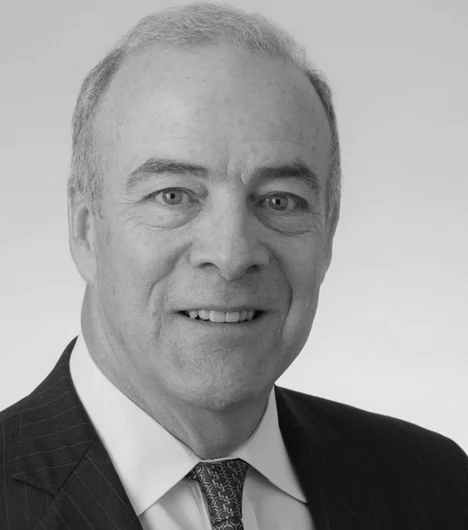
    It’s possible it could make this man smile. But let’s not get ahead of ourselves.

    Mark E. Bini

    Mark E. BiniReed Smith LLP

    Mark is a former federal and state prosecutor who represents corporations and individuals in connection with government investigations, internal investigations, criminal and regulatory proceedings and related civil litigation. Mark has tried 25 cases, including some of the Department of Justice’s most complex financial fraud trials in recent years, and led multiple multi-year cross-border investigations of corporations and individuals. Mark has particular experience in investigations involving securities fraud, Foreign Corrupt Practices Act (FCPA) violations, crypto fraud, health care fraud, cyber-crime, bank fraud, money laundering and Bank Secrecy Act (BSA) violations.

    Prior to joining the firm, Mark served in the Department of Justice for nearly 10 years as an Assistant U.S. Attorney in the Eastern District of New York (EDNY) and the Middle District of Florida, where he specialized in investigating and prosecuting financial and corporate crime. Before that, Mark served as an Assistant District Attorney in the Manhattan District Attorney’s Office for five years. Prior to becoming a prosecutor, Mark clerked for a judge in the Southern District of New York, and worked at a major international law firm in New York, handling complex civil litigation and white collar matters.

    Thomas H. Suddath, Jr.

    Thomas H. Suddath, Jr.Reed Smith LLP

    Tom represents companies and individuals, particularly within the healthcare sector, involved in criminal and other government investigations and related civil litigation, including matters under the Foreign Corrupt Practices Act (FCPA), the False Claims Act (FCA), the Sherman Act, the federal Food Drug and Cosmetic Act and the Anti-Kickback statute.

    Beyond the healthcare industry, he represents companies and individuals in domestic and international government investigations involving antitrust, securities fraud, political corruption, tax fraud, environmental violations and economic espionage. He has extensive experience conducting international and domestic internal investigations and frequently counsels companies on compliance and voluntary disclosure issues related to the FCPA and health care compliance. He has handled FCPA and other internal investigations in numerous countries including Russia, Poland, Turkey, Greece, Hungary, Czech Republic, Mexico and Colombia.

  • False Claims Act, Health Care Whistleblowers, and Whistling in the Wind with Justin Lugar

    False Claims Act, Health Care Whistleblowers, and Whistling in the Wind with Justin Lugar

    False Claims Act, Health Care Whistleblowers, and Whistling in the Wind with Justin Lugar

    Concepts: Health Care Fraud, Whistleblower Claims, False Claims Act

    The DOJ’s annual report for 2023 revealed that the agency’s Health Care Fraud Unit was its busiest criminal enforcement section, responsible for convicting more than $3.8 billion in False Claims Act and whistleblower claims.

    There has reportedly been an uptick in whistleblower work among law firms and a record number of whistleblower cases. Still, some healthcare providers and hospital systems tend to hide their heads in their scrubs after being served. 

    Today we’re going to talk about how whistleblower cases come about, the benefits of rewarding whistleblowers, how things are done differently outside the U.S., what’s driving the acceleration of this area of law, and best practices when your company is served.

    Drawing on his background as both public servant and private practitioner, my guest, Justin M. Lugar, counsel with WoodsRogers in Roanoke, Virginia, is going to walk through these issues and others.

    Justin represents clients in all types of government investigations. He’s obviously well suited for the task. Prior to WoodsRogers he was Assistant U.S. Attorney in the Western District of Virginia, where he led the Affirmative Civil Enforcement team managing dozens of fraud investigations, many of which had parallel criminal investigations under the False Claims Act and related state statutes.

    Justin served as the Department of Justice’s Civil Health Care Fraud Coordinator, Affirmative Civil Enforcement Coordinator, and Civil Rights Coordinator for the Western District of Virginia. Justin was recently recognized by the Drug Enforcement Agency for his efforts enforcing the Controlled Substances Act, leading to the largest fine assessed against a hospital system in the United States at the time.

    When he was a  federal prosecutor, Justin led investigations involving numerous state and federal agency partners, from the FBI to the IRS to the Department of Energy to the FDA and the Defense Department.

    Justin started his career at a major global firm in London, conducting international investigations around the globe.  But my favorite part of his background is – when he was a religious studies major in college – he lived at a Tibetan Buddhist Monastery in Kathmandu, Nepal. Not to brag, but I just returned from Vermont.

    There is more to Justin’s background, like his LLM in international dispute resolution, which he earned at the School of Oriental and African Studies at the University of London, his J.D. from Liberty University School of Law, and his B.A. from the University of Virginia.

    I hope you enjoy the conversation! If so, give us a rating!

    This podcast is the audio companion to the Journal on Emerging Issues in Litigation. The Journal is a collaborative project between HB Litigation Conferences and the vLex Fastcase legal research family, which includes Full Court Press, Law Street Media, and Docket Alarm.

    If you have comments, ideas, or wish to participate, please drop me a note at Editor@LitigationConferences.com.

    Tom Hagy
    Litigation Enthusiast and
    Host of the Emerging Litigation Podcast
    Home Page
    LinkedIn

    Justin Lugar

    Justin LugarWoodsRogers

    Drawing on his background as both public servant and private practitioner, Justin represents clients facing all manner of government investigations, including grand jury investigations, congressional investigations, administrative investigations, regulatory inquiries, False Claims Act/whistleblower investigations, RFIs, civil rights investigations, and Inspectors General investigations.

    Prior to joining Woods Rogers, Justin served as an Assistant U.S. Attorney in the Western District of Virginia, where he led the Affirmative Civil Enforcement team in managing dozens of active fraud investigations, many of which had parallel criminal investigations under the False Claims Act and various state analog statutes.

    Justin also served as the Department of Justice’s Civil Health Care Fraud Coordinator, ACE coordinator, and Civil Rights Coordinator for the Western District of Virginia. Justin was recently recognized by the DEA for his efforts in enforcing the Controlled Substances Act, leading to the largest fine assessed against a hospital system in the United States at the time.

    Justin earned his J.D. from Liberty University School of Law.

    podcast logo face


    Want to appear on the Emerging Litigation Podcast?


    Send us your idea! 

    It might even make this man smile. “But I am smiling here.”

    No. No he’s not.

  • The Corporate Transparency Act: A New Effort to Fight Money Laundering with Lori Smith

    The Corporate Transparency Act: A New Effort to Fight Money Laundering with Lori Smith

    The Corporate Transparency Act: A New Attempt to Fight Money Laundering

    Concepts: Drug Trade, Proliferation Financing, Money Laundering, Corporate Transparency Act, CTA

    Editor’s Note: Scroll down for an important update about the CTA.

    The United Nations Office on Drugs and Crime estimates that between $800 billion to $2 trillion in drug money is laundered annually. So, too, is money intended to support terrorism. The International Monetary Fund warns about about terrorism financing and proliferation financing, i.e., providing funds for nuclear, chemical, or biological weapons. And for the embezzlers and criminal enterprises out there, your money has to be cleaned, too. But you already know that. 

    As of Jan. 1, 2024, in an effort to combat money laundering and related activities, domestic and foreign entities registered to do business in the United States must comply with new “beneficial ownership reporting requirements” imposed under the Corporate Transparency Act.

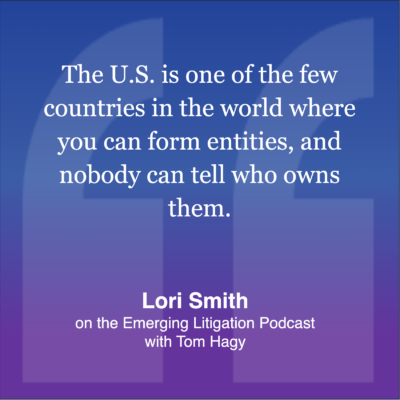
    Listen to what veteran attorney Lori Smith of Stradley Ronon has to say about the Act, something 30 million companies will have to follow in the Act’s first year. Lori provides insights for business executives and attorneys on key facets of the requirements, potential penalties, and chances for litigation.

    I hope you enjoy the episode. If so, give us a rating!

    *******

    This podcast is the audio companion to the Journal on Emerging Issues in Litigation. The Journal is a collaborative project between HB Litigation Conferences and the vLex Fastcaselegal research family, which includes Full Court Press, Law Street Media, and Docket Alarm.

    If you have comments, ideas, or wish to participate, please drop me a note at Editor@LitigationConferences.com.

    Tom Hagy
    Litigation Enthusiast and
    Host of the Emerging Litigation Podcast
    Home Page
    LinkedIn

    Update: CTA Held Unconstitutional in Alabama

    Lori Smith wrote on LinkedIn:

    “It remains to be seen what this really means as the decision is likely to be appealed and for now by its terms, the injunction imposed by the judge only applies to the plaintiffs in the Alabama case. It will be interesting to see if additional cases are filed. There was one case filed already in Ohio but the real test will be if there are significant challenges around the country especially on behalf of large trade associations or other groups representing small businesses.”

    The decision was handed down on Friday, March 1, by Judge Liles C. Burke.

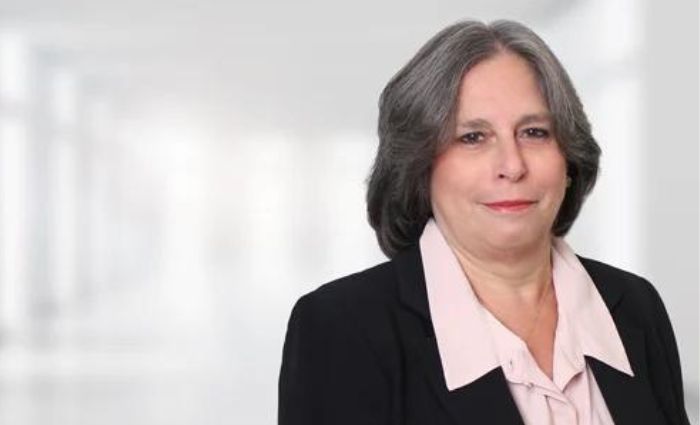
    Lori Smith

    Lori SmithStradley Ronon LLP

    Lori Smith is chair of the emerging companies & venture capital practice and is an active participant in the firm’s health law and mergers and acquisitions groups. Lori has been a trusted adviser to foreign and domestic companies for over 30 years, ranging from startups to large corporations, including entrepreneurs and angel, venture capital, and private equity investors. She represents public and private companies in the negotiation of mergers and acquisitions, leveraged buyouts, equity and debt financings, private placements, strategic alliances, partnerships and joint ventures.

    Lori combines her transactional experience with her traditional health care, technology and financial services industry knowledge and a deep understanding of the nuances of the digital age. She has extensive experience representing companies from formation and growth stage through exit in a wide range of industries, including technology, media and communications, fashion and textiles, financial services, food and beverage, sports, gaming, specialty chemicals, insurance, healthcare and digital health.

    Lori earned her J.D., with high honors, from Duke University School of Law and her B.A., magna cum laude, from the University of Rochester.

    Want to appear on the Emerging Litigation Podcast?

    Send us your idea! 

  • Kathryn Hatfield on Labor Law in 2021

    Kathryn Hatfield on Labor Law in 2021

    Kathryn Hatfield on Labor Law in 2021

    Participation in labor unions is less than half of what it was 40 years ago. It has seen an uptick in the service sector, but a sharp decline in manufacturing. According to Heidi Shierholz — former chief economist at the Department of Labor, now senior economist and policy director at the Economic Policy Institute — decline in union rolls is partly responsible for today’s yawning income inequality gap. Recently we’ve seen the formation of a modest union at Google and a movement among Amazon workers. We’ve also seen how the pandemic has shone a bright light on the fragility of our nation’s workforce struggling to survive at the bottom rungs of the pay scale.

    Joining me to speak about these issues is Kathryn Van Deusen Hatfield, a senior managing partner at Hatfield Schwartz Law Group in New Jersey.  Kathy represents private and public sector employers in all aspects of labor and employment law, with expertise in litigating state and federal cases on behalf of employers involving Title VII, the ADA, the ADEA and the New Jersey Law Against Discrimination, and providing legal opinions and advice on personnel, employment and labor issues.  Kathy shares her insights on recent developments in the labor movement, some of the causes of its decline, how unions get a bad rap, and how, even though she represents management, she believes unions can be a good thing for everyone — employees and companies alike.

    This podcast is the audio companion to the Journal on Emerging Issues in Litigation, a collaborative project between HB Litigation Conferences and the Fastcase legal research family, which includes Full Court Press, Law Street Media, Docket Alarm and, most recently, Judicata. If you have comments or wish to participate in one our projects, or want to tell me how insightful and informative Kathy is, please drop me a note at Editor@LitigationConferences.com.

    I hope you enjoy the interview, and how I managed to demonstrate how little I know about sports. I feel made up for it by learning something about baseball Hall of Famer Jim Rice, who did something really cool and heroic in 1982.

    Safeguarding Against Financial Exploitation

    An on-demand CLE-eligible webinar Safeguarding Against Financial Exploitation   America’s senior population is growing. Nearly one in five U.S. residents will be 65 or older in 2030. Which means the average age of U.S. investors is climbing too. With that comes the risk that they will be exploited by people with access – or gain access through nefarious methods – to their investment portfolio. Seniors and vulnerable persons lose billions of dollars each year. Remarkably, 90% of the people to take advantage of senior investors are members of their own family. Attorneys who represent senior clients need to know the signs of vulnerability, red flags that their clients are being exploited, what laws apply, and rules lawyers must follow in these matters.   Questions our speakers answer: What is senior / vulnerable investor exploitation?   Who is protected by state and federal laws?   How prevalent is senior financial exploitation? What do the numbers tell us?  What is the pace of financial abuse SAR filings by securities firms?  What are the most popular scams?   What is diminished capacity?  What are the red flags indicating possible exploitation?  What are the laws, rules, and regulations governing law firms?  What are some best practices for law firms?  How can firms best protect their senior clients?   On Demand CLE Webinar What You Get PowerPoint and supplemental materials. Complete recording for later review. Answers to your questions via email. Invitation to contact speakers. 1.5 CLE credits (for licensed attorneys). CLE assistance.* *Subject to state bar rules. For licensed attorneys.  Register Meet the Speakers Joseph Calabrese Bressler, Amery & Ross, P.C. A 1991 Graduate of St. John’s University Law School, Mr. Calabrese brings 30 years of practice and 18 years of Securities Litigation/Regulatory experience to his role as principal in the New York office of  Bressler, Amery & Ross’s Financial Institutions Group. He began his career as a Wall Street litigator as an associate general counsel for Citigroup’s Smith Barney and […]

    Lien Resolution: Government & Private Plans Get Aggressive (Against Attorneys)

    Includes Nearly 75 minutes of insights from experienced professionals. CLE credit: 1+ (subject to bar rules). For CLE questions: CLE@LitigationConference.com The complete Power Point presentation. Continued access to the complete recording for later use. Answers to your questions via email to the presenters or write to HB and we will be sure to contact the speakers. What can you do to settle personal injury suits cleanly and avoid costly litigation and penalties? What recent cases can inform you about protecting your settlements and, as attorneys, yourselves, from post-settlement federal lawsuits? How can your firm set itself up to meet government expectations? What role might experts play in navigating these pitfalls? Medicare Advantage (42 USC § 1395w-22) Federal Medical Care Recovery Act (FMCRA) (42 USC § 2651) Armed Forces Act (10 USC §1095) Veterans’ Benefits (38 USC §1729) Third-Party Collection Rules (32 CFR 537.24; 38 CFR 17.101, etc.) Set-Asides under the Medicare Secondary Payer Act (42 USC § 1395y(b)(2)] On Demand Registration Lien Resolution Government & Private Plans Get Aggressive (Against Attorneys!) On Demand | Recorded September 2020 It is increasingly common these days. Personal injury attorneys settle a case, only to find themselves sued by a U.S. Attorney for failing to reimburse Medicare for conditional payments as required by the Medicare Secondary Payer Act. In some cases the attorney may be required to pay fines in addition to the reimbursements and interest, a costly proposition. Are you up to speed on issues surrounding Medicare Advantage, TRICARE, veterans’ claims, and Medicare set-asides? Join nationally recognized healthcare lien and resolution expert Franklin P. Solomon and go-to lien resolution provider Brett Newman as they offer a practical, in-depth CLE presentation. Franklin P. Solomon, Esq. Attorney & Founder, Solomon Law Firm  A graduate of Rutgers University School of Law at Camden, Franklin Solomon is based in Cherry Hill, NJ, with a practice focused on evaluation, litigation and resolution of healthcare “liens” and reimbursement claims. Mr. Solomon represents personal injury victims and their attorneys […]

    Telepsychiatry: Mitigating the Risks

    REGISTER Registration Includes Nearly 90 minutes of insights from experienced professionals. CLE credit: 1+ (subject to bar rules). For CLE questions: CLE@LitigationConference.com The complete Power Point presentation. Continued access to the complete recording for later use. Answers to your questions via email to the presenters or write to HB and we will be sure to contact the speakers. Understand the risks associated with telepsychiatry and how to manage them.  Telemedicine has emerged as an important solution for healthcare in general and psychiatric medicine specifically during the current global pandemic. Remote access for sub-practices including addiction counseling have been commonly used. Our panel of psychiatric professionals who have served as expert witnesses and attorneys who counsel and represent physicians have prepared a 90-minute session to share insights with attorneys, physicians, healthcare providers, risk professionals, and more. Agenda Examining procedures and best practices that exist for ensuring confidentiality in a telemedicine practice How do you draft a telepsychiatric consent form? What is the emerging standard of care for telemedicine? Will the standard of care for telemedicine become a national standard? (Should it?) Review the case law addressing telemedicine or telepsychiatry How do the HIPAA regulations and HITECH privacy laws impact telemedicine? How have the HIPAA regulations and HITECH privacy laws been relaxed during the pandemic? Will the relaxed HIPAA and HITECH regulations impacting telemedicine continue past the pandemic? Which technical platforms are preferred? Which ones to avoid? Panelists Mark Levy, M.D., Medical Director at fpamed David Kan, M.D., UCSF Psychiatry Department and the California Society for Substance Abuse Medicine Ayesha Ashai, M.D., associated with fpamed Stephen M. Fatum, J.D., Partner, Barnes & Thornburg LLP Angela W. Russell, J.D., Partner, Wilson Elser Moskowitz Edelman & Dicker LLP Meet our physician and attorney panelists. Mark Levy MD Medical Director fpamed Dr. Levy is a graduate of Columbia College (A.B. 1967) and the Columbia University College of Physicians and Surgeons (M.D. 1971) in New York. He is a Physician […]

    The Commercial Drone Industry: Privacy, Security, Threats, and Mitigation of Risk

    HB presents a CLE-eligible webinar Now on-demand at the West LegalEdcenter THE COMMERCIAL DRONE INDUSTRY Privacy, Security, Threats, and Mitigation of Risk Drones have become an increasingly valuable tool for businesses of all types and sizes. Drones are already being used in many applications, but more will certainly arise as the technology advances. This means that certain risks, like cyber threats, will also continue to present themselves. Protecting the transmission and storage of data collected through drones is critical. Unfortunately, security usually comes as an afterthought. The drone industry is part of the aviation industry, which, based on its knowledge, keeps safety as a number one concern. Part of that safety is having proper protection for your systems, including security as a fundamental design principle. Take this webinar to gain insights on the topics listed below, and shared by an attorney who practices on the cutting-edge of this evolving technology. Topics: Defining drones. Current and future applications. FAA Modernization and Reform Act of 2012. FAA Part 107 Regulations and waivers. Resources, e.g. the FAA Drone Zone and LAANC Portal. Penalties for violations. Privacy implications. Drones as weapons. Vulnerability to cyber attacks. Take it now! What you get: 1+ CLE credits (subject to bar rules). Insights from an experienced professional who specializes in this area of the law. The complete PowerPoint presentation. Continued access to the complete recording for later use. Answers to your questions. Fee: No additional charge to subscribers to the West LegalEdcenter. Non-subscribers may take the course for $170. Meet the Speaker Kathryn Rattigan Robinson & Cole LLP Kathryn Rattigan is a member of the firm’s Business Litigation Group and Data Privacy + Cybersecurity Team. She advises clients on data privacy and security, cybersecurity, and compliance with related state and federal laws. She assists clients in assessing risks related to technology and software contracts, as well as with compliance-related issues with outsourcing and […]

    The Intersection of Privacy and Antitrust Webinar Now Available On-Demand on the West LegalEdcenter

    Available as part of your subscription to The Thomson Reuters West LegalEdcenter®. Don’t subscribe to the West LegalEdcenter? This webinar is still available directly from HB. Take it now! Questions for speakers Questions@LitigationConferences.com CLE questions CLE@LitigationConferences.com Check out the MoginRubin blog for more insights on antitrust and privacy law. What attorneys and companies need to know about the increasing interplay between these critical areas of the law.  Highly publicized cases and investigations in the U.S. and Europe of big technology, e-commerce, and social media companies demonstrate how anti-competition laws are being used to scrutinize and challenge not only how these corporations conduct themselves in the marketplace, but the very core of their colossal success: the mass collection and utilization of user data. Are the privacy and antitrust worlds beginning to cross over? Or do they simply run parallel while addressing entirely different types of conduct? Whatever the answer, data is the raw material that drives the likes of Google, Facebook, Apple and Amazon, so how it is handled is a critical question when counseling clients on mergers and acquisitions. Moderator Daniel J.  Mogin | Managing Partner, MoginRubin LLP Speakers Jennifer M. Oliver, CIPP/US | Partner, MoginRubin LLP Thomas N. Dahdouh | Director, Western Region, Federal Trade Commission Franklin M. Rubinstein | Partner, Wilson Sonsini Goodrich & Rosati Randi W. Singer, CIPP/US, CIPT | Partner, Weil, Gotshal & Manges Contributor Dina Srinivasan | Independent Researcher & Author of The Antitrust Case Against Facebook Dina was unable to present but we thank her for her content contributions.  Agenda Who should regulate privacy violations in the U.S.? Which antitrust issues implicate privacy concerns? What role does machine learning play on the competitive landscape? What is big data really? How is it different from “data”? What are the elements of effective merger reviews? What are the appropriate remedies? What are “notice-and-choice” versus “harms-based” approaches? Plus answers to your questions. Send them to Questions@LitigationConferences.com.

  • Couple Pleads Guilty to $1.1 Million COVID-Relief Fraud After Falsely Claiming to Be Farmers

    Couple Pleads Guilty to $1.1 Million COVID-Relief Fraud After Falsely Claiming to Be Farmers

    HB NEWS

    Couple Pleads Guilty to $1.1 Million COVID-Relief Fraud After Falsely Claiming to Be Farmers

    News From the U.S. Department of Justice

    A Florida couple pleaded guilty for their participation in a scheme to file four fraudulent loan applications seeking more than $1.1 million in forgivable Paycheck Protection Program (PPP) and Economic Injury Disaster Loans (EIDL) loans guaranteed by the Small Business Administration (SBA) under the Coronavirus Aid, Relief, and Economic Security (CARES) Act. 

    On Aug. 26, 2020, Latoya Stanley, 38, and Johnny Philus, 33, both of Miami, were originally charged via a complaint filed in the Southern District of Florida.

    In Stanley’s PPP application, she claimed to employ 18 individuals from her company, Dream Gurl Beauty Supply LLC. Philus, meanwhile, stated that he employed 29 individuals at his company, Elegance Auto Boutique LLC. In actuality, Stanley and Philus did not employ anyone at their respective companies.

    In her EIDL application, Stanley claimed to generate over $800,000 in income and to employ five individuals from a farm based in the yard of her Miami home. In his EIDL application, Philus claimed to generate $400,000 in income and to employ 10 individuals from a farm located in the yard of a small residential home. In actuality, Stanley and Philus employed no one and the farms did not exist.

    Stanley and Philus worked together to effectuate the fraud and ultimately received over $1 million in fraudulent funds from the fraudulent PPP and EIDL applications before their schemes were uncovered.

    Sentencing has been scheduled for June 2.

    Acting Assistant Attorney General Nicholas L. McQuaid of the Justice Department’s Criminal Division; U.S. Attorney Ariana Fajardo Orshan of the Southern District of Florida; Treasury Inspector General for Tax Administration (TIGTA) J. Russell George; Inspector General Hannibal “Mike” Ware of the SBA’s Office of Inspector General (OIG); and Inspector in Charge Antonio Gomez of the U.S. Postal Inspection Service Miami Division made the announcement.

    The CARES Act is a federal law enacted on March 29, 2020, designed to provide emergency financial assistance to the millions of Americans who are suffering the economic effects caused by the COVID-19 pandemic. One source of relief provided by the CARES Act was the authorization of up to $349 billion in forgivable loans to small businesses for job retention and certain other expenses, through the PPP. In April 2020, Congress authorized over $300 billion in additional PPP funding.

    The PPP allows qualifying small businesses and other organizations to receive loans with a maturity of two years and an interest rate of 1%. PPP loan proceeds must be used by businesses on payroll costs, interest on mortgages, rent, and utilities. The PPP allows the interest and principal on the PPP loan to be forgiven if the business spends the loan proceeds on these expense items within a designated period of time after receiving the proceeds and uses at least a certain percentage of the PPP loan proceeds on payroll expenses.

    The EIDL program is designed to provide economic relief to small businesses that are currently experiencing a temporary loss of revenue. EIDL proceeds can be used to cover a wide array of working capital and normal operating expenses, such as continuation of health care benefits, rent, utilities and fixed debt payments. If an applicant also obtains a loan under the PPP, the EIDL funds cannot be used as the same purpose as the PPP funds.

    This case was investigated by the SBA-OIG, USPIS, and TITGA. Trial Attorney Louis Manzo of the Criminal Division’s Fraud Section is prosecuting the case.

    Safeguarding Against Financial Exploitation

    An on-demand CLE-eligible webinar Safeguarding Against Financial Exploitation   America’s senior population is growing. Nearly one in five U.S. residents will be 65 or older in 2030. Which means the average age of U.S. investors is climbing too. With that comes the risk that they will be exploited by people with access – or gain access through nefarious methods – to their investment portfolio. Seniors and vulnerable persons lose billions of dollars each year. Remarkably, 90% of the people to take advantage of senior investors are members of their own family. Attorneys who represent senior clients need to know the signs of vulnerability, red flags that their clients are being exploited, what laws apply, and rules lawyers must follow in these matters.   Questions our speakers answer: What is senior / vulnerable investor exploitation?   Who is protected by state and federal laws?   How prevalent is senior financial exploitation? What do the numbers tell us?  What is the pace of financial abuse SAR filings by securities firms?  What are the most popular scams?   What is diminished capacity?  What are the red flags indicating possible exploitation?  What are the laws, rules, and regulations governing law firms?  What are some best practices for law firms?  How can firms best protect their senior clients?   On Demand CLE Webinar What You Get PowerPoint and supplemental materials. Complete recording for later review. Answers to your questions via email. Invitation to contact speakers. 1.5 CLE credits (for licensed attorneys). CLE assistance.* *Subject to state bar rules. For licensed attorneys.  Register Meet the Speakers Joseph Calabrese Bressler, Amery & Ross, P.C. A 1991 Graduate of St. John’s University Law School, Mr. Calabrese brings 30 years of practice and 18 years of Securities Litigation/Regulatory experience to his role as principal in the New York office of  Bressler, Amery & Ross’s Financial Institutions Group. He began his career as a Wall Street litigator as an associate general counsel for Citigroup’s Smith Barney and […]

    Lien Resolution: Government & Private Plans Get Aggressive (Against Attorneys)

    Includes Nearly 75 minutes of insights from experienced professionals. CLE credit: 1+ (subject to bar rules). For CLE questions: CLE@LitigationConference.com The complete Power Point presentation. Continued access to the complete recording for later use. Answers to your questions via email to the presenters or write to HB and we will be sure to contact the speakers. What can you do to settle personal injury suits cleanly and avoid costly litigation and penalties? What recent cases can inform you about protecting your settlements and, as attorneys, yourselves, from post-settlement federal lawsuits? How can your firm set itself up to meet government expectations? What role might experts play in navigating these pitfalls? Medicare Advantage (42 USC § 1395w-22) Federal Medical Care Recovery Act (FMCRA) (42 USC § 2651) Armed Forces Act (10 USC §1095) Veterans’ Benefits (38 USC §1729) Third-Party Collection Rules (32 CFR 537.24; 38 CFR 17.101, etc.) Set-Asides under the Medicare Secondary Payer Act (42 USC § 1395y(b)(2)] On Demand Registration Lien Resolution Government & Private Plans Get Aggressive (Against Attorneys!) On Demand | Recorded September 2020 It is increasingly common these days. Personal injury attorneys settle a case, only to find themselves sued by a U.S. Attorney for failing to reimburse Medicare for conditional payments as required by the Medicare Secondary Payer Act. In some cases the attorney may be required to pay fines in addition to the reimbursements and interest, a costly proposition. Are you up to speed on issues surrounding Medicare Advantage, TRICARE, veterans’ claims, and Medicare set-asides? Join nationally recognized healthcare lien and resolution expert Franklin P. Solomon and go-to lien resolution provider Brett Newman as they offer a practical, in-depth CLE presentation. Franklin P. Solomon, Esq. Attorney & Founder, Solomon Law Firm  A graduate of Rutgers University School of Law at Camden, Franklin Solomon is based in Cherry Hill, NJ, with a practice focused on evaluation, litigation and resolution of healthcare “liens” and reimbursement claims. Mr. Solomon represents personal injury victims and their attorneys […]

    Telepsychiatry: Mitigating the Risks

    REGISTER Registration Includes Nearly 90 minutes of insights from experienced professionals. CLE credit: 1+ (subject to bar rules). For CLE questions: CLE@LitigationConference.com The complete Power Point presentation. Continued access to the complete recording for later use. Answers to your questions via email to the presenters or write to HB and we will be sure to contact the speakers. Understand the risks associated with telepsychiatry and how to manage them.  Telemedicine has emerged as an important solution for healthcare in general and psychiatric medicine specifically during the current global pandemic. Remote access for sub-practices including addiction counseling have been commonly used. Our panel of psychiatric professionals who have served as expert witnesses and attorneys who counsel and represent physicians have prepared a 90-minute session to share insights with attorneys, physicians, healthcare providers, risk professionals, and more. Agenda Examining procedures and best practices that exist for ensuring confidentiality in a telemedicine practice How do you draft a telepsychiatric consent form? What is the emerging standard of care for telemedicine? Will the standard of care for telemedicine become a national standard? (Should it?) Review the case law addressing telemedicine or telepsychiatry How do the HIPAA regulations and HITECH privacy laws impact telemedicine? How have the HIPAA regulations and HITECH privacy laws been relaxed during the pandemic? Will the relaxed HIPAA and HITECH regulations impacting telemedicine continue past the pandemic? Which technical platforms are preferred? Which ones to avoid? Panelists Mark Levy, M.D., Medical Director at fpamed David Kan, M.D., UCSF Psychiatry Department and the California Society for Substance Abuse Medicine Ayesha Ashai, M.D., associated with fpamed Stephen M. Fatum, J.D., Partner, Barnes & Thornburg LLP Angela W. Russell, J.D., Partner, Wilson Elser Moskowitz Edelman & Dicker LLP Meet our physician and attorney panelists. Mark Levy MD Medical Director fpamed Dr. Levy is a graduate of Columbia College (A.B. 1967) and the Columbia University College of Physicians and Surgeons (M.D. 1971) in New York. He is a Physician […]

    The Commercial Drone Industry: Privacy, Security, Threats, and Mitigation of Risk

    HB presents a CLE-eligible webinar Now on-demand at the West LegalEdcenter THE COMMERCIAL DRONE INDUSTRY Privacy, Security, Threats, and Mitigation of Risk Drones have become an increasingly valuable tool for businesses of all types and sizes. Drones are already being used in many applications, but more will certainly arise as the technology advances. This means that certain risks, like cyber threats, will also continue to present themselves. Protecting the transmission and storage of data collected through drones is critical. Unfortunately, security usually comes as an afterthought. The drone industry is part of the aviation industry, which, based on its knowledge, keeps safety as a number one concern. Part of that safety is having proper protection for your systems, including security as a fundamental design principle. Take this webinar to gain insights on the topics listed below, and shared by an attorney who practices on the cutting-edge of this evolving technology. Topics: Defining drones. Current and future applications. FAA Modernization and Reform Act of 2012. FAA Part 107 Regulations and waivers. Resources, e.g. the FAA Drone Zone and LAANC Portal. Penalties for violations. Privacy implications. Drones as weapons. Vulnerability to cyber attacks. Take it now! What you get: 1+ CLE credits (subject to bar rules). Insights from an experienced professional who specializes in this area of the law. The complete PowerPoint presentation. Continued access to the complete recording for later use. Answers to your questions. Fee: No additional charge to subscribers to the West LegalEdcenter. Non-subscribers may take the course for $170. Meet the Speaker Kathryn Rattigan Robinson & Cole LLP Kathryn Rattigan is a member of the firm’s Business Litigation Group and Data Privacy + Cybersecurity Team. She advises clients on data privacy and security, cybersecurity, and compliance with related state and federal laws. She assists clients in assessing risks related to technology and software contracts, as well as with compliance-related issues with outsourcing and […]

    The Intersection of Privacy and Antitrust Webinar Now Available On-Demand on the West LegalEdcenter

    Available as part of your subscription to The Thomson Reuters West LegalEdcenter®. Don’t subscribe to the West LegalEdcenter? This webinar is still available directly from HB. Take it now! Questions for speakers Questions@LitigationConferences.com CLE questions CLE@LitigationConferences.com Check out the MoginRubin blog for more insights on antitrust and privacy law. What attorneys and companies need to know about the increasing interplay between these critical areas of the law.  Highly publicized cases and investigations in the U.S. and Europe of big technology, e-commerce, and social media companies demonstrate how anti-competition laws are being used to scrutinize and challenge not only how these corporations conduct themselves in the marketplace, but the very core of their colossal success: the mass collection and utilization of user data. Are the privacy and antitrust worlds beginning to cross over? Or do they simply run parallel while addressing entirely different types of conduct? Whatever the answer, data is the raw material that drives the likes of Google, Facebook, Apple and Amazon, so how it is handled is a critical question when counseling clients on mergers and acquisitions. Moderator Daniel J.  Mogin | Managing Partner, MoginRubin LLP Speakers Jennifer M. Oliver, CIPP/US | Partner, MoginRubin LLP Thomas N. Dahdouh | Director, Western Region, Federal Trade Commission Franklin M. Rubinstein | Partner, Wilson Sonsini Goodrich & Rosati Randi W. Singer, CIPP/US, CIPT | Partner, Weil, Gotshal & Manges Contributor Dina Srinivasan | Independent Researcher & Author of The Antitrust Case Against Facebook Dina was unable to present but we thank her for her content contributions.  Agenda Who should regulate privacy violations in the U.S.? Which antitrust issues implicate privacy concerns? What role does machine learning play on the competitive landscape? What is big data really? How is it different from “data”? What are the elements of effective merger reviews? What are the appropriate remedies? What are “notice-and-choice” versus “harms-based” approaches? Plus answers to your questions. Send them to Questions@LitigationConferences.com.

  • Tech’s Big Four Will Testify Before Antitrust Subcommittee

    Tech’s Big Four Will Testify Before Antitrust Subcommittee

    Four Technology Giants’ CEOs Will Testify Before Congress in On-going Antitrust Investigation

    Executives from Amazon, Apple, Facebook, and Google will appear (either virtually, as they are permitted to, or in person) before the U.S. House of Representatives’ Judiciary Antitrust Subcommittee on July 27, 2020. According to its press release, the Subcommittee has been scrutinizing the companies’ dominance in their respective digital spheres and the “adequacy of existing antitrust laws and enforcement,” since June 2019.

    The hearing will enable legislators to question the executives about possible antitrust abuses, which have been the focus of many federal, state, and foreign regulatory inquiries. For example, Representatives may inquire about Amazon’s treatment of third-party merchants who sell products on its e-commerce platform, Google’s highly profitable ad business, Apple’s App Store terms that infringe on the rights of third-party app developers, and Facebook’s leverage of previously acquired companies to solidify its social media dominance, according to a July 1, 2020 New York Times article by David McCabe. The hearing may serve as the crowning piece of the Subcommittee’s antitrust probe. As the Subcommittee’s press release stated, the CEOs’ “forthcoming” testimony is “essential” to completion of the investigation.

    Apple Amazon Facebook Google