Tag: Ethics & Professional Responsibility

  • Federal Judge, Two Attorneys Honored for Excellence in Ethics in Complex Litigation

    Federal Judge, Two Attorneys Honored for Excellence in Ethics in Complex Litigation

    For Immediate Release

    U.S. Appellate Judge, Two Attorneys Honored for Ethics in Complex Litigation

    • First-ever awards for ethics in complex litigation excellence will be presented Oct. 22, 2022.
    • Nominations were evaluated by a committee comprising a federal judge, scholars, and litigators.
    • Committee selected a current judge on the Ninth Circuit U.S. Court of Appeals, a plaintiff’s attorney, and a defense attorney.

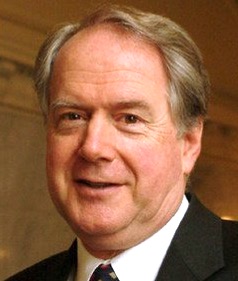
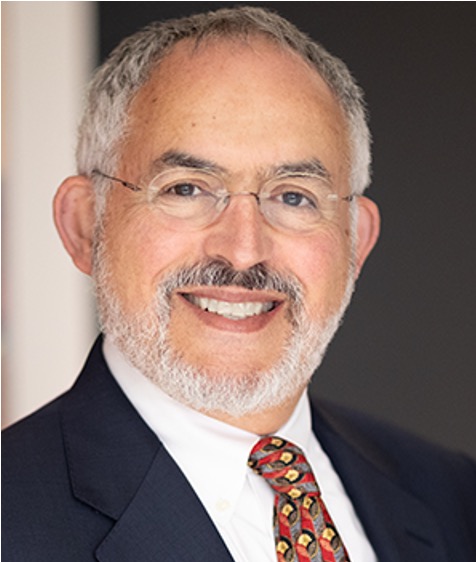
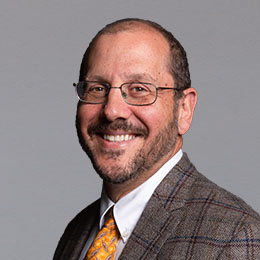
    SAN FRANCISCO – Sept. 28, 2022 – Nominated for their contributions to ethics in class actions and complex litigation, the first-ever recipients of the Awards for Excellence in Ethics in Complex Litigation are: jurist, scholar, and teacher, the Honorable William Fletcher; preeminent plaintiff’s attorney Elizabeth J. Cabraser; and distinguished employment defense attorney Fred W. Alvarez. The awards will be presented at the inaugural Complex Litigation Ethics Conference on Oct. 22, 2022, held at the UC Hastings College of the Law in association with the college’s Center for Litigation and Courts.

    Program co-chairs Joshua P. Davis and Scott Dodson – both professors at UC Hastings – have assembled an exemplary faculty of leading jurists, litigators, and other subject matter experts.

    “In developing this program we wanted not only to educate litigators and stimulate discussion on the important and evolving ethical aspects of this practice, but also to honor those who have demonstrated leadership, scholarship, and dedication in promoting ethical behavior and professionalism and to whom others look for inspiration,” said Davis.  “Judge Fletcher, Elizabeth Cabraser, and Fred Alvarez,” Dodson added, “are exactly the kinds of individuals and representatives of the profession we had in mind when we developed these awards.

    More about the recipients of the Awards for Excellence in Ethics in Complex Litigation:

    Honorable William Fletcher, U.S. Court of Appeals for the Ninth Circuit (Judicial Recipient) – A respected jurist, scholar and teacher, Judge Fletcher was a professor at Berkeley Law for decades before his appointment to the federal bench. He is the co-author of an authoritative textbook on civil procedure which addresses complex litigation and class actions. Lauded for his wisdom and integrity, Judge Fletcher has demonstrated his respect for “the need to circumscribe the role of unelected judges in a democracy” and ensuring parties have the “practical capacity to protect their legal rights in court.” As he once explained in an interview, Judge Fletcher believes it is paramount that judges develop “a culture of decision making,” one in which they will, “to the extent of their ability and to the extent human nature will permit, state carefully, fully, and honestly the factual and legal bases for their decisions. I make no claim that American judges always live up to that ideal. We do not,” he said, “but we try.”

    Elizabeth J. Cabraser, Partner, Lieff Cabraser Heimann & Bernstein, LLP (Plaintiffs’ Counsel Recipient) – Few attorneys can boast leadership positions and success in so many consequential complex legal disputes implicating so many industries and varieties of claims. Cabraser’s role in litigation against Big Tobacco, Big Oil, Big Pharma, Big Auto, and others inspired Law360 to call her “a titan of the plaintiffs’ bar.” In their profile of Cabraser, Law360 wrote that defense attorneys see her as “a formidable opponent who comes to cases thoroughly prepared” and someone who can “win a judge’s ear.” Cabraser serves on the Executive Committee of the Counsel of the American Law Institute and as a Fellow of the American Academy of Arts and Sciences. She regularly lectures on complex litigation at Berkeley and Columbia Law Schools, publishes scholarship on complex litigation, and presents and conducts seminars in various settings, including the Federal Judicial Center, ALI-ABA, and the National Center for State Courts. She was nominated, in part, because she has “broken new ground not only as a plaintiffs’ lawyer, but also as a professional overcoming the various impediments to success for diverse attorneys. She serves as a role model for diverse young lawyers to pursue justice through complex litigation.”

    Fred W. Alvarez, Partner, Coblentz, Patch, Duffy & Bass LLP (Defense Counsel Recipient) – Alvarez is one of the foremost employment attorneys in the country, known for his experience, public service, and leadership in the profession. Early in his career, Alvarez was a trial attorney with the National Labor Relations Board, a commissioner on the U.S. Equal Employment Opportunity Commission, and Assistant Secretary of Labor. After serving in the government he moved into private practice defending employers against class actions. Alvarez, who has been recognized for his integrity and ethics before, has repeatedly been selected as a monitor or special master to oversee the implementation of employment and civil rights consent decrees and settlements. “This work is complex, typically spans several years, and requires the trust of the litigants and counsel,” his nomination read. “It matters that, once the active class action litigation is over, Mr. Alvarez commits his time to ensure that reforms negotiated as part of a class action settlement are faithfully implemented. In other words, it’s not just about the money. His work helps ensure that the promise of civil rights class action litigation can be realized.”

    The Complex Litigation Ethics Conference is being co-sponsored by Huntington National Bank, a nationwide provider of settlement fund and other financial services for law firms. Professor Davis is both a research professor at UC Hastings and managing partner of the San Francisco offices of Berger Montague, one of the nation’s oldest and most respected class action and complex litigation law firms. Professor Scott Dodson is Founding Director of the Center for Litigation and Courts at UC Hastings Law. The awards are being presented by the Center for Litigation and Courts and Huntington National Bank.

    Qualifying attorney attendees will be eligible to receive eight CLE credits (subject to state and local bar rules). Learn more and register at bit.ly/LitEthicsConf.

    Members of the legal and business press are invited to request passes to attend the event in San Francisco or via webstream, and to receive program materials. Pre-program interviews with the conference leaders and faculty should be addressed to Tom Hagy, +1 (484) 844-0428, or Editor@LitigationConferences.com.

    Media Contact:
    Tom Hagy, Critical Legal Content
    +1 (484) 844-0428

    Editor@LitigationConferences.com

    Excellence in Ethics in
    Complex Litigation

    2022 Honorees
    Judge Fletcher

    Hon. William Fletcher

    Elizabeth Cabraser
    Elizabeth Cabraser

    Fred Alvarez

    Fred Alvarez

    Awards presented by the Center for Litigation and Courts at UC Hastings Law and Huntington National Bank.

    Download the release

  • Announcing the Complex Litigation Ethics Conference

    Announcing the Complex Litigation Ethics Conference

    Joshua P. Davis

    Joshua P. DavisProfessor & Practicing Attorney

    A leading academic and practitioner, Joshua P. Davis (davisj@usfca.edu) is a nationally recognized expert on legal ethics and class actions, as well as on artificial intelligence in the law, antitrust, civil procedure, free speech, and jurisprudence. He has published more than 30 scholarly articles and book chapters on these subjects and is currently writing a book on AI titled Unnatural Law, which will be published by Cambridge University Press. He is Research Professor of Law at the University of California Hastings College of Law, and a Shareholder of the Berger Montague PC law firm and Manager of its new San Francisco Bay Area Office. Before taking these posts, for more than 20 years Davis was a tenured Professor of Law at University of San Francisco Law School, where he also served as the Director of the Center for Law and Ethics.

    Davis is also a member of the Editorial Board of Advisors for the Journal on Emerging Issues in Litigation, published by Fastcase Full Court Press. Tom Hagy, Editor in Chief.

    Scott Dodson

    Scott DodsonCenter for Litigation and Courts

    An expert in civil procedure and federal courts, Professor Scott Dodson is the James Edgar Hervey Chair in Litigation and Geoffrey C. Hazard Jr. Distinguished Professor of Law at UC Hastings Law. He has published seven book titles, including The Legacy of Ruth Bader Ginsburg (Cambridge 2015) and New Pleading in the Twenty-First Century (Oxford 2013). He has written around 100 shorter works appearing in such journals as Stanford Law Review, New York University Law Review, Michigan Law Review, University of Pennsylvania Law Review, California Law Review, Virginia Law Review, Duke Law Journal, Northwestern University Law Review, Georgetown Law Journal, American Journal of Comparative Law, American Journal of International Law, and Law & Society Review. His scholarly writings have been cited in more than 30 court opinions and have been downloaded more than 45,000 times. For 2010-14, he was listed as the 9th (tied) most-cited civil-procedure scholar. Professor Dodson is a frequent commentator in the news, including appearances on the 10:00 Nightly News, NPR Radio, and CNN Radio; quotes in various print media; and blogging stints at SCOTUSblog, SCOCAblog, Civil Procedure & Federal Courts Blog, and PrawfsBlawg.

    You can also listen to Josh on the Emerging Litigation Podcast!

    New Litigation Ethics Conference to Feature Sitting Judges, Legal Scholars, Prominent Attorneys

    For Immediate Release

    SAN FRANCISCO – Aug. 25, 2022 – Luminaries and thought leaders in the complex litigation arena will gather in San Francisco on Saturday, Oct. 22, 2022, to discuss insights and practices on an issue of critical significance to the nation’s justice system: ethical conduct among litigants and litigators.

    With a projected in-person and remote audience of 100 plus, this important continuing legal education program will be held at the UC Hastings College of Law in association with the school’s Center for Litigation in Courts. Professors Joshua P. Davis and Scott Dodson have assembled a faculty of leading jurists, litigators, and other subject matter experts.

    Complex Litigation Ethics Conference
    Oct. 22, 2022
    UC Hastings College of Law
    Learn more

    “Data suggest that, depending on the year, as much as half of all cases filed in federal court are part of multidistrict litigation, or MDL, proceedings or involve proposed class actions,” said Professor Davis, who is both a research professor at UC Davis and managing partner of the San Francisco offices of Berger Montague, a prominent class action and complex litigation law firm.

    According to the U.S. Judicial Panel on Multidistrict Litigation there were 186 MDL dockets pending, which brought together 770,623 actions, with 426,495 pending as of July 2022. At the same time, thousands of new class actions are filed each year (some put the number as high as 10,000) in state and federal courts representing millions of named and potential class members. Cases and claim types run the gamut, such as consumer product liability, antitrust, toxic substances, drug and device liability, data breaches, securities, employment, environmental contamination, and both injury and damage claims arising from wildfires and floods, to name a few.

    “Despite these figures, insufficient scholarly attention has been paid to the ways in which ethical rules, which are typically designed for traditional litigation, should be adapted and applied to MDLs and class actions,” said Professor Davis. “The Complex Litigation Ethics Conference will address these important and timely issues.”

    Topics include adapting general legal ethics rules to complex matters; ethics in litigation funding; diversity, equity, and inclusivity in complex litigation; and communications with “absent class members.”

    U.S. Judge Jon S. Tigar of the Northern District of California will be among the speakers. Judge Tigar has or continues to preside over headline-grabbing litigation brought against Apple Inc., Meta Platforms Inc. (Facebook), Twitter Inc., Uber Technologies Inc., Wells Fargo & Company, Subway restaurants, Sanofi S.A., and others.

    Also on the faculty are:

    • Lynn A. Baker, University of Texas School of Law
    • Jennifer Bennett, Gupta Wessler PLLC
    • Eric Cramer, Berger Montague PC
    • Lauren Godshall, Tulane Law School
    • Alexandra D. Lahav, Cornell Law School
    • Brent Landau, Hausfeld
    • Roger Michalski, University of Oklahoma College of Law
    • Melissa Mortazavi, University of Oklahoma College of Law
    • Sarah Ray, Latham & Watkins LLP
    • Maya Steinitz, University of Iowa, College of Law
    • Brad Wendel, Cornell Law School

    Three annual Awards for Excellence in Ethics in Complex Litigation will also be announced during the event, one to a plaintiffs’ attorney or law firm, one to a defense attorney or law firm, and one to a judge, scholar, third-party neutral, party to litigation, government official, other lawyer or law firm, non-profit organization, and other participant in or commentator on complex litigation. The winners will have demonstrated excellence in promoting ethics in class actions or other complex litigation (e.g., MDLs).

    Huntington National BankThe event is being co-sponsored by Huntington National Bank, a nationwide provider of settlement fund and other financial services for law firms.

    Members of the legal and business press are invited to request passes to attend the event in San Francisco or via webstream, and to receive program materials. Pre-program interviews with the conference leaders and faculty should be addressed to Tom Hagy, +1 (484) 844-0428, or Editor@LitigationConferences.com.

    DOWNLOAD THE RELEASE

  • Organizational Values & Business Risks: Properly Balancing Stakeholder Concerns

    Organizational Values & Business Risks: Properly Balancing Stakeholder Concerns

    Topics Covered

    Accommodations. Appropriate accommodation for high-risk employees or employees with family members who are at a heightened risk.

    Mitigation. Attention to means of mitigating transmission and infection.

    Tracing. Contact tracing and management of data collected, including health data, as well as responses to employees who refuse to report.

    Patient Sensitivity. Duty to avoid discrimination and stigmatization.

    Preparedness. Developing plans to address possibility of re-occurrence in the fall and managing possible outbreaks in company’s offices.

    Take it now

    On-demand on the Thomson Reuters West LegalEdcenter as part of the HB catalog.

    Register now!

    Organizational Values & Coronavirus Business Risks:
    Properly Balancing Stakeholder Concerns

    Produced for Emory University Center for Ethics by HB Litigation Conferences

    The current pandemic confronts businesses, nonprofit organizations, governments, and the legal profession with innumerable ethical challenges.  Management issues and liability concerns, stakeholder demands and legal duties become even more complex in an environment of uncertainty and one where the consequences could result in serious illness or even death.  This program seeks to engage the participants in thinking through these challenges and developing processes of ethical response to them.  Managers must acknowledge and address the framework of fear associated with the pandemic, ranging from fear of contagion and death to fears of unemployment, childcare, and the duties of home-schooling.  Additionally, as the economy reopens there must be serious attention to the processes of doing so.

    Join Professor Edward L. Queen from Emory University for invaluable insights. Emory’s medical team was on the frontline of the 2014-2016 Ebola epidemic, which began in December 2013 when an 18-month-old Guinean boy contracted the disease. According to the CDC, the outbreak ended with more than 28,600 cases and 11,325 deaths. Eleven people were treated for Ebola in the United States.

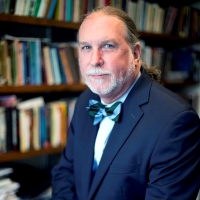
    Edward L. Queen
    Director of Ethics and Servant Leadership
    Emory University

    Professor Queen Coronavirus-Ethical-Issues-Litigation Conferences-June-19-2020-

    Professor Edward L. Queen

    Edward L. Queen is director of the D. Abbott Turner Program in Ethics and Servant Leadership and Coordinator of Undergraduate Studies at Emory University’s Center for Ethics.  At Emory he also serves as Director of Research for the Institute of Human Rights and co-convener of the Initiative on Religion, Conflict, and Peacebuilding.  Queen received his B.A. from Birmingham-Southern College, his M.A. and Ph.D. degrees from the Divinity School of the University of Chicago, and his J.D. from the Indiana University School of Law-Indianapolis. Queen’s previously served as founding director of the Religion and Philanthropy Project at the Indiana University Center on Philanthropy and of the Islamic Society of North America’s Fellowship Program in Nonprofit Management and Governance.  A former program officer at Lilly Endowment, Inc. with a major responsibility for grants in nonprofit governance and leadership, Queen has consulted with numerous nonprofit, governmental, and educational organizations on management issues and ethics policies.  These organizations have included the Helsinki Committee for Human Rights, the Pew Charitable Trusts, Independent Sector, USAID, NAFSA: The Association of International Educators, the Southeastern Council of Foundations, and the Corporation for National and Community Service.

    A specialist in issues related to professional and social ethics, religious and ethnic conflict, and civil society, Queen has written, coauthored, or edited numerous books, including Serving Those In Need: A Handbook for Managing Faith-Based Human Services Organizations (2000), Philanthropy in the World’s Traditions (1998), and The Encyclopedia of American Religious History (1992, rev. ed. 2002, 3rd rev. ed. 2009).