Tag: Energy & Natural Resources

  • Judge finds flaws in motion for an injunction against Trump’s wind turbine order

    Judge finds flaws in motion for an injunction against Trump’s wind turbine order

    Emerging Litigation Podcast

    Emerging Litigation PodcastProduced by HB Litigation

    Interviews with leading attorneys and other subject matter experts on new twists in the law and how the law is responding to new twists in the world.

    Interested in contributing an article? Email us at Editor@LitigationConferences.com.

    Judge finds flaws in motion for an injunction against Trump’s wind turbine order

    By: Justin Ward

    “The plaintiffs need to return to court with more details about specific harms to specific projects in specific states,” said Judge William Young.

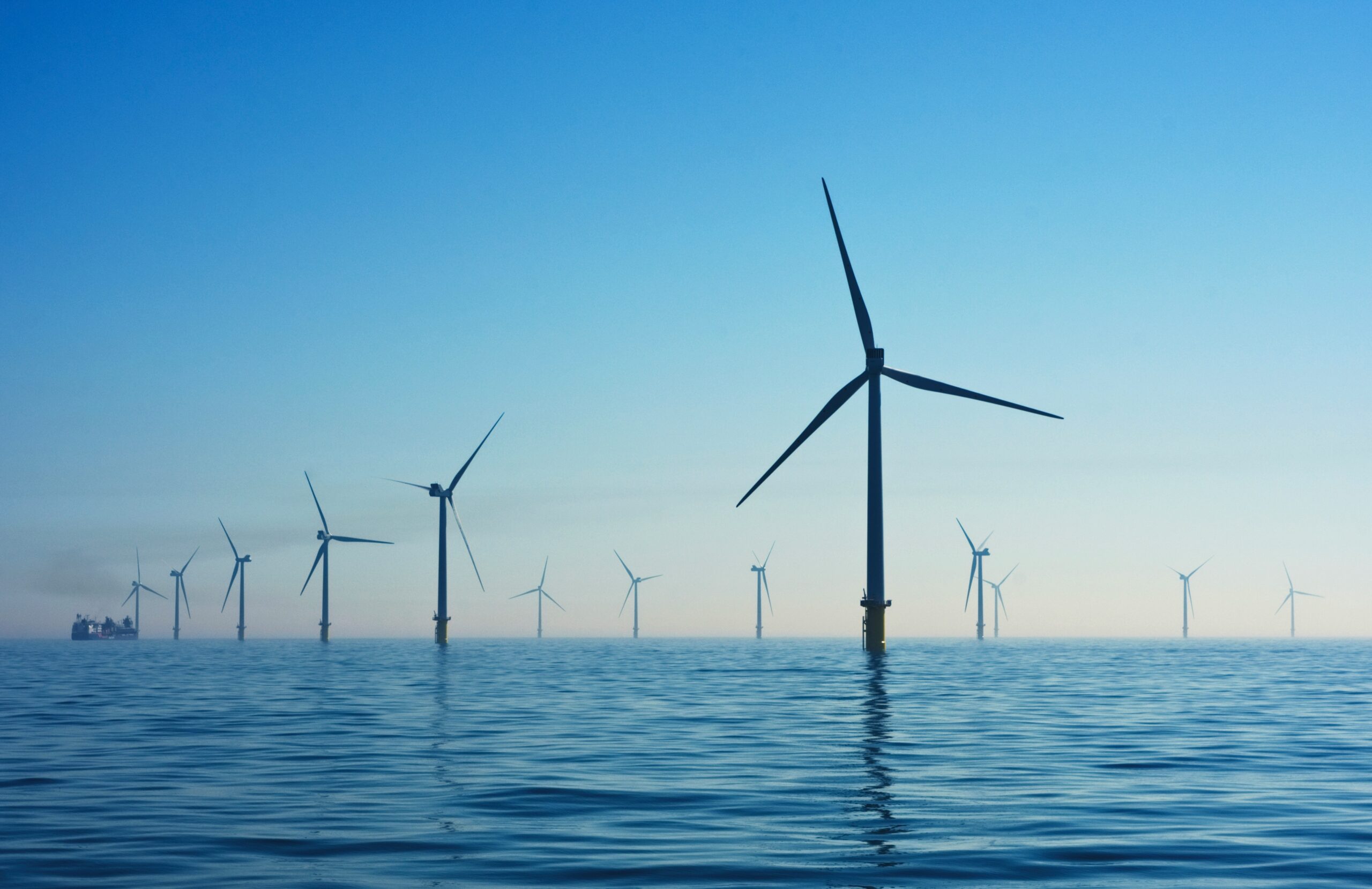
    The outlook does not look good for a lawsuit seeking to block President Donald Trump’s effective freeze on new wind turbine production. A federal judge canceled a hearing on the plaintiffs’ proposed temporary injunction this week, citing a lack of “specificity” about the harms experienced by the states that brought the suit.

    The District Court of Massachusetts will hear the Trump Administration’s motion to dismiss next week. The federal judge’s statements have largely aligned with the Department of Justice’s arguments, so it’s likely that the administration will prevail.

    While Judge William Young acknowledged that wind power was an “important industry” and Trump’s hostility to wind was “indisputable,” he said the plaintiffs, which include more than a dozen states, need to return to court with more details about “specific harms to specific projects in specific states.”

    Young recognized that if the administration has the power to grant licenses, it is also entitled to withhold them. Trump’s executive order, issued in the first weeks of his term, places a hold on new offshore wind power permits, pending a review. The order does not provide a timeline for that review to be complete, so it would amount to an indefinite freeze on all new wind power in practice.

    Trump’s crusade against wind power started during his first term. He has claimed that wind turbines are “kill[ing] the birds” and “driving the whales crazy.” Environmental groups refuted this and other claims in their amicus brief last month, noting that “cats are responsible for thousands of times more bird deaths than are wind turbines.”

    However, if the lawsuit does survive next week’s hearing and secures an injunction, legal experts say it will be mostly a symbolic victory because the federal agency that issues permits still has discretion over the speed at which it works, so a freeze will be replaced by a de facto pause.


    Justin Ward is a Seattle-based investigative reporter specializing in politics, courts, and criminal justice. His work can be found in national and local media outlets, including USA Today, the Southern Poverty Law Center, and The Seattle Stranger. He can be reached at justinwardtexan@yahoo.com.

  • Judge finds flaws in motion for an injunction against Trump’s wind turbine order

    Judge finds flaws in motion for an injunction against Trump’s wind turbine order

    Emerging Litigation Podcast

    Emerging Litigation PodcastProduced by HB Litigation

    Interviews with leading attorneys and other subject matter experts on new twists in the law and how the law is responding to new twists in the world.

    Interested in contributing an article? Email us at Editor@LitigationConferences.com.

    Judge finds flaws in motion for an injunction against Trump’s wind turbine order

    By: Justin Ward

    “The plaintiffs need to return to court with more details about specific harms to specific projects in specific states,” said Judge William Young.

    The outlook does not look good for a lawsuit seeking to block President Donald Trump’s effective freeze on new wind turbine production. A federal judge canceled a hearing on the plaintiffs’ proposed temporary injunction this week, citing a lack of “specificity” about the harms experienced by the states that brought the suit.

    The District Court of Massachusetts will hear the Trump Administration’s motion to dismiss next week. The federal judge’s statements have largely aligned with the Department of Justice’s arguments, so it’s likely that the administration will prevail.

    While Judge William Young acknowledged that wind power was an “important industry” and Trump’s hostility to wind was “indisputable,” he said the plaintiffs, which include more than a dozen states, need to return to court with more details about “specific harms to specific projects in specific states.”

    Young recognized that if the administration has the power to grant licenses, it is also entitled to withhold them. Trump’s executive order, issued in the first weeks of his term, places a hold on new offshore wind power permits, pending a review. The order does not provide a timeline for that review to be complete, so it would amount to an indefinite freeze on all new wind power in practice.

    Trump’s crusade against wind power started during his first term. He has claimed that wind turbines are “kill[ing] the birds” and “driving the whales crazy.” Environmental groups refuted this and other claims in their amicus brief last month, noting that “cats are responsible for thousands of times more bird deaths than are wind turbines.”

    However, if the lawsuit does survive next week’s hearing and secures an injunction, legal experts say it will be mostly a symbolic victory because the federal agency that issues permits still has discretion over the speed at which it works, so a freeze will be replaced by a de facto pause.


    Justin Ward is a Seattle-based investigative reporter specializing in politics, courts, and criminal justice. His work can be found in national and local media outlets, including USA Today, the Southern Poverty Law Center, and The Seattle Stranger. He can be reached at justinwardtexan@yahoo.com.

  • 22 States Sue New York Over Climate Fund, Calling It an ‘Unconstitutional Shakedown’

    22 States Sue New York Over Climate Fund, Calling It an ‘Unconstitutional Shakedown’

    Emerging Litigation Podcast

    Emerging Litigation PodcastProduced by HB Litigation

    Interviews with leading attorneys and other subject matter experts on new twists in the law and how the law is responding to new twists in the world.

    Interested in contributing an article? Email us at Editor@LitigationConferences.com.

    22 States Sue New York Over Climate Fund, Calling It an ‘Unconstitutional Shakedown’

    By: Tim Zyla

    The lawsuit against New York’s Climate Change Superfund Act underscores a high-stakes battle over state authority, federal oversight, and the financial burden placed on energy producers in the name of climate accountability.

    A coalition of 22 states, led by West Virginia, is suing New York just over two months after Governor Kathy Hochul signed a law requiring energy producers to pay $75 billion to cover damages caused by climate change.

    The lawsuit, filed in the U.S. District Court for the Northern District of New York in Albany, names New York Attorney General Letitia James, Interim Commissioner of the State Department of Environmental Conservation, and Acting Tax Commissioner of the State Department of Taxation and Finance Amanda Hiller as defendants.

    The states seek declaratory and injunctive relief, arguing that New York’s fund attempts to “seize control over the makeup of America’s energy industry.” The suit claims the fund was politically motivated and seeks to impose “tens of billions of dollars of liability on traditional energy producers” while using the money to “subsidize certain New York-based ‘infrastructure’ projects, such as a new sewer system in New York City.”


    Legal Arguments

    The plaintiffs argue that New York’s law violates multiple constitutional provisions and oversteps federal authority:

    🔹 Commerce Clause (Article I, Section 8) – The lawsuit claims the law retroactively imposes financial penalties on out-of-state companies, effectively regulating businesses beyond New York’s jurisdiction.

    🔹 Clean Air Act (42 U.S.C. § 7401(a)(3)) – While states play a role in controlling air pollution, the plaintiffs assert that the federal government holds primary authority over interstate emissions standards.

    🔹 Supreme Court Precedent – The lawsuit cites Okla. Tax Comm’n v. Jefferson Lines, Inc. and Kansas v. Colorado, arguing that states cannot legislate where Congress has chosen not to act or impose policies on other states.

    🔹 State Tariffs Violation – The Climate Change Superfund Act functions as a form of state tariff, which Comptroller of Treasury of Md. v. Wynne identified as “one of the chief evils that led to the adoption of the Constitution.”

    🔹 Due Process Clause (14th Amendment) – The law is allegedly “unreasonable” and “arbitrary” because it seeks to impose retroactive penalties on a select group of energy producers who lawfully extracted and refined fossil fuels.

    🔹 Equal Protection Clause (14th Amendment) – The plaintiffs argue the law favors New York-based energy producers while penalizing out-of-state companies, making it discriminatory.

    🔹 Eighth and Fifth Amendments – The lawsuit claims the law imposes excessive penalties and violates due process protections.

    Additionally, the plaintiffs argue that the Clean Air Act only allows lawsuits from the state where the pollution originates, citing City of New York v. Chevron Corp.


    Disputed Payment Structure

    The lawsuit challenges the fund’s payment structure, which requires energy companies to pay $3 billion per year for 25 years to reach $75 billion. The plaintiffs highlight a statement from New York Assemblyman Jeffrey Dinowitz, who admitted the assessment rate was set arbitrarily, stating:

    “I didn’t want it to be too little, (and) didn’t want it to be too much.”

    The lawsuit also references Dinowitz’s remarks after the bill’s passage, where he claimed the law had “set a precedent for the nation to follow.” The states argue this confirms their concern that other states may adopt similar measures, creating a patchwork of conflicting state-level climate policies that could burden energy companies and disrupt national commerce.


    Motion to Dismiss and Support for the Fund

    A pro se West Virginia resident has filed a request for dismissal with prejudice, arguing that the states leading the lawsuit are violating the U.S. Constitution. The filing claims that the states are breaching:

    🔹 Article VI, Clause 3 – Oath of state officers.

    🔹 Article I, Section 10 – Prohibiting states from making agreements without Congressional approval.

    🔹 Article IV, Section 1 – Full Faith and Credit Clause, requiring states to recognize New York’s laws.

    The anonymous filer asserts that New York acted in the best interest of public health, whereas the suing states are representing “unnatural entities” (fossil fuel corporations) that may be harming U.S. citizens. The request also calls for a $50 million fine against each plaintiff state, with funds directed to the Climate Change Superfund.

    Furthermore, the filing argues that Congress has not yet provided guidance on how states should enforce such laws, making the lawsuit premature.


    The Lawsuit’s Demands

    The coalition of states is requesting the court:

    🔹 Declare the Climate Change Superfund Act unconstitutional and preempted by federal law.

    🔹 Block New York officials from enforcing or implementing the law.

    🔹 Award the plaintiffs legal fees and costs.

    🔹 Grant any other relief deemed necessary and appropriate.

    As this legal battle unfolds, the case could set a major precedent for how states hold fossil fuel companies accountable for climate-related costs. If upheld, the law could pave the way for other states to adopt similar measures, while a ruling against New York could curtail state-level climate initiatives and reinforce federal control over emissions regulations.

    📄 Read the full complaint here: Final Superfund Complaint


    Tim Zyla is a lifelong journalist working as managing editor of two daily newspapers in Pennsylvania and is an avid follower of criminal law and law enforcement. He may be reached at tim@timzyla.com.

  • Natural Gas Bans and Bans on Bans

    Natural Gas Bans and Bans on Bans

    Natural Gas Bans, Bans on Bans, and the Ninth Circuit

    Concepts:  Natural Gas, EPCA, Climate Change, Energy Efficiency Regulation

    The Ninth Circuit Court of Appeals recently struck down Berkeley, California’s ban on natural gas infrastructure in new buildings. The court ruled unanimously that the ban violates federal law. This subject is important as we will likely see more natural gas bans in the future and the Berkeley case has set a precedent for how similar cases may be treated. 

    Brought by the California Restaurant Association, the National Restaurant Association, and the American Gas Association, the crux of the case was that Berkeley’s ban was preempted by the Energy Policy and Conservation Act (EPCA) which gives the federal government exclusive authority to regulate energy efficiency standards for appliances. Agreeing with the plaintiffs, the Ninth Circuit that Berkeley’s ban was “a direct regulation of energy efficiency standards for appliances.” New York has implemented a natural gas ban starting in 2026.

    Listen to my interview with Gary Toman, Partner at Weinberg, Wheeler, Hudgins, Gunn & Dial LLC, as we discuss this seminal case and the impact of the court’s ruling on consumers and businesses across the country.

    Gary  has extensive experience representing corporations, banks and professionals in complex litigation and arbitration matters and business disputes. Gary has substantial experience defending corporations in a wide variety of class actions.  Gary received his J.D. from Harvard Law School.

    I hope you enjoy the episode. If so, give us a rating!

    *******

    This podcast is the audio companion to the Journal on Emerging Issues in Litigation. The Journal is a collaborative project between HB Litigation Conferences, and the vLex Fastcaselegal research family, which includes Full Court Press, Law Street Media, and Docket Alarm — all now part of vLex. If you have comments or wish to participate in one our projects please drop me a note at Editor@LitigationConferences.com. I’m often polite.

    podcast logo face

    Actual size.

    Tom Hagy
    Litigation Enthusiast and
    Host of the Emerging Litigation Podcast
    Home Page
    LinkedIn

    Gary Toman

    Gary TomanWeinberg Wheeler Hudgins Gunn & Dial

    Gary Toman has extensive experience representing corporations, banks and professionals in complex litigation and arbitration matters and business disputes. Gary has substantial experience defending corporations in a wide variety of class actions. His practice includes litigation involving business and financial transactions, product liability, business torts, contract matters including participation agreements, shareholder agreements, and non-competition agreements, and environmental, real estate and intellectual property matters. Gary has also handled cases and counseled clients in the healthcare field regarding antitrust issues, practice disputes, employment law matters and other disputes. An experienced appellate advocate, Gary began his career as a law clerk to the Honorable R. Lanier Anderson, III of the United States Court of Appeals for the Fifth and Eleventh Circuits. He has briefed and argued cases in federal and state appellate courts across the country. Gary often serves as appellate counsel at trials to frame the record for possible appeal. Gary received his J.D. from Harvard Law School.

  • Offshore Wind Power Initiatives with Jack Smith

    Offshore Wind Power Initiatives with Jack Smith

    Offshore Wind Power Initiatives with Jack Smith

    Joining me to discuss this important subject is Jack Smith, a partner with Nelson Mullins in Charleston, South Carolina. Jack’s practice includes hazardous waste site management and remediation, contaminated property liability negotiation, litigation, redevelopment and related regulatory counseling. He has also worked for several state and federal government environmental agencies. Jack earned his JD from the University of South Carolina School of Law and a BS in Psychology, also from the University of South Carolina.

    This podcast is the audio companion to the Journal on Emerging Issues in Litigation, a collaborative project between HB Litigation Conferences and the Fastcase legal research family, which includes Full Court Press, Law Street Media, Docket Alarm and, most recently, Judicata. If you have comments or wish to participate in one our projects, or want to tell me how insightful and informative Jack is, please drop me a note at Editor@LitigationConferences.com. This interview is based in part on an article Jack is writing for the Journal.

    I hope you enjoy the interview, and especially my solution for preventing birds from flying into windmills. I’m going to be rich. –Tom Hagy

    President Biden  has called for the doubling of offshore wind energy capacity by 2030.

    To say the process for getting such projects up and running is complex is an understatement. There will be plenty of obstacles to the administration’s lofty goal.

    Where will these impediments to development arise?

    What role will states play?

    How will NGOs react to this ambitious ramp-up?