Tag: Emerging Litigation & Risk

  • Washington AG Sues Juul, Minnesota Judge Tosses RJR’s Suit to Overturn City’s Flavored Tobacco Ban, Verus Reports

    Washington AG Sues Juul, Minnesota Judge Tosses RJR’s Suit to Overturn City’s Flavored Tobacco Ban, Verus Reports

    By Kim Lavin

    Manager of Research Services
    Verus LLC
    klavin@verusllc.com
    609-466-0427

    Photo by Rubén Bagüés on Unsplash

    Litigation Update: Vaping and Flavored Tobacco Products Lawsuits

    The Washington state attorney general has filed a lawsuit in King County Superior Court against Juul Inc., alleging that the company knowingly targeted minors in its marketing campaign on social media in an effort to push its products on young consumers. In the suit, Attorney Bob Ferguson claimed that in using young models, brightly colored ads and candy-flavored vaping juice, Juul violated Washington state’s consumer protection laws and failed to meet state tobacco product licensing regulations which would make the sales of the company’s e-cigarettes unlawful between August 2016 and April 2018 ….

    In another tobacco-related case, U.S. District Judge Patrick J. Schiltz tossed out R.J. Reynolds’ lawsuit against Edina, MN over the city’s ban on flavored tobacco products.  The company had claimed that Edina had overstepped its authority with a ban that was aimed at curbing vaping by younger consumers. In his ruling, Judge Schiltz wrote that the ban fell under a provision of the federal tobacco laws granting local governments the authority to regulate the sale of certain products ….

    Read more at VerusLLC.com.

    Safeguarding Against Financial Exploitation

    An on-demand CLE-eligible webinar Safeguarding Against Financial Exploitation   America’s senior population is growing. Nearly one in five U.S. residents will be 65 or older in 2030. Which means the average age of U.S. investors is climbing too. With that comes the risk that they will be exploited by people with access – or gain access through nefarious methods – to their investment portfolio. Seniors and vulnerable persons lose billions of dollars each year. Remarkably, 90% of the people to take advantage of senior investors are members of their own family. Attorneys who represent senior clients need to know the signs of vulnerability, red flags that their clients are being exploited, what laws apply, and rules lawyers must follow in these matters.   Questions our speakers answer: What is senior / vulnerable investor exploitation?   Who is protected by state and federal laws?   How prevalent is senior financial exploitation? What do the numbers tell us?  What is the pace of financial abuse SAR filings by securities firms?  What are the most popular scams?   What is diminished capacity?  What are the red flags indicating possible exploitation?  What are the laws, rules, and regulations governing law firms?  What are some best practices for law firms?  How can firms best protect their senior clients?   On Demand CLE Webinar What You Get PowerPoint and supplemental materials. Complete recording for later review. Answers to your questions via email. Invitation to contact speakers. 1.5 CLE credits (for licensed attorneys). CLE assistance.* *Subject to state bar rules. For licensed attorneys.  Register Meet the Speakers Joseph Calabrese Bressler, Amery & Ross, P.C. A 1991 Graduate of St. John’s University Law School, Mr. Calabrese brings 30 years of practice and 18 years of Securities Litigation/Regulatory experience to his role as principal in the New York office of  Bressler, Amery & Ross’s Financial Institutions Group. He began his career as a Wall Street litigator as an associate general counsel for Citigroup’s Smith Barney and […]

    Lien Resolution: Government & Private Plans Get Aggressive (Against Attorneys)

    Includes Nearly 75 minutes of insights from experienced professionals. CLE credit: 1+ (subject to bar rules). For CLE questions: CLE@LitigationConference.com The complete Power Point presentation. Continued access to the complete recording for later use. Answers to your questions via email to the presenters or write to HB and we will be sure to contact the speakers. What can you do to settle personal injury suits cleanly and avoid costly litigation and penalties? What recent cases can inform you about protecting your settlements and, as attorneys, yourselves, from post-settlement federal lawsuits? How can your firm set itself up to meet government expectations? What role might experts play in navigating these pitfalls? Medicare Advantage (42 USC § 1395w-22) Federal Medical Care Recovery Act (FMCRA) (42 USC § 2651) Armed Forces Act (10 USC §1095) Veterans’ Benefits (38 USC §1729) Third-Party Collection Rules (32 CFR 537.24; 38 CFR 17.101, etc.) Set-Asides under the Medicare Secondary Payer Act (42 USC § 1395y(b)(2)] On Demand Registration Lien Resolution Government & Private Plans Get Aggressive (Against Attorneys!) On Demand | Recorded September 2020 It is increasingly common these days. Personal injury attorneys settle a case, only to find themselves sued by a U.S. Attorney for failing to reimburse Medicare for conditional payments as required by the Medicare Secondary Payer Act. In some cases the attorney may be required to pay fines in addition to the reimbursements and interest, a costly proposition. Are you up to speed on issues surrounding Medicare Advantage, TRICARE, veterans’ claims, and Medicare set-asides? Join nationally recognized healthcare lien and resolution expert Franklin P. Solomon and go-to lien resolution provider Brett Newman as they offer a practical, in-depth CLE presentation. Franklin P. Solomon, Esq. Attorney & Founder, Solomon Law Firm  A graduate of Rutgers University School of Law at Camden, Franklin Solomon is based in Cherry Hill, NJ, with a practice focused on evaluation, litigation and resolution of healthcare “liens” and reimbursement claims. Mr. Solomon represents personal injury victims and their attorneys […]

    Telepsychiatry: Mitigating the Risks

    REGISTER Registration Includes Nearly 90 minutes of insights from experienced professionals. CLE credit: 1+ (subject to bar rules). For CLE questions: CLE@LitigationConference.com The complete Power Point presentation. Continued access to the complete recording for later use. Answers to your questions via email to the presenters or write to HB and we will be sure to contact the speakers. Understand the risks associated with telepsychiatry and how to manage them.  Telemedicine has emerged as an important solution for healthcare in general and psychiatric medicine specifically during the current global pandemic. Remote access for sub-practices including addiction counseling have been commonly used. Our panel of psychiatric professionals who have served as expert witnesses and attorneys who counsel and represent physicians have prepared a 90-minute session to share insights with attorneys, physicians, healthcare providers, risk professionals, and more. Agenda Examining procedures and best practices that exist for ensuring confidentiality in a telemedicine practice How do you draft a telepsychiatric consent form? What is the emerging standard of care for telemedicine? Will the standard of care for telemedicine become a national standard? (Should it?) Review the case law addressing telemedicine or telepsychiatry How do the HIPAA regulations and HITECH privacy laws impact telemedicine? How have the HIPAA regulations and HITECH privacy laws been relaxed during the pandemic? Will the relaxed HIPAA and HITECH regulations impacting telemedicine continue past the pandemic? Which technical platforms are preferred? Which ones to avoid? Panelists Mark Levy, M.D., Medical Director at fpamed David Kan, M.D., UCSF Psychiatry Department and the California Society for Substance Abuse Medicine Ayesha Ashai, M.D., associated with fpamed Stephen M. Fatum, J.D., Partner, Barnes & Thornburg LLP Angela W. Russell, J.D., Partner, Wilson Elser Moskowitz Edelman & Dicker LLP Meet our physician and attorney panelists. Mark Levy MD Medical Director fpamed Dr. Levy is a graduate of Columbia College (A.B. 1967) and the Columbia University College of Physicians and Surgeons (M.D. 1971) in New York. He is a Physician […]

    The Commercial Drone Industry: Privacy, Security, Threats, and Mitigation of Risk

    HB presents a CLE-eligible webinar Now on-demand at the West LegalEdcenter THE COMMERCIAL DRONE INDUSTRY Privacy, Security, Threats, and Mitigation of Risk Drones have become an increasingly valuable tool for businesses of all types and sizes. Drones are already being used in many applications, but more will certainly arise as the technology advances. This means that certain risks, like cyber threats, will also continue to present themselves. Protecting the transmission and storage of data collected through drones is critical. Unfortunately, security usually comes as an afterthought. The drone industry is part of the aviation industry, which, based on its knowledge, keeps safety as a number one concern. Part of that safety is having proper protection for your systems, including security as a fundamental design principle. Take this webinar to gain insights on the topics listed below, and shared by an attorney who practices on the cutting-edge of this evolving technology. Topics: Defining drones. Current and future applications. FAA Modernization and Reform Act of 2012. FAA Part 107 Regulations and waivers. Resources, e.g. the FAA Drone Zone and LAANC Portal. Penalties for violations. Privacy implications. Drones as weapons. Vulnerability to cyber attacks. Take it now! What you get: 1+ CLE credits (subject to bar rules). Insights from an experienced professional who specializes in this area of the law. The complete PowerPoint presentation. Continued access to the complete recording for later use. Answers to your questions. Fee: No additional charge to subscribers to the West LegalEdcenter. Non-subscribers may take the course for $170. Meet the Speaker Kathryn Rattigan Robinson & Cole LLP Kathryn Rattigan is a member of the firm’s Business Litigation Group and Data Privacy + Cybersecurity Team. She advises clients on data privacy and security, cybersecurity, and compliance with related state and federal laws. She assists clients in assessing risks related to technology and software contracts, as well as with compliance-related issues with outsourcing and […]

    The Intersection of Privacy and Antitrust Webinar Now Available On-Demand on the West LegalEdcenter

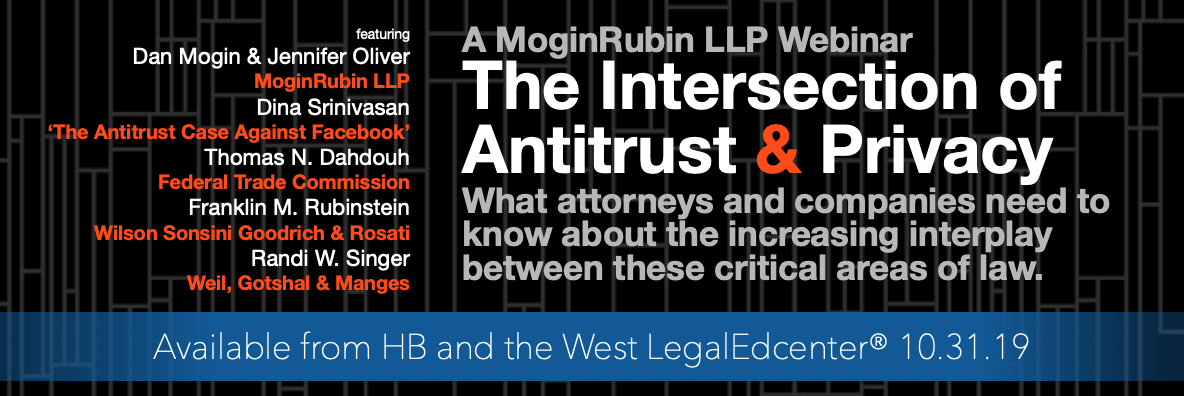
    Available as part of your subscription to The Thomson Reuters West LegalEdcenter®. Don’t subscribe to the West LegalEdcenter? This webinar is still available directly from HB. Take it now! Questions for speakers Questions@LitigationConferences.com CLE questions CLE@LitigationConferences.com Check out the MoginRubin blog for more insights on antitrust and privacy law. What attorneys and companies need to know about the increasing interplay between these critical areas of the law.  Highly publicized cases and investigations in the U.S. and Europe of big technology, e-commerce, and social media companies demonstrate how anti-competition laws are being used to scrutinize and challenge not only how these corporations conduct themselves in the marketplace, but the very core of their colossal success: the mass collection and utilization of user data. Are the privacy and antitrust worlds beginning to cross over? Or do they simply run parallel while addressing entirely different types of conduct? Whatever the answer, data is the raw material that drives the likes of Google, Facebook, Apple and Amazon, so how it is handled is a critical question when counseling clients on mergers and acquisitions. Moderator Daniel J.  Mogin | Managing Partner, MoginRubin LLP Speakers Jennifer M. Oliver, CIPP/US | Partner, MoginRubin LLP Thomas N. Dahdouh | Director, Western Region, Federal Trade Commission Franklin M. Rubinstein | Partner, Wilson Sonsini Goodrich & Rosati Randi W. Singer, CIPP/US, CIPT | Partner, Weil, Gotshal & Manges Contributor Dina Srinivasan | Independent Researcher & Author of The Antitrust Case Against Facebook Dina was unable to present but we thank her for her content contributions.  Agenda Who should regulate privacy violations in the U.S.? Which antitrust issues implicate privacy concerns? What role does machine learning play on the competitive landscape? What is big data really? How is it different from “data”? What are the elements of effective merger reviews? What are the appropriate remedies? What are “notice-and-choice” versus “harms-based” approaches? Plus answers to your questions. Send them to Questions@LitigationConferences.com.

  • Climate Change Litigation Expands with Addition of Hoboken, NJ’s Suit Against Big Oil

    Climate Change Litigation Expands with Addition of Hoboken, NJ’s Suit Against Big Oil

    Excerpt of Sept. 2, 2020 post at HobokenNJ.gov.

    Decades-long campaign of misinformation has directly contributed to effects of climate change in Hoboken, City seeks relief for costs associated with climate adaptation efforts.

    Hoboken Mayor Ravi S. Bhalla today announced that the City of Hoboken has filed a lawsuit in Hudson County against Exxon Mobil, other Big Oil companies, and the American Petroleum Institute for a decades-long campaign of misinformation related to climate change and its devastating impact on Hoboken. According to the lawsuit, Big Oil companies have caused substantial harm to the public in Hoboken and New Jersey by actively lying about the detrimental effects of their products when in fact their own research indicated otherwise, all in order to generate multibillion dollar profits by producing, marketing, and selling vast quantities of fossil fuels. Big Oil engaged in a continuous practice of misleading the public about climate change and their role in it, directly resulting in adverse impacts in Hoboken including rising sea levels that jeopardize the long-term health of the City.

    Photo by Patrick Hendry on Unsplash

    “As a coastal community, Hoboken has directly felt the impacts of climate change, including rising sea levels and more frequent storms,” said Mayor Bhalla. “At the same time we’ve invested hundreds of millions of dollars adapting to the realities of climate change, Big Oil companies have engaged in a decades long campaign of misinformation that has contributed to global warming which has disproportionately impacted our residents. We cannot stand idly by and allow Big Oil to continue profiting at the expense of Hoboken residents. It’s time these companies pay their fair share and be held accountable for their actions.”

    Hoboken joins at least 19 other cities, states and counties across the country, and the first in New Jersey to allege that Big Oil companies have engaged in repeated deception over a span of decades that has resulted in adverse impacts of climate change. The litigation comes at no expense to the City of Hoboken or Hoboken taxpayers. Legal fees associated with the lawsuit are funded, in part, by the Institute for Governance and Sustainable Development and, in part, through a contingency arrangement ….

    Read more and get the complaint from HobokenNJ.gov.

  • Tech’s Big Four Will Testify Before Antitrust Subcommittee

    Tech’s Big Four Will Testify Before Antitrust Subcommittee

    Four Technology Giants’ CEOs Will Testify Before Congress in On-going Antitrust Investigation

    Executives from Amazon, Apple, Facebook, and Google will appear (either virtually, as they are permitted to, or in person) before the U.S. House of Representatives’ Judiciary Antitrust Subcommittee on July 27, 2020. According to its press release, the Subcommittee has been scrutinizing the companies’ dominance in their respective digital spheres and the “adequacy of existing antitrust laws and enforcement,” since June 2019.

    The hearing will enable legislators to question the executives about possible antitrust abuses, which have been the focus of many federal, state, and foreign regulatory inquiries. For example, Representatives may inquire about Amazon’s treatment of third-party merchants who sell products on its e-commerce platform, Google’s highly profitable ad business, Apple’s App Store terms that infringe on the rights of third-party app developers, and Facebook’s leverage of previously acquired companies to solidify its social media dominance, according to a July 1, 2020 New York Times article by David McCabe. The hearing may serve as the crowning piece of the Subcommittee’s antitrust probe. As the Subcommittee’s press release stated, the CEOs’ “forthcoming” testimony is “essential” to completion of the investigation.

    Apple Amazon Facebook Google

  • Monsanto, Bayer Paying Billions for PCB Cleanups

    Monsanto, Bayer Paying Billions for PCB Cleanups

    Roundup Weed Killer


    Read Baltimore Sun environmental writer Scott Dance’s June 24, 2020, article titled, “A $550M national class-action settlement includes money for cleanup of PCBs in Baltimore waterways.” He offers the Maryland angle on the $550 million class action settlement between Monsanto and 13 government agencies across the U.S., just part of a much larger agreement.

    “The settlement was one of several that Monsanto’s owner, German pharmaceutical company Bayer, announced Wednesday. Bayer said it’s paying up to $10.9 billion to settle current and potential future litigation over Monsanto’s weedkiller Roundup, which has faced numerous lawsuits over claims it causes cancer, and $1.22 billion to settle two further cases, including the class action focused on PCBs.”

    Dance writes that the terms of this settlement are off to Judge Fernando M. Olquin of the Central District of California for his review. Judge Olquin was one of the presenters on multiple panels at the Class Action Law Forum presented by Western Alliance Bank and produced by my team at HB. Kenneth R. Feinberg, also a presenter, is the court-appointed special master in the case.

    The Baltimore Sun piece was one of many that gave the local perspective on this nationwide litigation and settlement in progress, like this one from the San Francisco Chronicle, with a Seattle dateline, and this one from the Washington State Wire quoting the state’s AG, and this one from the Portland Tribune, with a take on the Oregon impact. And law firms, which stand to gain a great deal in attorney fees issued announcements of their part in the deal, like this one from Baron & Budd. It doesn’t appear the leading defense firm, Skadden Arps, issued a separate statement, but joined in the Bayer announcement. It quoted the firm’s John Beisner, “a consultant to Bayer’s Supervisory Board and a mass tort expert,” as saying, “Taking account of various options, I am convinced this plan provides a comprehensive, reasonable solution to the complex, contested issues presented by this litigation.”

    Bayer’s announcement from Leverkusen, Germany, basically said it was the right thing to do, but that it admits to no wrong-doing.

    “Bayer announced today a series of agreements that will substantially resolve major outstanding Monsanto litigation, including U.S. Roundup™ product liability litigation, dicamba drift litigation and PCB water litigation. The main feature is the U.S. Roundup™ resolution that will bring closure to approximately 75% of the current Roundup™ litigation involving approximately 125,000 filed and unfiled claims overall. The resolved claims include all plaintiff law firms leading the Roundup™ federal multi-district litigation (MDL) or the California bellwether cases, and those representing approximately 95% of the cases currently set for trial, and establish key values and parameters to guide the resolution of the remainder of the claims as negotiations advance. The resolution also puts in place a mechanism to resolve potential future claims efficiently. The company will make a payment of $8.8 billion to $9.6 billion to resolve the current Roundup™ litigation, including an allowance expected to cover unresolved claims, and $1.25 billion to support a separate class agreement to address potential future litigation. The Roundup™ class agreement will be subject to approval by Judge Vince Chhabria of the U.S. District Court for the Northern District of California. The resolutions were approved unanimously by Bayer’s Board of Management and Supervisory Board with input from its Special Litigation Committee. The agreements contain no admission of liability or wrongdoing.”

    The company said it can now get on with tackling global challenges, such as the COVID-19 pandemic, and generally “improv[ing] quality of life for a growing and aging population of an estimated 10 billion people by 2050.”

  • The Intersection of Privacy and Antitrust Webinar Now Available On-Demand on the West LegalEdcenter

    Available as part of your subscription to
    The Thomson Reuters West LegalEdcenter®.

    Don’t subscribe to the West LegalEdcenter?
    This webinar is still available directly from HB. Take it now!

    Questions for speakers
    Questions@LitigationConferences.com

    CLE questions
    CLE@LitigationConferences.com

    Check out the MoginRubin blog for more insights on antitrust and privacy law.

    What attorneys and companies need to know about the increasing interplay between these critical areas of the law. 

    Highly publicized cases and investigations in the U.S. and Europe of big technology, e-commerce, and social media companies demonstrate how anti-competition laws are being used to scrutinize and challenge not only how these corporations conduct themselves in the marketplace, but the very core of their colossal success: the mass collection and utilization of user data.

    Are the privacy and antitrust worlds beginning to cross over? Or do they simply run parallel while addressing entirely different types of conduct? Whatever the answer, data is the raw material that drives the likes of Google, Facebook, Apple and Amazon, so how it is handled is a critical question when counseling clients on mergers and acquisitions.

    Moderator
    Daniel J.  Mogin | Managing Partner, MoginRubin LLP

    Speakers
    Jennifer M. Oliver, CIPP/US | Partner, MoginRubin LLP
    Thomas N. Dahdouh | Director, Western Region, Federal Trade Commission
    Franklin M. Rubinstein | Partner, Wilson Sonsini Goodrich & Rosati
    Randi W. Singer, CIPP/US, CIPT | Partner, Weil, Gotshal & Manges

    Contributor
    Dina Srinivasan | 
    Independent Researcher & Author of The Antitrust Case Against Facebook
    Dina was unable to present but we thank her for her content contributions. 

    Agenda

    • Who should regulate privacy violations in the U.S.?
    • Which antitrust issues implicate privacy concerns?
    • What role does machine learning play on the competitive landscape?
    • What is big data really? How is it different from “data”?
    • What are the elements of effective merger reviews?
    • What are the appropriate remedies?
    • What are “notice-and-choice” versus “harms-based” approaches?
    • Plus answers to your questions. Send them to Questions@LitigationConferences.com.

  • The Intersection of Antitrust & Privacy | A MoginRubin Webinar | 10.31.2019

    The Intersection of Antitrust & Privacy Law


    [two-fifths-first] Recorded: Oct. 31, 2019
    Duration: 100 minutes
    Presented by:  MoginRubin LLP
    Produced by: HB Litigation Conferences

    The Panel

    Moderator
    Daniel J.  Mogin | Managing Partner, MoginRubin LLP

    Speakers
    Jennifer M. Oliver, CIPP/US | Partner, MoginRubin LLP
    Thomas N. Dahdouh | Director, Western Region, Federal Trade Commission
    Franklin M. Rubinstein | Partner, Wilson Sonsini Goodrich & Rosati
    Randi W. Singer, CIPP/US, CIPT | Partner, Weil, Gotshal & Manges

    Contributor
    Dina Srinivasan |
    Independent Researcher & Author of The Antitrust Case Against Facebook
    Dina was unable to present but we thank her for her content contributions. 

    What you will get:

    • At least 1 hour of CLE credit.
    • Answers to your questions via email.
    • The opportunity to share with others on your team.
    • The complete Powerpoint.
    • The Antitrust Case Against Facebook
    • Dina Srinivasan’s statement to the House Committee on the Judiciary, Subcommittee on Antitrust, Commercial, and Administrative Law
    • The Chicago Booth School Stigler Center Committee on Digital Platforms Final Report

    Write to us at CLE@LitigationConferences.com to:

    • Ask about CLE
    • Request the materials
    • Send a question for the speakers

    [/two-fifths-first][three-fifths]

    Market Behavior and Data-Driven Market Power

    Highly publicized cases and investigations in the U.S. and Europe of big technology, e-commerce, and social media companies demonstrate how anti-competition laws are being used to scrutinize and challenge not only how these corporations conduct themselves in the marketplace, but the very core of their colossal success: the mass collection and utilization of user data.

    Are the privacy and antitrust worlds beginning to cross over?

    Or do they simply run parallel while addressing entirely different types of conduct? Whatever the answer, data is the raw material that drives the likes of Google, Facebook, Apple and Amazon, so how it is handled is a critical question when counseling clients on mergers and acquisitions.


    Meanwhile, there is increasing pressure on antitrust enforcers to consider privacy issues when conducting merger reviews.

    Antitrust laws allow and require consideration of data collection, handling, and use if there is a risk to fair competition. But are the agencies equipped to analyze the effect of post-merger datasets? Should they examine the privacy ramifications of proposed deals?

    Viewpoints on the overlap between the regimes are wide-ranging and nuanced. In a June speech, DOJ Antitrust Division chief Makan Delrahim said that “by protecting competition we can have an impact on privacy and data protection.” During a 2018 interview, though, FTC commissioner Noah Phillips argued that “privacy law and antitrust law each addresses different harms and vindicates different rights.”

    What does all of this mean to the practitioner or in-house counsel?

    Take this 100-minute webinar now to gain insights from leading experts on these issues, with a balance of perspectives from both the plaintiff and defense bars, academia, and regulatory enforcement.

    Get answers to questions like these:

    • Who should regulate privacy violations in the U.S.?
    • Which antitrust issues implicate privacy concerns?
    • What role does machine learning play on the competitive landscape?
    • What is big data really? How is it different from “data”?
    • What are the elements of effective merger reviews?
    • What are the appropriate remedies?
    • What are “notice-and-choice” versus “harms-based” approaches?
    • And more!

    [/three-fifths]


    Moderator & Speaker

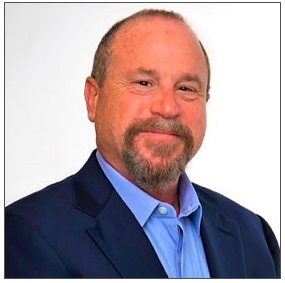
    Daniel J.  Mogin, Managing Partner, MoginRubin LLP. Dan concentrates on antitrust, unfair competition and complex and business litigation. He has been selected as lead or liaison counsel in numerous cases and has also frequently served on Steering and Executive committees charged with overall responsibility for direction of complex Multi-District Litigation and Judicial Council Coordination Proceedings. He has participated in some of the largest antitrust class actions in the United States. Dan is frequently invited to participate in these cases by other law firms and often consults with law firms engaged in antitrust cases. He has also provided expert testimony in cases and before the California State Senate Judiciary Committee. Dan received his B.A. in Economics from Indiana University and his J.D. from the University of San Diego.

    Speakers

    Jennifer M. Oliver, CIPP/US, Partner, MoginRubin LLP.  Jennifer joined MoginRubin LLP in 2017 after nearly ten years as a complex business litigator in New York City. She focuses on antitrust, as well as complex business and investment litigation.  Jennifer is a member of the California Lawyer’s Association’s Privacy subcommittee and of the International Association of Privacy Professionals (IAPP), and is an IAPP Certified Information Privacy Professional. Jennifer has played active roles in high-profile jury trials, served as lead counsel in complex mediations, and argued before both trial and appellate courts. In addition to her merger and cartel work, Jennifer has also advised on antitrust issues in mergers and acquisitions and litigated cases involving trade secrets, RICO conspiracies, securities fraud, unfair trade practices, breaches of contract and privacy cases. She earned her B.S. in Business Administration, M.B.A., and J.D. from the University at Buffalo, each with honors.

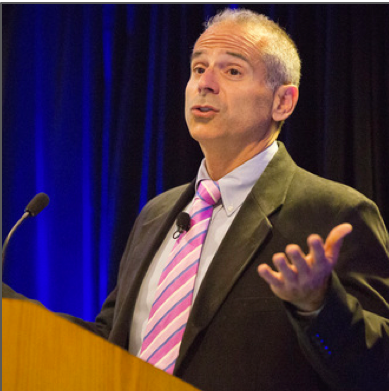
    Thomas N. Dahdouh, Director, Western Region, Federal Trade Commission.  Prior to his current position Tom served as Assistant Regional Director for the Western Region.  He worked for 14 years as a staff attorney in the San Francisco office of the FTC, handling consumer protection and antitrust matters.  Previously, he worked at the FTC’s Washington, D.C., headquarters for two commissioners.  He has also served on the Executive Committee of the California State Bar’s Antitrust, UCL and Privacy Section since 2009, most recently serving as its Chair from 2014-2015.  He received his J.D. from Harvard Law School and his B.A. from Yale University.

    Franklin M. Rubinstein, Partner, Wilson Sonsini Goodrich & Rosati. Franklin is an antitrust partner in the Washington, D.C., office. His practice encompasses a wide variety of antitrust matters, including mergers and acquisitions, investigations by the United States Department of Justice and the Federal Trade Commission, litigation, criminal investigations, and counseling on issues such as distribution, monopolization, tying, exclusive dealing, price-fixing, and antitrust compliance. Franklin has represented a diverse set of clients in the software, computer hardware, pharmaceutical, medical device, gaming, automobile, natural resource, Internet, and media industries. Education: J.D., University of Chicago Law School; B.A., Swarthmore College.

    Randi W. Singer, CIPP/US, CIPT, Partner, Weil, Gotshal & Manges. Randi has earned the Certified Information Privacy Professional (CIPP/US) and Certified Information Privacy Technologist (CIPT) credentials and regularly advises clients in connection with privacy, cybersecurity, and social media issues in a wide variety of matters, including hundreds of transactions ranging from high-profile deals such as Facebook’s acquisition of Whatsapp, Inc. to large public company mergers and small talent acquisitions. In 2015, The National Law Journal recognized Randi as one of its inaugural “Trailblazers” nationwide for her cutting-edge work in the cybersecurity and data privacy area. 

    Contributor

    Dina Srinivasan, Independent Researcher & Author of The Antitrust Case Against Facebook. Dina currently advises on the economics of digital advertising markets and continues to write about tech and antitrust. She is the author of “The Antitrust Case Against Facebook“, an academic paper published in the Berkeley Business Law Journal (February 2019)  that explains Facebook’s monopoly power under U.S. antitrust law. Her research and commentary on tech and antitrust have been covered or cited by U.S. Congress, The New York Times, Bloomberg, Business Insider, NBC News, the Today Show, and other publications and radio stations, domestically and globally. She was an executive with WPP, the world’s largest advertising holding company. She founded Effidia, an advertising technology company whose technology was acquired by a division of WPP. Dina also created one of the first applications to bridge text messaging across CDMA, TDMA, and GSM spectrum networks in the U.S.  She holds a J.D. from Yale Law School, where she studied law & economics and was an Olin Fellow with the Kauffman Program in Law, Economics and Entrepreneurship.


    Privacy Matters

    Take a look at the Apple privacy commercial. This comes up during the webinar. If it raises any questions for you, please let the speaker know. Write to us at Questions@LitigationConferences.com. What do you think?

    Check out the MoginRubin Blog for insights on anticompetition, privacy, mergers and more.

  • The Future of Cyber Operations and the Government

    In the forthcoming National Defense Authorization Act the House Armed Services Committee — specifically the Subcommittee on Intelligence and Emerging Threat Capabilities — seeks to amend the annual legislation to ensure that Congress is informed when the executive branch executes offensive or defensive cyber operations.

    The bill defines offensive or defensive cyber operations as a “sensitive military operation.” The goal of this shared information is additional oversight, especially given the newness of cyber tactics.

    As reported by journalist Derek B. Johnson of FWC.com, two covert cyber operations have taken place since POTUS announced the new policy. The first was in October 2018, a cyber operation with a goal of informing Russian operatives not to meddle with the midterm election. The second took place the following November in which the U.S. Cyber Command blocked access to Russian Internet Research Agency post election.

    While these two operations have been called “mild” in some critiques, former White House Director of Cyber Infrastructure Protection under President George W. Bush, Jason Healey, believes this highly specialized tactic is ideal since it presents the least potential for collateral damage. While Healey warns against grand and overt attacks, he states that sometimes “conflict is straightforward and you just have to stop adversaries from punching you in the mouth.”

    Read the complete post by Derek B. Johnson on FCW.com here.

  • Top Class Actions: Vaccine Litigation Case Roundup


    [one-half-first][/one-half-first] [one-half]There have been numerous lawsuits filed alleging injuries caused by the shingles vaccine Zostavax. Cases have stated they were not warned of the adverse side effects of the vaccine alleging it caused the diseases it is meant to prevent, among other things.

    Here is what the CDC says to consumers: “Your risk of shingles and postherpetic neuralgia (PHN) increases as you get older. CDC recommends that people 60 years old and older get shingles vaccine (Zostavax®) to prevent shingles and PHN. Shingrix (recombinant zoster vaccine) is the preferred vaccine, over Zostavax® (zoster vaccine live), a shingles vaccine in use since 2006. Zostavax may still be used to prevent shingles in healthy adults 60 years and older. For example, you could use Zostavax if a person is allergic to Shingrix, prefers Zostavax, or requests immediate vaccination and Shingrix is unavailable. Zostavax (zoster vaccine live) was licensed by the FDA in 2006. This vaccine reduces the risk of developing shingles by 51% and PHN by 67%. It is given in one dose as a shot, and can be given in a doctor’s office or pharmacy.“

    Read more: https://www.cdc.gov/vaccines/vpd/shingles/public/zostavax/index.html

    The vaccine is produced by Merck & Co.  Their product information can be found here: https://www.merckvaccines.com/Products/Zostavax

    Here is a roundup of the cases filed.

    [/one-half]

    1.Husband and Wife File Zostavax Shingles Vaccine Lawsuit 

    “A North Carolina husband and wife recently filed a new Zostavax shingles vaccine lawsuit against pharmaceutical giant Merck & Co., alleging the vaccine caused serious side effects.

    “The plaintiff, Cecilia S., says she was inoculated with the Zostavax vaccine on March 5, 2017, in order to prevent shingles (or herpes zoster). Unfortunately, the day after receiving this vaccine, Cecilia alleges she suffered from a number of problems, including herpes zoster, cellulitis, and postherpetic neuralgia.”

    2. Zostavax Lawsuit Says Vaccine Caused Shingles

    “West Virginia patient has filed a Zostavax lawsuit claiming the shingles vaccine gave her shingles instead of preventing her from getting it.

    “Shingles is a rash caused by a virus, and can have lasting effects, according to Science News. Shingles is more common in older people, and recently, Pharmacy Times reported that there has been a push to increase vaccination rates.”

    3. Can You File a Shingles Vaccine Lawsuit?

    “Some patients have come forward with reports of major complications after treatment with Zostavax, a popular shingles vaccine—and some have even filed a shingles vaccine lawsuit over these Zostavax side effects.”

    4. No Warning of Severe Reactions to Shingles Vaccine, Couple Claims

    “A couple from Illinois alleges they are suffering from severe reactions to shingles vaccine, complications that pharmaceutical company Merck allegedly failed to warn about.

    “The couple filed legal action after discovering other patients had reported similar adverse vaccine reactions soon after getting the Zostavax shot.

    “Plaintiffs Victoria and Earl V. filed this Zostavax lawsuit alleging Victoria developed shingles, or herpes zoster, despite having been vaccinated against it.”

    5. Lawsuit Alleges Hearing Problems Due to Zostavax Shingles Vaccine

    “Plaintiff Kim M. is the latest to lodge a lawsuit against Zostavax maker Merck and Company, arguing that the shingles vaccine causes preventable and dangerous Zostavax side effects such as hearing loss. She argues that she might have made a different decision about getting the shot if she had known about the risks.

    “The plaintiff alleges that she received the Zostavax vaccine for regular health purposes and prevention of shingles in February 2016 while a resident of California.”

    6. Lawsuit Alleges Shingles Vaccine Adverse Effects are Permanent 

    “A couple has filed a lawsuit alleging they suffer from shingles vaccine adverse effects.

    “Plaintiffs Kathleen H. and Joseph W. say Kathleen received the Zostavax vaccine in 2017 for the prevention of shingles, medically known as herpes zoster.

    “They allege she suffered severe side effects from the inoculation, including a stroke, physical limitations, mental and emotional distress and severe, permanent personal injuries.”

    7. Common Zostavax Shingles Vaccine Complaints Named in New Lawsuit

    “The Zostavax shingles vaccine emerged on to the market as a new option for people at risk for developing shingles to guard against it. The CDC recommends that individuals aged 60 and older get the shingles vaccine whether or not they remember having had chicken pox previously in their life. According to research studies, more than 99 percent of Americans 40 and beyond have gotten chickenpox even if they don’t remember getting the disease.”

    8. Growing MDL Alleges Serious Zostavax Shingles Vaccine Reactions

    “Merck & Co. is facing a growing multidistrict litigation (MDL) consisting of similar claims alleging patients developed serious side effects from the company’s Zostavax shingles vaccine.

    “One of the most recent Zostavax shingles lawsuits was filed by a woman from Tennessee, who alleges Merck failed to disclose the full scope of potential vaccine reactions.”

    9. Zostavax Lawsuit alleges Vaccine caused Permanent Cardiovascular Complications 

    “This Zostavax lawsuit is joining a growing multidistrict litigation (MDL), which consists of similar claims alleging Merck failed to warn them against the full severity of the potential side effects associated with their shingles vaccine.

    “Plaintiff couple Terrance and Brenda O. conjointly filed this Zostavax lawsuit, stating the side effects of the shingles has permanently impacted their marriage and their quality of life. Like numerous other patients in the United States, Terrance says he was prescribed the Zostavax injection to prevent shingles soon after he turned 60.”

    10. Lawsuit Claims Shingles Vaccine and Eye Problems Connection

    “Many consumers have already come forward to allege a connection between the Zostavax shingles vaccine and the development of shingles itself.

    “However, more patients are now arguing that the shingles vaccine and eye problems is another troubling connection about which the public is not aware.”

  • The Need for Real MDL Rules Will Only Grow More Acute — Drug and Device Law Blog

    By Bexis 

    [one-half-first].[/one-half-first] [one-half]”In the ensuing procedural gamesmanship, plaintiffs are in the process of losing one of the main ways they gamed the system to keep diverse cases in state court – the so-called ‘forum defendant rule’ whereby even a diverse action could be kept in state court by the presence of defendant domiciled in the plaintiff’s chosen forum. The forum defendant rule applies only to parties ‘properly joined and served,’ and technologically-savvy defendants have discovered that, by monitoring electronic dockets, they can remove diverse cases faster than plaintiffs can serve forum defendants. We call this ‘pre-service,’ ‘snap,’ or ‘wrinkle’ removal, and we’ve chronicled (and advocated) its rise since 2007.”

    Read the complete post by Bexis on Drug and Device Law Blog here. [/one-half]


    This is an excellent blog. One of my favorites. It’s unapologetically defense-oriented, of course. A phrase like “gamed the system” is practically an invitation for rebuttal! So if you would like to respond, rebut, or rebuke, please write to us at Editor@LitigationConferences.com. –Tom Hagy, HB

  • Product Liability in the Internet of Things — Schiff Hardin Product Liability & Mass Torts Blog


    [one-half-first]

    Photo by Markus Spiske on Unsplash [/one-half-first] [one-half]”Combining a physical object and an intangible technology also creates a novel issue when it comes to strict product liability principles, which typically hold that a product manufacturer may be strictly liable for a product’s defect. The first task in a strict product liability case is to identify the product. In the context of a device that has no internet connectivity, the answer is straightforward. If a ladder is defective and causes an injury, the ladder’s manufacturer may be held strictly liable because a ladder is the product. But when it comes to IoT devices, the line may be blurred. Almost always, the software part of the IoT device is ‘manufactured’ by a separate entity from the entity that manufactures the physical object. If the IoT device proves to be defective, the question becomes which entity may be held strictly liable.”

    Read the complete post by Schiff Hardin’s  Gregory Dickinson & Jeffrey D. Skinner  here. [/one-half]