Tag: eDiscovery

  • International Discovery Tool Kit Aims to Facilitate Discovery in Both Domestic and Foreign Litigation

    International Discovery Tool Kit Aims to Facilitate Discovery in Both Domestic and Foreign Litigation

    The Authors

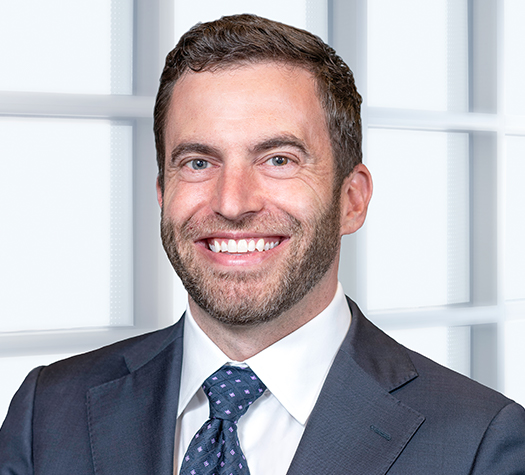
    Benjamin Daniels

    Benjamin DanielsRobinson+Cole

    Benjamin Daniels advises financial institutions and global corporations about litigation and dispute resolution. As a member of the Business Litigation Group, Ben provides creative and ardent advocacy during litigation, enforcement actions, investigations, crisis management, and white-collar defense matters.

    Ben’s clients often face complex, cross-border disputes. He has deep experience with the interplay between domestic and international courts, including discovery disputes and Hague convention proceedings. He also represents clients in international arbitrations and mediations.

    Jenna Scoville

    Jenna ScovilleRobinson+Cole

    Jenna Scoville is a member of the firm’s Business Litigation Group. She focuses her practice on all aspects of general business litigation and dispute resolution, as well as government enforcement matters, and appellate work. She helps companies respond to a variety of business disputes, including claims for breach of contract, unfair trade practices and fraud.

    Jenna also has extensive appellate experience. Prior to joining the firm, she clerked for the Honorable Peter W. Hall of the U.S. Court of Appeals for the Second Circuit.
    The Journal on Emerging Issues in Litigation

    Emerging Litigation Podcast

    Emerging Litigation PodcastProduced by HB Litigation and Law Street Media

    Interviews with leading attorneys and other subject matter experts on new twists in the law and how the law is responding to new twists in the world.

    International Discovery Tool Kit Aims to Facilitate Discovery in Both Domestic and Foreign Litigation

    “At a time when litigants have increasingly relied on U.S. federal courts to obtain otherwise unobtainable evidence from entities located within the United States, the U.S. Supreme Court has decisively closed the door to U.S.-style discovery in private arbitrations abroad. That means U.S. companies will no longer face the time, exposure, and expense of U.S.-style discovery that § 1782 had injected into those proceedings.“

    Abstract: Business knows no borders. Every year companies increase their global reach and open new offices both domestically and abroad. The COVID-19 pandemic accelerated this process—remote employees spread documents and witnesses from Chicago to Shanghai to Sumatra. This has made litigation—especially discovery—more complex. Navigating this environment requires a tool kit of resources to secure discovery in support of both domestic and foreign litigation. This article discusses those tools and several traps for the unwary practitioner facing cross-border discovery to anticipate to effectively use those tools to their benefit.

    When evaluating whether to allow a party to use the Hague Evidence Convention, courts consider several factors, including:

    1) the importance of the documents or information to the case,

    2) the specificity of the request,

    3) whether the information originated in the United States,

    4) the availability of other ways to secure the information, and

    5) whether compliance with the request would undermine important interests of the United States or the foreign country.

    Download the article now!

    Enjoyed reading Ben & Jenna’s article?

    Ben has a podcast exploring the subject more in 2024!

     Podcast: Navigating International Discovery

  • Discovery Strategies in Wage and Hour Class and Collective Actions Before and After Certification of Putative Class

    Discovery Strategies in Wage and Hour Class and Collective Actions Before and After Certification of Putative Class

    Discovery Strategies in Wage and Hour Class and Collective Actions Before and After Certification of Putative Class

    Strategically Limiting Discovery, Resolving Discovery Disputes

    Wage and hour class and collective actions are complex and discovery intensive. Discovery requests are often burdensome, seeking information concerning a broad swath of workers. This causes the discovery process to sometimes linger for years and creates a significant expense for employers.In recent years, courts have emphasized that parties must rein in extensive and expensive discovery requests. Employment litigators are increasingly raising proportionality arguments as a basis for objecting to opposing counsel’s discovery requests.

    Drafters are responding by tailoring requests to anticipate such challenges. Drafting discovery requests that are likely to withstand burden and proportionality challenges and objections to broad discovery requests is critical for litigators representing employers in wage and hour class and collective actions. Employment litigators must develop and implement effective discovery strategies both before and, as applicable, after certification of the putative class. These strategies often must anticipate the possibility of a future summary judgment motion, further certification practice, and trial on the merits.

    Listen as our authoritative panel of employment law attorneys explains effective strategies for pursuing or objecting to discovery requests in wage and hour collective and class actions and resolving discovery disputes that arise during litigation.

    Questions Addressed:

    • What are the most common discovery challenges counsel face when litigating wage and hour collective and class actions–from initiation through resolution of the case?
    • What strategies have been effective in wage and hour collective and class actions for obtaining essential information with the least expense?
    • What is the scope of discoverable evidence before and after certification of the putative class, and how can you limit or best manage discovery?
    • When drafting discovery requests in wage and hour class and collective actions, what should employment counsel consider to ensure that the requests align with the proportionality standard?

    Interested in More CLE OnDemand? Click Here.

    Interested in this program? Click here to send us a note.

    On Demand CLE Webinar

    Interested in this program? Click here to send us a note.

    Speakers

    Gerald Maatman Jr.
    Partner
    Duane Morris
    GMaatman@duanemorris.com

    Noel P. Tripp
    Principal
    Jackson Lewis
    Noel.Tripp@jacksonlewis.com

    Outline

    1. Pursuing or objecting to discovery requests in wage and hour collective and class actions
      1. Before conditional collective or class certification
      2. After conditional certification of a collective action
      3. After class certification
    2. Discovery considerations for summary judgment
    3. Discovery considerations for trial
    4. Resolving discovery disputes

    Explore more from Duane Morris LLP!

    Journal (JEIL) Artificial Intelligence Litigation Risks in the Employment Discrimination Context. By Gerald Maatman Jr., Alex Karasik, and George Schaller

    CLE OnDemand Webinar: AI Nuts & Bolts Survival Guide: Artificial Intelligence – Discrimination in Employment Context. Gerald Maatman Jr., Alex Karasik, and George Schaller

    CLE OnDemand Webinar: Discovery Strategies in Wage and Hour Class and Collective Actions Before and After Certification of Putative Class. Gerald Maatman Jr., Noel P. Tripp

    CLE OnDemand Webinar: Rule 23(c)(4) Issue Certification: Reconciling the Conflict With the Predominance Requirement. Gerald Maatman Jr., Timothy Congrove, Jennifer Mesko and James Muehlberger

  • The Dark Net:  Anonymity, Infrastructure, and the Future

    The Dark Net: Anonymity, Infrastructure, and the Future

    Register

    Webinar Info

    Wednesday, Aug. 5, 2020

    United States
    8am PT | 10am CT | 11am ET

    United Kingdom
    4pm BST

    Get CLE or CPE, a complete set of materials, and answers to your questions!

    Email us your:
    Speaker questions
    CLE questions

    Topics Covered

    Physical and Logical Topology and Method of Data Transmission

    Using the Dark Net for Threat Hunting

    Hacking Groups and Malicious Hackers  

    The Future of The Dark Net and Anonymity

    The Dark Net: Anonymity, Infrastructure, and the Future
    Is the Dark Web Getting Darker? 

    Wed., Aug. 5, 2020 | Produced for Access Data by HB Litigation Conferences

    The web, however singular it may seem from behind an everyday user’s computer or smartphone screen, comprises three distinctive parts: the public net (or web), the deep net, and the dark net. Though the dark net contains some innocuous content and is used for legitimate purposes, it also operates as a platform for illegal marketplaces. These offer almost anything a criminal or cybercriminal might want to buy or sell like malware, exploits, hackers-for-hire, information lifted from data breaches, censored content, and goods like drugs, guns, and other contraband.

    Observers report that the dark web is getting darker, meaning hardcore criminals make up a greater percentage of its user base. Exploits and other hacking tools and techniques used to disrupt business, critical infrastructure, and misappropriate confidential information are continually diversifying and becoming more complex. According to Cyber Defense Magazine, the annual cost of cybercrime damages to users, online businesses, and nations is expected to hit $5 trillion this year, with some estimates ranging as high as $10 trillion.

    Join two highly experienced data security professionals – Mary T. Frantz of Enterprise Knowledge Partners and Frank Krahn of Burdock Consulting – as they discuss how cybercrime fighters must overcome a variety of challenges as they threat-hunt on the dark net: detecting, monitoring, and gathering intelligence on cybercrimes and the actors behind them. Frantz and Krahn will discuss how the cybersecurity community will address emerging threats, what changes the web may undergo as a result, and more. The session will be moderated by the head of international training at AccessData, Sarah Hargreaves, who brings her own experience in forensics to the discussion.

    Meet our panelists.


    Frank Krahn
    Co-Founder, Burdock Consulting, LLC

    Before co-founding Burdock Consulting, Frank had a long tenure with the Mayo Clinic, where he served as the Director of Operational Risk Management. He holds various specialist certificates in information security and computer crime investigation and forensics. Frank has taught classes and consulted for law enforcement agencies on computer crime-related matters, and has worked with the FBI. He is also an e-discovery specialist.


    Mary T. Frantz

    Founder & Managing Partner, Enterprise Knowledge Partners, LLC

    Mary is a technology and strategy professional with more than 25 years’ experience as a corporate and consulting firm executive. Her expertise includes IT strategy, e-discovery, compliance, enterprise risk, information security, and enterprise architecture. Mary has served as a legal expert on a variety of cyber security topics. She is also an author, keynote speaker, and adjunct professor.


    moderator

    Sarah Hargreaves ACI, ACE
    Director of Training – International
    AccessData, United Kingdom

    Sarah started her career in digital forensics in 2003.  Previously working in a criminal law practice, Sarah moved over to forensics after working on a number of investigations which inspired her to change career path.  Her journey continued with a number of roles in Digital Forensic Laboratories, primarily supporting law enforcement in Child Sexual Exploitation investigation and general crime.  Sarah progressed to Laboratory Management and later into Training Management.

    Sarah is experienced in digital investigation, laboratory management, ISO17025 and evidential process.

    Sarah lives in the North West of England and is a mum to two young children.  She enjoys days out with her family and traveling.