Tag: Drugs & Devices

  • Greatly Exaggerated: The Impact of Bankruptcy on Mass Torts with Jennifer Hoekstra

    Greatly Exaggerated: The Impact of Bankruptcy on Mass Torts with Jennifer Hoekstra

    ear plugs on red background

    When large companies face massive mass tort litigation, one way they can survive is to file for bankruptcy protection and reorganize. 

    3M recently put its Aearo Technologies subsidiary into bankruptcy in the face of more than 230,000 claims that’s its defective earplugs caused hearing loss.  When it came to filing bankruptcy 3M said Aearo was solely responsible for the product. But for several years of litigation 3M argued that it, as the parent, was solely responsible, not its various subsidiaries. That was a strategy that was beneficial to the company in multidistrict litigation.

    Why did 3M suddenly change course? What impact does bankruptcy have on claimants? Could corporations use bankruptcy law to neuter mass tort litigation for all eternity?  And how did the strategy sit with the federal magistrate judge overseeing the multidistrict litigation?

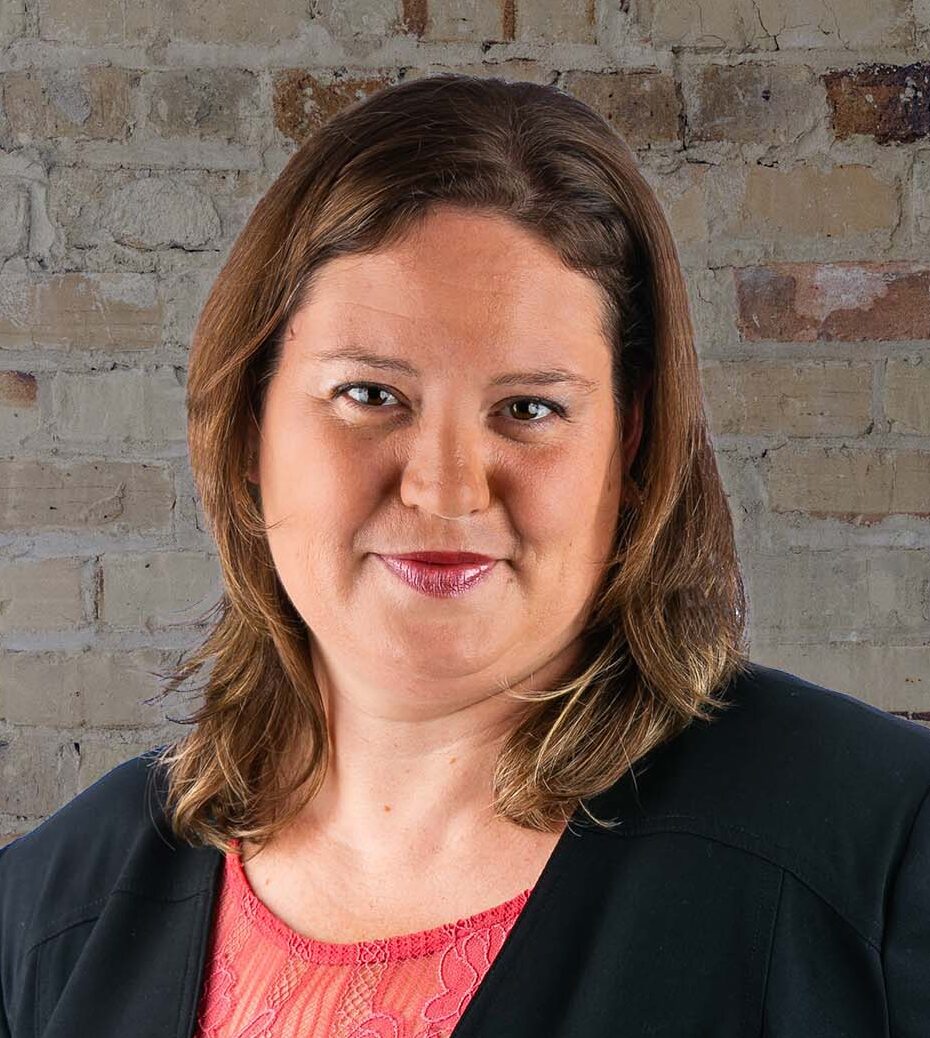
    Joining me to discuss this incredibly complex litigation is Jennifer M. Hoekstra, a partner with Aylstock Witkin Kreis & Overholtz. Jennifer has been involved in all varieties of complex litigation since 2007, focusing on mass torts, drug and device litigation, and others.  She has a J.D. from Tulane, which she earned while also completing a certificate in Environmental Law. She has actively served as trial counsel or an integral member of the trial team in several of the 3M Earplug trials securing nearly $300 million in compensatory damages for military veterans. Jennifer shared her insights on the intersection of complex mass torts and bankruptcy, an intersection that wasn’t originally on her roadmap.

    This podcast is the audio companion to the Journal on Emerging Issues in Litigation. The Journal is a collaborative project between HB Litigation Conferences and the Fastcase legal research family, which includes Full Court Press, Law Street Media, and Docket Alarm. The podcast itself is a joint effort between HB and our friends at Law Street Media. If you have comments or wish to participate in one our projects please drop me a note at Editor@LitigationConferences.com.

    Tom Hagy

    (actual size)

    Tom Hagy
    Litigation Enthusiast and
    Host of the Emerging Litigation Podcast
    Home Page
    LinkedIn

    P.S. During the podcast I mentioned an article and wanted to share the link. It’s called “Bankruptcy Grifters” by Lindsey D. Simon. It was published in the Yale Law Journal.

    Jennifer Hoekstra

    Jennifer Hoekstra

    Jennifer M. Hoekstra is a partner with Aylstock, Witkin, Kreis & Overholtz, PLLC. A native of Saint Paul, Minnesota, Ms. Hoekstra boasts an impressive academic and professional record, including graduation from two of the nation’s top schools. She earned her Bachelor of Arts in Environmental Science from Columbia College, Columbia University in the City of New York. She relocated to Louisiana to attend Tulane Law School, where she earned her J.D. while also completing a certificate in Environmental Law. During her law school career, she spent a semester studying at the University of Wisconsin School of Law and visited on their International Law Journal as a Junior Member during her Hurricane Katrina evacuation semester.

    Ms. Hoekstra has been involved in complex litigation cases of all forms since 2007. Ms. Hoekstra has earned a solid reputation as a skilled writer and researcher, and plays an integral role in several complex litigation cases, practicing in the areas of Pharmaceutical Mass Torts, Defective Device Mass Torts, and other complex litigation. She is currently a member of the Proton-Pump Inhibitors Plaintiff Executive Committee and the 3M Earplugs MDL Discovery and ESI Committee.

    Jennifer was central to the successful outcome in bellwether trials in the Genetically Modified Rice, Actos and DePuy Pinnacle Hip MDLs with more than $11 Billion in trial verdicts resulting from those cases. She has actively served as trial counsel or an integral member of the trial team in several of the 3M Earplug trials securing nearly $300 Million in compensatory damages for military veterans.

    She is licensed to practice before all Louisiana state and federal courts and the U.S. District Courts for the Northern District of Texas and Eastern District of Missouri as well as the 5th and 8th Circuit Courts. She is a member of the American Bar Association, the Louisiana Bar Association, the Acadiana Federal Bar Association, the Alexandria Louisiana Bar Association and the American Association for Justice. She is a member of Women En Mass, founding member of the board for the Society Women Trial Lawyers and was also a member of the inaugural 2018 Board of Directors for Emerge Louisiana.

  • James Beck on the Drug & Device Law Blog: Something Both Sides Should Agree On (re Class Actions)

    James Beck on the Drug & Device Law Blog: Something Both Sides Should Agree On (re Class Actions)

    By James M. Beck

    Senior Life Sciences
    Policy Analyst
    Reed Smith LLP

    Drug & Device Law Blog: Something Both Sides Should Agree On (re Class Actions)

    We’ll be very clear – as we have before:  We don’t like most class actions.  Indeed, if given our druthers, we would abolish Rule 23, as it applies to class actions for damages, altogether.  But that’s not in the offing anytime soon.  Today, we offer a class action decision that we think both sides, us on the defense and those on the plaintiffs side, can agree on, excluding only those responsible for the problem.

    In Pearson v. Target Corp., 968 F.3d 827 (7th Cir. 2020), the court came up with one possible solution to the class action “objector problem.”

    What’s that?

    Well, once a class action settles (as most do), all too often “objectors” come out of the woodwork.  While these objectors purport to assert the interests of the class, usually, all they want is money to make them go away.  Or, as described in Pearson:

    We address here a recurring problem in class-action litigation known colloquially as “objector blackmail.”  The scenario is familiar to class-action litigators on both offense and defense.  A plaintiff class and a defendant submit a proposed settlement for approval by the district court.  A few class members object to the settlement but the court approves it. . . .  The objectors then file appeals.  As it turns out, though, they are willing to abandon their appeals in return for sizable side payments that do not benefit the plaintiff class: a figurative “blackmail” by selfish holdouts threatening to disrupt collective action unless they are paid off.

    …

    Read more at the Drug & Device Defense Law Blog.

    Safeguarding Against Financial Exploitation

    An on-demand CLE-eligible webinar Safeguarding Against Financial Exploitation   America’s senior population is growing. Nearly one in five U.S. residents will be 65 or older in 2030. Which means the average age of U.S. investors is climbing too. With that comes the risk that they will be exploited by people with access – or gain access through nefarious methods – to their investment portfolio. Seniors and vulnerable persons lose billions of dollars each year. Remarkably, 90% of the people to take advantage of senior investors are members of their own family. Attorneys who represent senior clients need to know the signs of vulnerability, red flags that their clients are being exploited, what laws apply, and rules lawyers must follow in these matters.   Questions our speakers answer: What is senior / vulnerable investor exploitation?   Who is protected by state and federal laws?   How prevalent is senior financial exploitation? What do the numbers tell us?  What is the pace of financial abuse SAR filings by securities firms?  What are the most popular scams?   What is diminished capacity?  What are the red flags indicating possible exploitation?  What are the laws, rules, and regulations governing law firms?  What are some best practices for law firms?  How can firms best protect their senior clients?   On Demand CLE Webinar What You Get PowerPoint and supplemental materials. Complete recording for later review. Answers to your questions via email. Invitation to contact speakers. 1.5 CLE credits (for licensed attorneys). CLE assistance.* *Subject to state bar rules. For licensed attorneys.  Register Meet the Speakers Joseph Calabrese Bressler, Amery & Ross, P.C. A 1991 Graduate of St. John’s University Law School, Mr. Calabrese brings 30 years of practice and 18 years of Securities Litigation/Regulatory experience to his role as principal in the New York office of  Bressler, Amery & Ross’s Financial Institutions Group. He began his career as a Wall Street litigator as an associate general counsel for Citigroup’s Smith Barney and […]

    Lien Resolution: Government & Private Plans Get Aggressive (Against Attorneys)

    Includes Nearly 75 minutes of insights from experienced professionals. CLE credit: 1+ (subject to bar rules). For CLE questions: CLE@LitigationConference.com The complete Power Point presentation. Continued access to the complete recording for later use. Answers to your questions via email to the presenters or write to HB and we will be sure to contact the speakers. What can you do to settle personal injury suits cleanly and avoid costly litigation and penalties? What recent cases can inform you about protecting your settlements and, as attorneys, yourselves, from post-settlement federal lawsuits? How can your firm set itself up to meet government expectations? What role might experts play in navigating these pitfalls? Medicare Advantage (42 USC § 1395w-22) Federal Medical Care Recovery Act (FMCRA) (42 USC § 2651) Armed Forces Act (10 USC §1095) Veterans’ Benefits (38 USC §1729) Third-Party Collection Rules (32 CFR 537.24; 38 CFR 17.101, etc.) Set-Asides under the Medicare Secondary Payer Act (42 USC § 1395y(b)(2)] On Demand Registration Lien Resolution Government & Private Plans Get Aggressive (Against Attorneys!) On Demand | Recorded September 2020 It is increasingly common these days. Personal injury attorneys settle a case, only to find themselves sued by a U.S. Attorney for failing to reimburse Medicare for conditional payments as required by the Medicare Secondary Payer Act. In some cases the attorney may be required to pay fines in addition to the reimbursements and interest, a costly proposition. Are you up to speed on issues surrounding Medicare Advantage, TRICARE, veterans’ claims, and Medicare set-asides? Join nationally recognized healthcare lien and resolution expert Franklin P. Solomon and go-to lien resolution provider Brett Newman as they offer a practical, in-depth CLE presentation. Franklin P. Solomon, Esq. Attorney & Founder, Solomon Law Firm  A graduate of Rutgers University School of Law at Camden, Franklin Solomon is based in Cherry Hill, NJ, with a practice focused on evaluation, litigation and resolution of healthcare “liens” and reimbursement claims. Mr. Solomon represents personal injury victims and their attorneys […]

    Telepsychiatry: Mitigating the Risks

    REGISTER Registration Includes Nearly 90 minutes of insights from experienced professionals. CLE credit: 1+ (subject to bar rules). For CLE questions: CLE@LitigationConference.com The complete Power Point presentation. Continued access to the complete recording for later use. Answers to your questions via email to the presenters or write to HB and we will be sure to contact the speakers. Understand the risks associated with telepsychiatry and how to manage them.  Telemedicine has emerged as an important solution for healthcare in general and psychiatric medicine specifically during the current global pandemic. Remote access for sub-practices including addiction counseling have been commonly used. Our panel of psychiatric professionals who have served as expert witnesses and attorneys who counsel and represent physicians have prepared a 90-minute session to share insights with attorneys, physicians, healthcare providers, risk professionals, and more. Agenda Examining procedures and best practices that exist for ensuring confidentiality in a telemedicine practice How do you draft a telepsychiatric consent form? What is the emerging standard of care for telemedicine? Will the standard of care for telemedicine become a national standard? (Should it?) Review the case law addressing telemedicine or telepsychiatry How do the HIPAA regulations and HITECH privacy laws impact telemedicine? How have the HIPAA regulations and HITECH privacy laws been relaxed during the pandemic? Will the relaxed HIPAA and HITECH regulations impacting telemedicine continue past the pandemic? Which technical platforms are preferred? Which ones to avoid? Panelists Mark Levy, M.D., Medical Director at fpamed David Kan, M.D., UCSF Psychiatry Department and the California Society for Substance Abuse Medicine Ayesha Ashai, M.D., associated with fpamed Stephen M. Fatum, J.D., Partner, Barnes & Thornburg LLP Angela W. Russell, J.D., Partner, Wilson Elser Moskowitz Edelman & Dicker LLP Meet our physician and attorney panelists. Mark Levy MD Medical Director fpamed Dr. Levy is a graduate of Columbia College (A.B. 1967) and the Columbia University College of Physicians and Surgeons (M.D. 1971) in New York. He is a Physician […]

    The Commercial Drone Industry: Privacy, Security, Threats, and Mitigation of Risk

    HB presents a CLE-eligible webinar Now on-demand at the West LegalEdcenter THE COMMERCIAL DRONE INDUSTRY Privacy, Security, Threats, and Mitigation of Risk Drones have become an increasingly valuable tool for businesses of all types and sizes. Drones are already being used in many applications, but more will certainly arise as the technology advances. This means that certain risks, like cyber threats, will also continue to present themselves. Protecting the transmission and storage of data collected through drones is critical. Unfortunately, security usually comes as an afterthought. The drone industry is part of the aviation industry, which, based on its knowledge, keeps safety as a number one concern. Part of that safety is having proper protection for your systems, including security as a fundamental design principle. Take this webinar to gain insights on the topics listed below, and shared by an attorney who practices on the cutting-edge of this evolving technology. Topics: Defining drones. Current and future applications. FAA Modernization and Reform Act of 2012. FAA Part 107 Regulations and waivers. Resources, e.g. the FAA Drone Zone and LAANC Portal. Penalties for violations. Privacy implications. Drones as weapons. Vulnerability to cyber attacks. Take it now! What you get: 1+ CLE credits (subject to bar rules). Insights from an experienced professional who specializes in this area of the law. The complete PowerPoint presentation. Continued access to the complete recording for later use. Answers to your questions. Fee: No additional charge to subscribers to the West LegalEdcenter. Non-subscribers may take the course for $170. Meet the Speaker Kathryn Rattigan Robinson & Cole LLP Kathryn Rattigan is a member of the firm’s Business Litigation Group and Data Privacy + Cybersecurity Team. She advises clients on data privacy and security, cybersecurity, and compliance with related state and federal laws. She assists clients in assessing risks related to technology and software contracts, as well as with compliance-related issues with outsourcing and […]

    The Intersection of Privacy and Antitrust Webinar Now Available On-Demand on the West LegalEdcenter

    Available as part of your subscription to The Thomson Reuters West LegalEdcenter®. Don’t subscribe to the West LegalEdcenter? This webinar is still available directly from HB. Take it now! Questions for speakers Questions@LitigationConferences.com CLE questions CLE@LitigationConferences.com Check out the MoginRubin blog for more insights on antitrust and privacy law. What attorneys and companies need to know about the increasing interplay between these critical areas of the law.  Highly publicized cases and investigations in the U.S. and Europe of big technology, e-commerce, and social media companies demonstrate how anti-competition laws are being used to scrutinize and challenge not only how these corporations conduct themselves in the marketplace, but the very core of their colossal success: the mass collection and utilization of user data. Are the privacy and antitrust worlds beginning to cross over? Or do they simply run parallel while addressing entirely different types of conduct? Whatever the answer, data is the raw material that drives the likes of Google, Facebook, Apple and Amazon, so how it is handled is a critical question when counseling clients on mergers and acquisitions. Moderator Daniel J.  Mogin | Managing Partner, MoginRubin LLP Speakers Jennifer M. Oliver, CIPP/US | Partner, MoginRubin LLP Thomas N. Dahdouh | Director, Western Region, Federal Trade Commission Franklin M. Rubinstein | Partner, Wilson Sonsini Goodrich & Rosati Randi W. Singer, CIPP/US, CIPT | Partner, Weil, Gotshal & Manges Contributor Dina Srinivasan | Independent Researcher & Author of The Antitrust Case Against Facebook Dina was unable to present but we thank her for her content contributions.  Agenda Who should regulate privacy violations in the U.S.? Which antitrust issues implicate privacy concerns? What role does machine learning play on the competitive landscape? What is big data really? How is it different from “data”? What are the elements of effective merger reviews? What are the appropriate remedies? What are “notice-and-choice” versus “harms-based” approaches? Plus answers to your questions. Send them to Questions@LitigationConferences.com.


  • The Wrong-Headedness of Hindsight Standards — Michelle Yeary | Drug & Device Law Blog

    Dechert LLP attorney Michelle Yeary cautions against applying perfect hindsight to drug liability.

    “We all know hindsight is 20/20.  And, it’s easy.  There are dozens of television and radio programs that thrive on Monday morning quarterbacking.  There’s no risk in saying the coach should have called for a pass when you already know the run didn’t work.  It’s also dangerous because it’s easy.  People are often too quick to point out that you should have taken path B after everyone learns path A is full of potholes.  Pointing it out is one thing, holding you liable for it is another.”

    Yeary takes a look at what happened in Holley v. Gilead Science, Inc., 2019 WL 2077845 (N.D. Cal. May 10, 2019). The case involves two of the main active ingredients in AIDS drugs: TDF and TAF. The plaintiff alleges that the defendant should be responsible for allegedly knowingly using TDF over TAF (allegedly a safer alternative). TDF was FDA approved first and TAF second.  Unfortunately, Yeary wrote, hindsight “can be used to demand perfection,” allowing  plaintiffs to “proceed on what is essentially a stop-selling theory,” that first-generation drugs should not be submitted to the FDA because, in hindsight, “later approved treatments were safer.” That’s what happened in Holley, she said.

    Read the complete post by Michelle Yeary on the Drug and Device Law Blog here. 

    Read the opinion here.

  • The Need for Real MDL Rules Will Only Grow More Acute — Drug and Device Law Blog

    By Bexis 

    [one-half-first].[/one-half-first] [one-half]”In the ensuing procedural gamesmanship, plaintiffs are in the process of losing one of the main ways they gamed the system to keep diverse cases in state court – the so-called ‘forum defendant rule’ whereby even a diverse action could be kept in state court by the presence of defendant domiciled in the plaintiff’s chosen forum. The forum defendant rule applies only to parties ‘properly joined and served,’ and technologically-savvy defendants have discovered that, by monitoring electronic dockets, they can remove diverse cases faster than plaintiffs can serve forum defendants. We call this ‘pre-service,’ ‘snap,’ or ‘wrinkle’ removal, and we’ve chronicled (and advocated) its rise since 2007.”

    Read the complete post by Bexis on Drug and Device Law Blog here. [/one-half]


    This is an excellent blog. One of my favorites. It’s unapologetically defense-oriented, of course. A phrase like “gamed the system” is practically an invitation for rebuttal! So if you would like to respond, rebut, or rebuke, please write to us at Editor@LitigationConferences.com. –Tom Hagy, HB

  • A Generic Drug Failure to Warn Claim? –Michelle Hart Yeary


    [one-half-first][/one-half-first] [one-half] “Rather than focusing on what plaintiff’s off-label marketing claim really was – a claim that defendant’s label should have contained different information or warnings about off-label uses – an impliedly preempted claim, the court got distracted trying to fit the case in under Bausch and started talking about parallel violation claims.

    “The court found that because plaintiff was alleging a violation of federal regulations, his claims “run parallel to [defendant’s] state law duties,” and thus were not preempted. The problem with this is that Mensing is not an express preemption case.  It was an implied preemption case, and the district court had no business applying ‘parallel claim’ analysis to implied preemption, where a ‘parallel claim’ exception does not exist.  It makes no difference whether plaintiff’s off-label promotion claim is ‘parallel’ to federal regulations, defendant could not have offered any different warning so any claim that the warning or information it provided was inadequate is preempted under Mensing.  The court was trying to fit a square peg into a round whole – and the only way that works is to cut off the corners.”

    Read the complete post by Dechert’s Michelle Hart Yeary here!

    [/one-half]

  • Attorney General Ferguson of Washington Sues State’s Top Opioid Distributers

    “We are woefully under-resourced when it comes to treatment. The people who are responsible for this epidemic should being paying for it. We are going to hold these companies accountable and get more money into our communities for treatment.” –Washington AG Bob Ferguson

    The three largest distributors of prescription opioids in Washington State are being sued by Attorney General Bob Ferguson for fueling the state’s opioid epidemic. Detailed in Ferguson’s King County lawsuit are the billions of dollars made from these suspicious shipments of over 2 billion pills of unregulated oxycodone, fentanyl, hydrocodone and other opioids.

    “Prescriptions and sales of opioids in Washington skyrocketed more than 500 percent between 1997 and 2011. In 2011, at the peak of overall sales in Washington, more than 112 million daily doses of all prescription opioids were dispensed in the state — enough for a 16-day supply for every woman, man and child in Washington,” according to the AG’s announcement.

    “In 2014 McKesson, Cardinal Health and AmerisourceBergen shipped enough opioids to Pend Orielle County to supply every single resident with dozens of pills. In 2009, McKesson alone supplied enough for dozens of pills for every resident of the county. The specific shipment numbers are currently under seal.”

    County Prescription Rates Map

    The accused distributors are in the top 15 Fortune 500 list based on 2017 revenue. In addition to the lawsuit, the distributors owe millions of dollars in fines, and must surrender the profits, the state maintains. “The surrendered profits will be used to remediate the effects of the opioid epidemic, possibly funding treatment, education and more.”

    In September of 2017, Ferguson sued one of the nation’s largest opioid manufacturers, Purdue Pharma, accusing the OxyContin maker of “fueling the state’s opioid epidemic by embarking on a massive deceptive marketing campaign and convincing doctors and the public that their drugs are effective for treating chronic pain and have a low risk of addiction, contrary to overwhelming evidence.”  In April  2018 a King County judge denied Purdue’s attempt to dismiss Ferguson’s lawsuit. State medical boards have since implemented opioid prescription limits.  Read the Washington State Attorney General’s Press Release here.

  • Miller Friel: Opioid Suppliers Are Right to Expect Insurance Coverage

    An excerpt from a post by Bernard Bell of Miller Friel PLLC

    “Because insurers are facing a difficult time evading coverage for opioid claims, they are raising all sorts of non-contractual defenses to avoid coverage, including a ‘social insurance’ argument they have raised in the past.

    “If past public health crises are prologue, these arguments will run something like this: Holding insurers responsible to pay for the costs of public services, including health care, will transform private party liability insurance into social insurance to underwrite public health epidemics caused by all manner of ills.  According to insurers, this will, at a minimum, increase the cost of liability insurance, and financially harm liability insurers, who have not priced this risk into their premiums.  Moreover, holding insurers liable to pay will shift costs away from those best equipped to address the social problem; the companies that supply the opioid products.

    “These arguments are inconsistent with insurance law, which permits parties to freely contract to cover risks, and which place the burden on insurers to pay for insured risk, even if they made an error in underwriting.  Courts interpret insurance contracts according to their language and construe them against insurers if they are ambiguous, and in favor of an insureds’ reasonable expectations of coverage.

    “Moreover, to the extent courts are inclined to look past contract language when construing insurance policies, the social arguments cut in favor of coverage, not against it, because  liability insurance is designed to perform risk management, and deterrence and compensation functions of insurance are important to the social functioning and ordering of society. … These social purposes are especially easy to grasp in the context of pharmaceutical companies that develop and bring to market countless products, including opioid pain medicine, that can relieve human pain and suffering. These companies bought and paid for liability insurance to manage the risks inherent in their business. They are entitled to enforce the promises made to them by those insurance companies that accepted their risks and their premiums.”

  • Class Actions Weekly Roundup from Top Class Actions

    This roundup is prepared exclusively for HB Litigation Conferences by:


    Walmart Class Action Claims Glucosamine Tablets are Mislabeled

    Walmart has been hit with a class action lawsuit claiming that their store brand glucosamine tablets are mislabeled. Plaintiffs Cynthia Parker, Reba Garth, Margaret Herrin, and Shirley Reinhard allege that Walmart misrepresents its store-brand glucosamine sulfate dietary… Read More

    Sorin 3T Heater Cooler Lawsuit Alleges Serious M. Chimaera Bacterial Infection

    An Indiana man has filed a Sorin 3T heater cooler lawsuit against LivaNova PLC, alleging their cardiac heater cooler device had caused him to develop a potentially fatal infection. The claimant filed the Sorin 3T heater cooler… Read More

    Coca-Cola Seeks Dismissal of Diet Coke Class Action Lawsuit

    Coca-Cola asked a New York federal court to toss a class action lawsuit alleging the company’s use of the name “Diet Coke” is misleading. The company argues that claims against its use of the word “diet” in… Read More

    Couple Files Stryker Hip Recall Lawsuit Over Metallosis Complications

    Thousands of hip implants were affected by a Stryker hip recall after they were linked with serious complications, including metallosis. Some patients affected by these major side effects have turned to litigation, hoping to regain some… Read More

    Facebook Class Action Challenges Facial Recognition Technology

    Facebook faces a new class action lawsuit alleging that the social media site captured and stored biometric information of non-users in violation of Illinois state law. Plaintiff Clayton Zellmer argues that Facebook broke state law by… Read More

    Woman Alleges Bleeding While Taking Xarelto in Lawsuit Against Drug Makers

    A woman who allegedly suffered bleeding while taking Xarelto has filed a lawsuit against the makers of the anticoagulant drug. Plaintiff Emmy L. filed the Xarelto lawsuit in Louisiana federal court, joining a growing multidistrict litigation (MDL) against… Read More

    Arthrex Knee Replacement Causes Injuries, Patients Claim

    Knee replacement surgery is one of the most common surgical procedures in the U.S., but some patients who have received a knee device like the Arthrex knee replacement alleged that they suffered serious complications. In some cases, Arthrex… Read More

    United Industries Can’t Escape Spectracide False Ad Class Action Lawsuit

    Last week, a California federal judge denied a bid by herbicide maker United Industries Corp. to dismiss a false advertising class action lawsuit after finding it possible that reasonable consumers would be misled by the labeling… Read More