Tag: Class Certification

  • Class Certification Evidence: Standards of Admissibility and Probative Value Among the Circuits

    Class Certification Evidence: Standards of Admissibility and Probative Value Among the Circuits

    Class Certification Evidence

    What Are the Standards of Admissibility and Probative Value Among the Circuits?

    Numerous splits exist among the circuits on two key certification issues: What is required to prove the elements for class certification and whether plaintiff’s certification evidence must be admissible. Further, courts apply different admissibility standards to fact evidence than to expert evidence. Certain courts have issued clear guidance on these important issues, while others have remained circumspect, sending mixed signals. This is particularly vexing for defendants, who may be sued in more than one district or circuit. What is sufficient for class certification in one jurisdiction may be inadequate in another. With standards unsettled, counsel must anticipate and preserve the right to revisit class certification by preserving all objections and the factual record. Listen as the panel of class action attorneys discusses the standards of admissibility of evidence at certification and best strategies for leveraging ambiguities.

    Questions Addressed

    • How can defense counsel preserve objections to admissibility?
    • How can counsel leverage the law of other circuits in jurisdictions with no controlling precedent?
    • What does how a court assesses evidence imply about its view on admissibility standards?

    Webinar Outline

    1. Fact evidence
      1. Need not be admissible
      2. Must be admissible
      3. Ambiguous
    2. Expert evidence
      1. Full Daubert analysis
      2. Limited Daubert analysis
    3. Strategies for managing and leveraging the uncertainty

    Strafford and HB Logos

    On Demand CLE Webinar

    A Strafford production specially selected for HB audiences.

    Learn Strategies for
    Opposing or Narrowing Class Certification
    and Preserving Objections

    This Strafford production has been specially selected for HB audiences.

    Speakers

    Kevin Daly
    Counsel
    Robinson & Cole

    Alexander Madrid
    Partner
    McGuire Woods

    Michael Ruttinger
    Partner
    Tucker Ellis

    Robert Sparkes, III
    Partner
    K&L Gates

    This Strafford production has been specially selected for HB audiences.

  • Rule 23(c)(4) Issue Certification: Reconciling the Conflict With the Predominance Requirement

    Rule 23(c)(4) Issue Certification:

    Reconciling the Conflict with the 23(b)(3) Predominance Requirement 

    Proposed class actions seeking monetary damages are often difficult to certify because common issues do not predominate over individualized issues as required by Rule 23(b)(3). Rule 23(c)(4) provides that “[w]hen appropriate, an action may be brought or maintained as a class action with respect to particular issues.”Although Rule 23(c)(4) has been part of the rule since the landmark 1966 amendments, it was often overlooked until the Supreme Court’s decision in Wal-Mart v. Dukes. Plaintiffs now routinely seek limited issue certification for purported common issues, such as liability, arguing that questions of injury, reliance, or causation should be left for individual cases. When approved, this approach increases defendants’ exposure by permitting certification in some cases that would otherwise fail the Rule 23(b)(3) standards.The federal circuits are now in a three-way split on how issue certification should be treated under Rule 23(b)(3)’s predominance requirement. While the Fifth Circuit has taken the textual view in Castano v. American Tobacco Co. that permits issue certification only if the class first qualifies under Rule 23(b)(3), the Ninth, Sixth, Second, and Seventh Circuits have adopted the opposite view that Rule 23(c)(4) certification does not require predominance. The Third Circuit has clarified and heightened the test in Russell v. Educ. Comm’n for Foreign Med. Graduates, 20-2128 (3d Cir. Sept. 24, 2021), but offers both sides plenty to consider. The remaining circuits are uncommitted, leaving the district courts to address the matter.Listen as our panel of experienced class action litigators analyzes the varying circuit court positions on Rule 23(c)(4) issue classes and the implications of practitioners’ decisions when pursuing or opposing class certification.

    Outline

    1. The emergence of issue classes under Rule 23(c)(4)
      1. What is an issue class?
      2. How are they being strategically used?
      3. Where are the grey areas?
    2. Key court decisions on issue class certification
    3. Textual and historical analysis of Rule 23(c)(4)
    4. Strategies for defending the trial of “issue” classes

    Be sure to check out more of Duane Morris LLP contributions!

    Journal (JEIL):  Artificial Intelligence Litigation Risks in the Employment Discrimination Context. By Gerald Maatman Jr., Alex Karasik, and George Schaller

    CLE OnDemand Webinar: AI Nuts & Bolts Survival Guide: Artificial Intelligence – Discrimination in Employment Context. Gerald Maatman Jr., Alex Karasik, and George Schaller

    CLE OnDemand Webinar: Discovery Strategies in Wage and Hour Class and Collective Actions Before and After Certification of Putative Class. Gerald Maatman Jr., Noel P. Tripp

    CLE OnDemand Webinar: Rule 23(c)(4) Issue Certification: Reconciling the Conflict With the Predominance Requirement. Gerald Maatman Jr., Timothy Congrove, Jennifer Mesko and James Muehlberger

    Details

    Recorded 10/6/2022

    Speakers

    Timothy E. Congrove
    Partner
    Shook, Hardy & Bacon

    Gerald L. Maatman Jr.
    Partner
    Duane Morris

    Jennifer L. Mesko
    Partner
    Tucker Ellis

    James P. Muehlberger
    Co-Chair, Food, Beverages & Agribusiness Practice Group
    Shook, Hardy & Bacon

    Benefits

    The panel will review these and other key issues:

    • What is the tension between the requirements of Rule 23(c)(4) and Rule 23 (b)(3), and how are courts reconciling the conflict?
    • What impact does the rise in issue class certifications have on the trial and settlement of class claims?
    • How class action practitioners leverage the various circuit court opinions on Rule 23(c)(4) issue classes at the certification stage

    Interested in this program? Click here to send us a note.

    Interested in More CLE OnDemand? Click Here.

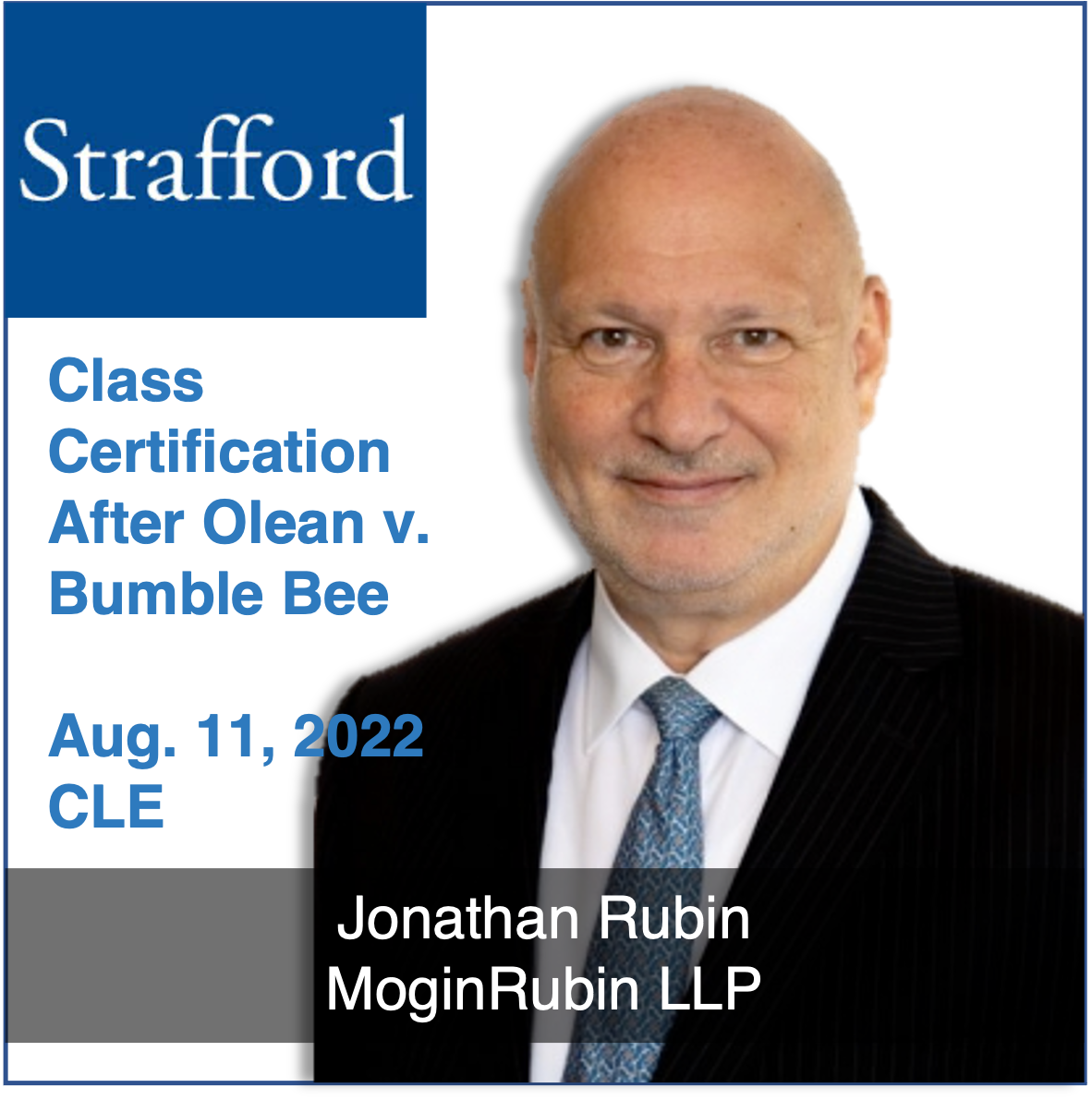
  • Class Certification After Olean v. Bumble Bee with Jonathan Rubin of MoginRubin LLP

    Class Certification After Olean v. Bumble Bee with Jonathan Rubin of MoginRubin LLP

    Featured Speaker

    Jonathan Rubin

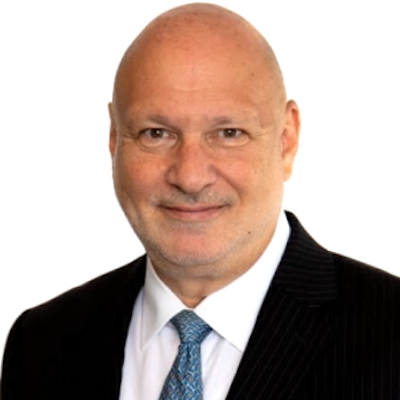
    Jonathan RubinPartner

    Jonathan focuses his practice exclusively on antitrust and competition law and policy. As a litigator, he has led trial teams in major antitrust cases in courts throughout the country. As a thought-leader in competition law, he has published in influential academic journals and has spoken to numerous professional groups, including the Directorate General for Competition of the European Commission, the Antitrust Section of the American Bar Association, the University of Wisconsin, and the American Antitrust Institute. Jonathan has also made several appearances before congressional committees.

    More About Rubin

    For more information please email Tom Hagy

    Explore more from MoginRubin LLP!

    Blog: Emboldened by New Resources and Expanded Authority, Feds Continue 10-Year Look Back at Chinese Investment. By Dan Mogin, Jonathan Rubin, Jennifer Oliver, and Timothy LaComb. List

    OnDemand CLE Webinar: The Antitrust Case Against Google. Dan Mogin, Jonathan Rubin, Jennifer Oliver, Timothy LaComb, John Newman, Dr. Alan Grant

    Blog: FTC’s Case Against Facebook Will Test the Flexibility of U.S. Antitrust Law.Authors: Jonathan Rubin and Jennifer Oliver, MoginRubin LLP

    Blog: Full Ninth Circuit Removes Unwarranted Hurdles to Class Certification.

    Journal: Policy Derailed: Can U.S. Antitrust Policy Toward Standard Essential Patents Get Back on Track by Jonathan Rubin

    Webinar: Class Certification After Olean v. Bumble Bee with Jonathan Rubin, James Bogan lll, Jonathan Cohn, Bradley Hamburger.

    Journal: FTC v. Amazon: Market Definitions and Section 5 of the FTC Act

    Podcast: Algorithmic Software Facilitated Price Fixing with Jonathan Rubin

    Plus, additional insights from the MoginRubin Blog.

    Class Certification After Olean v. Bumble Bee

    Expert Testimony, Uninjured Class Members, and Article III Standing 

    This CLE course will discuss the ramifications arising from the Ninth Circuit’s en banc decision in Olean Wholesale Grocery v. Bumble Bee Foods, 31 F.4th 651 (9th Cir. 2022) (en banc), addressing numerous important class certification issues. The program will address Olean’s critical holdings regarding the evidentiary burden under Rule 23, how expert testimony should be assessed at the class certification stage, and the relevance of injury and Article III standing to assessing Rule 23’s predominance requirement and the scope of a proposed class definition. The panel will discuss the impact Olean will have for both plaintiffs and defendants, and will assess how lower courts have reacted to this important Ninth Circuit ruling.

    Description

    Olean addresses numerous key class certification issues and outlines a refined framework for class certification that may extend beyond the Ninth Circuit. The decision clarifies the burden of proof under Rule 23 and a district court’s obligation to assess both the admissibility of expert evidence and its adequacy to satisfy the prerequisites of Rule 23. Counsel will need to understand Olean’s holding regarding uninjured class members. While the Ninth Circuit rejected a categorical rule that a class cannot be certified if it includes more than a de minimis number of uninjured members, it emphasized that injury, both as an element of the underlying claim and as a requirement of Article III, is an essential issue in determining whether Rule 23(b)(3)’s predominance requirement is satisfied.

    Listen as this panel of preeminent class action lawyers discusses how Olean will affect certification and offers new strategies to consider. Get the history of the case, its key holdings and strategies for applying them, and recent decisions applying it.

    The panel will discuss these and other critical issues:

    • How will the issue of uninjured class members impact class certification after Olean?
    • How will Olean change the use of expert testimony at the class certification stage?
    • How will Olean’s guidance impact consumer and employment class actions?

    The speakers:

    Jonathan Rubin, Partner, MoginRubin LLP

    James F. Bogan, III, Partner, Kilpatrick Townsend & Stockton

    Jonathan F. Cohn, Partner, Sidley Austin

    Bradley J. Hamburger, Partner, Gibson Dunn & Crutcher

  • Full Ninth Circuit Removes Unwarranted Hurdles to Class Certification

    Full Ninth Circuit Removes Unwarranted Hurdles to Class Certification

    The Authors

    Jonathan Rubin

    Jonathan RubinPartner | MoginRubin LLP

    Co-founding partner at MoginRubin LLP, Jonathan Rubin focuses his legal practice exclusively on antitrust and competition law and policy. Based in Washington, DC, he has litigated and led trial teams in major antitrust cases throughout the country. He has published in influential academic journals and has spoken to numerous professional groups, including the Directorate General for Competition of the European Commission, the Antitrust Section of the American Bar Association, and the American Antitrust Institute.

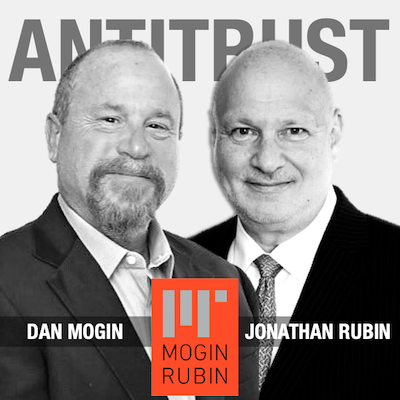
    Dan Mogin

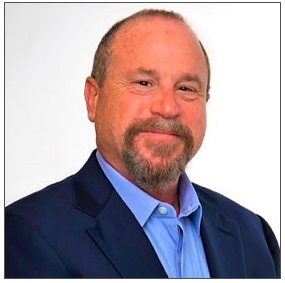
    Dan MoginManaging Partner | MoginRubin LLP

    Dan Mogin, founding and managing partner of MoginRubin LLP, concentrates his practice on antitrust, unfair competition and complex business litigation. He has served as lead counsel in numerous large antitrust cases, chaired the Antitrust Section of the California Bar, taught antitrust law and was editor-in-chief of a leading competition law treatise.

    Explore more from MoginRubin LLP!

    Blog: Emboldened by New Resources and Expanded Authority, Feds Continue 10-Year Look Back at Chinese Investment. By Dan Mogin, Jonathan Rubin, Jennifer Oliver, and Timothy LaComb. List

    OnDemand CLE Webinar: The Antitrust Case Against Google. Dan Mogin, Jonathan Rubin, Jennifer Oliver, Timothy LaComb, John Newman, Dr. Alan Grant

    Blog: FTC’s Case Against Facebook Will Test the Flexibility of U.S. Antitrust Law.Authors: Jonathan Rubin and Jennifer Oliver, MoginRubin LLP

    Blog: Full Ninth Circuit Removes Unwarranted Hurdles to Class Certification. Jonathan Rubin, Dan Mogin.

    Journal: Policy Derailed: Can U.S. Antitrust Policy Toward Standard Essential Patents Get Back on Track by Jonathan Rubin

    Webinar: Class Certification After Olean v. Bumble Bee with Jonathan Rubin, James Bogan lll, Jonathan Cohn, Bradley Hamburger.

    Journal: FTC v. Amazon: Market Definitions and Section 5 of the FTC Act

    Podcast: Algorithmic Software Facilitated Price Fixing with Jonathan Rubin

    Plus, additional insights from the MoginRubin Blog.

    Full Ninth Circuit Removes Unwarranted Hurdles to Class Certification

    “Nothing in Rule 23 suggests that the presence of more than a de minimis number of uninjured class members affects whether questions affecting only individual class members predominate. The Ninth Circuit’s en banc decision is a model of clear thinking and a welcome course correction in the law of class certification.”

    Excerpt:

    There was reason for optimism in August 2021, when the Ninth Circuit Court of Appeals granted rehearing en banc of a 2-1 decision that would have made it more difficult for antitrust claimants to secure class certification. The three-judge panel in Olean Wholesale Grocery Coop., Inc. v. Bumble Bee Foods LLC, 993 F.3d 774 (9th Cir. 2021) had determined that Federal Rule of Civil Procedure 23(b)(3) required a district court to find that no more than a de minimis number of class members are uninjured before a class may be certified. Having announced this de minimis rule in its opinion, the court then took the unusual step of inviting the parties to argue whether the full court should rehear the issue en banc.

    As we wrote last year when en banc rehearing was granted, with its de minimis rule, “the panel really jumped the median strip.” We argued that the rule conflated the question of whether issues common to the class predominate over issues unique to individual class members with the question of how the class is defined and that the Ninth Circuit’s new and unrealistic de minimis requirement erected an unnecessary procedural hurdle to class certification. Other commentators and amici argued that requiring proof that all but a de minimis number of class members are injured requires a determination on the merits, impermissible at the class certification stage.

    In welcome news for claimants and attorneys who bring antitrust class actions, the Ninth Circuit sitting en banc decided against the de minimis rule, for all of the foregoing reasons, in Olean Wholesale Grocery Coop., Inc. v. Bumble Bee Foods LLC, No. 19-56514, 2022 U.S. App. LEXIS 9455 (9th Cir. Apr. 8, 2022).

    In a thorough review of the requirements for class certification under Rule 23, the Ninth Circuit held that the movant’s burden is to prove the prerequisites of Rule 23 by a preponderance of the evidence, bringing the Ninth Circuit in line with the law in the First, Second, Third, Fifth, and Seventh Circuits …

    Read the full article on the MoginRubin Blog

  • 7th Circuit: Is Each Transmission of Biometric Data a BIPA Violation? | By Jennifer M. Oliver | MoginRubin LLP

    7th Circuit: Is Each Transmission of Biometric Data a BIPA Violation? | By Jennifer M. Oliver | MoginRubin LLP

    7th Circuit: Is Each Transmission of Biometric Data a BIPA Violation?

    By Jennifer M. Oliver

    The outcome of this case will have a dramatic impact on statutory damages.

    The Seventh Circuit U.S. Court of Appeals has certified a question to the Illinois Supreme Court over the accrual of claims under the Illinois Biometric Information Privacy Act (BIPA). The question, posed by the court in Cothron v. White Castle Systems, Inc., reads:

    “Do section 15(b) and 15(d) claims accrue each time a private entity scans a person’s biometric identifier and each time a private entity transmits such a scan to a third party, respectively, or only upon the first scan and first transmission?”

    The case was brought by an employee of the White Castle hamburger chain, which requires fingerprint scans for employees to access computer systems. The plaintiff charged that sharing her fingerprints with a third party vendor violated the law. Cothron v. White Castle Sys., No. 20-3202, 2021 U.S. App. LEXIS 37593 (7th Cir. Dec. 20, 2021).

    An accrual rule based on each collection, opponents to such a finding argue, would pose potentially existential damages — especially in the class action context — since BIPA provides for statutory damages of $1,000 or $5,000 per violation. Parties disagree on whether BIPA damages are mandatory or discretionary, however. Should the court determine that the first scan is the only scan that starts the statute of limitations clock ticking, opponents to that interpretation say,  anyone bringing a claim after five years would be out of luck, even if their private biometric data continued to be transmitted more than five years after the first occurrence.

    Preceding the federal court’s certification of this question by just five days, an Illinois appellate court ruled that, yes, claims under sections 15(a) and (b) accrue with each capture and use of a plaintiff’s biometric  information. Watson v. Legacy Healthcare Financial Services, LLC, et al., 2021 IL App (1st) 210279 No. 1-21-0279, Opinion filed Dec. 15, 2021.

    This is an important case to watch. Illinois was the first to implement such legislation, something several states have since emulated.

    Should the state Supreme Court come down in favor of an “all scans” interpretation, defendants may find themselves on the receiving end of devastating damages multipliers. Of course, the Illinois Supreme Court could determine that damage awards are at the discretion of a court, and are not mandatory under the law. Or it could rule that every scan or transmission restarts the statute of limitations clock, but that a claimant may only collect damages once for a series of transmissions of the same data, similar to how damages for defamation are not based on each publication of the same defaming remarks. Yet another possibility is that the court could determine that the clock starts to run when a claimant first learns of an alleged violation, which has precedent in litigation involving latent diseases caused by products, where individuals cannot know they were harmed until they developed a signature disease, i.e., one connected to a specific product.

    The ruling in this case is especially interesting as the COVID-19 pandemic has led to skyrocketing adoption of remote access tools that can collect biometric data for learning, court appearances, and work-from-home arrangements, and a corresponding uptick in BIPA lawsuits.

    Edited by Tom Hagy for MoginRubin LLP. Reposted with permission from the MoginRubin Blog. © 2022 MoginRubin LLP. 

    The Author

    Jennifer M. Oliver

    Jennifer M. OliverMoginRubin LLP

    Jennifer is a partner in the San Diego offices of MoginRubin LLP, where she focuses on antitrust, complex business, and investment litigation. Her experience includes active roles in several high-profile jury trials, serving as lead counsel in complex mediations, and arguing before courts at both the trial and appellate levels. Jennifer earned her B.S. (Business Administration), M.B.A., and J.D. degrees from the University at Buffalo, each with honors, where she also served as the Vice President of the undergraduate student body and was an editor of the Buffalo Law Review and Buffalo Intellectual Property Law Journal. Jennifer is also a certified information privacy professional.

    We are pleased to add that Jennifer is a member of the Board of Advisors for the Journal on Emerging Issues in Litigation and the Emerging Litigation Podcast.

    More from Jennifer and her colleagues.

  • Digital Payments in Class Administration

    Digital Payments in Class Administration

    Now On Demand

    Epiq presents
    DIGITAL PAYMENTS
    Best Practices for Efficiency in Class Actions

    Recorded: Sept. 23, 2020
    75 minutes

    CLE credit: 1+
    Registration includes recording, materials, and answers to your questions.

    TAKE IT NOW!

    Epiq presents a CLE-eligible webinar
    Digital Payments
    Best Practices for Efficiency in Class Actions

    Recorded Live | Sept. 23, 2020

    produced by HB Litigation Conferences

    Modern life increasingly relies on digital solutions. Nothing has made that more apparent than the novel coronavirus pandemic. In terms of class action settlement payments, the impetus has never been greater to transition to the e-payment realm for security, convenience, cost-reduction, and improved fund disbursement.

    Class counsel and claims administrators have experimented for years with pre-paid debit cards, automated clearing house (ACH) deposits, and wire transfers, while others have tested judicial appetites for registered-user payment systems like PayPal and Venmo. However, digital payment schemes with multiple options — the primary of which is direct deposit — seem to be emerging as the favored solution.

    Though class action notice is increasingly being digitized, aided by the 2018 amendments to Federal Rule of Civil Procedure, particularly Rule 23(c)(2)(B), which permits notice by electronic means like emails and digital and social media, payment itself has lagged behind. Even with these challenges, electronic payment distribution is now a viable option. Courts are encouraging the shift to electronic payments, too. As the U.S. District Court for the Northern District of California specified in its November 2018 Procedural Guidance for Class Action Settlements, “[c]lass counsel should consider… distributions to class members via direct deposit.”

    As class actions lawyers and claims administrators consider digital payments, they must propose workable and achievable solutions, adhere to Rule 23, and minimize cy pres. Though widespread acceptance of this technology is still evolving, understanding the concept and embracing its benefits may lead to quicker adoption.

    Take our webinar as our panelists will address: 

    • Statistical trends in digital payment.
    • How to choose the right plan for your settlement structure.
    • How to choose the right plan for your class size & payment amounts.
    • Cost variables associated with different methods.
    • Vendor and program characteristics.
    • How to implement an effective program.
    • Avoiding excessive unclaimed funds.
    • Data security and privacy concerns.
    • Questions your judge will ask.

    Meet the Speakers

    Adam Zapala
    Partner
    Cotchett Pitre

    Adam Zapala is a partner in the San Francisco office of Cotchett Pitre, where he focuses on complex litigation, including antitrust, employment and civil rights, privacy and cybersecurity, qui tam/false claims, consumer protection, and class actions generally. He has served as lead counsel in some of the largest and most complex litigation matters in the country. He received his B.A. from Stanford University and his J.D. from the University of California Hastings College of Law. Read more about Adam and Cotchett Pitre.

    Paul G. Karlsgodt
    Partner
    BakerHostetler

    Paul is a partner in the Denver office of BakerHostetler, and serves as leader of the firm’s Privacy and Digital Risk Class Action and Litigation Team. He has significant experience representing companies in the insurance, healthcare, consumer, and education sectors, and is routinely named among the best lawyers in his field. Paul earned his J.D. from the University of Denver Sturm College of law and his B.S. from Purdue University. Read more about Paul and BakerHostetler. 

    Chris Ljungkull
    Director of Sales
    Digital Pay

    Chris brings Ljungkull 10+ years of experience building strategic partnerships across Financial Services, Enterprise SaaS, CPG, eCommerce, and Logistics. He draws heavily on his experience in fulfillment, print, and mail industries to help Legal Service customers develop solutions that do more with less. Read more about Chris and Digital Pay.

    Kim Stephens
    Member Partner
    Tousley Brain Stephens

    Kim Stephens is a Member Partner at Tousley Brain Stephens PLLC, where he focuses on commercial and class action litigation.  Prior to joining the firm he was a judicial extern clerk to Hon. Eugene A. Wright of the Ninth Circuit, and worked for the Seattle criminal defense firm of Allen &Hansen.  He has been appointed special attorney general for Washington State, as well as lead and co-lead counsel to manage numerous state, federal and multi-district class action matters. He received his B.A. from the University of Washington and his J.D. from the University of Washington School of Law. Read more about Kim and Tousley Brain Stephens.

    Judge Suzanne H. Segal (Ret.)
    Mediator
    Signature Resolution

    After 18 years as a U.S. Magistrate Judge with the Central District of California, including four years as the Chief Magistrate Judge, Hon. Suzanne H. Segal (Ret.) joined Signature Resolution as a mediator and arbitrator. During her tenure on the federal bench, Judge Segal presided over numerous trials, evidentiary hearings, motions and discovery conferences involving a variety of cases. Before that she served for 12 years as Assistant U.S. Attorney in the Civil Division of the Los Angeles U.S. Attorney’s Office. She received her J.D. from Claremont McKenna College and her J.D. from Cornell Law School. Read more about Judge Suzanne H. Legal.

    Moderator: Aideen Gaffney
    Vice President
    Epiq

    Aideen Gaffney draws upon over two decades of experience as an attorney and a skilled business development strategist to expand the scope and impact of our service offerings while providing effective solutions to our clients’ project needs.  Based on the West Coast, her particular experience centers upon class action administration, mass tort global litigation programs, and data breach response programs. Earlier in her career, Gaffney practiced law in San Francisco at Gordon & Rees LLP, and in Portland at Bullivant Houser Bailey PC,  handling complex insurance litigation and participating in two jury trials and two bench trials involving ‘bad faith’ litigation. She is a frequent speaker and writer on current topics affecting the legal administration industry, and has presented numerous CLE programs to clients. Aideen received her B.S. from Santa Clara University and her J.D. from Santa Clara University School of Law. Read more about Aideen and Epiq here.

  • James Beck on the Drug & Device Law Blog: Something Both Sides Should Agree On (re Class Actions)

    James Beck on the Drug & Device Law Blog: Something Both Sides Should Agree On (re Class Actions)

    By James M. Beck

    Senior Life Sciences
    Policy Analyst
    Reed Smith LLP

    Drug & Device Law Blog: Something Both Sides Should Agree On (re Class Actions)

    We’ll be very clear – as we have before:  We don’t like most class actions.  Indeed, if given our druthers, we would abolish Rule 23, as it applies to class actions for damages, altogether.  But that’s not in the offing anytime soon.  Today, we offer a class action decision that we think both sides, us on the defense and those on the plaintiffs side, can agree on, excluding only those responsible for the problem.

    In Pearson v. Target Corp., 968 F.3d 827 (7th Cir. 2020), the court came up with one possible solution to the class action “objector problem.”

    What’s that?

    Well, once a class action settles (as most do), all too often “objectors” come out of the woodwork.  While these objectors purport to assert the interests of the class, usually, all they want is money to make them go away.  Or, as described in Pearson:

    We address here a recurring problem in class-action litigation known colloquially as “objector blackmail.”  The scenario is familiar to class-action litigators on both offense and defense.  A plaintiff class and a defendant submit a proposed settlement for approval by the district court.  A few class members object to the settlement but the court approves it. . . .  The objectors then file appeals.  As it turns out, though, they are willing to abandon their appeals in return for sizable side payments that do not benefit the plaintiff class: a figurative “blackmail” by selfish holdouts threatening to disrupt collective action unless they are paid off.

    …

    Read more at the Drug & Device Defense Law Blog.

    Safeguarding Against Financial Exploitation

    An on-demand CLE-eligible webinar Safeguarding Against Financial Exploitation   America’s senior population is growing. Nearly one in five U.S. residents will be 65 or older in 2030. Which means the average age of U.S. investors is climbing too. With that comes the risk that they will be exploited by people with access – or gain access through nefarious methods – to their investment portfolio. Seniors and vulnerable persons lose billions of dollars each year. Remarkably, 90% of the people to take advantage of senior investors are members of their own family. Attorneys who represent senior clients need to know the signs of vulnerability, red flags that their clients are being exploited, what laws apply, and rules lawyers must follow in these matters.   Questions our speakers answer: What is senior / vulnerable investor exploitation?   Who is protected by state and federal laws?   How prevalent is senior financial exploitation? What do the numbers tell us?  What is the pace of financial abuse SAR filings by securities firms?  What are the most popular scams?   What is diminished capacity?  What are the red flags indicating possible exploitation?  What are the laws, rules, and regulations governing law firms?  What are some best practices for law firms?  How can firms best protect their senior clients?   On Demand CLE Webinar What You Get PowerPoint and supplemental materials. Complete recording for later review. Answers to your questions via email. Invitation to contact speakers. 1.5 CLE credits (for licensed attorneys). CLE assistance.* *Subject to state bar rules. For licensed attorneys.  Register Meet the Speakers Joseph Calabrese Bressler, Amery & Ross, P.C. A 1991 Graduate of St. John’s University Law School, Mr. Calabrese brings 30 years of practice and 18 years of Securities Litigation/Regulatory experience to his role as principal in the New York office of  Bressler, Amery & Ross’s Financial Institutions Group. He began his career as a Wall Street litigator as an associate general counsel for Citigroup’s Smith Barney and […]

    Lien Resolution: Government & Private Plans Get Aggressive (Against Attorneys)

    Includes Nearly 75 minutes of insights from experienced professionals. CLE credit: 1+ (subject to bar rules). For CLE questions: CLE@LitigationConference.com The complete Power Point presentation. Continued access to the complete recording for later use. Answers to your questions via email to the presenters or write to HB and we will be sure to contact the speakers. What can you do to settle personal injury suits cleanly and avoid costly litigation and penalties? What recent cases can inform you about protecting your settlements and, as attorneys, yourselves, from post-settlement federal lawsuits? How can your firm set itself up to meet government expectations? What role might experts play in navigating these pitfalls? Medicare Advantage (42 USC § 1395w-22) Federal Medical Care Recovery Act (FMCRA) (42 USC § 2651) Armed Forces Act (10 USC §1095) Veterans’ Benefits (38 USC §1729) Third-Party Collection Rules (32 CFR 537.24; 38 CFR 17.101, etc.) Set-Asides under the Medicare Secondary Payer Act (42 USC § 1395y(b)(2)] On Demand Registration Lien Resolution Government & Private Plans Get Aggressive (Against Attorneys!) On Demand | Recorded September 2020 It is increasingly common these days. Personal injury attorneys settle a case, only to find themselves sued by a U.S. Attorney for failing to reimburse Medicare for conditional payments as required by the Medicare Secondary Payer Act. In some cases the attorney may be required to pay fines in addition to the reimbursements and interest, a costly proposition. Are you up to speed on issues surrounding Medicare Advantage, TRICARE, veterans’ claims, and Medicare set-asides? Join nationally recognized healthcare lien and resolution expert Franklin P. Solomon and go-to lien resolution provider Brett Newman as they offer a practical, in-depth CLE presentation. Franklin P. Solomon, Esq. Attorney & Founder, Solomon Law Firm  A graduate of Rutgers University School of Law at Camden, Franklin Solomon is based in Cherry Hill, NJ, with a practice focused on evaluation, litigation and resolution of healthcare “liens” and reimbursement claims. Mr. Solomon represents personal injury victims and their attorneys […]

    Telepsychiatry: Mitigating the Risks

    REGISTER Registration Includes Nearly 90 minutes of insights from experienced professionals. CLE credit: 1+ (subject to bar rules). For CLE questions: CLE@LitigationConference.com The complete Power Point presentation. Continued access to the complete recording for later use. Answers to your questions via email to the presenters or write to HB and we will be sure to contact the speakers. Understand the risks associated with telepsychiatry and how to manage them.  Telemedicine has emerged as an important solution for healthcare in general and psychiatric medicine specifically during the current global pandemic. Remote access for sub-practices including addiction counseling have been commonly used. Our panel of psychiatric professionals who have served as expert witnesses and attorneys who counsel and represent physicians have prepared a 90-minute session to share insights with attorneys, physicians, healthcare providers, risk professionals, and more. Agenda Examining procedures and best practices that exist for ensuring confidentiality in a telemedicine practice How do you draft a telepsychiatric consent form? What is the emerging standard of care for telemedicine? Will the standard of care for telemedicine become a national standard? (Should it?) Review the case law addressing telemedicine or telepsychiatry How do the HIPAA regulations and HITECH privacy laws impact telemedicine? How have the HIPAA regulations and HITECH privacy laws been relaxed during the pandemic? Will the relaxed HIPAA and HITECH regulations impacting telemedicine continue past the pandemic? Which technical platforms are preferred? Which ones to avoid? Panelists Mark Levy, M.D., Medical Director at fpamed David Kan, M.D., UCSF Psychiatry Department and the California Society for Substance Abuse Medicine Ayesha Ashai, M.D., associated with fpamed Stephen M. Fatum, J.D., Partner, Barnes & Thornburg LLP Angela W. Russell, J.D., Partner, Wilson Elser Moskowitz Edelman & Dicker LLP Meet our physician and attorney panelists. Mark Levy MD Medical Director fpamed Dr. Levy is a graduate of Columbia College (A.B. 1967) and the Columbia University College of Physicians and Surgeons (M.D. 1971) in New York. He is a Physician […]

    The Commercial Drone Industry: Privacy, Security, Threats, and Mitigation of Risk

    HB presents a CLE-eligible webinar Now on-demand at the West LegalEdcenter THE COMMERCIAL DRONE INDUSTRY Privacy, Security, Threats, and Mitigation of Risk Drones have become an increasingly valuable tool for businesses of all types and sizes. Drones are already being used in many applications, but more will certainly arise as the technology advances. This means that certain risks, like cyber threats, will also continue to present themselves. Protecting the transmission and storage of data collected through drones is critical. Unfortunately, security usually comes as an afterthought. The drone industry is part of the aviation industry, which, based on its knowledge, keeps safety as a number one concern. Part of that safety is having proper protection for your systems, including security as a fundamental design principle. Take this webinar to gain insights on the topics listed below, and shared by an attorney who practices on the cutting-edge of this evolving technology. Topics: Defining drones. Current and future applications. FAA Modernization and Reform Act of 2012. FAA Part 107 Regulations and waivers. Resources, e.g. the FAA Drone Zone and LAANC Portal. Penalties for violations. Privacy implications. Drones as weapons. Vulnerability to cyber attacks. Take it now! What you get: 1+ CLE credits (subject to bar rules). Insights from an experienced professional who specializes in this area of the law. The complete PowerPoint presentation. Continued access to the complete recording for later use. Answers to your questions. Fee: No additional charge to subscribers to the West LegalEdcenter. Non-subscribers may take the course for $170. Meet the Speaker Kathryn Rattigan Robinson & Cole LLP Kathryn Rattigan is a member of the firm’s Business Litigation Group and Data Privacy + Cybersecurity Team. She advises clients on data privacy and security, cybersecurity, and compliance with related state and federal laws. She assists clients in assessing risks related to technology and software contracts, as well as with compliance-related issues with outsourcing and […]

    The Intersection of Privacy and Antitrust Webinar Now Available On-Demand on the West LegalEdcenter

    Available as part of your subscription to The Thomson Reuters West LegalEdcenter®. Don’t subscribe to the West LegalEdcenter? This webinar is still available directly from HB. Take it now! Questions for speakers Questions@LitigationConferences.com CLE questions CLE@LitigationConferences.com Check out the MoginRubin blog for more insights on antitrust and privacy law. What attorneys and companies need to know about the increasing interplay between these critical areas of the law.  Highly publicized cases and investigations in the U.S. and Europe of big technology, e-commerce, and social media companies demonstrate how anti-competition laws are being used to scrutinize and challenge not only how these corporations conduct themselves in the marketplace, but the very core of their colossal success: the mass collection and utilization of user data. Are the privacy and antitrust worlds beginning to cross over? Or do they simply run parallel while addressing entirely different types of conduct? Whatever the answer, data is the raw material that drives the likes of Google, Facebook, Apple and Amazon, so how it is handled is a critical question when counseling clients on mergers and acquisitions. Moderator Daniel J.  Mogin | Managing Partner, MoginRubin LLP Speakers Jennifer M. Oliver, CIPP/US | Partner, MoginRubin LLP Thomas N. Dahdouh | Director, Western Region, Federal Trade Commission Franklin M. Rubinstein | Partner, Wilson Sonsini Goodrich & Rosati Randi W. Singer, CIPP/US, CIPT | Partner, Weil, Gotshal & Manges Contributor Dina Srinivasan | Independent Researcher & Author of The Antitrust Case Against Facebook Dina was unable to present but we thank her for her content contributions.  Agenda Who should regulate privacy violations in the U.S.? Which antitrust issues implicate privacy concerns? What role does machine learning play on the competitive landscape? What is big data really? How is it different from “data”? What are the elements of effective merger reviews? What are the appropriate remedies? What are “notice-and-choice” versus “harms-based” approaches? Plus answers to your questions. Send them to Questions@LitigationConferences.com.

  • Suits Allege Apple Concealed Knowledge of iPhone 7 Defect

    Apple Inc. has been sued in federal courts in Illinois and California for allegedly knowingly selling iPhone 7 and 7 plus models with an audio chip defect, called the “Audio IC Defect” or “Loop Disease” by consumers, which causes an array of operational issues.

    The bug gums up handset audio functions, grays out speaker buttons during calls, and degrades microphone fidelity.  And if that’s not enough it can kill Siri’s voice command capabilities.

    The plaintiffs accuse Apple of actively concealing the Audio IC Defect while advertising the iPhone 7 as “the best iPhone we ever made.”

    The plaintiffs claim that when they first experienced operational problems Apple didn’t offer complimentary repairs.

    The suits allege breach of warranty and violation of California and Illinois consumer protection laws. Plaintiffs seek class certification, damages, attorneys’ fees, and injunctive relief. In Illinois, the plaintiffs may also try to force Apple to repair, recall, and/or replace current defective iPhone 7s in the United States and notify all purchasers of the Loop Disease.

    Evidence shows “Apple’s internal acknowledgement and subsequent discontinuation of their out-of-warranty repairs without public announcement of the Audio IC Defect amounts to misrepresentation and concealment of the Audio IC Defect,”  the California complaint in Casillas v. Apple reads. 

    Complaints available on Scribd.com.

    Casillas v. Apple, N.D. Calif., No. 3:19-cv-2455

    Castelli v. Apple, N.D. Ill., Eastern Div., No. ______